

mTORC1 activity regulates post-translational modifications of glycine decarboxylase to modulate glycine metabolism and tumorigenesis
Open accessThe DOI matches its Crossref record; 32 of the 32 references it cites were found in a registry or an index.
Abstract
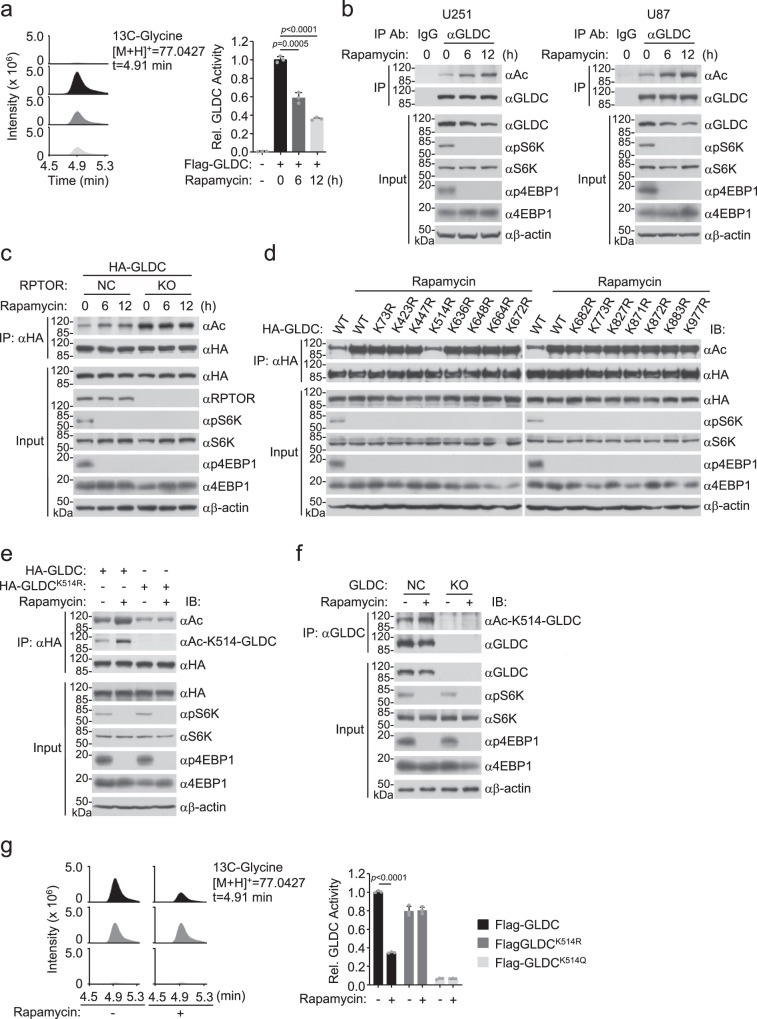
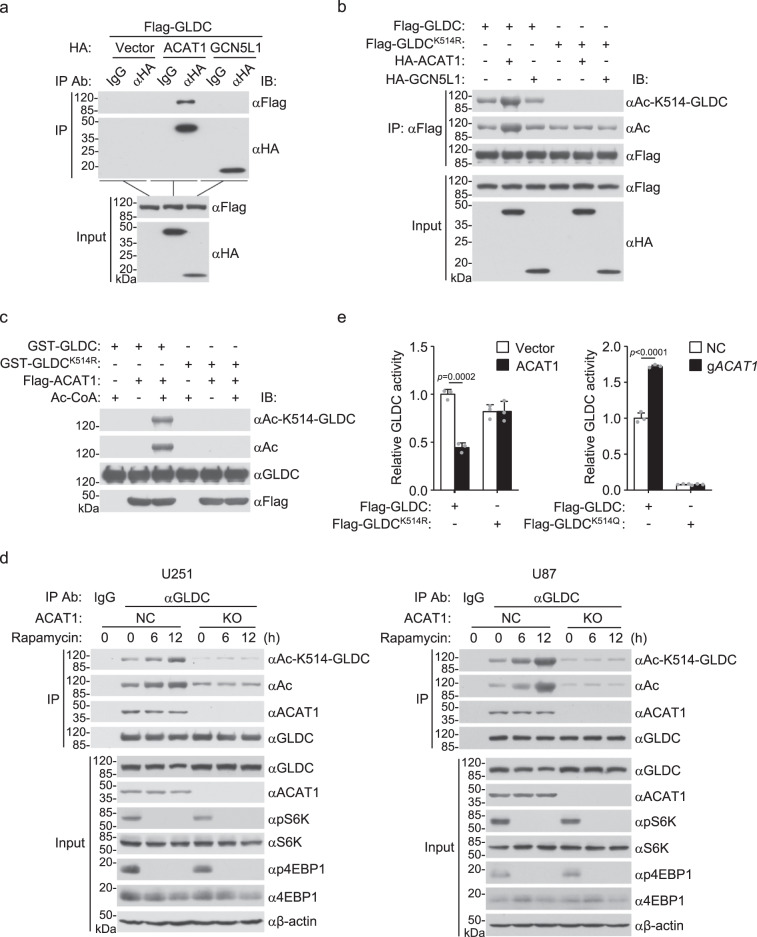
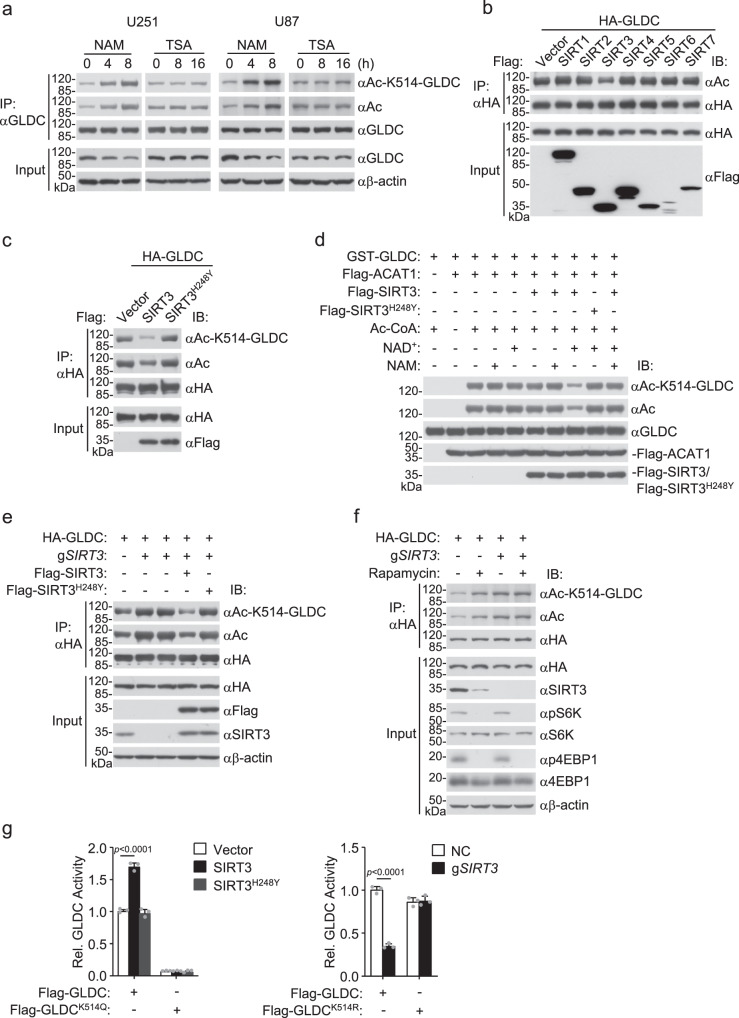
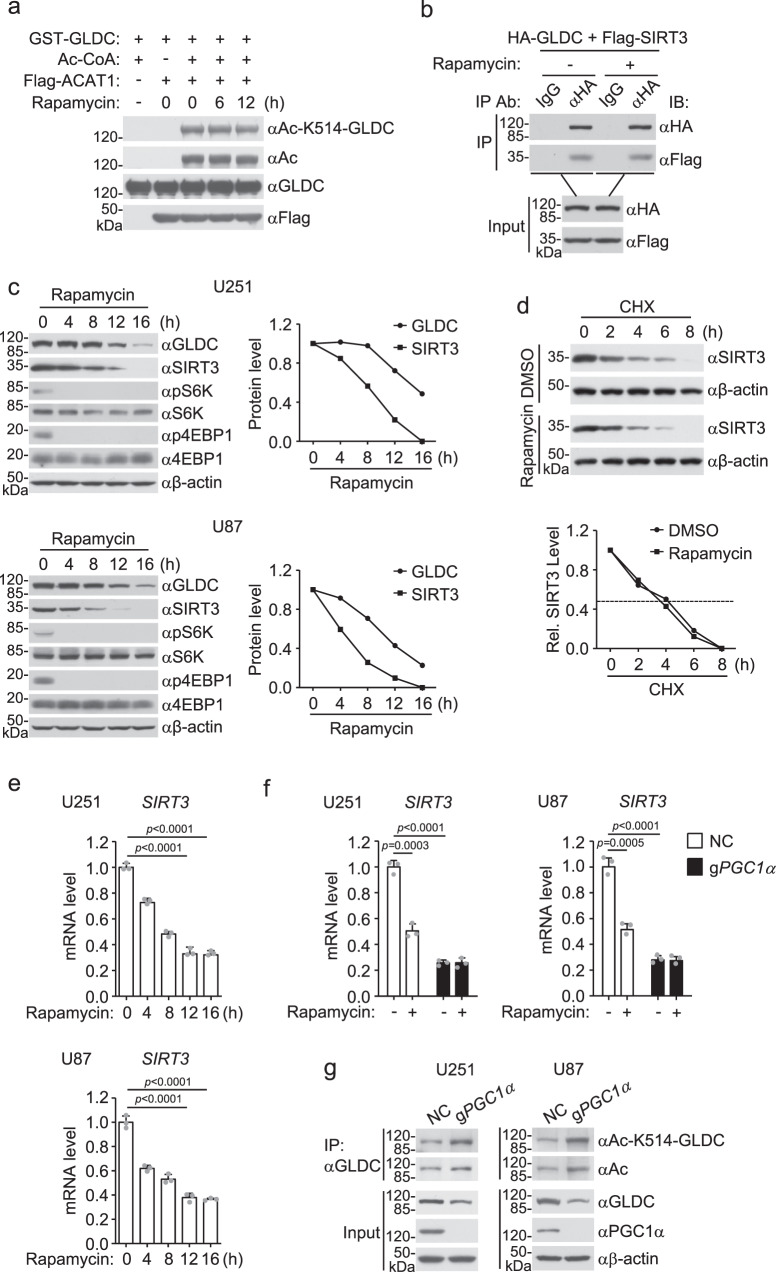
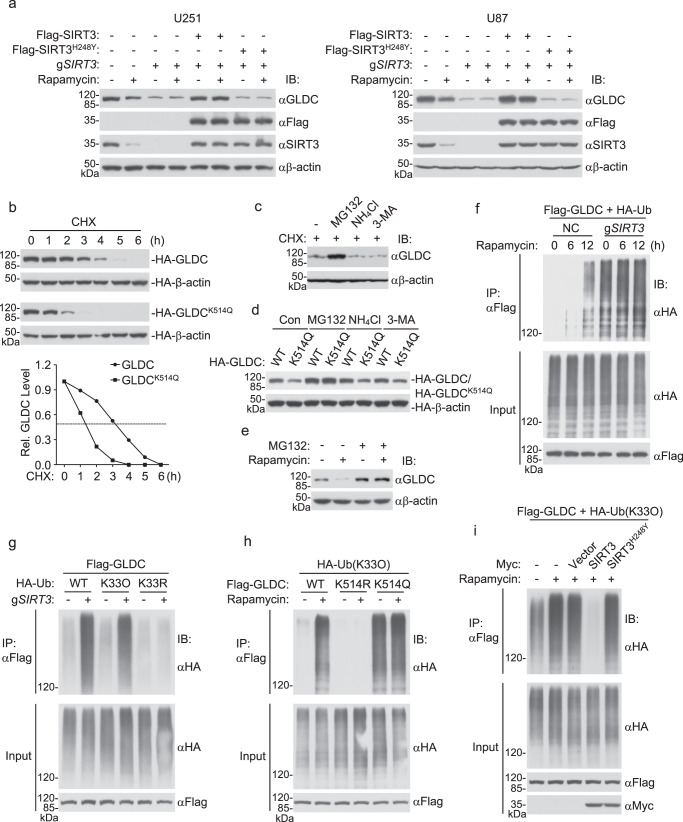
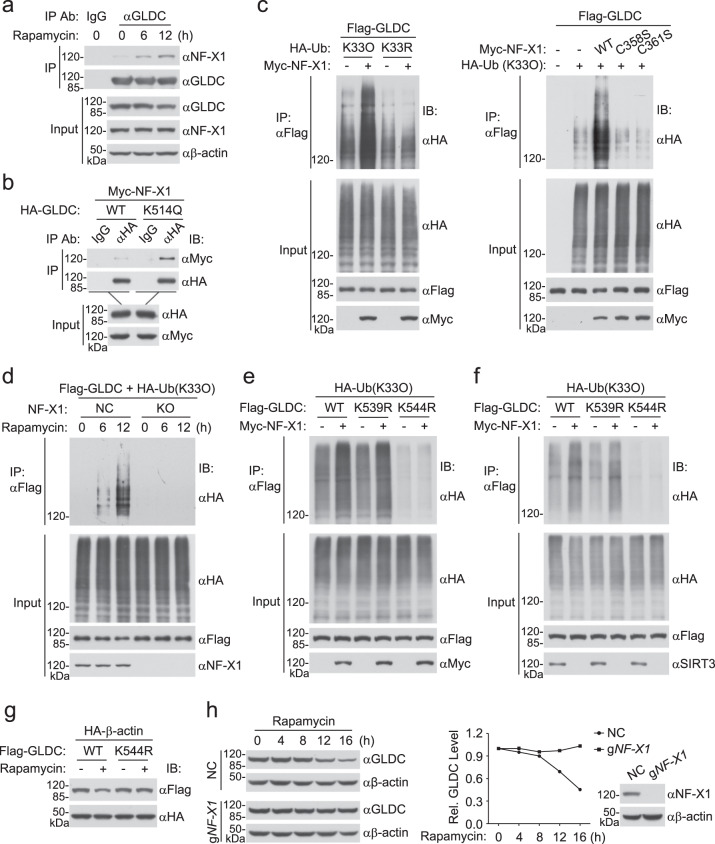
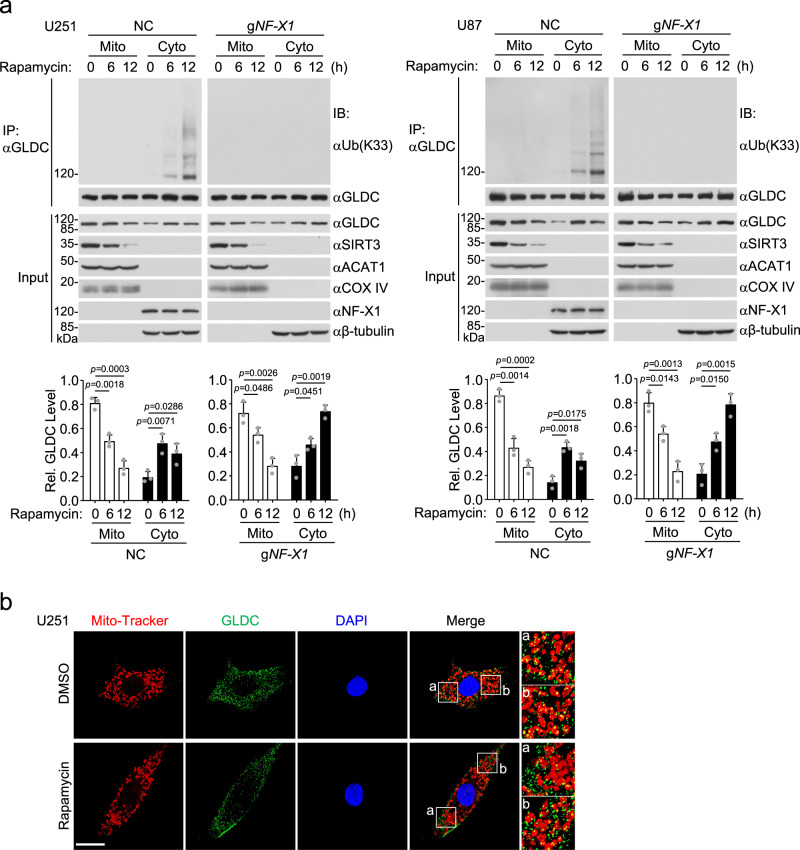
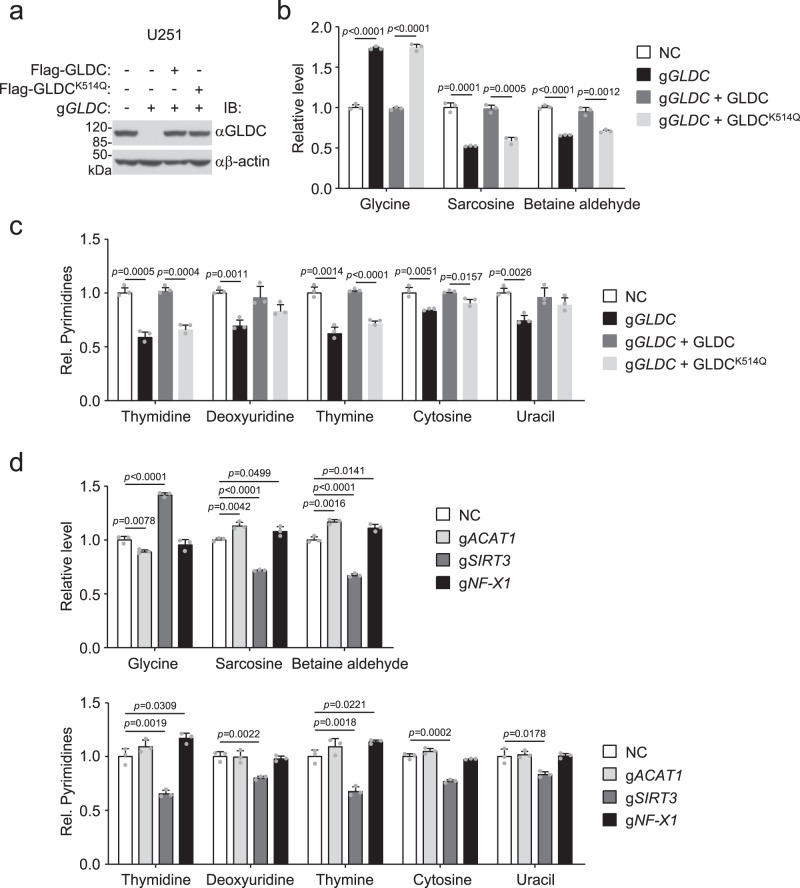
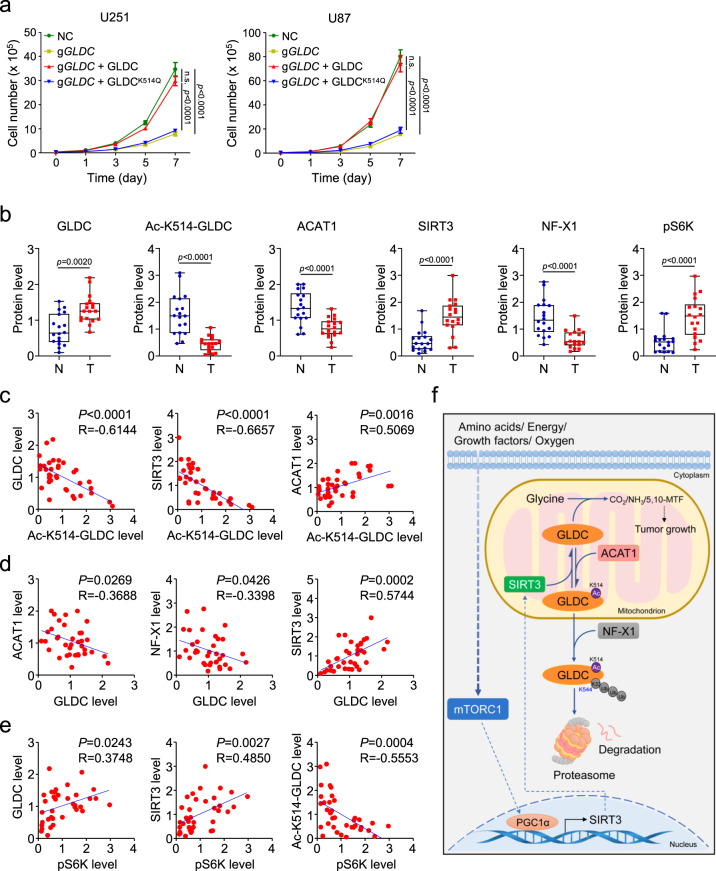
Glycine decarboxylase (GLDC) is a key enzyme of glycine cleavage system that converts glycine into one-carbon units. GLDC is commonly up-regulated and plays important roles in many human cancers. Whether and how GLDC is regulated by post-translational modifications is unknown. Here we report that mechanistic target of rapamycin complex 1 (mTORC1) signal inhibits GLDC acetylation at lysine (K) 514 by inducing transcription of the deacetylase sirtuin 3 (SIRT3). Upon inhibition of mTORC1, the acetyltransferase acetyl-CoA acetyltransferase 1 (ACAT1) catalyzes GLDC K514 acetylation. This acetylation of GLDC impairs its enzymatic activity. In addition, this acetylation of GLDC primes for its K33-linked polyubiquitination at K544 by the ubiquitin ligase NF-X1, leading to its degradation by the proteasomal pathway. Finally, we find that GLDC K514 acetylation inhibits glycine catabolism, pyrimidines synthesis and glioma tumorigenesis. Our finding reveals critical roles of post-translational modifications of GLDC in regulation of its enzymatic activity, glycine metabolism and tumorigenesis, and provides potential targets for therapeutics of cancers such as glioma.
Overview
The claims and statistics of this paper haven’t been checked yet.
Free: it reads the open-access text and checks the first 5 claims that cite a source we can check. Create a free account to check every claim.
Integrity signals
Registry
Cites
Statistics
Figures
Verification
Claims the paper makes
The claims and statistics of this paper haven’t been checked yet.
Free: it reads the open-access text and checks the first 5 claims that cite a source we can check. Create a free account to check every claim.
Claims other papers make about this one
Each is checked against this paper’s own text: does it say what the citing paper says it does?
The source backs part of the claim, not all of it — or backs it for a different population, condition or comparison.
In the citing paper
“GLDC is acetylated at K514 by ACAT1, which inhibits its enzymatic activity as well as translocates GLDC into the cytosol where it is recognized by E3 ligase NF-X1 and subsequently degraded (Figure 2E) [73].”
From Acetylation: a new target for protein degradation in cancer (2025) · cites this paper as [73]
Experimental — accuracy not yet measuredThe cited source says what the claim attributes to it.
In the citing paper
“GLDCK514Ac-mediated degradation was thus found to downregulate glycine catabolism and the downstream synthesis of glycine-related metabolites (e.g. pyrimidines) when expressed in glioma cells, as well as to inhibit glioma cell proliferation and tumorigenesis [73].”
From Acetylation: a new target for protein degradation in cancer (2025) · cites this paper as [73]
The cited source says what the claim attributes to it.
In the citing paper
“patient samples exhibited higher levels of GLDC and lower levels of GLDCK514Ac when compared to non-tumor tissues [73].”
From Acetylation: a new target for protein degradation in cancer (2025) · cites this paper as [73]
Self-check
Percentages, sums and reported differences re-computed from the paper’s own numbers.
The self-check needs the paper’s full text.
Citations
Cites
mTOR Signaling in Growth, Metabolism, and Disease
Saxton, R. A., & Sabatini, D. M. (2017) · Cell · doi:10.1016/j.cell.2017.02.004 · Cited by 7,555
mTOR Signaling in Growth, Metabolism, and Disease
Saxton, R. A., & Sabatini, D. M. (2017) · Cell · doi:10.1016/j.cell.2017.03.035 · Cited by 2,070
A mammalian protein targeted by G1-arresting rapamycin–receptor complex
Brown, E. J., Albers, M. W., Bum Shin, T., ichikawa, K., Keith, C. T., Lane, W. S., & Schreiber, S. L. (1994) · Nature · doi:10.1038/369756a0 · Cited by 2,053
The Adaptor Protein MITA Links Virus-Sensing Receptors to IRF3 Transcription Factor Activation
Zhong, B., Yang, Y., Li, S., Wang, Y.-Y., Li, Y., Diao, F., Lei, C., He, X., Zhang, L., Tien, P., et al. (2008) · Immunity · doi:10.1016/j.immuni.2008.09.003 · Cited by 1,519
Self-citationSabatini, D. M., Erdjument-Bromage, H., Lui, M., Tempst, P., & Snyder, S. H. (1994) · Cell · doi:10.1016/0092-8674(94)90570-3 · Cited by 1,509
mTOR controls mitochondrial oxidative function through a YY1–PGC-1α transcriptional complex
Cunningham, J. T., Rodgers, J. T., Arlow, D. H., Vazquez, F., Mootha, V. K., & Puigserver, P. (2007) · Nature · doi:10.1038/nature06322 · Cited by 1,488
Metabolite profiling identifies a key role for glycine in rapid cancer cell proliferation
Jain, M., Nilsson, R., Sharma, S., Madhusudhan, N., Kitami, T., Souza, A. L., Kafri, R., Kirschner, M. W., Clish, C. B., & Mootha, V. K. (2012) · Science · doi:10.1126/science.1218595 · Cited by 1,403
RING fingers mediate ubiquitin-conjugating enzyme (E2)-dependent ubiquitination
Lorick, K. L., Jensen, J. P., Fang, S., Ong, A. M., Hatakeyama, S., & Weissman, A. M. (1999) · Proceedings of the National Academy of Sciences · doi:10.1073/pnas.96.20.11364 · Cited by 981
Hirschey, M. D., Shimazu, T., Jing, E., Grueter, C. A., Collins, A. M., Aouizerat, B., Stančáková, A., Goetzman, E., Lam, M. M., Schwer, B., et al. (2011) · Molecular Cell · doi:10.1016/j.molcel.2011.07.019 · Cited by 787
Kong, X., Wang, R., Xue, Y., Liu, X., Zhang, H., Chen, Y., Fang, F., & Chang, Y. (2010) · PLoS ONE · doi:10.1371/journal.pone.0011707 · Cited by 718
Research works printed but not linked: 1
- Van Hove, J. L. K. et al. Nonketotic Hyperglycinemia in GeneReviews (eds Adam, M. P. et al.) (University of Washington, Seattle (WA), 1993–2021). 20301531
Cited by
Targeting sirtuins for cancer therapy: epigenetics modifications and beyond
Shen, H., Qi, X., Hu, Y., Wang, Y., Zhang, J., Liu, Z., & Qin, Z. (2024) · Theranostics · doi:10.7150/thno.100667 · Cited by 111
“…promotes glycine decarboxylase (GLDC) K514 deacetylation, which triggers K33-linked polyubiquitination of the ubiquitin ligase NF-X1 at the K544 site, leading to its degradation via the proteasomal pathway, and thus inhibits glycine catabolism, pyrimidine synthesis and glioma tumorigenesis [194].”
BackgroundXu, H. M., Liu, Y., Li, L.-S., & Liu, Y. (2023) · Aging and Disease · doi:10.14336/ad.2022.1123 · Cited by 72
“The transcription factor nuclear factor kappa B (NF-kB) [57], thyroid hormone receptor beta (TRbeta) [58], mechanistic target of rapamycin complex 1 (mTORC1) signal [59], and nuclear respiratory factor 2 (Nrf2) [60] promoted SIRT3 transcription by enhancing activation of the SIRT3 promoter.”
BackgroundOverview of Cancer Metabolism and Signaling Transduction
Chae, H., & Hong, S. (2022) · International Journal of Molecular Sciences · doi:10.3390/ijms24010012 · Cited by 71
Humboldt Review: Photorespiration – Rubisco's repair crew
Bauwe, H. (2022) · Journal of Plant Physiology · doi:10.1016/j.jplph.2022.153899 · Cited by 64
Context-dependent role of SIRT3 in cancer
Zhang, J., Ye, J., Zhu, S., Han, B., & Liu, B. (2024) · Trends in Pharmacological Sciences · doi:10.1016/j.tips.2023.12.005 · Cited by 51
Protein post-translational modifications and tumor immunity: A pan-cancer perspective
Zhang, H., Yan, Q., Jiang, S., Hu, D., Lu, P., Li, S., Sandai, D. A., Zhang, H., Zhang, W., & Zhu, C. (2025) · Physics of Life Reviews · doi:10.1016/j.plrev.2025.10.001 · Cited by 45
Self-citationLiu, R., Zeng, L., Li, H.-F., Shi, J.-G., Zhong, B., Shu, H., & Li, S. (2023) · Cell Research · doi:10.1038/s41422-023-00890-4 · Cited by 41
Self-citationShen, H., Ma, W., Hu, Y., Liu, Y., Song, Y., Fu, L., & Qin, Z. (2024) · Theranostics · doi:10.7150/thno.97320 · Cited by 41
“Moreover, SIRT3 induces deacetylation of glycine decarboxylase (GLDC) and promotes glycine catabolism and pyrimidine synthesis, which is crucial for the proliferation of human glioma cells [66].”
BackgroundRole of succinylation modification in central nervous system diseases
Wang, C., Cui, W., Yu, B., Zhou, H., Cui, Z., Pin, G., Yu, T., & Feng, Y. (2024) · Ageing Research Reviews · doi:10.1016/j.arr.2024.102242 · Cited by 40
Targeting ACAT1 in cancer: from threat to treatment
Sun, T., & Xiao, X. (2024) · Frontiers in Oncology · doi:10.3389/fonc.2024.1395192 · Cited by 31
Roles of SIRT3 in aging and aging-related diseases
You, Y., & Wang, Z. (2025) · International Journal of Biological Sciences · doi:10.7150/ijbs.115518 · Cited by 27
“Similarly, in glioblastoma models, SIRT3 promotes nucleotide biosynthesis by deacetylating glycine decarboxylase at Lys514, 268,269 .”
Chen, Y., Ran, X.-H., Ni, R.-Z., & Mu, D. (2023) · Journal of Biological Chemistry · doi:10.1016/j.jbc.2023.104660 · Cited by 25
“K48-, K11- and K33-linked ubiquitination events are related to the regulation of proteasome-dependent degradation of substrate proteins and TRIM28, which has been previously reported to exhibit E3 ubiquitin ligase activity (21, 24, 25); we therefore sought to determine whether TRIM28 facilitates the K48-, K11-, or K33…”
BackgroundJiao, M., Guo, Y., Zhang, H., Wen, H., Chen, P., Wang, Z., Yu, B., Zhuma, K., Zhang, Y., Qie, J., et al. (2025) · Journal of Clinical Investigation · doi:10.1172/jci181517 · Cited by 25
“However, ACAT1 inhibits glioma tumorigenesis through catalyzing glycine decarboxylase K514 acetylation (15), which suggests the role of ACAT1 in tumor progression is still a matter of debate and warrants further investigation (15).”
Self-citationProtein lipoylation in cancer: metabolic reprogramming and therapeutic potential
Li, S., Liu, Y., Hu, W., Deng, A., Ren, X., Chen, L., Lu, Y., Wu, Y., Huang, H., Cao, J., et al. (2025) · Cell Death Discovery · doi:10.1038/s41420-025-02718-z · Cited by 25
Self-citationResearch progress on interferon and cellular senescence
Wang, D., Chen, K., Wang, Z., Wu, H., & Li, Y. (2024) · The FASEB Journal · doi:10.1096/fj.202400808rr · Cited by 23
“128,129 It is now widely recognized that mTOR is the point of convergence for the regulation of cellular senescence and cellular autophagy.”
Acetylation: a new target for protein degradation in cancer
Crawford, C. E. W., & Burslem, G. M. (2025) · Trends in Cancer · doi:10.1016/j.trecan.2025.01.013 · Cited by 20
Amino acids metabolism: a potential target for cancer treatment
Ren, S., Zhou, X., Wang, Z., & Yuan, K. (2025) · Molecular Cancer · doi:10.1186/s12943-025-02523-3 · Cited by 22
“Notably, inhibition of GLDC activity via acetylation or silencing the GLDC gene can suppress glycine metabolism and tumor proliferation, eventually delaying tumor progression [216, 218, 219].”
Rewired Metabolism of Amino Acids and Its Roles in Glioma Pathology
Chen, S., Jiang, J., Shen, A., Miao, Y., Cao, Y., Zhang, Y., Cong, P., & Gao, P. (2022) · Metabolites · doi:10.3390/metabo12100918 · Cited by 18
GLDC mitigated by miR-30e regulates cell proliferation and tumor immune infiltration in TNBC
Xie, H., Yan, T., Lü, X., Du, Y., Xu, S., Kong, Y., Yu, L., Sun, J. P., Zhou, L., & Ma, J. (2022) · Frontiers in Immunology · doi:10.3389/fimmu.2022.1033367 · Cited by 16
“demonstrated that rapamycin complex 1 (mTORC1) signal inhibits GLDC acetylation by inducing the transcription of deacetylase SIRT3 (SIRT3) and GLDC acetylation inhibits glycine catabolism, pyrimidine synthesis and glioma (4).”
BackgroundWang, J., Zheng, H., Dong, C., & Xiong, S. (2023) · mBio · doi:10.1128/mbio.00332-23 · Cited by 14
“Furthermore, the ubiquitin ligase NF-X1 catalyzes GLDC K33-linked ubiquitination at Lys 544 for its proteasomal degradation (37).”
BackgroundLiu, Y., Du, Z., Li, T., Zhang, J., Cheng, Y., Huang, J., Yang, J., Wen, L., Tian, M., Yang, M., et al. (2023) · European Journal of Pharmacology · doi:10.1016/j.ejphar.2023.176162 · Cited by 14
Ma, X., Zhang, X., Wang, Y., Xu, Y., Liu, L., Li, W., Ren, X., & He, Z. (2025) · Biomaterials · doi:10.1016/j.biomaterials.2025.123683 · Cited by 15
Zhang, Z., Jin, B., Zhang, Y., Yang, M., Wáng, C., Zhu, Y., Li, T., Lin, J., Yang, M., Cheng, Y., et al. (2024) · Free Radical Biology and Medicine · doi:10.1016/j.freeradbiomed.2024.10.302 · Cited by 14
Comprehensive Overview of Ketone Bodies in Cancer Metabolism: Mechanisms and Application
Liang, Z., Deng, L., Zhou, X., Zhang, Z., & Zhao, W. (2025) · Biomedicines · doi:10.3390/biomedicines13010210 · Cited by 14
Thomas, R., & Pooventhiran, T. (2022) · Journal of Molecular Liquids · doi:10.1016/j.molliq.2022.120721 · Cited by 12
Multi‐omic profiling reveals an RNA processing rheostat that predisposes to prostate cancer
Stentenbach, M., Ermer, J. A., Rudler, D. L., Perks, K. L., Raven, S. A., Lee, R. G., McCubbin, T., Marcellin, E., Siira, S. J., Rackham, O., et al. (2023) · EMBO Molecular Medicine · doi:10.15252/emmm.202317463 · Cited by 11
Corvigno, S., Badal, S., Spradlin, M., Keating, M. F., Pereira, I., Stur, E., Bayraktar, E., Foster, K. I., Bateman, N. W., Barakat, W., et al. (2023) · npj Precision Oncology · doi:10.1038/s41698-023-00454-0 · Cited by 12
“As shown in other cancer types, GLDC may sustain nucleotide synthesis during cell proliferation in HGSC tumorigenesis 30,31 .”
Emerging Roles of Non-proteolytic Ubiquitination in Tumorigenesis
Yin, X., Liu, Q., Liu, F., Tian, X., Yan, T., Han, J., & Jiang, S. (2022) · Frontiers in Cell and Developmental Biology · doi:10.3389/fcell.2022.944460 · Cited by 10
“activity, and facilitates K33-linked ubiquitination by NF-X1, regulating glycine metabolism and tumorgenesis (Liu et al., 2021) HUWE1 K63 promoting c-Myc activity promoting retinoblastoma cell proliferation c-Myc HELZ2 triggers K63-linked ubiquitination activity of c-Myc by HUWE1 to mediate retinoblastoma tumorgenesis…”
BackgroundInfluentialLiu, Z., Hu, Q., Hu, B., Cao, K., Xu, T., Hou, T., Cao, T., Wang, R., Shi, H., & Zhang, B. (2023) · Journal of Biological Chemistry · doi:10.1016/j.jbc.2023.105593 · Cited by 10
Li, J., Xia, Y., Kong, S., YANG, K. Y., Chen, H., Zhang, Y., Liu, D., Chen, L., & Sun, X. (2023) · Journal of the European Academy of Dermatology and Venereology · doi:10.1111/jdv.19289 · Cited by 11
Cellular Signaling of Amino Acid Metabolism in Prostate Cancer
Yao, P., Cao, S., Zhu, Z., Wen, Y., Guo, Y., Liang, W., & Xie, J. (2025) · International Journal of Molecular Sciences · doi:10.3390/ijms26020776 · Cited by 8
Qiao, K., Wu, L., Yang, L., Liu, M., Jiang, C., Chen, Y., Zhang, Z., Yu, J., Wei, D., & Xu, Y. (2026) · Experimental Hematology and Oncology · doi:10.1186/s40164-026-00754-8 · Cited by 7
“…(GLDC) K514 acetylation via SIRT3 induction, whereas mTORC1 inhibition allows acetyl-CoA acetyltransferase 1 (ACAT1)-mediated acetylation at K514, which both impairs GLDC enzymatic activity and primes it for NF-X1–mediated K33-linked ubiquitination at K544 and subsequent degradation [134].”
Pan, Q., Zhang, Y., Liu, T., Xu, Q., Wu, Q., & Xin, J. (2024) · PLoS Pathogens · doi:10.1371/journal.ppat.1012266 · Cited by 6
Chen, X., Xu, Q., & Hai-bing, Y. (2024) · Environmental Toxicology · doi:10.1002/tox.24379 · Cited by 5
Wei, W., Fu, Y., Su, W., Li, W., Kai, L., Liang, J., Wang, F., Shi, C., Wang, Y., & Lu, Z. (2025) · Animal nutrition · doi:10.1016/j.aninu.2025.02.002 · Cited by 5
Nuclear glycine decarboxylase suppresses STAT1-dependent MHC-I and promotes cancer immune evasion
Liu, R., Li, H.-F., Jiang, Q., Shi, J.-G., Ruan, Z.-L., Ren, P., Li, Y., Shu, H., & Li, S. (2025) · The EMBO Journal · doi:10.1038/s44318-025-00557-3 · Cited by 5
“GLDC is a key enzyme of the glycine cleavage system that converts glycine into one-carbon units (Liu et al, 2021).”
InfluentialSelf-citationLi, W., Liu, T., Wu, T., Cai, T., Wang, F. W., & Zhang, M. (2025) · Biochimica et Biophysica Acta (BBA) - Reviews on Cancer · doi:10.1016/j.bbcan.2025.189492 · Cited by 5
He, Z., Peng, Y., Wang, D., Yang, C., Zhou, C., Gong, B., Song, S., & Wang, Y. (2024) · Frontiers in Immunology · doi:10.3389/fimmu.2024.1427200 · Cited by 5
Harnessing Interactional Sensory Genes for Rationally Reprogramming Chaotic Metabolism
Tan, C., Tao, F., & Xu, P. (2022) · Research · doi:10.34133/research.0017 · Cited by 5
Heterogeneity of Amino Acid Profiles of Proneural and Mesenchymal Brain-Tumor Initiating Cells
Seliger, C., Rauer, L., Wüster, A.-L., Moeckel, S., Leidgens, V., Jachnik, B., Ammer, L.-M., Heckscher, S., Dettmer, K., Riemenschneider, M. J., et al. (2023) · International Journal of Molecular Sciences · doi:10.3390/ijms24043199 · Cited by 4
“Interestingly, we found glycine dehydrogenase, the key enzyme of the glycine cleavage system [17], to be most enriched in proneural BTICs in the hallmark oxidoreductase activity.”
BackgroundInfluentialArribas‐Carreira, L., Castro, M., García, F., Navarrete, R., Bravo‐Alonso, I., Zafra, F., Ugarte, M., Richard, E., Pérez, B., & Rodríguez‐Pombo, P. (2024) · International Journal of Molecular Sciences · doi:10.3390/ijms25052814 · Cited by 5
“Accumulated evidence has demonstrated that the hyperactivity of GLDC plays a critical role in sustaining the proliferation of different types of cancer cells [10] or during the reprogramming of somatic cells to pluripotent iPSCs [11].”
BackgroundInsight into the metabolism of gliomas by MRI and MRS
Pandey, S., Yadav, N., Tiwari, V., & Jagannathan, N. R. (2026) · Biophysical Reviews · doi:10.1007/s12551-026-01416-z · Cited by 3
“In gliomas, mTORC1-mediated post-translational regulation of GLDC further modulates glycine flux and tumor growth (Liu et al. 2021).”
Li, N., Gao, Q., Jia, H., Xue, G., Zhou, Y., Wang, S., Ma, S., Hu, B., Zhao, Z., Chen, S., et al. (2026) · Journal of Clinical Investigation · doi:10.1172/jci198270 · Cited by 3
“While competition between acetylation and ubiquitination on the same lysine (K) residues is a known mechanism of protein stability regulation (44–46), this does not appear to be the case here because SIRT2 inhibition increased both the acetylation (Figure 2M) and ubiquitination (Figure 3A) of…”
Zhang, J., Luo, C., & Long, H. (2024) · Open Life Sciences · doi:10.1515/biol-2022-0832 · Cited by 3
Lozano-Prieto, M., Camafeita, E., Jorge, I., Laguillo-Gómez, A., Barrero-Rodríguez, R., Devesa, C. A., Pertusa, C., Calvo, E., Sánchez‐Madrid, F., Vázquez, J., et al. (2024) · Journal of Proteomics · doi:10.1016/j.jprot.2024.105229 · Cited by 3
Ren, Y., Zhang, P., Li, L., Wang, M., Hu, H., Shen, Y., Xu, P., Wu, Q., & Li, F. (2024) · Heliyon · doi:10.1016/j.heliyon.2024.e33203 · Cited by 4
Xiong, Y., Zeng, F., Luo, K., Wang, L., Li, M., Chen, Y., Huang, T., Xu, C., Xu, G., & Zou, H. (2025) · EMBO Molecular Medicine · doi:10.1038/s44321-025-00315-2 · Cited by 2
“GLDC catalyzes glycine to CH2-THF, a group that cooperates with pyrimidine biosynthesis during cell proliferation (Liu et al, 2021; Zhang et al, 2012).”
Liu, R., & Li, S. (2026) · Cell Insight · doi:10.1016/j.cellin.2026.100308 · Cited by 3
“In glioblastoma, GLDC activity is regulated by coordinated posttranslational modifications including acetylation and polyubiquitination, which contributes to regulation of glycine metabolism and glioma tumorigenesis (Liu et al., 2021).”
InfluentialSelf-citationAdvances in macrophage metabolic reprogramming in hematological malignancies
Li, X. J., Zuo, S., Xu, L., Song, Y., & Li, W. H. (2025) · Chinese Medical Journal BioMed · doi:10.65457/cmjbm-2025-0001 · Cited by 2
Ma, Y., Yu, Y., Yin, X., Yu, Z., Yan, J., Wang, Y., Gu, W., Li, X., Zhou, J., & Meng, Q. (2025) · Aquaculture · doi:10.1016/j.aquaculture.2025.742635 · Cited by 2
Liu, J., Zhou, Y., Feng, J., Cai, C., & Zhang, S. (2025) · Frontiers in Microbiology · doi:10.3389/fmicb.2025.1533506 · Cited by 1
Song, Z., Dong, H., Zhang, K., Qiao, B., Li, L., Zhang, Z., Fan, Z., Li, J., Li, Y., Liu, M., et al. (2025) · Pharmaceutical Science Advances · doi:10.1016/j.pscia.2025.100072 · Cited by 1
Sirtuins in Osteosarcoma: Cracking the Code and Opening Up New Treatment Options
Zhao, Y., Han, Y., Wang, B., & Wang, T. (2025) · Current Pharmaceutical Biotechnology · doi:10.2174/0113892010374421250419163509 · Cited by 1
Lozano-Prieto, M., Jorge, I., Camafeita, E., Devesa, C. A., Barrero-Rodríguez, R., Calvo, E., Laguillo-Gómez, A., Pertusa, C., Martin-Cofreces, N. B., Vázquez, J., et al. (2025) · European Journal of Cell Biology · doi:10.1016/j.ejcb.2025.151521 · Cited by 1
Yu, H. J., Wang, X., Xiong, J., He, X., Ma, C., Wang, Q., Chen, R., Li, Y., Dai, Q., Min, Q., et al. (2025) · Microbiological Research · doi:10.1016/j.micres.2025.128414 · Cited by 1
Meng, C., Luo, P., Ren, W., Xie, X., Zeng, Y., Wang, J., Yao, X., & Meng, J. (2026) · BMC Genomics · doi:10.1186/s12864-026-13131-w · Cited by 1
“GLDC is a key enzyme in glycine metabolism and plays a central role in folate-mediated one-carbon metabolism, contributing to nucleotide, protein, and lipid biosynthesis as well as mitochondrial function [91].”
Mao, J., Ji, Y. S., & Shen, J. (2025) · Journal of Magnetic Resonance Imaging · doi:10.1002/jmri.29827 · Cited by 1
“Glycine (Gly), a nonessential amino acid involved in one-carbon metabolism, contributes to nucleotide synthesis and supports methylation processes, which are critical for glioma progression [2, 3].”
Zheng, Y., Li, L., Bing, L., Yang, Y., Zhang, Y., Lin, Y., Huang, W., & Zhang, R. (2024) · Research Square · doi:10.21203/rs.3.rs-3888711/v1
Prognostic prediction of laryngeal cancer patients based on nitrogen metabolism-related genes
Wang, Y., Shen, T., & Wang, Y. (2025) · Computer Methods in Biomechanics & Biomedical Engineering · doi:10.1080/10255842.2025.2523309
Ning, Y.-W., Zhang, Y., Chen, Y., Wang, S., Tang, S., Zhu, J., & Shen, X. (2025) · Journal of Asia-Pacific Entomology · doi:10.1016/j.aspen.2025.102467
Ma, Y., Meng, X., Yin, X., Yu, Y., Lü, S., Gu, W., & Meng, Q. (2026) · Virulence · doi:10.64898/2026.03.02.708988
Mast, N., Bederman, I. R., El‐Darzi, N., & Pikuleva, I. A. (2026) · Biomedicine & Pharmacotherapy · doi:10.1016/j.biopha.2026.119470
“2, Supplementary Table 4), which impairs enzyme activity [86,87].”
Ren, B., Zhang, Y., Zhou, J., Liu, J., & Liu, L. (2026) · Aquaculture Reports · doi:10.1016/j.aqrep.2026.103629
NAA10 and BTRC drive CREBRF degradation in endoplasmic reticulum stress and renal tubular injury
Fang, S., Ning, J., Huang, J. Q., & Chen, Y. (2026) · Journal of Diabetes Investigation · doi:10.1111/jdi.70338
“There is crosstalk between different types of protein post-translational modi fi cations 35 , for example, ACAT1-mediated acetylation of GLDC triggered polyubiquitination of GLDC by the ubiquitin ligase NF-X1, which led to degradation of GLDC by the proteasome pathway 36 .”
Cysteine suppresses the progression of oral squamous cell carcinoma via regulating GLDC
Wang, H., Xu, L., Zhang, M., Zhang, N., Zhang, D., & Zhou, X. (2026) · Translational Cancer Research · doi:10.21037/tcr-2026-0839
Zhang, Q., Chen, X., Zhang, X., Lu, S.-T., Yu, J.-X., Bai, H., Shu, H., & Li, S. (2026) · Cellular and Molecular Immunology · doi:10.1038/s41423-026-01457-0
Self-citationHuangfu, B., Wang, T., Chen, Y., Li, J., Liang, Z., Huang, K., & He, X. (2026) · Environment International · doi:10.1016/j.envint.2026.110585
Multikingdom and functional gut microbiota markers for cholangiocarcinoma
Rao, B., Liu, S., Cui, G., Jiang, J., Li, N., Hu, J., Sun, R., Li, A., Zhang, R., Lu, H., et al. (2026) · Genome Medicine · doi:10.1186/s13073-026-01757-0
“The enrichment of K00639 in CCA suggests altered glycine metabolism, which has been associated with tumorigenesis [83].”
Metadata
- Authors
- Liu, R., Zeng, L.-W., Gong, R., Yuan, F., Shu, H.-B., & Li, S.
- Affiliations
- Chinese Academy of Medical Sciences & Peking Union Medical College (CN)
- Wuhan University (CN)
- Renmin Hospital of Wuhan University (CN)
- Corresponding author
- Li, Shu
- Venue
- Nature Communications
- Published
- 2021-07-09
- Volume
- 12
- Issue
- 1
- Pages
- 4227-4227
- ISSN
- 2041-1723 (ISSN-L)
- PMC
- PMC8270999
- OpenAlex
- W3180569188
- Semantic Scholar
- 91fab9b3c59eda921780ed1ea1e10642adb3edf1
- Cited by
- 67
- References
- 32
- Citations by year
- 2026: 11 · 2025: 21 · 2024: 16 · 2023: 10 · 2022: 9
- FWCI
- 2.75
- Type
- journal article
- Language
- en
- Open access
- gold
- doi.org
- Licence
- cc-by
- creativecommons.org/licenses/by/4.0 (tdm)
- creativecommons.org/licenses/by/4.0 (vor)
- Locations
- Nature Communications (publishedVersion, cc-by)
- PubMed Central (publishedVersion, cc-by)
- PubMed (publishedVersion)
- RePEc: Research Papers in Economics (submittedVersion)
- DOAJ (DOAJ: Directory of Open Access Journals) (submittedVersion, cc-by-sa)
- Funders
- National Natural Science Foundation of China
- the State Key R&D Program of China
- Topics
- Life Sciences › Biochemistry, Genetics and Molecular Biology › Molecular Biology › PI3K/AKT/mTOR signaling in cancer
- Life Sciences › Biochemistry, Genetics and Molecular Biology › Molecular Biology › RNA modifications and cancer
- Life Sciences › Biochemistry, Genetics and Molecular Biology › Cancer Research › Cancer, Hypoxia, and Metabolism
- Keywords
- glycine decarboxylase, mTORC1, post-translational modification, lysine acetylation, SIRT3, ACAT1, polyubiquitination, proteasomal degradation, glycine cleavage system, glycine metabolism, pyrimidine synthesis, glioma, carcinogenesis, one-carbon metabolism
- MeSH terms
- Mechanistic Target of Rapamycin Complex 1, Acetyl-CoA C-Acetyltransferase, Acetylation, Animals, Glioma, Glycine, Humans, Male, Protein Processing, Post-Translational, Pyrimidines, Repressor Proteins, Transcriptional Activation, Gene Expression Regulation, Neoplastic, Xenograft Model Antitumor Assays, Cell Line, Tumor, Proteasome Endopeptidase Complex, Glycine Dehydrogenase (Decarboxylating), Mice, Ubiquitination, Sirtuin 3, HEK293 Cells, Proteolysis, Carcinogenesis
About these checks
Registry, retraction, Cites and statistics results are computed, not judged, with one exception: a printed reference that no index lists is read once by a model before it counts as a citation error. Claims are extracted by a model and kept only when their quote appears verbatim in the text; each cited source is then checked, with a model’s help, for whether it says what the claim relies on. Those verdicts can be wrong — read the claim’s quote and the cited source before relying on one.
Statistics and arithmetic are recomputed, not judged.
Confidence bands are shown only for fields calibrated on our annotated test set. None is calibrated yet, so no band is shown.
What counts as a claim ›How we measure confidence ›How we check this ›
Are you an author, or do you see a problem with this page? Request a review
Data sources
Bibliographic data: Semantic Scholar, OpenAlex, Crossref.
Contains information from the Semantic Scholar Academic Graph Datasets, made available under the ODC Attribution License (ODC-BY 1.0).
Semantic Scholar’s data is described in: Kinney, R., et al. (2023). The Semantic Scholar Open Data Platform. arXiv:2301.10140.
