

mTORC1 activity regulates post-translational modifications of glycine decarboxylase to modulate glycine metabolism and tumorigenesis
Open accessThe DOI matches its Crossref record; 32 of the 32 references it cites were found in a registry or an index.
Abstract
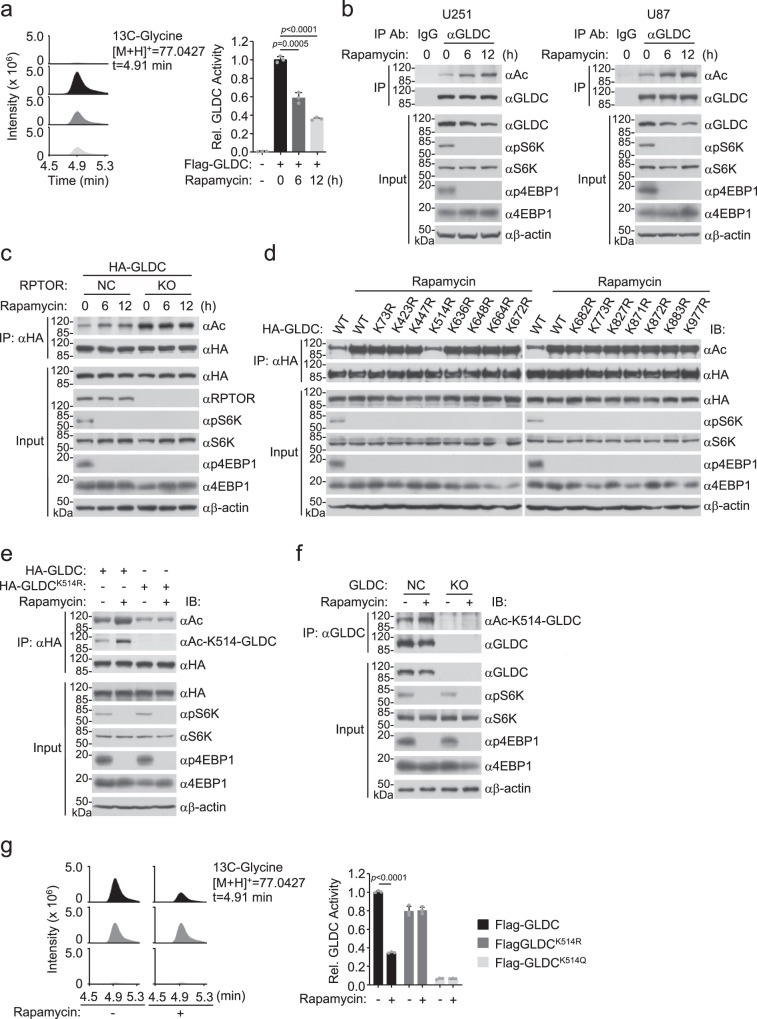
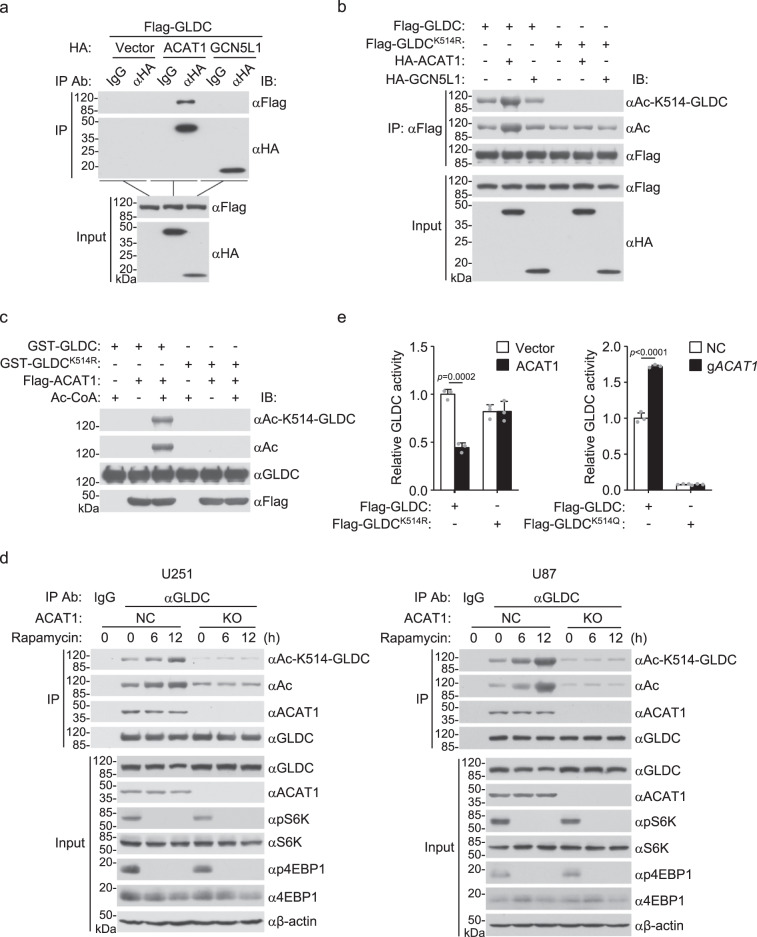
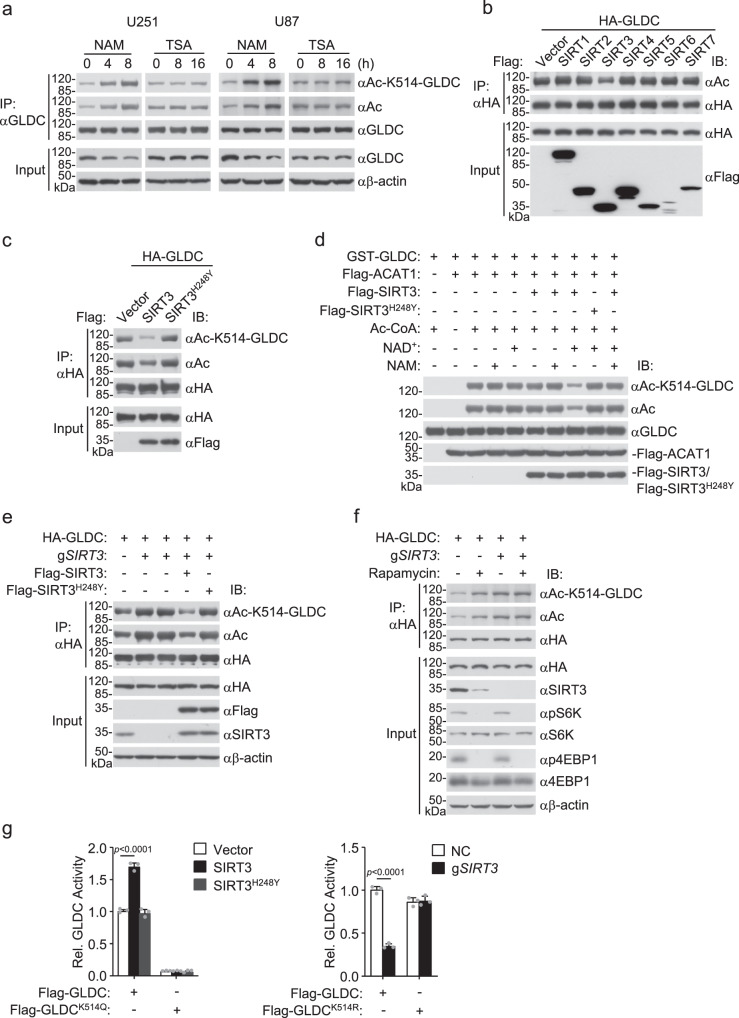
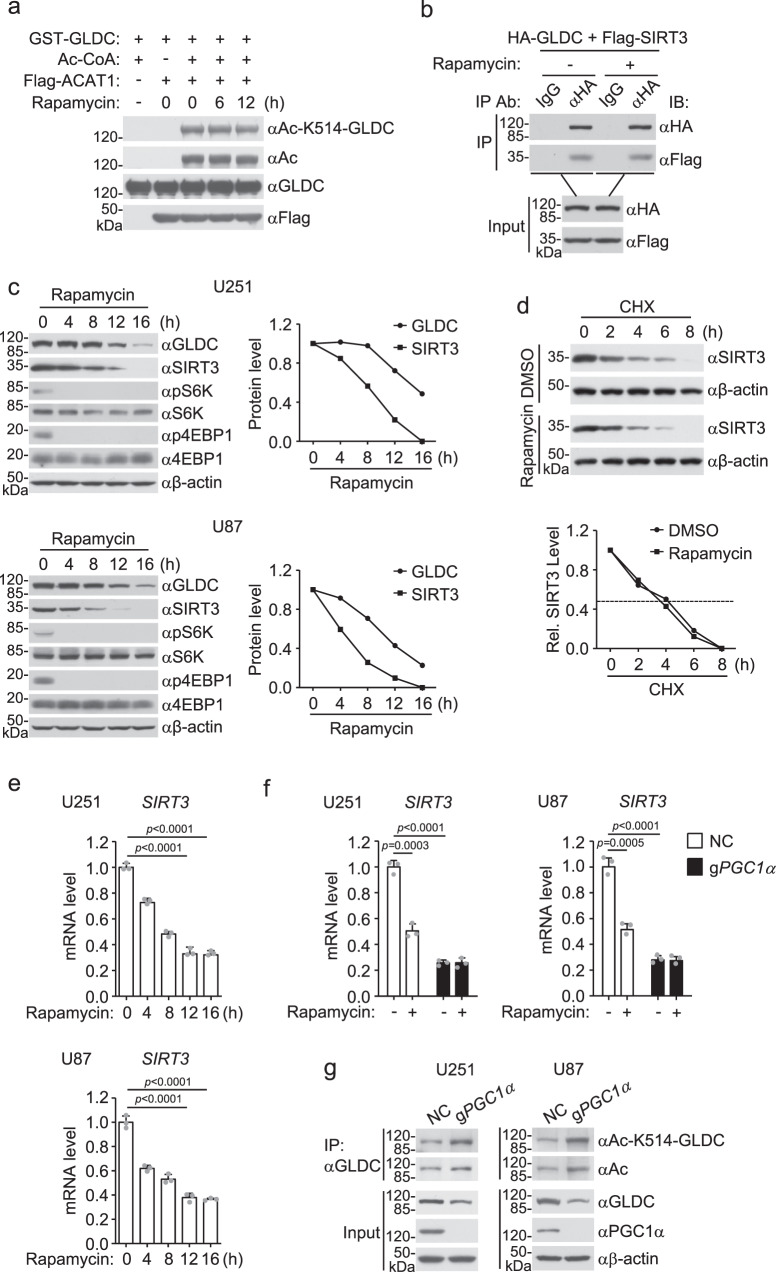
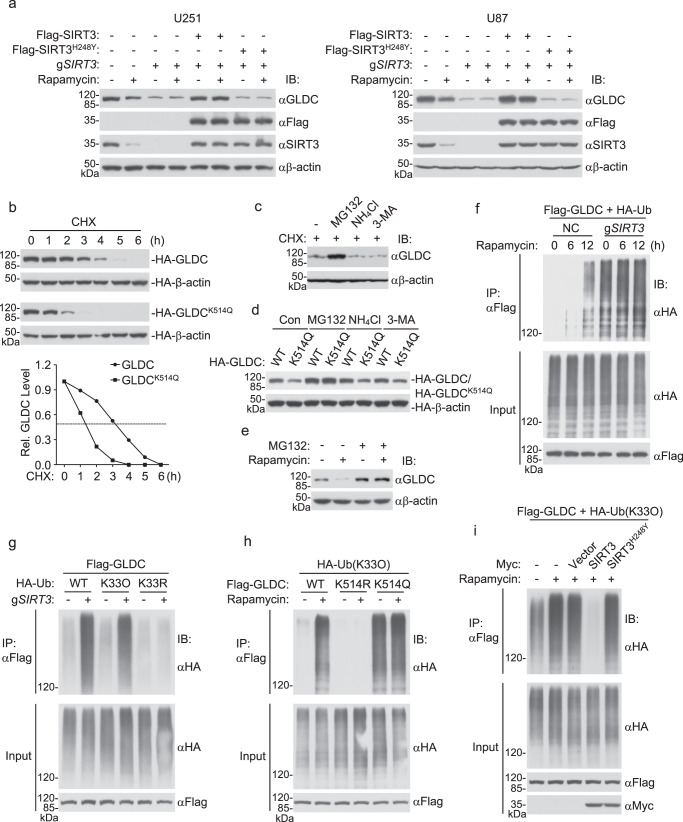
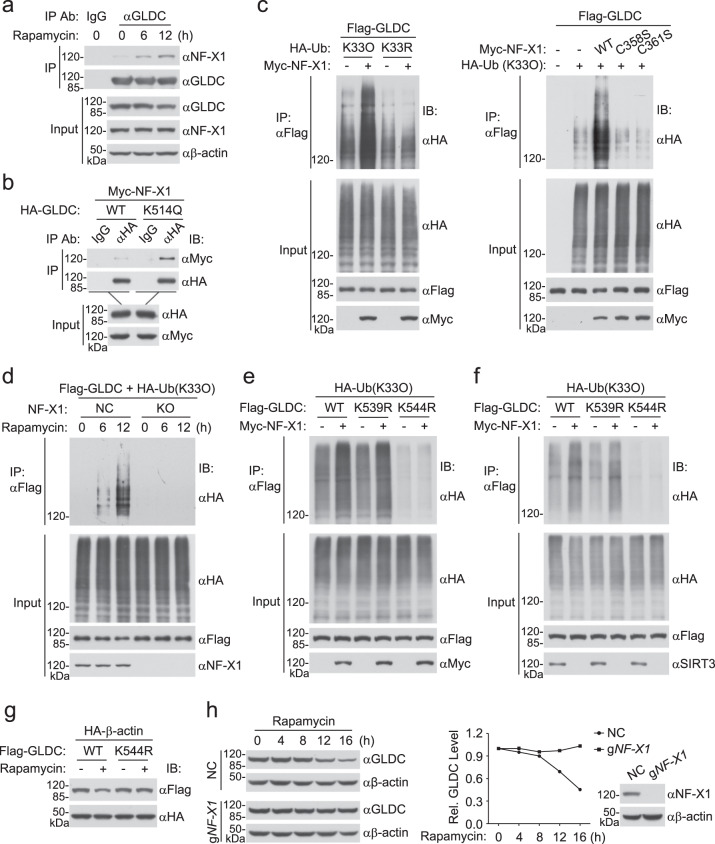
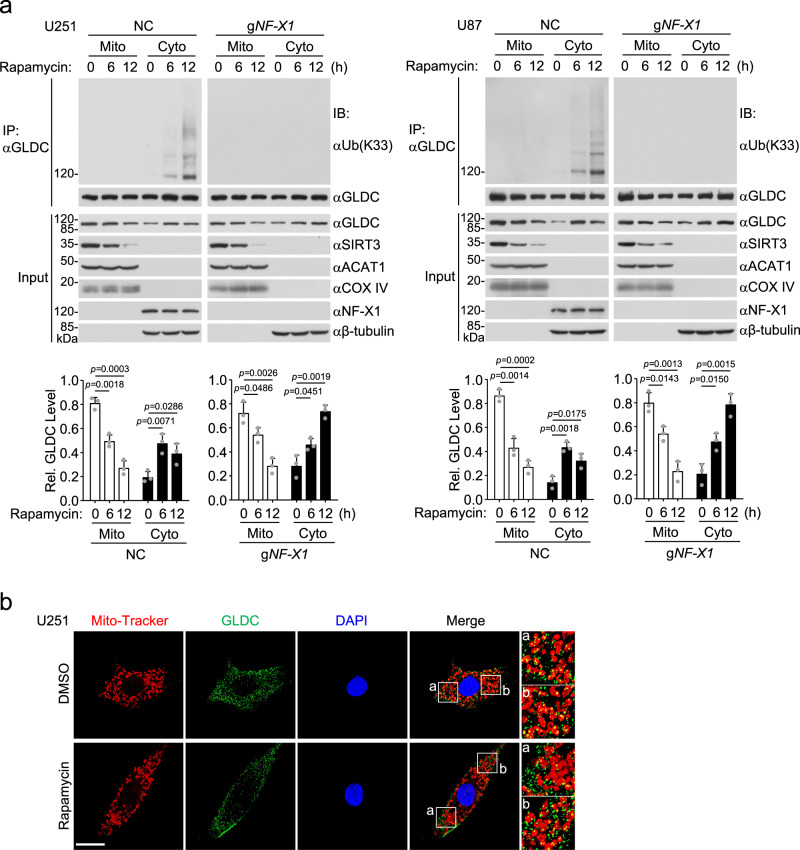
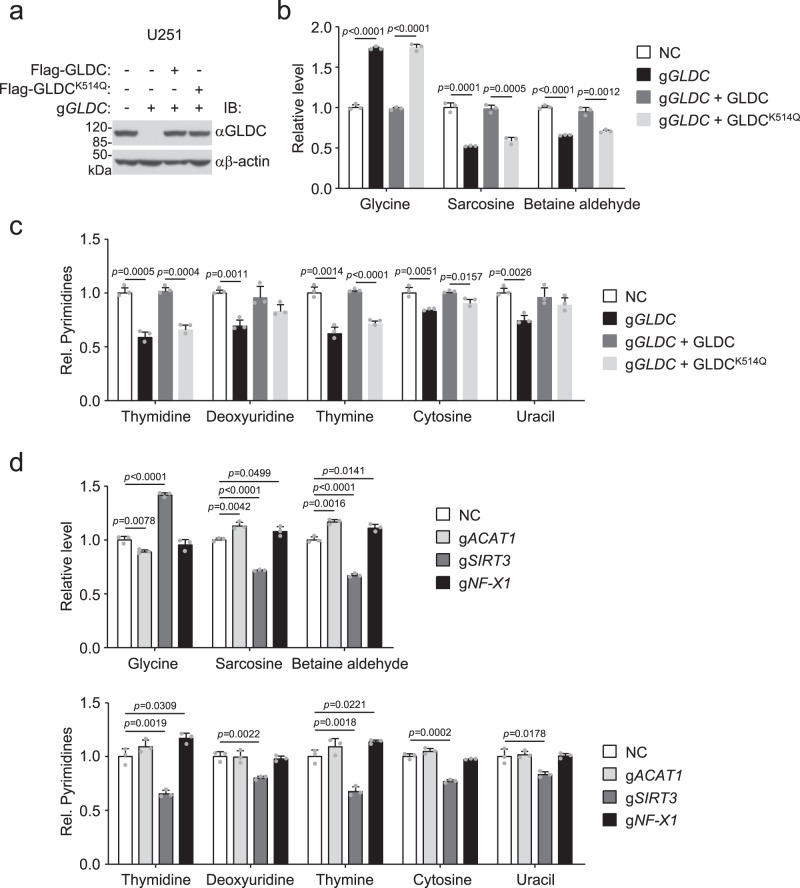
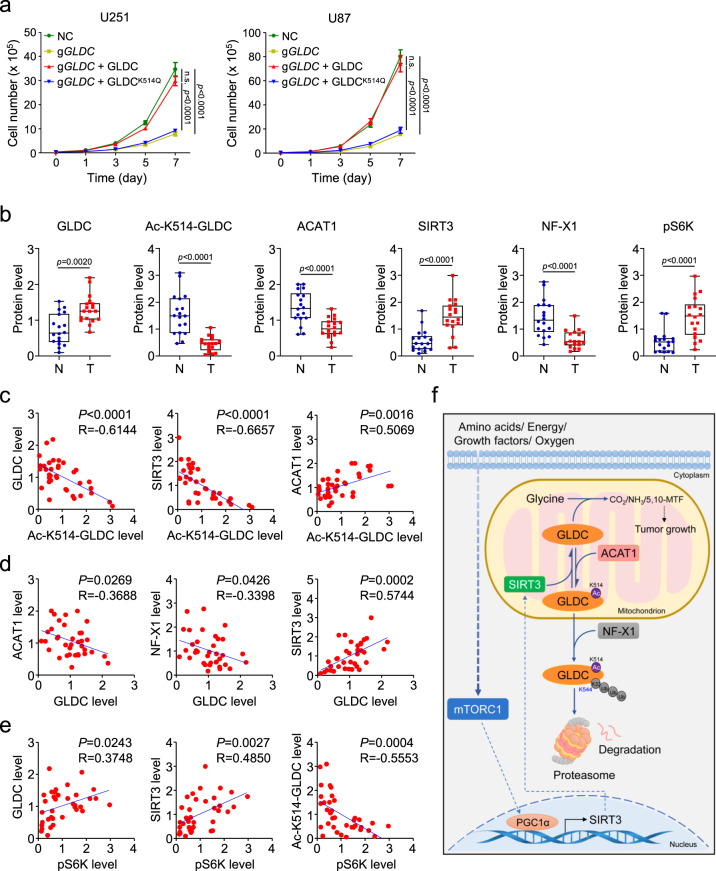
Glycine decarboxylase (GLDC) is a key enzyme of glycine cleavage system that converts glycine into one-carbon units. GLDC is commonly up-regulated and plays important roles in many human cancers. Whether and how GLDC is regulated by post-translational modifications is unknown. Here we report that mechanistic target of rapamycin complex 1 (mTORC1) signal inhibits GLDC acetylation at lysine (K) 514 by inducing transcription of the deacetylase sirtuin 3 (SIRT3). Upon inhibition of mTORC1, the acetyltransferase acetyl-CoA acetyltransferase 1 (ACAT1) catalyzes GLDC K514 acetylation. This acetylation of GLDC impairs its enzymatic activity. In addition, this acetylation of GLDC primes for its K33-linked polyubiquitination at K544 by the ubiquitin ligase NF-X1, leading to its degradation by the proteasomal pathway. Finally, we find that GLDC K514 acetylation inhibits glycine catabolism, pyrimidines synthesis and glioma tumorigenesis. Our finding reveals critical roles of post-translational modifications of GLDC in regulation of its enzymatic activity, glycine metabolism and tumorigenesis, and provides potential targets for therapeutics of cancers such as glioma.
Overview
The claims and statistics of this paper haven’t been checked yet.
Free: it reads the open-access text and checks the first 5 claims that cite a source we can check. Create a free account to check every claim.
Integrity signals
Registry
Cites
Statistics
Figures
Verification
Claims the paper makes
The claims and statistics of this paper haven’t been checked yet.
Free: it reads the open-access text and checks the first 5 claims that cite a source we can check. Create a free account to check every claim.
Claims other papers make about this one
Each is checked against this paper’s own text: does it say what the citing paper says it does?
The source backs part of the claim, not all of it — or backs it for a different population, condition or comparison.
In the citing paper
“GLDC is acetylated at K514 by ACAT1, which inhibits its enzymatic activity as well as translocates GLDC into the cytosol where it is recognized by E3 ligase NF-X1 and subsequently degraded (Figure 2E) [73].”
From Acetylation: a new target for protein degradation in cancer (2025) · cites this paper as [73]
Experimental — accuracy not yet measuredThe cited source says what the claim attributes to it.
In the citing paper
“GLDCK514Ac-mediated degradation was thus found to downregulate glycine catabolism and the downstream synthesis of glycine-related metabolites (e.g. pyrimidines) when expressed in glioma cells, as well as to inhibit glioma cell proliferation and tumorigenesis [73].”
From Acetylation: a new target for protein degradation in cancer (2025) · cites this paper as [73]
The cited source says what the claim attributes to it.
In the citing paper
“patient samples exhibited higher levels of GLDC and lower levels of GLDCK514Ac when compared to non-tumor tissues [73].”
From Acetylation: a new target for protein degradation in cancer (2025) · cites this paper as [73]
Self-check
Percentages, sums and reported differences re-computed from the paper’s own numbers.
The self-check needs the paper’s full text.
Citations
Cites
mTOR Signaling in Growth, Metabolism, and Disease
Saxton, R. A., & Sabatini, D. M. (2017) · Cell · doi:10.1016/j.cell.2017.02.004 · Cited by 7,555
mTOR Signaling in Growth, Metabolism, and Disease
Saxton, R. A., & Sabatini, D. M. (2017) · Cell · doi:10.1016/j.cell.2017.03.035 · Cited by 2,070
A mammalian protein targeted by G1-arresting rapamycin–receptor complex
Brown, E. J., Albers, M. W., Bum Shin, T., ichikawa, K., Keith, C. T., Lane, W. S., & Schreiber, S. L. (1994) · Nature · doi:10.1038/369756a0 · Cited by 2,053
The Adaptor Protein MITA Links Virus-Sensing Receptors to IRF3 Transcription Factor Activation
Zhong, B., Yang, Y., Li, S., Wang, Y.-Y., Li, Y., Diao, F., Lei, C., He, X., Zhang, L., Tien, P., et al. (2008) · Immunity · doi:10.1016/j.immuni.2008.09.003 · Cited by 1,519
Self-citationSabatini, D. M., Erdjument-Bromage, H., Lui, M., Tempst, P., & Snyder, S. H. (1994) · Cell · doi:10.1016/0092-8674(94)90570-3 · Cited by 1,509
mTOR controls mitochondrial oxidative function through a YY1–PGC-1α transcriptional complex
Cunningham, J. T., Rodgers, J. T., Arlow, D. H., Vazquez, F., Mootha, V. K., & Puigserver, P. (2007) · Nature · doi:10.1038/nature06322 · Cited by 1,488
Metabolite profiling identifies a key role for glycine in rapid cancer cell proliferation
Jain, M., Nilsson, R., Sharma, S., Madhusudhan, N., Kitami, T., Souza, A. L., Kafri, R., Kirschner, M. W., Clish, C. B., & Mootha, V. K. (2012) · Science · doi:10.1126/science.1218595 · Cited by 1,403
RING fingers mediate ubiquitin-conjugating enzyme (E2)-dependent ubiquitination
Lorick, K. L., Jensen, J. P., Fang, S., Ong, A. M., Hatakeyama, S., & Weissman, A. M. (1999) · Proceedings of the National Academy of Sciences · doi:10.1073/pnas.96.20.11364 · Cited by 981
Hirschey, M. D., Shimazu, T., Jing, E., Grueter, C. A., Collins, A. M., Aouizerat, B., Stančáková, A., Goetzman, E., Lam, M. M., Schwer, B., et al. (2011) · Molecular Cell · doi:10.1016/j.molcel.2011.07.019 · Cited by 787
Kong, X., Wang, R., Xue, Y., Liu, X., Zhang, H., Chen, Y., Fang, F., & Chang, Y. (2010) · PLoS ONE · doi:10.1371/journal.pone.0011707 · Cited by 718
Compartmentalization of Mammalian Folate-Mediated One-Carbon Metabolism
Tibbetts, A. S., & Appling, D. R. (2010) · Annual Review of Nutrition · doi:10.1146/annurev.nutr.012809.104810 · Cited by 692
Zhang, W. C., Shyh-Chang, N., Yang, H., Rai, A., Umashankar, S., Ma, S., Soh, B. S., Sun, L. L., Tai, B. C., Nga, M. E., et al. (2012) · Cell · doi:10.1016/j.cell.2011.11.050 · Cited by 660
Modulating the therapeutic response of tumours to dietary serine and glycine starvation
Maddocks, O. D. K., Athineos, D., Cheung, E. C., Lee, P., Zhang, T., van den Broek, N. J. F., Mackay, G. M., Labuschagne, C. F., Gay, D., Kruiswijk, F., et al. (2017) · Nature · doi:10.1038/nature22056 · Cited by 603
Serine, but not glycine, supports one-carbon metabolism and proliferation of cancer cells
Labuschagne, C. F., van den Broek, N. J. F., Mackay, G. M., Vousden, K. H., & Maddocks, O. D. K. (2014) · Cell Reports · doi:10.1016/j.celrep.2014.04.045 · Cited by 576
Hu, M.-M., Yang, Q., Xie, X.-Q., Liao, C.-Y., Lin, H., Liu, T.-T., Yin, L., & Shu, H.-B. (2016) · Immunity · doi:10.1016/j.immuni.2016.08.014 · Cited by 377
Self-citationSHMT2 drives glioma cell survival in ischaemia but imposes a dependence on glycine clearance
Kim, D., Fiske, B. P., Birsoy, K., Freinkman, E., Kami, K., Possemato, R. L., Chudnovsky, Y., Pacold, M. E., Chen, W. W., Cantor, J. R., et al. (2015) · Nature · doi:10.1038/nature14363 · Cited by 368
Amino Acid Signaling in TOR Activation
Kim, J., & Guan, K.-L. (2011) · Annual Review of Biochemistry · doi:10.1146/annurev-biochem-062209-094414 · Cited by 236
Scott, I., Webster, B. R., Li, J. H., & Sack, M. N. (2012) · Biochemical Journal · doi:10.1042/bj20120118 · Cited by 214
Still, A. J., Floyd, B. J., Hebert, A. S., Bingman, C. A., Carson, J. J., Gunderson, D. R., Dolan, B. K., Grimsrud, P. A., Dittenhafer-Reed, K. E., Stapleton, D. S., et al. (2013) · Journal of Biological Chemistry · doi:10.1074/jbc.m113.483396 · Cited by 123
KAT5 acetylates cGAS to promote innate immune response to DNA virus
Song, Z.-M., Lin, H., Yi, X.-M., Guo, W., Hu, M., & Shu, H. (2020) · Proceedings of the National Academy of Sciences · doi:10.1073/pnas.1922330117 · Cited by 113
Self-citationTargeting mTOR in Glioblastoma: Rationale and Preclinical/Clinical Evidence
Mecca, C., Giambanco, I., Donato, R., & Arcuri, C. (2018) · Disease Markers · doi:10.1155/2018/9230479 · Cited by 105
Wu, X., Lei, C., Xia, T., Zhong, X., Yang, Q., & Shu, H. (2019) · Nature Communications · doi:10.1038/s41467-019-12145-1 · Cited by 96
Self-citationXia, T., Yi, X.-M., Wu, X., Shang, J., & Shu, H.-B. (2019) · Proceedings of the National Academy of Sciences · doi:10.1073/pnas.1906431116 · Cited by 82
Self-citationHiraga, K., & Kikuchi, G. (1980) · Journal of Biological Chemistry · doi:10.1016/s0021-9258(19)70184-7 · Cited by 76
Lysine Deacetylases and Regulated Glycolysis in Macrophages
Shakespear, M. R., Iyer, A., Cheng, C. Y., Gupta, K. D., Singhal, A., Fairlie, D. P., & Sweet, M. J. (2018) · Trends in Immunology · doi:10.1016/j.it.2018.02.009 · Cited by 72
Kume, A., Koyata, H., Sakakibara, T., Ishiguro, Y., Kure, S., & Hiraga, K. (1991) · Journal of Biological Chemistry · doi:10.1016/s0021-9258(18)49991-7 · Cited by 56
Li, M., & Shu, H. (2020) · Protein & Cell · doi:10.1007/s13238-020-00729-3 · Cited by 52
Self-citationHasse, D., Andersson, E., Carlsson, G. H., Masloboy, A., Hagemann, M., Bauwe, H., & Andersson, I. (2013) · Journal of Biological Chemistry · doi:10.1074/jbc.m113.509976 · Cited by 40
Structure of P‐protein of the glycine cleavage system: implications for nonketotic hyperglycinemia
Nakai, T., Nakagawa, N., Maoka, N., Masui, R., Kuramitsu, S., & Kamiya, N. (2005) · The EMBO Journal · doi:10.1038/sj.emboj.7600632 · Cited by 39
Alptekin, A., Ye, B., Yu, Y., Poole, C. J., van Riggelen, J., Zha, Y., & Ding, H. (2019) · Oncogene · doi:10.1038/s41388-019-0967-3 · Cited by 37
Hasse, D., Mikkat, S., Thrun, H.-A., Hagemann, M., & Bauwe, H. (2007) · FEBS Letters · doi:10.1016/j.febslet.2007.02.037 · Cited by 18
Delivery of a normal baby after preimplantation genetic diagnosis for non-ketotic hyperglycinaemia
Hellani, A. M., Sammour, A., Johansson, L. B., & El-Sheikh, A. (2008) · Reproductive BioMedicine Online · doi:10.1016/s1472-6483(10)60158-7 · Cited by 14
Research works printed but not linked: 1
- Van Hove, J. L. K. et al. Nonketotic Hyperglycinemia in GeneReviews (eds Adam, M. P. et al.) (University of Washington, Seattle (WA), 1993–2021). 20301531
Cited by
Targeting sirtuins for cancer therapy: epigenetics modifications and beyond
Shen, H., Qi, X., Hu, Y., Wang, Y., Zhang, J., Liu, Z., & Qin, Z. (2024) · Theranostics · doi:10.7150/thno.100667 · Cited by 111
“…promotes glycine decarboxylase (GLDC) K514 deacetylation, which triggers K33-linked polyubiquitination of the ubiquitin ligase NF-X1 at the K544 site, leading to its degradation via the proteasomal pathway, and thus inhibits glycine catabolism, pyrimidine synthesis and glioma tumorigenesis [194].”
BackgroundXu, H. M., Liu, Y., Li, L.-S., & Liu, Y. (2023) · Aging and Disease · doi:10.14336/ad.2022.1123 · Cited by 72
“The transcription factor nuclear factor kappa B (NF-kB) [57], thyroid hormone receptor beta (TRbeta) [58], mechanistic target of rapamycin complex 1 (mTORC1) signal [59], and nuclear respiratory factor 2 (Nrf2) [60] promoted SIRT3 transcription by enhancing activation of the SIRT3 promoter.”
BackgroundOverview of Cancer Metabolism and Signaling Transduction
Chae, H., & Hong, S. (2022) · International Journal of Molecular Sciences · doi:10.3390/ijms24010012 · Cited by 71
Humboldt Review: Photorespiration – Rubisco's repair crew
Bauwe, H. (2022) · Journal of Plant Physiology · doi:10.1016/j.jplph.2022.153899 · Cited by 64
Context-dependent role of SIRT3 in cancer
Zhang, J., Ye, J., Zhu, S., Han, B., & Liu, B. (2024) · Trends in Pharmacological Sciences · doi:10.1016/j.tips.2023.12.005 · Cited by 51
Metadata
- Authors
- Liu, R., Zeng, L.-W., Gong, R., Yuan, F., Shu, H.-B., & Li, S.
- Affiliations
- Chinese Academy of Medical Sciences & Peking Union Medical College (CN)
- Wuhan University (CN)
- Renmin Hospital of Wuhan University (CN)
- Corresponding author
- Li, Shu
- Venue
- Nature Communications
- Published
- 2021-07-09
- Volume
- 12
- Issue
- 1
- Pages
- 4227-4227
- ISSN
- 2041-1723 (ISSN-L)
- PMC
- PMC8270999
- OpenAlex
- W3180569188
- Cited by
- 67
- References
- 32
- Citations by year
- 2026: 11 · 2025: 21 · 2024: 16 · 2023: 10 · 2022: 9
- FWCI
- 2.75
- Type
- journal article
- Language
- en
- Open access
- gold
- doi.org
- Licence
- cc-by
- creativecommons.org/licenses/by/4.0 (tdm)
- creativecommons.org/licenses/by/4.0 (vor)
- Locations
- Nature Communications (publishedVersion, cc-by)
- PubMed Central (publishedVersion, cc-by)
- PubMed (publishedVersion)
- RePEc: Research Papers in Economics (submittedVersion)
- DOAJ (DOAJ: Directory of Open Access Journals) (submittedVersion, cc-by-sa)
- Funders
- National Natural Science Foundation of China
- the State Key R&D Program of China
- Topics
- Life Sciences › Biochemistry, Genetics and Molecular Biology › Molecular Biology › PI3K/AKT/mTOR signaling in cancer
- Life Sciences › Biochemistry, Genetics and Molecular Biology › Molecular Biology › RNA modifications and cancer
- Life Sciences › Biochemistry, Genetics and Molecular Biology › Cancer Research › Cancer, Hypoxia, and Metabolism
- Keywords
- glycine decarboxylase, mTORC1, post-translational modification, lysine acetylation, SIRT3, ACAT1, polyubiquitination, proteasomal degradation, glycine cleavage system, glycine metabolism, pyrimidine synthesis, glioma, carcinogenesis, one-carbon metabolism
- MeSH terms
- Mechanistic Target of Rapamycin Complex 1, Acetyl-CoA C-Acetyltransferase, Acetylation, Animals, Glioma, Glycine, Humans, Male, Protein Processing, Post-Translational, Pyrimidines, Repressor Proteins, Transcriptional Activation, Gene Expression Regulation, Neoplastic, Xenograft Model Antitumor Assays, Cell Line, Tumor, Proteasome Endopeptidase Complex, Glycine Dehydrogenase (Decarboxylating), Mice, Ubiquitination, Sirtuin 3, HEK293 Cells, Proteolysis, Carcinogenesis
About these checks
Registry, retraction, Cites and statistics results are computed, not judged, with one exception: a printed reference that no index lists is read once by a model before it counts as a citation error. Claims are extracted by a model and kept only when their quote appears verbatim in the text; each cited source is then checked, with a model’s help, for whether it says what the claim relies on. Those verdicts can be wrong — read the claim’s quote and the cited source before relying on one.
Statistics and arithmetic are recomputed, not judged.
Confidence bands are shown only for fields calibrated on our annotated test set. None is calibrated yet, so no band is shown.
What counts as a claim ›How we measure confidence ›How we check this ›
Are you an author, or do you see a problem with this page? Request a review
Data sources
Bibliographic data: Semantic Scholar, OpenAlex, Crossref.
Contains information from the Semantic Scholar Academic Graph Datasets, made available under the ODC Attribution License (ODC-BY 1.0).
Semantic Scholar’s data is described in: Kinney, R., et al. (2023). The Semantic Scholar Open Data Platform. arXiv:2301.10140.
