

Ferromagnetic soft catheter robots for minimally invasive bioprinting
Open accessThe DOI matches its Crossref record; 61 of the 61 references it cites were found in a registry or an index.
Abstract
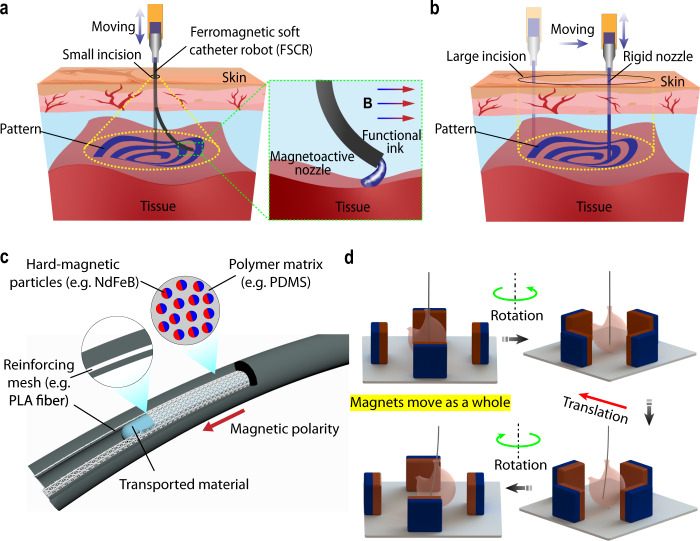
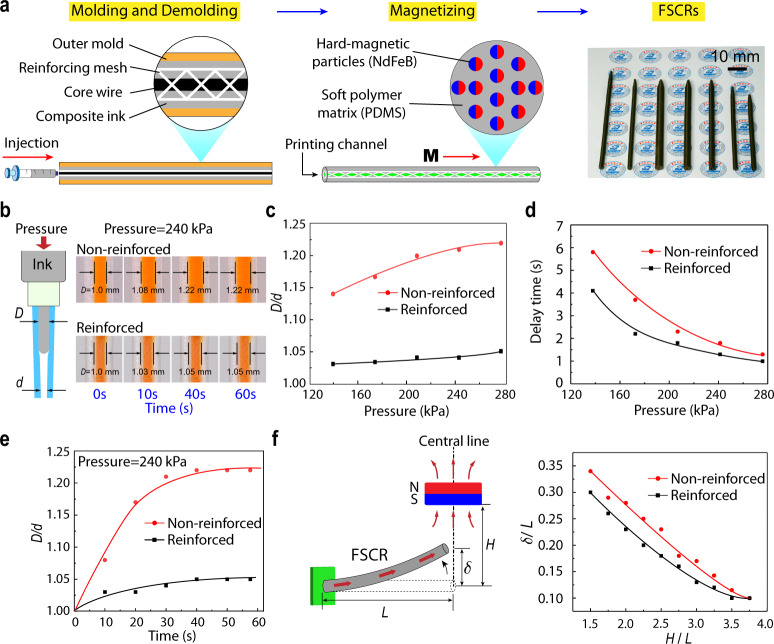
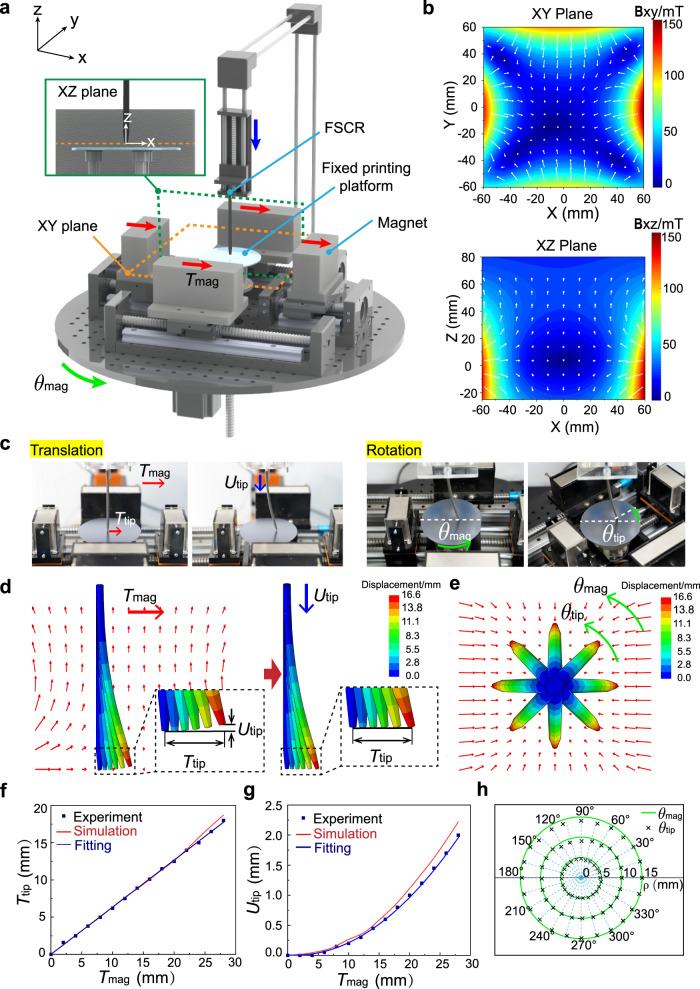
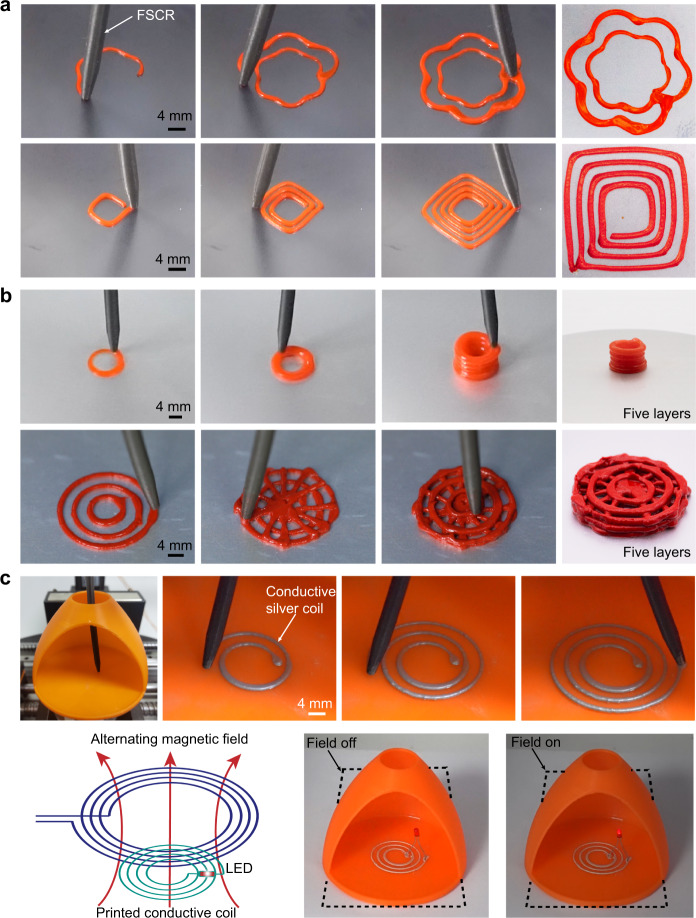
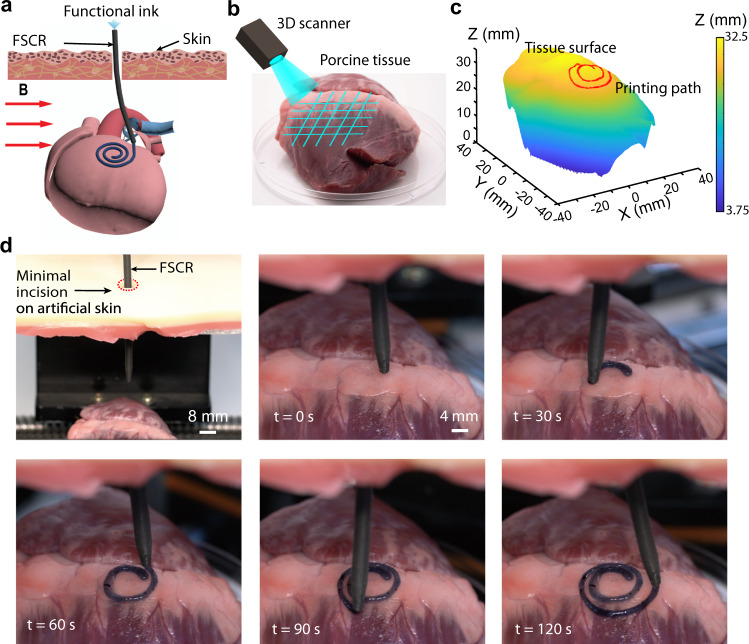
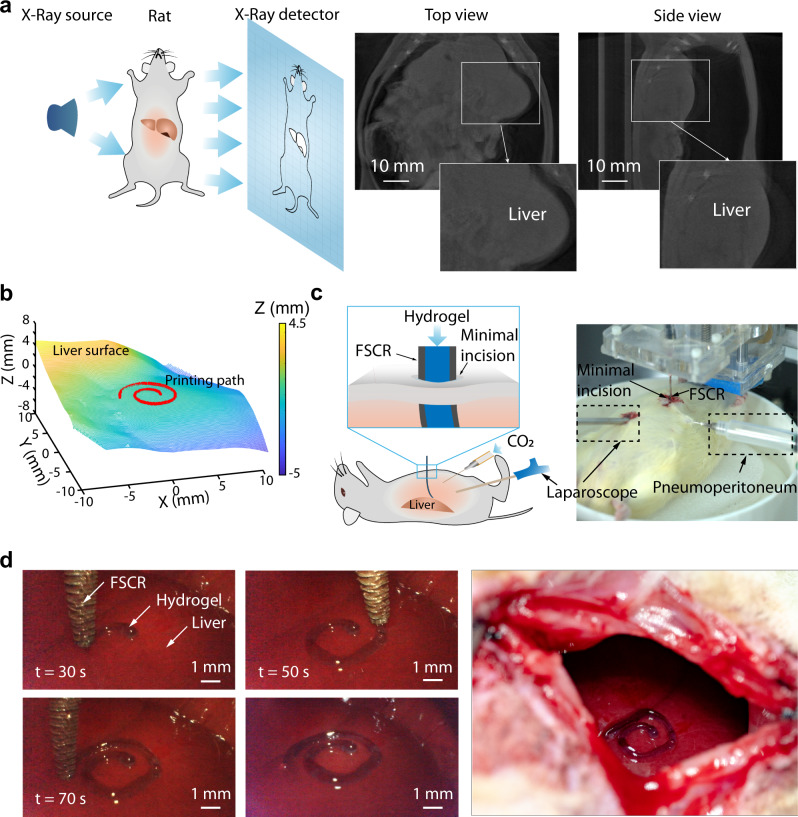
In vivo bioprinting has recently emerged as a direct fabrication technique to create artificial tissues and medical devices on target sites within the body, enabling advanced clinical strategies. However, existing in vivo bioprinting methods are often limited to applications near the skin or require open surgery for printing on internal organs. Here, we report a ferromagnetic soft catheter robot (FSCR) system capable of in situ computer-controlled bioprinting in a minimally invasive manner based on magnetic actuation. The FSCR is designed by dispersing ferromagnetic particles in a fiber-reinforced polymer matrix. This design results in stable ink extrusion and allows for printing various materials with different rheological properties and functionalities. A superimposed magnetic field drives the FSCR to achieve digitally controlled printing with high accuracy. We demonstrate printing multiple patterns on planar surfaces, and considering the non-planar surface of natural organs, we then develop an in situ printing strategy for curved surfaces and demonstrate minimally invasive in vivo bioprinting of hydrogels in a rat model. Our catheter robot will permit intelligent and minimally invasive bio-fabrication.
Overview
The claims and statistics of this paper haven’t been checked yet.
Free: it reads the open-access text and checks the first 5 claims that cite a source we can check. Create a free account to check every claim.
Integrity signals
Registry
Cites
Statistics
Figures
Verification
Claims the paper makes
The claims and statistics of this paper haven’t been checked yet.
Free: it reads the open-access text and checks the first 5 claims that cite a source we can check. Create a free account to check every claim.
Claims other papers make about this one
Each is checked against this paper’s own text: does it say what the citing paper says it does?
The check wasn’t confident either way, so it gives no verdict — never disputed.
In the citing paper
“Another innovative aspect is that the handheld device can be manually operated during surgical procedures [12] or integrated into a robotic arm for more efficient reconstruction [16, 17].”
From Development of silk microfiber-reinforced bioink for muscle tissue engineering and in situ printing by a handheld 3D printer (2025) · cites this paper as [17]
Experimental — accuracy not yet measured
Self-check
Percentages, sums and reported differences re-computed from the paper’s own numbers.
The self-check needs the paper’s full text.
Citations
Cites
3D bioprinting of tissues and organs
Murphy, S. V., & Atala, A. (2014) · Nature Biotechnology · doi:10.1038/nbt.2958 · Cited by 7,034
Small-scale soft-bodied robot with multimodal locomotion
Hu, W., Lum, G. Z., Mastrangeli, M., & Sitti, M. (2018) · Nature · doi:10.1038/nature25443 · Cited by 2,372
Printing ferromagnetic domains for untethered fast-transforming soft materials
Kim, Y., Yuk, H., Zhao, R., Chester, S. A., & Zhao, X. (2018) · Nature · doi:10.1038/s41586-018-0185-0 · Cited by 2,183
Microrobots for Minimally Invasive Medicine
Nelson, B. J., Kaliakatsos, I. K., & Abbott, J. J. (2010) · Annual Review of Biomedical Engineering · doi:10.1146/annurev-bioeng-010510-103409 · Cited by 1,968
Printing soft matter in three dimensions
Truby, R. L., & Lewis, J. A. (2016) · Nature · doi:10.1038/nature21003 · Cited by 1,622
Biomedical applications of soft robotics
Cianchetti, M., Laschi, C., Menciassi, A., & Dario, P. (2018) · Nature Reviews Materials · doi:10.1038/s41578-018-0022-y · Cited by 1,435
Ferromagnetic soft continuum robots
Kim, Y., Parada, G. A., Liu, S., & Zhao, X. (2019) · Science Robotics · doi:10.1126/scirobotics.aax7329 · Cited by 1,312
OctoMag: An Electromagnetic System for 5-DOF Wireless Micromanipulation
Kummer, M. P., Abbott, J. J., Kratochvil, B. E., Borer, R., Sengul, A., & Nelson, B. J. (2010) · IEEE Transactions on Robotics · doi:10.1109/tro.2010.2073030 · Cited by 1,161
Voxelated soft matter via multimaterial multinozzle 3D printing
Skylar-Scott, M. A., Mueller, J., Visser, C. W., & Lewis, J. A. (2019) · Nature · doi:10.1038/s41586-019-1736-8 · Cited by 1,024
3D printing of conducting polymers
Yuk, H., Lu, B., Lin, S., Qu, K., Xu, J., Luo, J., & Zhao, X. (2020) · Nature Communications · doi:10.1038/s41467-020-15316-7 · Cited by 1,001
Cited by
Items 101–200 of 263
Wang, Z., Zhang, Z., & Kuang, X. (2025) · Smart Materials in Medicine · doi:10.1016/j.smaim.2025.09.001 · Cited by 36
Magnetosurgery: Principles, design, and applications
Kladko, D. V., & Vinogradov, V. V. (2023) · Smart Materials in Medicine · doi:10.1016/j.smaim.2023.06.008 · Cited by 19
Robotic Conformal Material Extrusion 3D Printing for Appending Structures on Unstructured Surfaces
Armstrong, C. D., Montgomery, S. M., Yue, L., Demoly, F., Zhou, K., & Qi, H. J. (2024) · Advanced Intelligent Systems · doi:10.1002/aisy.202300516 · Cited by 19
Multiphysics topology optimization of magnetic materials with continuous magnetization orientations
Zhao, Z., Wang, C., & Zhang, X. S. (2024) · Mechanics of Materials · doi:10.1016/j.mechmat.2024.105089 · Cited by 19
Zhao, W., Hu, C., Xu, T., Lin, S., Wang, Z., & Zhu, Y. (2022) · Advanced Functional Materials · doi:10.1002/adfm.202207496 · Cited by 20
Bioprinting-By-Design of Hydrogel-Based Biomaterials for In Situ Skin Tissue Engineering
Douglas, A., Chen, Y. A., Elloso, M. S., Levschuk, A., & Jeschke, M. G. (2025) · Gels · doi:10.3390/gels11020110 · Cited by 19
“The catheter was inserted through a small incision in mice, and its movement was manipulated by a magnetic field controlled through the computer [110].”
Advancements in robotic arm-based 3D bioprinting for biomedical applications
Li, K., Huang, W., Guo, H., Liu, Y., Chen, S., Liu, H., & Gu, Q. (2023) · Life Medicine · doi:10.1093/lifemedi/lnad046 · Cited by 18
A Convoy of Magnetic Millirobots Transports Endoscopic Instruments for Minimally‐Invasive Surgery
Jeong, M., Tan, X., Fischer, F., & Qiu, T. (2024) · Advanced Science · doi:10.1002/advs.202308382 · Cited by 22
Kamaraj, M., Rezayof, O., Barer, A., Kim, H., Moghimi, N., Joshi, A., Dokmeci, M. R., Khademhosseini, A., Alambeigi, F., & John, J. V. (2025) · Biomaterials Advances · doi:10.1016/j.bioadv.2024.214057 · Cited by 17
In situ 3D bioprinting: The future of regenerative medicine
Huang, J., Zhou, G., Jiang, Q., & Li, L. (2025) · Fundamental Research · doi:10.1016/j.fmre.2025.06.004 · Cited by 20
“Zhou et al. have proposed a ferromagnetic soft wire robot capable of actively bending its tip and navigating through narrow and curved environments [ 111 ].”
Reprogrammable Magnetic Soft Actuators with Microfluidic Functional Modules via Pixel‐Assembly
Zhao, X., Yao, H., Lv, Y., Chen, Z., Dong, L., Huang, J., & Mi, S. (2024) · Small · doi:10.1002/smll.202310009 · Cited by 21
Guo, Z., Ni, Q., Chen, W., Dai, H., & Wang, L. (2022) · Applied Mathematics and Mechanics · doi:10.1007/s10483-022-2901-9 · Cited by 17
“If the ejection direction of the fluid flow in the pipe can be effectively controlled, wound cleaning, targeted drug delivery, and biological printing can be precisely achieved in minimally invasive surgeries for cardiovascular disease([26]), renal surgery([27]), skin adhesion([28]), etc.”
BackgroundMethodSelf-citation4D-printed snake-like biomimetic soft robots
Ou, X., Huang, J., Huang, D., Li, X., Chen, G., Yang, Y., Bi, R., Sheng, Y., & Guo, S. (2025) · Bio-Design and Manufacturing · doi:10.1631/bdm.2400074 · Cited by 17
“To address these challenges, an ink was developed by blending microscale NdFeB MPs within a highly soft and stretchable silicone elastomer (Ecoflex 00-10) curable at room temperature, and this composite was proven biocompatible [39].”
Self-citationRoghani, M., Romeis, D., & Saphiannikova, M. (2023) · Soft Matter · doi:10.1039/d3sm00906h · Cited by 16
External-field-assisted additive manufacturing for micro/nano device fabrication
Wang, B., Du, J., Zhang, H., Cao, Y., Wen, C., Iacovacci, V., Lyu, Z., Li, T., & Wang, Q. (2025) · International Journal of Extreme Manufacturing · doi:10.1088/2631-7990/ae098e · Cited by 23
“Reproduced from [73] .”
InfluentialLi, W., Liu, S., Lou, C., Sang, M., Gong, X., Leung, K. C., & Xuan, S. (2022) · Cell Reports Physical Science · doi:10.1016/j.xcrp.2022.101209 · Cited by 14
Wang, B., Deng, H., & Gong, X. (2024) · International Journal of Solids and Structures · doi:10.1016/j.ijsolstr.2024.112863 · Cited by 15
Stimulus-assisted in situ bioprinting: advancing direct bench-to-bedside delivery
Hwangbo, H., Koo, Y., Nacionales, F., Kim, J., Chae, S., & Kim, G. (2024) · Trends in biotechnology · doi:10.1016/j.tibtech.2024.11.001 · Cited by 14
Optimization-based conformal path planning for in situ bioprinting during complex skin defect repair
Zhao, W., Hu, C., Wang, Y., Lin, S., Wang, Z., & Xu, T. (2025) · Bio-Design and Manufacturing · doi:10.1631/bdm.2300365 · Cited by 15
“Similarly, Zhou and colleagues used a similar approach for generating spatial paths for printing on the surfaces of living tissues [31].”
Aligned Magnetic Nanocomposites for Modularized and Recyclable Soft Microrobots
Shui, L., Ni, K., & Wang, Z. (2022) · ACS Applied Materials & Interfaces · doi:10.1021/acsami.2c13108 · Cited by 14
Magnetic Soft Catheter Robot System for Minimally Invasive Treatments of Articular Cartilage Defects
Hu, J., Hou, Y., Gu, W., Hu, S., Liu, A., Cui, W., Yang, W., He, Y., & Fu, J. (2024) · Soft Robotics · doi:10.1089/soro.2023.0157 · Cited by 13
“More-over, a magnetic-controlled soft catheter system for in situ printing on the surface of human organs was developed by Zhou et al., 14 and its feasibility was validated on the surface of rat livers.”
Hard-magnetic soft continuum robots: Modeling, design and applications
Li, J., Wan, S., Tan, L., Shah, K., & Wang, L. (2025) · Science China Physics Mechanics and Astronomy · doi:10.1007/s11433-025-2729-4 · Cited by 13
Self-citationEndovascular Microrobotics for Neurointervention
Santiago-Dieppa, D. R., & Friend, J. (2024) · Annual Review of Control, Robotics, and Autonomous Systems · doi:10.1146/annurev-control-060523-010720 · Cited by 12
Squid-Inspired Powerful Untethered Soft Pumps via Magnetically Induced Phase Transitions
Jiang, Q., Hu, Z., Wu, K., Wu, W., Zhang, S., Ding, H., & Wu, Z. (2023) · Soft Robotics · doi:10.1089/soro.2022.0118 · Cited by 12
Zhao, M., Tao, Y., Guo, W., Ge, Z., Hu, H., Yan, Y. L., Zou, C., Wang, G., & Ren, Y. (2024) · Lab on a Chip · doi:10.1039/d3lc00945a · Cited by 12
Thermally Drawn-Based Microtubule Soft Continuum Robot for Cardiovascular Intervention
Wang, X., Liu, W., Luo, Q., Yao, L., & Wei, F. (2024) · ACS Applied Materials & Interfaces · doi:10.1021/acsami.4c03885 · Cited by 12
Hu, J., Guo, L., Gu, W., Hu, J., Liu, A., He, Y., Fu, J., & Hu, S. (2024) · IEEE Robotics and Automation Letters · doi:10.1109/lra.2024.3474552 · Cited by 13
“Zhou et al. [11] developed a magnetically controlled in-situ printing system with navigation based on preoperative computer tomography (CT) scans and completed a demonstration of minimally invasive printing experiments on curved tissue.”
BackgroundLinear magnet with fluid-solid-switchable cells for flexible devices
Deng, Q., Zhu, H., Zhao, Z., Li, H., Yang, L., Wu, X., Zhang, Y., Yu, P., Tang, X. G., Li, W., et al. (2025) · Nature Communications · doi:10.1038/s41467-025-59663-9 · Cited by 12
“It isfound that the de fl ection( δ x = L ) of the linearmagnet could be precisely controlled by the external magnetic fi eld, a feature owing to the space-resolved magnetization patterning 45,46 .”
Self-citationZhao, W., Hu, C., Lin, S., Wang, Y., Liu, L., Wang, Z., Zhu, Y., & Xu, T. (2023) · Additive manufacturing · doi:10.1016/j.addma.2023.103701 · Cited by 14
3D printing of shape memory magnetorheological elastomers composites
Wang, J., Yao, Y., Yang, B., & Liu, Y. (2024) · European Polymer Journal · doi:10.1016/j.eurpolymj.2024.113403 · Cited by 11
Self-citationMagnetic driven tentacles for bio-mimic motion
Murakami, T., & Tsumori, F. (2022) · Japanese Journal of Applied Physics · doi:10.35848/1347-4065/ac5a99 · Cited by 11
Design and Development of a Magnetic-Steered Minimally Invasive Bioprinting System
Chen, H., Xu, Z., Li, Z., & Xu, Q. (2023) · IEEE Robotics and Automation Letters · doi:10.1109/lra.2023.3311373 · Cited by 12
“developed a ferromagnetic soft catheter robot (FSCR) to achieve bioprinting [16].”
Kolahi, P. M., & Korayem, M. H. (2024) · Acta Mechanica · doi:10.1007/s00707-024-03852-y · Cited by 10
“Therefore, itisnecessarytocalculatethemagneticfieldanddeformationtosteertherobotincomplexenvironments[1–3].”
A review and perspective of magnetic-controlled microbots for medical applications
Yang, P., Han, Y., Mo, C., Luo, J., Shou, M., Gong, X., & Zhou, Z. C. (2025) · Chemical Engineering Journal · doi:10.1016/j.cej.2025.165814 · Cited by 10
Sensors and actuators based on magnetic materials for haptic interfaces
Ruan, L., Wen, J., Wang, Y., Zhao, X., Li, F., Zhang, Y., Liu, C., Tao, W., Liang, H., Zhang, X., et al. (2025) · Journal of Materials Chemistry C · doi:10.1039/d5tc00912j · Cited by 11
Self-citationCheng, W., Dong, J., Wei, L., Shen, G., Wang, Q., & Sun, R. (2025) · Materials Horizons · doi:10.1039/d5mh01383f · Cited by 10
Каліта, В. М., Dzhezherya, Y. I., Cherepov, S. V., Skirta, Y. B., Bodnaruk, A., & Ryabchenko, S. M. (2023) · Smart Materials and Structures · doi:10.1088/1361-665x/acbd04 · Cited by 10
Zhang, S., Xu, Y., Li, Z., Wang, Q., Li, Y., Chen, X., Chen, P., Lu, Z., & Su, B. (2023) · Small · doi:10.1002/smll.202306340 · Cited by 12
Kim, J., Jeong, S., Thibault, B. C., Soto, J. A. L., Tetsuka, H., Devaraj, S. V., Riestra, E., Jang, Y., Seo, J. W., Rodríguez, R. A. C., et al. (2024) · Advanced Healthcare Materials · doi:10.1002/adhm.202401735 · Cited by 10
Actuators and variable stiffness of flexible surgical actuators: A review
Wang, K., Sun, L., Liu, Z., Sun, N., & Zhang, J. (2025) · Sensors and Actuators A Physical · doi:10.1016/j.sna.2025.116588 · Cited by 9
Recent Advances in Handheld and Robotic Bioprinting Approach for Tissue Engineering
Kamaraj, M., Moghimi, N., Joshi, A., Rezayof, O., Barer, A., Cao, S., Orkin, R., Alambeigi, F., & John, J. V. (2025) · Advanced Materials Technologies · doi:10.1002/admt.202500206 · Cited by 10
Printable Conductive Hydrogels and Elastomers for Biomedical Application
Li, Z., Shen, C., Chen, H., Shin, J., Dixit, K., & Lee, H. J. (2025) · Gels · doi:10.3390/gels11090707 · Cited by 9
“As an in vivo bioprinting technique, Zhou et al. reported ferromagnetic soft catheter robots (FSCRs) for bioprinting inside the human body using conductive polymers with a combination of silver flakes and alginate solution (Figure 4B) [97].”
Magnetic slippery microcatheter with artificial cilia for low-friction interventions
Yang, S., Shen, J., He, J., Xia, Z., Zhang, Y., & Wang, B. (2025) · Science Advances · doi:10.1126/sciadv.adw9926 · Cited by 10
Spraying Conformal Hydrogel Skins as Functional Platform
Yuan, H. Y., Shen, Y., Zhao, Y., Wang, L., Zhao, J., Zeng, Y., Li, S., Zhao, Y., Miao, Z., Wong, J., et al. (2026) · Advanced Functional Materials · doi:10.1002/adfm.202527145 · Cited by 9
Self-citationErin, Ö., Chen, X., Bell, A., Raval, S., Schwehr, T. J., Liu, X., Addepalli, P., Mair, L. O., Weinberg, I. N., Diaz-Mercado, Y. J., et al. (2024) · Scientific Reports · doi:10.1038/s41598-024-72615-5 · Cited by 9
Self-citationChallenges and perspectives in using finite element modeling to advance 3D bioprinting
Soufivand, A. A., Lee, S. J., Jüngst, T., & Budday, S. (2025) · Progress in Biomedical Engineering · doi:10.1088/2516-1091/addb19 · Cited by 12
“It can optimize the bioink deposition during the printing process to prevent structural instability and failure during the fabrication [49] and stable ink extrusion for various materials with different rheological properties and functionalities [119].”
3D Bioprinting for Personalized Medicine: Advances, Challenges, and Future Directions
Gao, X., Chen, J., Zhang, X., & Xu, T. (2025) · ACS Biomaterials Science & Engineering · doi:10.1021/acsbiomaterials.5c00740 · Cited by 12
Hydrogel-polymer hybrid actuator with soft lattice skeleton for excellent connectivity
Kozuki, H., Yoshida, K., Yasuga, H., & Kurashina, Y. (2025) · Sensors and Actuators B Chemical · doi:10.1016/j.snb.2025.137377 · Cited by 8
Continuum Robotic Catheter Systems for Transcatheter Mitral Valve Procedures: A Technical Review
Ding, D., Yao, T., Wang, H., Sun, X., & Luo, R. (2025) · IEEE Access · doi:10.1109/access.2025.3548273 · Cited by 8
“Recent developments in materials science and micro-fabrication techniques have further enhanced the capabilities of these systems, enabling more sophisticated manipulation strategies and improved procedural outcomes [21], [22], [23].”
A Surgical Robot for Intracorporeal Additive Manufacturing of Tissue Engineering Constructs
Simeunović, A., Wolf, K. L., Tierling, K., & Hoelzle, D. J. (2022) · IEEE Robotics and Automation Letters · doi:10.1109/lra.2022.3183752 · Cited by 8
Magnetic Soft Actuators: Sensor‐Actuator Fusion via Integrated Fabrication for Precise Control
Li, X., Sun, B., Li, D., Hao, J., Sun, Y., & Li, M. (2025) · Advanced Materials Technologies · doi:10.1002/admt.202500611 · Cited by 8
Smart Catheters for Diagnosis, Monitoring, and Therapy
Tarman, A. Y., Ahmed, S., Althumayri, M. O., Guy, M., Lugo, D. C., Ligler, F. S., Ligler, G. T., Öklü, R., Kawahira, H., McShane, M. J., et al. (2025) · Advanced Healthcare Materials · doi:10.1002/adhm.202503913 · Cited by 9
Quint, J. P., Lara, E. C. M., Samandari, M., Shin, S. R., Sinha, I., & Tamayol, A. (2024) · Applied Physics Reviews · doi:10.1063/5.0197123 · Cited by 7
Zhang, Q., Boniface, A., Parashar, V. K., Sgarminato, V., Madrid-Wolff, J. A., Gijs, M. A. M., & Moser, C. (2025) · Light Advanced Manufacturing · doi:10.37188/lam.2025.021 · Cited by 9
“To address these limitations, non-invasive and minimally invasive bioprinting has emerged as a powerful solution by offering the possibility of creating functional biological constructs bypassing invasive surgical procedures 21–24 .”
A continuum robotic bioprinter for in situ vocal fold repair
Groen, S. A. T., Nejati, S., AlHumaid, S., Huynh, L. A., Kost, K. M., Sedal, A., & Mongeau, L. (2025) · Device · doi:10.1016/j.device.2025.100973 · Cited by 7
Phase transition reversible 3D printing of magnetic thixotropic fluid
Li, Z., Dong, J., Zhang, S., Li, Y., Deng, C., Li, D., Cui, H., Li, Z., Song, Z., Yao, J., et al. (2023) · Applied Materials Today · doi:10.1016/j.apmt.2023.101920 · Cited by 7
Octopus-Inspired Soft Robot for Slow Drug Release
Tong, D., Zhao, Y., Wu, Z., Chen, Y., Xu, X., Chen, Q., Fan, X., & Yang, Z. (2024) · Biomimetics · doi:10.3390/biomimetics9060340 · Cited by 7
Spatiotemporal Modulation of Magnetization in Magnetic Soft Materials
Deng, Q., Li, H., Zhu, H., Yang, L., Li, W., Yin, X., Zhang, Y., & Wang, L. (2025) · Advanced Materials · doi:10.1002/adma.202506342 · Cited by 11
Self-citationDynamic Bonding Enabled Ambient‐Driven Motors
Si, M., Liu, Z., Chen, C., Lu, W., Liu, D., Shi, P., Yu, Y., Yan, Y., He, X., & Chen, T. (2025) · Angewandte Chemie International Edition · doi:10.1002/anie.202518011 · Cited by 6
Deformation analysis for magnetic soft continuum robots based on minimum potential energy principle
Wang, Z., Weng, D., Li, Z., Chen, L., Ma, Y., & Wang, J. (2024) · Smart Materials and Structures · doi:10.1088/1361-665x/ad7ca4 · Cited by 6
“This deformation is suitable for applications requiring deflection at the tips, such as navigation in the blood vessel [23, 41, 42] and functioning as end effector of a 3D printer [43].”
Self-citationCao, R., He, Y., Chen, W., Dai, H., & Wang, L. (2025) · Mechanical Systems and Signal Processing · doi:10.1016/j.ymssp.2025.112899 · Cited by 6
Self-citationYeo, M., El-Mallah, J. C., Horchler, S., Waldron, O., Asgardoon, M. H., Jikaria, N. R., Dawes, J., Landmesser, M. E., Sun, M., Ozbolat, I. T., et al. (2025) · Biomaterials · doi:10.1016/j.biomaterials.2025.123711 · Cited by 7
Human Pulse Detection by a Soft Tactile Actuator
Huang, Z., Li, X., Wang, J., Zhang, Y., & Mei, J. (2022) · Sensors · doi:10.3390/s22135047 · Cited by 6
“With the developments in soft actuation technology and soft sensing technology, soft robots are expanding into human– computer interaction, health care, field exploration, and other fields [7,8].”
BackgroundSelf-citationUsing neuroevolution for designing soft medical devices
Alcaraz‐Herrera, H., Tsompanas, M., Balaž, I., & Adamatzky, A. (2024) · Biomimetic Intelligence and Robotics · doi:10.1016/j.birob.2024.100205 · Cited by 6
“…catheters, and relevant surgical devices, started to emerge from late 1980s [35] and by 2020 there was a range of catheters developed for cardio-vascular surgery [52, 60, 51], urinary system [36, 9, 79], endovascular treatment [22], in situ bioprinting [82], endoscopy [37] and drug delivery [27].”
Magnetothermal dehydration induced deformation of hydrogel structures: Modelling and experiment
Tang, J., Wei, H., Zhang, W., Lin, J., Yuan, C., & Wang, T. (2025) · Journal of the Mechanics and Physics of Solids · doi:10.1016/j.jmps.2025.106061 · Cited by 6
Moulod, M., Dontha, B., Balbaugh, S., Li, J., Miranda, F. A., Kiourti, A., & Hoelzle, D. J. (2025) · ACS Applied Materials & Interfaces · doi:10.1021/acsami.5c05013 · Cited by 6
Wang, Z., Yin, H., Wei, Z., Chen, S., Li, J., Sun, J., Zhao, W., & Jia, Y. (2025) · Research · doi:10.34133/research.0807 · Cited by 5
In situ bioprinting: bioprinting methods, bioinks, cell sources & advanced bioprinting strategies
Jian, Y., Dehli, F., Wisbar, M., Taoum, A., & Campos, D. F. D. (2026) · Biofabrication · doi:10.1088/1758-5090/ae3cc3 · Cited by 5
“By using soft nozzles [65, 66] (figure 2(A) and (B)) or robotic systems [52, 68, 69, 94], the bioink can be guided and extruded to the defect inside the patient’s body in a minimally invasive or natural-cavity manner.”
InfluentialTowards a Tendon-Assisted Magnetically Steered (TAMS) Robotic Stylet for Brachytherapy
Kheradmand, P., Moradkhani, B., Jella, H., Sowards, K. T., Silva, S. R., & Chitalia, Y. (2024) · IEEE Robotics and Automation Letters · doi:10.1109/lra.2024.3405412 · Cited by 5
“Authors in [31] showcase magnetically steering a soft guidewire in neurovascular interventions, while authors in [32] introduce a magnetically assisted milli-tool for occlusion detection.”
BackgroundPhysics-Informed Modeling and Control of Multi-Actuator Soft Catheter Robots
Ghoreishi, S. F., Sochol, R. D., Gandhi, D., Krieger, A., & Fuge, M. (2022) · Frontiers in Robotics and AI · doi:10.3389/frobt.2021.772628 · Cited by 5
Three-Dimensional Printing in Combined Cartesian and Curvilinear Coordinates
Shi, E., Lou, L., Warburton, L., & Rubinsky, B. (2022) · Journal of Medical Devices · doi:10.1115/1.4055064 · Cited by 6
Jiang, Q., Hu, Z., Xie, Y., Wu, K., Zhang, S., & Wu, Z. (2022) · Micromachines · doi:10.3390/mi13122255 · Cited by 5
“, the grabbing of tender objects [2–5], invasive surgery [6,7], and a human–machine interface [8,9].”
BackgroundDing, H., Lin, P., Wu, W., Zhou, G., Fu, Q., Li, G., Jin, J., Wang, Y., Meng, F., Xu, X., et al. (2026) · ACS Applied Bio Materials · doi:10.1021/acsabm.5c01879 · Cited by 4
Sun, Z., Yue, X., Liu, L., Li, Y., Cui, J., Li, D., Weiss, L. E., Campbell, P. G., Mu, Y., Huard, J., et al. (2023) · International Journal of Bioprinting · doi:10.18063/ijb.711 · Cited by 4
“Although the extrusion-based bioprinting approach is a commonly used technique for fabrication of 3D complex tissue constructs due to its wide range of printable materials and rapid fabrication speed, the drop-on-demand material jetting approach is attractive for contactless deposition and patterning of different type…”
MethodVoltage response and effect mechanism of stretchable magnetoelectric composites
Xiao, W., Tang, K., Zhu, H., Du, X., Hu, D., & Yang, M. (2025) · International Journal of Mechanical Sciences · doi:10.1016/j.ijmecsci.2025.110544 · Cited by 4
Hard‐Magnetic Soft Millirobots in Underactuated Systems
Wang, Q., Zhang, Z., Li, B., Wang, J., & Gu, H. (2025) · Advanced Robotics Research · doi:10.1002/adrr.202500071 · Cited by 4
Self-citationBending Actuation of Ferromagnetic Soft Continuum Robot under Spatially non-uniform Magnetic Fields
Hao, L., & Yang, T. (2022) · International Conference on Mechatronics and Machine Vision in Practice (M2VIP) · doi:10.1109/m2vip55626.2022.10041064 · Cited by 4
“Moreover, the pose of the permanent magnet can be flexibly controlled [33][34], which significantly increases the flexibility of FSCR.”
BackgroundLiu, S., Cao, G., Jin, Y., & Liu, J. (2024) · International Journal of Mechanics and Materials in Design · doi:10.1007/s10999-024-09708-6 · Cited by 4
“…et al. 2021), dredging of blood vessels (Kim et al. 2019), grasping of items (Jones et al. 2021; Qu et al. 2023a, b), 3D printing within organisms (Zhou et al. 2021), drug transportation (Yim and Sitti 2012), biomimetic (Shi et al. 2023), vibration isolator (Hao et al. 2022) and monitoring human…”
A Pill That Prints‐An Ingestible Bioprinter for Non‐Invasive Structured Bioink Deposition
Manoharan, S., & Subramanian, V. (2025) · Advanced Science · doi:10.1002/advs.202512411 · Cited by 4
Vardhan, R. K., Kumar, M., & Xavier, J. (2025) · Nanophotonics · doi:10.1515/nanoph-2025-0152 · Cited by 5
Li, Y., Wang, B., Deng, H., & Gong, X. (2025) · Polymer · doi:10.1016/j.polymer.2025.129050 · Cited by 3
A survey on magnetically driven continuum robots for biomedical application
Li, P., Chen, Y. R., Lin, X., Ye, C., Zhang, J., Fang, D., & Liang, C. (2025) · Robotics and Autonomous Systems · doi:10.1016/j.robot.2025.105316 · Cited by 3
Vu, D. T., Phan, N. A., Ngo, S. T., Phan, M. T., Truong, T., Nguyen, C. C., Phan, P. T., Phan, H., Do, T. N., & Thai, M. T. (2026) · Advanced Science · doi:10.1002/advs.202523532 · Cited by 5
“In tissue engineering, soft robotic arms can precisely place cells and biomaterials, enabling the delicate construction and repair of tissues [ 10, 59 ].”
InfluentialDeployment and clearance of microrobots for localized therapy: past, present and future
Wang, B., Chan, K. F., Chiu, P., Sung, J. J. Y., & Zhang, L. (2026) · National Science Review · doi:10.1093/nsr/nwag272 · Cited by 3
“Magnetic navigation systems, which utilize externally applied magnetic fields to exert controlled forces and torques on magnetized devices, enable contactless manipulation and precise spatial reorientation [52 –58 ].”
Wang, A. Y. L., Aviña, A. E., Liu, Y., & Kao, H.-K. (2025) · International Journal of Bioprinting · doi:10.36922/ijb025360364 · Cited by 4
Small‐Scale Magnetic Soft Robots for Medical Applications: From Laboratory to Clinical Use
Ke, X., Li, S., Zhang, T., Zhong, Y., Li, S., Zhang, S., Chai, Z., Pu, M., Zong, Z., Yong, H., et al. (2026) · SmartBot · doi:10.1002/smb2.70042 · Cited by 3
Mina, M., Wu, K. Y., Kalevar, A., & Tran, S. D. (2024) · Wiley eBooks · doi:10.1002/9781119894407.ch12 · Cited by 3
Biomimetic artificial cilia with three-dimensional motion driven by magnetic fields
Saito, T., & Tsumori, F. (2025) · Japanese Journal of Applied Physics · doi:10.35848/1347-4065/adacf3 · Cited by 3
Huang, Y., Zhao, Q., Liu, X., Chen, H., & Liu, H. (2024) · IEEE International Conference on Robotics and Biomimetics (ROBIO) · doi:10.1109/robio64047.2024.10907662 · Cited by 3
“Valdastri et al. and Zhou et al. have effectively improved the deformation stability of MCRs by enhancing their resistance to torsion [18][19].”
Self-citationWang, Z., Li, Z., Weng, D., Chen, L., Ma, Y., & Wang, J. (2025) · International Journal of Mechanics and Materials in Design · doi:10.1007/s10999-025-09773-5 · Cited by 4
“…Ju et al. 2021; Niu et al. 2021; Wang et al. 2022; Wang et al. 2023b), wearable devices (Barron III et al. 2020; Wan et al. 2024; Yang et al. 2024), medical instruments (Kim et al. 2019; Zhou et al. 2021; Dupont et al. 2022), and artificial intelligence (Cai et al. 2018; Périgo and Faria 2021).”
Self-citationA Multichannel Continuum Robot for In Situ Diagnosis and Treatment of Vascular Lesions
Liu, W., Luo, Q., Zhu, X., Liu, M., Yao, L., & Wei, F. (2025) · ACS Biomaterials Science & Engineering · doi:10.1021/acsbiomaterials.5c00113 · Cited by 2
High-Fidelity 3D Printing of Programmable Magnetic Soft Robots
Xie, S., Clancy, K., & Onaizah, O. (2025) · International Conference on Manipulation, Automation and Robotics at Small Scales (MARSS) · doi:10.1109/marss65887.2025.11072796 · Cited by 2
“As a result, MSRs can effectively navigate complex, narrow and tortuous environments such as blood vessels inside the body to perform tasks like minimally invasive surgery [9], targeted drug delivery [10], and tissue engineering [11].”
Artificial Spider Silk Fibers with Embedded Magnetite Nanoparticles
Bianco, L. D., Schmuck, B., Spizzo, F., Veintemillas-Verdaguer, S., Pugno, N. M., Rising, A., Morales, M. P., & Greco, G. H. (2025) · Macromolecular Materials and Engineering · doi:10.1002/mame.202500249 · Cited by 2
A Superlubricated Magnetically Steerable Microcatheter with Integrated Optical and Fluidic Channels
Du, Y., He, R., Li, L., Wang, H., Ma, Z., & Han, B. (2025) · Advanced Robotics Research · doi:10.1002/adrr.202500131 · Cited by 2
Zhu, J., Han, P., Fang, H., Hu, J., Gong, G., Yang, H., Niu, F., & Han, D. (2025) · IEEE Transactions on Automation Science and Engineering · doi:10.1109/tase.2025.3603647 · Cited by 2
“M EDICAL soft robots have received extensive attention in minimally invasive surgery because of their softness, safety and flexibility [1], [2], [3], [4], [5].”
Reconfigurable Acoustic Printing for Conformal and Minimally Invasive Repair
Sun, C., Li, Z., Osman, A., Wang, Y., Yu, H., Wang, W., Yu, Z. T., He, Y., Chen, Y., Chen, X., et al. (2025) · Advanced Functional Materials · doi:10.1002/adfm.202525723 · Cited by 4
Chitosan and polycaprolactone blended PDMS coatings improve biocompatibility of magnetic elastomers
Mystkowska, J., Łysik, D., Czerniakiewicz, A., Piktel, E., Deptuła, P., Bucki, R., Perkowski, D. M., Augustyniak, J., & Mystkowski, A. (2026) · Scientific Reports · doi:10.1038/s41598-026-40085-6 · Cited by 2
Cross‐Scale Hierarchical Targeted Delivery System Based on Small‐Scale Magnetic Robots
Zhou, J., Chen, Z., Ma, Y., Tang, Z., & Wang, Q. (2026) · Advanced Robotics Research · doi:10.1002/adrr.202500187 · Cited by 2
Chen, F., Liu, X., Zhang, Y., Zheng, Y., Yang, J., Wu, T., Zhao, K., Chen, W., Li, Y., Gong, X., et al. (2026) · Nature Communications · doi:10.1038/s41467-026-70529-6 · Cited by 2
“These devices exhibit excellent navigational fl exibility in complex anatomical environments such as blood vessels and the gastrointestinal tract 17 – 21 .”
Self-citationRecent Advancements in Gel-Based Flexible Electronic Sensors
Kumar, V., & Park, S. (2026) · Gels · doi:10.3390/gels12050402 · Cited by 2
Metadata
- Authors
- Zhou, C., Yang, Y., Wang, J., Wu, Q., Gu, Z., Zhou, Y., Liu, X., Yang, Y., Tang, H., Ling, Q., Wang, L., & Zang, J.
- Affiliations
- Wuhan National Laboratory for Optoelectronics (CN)
- Tongji Hospital (CN)
- Jilin University (CN)
- University of Science and Technology of China (CN)
- Corresponding author
- Wang, Liu
- Zang, Jianfeng
- ORCID
- Venue
- Nature Communications
- Published
- 2021-08-20
- Volume
- 12
- Issue
- 1
- Pages
- 5072-5072
- ISSN
- 2041-1723 (ISSN-L)
- PMC
- PMC8379157
- OpenAlex
- W3194935104
- Semantic Scholar
- f250e086e8ebfccb46a18f0894cddb18fe475f83
- Cited by
- 242
- References
- 61
- Citations by year
- 2026: 38 · 2025: 64 · 2024: 59 · 2023: 44 · 2022: 36 · 2021: 1
- FWCI
- 10.63
- Type
- journal article
- Language
- en
- Open access
- gold
- doi.org
- Licence
- cc-by
- creativecommons.org/licenses/by/4.0 (tdm)
- creativecommons.org/licenses/by/4.0 (vor)
- Locations
- Nature Communications (publishedVersion, cc-by)
- Europe PMC (PubMed Central) (publishedVersion, other-oa)
- PubMed Central (publishedVersion, cc-by)
- PubMed (publishedVersion)
- RePEc: Research Papers in Economics (submittedVersion)
- DOAJ (DOAJ: Directory of Open Access Journals) (submittedVersion, cc-by-sa)
- Funders
- National Key Research and Development Program of China (2018YFB1105100)
- Topics
- Physical Sciences › Engineering › Biomedical Engineering › Soft Robotics and Applications
- Physical Sciences › Engineering › Biomedical Engineering › 3D Printing in Biomedical Research
- Physical Sciences › Physics and Astronomy › Condensed Matter Physics › Micro and Nano Robotics
- Keywords
- ferromagnetic particles, magnetic actuation, fiber-reinforced polymer, hydrogels, tissue engineering, rat model
- MeSH terms
- Animals, Cell Line, Elasticity, Electric Conductivity, Humans, Liver, Robotics, Swine, Tomography, X-Ray Computed, Viscosity, Rats, Sprague-Dawley, Hydrogels, Rats, Catheters, Magnets, Bioprinting
About these checks
Registry, retraction, Cites and statistics results are computed, not judged, with one exception: a printed reference that no index lists is read once by a model before it counts as a citation error. Claims are extracted by a model and kept only when their quote appears verbatim in the text; each cited source is then checked, with a model’s help, for whether it says what the claim relies on. Those verdicts can be wrong — read the claim’s quote and the cited source before relying on one.
Statistics and arithmetic are recomputed, not judged.
Confidence bands are shown only for fields calibrated on our annotated test set. None is calibrated yet, so no band is shown.
What counts as a claim ›How we measure confidence ›How we check this ›
Are you an author, or do you see a problem with this page? Request a review
Data sources
Bibliographic data: Semantic Scholar, OpenAlex, Crossref.
Contains information from the Semantic Scholar Academic Graph Datasets, made available under the ODC Attribution License (ODC-BY 1.0).
Semantic Scholar’s data is described in: Kinney, R., et al. (2023). The Semantic Scholar Open Data Platform. arXiv:2301.10140.
