

The E3 ubiquitin ligase component, Cereblon, is an evolutionarily conserved regulator of Wnt signaling
Open accessThe DOI matches its Crossref record; 60 of the 60 references it cites were found in a registry or an index.
Abstract
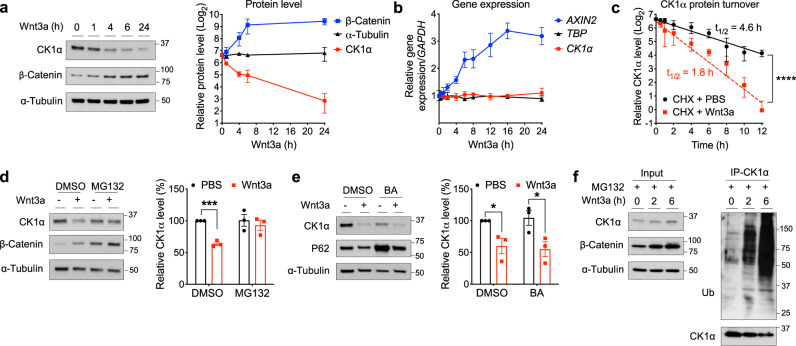
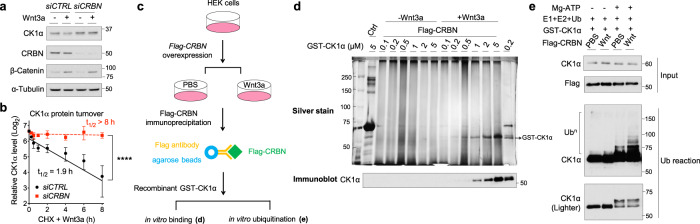
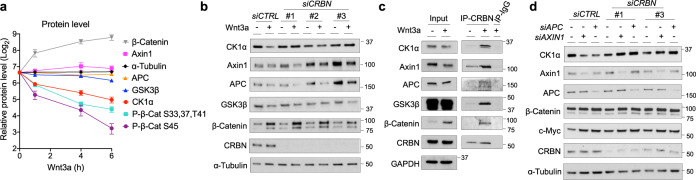
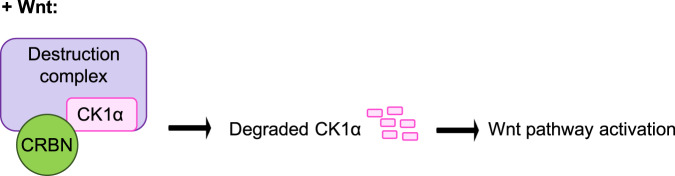
Immunomodulatory drugs (IMiDs) are important for the treatment of multiple myeloma and myelodysplastic syndrome. Binding of IMiDs to Cereblon (CRBN), the substrate receptor of the CRL4 CRBN E3 ubiquitin ligase, induces cancer cell death by targeting key neo-substrates for degradation. Despite this clinical significance, the physiological regulation of CRBN remains largely unknown. Herein we demonstrate that Wnt, the extracellular ligand of an essential signal transduction pathway, promotes the CRBN-dependent degradation of a subset of proteins. These substrates include Casein kinase 1α (CK1α), a negative regulator of Wnt signaling that functions as a key component of the β-Catenin destruction complex. Wnt stimulation induces the interaction of CRBN with CK1α and its resultant ubiquitination, and in contrast with previous reports does so in the absence of an IMiD. Mechanistically, the destruction complex is critical in maintaining CK1α stability in the absence of Wnt, and in recruiting CRBN to target CK1α for degradation in response to Wnt. CRBN is required for physiological Wnt signaling, as modulation of CRBN in zebrafish and Drosophila yields Wnt-driven phenotypes. These studies demonstrate an IMiD-independent, Wnt-driven mechanism of CRBN regulation and provide a means of controlling Wnt pathway activity by CRBN, with relevance for development and disease.
Overview
The claims and statistics of this paper haven’t been checked yet.
Free: it reads the open-access text and checks the first 5 claims that cite a source we can check. Create a free account to check every claim.
Integrity signals
Registry
Cites
Statistics
Figures
Verification
Claims the paper makes
The claims and statistics of this paper haven’t been checked yet.
Free: it reads the open-access text and checks the first 5 claims that cite a source we can check. Create a free account to check every claim.
Claims other papers make about this one
Each is checked against this paper’s own text: does it say what the citing paper says it does?
The cited source says what the claim attributes to it.
In the citing paper
“Their measurable values, nevertheless, are consistent with the previously documented observations—in the absence of IMiDs, IKZF1 has been identified as a CRBN binding protein by proteomics studies and CK1α can be destabilized by CRBN in response to Wnt42,43; recombinant IAA7, the substrate of TIR1, can also pull down the residual amount of the F-box protein without auxin44.”
From Defining molecular glues with a dual-nanobody cannabidiol sensor (2022) · cites this paper as [43]
Self-check
Percentages, sums and reported differences re-computed from the paper’s own numbers.
The self-check needs the paper’s full text.
Citations
Cites
Single Lgr5 stem cells build crypt-villus structures in vitro without a mesenchymal niche
Sato, T., Vries, R. G., Snippert, H. J., van de Wetering, M., Barker, N., Stange, D. E., van Es, J. H., Abo, A., Kujala, P., Peters, P. J., et al. (2009) · Nature · doi:10.1038/nature07935 · Cited by 7,204
Wnt/β-Catenin Signaling in Development and Disease
Clevers, H. (2006) · Cell · doi:10.1016/j.cell.2006.10.018 · Cited by 5,568
A genome-wide transgenic RNAi library for conditional gene inactivation in Drosophila
Dietzl, G., Chen, D., Schnorrer, F., Su, K.-C., Barinova, Y., Fellner, M., Gasser, B., Kinsey, K., Oppel, S., Scheiblauer, S., et al. (2007) · Nature · doi:10.1038/nature05954 · Cited by 2,644
Identification of a Primary Target of Thalidomide Teratogenicity
Ito, T., Ando, H., Suzuki, T., Ogura, T., Hotta, K., Imamura, Y., Yamaguchi, Y., & Handa, H. (2010) · Science · doi:10.1126/science.1177319 · Cited by 2,136
Control of β-Catenin Phosphorylation/Degradation by a Dual-Kinase Mechanism
Liu, C., Li, Y., Semenov, M., Han, C., Baeg, G.-H., Tan, Y., Zhang, Z., Lin, X., & He, X. (2002) · Cell · doi:10.1016/s0092-8674(02)00685-2 · Cited by 2,069
MECHANISMS OF WNT SIGNALING IN DEVELOPMENT
Wodarz, A., & Nusse, R. (1998) · Annual Review of Cell and Developmental Biology · doi:10.1146/annurev.cellbio.14.1.59 · Cited by 2,017
Lenalidomide Causes Selective Degradation of IKZF1 and IKZF3 in Multiple Myeloma Cells
Krönke, J., Udeshi, N. D., Narla, A., Grauman, P., Hurst, S. N., McConkey, M., Svinkina, T., Heckl, D., Comer, E., Li, X., et al. (2014) · Science · doi:10.1126/science.1244851 · Cited by 1,879
The Myeloma Drug Lenalidomide Promotes the Cereblon-Dependent Destruction of Ikaros Proteins
Lu, G., Middleton, R. E., Sun, H., Naniong, M., Ott, C. J., Mitsiades, C. S., Wong, K.-K., Bradner, J. E., & Kaelin, W. G. (2014) · Science · doi:10.1126/science.1244917 · Cited by 1,583
Yost, C., Torres, M., Miller, J. R., Huang, E., Kimelman, D., & Moon, R. T. (1996) · Genes & Development · doi:10.1101/gad.10.12.1443 · Cited by 1,165
Structure of the DDB1–CRBN E3 ubiquitin ligase in complex with thalidomide
Fischer, E. S., Böhm, K., Lydeard, J. R., Yang, H., Stadler, M. B., Cavadini, S., Nagel, J., Serluca, F., Acker, V., Lingaraju, G. M., et al. (2014) · Nature · doi:10.1038/nature13527 · Cited by 1,141
Cited by
Wnt/β-catenin signaling pathway in carcinogenesis and cancer therapy
Song, P., Gao, Z., Bao, Y., Chen, L., Huang, Y., Liu, Y., Dong, Q., & Wei, X. (2024) · Journal of Hematology & Oncology · doi:10.1186/s13045-024-01563-4 · Cited by 382
“CK1α strictly modulates the canonical Wnt signal transduction and serves as a negative regulator of Wnt signaling, playing a crucial role in the formation of DC and subsequent phosphorylation of β-catenin [318].”
BackgroundFrom Thalidomide to Rational Molecular Glue Design for Targeted Protein Degradation
Oleinikovas, V., Gainza, P., Ryckmans, T., Fasching, B., & Thomä, N. H. (2024) · Annual Review of Pharmacology and Toxicology · doi:10.1146/annurev-pharmtox-022123-104147 · Cited by 178
Defining molecular glues with a dual-nanobody cannabidiol sensor
Cao, S., Kang, S., Mao, H., Yao, J., Gu, L., & Zheng, N. (2022) · Nature Communications · doi:10.1038/s41467-022-28507-1 · Cited by 125
Bhatt, P. K., Kloock, C., & Comenzo, R. L. (2023) · Current Oncology · doi:10.3390/curroncol30020179 · Cited by 122
“CK1α promotes the survival and proliferation of MM as a progrowth kinase and CK1α loss of function resulted in the downregulation of anti-apoptotic cascades yielding an anti-myeloma effect [21].”
BackgroundTarget protein localization and its impact on PROTAC-mediated degradation
Simpson, L. M., Glennie, L., Brewer, A., Zhao, J., Crooks, J., Shpiro, N., & Sapkota, G. P. (2022) · Cell chemical biology · doi:10.1016/j.chembiol.2022.08.004 · Cited by 114
Advances in the structures, mechanisms and targeting of molecular chaperones
Gu, J., He, Y., He, C., Zhang, Q., Huang, Q., Bai, S., Wang, R., You, Q., & Wang, L. (2025) · Signal Transduction and Targeted Therapy · doi:10.1038/s41392-025-02166-2 · Cited by 86
Elkady, H., El‐Adl, K., Sakr, H. M., Abdelraheem, A. S., Eissa, S. I., & El‐Zahabi, M. A. (2023) · Archiv der Pharmazie · doi:10.1002/ardp.202300097 · Cited by 49
Fragment Linker Prediction Using the Deep Encoder-Decoder Network for PROTACs Drug Design
Kao, C., Lin, C., Chou, C.-L., & Lin, C. (2023) · Journal of Chemical Information and Modeling · doi:10.1021/acs.jcim.2c01287 · Cited by 46
Liu, Y., Li, M., Zheng, Y., Liu, C., Cao, Y., Guo, W. H., Liu, M., Qian, J., Gong, C., Shuang, X., et al. (2024) · Chemical Engineering Journal · doi:10.1016/j.cej.2024.148673 · Cited by 40
Kulig, P., Milczarek, S., Bakinowska, E., Szalewska, L., Baumert, B., & Machaliński, B. (2023) · Cancers · doi:10.3390/cancers15030963 · Cited by 28
“Furthermore, CRBN was demonstrated to be a positive regulator of Wnt activity [63].”
Ubiquitination in cancer: mechanisms and therapeutic opportunities
Zhu, S., Zhang, X., Liu, W., Zhou, Z. G., Xiong, S., Li, J., Chen, X., & Peng, C. (2025) · 癌症:英文版 · doi:10.1002/cac2.70044 · Cited by 28
“Cereblon-based PROTACs have also emerged as effective anticancer agents [316].”
Allostery in Disease: Anticancer Drugs, Pockets, and the Tumor Heterogeneity Challenge
Nussinov, R., Yavuz, B. R., & Jang, H. (2025) · Journal of Molecular Biology · doi:10.1016/j.jmb.2025.169050 · Cited by 22
Zhou, L., & Xu, G. (2022) · Journal of Molecular Biology · doi:10.1016/j.jmb.2022.167457 · Cited by 17
Exploration of degrons and their ability to mediate targeted protein degradation
Harris, T. J., & Trader, D. J. (2025) · RSC Medicinal Chemistry · doi:10.1039/d4md00787e · Cited by 19
The emerging role of targeted protein degradation to treat and study cancer
Brodermann, M. H., Henderson, E. K., & Sellar, R. S. (2024) · The Journal of Pathology · doi:10.1002/path.6301 · Cited by 16
“Con fl icting studies have shown this process to be thalidomide analogue dependent and independent, with the latter proposed via activation of Wnt signalling that stimulates CRBN to associate with and degrade CK1 α [58].”
BackgroundMo, M., Wang, F., Zhang, H., Zhang, Y., Yang, C. J., Shang, J., & Zhu, Z. (2025) · Angewandte Chemie International Edition · doi:10.1002/anie.202501857 · Cited by 16
Abdallah, A. E., Eissa, I. H., Mehany, A. B. M., Sakr, H. M., Sakr, T. M., Metwaly, K. H., Celik, I., El‐Adl, K., & El‐Zahabi, M. A. (2024) · Journal of Molecular Structure · doi:10.1016/j.molstruc.2024.139082 · Cited by 15
Pyrvinium doubles against WNT-driven cancer
Fan, J., Reid, R. R., & He, T. (2022) · Journal of Biological Chemistry · doi:10.1016/j.jbc.2022.102479 · Cited by 11
Shen, C., Nayak, A., Neitzel, L. R., Yang, F., Li, B., Williams, C. H., Hong, C. C., Ahmed, Y. F., Lee, E. N., & Robbins, D. J. (2022) · Journal of Biological Chemistry · doi:10.1016/j.jbc.2022.102227 · Cited by 10
“its role in degrading CK1α, CRBN promotes Wnt signal transduction in an evolutionarily conserved manner, highlighting CRBN as a novel component of the Wnt signaling pathway (11).”
BackgroundMethodSelf-citationThe cross talk of ubiquitination and chemotherapy tolerance in colorectal cancer
Rong, Z., Zheng, K., Chen, J., & Jin, X. (2024) · Journal of Cancer Research and Clinical Oncology · doi:10.1007/s00432-024-05659-9 · Cited by 11
“Interestingly, TRIM27, a RING-type E3 ubiquitin ligase identified by differential display (EDD), directly targets GSK-3β for degradation, resulting in the stabilization of β-catenin (Shen et al.2021).”
BackgroundYang, L., Wang, S., Pan, Z., Du, X., & Li, Q. (2022) · Journal of Cellular Physiology · doi:10.1002/jcp.30776 · Cited by 9
“In organisms, several important signaling pathways such as Wnt (Novellasdemunt et al., 2020; Shen et al., 2021), nuclear factor kappa B (Azuma et al., 2021), and Hippo (Liu et al., 2021) are regulated by ubiquitin ligase‐mediated ubiquitination in different cellular processes.”
BackgroundMerino‐Cacho, L., Barroso‐Gomila, O., Pozo-Rodríguez, M., Muratore, V., Guinea-Pérez, C., Serrano‐Morrás, Á., Pérez, C., Cano-López, S., Urcullu, A., Azkargorta, M., et al. (2025) · Cell Communication and Signaling · doi:10.1186/s12964-025-02091-5 · Cited by 11
“…found components of the cAMP signaling pathway like MTOR, PRKAR1A and CREB3 [46], components of the Wnt signaling pathway such as CSNK1E and CTNNB1 [47], chloride channels as CLCC1 and CLCN3 [48], BSG for which a ubiquitination-independent, chaperone-like function of CRBN was described [49], and…”
Controlling CRISPR-Cas9 genome editing in human cells using a molecular glue degrader
Khajanchi, N., Patel, V., Dua, R., Kabra, M., Pattnaik, B. R., & Saha, K. (2025) · Molecular Therapy — Nucleic Acids · doi:10.1016/j.omtn.2025.102640 · Cited by 9
Safety considerations for cereblon-recruiting targeted protein degraders
Garside, H., Aslamkhan, A. G., Daniels, D. L., Datta, K., Pedersen, M. E., Hukkanen, R. R., Jones, L. H., Ketter, N., Lahoti, T. S., Loberg, L. I., et al. (2026) · Nature Reviews Drug Discovery · doi:10.1038/s41573-026-01426-2 · Cited by 11
“CRBN function has been implicated in the regulation of metabolism 21–23 , ion-channel activity 24–28 , chaperone activity 29,30 , embryonic development 31,32 , inflammation 33,34 and epigenetic regulation 35 .”
Cereblon influences the timing of muscle differentiation in Ciona tadpoles
Long, J., Mariossi, A., Chen, C., Mo, Z., Thompson, J. W., Levine, M., & Lemaire, L. A. (2023) · Proceedings of the National Academy of Sciences · doi:10.1073/pnas.2309989120 · Cited by 7
“Cereblon is a highly conserved E3 ligase substrate receptor that is the target of thalidomide and its derivatives (4, 20).”
BackgroundKanaoka, D., Yamada, M., Yokoyama, H., Nishino, S., Kunimura, N., Satoyoshi, H., Wakabayashi, S., Urabe, K., Ishii, T., & Nakanishi, M. (2024) · Cancer Research Communications · doi:10.1158/2767-9764.crc-23-0264 · Cited by 9
Chalayer, É., Frère, C., Daguenet, É., Lecompte, T., Tardy, B., Bounouara, I., Sapet, M., Bobin, A., Harel, S., Decaux, O., et al. (2025) · Journal of Thrombosis and Haemostasis · doi:10.1016/j.jtha.2025.06.012 · Cited by 5
Hydrogen/Deuterium Exchange for Chiral Stability Assessment in Acidic Methine-Containing Compounds
Yu, Z. J., Morfin, C., Paul, T., Kyne, H., Zhang, X., Thomas‐Tran, R., Venkataramani, C., Ghaffari, H., Subramanian, M., Murray, B. P., et al. (2025) · Analytical Chemistry · doi:10.1021/acs.analchem.5c04777 · Cited by 4
Fraga, L. R., Reeves, J., Mahony, C., Erskine, L., & Vargesson, N. (2025) · Developmental Biology · doi:10.1016/j.ydbio.2025.03.014 · Cited by 4
Case Report: Personalized Therapeutical Approaches with Lenalidomide in Del(5q): A Case Series
Stein, A., Kubasch, A. S., Haferlach, C., & Platzbecker, U. (2022) · Frontiers in Oncology · doi:10.3389/fonc.2022.866470 · Cited by 4
Hu, Y., Didi, K., Cribbs, A. P., & Sun, J. (2025) · Computational and Structural Biotechnology Journal · doi:10.1016/j.csbj.2025.10.028 · Cited by 4
Impact of soft drink on skeletal formation indicated by RSPO2, HAO1, and RUNX2 gene expressions
Shaalan, W. M., & Iskandar, M. K. (2022) · Alfarama Journal of Basic & Applied Sciences · doi:10.21608/ajbas.2022.119909.1087 · Cited by 2
CRBN modulates synuclein fibrillation via degradation of DNAJB1 in mouse model of Parkinson disease
Akber, U., Jung, J., Yoon, H. G., Seo, J.-W., & Park, C. (2024) · npj Parkinson s Disease · doi:10.1038/s41531-024-00801-3 · Cited by 2
“…of the endogenous targets of CRBN and their effects on cellular function include the actions of AMPK and glutamine synthetase on cellular metabolism 2,3 , Casein kinase 1 α on cellular Wnt signaling 4 , redox proteins on cellular stress responses 5 , and ion channels on cellularexcitability 6,7 .”
BackgroundMiyazaki, T., Uno, S., Fujimori, H., & Motegi, Y. (2024) · International Journal of Hematology · doi:10.1007/s12185-024-03864-3 · Cited by 1
“Lenalidomide is an oral immunomodulatory agent that specifically targets cereblon, an E3 ubiquitin ligase that mediates the degradation of various regulatory proteins involved in major signal transduction cascades underlying development and tissue homeostasis [11].”
Tanga, S., Das, P., Samoi, T. B., Hota, A., Karmakar, A., & Maji, B. (2026) · Advanced Drug Delivery Reviews · doi:10.1016/j.addr.2026.115874 · Cited by 1
Arji, S., Shen, Z., Welch, S., ElMahdaoui, F., Bahadur, A., Lee, E., Lee, H., Wu, S.-C. P., Konshina, E., Ayubali, B., et al. (2026) · Biomarker Research · doi:10.1186/s40364-026-00911-5 · Cited by 1
“Because they do not contain a flexible linker, molecular glues generally have a lower molecular weight than PROTACs, which can enhance their oral bioavailability and cellular permeability [42, 47, 48].”
Self-citationInduced proximity strategies for modulating immune checkpoints in cancer immunotherapy
Wang, W., Li, Y., Zhang, W. Q., Zhang, Y., Zhang, K., Zhang, X. T., & Wang, T. (2026) · European Journal of Medicinal Chemistry · doi:10.1016/j.ejmech.2026.118963 · Cited by 1
Mo, M., Wang, F., Zhang, H., Zhang, Y., Yang, C. J., Shang, J., & Zhu, Z. (2025) · Angewandte Chemie · doi:10.1002/ange.202501857 · Cited by 1
Venkatachalapathy, M., & Crews, C. M. (2023) · Cell Research · doi:10.1038/s41422-022-00765-0
Du, J., Luo, C., Feng, J., Sun, X., Li, Y., Cheng, J., & Kang, Z. (2025) · The Journal of Physical Chemistry B · doi:10.1021/acs.jpcb.5c07177
Laboratório Omnialab [Relatório de estágio]
Gonçalves, R. M. M. (2023) · Portuguese National Funding Agency for Science, Research and Technology (RCAAP Project by FCT)
Jia, Q., Shao, K., Li, Y., Mei, Y., & Zhang, F. (2025) · PubMed Central · doi:10.11817/j.issn.1672-7347.2025.240584 · Cited by 1
“…[6, 30] 。 而 BTK 抑制剂依鲁替尼虽能取得 68% 的临床缓解率, 但其单药应用面临获得性耐药的严峻挑战 [31] 。针对这 一 困 境 , Dobrovolsky 等 [32] 开 步研究 [32] 显示:表观遗传调控因子含溴结构域蛋白 用 [34-36] 。研究 [35-36] [38-39] 表 明 脑 蛋 白 致癌通路 [37-38 导致疾病复发及不良预后 [42] 。这与 LEN 耐药密切相 关。虽然泊马度胺对耐药的 MM 患者有一定作用, 但效果仍不理想 [43] 等多种生物学过程 [44] 。近年来,针对 BRD9 的功能研 究为 MM 的治疗提供了新方向。…”
Multifaceted roles of casein kinase 1 in health and disease: beyond cancer
Kim, S., & Oh, J. H. (2026) · BMB Reports · doi:10.5483/bmbrep.2025-0142
“Loss of CK1 alters T and NK cell function and suppresses proinflammatory cytokine production, offering a therapeutic benefit in hematologic malignancies and autoimmune diseases (32).”
InfluentialComputational design of a versatile, zero-radius proximity labeling enzymePreprint
Dai, S. A., Cavanagh, P. E., Qiang, A., Zhang, Z., Geng, Q., Anguiano, M., Xue, A. G., Matsui, T., Nguyen, K., Udeshi, N. D., et al. (2026) · bioRxiv (Cold Spring Harbor Laboratory) · doi:10.64898/2026.09.24.754223
Metadata
- Authors
- Shen, C., Nayak, A., Neitzel, L. R., Adams, A. A., Silver-Isenstadt, M., Sawyer, L. M., Benchabane, H., Wang, H., Bunnag, N., Li, B., Wynn, D. T., Yang, F., Garcia-Contreras, M., Williams, C. H., Dakshanamurthy, S., Hong, C. C., Ayad, N. G., Capobianco, A. J., Ahmed, Y., Lee, E., & Robbins, D. J.
- Affiliations
- University of Miami (US)
- University of Maryland, Baltimore (US)
- Dartmouth College (US)
- Vanderbilt University (US)
- Georgetown University (US)
- Corresponding author
- Robbins, David J.
- ORCID
- Venue
- Nature Communications
- Published
- 2021-09-06
- Volume
- 12
- Issue
- 1
- Pages
- 5263-5263
- ISSN
- 2041-1723 (ISSN-L)
- PMC
- PMC8421366
- OpenAlex
- W3197771274
- Cited by
- 43
- References
- 60
- Citations by year
- 2026: 4 · 2025: 13 · 2024: 9 · 2023: 7 · 2022: 10
- FWCI
- 2.04
- Type
- journal article
- Language
- en
- Open access
- gold
- doi.org
- Licence
- cc-by
- creativecommons.org/licenses/by/4.0 (tdm)
- creativecommons.org/licenses/by/4.0 (vor)
- Locations
- Nature Communications (publishedVersion, cc-by)
- Europe PMC (PubMed Central) (publishedVersion, other-oa)
- PubMed Central (publishedVersion, cc-by)
- PubMed (publishedVersion)
- RePEc: Research Papers in Economics (submittedVersion)
- DOAJ (DOAJ: Directory of Open Access Journals) (submittedVersion, cc-by-sa)
- Funders
- Foundation for the National Institutes of Health
- Dwoskin cancer fund
- Topics
- Life Sciences › Biochemistry, Genetics and Molecular Biology › Molecular Biology › Wnt/β-catenin signaling in development and cancer
- Life Sciences › Biochemistry, Genetics and Molecular Biology › Molecular Biology › Ubiquitin and proteasome pathways
- Life Sciences › Biochemistry, Genetics and Molecular Biology › Molecular Biology › Protein Degradation and Inhibitors
- Keywords
- cereblon, E3 ubiquitin ligase, Wnt signaling, CK1α, β-catenin destruction complex, ubiquitination, zebrafish, Drosophila, evolutionarily conserved signaling
- MeSH terms
- Lenalidomide, Animals, Drosophila melanogaster, Embryo, Nonmammalian, Humans, Immunologic Factors, Organoids, Peptide Hydrolases, Zebrafish, Evolution, Molecular, Drosophila Proteins, Zebrafish Proteins, Ubiquitin-Protein Ligases, Casein Kinase Ialpha, Adaptor Proteins, Signal Transducing, Mice, Ubiquitination, HEK293 Cells, Wnt Signaling Pathway
About these checks
Registry, retraction, Cites and statistics results are computed, not judged, with one exception: a printed reference that no index lists is read once by a model before it counts as a citation error. Claims are extracted by a model and kept only when their quote appears verbatim in the text; each cited source is then checked, with a model’s help, for whether it says what the claim relies on. Those verdicts can be wrong — read the claim’s quote and the cited source before relying on one.
Statistics and arithmetic are recomputed, not judged.
Confidence bands are shown only for fields calibrated on our annotated test set. None is calibrated yet, so no band is shown.
What counts as a claim ›How we measure confidence ›How we check this ›
Are you an author, or do you see a problem with this page? Request a review
Data sources
Bibliographic data: Semantic Scholar, OpenAlex, Crossref.
Contains information from the Semantic Scholar Academic Graph Datasets, made available under the ODC Attribution License (ODC-BY 1.0).
Semantic Scholar’s data is described in: Kinney, R., et al. (2023). The Semantic Scholar Open Data Platform. arXiv:2301.10140.
