

The E3 ubiquitin ligase component, Cereblon, is an evolutionarily conserved regulator of Wnt signaling
Open accessThe DOI matches its Crossref record; 60 of the 60 references it cites were found in a registry or an index.
Abstract
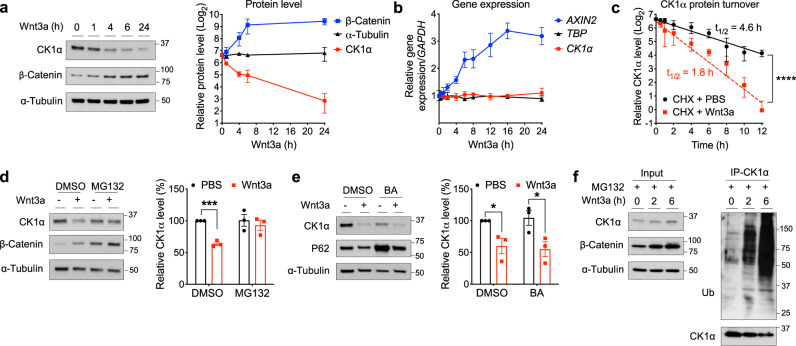
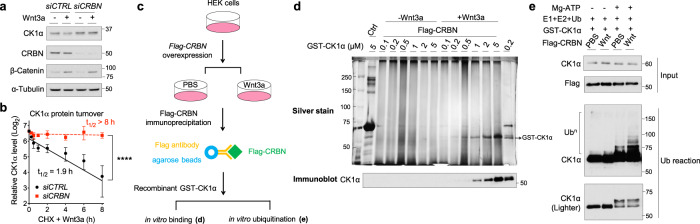
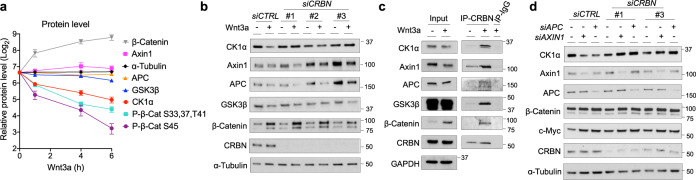
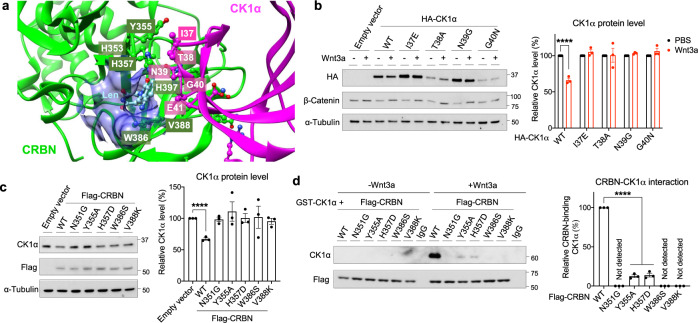
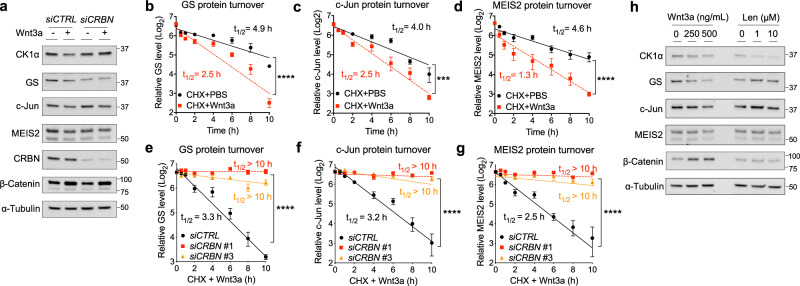
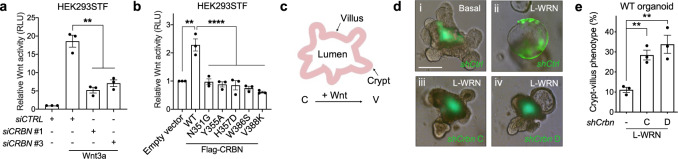
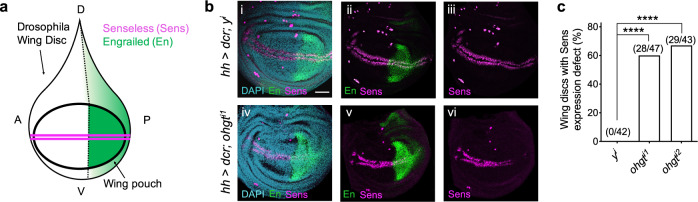
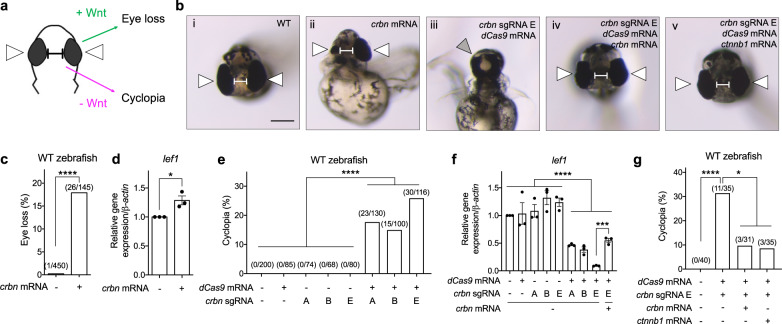
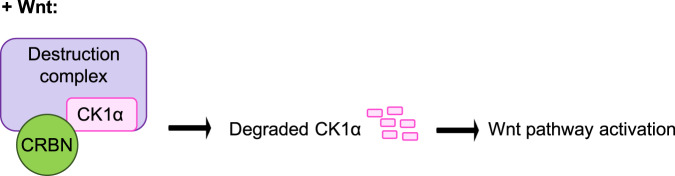
Immunomodulatory drugs (IMiDs) are important for the treatment of multiple myeloma and myelodysplastic syndrome. Binding of IMiDs to Cereblon (CRBN), the substrate receptor of the CRL4 CRBN E3 ubiquitin ligase, induces cancer cell death by targeting key neo-substrates for degradation. Despite this clinical significance, the physiological regulation of CRBN remains largely unknown. Herein we demonstrate that Wnt, the extracellular ligand of an essential signal transduction pathway, promotes the CRBN-dependent degradation of a subset of proteins. These substrates include Casein kinase 1α (CK1α), a negative regulator of Wnt signaling that functions as a key component of the β-Catenin destruction complex. Wnt stimulation induces the interaction of CRBN with CK1α and its resultant ubiquitination, and in contrast with previous reports does so in the absence of an IMiD. Mechanistically, the destruction complex is critical in maintaining CK1α stability in the absence of Wnt, and in recruiting CRBN to target CK1α for degradation in response to Wnt. CRBN is required for physiological Wnt signaling, as modulation of CRBN in zebrafish and Drosophila yields Wnt-driven phenotypes. These studies demonstrate an IMiD-independent, Wnt-driven mechanism of CRBN regulation and provide a means of controlling Wnt pathway activity by CRBN, with relevance for development and disease.
Overview
The claims and statistics of this paper haven’t been checked yet.
Free: it reads the open-access text and checks the first 5 claims that cite a source we can check. Create a free account to check every claim.
Integrity signals
Registry
Cites
Statistics
Figures
Verification
Claims the paper makes
The claims and statistics of this paper haven’t been checked yet.
Free: it reads the open-access text and checks the first 5 claims that cite a source we can check. Create a free account to check every claim.
Claims other papers make about this one
Each is checked against this paper’s own text: does it say what the citing paper says it does?
The cited source says what the claim attributes to it.
In the citing paper
“Their measurable values, nevertheless, are consistent with the previously documented observations—in the absence of IMiDs, IKZF1 has been identified as a CRBN binding protein by proteomics studies and CK1α can be destabilized by CRBN in response to Wnt42,43; recombinant IAA7, the substrate of TIR1, can also pull down the residual amount of the F-box protein without auxin44.”
From Defining molecular glues with a dual-nanobody cannabidiol sensor (2022) · cites this paper as [43]
Self-check
Percentages, sums and reported differences re-computed from the paper’s own numbers.
The self-check needs the paper’s full text.
Citations
Cites
Single Lgr5 stem cells build crypt-villus structures in vitro without a mesenchymal niche
Sato, T., Vries, R. G., Snippert, H. J., van de Wetering, M., Barker, N., Stange, D. E., van Es, J. H., Abo, A., Kujala, P., Peters, P. J., et al. (2009) · Nature · doi:10.1038/nature07935 · Cited by 7,204
Wnt/β-Catenin Signaling in Development and Disease
Clevers, H. (2006) · Cell · doi:10.1016/j.cell.2006.10.018 · Cited by 5,568
A genome-wide transgenic RNAi library for conditional gene inactivation in Drosophila
Dietzl, G., Chen, D., Schnorrer, F., Su, K.-C., Barinova, Y., Fellner, M., Gasser, B., Kinsey, K., Oppel, S., Scheiblauer, S., et al. (2007) · Nature · doi:10.1038/nature05954 · Cited by 2,644
Identification of a Primary Target of Thalidomide Teratogenicity
Ito, T., Ando, H., Suzuki, T., Ogura, T., Hotta, K., Imamura, Y., Yamaguchi, Y., & Handa, H. (2010) · Science · doi:10.1126/science.1177319 · Cited by 2,136
Control of β-Catenin Phosphorylation/Degradation by a Dual-Kinase Mechanism
Liu, C., Li, Y., Semenov, M., Han, C., Baeg, G.-H., Tan, Y., Zhang, Z., Lin, X., & He, X. (2002) · Cell · doi:10.1016/s0092-8674(02)00685-2 · Cited by 2,069
MECHANISMS OF WNT SIGNALING IN DEVELOPMENT
Wodarz, A., & Nusse, R. (1998) · Annual Review of Cell and Developmental Biology · doi:10.1146/annurev.cellbio.14.1.59 · Cited by 2,017
Lenalidomide Causes Selective Degradation of IKZF1 and IKZF3 in Multiple Myeloma Cells
Krönke, J., Udeshi, N. D., Narla, A., Grauman, P., Hurst, S. N., McConkey, M., Svinkina, T., Heckl, D., Comer, E., Li, X., et al. (2014) · Science · doi:10.1126/science.1244851 · Cited by 1,879
The Myeloma Drug Lenalidomide Promotes the Cereblon-Dependent Destruction of Ikaros Proteins
Lu, G., Middleton, R. E., Sun, H., Naniong, M., Ott, C. J., Mitsiades, C. S., Wong, K.-K., Bradner, J. E., & Kaelin, W. G. (2014) · Science · doi:10.1126/science.1244917 · Cited by 1,583
Yost, C., Torres, M., Miller, J. R., Huang, E., Kimelman, D., & Moon, R. T. (1996) · Genes & Development · doi:10.1101/gad.10.12.1443 · Cited by 1,165
Structure of the DDB1–CRBN E3 ubiquitin ligase in complex with thalidomide
Fischer, E. S., Böhm, K., Lydeard, J. R., Yang, H., Stadler, M. B., Cavadini, S., Nagel, J., Serluca, F., Acker, V., Lingaraju, G. M., et al. (2014) · Nature · doi:10.1038/nature13527 · Cited by 1,141
Hijacking the E3 Ubiquitin Ligase Cereblon to Efficiently Target BRD4
Lu, J., Qian, Y., Altieri, M., Dong, H., Wang, J., Raina, K., Hines, J., Winkler, J. D., Crew, A. P., Coleman, K., et al. (2015) · Chemistry & Biology · doi:10.1016/j.chembiol.2015.05.009 · Cited by 1,140
Munemitsu, S., Albert, I., Souza, B., Rubinfeld, B., & Polakis, P. (1995) · Proceedings of the National Academy of Sciences · doi:10.1073/pnas.92.7.3046 · Cited by 1,021
Wnt Signaling through Inhibition of β-Catenin Degradation in an Intact Axin1 Complex
Li, V. S. W., Ng, S. S., Boersema, P. J., Low, T. Y., Karthaus, W. R., Gerlach, J. P., Mohammed, S., Heck, A. J. R., Maurice, M. M., Mahmoudi, T., et al. (2012) · Cell · doi:10.1016/j.cell.2012.05.002 · Cited by 889
Lenalidomide induces ubiquitination and degradation of CK1α in del(5q) MDS
Krönke, J., Fink, E. C., Hollenbach, P. W., MacBeth, K. J., Hurst, S. N., Udeshi, N. D., Chamberlain, P. P., Mani, D. R., Man, H. W., Gandhi, A. K., et al. (2015) · Nature · doi:10.1038/nature14610 · Cited by 863
Hart, M. J., de los Santos, R., Albert, I. N., Rubinfeld, B., & Polakis, P. (1998) · Current Biology · doi:10.1016/s0960-9822(98)70226-x · Cited by 836
β-Catenin-Driven Cancers Require a YAP1 Transcriptional Complex for Survival and Tumorigenesis
Rosenbluh, J., Nijhawan, D., Cox, A. G., Li, X., Neal, J. T., Schafer, E. J., Zack, T. I., Wang, X., Tsherniak, A., Schinzel, A. C., et al. (2012) · Cell · doi:10.1016/j.cell.2012.11.026 · Cited by 757
Axin-mediated CKI phosphorylation of β-catenin at Ser 45: a molecular switch for the Wnt pathway
Amit, S., Hatzubai, A., Birman, Y., Andersen, J. S., Ben-Shushan, E., Mann, M., Ben-Neriah, Y., & Alkalay, I. (2002) · Genes & Development · doi:10.1101/gad.230302 · Cited by 753
Serine Phosphorylation-regulated Ubiquitination and Degradation of β-Catenin
Orford, K., Crockett, C., Jensen, J. P., Weissman, A. M., & Byers, S. W. (1997) · Journal of Biological Chemistry · doi:10.1074/jbc.272.40.24735 · Cited by 714
A novel cereblon modulator recruits GSPT1 to the CRL4CRBN ubiquitin ligase
Matyskiela, M. E., Lu, G., Ito, T., Pagarigan, B., Lu, C.-C., Miller, K., Fang, W., Wang, N.-Y., Nguyen, D., Houston, J., et al. (2016) · Nature · doi:10.1038/nature18611 · Cited by 701
Tang, R., Dodd, A., Lai, D., McNabb, W. C., & Love, D. R. (2007) · Acta Biochimica et Biophysica Sinica · doi:10.1111/j.1745-7270.2007.00283.x · Cited by 627
Structural basis of lenalidomide-induced CK1α degradation by the CRL4CRBN ubiquitin ligase
Petzold, G., Fischer, E. S., & Thomä, N. H. (2016) · Nature · doi:10.1038/nature16979 · Cited by 620
Gandhi, A. K., Kang, J., Havens, C. G., Conklin, T., Ning, Y., Wu, L., Ito, T., Ando, H., Waldman, M. F., Thakurta, A., et al. (2014) · British Journal of Haematology · doi:10.1111/bjh.12708 · Cited by 619
Daniels, D. L., & Weis, W. I. (2005) · Nature Structural & Molecular Biology · doi:10.1038/nsmb912 · Cited by 551
The developmental biology of Dishevelled: an enigmatic protein governing cell fate and cell polarity
Wallingford, J. B., & Habas, R. (2005) · Development · doi:10.1242/dev.02068 · Cited by 509
Donovan, K. A., An, J., Nowak, R. P., Yuan, J. C., Fink, E. C., Berry, B. C., Ebert, B. L., & Fischer, E. S. (2018) · eLife · doi:10.7554/elife.38430 · Cited by 509
Nolo, R., Abbott, L. A., & Bellen, H. J. (2000) · Cell · doi:10.1016/s0092-8674(00)00040-4 · Cited by 504
Small-molecule inhibition of Wnt signaling through activation of casein kinase 1α
Thorne, C. A., Hanson, A. J., Schneider, J., Tahinci, E., Orton, D., Cselenyi, C. S., Jernigan, K. K., Meyers, K. C., Hang, B. I., Waterson, A. G., et al. (2010) · Nature Chemical Biology · doi:10.1038/nchembio.453 · Cited by 485
Self-citationHedgehog Creates a Gradient of DPP Activity in Drosophila Wing Imaginal Discs
Tanimoto, H., Itoh, S., ten Dijke, P., & Tabata, T. (2000) · Molecular Cell · doi:10.1016/s1097-2765(00)80403-7 · Cited by 415
CRL4s: the CUL4-RING E3 ubiquitin ligases
Jackson, S., & Xiong, Y. (2009) · Trends in Biochemical Sciences · doi:10.1016/j.tibs.2009.07.002 · Cited by 411
The wingless signalling pathway and the patterning of the wing margin in Drosophila
Couso, J. P., Bishop, S. A., & Arias, A. M. (1994) · Development · doi:10.1242/dev.120.3.621 · Cited by 355
A Cereblon Modulator (CC-220) with Improved Degradation of Ikaros and Aiolos
Matyskiela, M. E., Zhang, W., Man, H.-W., Muller, G., Khambatta, G., Baculi, F., Hickman, M., LeBrun, L., Pagarigan, B., Carmel, G., et al. (2018) · Journal of Medicinal Chemistry · doi:10.1021/acs.jmedchem.6b01921 · Cited by 309
Rena, G., Bain, J., Elliott, M., & Cohen, P. (2004) · EMBO reports · doi:10.1038/sj.embor.7400048 · Cited by 249
Zebrafish Dkk1 Functions in Forebrain Specification and Axial Mesendoderm Formation
Hashimoto, H., Itoh, M., Yamanaka, Y., Yamashita, S., Shimizu, T., Solnica-Krezel, L., Hibi, M., & Hirano, T. (2000) · Developmental Biology · doi:10.1006/dbio.1999.9537 · Cited by 184
Notch is required for wingless signaling in the epidermis of Drosophila
Couso, J. (1994) · Cell · doi:10.1016/0092-8674(94)90195-3 · Cited by 178
CK1α suppresses lung tumour growth by stabilizing PTEN and inducing autophagy
Cai, J., Li, R., Xu, X., Zhang, L., Lian, R., Fang, L., Huang, Y., Feng, X., Liu, X., Xu, L., et al. (2018) · Nature Cell Biology · doi:10.1038/s41556-018-0065-8 · Cited by 157
Ectopic Wnt signal determines the eyeless phenotype of zebrafish masterblind mutant
van de Water, S., van de Wetering, M., Joore, J., Esseling, J., Bink, R., Clevers, H., & Zivkovic, D. (2001) · Development · doi:10.1242/dev.128.20.3877 · Cited by 152
Bellipanni, G., Varga, M., Maegawa, S., Imai, Y., Kelly, C., Myers, A. P., Chu, F., Talbot, W. S., & Weinberg, E. S. (2006) · Development · doi:10.1242/dev.02295 · Cited by 147
Two tcf3 genes cooperate to pattern the zebrafish brain
Dorsky, R. I., Itoh, M., Moon, R. T., & Chitnis, A. (2003) · Development · doi:10.1242/dev.00402 · Cited by 146
Minzel, W., Venkatachalam, A., Fink, A., Hung, E., Brachya, G., Burstain, I., Shaham, M., Rivlin, A., Omer, I., Zinger, A., et al. (2018) · Cell · doi:10.1016/j.cell.2018.07.045 · Cited by 146
The Soluble Wnt Receptor Frizzled8CRD-hFc Inhibits the Growth of Teratocarcinomas In vivo
DeAlmeida, V. I., Miao, L., Ernst, J. A., Koeppen, H., Polakis, P., & Rubinfeld, B. (2007) · Cancer Research · doi:10.1158/0008-5472.can-07-0266 · Cited by 139
Kinetic Responses of β-Catenin Specify the Sites of Wnt Control
Hernández, A. R., Klein, A. M., & Kirschner, M. W. (2012) · Science · doi:10.1126/science.1228734 · Cited by 134
Casein kinase 1α: biological mechanisms and theranostic potential
Jiang, S., Zhang, M., Sun, J., & Yang, X. (2018) · Cell Communication and Signaling · doi:10.1186/s12964-018-0236-z · Cited by 130
Shimizu, T., Yamanaka, Y., Ryu, S.-L., Hashimoto, H., Yabe, T., Hirata, T., Bae, Y., Hibi, M., & Hirano, T. (2000) · Mechanisms of Development · doi:10.1016/s0925-4773(99)00319-6 · Cited by 125
A Defined Zebrafish Line for High-Throughput Genetics and Genomics: NHGRI-1
LaFave, M. C., Varshney, G. K., Vemulapalli, M., Mullikin, J. C., & Burgess, S. M. (2014) · Genetics · doi:10.1534/genetics.114.166769 · Cited by 101
Wnt Signaling Is Required for Early Development of Zebrafish Swimbladder
Yin, A., Korzh, S., Winata, C. L., Korzh, V. P., & Gong, Z. (2011) · PLoS ONE · doi:10.1371/journal.pone.0018431 · Cited by 100
ARID2 is a pomalidomide-dependent CRL4CRBN substrate in multiple myeloma cells
Yamamoto, J., Suwa, T., Murase, Y., Tateno, S., Mizutome, H., Asatsuma‐Okumura, T., Shimizu, N., Kishi, T., Momose, S., Kizaki, M., et al. (2020) · Nature Chemical Biology · doi:10.1038/s41589-020-0645-3 · Cited by 98
Ji, L., Jiang, B., Jiang, X., Charlat, O., Chen, A., Mickanin, C., Bauer, A., Xu, W., Yan, X., & Cong, F. (2017) · Genes & Development · doi:10.1101/gad.300053.117 · Cited by 89
p97/VCP promotes degradation of CRBN substrate glutamine synthetase and neosubstrates
Nguyen, T. V., Li, J., Lu, C.-C. (., Mamrosh, J. L., Lu, G., Cathers, B. E., & Deshaies, R. J. (2017) · Proceedings of the National Academy of Sciences · doi:10.1073/pnas.1700949114 · Cited by 85
Cereblon and its downstream substrates as molecular targets of immunomodulatory drugs
Ito, T., & Handa, H. (2016) · International Journal of Hematology · doi:10.1007/s12185-016-2073-4 · Cited by 84
The emerging role for Cullin 4 family of E3 ligases in tumorigenesis
Cheng, J., Guo, J., North, B. J., Tao, K., Zhou, P., & Wei, W. (2018) · Biochimica et Biophysica Acta (BBA) - Reviews on Cancer · doi:10.1016/j.bbcan.2018.11.007 · Cited by 74
Li, B., Flaveny, C. A., Giambelli, C., Fei, D. L., Han, L., Hang, B. I., Bai, F., Pei, X.-H., Nose, V., Burlingame, O., et al. (2014) · PLoS ONE · doi:10.1371/journal.pone.0101969 · Cited by 65
Self-citationComparative genetic screens in human cells reveal new regulatory mechanisms in WNT signaling
Lebensohn, A. M., Dubey, R., Neitzel, L. R., Tacchelly-Benites, O., Yang, E., Marceau, C. D., Davis, E. M., Patel, B. B., Bahrami-Nejad, Z., Travaglini, K. J., et al. (2016) · eLife · doi:10.7554/elife.21459 · Cited by 57
Self-citationYang, J., Huang, M. J., Zhou, L., He, X., Jiang, X., Zhang, Y., & Xu, G. (2018) · Journal of Biological Chemistry · doi:10.1074/jbc.ra118.002246 · Cited by 51
Li, B., Orton, D., Neitzel, L. R., Astudillo, L., Shen, C., Long, J., Chen, X., Kirkbride, K. C., Doundoulakis, T., Guerra, M. L., et al. (2017) · Science Signaling · doi:10.1126/scisignal.aak9916 · Cited by 50
Self-citationFerrarese, A., Marin, O., Bustos, V. H., Venerando, A., Antonelli, M., Allende, J., & Pinna, L. (2007) · Biochemistry · doi:10.1021/bi701674z · Cited by 47
A guide to simple, direct, and quantitative in vitro binding assays
Lapetina, S., & Gil-Henn, H. (2017) · Journal of Biological Methods · doi:10.14440/jbm.2017.161 · Cited by 33
Cereblon Control of Zebrafish Brain Size by Regulation of Neural Stem Cell Proliferation
Ando, H., Sato, T., Ito, T., Yamamoto, J., Sakamoto, S., Nitta, N., Asatsuma‐Okumura, T., Shimizu, N., Mizushima, R., Aoki, I., et al. (2019) · iScience · doi:10.1016/j.isci.2019.04.007 · Cited by 21
Developmental regulation of Wnt signaling by Nagk and the UDP-GlcNAc salvage pathway
Neitzel, L. R., Spencer, Z. T., Nayak, A., Cselenyi, C. S., Benchabane, H., Youngblood, C., Zouaoui, A., Ng, V. H., Stephens, L., Hann, T., et al. (2019) · Mechanisms of Development · doi:10.1016/j.mod.2019.03.002 · Cited by 20
Self-citationThe CK1α Activator Pyrvinium Enhances the Catalytic Efficiency (kcat/Km) of CK1α
Shen, C., Li, B., Astudillo, L., Deutscher, M. P., Cobb, M. H., Capobianco, A. J., Lee, E. N., & Robbins, D. J. (2019) · Biochemistry · doi:10.1021/acs.biochem.9b00891 · Cited by 19
Self-citationWakabayashi, S., Sawamura, N., Voelzmann, A., Broemer, M., Asahi, T., & Hoch, M. (2016) · Journal of Biological Chemistry · doi:10.1074/jbc.m116.757823 · Cited by 10
Cited by
Wnt/β-catenin signaling pathway in carcinogenesis and cancer therapy
Song, P., Gao, Z., Bao, Y., Chen, L., Huang, Y., Liu, Y., Dong, Q., & Wei, X. (2024) · Journal of Hematology & Oncology · doi:10.1186/s13045-024-01563-4 · Cited by 382
“CK1α strictly modulates the canonical Wnt signal transduction and serves as a negative regulator of Wnt signaling, playing a crucial role in the formation of DC and subsequent phosphorylation of β-catenin [318].”
BackgroundFrom Thalidomide to Rational Molecular Glue Design for Targeted Protein Degradation
Oleinikovas, V., Gainza, P., Ryckmans, T., Fasching, B., & Thomä, N. H. (2024) · Annual Review of Pharmacology and Toxicology · doi:10.1146/annurev-pharmtox-022123-104147 · Cited by 178
Defining molecular glues with a dual-nanobody cannabidiol sensor
Cao, S., Kang, S., Mao, H., Yao, J., Gu, L., & Zheng, N. (2022) · Nature Communications · doi:10.1038/s41467-022-28507-1 · Cited by 125
Bhatt, P. K., Kloock, C., & Comenzo, R. L. (2023) · Current Oncology · doi:10.3390/curroncol30020179 · Cited by 122
“CK1α promotes the survival and proliferation of MM as a progrowth kinase and CK1α loss of function resulted in the downregulation of anti-apoptotic cascades yielding an anti-myeloma effect [21].”
BackgroundTarget protein localization and its impact on PROTAC-mediated degradation
Simpson, L. M., Glennie, L., Brewer, A., Zhao, J., Crooks, J., Shpiro, N., & Sapkota, G. P. (2022) · Cell chemical biology · doi:10.1016/j.chembiol.2022.08.004 · Cited by 114
Metadata
- Authors
- Shen, C., Nayak, A., Neitzel, L. R., Adams, A. A., Silver-Isenstadt, M., Sawyer, L. M., Benchabane, H., Wang, H., Bunnag, N., Li, B., Wynn, D. T., Yang, F., Garcia-Contreras, M., Williams, C. H., Dakshanamurthy, S., Hong, C. C., Ayad, N. G., Capobianco, A. J., Ahmed, Y., Lee, E., & Robbins, D. J.
- Affiliations
- University of Miami (US)
- University of Maryland, Baltimore (US)
- Dartmouth College (US)
- Vanderbilt University (US)
- Georgetown University (US)
- Corresponding author
- Robbins, David J.
- ORCID
- Venue
- Nature Communications
- Published
- 2021-09-06
- Volume
- 12
- Issue
- 1
- Pages
- 5263-5263
- ISSN
- 2041-1723 (ISSN-L)
- PMC
- PMC8421366
- OpenAlex
- W3197771274
- Cited by
- 43
- References
- 60
- Citations by year
- 2026: 4 · 2025: 13 · 2024: 9 · 2023: 7 · 2022: 10
- FWCI
- 2.04
- Type
- journal article
- Language
- en
- Open access
- gold
- doi.org
- Licence
- cc-by
- creativecommons.org/licenses/by/4.0 (tdm)
- creativecommons.org/licenses/by/4.0 (vor)
- Locations
- Nature Communications (publishedVersion, cc-by)
- Europe PMC (PubMed Central) (publishedVersion, other-oa)
- PubMed Central (publishedVersion, cc-by)
- PubMed (publishedVersion)
- RePEc: Research Papers in Economics (submittedVersion)
- DOAJ (DOAJ: Directory of Open Access Journals) (submittedVersion, cc-by-sa)
- Funders
- Foundation for the National Institutes of Health
- Dwoskin cancer fund
- Topics
- Life Sciences › Biochemistry, Genetics and Molecular Biology › Molecular Biology › Wnt/β-catenin signaling in development and cancer
- Life Sciences › Biochemistry, Genetics and Molecular Biology › Molecular Biology › Ubiquitin and proteasome pathways
- Life Sciences › Biochemistry, Genetics and Molecular Biology › Molecular Biology › Protein Degradation and Inhibitors
- Keywords
- cereblon, E3 ubiquitin ligase, Wnt signaling, CK1α, β-catenin destruction complex, ubiquitination, zebrafish, Drosophila, evolutionarily conserved signaling
- MeSH terms
- Lenalidomide, Animals, Drosophila melanogaster, Embryo, Nonmammalian, Humans, Immunologic Factors, Organoids, Peptide Hydrolases, Zebrafish, Evolution, Molecular, Drosophila Proteins, Zebrafish Proteins, Ubiquitin-Protein Ligases, Casein Kinase Ialpha, Adaptor Proteins, Signal Transducing, Mice, Ubiquitination, HEK293 Cells, Wnt Signaling Pathway
About these checks
Registry, retraction, Cites and statistics results are computed, not judged, with one exception: a printed reference that no index lists is read once by a model before it counts as a citation error. Claims are extracted by a model and kept only when their quote appears verbatim in the text; each cited source is then checked, with a model’s help, for whether it says what the claim relies on. Those verdicts can be wrong — read the claim’s quote and the cited source before relying on one.
Statistics and arithmetic are recomputed, not judged.
Confidence bands are shown only for fields calibrated on our annotated test set. None is calibrated yet, so no band is shown.
What counts as a claim ›How we measure confidence ›How we check this ›
Are you an author, or do you see a problem with this page? Request a review
Data sources
Bibliographic data: Semantic Scholar, OpenAlex, Crossref.
Contains information from the Semantic Scholar Academic Graph Datasets, made available under the ODC Attribution License (ODC-BY 1.0).
Semantic Scholar’s data is described in: Kinney, R., et al. (2023). The Semantic Scholar Open Data Platform. arXiv:2301.10140.
