

Inflammasome-mediated GSDMD activation facilitates escape of Candida albicans from macrophages
Open accessThe DOI matches its Crossref record; 149 of the 149 references it cites were found in a registry or an index.
Abstract
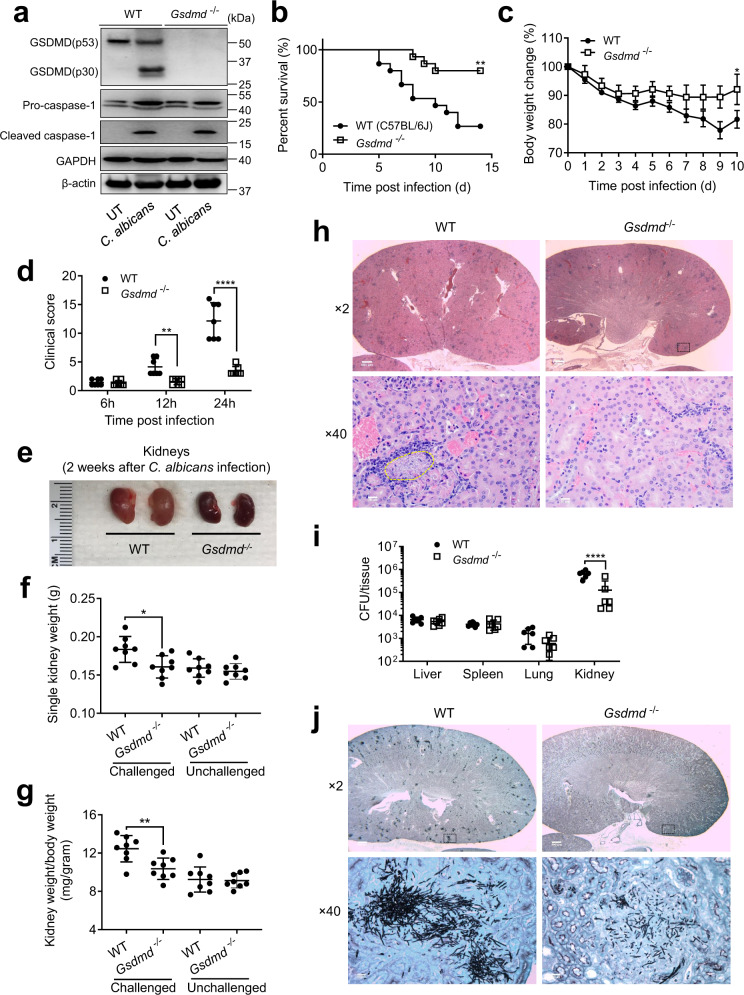
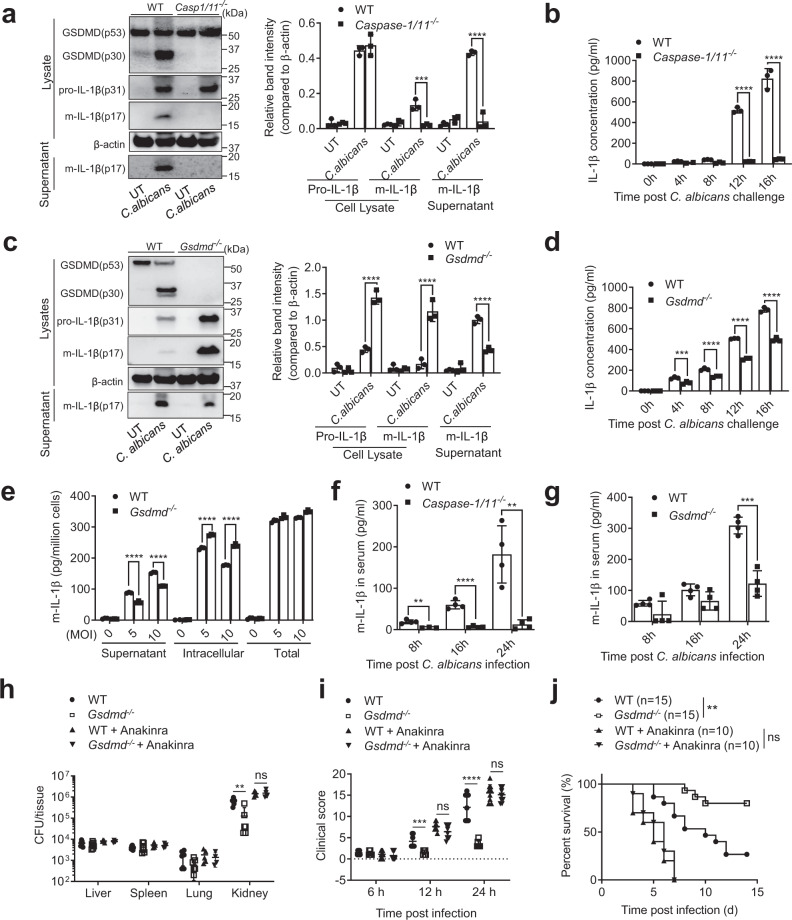
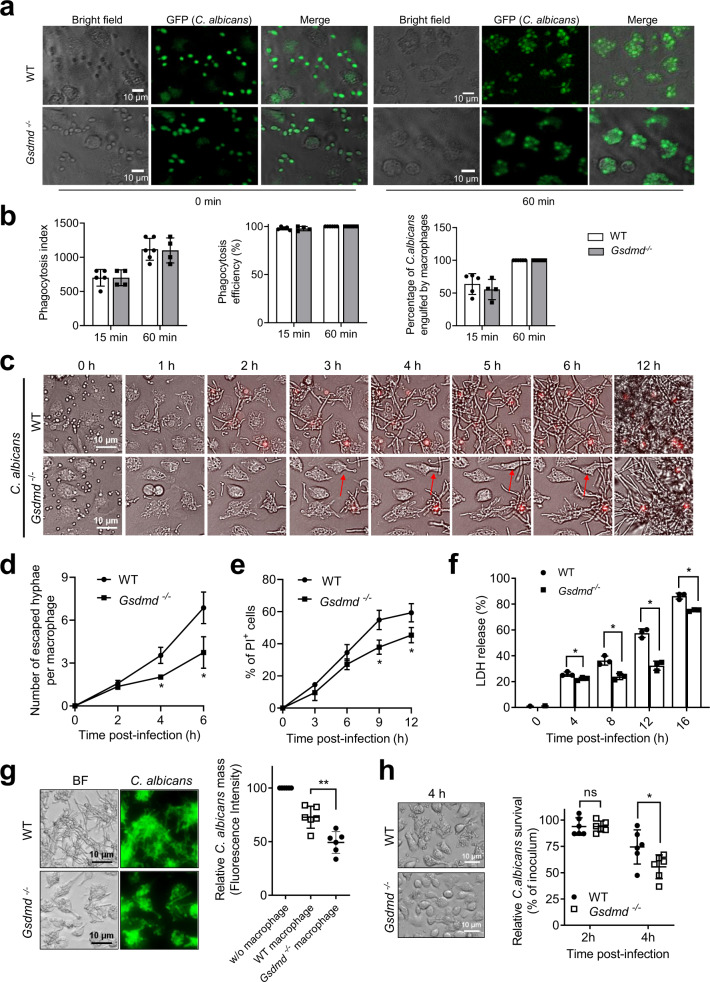
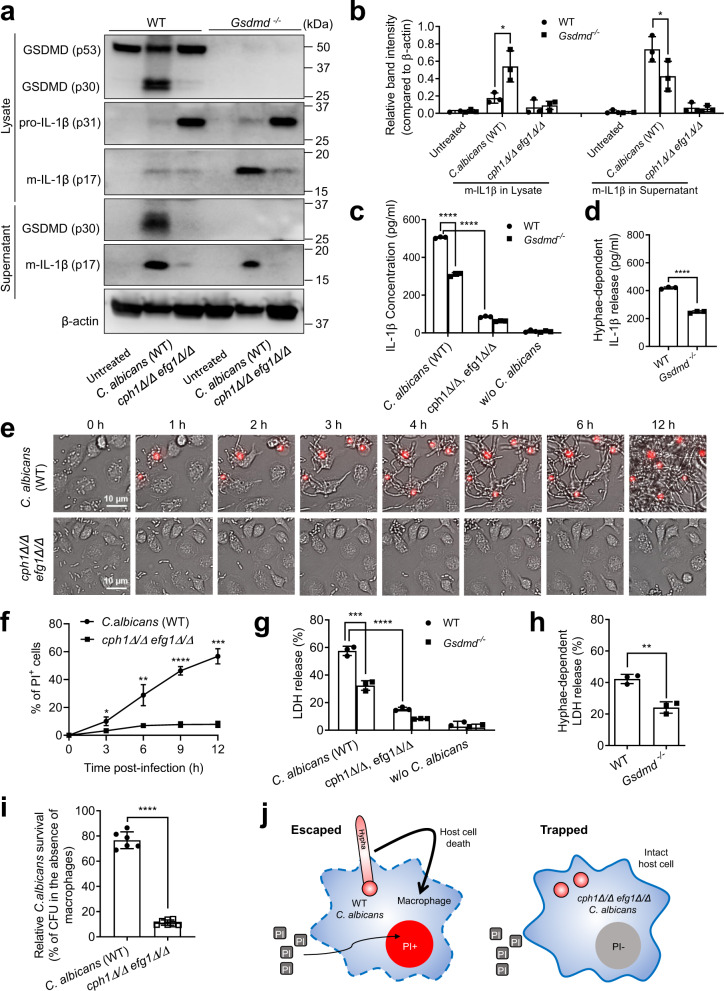
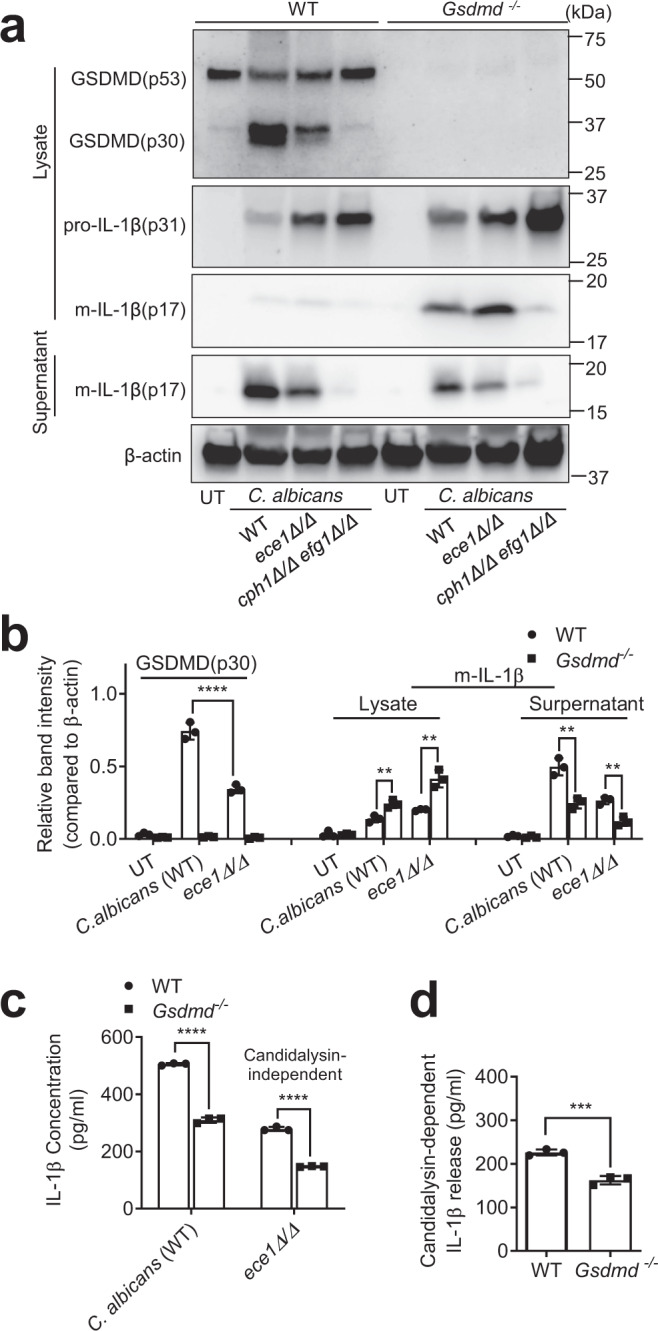
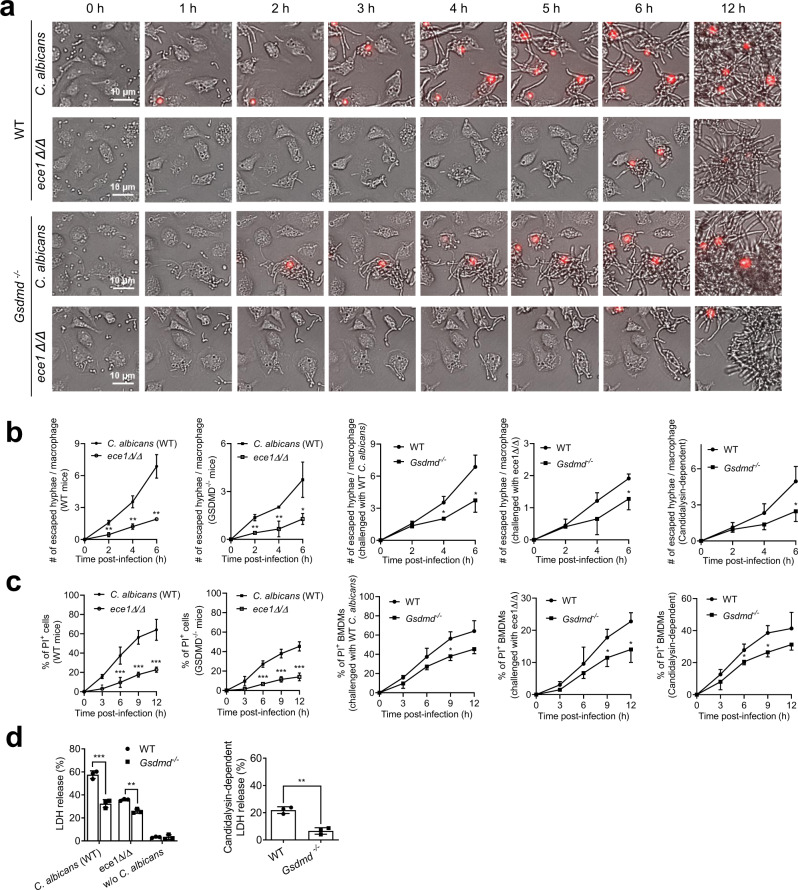
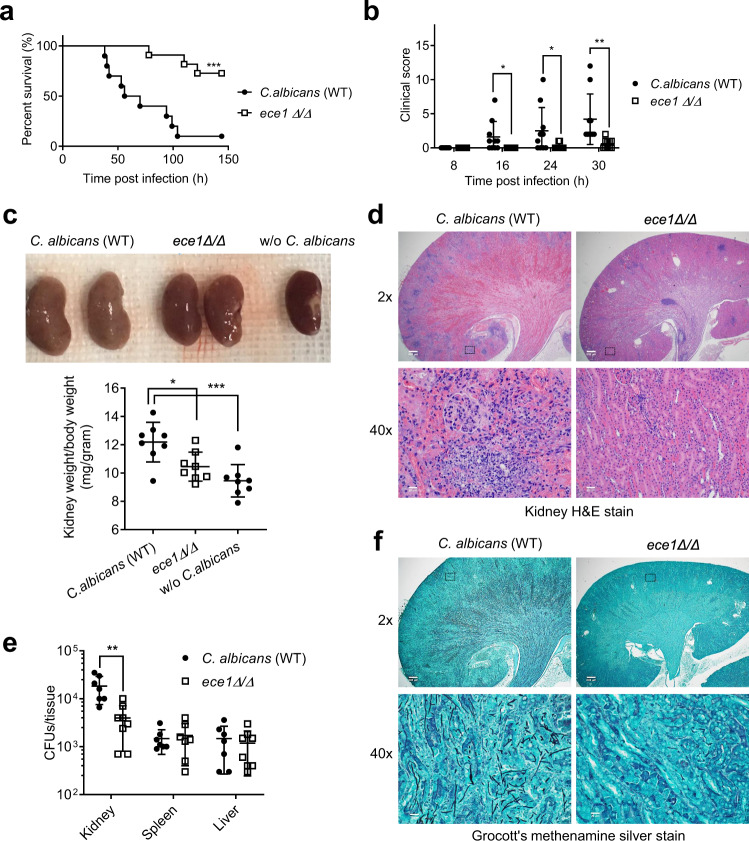
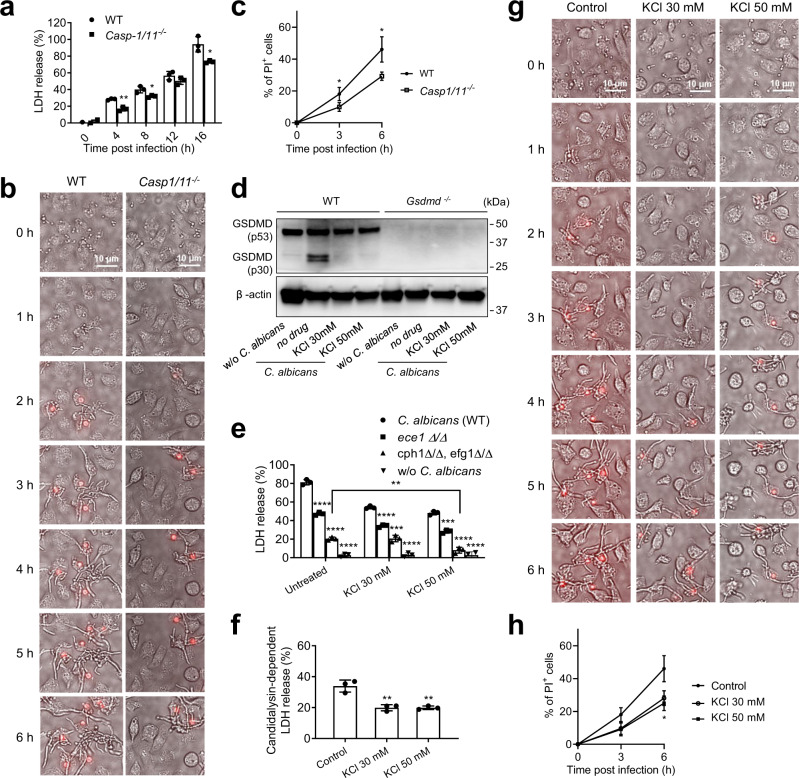
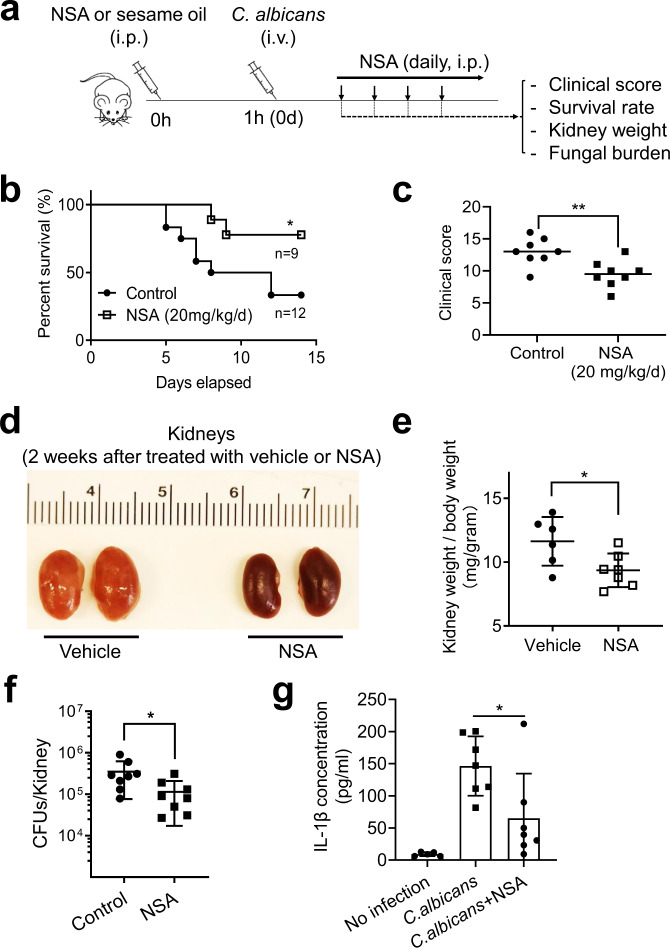
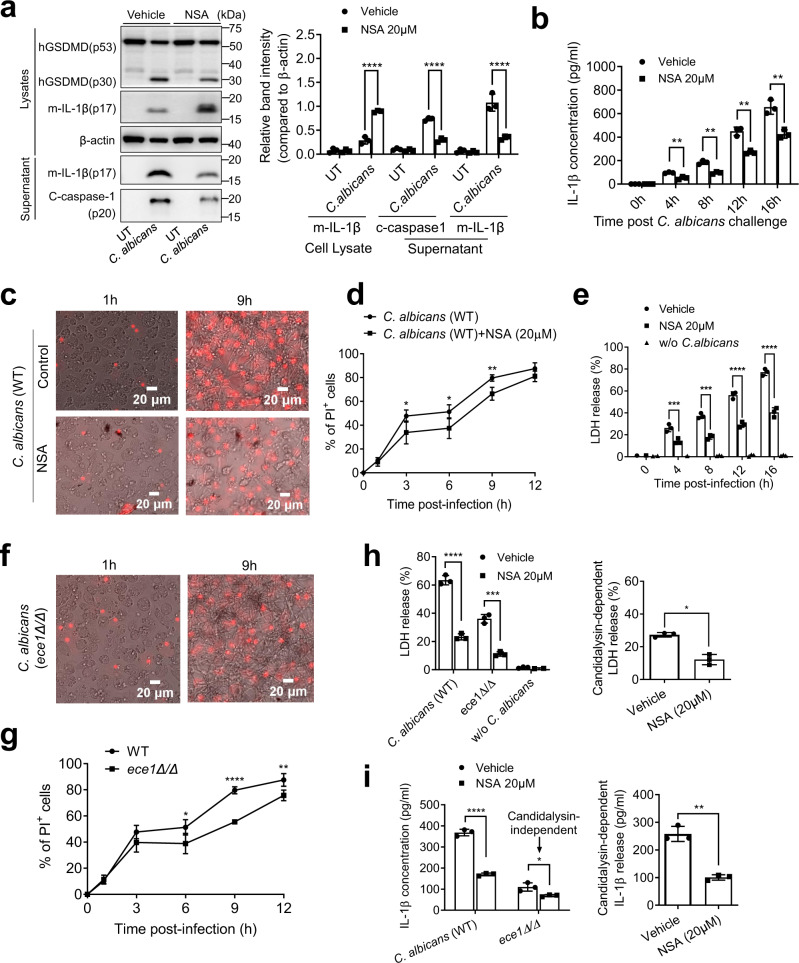
Candida albicans is the most common cause of fungal sepsis. Inhibition of inflammasome activity confers resistance to polymicrobial and LPS-induced sepsis; however, inflammasome signaling appears to protect against C. albicans infection, so inflammasome inhibitors are not clinically useful for candidiasis. Here we show disruption of GSDMD, a known inflammasome target and key pyroptotic cell death mediator, paradoxically alleviates candidiasis, improving outcomes and survival of Candida-infected mice. Mechanistically,C. albicans hijacked the canonical inflammasome-GSDMD axis-mediated pyroptosis to promote their escape from macrophages, deploying hyphae and candidalysin, a pore-forming toxin expressed by hyphae. GSDMD inhibition alleviated candidiasis by preventing C. albicans escape from macrophages while maintaining inflammasome-dependent but GSDMD-independent IL-1β production for anti-fungal host defenses. This study demonstrates key functions for GSDMD in Candida’s escape from host immunity in vitro and in vivo and suggests that GSDMD may be a potential therapeutic target in C. albicans-induced sepsis.
Overview
The claims and statistics of this paper haven’t been checked yet.
Free: it reads the open-access text and checks the first 5 claims that cite a source we can check. Create a free account to check every claim.
Integrity signals
Registry
Cites
Statistics
Figures
Verification
Claims the paper makes
The claims and statistics of this paper haven’t been checked yet.
Free: it reads the open-access text and checks the first 5 claims that cite a source we can check. Create a free account to check every claim.
Claims other papers make about this one
Each is checked against this paper’s own text: does it say what the citing paper says it does?
The source backs part of the claim, not all of it — or backs it for a different population, condition or comparison.
In the citing paper
“Preventing C. albicans from escaping macrophages effectively alleviates host inflammatory responses by reducing the excessive release of IL-1β [14].”
From The F 1 F o -ATP synthase α subunit of Candida albicans induces inflammatory responses by controlling amino acid catabolism (2023) · cites this paper as [14]
Experimental — accuracy not yet measuredThe source backs part of the claim, not all of it — or backs it for a different population, condition or comparison.
In the citing paper
“Macrophages are critical for controlling host inflammatory responses by phagocytizing and killing C. albicans [14,22].”
From The F 1 F o -ATP synthase α subunit of Candida albicans induces inflammatory responses by controlling amino acid catabolism (2023) · cites this paper as [14]
Experimental — accuracy not yet measuredThe source backs part of the claim, not all of it — or backs it for a different population, condition or comparison.
In the citing paper
“Enhancement of macrophage phagocytosis and killing of C. albicans alleviates the hyperinflammatory response by reducing the overproduction of IL-1β [14].”
From The F 1 F o -ATP synthase α subunit of Candida albicans induces inflammatory responses by controlling amino acid catabolism (2023) · cites this paper as [14]
Experimental — accuracy not yet measuredThe cited source says what the claim attributes to it.
In the citing paper
“Phagocytized C. albicans catabolizes amino acids to produce NH3 to neutralize the acidity of phagosomes [26,27], which induces filamentation for macrophage killing and escape [26,29], thus leading to host inflammatory responses [14].”
From The F 1 F o -ATP synthase α subunit of Candida albicans induces inflammatory responses by controlling amino acid catabolism (2023) · cites this paper as [14]
Self-check
Percentages, sums and reported differences re-computed from the paper’s own numbers.
The self-check needs the paper’s full text.
Citations
Cites
The third international consensus definitions for sepsis and septic shock (Sepsis-3).
Singer, M., Deutschman, C. S., Seymour, C. W., Shankar-Hari, M., Annane, D., Bauer, M., Bellomo, R., Bernard, G. R., Chiche, J.-D., Coopersmith, C. M., et al. (2016) · JAMA · doi:10.1001/jama.2016.0287 · Cited by 28,250
Surviving Sepsis Campaign: International Guidelines for Management of Severe Sepsis and Septic Shock
Dellinger, R. P., Levy, M. M., Rhodes, A., Annane, D., Gerlach, H., Opal, S. M., Sevransky, J. E., Sprung, C. L., Douglas, I. S., Jaeschke, R., et al. (2013) · Critical Care Medicine · doi:10.1097/ccm.0b013e31827e83af · Cited by 9,694
Cleavage of GSDMD by inflammatory caspases determines pyroptotic cell death
Shi, J., Zhao, Y., Wang, K., Shi, X., Wang, Y., Huang, H., Zhuang, Y., Cai, T., Wang, F., & Shao, F. (2015) · Nature · doi:10.1038/nature15514 · Cited by 6,659
Surviving Sepsis Campaign: International guidelines for management of sepsis and septic shock: 2016.
Rhodes, A., Evans, L. E., Alhazzani, W., Levy, M. M., Antonelli, M., Ferrer, R., Kumar, A., Sevransky, J. E., Sprung, C. L., Nunnally, M. E., et al. (2017) · Intensive Care Medicine · doi:10.1007/s00134-017-4683-6 · Cited by 6,621
The epidemiology of sepsis in the United States from 1979 through 2000
Martin, G. S., Mannino, D. M., Eaton, S., & Moss, M. (2003) · New England Journal of Medicine · doi:10.1056/nejmoa022139 · Cited by 5,841
The NLRP3 inflammasome: molecular activation and regulation to therapeutics
Swanson, K. V., Deng, M., & Ting, J. P.-Y. (2019) · Nature Reviews Immunology · doi:10.1038/s41577-019-0165-0 · Cited by 4,884
Hidden Killers: Human Fungal Infections
Brown, G. D., Denning, D. W., Gow, N. A. R., Levitz, S. M., Netea, M. G., & White, T. C. (2012) · Science Translational Medicine · doi:10.1126/scitranslmed.3004404 · Cited by 4,284
Epidemiology of Invasive Candidiasis: a Persistent Public Health Problem
Pfaller, M. A., & Diekema, D. J. (2007) · Clinical Microbiology Reviews · doi:10.1128/cmr.00029-06 · Cited by 4,174
Caspase-11 cleaves gasdermin D for non-canonical inflammasome signalling
Kayagaki, N., Stowe, I. B., Lee, B. L., O’Rourke, K., Anderson, K., Warming, S., Cuellar, T., Haley, B., Roose-Girma, M., Phung, Q. T., et al. (2015) · Nature · doi:10.1038/nature15541 · Cited by 3,686
Inflammasome-activated gasdermin D causes pyroptosis by forming membrane pores
Liu, X., Zhang, Z., Ruan, J., Pan, Y., Magupalli, V. G., Wu, H., & Lieberman, J. (2016) · Nature · doi:10.1038/nature18629 · Cited by 3,202
Cited by
Pyroptosis-Induced Inflammation and Tissue Damage
Vasudevan, S. O., Behl, B., & Rathinam, V. A. (2023) · Seminars in Immunology · doi:10.1016/j.smim.2023.101781 · Cited by 412
Pyroptosis: molecular mechanisms and roles in disease
Broz, P. (2025) · Cell Research · doi:10.1038/s41422-025-01107-6 · Cited by 219
Balasubramanian, A., Hsu, A. Y., Ghimire, L., Tahir, M., Devant, P., Fontana, P., Du, G., Liu, X., Fabin, D., Kambara, H., et al. (2024) · Science Immunology · doi:10.1126/sciimmunol.adn1452 · Cited by 201
Self-citationCandida albicans and Candida glabrata : global priority pathogens
Katsipoulaki, M., Stappers, M. H. T., Malavia-Jones, D., Brunke, S., Hube, B., & Gow, N. A. R. (2024) · Microbiology and Molecular Biology Reviews · doi:10.1128/mmbr.00021-23 · Cited by 180
Mechanistic insights into gasdermin-mediated pyroptosis
Bai, Y., Pan, Y., & Liu, X. (2025) · Nature Reviews Molecular Cell Biology · doi:10.1038/s41580-025-00837-0 · Cited by 174
Metadata
- Authors
- Ding, X., Kambara, H., Guo, R., Kanneganti, A., Acosta-Zaldívar, M., Li, J., Liu, F., Bei, T., Qi, W., Xie, X., Han, W., Liu, N., Zhang, C., Zhang, X., Yu, H., Zhao, L., Ma, F., Köhler, J. R., & Luo, H. R.
- Affiliations
- Boston Children's Hospital (US)
- Chinese Academy of Medical Sciences & Peking Union Medical College (CN)
- Brigham and Women's Hospital (US)
- Corresponding author
- Luo, Hongbo R.
- ORCID
- Venue
- Nature Communications
- Published
- 2021-11-18
- Volume
- 12
- Issue
- 1
- Pages
- 6699-6699
- ISSN
- 2041-1723 (ISSN-L)
- PMC
- PMC8602704
- OpenAlex
- W3211366243
- Cited by
- 115
- References
- 147
- Citations by year
- 2026: 28 · 2025: 30 · 2024: 28 · 2023: 18 · 2022: 11
- FWCI
- 4.45
- Type
- journal article
- Language
- en
- Open access
- gold
- doi.org
- Licence
- cc-by
- creativecommons.org/licenses/by/4.0 (tdm)
- creativecommons.org/licenses/by/4.0 (vor)
- Locations
- Nature Communications (publishedVersion, cc-by)
- PubMed Central (publishedVersion, cc-by)
- PubMed (publishedVersion)
- RePEc: Research Papers in Economics (submittedVersion)
- DOAJ (DOAJ: Directory of Open Access Journals) (submittedVersion, cc-by-sa)
- Funders
- U.S. Department of Health & Human Services | NIH | National Institute of Allergy and Infectious Diseases (AI145274)
- Topics
- Life Sciences › Biochemistry, Genetics and Molecular Biology › Molecular Biology › Inflammasome and immune disorders
- Health Sciences › Medicine › Infectious Diseases › Antifungal resistance and susceptibility
- Life Sciences › Biochemistry, Genetics and Molecular Biology › Molecular Biology › Fungal and yeast genetics research
- Keywords
- Candida albicans, gasdermin D, inflammasome, pyroptosis, candidiasis, macrophage escape, candidalysin, fungal hyphae, IL-1β, fungal sepsis, host-pathogen interaction, inflammasome inhibitors
- MeSH terms
- Gasdermins, Animals, Candida albicans, Candidiasis, Cells, Cultured, Female, Humans, Kidney, Macrophages, Mice, Inbred C57BL, Mice, Knockout, Caspase 1, Phosphate-Binding Proteins, Intracellular Signaling Peptides and Proteins, Mice, Kaplan-Meier Estimate, Interleukin-1beta, Host-Pathogen Interactions, Inflammasomes
About these checks
Registry, retraction, Cites and statistics results are computed, not judged, with one exception: a printed reference that no index lists is read once by a model before it counts as a citation error. Claims are extracted by a model and kept only when their quote appears verbatim in the text; each cited source is then checked, with a model’s help, for whether it says what the claim relies on. Those verdicts can be wrong — read the claim’s quote and the cited source before relying on one.
Statistics and arithmetic are recomputed, not judged.
Confidence bands are shown only for fields calibrated on our annotated test set. None is calibrated yet, so no band is shown.
What counts as a claim ›How we measure confidence ›How we check this ›
Are you an author, or do you see a problem with this page? Request a review
How to cite
Cite CoChat for the checks on this page, and the paper for its own findings.
- This page
- CoChat. (2026). Citation check: Inflammasome-mediated GSDMD activation facilitates escape of Candida albicans from macrophages. https://app.cochat.ai/papers/10.1038/s41467-021-27034-9
- The paper
- Ding, X., Kambara, H., Guo, R., Kanneganti, A., Acosta-Zaldívar, M., Li, J., Liu, F., Bei, T., Qi, W., Xie, X., Han, W., Liu, N., Zhang, C., Zhang, X., Yu, H., Zhao, L., Ma, F., Köhler, J. R., & Luo, H. R. (2021). Inflammasome-mediated GSDMD activation facilitates escape of Candida albicans from macrophages. Nature Communications. https://doi.org/10.1038/s41467-021-27034-9
Data sources
Bibliographic data: Semantic Scholar, OpenAlex, Crossref.
Contains information from the Semantic Scholar Academic Graph Datasets, made available under the ODC Attribution License (ODC-BY 1.0).
Semantic Scholar’s data is described in: Kinney, R., et al. (2023). The Semantic Scholar Open Data Platform. arXiv:2301.10140.
