

Gain-of-function and loss-of-function GABRB3 variants lead to distinct clinical phenotypes in patients with developmental and epileptic encephalopathies
Open accessThe DOI matches its Crossref record; 54 of the 54 references it cites were found in a registry or an index.
Abstract
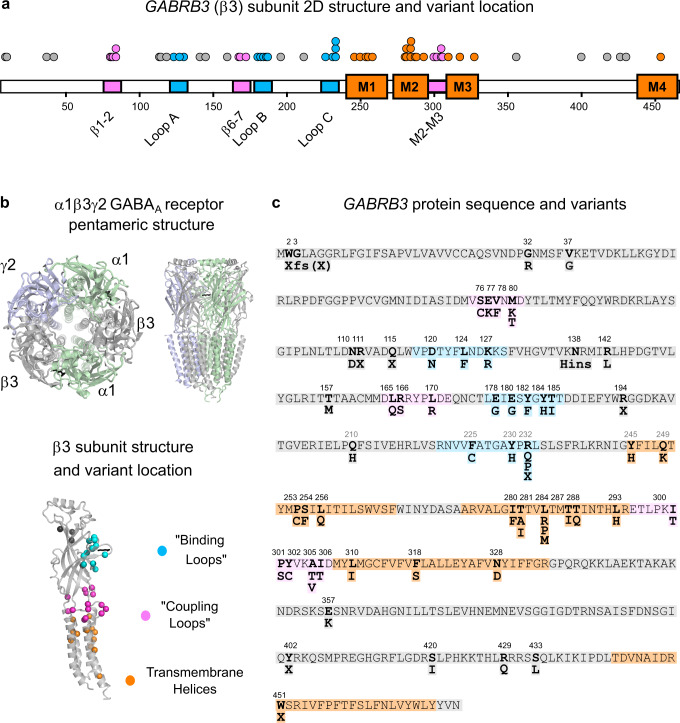
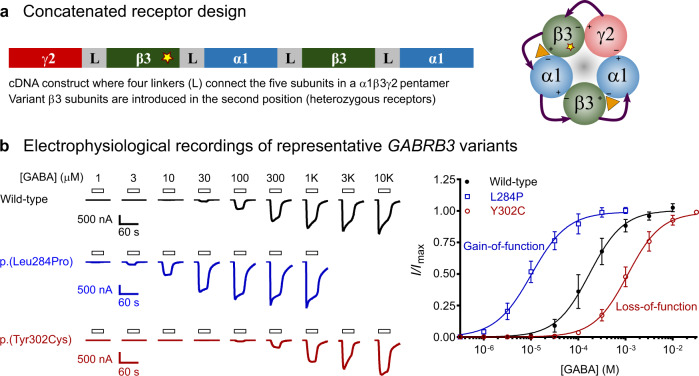
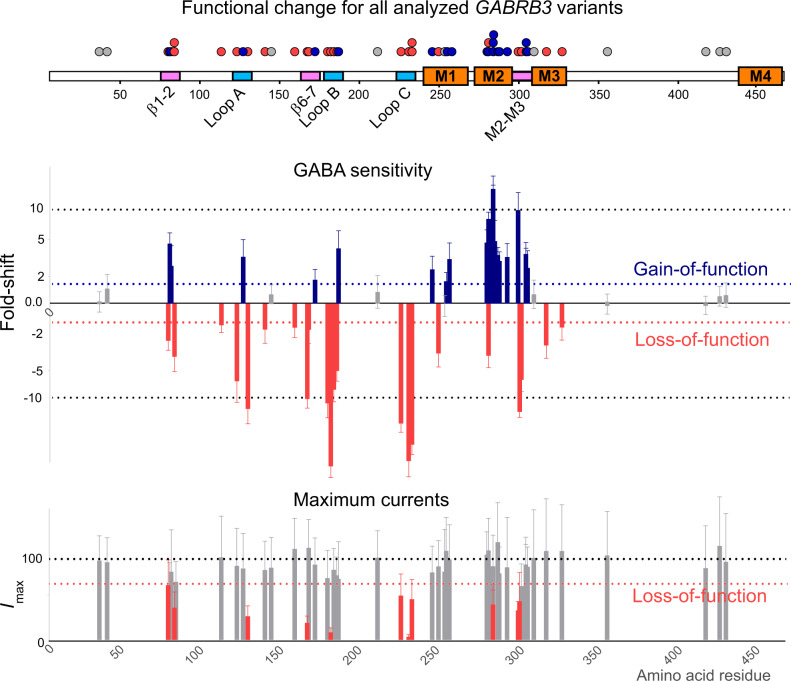
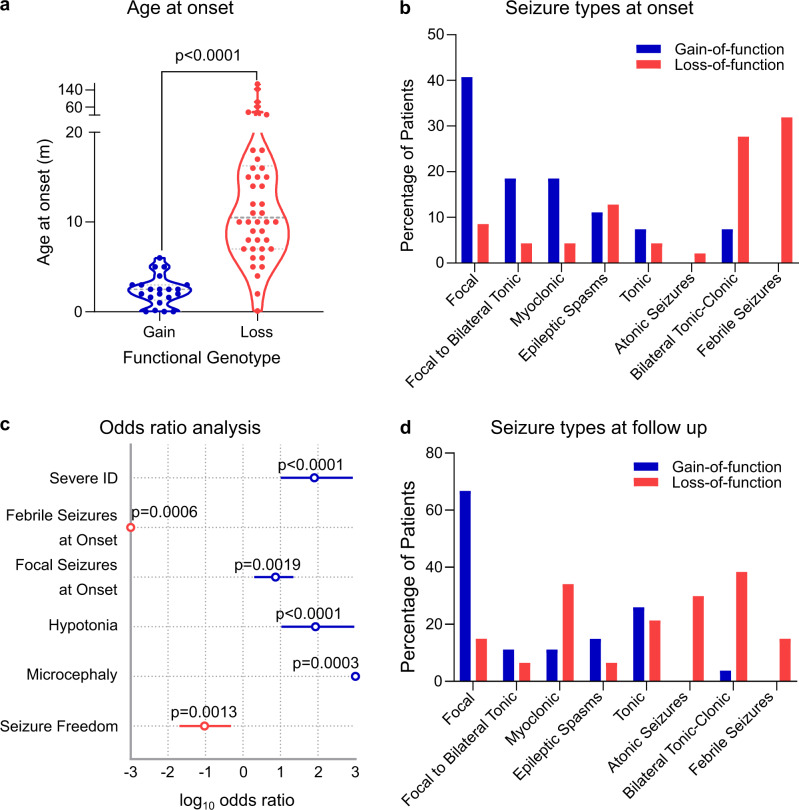
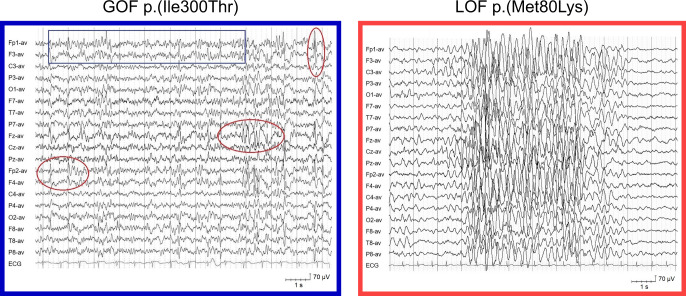
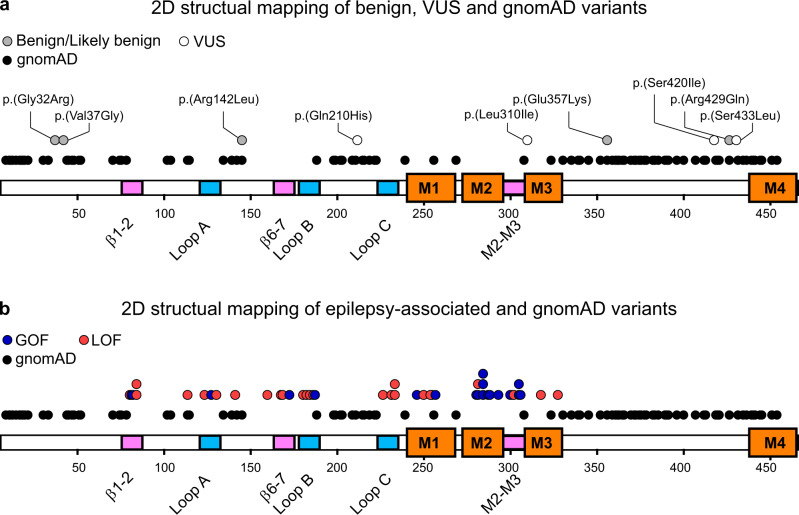
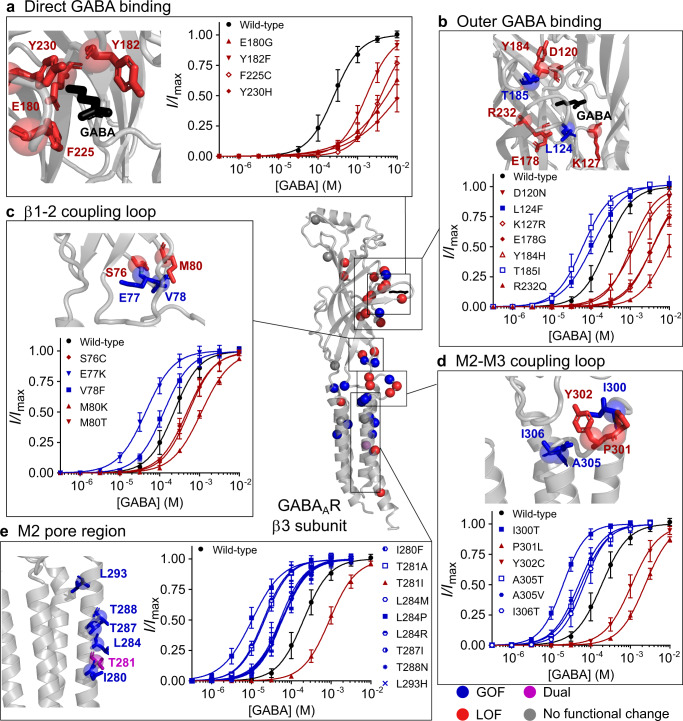
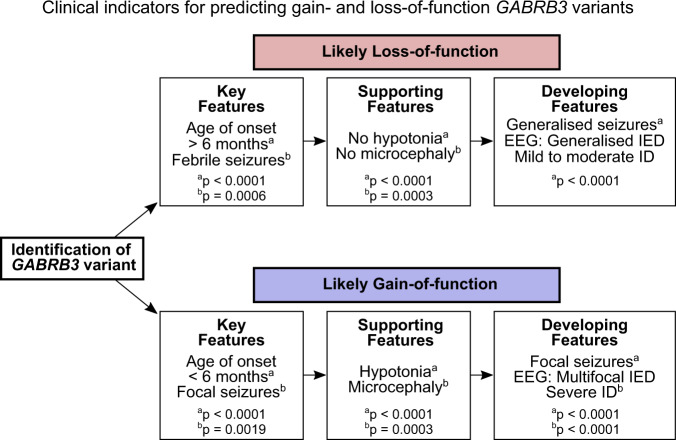
Many patients with developmental and epileptic encephalopathies present with variants in genes coding for GABA A receptors. These variants are presumed to cause loss-of-function receptors leading to reduced neuronal GABAergic activity. Yet, patients with GABA A receptor variants have diverse clinical phenotypes and many are refractory to treatment despite the availability of drugs that enhance GABAergic activity. Here we show that 44 pathogenic GABRB3 missense variants segregate into gain-of-function and loss-of-function groups and respective patients display distinct clinical phenotypes. The gain-of-function cohort ( n = 27 patients) presented with a younger age of seizure onset, higher risk of severe intellectual disability, focal seizures at onset, hypotonia, and lower likelihood of seizure freedom in response to treatment. Febrile seizures at onset are exclusive to the loss-of-function cohort ( n = 47 patients). Overall, patients with GABRB3 variants that increase GABAergic activity have more severe developmental and epileptic encephalopathies. This paradoxical finding challenges our current understanding of the GABAergic system in epilepsy and how patients should be treated.
Overview
The claims and statistics of this paper haven’t been checked yet.
Free: it reads the open-access text and checks the first 5 claims that cite a source we can check. Create a free account to check every claim.
Integrity signals
Registry
Cites
Statistics
Figures
Verification
Claims the paper makes
The claims and statistics of this paper haven’t been checked yet.
Free: it reads the open-access text and checks the first 5 claims that cite a source we can check. Create a free account to check every claim.
Claims other papers make about this one
Each is checked against this paper’s own text: does it say what the citing paper says it does?
The source backs part of the claim, not all of it — or backs it for a different population, condition or comparison.
In the citing paper
“GOF and LOF GABRB3 variants cause distinct DEE phenotypes with seizure onset under 6 months in GOF and after one year in LOF groups 73 .”
From Developmental and epileptic encephalopathies (2024) · cites this paper as [73]
Experimental — accuracy not yet measured
Self-check
Percentages, sums and reported differences re-computed from the paper’s own numbers.
The self-check needs the paper’s full text.
Citations
Cites
Richards, S., Aziz, N., Bale, S., Bick, D., Das, S., Gastier-Foster, J., Grody, W. W., Hegde, M., Lyon, E., Spector, E., et al. (2015) · Genetics in Medicine · doi:10.1038/gim.2015.30 · Cited by 32,594
The mutational constraint spectrum quantified from variation in 141,456 humans
Karczewski, K. J., Francioli, L. C., Tiao, G., Cummings, B. B., Alföldi, J., Wang, Q., Collins, R. L., Laricchia, K. M., Ganna, A., Birnbaum, D. P., et al. (2020) · Nature · doi:10.1038/s41586-020-2308-7 · Cited by 9,434
Shrestha, S., & Offer, S. M. (2016) · Medical Epigenetics · doi:10.1159/000444713 · Cited by 8,914
The mutational constraint spectrum quantified from variation in 141,456 humans
Karczewski, K. J., Francioli, L. C., Tiao, G., Cummings, B. B., Alföldi, J., Wang, Q., Collins, R. L., Laricchia, K. M., Ganna, A., Birnbaum, D. P., et al. (2019) · doi:10.1101/531210 · Cited by 1,662
GeneMatcher: a matching tool for connecting investigators with an interest in the same gene.
Sobreira, N., Schiettecatte, F., Valle, D., & Hamosh, A. (2015) · Human Mutation · doi:10.1002/humu.22844 · Cited by 1,529
On behalf of the Clinical Genome Resource Sequence Variant Interpretation Working Group, Brnich, S. E., Abou Tayoun, A. N., Couch, F. J., Cutting, G. R., Greenblatt, M. S., Heinen, C. D., Kanavy, D. M., Luo, X., McNulty, S. M., et al. (2020) · Genome Medicine · doi:10.1186/s13073-019-0690-2 · Cited by 636
Genetic and phenotypic heterogeneity suggest therapeutic implications in SCN2A-related disorders
Wolff, M., Johannesen, K. M., Hedrich, U. B. S., Masnada, S., Rubboli, G., Gardella, E., Lesca, G., Ville, D., Milh, M., Villard, L., et al. (2017) · Brain · doi:10.1093/brain/awx054 · Cited by 600
Self-citationGABAA receptor signalling mechanisms revealed by structural pharmacology
Masiulis, S., Desai, R., Uchański, T., Serna Martin, I., Laverty, D., Karia, D., Malinauskas, T., Zivanov, J., Pardon, E., Kotecha, A., et al. (2019) · Nature · doi:10.1038/s41586-018-0832-5 · Cited by 551
Trophic actions of GABA on neuronal development
Represa, A., & Ben-Ari, Y. (2005) · Trends in Neurosciences · doi:10.1016/j.tins.2005.03.010 · Cited by 455
De novo variants in neurodevelopmental disorders with epilepsy
EuroEPINOMICS RES Consortium, Heyne, H. O., Singh, T., Stamberger, H., Abou Jamra, R., Caglayan, H., Craiu, D., De Jonghe, P., Guerrini, R., Helbig, K. L., et al. (2018) · Nature Genetics · doi:10.1038/s41588-018-0143-7 · Cited by 289
Self-citation
Cited by
Developmental and epileptic encephalopathies
Scheffer, I. E., Zuberi, S., Mefford, H. C., Guerrini, R., & McTague, A. (2024) · Nature Reviews Disease Primers · doi:10.1038/s41572-024-00546-6 · Cited by 158
“GOF and LOF GABRB3 variants cause distinct DEE phenotypes with seizure onset under 6 months in GOF and after one year in LOF groups 73 .”
Perucca, E., Bialer, M., & White, H. S. (2023) · CNS Drugs · doi:10.1007/s40263-023-01027-2 · Cited by 127
Collaborative, E., Chen, S., Abou-Khalil, B. W., Afawi, Z., Ali, Q. Z., Amadori, E., Anderson, A., Anderson, J., Andrade, D. M., Annesi, G., et al. (2024) · Nature Neuroscience · doi:10.1038/s41593-024-01747-8 · Cited by 100
“Most of the previously implicated variants in these two genes were also missense 13,14 , and we discovered an additional 24 and 26 damaging missense URVs in SLC6A1 and GABRB3 , respectively, increasing the existing candidates by approximately 50% (Supplementary Data 3).”
InfluentialMaillard, P., Baer, S., Schaefer, É., Desnous, B., Villeneuve, N., Lepine, A. F., Fabre, A., Lacoste, C., Chehadeh, S. E., Piton, A., et al. (2022) · Epilepsia · doi:10.1111/epi.17336 · Cited by 91
Self-citationBryson, A., Reid, C. A., & Petrou, S. (2023) · Journal of Neurochemistry · doi:10.1111/jnc.15769 · Cited by 75
Fan, J., Dong, X., Tang, Y., Wang, X., Lin, D., Gong, L., Chen, C., Jiang, J., Shen, W., Xu, A., et al. (2023) · CNS Neuroscience & Therapeutics · doi:10.1111/cns.14224 · Cited by 51
Complexity in Genetic Epilepsies: A Comprehensive Review
Rastin, C., Schenkel, L. C., & Sadiković, B. (2023) · International Journal of Molecular Sciences · doi:10.3390/ijms241914606 · Cited by 50
“This can be due to different mutations causing different effects on the translated protein or downstream pathway, leading to either a gain or loss of the protein’s function (Figure 2B) [29].”
BackgroundEstablished and emerging GABAA receptor pharmacotherapy for epilepsy
Richardson, R. J., Petrou, S., & Bryson, A. (2024) · Frontiers in Pharmacology · doi:10.3389/fphar.2024.1341472 · Cited by 48
Rinaldi, B., Bayat, A., Zachariassen, L. G., Sun, J., Ge, Y.-H., Zhao, D., Bonde, K., Madsen, L. H., Awad, I. A. A., Bagiran, D., et al. (2023) · Brain · doi:10.1093/brain/awad403 · Cited by 42
Self-citationCurrent and Emerging Precision Therapies for Developmental and Epileptic Encephalopathies
Samanta, D., Bhatia, S., Hunter, S. E., Rao, C. K., Xiong, K., Karakas, C., Reeders, P. C., Erdemir, G., Sattar, S., Axeen, E. T., et al. (2025) · Pediatric Neurology · doi:10.1016/j.pediatrneurol.2025.04.010 · Cited by 39
Absalom, N. L., Lin, S. X. N., Liao, V. W. Y., Chua, H. C., Møller, R. S., Chebib, M., & Ahring, P. K. (2023) · Journal of Neurochemistry · doi:10.1111/jnc.15932 · Cited by 36
Self-citationSpecchio, N., Micco, V. D., Aronica, E., Auvin, S., Balestrini, S., Brunklaus, A., Gardella, E., Scheper, M., Taglialatela, M., Trivisano, M., et al. (2025) · Epilepsia · doi:10.1111/epi.18209 · Cited by 35
“50 Similarly, in past decades, increasing evidence confirmed the role of altered inhibitory/excitatory signaling in ASD.”
Self-citationChang, Y., Hong, S., Lin, W., Lin, C., Lin, S., Tsai, F., & Chou, I. (2023) · Children · doi:10.3390/children10030556 · Cited by 33
“However, studies have shown that missense variants in GABRB3 can lead to both gain-of-function and loss-of-function mutations, leading to unique clinical phenotypes [95].”
BackgroundSamanta, D. (2025) · Children · doi:10.3390/children12040481 · Cited by 29
“However, in GOF variants, vinpocetine may exacerbate symptoms, as observed with vigabatrin in GABRB3 GOF cases [62].”
Mohammadi, N. A., Ahring, P. K., Yu Liao, V. W., Chua, H. C., Ortiz de la Rosa, S., Johannesen, K. M., Michaeli-Yossef, Y., Vincent-Devulder, A., Meridda, C., Bruel, A.-L., et al. (2024) · eBioMedicine · doi:10.1016/j.ebiom.2024.105236 · Cited by 27
“…spectrum of individuals harbouring GABRB2 variants observed here is in many ways comparable to observations in the recent reports for GABRA1 , 13 GABRB3 11 and GABRD , 22 and in all cases the spectrum correlates with GOF and LOF categories based on the functional change in GABA sensitivity.”
BackgroundResultInfluentialSelf-citationPharmacological chaperones restore proteostasis of epilepsy-associated GABAA receptor variants
Wang, Y., Seibert, H., Ahn, L., Schaffer, A. E., & Mu, T. (2024) · Pharmacological Research · doi:10.1016/j.phrs.2024.107356 · Cited by 27
GABRA1 ‐Related Disorders: From Genetic to Functional Pathways
Musto, E., Liao, V. W. Y., Johannesen, K. M., Fenger, C., Lederer, D., Kothur, K., Fisk, K., Bennetts, B., Vrielynck, P., Delaby, D., et al. (2023) · Annals of Neurology · doi:10.1002/ana.26774 · Cited by 26
“Similar to our genotype – phenotype and functional correlation studies in GABRB3 and GABRD , 19,21,34 GoF and LoF variants in GABRA1 overall display distinctive phenotypic features that can be distinguished and separated into clinical categories.”
BackgroundResultSelf-citationHeterozygous variants in USP25 cause genetic generalized epilepsy
Fan, C.-X., Liu, X., Mei, D., Li, B.-M., Li, W., Xie, H., Wang, J., Shen, N.-X., Ye, Z.-L., You, Q.-L., et al. (2024) · Brain · doi:10.1093/brain/awae191 · Cited by 22
Kan, A. S. H., Kusay, A. S., Mohammadi, N. A., Lin, S. X. N., Liao, V. W. Y., Lesca, G., Souci, S., Milh, M., Christophersen, P., Chebib, M., et al. (2024) · Proceedings of the National Academy of Sciences · doi:10.1073/pnas.2413011121 · Cited by 20
“…have been identified across all major subunit types ( 8 – 11 , 24 – 28 ), yet functional analyses revealed surprisingly diverse outcomes spanning from LOF traits [ GABRA1 , GABRB2, and GABRG2 variants ( 9 – 11 )] over limited functional changes [ GABRB3 variant ( 5 )] to GOF traits [ GABRD ( 8 )].”
Self-citationGABAA Receptor β3 Subunit Mutation N328D Heterozygous Knock-in Mice Have Lennox–Gastaut Syndrome
Nwosu, G., Shen, W., Zavalin, K. A., Poliquin, S., Randhave, K., Flamm, C., Biven, M., Langer, K., & Kang, J. (2023) · International Journal of Molecular Sciences · doi:10.3390/ijms24098458 · Cited by 17
“For instance, a recent study demonstrated that both gain-of-function and loss-of-function variants in GABRB3 are associated with epilepsy syndromes [51].”
BackgroundLi, M., Yang, J., Li, J., Yuan, Z., Li, X., Ma, Z., Li, X., Ma, H., & Ye, X. (2023) · Phytomedicine · doi:10.1016/j.phymed.2023.155198 · Cited by 17
The endoplasmic reticulum membrane complex promotes proteostasis of GABAA receptors
Whittsette, A. L., Wang, Y., & Mu, T. (2022) · iScience · doi:10.1016/j.isci.2022.104754 · Cited by 17
“Recent advance in genetics has identified over 150 epilepsy-associated variants in the major subunits (a1, b2, b3, and g2) of GABAA receptors (Absalom et al., 2022; Fu et al., 2022; Hernandez and Macdonald, 2019; Hirose, 2014).”
BackgroundAhring, P. K., Liao, V. W. Y., Lin, S. X. N., Absalom, N. L., Chebib, M., & Møller, R. S. (2022) · Epilepsia · doi:10.1111/epi.17358 · Cited by 17
Self-citationDiscovery of a DNA methylation profile in individuals with Sifrim-Hitz-Weiss syndrome
Karimi, K., Lichtenstein, Y., Reilly, J., McConkey, H., Relator, R., Levy, M. A., Kerkhof, J., Bouman, A., Symonds, J. D., Ghoumid, J., et al. (2025) · The American Journal of Human Genetics · doi:10.1016/j.ajhg.2024.12.020 · Cited by 15
Correlations of receptor desensitization of gain-of-function GABRB3 variants with clinical severity
Lin, S. X. N., Ahring, P. K., Keramidas, A., Liao, V. W. Y., Møller, R. S., Chebib, M., & Absalom, N. L. (2023) · Brain · doi:10.1093/brain/awad285 · Cited by 14
“9 For this study, we omitted protein truncating variants and supplemented our previous cohort of 27 gain and 37 loss-of-function patients with a recent study that outlined details of six patients harbouring GABRB3 variants (one loss-and five gain-of-function) with known changes in the GABA…”
MethodSelf-citationSchaub, A. M., Gonzalez, T. L., Dorfman, A. E., Novoa, A., Hussaini, R., Harakuni, P. M., Khan, M. H., Shabani, B. J., Swarna, A., Wang, E. T., et al. (2023) · Fertility and Sterility · doi:10.1016/j.fertnstert.2023.10.007 · Cited by 15
Johnston, G. A. R., & Beart, P. M. (2024) · Journal of Neurochemistry · doi:10.1111/jnc.16087 · Cited by 14
“In their gain- of-function study on β 3 GABA A receptor variants in epileptic encephalopathies, Absalom and colleagues found that the gain- of-function in GABA A receptor variants in a cohort of 27 patients presented with a younger age of seizure onset (median age 2.5 months) than 47 patients in the loss- of-function…”
BackgroundInfluentialPeng, L., Du, Q., Guo, D., Guo, D.-Y., Zhai, B.-T., Wang, M., Zou, J., & Shi, Y. (2022) · AAPS Open · doi:10.1186/s41120-022-00068-z · Cited by 13
Phenotypic Spectrum in Individuals With Pathogenic GABRG2 Loss- and Gain-of-Function Variants
Rossi, A., Lin, S. X. N., Absalom, N. L., Ortiz, S., Liao, V. W. Y., Mohammadi, N. A., Viswanathan, S., Stödberg, T., Danieli, A., Bonanni, P., et al. (2025) · Neurology · doi:10.1212/wnl.0000000000213644 · Cited by 12
“…(ASMs) challenge the assumption that GABRG2 variants only cause LoF e ff ects Recent reports show that epilepsy-associated variants in other GABA A R subunit genes including GABRA1 , 24,25 GABRA4 , 26 GABRB2 , 27 GABRB3 , 28,29 and GABRD 30 can cause both gain-of-function (GoF) and LoF e ff ects.”
Self-citationMonfrini, E., Borellini, L., Zirone, E., Yahya, V., Mauri, E., Molisso, M. T., Mameli, F., Ruggiero, F., Comi, G. P., Barbieri, S., et al. (2023) · Epileptic Disorders · doi:10.1002/epd2.20132 · Cited by 11
Cation leak: a common functional defect causing HCN1 developmental and epileptic encephalopathy
McKenzie, C. E., Forster, I. C., Soh, M. S., Phillips, A. M., Bleakley, L. E., Russ-Hall, S. J., Myers, K. A., Scheffer, I. E., & Reid, C. A. (2023) · Brain Communications · doi:10.1093/braincomms/fcad156 · Cited by 11
Cys-loop receptors on cannabinoids: All high?
Schmiedhofer, P. B., Vogel, F. D., Koniuszewski, F., & Ernst, M. C. (2022) · Frontiers in Physiology · doi:10.3389/fphys.2022.1044575 · Cited by 10
“Interestingly, not only molecular loss of function, but also molecular gain of function and complex change of function phenotypes have been connected with seizure disorders (Ahring et al., 2022a, 2022b; Absalom et al., 2022; Vogel et al., 2022).”
BackgroundThe Epistemic Value of Gain of Function Experiments
Casadevall, A., Fang, F. C., & Imperiale, M. J. (2023) · mSphere · doi:10.1128/msphere.00714-23 · Cited by 9
Pathogenicity Prediction of GABA A Receptor Missense Variants
(2024) · doi:10.1002/ijch.202300161 · Cited by 8
Proteostasis regulation of GABAA receptors in neuronal function and disease
Chen, X., Wang, Y., & Mu, T. (2025) · Biomedicine & Pharmacotherapy · doi:10.1016/j.biopha.2025.117992 · Cited by 8
GABAA Receptors, Seizures, and Epilepsy
Olsen, R. W., Wallner, M., & Rogawski, M. A. (2024) · Oxford University Press eBooks · doi:10.1093/med/9780197549469.003.0048 · Cited by 8
Pathogenicity Prediction of GABA A Receptor Missense Variants
Wang, Y.-J., Vu, G. H., & Mu, T.-W. (2023) · doi:10.1101/2023.11.14.567135 · Cited by 8
Dunham, T., Wilkerson, J. R., Johnson, R. C., Huganir, R. L., & Volk, L. J. (2024) · Cell Reports · doi:10.1016/j.celrep.2024.114841 · Cited by 7
The genetic and phenotypic spectrum of GABRB1 -related disorders
Millevert, C., Kan, A. S. H., Hanke, M., Koko, M., Omidvar, M. E., Hedrich, U. B. S., Wuttke, T. V., Barišić, N., Lagae, L. G., Aledo‐Serrano, Á., et al. (2025) · Brain · doi:10.1093/brain/awaf213 · Cited by 7
Self-citationDuan, J., Jiang, B., Wei, Y., Lin, Y., Yan, G., & Lü, W. (2025) · EMBO Reports · doi:10.1038/s44319-025-00538-x · Cited by 6
“In addition, it has been demonstrated that epilepsy-associated pathogenic GABRB3 Tyr302Cys (Y302C) variants can lead to loss-of-function receptors, and patients with this variant have severe developmental and epileptic encephalo-pathies (Absalom et al, 2022; Shi et al, 2019).”
Genetic Variants and Disease Mechanisms: Lessons from Monogenic Childhood Epilepsies
Oberlack, A., & Wagner, M. (2025) · Neuropediatrics · doi:10.1055/a-2731-5130 · Cited by 6
Ugwuoke, S. C., Nwanelo, V. O., Ogugofor, M. O., Ugwu, O. C., & Anosike, C. A. (2023) · Journal of Research in Pharmacy · doi:10.29228/jrp.398 · Cited by 6
Discovery of Novel Antiepileptic Agents Targeting the α1β2γ2 GABAA Receptor
Gao, Y., Noraddin, A., Li, X., Zhu, C., Zhang, Y., Jin, Y., Zhang, M., Yu, Y., Wang, X., Wang, K., et al. (2025) · Journal of Medicinal Chemistry · doi:10.1021/acs.jmedchem.5c01770 · Cited by 5
De novo CLPTM1 variants with reduced GABAAR current response in patients with epilepsy
Liu, N., Li, J., Gao, K., Perszyk, R. E., Zhang, J., Wang, J., Wu, Y., Jenkins, A., Yuan, H., Traynelis, S. F., et al. (2023) · Epilepsia · doi:10.1111/epi.17746 · Cited by 5
“12,13 Variants of GABA subunit genes encoding GABA A R participate in the pathological process of various nervous sys-tem diseases.”
BackgroundApplication of Proteostasis Regulators in GABAA Receptor Misfolding Diseases
Chen, X., Mu, T., & Wang, Y. (2023) · Journal of Biomedical Research & Environmental Sciences · doi:10.37871/jbres1843 · Cited by 5
“Variations in genes encoding GABA A receptor subunits result in neurodevelopmental and neuropsychiatric disorders such as autism, epilepsy, schizophrenia, and bipolar disorder [4,27,28].”
BackgroundPerilli, L., Ferretti, A., Riva, A., Grosso, S., Verrotti, A., & Striano, P. (2026) · Expert Review of Clinical Pharmacology · doi:10.1080/17512433.2026.2652967 · Cited by 4
“…have also been described, associated with distinct clinical phenotypes, such as earlier seizure onset and severe ID. Notably, a characteristic interictal pattern of rapid EEG rhythms, observed before treatment and suggestive of GABAergic hyperactivity, has been described in GoF cases [111,112].”
Self-citationShen, D., Wan, J., Zhang, X., Sui, J., Zhan, L., Zheng, Y., Ni, Y., & Zhang, Q. (2025) · Cell Death Discovery · doi:10.1038/s41420-025-02759-4 · Cited by 4
“The Gabrg2 + /A105T (A105T) mice and the wild-type (WT) littermates at 46 months were placed in transparent glass container and acclimate to the environment for 2 h prior a 2-h video recording.”
Epileptic Encephalopathy GABRB Structural Variants Share Common Gating and Trafficking Defects
Hernández, C. C., Hu, N., Shen, W., & Macdonald, R. L. (2023) · Biomolecules · doi:10.3390/biom13121790 · Cited by 4
Emerging Gene-Based Pathways: Channelopathies (Epilepsy and Beyond)
George, A. L. (2025) · Elsevier eBooks · doi:10.1016/b978-0-443-10944-7.00053-6 · Cited by 3
Adamo-Croux, M., Angelini, C., Aupy, J., Villard, L., Villeneuve, N., Chefdor, A., Halleb, Y., Colmard, M., Degoutin, M., Lesca, G., et al. (2025) · Epilepsia · doi:10.1111/epi.18507 · Cited by 3
“15 These rapid rhythms look very similar to those seen during benzodiazepine treatment, which enhances GABAergic activity and promotes the synchronization of neural firing at beta frequencies.”
Self-citationJohannesen, K. M., Aung, K. P., Liao, V. W. Y., Absalom, N. L., Chua, H. C., Gan, X. N., Mao, M., McKenzie, C. E., Lee, H. M., Ortiz, S., et al. (2025) · Journal of Clinical Investigation · doi:10.1172/jci189830 · Cited by 3
“For example, females with heterozygous GABRA3 GOF variants have a later age of seizure onset compared with those with GABRB3 variants (median 36 vs. 2.5 months).”
InfluentialSelf-citationShim, Y., Yang, D. H., Byeon, J. H., & Eun, B. (2026) · Medicine · doi:10.1097/md.0000000000047425 · Cited by 3
“GoF variants are typically linked to severe, early onset epilepsy with poor treatment response, [20] whereas LoF variants are often more responsive to GABAergic ASMs.”
Targeting Spinal Dorsal Horn Sensitisation in Chronic Pain: Mechanisms and Translational Strategies
Krotov, V., & Kopach, O. (2026) · Neuroscience Bulletin · doi:10.1007/s12264-026-01642-1 · Cited by 3
“Numerous missense variants have recently been identified in genes encoding subunits of GABARs [214–220] and GlyRs [221–226], opening new possibilities to restore impaired inhibitory transmission within DH circuits.”
Anti-seizure mechanisms of midazolam and valproate at the β2(L51M) variant of the GABAA receptor
Kuanyshbek, A., Wang, M., Andersson, Å., Tuifua, M., Palmer, E. E., Sachdev, R., Mu, T., Vetter, I., & Keramidas, A. (2022) · Neuropharmacology · doi:10.1016/j.neuropharm.2022.109295 · Cited by 3
Reciprocal and non-reciprocal effects of clinically relevant SETBP1 protein dosage changes
Antonyan, L., Zhang, X., Ni, A., Peng, H., Alsuwaidi, S., Fleming, P., Zhang, Y., Semenak, A., Macintosh, J., Wu, H., et al. (2025) · Human Molecular Genetics · doi:10.1093/hmg/ddaf003 · Cited by 3
“Mutations can also occur in specific regions of a gene encoding critical domains that influence the protein’s stability [7].”
Critical contributions of neuronal subtypes to pediatric drug-resistant focal dysplasia
Zhang, Y., Li, L., Zhu, F., Zhang, X., Xia, D., Miao, Q., Zhong, C., Liang, S., Cao, D., Zou, H., et al. (2025) · Frontiers in Cell and Developmental Biology · doi:10.3389/fcell.2025.1566137 · Cited by 3
Yang, X., Deng, B., Wang, S., Wang, X., Cao, L., Chen, X., & Zhao, X. (2022) · Frontiers in Neurology · doi:10.3389/fneur.2022.954494 · Cited by 3
“The γ-aminobutyric acidA receptor (GABAAR) is a ligand-gated chloride channel that mediates fast inhibitory synaptic transmission in the central nervous system (CNS) (2, 3).”
BackgroundFollow the allosteric transitions to predict variant pathogenicity: a channel-specific approach
Absalom, N. L., El‐Kamand, S., Chua, H. C., & Ahring, P. K. (2024) · Brain · doi:10.1093/brain/awae008 · Cited by 3
“6 These residues are located at different structural motifs for different classes of proteins, where some may be close and others far from the central ion channel pore.”
BackgroundSelf-citationGenotypic spectrum in 1215 patients with Dravet syndrome or Dravet syndrome-like phenotype
Xiaojuan, T., Cheng, M., Yang, Y., Zeng, Q., Chen, Y., Liu, A., Yang, X., Zhang, J., Tan, Q., Liu, W., et al. (2026) · Pediatric Research · doi:10.1038/s41390-026-04790-2 · Cited by 2
Uncovering targets and molecular pathways for personalizing treatment in epilepsy
Rosa, F., & Lerche, H. (2026) · Expert Opinion on Therapeutic Targets · doi:10.1080/14728222.2026.2638746 · Cited by 2
“More recently, severe neonatal onset DEEs resulting from GoF variants in GABRB3 [45] or GABRB1 [15] and atypical absences resulting from GoF variants in GABRD [46] were described.”
Epigenome-microbiome interplay in early life associates with infants’ neurodevelopmental outcomes
Ng, S. C., Peng, Y., Zhang, L., Zhao, S., Wong, O. W., Liu, X., Li, H., Zhu, J., Liu, Y., Su, Q., et al. (2026) · Cell Press Blue · doi:10.1016/j.cpblue.2026.100009 · Cited by 2
Targeted Treatments for Genetic Epilepsies, Part 1: Channelopathies
Hunter, S. E., Cardwell, E. B., Lea, J. K., Rao, C. K., Samanta, D., Karamian, A. G. S., Karakas, C., Erdemir, G., Fan, Z., Xiong, K., et al. (2026) · Current Treatment Options in Neurology · doi:10.1007/s11940-026-00873-x · Cited by 2
“Both GoF and LoF have been described [77 , 78].”
aGABRacadabra: A surprising new role for GABAA receptors in cortical development
Kourdougli, N., & Portera‐Cailliau, C. (2023) · Neuron · doi:10.1016/j.neuron.2022.12.019 · Cited by 2
Generation of two patient specific GABRD variants and their isogenic controls for modeling epilepsy
Kamand, M., Taleb, R., Wathikthinnakon, M., Mohamed, F. A., Ghazanfari, S. P., Konstantinov, D., Hald, J. L., Holst, B., Brasch‐Andersen, C., Møller, R. S., et al. (2024) · Stem Cell Research · doi:10.1016/j.scr.2024.103372 · Cited by 2
Self-citationKurose‐Iwanaga, M., Muraki, E., & Sasaki, S. (2024) · Animal Science Journal · doi:10.1111/asj.14006 · Cited by 2
Li, P., Zhou, Y.-Y., Gao, L., Lv, J.-N., Xu, S., Zhao, Y.-W., Xu, D., Huang, R., Zhang, X., Li, P., et al. (2024) · Neuroscience · doi:10.1016/j.neuroscience.2024.06.029 · Cited by 1
Ortiz, S., Bagliani, C., Lin, S. X. N., Kusay, A. S., Silvennoinen, K., Kälviäinen, R. K., Jutila, L., Saarela, A., Dahl, R. S., Stödberg, T., et al. (2025) · Epilepsia · doi:10.1111/epi.70045 · Cited by 1
“HMDs have been reported in association with pathogenic GoF variants not only in GABRG2 15 but also in GABRB2 7 and GABRB3 , 8 suggesting that HMD is a key clinical feature to distinguish between LoF and GoF.”
Self-citationOrtiz, S., Affronte, L., Bagliani, C., El‐Kamand, S., Kan, A. S. H., Kristoffersen, I. T., Dahl, R. S., Højte, A. F., Auvin, S., Bouman, A., et al. (2026) · Epilepsia · doi:10.1002/epi.70096 · Cited by 1
“5,8 Unlike gross motor dysfunction, the age at seizure onset did not correlate with the severity of cognitive deficits for individuals with LoF or GoF variants.”
Self-citationWang, J., & Kang, J. (2026) · Epilepsia Open · doi:10.1002/epi4.70259 · Cited by 1
“44 Additionally, gain- of-function (GOF) mutations have been reported in GABRA1 , 45 GABRB2 , 46 GABRB3 , 47 and GABRG2 48 mutations.”
Gjerulfsen, C. E., Liao, V. W. Y., Mieszczanek, T. S., Jakobsen, A. V., Gardella, E., Olofsson, K., Nikanorova, M., Bayat, A., Ortiz, S., Weckhuysen, S., et al. (2026) · Epilepsia · doi:10.1002/epi.70310 · Cited by 1
“1,5,6,23 The concatenated cDNA receptor constructs were then expressed in Xenopus laevis oocytes.”
Self-citationBojinova, V., & Aleksandrova, I. (2025) · Българска неврология · doi:10.67667/neu.v26i1.196 · Cited by 1
No Gain, Less Pain: GABRB3 Mutations in Epileptic Encephalopathy
Gallagher, M. J. (2022) · Epiliepsy currents/Epilepsy currents · doi:10.1177/15357597221130199
Research Progress on Precise Diagnosis and Treatment of Developmental and Epileptic Encephalopathies
杨, 涵. (2025) · Advances in Clinical Medicine · doi:10.12677/acm.2025.151002
Cilio, M. R., Carapancea, E., & Sands, T. T. (2024) · Elsevier eBooks · doi:10.1016/b978-0-443-10944-7.00084-6
Hua, R., Jiang, J., Wang, B., Zhu, Z., Wang, J., Wu, D., & Li, Y. (2025) · The Italian Journal of Pediatrics/Italian journal of pediatrics · doi:10.1186/s13052-025-02046-z
Function Matters: Variant Mechanisms in the Era of Precision Medicine
Boßelmann, C. M. (2025) · Neuropediatrics · doi:10.1055/a-2732-4516
Preclinical models of Lennox-Gastaut syndrome: Progress and priorities
Smidth, C. K. L., Nair, K. P., Ashley, K., & Knowles, J. K. (2025) · Seminars in Pediatric Neurology · doi:10.1016/j.spen.2025.101246
Shisa7-dependent Modulation of GABAA Receptor Kinetics and Pharmacology
Castellano, D. D. (2023) · DigitalGeorgetown (Georgetown University Library)
Delioğlu, D. T., & Arslan, A. (2025) · Afyon Kocatepe University Journal of Sciences and Engineering · doi:10.35414/akufemubid.1622931
Maher, M. A., & Amr, A. (2026) · Siberian Journal of Oncology · doi:10.21294/1814-4861-2025-24-6-127-137
GABAergic dynamics in thalamocortical circuits: Insights into absence seizures and hyperinhibition
Eslamizade, M. J., Dabbagh, A., Karimzadeh, F., Janahmadi, M., & Saffarzadeh, F. (2026) · European Journal of Pharmacology · doi:10.1016/j.ejphar.2026.178550
Solvent-induced structural transformation in luminescence-enhanced polymorphic ionic HOFs
Yang, Y., Zhou, B., Dai, Y.-Y., & Cao, L. (2026) · Chemical Communications · doi:10.1039/d6cc00927a
Systemic characterization of pathogenic GABRA1 missense variants
Chen, W., So, Y. W., Wang, C. K., Shen, Y., Demos, M. K., Mu, J., Zhang, T., Wu, X., Huh, L. L., Wang, Y. T., et al. (2026) · Genes & Diseases · doi:10.1016/j.gendis.2026.102135
Étude multi-échelle de modèles murins de déficience intellectuelle associée à PAK3
Dobrigna, M. (2024) · theses.fr (ABES) · doi:10.70675/54303e6cz76f9z4529zb556zfc6f07309f89
McKenzie, C. E., Aung, K. P., Santos, A. B. D., Mao, M., Spyrou, J., Bryson, A., Wong, R., Lin, S. X. N., Bleakley, L. E., Palmqvist, J., et al. (2026) · Brain · doi:10.1093/brain/awag119
Self-citationAn atomic interaction conserved for over 600 million years gates inhibitory neurotransmissionPreprint
Borghese, C. M., Desai, N. G., Garlapati, P., Shah, S. K., Galpin, J. D., Segura, L., Haloi, N., Zakon, H. H., Howard, R. J., Lindahl, E. R., et al. (2026) · bioRxiv (Cold Spring Harbor Laboratory) · doi:10.64898/2026.05.22.727206
Зонизамид (Zonisamide) - нова възможност за лечение на епилепсиите в България
Bojinova, V., & Milanov, I. G. (2026) · Българска неврология · doi:10.67667/neu.v27i1.229
Accurate prediction of gain- and loss-of-function missense variants in GABAA receptors
Boßelmann, C. M., Ortiz, S., Dahl, R. S., Liao, V. W. Y., El‐Kamand, S., Lin, S. X. N., Kan, A. S. H., Brünger, T., Lal, D., Lerche, H., et al. (2026) · EBioMedicine · doi:10.1016/j.ebiom.2026.106417
“14,15 A combined workflow and proposed evidence framework for variant assessment using the provided annotation files and online resources is shown in Supplementary Fig.”
Self-citationCai, M.-S., Li, H.-R., Liao, P., Hu, Z., & Chen, Y.-J. (2026) · Frontiers in Genetics · doi:10.3389/fgene.2026.1902275
He, J., Song, Z., Zhang, J., Zhao, B., Bao, G., Li, N., Zhang, C., Ma, Y., Groot, M. L., Wang, T., et al. (2026) · Neuroscience Bulletin · doi:10.1007/s12264-026-01714-2
Perry, M. S. (2026) · Journal of Clinical Medicine · doi:10.3390/jcm15207886
“GABA-enhancing therapies, including benzodiazepines, phenobarbital, neurosteroids, and vigabatrin, may compensate for LoF but can worsen excessive GABAergic signaling or cause substantial adverse effects in GoF disease [80,81].”
Waele, J. D., Diaz-Bustamante, M., Aourz, N., Cottyn, S., Smet, G. D., Raedt, R., Schreiber, J. M., Gaillard, W. D., Bundel, D. D., Smolders, I. J., et al. (2026) · Neurobiology of Disease · doi:10.1016/j.nbd.2026.107650
Pacheva, I. H. (2026) · Genes · doi:10.3390/genes17101308
“Reduced GABAergic signaling can lower seizure threshold through impaired inhibitory control; however, pathogenic GABRB3 variants are functionally heterogeneous, and developmental and epileptic phenotypes cannot be explained by reduced inhibition alone [54,81].”
Yang, X., Deng, B., Wang, S., Wang, X., Cao, L., Chen, X., & Zhao, X. (2022) · doi:10.3389/fneur.2022.954494.s001
Metadata
- Authors
- Absalom, N. L., Liao, V. W. Y., Johannesen, K. M. H., Gardella, E., Jacobs, J., Lesca, G., Gokce-Samar, Z., Arzimanoglou, A., Zeidler, S., Striano, P., Meyer, P., Benkel-Herrenbrueck, I., Mero, I.-L., Rummel, J., Chebib, M., Møller, R. S., & Ahring, P. K.
- Affiliations
- The University of Sydney (AU)
- University of Southern Denmark (DK)
- University of Freiburg (DE)
- Hospices Civils de Lyon (FR)
- Erasmus MC (NL)
- Istituto Giannina Gaslini (IT)
- Inserm (FR)
- Heinrich Heine University Düsseldorf (DE)
- Oslo University Hospital (NO)
- Corresponding author
- Møller, Rikke S.
- Ahring, Philip K.
- ORCID
- Venue
- Nature Communications
- Published
- 2022-04-05
- Volume
- 13
- Issue
- 1
- Pages
- 1822-1822
- ISSN
- 2041-1723 (ISSN-L)
- PMC
- PMC8983652
- OpenAlex
- W4223515850
- Semantic Scholar
- eea2e09509acad674b75c3887fc9e4a6181d2e94
- Cited by
- 89
- References
- 53
- Citations by year
- 2026: 21 · 2025: 21 · 2024: 18 · 2023: 21 · 2022: 8
- FWCI
- 11.07
- Type
- journal article
- Language
- en
- Open access
- gold
- doi.org
- Licence
- cc-by
- creativecommons.org/licenses/by/4.0 (tdm)
- creativecommons.org/licenses/by/4.0 (vor)
- Locations
- Nature Communications (publishedVersion, cc-by)
- PubMed Central (publishedVersion, cc-by)
- PubMed (publishedVersion)
- EUR Research Repository (Erasmus University Rotterdam) (publishedVersion, cc-by)
- University of Southern Denmark Research Portal (University of Southern Denmark) (submittedVersion, cc-by)
- EUR Research Repository (Erasmus University Rotterdam) (submittedVersion, cc-by)
- HAL (submittedVersion, other-oa)
- RePEc: Research Papers in Economics (submittedVersion)
- DOAJ (DOAJ: Directory of Open Access Journals) (submittedVersion)
- CINECA IRIS Institutial Research Information System (University of Genoa) (submittedVersion, other-oa)
- Funders
- Lundbeckfonden (R324-2019-1083)
- Novo Nordisk
- Novo Nordisk Fonden (NNF19OC0058749)
- H. Lundbeck A/S
- Medical Research Council
- Topics
- Health Sciences › Medicine › Clinical Neurology › Epilepsy research and treatment
- Life Sciences › Biochemistry, Genetics and Molecular Biology › Genetics › Genetics and Neurodevelopmental Disorders
- Life Sciences › Neuroscience › Cellular and Molecular Neuroscience › Neuroscience and Neuropharmacology Research
- Keywords
- GABRB3, GABAA receptor, developmental and epileptic encephalopathy, gain-of-function mutations, loss-of-function mutations, missense mutations, febrile seizures, intellectual disability, focal seizures, hypotonia, GABAergic system, epilepsy genetics
- MeSH terms
- Loss of Function Mutation, Gain of Function Mutation, Epilepsy, Humans, Phenotype, Receptors, GABA-A, Seizures
About these checks
Registry, retraction, Cites and statistics results are computed, not judged, with one exception: a printed reference that no index lists is read once by a model before it counts as a citation error. Claims are extracted by a model and kept only when their quote appears verbatim in the text; each cited source is then checked, with a model’s help, for whether it says what the claim relies on. Those verdicts can be wrong — read the claim’s quote and the cited source before relying on one.
Statistics and arithmetic are recomputed, not judged.
Confidence bands are shown only for fields calibrated on our annotated test set. None is calibrated yet, so no band is shown.
What counts as a claim ›How we measure confidence ›How we check this ›
Are you an author, or do you see a problem with this page? Request a review
Data sources
Bibliographic data: Semantic Scholar, OpenAlex, Crossref.
Contains information from the Semantic Scholar Academic Graph Datasets, made available under the ODC Attribution License (ODC-BY 1.0).
Semantic Scholar’s data is described in: Kinney, R., et al. (2023). The Semantic Scholar Open Data Platform. arXiv:2301.10140.
