

A parallel randomised controlled trial of the Hypoglycaemia Awareness Restoration Programme for adults with type 1 diabetes and problematic hypoglycaemia despite optimised self-care (HARPdoc)
Open accessThe DOI matches its Crossref record; 52 of the 53 references it cites were found in a registry or an index.
Abstract
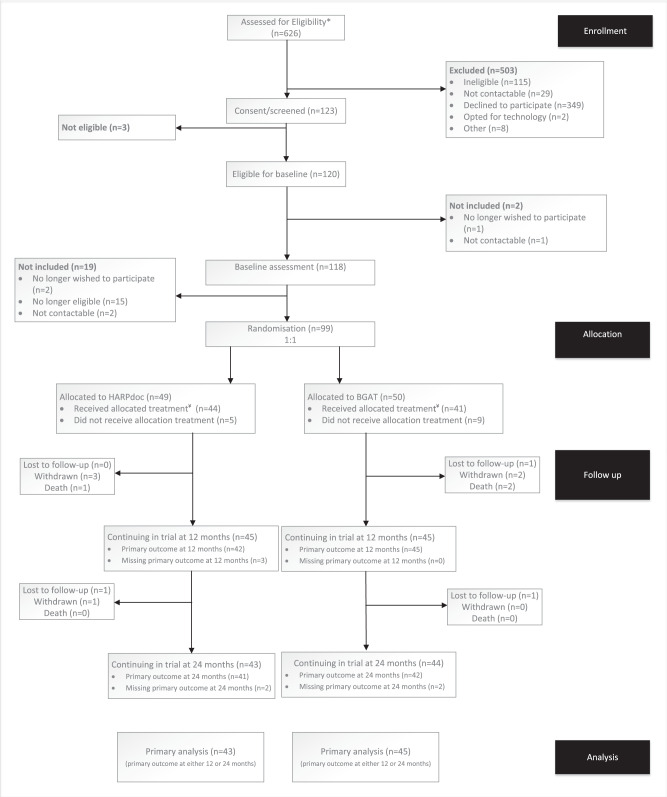
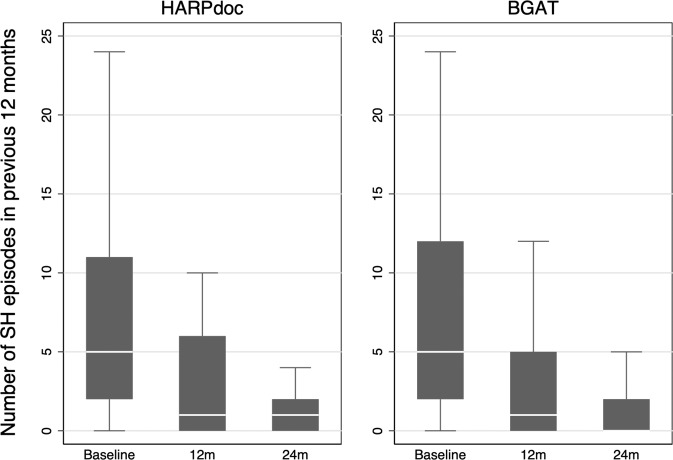
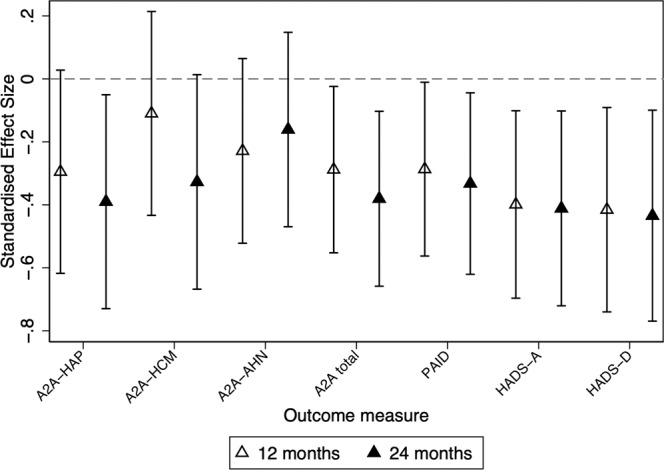
Impaired awareness of hypoglycaemia (IAH) is a major risk for severe hypoglycaemia in insulin treatment of type 1 diabetes (T1D). To explore the hypothesis that unhelpful health beliefs create barriers to regaining awareness, we conducted a multi-centre, randomised, parallel, two-arm trial (ClinicalTrials.gov NCT02940873) in adults with T1D and treatment-resistant IAH and severe hypoglycaemia, with blinded analysis of 12-month recall of severe hypoglycaemia at 12 and/or 24 months the primary outcome. Secondary outcomes included cognitive and emotional measures. Adults with T1D, IAH and severe hypoglycaemia despite structured education in insulin adjustment, +/− diabetes technologies, were randomised to the “Hypoglycaemia Awareness Restoration Programme despite optimised self-care” (HARPdoc, n = 49), a psychoeducation programme uniquely focussing on changing cognitive barriers to avoiding hypoglycaemia, or the evidence-based “Blood Glucose Awareness Training” (BGAT, n = 50), both delivered over six weeks. Median [IQR] severe hypoglycaemia at baseline was 5[2–12] per patient/year, 1[0–5] at 12 months and 0[0–2] at 24 months, with no superiority for HARPdoc (HARPdoc vs BGAT incident rate ratios [95% CI] 1.25[0.51, 3.09], p = 0.62 and 1.26[0.48, 3.35], p = 0.64 respectively), nor for changes in hypoglycaemia awareness scores or fear. Compared to BGAT, HARPdoc significantly reduced endorsement of unhelpful cognitions (Estimated Mean Difference for Attitudes to Awareness scores at 24 months, −2.07 [−3.37,−0.560], p = 0.01) and reduced scores for diabetes distress (−6.70[−12.50,−0.89], p = 0.02); depression (−1.86[−3.30, −0.43], p = 0.01) and anxiety (−1.89[−3.32, −0.47], p = 0.01). Despite positive impact on cognitive barriers around hypoglycaemia avoidance and on diabetes-related and general emotional distress scores, HARPdoc was not more effective than BGAT at reducing severe hypoglycaemia.
Overview
The claims and statistics of this paper haven’t been checked yet.
Free: it reads the open-access text and checks the first 5 claims that cite a source we can check. Create a free account to check every claim.
Integrity signals
Registry
Cites
Statistics
Figures
Verification
Claims the paper makes
The claims and statistics of this paper haven’t been checked yet.
Free: it reads the open-access text and checks the first 5 claims that cite a source we can check. Create a free account to check every claim.
Claims other papers make about this one
Each is checked against this paper’s own text: does it say what the citing paper says it does?
The source backs part of the claim, not all of it — or backs it for a different population, condition or comparison.
In the citing paper
“Recurrent level 2 hypoglycemia and/or level 3 hypoglycemia is an urgent medical issue and requires intervention with medical treatment plan adjustment, behavioral intervention, and, in some cases, use of technology to assist with hypoglycemia prevention and identification (76,(79)(80)(81)(82).”
From 6. Glycemic Targets: Standards of Care in Diabetes—2023 (2023) · cites this paper as [79]
Experimental — accuracy not yet measuredThe source backs part of the claim, not all of it — or backs it for a different population, condition or comparison.
In the citing paper
“If a patient has level 2 hypoglycemia without adrenergic or neuroglycopenic symptoms, they likely have hypoglycemia unawareness (discussed further below).”
From 6. Glycemic Targets: Standards of Care in Diabetes—2023 (2023) · cites this paper as [79]
Experimental — accuracy not yet measuredThe source backs part of the claim, not all of it — or backs it for a different population, condition or comparison.
In the citing paper
“Conversely, some individuals with type 1 diabetes or type 2 diabetes and hypoglycemia who have a fear of hyperglycemia are resistant to relaxation of glycemic targets (74)(75)(76)(77)(78)(79)(80)(81)(82)(83).”
From 6. Glycemic Targets: Standards of Care in Diabetes—2023 (2023) · cites this paper as [79]
Experimental — accuracy not yet measuredThe source backs part of the claim, not all of it — or backs it for a different population, condition or comparison.
In the citing paper
“Several evidence-based training programs have been developed for this purpose and have been demonstrated to reduce rates of hypoglycemia and improve quality of life among people with type 1 diabetes and impaired hypoglycemia awareness (74,155,156).”
From 6. Glycemic Goals, Hypoglycemia, and Hyperglycemic Crises: Standards of Care in Diabetes-2026. (2026) · cites this paper as [74]
Experimental — accuracy not yet measured
Self-check
Percentages, sums and reported differences re-computed from the paper’s own numbers.
The self-check needs the paper’s full text.
Citations
Cites
Michie, S., van Stralen, M. M., & West, R. (2011) · Implementation Science · doi:10.1186/1748-5908-6-42 · Cited by 13,697
State of Type 1 Diabetes Management and Outcomes from the T1D Exchange in 2016–2018
Foster, N. C., Beck, R. W., Miller, K. M., Clements, M. A., Rickels, M. R., DiMeglio, L. A., Maahs, D. M., Tamborlane, W. V., Bergenstal, R., Smith, E., et al. (2019) · Diabetes Technology & Therapeutics · doi:10.1089/dia.2018.0384 · Cited by 1,907
Self-citationAssessment of Diabetes-Related Distress
Polonsky, W. H., Anderson, B. J., Lohrer, P. A., Welch, G., Jacobson, A. M., Aponte, J. E., & Schwartz, C. E. (1995) · Diabetes Care · doi:10.2337/diacare.18.6.754 · Cited by 1,497
The hospital anxiety and depression scale
Snaith, R. P., & Zigmond, A. S. (1986) · BMJ · doi:10.1136/bmj.292.6516.344 · Cited by 879
Gold, A. E., Macleod, K. M., & Frier, B. M. (1994) · Diabetes Care · doi:10.2337/diacare.17.7.697 · Cited by 810
Individual determinants of research utilization by nurses: a systematic review update
Squires, J. E., Estabrooks, C. A., Gustavsson, P., & Wallin, L. (2011) · Implementation Science · doi:10.1186/1748-5908-6-1 · Cited by 798
Clarke, W. L., Cox, D. J., Gonder-Frederick, L. A., Julian, D., Schlundt, D., & Polonsky, W. (1995) · Diabetes Care · doi:10.2337/diacare.18.4.517 · Cited by 651
Self-citationInternational Hypoglycaemia Study Group (2017) · Diabetes Care · doi:10.2337/dc16-2215 · Cited by 608
Heinemann, L., Freckmann, G., Ehrmann, D., Faber-Heinemann, G., Guerra, S., Waldenmaier, D., & Hermanns, N. (2018) · The Lancet · doi:10.1016/s0140-6736(18)30297-6 · Cited by 522
Cited by
6. Glycemic Targets: Standards of Care in Diabetes—2023
ElSayed, N. A., Aleppo, G., Aroda, V. R., Bannuru, R. R., Brown, F. M., Bruemmer, D., Collins, B. S., Hilliard, M. E., Isaacs, D., Johnson, E. L., et al. (2023) · Diabetes Care · doi:10.2337/dc23-s006 · Cited by 684
6. Glycemic Goals and Hypoglycemia: Standards of Care in Diabetes—2024
American Diabetes Association Professional Practice Committee, ElSayed, N. A., Aleppo, G., Bannuru, R. R., Bruemmer, D., Collins, B. S., Ekhlaspour, L., Hilliard, M. E., Johnson, E. L., Khunti, K., et al. (2024) · Diabetes Care · doi:10.2337/dc24-s006 · Cited by 486
6. Glycemic Goals and Hypoglycemia: Standards of Care in Diabetes—2025
American Diabetes Association Professional Practice Committee, ElSayed, N. A., McCoy, R. G., Aleppo, G., Balapattabi, K., Beverly, E. A., Briggs Early, K., Bruemmer, D., Echouffo-Tcheugui, J. B., Ekhlaspour, L., et al. (2025) · Diabetes Care · doi:10.2337/dc25-s006 · Cited by 440
ElSayed, N. A., Aleppo, G., Aroda, V. R., Bannuru, R. R., Brown, F. M., Bruemmer, D., Collins, B. S., Hilliard, M. E., Isaacs, D., Johnson, E. L., et al. (2023) · Diabetes Care · doi:10.2337/dc23-s005 · Cited by 362
6. Glycemic Goals, Hypoglycemia, and Hyperglycemic Crises: Standards of Care in Diabetes-2026.
American Diabetes Association Professional Practice Committee for Diabetes*, Bajaj, M., McCoy, R. G., Balapattabi, K., Bannuru, R. R., Bellini, N. J., Bennett, A. K., Beverly, E. A., Briggs Early, K., ChallaSivaKanaka, S., et al. (2026) · Diabetes Care · doi:10.2337/dc26-s006 · Cited by 172
Artificial intelligence for diabetes care: current and future prospects
Sheng, B., Pushpanathan, K., Guan, Z., Lim, Q. H., Lim, Z. W., Yew, S. M. E., Goh, J. H. L., Bee, Y. M., Sabanayagam, C., Sevdalis, N., et al. (2024) · The Lancet Diabetes & Endocrinology · doi:10.1016/s2213-8587(24)00154-2 · Cited by 106
Self-citationNew advances in type 1 diabetes
Subramanian, S., Khan, F., & Hirsch, I. B. (2024) · BMJ · doi:10.1136/bmj-2023-075681 · Cited by 88
Moon, J. S., Kang, S., Choi, J. H., Lee, K. A., Moon, J. H., Chon, S., Kim, D. J., Kim, H. J., Seo, J. A., Kim, M. K., et al. (2024) · Diabetes & Metabolism Journal · doi:10.4093/dmj.2024.0249 · Cited by 90
Identifying the deficiencies of currently available CGM to improve uptake and benefit
Barnard‐Kelly, K. D., Martínez‐Brocca, M. A., Glatzer, T., & Oliver, N. (2024) · Diabetic Medicine · doi:10.1111/dme.15338 · Cited by 37
“The HARPdoc programme 48 utilised cognitive psychoeducation to address hypoglycaemia awareness and severe hypoglycaemia risk but also improved participant-reported quality of life.”
Kang, S., Kang, S. M., Choi, J. H., Ko, S., Koo, B. K., Kwon, H.-S., Kim, M. K., Kim, S. Y., Kim, S., Kim, Y., et al. (2025) · Diabetes & Metabolism Journal · doi:10.4093/dmj.2025.0469 · Cited by 85
Hypoglycaemia in type 1 diabetes mellitus: risks and practical prevention strategies
Kaur, J., & Seaquist, E. R. (2022) · Nature Reviews Endocrinology · doi:10.1038/s41574-022-00762-8 · Cited by 38
Type 1 diabetes-related distress: Current implications in care
Rodríguez-Muñoz, A., César, M. J. P., Tinahones, F. J., & Martínez‐Montoro, J. I. (2024) · European Journal of Internal Medicine · doi:10.1016/j.ejim.2024.03.030 · Cited by 36
Kalyani, R. R., Allende-Vigo, M. Z., Antinori-Lent, K. J., Close, K. L., Das, S. R., Deroze, P., Edelman, S. V., El Sayed, N. A., Kerr, D., Neumiller, J. J., et al. (2024) · The Journal of Clinical Endocrinology & Metabolism · doi:10.1210/clinem/dgad745 · Cited by 25
Pieri, B. A., Bergin-Cartwright, G., Simpson, A., Collins, J., Reid, A., Karalliedde, J. J., Brackenridge, A., Hotopf, M. H., & Hussain, S. (2022) · Diabetes Care · doi:10.2337/dc21-2482 · Cited by 26
Lin, Y. K., Agni, A., Chuisano, S. A., de Zoysa, N., Fetters, M. D., Amiel, S. A., Pop‐Busui, R., & DeJonckheere, M. J. (2023) · BMJ Open Diabetes Research & Care · doi:10.1136/bmjdrc-2023-003415 · Cited by 24
Self-citationCurrent and future therapies to treat impaired awareness of hypoglycemia
Macon, E. L., DEVORE, M. H., Lin, Y. K., MUSIC, M. B., WOOTEN, M., McMullen, C. A., Woodcox, A. M., MARKSBURY, A. R., Beckner, Z., Patel, B. V., et al. (2023) · Frontiers in Pharmacology · doi:10.3389/fphar.2023.1271814 · Cited by 23
Ali, N., Hamdaoui, S. E., Nefs, G., Schmidt, J. W. J. W., Tack, C. J., & de Galan, B. E. (2023) · Diabetic Medicine · doi:10.1111/dme.15167 · Cited by 21
Burden of impaired awareness of hypoglycemia in people with diabetes undergoing hemodialysis
Habte‐Asres, H. H., Jiang, Y., Rosenthal, M. J., & Wheeler, D. C. (2024) · BMJ Open Diabetes Research & Care · doi:10.1136/bmjdrc-2023-003730 · Cited by 18
“This contrasts with findings from studies by Amiel et al , 26 which reported lower HbA1c levels in patients with IAH in people with type 1 diabetes.”
ResultFall in prevalence of impaired awareness of hypoglycaemia in individuals with type 1 diabetes
Ali, N., Hamdaoui, S. E., Schouwenberg, B. J., Tack, C. J., & de Galan, B. E. (2023) · Diabetic Medicine · doi:10.1111/dme.15042 · Cited by 19
“To what extent these people would benefit from switching to more sophisticated technological interventions, such as closed-loop systems, 32 additional psycho-educational interventions, (e.g. cognitive behavioural therapy), 33,34 or both to regain awareness requires further study.”
BackgroundImpaired Awareness of Hypoglycemia in Type 1 Diabetes: A Report of An NIDDK Workshop in October 2021
Seaquist, E. R., Teff, K. L., & Heller, S. R. (2022) · Diabetes Care · doi:10.2337/dc22-1242 · Cited by 17
Self-citationGlucose‐Operated Widget (GLOW) for Closed‐Loop Optogenetic Glycemic Control
Maity, D., Ray, P. G., & Fussenegger, M. (2024) · Advanced Materials · doi:10.1002/adma.202408537 · Cited by 15
Stadler, M., Zaremba, N., Harrison, A., Brown, J., Pillay, D., Allan, J., Tan, R., Ayis, S. A., Konstantara, E., Treasure, J. L., et al. (2025) · The Lancet Regional Health - Europe · doi:10.1016/j.lanepe.2024.101205 · Cited by 14
Self-citationSepúlveda, E., Jacob, P., Poínhos, R., Carvalho, D. M., Vicente, S., Smith, E. L., Shaw, J., Speight, J., Choudhary, P., de Zoysa, N., et al. (2022) · Diabetologia · doi:10.1007/s00125-022-05847-7 · Cited by 12
“fully targeting otherwise treatment-resistant problematic hypoglycaemia in type 1 diabetes also reported changes in cognitions relating to hypoglycaemia [37, 38].”
BackgroundResultSelf-citationBilal, A., Yi, F., Whitaker, K. J., IGUDESMAN, D. A., Pratley, R. E., & Casu, A. (2024) · Diabetes Care · doi:10.2337/dc24-0201 · Cited by 10
Lin, Y. K., Hepworth, E., de Zoysa, N., McCurley, J. L., Vajravelu, M. E., Ye, W., Piatt, G., Amiel, S. A., Fisher, S. J., Pop‐Busui, R., et al. (2024) · Diabetes Research and Clinical Practice · doi:10.1016/j.diabres.2024.111596 · Cited by 11
Self-citationBarnard-Kelly, K. D., Marrero, D. G., de Wit, M., Pouwer, F., Khunti, K., Hermanns, N., Pierce, J. S., Laffel, L. M., Holt, R. I. G., Battelino, T., et al. (2024) · Diabetic Medicine · doi:10.1111/dme.15484 · Cited by 10
Self-citationImpaired awareness of hypoglycaemia
Amiel, S. A. (2022) · British Journal of Diabetes · doi:10.15277/bjd.2022.358 · Cited by 7
Self-citationLin, Y. K., Ye, W., Rogers, H., Brooks, A. M., Toschi, E., Kariyawasam, D., Heller, S. R., de Zoysa, N., & Amiel, S. A. (2024) · Diabetes Technology & Therapeutics · doi:10.1089/dia.2024.0039 · Cited by 7
“2 Structured diabetes education that focuses on providing patients with information about diabetes self-management, including hypoglycemia prevention and management, has exempli fi ed the ef fi cacy of knowledge-based interventions in reducing SH. 3 – 5 Advanced diabetes technologies (ADTs), such as intermittently scann…”
InfluentialSelf-citationPieri, B. A., Deshmukh, H., Wilmot, E. G., Choudhary, P., Shah, N. Z., Gregory, R., Barnes, D., Saunders, S., Patmore, J., Walton, C., et al. (2022) · Diabetes Obesity and Metabolism · doi:10.1111/dom.14841 · Cited by 9
“We also showed that just over half of the people with IAH at baseline had restoration of awareness at followup, similar to the results reported in a study conducted by Tyndall et al., which showed that IAH resolved in 42.5% of people.7 Our findings show that FSL can help to restore awareness in those with IAH.”
BackgroundSelf-citationThe impact of technology on impaired awareness of hypoglycaemia in type 1 diabetes
Berry, S. A., Goodman, I., Heller, S. R., & Iqbal, A. (2025) · Therapeutic Advances in Endocrinology and Metabolism · doi:10.1177/20420188251346260 · Cited by 8
“78,79 In the HypoCOMPaSS study, a brief educational intervention was demonstrated to reduce SH rates at comparable levels to CGM or pump, or a combination of both, in pwT1D with IAH.”
InfluentialSelf-citationLin, Y. K., Ye, W., Hepworth, E., Rickels, M. R., Amiel, S. A., Speight, J., & Shaw, J. (2024) · The Journal of Clinical Endocrinology & Metabolism · doi:10.1210/clinem/dgae846 · Cited by 7
Self-citationSerné, E. H., van den Berg, I. K., Racca, C., van Raalte, D. H., Kramer, M. H. H., de Wit, M., & Snoek, F. J. (2022) · Diabetes Technology & Therapeutics · doi:10.1089/dia.2022.0232 · Cited by 8
“25 One could therefore speculate that hypoglycemia-focused psychoeducation approaches should be reserved to patients that fail CGM or do not wish to use technology.”
Lin, Y. K., Aikens, J. E., de Zoysa, N., Hall, D., Funnell, M. M., Nwankwo, R. B., Kloss, K., DeJonckheere, M. J., Pop‐Busui, R., Piatt, G., et al. (2023) · JMIR Formative Research · doi:10.2196/50374 · Cited by 6
“Hypoglycemia symptom detection training could improve symptom detection and hypoglycemia confirmation [41], while hypoglycemia psychoeducation could address unhelpful beliefs and promote hypoglycemia management intention setting [42].”
BackgroundSelf-citationEfthymiadis, A., Bastounis, A., Liu, L. L., Bourlaki, M., Spinos, D., & Tsikopoulos, K. (2024) · Journal of Diabetes & Metabolic Disorders · doi:10.1007/s40200-024-01492-6 · Cited by 4
“Similarly, psychoeducational programme such as HARPdoc and BGAT were both demonstrated to reduce the burden of severe hypo-glycaemia and improve IAH through reduction of unhelp-ful cognitive processes and emotions around hypoglycaemia[8].”
Zammitt, N. N., Forbes, S., Inkster, B., Strachan, M. W. J., Wright, R. J., Dover, A. R., Stimson, R. H., & Gibb, F. W. (2025) · Diabetic Medicine · doi:10.1111/dme.70074 · Cited by 5
“21,22 Socioeconomic deprivation was associated with a 2.6-fold increase in hospitalised severe hypoglycaemia in Scotland (when comparing the least and most deprived quintiles).”
InfluentialDey, A. K., Gokalani, R. A., Kale, M. C., Sankar, P., Saboo, B., Maheshwari, A., Jaggi, S., Jagadeesha, A., Panchal, D., Chawla, M. S., et al. (2024) · Journal of Diabetology · doi:10.4103/jod.jod_121_23 · Cited by 5
DEVORE, M. H., Hepworth, E., Agni, A., Ye, W., Amiel, S. A., Fisher, S. J., & Lin, Y. K. (2025) · Diabetes Technology & Therapeutics · doi:10.1089/dia.2025.0126 · Cited by 3
Self-citationMCCARTHY, A. M., THOMAS, J. J. C., Avila, E., Koutroukas, V., Pieri, B. A., Zaremba, N., Amiel, S. A., Pouwer, F., Choudhary, P., & Divilly, P. (2026) · Diabetic Medicine · doi:10.1111/dme.70194 · Cited by 4
“27 This has not been examined in insulin-treated T2D and would be worth exploring as a potential new clinical treatment.”
InfluentialSelf-citationSepúlveda, E., Poínhos, R., Nata, G., Gaspar, N., Freitas, P., Vicente, S., Amiel, S. A., & Carvalho, D. M. (2025) · Diabetes Research and Clinical Practice · doi:10.1016/j.diabres.2025.112004 · Cited by 6
Self-citationSakane, N., Kato, K., Hata, S., Nishimura, E., Araki, R., Kouyama, K., Hatao, M., Matoba, Y., Matsushita, Y., Domichi, M., et al. (2025) · Diabetology International · doi:10.1007/s13340-024-00788-5 · Cited by 3
“The number of older adults with T1D is increasing because of a longer life expectancy and advancements in diabetes care [40].”
Cost‐effectiveness of a Novel Hypoglycaemia Programme: The ‘HARPdoc vs BGAT’ RCT
Healey, A., Soukup, T., Sevdalis, N., Bakolis, I., Cross, S., Heller, S. R., Brooks, A. M., Kariyawasam, D., Toschi, E., Gonder-Frederick, L. A., et al. (2024) · Diabetic Medicine · doi:10.1111/dme.15304 · Cited by 2
“This cost saving might be made with either intervention but HARPdoc additionally provides improvement in mental health outcomes 17 and the present analysis shows associated quality- of-life improvements and reduced need for health services including admissions.”
Self-citationQin, L., Ma, W., Cui, S., Du, Y., Lian, L., & Jin, M. (2025) · Diabetes Research and Clinical Practice · doi:10.1016/j.diabres.2025.113022 · Cited by 2
MATUS, A. M., Agni, A., Amiel, S. A., Riegel, B. J., Shaw, J. A., Speight, J., Rickels, M. R., & Lin, Y. K. (2025) · Diabetes Care · doi:10.2337/dc25-2242 · Cited by 5
Self-citationBashir, A., Flatt, A. J., Richell, G., & Shaw, J. (2024) · Diabetic Medicine · doi:10.1111/dme.15389 · Cited by 2
Halliday, J. A., Holmes‐Truscott, E., Thuraisingam, S., Søholm, U., Chatterton, M. L., Russell‐Green, S., Eric, O., Andrikopoulos, S., Black, T., Davidson, S., et al. (2024) · Trials · doi:10.1186/s13063-024-08556-1 · Cited by 2
“HypoPAST is an online psycho-educational training programme informed by several group-based programmes [23, 24, 35–37]; behavioural, psychological, educational and clinical insights from a multidisciplinary team; and lived experience insights from a Steering Group of adults with T1D.”
Lin, Y. K., Hepworth, E., de Zoysa, N., McCurley, J. L., Vajravelu, M. E., Ye, W., Piatt, G., Amiel, S. A., Fisher, S. J., Pop‐Busui, R., et al. (2023) · Diabetes Research and Clinical Practice · doi:10.1016/j.diabres.2023.111059 · Cited by 4
Self-citationRetractedRecurrent Hypoglycemic Coma Episodes Associated With Primary Biliary Cirrhosis
Liu, Y., Xu, J., Chen, Y., Wang, L., Chen, W., & Shen, J. (2025) · JCEM Case Reports · doi:10.1210/jcemcr/luaf030 · Cited by 1
“Thus, patients experiencing recurrent level 2 or level 3 hypoglycemia require prompt medical intervention, which may involve an adjusted treatment regimen, behavioral interventions, and the incorporation of technology to prevent and identify underlying causes [20, 21].”
Psychometric validation of the hyperglycaemia avoidance scale UK ( HAS‐UK )
McKechnie, V., Khan, S., Saunders, R., Amiel, S. A., Gonder-Frederick, L. A., & Oliver, N. S. (2024) · Diabetic Medicine · doi:10.1111/dme.15342 · Cited by 1
Self-citationIndividualized Approaches to Diabetes Care in Nursing Homes
Majeed, S., Sultana, R., Shakeel, A., Ashraf, N., Perveen, F., & Rafique, S. (2022) · Pakistan Journal of Medical and Health Sciences · doi:10.53350/pjmhs202216113
“…addition of any new information that is relevant, particularly any changes in treatment and test results, will serve to flag any unusual occurrences and provide an easily accessible resource for everyone involved in the patient's care, particularly those who are not familiar with the patient 61,6 .”
BackgroundIndividualized Approaches to Diabetes Care in Nursing Homes
Majeed, S., Sultana, R., Perveen, F., & Rafique, S. (2022) · Pakistan Journal of Medical and Health Sciences · doi:10.53350/pjmhs202216127
Amiel, S. A. (2023) · Diabetes Technology & Therapeutics · doi:10.1089/dia.2023.0138
“19 What questions then remain to be addressed?”
Self-citationOliver, N. S. (2023) · Diabetic Medicine · doi:10.1111/dme.15107
Oliver, N. S. (2023) · Diabetic Medicine · doi:10.1111/dme.15193
Søholm, U., Holmes‐Truscott, E., Amiel, S. A., de Galan, B. E., Pedersen‐Bjergaard, U., McCrimmon, R. J., Heller, S. R., Evans, M. L., Mader, J. K., Choudhary, P., et al. (2026) · Diabetic Medicine · doi:10.1111/dme.70231
“6,7 For example, in their efforts to reduce their risk of long-term complications, some people are more motivated to accept hypoglycaemia than hypergly-caemia, showing low levels of concern about hypoglycaemia.”
Self-citationLin, Y. K., Hepworth, E., Lucien, J., Agni, A., Martin-Schwarze, A. M., Newman, S., Marinec, N. S., Aikens, J. E., Spino, C., Pop-Busui, R., et al. (2026) · Contemporary Clinical Trials · doi:10.1016/j.cct.2026.108261
Self-citationImpaired awareness of hypoglycemia: can structured education address this persistent challenge?
Yuanyuan, C. H. E. N., He, X., Shan, Y., & Lan, M. (2026) · Frontiers in Endocrinology · doi:10.3389/fendo.2026.1722045
Amiel, S. A., & Zelaya, F. O. (2026) · Journal of Clinical Investigation · doi:10.1172/jci205273
“…motivational interviewing and cognitive behavioral theory to address unhelpful health beliefs around hypoglycemia in treatment-resistant IAH, which successfully reduced problematic hypoglycemia and improved hypoglycemia awareness, while also improving quality of life and mental health scores (22).”
Self-citationSoukup, T., Cross, S., Amiel, S. A., Goldsmith, K., Brooks, A. M., Frederick, L. G., Healey, A., Heller, S. R., Hull, L., Kariyawasam, D., et al. (2026) · Frontiers in Health Services · doi:10.3389/frhs.2026.1792881
Self-citationGoodman, I. R., Berry, S. A., McNally, E. H., Martine‐Edith, G., Thomas, J. J. C., Choudhary, P., Heller, S. R., Elliott, J., & Iqbal, A. (2026) · Diabetes Care · doi:10.2337/dc26-0422
Self-citationВалерьевич, П. В., & Noskova, E. D. (2026) · Meditsinskiy sovet = Medical Council · doi:10.21518/ms2026-189
(2026) · ADA Clinical Compendia · doi:10.2337/db20261-33
Metadata
- Authors
- Amiel, S. A., Potts, L., Goldsmith, K., Jacob, P., Smith, E. L., Gonder-Frederick, L., Heller, S., Toschi, E., Brooks, A., Kariyawasam, D., Choudhary, P., Stadler, M., Rogers, H., Kendall, M., Sevdalis, N., Bakolis, I., & de Zoysa, N.
- Affiliations
- King's College London (GB)
- King's College Hospital NHS Foundation Trust (GB)
- University of Virginia (US)
- University of Sheffield (GB)
- Joslin Diabetes Center (US)
- University Hospitals Dorset NHS Foundation Trust (GB)
- Guy's Hospital (GB)
- University of Leicester (GB)
- Corresponding author
- Amiel, Stephanie A.
- ORCID
- Venue
- Nature Communications
- Published
- 2022-04-28
- Volume
- 13
- Issue
- 1
- Pages
- 2229-2229
- ISSN
- 2041-1723 (ISSN-L)
- PMC
- PMC9050729
- OpenAlex
- W4224994151
- Cited by
- 61
- References
- 51
- Citations by year
- 2026: 9 · 2025: 11 · 2024: 19 · 2023: 11 · 2022: 11
- FWCI
- 9.63
- Type
- journal article
- Language
- en
- Open access
- gold
- doi.org
- Licence
- cc-by
- creativecommons.org/licenses/by/4.0 (tdm)
- creativecommons.org/licenses/by/4.0 (vor)
- Locations
- Nature Communications (publishedVersion, cc-by)
- PubMed Central (publishedVersion, cc-by)
- PubMed (publishedVersion)
- Research Portal (King's College London) (publishedVersion, cc-by)
- White Rose Research Online (University of Leeds, The University of Sheffield, University of York) (acceptedVersion)
- RePEc: Research Papers in Economics (submittedVersion)
- DOAJ (DOAJ: Directory of Open Access Journals) (submittedVersion, cc-by-sa)
- Figshare (submittedVersion, cc-by)
- Minerva Access (University of Melbourne) (submittedVersion, cc-by)
- Funders
- Johns Hopkins University
- South London and Maudsley NHS Foundation Trust
- King's College Hospital NHS Foundation Trust
- National Institute for Health and Care Research (CL-2012-17-002, CS-2017-17-023)
- Department of Health and Social Care
- King's College London
- National Institute of Diabetes and Digestive and Kidney Diseases (P30DK036836)
- Topics
- Health Sciences › Medicine › Endocrinology, Diabetes and Metabolism › Diabetes Management and Research
- Health Sciences › Medicine › Endocrinology, Diabetes and Metabolism › Diabetes Management and Education
- Health Sciences › Medicine › Public Health, Environmental and Occupational Health › Patient Safety and Medication Errors
- Keywords
- type 1 diabetes, severe hypoglycemia, psychoeducation, health beliefs, diabetes distress, depression, anxiety, diabetes self-management education, diabetes technology, insulin therapy, hypoglycemia prevention, cognitive behavioral therapy, fear of hypoglycemia
- MeSH terms
- Adult, Blood Glucose, Diabetes Mellitus, Type 1, Humans, Hypoglycemia, Insulin, Self Care
About these checks
Registry, retraction, Cites and statistics results are computed, not judged, with one exception: a printed reference that no index lists is read once by a model before it counts as a citation error. Claims are extracted by a model and kept only when their quote appears verbatim in the text; each cited source is then checked, with a model’s help, for whether it says what the claim relies on. Those verdicts can be wrong — read the claim’s quote and the cited source before relying on one.
Statistics and arithmetic are recomputed, not judged.
Confidence bands are shown only for fields calibrated on our annotated test set. None is calibrated yet, so no band is shown.
What counts as a claim ›How we measure confidence ›How we check this ›
Are you an author, or do you see a problem with this page? Request a review
Data sources
Bibliographic data: Semantic Scholar, OpenAlex, Crossref.
Contains information from the Semantic Scholar Academic Graph Datasets, made available under the ODC Attribution License (ODC-BY 1.0).
Semantic Scholar’s data is described in: Kinney, R., et al. (2023). The Semantic Scholar Open Data Platform. arXiv:2301.10140.
