

FGF21 is required for protein restriction to extend lifespan and improve metabolic health in male mice
Open accessThe DOI matches its Crossref record; 74 of the 75 references it cites were found in a registry or an index.
Abstract
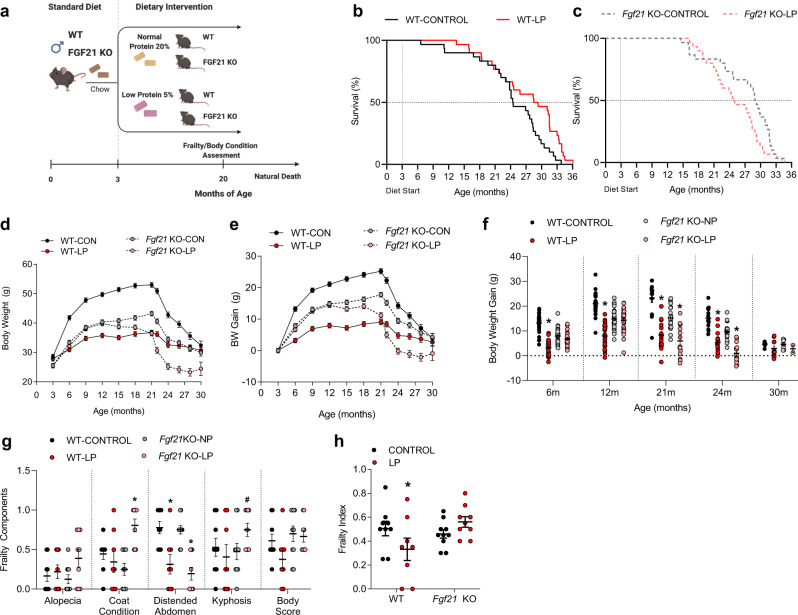
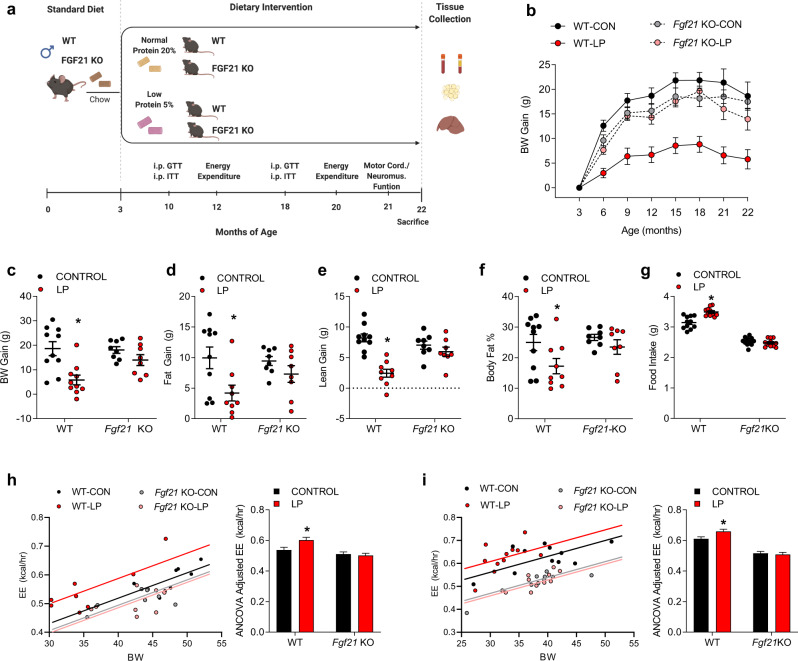
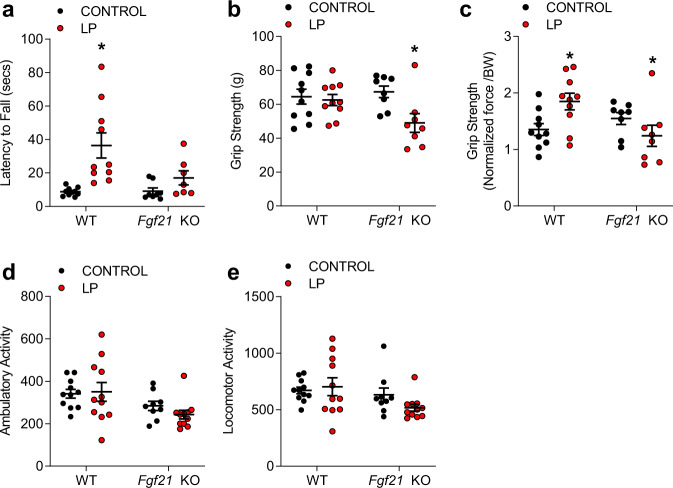
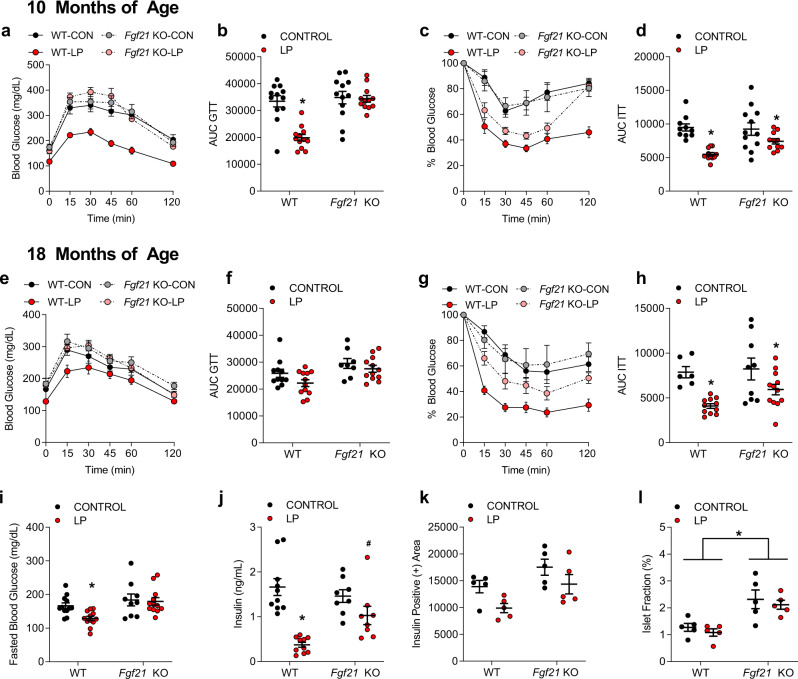
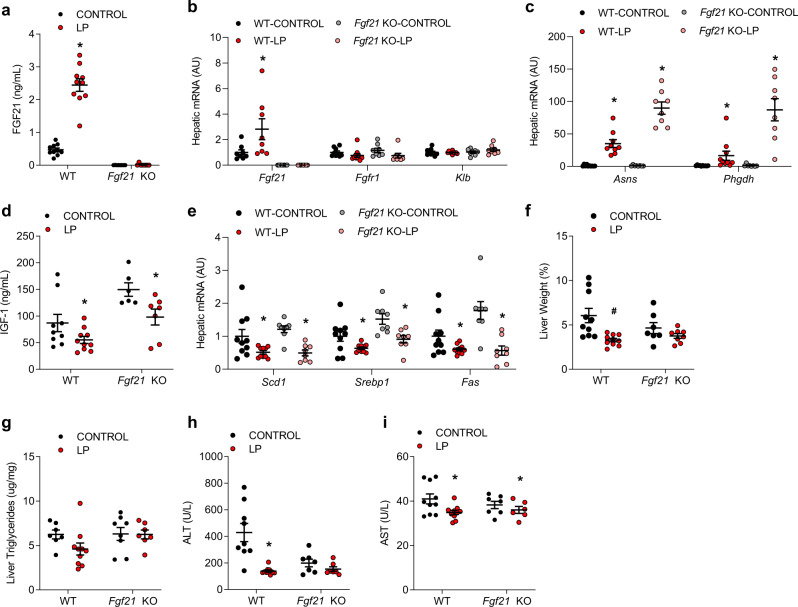
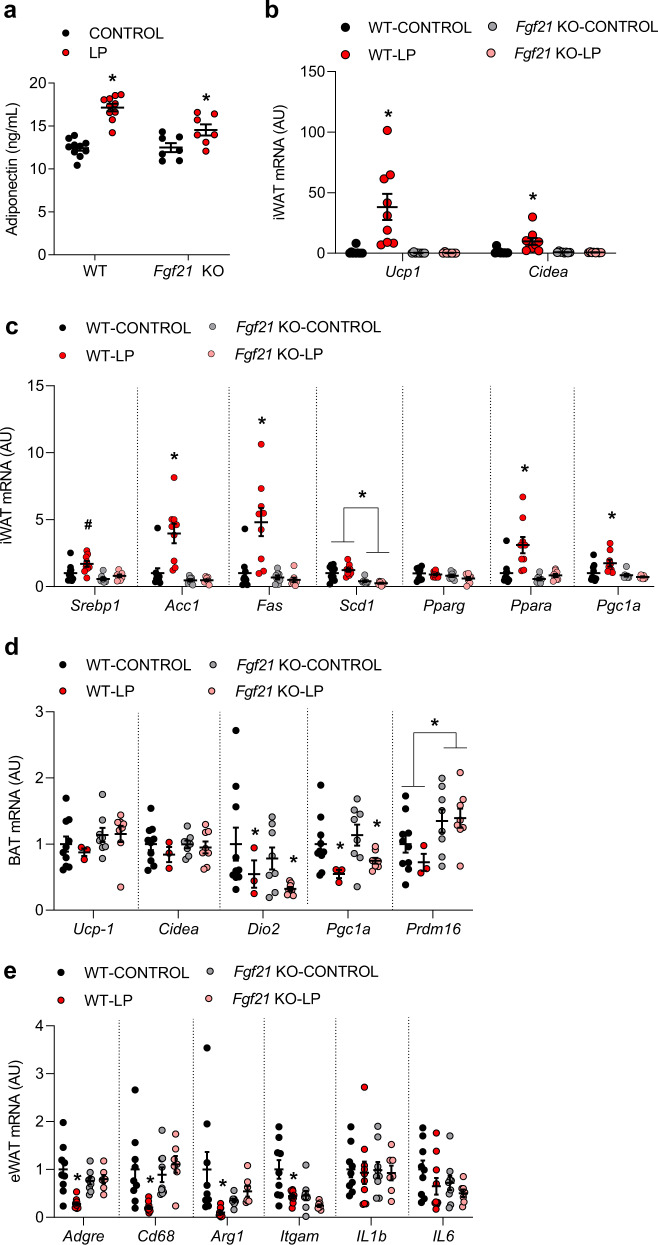
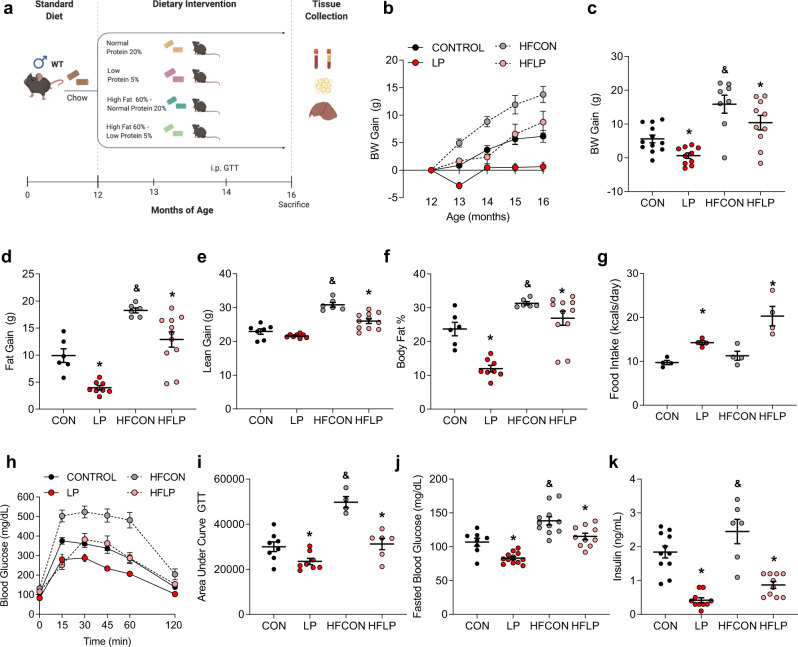
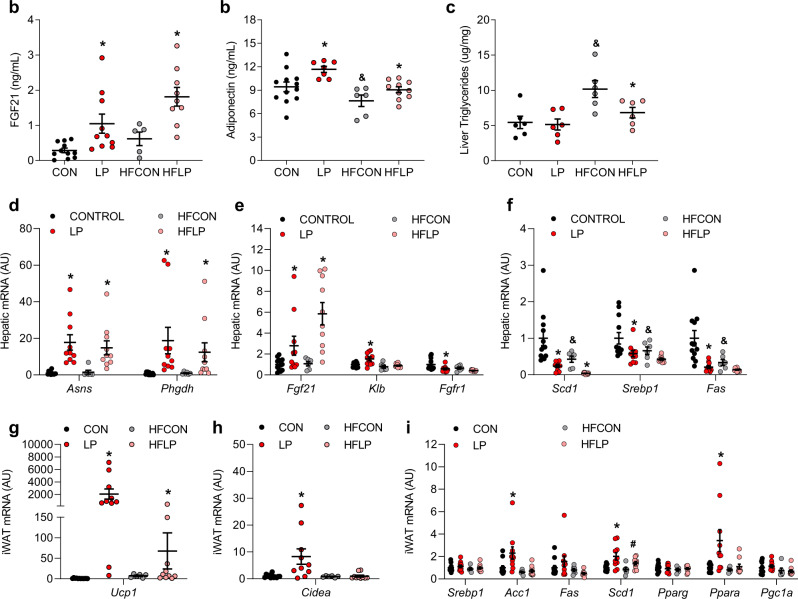
Dietary protein restriction is increasingly recognized as a unique approach to improve metabolic health, and there is increasing interest in the mechanisms underlying this beneficial effect. Recent work indicates that the hormone FGF21 mediates the metabolic effects of protein restriction in young mice. Here we demonstrate that protein restriction increases lifespan, reduces frailty, lowers body weight and adiposity, improves physical performance, improves glucose tolerance, and alters various metabolic markers within the serum, liver, and adipose tissue of wildtype male mice. Conversely, mice lacking FGF21 fail to exhibit metabolic responses to protein restriction in early life, and in later life exhibit early onset of age-related weight loss, reduced physical performance, increased frailty, and reduced lifespan. These data demonstrate that protein restriction in aging male mice exerts marked beneficial effects on lifespan and metabolic health and that a single metabolic hormone, FGF21, is essential for the anti-aging effect of this dietary intervention.
Overview
The claims and statistics of this paper haven’t been checked yet.
Free: it reads the open-access text and checks the first 5 claims that cite a source we can check. Create a free account to check every claim.
Integrity signals
Registry
Cites
Statistics
Figures
Verification
Claims the paper makes
The claims and statistics of this paper haven’t been checked yet.
Free: it reads the open-access text and checks the first 5 claims that cite a source we can check. Create a free account to check every claim.
Claims other papers make about this one
Each is checked against this paper’s own text: does it say what the citing paper says it does?
The source backs part of the claim, not all of it — or backs it for a different population, condition or comparison.
In the citing paper
“In addition, the liver secretes neuroprotective molecules such as fibroblast growth factor 21 (FGF21) and glycosylphosphatidylinositol-specific phospholipase D1 (Gpld1), which are reported to prevent neuronal apoptosis,222 improve neurogenesis223 and even prolong the lifespan of mice.224”
From Antiageing strategy for neurodegenerative diseases: from mechanisms to clinical advances (2025) · cites this paper as [224]
Experimental — accuracy not yet measured
Self-check
Percentages, sums and reported differences re-computed from the paper’s own numbers.
The self-check needs the paper’s full text.
Citations
Cites
Geroscience: Linking Aging to Chronic Disease
Kennedy, B. K., Berger, S. L., Brunet, A., Campisi, J., Cuervo, A. M., Epel, E. S., Franceschi, C., Lithgow, G. J., Morimoto, R. I., Pessin, J. E., et al. (2014) · Cell · doi:10.1016/j.cell.2014.10.039 · Cited by 2,764
Rubinsztein, D. C., Mariño, G., & Kroemer, G. (2011) · Cell · doi:10.1016/j.cell.2011.07.030 · Cited by 2,107
Lifespan and reproduction in Drosophila : New insights from nutritional geometry
Lee, K. P., Simpson, S. J., Clissold, F. J., Brooks, R., Ballard, J. W. O., Taylor, P. W., Soran, N., & Raubenheimer, D. (2008) · Proceedings of the National Academy of Sciences · doi:10.1073/pnas.0710787105 · Cited by 1,032
Understanding the Physiology of FGF21
Fisher, F. M., & Maratos-Flier, E. (2016) · Annual Review of Physiology · doi:10.1146/annurev-physiol-021115-105339 · Cited by 912
Levine, M. E., Suarez, J. A., Brandhorst, S., Balasubramanian, P., Cheng, C.-W., Madia, F., Fontana, L., Mirisola, M. G., Guevara-Aguirre, J., Wan, J., et al. (2014) · Cell Metabolism · doi:10.1016/j.cmet.2014.02.006 · Cited by 910
Solon-Biet, S. M., McMahon, A. C., Ballard, J. W. O., Ruohonen, K., Wu, L. E., Cogger, V. C., Warren, A., Huang, X., Pichaud, N., Melvin, R. G., et al. (2014) · Cell Metabolism · doi:10.1016/j.cmet.2014.02.009 · Cited by 904
Amino-acid imbalance explains extension of lifespan by dietary restriction in Drosophila
Grandison, R. C., Piper, M. D. W., & Partridge, L. (2009) · Nature · doi:10.1038/nature08619 · Cited by 773
Overexpression of Atg5 in mice activates autophagy and extends lifespan
Pyo, J.-O., Yoo, S.-M., Ahn, H.-H., Nah, J., Hong, S.-H., Kam, T.-I., Jung, S., & Jung, Y.-K. (2013) · Nature Communications · doi:10.1038/ncomms3300 · Cited by 721
FGF21 is an endocrine signal of protein restriction
Laeger, T., Henagan, T. M., Albarado, D. C., Redman, L. M., Bray, G. A., Noland, R. C., Münzberg, H., Hutson, S. M., Gettys, T. W., Schwartz, M. W., et al. (2014) · Journal of Clinical Investigation · doi:10.1172/jci74915 · Cited by 593
Self-citationYu, B. P., Masoro, E. J., & McMahan, C. A. (1985) · Journal of Gerontology · doi:10.1093/geronj/40.6.657 · Cited by 591
Cited by
Items 101–117 of 117
Fujita, Y., Ishibuchi, T., Uematsu, A., Hayashi, T., & Obata, F. (2025) · bioRxiv (Cold Spring Harbor Laboratory) · doi:10.1101/2025.04.14.648667
Fujita, Y., Ishibuchi, T., Uematsu, A., Hayashi, T., & Obata, F. (2025) · Scientific Reports · doi:10.1038/s41598-025-16749-0
“FGF21 is induced predominantly via activation of transcription factor 4 (ATF4) which is regulated by amino acid availability.”
Larsson, C. M., Mercer, W. D., Inamdar, S. M., Connolly, N. E., Fisher, B. L., & Flippo, K. H. (2025) · Physiology & Behavior · doi:10.1016/j.physbeh.2025.115132
Wang, W., Ruan, Y., & Gong, T. (2025) · Biological Research · doi:10.1186/s40659-025-00652-z · Cited by 1
Xu, X., Zheng, W., Liu, Q., Li, Y., Yang, S., Zhou, R., Wang, Y., Qi, X., Zhang, C., Zhang, F., et al. (2026) · Journal of Advanced Research · doi:10.1016/j.jare.2026.01.063
“While many current studies have found that restricting dietary protein can promote longevity [9–11], whether a high-protein diet will conversely promote aging remains to be explored.”
Roisné-Hamelin, G. (2024) · theses.fr (ABES) · doi:10.70675/006069a1zb2b5z45e8zbe4fz5af5e3b6e229
Wu, J., Wang, X., Zheng, S., Xu, Y., Qiu, R., Ye, S., & Zhao, Y. (2026) · Molecular Neurobiology · doi:10.1007/s12035-026-05869-x · Cited by 1
Bruse, J., Marbach, C., Polizzi, A., Landré, T., Salvi, J., Alquier‐Bacquie, V., Chen, S.-P., Huillet, M., Rives, C., Céline, M., et al. (2026) · EMBO Reports · doi:10.1038/s44319-026-00790-9
Anti-aging Concepts: Adipose Tissue as a Therapeutic Target in Anti-aging Medicine
Knoedler, S., & Prantl, L. (2026) · Springer eBooks · doi:10.1007/978-3-032-01711-6_17
Song, B., Liu, C., Hu, J., Zhao, X., Fan, H., Liu, T., Gao, G., Zhang, X., Guang, X., Zhou, Q., et al. (2026) · Autophagy · doi:10.1080/15548627.2026.2669987 · Cited by 1
“FGF21 serves a critical role in regulating glucose and lipid metabolism and has also been suggested as a potential factor in delaying the aging process [18,19].”
Adipose Tissue Browning in MASLD and Its Molecular Mechanisms and Metabolic Crosstalk
Guerrero, J. J. G., del Rosario, M. A. S., Encarnacion, P. C., Lin, C.-S., Chuang, L., Notarte, K. I., Zhou, J., Wang, C., Chang, C.-W., & Li, W. (2026) · Current Obesity Reports · doi:10.1007/s13679-026-00746-z
“The important role of FGF21, a protein primarily pro - duced in the liver, in the browning of WAT has previously been described [ 185 , 186].”
Protein restriction and the hallmarks of aging: A coordinated physiological adaptive response?
Kim, S. Q., Yu, S., & Morrison, C. D. (2026) · Cell Metabolism · doi:10.1016/j.cmet.2026.08.005
Self-citationMiklas, J. W., Papsdorf, K., Sun, E., Tsenter, A., Haseley, N. R., Ameglio, B., Medoh, U. N., Richard, D. J., McCarthy, F., Artiles, K. L., et al. (2026) · Cell Reports · doi:10.1016/j.celrep.2026.117902
Li, X., Lin, X., Feng, L., Hu, Z., Hou, Q., Wang, Y., Shen, Y., Mu, Y., & Wang, Z. (2026) · Nutrients · doi:10.3390/nu18172867
“Consistent with the reduced post-glucose-load glucose response observed in the LP , previous studies have likewise reported reduced glucose excursions during glucose tolerance testing in aged mice and in mice fed very-low-protein diets [51,52].”
Fine-tuning the lysine-arginine duet: a dietary approach to suppress tumor growth
Zhao, B.-C., Zhao, X.-Y., Li, W., Xiao, L., Huang, X., Feng, H., Li, A., Shi, R.-L., Li, H.-L., Xie, X., et al. (2026) · Molecular Biomedicine · doi:10.1186/s43556-026-00588-0
Lucaciu, R. L., Hangan, A. C., & Procopciuc, L. M. (2026) · Nutrients · doi:10.3390/nu18203382
“At the systemic level, hepatic FGF21 contributes to changes in energy expenditure, adipose tissue remodeling, glucose regulation, and substrate utilization, although not all responses to SAA restriction are FGF21-dependent [7].”
InfluentialBiological functions and emerging interplay of FGF21 and GDF15 in metabolic diseases and aging
Salmón‐Gómez, L., Keipert, S., Catalán, V., Rodríguez, A., Becerril, S., Frühbeck, G., & Gómez‐Ambrosi, J. (2026) · Molecular Biomedicine · doi:10.1186/s43556-026-00627-w
Metadata
- Authors
- Hill, C. M., Albarado, D. C., Coco, L. G., Spann, R. A., Khan, M. S., Qualls-Creekmore, E., Burk, D. H., Burke, S. J., Collier, J. J., Yu, S., McDougal, D. H., Berthoud, H.-R., Münzberg, H., Bartke, A., & Morrison, C. D.
- Affiliations
- Pennington Biomedical Research Center (US)
- SIU Medicine (US)
- Corresponding author
- Hill, Cristal M.
- Morrison, Christopher D.
- ORCID
- Venue
- Nature Communications
- Published
- 2022-04-07
- Volume
- 13
- Issue
- 1
- Pages
- 1897-1897
- ISSN
- 2041-1723 (ISSN-L)
- PMC
- PMC8991228
- OpenAlex
- W4223621452
- Semantic Scholar
- ddcf904073248697dc9320c5a6a106787463886c
- Cited by
- 117
- References
- 75
- Citations by year
- 2026: 27 · 2025: 29 · 2024: 27 · 2023: 24 · 2022: 10
- FWCI
- 7.35
- Type
- journal article
- Language
- en
- Open access
- gold
- doi.org
- Licence
- cc-by
- creativecommons.org/licenses/by/4.0 (tdm)
- creativecommons.org/licenses/by/4.0 (vor)
- Locations
- Nature Communications (publishedVersion, cc-by)
- PubMed Central (publishedVersion, cc-by)
- PubMed (publishedVersion)
- Civil War Book Review (submittedVersion)
- RePEc: Research Papers in Economics (submittedVersion)
- DOAJ (DOAJ: Directory of Open Access Journals) (submittedVersion)
- Funders
- U.S. Department of Health & Human Services | NIH | National Institute of Diabetes and Digestive and Kidney Diseases (F32DK115137, R01DK123183, R01DK047348, R01DK092587, R01DK105032, R01DK121370, R01DK123083)
- Division of Intramural Research, National Institute of Allergy and Infectious Diseases (R21AI138136)
- U.S. Department of Health & Human Services | NIH | National Institute on Aging (R21AG062985)
- American Diabetes Association (1-19-IBS-126)
- U.S. Department of Health & Human Services | NIH | NIH Office of the Director (S10OD023703)
- Topics
- Life Sciences › Biochemistry, Genetics and Molecular Biology › Molecular Biology › Fibroblast Growth Factor Research
- Life Sciences › Biochemistry, Genetics and Molecular Biology › Aging › Genetics, Aging, and Longevity in Model Organisms
- Health Sciences › Medicine › Physiology (medical) › Dietary Effects on Health
- Keywords
- FGF21, protein restriction, lifespan extension, aging, metabolic health, frailty, glucose tolerance, adiposity, physical performance, anti-aging diet, FGF21 knockout mice
- MeSH terms
- Frailty, Animals, Fibroblast Growth Factors, Hormones, Liver, Longevity, Male, Diet, Protein-Restricted, Mice
About these checks
Registry, retraction, Cites and statistics results are computed, not judged, with one exception: a printed reference that no index lists is read once by a model before it counts as a citation error. Claims are extracted by a model and kept only when their quote appears verbatim in the text; each cited source is then checked, with a model’s help, for whether it says what the claim relies on. Those verdicts can be wrong — read the claim’s quote and the cited source before relying on one.
Statistics and arithmetic are recomputed, not judged.
Confidence bands are shown only for fields calibrated on our annotated test set. None is calibrated yet, so no band is shown.
What counts as a claim ›How we measure confidence ›How we check this ›
Are you an author, or do you see a problem with this page? Request a review
Data sources
Bibliographic data: Semantic Scholar, OpenAlex, Crossref.
Contains information from the Semantic Scholar Academic Graph Datasets, made available under the ODC Attribution License (ODC-BY 1.0).
Semantic Scholar’s data is described in: Kinney, R., et al. (2023). The Semantic Scholar Open Data Platform. arXiv:2301.10140.
