

Multiomics reveals persistence of obesity-associated immune cell phenotypes in adipose tissue during weight loss and weight regain in mice
Open accessThe DOI matches its Crossref record; 93 of the 93 references it cites were found in a registry or an index.
Abstract
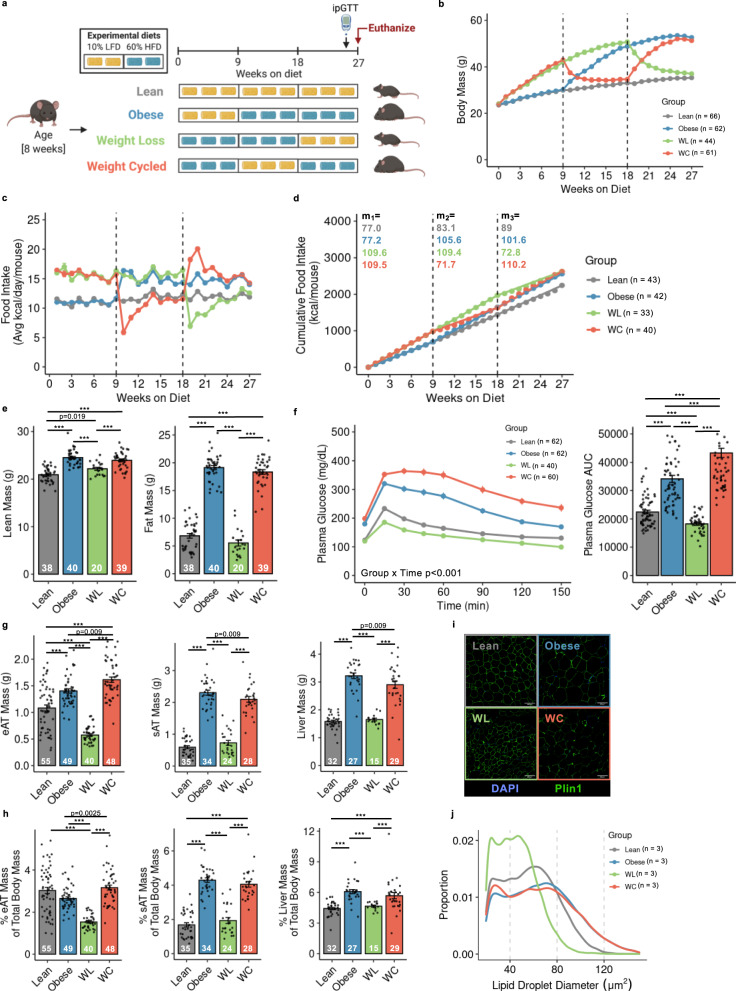
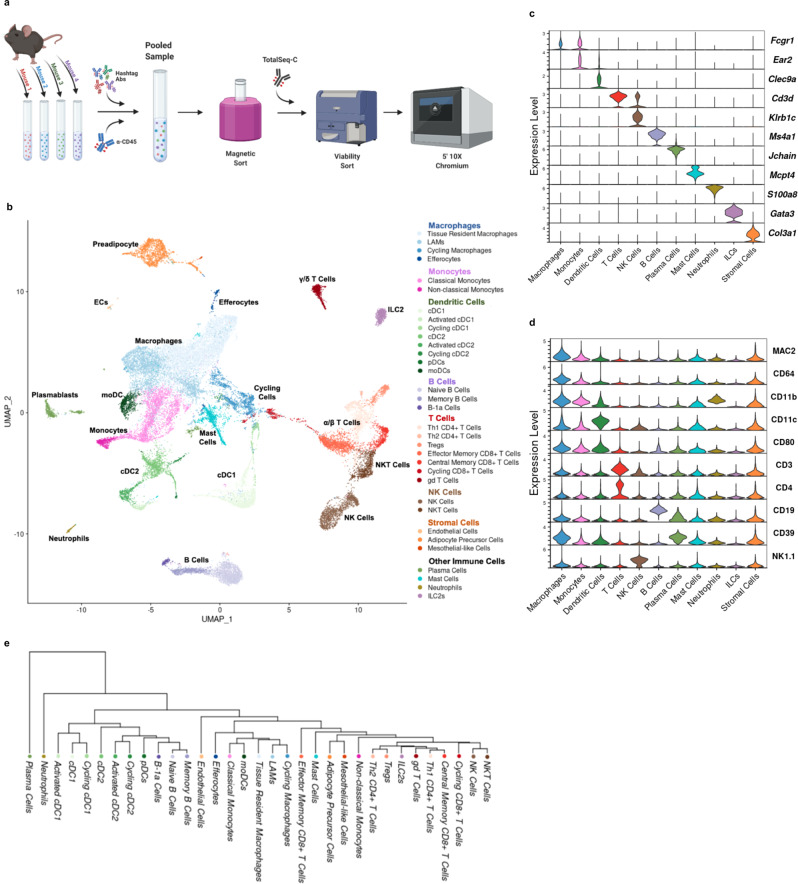
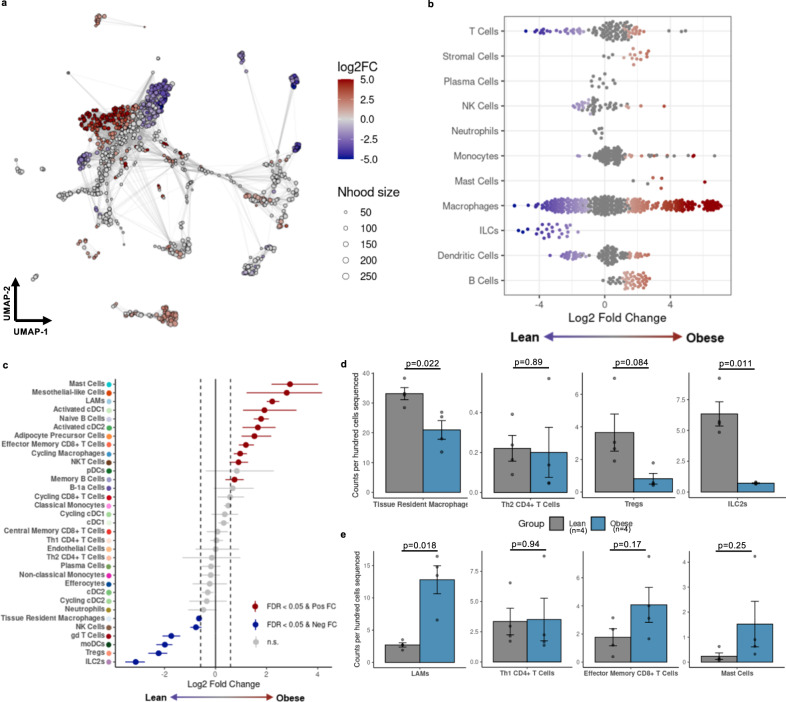
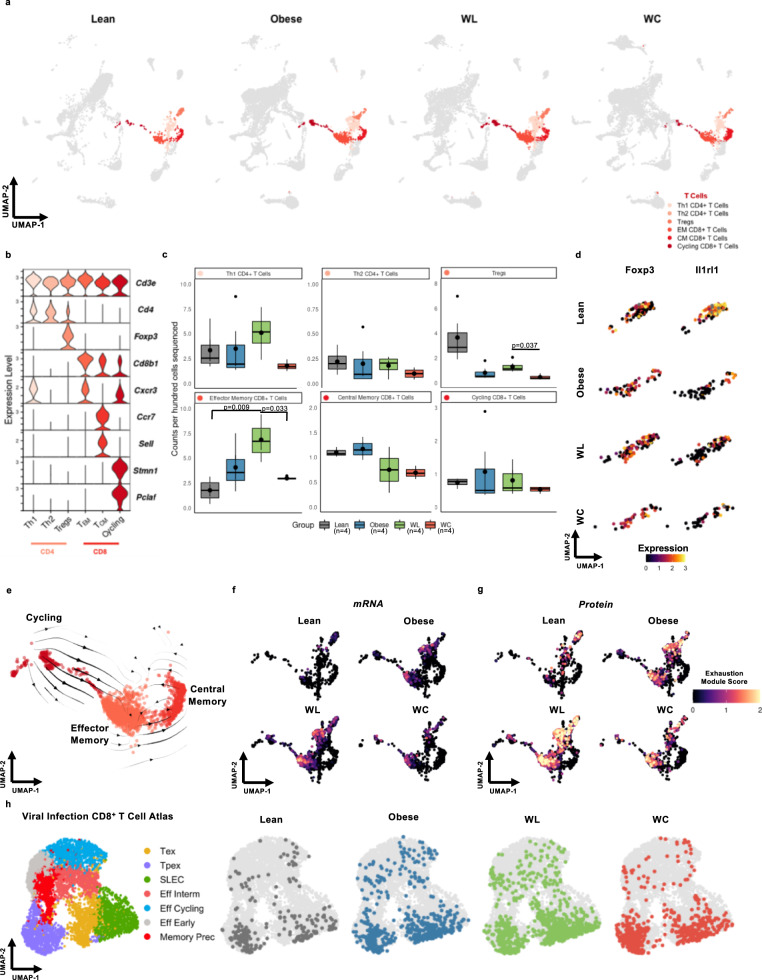
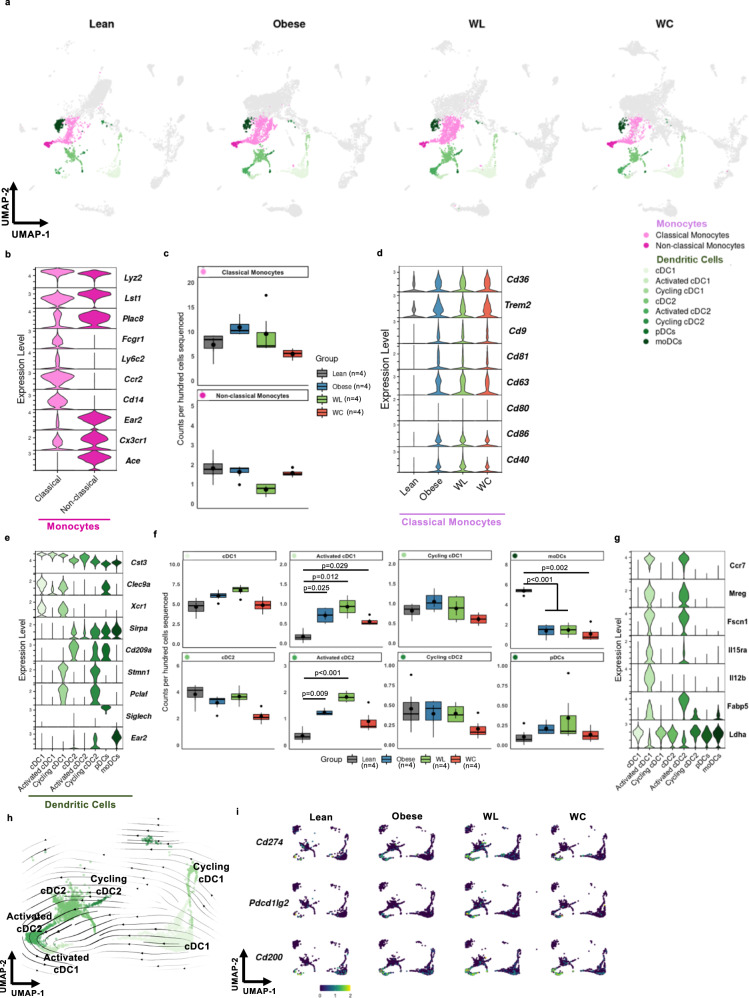
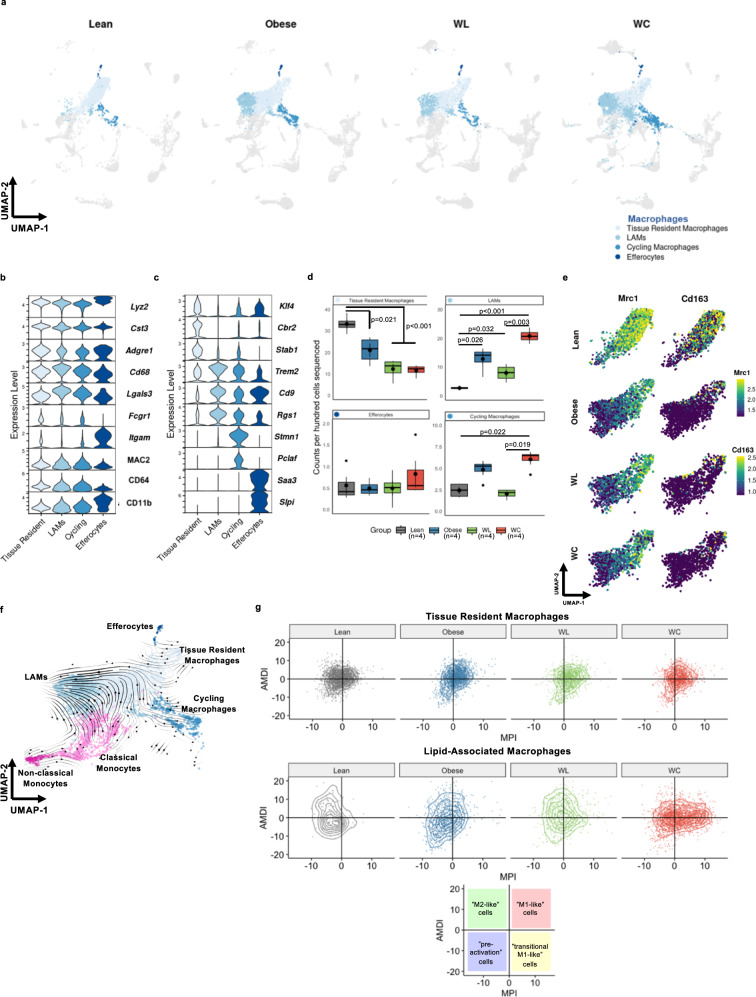
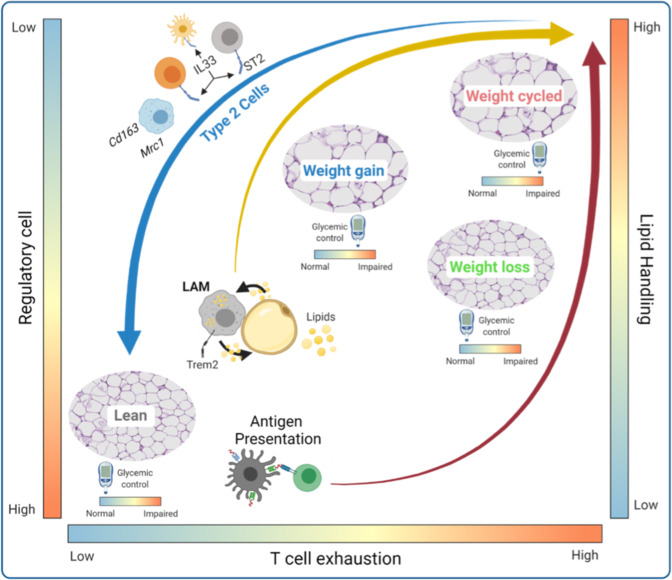
Within adipose tissue (AT), immune cells and parenchymal cells closely interact creating a complex microenvironment. In obesity, immune cell derived inflammation contributes to insulin resistance and glucose intolerance. Diet-induced weight loss improves glucose tolerance; however, weight regain further exacerbates the impairment in glucose homeostasis observed with obesity. To interrogate the immunometabolic adaptations that occur in AT during murine weight loss and weight regain, we utilized cellular indexing of transcriptomes and epitopes by sequencing (CITEseq) in male mice. Obesity-induced imprinting of AT immune cells persisted through weight-loss and progressively worsened with weight regain, ultimately leading to impaired recovery of type 2 regulatory cells, activation of antigen presenting cells, T cell exhaustion, and enhanced lipid handling in macrophages in weight cycled mice. This work provides critical groundwork for understanding the immunological causes of weight cycling-accelerated metabolic disease. For further discovery, we provide an open-access web portal of diet-induced AT immune cell imprinting: https://hastylab.shinyapps.io/MAIseq .
Overview
The claims and statistics of this paper haven’t been checked yet.
Free: it reads the open-access text and checks the first 5 claims that cite a source we can check. Create a free account to check every claim.
Integrity signals
Registry
Cites
Statistics
Figures
Verification
Claims the paper makes
The claims and statistics of this paper haven’t been checked yet.
Free: it reads the open-access text and checks the first 5 claims that cite a source we can check. Create a free account to check every claim.
Claims other papers make about this one
Each is checked against this paper’s own text: does it say what the citing paper says it does?
The source backs part of the claim, not all of it — or backs it for a different population, condition or comparison.
In the citing paper
“These processes are intricately linked to the interactions between immune cells and adipocyte stroma cells [99].”
From Comparing caloric restriction regimens for effective weight management in adults: a systematic review and network meta-analysis (2024) · cites this paper as [99]
Experimental — accuracy not yet measuredThe cited source says what the claim attributes to it.
In the citing paper
“A similar phenomenon was observed in adipose tissue, where adipose tissue LAMs increased during obesity, persisted after weight loss, and continued to express Trem2 (38).”
From Lipid-associated macrophages' promotion of fibrosis resolution during MASH regression requires TREM2 (2024) · cites this paper as [38]
Self-check
Percentages, sums and reported differences re-computed from the paper’s own numbers.
The self-check needs the paper’s full text.
Citations
Cites
Integrated analysis of multimodal single-cell data
Hao, Y., Hao, S., Andersen-Nissen, E., Mauck, W. M., Zheng, S., Butler, A., Lee, M. J., Wilk, A. J., Darby, C., Zagar, M., et al. (2020) · doi:10.1101/2020.10.12.335331 · Cited by 15,508
Metascape provides a biologist-oriented resource for the analysis of systems-level datasets
Zhou, Y., Zhou, B., Pache, L., Chang, M., Khodabakhshi, A. H., Tanaseichuk, O., Benner, C., & Chanda, S. K. (2019) · Nature Communications · doi:10.1038/s41467-019-09234-6 · Cited by 14,611
Aran, D., Looney, A. P., Liu, L., Wu, E., Fong, V., Hsu, A., Chak, S., Naikawadi, R. P., Wolters, P. J., Abate, A. R., et al. (2019) · Nature Immunology · doi:10.1038/s41590-018-0276-y · Cited by 4,984
McGinnis, C. S., Murrow, L. M., & Gartner, Z. J. (2019) · Cell Systems · doi:10.1016/j.cels.2019.03.003 · Cited by 4,521
La Manno, G., Soldatov, R., Zeisel, A., Braun, E., Hochgerner, H., Petukhov, V., Lidschreiber, K., Kastriti, M. E., Lönnerberg, P., Furlan, A., et al. (2018) · Nature · doi:10.1038/s41586-018-0414-6 · Cited by 4,118
Simultaneous epitope and transcriptome measurement in single cells
Stoeckius, M., Hafemeister, C., Stephenson, W., Houck-Loomis, B., Chattopadhyay, P. K., Swerdlow, H., Satija, R., & Smibert, P. (2017) · Nature Methods · doi:10.1038/nmeth.4380 · Cited by 3,098
Generalizing RNA velocity to transient cell states through dynamical modeling
Bergen, V., Lange, M., Peidli, S., Wolf, F. A., & Theis, F. J. (2020) · Nature Biotechnology · doi:10.1038/s41587-020-0591-3 · Cited by 2,951
The Epidemiology of Obesity: A Big Picture
Hruby, A., & Hu, F. B. (2015) · PharmacoEconomics · doi:10.1007/s40273-014-0243-x · Cited by 2,916
Cinti, S., Mitchell, G., Barbatelli, G., Murano, I., Ceresi, E., Faloia, E., Wang, S., Fortier, M., Greenberg, A. S., & Obin, M. S. (2005) · Journal of Lipid Research · doi:10.1194/jlr.m500294-jlr200 · Cited by 2,529
Orecchioni, M., Ghosheh, Y., Pramod, A. B., & Ley, K. (2019) · Frontiers in Immunology · doi:10.3389/fimmu.2019.01084 · Cited by 2,063
Cited by
Items 201–218 of 218
Obesity history exacerbates liver macrophage-mediated fibrosis via IGFBP7
Soedono, S., Chun, S., Vo, D. H. N., Julietta, V., Chang, J., Oh, B., Lumeng, C. N.-K., & Cho, K. W. (2026) · Biochimica et Biophysica Acta (BBA) - Molecular Basis of Disease · doi:10.1016/j.bbadis.2026.168322 · Cited by 1
Ritter, A., Kreis, N., Louwen, F., & Yuan, J. (2026) · Endocrine Reviews · doi:10.1210/endrev/bnag029 · Cited by 1
Litwiniuk, A., Kalisz, M., Stępień, D., Sławkowska, N., Roszkowski, R., Remyzovska, O., Grala, B., Bik, W., & Kwiatkowski, A. (2026) · Critical Reviews in Oncology/Hematology · doi:10.1016/j.critrevonc.2026.105491
The metabolic roles of immune checkpoint molecules
Wang, Y., Wang, J., Dan, S., Zheng, J., Lu, Y., & Xia, F. (2026) · Endocrine Reviews · doi:10.1210/endrev/bnag030
Decoding Immunometabolic Dynamics of Adipose Tissue in Obesity: Evolving Evidence and Way Forward
Kumari, K., Verma, K., Yadav, R., Dwivedi, J., Paliwal, S., & Sharma, S. K. (2026) · ACS Pharmacology & Translational Science · doi:10.1021/acsptsci.6c00071
Gao, H., Luo, X., Fu, Y., Chen, Y., Ning, S.-Y., Han, X., Wang, L., & Wang, Q.-F. (2026) · Frontiers in Immunology · doi:10.3389/fimmu.2026.1865003 · Cited by 1
“CITE-seq-based tracking of immune changes in obese mouse adipose tissue further suggests that obesity-induced immune imprinting can persist after weight loss, consistent with the trained immunity framework discussed in § 3.6 and potentially with EV-mediated epigenetic information transfer (164).”
InfluentialMa, Y.-X., Lin, M., Nan, Y., Li, N.-N., Liu, B., Wang, H., Ning, S.-Y., & Zhang, Z. (2026) · Frontiers in Immunology · doi:10.3389/fimmu.2026.1889437 · Cited by 3
“Weight cycling further demonstrates that adipose tissue macrophages from previously obese mice mount stronger basal and stimulated cytokine responses, and multi-omics CITE-seq shows that the obesity-induced imprint on adipose immune cells worsens rather than resolves after weight regain (53, 54).”
Experimental Models of Weight Cycling: A Narrative Review of Protocol Design and Metabolic Outcomes
Vasques‐Monteiro, I. M. L., Miranda, C. S., Mucci, D. D. B., Saguie, B. O., Simões, R. L., Martins, F. F., Souza‐Mello, V., & Abdalla, D. S. P. (2026) · Journal of Obesity · doi:10.1155/jobe/2128461
LOX-mediated adipose tissue stiffening promotes weight rebound
Zhu, S., Yang, S., Jin, Y., Yu, X., Wang, X., Yang, A., Niu, D., Zhao, G., & Gao, B. (2026) · Journal of Lipid Research · doi:10.1016/j.jlr.2026.101121
“Although fat inflammation and macrophage infiltration are believed to generate immunological “ obesity memories ” (13, 14), these soluble factors are relatively short-lived and volatile.”
Sarma, A. D., Devi, M., Kumar, D., & Choudhary, N. (2026) · International Immunopharmacology · doi:10.1016/j.intimp.2026.117240
A proteomic atlas of obesity and weight loss
Suriani, N. D., & Watt, M. J. (2026) · Nature Metabolism · doi:10.1038/s42255-026-01601-0
The role of adipose tissue macrophages in adipose tissue fibrosis
Zhang, D., & Wu, N. (2026) · Metabolism · doi:10.1016/j.metabol.2026.156752
Wang, Y., Fan, X., Gao, J., Xing, L., & Tian, F. (2026) · Current Obesity Reports · doi:10.1007/s13679-026-00761-0 · Cited by 1
“This persistence exemplifies obesity‑induced inflammatory mem ‑ ory, wherein the adipose tissue immune landscape persists through weight loss and regain [158, 159] and progressively worsens with weight regain, characterized by enhanced lipid accumulation in macrophages [160 ].”
Li, X., Zeng, X., Ling, X., Zhang, J., & Zhao, C. L. (2026) · BJOG An International Journal of Obstetrics & Gynaecology · doi:10.1111/1471-0528.70344
The AdipoCode: an information-fidelity framework for adipose–brain communication
Tao, M., Zhang, C., Wang, L., Wang, J., & Bi, Y. (2026) · Trends in Endocrinology and Metabolism · doi:10.1016/j.tem.2026.09.014
In Vivo Transcriptomics-Based Framework for Systematic Indication ExpansionPreprint
Palmer, Z., Koirala, S., Talukdar, N., Zhang, X., Garver, H. S., Mahlmeister, M., Huang, L., Joseph, D., Leshchiner, D. R., Shankar, R., et al. (2026) · bioRxiv (Cold Spring Harbor Laboratory) · doi:10.64898/2026.10.12.758524
“This conserved and uniformly immune suppressive nature cannot be fully explained by weight loss alone, which incompletely resolves the adipose immune phenotype even after substantial fat loss (40) .”
Immunometabolic Memory in Obesity: Nutritional Drivers, Persistence, and Reversibility
Reytor-González, C., Zambrano-Villacres, R., Mejia, N. A., Durán-Agüero, S., & Simancas‐Racines, D. (2026) · International Journal of Molecular Sciences · doi:10.3390/ijms27219666
Gawor, J., Deinzer, A., Wick, M., Krautz, C., Hayek, I., & Schwartz, C. (2026) · Frontiers in Immunology · doi:10.3389/fimmu.2026.1951003
Metadata
- Authors
- Cottam, M. A., Caslin, H. L., Winn, N. C., & Hasty, A. H.
- Affiliations
- Vanderbilt University (US)
- Corresponding author
- Hasty, Alyssa H.
- Venue
- Nature Communications
- Published
- 2022-05-26
- Volume
- 13
- Issue
- 1
- Pages
- 2950-2950
- ISSN
- 2041-1723 (ISSN-L)
- PMC
- PMC9135744
- OpenAlex
- W4281552824
- Semantic Scholar
- 0fcba7b85dc07c7f7786bcffb4aa579add796cb8
- Cited by
- 216
- References
- 92
- Citations by year
- 2026: 55 · 2025: 60 · 2024: 52 · 2023: 37 · 2022: 11
- FWCI
- 28.88
- Type
- journal article
- Language
- en
- Open access
- gold
- doi.org
- Licence
- cc-by
- creativecommons.org/licenses/by/4.0 (tdm)
- creativecommons.org/licenses/by/4.0 (vor)
- Locations
- Nature Communications (publishedVersion, cc-by)
- PubMed Central (publishedVersion, cc-by)
- PubMed (publishedVersion)
- RePEc: Research Papers in Economics (submittedVersion)
- DOAJ (DOAJ: Directory of Open Access Journals) (submittedVersion, cc-by-sa)
- Funders
- U.S. Department of Health & Human Services | National Institutes of Health (1F31DK123881)
- American Heart Association (20POST35120547, 21POST834990, 19IPLOI4760376)
- Department of Veterans Affairs | Office of Academic Affiliations, Department of Veterans Affairs (I01BX002195)
- U.S. Department of Health & Human Services | NIH | National Cancer Institute (CA068485)
- Topics
- Health Sciences › Medicine › Endocrinology, Diabetes and Metabolism › Adipokines, Inflammation, and Metabolic Diseases
- Health Sciences › Medicine › Physiology (medical) › Adipose Tissue and Metabolism
- Health Sciences › Medicine › Cardiology and Cardiovascular Medicine › Cardiovascular Disease and Adiposity
- Keywords
- obesity, adipose tissue, immune cell phenotypes, weight loss, weight regain, weight cycling, immunometabolism, antigen-presenting cells, T cell exhaustion, insulin resistance, impaired glucose tolerance, CITE-seq, diet-induced obesity, metabolic disorders
- MeSH terms
- Adipose Tissue, Animals, Glucose, Male, Obesity, Phenotype, Weight Gain, Weight Loss, Mice
About these checks
Registry, retraction, Cites and statistics results are computed, not judged, with one exception: a printed reference that no index lists is read once by a model before it counts as a citation error. Claims are extracted by a model and kept only when their quote appears verbatim in the text; each cited source is then checked, with a model’s help, for whether it says what the claim relies on. Those verdicts can be wrong — read the claim’s quote and the cited source before relying on one.
Statistics and arithmetic are recomputed, not judged.
Confidence bands are shown only for fields calibrated on our annotated test set. None is calibrated yet, so no band is shown.
What counts as a claim ›How we measure confidence ›How we check this ›
Are you an author, or do you see a problem with this page? Request a review
Data sources
Bibliographic data: Semantic Scholar, OpenAlex, Crossref.
Contains information from the Semantic Scholar Academic Graph Datasets, made available under the ODC Attribution License (ODC-BY 1.0).
Semantic Scholar’s data is described in: Kinney, R., et al. (2023). The Semantic Scholar Open Data Platform. arXiv:2301.10140.
