

Lead federated neuromorphic learning for wireless edge artificial intelligence
Open accessPublished version of a preprint
The DOI matches its Crossref record; 53 of the 53 references it cites were found in a registry or an index.
Abstract
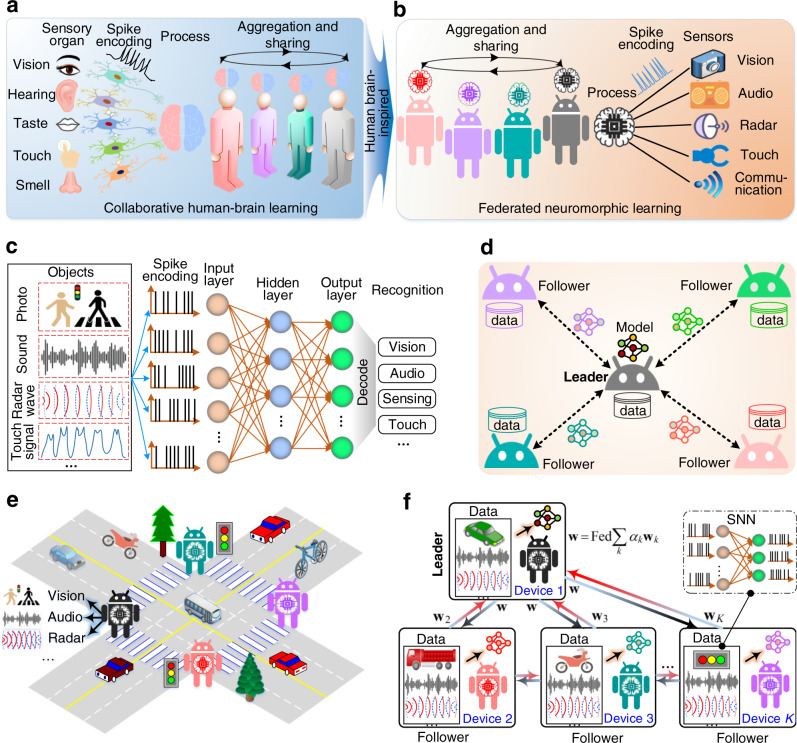
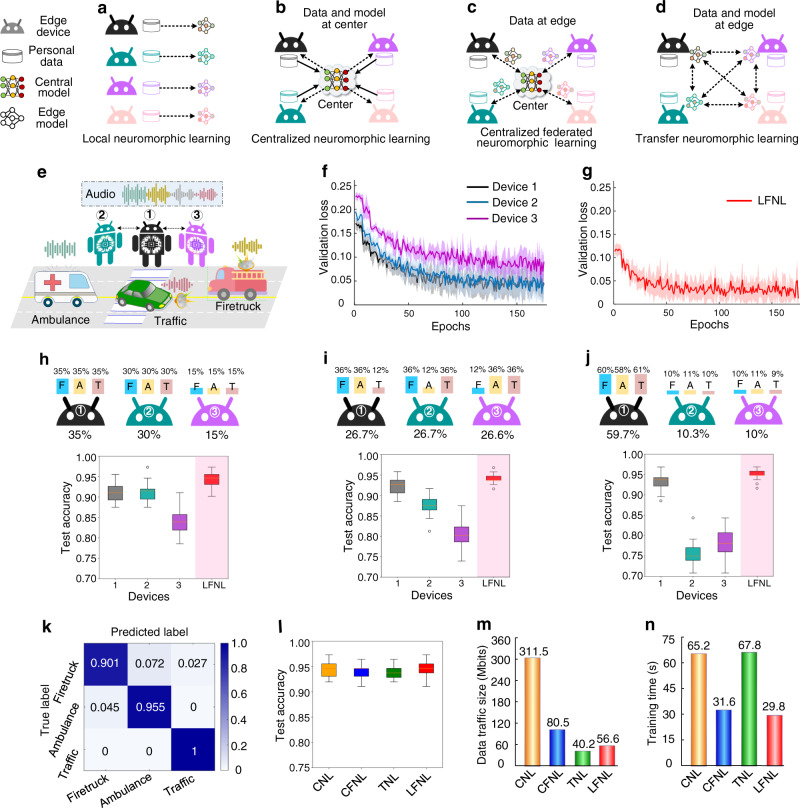
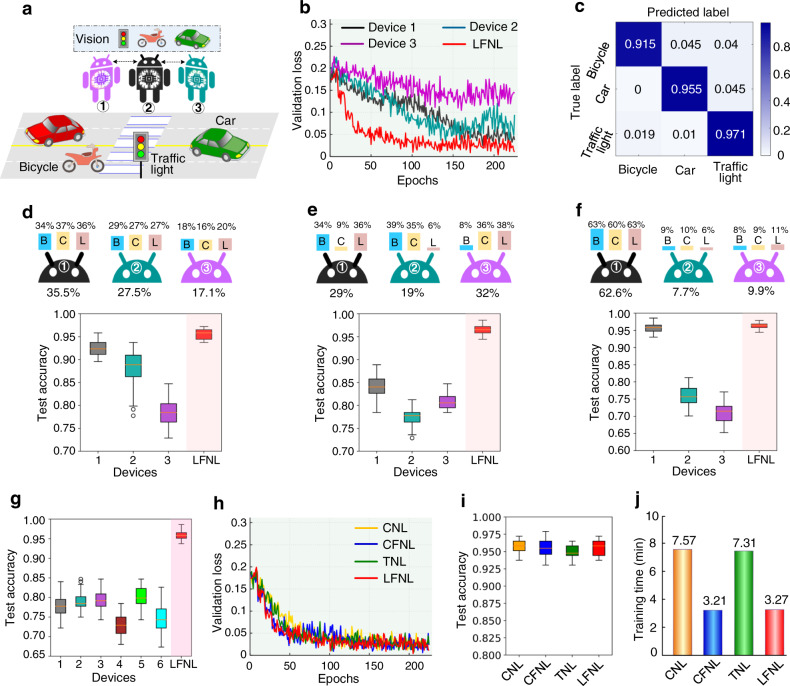
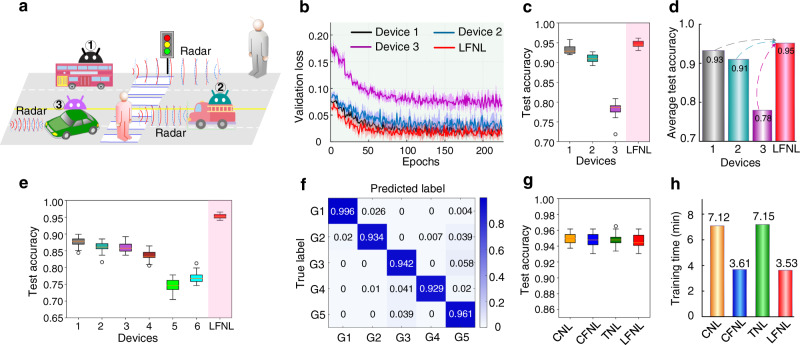
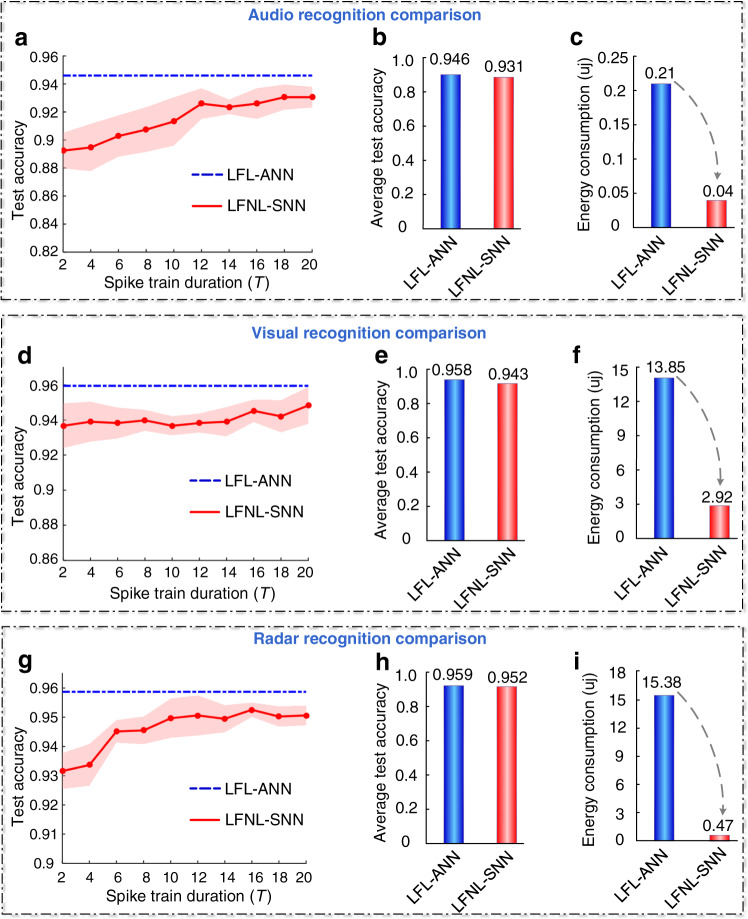
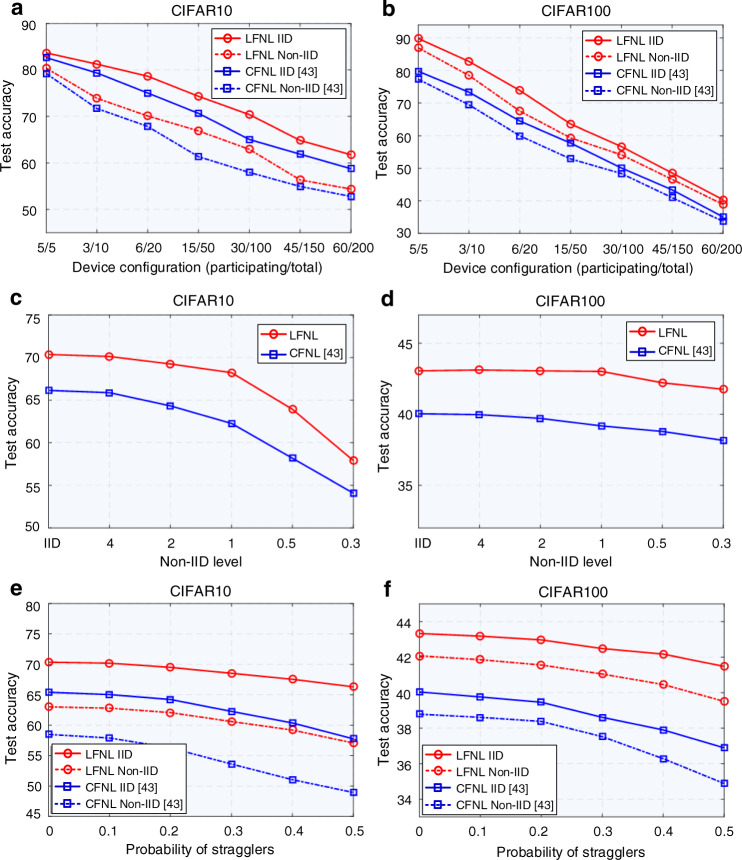
In order to realize the full potential of wireless edge artificial intelligence (AI), very large and diverse datasets will often be required for energy-demanding model training on resource-constrained edge devices. This paper proposes a lead federated neuromorphic learning (LFNL) technique, which is a decentralized energy-efficient brain-inspired computing method based on spiking neural networks. The proposed technique will enable edge devices to exploit brain-like biophysiological structure to collaboratively train a global model while helping preserve privacy. Experimental results show that, under the situation of uneven dataset distribution among edge devices, LFNL achieves a comparable recognition accuracy to existing edge AI techniques, while substantially reducing data traffic by >3.5× and computational latency by >2.0×. Furthermore, LFNL significantly reduces energy consumption by >4.5× compared to standard federated learning with a slight accuracy loss up to 1.5%. Therefore, the proposed LFNL can facilitate the development of brain-inspired computing and edge AI.
Overview
The claims and statistics of this paper haven’t been checked yet.
Free: it reads the open-access text and checks the first 5 claims that cite a source we can check. Create a free account to check every claim.
Integrity signals
Registry
Cites
Statistics
Figures
Verification
Claims the paper makes
The claims and statistics of this paper haven’t been checked yet.
Free: it reads the open-access text and checks the first 5 claims that cite a source we can check. Create a free account to check every claim.
Claims other papers make about this one
Each is checked against this paper’s own text: does it say what the citing paper says it does?
The source backs part of the claim, not all of it — or backs it for a different population, condition or comparison.
In the citing paper
“This unlocks new possibilities for real-time making decisions as well as enhanced confidentiality and safety [81].”
From Edge AI: A survey (2023) · cites this paper as [81]
Experimental — accuracy not yet measuredThe cited source says what the claim attributes to it.
In the citing paper
“Therefore, brain-inspired computing approaches potentially can not only improve the energy efficiency, but also privacy in the processing of sensitive data [226].”
From Brain-inspired computing systems: a systematic literature review (2024) · cites this paper as [226]
Self-check
Percentages, sums and reported differences re-computed from the paper’s own numbers.
The self-check needs the paper’s full text.
Citations
Cites
Very Deep Convolutional Networks for Large-Scale Image Recognition
Simonyan, K., & Zisserman, A. (2014) · arXiv · doi:10.48550/arxiv.1409.1556 · Cited by 114,148
LeCun, Y., Bengio, Y., & Hinton, G. (2015) · Nature · doi:10.1038/nature14539 · Cited by 84,126
Gradient-based learning applied to document recognition
Lecun, Y., Bottou, L., Bengio, Y., & Haffner, P. (1998) · Proceedings of the IEEE · doi:10.1109/5.726791 · Cited by 58,805
Federated Learning: Strategies for Improving Communication Efficiency
Konečný, J., McMahan, H. B., Yu, F. X., Richtárik, P., Suresh, A. T., & Bacon, D. (2016) · arXiv · doi:10.48550/arxiv.1610.05492 · Cited by 3,766
Networks of spiking neurons: The third generation of neural network models
Maass, W. (1997) · Neural Networks · doi:10.1016/s0893-6080(97)00011-7 · Cited by 3,481
Federated Learning in Mobile Edge Networks: A Comprehensive Survey
Lim, W. Y. B., Luong, N. C., Hoang, D. T., Jiao, Y., Liang, Y.-C., Yang, Q., Niyato, D., & Miao, C. (2020) · IEEE Communications Surveys & Tutorials · doi:10.1109/comst.2020.2986024 · Cited by 2,565
Self-citationEdge Intelligence: Paving the Last Mile of Artificial Intelligence With Edge Computing
Zhou, Z., Chen, X., Li, E., Zeng, L., Luo, K., & Zhang, J. (2019) · Proceedings of the IEEE · doi:10.1109/jproc.2019.2918951 · Cited by 2,455
Catastrophic forgetting in connectionist networks
French, R. (1999) · Trends in Cognitive Sciences · doi:10.1016/s1364-6613(99)01294-2 · Cited by 2,311
Adaptive Federated Learning in Resource Constrained Edge Computing Systems
Wang, S., Tuor, T., Salonidis, T., Leung, K. K., Makaya, C., He, T., & Chan, K. (2019) · IEEE Journal on Selected Areas in Communications · doi:10.1109/jsac.2019.2904348 · Cited by 2,232
1.1 Computing's energy problem (and what we can do about it)
Horowitz, M. (2014) · 2014 IEEE International Solid-State Circuits Conference Digest of Technical Papers (ISSCC) · doi:10.1109/isscc.2014.6757323 · Cited by 2,069
Research works printed but not linked: 2
- Che, C., Li, X., Chen, C., He, X. & Zheng, Z. A decentralized federated learning framework via committee mechanism with convergence guarantee. Preprint at https://arxiv.org/pdf/2108.00365.pdf (2021). · arXiv
- Chintamani, N., Yash, M., Nikhil, P., Vivek, P. & Sandeep, P. Smart traffic control using deep learning. Preprint at https://github.com/nikhilpatil99/Smart-Traffic-Management-Using-Deep-Learning (2019).
Cited by
Singh, R., & Gill, S. S. (2023) · Internet of Things and Cyber-Physical Systems · doi:10.1016/j.iotcps.2023.02.004 · Cited by 572
Spike-based dynamic computing with asynchronous sensing-computing neuromorphic chip
Yao, M., Richter, O., Zhao, G., Qiao, N., Xing, Y., Wang, D., Hu, T., Fang, W., Demirci, T., Marchi, M. D., et al. (2024) · Nature Communications · doi:10.1038/s41467-024-47811-6 · Cited by 270
“Following this line of thinking, in SNNs, the theoretical energy consumption in the network is also evaluated by FLOPs 28,55,57,58 , which are mainly AC operations and are strongly correlated with the number of spikes.”
Tao, S., Liu, H., Sun, C., Ji, H., Ji, G., Han, Z., Gao, R., Ma, J., Ma, R., Chen, Y., et al. (2023) · Nature Communications · doi:10.1038/s41467-023-43883-y · Cited by 192
Privacy-Preserving Aggregation in Federated Learning: A Survey
Liu, Z., Guo, J., Yang, W., Fan, J., Lam, K., & Zhao, J. (2022) · IEEE Transactions on Big Data · doi:10.1109/tbdata.2022.3190835 · Cited by 262
Self-citationGreen Edge AI: A Contemporary Survey
Mao, Y., Yu, X., Huang, K., Zhang, Y. A., & Zhang, J. (2024) · Proceedings of the IEEE · doi:10.1109/jproc.2024.3437365 · Cited by 187
“Notably, there are recent interests of training SNNs under the framework of FEEL [300], [301] and SNN-based cooperative edge inference [302].”
BackgroundLee, J., Solat, F., Kim, T. Y., & Poor, H. V. (2024) · IEEE Communications Surveys & Tutorials · doi:10.1109/comst.2024.3352910 · Cited by 155
“Furthermore, [30] proposed a decentralized energy-efficient computing method based on SNN that enables edge devices to exploit brain-like biophysiological structures to collaboratively train a global model in the FL process.”
BackgroundMethodReinforcement Learning-Based Physical Cross-Layer Security and Privacy in 6G
Lu, X., Xiao, L., Li, P., Ji, X., Xu, C., Yu, S., & Zhuang, W. (2022) · IEEE Communications Surveys & Tutorials · doi:10.1109/comst.2022.3224279 · Cited by 127
Self-citationDecentral and Incentivized Federated Learning Frameworks: A Systematic Literature Review
Witt, L., Heyer, M., Toyoda, K., Samek, W., & Li, D. (2023) · IEEE Internet of Things Journal · doi:10.1109/jiot.2022.3231363 · Cited by 101
Xu, H., Han, S., Li, X., & Han, Z. (2023) · IEEE Transactions on Wireless Communications · doi:10.1109/twc.2023.3270179 · Cited by 118
Learning-Based Reliable and Secure Transmission for UAV-RIS-Assisted Communication Systems
Yang, H., Liu, S., Xiao, L., Zhang, Y., Xiong, Z., & Zhuang, W. (2023) · IEEE Transactions on Wireless Communications · doi:10.1109/twc.2023.3336535 · Cited by 104
“[33], [34], [35].”
Self-citationDeploying AI on Edge: Advancement and Challenges in Edge Intelligence
Wang, T., Guo, J., Zhang, B., Yang, G., & Li, D. (2025) · Mathematics · doi:10.3390/math13111878 · Cited by 124
Reinforcement Learning Based Energy-Efficient Collaborative Inference for Mobile Edge Computing
Xiao, Y., Xiao, L., Wan, K., Yang, H., Zhang, Y., Wu, Y., & Zhang, Y. (2022) · IEEE Transactions on Communications · doi:10.1109/tcomm.2022.3229033 · Cited by 100
“3, the pre-trained deep learning model by methods such as federated learning in [35] is divided into two parts according to a partition point at layer x i,l [39].”
MethodSelf-citationTask-Oriented Explainable Semantic Communications
Ma, S., Qiao, W., Wu, Y., Li, H., Shi, G., Gao, D., Shi, Y., Li, S., & Al‐Dhahir, N. (2023) · IEEE Transactions on Wireless Communications · doi:10.1109/twc.2023.3269444 · Cited by 110
Yang, H., Lin, K., Xiao, L., Zhao, Y., Xiong, Z., & Han, Z. (2024) · IEEE Transactions on Wireless Communications · doi:10.1109/twc.2024.3367034 · Cited by 100
Self-citationFederated Reinforcement Learning for Electric Vehicles Charging Control on Distribution Networks
Qian, J., Jiang, Y., Liu, X., Wang, Q., Wang, T., Shi, Y., & Chen, W. (2023) · IEEE Internet of Things Journal · doi:10.1109/jiot.2023.3306826 · Cited by 76
“However, the isolated data of each EV limit the generalization of the strategy [38], [39], [40].”
Liu, S., Yang, H., Zheng, M., Xiao, L., Xiong, Z., & Niyato, D. T. (2024) · IEEE Transactions on Wireless Communications · doi:10.1109/twc.2024.3454073 · Cited by 52
“UAVs possessed excellent flexibility and were less affected by ground environments [23], [24], making them ideal for assisting in MEC and mitigating the reduction in communication quality caused by obstacles obstructing or preventing the installation of ground-edge devices.”
BackgroundSelf-citationEfficient Federated Learning for AIoT Applications Using Knowledge Distillation
Liu, T., Xia, J., Ling, Z., Fu, X., Yu, S., & Chen, M. (2022) · IEEE Internet of Things Journal · doi:10.1109/jiot.2022.3229374 · Cited by 49
“ALONG with the proliferation of artificial intelligence (AI) and Internet of Things (IoT), federated learning (FL) [1], [2], [3], [4], [5] techniques are increasingly used in safetycritical AI IoT (AIoT) applications (e.”
MethodEnergy-Efficient Distributed Spiking Neural Network for Wireless Edge Intelligence
Liu, Y., Qin, Z., & Li, G. Y. (2024) · IEEE Transactions on Wireless Communications · doi:10.1109/twc.2024.3374549 · Cited by 55
“Recently there is a growing interest in applying SNNs for edge applications [2], [12], [16], [17], [18], [19], [20], [21], [22], [24], [25], [26].”
BackgroundFu, S., Dong, F., Shen, D., Zhang, J., Huang, Z., & He, Q. (2023) · IEEE Transactions on Services Computing · doi:10.1109/tsc.2023.3342435 · Cited by 43
“Their resource computing and communication capacities may also be largely different [11].”
BackgroundBrain-inspired computing systems: a systematic literature review
Zolfagharinejad, M., Alegre-Ibarra, U., Chen, T., Kinge, S., & van der Wiel, W. G. (2024) · The European Physical Journal B · doi:10.1140/epjb/s10051-024-00703-6 · Cited by 39
Learning-Based Resource Management Optimization for UAV-Assisted MEC Against Jamming
Liu, S., Yang, H., Xiao, L., Zheng, M., Lu, H., & Xiong, Z. (2024) · IEEE Transactions on Communications · doi:10.1109/tcomm.2024.3374356 · Cited by 39
“This approach offers several advantages, including reduced communication latency, bandwidth savings, which improve data security and enhance network flexibility [6], [7].”
BackgroundSelf-citationMi, Y., Yang, C., Shih, L., & Chen, J. (2023) · Advanced Optical Materials · doi:10.1002/adom.202300089 · Cited by 38
FedMint: Intelligent Bilateral Client Selection in Federated Learning With Newcomer IoT Devices
Wehbi, O., Arisdakessian, S., Wahab, O. A., Otrok, H., Otoum, S., Mourad, A., & Guizani, M. (2023) · IEEE Internet of Things Journal · doi:10.1109/jiot.2023.3283855 · Cited by 41
“Yang et al. [38] proposed a novel approach for client selection in FL for wireless edge AI.”
BackgroundLin, K., Yang, H., Zheng, M., Xiao, L., Huang, C., & Niyato, D. T. (2024) · IEEE Transactions on Vehicular Technology · doi:10.1109/tvt.2024.3406896 · Cited by 34
“Our future work will focus on using federated learning to improve the learning efficiency [21].”
BackgroundSelf-citationA novel local differential privacy federated learning under multi-privacy regimes
Liu, C., Tian, Y., Tang, J., Dang, S., & Chen, G. (2023) · Expert Systems with Applications · doi:10.1016/j.eswa.2023.120266 · Cited by 41
Zhang, S., Liu, W., & Ansari, N. (2023) · IEEE Transactions on Vehicular Technology · doi:10.1109/tvt.2023.3280848 · Cited by 39
“Deep reinforcement learning (DRL) has been proved to be an effective tool to solve problems which cannot be easily handled by traditional optimization methods [12], [13], [14], [15], [16].”
BackgroundDeep-Reinforcement-Learning-Based IRS for Cooperative Jamming Networks Under Edge Computing
Zhang, T., Wen, H., Jiang, Y., & Tang, J. (2023) · IEEE Internet of Things Journal · doi:10.1109/jiot.2022.3232587 · Cited by 32
Device Scheduling and Assignment in Hierarchical Federated Learning for Internet of Things
Zhang, T., Lam, K., & Zhao, J. (2024) · IEEE Internet of Things Journal · doi:10.1109/jiot.2024.3362972 · Cited by 37
“FL has attracted great attention from researchers because of its potential to address privacy concerns and improve the scalability of distributed ML [16], [17], [18].”
BackgroundSelf-citationDecentralized Federated Learning with Non-IID Data: Challenges, Trends, and Future Opportunities
Chung, W., Lo, C.-A., Lin, Y.-J., Chen, Z.-H., & Hung, C. (2026) · ACM Computing Surveys · doi:10.1145/3785657 · Cited by 44
“To enable each client to adapt to model aggregation dynamically, the study [42] explores exchanging local models with another learning pair, enhancing system fairness.”
Huang, N., Dai, M., Wu, Y., Quek, T. Q. S., & Shen, X. (2022) · IEEE Journal of Selected Topics in Signal Processing · doi:10.1109/jstsp.2022.3223498 · Cited by 34
Deng, W., Li, X., Sun, Y., & Zhao, H. (2026) · IEEE Transactions on Industrial Informatics · doi:10.1109/tii.2025.3649540 · Cited by 27
“It has been widely used in various applications involvingprivacy-sensitivedata,suchaswirelessedgenetworks, andtheInternetofThings,businessprocesses,andsoon[11], [12],[13].”
Tao, M., Liao, L., Zhang⋆, Y., Liu, L., Min, G., Niyato, D. T., & Dustdar, S. (2025) · IEEE Transactions on Mobile Computing · doi:10.1109/tmc.2025.3595117 · Cited by 27
“Therefore, with the advantages of protecting data privacy, reducing communication cost, improving model quality, and conducting multi-party co-operation, the federated learning (FL) is an appropriate option to aggregate a global DT model through training local models [19], [20].”
Self-citationDritsas, E., & Τρίγκα, Μ. (2025) · Internet of Things · doi:10.1016/j.iot.2025.101770 · Cited by 28
Efficient FHE-Based Privacy-Enhanced Neural Network for Trustworthy AI-as-a-Service
Lam, K., Lu, X., Zhang, L., Wang, X., Wang, H., & Goh, S. Q. (2024) · IEEE Transactions on Dependable and Secure Computing · doi:10.1109/tdsc.2024.3353536 · Cited by 24
“Many techniques are studied for privacy-preserving machine learning, such as differential privacy [4], [5] and federated learning [6], [7], [8], [9].”
BackgroundSelf-citationBionic Recognition Technologies Inspired by Biological Mechanosensory Systems
Zhang, X., Wang, C., Pi, X., Li, B., Ding, Y., Yu, H., Sun, J., Wang, P., Chen, Y., Wang, Q., et al. (2025) · Advanced Materials · doi:10.1002/adma.202418108 · Cited by 35
Chen, D., Deng, T., Jia, J., Feng, S., & Yuan, D. (2025) · Computer Networks · doi:10.1016/j.comnet.2025.111232 · Cited by 28
“According to the distribution of aggregation tasks, DFL can be divided into fully DFL (FDFL) [17] and leader-follower DFL [18, 19, 20, 21, 22] built on peer-to-peer networks.”
Federated and Asynchronized Learning for Autonomous and Intelligent Things
You, L., Liu, S., Zuo, B.-R., Yuen, C., Niyato, D. T., & Poor, H. V. (2023) · IEEE Network · doi:10.1109/mnet.2023.3321519 · Cited by 23
“2, FL can foster a learning consortium that covers a wide range of AITs, e.g., unmanned vehicles, assistive robots, robotic arms, mobile devices, and sensing units [9].”
BackgroundInfluentialSelf-citationDeep Reinforcement Learning Algorithm for Latency-Oriented IIoT Resource Orchestration
Zhang, P., Zhang, Y., Kumar, N., & Hsu, C. (2022) · IEEE Internet of Things Journal · doi:10.1109/jiot.2022.3229270 · Cited by 22
Optimal Device Selection in Federated Learning for Resource-Constrained Edge Networks
Kushwaha, D., Redhu, S., Brinton, C. G., & Hegde, R. M. (2023) · IEEE Internet of Things Journal · doi:10.1109/jiot.2023.3243082 · Cited by 23
Shang, S., Yi, C., Zhang, T., Chen, R., & Cai, J. (2023) · IEEE Transactions on Network Science and Engineering · doi:10.1109/tnse.2023.3342183 · Cited by 21
“Cloud computing was once seen as a solution to overcome MDs’ limitations, in which task offloading usually introduces significant transmission latency undesirably due to the distance between cloud servers (CSs) and MDs [3], [4].”
BackgroundSecure Offloading in NOMA-Aided Aerial MEC Systems Based on Deep Reinforcement Learning
Lei, H., Yang, M., Jiang, J., Park, K., & Pan, G. (2024) · IEEE Journal on Miniaturization for Air and Space Systems · doi:10.1109/jmass.2024.3479456 · Cited by 18
“Deep reinforcement learning (DRL) has been widely applied to solve dynamic decision-making problems in recent years [22], [23], [24].”
Ultrahigh‐Power Germanium Photodetector Enabling Amplifier‐Free Wireless Communication
Li, Z., Shi, Y., Zou, M., Yu, Y., & Zhang, X. (2024) · Laser & Photonics Review · doi:10.1002/lpor.202401469 · Cited by 18
Spiking Neural Networks in Intelligent Edge Computing
Zhang, G., Feng, L., Zhou, F., Yang, Z., Zhang, Q., Saleh, A., Donta, P. K., & Dehury, C. K. (2024) · IEEE Consumer Electronics Magazine · doi:10.1109/mce.2024.3506502 · Cited by 18
IoTSL: Toward Efficient Distributed Learning for Resource-Constrained Internet of Things
Feng, X., Luo, C., Chen, J., Huang, Y., Zhang, J., Xu, W., Li, J., & Leung, V. C. M. (2023) · IEEE Internet of Things Journal · doi:10.1109/jiot.2023.3235765 · Cited by 16
Reputation-Based Model Aggregation and Resource Optimization in Wireless Federated Learning Systems
Feng, J., Liao, Y., Liu, L., Pei, Q., Zhang, N., & Li, K. (2025) · IEEE Transactions on Wireless Communications · doi:10.1109/twc.2025.3528408 · Cited by 18
“Efforts to combat malicious attacks in FL have explored various approaches, such as filtering [6], [7], pruning [8], [9], and aggregation [10], [11], [12].”
Sharing leaky-integrate-and-fire neurons for memory-efficient spiking neural networks
Kim, Y., Li, Y., Moitra, A., Yin, R., & Panda, P. (2023) · Frontiers in Neuroscience · doi:10.3389/fnins.2023.1230002 · Cited by 25
“Due to the energy-efficiency benefit of SNNs, they can be suitably implemented on edge devices with limited memory storage (Skatchkovsky et al., 2020; Venkatesha et al., 2021; Yang et al., 2022).”
BackgroundPrivacy-Preserving Federated Class-Incremental Learning
Xiao, J., Tang, X., & Lu, S. (2023) · IEEE Transactions on Machine Learning in Communications and Networking · doi:10.1109/tmlcn.2023.3344074 · Cited by 14
Federated Learning with Spiking Neural Networks in Heterogeneous Systems
Tumpa, S. A., Singh, S., Khan, M. F. F., Kandemir, M. T., Narayanan, V., & Das, C. R. (2023) · IEEE Computer Society Annual Symposium on VLSI · doi:10.1109/isvlsi59464.2023.10238618 · Cited by 19
“Another work [16] uses an approximate back-propagation technique as proposed in [17], [18] to train SNNs in a leader based federated neuromorphic learning framework (LFNL).”
MethodAdvances in electrospun nanofiber-based electronic skin for smart sensing and energy harvesting
Fareed, A., Memon, K., Zhang, B., Liu, Z., & Zhao, G. (2025) · Discover Electronics · doi:10.1007/s44291-025-00138-y · Cited by 12
“Research is addressing this through edge computing and neuromorphic hardware that mimics the brain’s event-driven, parallel processing to drastically reduce both power consumption and latency [305].”
Spiking neural networks in the Alexiewicz topology: A new perspective on analysis and error bounds
Moser, B., & Lunglmayr, M. (2024) · Neurocomputing · doi:10.1016/j.neucom.2024.128190 · Cited by 11
Neuromorphic Wireless Split Computing With Multi-Level Spikes
Wu, D., Chen, J., Rajendran, B., Poor, H. V., & Simeone, O. (2025) · IEEE Transactions on Machine Learning in Communications and Networking · doi:10.1109/tmlcn.2025.3556634 · Cited by 17
“To assess inference energy consumption, following [62], we count the number of accumulate operations carried out by the SNN, and adopt the model (6) described in Section II-B with E ac = 0 .”
Xu, P., Liu, M., Liu, M., & Shen, A. (2025) · Intelligent Oncology · doi:10.1016/j.intonc.2025.09.001 · Cited by 15
Thabet, S., Ateya, A. A., ELAffendi, M. A., & Abo-Zahhad, M. M. (2025) · Future Internet · doi:10.3390/fi17110494 · Cited by 11
Alam, S., Mohammad, O. K. J., Alfurhood, B. S., Saxena, K. K., Anand, M. V., Mahaveerakannan, R., & Savitha, V. (2023) · Multimedia Tools and Applications · doi:10.1007/s11042-023-15373-2 · Cited by 10
“Input is sampled, and sampling rate, phase, and amplitude are analyzed with respective bandwidths [43, 47].”
RetractedRamezanlou, M. T., Schwartz, H. M., Lambadaris, I., & Barbeau, M. (2024) · Neurocomputing · doi:10.1016/j.neucom.2024.129005 · Cited by 10
Chen, S., Yang, H., Xiao, L., Xu, C., Xie, X., Yang, W., & Xiong, Z. (2024) · IEEE Vehicular Technology Conference · doi:10.1109/vtc2024-spring62846.2024.10683222 · Cited by 9
“A key aspect of this exploration is the satellite-air-ground integrated network (SAGIN) [1]–[3].”
BackgroundSelf-citationWang, J., Yu, L., Huang, L., Zhou, C., Zhang, H., Song, Z., Liu, H., Zhang, M., Ma, Z., & Zhang, Z. (2025) · Neural Networks · doi:10.1016/j.neunet.2025.108253 · Cited by 9
Voting Consensus-Based Decentralized Federated Learning
Gou, Y., Weng, S., Imran, M. A., & Zhang, L. (2024) · IEEE Internet of Things Journal · doi:10.1109/jiot.2024.3355853 · Cited by 8
“Another way is hierarchical management, where different users have different responsibilities to cooperate [10], [11], [12].”
Federated Learning: Attacks and Defenses, Rewards, Energy Efficiency: Past, Present and Future
Karydas, D., & Leligou, H. C. (2024) · WSEAS Transactions on Computers archive · doi:10.37394/23205.2024.23.10 · Cited by 10
Joint Beamforming Design for Multifunctional RIS-Aided Over-the-Air Federated Learning
Zhang, X., Tian, H., Ni, W., & Yang, Z. (2025) · IEEE Internet of Things Journal · doi:10.1109/jiot.2025.3548100 · Cited by 7
“T O REAP the benefit of edge intelligence, federated learning (FL), a semi-distributed learning paradigm, has triggered lots of research interest in facilitating Internet of Things (IoT) in respect of IoT device collaboration, edge resource utilization, and data privacy [1].”
Chen, D., Deng, T., Huang, H., Jia, J., Dong, M., Yuan, D., & Li, K. (2025) · IEEE Transactions on Mobile Computing · doi:10.1109/tmc.2025.3607496 · Cited by 12
Improved reputation evaluation for reliable federated learning on blockchain
Sui, J., Li, Y., Huang, H., & Fang, L. (2024) · IET Communications · doi:10.1049/cmu2.12743 · Cited by 7
Saei-DT: Semi-Asynchronous Edge Intelligence for Industrial Digital Twin Networks in 6G
Tao, M., Liao, L., Xie, R., Zhang⋆, Y., Min, G., & Zhang, Y. (2024) · IEEE Network · doi:10.1109/mnet.2024.3517532 · Cited by 10
“…in industrial scenarios, the Federated Learning (FL) that has the advantages of protecting data privacy, reducing communication cost, improving model quality, and conducting multi-party cooperation, is a well-matched method to form the global model through aggregating the local trained models [8].”
Fu, H., Li, G., Wu, J., Li, J., Zhou, K., & Liu, Y. (2025) · Communications in computer and information science · doi:10.1007/978-981-96-7005-5_17 · Cited by 7
Jo, Y., Noh, G., Park, E., Lee, D. K., Jeong, Y., Wi, H., & Kwak, J. Y. (2024) · Chaos Solitons & Fractals · doi:10.1016/j.chaos.2024.115390 · Cited by 6
Efficient Data Collection and Training for Deep-Learning-Based Indoor Vehicle Navigation
Park, P., Marco, P. D., & Santucci, F. (2024) · IEEE Internet of Things Journal · doi:10.1109/jiot.2024.3371385 · Cited by 6
Variable-precision neuromorphic state space model for on-edge activity classification
Leto, B., Urgese, G., Macii, E., & Fra, V. (2025) · Future Generation Computer Systems · doi:10.1016/j.future.2025.108193 · Cited by 7
Liang, S., Yin, M., Sun, G., Xie, W., Wang, Y., Sun, Z., Li, J., & Leung, V. C. M. (2025) · IEEE Transactions on Cognitive Communications and Networking · doi:10.1109/tccn.2025.3627922 · Cited by 5
“Previous studies have generally focused on optimizing either network connectivity performance or energy efficiency separately [13], [14], [15].”
Li, M., Zhou, H., Xu, X., Zhong, Z., Quan, P., Zhu, X., Lin, Y., Lin, W., Li, X., Wang, D. D., et al. (2026) · Nature Communications · doi:10.1038/s41467-026-70586-x · Cited by 5
LGABL: UHD Multi-Exposure Image Fusion via Local and Global Aware Bilateral Learning
Wang, D., Zheng, Z., Ding, W., & Jia, X. (2023) · IEEE Transactions on Emerging Topics in Computational Intelligence · doi:10.1109/tetci.2023.3327397 · Cited by 5
“The proposed model can dehaze a single 4 K image up to 125 fps. Yang et al. [23] proposed a lead federated neuromorphic learning (LFNL) technique, which enables edge devices to leverage the brain-like biophysiological structure for collaborative training of a global model, while ensuring privacy…”
MethodWang, L., Zhang, L., Hua, S., Gan, P., Fu, Q., & Guo, X. (2025) · Journal of Materials Chemistry C · doi:10.1039/d5tc00149h · Cited by 5
Shrinking the giants: Paving the way for TinyAI
Nakhle, F. (2024) · Device · doi:10.1016/j.device.2024.100411 · Cited by 5
Heterogeneous Federated Learning with Convolutional and Spiking Neural Networks
Yu, Y., Yan, Y., Cai, J., & Jin, Y. (2025) · Lecture notes in computer science · doi:10.1007/978-3-031-82240-7_7 · Cited by 9
A Review of AIoT-based Edge Devices and Lightweight DeploymentPreprint
Sun, K., Wang, X., & Zhao, Q. (2023) · doi:10.36227/techrxiv.21687248.v2 · Cited by 5
Zhang, W., Liu, X., Zhang, R., Zhu, C., & Tarkoma, S. (2024) · IEEE Internet of Things Journal · doi:10.1109/jiot.2024.3456751 · Cited by 4
“Yang et al. [18] proposed a technique called lead federated neuromorphic learning (LFNL), a decentralized energy-efficient computing method based on spiking neural networks for efficient model training on resource-constrained edge devices.”
MethodEnergy and Latency-Aware Resource Management for UAV-Assisted Mobile Edge Computing Against Jamming
Shao, Z., Yang, H., Xiao, L., Su, W., & Xiong, Z. (2023) · Globecom · doi:10.1109/globecom54140.2023.10437090 · Cited by 4
Self-citationA Review of AIoT-based Edge Devices and Lightweight DeploymentPreprint
Sun, K., Wang, X., & Zhao, Q. (2023) · TechRxiv · doi:10.36227/techrxiv.21687248 · Cited by 4
Spiking Neural Networks for Energy-Efficient Edge Intelligence
Pasupuleti, M. K. (2025) · International Journal of Academic and Industrial Research Innovations(IJAIRI) · doi:10.62311/nesx/rphcr2 · Cited by 3
Deng, T., Yang, C., Liu, W., Zhao, C., Li, R., & Huang, Y. (2026) · Knowledge-Based Systems · doi:10.1016/j.knosys.2026.115258 · Cited by 3
Yang, H., Du, H., Geng, Q., Xu, C., & Xiong, Z. (2026) · IEEE Transactions on Wireless Communications · doi:10.1109/twc.2026.3677272 · Cited by 4
“Uncrewed aerial vehicle (UAV) enabled communication holds great promise for enhancing coverage and increasing capacity in future wireless networks, due to advantages such as low cost, high maneuverability, and on-demand deployment [4].”
Self-citationYu, X., Fan, L., Fan, S., & Hong, L. (2026) · Frontiers in Psychiatry · doi:10.3389/fpsyt.2026.1703605 · Cited by 5
“Yang et al. present advances in federated neuromorphic learning, introducing energy-ef fi cient, brain-inspired models that allow edge devices to cooperatively train global models while maintaining privacy (118).”
Joint AoI and Handover Optimization in Space-Air-Ground Integrated Network
Lang, Z., Liu, G., Sun, G., Li, J., Wang, J., Yuan, W., Niyato, D. T., & Kim, D. I. (2026) · IEEE Transactions on Mobile Computing · doi:10.1109/tmc.2026.3668195 · Cited by 3
“Various learning-based approaches have been proposed to enhance decision-making and policy optimization capabilities under dynamic network conditions in SAGINs since conventional optimization methods are limited in such dynamic environments [34].”
Self-citationZhang, H., Yu, W.-H., Zhao, Z., Yang, Z., Un, K.-F., Yin, J., Martins, R. P., & Mak, P. (2025) · Digest of technical papers/Digest of technical papers - IEEE International Solid-State Circuits Conference · doi:10.1109/isscc49661.2025.10904523 · Cited by 2
Def-Ag: An energy-efficient decentralized federated learning framework via aggregator clients
Park, J., Woo, S., & Lee, J. (2025) · Future Generation Computer Systems · doi:10.1016/j.future.2025.108114 · Cited by 3
Deep Reinforcement Learning-based Resource Allocation for Reliable Multi-UAV Communication Networks
Du, H., Yang, H., & Xu, C. (2025) · IEEE/CIC International Conference on Communications in China (ICCC) · doi:10.1109/iccc65529.2025.11148926 · Cited by 2
“This new economic paradigm takes advantage of the inherent advantages of low-altitude platforms, including cost efficiency, high maneuver-ability, and on-demand deployment capabilities [1]–[3].”
Self-citationLiu, S., Yang, H., & Du, H. (2025) · IEEE/CIC International Conference on Communications in China (ICCC) · doi:10.1109/icccworkshops67136.2025.11148165 · Cited by 2
“W ITH the advancement of 5G and 6G technologies [1], marine communication has become vital for oceanic connectivity in applications like environmental monitoring and maritime transport.”
Self-citationSamardžić, N., & Dautović, S. (2025) · International Journal of Circuit Theory and Applications · doi:10.1002/cta.70150 · Cited by 2
“The third generation of artificial neural networks (ANNs), named spiking neural networks (SNNs) [1, 2], which rely on biological systems [3], are attracting broad research attention, especially due to promising potentials in the domain of low-power electronics [4, 5] and edge AI applications [6].”
SFedCA: Credit Assignment-Based Active Client Selection Strategy for Spiking Federated Learning
Zhan, Q., Cao, J., Xie, X., Tang, H., Zhang, M., Yang, S., & Liu, G. (2025) · IEEE Transactions on Neural Networks and Learning Systems · doi:10.1109/tnnls.2025.3639578 · Cited by 5
“The server aggregates the selected client models and redistributes them to the clients for the next round of training.”
Kollinal, R. K., & Cheeran, M. T. (2025) · Archives for Technical Sciences · doi:10.70102/afts.2025.1834.393 · Cited by 2
Lee, M. K., Jeong, J.-S., Jung, J., Seo, H. K., Shin, C., Kim, G. H., & Yang, M. K. (2026) · Advanced Composites and Hybrid Materials · doi:10.1007/s42114-026-01695-w · Cited by 2
Li, S., Li, Z., Zhou, L., Wang, F., Wang, S., Lin, X., Fan, S., Ma, Y., Wang, X., Wei, J., et al. (2026) · ACS Applied Materials & Interfaces · doi:10.1021/acsami.5c26110 · Cited by 2
Li, X., Nguyen, L., Lim, S., Wang, G., Panicker, R., Delaney, D. T., Iyer, G. N., & John, D. (2026) · IEEE Journal of Translational Engineering in Health and Medicine · doi:10.1109/jtehm.2026.3701554 · Cited by 2
“This decision is based on the observation that a model’s learning capacity is closely related to its number of MACs [31].”
Efficient training of neuromorphic electronics
Yang, S., Tang, J., Zhou, T., Linares-Barranco, B., Indiveri, G., Zheng, X., Azghadi, M. R., & Chen, B. (2026) · Nature Electronics · doi:10.1038/s41928-026-01631-2 · Cited by 2
Henderson, A., Yakopcic, C., Colter, J., Harbour, S. D., & Taha, T. M. (2023) · IEEE/AIAA Digital Avionics Systems Conference (DASC) · doi:10.1109/dasc58513.2023.10311304 · Cited by 2
“In this work, we take inspiration from [30], [31] which use the federated averaging algorithm described previously with SNNs trained using surrogate-based backpropagation.”
MethodLin, X., Yang, H., Lin, K., Liang, X., Shi, Z., Yang, W., & Xiong, Z. (2024) · IEEE Vehicular Technology Conference · doi:10.1109/vtc2024-spring62846.2024.10683182 · Cited by 2
“Therefore, researchers have introduced various algorithms with strong learning capabilities [5]-[8].”
Self-citationSoman, S. K. O., Nguyen, M.-H. T., Sharma, V., & Dobre, O. A. (2025) · IEEE Wireless Communications · doi:10.1109/mwc.001.2300397 · Cited by 2
Neuromorphic Wireless Split Computing With Resonate-and-Fire Neurons
Wu, D., Chen, J., Poor, H. V., Rajendran, B., & Simeone, O. (2026) · IEEE Transactions on Cognitive Communications and Networking · doi:10.1109/tccn.2026.3704603 · Cited by 5
“While this provides a reasonable approximation for conventional LIF-based The input current I lt,i is computed through synaptic operations, which amount to one sum for each input spike.”
InfluentialDistributed RISs assisted anti-jamming communications: Is on-off status of each RIS needed?
Cao, Y., Sun, Y., Zhu, Y., An, K., & Lin, Z. (2025) · Physical Communication · doi:10.1016/j.phycom.2025.102849 · Cited by 2
Efficient Communication for Decentralized Federated Learning: An Energy Disaggregation Case Study
Zhang, Y., Gao, F., & Zhou, K. (2024) · IEEE International Symposium on Power Electronics for Distributed Generation Systems (PEDG) · doi:10.1109/pedg61800.2024.10667419 · Cited by 1
“Reference [11] proposes lead federated neuromorphic learning (LeadFed), which achieves decentralization by selecting high-capacity computing and communication devices as leaders to manage parameter aggregation of the model.”
BackgroundRetina-inspired spike processing for neuromorphic color recognition
Gong, J., Jin, C., Wang, J., Liu, W., Shi, X., Sun, J., & Yang, J. (2025) · Applied Physics Letters · doi:10.1063/5.0268126 · Cited by 1
Metadata
- Authors
- Yang, H., Lam, K.-Y., Xiao, L., Xiong, Z., Hu, H., Niyato, D., & Vincent Poor, H.
- Affiliations
- Nanyang Technological University (SG)
- Xiamen University (CN)
- Singapore University of Technology and Design (SG)
- Corresponding author
- Lam, Kwok-Yan
- Venue
- Nature Communications
- Published
- 2022-07-25
- Volume
- 13
- Issue
- 1
- Pages
- 4269-4269
- ISSN
- 2041-1723 (ISSN-L)
- PMC
- PMC9314401
- OpenAlex
- W4287218656
- Semantic Scholar
- c3eeada16799d0298944dc9d431ad08447dc682c
- Cited by
- 127
- References
- 47
- Citations by year
- 2026: 22 · 2025: 39 · 2024: 28 · 2023: 30 · 2022: 8
- FWCI
- 8.64
- Type
- journal article
- Language
- en
- Update notices
- correction (2022-08-17)
- Open access
- gold
- doi.org
- Licence
- cc-by
- creativecommons.org/licenses/by/4.0 (tdm)
- creativecommons.org/licenses/by/4.0 (vor)
- Locations
- Nature Communications (publishedVersion, cc-by)
- Research Square (acceptedVersion, cc-by)
- PubMed Central (publishedVersion, cc-by)
- PubMed (publishedVersion)
- RePEc: Research Papers in Economics (submittedVersion)
- DOAJ (DOAJ: Directory of Open Access Journals) (submittedVersion, cc-by-sa)
- DR-NTU (Nanyang Technological University) (submittedVersion, cc-by)
- Funders
- National Science Foundation (1908308)
- National Research Foundation (SRG-ISTD-2021-165)
- National Research Foundation Singapore
- Nanyang Technological University (RG16/20, Tier 1)
- National Natural Science Foundation of China (1908308, 61971366, U21A20444, SUTD SRG-ISTD-2021-165)
- Ministry of Education, India
- Singapore University of Technology and Design (SRG-ISTD-2021165)
- Info-communications Media Development Authority
- Topics
- Physical Sciences › Computer Science › Artificial Intelligence › Privacy-Preserving Technologies in Data
- Physical Sciences › Engineering › Electrical and Electronic Engineering › Advanced Memory and Neural Computing
- Physical Sciences › Computer Science › Computer Networks and Communications › IoT and Edge/Fog Computing
- Keywords
- federated learning, spiking neural networks, neuromorphic computing, energy efficiency, privacy preservation, non-IID data, data traffic reduction, edge devices
- MeSH terms
- Artificial Intelligence, Brain, Neural Networks, Computer, Recognition, Psychology
About these checks
Registry, retraction, Cites and statistics results are computed, not judged, with one exception: a printed reference that no index lists is read once by a model before it counts as a citation error. Claims are extracted by a model and kept only when their quote appears verbatim in the text; each cited source is then checked, with a model’s help, for whether it says what the claim relies on. Those verdicts can be wrong — read the claim’s quote and the cited source before relying on one.
Statistics and arithmetic are recomputed, not judged.
Confidence bands are shown only for fields calibrated on our annotated test set. None is calibrated yet, so no band is shown.
What counts as a claim ›How we measure confidence ›How we check this ›
Are you an author, or do you see a problem with this page? Request a review
Data sources
Bibliographic data: Semantic Scholar, OpenAlex, Crossref.
Contains information from the Semantic Scholar Academic Graph Datasets, made available under the ODC Attribution License (ODC-BY 1.0).
Semantic Scholar’s data is described in: Kinney, R., et al. (2023). The Semantic Scholar Open Data Platform. arXiv:2301.10140.
