

Batch effects removal for microbiome data via conditional quantile regression
Open accessThe DOI matches its Crossref record; 46 of the 46 references it cites were found in a registry or an index.
Abstract
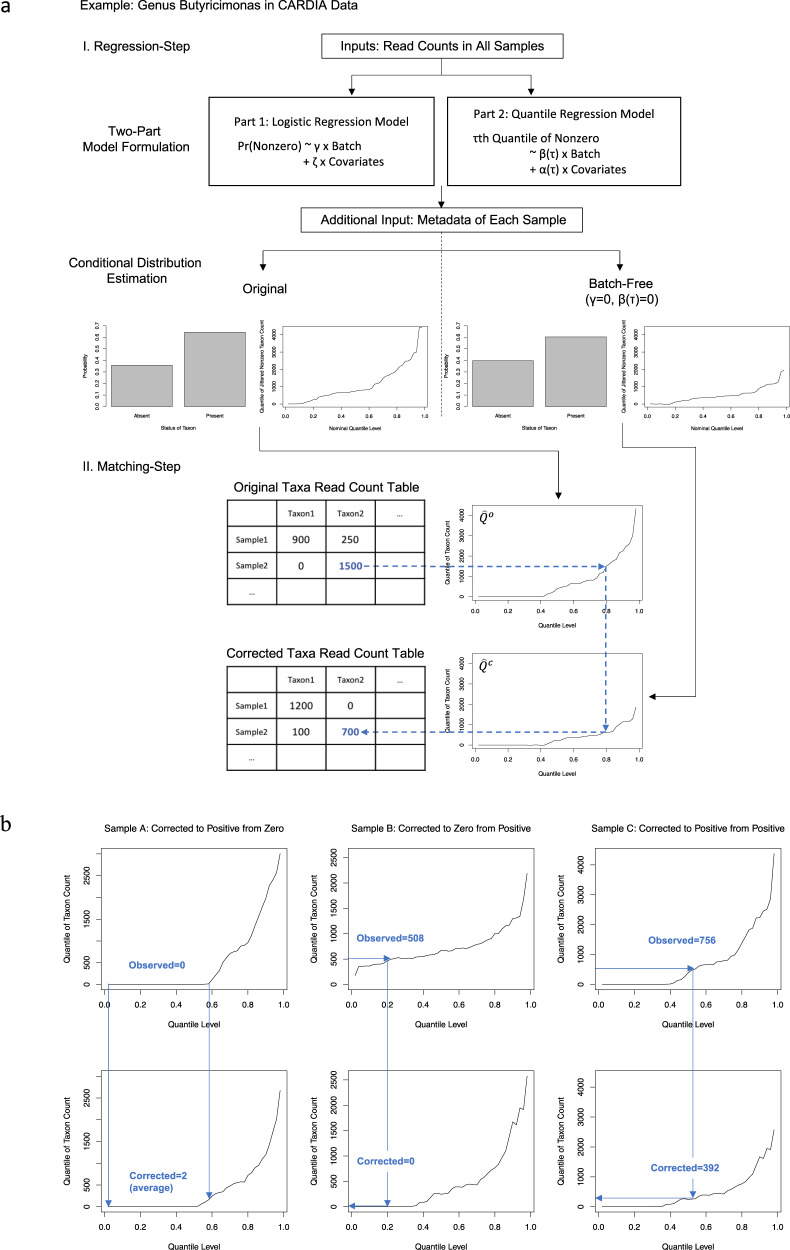
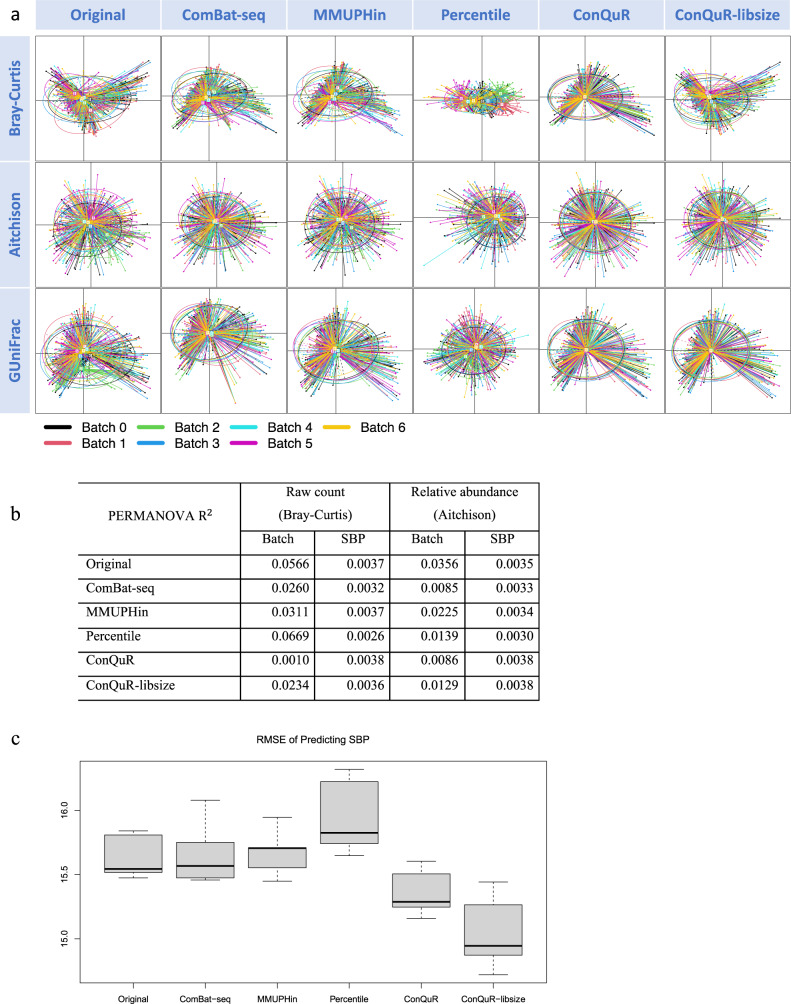
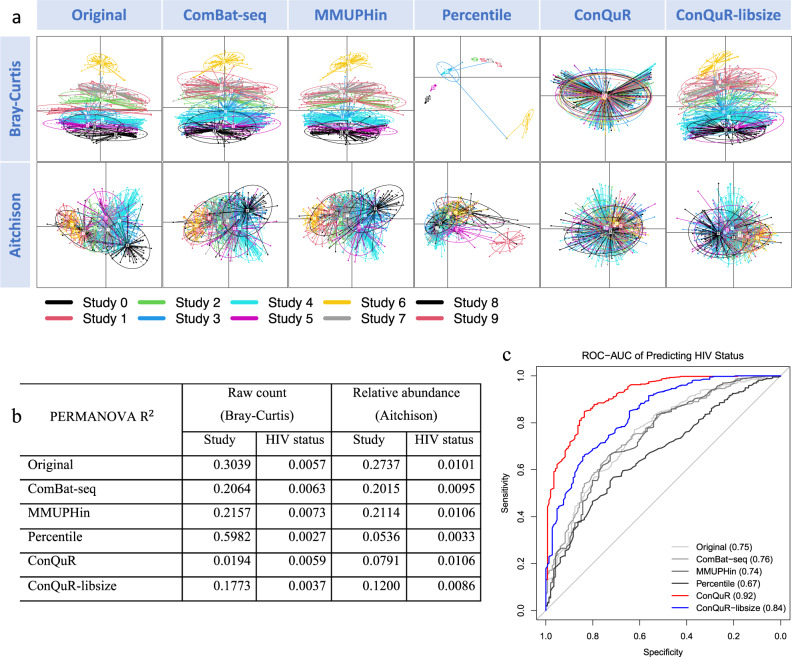
Batch effects in microbiome data arise from differential processing of specimens and can lead to spurious findings and obscure true signals. Strategies designed for genomic data to mitigate batch effects usually fail to address the zero-inflated and over-dispersed microbiome data. Most strategies tailored for microbiome data are restricted to association testing or specialized study designs, failing to allow other analytic goals or general designs. Here, we develop the Conditional Quantile Regression (ConQuR) approach to remove microbiome batch effects using a two-part quantile regression model. ConQuR is a comprehensive method that accommodates the complex distributions of microbial read counts by non-parametric modeling, and it generates batch-removed zero-inflated read counts that can be used in and benefit usual subsequent analyses. We apply ConQuR to simulated and real microbiome datasets and demonstrate its advantages in removing batch effects while preserving the signals of interest.
Overview
The claims and statistics of this paper haven’t been checked yet.
Free: it reads the open-access text and checks the first 5 claims that cite a source we can check. Create a free account to check every claim.
Integrity signals
Registry
Cites
Statistics
Figures
Verification
Claims the paper makes
The claims and statistics of this paper haven’t been checked yet.
Free: it reads the open-access text and checks the first 5 claims that cite a source we can check. Create a free account to check every claim.
Claims other papers make about this one
Each is checked against this paper’s own text: does it say what the citing paper says it does?
The check wasn’t confident either way, so it gives no verdict — never disputed.
In the citing paper
“Our meta-analysis of microbial sequencing data from nine independent αPD-1-treated melanoma cohorts82–88 revealed a higher abundance of pfl, a key enzyme in bacterial formate production, linked to ICI efficacy.”
From Exercise-induced microbiota metabolite enhances CD8 T cell antitumor immunity promoting immunotherapy efficacy (2025) · cites this paper as [88]
Experimental — accuracy not yet measuredIn the citing paper
“After analysis with Kraken2/Bracken2, we used ConQuR (v1.2.0)49 to correct for batch effects between studies. ConQuR was run on the OTU read count matrix using a penalized fitting strategy (logistic_lasso=T, quantile_type=“lasso”, interplt=T) with study metadata as the batch variable and the response as a covariate.”
From Gut microbiota-derived hexa-acylated lipopolysaccharides enhance cancer immunotherapy responses (2025) · cites this paper as [49]
Self-check
Percentages, sums and reported differences re-computed from the paper’s own numbers.
The self-check needs the paper’s full text.
Citations
Cites
DADA2: High–resolution sample inference from Illumina amplicon data
Callahan, B. J., McMurdie, P. J., Rosen, M. J., Han, A. W., Johnson, A. J. A., & Holmes, S. P. (2016) · Nature Methods · doi:10.1038/nmeth.3869 · Cited by 35,698 · cited 2×
“Stool samples were collected at the Year 30 follow-up (2015 – 16) and 16S rRNA gene sequencing data were processed through DADA2 28 pipeline with Silva reference database 29 across 7 runs.”
MethodReproducible, interactive, scalable and extensible microbiome data science using QIIME 2
Bolyen, E., Rideout, J. R., Dillon, M. R., Bokulich, N. A., Abnet, C. C., Al-Ghalith, G. A., Alexander, H., Alm, E. J., Arumugam, M., Asnicar, F., et al. (2019) · Nature Biotechnology · doi:10.1038/s41587-019-0209-9 · Cited by 23,742
Koenker, R., & Bassett, G. (1978) · Econometrica · doi:10.2307/1913643 · Cited by 13,316 · cited 1×
“In particular, we use quantile regression for counts 16,17 to model the read counts among samples for which the microbe is present, and separately model the presence – absence status of the microbe by logistic regression.”
MethodAdjusting batch effects in microarray expression data using empirical Bayes methods
Johnson, W. E., Li, C., & Rabinovic, A. (2007) · Biostatistics · doi:10.1093/biostatistics/kxj037 · Cited by 8,658 · cited 9×
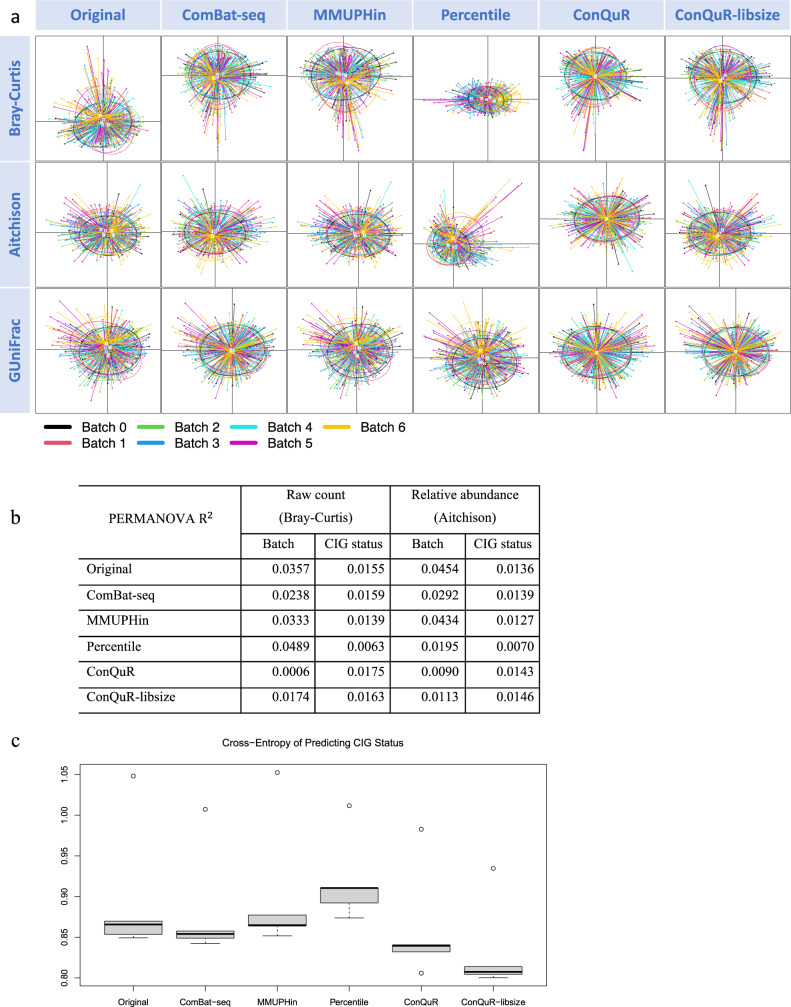
“No DA genera associated with CIG status were found in the original, ComBat-seq, MMUPHin, Percentile, orConQuR-libsize corrected data (adjusting for HPV status, race, and sexual orientation).”
MethodInfluentialA core gut microbiome in obese and lean twins
Turnbaugh, P. J., Hamady, M., Yatsunenko, T., Cantarel, B. L., Duncan, A., Ley, R. E., Sogin, M. L., Jones, W. J., Roe, B. A., Affourtit, J. P., et al. (2009) · Nature · doi:10.1038/nature07540 · Cited by 7,823 · cited 2×
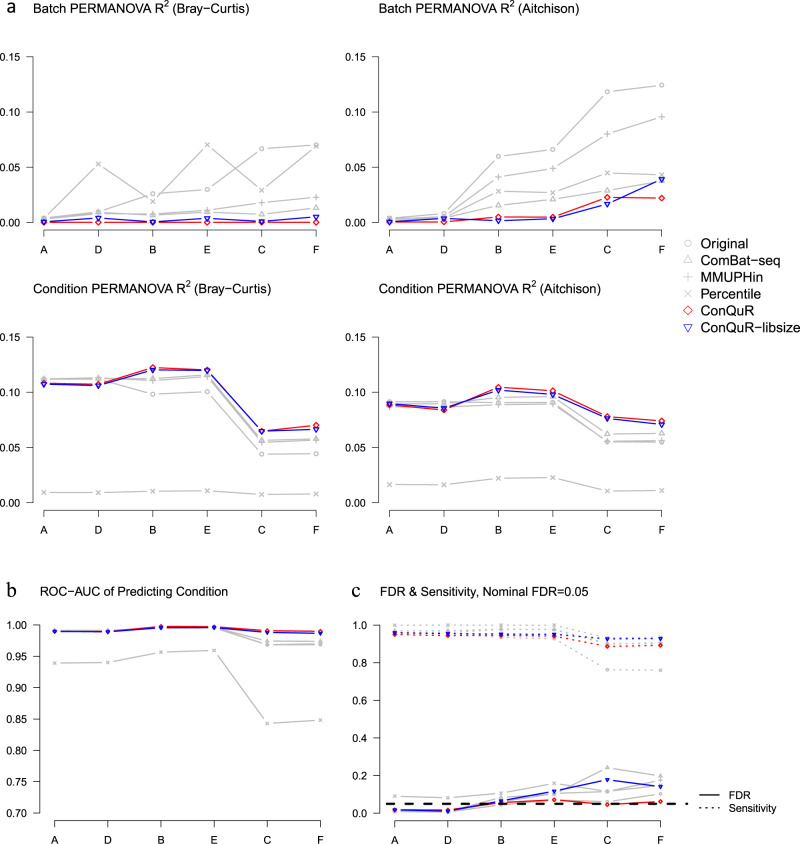
“We assessed ConQuR from three perspectives: (1) how well the batch effects are removed and condition effects are preserved, (2) the ability of corrected read counts to predict Condition, and (3) the false discovery rate (FDR) and sensitivity of subsequent individual-taxon association analysis for Condition.”
MethodA metagenome-wide association study of gut microbiota in type 2 diabetes
Qin, J., Li, Y., Cai, Z., Li, S., Zhu, J., Zhang, F., Liang, S., Zhang, W., Guan, Y., Shen, D., et al. (2012) · Nature · doi:10.1038/nature11450 · Cited by 6,762
Self-citationKoenker, R. (2005) · Cambridge University Press eBooks · doi:10.1017/cbo9780511754098 · Cited by 4,551
Circular analysis in systems neuroscience: the dangers of double dipping
Kriegeskorte, N., Simmons, W. K., Bellgowan, P. S. F., & Baker, C. I. (2009) · Nature Neuroscience · doi:10.1038/nn.2303 · Cited by 2,696 · cited 1×
“Second, ConQuR uses the meta-data twice, in both the correction and subsequent analyses, theoretically leading to over-optimism in association analysis 43 .”
MethodTackling the widespread and critical impact of batch effects in high-throughput data
Leek, J. T., Scharpf, R. B., Bravo, H. C., Simcha, D., Langmead, B., Johnson, W. E., Geman, D., Baggerly, K., & Irizarry, R. A. (2010) · Nature Reviews Genetics · doi:10.1038/nrg2825 · Cited by 2,196 · cited 1×
“Batch effects are not unique to microbiome data 9 , and standard tools have been developed for other genomic technologies, with the most commonly applied approach being ComBat 10 .”
MethodSpecification and testing of some modified count data models
Mullahy, J. (1986) · Journal of Econometrics · doi:10.1016/0304-4076(86)90002-3 · Cited by 1,870
Research works printed but not linked: 1
- Zou H Yuan M Composite quantile regression and the oracle model selection theory Ann. Stat. 2008 36 1108 1126
Cited by
Assessing and mitigating batch effects in large-scale omics studies
Yu, Y., Mai, Y., Zheng, Y., & Shi, L. (2024) · Genome Biology · doi:10.1186/s13059-024-03401-9 · Cited by 202
“Novel methods, such as ConQuR [155] and PLSDA [156], have been specifically designed for metagenomics data.”
MethodMachine learning approaches in microbiome research: challenges and best practices
Παπουτσόγλου, Γ., Tarazona, S., Lopes, M. B., Klammsteiner, T., Ibrahimi, E., Eckenberger, J., Novielli, P., Tonda, A. P., Mihajlović, A., Shigdel, R., et al. (2023) · Frontiers in Microbiology · doi:10.3389/fmicb.2023.1261889 · Cited by 175
“To this date, only a limited number of methods exist for this purpose, and there is a general lack of established recommendations for standardized approaches (Dai et al., 2019; Ling et al., 2022; Wang and Lê Cao, 2023).”
BackgroundRegueira‐Iglesias, A., Balsa‐Castro, C., Blanco‐Pintos, T., & Tomás, I. (2023) · Molecular Oral Microbiology · doi:10.1111/omi.12434 · Cited by 155
Kumar, B., Lorusso, E., Fosso, B., & Pesole, G. (2024) · Frontiers in Microbiology · doi:10.3389/fmicb.2024.1343572 · Cited by 105
Ecological dynamics of Enterobacteriaceae in the human gut microbiome across global populations
Yin, Q., da Silva, A. C., Zorrilla, F., Almeida, A. S., Patil, K. R., & Almeida, A. (2025) · Nature Microbiology · doi:10.1038/s41564-024-01912-6 · Cited by 100
Phelps, C. M., Willis, N. B., Duan, T., Lee, A. H., Zhang, Y., Rodriguez J, D. M., Pandey, S. P., Laughlin, C. R., Rosen, A. B. I., McPherson, A. C., et al. (2025) · Cell · doi:10.1016/j.cell.2025.06.018 · Cited by 91
Statistical normalization methods in microbiome data with application to microbiome cancer research
Xia, Y. (2023) · Gut Microbes · doi:10.1080/19490976.2023.2244139 · Cited by 83
Robustness of cancer microbiome signals over a broad range of methodological variation
Sepich‐Poore, G. D., McDonald, D. T., Kopylova, E., Guccione, C., Zhu, Q., Austin, G. I., Carpenter, C. S., Fraraccio, S., Wandro, S., Kościółek, T., et al. (2024) · Oncogene · doi:10.1038/s41388-024-02974-w · Cited by 72
“To compare Voom-SNM, which was not developed speci fi cally for microbiome data, with a microbiome-speci fi c supervised batch correction tool, we chose ConQuR, which performs non-parametric modeling to generate batch-removed zero-in fl ated read counts [14].”
BackgroundMethodInfluentialWu, X., Zhang, T., Zhang, T., & Park, S. (2023) · Gut Microbes · doi:10.1080/19490976.2023.2292254 · Cited by 65
Domain adaptation in small-scale and heterogeneous biological datasets
Orouji, S., Liu, M. C., Korem, T., & Peters, M. A. K. (2024) · Science Advances · doi:10.1126/sciadv.adp6040 · Cited by 69
AI-empowered human microbiome research
Tian, Z., & Zhao, F. (2025) · Gut · doi:10.1136/gutjnl-2025-335946 · Cited by 84
“Statistical and ML approaches, such as ConQuR 44 and PLSDA-batch, 45 have been proposed to address these issues.”
A physics-informed and data-driven framework for robotic welding in manufacturing
Liu, J., Jiang, F., Tashiro, S., Chen, S., & Tanaka, M. (2025) · Nature Communications · doi:10.1038/s41467-025-60164-y · Cited by 86
“Inspired by conditional generative adversarial networks 66 , we propose a Condition-Based Neuromodulation (CBN) 67,68 -Backpropagation Neural Network (BPNN) method.”
Data pre-processing for analyzing microbiome data – A mini review
Zhou, R., Ng, S. K., Sung, J. J. �., Goh, W. W. B., & Wong, S. H. (2023) · Computational and Structural Biotechnology Journal · doi:10.1016/j.csbj.2023.10.001 · Cited by 66
“ComBat [25] Limma [26] DESeq2 [27] Bayesian Dirichlet-multinomial regression [28] SVA [29] Harmony [30] MNN [31] LIGER [32] PLSDA-batch [33] ConQuR [34] Improves comparability across samples and reduces potential confounding.”
MethodFederated Adaptive Causal Estimation (FACE) of Target Treatment Effects
Han, L., Hou, J., Cho, K., Duan, R., & Cai, T. (2025) · Journal of the American Statistical Association · doi:10.1080/01621459.2025.2453249 · Cited by 90
“This may be the case when it is expensive, time-consuming, or otherwise challenging to collect information on target samples (Leek et al. 2010; Ling et al. 2022).”
Metagenomic analysis characterizes stage-specific gut microbiota in Alzheimer’s disease
Jia, L., Ke, Y., Zhao, S., Liu, J., Luo, X., Cao, J., Liu, Y., Guo, Q., Chen, W., Chen, F., et al. (2025) · Molecular Psychiatry · doi:10.1038/s41380-025-02973-7 · Cited by 58
“The ConQuR v.2.0 [58] was used to adjust for technical effects.”
InfluentialSelf-citationGut microbiota-derived hexa-acylated lipopolysaccharides enhance cancer immunotherapy responses
Sardar, P., Beresford-Jones, B. S., Xia, W., Shabana, O., Suyama, S., Ramos, R. J. F., Soderholm, A. T., Tourlomousis, P., Kuo, P., Evans, A. C., et al. (2025) · Nature Microbiology · doi:10.1038/s41564-025-01930-y · Cited by 49
Hexa-acylated lipopolysaccharides from the gut microbiota enhance cancer immunotherapy responses
(2024) · doi:10.1101/2024.06.24.600291 · Cited by 49
Lin, Y., Lau, H. C.-H., Liu, C., Ding, X., Sun, Y., Rong, J., Zhang, X., Wang, L., Yuan, K., Miao, Y., et al. (2025) · Cell Host & Microbe · doi:10.1016/j.chom.2025.03.012 · Cited by 46
Liu, C., Mansoldo, F. R. P., Li, H., Vermelho, A. B., Zeng, R. J., Li, X., & Yao, M. (2025) · Nature Protocols · doi:10.1038/s41596-025-01239-4 · Cited by 66
Zhao, H., Sun, L., Liu, J., Shi, B., Zhang, Y., Qu‐zong, C., Dorji, T., Wang, T., Yuan, H., & Yang, J. (2024) · Gut Microbes · doi:10.1080/19490976.2024.2350151 · Cited by 42
“To regulate batch effects in a meta-analysis, we used the blocked Wilcoxon Rank sum test and tools that specialize in modulating batch effects in the microbiome ConQuR the samples implemented in the R (V.4.0.4) “coin” package and “ConQuR” package, respectively.”
MethodInfluentialGlobal compositional and functional states of the human gut microbiome in health and disease
Lee, S., Portlock, T., Chatelier, E. L., García-Guevara, F., Clasen, F., Oñate, F. P., Pons, N., Begum, N., Harzandi, A., Proffitt, C., et al. (2024) · Genome Research · doi:10.1101/gr.278637.123 · Cited by 38
“Some approaches exist for removing batch effects in microbiome data sets (Ling et al. 2022; Ma et al. 2022); however, they assume that all confounding factors are known, which can be challenging when public data sets are used that do not provide metadata.”
BackgroundSpatiotemporal patterns of the pregnancy microbiome and links to reproductive disorders
Xiao, L., Tian, Z., Zuo, Z., Sun, N., & Zhao, F. (2024) · 中国科学通报:英文版 · doi:10.1016/j.scib.2024.02.001 · Cited by 54
Age-related dynamics of predominant methanogenic archaea in the human gut microbiome
Mohammadzadeh, R., Mahnert, A., Shinde, T., Kumpitsch, C., Weinberger, V., Schmidt, H., & Moissl‐Eichinger, C. (2025) · BMC Microbiology · doi:10.1186/s12866-025-03921-9 · Cited by 35
“For this purpose, to generate a batch-corrected table of microbiome read counts for further analyses, we utilized the ConQuR tool [27].”
Qin, L., Sun, T., Li, X., Zhao, S., Liu, Z., Zhang, C., Jin, C., Xu, Y., Gao, X., Cao, Y., et al. (2025) · Signal Transduction and Targeted Therapy · doi:10.1038/s41392-025-02152-8 · Cited by 36
Wang, B., Sun, F., & Luan, Y. (2024) · Scientific Reports · doi:10.1038/s41598-024-57670-2 · Cited by 31
“While QN was only effective when the two populations originated from the same distribution, FSQN, BMC, limma, ComBat, and ConQuR significantly enhanced the reproducibility of response predictions, remaining unaffected by disease effects and population effects.”
MethodInfluentialProgress on network modeling and analysis of gut microecology: a review
Luo, M., Zhu, J., Jia, J., Zhang, H., & Zhao, J. (2024) · Applied and Environmental Microbiology · doi:10.1128/aem.00092-24 · Cited by 38
“As the volume of network data grows, it enhances our ability to grasp network control and unearth shared regulatory patterns amidst individual variability (117).”
BackgroundAustin, G. I., Kav, A. B., ElNaggar, S., Park, H., Biermann, J., Uhlemann, A., Pe’er, I., & Korem, T. (2025) · Nature Microbiology · doi:10.1038/s41564-025-01954-4 · Cited by 30
Li, Y., Ma, A., Johnson, W. E., Eng, C., De, S., Jiang, S., Li, Z., Spakowicz, D. J., & Ma, Q. (2025) · Nature Methods · doi:10.1038/s41592-025-02807-y · Cited by 27
Self-citationPlanning and Analyzing a Low-Biomass Microbiome Study: A Data Analysis Perspective
Austin, G. I., & Korem, T. (2024) · The Journal of Infectious Diseases · doi:10.1093/infdis/jiae378 · Cited by 30
Han, Z., Hu, Y., Lin, X., Cheng, H., Dong, B., Liu, X., Wu, B., & Xu, Z. Z. (2025) · mSystems · doi:10.1128/msystems.01247-24 · Cited by 27
Identification and validation of microbial biomarkers from cross-cohort datasets using xMarkerFinder
Gao, W., Lin, W., Li, Q., Chen, W., Yin, W., Zhu, X., Gao, S., Liu, L., Li, W., Wu, D., et al. (2024) · Nature Protocols · doi:10.1038/s41596-024-00999-9 · Cited by 25
Lee, S., & Lee, I. (2024) · Gut Microbes · doi:10.1080/19490976.2024.2375679 · Cited by 25
Robust Inference for Federated Meta-Learning
Guo, Z., Li, X., Han, L., & Cai, T. (2025) · Journal of the American Statistical Association · doi:10.1080/01621459.2024.2443246 · Cited by 39
“For example, genomics data is usually separated into batches, but heterogeneity across batches can lead to undesirable variation in the data (Leek et al. 2010; Ling et al. 2022).”
Harnessing human microbiomes for disease prediction
Liu, Y., Fachrul, M., Inouye, M., & Méric, G. (2024) · Trends in Microbiology · doi:10.1016/j.tim.2023.12.004 · Cited by 20
da Silva, A. C., Lapkin, J., Yin, Q., Muller, E., & Almeida, A. (2026) · Cell Host & Microbe · doi:10.1016/j.chom.2026.01.013 · Cited by 21
Niciura, S. C. M., Cardoso, T. F., Ibelli, A. M. G., Okino, C. H., Andrade, B. G. N., Benavides, M. V., Chagas, A. C. D. S., Esteves, S. N., Minho, A. P., Regitano, L. C. D. A., et al. (2024) · Parasites & Vectors · doi:10.1186/s13071-024-06205-9 · Cited by 18
“The conditional quantile regression (ConQuR) approach [60] was used to remove the batch effects caused by multiple sequencing runs and sex.”
MethodRegueira‐Iglesias, A., Suárez‐Rodríguez, B., Blanco‐Pintos, T., Relvas, M., Alonso‐Sampedro, M., Balsa‐Castro, C., & Tomás, I. (2024) · Frontiers in Cellular and Infection Microbiology · doi:10.3389/fcimb.2024.1405699 · Cited by 21
ComBat models for harmonization of resting-state EEG features in multisite studies
Jaramillo-Jiménez, A., Tovar, D., Mantilla-Ramos, Y.-J., Ochoa-Gomez, J. F., Bonanni, L., & Brønnick, K. (2024) · Clinical Neurophysiology · doi:10.1016/j.clinph.2024.09.019 · Cited by 17
“The latter has been suggested in microbiome count data, often zero-inflated and over-dispersed (Ling et al., 2022), and represents a potential explanation for our findings on delta PW – age relations (not previously reported).”
BackgroundDecoding the microbial blueprint of pancreatic cancer
Bautista, J., Bedón-Galarza, R., Martínez-Hidalgo, F., Masache-Cruz, M. J., Benítez-Núñez, M., Valencia-Arroyo, C., & López‐Cortés, A. (2026) · Frontiers in Medicine · doi:10.3389/fmed.2026.1737582 · Cited by 15
Pediatric migraine is characterized by traits of ecological and metabolic dysbiosis and inflammation
Papetti, L., CHIERICO, F. D., Frattale, I., Toto, F., Scanu, M., Mortera, S. L., Rapisarda, F., Michele, M. D., Monte, G., Ursitti, F., et al. (2024) · The Journal of Headache and Pain · doi:10.1186/s10194-024-01871-7 · Cited by 14
“0 [34].”
Ren, L., Yang, J., Xiao, Y., Guo, L., Rao, J. Y., Wu, H., Wang, X., Wang, Y., Zhang, L., Zhang, L. M., et al. (2025) · Microbiome · doi:10.1186/s40168-025-02107-9 · Cited by 14
“0) [60].”
Wang, B., & Luan, Y. (2024) · Frontiers in Genetics · doi:10.3389/fgene.2024.1369628 · Cited by 14
MAMI: a comprehensive database of mother–infant microbiome and probiotic resources
Tian, Z., Xiao, L., Zuo, Z., & Zhao, F. (2023) · Nucleic Acids Research · doi:10.1093/nar/gkad813 · Cited by 15
Lee, K., & Kam, J. (2024) · Water Research · doi:10.1016/j.watres.2024.121610 · Cited by 12
Challenges and Opportunities in Analyzing Cancer-Associated Microbiomes
Chia, M., Pop, M., Salzberg, S. L., & Nagarajan, N. (2025) · Cancer Research · doi:10.1158/0008-5472.can-24-3629 · Cited by 12
Khangarot, R., Kumari, V., Mishra, R., & Singh, A. (2026) · BioMedical Engineering OnLine · doi:10.1186/s12938-026-01568-9 · Cited by 14
“Although explainable AI (XAI) techniques like SHAP [10], integrated gradients, and attention-based interpretability have been successfully applied, interpretability methods specifically for microbiology are not as established.”
InfluentialComprehensive gut microbiota composition and microbial interactions among the three age groups
Ma, J., Yang, X., & He, J. (2024) · PLoS ONE · doi:10.1371/journal.pone.0305583 · Cited by 14
Li, Y., Zhang, R., Fu, C., Jiang, Q., Zhang, P., Zhang, Y., Chen, J., Tao, K., Chen, W., & Zeng, X. (2024) · Cancer Letters · doi:10.1016/j.canlet.2024.217149 · Cited by 11
Self-citationErhunmwunse, A. S., Queiroz, L. M. D., Zhang, K., Mackowiak, C. L., Blount, A. R. S., Dubeux, J. C. B., & Liao, H. (2023) · Biology and Fertility of Soils · doi:10.1007/s00374-023-01701-z · Cited by 12
“The conditional quantile regression (ConQuR) approach (Ling et al. 2022) was used to remove batch effects caused by multiple sequencing runs.”
MethodMulti-cohort analysis unveils novel microbial targets for the treatment of hyperuricemia and gout
Qie, J., Cao, M., Xu, M., Zhang, Y., Luo, L., Sun, C., Ke, D., Yuan, S., Jia, W., Qiu, T., et al. (2025) · mSystems · doi:10.1128/msystems.01091-25 · Cited by 10
A Comparison of Three Automated Nucleic Acid Extraction Systems for Human Stool Samples
Kwa, W. T., Sim, C. K., Low, A., & Lee, J. W. J. (2024) · Microorganisms · doi:10.3390/microorganisms12122417 · Cited by 9
Semisynthetic simulation for microbiome data analysis
Sankaran, K., Kodikara, S., Li, J. J., & Cao, K. L. (2024) · Briefings in Bioinformatics · doi:10.1093/bib/bbaf051 · Cited by 11
“Hence, a common preprocessing step in microbiome data analysis is to apply batch effect correction to standardize data across batches [99, 100].”
Association of tumor microbiome with survival in resected early-stage PDAC
Meng, Y., Wang, C., Usyk, M., Kwak, S., Peng, C., Hu, K. S., Oberstein, P. E., Krogsgaard, M., Li, H., Hayes, R. B., et al. (2025) · mSystems · doi:10.1128/msystems.01229-24 · Cited by 9
Wang, L., Zhao, H. Y., Wu, F., Chen, J., Xu, H., Gong, W., Wen, S., Yang, M., Xia, J., Chen, Y., et al. (2025) · Computational and Structural Biotechnology Journal · doi:10.1016/j.csbj.2025.03.030 · Cited by 8
“Methods such as Conditional Quantile Regression (ConQuR) [24], ComBat [46], and MMUPHin [47] have been developed to mitigate these effects, but limitations remain.”
Self-citationMeta-analysis of gut microbiome reveals patterns of dysbiosis in colorectal cancer patients
Yan, R., Zheng, R., Han, Y., Song, G., Huo, B., & Sun, H. L. (2025) · Journal of Medical Microbiology · doi:10.1099/jmm.0.002042 · Cited by 9
“Considering the requirements of our data analysis, we adopted ConQuR [20], a comprehensive microbiome batch effect removal tool.”
InfluentialMota, T. F., Fukutani, E. R., Martins, K. A., Salgado, V. R., Andrade, B. B., Fraga, D. B. M., & Queiroz, A. T. L. (2023) · Microbiology Spectrum · doi:10.1128/spectrum.02156-23 · Cited by 8
“Such correction was performed by the ConQuR_libsize function (55), from the ConQuR package v2.”
MethodTan, Y., Liu, W., Chen, Y., Zhou, Y., Song, K., Cao, S., Zhang, Y., Song, Y., Deng, H., Yang, R., et al. (2023) · Microbiology Spectrum · doi:10.1128/spectrum.00460-23 · Cited by 8
“ConQuR is a comprehensive method that shows advantages in removing batch effects while preserving the signals of interest.”
BackgroundMethodInfluentialYang, Z., Zhu, J., Lu, W., Tian, F., Zhang, H., & Chen, W. (2024) · Food Bioscience · doi:10.1016/j.fbio.2024.104541 · Cited by 10
Li, Y., Xie, G., Zha, Y., & Ning, K. (2023) · Journal of genetics and genomics/Journal of Genetics and Genomics · doi:10.1016/j.jgg.2023.03.009 · Cited by 8
Microbiome data integration via shared dictionary learning
Yuan, B., & Wang, S. (2025) · Nature Communications · doi:10.1038/s41467-025-63425-y · Cited by 8
“…in opportunistic infection ( Anaerococcus , Hel-398 cococcus , and Providencia ) (Murphy and Frick, 2013; Lotte et al., 2015; Wie, 2015), and pathogens causing bacterial vaginosis ( Mobiluncus ) (Schwebke and Lawing, 2001), suggest-400 ing possible synergistic relationships among these pathogens.”
InfluentialLiu, X., Liu, C., Qian, X., Zhang, S., Yao, Z., Chai, Y., Shi, Q., Yang, W., Wang, Q., Zhang, L. N., et al. (2025) · Applied and Environmental Microbiology · doi:10.1128/aem.00976-25 · Cited by 7
“To adjust for batch effects, the ConQuR framework was employed (30). α-Diversity was assessed using the Chao1 index and compared by two-way ANOVA. β-Diversity was evaluated via principal coordinates analysis based on the binary Jaccard index, with statistical significance determined using the…”
Veselovsky, V. A., Boldyreva, D. I., Olekhnovich, E. I., Klimina, K. M., Babenko, V. V., Zakharevich, N. V., Larin, A. K., Morozov, M. D., Zoruk, P. Y., Владимирович, С. П., et al. (2024) · Frontiers in Nutrition · doi:10.3389/fnut.2024.1362529 · Cited by 8
“For batch-effect correction between different sequencing technical runs, ConQur software with default parameters was used (24).”
MethodFamilial clustering of dysbiotic oral and fecal microbiomes in juvenile dermatomyositis
Koester, S. T., Chow, A., Pepper-Tunick, E., Lee, P., Eckert, M. M., Brenchley, L., Gardner, P. J., Song, H. J., Li, N., Schiffenbauer, A. I., et al. (2024) · Scientific Reports · doi:10.1038/s41598-024-60225-0 · Cited by 7
Self-citationXie, M., Li, X., Qi, C., Zhang, Y., Li, G., Xue, Y., & Chen, G. (2024) · Frontiers in Cardiovascular Medicine · doi:10.3389/fcvm.2024.1497170 · Cited by 6
Koh, H., Kim, J., & Jang, H. (2025) · BioData Mining · doi:10.1186/s13040-025-00422-3 · Cited by 6
Scanu, M., CHIERICO, F. D., Marsiglia, R., Toto, F., Guerrera, S., Valeri, G., Vicari, S., & Putignani, L. (2024) · Biomedicines · doi:10.3390/biomedicines12102350 · Cited by 8
“0 [8] (Figure 1).”
BackgroundMethodInfluentialProstate Cancer at the Microbial Crossroads: Illuminating a New Frontier in Precision Medicine
Kwon, W., Kim, H., & Song, Y. S. (2025) · The World Journal of Men s Health · doi:10.5534/wjmh.250045 · Cited by 5
“Prostate biopsy tissue provides the most direct sample but is invasive, carries contamination risk during collection, and yields very low biomass, making background DNA a significant concern [2,117].”
MOMMY study profile: An integrative early‐life multi‐omics cohort in China
Zhang, L., Liu, Y., Wang, S., Ching, J. Y., Tam, W. H., Leung, T. F., Leung, T. Y., Chan, P. K. S., Mak, J. W. Y., Cheung, C. P., et al. (2025) · iMetaOmics. · doi:10.1002/imo2.70068 · Cited by 5
Impact of Electronic Cigarette Use on the Oral Microbiota: A Systematic Review
Rosa, G. R. M. L., Samaranayake, L. P., Zaura, E., Sun, A., Fuochi, V., Furneri, P. M., Kowalski, J., Myszel, K., Chapple, I., & Polosa, R. (2026) · Journal Of Clinical Periodontology · doi:10.1111/jcpe.70111 · Cited by 6
Zhang, L., Chun, Y., Grishina, G. T., Lo, T. T. Y., Reed, K., Wang, J., Sicherer, S. H., Berin, M. C., & Bunyavanich, S. (2025) · Allergy · doi:10.1111/all.16481 · Cited by 5
Deciphering Gut Microbiome in Colorectal Cancer via Robust Learning Methods
Han, H., Li, Y., Qi, Y., Mangiola, S., & Ling, W. (2025) · Genes · doi:10.3390/genes16040452 · Cited by 6
“The conditional quantile regression (ConQuR) method [9] was used to mitigate between-study artifacts during the integration.”
Self-citationLucas‐Ruiz, F., Vidal-Correoso, D., Mateo, S. V., de la Torre-Álamo, M. M., Jover-Aguilar, M., Alconchel, F., Martínez-Alarcón, L., López‐López, V., Ríos, A., Cascales-Campos, P. A., et al. (2025) · Gut · doi:10.1136/gutjnl-2025-335986 · Cited by 4
Yau, T. O., Taketani, R. G., Bonnin, J. M., Stewart, H., Thompson, C. M. A., Clark, I. M., Mauchline, T. H., Malone, J. G., Ryan, M. J., Jones, S., et al. (2025) · Environmental Microbiome · doi:10.1186/s40793-025-00768-5 · Cited by 4
“( 7 ) ConQuR [27] was then used for batch effect correction and the ( 8 ) Phyloseq R package [28] for the calculation of alpha and beta diversity (v2023.”
Yan, Y., Wang, Y., Tang, J., Liu, X., Wang, J., Song, G., & Li, H. (2025) · Bioengineering · doi:10.3390/bioengineering12040426 · Cited by 4
“Since the raw data were in raw count format, we applied the ConQuR package [32,34], a recently developed method designed to remove batch effects in micro-biome data, to correct for batch effects from sequencing center and experimental strategy (WGS vs. RNA-seq).”
Composite quantile regression approach to batch effect correction in microbiome data
Park, J. W., & Park, T. (2025) · Frontiers in Microbiology · doi:10.3389/fmicb.2025.1484183 · Cited by 3
Wang, X., Liu, J., Huoshen, W., Liu, J., Qiao, X., Zhang, H., & Zhou, S. (2025) · Renal Failure · doi:10.1080/0886022x.2025.2522979 · Cited by 3
“We addressed batch effects using the Conditional Quantile Regression (ConQuR) approach [22], which leverages non-parametric modeling of microbial read counts to preserve clinically relevant signals.”
Li, X., Ding, K., Ma, Y., Han, X., Liu, Y., Wu, G., & Chen, D. (2025) · Diabetes Research and Clinical Practice · doi:10.1016/j.diabres.2025.112438 · Cited by 3
Michael, D. R., John, D. A., Coates, N., Guschina, I. A., McDonald, J. A. K., Danckert, N. P., Valdivia‐Garcia, M., Ramanathan, G., Plummer, S. F., Wang, D., et al. (2025) · Beneficial Microbes · doi:10.1163/18762891-bja00096 · Cited by 3
Xie, M., Zhang, Y., Zhao, M., Li, X., Xue, Y., Chen, G., Liu, J., & Hua, H. (2025) · Computational Biology and Chemistry · doi:10.1016/j.compbiolchem.2025.108701 · Cited by 3
Ortega-Reyes, D., Asami, S., Suda, W., & Ohno, H. (2026) · Journal of Nutrition · doi:10.1016/j.tjnut.2026.101646 · Cited by 3
Alternating High‐Fat and Polysaccharide Diets Modulates Gut Phage‐Bacterial Interplay
Zhao, F., Zhang, R., Wei, R., Fan, H., Hu, Y., Shi, W., & Wang, J. (2026) · Advanced Science · doi:10.1002/advs.202516916 · Cited by 2
Ge, M., Maeda, T., Li, J., Mares, M. C. D., Kifaro, E. G., Gidamo, G. H., Shiroguchi, K., Moeller, A. H., Zhang, Z. D., & Jin, J. (2026) · The ISME Journal · doi:10.1093/ismejo/wrag122 · Cited by 2
“The ConQuR method was developed to remove batch effects in microbiome data by using conditional quantile regression [ 13] While BarBIQ, a 16S sequencing – based method, is limited to profiling bacterial communities, there is currently no counterpart method in metagenomics for all microbial taxa that…”
Vélez, I. G., Leonés-Baños, I., Folch, B. A., Antequera, L., Rojas, I., Ortuño, F. M., Sáez‐Lara, M. J., Altmäe, S., & Herrera, L. J. (2026) · Frontiers in Endocrinology · doi:10.3389/fendo.2026.1812407 · Cited by 2
“ConQuR (Conditional Quantile Regression), a two-part non-parametric approach is speci fi cally designed to correct microbiome batch effects (53).”
Vaziri, G. J., Pritchard, J. C., Howard, J., Stamm, G., O’Connor, D. H., Newman, C. M., Aliota, M. T., & Dzikwi-Emennaa, A. A. (2026) · mSphere · doi:10.1128/msphere.00157-26 · Cited by 2
Hein, D., Coughlin, L. A., Poulides, N. A., Koh, A. Y., & Sanford, N. N. (2024) · Journal of Immunotherapy and Precision Oncology · doi:10.36401/jipo-23-30 · Cited by 2
“…was assessed with principal coordinate analysis (PCoA) of both the Bray-Curtis dissimilarity and the robust Aitchison [25] distance (10% abundance filtering, counts adjusted for batch effects using the ConQuR [26] package with default settings for logistic LASSO correction including batch size).”
MethodLi, R., Mu, J., Yang, S., Ye, C., & Zhan, X. (2024) · Statistical Analysis and Data Mining The ASA Data Science Journal · doi:10.1002/sam.11674 · Cited by 3
“A common solution to this issue would be the quantile regression [18], which has been widely used in biomedical data analysis [19–22].”
MethodgutMSNP: a comprehensive database for human gut microbial single-nucleotide polymorphisms
Qian, K., Du, M., Tan, S., Ding, M., Song, M., Lu, M., Qi, C., Cheng, L., & Zhang, X. (2025) · Nucleic Acids Research · doi:10.1093/nar/gkaf1205 · Cited by 2
“1.2 database to estimate the taxonomic abundance of each microbial species in all samples, and batch effects were removed using ConQuR [ 33 , 34 ].”
InfluentialMOSAIC: A Pipeline for MicrobiOme Studies Analytical Integration and CorrectionPreprint
Fu, C., Lu, J., Zhao, N., & Ling, W. (2024) · bioRxiv (Cold Spring Harbor Laboratory) · doi:10.1101/2024.11.07.622561 · Cited by 2
Self-citationAkorli, J. E. B., Opoku, M., Appiah-Twum, F., Akpo, M. S., Ismail, R. B. Y., Boamah, G. Y. K., Obeng-Aboagye, E., Adu-Asamoah, D., & Donkor, I. O. (2024) · BMC Infectious Diseases · doi:10.1186/s12879-024-09948-z · Cited by 1
“Because the two sample sets were sequenced separately, Conditional Quantile Regression (ConQuR) was applied on the ASV table to remove batch effect [30].”
MethodClougher, S. B., Niedziela, D. A., Versura, P., & Mulcahy, G. M. (2025) · One Health · doi:10.1016/j.onehlt.2025.100977 · Cited by 1
A cautionary tale of batch corrections on confounded microbiome community profiles
Foxx, A. J., & Rivers, A. R. (2025) · iMetaOmics. · doi:10.1002/imo2.70025 · Cited by 1
Characterization of intra-tumoral microbiota from transcriptomic sequencing of Asian breast cancer
Yeo, L.-F., Lee, A. W. Y., Tee, P. Y. E., Chin, J. S. F., Lee, B. K. B., Lim, J., Teo, S., & Pan, J. W. (2025) · Scientific Reports · doi:10.1038/s41598-025-15877-x · Cited by 1
“Several strategies to correct it have been reported in literature including conditional quantile regression 45 , MBECS 46 , Limma 47 , and ComBat 48 .”
Guccione, C., Sfiligoi, I., Gonzalez, A., Shaffer, J. P., Kazachkova, M., Weng, Y., McDonald, D., Shah, S. C., Minot, S. S., Paulson, T. G., et al. (2026) · BMC Genomics · doi:10.1186/s12864-026-12545-w · Cited by 1
“When performing the same analyses using batch-corrected metagenomic data for the two EAC cohorts (each cohort considered a batch of same phenotype of interest with tool ConQuR [56]), we found very similar results for alpha and beta diversity metrics (Supplementary Figure S5).”
Li, C., Heirbaut, S., Michiels, J., Hou, Y., Ovyn, A., Noten, N. V., Liefferinge, E. V., & Degroote, J. (2026) · Journal of Animal Science and Biotechnology/Journal of animal science and biotechnology · doi:10.1186/s40104-026-01353-7 · Cited by 1
“The conditional quantile regression (ConQuR) method was used to correct batch effects in microbiome data and done with the R package ConQuR (version 2.0; [24]), with treatment included as covariates to preserve the biological variation across clusters.”
InfluentialBilophila wadsworthia is linked to basal ganglia atrophy in the general population
Fässler, D., Wittfeld, K., Frenzel, S., der Auwera, S. V., Merhjerd, A., Gholizadeh, M., Simm, S., Kaderali, L., Franck, M., Rühlemann, M. C., et al. (2026) · Brain Behavior and Immunity · doi:10.1016/j.bbi.2026.106587 · Cited by 1
Kobayashi, R., Shiba, T., Nagai, T., Komatsu, K., Matsumura, S., Takayasu, W., Nemoto, T., Koki, T., Takeuchi, Y., & Iwata, T. (2026) · ISME Communications · doi:10.1093/ismeco/ycag092 · Cited by 1
“…standardized across studies, and batch effects [ 29] associated with data derived from the previous and current studies were addressed using the Conditional Quantile Regression method implemented in the R package ConQuR (version 2.0) [ 30], as described in Text S1, prior to downstream analyses.”
InfluentialSun, H., Noya-Alarcón, Ó., Wang, J., Daniel, S. G., Bittinger, K. L., Mohamed, W. M. A., Scanlan, P. D., Shah, C., Kundu, T., Blaser, M. J., et al. (2026) · Cell Reports · doi:10.1016/j.celrep.2026.117343 · Cited by 1
Yang, Z., Yao, J., Xinxian, Z., Yan, X., Chen, Y., Chen, T., Jian, Y., & Li, M. (2026) · Interdisciplinary medicine · doi:10.1002/inmd.70143 · Cited by 1
Sun, X., Lin, Z., & Ni, S. (2026) · Journal of Hazardous Materials · doi:10.1016/j.jhazmat.2026.142513 · Cited by 1
Ni, Z., Xie, J., Zhang, Z., Zhang, K., Ding, J., Chang, M., Su, Y., Zhang, Y., Yao, M., Wang, C., et al. (2026) · iMeta · doi:10.1002/imt2.70148 · Cited by 2
Metadata
- Authors
- Ling, W., Lu, J., Zhao, N., Lulla, A., Plantinga, A. M., Fu, W., Zhang, A., Liu, H., Song, H., Li, Z., Chen, J., Randolph, T. W., Koay, W. L. A., White, J. R., Launer, L. J., Fodor, A. A., Meyer, K. A., & Wu, M. C.
- Affiliations
- Fred Hutch Cancer Center (US)
- Johns Hopkins University (US)
- Williams College (US)
- University of Washington (US)
- University of Florida Health (US)
- Mayo Clinic (US)
- Children's National (US)
- Resphera Biosciences (US)
- National Institutes of Health (US)
- University of North Carolina at Charlotte (US)
- Corresponding author
- Zhao, Ni
- Wu, Michael C.
- ORCID
- Venue
- Nature Communications
- Published
- 2022-09-15
- Volume
- 13
- Issue
- 1
- Pages
- 5418-5418
- ISSN
- 2041-1723 (ISSN-L)
- PMC
- PMC9477887
- OpenAlex
- W4296029444
- Semantic Scholar
- eca23114dd371588e2713d8a81a48c3e91a9957b
- Cited by
- 136
- References
- 46
- Citations by year
- 2026: 43 · 2025: 39 · 2024: 41 · 2023: 12 · 2022: 1
- FWCI
- 7.76
- Type
- journal article
- Language
- en
- Open access
- gold
- doi.org
- Licence
- cc-by
- creativecommons.org/licenses/by/4.0 (tdm)
- creativecommons.org/licenses/by/4.0 (vor)
- Locations
- Nature Communications (publishedVersion, cc-by)
- PubMed Central (publishedVersion, cc-by)
- PubMed (publishedVersion)
- RePEc: Research Papers in Economics (submittedVersion)
- DOAJ (DOAJ: Directory of Open Access Journals) (submittedVersion, cc-by-sa)
- Funders
- National Heart, Lung, and Blood Institute (R01HL155417, HHSN268201800004I, HHSN268201800005I, K01HL127159, and HHSN268201800007I, HHSN268201800006I, HHSN268201800007I, HHSN268201800003I)
- National Institute of General Medical Sciences (R01GM123014, R01GM129512)
- Topics
- Life Sciences › Biochemistry, Genetics and Molecular Biology › Molecular Biology › Gene expression and cancer classification
- Life Sciences › Biochemistry, Genetics and Molecular Biology › Molecular Biology › Gut microbiota and health
- Life Sciences › Biochemistry, Genetics and Molecular Biology › Molecular Biology › Genomics and Phylogenetic Studies
- Keywords
- batch effects, microbiome data, conditional quantile regression, two-part model, zero-inflated count data, overdispersion, nonparametric models, batch effect correction
- MeSH terms
- Research Design, Microbiota
About these checks
Registry, retraction, Cites and statistics results are computed, not judged, with one exception: a printed reference that no index lists is read once by a model before it counts as a citation error. Claims are extracted by a model and kept only when their quote appears verbatim in the text; each cited source is then checked, with a model’s help, for whether it says what the claim relies on. Those verdicts can be wrong — read the claim’s quote and the cited source before relying on one.
Statistics and arithmetic are recomputed, not judged.
Confidence bands are shown only for fields calibrated on our annotated test set. None is calibrated yet, so no band is shown.
What counts as a claim ›How we measure confidence ›How we check this ›
Are you an author, or do you see a problem with this page? Request a review
Data sources
Bibliographic data: Semantic Scholar, OpenAlex, Crossref.
Contains information from the Semantic Scholar Academic Graph Datasets, made available under the ODC Attribution License (ODC-BY 1.0).
Semantic Scholar’s data is described in: Kinney, R., et al. (2023). The Semantic Scholar Open Data Platform. arXiv:2301.10140.
