

Batch effects removal for microbiome data via conditional quantile regression
Open accessThe DOI matches its Crossref record; 46 of the 46 references it cites were found in a registry or an index.
Abstract
Batch effects in microbiome data arise from differential processing of specimens and can lead to spurious findings and obscure true signals. Strategies designed for genomic data to mitigate batch effects usually fail to address the zero-inflated and over-dispersed microbiome data. Most strategies tailored for microbiome data are restricted to association testing or specialized study designs, failing to allow other analytic goals or general designs. Here, we develop the Conditional Quantile Regression (ConQuR) approach to remove microbiome batch effects using a two-part quantile regression model. ConQuR is a comprehensive method that accommodates the complex distributions of microbial read counts by non-parametric modeling, and it generates batch-removed zero-inflated read counts that can be used in and benefit usual subsequent analyses. We apply ConQuR to simulated and real microbiome datasets and demonstrate its advantages in removing batch effects while preserving the signals of interest.
Overview
The claims and statistics of this paper haven’t been checked yet.
Free: it reads the open-access text and checks the first 5 claims that cite a source we can check. Create a free account to check every claim.
Integrity signals
Registry
Cites
Statistics
Figures
Verification
Claims the paper makes
The claims and statistics of this paper haven’t been checked yet.
Free: it reads the open-access text and checks the first 5 claims that cite a source we can check. Create a free account to check every claim.
Claims other papers make about this one
Each is checked against this paper’s own text: does it say what the citing paper says it does?
The check wasn’t confident either way, so it gives no verdict — never disputed.
In the citing paper
“Our meta-analysis of microbial sequencing data from nine independent αPD-1-treated melanoma cohorts82–88 revealed a higher abundance of pfl, a key enzyme in bacterial formate production, linked to ICI efficacy.”
From Exercise-induced microbiota metabolite enhances CD8 T cell antitumor immunity promoting immunotherapy efficacy (2025) · cites this paper as [88]
Experimental — accuracy not yet measuredIn the citing paper
“After analysis with Kraken2/Bracken2, we used ConQuR (v1.2.0)49 to correct for batch effects between studies. ConQuR was run on the OTU read count matrix using a penalized fitting strategy (logistic_lasso=T, quantile_type=“lasso”, interplt=T) with study metadata as the batch variable and the response as a covariate.”
From Gut microbiota-derived hexa-acylated lipopolysaccharides enhance cancer immunotherapy responses (2025) · cites this paper as [49]
Self-check
Percentages, sums and reported differences re-computed from the paper’s own numbers.
The self-check needs the paper’s full text.
Citations
Cites
DADA2: High–resolution sample inference from Illumina amplicon data
Callahan, B. J., McMurdie, P. J., Rosen, M. J., Han, A. W., Johnson, A. J. A., & Holmes, S. P. (2016) · Nature Methods · doi:10.1038/nmeth.3869 · Cited by 35,698 · cited 2×
“Stool samples were collected at the Year 30 follow-up (2015 – 16) and 16S rRNA gene sequencing data were processed through DADA2 28 pipeline with Silva reference database 29 across 7 runs.”
MethodReproducible, interactive, scalable and extensible microbiome data science using QIIME 2
Bolyen, E., Rideout, J. R., Dillon, M. R., Bokulich, N. A., Abnet, C. C., Al-Ghalith, G. A., Alexander, H., Alm, E. J., Arumugam, M., Asnicar, F., et al. (2019) · Nature Biotechnology · doi:10.1038/s41587-019-0209-9 · Cited by 23,742
Koenker, R., & Bassett, G. (1978) · Econometrica · doi:10.2307/1913643 · Cited by 13,316 · cited 1×
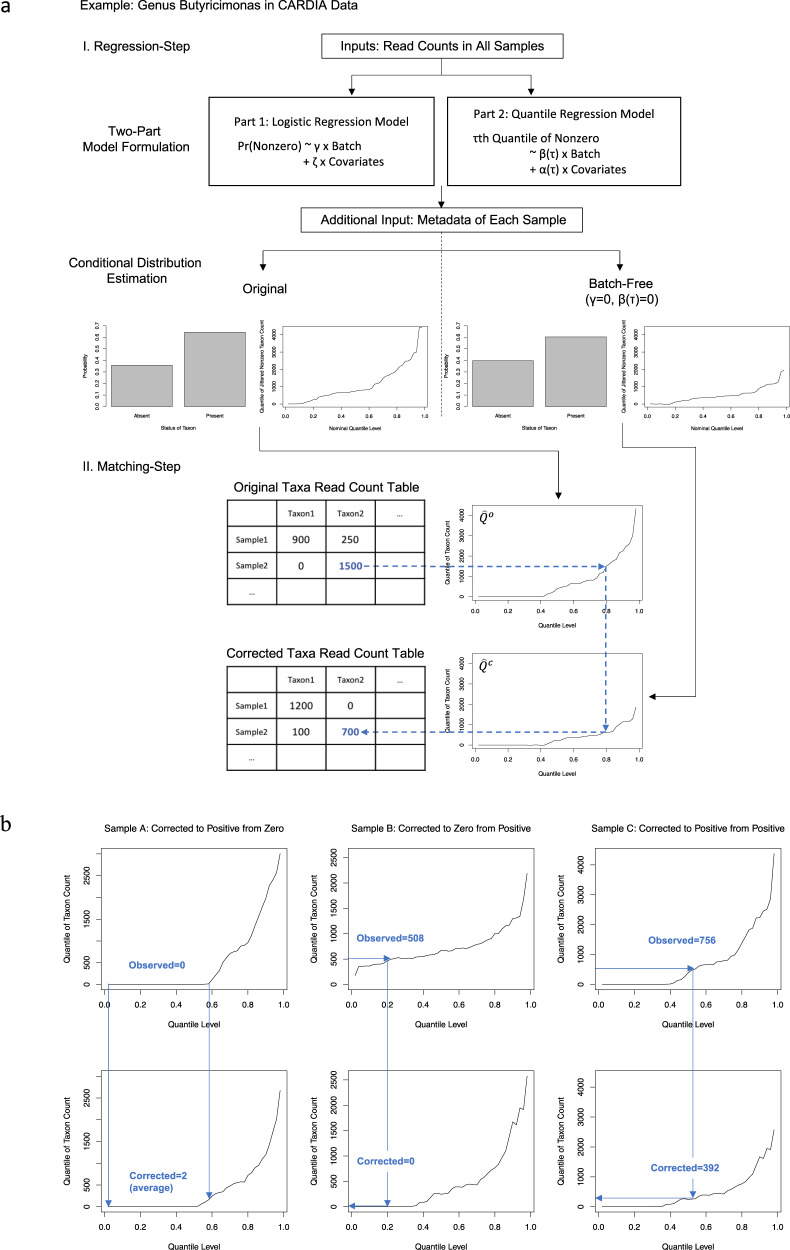
“In particular, we use quantile regression for counts 16,17 to model the read counts among samples for which the microbe is present, and separately model the presence – absence status of the microbe by logistic regression.”
MethodAdjusting batch effects in microarray expression data using empirical Bayes methods
Johnson, W. E., Li, C., & Rabinovic, A. (2007) · Biostatistics · doi:10.1093/biostatistics/kxj037 · Cited by 8,658 · cited 9×
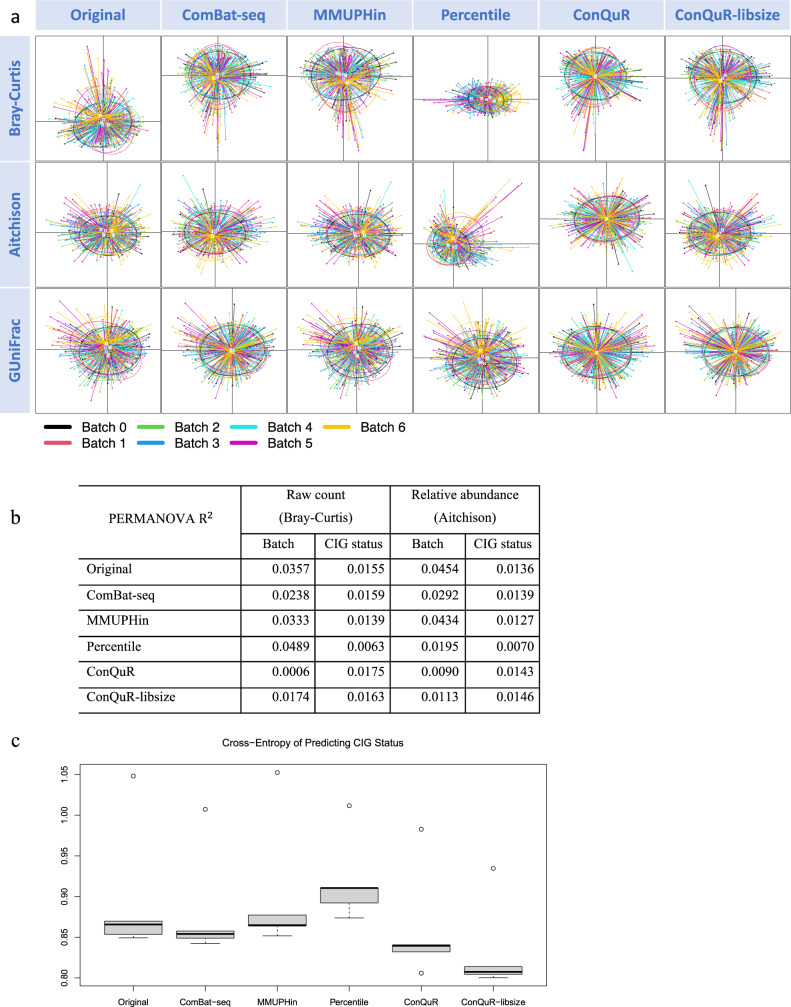
“No DA genera associated with CIG status were found in the original, ComBat-seq, MMUPHin, Percentile, orConQuR-libsize corrected data (adjusting for HPV status, race, and sexual orientation).”
MethodInfluentialA core gut microbiome in obese and lean twins
Turnbaugh, P. J., Hamady, M., Yatsunenko, T., Cantarel, B. L., Duncan, A., Ley, R. E., Sogin, M. L., Jones, W. J., Roe, B. A., Affourtit, J. P., et al. (2009) · Nature · doi:10.1038/nature07540 · Cited by 7,823 · cited 2×
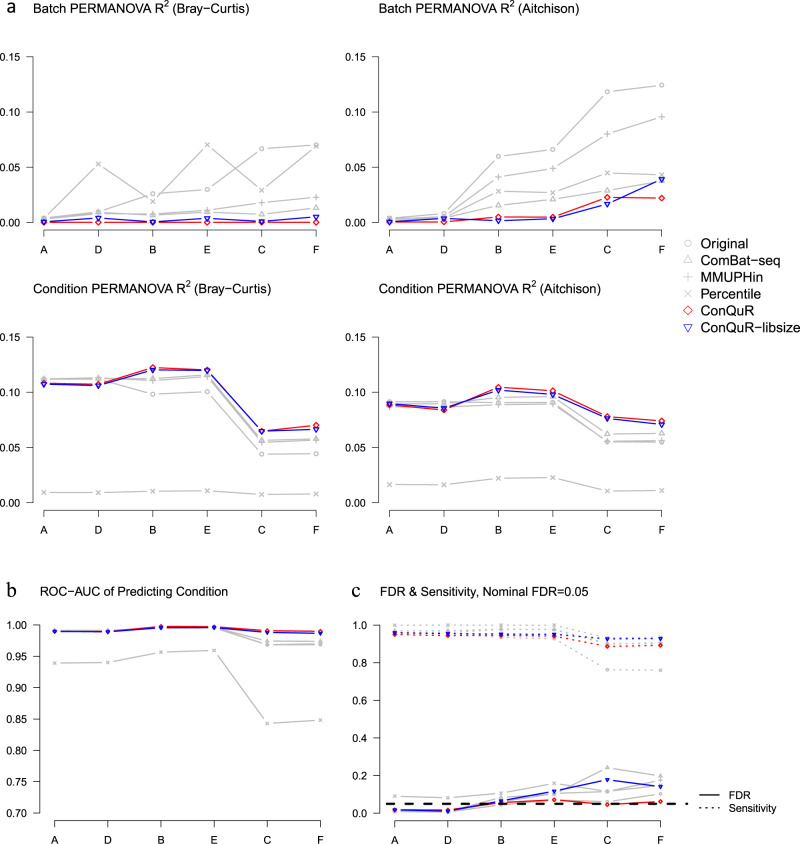
“We assessed ConQuR from three perspectives: (1) how well the batch effects are removed and condition effects are preserved, (2) the ability of corrected read counts to predict Condition, and (3) the false discovery rate (FDR) and sensitivity of subsequent individual-taxon association analysis for Condition.”
MethodA metagenome-wide association study of gut microbiota in type 2 diabetes
Qin, J., Li, Y., Cai, Z., Li, S., Zhu, J., Zhang, F., Liang, S., Zhang, W., Guan, Y., Shen, D., et al. (2012) · Nature · doi:10.1038/nature11450 · Cited by 6,762
Self-citationKoenker, R. (2005) · Cambridge University Press eBooks · doi:10.1017/cbo9780511754098 · Cited by 4,551
Circular analysis in systems neuroscience: the dangers of double dipping
Kriegeskorte, N., Simmons, W. K., Bellgowan, P. S. F., & Baker, C. I. (2009) · Nature Neuroscience · doi:10.1038/nn.2303 · Cited by 2,696 · cited 1×
“Second, ConQuR uses the meta-data twice, in both the correction and subsequent analyses, theoretically leading to over-optimism in association analysis 43 .”
MethodTackling the widespread and critical impact of batch effects in high-throughput data
Leek, J. T., Scharpf, R. B., Bravo, H. C., Simcha, D., Langmead, B., Johnson, W. E., Geman, D., Baggerly, K., & Irizarry, R. A. (2010) · Nature Reviews Genetics · doi:10.1038/nrg2825 · Cited by 2,196 · cited 1×
“Batch effects are not unique to microbiome data 9 , and standard tools have been developed for other genomic technologies, with the most commonly applied approach being ComBat 10 .”
MethodSpecification and testing of some modified count data models
Mullahy, J. (1986) · Journal of Econometrics · doi:10.1016/0304-4076(86)90002-3 · Cited by 1,870
Research works printed but not linked: 1
- Zou H Yuan M Composite quantile regression and the oracle model selection theory Ann. Stat. 2008 36 1108 1126
Cited by
Items 101–156 of 156
Efficient game-theoretic explanations for tree-based ensembles via Owen values
Koh, H. (2026) · Knowledge-Based Systems · doi:10.1016/j.knosys.2026.117279 · Cited by 1
Design, processing, and modeling for longitudinal multiomics microbiome data
Ma, K., Thairu, M. W., & Sankaran, K. (2026) · Frontiers in Cellular and Infection Microbiology · doi:10.3389/fcimb.2026.1837109 · Cited by 1
“RUVg and PLSDA-batch both assume data to be normalized in advance, while ConQuR models raw counts directly through a quantile model.”
InfluentialData science to biologists: Insights into microbiomics
Meenatchi, R., Hassan, S., Priya, P. S., Karamveer, K., Prathiviraj, R., Guru, A., & Arockiaraj, J. (2024) · Elsevier eBooks · doi:10.1016/b978-0-323-91631-8.00017-2 · Cited by 1
ASPIRE: the Amplicon Sequencing Profiler for Investigating Respiratory EcosystemsPreprint
McLaughlin, R. J., Chen, S. Q., Nag, A., Noonan, A. J. C., Bartolomeu, C., Borden, S. A., Lam, S. C., Myers, R. L., & Hallam, S. (2026) · bioRxiv (Cold Spring Harbor Laboratory) · doi:10.64898/2026.08.05.743000 · Cited by 1
“Batch correction, via the ‘ConQuR’ R package (18), produces a corrected count table which is then centered log-ratio (CLR) transformed and visualized with Uniform Manifold Approximation and Projection (UMAP) with Hierarchical Density-Based Spatial Clustering of Applications with Noise (HDBSCAN)…”
Regueira‐Iglesias, A., Blanco‐Pintos, T., Relvas, M., Alonso‐Sampedro, M., Balsa‐Castro, C., & Tomás, I. (2023) · Research Square · doi:10.21203/rs.3.rs-2939271/v1
Multidimensional profile of gut microbiota in a large cohort of stratified rheumatoid arthritisPreprint
He, J., Li, J., Xu, C., Xu, J. Q., Fang, Y., Jin, J., Tian, J., Fu, Z., Zhufeng, Y., Liu, Y., et al. (2024) · Research Square · doi:10.21203/rs.3.rs-3966115/v1
Self-citationAustin, G. I., Kav, A. B., Park, H., Biermann, J., Uhlemann, A., & Korem, T. (2024) · Lecture notes in computer science · doi:10.1007/978-1-0716-3989-4_45
Li, R., Li, M., & Zhao, N. (2024) · Genetic Epidemiology · doi:10.1002/gepi.22596
“However, in practice, microbiome data from distinct studies are so different (see Ling et al. 2022) that it is reasonable to assume that the overall study heterogeneity is always present, which is the assumption we have in this paper.”
Self-citationWang, L., Li, H., Liu, Z., Weng, T. T., Chen, X., Liu, P., & Dong, L. (2024) · Research Square · doi:10.21203/rs.3.rs-5326979/v1
Luo, M., Wei, Y., Jia, J., Li, Y., Zhou, C., Yang, Z., Yu, L., Lu, W., Zhang, H., Zhao, J., et al. (2025) · Food Bioscience · doi:10.1016/j.fbio.2025.106696
Kang, R., Yu, C., Gwon, Y., Lee, S., Yang, J., Jeong, J., Kim, G., Lee, W., Jo, W., Oh, M., et al. (2026) · Journal of Animal Science and Technology · doi:10.5187/jast.2500254
“R 2 indicates the proportion of variance in the dataset that can be explained by the variable [39].”
Calibration of MRI-based reference intervals to new samples
Chen, A. A., Seidlitz, J., Gardner, M., Bethlehem, R. A. I., Dorfschmidt, L., Kafadar, E., Benitez, A. M., Jensen, J. H., Vandekar, S., Satterthwaite, T. D., et al. (2026) · Imaging Neuroscience · doi:10.1162/imag.a.1290 · Cited by 1
Matthews, S. A., Kaminsky, K., Cazares-Nuesser, A. E., Questel, J. M., Blanco‐Bercial, L., Hirai, J., & Ohman, M. D. (2025) · Journal of Biogeography · doi:10.1111/jbi.70115
Akorli, J. E. B., Opoku, M., Appiah-Twum, F., Akpo, M. S., Ismail, R. Y., Boamah, G. Y. K., Obeng-Aboagye, E., Adu-Asamoah, D., & Donkor, I. O. (2024) · Figshare · doi:10.6084/m9.figshare.27078842
Akorli, J. E. B., Opoku, M., Appiah-Twum, F., Akpo, M. S., Ismail, R. Y., Boamah, G. Y. K., Obeng-Aboagye, E., Adu-Asamoah, D., & Donkor, I. O. (2024) · Figshare · doi:10.6084/m9.figshare.27078845
Akorli, J. E. B., Opoku, M., Appiah-Twum, F., Akpo, M. S., Ismail, R. Y., Boamah, G. Y. K., Obeng-Aboagye, E., Adu-Asamoah, D., & Donkor, I. O. (2024) · Figshare · doi:10.6084/m9.figshare.27078836
Akorli, J. E. B., Opoku, M., Appiah-Twum, F., Akpo, M. S., Ismail, R. Y., Boamah, G. Y. K., Obeng-Aboagye, E., Adu-Asamoah, D., & Donkor, I. O. (2024) · Figshare · doi:10.6084/m9.figshare.27078839
Song, Y., Song, X., Liu, X., Jiang, L., & Chai, L. (2026) · Aquatic Toxicology · doi:10.1016/j.aquatox.2026.107742
Identifying unmeasured heterogeneity in microbiome data via quantile thresholding (QuanT)
Lu, J., Satten, G. A., Meyer, K. A., Launer, L. J., Ling, W., & Zhao, N. (2026) · Microbiome · doi:10.1186/s40168-025-02282-9 · Cited by 1
“In the microbiome field, several methods have also been proposed to address batch effects when indicators are known, including approaches such as MMUPHin [6] and DEBIAS-M [7] and ConQuR [8], among others.”
Self-citationTargeting tumour-associated microbiota: a new strategy to hit tumour cells in the lung and breast
Bernardo, G. (2026) · Open Research Online (The Open University) · doi:10.21954/ou.ro.00108964
Vidal, E., Phanthanourak, A. L., Gharib, A., Webel, H. E., Geraldo, J. A., Ayala‐Ruano, S., Cunha, A. F., & Santos, A. (2026) · Nucleic Acids Research · doi:10.1093/nar/gkag227
“State-of-the-art methods for batch effect correction use either normalized counts (Batch Mean Centering (BMC) [ 6 ], ComBat [ 8 ], limma [ 9 ], PLSDA-batch [ 12 ]) or raw counts (ComBat-seq [ 26 ], ConQuR [ 11 ] and ABaCo (ours)).”
Microbiome Landscapes in Squamous Cell Carcinoma Tissue Microenvironments: A Comparative Analysis
Yao, R., Qian, F., Zhao, H., Shen, X., Zhu, Y., & Wang, L. (2026) · Immunity Inflammation and Disease · doi:10.1002/iid3.70406
“Conditional Quantile Regression (ConQuR), a method developed specifically for microbiome data, removed the batch effect [10].”
Phylogeny-informed random forests for human microbiome studies
Koh, H. (2026) · Microbiology Spectrum · doi:10.1128/spectrum.03451-25
Qin, M., Wen, Y., Li, S., Li, S., Li, X., Lin, Y., Hu, L., Xia, H., Pang, Y., & Li, L. (2026) · mSystems · doi:10.1128/msystems.01563-25
Licata, A. G. (2026) · Open Research Online (The Open University) · doi:10.21954/ou.ro.00109330
Multi-omics gut microbiome signatures for treat-to-target management in inflammatory bowel disease
Cai, X. T., Yao, Y., Zheng, Y., & Zhao, X. (2026) · Microbiological Research · doi:10.1016/j.micres.2026.128511
Flemister, A., Blakley, I. C., & Fodor, A. A. (2026) · bioRxiv (Cold Spring Harbor Laboratory) · doi:10.64898/2026.04.03.716326
“Currently, several tools are available to correct for batch correction including ComBat 17 , ConQuR 18 , percnorm 19 , Voom-SNM 20,21 , MMUPHin 22 and PLSDA-batch 23 .”
Self-citationMoving Beyond Mean: Harnessing Big Data for Health Insights by Quantile Regression
Wang, T. (2025) · ICSA book series in statistics · doi:10.1007/978-3-032-06649-7_3 · Cited by 1
Personalized medicine and microbiome integration
Acharya, S., Zafar, S. S., Khan, M. K. A., & Aziz, M. A. (2026) · Elsevier eBooks · doi:10.1016/b978-0-443-40551-8.00018-4
Machine learning applications in microbiome analysis
Farooqui, A. K., & Amir, M. (2026) · Elsevier eBooks · doi:10.1016/b978-0-443-40551-8.00015-9
Zhou, Y., Li, Z., Chu, Y., Zhou, Z., Zhang, T., Ning, Y., Sun, W. L., Yan, J., Yan, Z., & Zhu, A. (2026) · Frontiers in Immunology · doi:10.3389/fimmu.2026.1809221
Self-citationRiedmüller, K., Dyer, J. E., & Ottesen, E. A. (2026) · Microbiology Spectrum · doi:10.1128/spectrum.00288-26
“To better account for cohort variation, we applied a batch correction algorithm from the ConQuR package to our ASV count table prior to any further community-wide alpha and beta diversity analyses (69).”
Pitfalls in human metagenomic analyses
Ryan, F. J. (2026) · Microbiology Australia · doi:10.1071/ma26130
A polymer that reinforces luminal barrier function and attenuates inflammation in murine colitisPreprint
Roesch, L. F. W., Xhumari, J., Tamura, A. M., Ojeda, A. E., Akinsuyi, O., Pedro, D. I., Jobin, C., Yang, Y., Boeno, F. P., Laitano, O., et al. (2026) · Research Square · doi:10.21203/rs.3.rs-8290892/v1
“A non-parametric batch removal model titled “Conditional Quantile Regression” (ConQuR), available through the ConQuR package in R, was utilized for this purpose 102 .”
Wastewater as a predictive resistome surveillance system: from genes to ecological risk
Ximenes, J. C. M. (2026) · Microbiology Independent Research Journal (MIR Journal) · doi:10.18527/20261314764
Yu, J., Wan, Y., Peng, Y., Liang, S., Chan, F. K., Ng, S. C., & Tun, H. M. (2026) · Psychiatry Research · doi:10.1016/j.psychres.2026.117317
Zhu, X., Su, Y., Tian, X., Sun, H., & Lv, X. (2026) · Lecture notes in computer science · doi:10.1007/978-981-92-3485-1_29
Dong, Y., Chen, K., Zheng, H., Liu, W., Yan, L., Luo, Z., Qin, Y., Lv, S., Yang, B., Chen, F., et al. (2026) · Journal for ImmunoTherapy of Cancer · doi:10.1136/jitc-2026-015159
“47 To achieve optimal performance, we tuned the parameters using the “Tune_ ConQuR” function, with group as the key variable and sample type as the covariates.”
Sun, C., Wang, S., Zhang, Q., Liu, R., & Du, Y. (2026) · Bioinformatics · doi:10.1093/bioinformatics/btag538
“Consequently, batch-correction methods designed for microbiome data may differ in accepted input scale, zero handling, covariate adjustment, and modelling assumptions (Ling et al. 2022, Ma et al. 2022, Wang and L ^ e Cao 2023, Austin et al. 2025, Yuan and Wang 2025).”
InfluentialImmunosuppression is associated with loss of airway microbiome resilience in severe COVID-19
Chung, M., Barnett, C. R., Hunger, L., Sulaiman, I., Wu, B. G., Li, Y., Tsay, J.-C. J., Brosnahan, S. B., Chung, C. J., Angel, L., et al. (2026) · Microbiome · doi:10.1186/s40168-026-02462-1
“0 [25] and combined based on conferred resistance category for down-stream analyses.”
Falco Mateus, L., Rosa‐Ribeiro, R., Carraro, E., Figueiredo, D. L. A., & Khalil, N. M. (2026) · Brazilian Archives of Biology and Technology · doi:10.1590/1678-4324-2026260111
Coppini, M., Mauceri, R., Vacca, D., Bertolazzi, G., Caponio, V. C. A., Rodolico, V., Belmonte, B., & Campisi, G. (2026) · International Journal of Molecular Sciences · doi:10.3390/ijms27156873
“To prevent the batch effect from influencing the clustering analysis results, the row count matrix was transformed using the ConQuR R package (v. 2.0) [32].”
InfluentialQi, H., Yu#, T., Liu, W., Jiang, Y., Chen, D., Gao, L., Li, H., & Yurong, T. (2026) · Microbiota Medicine Research · doi:10.1002/mmr3.70010
Cristian, R.-E., Vrâncianu, C. O., Constantin, M., Păun, M., Milea, E. C., Malaescu, D., & Chifiriuc, M. C. (2026) · Gut Microbes · doi:10.1080/19490976.2026.2722482
“226,227 Safety concerns also remain a pressing issue.”
From Public Archive to Reusable Resource: Characterizing Gut Microbiome Metadata in the NCBI SRAPreprint
Oderman, K., Nandi, T., Malas, J., Madduri, R., & Hampton‐Marcell, J. (2026) · bioRxiv (Cold Spring Harbor Laboratory) · doi:10.64898/2026.08.31.742652
“Prior microbiome meta-analyses have shown that study effects can confound disease-associated microbiome signatures and that batch effects must be considered when integrating microbiome datasets across cohorts 1,22,23 .”
Decoding the cancer microbiome: multi-omics, AI, and translational opportunities
Sun, Y., Cheng, O., Ma, A., Shabnaz, S., Huang, X., Zhao, J., Tan, A. C., & Ma, Q. (2026) · Genome biology · doi:10.1186/s13059-026-04284-8
“…procedures, including normalization, batch correction, domain adaptation, supervised feature selection, imbalance correction, model selection, and hyperparameter tuning, should be fitted or optimized strictly within each training split rather than on the full dataset [174, 185, 211–213].”
Belhout, C., Freire, S., Aldeia, C., & Endimiani, A. (2026) · European Journal of Clinical Microbiology & Infectious Diseases · doi:10.1007/s10096-026-05674-3
Mapping Gut Dysbiosis in Alzheimer’s using MLPreprint
Kumar, P. S. (2026) · Research Square · doi:10.21203/rs.3.rs-11197781/v1
Gawdiya, S. (2026) · Artificial Intelligence in Plant Systems · doi:10.1016/j.aips.2026.100005
Wang, K., An, M., & Jiao, X. (2026) · Computational Biology and Chemistry · doi:10.1016/j.compbiolchem.2026.109479
Trentin, A. B., dos Santos, S. L. S., Bendix, A. F., Lopes, L., Mota, T. F. M., de Souza, S. S., Ghisi, N. D. C., & Leite, D. C. D. A. (2026) · Environmental Microbiology Reports · doi:10.1111/1758-2229.70448
Evaluation of harmonization methods to mitigate assay and cohort effects in plasma p‐tau217
Zhang, V. Z., Ferreira, P. C. L., Dong, Y., Minhas, D. S., Povala, G., Bellaver, B., Initiative, A. D. N., Pascoal, T. A., Zeng, X., Karikari, T. K., et al. (2026) · Alzheimer s & Dementia Diagnosis Assessment & Disease Monitoring · doi:10.1002/dad2.70518 · Cited by 1
“26 We further distinguish population-level harmonization approaches, includingmarginalstandardization, IPW,quantile regression, and conditional quantile mapping, which use covariate adjustment to estimate distributions for a specific population.”
Rethinking the tumor microbiome: Methodological challenges and a framework for rigorous research
Zhu, L., Deng, Z., Mou, W., Deng, G., Lu, H., Xu, L., Lin, S., Huang, H., Wu, K., Liang, Q., et al. (2026) · mLife · doi:10.1002/mlf2.70107
“Given the unique nature of microbiome data, specialized tools such as ConQuR and MMUPHin are recommended for batch effect correction 38 .”
Yu, X., He, J., & Liu, M. (2026) · Journal of Neuroimmunology · doi:10.1016/j.jneuroim.2026.579117
Sales, K. M., Schlechte, J., Inglis, E. C., Wang, W., Cho, N. A., Lowry, D. E., MacInnis, M. J., Murias, J. M., & Reimer, R. A. (2026) · Frontiers in Microbiology · doi:10.3389/fmicb.2026.1981808
Terrey, D., Huber, P., Pereira-Flores, E., Pelayo, M. C., Ferguson, R., Dumbrell, A. J., Sweet, M. J., Bani, A., & Metz, S. (2026) · bioRxiv (Cold Spring Harbor Laboratory) · doi:10.64898/2026.11.03.763908
Metadata
- Authors
- Ling, W., Lu, J., Zhao, N., Lulla, A., Plantinga, A. M., Fu, W., Zhang, A., Liu, H., Song, H., Li, Z., Chen, J., Randolph, T. W., Koay, W. L. A., White, J. R., Launer, L. J., Fodor, A. A., Meyer, K. A., & Wu, M. C.
- Affiliations
- Fred Hutch Cancer Center (US)
- Johns Hopkins University (US)
- Williams College (US)
- University of Washington (US)
- University of Florida Health (US)
- Mayo Clinic (US)
- Children's National (US)
- Resphera Biosciences (US)
- National Institutes of Health (US)
- University of North Carolina at Charlotte (US)
- Corresponding author
- Zhao, Ni
- Wu, Michael C.
- ORCID
- Venue
- Nature Communications
- Published
- 2022-09-15
- Volume
- 13
- Issue
- 1
- Pages
- 5418-5418
- ISSN
- 2041-1723 (ISSN-L)
- PMC
- PMC9477887
- OpenAlex
- W4296029444
- Semantic Scholar
- eca23114dd371588e2713d8a81a48c3e91a9957b
- Cited by
- 136
- References
- 46
- Citations by year
- 2026: 43 · 2025: 39 · 2024: 41 · 2023: 12 · 2022: 1
- FWCI
- 7.76
- Type
- journal article
- Language
- en
- Open access
- gold
- doi.org
- Licence
- cc-by
- creativecommons.org/licenses/by/4.0 (tdm)
- creativecommons.org/licenses/by/4.0 (vor)
- Locations
- Nature Communications (publishedVersion, cc-by)
- PubMed Central (publishedVersion, cc-by)
- PubMed (publishedVersion)
- RePEc: Research Papers in Economics (submittedVersion)
- DOAJ (DOAJ: Directory of Open Access Journals) (submittedVersion, cc-by-sa)
- Funders
- National Heart, Lung, and Blood Institute (R01HL155417, HHSN268201800004I, HHSN268201800005I, K01HL127159, and HHSN268201800007I, HHSN268201800006I, HHSN268201800007I, HHSN268201800003I)
- National Institute of General Medical Sciences (R01GM123014, R01GM129512)
- Topics
- Life Sciences › Biochemistry, Genetics and Molecular Biology › Molecular Biology › Gene expression and cancer classification
- Life Sciences › Biochemistry, Genetics and Molecular Biology › Molecular Biology › Gut microbiota and health
- Life Sciences › Biochemistry, Genetics and Molecular Biology › Molecular Biology › Genomics and Phylogenetic Studies
- Keywords
- batch effects, microbiome data, conditional quantile regression, two-part model, zero-inflated count data, overdispersion, nonparametric models, batch effect correction
- MeSH terms
- Research Design, Microbiota
About these checks
Registry, retraction, Cites and statistics results are computed, not judged, with one exception: a printed reference that no index lists is read once by a model before it counts as a citation error. Claims are extracted by a model and kept only when their quote appears verbatim in the text; each cited source is then checked, with a model’s help, for whether it says what the claim relies on. Those verdicts can be wrong — read the claim’s quote and the cited source before relying on one.
Statistics and arithmetic are recomputed, not judged.
Confidence bands are shown only for fields calibrated on our annotated test set. None is calibrated yet, so no band is shown.
What counts as a claim ›How we measure confidence ›How we check this ›
Are you an author, or do you see a problem with this page? Request a review
Data sources
Bibliographic data: Semantic Scholar, OpenAlex, Crossref.
Contains information from the Semantic Scholar Academic Graph Datasets, made available under the ODC Attribution License (ODC-BY 1.0).
Semantic Scholar’s data is described in: Kinney, R., et al. (2023). The Semantic Scholar Open Data Platform. arXiv:2301.10140.
