

The DOI matches its Crossref record; 83 of the 83 references it cites were found in a registry or an index.
EZH2-H3K27me3 mediated KRT14 upregulation promotes TNBC peritoneal metastasis
Open accessPublished version of a preprint
Abstract
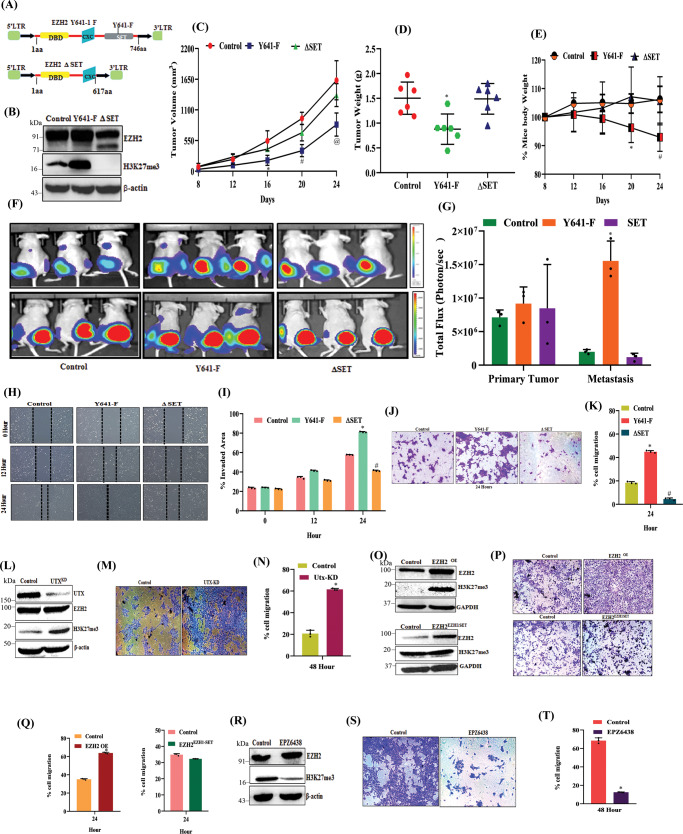
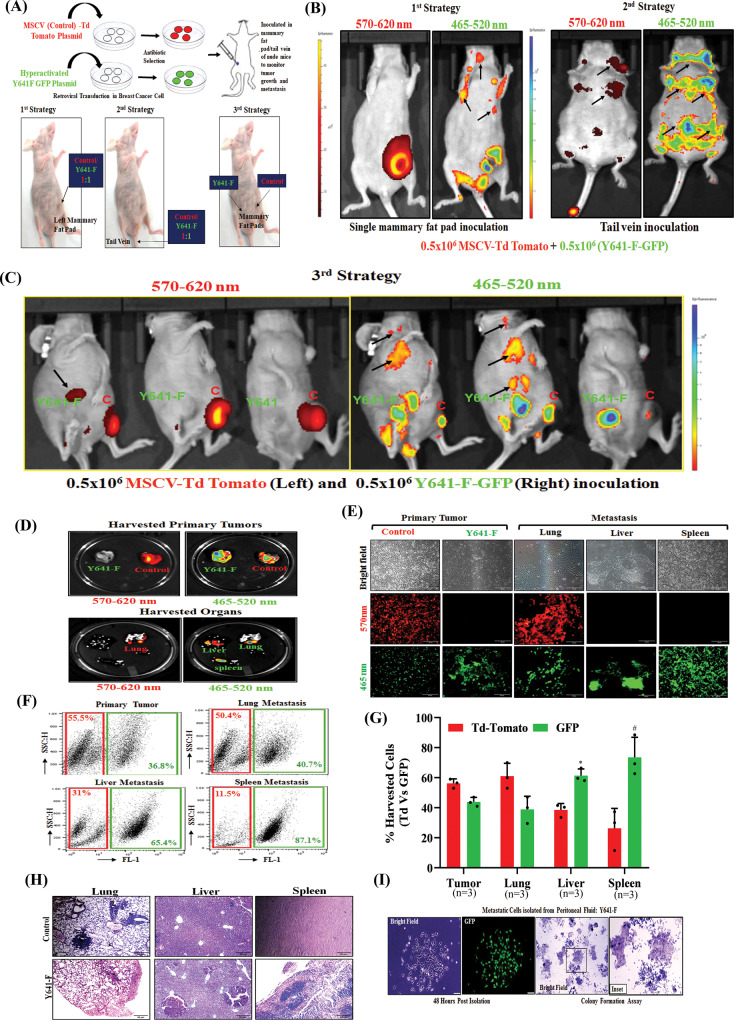
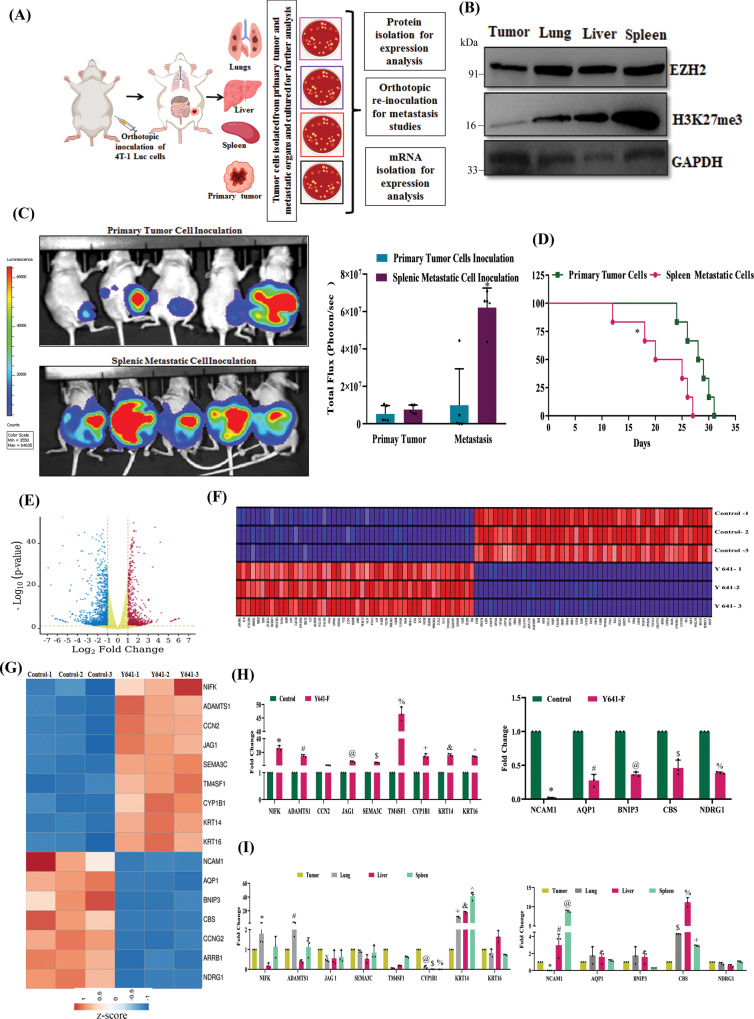
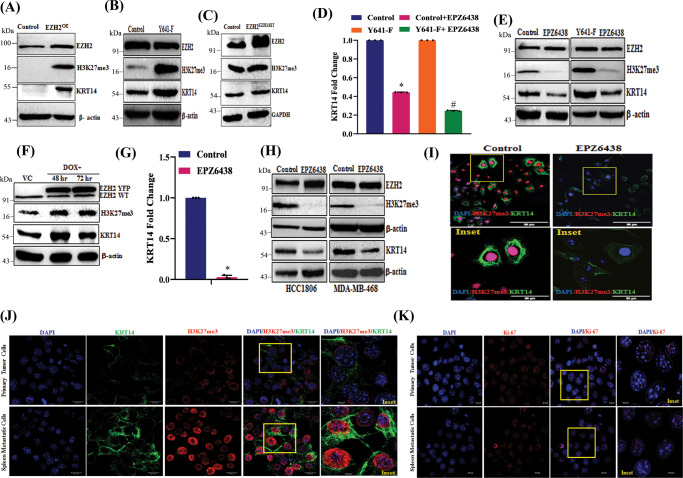
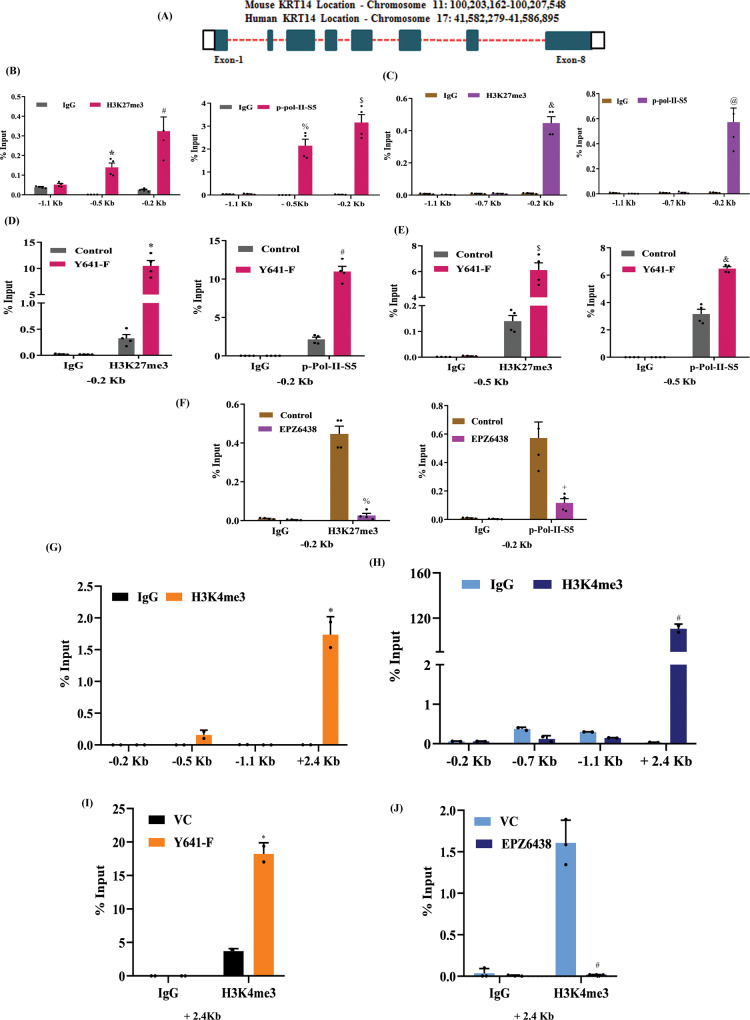
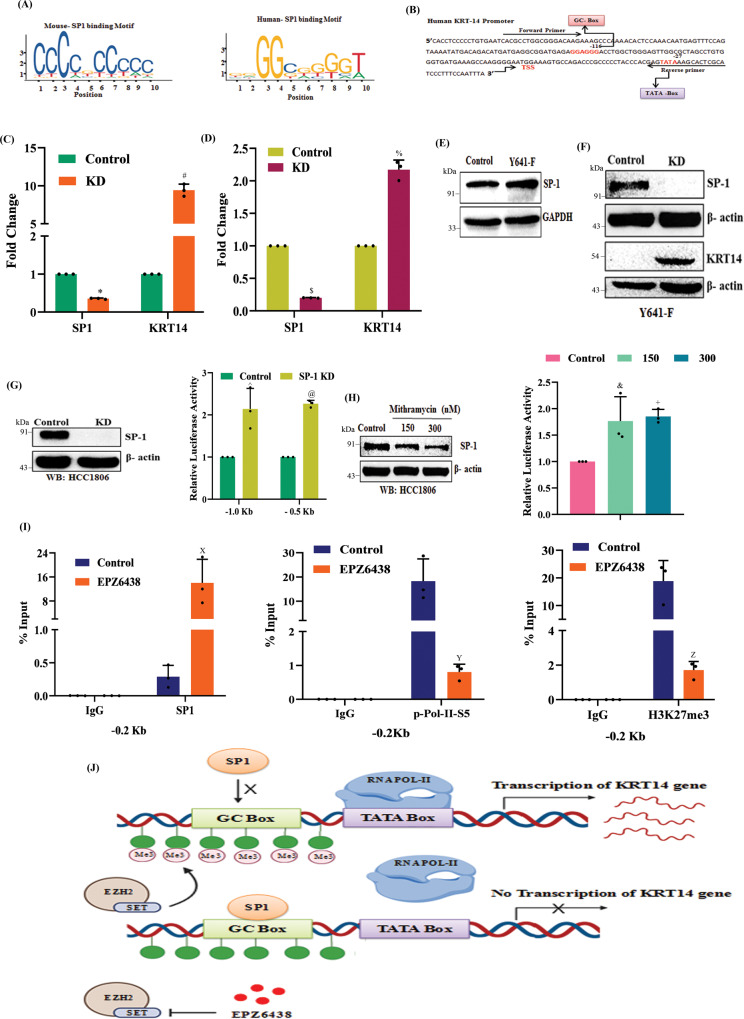
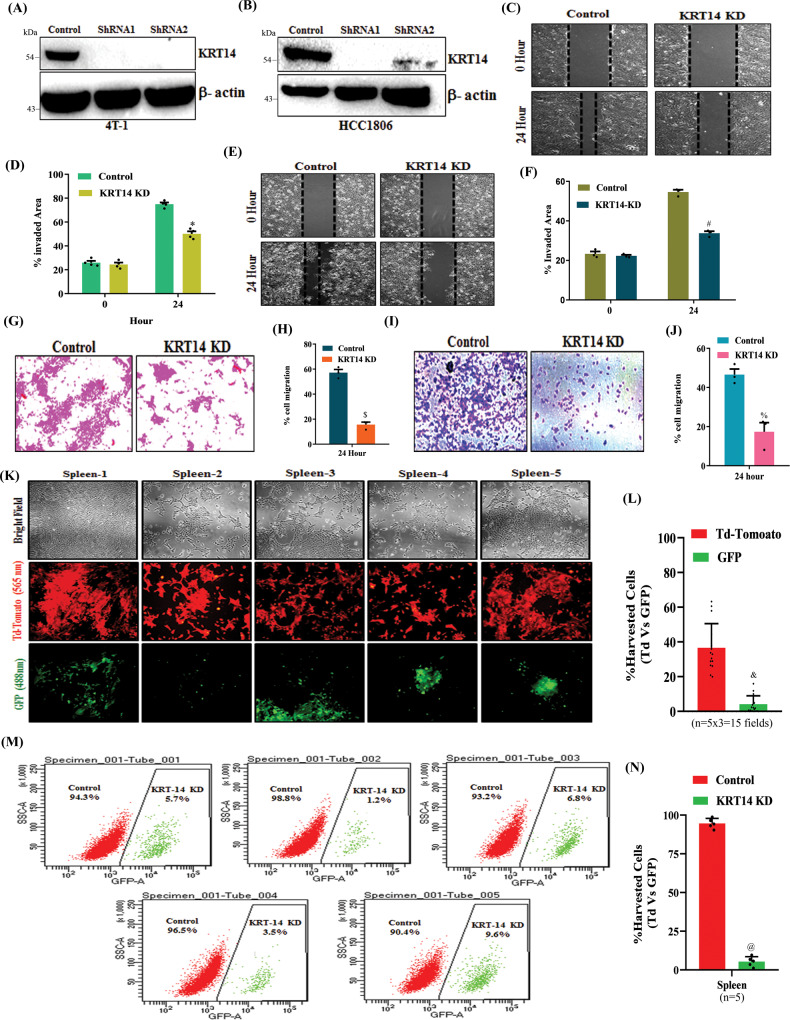
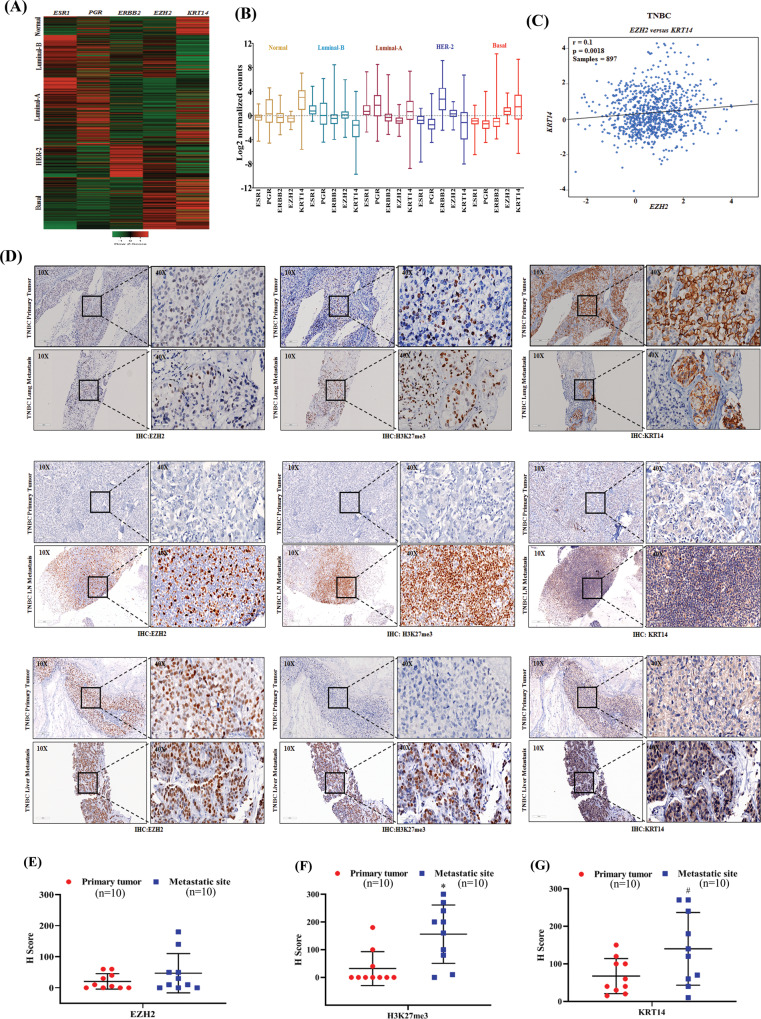
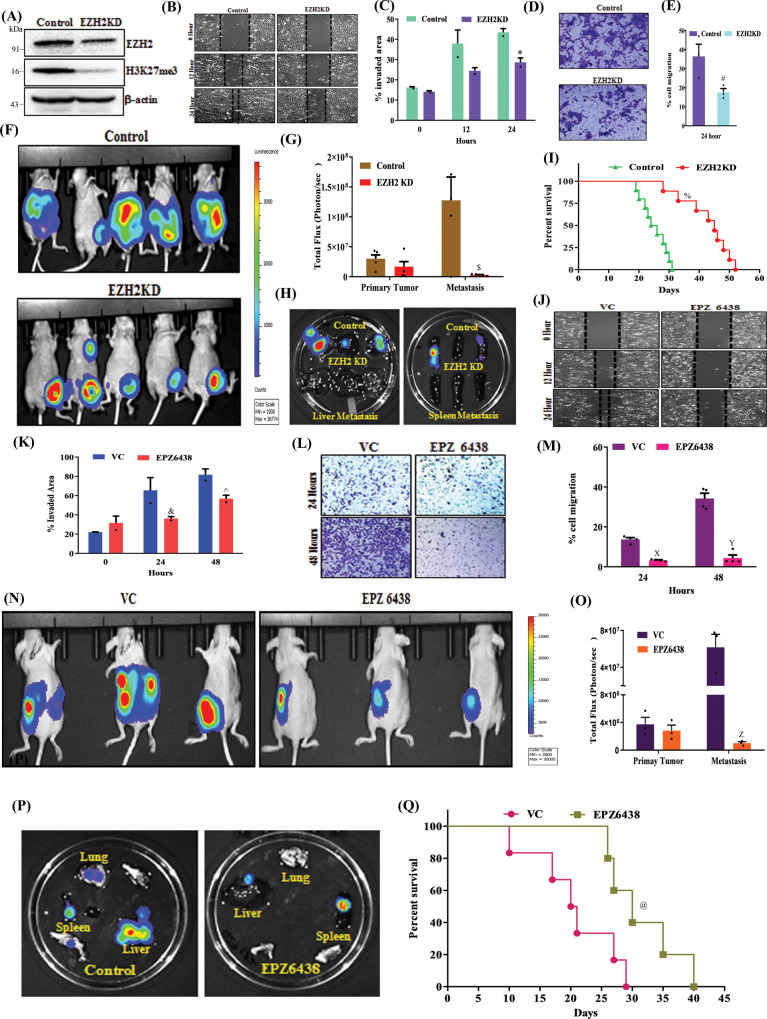
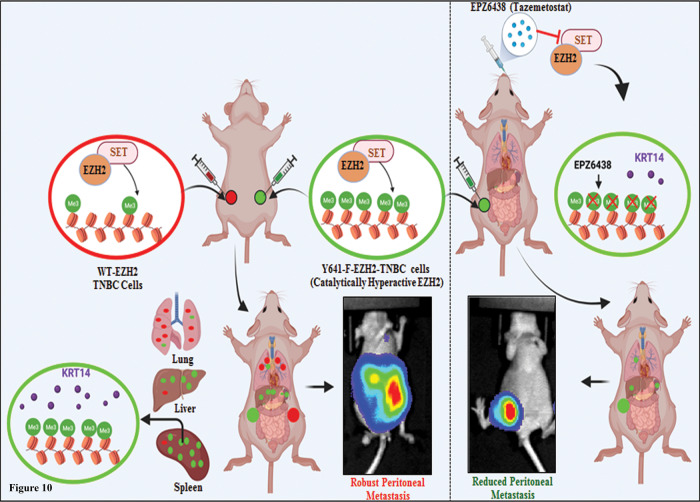
Triple-Negative Breast Cancer (TNBC) has a poor prognosis and adverse clinical outcomes among all breast cancer subtypes as there is no available targeted therapy. Overexpression of Enhancer of zeste homolog 2 (EZH2) has been shown to correlate with TNBC's poor prognosis, but the contribution of EZH2 catalytic (H3K27me3) versus non-catalytic EZH2 (NC-EZH2) function in TNBC progression remains elusive. We reveal that selective hyper-activation of functional EZH2 (H3K27me3) over NC-EZH2 alters TNBC metastatic landscape and fosters its peritoneal metastasis, particularly splenic. Instead of H3K27me3-mediated repression of gene expression; here, it promotes KRT14 transcription by attenuating binding of repressor SP1 to its promoter. Further, KRT14 loss significantly reduces TNBC migration, invasion, and peritoneal metastasis. Consistently, human TNBC metastasis displays positive correlation between H3K27me3 and KRT14 levels. Finally, EZH2 knockdown or H3K27me3 inhibition by EPZ6438 reduces TNBC peritoneal metastasis. Altogether, our preclinical findings suggest a rationale for targeting TNBC with EZH2 inhibitors.
Overview
The claims and statistics of this paper haven’t been checked yet.
Run the check — free, no account needed. It reads the open-access text and checks the sources it cites.
Integrity signals
Registry
Cites
Statistics
Figures
Verification
Claims the paper makes
The claims and statistics of this paper haven’t been checked yet.
Run the check — free, no account needed. It reads the open-access text and checks the sources it cites.
Claims other papers make about this one
Each is checked against this paper’s own text: does it say what the citing paper says it does?
The source backs part of the claim, not all of it — or backs it for a different population, condition or comparison.
In the citing paper
“Dysregulation of this enzymatic balance can therefore result in persistent epigenetic alterations, providing a mechanistic foundation for maladaptive transcriptional programs associated with stress-related psychiatric disorders, including depression (Verma et al., 2022).”
From Histone modifications and depression: epigenetic mechanisms, therapeutic targets, and translational outlook (2026) · cites this paper as Verma et al., 2022
Experimental — accuracy not yet measuredThe source backs part of the claim, not all of it — or backs it for a different population, condition or comparison.
In the citing paper
“Repressive marks such as H3K9me3 and H3K27me3 are particularly relevant, as they are strongly associated with transcriptional silencing and have been implicated in stress-induced depressive phenotypes (Verma et al., 2022).”
From Histone modifications and depression: epigenetic mechanisms, therapeutic targets, and translational outlook (2026) · cites this paper as Verma et al., 2022
Experimental — accuracy not yet measuredThe cited source says what the claim attributes to it.
In the citing paper
“Although methylation also contributes to transcriptional regulation (e.g., H3K4me3 as an activating mark and H3K27me3 as a repressive mark) (Verma et al., 2022), acetylation provides a rapid and reversible mechanism particularly relevant for neural activity and stress-related gene expression.”
From Histone modifications and depression: epigenetic mechanisms, therapeutic targets, and translational outlook (2026) · cites this paper as Verma et al., 2022
Self-check
Percentages, sums and reported differences re-computed from the paper’s own numbers.
The self-check needs the paper’s full text.
Citations
Cites
Bray, F., Ferlay, J., Soerjomataram, I., Siegel, R. L., Torre, L. A., & Jemal, A. (2018) · CA: A Cancer Journal for Clinicians · doi:10.3322/caac.21492 · Cited by 84,109
Subramanian, A., Tamayo, P., Mootha, V. K., Mukherjee, S., Ebert, B. L., Gillette, M. A., Paulovich, A., Pomeroy, S. L., Golub, T. R., Lander, E. S., et al. (2005) · Proceedings of the National Academy of Sciences · doi:10.1073/pnas.0506580102 · Cited by 53,625
STAR: ultrafast universal RNA-seq aligner
Dobin, A., Davis, C. A., Schlesinger, F., Drenkow, J., Zaleski, C., Jha, S., Batut, P., Chaisson, M., & Gingeras, T. R. (2013) · Bioinformatics · doi:10.1093/bioinformatics/bts635 · Cited by 51,709
Robinson, M. D., McCarthy, D. J., & Smyth, G. K. (2010) · Bioinformatics · doi:10.1093/bioinformatics/btp616 · Cited by 41,364
Nishimura, R., Osako, T., Nishiyama, Y., Tashima, R., Nakano, M., Fujisue, M., Toyozumi, Y., & Arima, N. (2013) · Oncology · doi:10.1159/000353099 · Cited by 13,239
Shrestha, S., & Offer, S. M. (2016) · Medical Epigenetics · doi:10.1159/000444713 · Cited by 8,951
Lehmann, B. D., Bauer, J. A., Chen, X., Sanders, M. E., Chakravarthy, A. B., Shyr, Y., & Pietenpol, J. A. (2011) · Journal of Clinical Investigation · doi:10.1172/jci45014 · Cited by 5,592
Triple-negative breast cancer: clinical features and patterns of recurrence
Dent, R., Trudeau, M., Pritchard, K. I., Hanna, W. M., Kahn, H. K., Sawka, C. A., Lickley, L. A., Rawlinson, E., Sun, P., & Narod, S. A. (2007) · Clinical Cancer Research · doi:10.1158/1078-0432.ccr-06-3045 · Cited by 5,091
A Perspective on Cancer Cell Metastasis
Chaffer, C. L., & Weinberg, R. A. (2011) · Science · doi:10.1126/science.1203543 · Cited by 4,905
Visualizing and interpreting cancer genomics data via the Xena platform
Goldman, M. J., Craft, B., Hastie, M., Repečka, K., McDade, F., Kamath, A., Banerjee, A., Luo, Y., Rogers, D., Brooks, A. N., et al. (2020) · Nature Biotechnology · doi:10.1038/s41587-020-0546-8 · Cited by 4,481
Research works printed but not linked: 1
- Verma A, et al Epigenetic modulator EZH2 governs CSC properties and alters metastatic cascade. in Cancer Medicine. (Wiley 111 River St, Hoboken, NJ USA) 07030–5774 (2018).
Cited by
Sorted by citations
Items 101–149 of 149
Gallegos‐Arreola, M. P., Garibaldi-Ríos, A. F., Magaña‐Torres, M. T., Figuera, L. E., Gómez‐Meda, B. C., Zúñiga‐González, G. M., Puebla‐Pérez, A. M., Carrillo-Dávila, I. A., Reynoso, M. A. R., Dávalos‐Rodríguez, I. P., et al. (2024) · Diseases · doi:10.3390/diseases12110276 · Cited by 1
Yang, Q., Fu, Y., Feng, W., Yu, X., Xu, N., Yang, H., & Zhang, X. (2024) · Research Square · doi:10.21203/rs.3.rs-4200023/v1 · Cited by 1
Nalla, K., Chatterjee, B., Poyya, J., Swain, A., Ghosh, K., Pan, A., Joshi, C. G., Manavathi, B., & Kanade, S. R. (2024) · bioRxiv (Cold Spring Harbor Laboratory) · doi:10.1101/2024.05.22.595443 · Cited by 1
Saini, K. K., Chaturvedi, P., Sinha, A., Singh, M. P., Khan, M. A., Verma, A., Nengroo, M. A., Satrusal, S. R., Meena, S., Singh, A., et al. (2023) · bioRxiv (Cold Spring Harbor Laboratory) · doi:10.1101/2023.03.28.534659
Self-citationTREM2+ macrophages regulate suppressive tumor microenvironment in TNBCPreprint
Sun, X., Yu, Z., Wang, K., Yu, Y., Wang, X., Kang, N., & Cao, X. (2023) · Research Square · doi:10.21203/rs.3.rs-3294443/v1
Sinha, A., Saini, K. K., Tripathi, K., Khan, M. A., Satrusal, S. R., Verma, A., Mandal, B., Rai, P., Meena, S., Nengroo, M. A., et al. (2023) · bioRxiv (Cold Spring Harbor Laboratory) · doi:10.1101/2023.10.16.562466
Self-citationWang, S., Gao, P., Wang, X., Duan, L., He, X., & Qu, J. (2024) · International Urology and Nephrology · doi:10.1007/s11255-023-03923-4
Ye, H., Fan, X., Yang, E., Ding, Q., Zheng, A., Ding, X., & Wu, S. (2024) · Research Square · doi:10.21203/rs.3.rs-4019951/v1
Zhu, S., Tao, M., Li, Y., Wang, X., Zhao, Z., Liu, Y., Li, Q., Li, Q., Lu, Y., Si, Y., et al. (2023) · Figshare · doi:10.6084/m9.figshare.23730796
Zhang, Y., Wang, T., Chen, X., Song, J., Yang, M., Jiang, H., Kong, X., Wang, Y., & Gao, J. (2024) · Research Square · doi:10.21203/rs.3.rs-4665127/v1
Chen, J., Xu, L. L., Li, W., Meiling, S., Chen, Y., Qiu, T. H., Wu, Y., Lv, X., Liu, F., & Fan, H. (2024) · Biochemical Genetics · doi:10.1007/s10528-024-10984-2
Propofol alleviates ropivacaine-induced neurotoxicity through the MALAT1/EZH2/BDNF axis
Liu, X., & Chen, C. (2025) · Molecular & Cellular Toxicology · doi:10.1007/s13273-024-00503-0
Wan, X., Wang, K., Ren, P., Zhang, X., & Sun, F. (2025) · Current Medicinal Chemistry · doi:10.2174/0109298673362736250702043230
Sokolowska, K. E., Antoniewski, J., Sobalska‐Kwapis, M., Strapagiel, D., Lubiński, J., Huzarski, T., & Wojdacz, T. K. (2025) · Research Square · doi:10.21203/rs.3.rs-7301339/v1
EZH2 Inhibition Induces a Metabolic Stress Response Sensitizing TNBC to Glutaminase TargetingPreprint
Porras, L., Fukano, M., Gironne, A.-S., Quadri, E., Alzial, G., Philippeau, H., Aleassa, Y., Monast, A., Gorse, F., Saint-Arnaud, M., et al. (2025) · bioRxiv (Cold Spring Harbor Laboratory) · doi:10.1101/2025.09.04.674332
Fan, H., & Luo, L. (2024) · Journal of BioMed Research and Reports · doi:10.59657/2837-4681.brs.24.103
Zhu, S., Tao, M., Li, Y., Wang, X., Zhao, Z., Liu, Y., Li, Q., Li, Q., Lu, Y., Si, Y., et al. (2023) · Figshare · doi:10.6084/m9.figshare.23730790
Zhu, S., Tao, M., Li, Y., Wang, X., Zhao, Z., Liu, Y., Li, Q., Li, Q., Lu, Y., Si, Y., et al. (2023) · Figshare · doi:10.6084/m9.figshare.23730778
Zhu, S., Tao, M., Li, Y., Wang, X., Zhao, Z., Liu, Y., Li, Q., Li, Q., Lu, Y., Si, Y., et al. (2023) · Figshare · doi:10.6084/m9.figshare.23730787
Zhu, S., Tao, M., Li, Y., Wang, X., Zhao, Z., Liu, Y., Li, Q., Li, Q., Lu, Y., Si, Y., et al. (2023) · Figshare · doi:10.6084/m9.figshare.23730781
Dong, J., Kong, L., Wang, S., Xia, M., Zhang, Y., Wu, J., Yang, F., Zuo, S., & Wei, J. (2024) · Figshare · doi:10.6084/m9.figshare.25530174
Zhu, S., Tao, M., Li, Y., Wang, X., Zhao, Z., Liu, Y., Li, Q., Li, Q., Lu, Y., Si, Y., et al. (2023) · Figshare · doi:10.6084/m9.figshare.23730793
Zhu, S., Tao, M., Li, Y., Wang, X., Zhao, Z., Liu, Y., Li, Q., Li, Q., Lu, Y., Si, Y., et al. (2023) · Figshare · doi:10.6084/m9.figshare.23730784
Wu, S., & Zhang, W. (2026) · Toxicology and Applied Pharmacology · doi:10.1016/j.taap.2026.117714 · Cited by 1
Ren, N., Qu, X., Wang, Z., Zhang, X., Hu, H., & Bai, X. (2026) · Central European Journal of Immunology · doi:10.5114/ceji/205599
Song, Y., Wei, H., Zhai, J., Dai, P., & Han, L. (2026) · World Journal of Surgical Oncology · doi:10.1186/s12957-026-04271-0
Mitochondrial dynamics: A promising tool for personalized TNBC management
Mishra, H., Yadav, A. K., Kushwaha, V. B., & Singh, M. P. (2026) · Genes & Diseases · doi:10.1016/j.gendis.2026.102157 · Cited by 2
Self-citationHuo, Z., Sun, W., Lou, C., & Yang, T. (2026) · Discover Oncology · doi:10.1007/s12672-026-04824-5
Non-genetic regulation of chemopersistence in Triple Negative Breast Cancers
Baudre, L. (2024) · theses.fr (ABES) · doi:10.70675/6422f0bbza832z4dcfza920zaa55605f8a31
Han, L., Gao, C., Liu, J., Fei, D., Cui, X., & An, C. (2026) · European journal of medical research · doi:10.1186/s40001-026-04507-5
UTY (KDM6C) in Cancer: Epigenetic Regulation, Tumour Suppressor Functions, and Clinical Implications
Chopra, C., Prasad, C. P., & Kumar, M. (2026) · Epigenomes · doi:10.3390/epigenomes10020031
Arginine methylation of human DNA topoisomerase I by PRMT5 facilitates DNA relaxation
Basu, S., Bhattacharyya, A., Khan, M. A., Pal, U., Chowdhuri, S. P., Satrusal, S. R., Baranello, L., Datta, D., & Das, B. B. (2026) · Nucleic Acids Research · doi:10.1093/nar/gkag503
Self-citationThe microbiome and its impact on the epigenome in cancer
Kapoor, A., Kumar, R., Gupta, A., Sansar, B., Mishra, B. K., Chaudhary, M., Rungta, A., Kallapura, G., & Prabhash, K. (2026) · Frontiers in Epigenetics and Epigenomics · doi:10.3389/freae.2026.1857307
Choline metabolism drives metastasis in BRCA1-deficient ovarian cancers by activating FAM3C
Wang, C., Xie, X., Li, J., Zhu, J., Sun, B., Wu, Y., Zhang, W., Li, D., & Chen, G. (2026) · Nature Communications · doi:10.1038/s41467-026-74652-2
HNMT promotes hepatocellular carcinoma progression by up-regulation of VTN/ECM axis
Qu, J., Ye, D., Sun, Y., Fang, T., He, X., Ge, Q., Li, Z., Cao, X., Wang, Q., Li, G., et al. (2026) · Current Molecular Pharmacology · doi:10.1016/j.cmp.2026.06.003
The role of flavonoids in epigenetic regulation—a mechanism behind their anti-cancer potential
Kashyap, D., Sharma, R., Munda, V. S., Garg, V. K., Thakur, S., Sharma, D., Okpala, C. O. R., & Dhiman, V. (2026) · Elsevier eBooks · doi:10.1016/b978-0-443-42855-5.00013-3
Beyond oncogenesis: The emerging role of EZH2 in tumor microenvironment
Hamad, J., Tarabain, N. E., Soufan, F., Fayyad‐Kazan, M., Issa, N., & Fayyad‐Kazan, H. (2026) · Critical Reviews in Oncology/Hematology · doi:10.1016/j.critrevonc.2026.105454
Zhang, Z.-X., Zhao, W., Xiao, Y.-X., Shen, X.-L., Ming, M., Zhou, M.-S., & 贾慧 (2026) · Biochemical Pharmacology · doi:10.1016/j.bcp.2026.118262
Cheng, H., Chen, Y., Liu, P.-Y., Jin, X., Qu, Y., Liu, B., & Ai-zhuo, L. (2026) · Acta Pharmacologica Sinica · doi:10.1038/s41401-026-01892-9 · Cited by 1
Satrusal, S. R., Banerjee, A., Biswas, A., Srivastava, G., Chatterjee, I., Khan, M. A., Mandal, B., Tripathi, K., Sinha, A., Verma, A., et al. (2026) · Molecular Therapy · doi:10.1016/j.ymthe.2026.08.034 · Cited by 1
Self-citationLi, J., Hu, J., Liang, S., Luo, J., & Rao, Y. (2026) · Journal of Neuroimmune Pharmacology · doi:10.1007/s11481-026-10311-z
Pitinanon, K., Kusalasaiyanon, C., Hawhan, W., Liu, Y., Taechawattananant, P., & Yodsurang, V. (2026) · Pharmacological Reports · doi:10.1007/s43440-026-00895-x
Wang, N., Xie, J., Zhang, R., Yang, C., Ren, W., & Shu, L. (2026) · Autoimmunity · doi:10.1080/08916934.2026.2722938
He, Y., Song, Y., Xie, B., Yang, J., Zhu, J., Xia, P., Zhao, L., Xu, D., Wang, H., & Tian, W. (2026) · Journal of Agricultural and Food Chemistry · doi:10.1021/acs.jafc.6c06392
Dou, J., 薛瑞成, Gao, W., & Liang, F. (2026) · Cells · doi:10.3390/cells15191786
A systematic single-cell analysis of enhancer RNAs across human and mouse
Rong, H., Liu, H., Li, Y., Yu, X., Du, J., Zuo, J., Meng, Z., Gao, L., Li, X., Tao, Y., et al. (2026) · Nucleic Acids Research · doi:10.1093/nar/gkag914
Copper complexes in the triple-negative breast cancer landscape: advances and opportunities
Lima, P. M. A. P., de Matos, A. C. P., Guimarães, G. D. S., Barbosa, L., & Araújo, T. G. (2026) · Frontiers in Molecular Biosciences · doi:10.3389/fmolb.2026.1931263
Epigenetics in development, disease, and therapy: from mechanisms to clinical interventions
Ren, Y., Yang, L., Fei, B., Guo, R., Huang, J., Xu, Z., Wang, R., Zhang, P., Cao, D., Chen, P., et al. (2026) · Science China Life Sciences · doi:10.1007/s11427-025-3356-1
Metadata
- Authors
- Verma, A., Singh, A., Singh, M. P., Nengroo, M. A., Saini, K. K., Satrusal, S. R., Khan, M. A., Chaturvedi, P., Sinha, A., Meena, S., Singh, A. K., & Datta, D.
- Affiliations
- Central Drug Research Institute (IN)
- Corresponding author
- Datta, Dipak
- ORCID
- Venue
- Nature Communications
- Published
- 2022-11-29
- Volume
- 13
- Issue
- 1
- Pages
- 7344-7344
- ISSN
- 2041-1723 (ISSN-L)
- PMC
- PMC9708848
- OpenAlex
- W4310639035
- Cited by
- 148
- References
- 83
- Citations by year
- 2026: 36 · 2025: 46 · 2024: 44 · 2023: 21
- FWCI
- 9.14
- Type
- journal article
- Language
- en
- Open access
- gold
- doi.org
- Locations
- Nature Communications (publishedVersion, cc-by)
- bioRxiv (Cold Spring Harbor Laboratory) (acceptedVersion, cc-by-nc-nd)
- PubMed Central (publishedVersion, cc-by)
- PubMed (publishedVersion)
- RePEc: Research Papers in Economics (submittedVersion)
- DOAJ (DOAJ: Directory of Open Access Journals) (submittedVersion, cc-by-sa)
- Funders
- Council of Scientific and Industrial Research (HCP40)
- Topics
- Life Sciences › Biochemistry, Genetics and Molecular Biology › Molecular Biology › Epigenetics and DNA Methylation
- Health Sciences › Medicine › Oncology › Cancer Cells and Metastasis
- Life Sciences › Biochemistry, Genetics and Molecular Biology › Molecular Biology › Mechanisms of cancer metastasis
- Keywords
- triple-negative breast cancer, EZH2, H3K27me3, keratin 14, peritoneal carcinomatosis, splenic metastasis, Sp1, transcriptional activation, tumor cell migration and invasion, EZH2 inhibitors
- MeSH terms
- Enhancer of Zeste Homolog 2 Protein, Histones, Humans, Peritoneal Neoplasms, Up-Regulation, Keratin-14, Triple Negative Breast Neoplasms
About these checks
Registry, retraction, Cites and statistics results are computed, not judged, with one exception: a printed reference that no index lists is read once by a model before it counts as a citation error. Claims are extracted by a model and kept only when their quote appears verbatim in the text; each cited source is then checked, with a model’s help, for whether it says what the claim relies on. Those verdicts can be wrong — read the claim’s quote and the cited source before relying on one.
Statistics and arithmetic are recomputed, not judged.
Confidence bands are shown only for fields calibrated on our annotated test set. None is calibrated yet, so no band is shown.
What counts as a claim ›How we measure confidence ›How we check this ›
Are you an author, or do you see a problem with this page? Request a review
