

The DOI matches its Crossref record; 76 of the 78 references it cites were found in a registry or an index, and 2 are not checked yet.
Quantifying the local adaptive landscape of a nascent bacterial community
Open accessPublished version of a preprint
Abstract
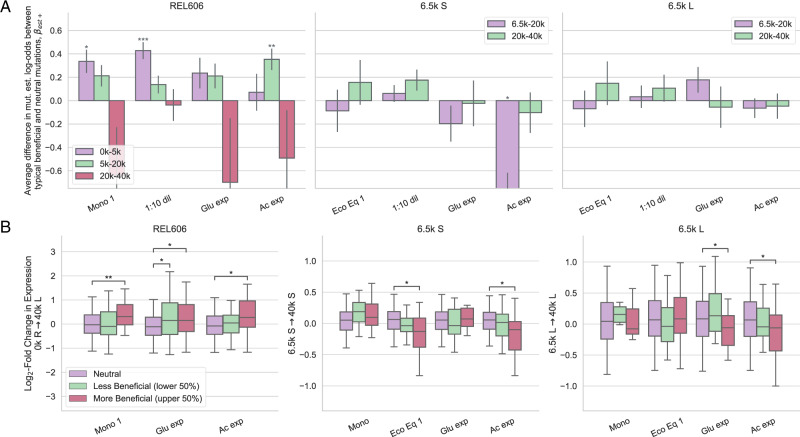
The fitness effects of all possible mutations available to an organism largely shape the dynamics of evolutionary adaptation. Yet, whether and how this adaptive landscape changes over evolutionary times, especially upon ecological diversification and changes in community composition, remains poorly understood. We sought to fill this gap by analyzing a stable community of two closely related ecotypes (“L” and “S”) shortly after they emerged within the E. coli Long-Term Evolution Experiment (LTEE). We engineered genome-wide barcoded transposon libraries to measure the invasion fitness effects of all possible gene knockouts in the coexisting strains as well as their ancestor, for many different, ecologically relevant conditions. We find consistent statistical patterns of fitness effect variation across both genetic background and community composition, despite the idiosyncratic behavior of individual knockouts. Additionally, fitness effects are correlated with evolutionary outcomes for a number of conditions, possibly revealing shifting patterns of adaptation. Together, our results reveal how ecological and epistatic effects combine to shape the adaptive landscape in a nascent ecological community.
Overview
The claims and statistics of this paper haven’t been checked yet.
Run the check — free, no account needed. It reads the open-access text and checks the sources it cites.
Integrity signals
Registry
Cites
Statistics
Figures
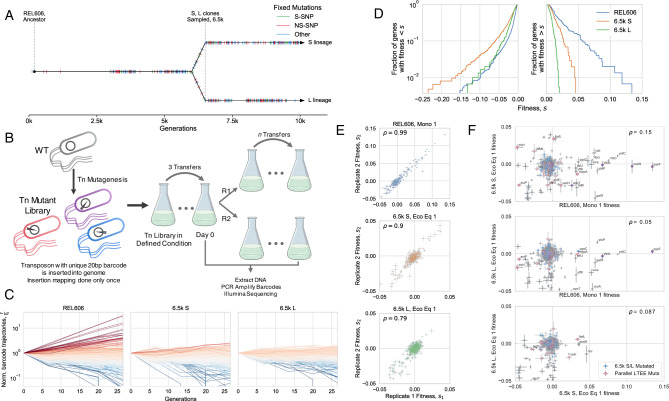
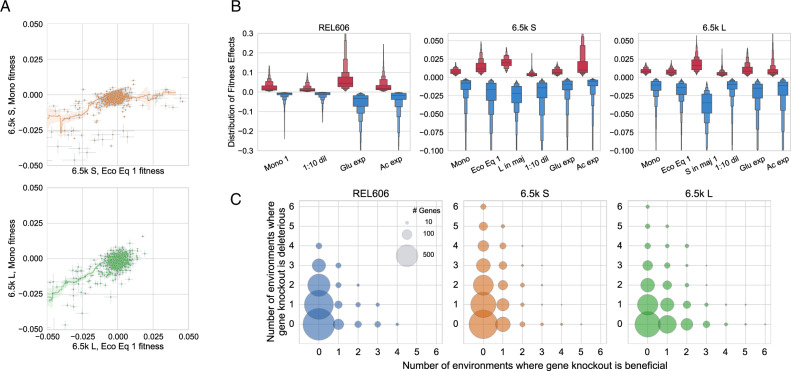
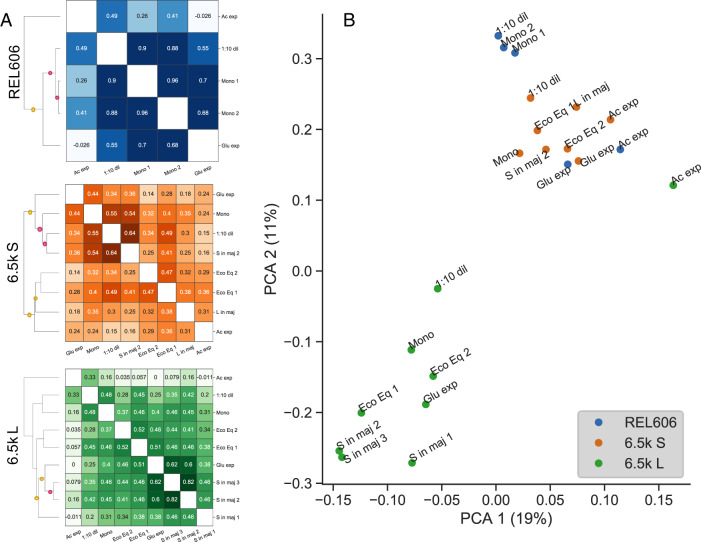
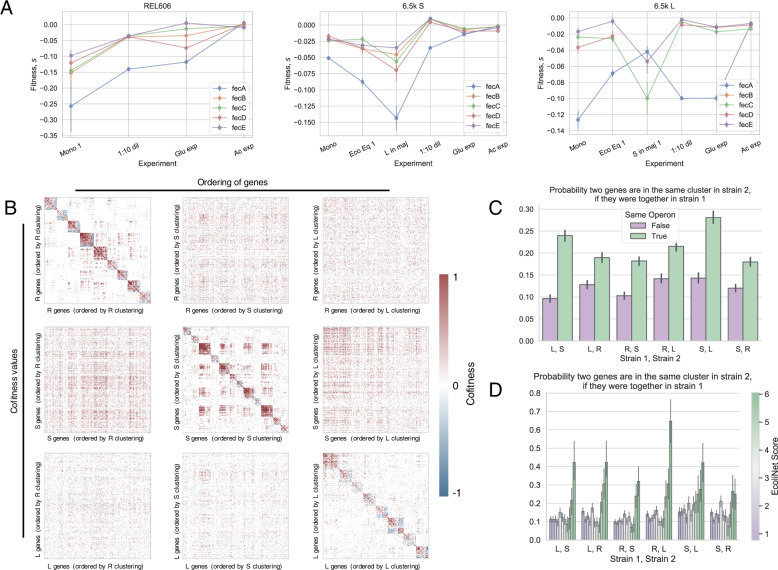
Verification
Claims the paper makes
The claims and statistics of this paper haven’t been checked yet.
Run the check — free, no account needed. It reads the open-access text and checks the sources it cites.
Claims other papers make about this one
Each is checked against this paper’s own text: does it say what the citing paper says it does?
The check wasn’t confident either way, so it gives no verdict — never disputed.
In the citing paper
“In line with SHIP1’s role as a brake on inflammation, we recently identified SHIP1 as a regulator of the NLRP3 inflammasome in human microglia, as both the CRISPR/Cas9-mediated knockdown of INPP5D and acute inhibition of SHIP1 led to the activation of the inflammasome11.”
From INPP5D/SHIP1 regulates endo-lysosomal function and cargo-selective phagocytosis in human microglia (2025) · cites this paper as [11]
Experimental — accuracy not yet measuredThe check wasn’t confident either way, so it gives no verdict — never disputed.
In the citing paper
“AD risk SNPs at the INPP5D locus are intronic and it is unclear how they influence INPP5D levels11,12.”
From INPP5D/SHIP1 regulates endo-lysosomal function and cargo-selective phagocytosis in human microglia (2025) · cites this paper as [11]
Experimental — accuracy not yet measuredThe check wasn’t confident either way, so it gives no verdict — never disputed.
In the citing paper
“we previously reported a reduction in autophagic flux upon INPP5D loss-of-function in iMGs11”
From INPP5D/SHIP1 regulates endo-lysosomal function and cargo-selective phagocytosis in human microglia (2025) · cites this paper as [11]
Experimental — accuracy not yet measuredThe check wasn’t confident either way, so it gives no verdict — never disputed.
In the citing paper
“In accord, while overall protein levels of SHIP1 are elevated in brain tissue from individuals with AD, the levels of full length SHIP1 containing the phosphatase domain are reduced11.”
From INPP5D/SHIP1 regulates endo-lysosomal function and cargo-selective phagocytosis in human microglia (2025) · cites this paper as [11]
Experimental — accuracy not yet measuredThe check wasn’t confident either way, so it gives no verdict — never disputed.
In the citing paper
“We previously reported that the NLRP3 inflammasome is activated in INPP5D HET microglia and in microglia following acute inhibition of SHIP111,15.”
From INPP5D/SHIP1 regulates endo-lysosomal function and cargo-selective phagocytosis in human microglia (2025) · cites this paper as [11]
Experimental — accuracy not yet measured
The check wasn’t confident either way, so it gives no verdict — never disputed.
In the citing paper
“3AC, which we previously showed to robustly induce the secretion of IL-1β and IL-18 upon activation of the NLRP3 inflammasome11”
From INPP5D/SHIP1 regulates endo-lysosomal function and cargo-selective phagocytosis in human microglia (2025) · cites this paper as [11]
Experimental — accuracy not yet measured
Self-check
Percentages, sums and reported differences re-computed from the paper’s own numbers.
The self-check needs the paper’s full text.
Citations
Cites
Smyth, G. K. (2004) · Statistical Applications in Genetics and Molecular Biology · doi:10.2202/1544-6115.1027 · Cited by 11,829
Exploring Network Structure, Dynamics, and Function Using NetworkX
Hagberg, A. A., Schult, D. A., & Swart, P. J. (2008) · Proceedings of the Python in Science Conference · doi:10.25080/tcwv9851 · Cited by 7,477
Statsmodels: Econometric and Statistical Modeling with Python
Seabold, S., & Perktold, J. (2010) · Proceedings of the Python in Science Conferences · doi:10.25080/majora-92bf1922-011 · Cited by 6,968
Robust Regression and Outlier Detection
Rousseeuw, P. J., & Leroy, A. M. (1987) · Wiley Series in Probability and Statistics · doi:10.1002/0471725382 · Cited by 5,609
Bioinformatics and Computational Biology Solutions Using R and Bioconductor
Gentleman, R. C., Carey, V. J., Huber, W. K., Irizarry, R. A., & Dudoit, S. (2005) · Statistics in the health sciences · doi:10.1007/0-387-29362-0 · Cited by 3,470
The Microbial Engines That Drive Earth's Biogeochemical Cycles
Falkowski, P. G., Fenchel, T., & Delong, E. F. (2008) · Science · doi:10.1126/science.1153213 · Cited by 3,379
GEOquery: a bridge between the Gene Expression Omnibus (GEO) and BioConductor
Davis, S. R., & Meltzer, P. S. (2007) · Bioinformatics · doi:10.1093/bioinformatics/btm254 · Cited by 3,316
Khalifa, A. A. Z., Ichikawa, M., Dai, D., Kubo, S., Black, C. S., Peri, K., McAlear, T. S., Veyron, S., Yang, S. K., Vargas, J., et al. (2020) · eLife · doi:10.7554/elife.52760 · Cited by 1,676
GOATOOLS: A Python library for Gene Ontology analyses
Klopfenstein, D. V., Zhang, L., Pedersen, B. S., Ramírez, F., Vesztrocy, A. W., Naldi, A., Mungall, C., Yunes, J. M., Botvinnik, O. B., Weigel, M., et al. (2018) · Scientific Reports · doi:10.1038/s41598-018-28948-z · Cited by 1,314
Brandes, U., Delling, D., Gaertler, M., Görke, R., Hoefer, M., Nikoloski, Z., & Wagner, D. (2008) · IEEE Transactions on Knowledge and Data Engineering · doi:10.1109/tkde.2007.190689 · Cited by 1,243
Research works printed but not linked: 1
- NCBI GEO. Evolution of gene expression during long term coexistence in a bacterial evolution experiment. https://www.ncbi.nlm.nih.gov/geo/query/acc.cgi?acc=GSE30639 (2012).
Cited by
Sorted by citations
Whole-brain annotation and multi-connectome cell typing of Drosophila
Schlegel, P., Yin, Y., Bates, A. S., Dorkenwald, S., Eichler, K., Brooks, P., Han, D. S., Gkantia, M., dos Santos, M., Munnelly, E. J., et al. (2024) · Nature · doi:10.1038/s41586-024-07686-5 · Cited by 413
Zeng, A. G. X., Iacobucci, I., Shah, S., Mitchell, A., Wong, G., Bansal, S., Chen, D., Gao, Q., Kim, H., Kennedy, J. A., et al. (2025) · Blood Cancer Discovery · doi:10.1158/2643-3230.bcd-24-0342 · Cited by 126
Whole-brain annotation and multi-connectome cell typing quantifies circuit stereotypy in Drosophila
Schlegel, P., Yin, Y., Bates, A. S., Dorkenwald, S., Eichler, K., Brooks, P., Han, D. S., Gkantia, M., dos Santos, M., Munnelly, E. J., et al. (2023) · doi:10.1101/2023.06.27.546055 · Cited by 102
Epistasis and evolution: recent advances and an outlook for prediction
Johnson, M. S., Reddy, G., & Desai, M. M. (2023) · BMC Biology · doi:10.1186/s12915-023-01585-3 · Cited by 105
Spatial transcriptomic clocks reveal cell proximity effects in brain ageing
Sun, E., Zhou, O. Y., Hauptschein, M., Rappoport, N., Xu, L., Negredo, P. N., Liu, L. A., Rando, T. A., Zou, J., & Brunet, A. (2024) · Nature · doi:10.1038/s41586-024-08334-8 · Cited by 106
Metadata
- Authors
- Ascensao, J. A., Wetmore, K. M., Good, B. H., Arkin, A. P., & Hallatschek, O.
- Affiliations
- University of California, Berkeley (US)
- Lawrence Berkeley National Laboratory (US)
- Stanford University (US)
- Leipzig University (DE)
- Corresponding author
- Hallatschek, Oskar
- Venue
- Nature Communications
- Published
- 2023-01-16
- Volume
- 14
- Issue
- 1
- Pages
- 248-248
- ISSN
- 2041-1723 (ISSN-L)
- PMC
- PMC9842643
- OpenAlex
- W4316511358
- Cited by
- 447
- References
- 76
- Citations by year
- 2026: 74 · 2025: 172 · 2024: 145 · 2023: 53
- FWCI
- 73.88
- Type
- journal article
- Language
- en
- Open access
- gold
- doi.org
- Locations
- Nature Communications (publishedVersion, cc-by)
- bioRxiv (Cold Spring Harbor Laboratory) (acceptedVersion, cc-by-nc)
- PubMed Central (publishedVersion, cc-by)
- PubMed (publishedVersion)
- eScholarship (California Digital Library) (submittedVersion, cc-by)
- RePEc: Research Papers in Economics (submittedVersion)
- DOAJ (DOAJ: Directory of Open Access Journals) (submittedVersion, cc-by-sa)
- OSTI OAI (U.S. Department of Energy Office of Scientific and Technical Information) (submittedVersion)
- Funders
- U.S. Department of Energy (DE-AC02-05CH11231)
- National Science Foundation (1555330)
- Topics
- Life Sciences › Biochemistry, Genetics and Molecular Biology › Genetics › Evolution and Genetic Dynamics
- Life Sciences › Biochemistry, Genetics and Molecular Biology › Genetics › Bacterial Genetics and Biotechnology
- Physical Sciences › Environmental Science › Ecology › Microbial Community Ecology and Physiology
- Keywords
- fitness landscape, Escherichia coli, long-term evolution experiment, gene knockout, transposon mutagenesis, invasion fitness, epistasis, ecological diversification, community composition, fitness effects, adaptive evolution
- MeSH terms
- Adaptation, Physiological, Escherichia coli, Mutation, Genetic Fitness, Ecotype
About these checks
Registry, retraction, Cites and statistics results are computed, not judged, with one exception: a printed reference that no index lists is read once by a model before it counts as a citation error. Claims are extracted by a model and kept only when their quote appears verbatim in the text; each cited source is then checked, with a model’s help, for whether it says what the claim relies on. Those verdicts can be wrong — read the claim’s quote and the cited source before relying on one.
Statistics and arithmetic are recomputed, not judged.
Confidence bands are shown only for fields calibrated on our annotated test set. None is calibrated yet, so no band is shown.
What counts as a claim ›How we measure confidence ›How we check this ›
Are you an author, or do you see a problem with this page? Request a review
