

The unprecedented Pacific Northwest heatwave of June 2021
Open accessPublished version of a preprint
The DOI matches its Crossref record; 100 of the 104 references it cites were found in a registry or an index.
Abstract
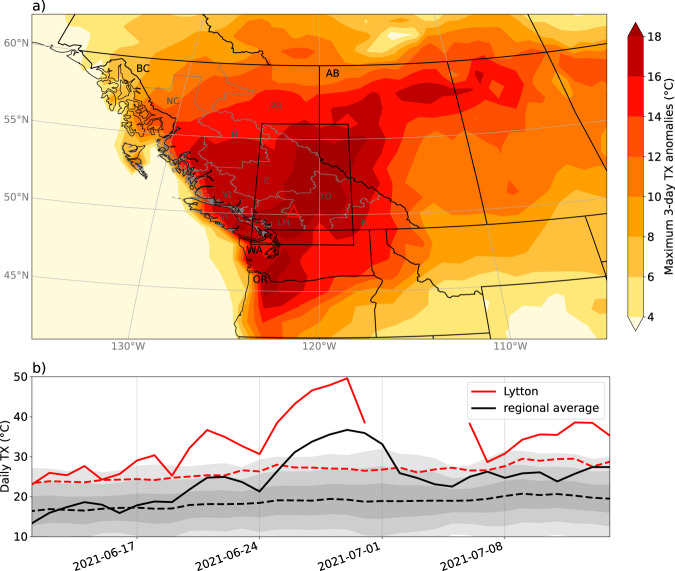
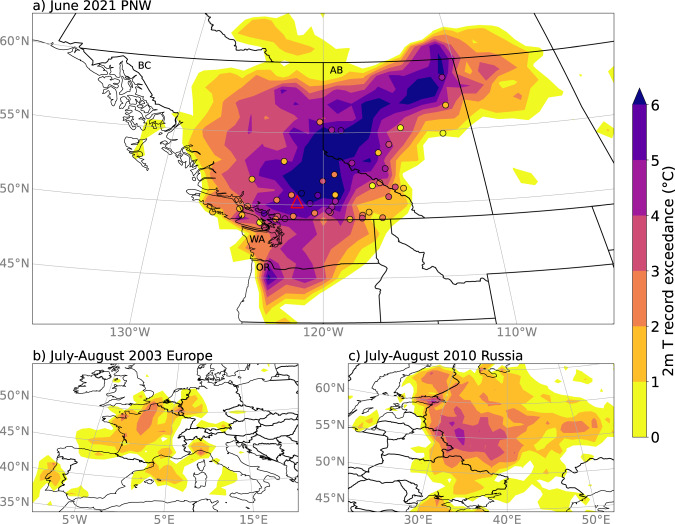
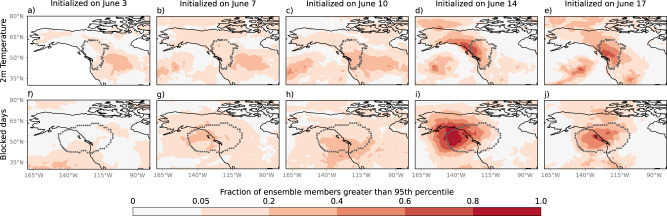
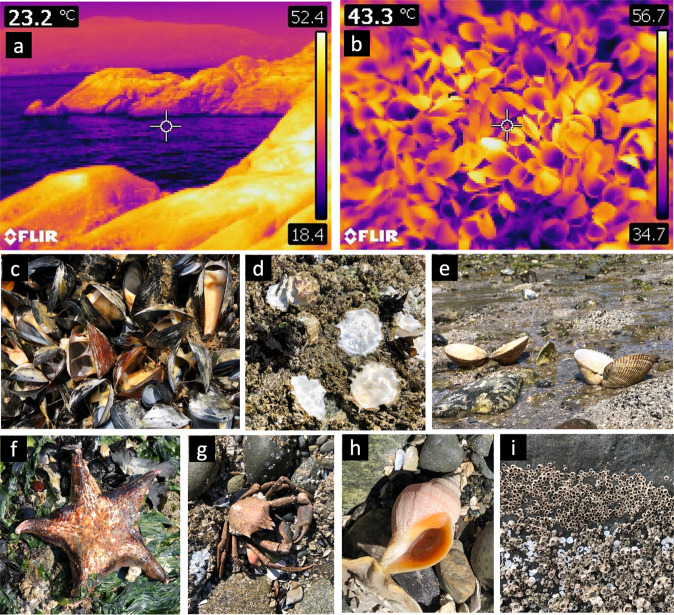
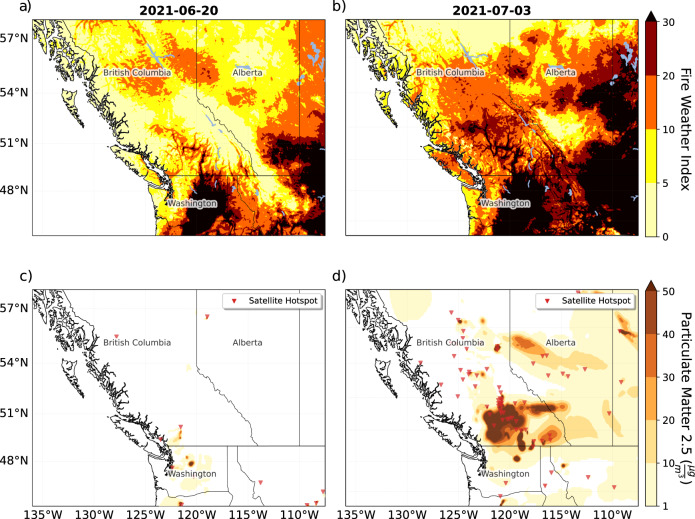
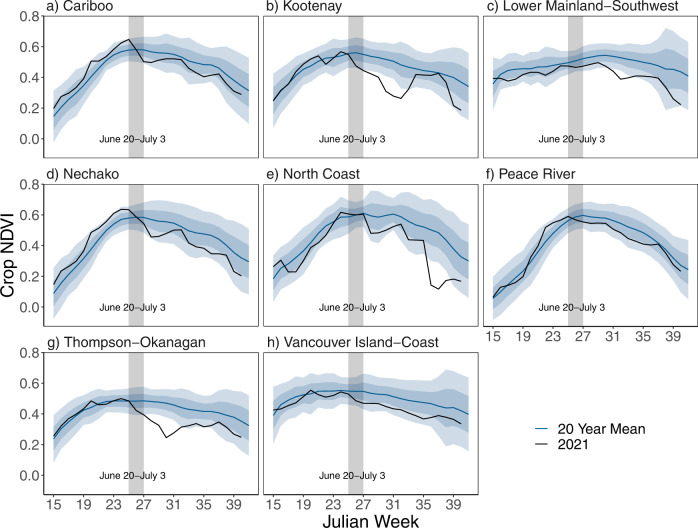
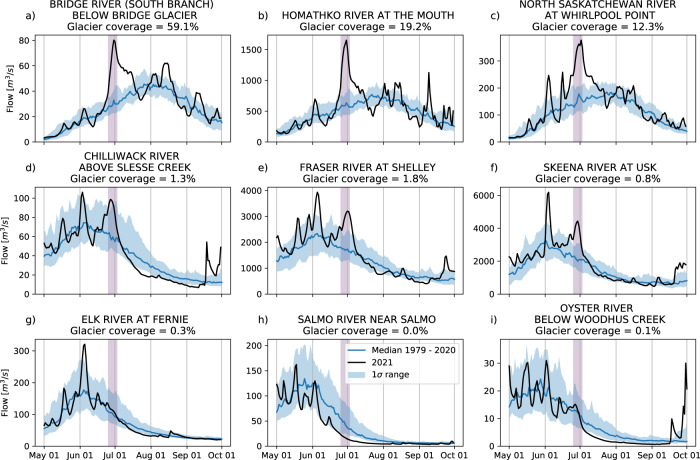
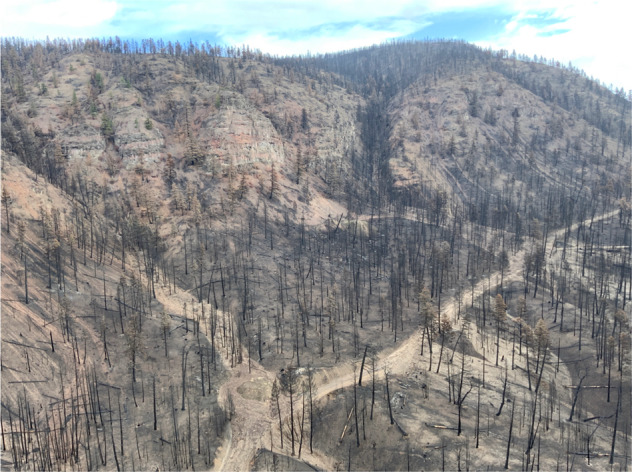
In late June 2021 a heatwave of unprecedented magnitude impacted the Pacific Northwest region of Canada and the United States. Many locations broke all-time maximum temperature records by more than 5 °C, and the Canadian national temperature record was broken by 4.6 °C, with a new record temperature of 49.6 °C. Here, we provide a comprehensive summary of this event and its impacts. Upstream diabatic heating played a key role in the magnitude of this anomaly. Weather forecasts provided advanced notice of the event, while sub-seasonal forecasts showed an increased likelihood of a heat extreme with lead times of 10-20 days. The impacts of this event were catastrophic, including hundreds of attributable deaths across the Pacific Northwest, mass-mortalities of marine life, reduced crop and fruit yields, river flooding from rapid snow and glacier melt, and a substantial increase in wildfires—the latter contributing to landslides in the months following. These impacts provide examples we can learn from and a vivid depiction of how climate change can be so devastating.
Overview
The claims and statistics of this paper haven’t been checked yet.
Free: it reads the open-access text and checks the first 5 claims that cite a source we can check. Create a free account to check every claim.
Integrity signals
Registry
Cites
Statistics
Figures
Verification
Claims the paper makes
The claims and statistics of this paper haven’t been checked yet.
Free: it reads the open-access text and checks the first 5 claims that cite a source we can check. Create a free account to check every claim.
Self-check
Percentages, sums and reported differences re-computed from the paper’s own numbers.
The self-check needs the paper’s full text.
Citations
Cites
Hersbach, H., Bell, B., Berrisford, P., Hirahara, S., Horányi, A., Muñoz‐Sabater, J., Nicolas, J., Peubey, C., Radu, R., Schepers, D., et al. (2020) · Quarterly Journal of the Royal Meteorological Society · doi:10.1002/qj.3803 · Cited by 31,882
NOAA’s HYSPLIT Atmospheric Transport and Dispersion Modeling System
Stein, A. F., Draxler, R. R., Rolph, G. D., Stunder, B. J. B., Cohen, M. D., & Ngan, F. (2015) · Bulletin of the American Meteorological Society · doi:10.1175/bams-d-14-00110.1 · Cited by 6,597
ERA5-Land: a state-of-the-art global reanalysis dataset for land applications
Muñoz-Sabater, J., Dutra, E., Agustí-Panareda, A., Albergel, C., Arduini, G., Balsamo, G., Boussetta, S., Choulga, M., Harrigan, S., Hersbach, H., et al. (2021) · Earth System Science Data · doi:10.5194/essd-13-4349-2021 · Cited by 5,540
Influence of extreme weather disasters on global crop production
Lesk, C., Rowhani, P., & Ramankutty, N. (2016) · Nature · doi:10.1038/nature16467 · Cited by 3,883
Nonlinear temperature effects indicate severe damages to U.S. crop yields under climate change
Schlenker, W., & Roberts, M. J. (2009) · Proceedings of the National Academy of Sciences · doi:10.1073/pnas.0906865106 · Cited by 3,420
ERA5 hourly data on single levels from 1940 to present
C3S (2018) · European Centre for Medium-Range Weather Forecasts · doi:10.24381/cds.adbb2d47 · Cited by 2,550
A Description of the Advanced Research WRF Model Version 4
Skamarock, W. C., Klemp, J. B., Dudhia, J., Gill, D. O., Liu, Z., Berner, J., Wang, W., Powers, J. G., Duda, M. G., Barker, D. M., et al. (2019) · doi:10.5065/1dfh-6p97 · Cited by 2,164
Death toll exceeded 70,000 in Europe during the summer of 2003
Robine, J.-M., Cheung, S. L. K., Le Roy, S., Van Oyen, H., Griffiths, C., Michel, J.-P., & Herrmann, F. R. (2007) · Comptes Rendus. Biologies · doi:10.1016/j.crvi.2007.12.001 · Cited by 2,127
Real-time Environmental Applications and Display sYstem: READY
Rolph, G., Stein, A., & Stunder, B. (2017) · Environmental Modelling & Software · doi:10.1016/j.envsoft.2017.06.025 · Cited by 2,093
Evidence linking Arctic amplification to extreme weather in mid‐latitudes
Francis, J. A., & Vavrus, S. J. (2012) · Geophysical Research Letters · doi:10.1029/2012gl051000 · Cited by 1,808
Research works printed but not linked: 8
- Henderson SB McLean KE Lee MJ Kosatsky T Extreme heat events are public health emergencies BC Med. J. 2021 63 366 367
- British Columbia Coroners Service. Extreme heat and human mortality: a review of heat-related deaths in B.C. in summer 2021. https://www2.gov.bc.ca/assets/gov/birth-adoption-death-marriage-and-divorce/deaths/coroners-service/death-review-panel/extreme_heat_death_review_panel_report.pdf (2022).
- Lau, C.-A. et al. Hydro-geomorphic effects of the November 2021 atmospheric rivers on infrastructure in Southwestern British Columbia. In: Geohazards 8: Proceedings of the 8th Canadian Conference on Geotechnique and Natural Hazards. Quebec, Canada (2022).
- Rex DFBlocking Action in the middle troposphere and its effect upon regional climate - part I Tellus 1950 2 196 211
- Multnomah County. Preliminary Review on Excessive Heat Deaths. https://multco-web7-psh-files-usw2.s3-us-west-2.amazonaws.com/s3fs-public/preliminary_review-heat_deaths-07-14-21_2.pdf (2021).
- Warner J Twomey S The production of cloud nuclei by cane fires and the effect on cloud droplet concentration J. Atmos. Sci. 1967 24 704 706 · doi:10.1175/1520-0469(1967)024
- Roznik M Boyd M Porth L Improving crop yield estimation by applying higher resolution satellite NDVI imagery and high-resolution cropland masks Remote Sens. Appl. Soc. Environ. 2022 25 100693
- BC Ministry of Forests, Lands, Natural Resource Operations and Rural Development (n.d.). 2021 burn severity mapping. Accessed on November 1, 2022 (2021).
Cited by
The 2024 state of the climate report: Perilous times on planet Earth
Ripple, W. J., Wolf, C., Gregg, J. W., Rockström, J., Mann, M. E., Oreskes, N., Lenton, T. M., Rahmstorf, S., Newsome, T. M., Xu, C., et al. (2024) · BioScience · doi:10.1093/biosci/biae087 · Cited by 368
Abrupt, climate-induced increase in wildfires in British Columbia since the mid-2000s
Parisien, M., Barber, Q. E., Bourbonnais, M., Daniels, L. D., Flannigan, M., Gray, R. W., Hoffman, K. M., Jain, P., Stephens, S. L., Taylor, S. W., et al. (2023) · Communications Earth & Environment · doi:10.1038/s43247-023-00977-1 · Cited by 218
Gao, S., Chen, Y., Chen, D., He, B., Gong, A., Hou, P., Li, K., & Cui, Y. D. (2024) · npj Climate and Atmospheric Science · doi:10.1038/s41612-024-00708-z · Cited by 152
Lafferty, D. C., & Sriver, R. L. (2023) · npj Climate and Atmospheric Science · doi:10.1038/s41612-023-00486-0 · Cited by 139
“We neglect the carbonplan ensembles here since they contain a limited number of models. which has been extensively studied after breaking several temperature records throughout the region [39–42], leading to widespread impacts across many sectors [43].”
BackgroundMortality impacts of the most extreme heat events
Matthews, T. K. R., Raymond, C., Foster, J., Baldwin, J. W., Ivanovich, C. C., Kong, Q., Kinney, P. L., & Horton, R. (2025) · Nature Reviews Earth & Environment · doi:10.1038/s43017-024-00635-w · Cited by 157
“By contrast, variability is much larger in the mid-to-high-latitude regions, where large-magnitude anomalies occur owing to extreme circulation (high 500-hPa geopotential heights), advection and land surface forcing (very dry soil moisture) 26,27,59 .”
Metadata
- Authors
- White, R. H., Anderson, S., Booth, J. F., Braich, G., Draeger, C., Fei, C., Harley, C. D. G., Henderson, S. B., Jakob, M., Lau, C.-A., Mareshet Admasu, L., Narinesingh, V., Rodell, C., Roocroft, E., Weinberger, K. R., & West, G.
- Affiliations
- University of British Columbia (CA)
- The Graduate Center, CUNY (US)
- BGC Engineering (Canada) (CA)
- NOAA Geophysical Fluid Dynamics Laboratory (US)
- BC Hydro (Canada) (CA)
- Corresponding author
- White, Rachel H.
- ORCID
- Venue
- Nature Communications
- Published
- 2023-02-09
- Volume
- 14
- Issue
- 1
- Pages
- 727-727
- ISSN
- 2041-1723 (ISSN-L)
- PMC
- PMC9910268
- OpenAlex
- W4319733471
- Cited by
- 435
- References
- 104
- Citations by year
- 2026: 108 · 2025: 153 · 2024: 116 · 2023: 58
- FWCI
- 48.88
- Type
- journal article
- Language
- en
- Open access
- gold
- doi.org
- Licence
- cc-by
- creativecommons.org/licenses/by/4.0 (tdm)
- creativecommons.org/licenses/by/4.0 (vor)
- Locations
- Nature Communications (publishedVersion, cc-by)
- PubMed Central (publishedVersion, cc-by)
- PubMed (publishedVersion)
- DOAJ (DOAJ: Directory of Open Access Journals) (submittedVersion, cc-by-sa)
- NOAA Institutional Repository (submittedVersion)
- Funders
- Gouvernement du Canada | Natural Sciences and Engineering Research Council of Canada (RGPIN-2020-05783, RGPIN-2016-05441)
- NSERC Doctoral Scholarship
- Alberta Innovates (2019F163R)
- Health Canada and the BC Climate Preparedness and Adaptation Strategy
- Gouvernement du Canada | Natural Resources Canada
- BC Hydro
- Mitacs
- Topics
- Physical Sciences › Environmental Science › Global and Planetary Change › Climate variability and models
- Physical Sciences › Earth and Planetary Sciences › Atmospheric Science › Meteorological Phenomena and Simulations
- Physical Sciences › Environmental Science › Global and Planetary Change › Climate Change and Environmental Impact
- Keywords
- 2021 Pacific Northwest heatwave, extreme heat, temperature records, diabatic heating, subseasonal forecasting, heat-related mortality, crop yield loss, forest fires, landslides, climate change impacts
About these checks
Registry, retraction, Cites and statistics results are computed, not judged, with one exception: a printed reference that no index lists is read once by a model before it counts as a citation error. Claims are extracted by a model and kept only when their quote appears verbatim in the text; each cited source is then checked, with a model’s help, for whether it says what the claim relies on. Those verdicts can be wrong — read the claim’s quote and the cited source before relying on one.
Statistics and arithmetic are recomputed, not judged.
Confidence bands are shown only for fields calibrated on our annotated test set. None is calibrated yet, so no band is shown.
What counts as a claim ›How we measure confidence ›How we check this ›
Are you an author, or do you see a problem with this page? Request a review
How to cite
Cite CoChat for the checks on this page, and the paper for its own findings.
- This page
- CoChat. (2026). Citation check: The unprecedented Pacific Northwest heatwave of June 2021. https://app.cochat.ai/papers/10.1038/s41467-023-36289-3
- The paper
- White, R. H., Anderson, S., Booth, J. F., Braich, G., Draeger, C., Fei, C., Harley, C. D. G., Henderson, S. B., Jakob, M., Lau, C.-A., Mareshet Admasu, L., Narinesingh, V., Rodell, C., Roocroft, E., Weinberger, K. R., & West, G. (2023). The unprecedented Pacific Northwest heatwave of June 2021. Nature Communications. https://doi.org/10.1038/s41467-023-36289-3
Data sources
Bibliographic data: Semantic Scholar, OpenAlex, Crossref.
Contains information from the Semantic Scholar Academic Graph Datasets, made available under the ODC Attribution License (ODC-BY 1.0).
Semantic Scholar’s data is described in: Kinney, R., et al. (2023). The Semantic Scholar Open Data Platform. arXiv:2301.10140.
