

The unprecedented Pacific Northwest heatwave of June 2021
Open accessPublished version of a preprint
The DOI matches its Crossref record; 100 of the 104 references it cites were found in a registry or an index.
Abstract
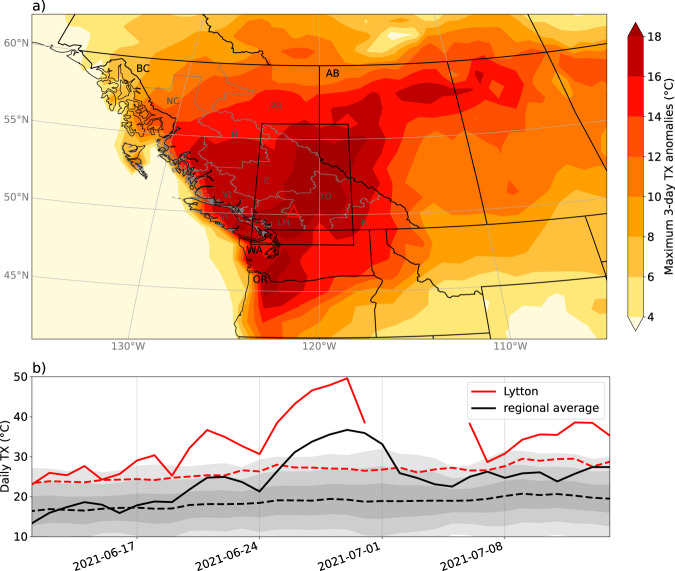
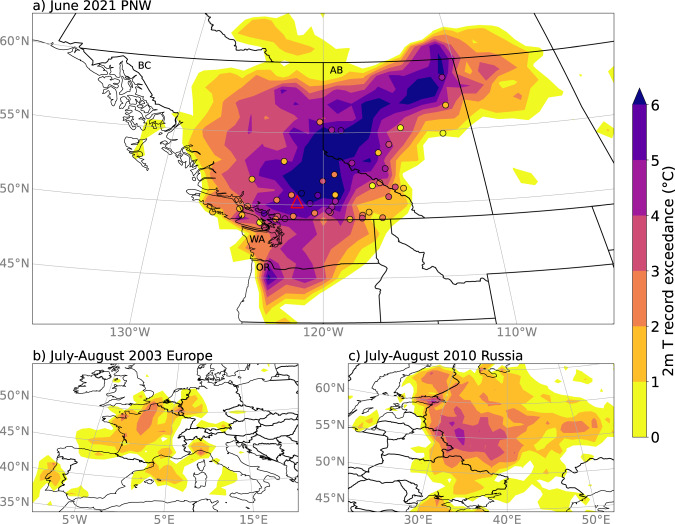
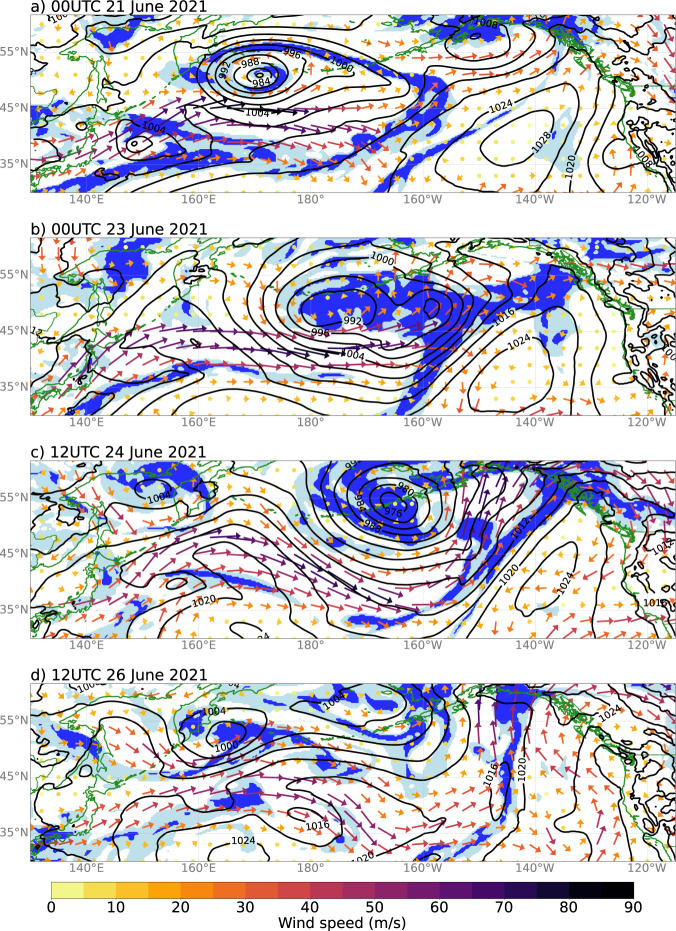
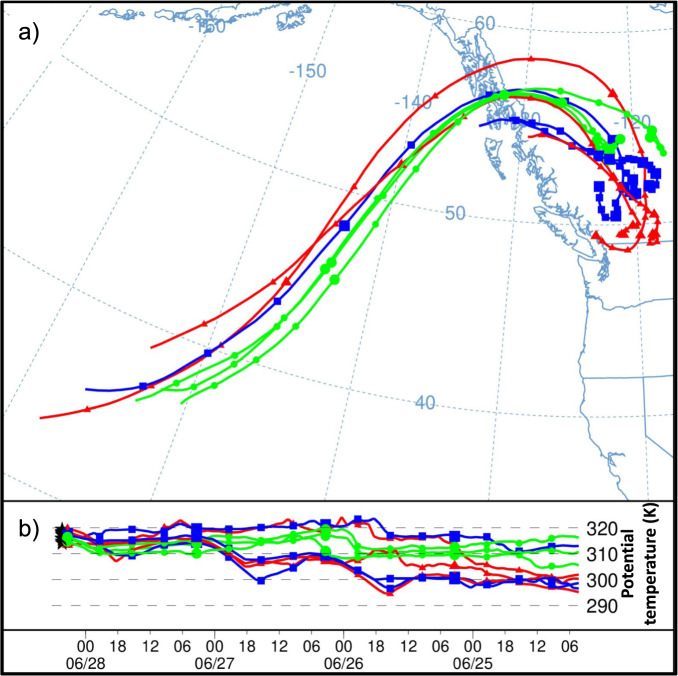
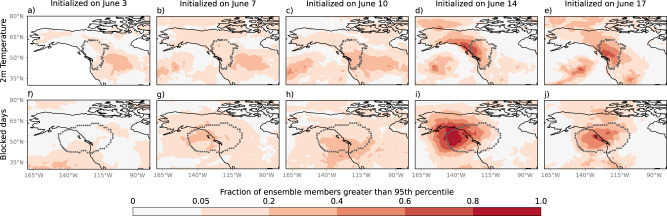
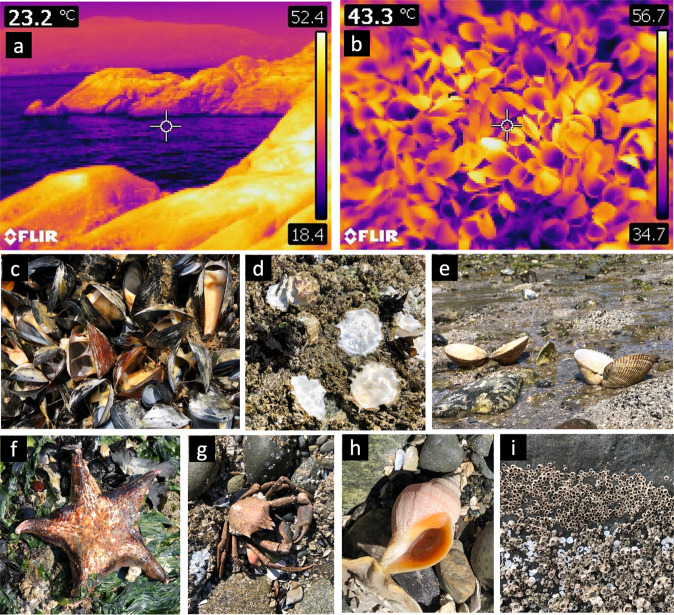
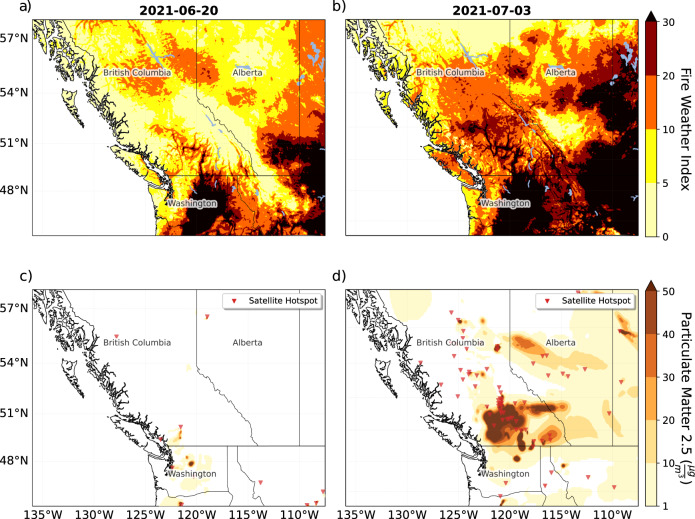
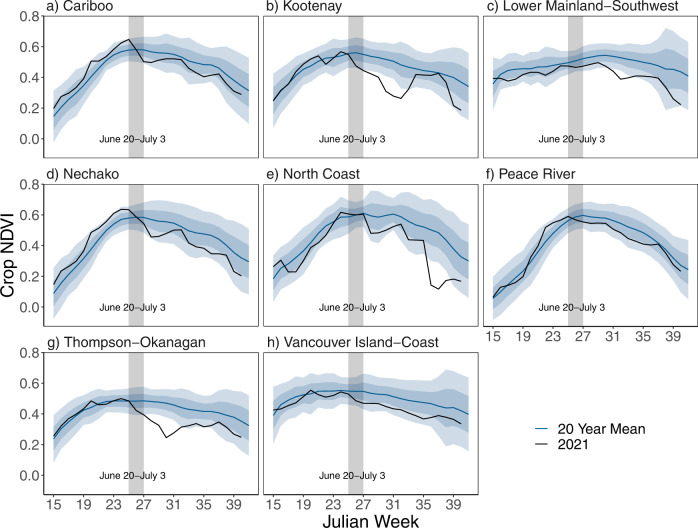
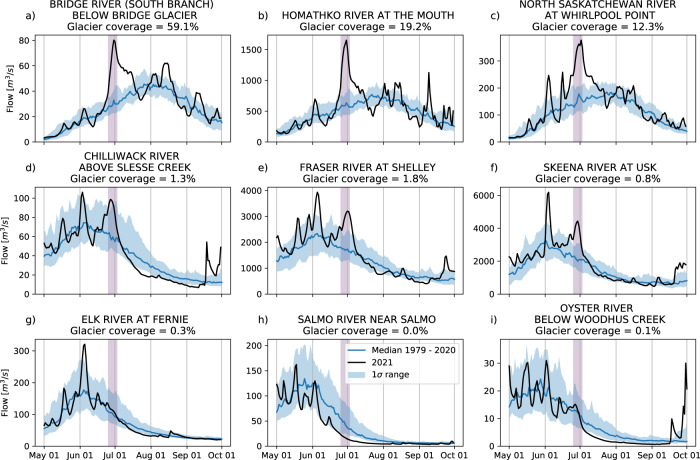
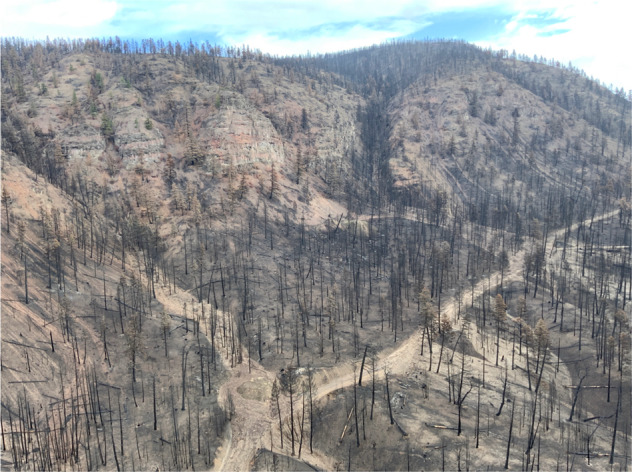
In late June 2021 a heatwave of unprecedented magnitude impacted the Pacific Northwest region of Canada and the United States. Many locations broke all-time maximum temperature records by more than 5 °C, and the Canadian national temperature record was broken by 4.6 °C, with a new record temperature of 49.6 °C. Here, we provide a comprehensive summary of this event and its impacts. Upstream diabatic heating played a key role in the magnitude of this anomaly. Weather forecasts provided advanced notice of the event, while sub-seasonal forecasts showed an increased likelihood of a heat extreme with lead times of 10-20 days. The impacts of this event were catastrophic, including hundreds of attributable deaths across the Pacific Northwest, mass-mortalities of marine life, reduced crop and fruit yields, river flooding from rapid snow and glacier melt, and a substantial increase in wildfires—the latter contributing to landslides in the months following. These impacts provide examples we can learn from and a vivid depiction of how climate change can be so devastating.
Overview
The claims and statistics of this paper haven’t been checked yet.
Free: it reads the open-access text and checks the first 5 claims that cite a source we can check. Create a free account to check every claim.
Integrity signals
Registry
Cites
Statistics
Figures
Verification
Claims the paper makes
The claims and statistics of this paper haven’t been checked yet.
Free: it reads the open-access text and checks the first 5 claims that cite a source we can check. Create a free account to check every claim.
Self-check
Percentages, sums and reported differences re-computed from the paper’s own numbers.
The self-check needs the paper’s full text.
Citations
Cites
Hersbach, H., Bell, B., Berrisford, P., Hirahara, S., Horányi, A., Muñoz‐Sabater, J., Nicolas, J., Peubey, C., Radu, R., Schepers, D., et al. (2020) · Quarterly Journal of the Royal Meteorological Society · doi:10.1002/qj.3803 · Cited by 31,882
NOAA’s HYSPLIT Atmospheric Transport and Dispersion Modeling System
Stein, A. F., Draxler, R. R., Rolph, G. D., Stunder, B. J. B., Cohen, M. D., & Ngan, F. (2015) · Bulletin of the American Meteorological Society · doi:10.1175/bams-d-14-00110.1 · Cited by 6,597
ERA5-Land: a state-of-the-art global reanalysis dataset for land applications
Muñoz-Sabater, J., Dutra, E., Agustí-Panareda, A., Albergel, C., Arduini, G., Balsamo, G., Boussetta, S., Choulga, M., Harrigan, S., Hersbach, H., et al. (2021) · Earth System Science Data · doi:10.5194/essd-13-4349-2021 · Cited by 5,540
Influence of extreme weather disasters on global crop production
Lesk, C., Rowhani, P., & Ramankutty, N. (2016) · Nature · doi:10.1038/nature16467 · Cited by 3,883
Nonlinear temperature effects indicate severe damages to U.S. crop yields under climate change
Schlenker, W., & Roberts, M. J. (2009) · Proceedings of the National Academy of Sciences · doi:10.1073/pnas.0906865106 · Cited by 3,420
ERA5 hourly data on single levels from 1940 to present
C3S (2018) · European Centre for Medium-Range Weather Forecasts · doi:10.24381/cds.adbb2d47 · Cited by 2,550
A Description of the Advanced Research WRF Model Version 4
Skamarock, W. C., Klemp, J. B., Dudhia, J., Gill, D. O., Liu, Z., Berner, J., Wang, W., Powers, J. G., Duda, M. G., Barker, D. M., et al. (2019) · doi:10.5065/1dfh-6p97 · Cited by 2,164
Death toll exceeded 70,000 in Europe during the summer of 2003
Robine, J.-M., Cheung, S. L. K., Le Roy, S., Van Oyen, H., Griffiths, C., Michel, J.-P., & Herrmann, F. R. (2007) · Comptes Rendus. Biologies · doi:10.1016/j.crvi.2007.12.001 · Cited by 2,127
Real-time Environmental Applications and Display sYstem: READY
Rolph, G., Stein, A., & Stunder, B. (2017) · Environmental Modelling & Software · doi:10.1016/j.envsoft.2017.06.025 · Cited by 2,093
Evidence linking Arctic amplification to extreme weather in mid‐latitudes
Francis, J. A., & Vavrus, S. J. (2012) · Geophysical Research Letters · doi:10.1029/2012gl051000 · Cited by 1,808
Research works printed but not linked: 8
- Henderson SB McLean KE Lee MJ Kosatsky T Extreme heat events are public health emergencies BC Med. J. 2021 63 366 367
- British Columbia Coroners Service. Extreme heat and human mortality: a review of heat-related deaths in B.C. in summer 2021. https://www2.gov.bc.ca/assets/gov/birth-adoption-death-marriage-and-divorce/deaths/coroners-service/death-review-panel/extreme_heat_death_review_panel_report.pdf (2022).
- Lau, C.-A. et al. Hydro-geomorphic effects of the November 2021 atmospheric rivers on infrastructure in Southwestern British Columbia. In: Geohazards 8: Proceedings of the 8th Canadian Conference on Geotechnique and Natural Hazards. Quebec, Canada (2022).
- Rex DFBlocking Action in the middle troposphere and its effect upon regional climate - part I Tellus 1950 2 196 211
- Multnomah County. Preliminary Review on Excessive Heat Deaths. https://multco-web7-psh-files-usw2.s3-us-west-2.amazonaws.com/s3fs-public/preliminary_review-heat_deaths-07-14-21_2.pdf (2021).
- Warner J Twomey S The production of cloud nuclei by cane fires and the effect on cloud droplet concentration J. Atmos. Sci. 1967 24 704 706 · doi:10.1175/1520-0469(1967)024
- Roznik M Boyd M Porth L Improving crop yield estimation by applying higher resolution satellite NDVI imagery and high-resolution cropland masks Remote Sens. Appl. Soc. Environ. 2022 25 100693
- BC Ministry of Forests, Lands, Natural Resource Operations and Rural Development (n.d.). 2021 burn severity mapping. Accessed on November 1, 2022 (2021).
Cited by
The 2024 state of the climate report: Perilous times on planet Earth
Ripple, W. J., Wolf, C., Gregg, J. W., Rockström, J., Mann, M. E., Oreskes, N., Lenton, T. M., Rahmstorf, S., Newsome, T. M., Xu, C., et al. (2024) · BioScience · doi:10.1093/biosci/biae087 · Cited by 368
Abrupt, climate-induced increase in wildfires in British Columbia since the mid-2000s
Parisien, M., Barber, Q. E., Bourbonnais, M., Daniels, L. D., Flannigan, M., Gray, R. W., Hoffman, K. M., Jain, P., Stephens, S. L., Taylor, S. W., et al. (2023) · Communications Earth & Environment · doi:10.1038/s43247-023-00977-1 · Cited by 218
Gao, S., Chen, Y., Chen, D., He, B., Gong, A., Hou, P., Li, K., & Cui, Y. D. (2024) · npj Climate and Atmospheric Science · doi:10.1038/s41612-024-00708-z · Cited by 152
Lafferty, D. C., & Sriver, R. L. (2023) · npj Climate and Atmospheric Science · doi:10.1038/s41612-023-00486-0 · Cited by 139
“We neglect the carbonplan ensembles here since they contain a limited number of models. which has been extensively studied after breaking several temperature records throughout the region [39–42], leading to widespread impacts across many sectors [43].”
BackgroundMortality impacts of the most extreme heat events
Matthews, T. K. R., Raymond, C., Foster, J., Baldwin, J. W., Ivanovich, C. C., Kong, Q., Kinney, P. L., & Horton, R. (2025) · Nature Reviews Earth & Environment · doi:10.1038/s43017-024-00635-w · Cited by 157
“By contrast, variability is much larger in the mid-to-high-latitude regions, where large-magnitude anomalies occur owing to extreme circulation (high 500-hPa geopotential heights), advection and land surface forcing (very dry soil moisture) 26,27,59 .”
Materia, S., García, L. P., van Straaten, C., O, S., Mamalakis, A., Cavicchia, L., Coumou, D., de Luca, P., Kretschmer, M., & Donat, M. (2024) · WIREs Climate Change · doi:10.1002/wcc.914 · Cited by 130
Storylines for unprecedented heatwaves based on ensemble boosting
Fischer, E. M., Beyerle, U., Bloin-Wibe, L., Gessner, C., Humphrey, V., Lehner, F., Pendergrass, A. G., Sippel, S., Zeder, J., & Knutti, R. (2023) · Nature Communications · doi:10.1038/s41467-023-40112-4 · Cited by 141
The New Max Planck Institute Grand Ensemble With CMIP6 Forcing and High‐Frequency Model Output
Olonscheck, D., Suarez‐Gutierrez, L., Milinski, S., Beobide‐Arsuaga, G., Baehr, J., Fröb, F., Ilyina, T., Kadow, C., Krieger, D., Li, H., et al. (2023) · Journal of Advances in Modeling Earth Systems · doi:10.1029/2023ms003790 · Cited by 114
“The Pacific North American heatwave also led to hundreds of attributable deaths, marine life mass-mortality events, reduced crop and fruit yields, river flooding from rapid snow and glacier melt, and a substantial increase in wildfires (White et al., 2023).”
BackgroundStreet trees provide an opportunity to mitigate urban heat and reduce risk of high heat exposure
Ettinger, A. K., Bratman, G. N., Carey, M., Hebert, R., Hill, O., Kett, H., Levin, P. S., Murphy-Williams, M., & Wyse, L. (2024) · Scientific Reports · doi:10.1038/s41598-024-51921-y · Cited by 118
Global emergence of regional heatwave hotspots outpaces climate model simulations
Kornhuber, K., Bartusek, S., Seager, R., Schellnhuber, H. J., & Ting, M. (2024) · Proceedings of the National Academy of Sciences · doi:10.1073/pnas.2411258121 · Cited by 98
“Reasonable forecasts of past extreme heatwaves suggest that models can in principle produce such extreme - extremes when directly forced with the correct boundary conditions ( 11 , 70 ).”
The impact of extreme heat on lake warming in China
Wang, W., Shi, K., Wang, X., Zhang, Y., Qin, B., Zhang, Y., & Woolway, R. I. (2024) · Nature Communications · doi:10.1038/s41467-023-44404-7 · Cited by 82
“…Aeronautics and Space Administration (NASA) and the U.S. Geological Survey (USGS) as the LSWT. Variations exist between sensors for Landsat 5, 7, and 8, therefore we selected thermal infrared (TIR) data for Landsat 5 from 1985 to 2011, Landsat 7 from 1999 to 2018, and Landsat 8 from 2013 to…”
Emergency departments are in crisis now and for the foreseeable future
Varner, C. E. (2023) · Canadian Medical Association Journal · doi:10.1503/cmaj.230719 · Cited by 77
The Unprecedented 2023 North China Heatwaves and Their S2S Predictability
Xiao, H., Xu, P., & Wang, L. (2024) · Geophysical Research Letters · doi:10.1029/2023gl107642 · Cited by 75
“…studies assessing the performance of S2S models in predicting extreme heat events indicate that S2S models generally have a noteworthy capability to predict the occurrence up to 1 week in advance (Gibson et al., 2020; Lin et al., 2022; Mitropoulos et al., 2023; Qi & Yang, 2019; White et al., 2023).”
BackgroundRecord-breaking extremes in a warming climate
Fischer, E. M., Bador, M., Huser, R., Kendon, E., Robinson, A., & Sippel, S. (2025) · Nature Reviews Earth & Environment · doi:10.1038/s43017-025-00681-y · Cited by 86
Lee, M. J., McLean, K. E., Kuo, M., Richardson, G. R. A., & Henderson, S. B. (2023) · GeoHealth · doi:10.1029/2022gh000729 · Cited by 75
Self-citationGhazali, M. F., Mohamad, H., Nasir, M. Y. M., Hamzh, A., Abdullah, M. A., Faiqa, N., Thansirichaisree, P., & Zan, M. S. D. (2024) · Optical Fiber Technology · doi:10.1016/j.yofte.2024.103911 · Cited by 69
Jain, P., Sharma, A. R., Castellanos‐Acuña, D., Abatzoglou, J. T., & Flannigan, M. (2024) · Communications Earth & Environment · doi:10.1038/s43247-024-01346-2 · Cited by 72
An overview of the Western United States Dynamically Downscaled Dataset (WUS-D3)
Rahimi, S., Huang, L., Norris, J., Hall, A. D., Goldenson, N., Krantz, W., Bass, B., Thackeray, C. W., Lin, H., Chen, D., et al. (2024) · Geoscientific model development · doi:10.5194/gmd-17-2265-2024 · Cited by 64
Heatwave attribution based on reliable operational weather forecasts
Leach, N. J., Roberts, C. D., Aengenheyster, M., Heathcote, D., Mitchell, D., Thompson, V., Palmer, T. N., Weisheimer, A., & Allen, M. R. (2024) · Nature Communications · doi:10.1038/s41467-024-48280-7 · Cited by 67
Physics-based models outperform AI weather forecasts of record-breaking extremes
Zhang, Z., Fischer, E. M., Zscheischler, J., & Engelke, S. (2026) · Science Advances · doi:10.1126/sciadv.aec1433 · Cited by 80
Regional climate change: consensus, discrepancies, and ways forward
Shaw, T. A., Arias, P. A., Collins, M., Coumou, D., Diédhiou, A., Garfinkel, C. I., Jain, S., Roxy, M. K., Kretschmer, M., Leung, L.-Y. R., et al. (2024) · Frontiers in Climate · doi:10.3389/fclim.2024.1391634 · Cited by 63
Ouellet, S., Dettmer, J., Lato, M. J., Cole, S., Hutchinson, D. J., Karrenbach, M., Dashwood, B., Chambers, J. E., & Crickmore, R. I. (2024) · Nature Communications · doi:10.1038/s41467-024-50604-6 · Cited by 62
“Furthermore, landslide risk is expected to increase due to anthropogenic factors, including urbanization, deforestation, and the effects of climate change (e.g., increased precipitation, permafrost degradation, and wild fi res) 3,5 – 8 .”
Validating Deep Learning Weather Forecast Models on Recent High-Impact Extreme Events
Pasche, O. C., Wider, J., Zhang, Z., Zscheischler, J., & Engelke, S. (2024) · Artificial Intelligence for the Earth Systems · doi:10.1175/aies-d-24-0033.1 · Cited by 78
“…metrics have been proposed to combine the in fl uence of these two variables (Lo et al. 2023), we follow Zachariah et al. (2023), who employ the modi fi ed version of the heat index (Rothfusz 1990) used by the NOAA Weather Prediction Center in an attribution study on the 2023 South Asian humid…”
Errett, N. A., Hartwell, C., Randazza, J. M., Nori‐Sarma, A., Weinberger, K. R., Spangler, K. R., Sun, Y., Adams, Q. H., Wellenius, G. A., & Hess, J. J. (2023) · BMC Public Health · doi:10.1186/s12889-023-15757-x · Cited by 55
Self-citationThe Effect of a Short Observational Record on the Statistics of Temperature Extremes
Zeder, J., Sippel, S., Pasche, O. C., Engelke, S., & Fischer, E. M. (2023) · Geophysical Research Letters · doi:10.1029/2023gl104090 · Cited by 51
Blanchard‐Wrigglesworth, E., Cox, T., Espinosa, Z. I., & Donohoe, A. (2023) · Geophysical Research Letters · doi:10.1029/2023gl104910 · Cited by 51
How to stop being surprised by unprecedented weather
Kelder, T., Heinrich, D., Klok, L., Thompson, V., Goulart, H. M. D., Hawkins, E., Slater, L. J., Suarez‐Gutierrez, L., Wilby, R. L., de Perez, E. C., et al. (2025) · Nature Communications · doi:10.1038/s41467-025-57450-0 · Cited by 56
Zhang, D., Huang, Y., Zhou, B., Wang, H., & Sun, B. (2024) · Weather and Climate Extremes · doi:10.1016/j.wace.2024.100640 · Cited by 49
de Vries, I. E., Sippel, S., Zeder, J., Fischer, E. M., & Knutti, R. (2024) · Communications Earth & Environment · doi:10.1038/s43247-024-01622-1 · Cited by 52
He, Z., Wu, Z., Herzog, O., Hei, J., Li, L., & Li, X. (2024) · Sustainable Cities and Society · doi:10.1016/j.scs.2024.106084 · Cited by 53
Guddanti, K. P., Bharati, A. K., Nekkalapu, S., McWherter, J., & Morris, S. (2025) · IEEE Access · doi:10.1109/access.2025.3548531 · Cited by 44
“4).”
Dong, Z., Wang, L., Xu, P.-Q., Cao, J., & Yang, R.-W. (2023) · Earth's Future · doi:10.1029/2022ef003437 · Cited by 33
Lyu, Y., Wang, J., Zhi, X., Wang, X., Zhang, H., Wen, Y., Park, E., Lee, J. C. K., Wan, X., Zhu, S., et al. (2024) · npj Climate and Atmospheric Science · doi:10.1038/s41612-024-00797-w · Cited by 47
Drought threat to terrestrial gross primary production exacerbated by wildfires
Zong, X., Tian, X., Liu, X., & Shu, L. (2024) · Communications Earth & Environment · doi:10.1038/s43247-024-01406-7 · Cited by 43
Passive cooling of greenhouses in extreme climates through spectral control film
Tian, Y., Lei, Y., Zeng, S., He, Y. W., Feng, C., Li, Q., Waller, R., & Gan, Q. (2025) · Nexus · doi:10.1016/j.ynexs.2025.100058 · Cited by 40
Corn response to long‐term seasonal weather stressors: A review
Ortez, O. A., Lindsey, A. J., Thomison, P. R., Coulter, J. A., Singh, M. P., Carrijo, D. R., Quinn, D. J., Licht, M. A., & Bastos, L. M. (2023) · Crop Science · doi:10.1002/csc2.21101 · Cited by 42
Li, X., MANN, M. E., Wehner, M. F., Rahmstorf, S., Petri, S., Christiansen, S. A., & Carrillo, J. (2024) · Proceedings of the National Academy of Sciences · doi:10.1073/pnas.2315330121 · Cited by 48
“Another possible contributor to the event was upwind latent heating south of Alaska, which provided a significant source of downwind wave activity flux, which then converged over western Canada to form the Omega Block (26, 27).”
BackgroundProjected increase in summer heat-dome-like stationary waves over Northwestern North America
Chen, Z., Lu, J., Chang, C., Lubis, S. W., & Leung, L.-Y. R. (2023) · npj Climate and Atmospheric Science · doi:10.1038/s41612-023-00511-2 · Cited by 40
Abunyewah, M., Gajendran, T., Erdiaw‐Kwasie, M. O., Baah, C., Okyere, S. A., & Kankanamge, A. K. S. U. (2025) · Environmental Science & Policy · doi:10.1016/j.envsci.2025.104024 · Cited by 43
George, M. N., Cattau, O., Middleton, M. A., Lawson, D., Vadopalas, B., Gavery, M. R., & Roberts, S. (2023) · Global Change Biology · doi:10.1111/gcb.16880 · Cited by 38
“A poignant demonstration of this phenomenon was observed when the Pacific Northwestern region of the United States experienced an atmospheric heatwave that coincided with some of the lowest daytime low tides of the year during the summer of 2021 (Philip et al., 2021; White et al., 2022 ).”
BackgroundUnveiling the devastating effect of the spring 2022 mega-heatwave on the South Asian snowpack
Hassan, W. U., Nayak, M. A., Saharwardi, M. S., Dar, J., Dasari, H. P., Hoteit, I., & Abualnaja, Y. O. (2024) · Communications Earth & Environment · doi:10.1038/s43247-024-01857-y · Cited by 40
Spatial distribution of heat vulnerability in Toronto, Canada
Bu, S., Smith, K. L., Masoud, F., & Sheinbaum, A. (2024) · Urban Climate · doi:10.1016/j.uclim.2024.101838 · Cited by 44
Fan, X., Miao, C., Wu, Y., Mishra, V., & Chai, Y. (2024) · Weather and Climate Extremes · doi:10.1016/j.wace.2024.100698 · Cited by 45
Understanding the vertical temperature structure of recent record-shattering heatwaves
Hotz, B., Papritz, L., & Röthlisberger, M. (2024) · Weather and Climate Dynamics · doi:10.5194/wcd-5-323-2024 · Cited by 37
Ambient temperatures associated with reduced cognitive function in older adults in China
Hou, K., & Xu, X. (2023) · Scientific Reports · doi:10.1038/s41598-023-44776-2 · Cited by 33
“At present, global temperature sustains the rising trend, and the frequency of occurrence of extreme climate events involving extreme cold and heat weather is increasing, whose spread is expanding rapidly simultaneously 1,47 .”
BackgroundBlackport, R., & Fyfe, J. C. (2024) · Nature Communications · doi:10.1038/s41467-024-49734-8 · Cited by 38
Drought resistance and drought adaptation of Douglas-fir (Pseudotsuga menziesii) – A review
Leuschner, C., & Meinzer, F. C. (2024) · Perspectives in Plant Ecology Evolution and Systematics · doi:10.1016/j.ppees.2024.125829 · Cited by 32
The pace of change of summertime temperature extremes
McKinnon, K. A., Simpson, I. R., & Williams, P. (2024) · Proceedings of the National Academy of Sciences · doi:10.1073/pnas.2406143121 · Cited by 36
Frequent land-ocean transboundary migration of tropical heatwaves under climate change
Gu, X., Jiang, Z., Guan, Y., Luo, M., Li, J., Wang, L., Zhang, X., Kong, D., & Wang, L. (2025) · Nature Communications · doi:10.1038/s41467-025-58586-9 · Cited by 31
“Previous studies have indirectly linked terrestrial heatwaves to marine origins by tracking the atmospheric air mass transport and heating (e.g., advective, adiabatic, and diabatic) processes 14,82,83 .”
Environmental and social framework to protect marine bivalves under extreme weather events
Masanja, F., Luo, X., Jiang, X., Xu, Y., Mkuye, R., & Zhao, L. (2024) · The Science of The Total Environment · doi:10.1016/j.scitotenv.2024.174471 · Cited by 32
High-resolution projections of ambient heat for major European cities using different heat metrics
Schwingshackl, C., Daloz, A. S., Iles, C. E., Aunan, K., & Sillmann, J. (2024) · Natural hazards and earth system sciences · doi:10.5194/nhess-24-331-2024 · Cited by 31
Heatwaves exacerbate pollen limitation through reductions in pollen production and pollen vigour
Rosenberger, N. M., Hemberger, J., & Williams, N. M. (2024) · AoB Plants · doi:10.1093/aobpla/plae045 · Cited by 30
“Indeed, recent intense heatwaves have overlapped with the flowering periods of important agricultural crops in different world regions with devastating effects for yield (Bal et al. 2022; White et al. 2023).”
BackgroundNPCC4: Climate change and New York City's health risk
Matte, T., Lane, K., Tipaldo, J. F., Barnes, J., Knowlton, K., Torem, E., Anand, G., Yoon, L., Marcotullio, P., Balk, D., et al. (2024) · Annals of the New York Academy of Sciences · doi:10.1111/nyas.15115 · Cited by 29
Weak local adaptation to drought in seedlings of a widespread conifer
Candido‐Ribeiro, R., & Aitken, S. N. (2024) · New Phytologist · doi:10.1111/nph.19543 · Cited by 30
Investing in Climate for Growth and Development: The Case for Enhanced NDCs
OECD, & United Nations Development Programme (2025) · OECD eBooks · doi:10.1787/16b7cbc7-en · Cited by 29
Vecellio, D. J., & Vanos, J. (2024) · Journal of Applied Physiology · doi:10.1152/japplphysiol.00098.2024 · Cited by 29
Mirhadi, N., & Macciotta, R. (2023) · Landslides · doi:10.1007/s10346-023-02105-8 · Cited by 28
Ganguli, P., & Merz, B. (2025) · npj Climate and Atmospheric Science · doi:10.1038/s41612-025-01023-x · Cited by 31
Accelerated shifts from heatwaves to heavy rainfall in a changing climate
Li, J., Wang, S., Zhu, J., Wang, D., & Zhao, T. (2025) · npj Climate and Atmospheric Science · doi:10.1038/s41612-025-01113-w · Cited by 28
It's getting hot in here: Spatial impact of humidity on heat wave severity in the U.S.
Narayanan, A., Rezaali, M., Bunting, E., & Keellings, D. J. (2025) · The Science of The Total Environment · doi:10.1016/j.scitotenv.2025.178397 · Cited by 27
Lopez, H., Lee, S., West, R., Kim, D., & Jia, L. (2025) · Nature Communications · doi:10.1038/s41467-025-61859-y · Cited by 28
Evidence of increased mussel abundance related to the Pacific marine heatwave and sea star wasting
Traiger, S. B., Bodkin, J. L., Coletti, H. A., Ballachey, B. E., Dean, T. A., Esler, D., Iken, K. B., Konar, B. H., Lindeberg, M. R., Monson, D. H., et al. (2022) · Marine Ecology · doi:10.1111/maec.12715 · Cited by 37
“A mass mortality event of M. trossulus occurred in British Columbia in 2021 when low tides coincided with high air temperatures and rock surfaces along the shoreline exceeded 50°C (White et al., 2022).”
BackgroundStatistical physics and dynamical systems perspectives on geophysical extreme events
Faranda, D., Messori, G., Alberti, T., Álvarez-Castro, M. C., Caby, T., Cavicchia, L., Coppola, E., Donner, R. V., Dubrulle, B., Gálfi, V. M., et al. (2024) · Physical review. E · doi:10.1103/physreve.110.041001 · Cited by 32
Season-dependent heatwave mechanisms: A study of southern China
Wu, S., Luo, M., Wang, X., Ge, E., Zhang, W., Gu, X., & Liu, J. (2023) · Weather and Climate Extremes · doi:10.1016/j.wace.2023.100603 · Cited by 25
Tuel, A., & Martius, O. (2024) · Weather and Climate Dynamics · doi:10.5194/wcd-5-263-2024 · Cited by 25
Nasong, D., Zhou, S., Kornhuber, K., & Yu, B. (2025) · Earth s Future · doi:10.1029/2024ef005256 · Cited by 24
“A record‐breaking extreme heatwave exceeding five standard deviations caused hundreds of deaths, horrific wildfires, and the death of various wild animals and plants in western North America in 2021 (Thompson et al., 2022; White et al., 2023).”
Menounos, B., Huss, M., Marshall, S. J., Ednie, M., Florentine, C. E., & Hartl, L. (2025) · Geophysical Research Letters · doi:10.1029/2025gl115235 · Cited by 25
Reyes, L., & Kramer, M. G. (2023) · npj Climate and Atmospheric Science · doi:10.1038/s41612-023-00521-0 · Cited by 24
Variations in land-atmosphere coupling during drought-heatwave events
Yoon, D., Chen, J., Hsu, H., & Findell, K. L. (2026) · Communications Earth & Environment · doi:10.1038/s43247-025-02977-9 · Cited by 28
Marsavin, A., van Gageldonk, R., Bernays, N., May, N. W., Jaffe, D. A., & Fry, J. L. (2023) · Environmental Science Atmospheres · doi:10.1039/d2ea00118g · Cited by 23
Compound mortality impacts from extreme temperatures and the COVID-19 pandemic
Lo, Y. T. E., Mitchell, D., & Gasparrini, A. (2024) · Nature Communications · doi:10.1038/s41467-024-48207-2 · Cited by 24
Fernández‐Tejedor, M., Velasco, J. E., & Angelats, E. (2022) · Remote Sensing · doi:10.3390/rs14205235 · Cited by 22
“Heat waves have been affecting, in recent years, shellfish species in different geographical areas such as the Pacific Northwest in 2021 [27,28], the eastern English channel in 2018 [29], and the coast of California in 2004 [30].”
BackgroundNonlinear increase of compound drought-heatwave events since the early 2000s
Kim, Y.-J., Yeh, S., Wang, G., & Ng, B. (2026) · Science Advances · doi:10.1126/sciadv.aea3038 · Cited by 22
Marine latitudinal diversity gradients are generally absent in intertidal ecosystems
Thyrring, J., & Harley, C. D. G. (2023) · Ecology · doi:10.1002/ecy.4205 · Cited by 26
Self-citationSatellite mapping of red snow on North American glaciers
Engstrom, C. B., & Quarmby, L. M. (2023) · Science Advances · doi:10.1126/sciadv.adi3268 · Cited by 21
Extreme Events Contributing to Tipping Elements and Tipping Points
Romanou, A., Hegerl, G. C., Seneviratne, S. I., Abis, B., Bastos, A., Conversi, A., Landolfi, A., Kim, H., Lerner, P. E., Mekus, J., et al. (2024) · Surveys in Geophysics · doi:10.1007/s10712-024-09863-7 · Cited by 27
“The 2021 Pacific Northwest Heat wave saw record-shattering heat (White et al. 2023)—where the highest temperature measured ever above 50° of latitude (49.6 °C) occurred—an intense fire season, and vast agricultural and ecological losses, including the deaths of more than 10 million marine animals…”
InfluentialIizumi, T., Sakai, T., Masaki, Y., Oyoshi, K., Takimoto, T., Shiogama, H., Imada, Y., & Makowski, D. (2025) · PNAS Nexus · doi:10.1093/pnasnexus/pgaf099 · Cited by 24
AI-Boosted Rare Event Sampling to Characterize Extreme Weather
Lancelin, A., Wikner, A., Dubus, L., Priol, C. L., Abbot, D. S., Bouchet, F., Hassanzadeh, P., & Weare, J. (2026) · Physical Review Letters · doi:10.1103/b1gc-9c2q · Cited by 24
Swanson, M. E., Magee, M. I., Nelson, A. S., Engstrom, R., & Adams, H. D. (2023) · Frontiers in Forests and Global Change · doi:10.3389/ffgc.2023.1224624 · Cited by 24
Whitfield, P. H., Abdelmoaty, H., Nerantzaki, S. D., & Papalexiou, S. M. (2024) · Journal of Hydrology · doi:10.1016/j.jhydrol.2024.130824 · Cited by 20
Predicting organismal response to marine heatwaves using dynamic thermal tolerance landscape models
Villeneuve, A. R., & White, E. R. (2024) · Journal of Animal Ecology · doi:10.1111/1365-2656.14120 · Cited by 23
“Finally, a five-day minimum threshold duration for a MHW ignores extreme heat events that can occur on much shorter timescales in marine systems and result in real biological effects (Bates et al., 2018 ; White et al., 2023 ).”
BackgroundMcLean, K. E., Lee, M. J., Coker, E. S., & Henderson, S. B. (2024) · Environmental Research Health · doi:10.1088/2752-5309/ad5eac · Cited by 23
Self-citationThompson, V., Coumou, D., Gálfi, V. M., Happé, T., Kew, S., Pinto, I., Philip, S. Y., de Vries, H., & van der Wiel, K. (2024) · Atmospheric Science Letters · doi:10.1002/asl.1260 · Cited by 20
“The method can be applied to many different climatic extremes — such as high-pressure systems, which frequently lead to extreme heat (White et al., 2023).”
Climate change threats to Earth's wild animals
Ripple, W. J., Wolf, C., Gregg, J. W., & Torres‐Romero, E. J. (2025) · BioScience · doi:10.1093/biosci/biaf059 · Cited by 22
Zeder, J., & Fischer, E. M. (2023) · Advances in statistical climatology, meteorology and oceanography · doi:10.5194/ascmo-9-83-2023 · Cited by 20
“…Northwest heatwave in late June 2021 was an unprecedented event considering the location and time of occurrence (Overland, 2021; Philip et al., 2022; Bercos-Hickey et al., 2022; White et al., 2023), with 30.7 ◦C average temperature over 7 d exceeding all previous maxima in the ERA5Land record (Fig.”
BackgroundInfluentialMass, C. F., Ovens, D., Christy, J. R., & Conrick, R. (2023) · Weather and Forecasting · doi:10.1175/waf-d-23-0154.1 · Cited by 19
Lubis, S. W., Chen, Z., Lu, J., Hagos, S., Chang, C., & Leung, L.-Y. R. (2024) · npj Climate and Atmospheric Science · doi:10.1038/s41612-024-00766-3 · Cited by 19
Fleishman, E., Rupp, D. E., Loikith, P. C., Bumbaco, K. A., & O’Neill, L. W. (2025) · Bulletin of the American Meteorological Society · doi:10.1175/bams-d-24-0188.1 · Cited by 18
Evidence for preferred propagating terrestrial heatwave pathways due to Rossby wave activity
Wang, M., Huang, Y., Franzke, C. L. E., Yuan, N., Fu, Z., & Boers, N. (2025) · Nature Communications · doi:10.1038/s41467-025-60104-w · Cited by 18
Mass disappearance of intertidal mussels after an unusual winter cold snap in eastern C anada
Cameron, N. M., & Scrosati, R. A. (2023) · Ecology · doi:10.1002/ecy.4179 · Cited by 18
Climate loss-and-damage funding: a mechanism to make it work
Clarke, R. H., Wescombe, N. J., Huq, S., Khan, M. R., Kramer, B. S., & Lombardi, D. (2023) · Nature · doi:10.1038/d41586-023-03578-2 · Cited by 18
Occurrence and hotspots of multivariate and temporally compounding events in China from 1961 to 2020
Zong, X., Yin, Y., Yin, M., Hou, W., Deng, H., & Cui, T. (2023) · npj Climate and Atmospheric Science · doi:10.1038/s41612-023-00491-3 · Cited by 19
Forest canopy cover affects microclimate buffering during an extreme heat event
John, A., Pradhan, K., Case, M. J., Ettinger, A. K., & Lambers, J. H. R. (2024) · Environmental Research Communications · doi:10.1088/2515-7620/ad7705 · Cited by 17
Wildlife conservation and preserving biodiversity: impactful opportunities for veterinarians?
Cerda, J. R., & Webb, T. L. (2023) · Journal of the American Veterinary Medical Association · doi:10.2460/javma.23.02.0094 · Cited by 19
Papritz, L., & Röthlisberger, M. (2023) · Geophysical Research Letters · doi:10.1029/2023gl105641 · Cited by 17
Park, K., Baik, J., Jin, H., & Tabassum, A. (2024) · Urban Climate · doi:10.1016/j.uclim.2024.102191 · Cited by 17
Hancock, C., & Wlodarczyk, K. (2025) · Earth Surface Processes and Landforms · doi:10.1002/esp.6065 · Cited by 19
“The devastating wildfire season started after an unprecedented heatwave that hit BC in June 2021, causing record high temperatures and dry conditions (White et al., 2023).”
Dolores-Tesillos, E., Martius, O., & Quinting, J. (2025) · Weather and Climate Dynamics · doi:10.5194/wcd-6-471-2025 · Cited by 17
Trego, S., Meerow, S., & Keith, L. (2023) · Socio-Ecological Practice Research · doi:10.1007/s42532-023-00166-6 · Cited by 18
“Moreover, in the summer of 2021, the Pacific Northwest experienced a heat dome with temperatures exceeding the region’s daily averages by 30 degrees (White et al. 2023), which resulted in over 100 deaths in the state of Washington alone (Washington State Department of Health 2021).”
BackgroundSex-related differences in temperature regulation during heat stress from childhood to older age
Debray, A., Sardar, S., Deshayes, T. A., Mornas, A., Oubouchou, K., Ouazaa, Y., & Gagnon, D. (2025) · Autonomic Neuroscience · doi:10.1016/j.autneu.2025.103294 · Cited by 18
Metadata
- Authors
- White, R. H., Anderson, S., Booth, J. F., Braich, G., Draeger, C., Fei, C., Harley, C. D. G., Henderson, S. B., Jakob, M., Lau, C.-A., Mareshet Admasu, L., Narinesingh, V., Rodell, C., Roocroft, E., Weinberger, K. R., & West, G.
- Affiliations
- University of British Columbia (CA)
- The Graduate Center, CUNY (US)
- BGC Engineering (Canada) (CA)
- NOAA Geophysical Fluid Dynamics Laboratory (US)
- BC Hydro (Canada) (CA)
- Corresponding author
- White, Rachel H.
- ORCID
- Venue
- Nature Communications
- Published
- 2023-02-09
- Volume
- 14
- Issue
- 1
- Pages
- 727-727
- ISSN
- 2041-1723 (ISSN-L)
- PMC
- PMC9910268
- OpenAlex
- W4319733471
- Cited by
- 435
- References
- 104
- Citations by year
- 2026: 108 · 2025: 153 · 2024: 116 · 2023: 58
- FWCI
- 48.88
- Type
- journal article
- Language
- en
- Open access
- gold
- doi.org
- Licence
- cc-by
- creativecommons.org/licenses/by/4.0 (tdm)
- creativecommons.org/licenses/by/4.0 (vor)
- Locations
- Nature Communications (publishedVersion, cc-by)
- PubMed Central (publishedVersion, cc-by)
- PubMed (publishedVersion)
- DOAJ (DOAJ: Directory of Open Access Journals) (submittedVersion, cc-by-sa)
- NOAA Institutional Repository (submittedVersion)
- Funders
- Gouvernement du Canada | Natural Sciences and Engineering Research Council of Canada (RGPIN-2020-05783, RGPIN-2016-05441)
- NSERC Doctoral Scholarship
- Alberta Innovates (2019F163R)
- Health Canada and the BC Climate Preparedness and Adaptation Strategy
- Gouvernement du Canada | Natural Resources Canada
- BC Hydro
- Mitacs
- Topics
- Physical Sciences › Environmental Science › Global and Planetary Change › Climate variability and models
- Physical Sciences › Earth and Planetary Sciences › Atmospheric Science › Meteorological Phenomena and Simulations
- Physical Sciences › Environmental Science › Global and Planetary Change › Climate Change and Environmental Impact
- Keywords
- 2021 Pacific Northwest heatwave, extreme heat, temperature records, diabatic heating, subseasonal forecasting, heat-related mortality, crop yield loss, forest fires, landslides, climate change impacts
About these checks
Registry, retraction, Cites and statistics results are computed, not judged, with one exception: a printed reference that no index lists is read once by a model before it counts as a citation error. Claims are extracted by a model and kept only when their quote appears verbatim in the text; each cited source is then checked, with a model’s help, for whether it says what the claim relies on. Those verdicts can be wrong — read the claim’s quote and the cited source before relying on one.
Statistics and arithmetic are recomputed, not judged.
Confidence bands are shown only for fields calibrated on our annotated test set. None is calibrated yet, so no band is shown.
What counts as a claim ›How we measure confidence ›How we check this ›
Are you an author, or do you see a problem with this page? Request a review
Data sources
Bibliographic data: Semantic Scholar, OpenAlex, Crossref.
Contains information from the Semantic Scholar Academic Graph Datasets, made available under the ODC Attribution License (ODC-BY 1.0).
Semantic Scholar’s data is described in: Kinney, R., et al. (2023). The Semantic Scholar Open Data Platform. arXiv:2301.10140.
