

Modeling of three-dimensional innervated epidermal like-layer in a microfluidic chip-based coculture system
Open accessThe DOI matches its Crossref record; 60 of the 60 references it cites were found in a registry or an index.
Abstract
Reconstruction of skin equivalents with physiologically relevant cellular and matrix architecture is indispensable for basic research and industrial applications. As skin-nerve crosstalk is increasingly recognized as a major element of skin physiological pathology, the development of reliable in vitro models to evaluate the selective communication between epidermal keratinocytes and sensory neurons is being demanded. In this study, we present a three-dimensional innervated epidermal keratinocyte layer as a sensory neuron-epidermal keratinocyte co-culture model on a microfluidic chip using the slope-based air-liquid interfacing culture and spatial compartmentalization. Our co-culture model recapitulates a more organized basal-suprabasal stratification, enhanced barrier function, and physiologically relevant anatomical innervation and demonstrated the feasibility of in situ imaging and functional analysis in a cell-type-specific manner, thereby improving the structural and functional limitations of previous coculture models. This system has the potential as an improved surrogate model and platform for biomedical and pharmaceutical research.
Overview
The claims and statistics of this paper haven’t been checked yet.
Free: it reads the open-access text and checks the first 5 claims that cite a source we can check. Create a free account to check every claim.
Integrity signals
Registry
Cites
Statistics
Figures
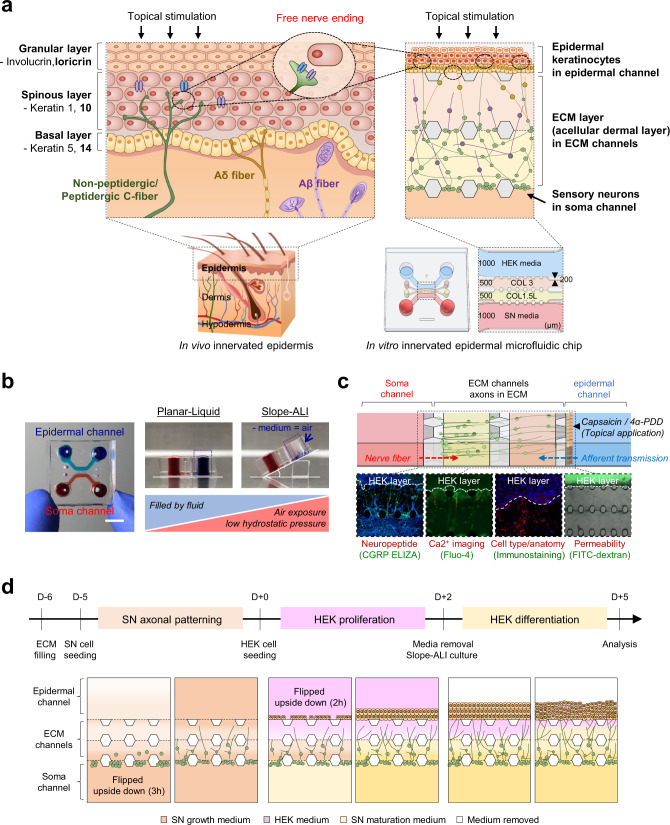
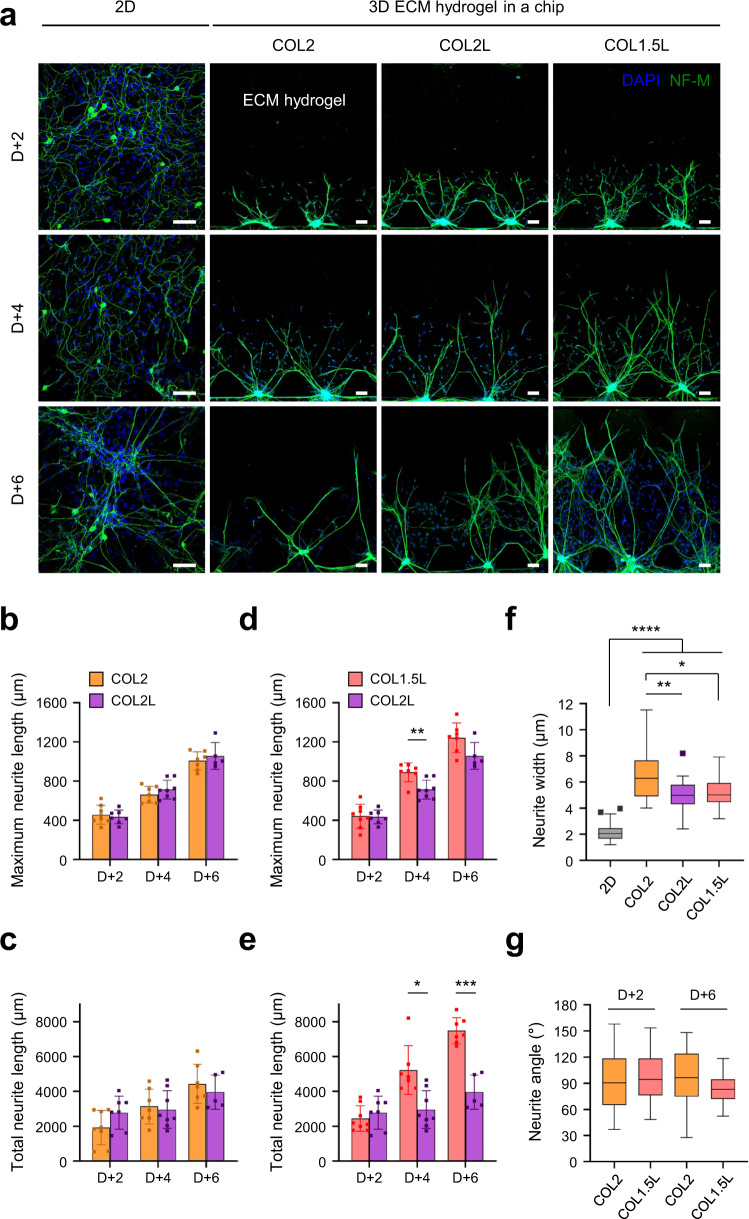
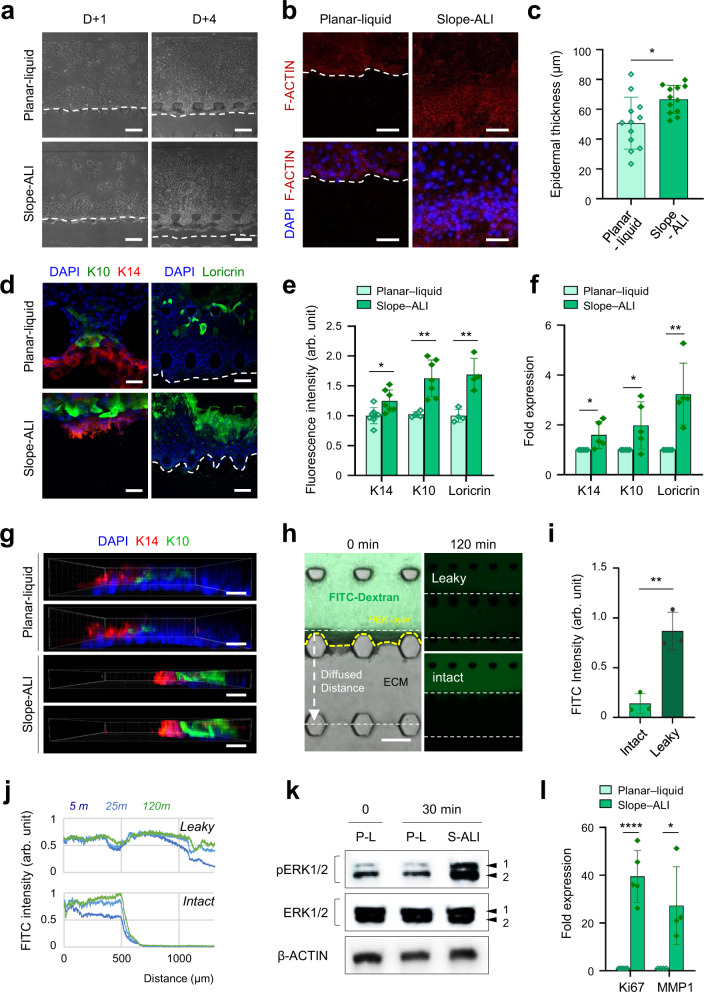
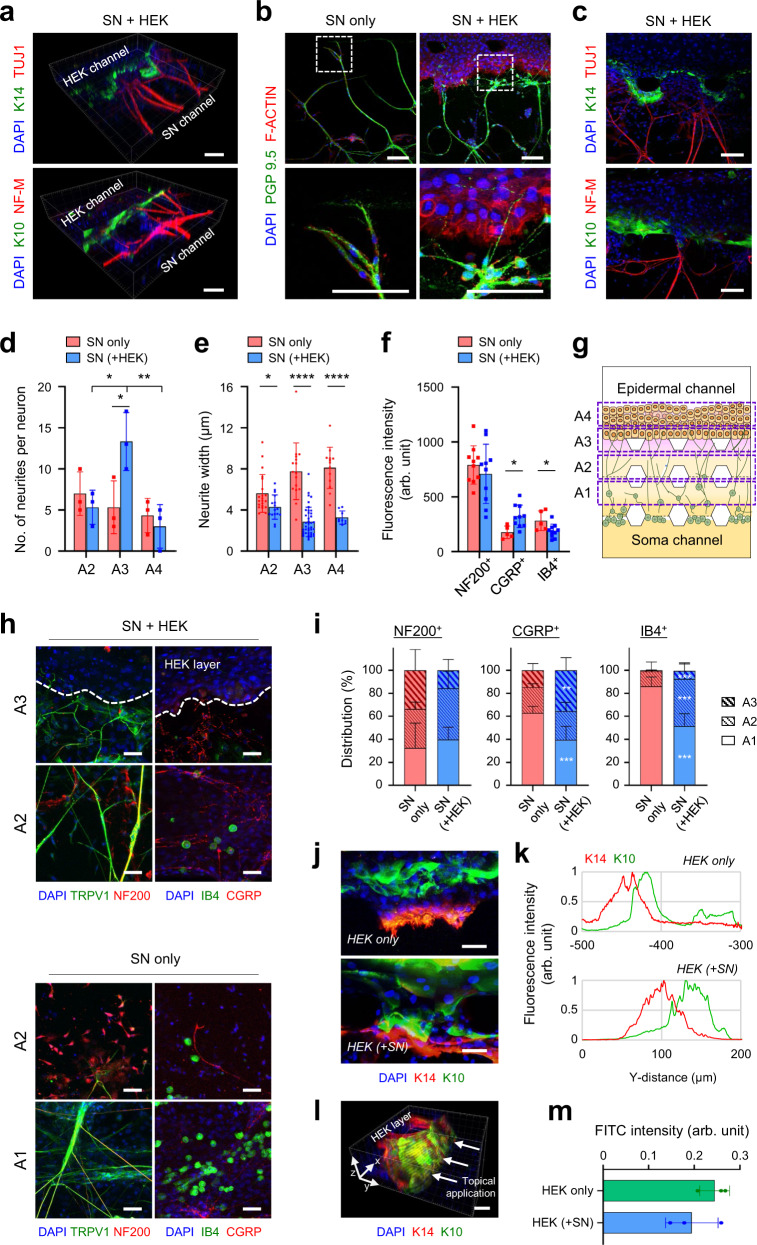
Verification
Claims the paper makes
The claims and statistics of this paper haven’t been checked yet.
Free: it reads the open-access text and checks the first 5 claims that cite a source we can check. Create a free account to check every claim.
Claims other papers make about this one
Each is checked against this paper’s own text: does it say what the citing paper says it does?
In the citing paper
“Moreover, using a PET membrane may be an effective method of studying drug penetration into cancer cells through the layer of nonmalignant cells.27”
From A layered cancer-on-a-chip system for anticancer drug screening and disease modeling (2023) · cites this paper as [27]
In the citing paper
“Okh et al. 27 proposed a layered skin model in a microfluidic system based on coculture with nerve cells, representing part of a complex and functional tissue.”
From A layered cancer-on-a-chip system for anticancer drug screening and disease modeling (2023) · cites this paper as [27]
Self-check
Percentages, sums and reported differences re-computed from the paper’s own numbers.
The self-check needs the paper’s full text.
Citations
Cites
Unbiased classification of sensory neuron types by large-scale single-cell RNA sequencing
Usoskin, D., Furlan, A., Islam, S., Abdo, H., Lönnerberg, P., Lou, D., Hjerling-Leffler, J., Haeggström, J., Kharchenko, O., Kharchenko, P. V., et al. (2015) · Nature Neuroscience · doi:10.1038/nn.3881 · Cited by 2,136
Cellular death, reactive oxygen species (ROS) and diabetic complications
Volpe, C. M. O., Villar-Delfino, P. H., dos Anjos, P. M. F., & Nogueira-Machado, J. A. (2018) · Cell Death & Disease · doi:10.1038/s41419-017-0135-z · Cited by 1,166
Progress and opportunities for tissue-engineered skin
MacNeil, S. (2007) · Nature · doi:10.1038/nature05664 · Cited by 1,112
Extracellular Matrix and Dermal Fibroblast Function in the Healing Wound
Tracy, L. E., Minasian, R. A., & Caterson, E. J. (2016) · Advances in Wound Care · doi:10.1089/wound.2014.0561 · Cited by 1,008
Mechanisms of sensory transduction in the skin
Lumpkin, E. A., & Caterina, M. J. (2007) · Nature · doi:10.1038/nature05662 · Cited by 859
Tackling Pain at the Source: New Ideas about Nociceptors
Snider, W. D., & McMahon, S. B. (1998) · Neuron · doi:10.1016/s0896-6273(00)81003-x · Cited by 853
Zylka, M. J., Rice, F. L., & Anderson, D. J. (2005) · Neuron · doi:10.1016/j.neuron.2004.12.015 · Cited by 677
Skin tissue engineering — In vivo and in vitro applications
Groeber, F., Holeiter, M., Hampel, M., Hinderer, S., & Schenke-Layland, K. (2011) · Advanced Drug Delivery Reviews · doi:10.1016/j.addr.2011.01.005 · Cited by 633
Microfluidic assay for simultaneous culture of multiple cell types on surfaces or within hydrogels
Shin, Y., Han, S., Jeon, J. S., Yamamoto, K., Zervantonakis, I. K., Sudo, R., Kamm, R. D., & Chung, S. (2012) · Nature Protocols · doi:10.1038/nprot.2012.051 · Cited by 617
Self-citationLi, C.-L., Li, K.-C., Wu, D., Chen, Y., Luo, H., Zhao, J.-R., Wang, S.-S., Sun, M.-M., Lu, Y.-J., Zhong, Y.-Q., et al. (2016) · Cell Research · doi:10.1038/cr.2015.149 · Cited by 460
Cited by
Sampaio, A. R., Maia, R., Ciardulli, M. C., Santos, H. A., & Sarmento, B. F. C. C. (2025) · Materials Today Bio · doi:10.1016/j.mtbio.2025.102053 · Cited by 58
Johnston, A., & Callanan, A. (2023) · Biomimetics · doi:10.3390/biomimetics8020205 · Cited by 56
Cometta, S., Hutmacher, D. W., & Chai, L. (2024) · Biomaterials · doi:10.1016/j.biomaterials.2024.122578 · Cited by 50
Review: 3D cell models for organ-on-a-chip applications
Żuchowska, A., Baranowska, P., Flont, M., Brzózka, Z., & Jastrzębska, E. (2024) · Analytica Chimica Acta · doi:10.1016/j.aca.2024.342413 · Cited by 44
Three‐dimensional multicellular biomaterial platforms for biomedical application
Hao, J., Chen, Q., & Wu, C. (2023) · Interdisciplinary materials · doi:10.1002/idm2.12122 · Cited by 36
Sculpting excitable membranes: voltage-gated ion channel delivery and distribution
Tyagi, S., Higerd‐Rusli, G. P., Akin, E. J., Waxman, S. G., & Dib‐Hajj, S. D. (2025) · Nature reviews. Neuroscience · doi:10.1038/s41583-025-00917-2 · Cited by 35
Organoids/organs-on-chips towards biomimetic human artificial skin
Huang, Y., Wu, X., Xu, Y., Yang, N., Xi, P., Wang, Y., Zhu, Y., & Chen, X. (2025) · Burns & Trauma · doi:10.1093/burnst/tkaf029 · Cited by 28
Hybrid Printing of Fully Integrated Microfluidic Devices for Biosensing
Du, Y., Reitemeier, J., Jiang, Q., Bappy, M. O., Bohn, P. W., & Zhang, Y. (2023) · Small · doi:10.1002/smll.202304966 · Cited by 27
Interfacial engineering for biomolecule immobilisation in microfluidic devices
Ashok, D., Singh, J., Howard, H. R., Cottam, S., Waterhouse, A., & Bilek, M. (2024) · Biomaterials · doi:10.1016/j.biomaterials.2024.123014 · Cited by 24
Fabrication of Hydrogel Microchannels Using Aqueous Two-Phase Printing for 3D Blood Brain Barrier
Oh, H., Kang, M., Bae, E., Jung, Y., Cho, J., Poirier, J., Kim, J. S., Frampton, J. P., Choi, N., & Chung, S. H. (2023) · BioChip Journal · doi:10.1007/s13206-023-00110-6 · Cited by 22
Self-citationA layered cancer-on-a-chip system for anticancer drug screening and disease modeling
Flont, M., Dybko, A., & Jastrzębska, E. (2023) · The Analyst · doi:10.1039/d3an00959a · Cited by 21
The Bioengineering of Microspheric Skin Organoids and Their Application in Drug Screening
Xie, J., Yang, Q., Zhang, Y., Zheng, K., Geng, H., & Wu, Y. (2025) · Advanced Science · doi:10.1002/advs.202416863 · Cited by 21
Gu, X., Wang, L., Liu, S., Valencak, T. G., Tan, L. P., Zhu, Y., Zhou, M., & Shan, T. (2025) · Food Research International · doi:10.1016/j.foodres.2025.117005 · Cited by 21
Advances in Microengineered Platforms for Skin Research
Teertam, S. K., Setaluri, V., & Ayuso, J. M. (2024) · JID Innovations · doi:10.1016/j.xjidi.2024.100315 · Cited by 20
In Vitro Models for Peripheral Nerve Regeneration
Tusnim, J., Kutuzov, P., & Grasman, J. M. (2024) · Advanced Healthcare Materials · doi:10.1002/adhm.202401605 · Cited by 20
Modeling of the brain-lung axis using organoids in traumatic brain injury: an updated review
Kim, J.-T., Song, K., Han, S. W., Youn, D. H., Jung, H., Kim, K., Lee, H., Hong, J. Y., Cho, Y.-J., Kang, S., et al. (2024) · Cell & Bioscience · doi:10.1186/s13578-024-01252-2 · Cited by 17
Self-citationLee, G., Kim, S. J., & Park, J. (2024) · Advanced Healthcare Materials · doi:10.1002/adhm.202303716 · Cited by 16
Chen, Z., Kalhori, D., Rakhshani, F., Baraka, O. E., Qu, L., Kolle, S. N., Andre, V., Deisenroth, T. W., & Kumacheva, E. (2025) · Science Advances · doi:10.1126/sciadv.adu1251 · Cited by 17
Materials-based hair follicle engineering: Basic components and recent advances
Lv, Y., Yang, W., Kannan, P. R., Zhang, H., Zhang, R., Zhao, R., & Kong, X. (2024) · Materials Today Bio · doi:10.1016/j.mtbio.2024.101303 · Cited by 14
Kim, M., Choi, S., Choi, D., Ahn, J.-C., Lee, D., Song, E., Kim, M., Kim, M., Choi, S., Oh, S., et al. (2024) · NPG Asia Materials · doi:10.1038/s41427-023-00527-3 · Cited by 14
Self-citationBiological Barrier Models-on-Chips: A Novel Tool for Disease Research and Drug Discovery
Caragnano, G., Monteduro, A. G., Rizzato, S., Giannelli, G., & Maruccio, G. (2025) · Biosensors · doi:10.3390/bios15060338 · Cited by 12
Guo, M., Deng, Y., Huang, J., Huang, Y., Deng, J., & Wu, H. (2023) · Polymers · doi:10.3390/polym15153183 · Cited by 12
Lee, D.-H., Yang, K. C., & Xie, J. (2024) · Advanced technology in neuroscience . · doi:10.4103/atn.atn-d-24-00007 · Cited by 11
Biomaterials meet organ-on-chips – a perspective on tumor modeling
Monteiro, C. F., Deus, I. A., Custódio, C. A., & Mano, J. F. (2024) · International Materials Reviews · doi:10.1177/09506608241303436 · Cited by 10
Ding, X., Xu, N., Zhang, W., & Wang, P. (2025) · Lab on a Chip · doi:10.1039/d5lc00631g · Cited by 10
Towards the development of sensation-enabled skin substitutes
Moradikhah, F., Farahani, M., & Shafiee, A. (2024) · Biomaterials Science · doi:10.1039/d4bm00576g · Cited by 10
Grumezescu, V., & Duta, L. (2026) · Biomimetics · doi:10.3390/biomimetics11010066 · Cited by 9
Three-dimensional models of human skin for biomedical applications
Yadav, S., & Nguyen, N. (2025) · Biophysics Reviews · doi:10.1063/5.0251982 · Cited by 11
Report of the Assay Guidance Workshop on 3-Dimensional Tissue Models for Antiviral Drug Development
Jordan, R., Ford‐Scheimer, S. L., Alarcon, R. M., Atala, A., Borenstein, J. T., Brimacombe, K. R., Cherry, S. R., Clevers, H. C., Davis, M. I., Funnell, S. G. P., et al. (2023) · The Journal of Infectious Diseases · doi:10.1093/infdis/jiad334 · Cited by 9
The future of toxicity testing: the emerging role of organ-on-a-chip platforms
Kocadal, K., Battal, D., & Saygı, Ş. (2025) · Toxicological Research · doi:10.1007/s43188-025-00327-7 · Cited by 8
Machine Learning Guided Design of Nerve‐On‐A‐Chip Platforms with Promoted Neurite Outgrowth
Chung, T., Liang, C., Huang, M., Chen, T., Little, J. M., Shrestha, S., Li, Y. E., Lee, I., & Chen, P. (2025) · Advanced Functional Materials · doi:10.1002/adfm.202506074 · Cited by 7
Decoding Pain: Next‐Generation In Vitro Systems for Mechanistic Insights and Drug Discovery
Khosrowshahi, D., Lagae, L., & Bolander, J. (2025) · The FASEB Journal · doi:10.1096/fj.202501025rr · Cited by 6
Advances in skin-on-a-chip technology: Functional innovations and translational challenges
Zhang, J., Zhang, Q., Fang, X., Guo, G. S., & Wang, X. (2025) · TrAC Trends in Analytical Chemistry · doi:10.1016/j.trac.2025.118500 · Cited by 6
Lamberti, A., Villalba‐Riquelme, E., Fernández-Carvajal, A. M., & Ferrer-Montiel, A. V. (2026) · Frontiers in Pharmacology · doi:10.3389/fphar.2026.1762734 · Cited by 6
Egriboz, O., Fehrholz, M., Tsutsumi, M., Sousa, M. S. E., Chéret, J., Funk, W., Kückelhaus, M., Paus, R., Kajiya, K., Piccini, I., et al. (2025) · Pigment Cell & Melanoma Research · doi:10.1111/pcmr.13217 · Cited by 6
Harnessing CRISPR technology for next-generation microphysiological systems
Song, S., Kang, H. W., Kang, M., Chung, S. H., Choi, N., Kim, H. N., & Sung, Y. J. (2025) · TrAC Trends in Analytical Chemistry · doi:10.1016/j.trac.2025.118164 · Cited by 6
Self-citationMiura, S., Nie, M., Emoto, K., & Takeuchi, S. (2024) · ACS Biomaterials Science & Engineering · doi:10.1021/acsbiomaterials.4c01097 · Cited by 5
Infrared imaging with visible light in microfluidic devices: the water absorption barrier
Suryana, M., Produit, T., Yang, H., Birarda, G., Shanmugar, J. V., Krivitsky, L. A., Paterova, A. V., & Grenci, G. (2024) · The Analyst · doi:10.1039/d4an01201a · Cited by 5
He, S., Wang, Z., Wang, R., Chi, B., Wang, Y., Bu, L., Wu, J., Li, H., & Huang, Q. (2024) · Journal of Drug Delivery Science and Technology · doi:10.1016/j.jddst.2024.105722 · Cited by 5
Development of an innervated human skin equivalent to model nociceptive circuitry in vitro
Bellantoni, D., Casale, C., Mazio, C., Urciuolo, F., Imparato, G., & Netti, P. A. (2025) · Biomaterials · doi:10.1016/j.biomaterials.2025.123808 · Cited by 4
Bessy, T., Martinez, A. D., Baquerre, C., Grégoire, C., Batut, A., Berthelin, A., Dubuisson, L., Teluob, S., Azéma, A., Roussel, L., et al. (2025) · Lab on a Chip · doi:10.1039/d5lc00867k · Cited by 4
Moving lab-grown tissues into the clinic: organ-on-a-chip and bioengineered skin systems
Reed-McBain, C. A., Patel, J. D., Reed-McBain, F. L. K., Al‐Adra, D. P., Virumbrales-Muñoz, M., & Ayuso, J. M. (2024) · Frontiers in Lab on a Chip Technologies · doi:10.3389/frlct.2024.1383783 · Cited by 5
Modeling neuropathic pain in a dish
Zebochin, I., Denk, F., & Nochi, Z. (2024) · International review of neurobiology · doi:10.1016/bs.irn.2024.10.003 · Cited by 3
He, Z., Diao, J., Hamel, F. G., & Duan, B. (2026) · Bioactive Materials · doi:10.1016/j.bioactmat.2026.02.023 · Cited by 4
Novel Technologies for Exploring the Skin–Brain Axis
Medina, D. M., & Santoro, F. (2026) · Advanced Sensor Research · doi:10.1002/adsr.202500155 · Cited by 3
Organoid Models of the Oral Mucosa for Precision Medicine
Atwa, A., Wadan, A. S., Hallool, S. I., Shati, A. A., Elbehairi, S. E. I., Alfaifi, M. Y., & Hussein, A. M. (2026) · Tissue Engineering Part B Reviews · doi:10.1177/19373368261420588 · Cited by 3
Abedini‐Nassab, R., Adibi, E., & Ahmadiasl, S. (2024) · Scientific Reports · doi:10.1038/s41598-024-74761-2 · Cited by 3
When microfluidics meets pharmaceutical analysis
Ai, Y., Li, L., Xie, R., Wang, P., Guo, H., Ren, F., He, M., & Liang, Q. (2025) · TrAC Trends in Analytical Chemistry · doi:10.1016/j.trac.2025.118518 · Cited by 2
Tailoring human joint-on-a-chip: from biological principles, materials, to disease modeling
Wang, X., Ong, L. J. Y., Karperien, M., & Wen, C. (2025) · Materials Today Bio · doi:10.1016/j.mtbio.2025.102549 · Cited by 2
Innervating 3D in vitro models: bioengineering and design blueprints
de Carvalho, M.-T., Henriques‐Pereira, M., Monteiro, M. V., Lamghari, M., Mano, J. F., & Gaspar, V. M. (2025) · Trends in biotechnology · doi:10.1016/j.tibtech.2025.05.012 · Cited by 2
Jin, S., Wu, Q., Chang, S., Zeng, S., Yin, J., & Ma, H. (2025) · Electrophoresis · doi:10.1002/elps.70020 · Cited by 1
Răileanu, M., Tihăuan, B.-M., Lixandru-Petre, I.-O., Gheorghiu, G.-L., Pîrcălăbioru, G. G., Cioca, G., Iliescu, F. S., & Iliescu, C. (2025) · APL Bioengineering · doi:10.1063/5.0268706 · Cited by 1
Ahn, J., Jin, G., Cho, M., Do, M., Ahn, J., Ko, J., & Bang, S. (2026) · Materials Today Bio · doi:10.1016/j.mtbio.2026.103223 · Cited by 1
Self-citationKalshetti, D., Amin, M., Varsani, R., Narayanan, A., Ciurca, S., Grijalva, I., Lickfeld, A., Lukan, J. K., Schwaitzberg, S. D., & Arany, P. (2026) · Advances in Wound Care · doi:10.1177/21621918261450363 · Cited by 1
Qu, H., Tong, L., Lou, Q., Qing, L., Tao, M., & Luo, H. (2026) · Frontiers in Bioengineering and Biotechnology · doi:10.3389/fbioe.2026.1846566 · Cited by 1
Skin innervation and its in vitro modeling
Genin, É., Guerber, L., Aymard, E., Leng, J., Amédée, J., Desmoulière, A., & Berthod, F. (2026) · Frontiers in Cellular Neuroscience · doi:10.3389/fncel.2026.1904623 · Cited by 1
Singh, H., Mohanto, S., Kumar, A., Mishra, A. K., Kumar, A., Mishra, A., Ahmed, M. G., Singh, M., Yadav, A. P., Chopra, S., et al. (2025) · Pathology - Research and Practice · doi:10.1016/j.prp.2025.155869 · Cited by 1
The role of the TRPV1-CGRP axis in the mucosal pathophysiology of HSV-2/HIV-1 co-infection
Mariotton, J. (2024) · theses.fr (ABES) · doi:10.70675/43d0e3cdz7290z4c79z9beaz351fcaf83c4a
Clément, B., Osselaer, T., Zhang, C., Paccagnan, G., Ruff, T., & Vörös, J. (2026) · bioRxiv (Cold Spring Harbor Laboratory) · doi:10.64898/2026.01.06.698004
Jin, A., Shim, S. W., Shim, M., Lee, Y. K., Hong, J., Roh, D., Hyung, S., Oh, S. B., & Jeon, N. L. (2026) · Advanced Healthcare Materials · doi:10.1002/adhm.202504121
Roll, F. (2026) · RWTH Publications (RWTH Aachen) · doi:10.18154/rwth-2026-02673
Larpthavee, P., Chomtong, T., Pormrungruang, P., Surassmo, S., & Rahong, S. (2026) · Lab on a Chip · doi:10.1039/d6lc00175k
Progress and perspectives on hydrogel-assisted skin organoids
Zheng, Y., Luo, Z., Li, Y., Huang, X., He, Y., Zhang, H., Zhu, Y., Reid, R. R., He, T., & Chen, L. (2026) · Organoid Research · doi:10.36922/or026060009
Kim, T., Kim, C., Ju, F. N., Eom, Y.-S., Wi, J.-K., & Kim, C. G. (2026) · Research Square · doi:10.21203/rs.3.rs-9987375/v1
Zhao, W., & Zheng, T. (2026) · Chinese Chemical Letters · doi:10.1016/j.cclet.2026.113148
Towards label-free, non-invasive phenotypic characterization of advanced cell culture models
Naber, T. (2026) · University of Regensburg Publication Server (University of Regensburg) · doi:10.5283/epub.77522
Pandya, T. J., Shariatzadeh, F. J., Logsetty, S., Spiwak, R. P., & Liu, S. (2026) · Acta Biomaterialia · doi:10.1016/j.actbio.2026.08.006
An Innervated Human Skin Equivalent that Electrically Encodes Mechanical and Thermal Stimuli
Bellantoni, D., Casale, C., Sperduti, M., Tagliamonte, N. L., Imparato, G., Zollo, L., & Netti, P. A. (2026) · Advanced Science · doi:10.1002/advs.77105
Li, Z., Liu, X., Zhang, Z., Zhang, J., Si, N., Gu, Z., Chen, Z., & Yin, N. (2026) · Chemical Engineering Journal · doi:10.1016/j.cej.2026.181617
Cell-Laden 3D-Bioprinted Artificial Skin Grafts for Tissue Engineering Wound Healing
Wang, X., Ye, Z., Chen, J., 顾子春, Tan, W., & Yan, J. (2026) · ACS Biomaterials Science & Engineering · doi:10.1021/acsbiomaterials.6c01007
Anderle, N., van der Moolen, M., Teufel, C., Weghofer, A., Spangenberger, C., Cipriano, M., & Loskill, P. (2026) · Elsevier eBooks · doi:10.1016/b978-0-443-16110-0.00001-7
Zhu, Q., Liu, W., Lv, X., & Wu, X. (2026) · ACS Omega · doi:10.1021/acsomega.6c08734
Metadata
- Authors
- Ahn, J., Ohk, K., Won, J., Choi, D.-H., Jung, Y. H., Yang, J. H., Jun, Y., Kim, J.-A., Chung, S., & Lee, S.-H.
- Affiliations
- Korea University (KR)
- Corresponding author
- Chung, Seok
- Venue
- Nature Communications
- Published
- 2023-03-17
- Volume
- 14
- Issue
- 1
- Pages
- 1488-1488
- ISSN
- 2041-1723 (ISSN-L)
- PMC
- PMC10023681
- OpenAlex
- W4327743352
- Semantic Scholar
- 6e6f16c17a370c29651fc4c47591d3273fc9274f
- Cited by
- 65
- References
- 60
- Citations by year
- 2026: 17 · 2025: 23 · 2024: 18 · 2023: 7
- FWCI
- 5.13
- Type
- journal article
- Language
- en
- Open access
- gold
- doi.org
- Licence
- cc-by
- creativecommons.org/licenses/by/4.0 (tdm)
- creativecommons.org/licenses/by/4.0 (vor)
- Locations
- Nature Communications (publishedVersion, cc-by)
- PubMed Central (publishedVersion, cc-by)
- PubMed (publishedVersion)
- RePEc: Research Papers in Economics (submittedVersion)
- DOAJ (DOAJ: Directory of Open Access Journals) (submittedVersion, cc-by-sa)
- Funders
- Ministry of Trade, Industry and Energy (20015148)
- Ministry of Science and ICT, South Korea (20009125)
- Samsung (SRFC-IT1901-51)
- Korea Evaluation Institute of Industrial Technology (20009125)
- Topics
- Physical Sciences › Engineering › Biomedical Engineering › 3D Printing in Biomedical Research
- Life Sciences › Biochemistry, Genetics and Molecular Biology › Cell Biology › Skin and Cellular Biology Research
- Life Sciences › Neuroscience › Cellular and Molecular Neuroscience › Neuroscience and Neural Engineering
- Keywords
- skin equivalents, epidermal keratinocytes, sensory neurons, microfluidics, air-liquid interface, 3D skin model, skin barrier function, epidermal stratification, in situ imaging, in vitro skin model
- MeSH terms
- Cells, Cultured, Epidermis, Sensory Receptor Cells, Skin, Keratinocytes, Coculture Techniques, Microfluidics
About these checks
Registry, retraction, Cites and statistics results are computed, not judged, with one exception: a printed reference that no index lists is read once by a model before it counts as a citation error. Claims are extracted by a model and kept only when their quote appears verbatim in the text; each cited source is then checked, with a model’s help, for whether it says what the claim relies on. Those verdicts can be wrong — read the claim’s quote and the cited source before relying on one.
Statistics and arithmetic are recomputed, not judged.
Confidence bands are shown only for fields calibrated on our annotated test set. None is calibrated yet, so no band is shown.
What counts as a claim ›How we measure confidence ›How we check this ›
Are you an author, or do you see a problem with this page? Request a review
Data sources
Bibliographic data: Semantic Scholar, OpenAlex, Crossref.
Contains information from the Semantic Scholar Academic Graph Datasets, made available under the ODC Attribution License (ODC-BY 1.0).
Semantic Scholar’s data is described in: Kinney, R., et al. (2023). The Semantic Scholar Open Data Platform. arXiv:2301.10140.
