

Descending GABAergic pathway links brain sugar-sensing to peripheral nociceptive gating in Drosophila
Open accessThe DOI matches its Crossref record; 82 of the 82 references it cites were found in a registry or an index.
Abstract
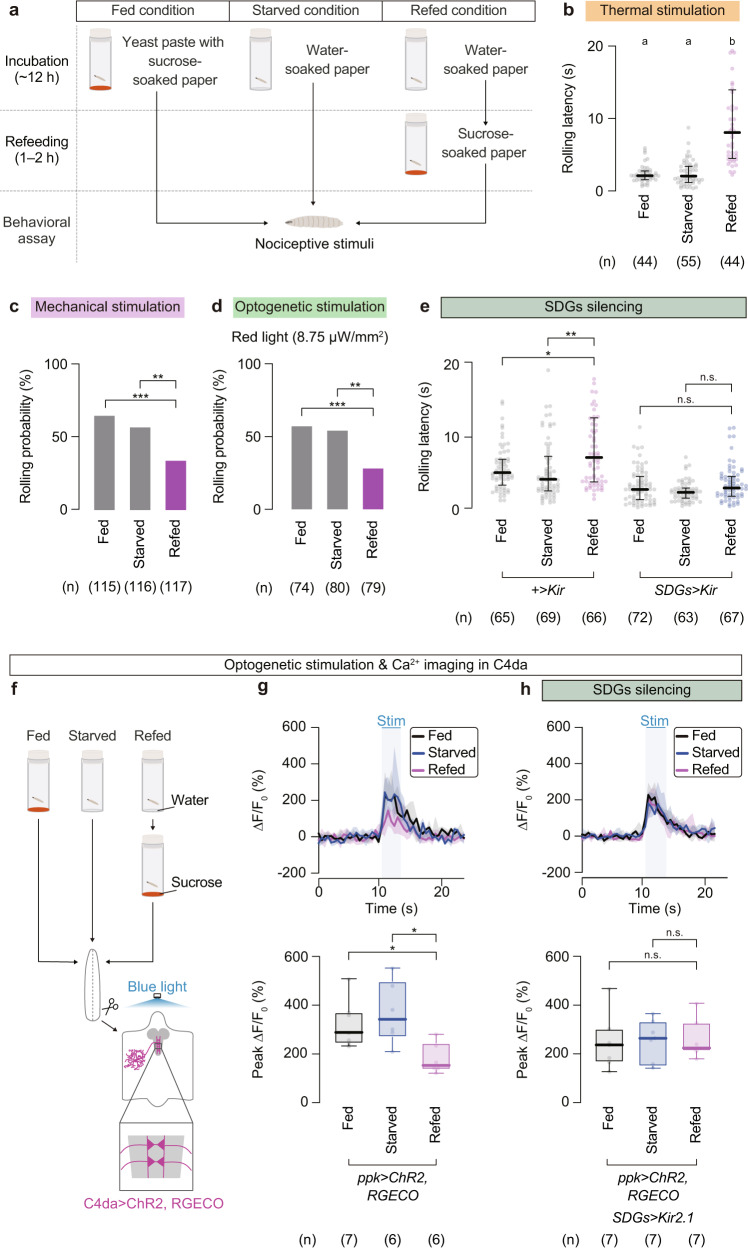
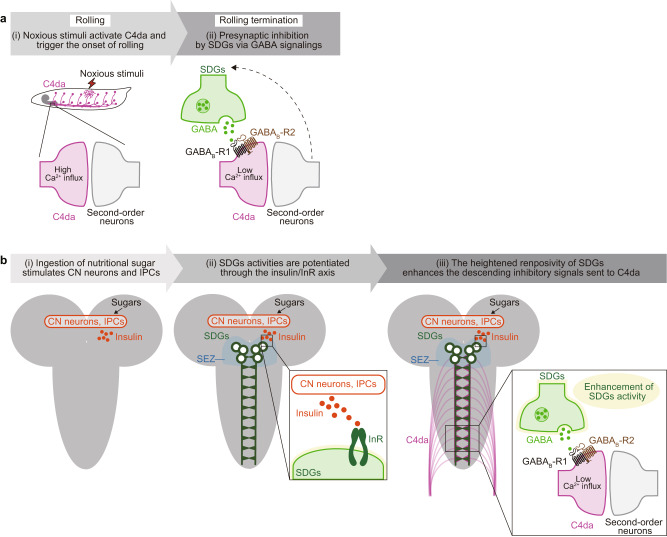
Although painful stimuli elicit defensive responses including escape behavior for survival, starved animals often prioritize feeding over escape even in a noxious environment. This behavioral priority is typically mediated by suppression of noxious inputs through descending control in the brain, yet underlying molecular and cellular mechanisms are incompletely understood. Here we identify a cluster of GABAergic neurons in Drosophila larval brain, designated as SEZ-localized Descending GABAergic neurons (SDGs), that project descending axons onto the axon terminals of the peripheral nociceptive neurons and prevent presynaptic activity through GABAB receptors. Remarkably, glucose feeding to starved larvae causes sustained activation of SDGs through glucose-sensing neurons and subsequent insulin signaling in SDGs, which attenuates nociception and thereby suppresses escape behavior in response to multiple noxious stimuli. These findings illustrate a neural mechanism by which sugar sensing neurons in the brain engages descending GABAergic neurons in nociceptive gating to achieve hierarchical interaction between feeding and escape behavior.
Overview
The claims and statistics of this paper haven’t been checked yet.
Free: it reads the open-access text and checks the first 5 claims that cite a source we can check. Create a free account to check every claim.
Integrity signals
Registry
Cites
Statistics
Figures
Verification
Claims the paper makes
The claims and statistics of this paper haven’t been checked yet.
Free: it reads the open-access text and checks the first 5 claims that cite a source we can check. Create a free account to check every claim.
Claims other papers make about this one
Each is checked against this paper’s own text: does it say what the citing paper says it does?
In the citing paper
“But sensory circuits can also be modulated: descending inhibitory neurons may gate the pain response during starvation to sustain feeding [69].”
From Descending control of motor sequences in Drosophila (2024) · cites this paper as [69]
Self-check
Percentages, sums and reported differences re-computed from the paper’s own numbers.
The self-check needs the paper’s full text.
Citations
Cites
A pyramid approach to subpixel registration based on intensity
Thevenaz, P., Ruttimann, U. E., & Unser, M. (1998) · IEEE Transactions on Image Processing · doi:10.1109/83.650848 · Cited by 3,078
Independent optical excitation of distinct neural populations
Klapoetke, N. C., Murata, Y., Kim, S. S., Pulver, S. R., Birdsey-Benson, A., Cho, Y. K., Morimoto, T. K., Chuong, A. S., Carpenter, E. J., Tian, Z., et al. (2014) · Nature Methods · doi:10.1038/nmeth.2836 · Cited by 2,344 · cited 1×
“We also examined acute actions of SDGs on nociceptive modulation by conducting optogenetic experiments with larvae expressing the red-light-sensitive opsinCsChrimson 40,41 inSDGs.”
BackgroundA GAL4-Driver Line Resource for Drosophila Neurobiology
Jenett, A., Rubin, G. M., Ngo, T.-T. B., Shepherd, D., Murphy, C., Dionne, H., Pfeiffer, B. D., Cavallaro, A., Hall, D., Jeter, J., et al. (2012) · Cell Reports · doi:10.1016/j.celrep.2012.09.011 · Cited by 1,449 · cited 1×
“We also examined acute actions of SDGs on nociceptive modulation by conducting optogenetic experiments with larvae expressing the red-light-sensitive opsinCsChrimson 40,41 inSDGs.”
BackgroundAn Expanded Palette of Genetically Encoded Ca 2+ Indicators
Zhao, Y., Araki, S., Wu, J., Teramoto, T., Chang, Y.-F., Nakano, M., Abdelfattah, A. S., Fujiwara, M., Ishihara, T., Nagai, T., et al. (2011) · Science · doi:10.1126/science.1208592 · Cited by 1,260 · cited 1×
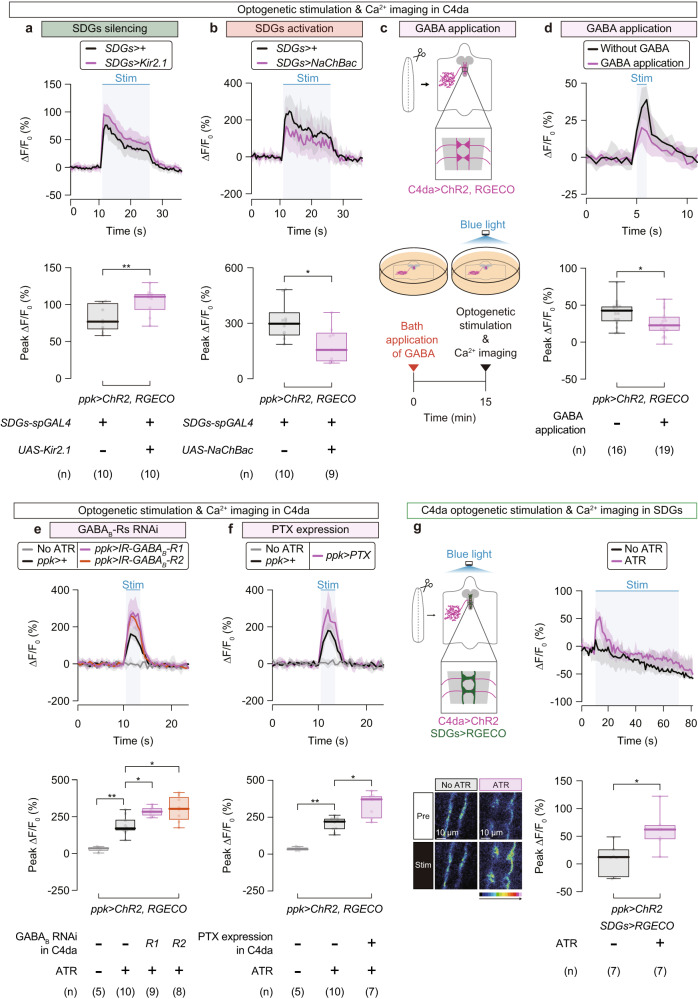
“To test this model, we optogenetically activated C4da neurons using the channelrhodopsin-2 (ChR2 49,50 ) expressed in C4da neurons and measured intracellular calcium (Ca 2+ ) levels at C4da axon terminals simultaneously using the red-shifted Ca 2+ indicator RGECO 33,51 .”
MethodOssipov, M. H., Dussor, G. O., & Porreca, F. (2010) · Journal of Clinical Investigation · doi:10.1172/jci43766 · Cited by 1,159 · cited 1×
“This nociceptive sensory processing is often modulated by both the local interneurons in the spinal cord and the descending neurons in the brain that directly innervate the nociceptive circuit in the spinal cord 15,21 .”
BackgroundNociceptors—Noxious Stimulus Detectors
Woolf, C. J., & Ma, Q. (2007) · Neuron · doi:10.1016/j.neuron.2007.07.016 · Cited by 1,048 · cited 1×
“Once an animal receives potentially harmful stimuli such as harsh mechanical inputs, pungent chemicals, or nox-ious heat, it immediately escapes from noxious environments 3 .”
Backgroundpainless, a Drosophila Gene Essential for Nociception
Tracey, W. D., Wilson, R. I., Laurent, G., & Benzer, S. (2003) · Cell · doi:10.1016/s0092-8674(03)00272-1 · Cited by 839 · cited 1×
“1a) 30 – 33 .”
Gebhart, G. F. (2004) · Neuroscience & Biobehavioral Reviews · doi:10.1016/j.neubiorev.2003.11.008 · Cited by 590 · cited 1×
“Previousstudies suggest that thehierarchicalinteraction between feeding and nociceptive responses is in part mediated by nociceptive suppression through descending control in the brain 13 – 15 .”
BackgroundInhibition of hypothalamic neuropeptide Y gene expression by insulin.
Schwartz, M. W., Sipols, A. J., Marks, J. L., Sanacora, G., White, J. D., Scheurink, A., Kahn, S. E., Baskin, D. G., Woods, S. C., & Figlewicz, D. P. (1992) · Endocrinology · doi:10.1210/endo.130.6.1597158 · Cited by 555 · cited 1×
“Similarly, insulin signaling regulates expression levels of multiple neuropeptides in mammalian hypothalamic neurons 74,75 .”
BackgroundLateral presynaptic inhibition mediates gain control in an olfactory circuit
Olsen, S. R., & Wilson, R. I. (2008) · Nature · doi:10.1038/nature06864 · Cited by 549 · cited 3×
“…form functional heterodimers coupled with G α i /G α o 45,46 , C4da neuron-targeted expression of pertussis toxin (PTX), which inhibits G α i /G α o proteins through selective ADP-ribosylation 47,48 , effectively extended the duration of rolling induced by optogenetic C4da neuron stimulation (Fig.”
BackgroundSchuler, V., Lüscher, C., Blanchet, C., Klix, N., Sansig, G., Klebs, K., Schmutz, M., Heid, J., Gentry, C., Urban, L., et al. (2001) · Neuron · doi:10.1016/s0896-6273(01)00345-2 · Cited by 538
Presynaptic facilitation by neuropeptide signaling mediates odor-driven food search
Root, C. M., Ko, K. I., Jafari, A., & Wang, J. W. (2011) · Cell · doi:10.1016/j.cell.2011.02.008 · Cited by 526 · cited 1×
“In Drosophila , insulin signaling transcriptionally regulates expression levels of sNPF receptors and Tachykinin receptors in particular classes of the olfactory receptor neurons, which facilitates food-searching behavior 72,73 .”
BackgroundA multilevel multimodal circuit enhances action selection in drosophila
Ohyama, T., Schneider-Mizell, C. M., Fetter, R. D., Aleman, J. V., Franconville, R., Rivera-Alba, M., Mensh, B. D., Branson, K. M., Simpson, J. H., Truman, J. W., et al. (2015) · Nature · doi:10.1038/nature14297 · Cited by 502 · cited 2×
“In the VNC, C4da axonterminalsformsynapticcontactswithmultipleidenti fi edsecond-order neurons including some with ascending projections to the brain (for example, A08n) and others, such as mCSIs, that output to motoneurons for re fl ex responses 27,28,34,35 .”
BackgroundLight-avoidance-mediating photoreceptors tile the Drosophila larval body wall
Xiang, Y., Yuan, Q., Vogt, N., Looger, L. L., Jan, L. Y., & Jan, Y. N. (2010) · Nature · doi:10.1038/nature09576 · Cited by 462 · cited 1×
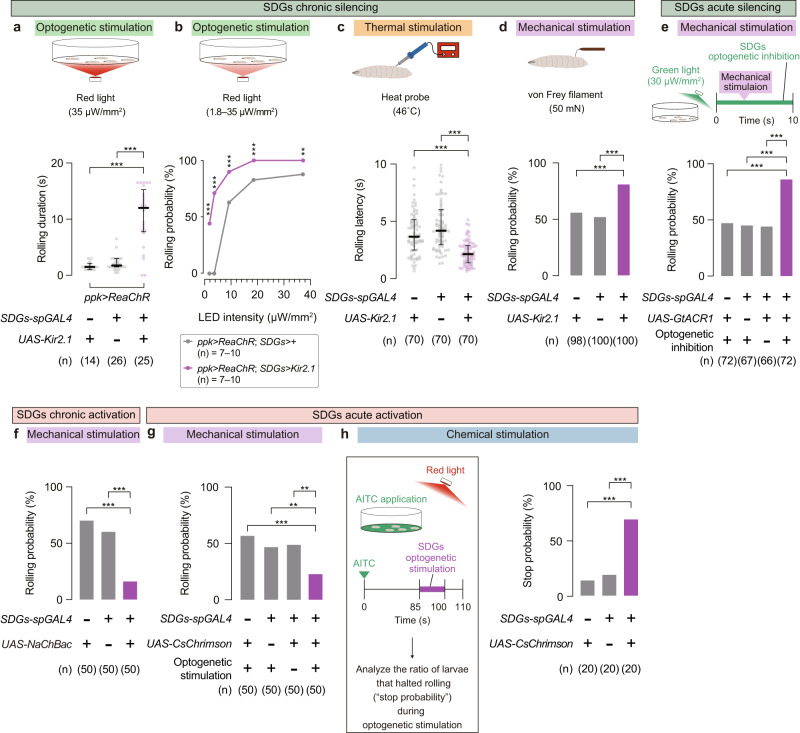
“Allyl isothiocyanate (AITC), a pungent compound found in cruciferous plants such as wasabi, elicits larval rolling by stimulating TRPA1 channels expressed at the outer body surface including C4da nociceptors 34,42,43 .”
BackgroundHigh-efficiency channelrhodopsins for fast neuronal stimulation at low light levels
Berndt, A., Schoenenberger, P., Mattis, J., Tye, K. M., Deisseroth, K., Hegemann, P., & Oertner, T. G. (2011) · Proceedings of the National Academy of Sciences · doi:10.1073/pnas.1017210108 · Cited by 442
Sucrose as an Analgesic for Newborn Infants
Blass, E. M., & Hoffmeyer, L. B. (1991) · Pediatrics · doi:10.1542/peds.87.2.215 · Cited by 393
McFarland, D. J. (1977) · Nature · doi:10.1038/269015a0 · Cited by 358 · cited 1×
“Animals typically display one behavior at a time, and thus need to assign behavioral priorities 1,2 .”
BackgroundA Presynaptic Gain Control Mechanism Fine-Tunes Olfactory Behavior
Root, C. M., Masuyama, K., Green, D. S., Enell, L. E., Nässel, D. R., Lee, C.-H., & Wang, J. W. (2008) · Neuron · doi:10.1016/j.neuron.2008.07.003 · Cited by 352 · cited 2×
“…neurons though GABA B receptors in Drosophila olfactory and gustatory circuits 48,52 – 54 , we hypothesized that SDGs might become physiologically activated in response to noxious stimuli, prior to exerting their inhibitory effects…”
BackgroundA Brainstem-Spinal Cord Inhibitory Circuit for Mechanical Pain Modulation by GABA and Enkephalins
François, A., Low, S. A., Sypek, E. I., Christensen, A. J., Sotoudeh, C., Beier, K. T., Ramakrishnan, C., Ritola, K. D., Sharif-Naeini, R., Deisseroth, K., et al. (2017) · Neuron · doi:10.1016/j.neuron.2017.01.008 · Cited by 349 · cited 1×
“In contrast, GABAergic but not enkephalinergic (GABA + , Penk − ) neurons facilitate mechanical pain by inhibiting local inhibitory neurons in the spinal cord that pre-synaptically inhibit mechanosensitive primary afferent neurons 62 .”
BackgroundKim, Y. S., Chu, Y., Han, L., Li, M., Li, Z., LaVinka, P. C., Sun, S., Tang, Z., Park, K., Caterina, M. J., et al. (2014) · Neuron · doi:10.1016/j.neuron.2013.12.011 · Cited by 340 · cited 1×
“…modulations, nociceptive neurons in mammalsreceive multipledescending modulatory inputs in the spinal cord including serotonergic and norepinephrinergic inputs from the rostral ventromedial medulla and the locus coeruleus, respectively, which positively and negatively fi ne-tune nociception 67,68 .”
BackgroundMahr, A., & Aberle, H. (2006) · Gene Expression Patterns · doi:10.1016/j.modgep.2005.07.006 · Cited by 299
Nitabach, M. N., Wu, Y., Sheeba, V., Lemon, W. C., Strumbos, J., Zelensky, P. K., White, B. H., & Holmes, T. C. (2006) · The Journal of Neuroscience · doi:10.1523/jneurosci.3915-05.2006 · Cited by 285 · cited 5×
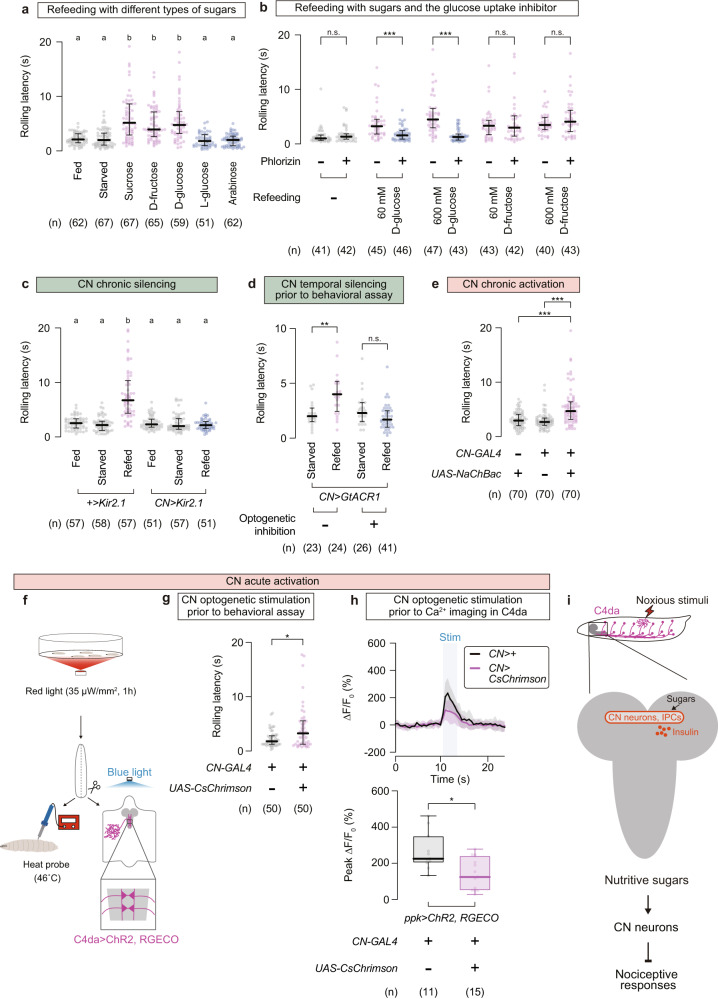
“GtACR1-expressing CN neurons were optogenetically inhibited by green light illumination during the 1-h refeeding period, followed by thermo-nociception assay.”
BackgroundMethodInfluentialDrosophila melanogaster G Protein–Coupled Receptors
Brody, T., & Cravchik, A. (2000) · The Journal of Cell Biology · doi:10.1083/jcb.150.2.f83 · Cited by 268
FENG, Y., UEDA, A., & WU, C.-F. (2004) · Journal of Neurogenetics · doi:10.1080/01677060490894522 · Cited by 261
Hirschberg, S., Li, Y., Randall, A., Kremer, E. J., & Pickering, A. E. (2017) · eLife · doi:10.7554/elife.29808 · Cited by 254 · cited 1×
“…modulations, nociceptive neurons in mammalsreceive multipledescending modulatory inputs in the spinal cord including serotonergic and norepinephrinergic inputs from the rostral ventromedial medulla and the locus coeruleus, respectively, which positively and negatively fi ne-tune nociception 67,68 .”
BackgroundZhong, L., Bellemer, A., Yan, H., Honjo, K., Robertson, J., Hwang, R. Y., Pitt, G. S., & Tracey, W. D. (2012) · Cell Reports · doi:10.1016/j.celrep.2011.11.002 · Cited by 242 · cited 1×
“Allyl isothiocyanate (AITC), a pungent compound found in cruciferous plants such as wasabi, elicits larval rolling by stimulating TRPA1 channels expressed at the outer body surface including C4da nociceptors 34,42,43 .”
BackgroundMapping Neural Circuits with Activity-Dependent Nuclear Import of a Transcription Factor
Masuyama, K., Zhang, Y., Rao, Y., & Wang, J. W. (2012) · Journal of Neurogenetics · doi:10.3109/01677063.2011.642910 · Cited by 231 · cited 1×
“The CaLexA system 58 was applied to measure the activities of CN neurons after sugar refeeding, essentially according to the previous report in adults 36 .”
MethodBrain circuits for pain and its treatment
Mercer Lindsay, N., Chen, C., Gilam, G., Mackey, S., & Scherrer, G. (2021) · Science Translational Medicine · doi:10.1126/scitranslmed.abj7360 · Cited by 229 · cited 4×
“This nociceptive sensory processing is often modulated by both the local interneurons in the spinal cord and the descending neurons in the brain that directly innervate the nociceptive circuit in the spinal cord 15,21 .”
BackgroundResultInfluentialKo, K. I., Root, C. M., Lindsay, S. A., Zaninovich, O. A., Shepherd, A. K., Wasserman, S. A., Kim, S. M., & Wang, J. W. (2015) · eLife · doi:10.7554/elife.08298 · Cited by 226
A Neural Circuit for the Suppression of Pain by a Competing Need State
Alhadeff, A. L., Su, Z., Hernandez, E., Klima, M. L., Phillips, S. Z., Holland, R. A., Guo, C., Hantman, A. W., De Jonghe, B. C., & Betley, J. N. (2018) · Cell · doi:10.1016/j.cell.2018.02.057 · Cited by 218 · cited 1×
“Similarly, refeeding in mice (2-h feeding after 24-h food deprivation) suppressed both acute and chronic pain 69 , whereas hunger (24-h food deprivation) had less effect on acute pain by thermal, mechanical, and chemical insult while selectively abolishing in fl ammatory pain responses 70 .”
BackgroundGustatory Processing in Drosophila melanogaster
Scott, K. (2018) · Annual Review of Entomology · doi:10.1146/annurev-ento-020117-043331 · Cited by 215 · cited 1×
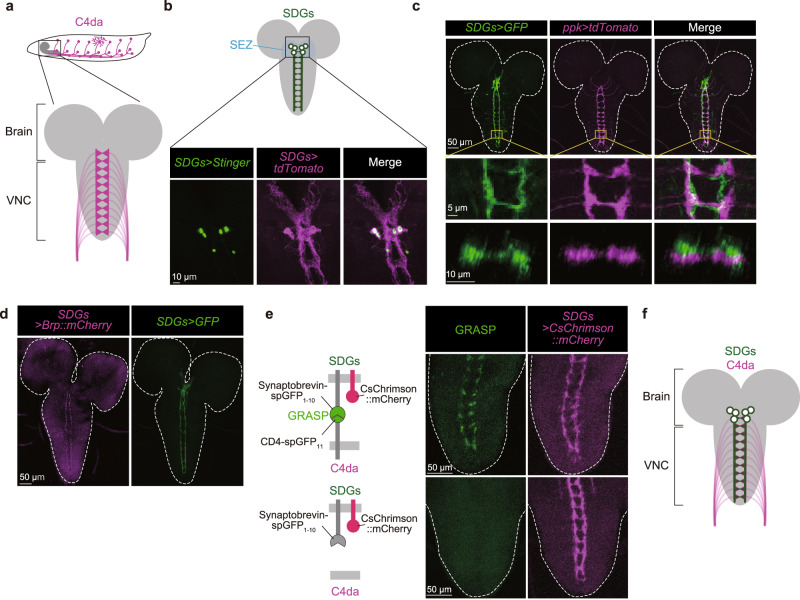
“SDGs are located in the SEZ, the brain region that receives multiple sensory inputs and sends out commands to the VNC and motor neurons 55,56 .”
BackgroundMacpherson, L. J., Zaharieva, E. E., Kearney, P. J., Alpert, M. H., Lin, T.-Y., Turan, Z., Lee, C.-H., & Gallio, M. (2015) · Nature Communications · doi:10.1038/ncomms10024 · Cited by 214 · cited 1×
“…form synaptic contacts with C4da axon terminals, we performed activity-dependent GFP Reconstitution Across Synaptic Partners (Syb-GRASP) analysis 37 and found that presynaptic expression of one half of the split-GFP protein (spGFP 1-10 ) in SDGs generated a ladder-like GRASP signal along their…”
MethodDelgado, R., Maureira, C., Oliva, C., Kidokoro, Y., & Labarca, P. (2000) · Neuron · doi:10.1016/s0896-6273(00)00165-3 · Cited by 211 · cited 1×
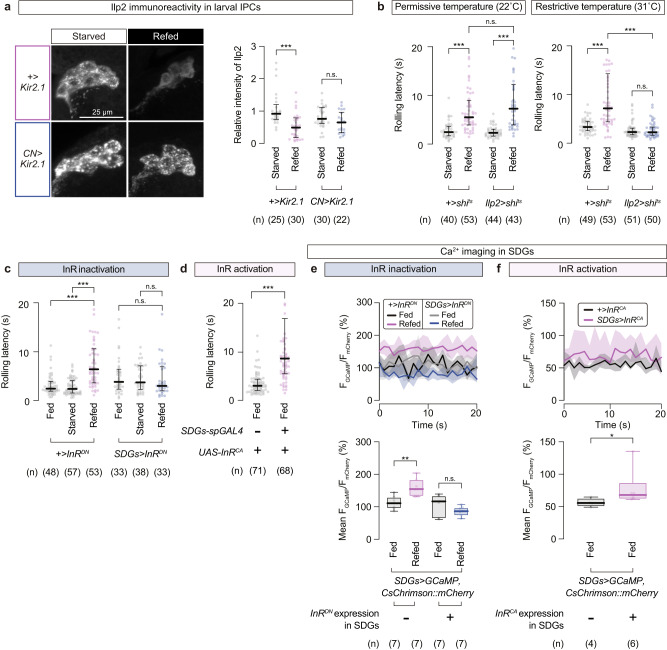
“To this end, we transiently blocked secretion from IPCs by expressing a temperature-sensitive form of dynamin protein ( shibire ts , abbreviated as shi ts ) 59 using insulin-like peptide 2 (ilp2)-GAL4 for temporal silencing of IPCs 36 .”
MethodA glucose-sensing neuron pair regulates insulin and glucagon in Drosophila
Oh, Y., Lai, J. S.-Y., Mills, H. J., Erdjument‐Bromage, H., Giammarinaro, B., Saadipour, K., Wang, J. G., Farhan, A., Neubert, T. A., & Suh, G. S. B. (2019) · Nature · doi:10.1038/s41586-019-1675-4 · Cited by 175 · cited 13×
“Administration of phlor-izin, a competitive inhibitor of glucose transporters that was shown to inhibit D-glucose-induced CN activation 36 , enabling independent stimulation).”
BackgroundMethodInfluentialBrain Glucose-Sensing Mechanism and Energy Homeostasis
López-Gambero, A. J., Martínez, F., Salazar, K., Cifuentes, M., & Nualart, F. (2018) · Molecular Neurobiology · doi:10.1007/s12035-018-1099-4 · Cited by 174 · cited 1×
“Recent studies suggest that multiple different types of glucose-sensing neurons exist in the mammalian brain regions including the hypothalamus, amygdala, and brainstem 76 , although their physiological functions in vivo remain largely unknown.”
BackgroundEvolution of nociception in vertebrates: comparative analysis of lower vertebrates
Sneddon, L. U. (2004) · Brain Research Reviews · doi:10.1016/j.brainresrev.2004.07.007 · Cited by 173 · cited 1×
“Noxious stimuli are typically received by nociceptive neurons, the sensory neurons specialized for their detection 16 – 18 .”
BackgroundInsulin action in the brain: cell types, circuits, and diseases
Chen, W., Cai, W., Hoover, B., & Kahn, C. R. (2022) · Trends in Neurosciences · doi:10.1016/j.tins.2022.03.001 · Cited by 165 · cited 1×
“Recent studies revealed that insulin and insulin-like growth factor (IGF) have a wide variety of brain functions in vertebrates and invertebrates 71 .”
BackgroundCloning and functional expression of GABAB receptors from Drosophila
Mezler, M., Müller, T., & Raming, K. (2001) · European Journal of Neuroscience · doi:10.1046/j.1460-9568.2001.01410.x · Cited by 145
Compartmentalized Calcium Transients Trigger Dendrite Pruning in Drosophila Sensory Neurons
Kanamori, T., Kanai, M. I., Dairyo, Y., Yasunaga, K.-I., Morikawa, R. K., & Emoto, K. (2013) · Science · doi:10.1126/science.1234879 · Cited by 135 · cited 7×
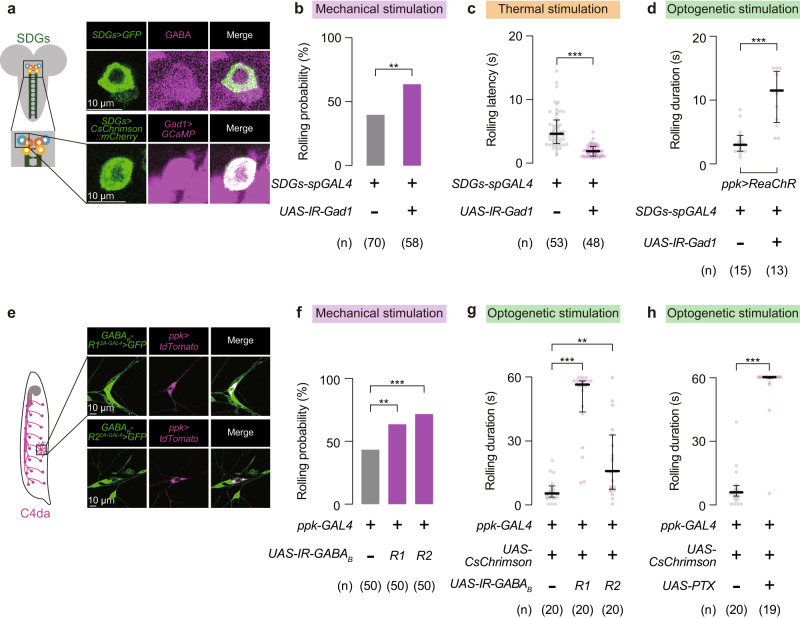
“( KK109166 ) in VIE260b (VDRC#101440), UAS-IR-GABA B -R2 ( KK100020 ) in VIE260b (VDRC#110268). ppk-nlsLexA::p65 in attP2 28 , ppk-GAL4 on X chromosome 77 , and 20XUAS-droRGECO 33 were generated in our lab; UAS-brpD3::mCherry was from T. Suzuki; UAS-PTX was from G. Roman 47 ; CN-GAL4 ( VT58471-GAL4, Cha-GAL80 ) was fr…”
MethodInfluentialSelf-citationIdentifying local and descending inputs for primary sensory neurons
Zhang, Y., Zhao, S., Rodriguez, E., Takatoh, J., Han, B.-X., Zhou, X., & Wang, F. (2015) · Journal of Clinical Investigation · doi:10.1172/jci81156 · Cited by 135 · cited 1×
“A subpopulation of dual GABAergic and enkephali-nergic (GABA + , Penk + ) neurons project axons onto sensory afferent terminals in the dorsal spinal cord and suppress behavioral sensitivity to both heat and mechanical stimuli 61 .”
BackgroundPokes, sunburn, and hot sauce: Drosophila as an emerging model for the biology of nociception
Im, S. H., & Galko, M. J. (2012) · Developmental Dynamics · doi:10.1002/dvdy.22737 · Cited by 132 · cited 1×
“Recent studies reveal that Drosophila larvae have a nociceptive sensory system with a circuit arrangement partially analogous to that inmammals 24 – 26 .”
ResultSensory integration and neuromodulatory feedback facilitate Drosophila mechanonociceptive behavior
Hu, C., Petersen, M., Hoyer, N., Spitzweck, B., Tenedini, F., Wang, D., Gruschka, A., Burchardt, L. S., Szpotowicz, E., Schweizer, M., et al. (2017) · Nature Neuroscience · doi:10.1038/nn.4580 · Cited by 131 · cited 4×
“Like nociceptive circuits in mammals, the nociceptive circuit in Drosophila larvae receives modulatory inputs from local neurons in the VNC 34,35 .”
BackgroundInfluentialA functional subdivision within the somatosensory system and its implications for pain research
Ma, Q. (2022) · Neuron · doi:10.1016/j.neuron.2021.12.015 · Cited by 115 · cited 1×
“In mammals, these noxious inputs are relayed directly to spinal motor neurons to provoke escape behavior and to the second-order neurons inthe spinalcordto higher-order processing centers in the brain 15,19,20 .”
BackgroundMayer, C., & Belsham, D. D. (2009) · Molecular and Cellular Endocrinology · doi:10.1016/j.mce.2009.02.031 · Cited by 113
Buckingham, S. D., Hosie, A. M., Roush, R. L., & Sattelle, D. B. (1994) · Neuroscience Letters · doi:10.1016/0304-3940(94)90578-9 · Cited by 104 · cited 1×
“R) forms a ligand-gated ion channel 44 , whereas metabotropic GABA B -Rs are G-protein-coupled receptors with three subunits (GABA B -R1, R2, and R3) known to date 45 .”
BackgroundRen, K., Blass, E. M., Zhou, Q.-Q., & Dubner, R. (1997) · Proceedings of the National Academy of Sciences · doi:10.1073/pnas.94.4.1471 · Cited by 104 · cited 1×
“In addition, sugar feeding produces analgesic effects in rat and human infants 11,12 .”
BackgroundTRP channels: a journey towards a molecular understanding of pain
Rosenbaum, T., Morales‐Lázaro, S. L., & Islas, L. D. (2022) · Nature reviews. Neuroscience · doi:10.1038/s41583-022-00611-7 · Cited by 104 · cited 1×
“Noxious stimuli are typically received by nociceptive neurons, the sensory neurons specialized for their detection 16 – 18 .”
BackgroundPresynaptic gain control drives sweet and bitter taste integration in Drosophila
Chu, B., Chui, V., Mann, K., & Gordon, M. D. (2014) · Current Biology · doi:10.1016/j.cub.2014.07.020 · Cited by 100 · cited 1×
“…neurons though GABA B receptors in Drosophila olfactory and gustatory circuits 48,52 – 54 , we hypothesized that SDGs might become physiologically activated in response to noxious stimuli, prior to exerting their inhibitory effects on…”
BackgroundInvertebrate nociception: Behaviors, neurons and molecules
Tobin, D. M., & Bargmann, C. I. (2004) · Journal of Neurobiology · doi:10.1002/neu.20082 · Cited by 98
Yoshino, J., Morikawa, R. K., Hasegawa, E., & Emoto, K. (2017) · Current Biology · doi:10.1016/j.cub.2017.06.068 · Cited by 98 · cited 4×
“In the VNC, C4da axonterminalsformsynapticcontactswithmultipleidenti fi edsecond-order neurons including some with ascending projections to the brain (for example, A08n) and others, such as mCSIs, that output to motoneurons for re fl ex responses 27,28,34,35 .”
BackgroundInfluentialSelf-citationA brainstem substrate for analgesia elicited by intraoral sucrose
Anseloni, V. C. Z., Ren, K., Dubner, R. A., & Ennis, M. J. (2005) · Neuroscience · doi:10.1016/j.neuroscience.2005.01.055 · Cited by 94 · cited 1×
“In rodents, electrophysiological studies showed that sugar feeding to starved animals upregulates neural activity of a subpopulation of descending neurons in the brainstem and that pharmacological inactivation of the brainstem neurons attenuates the pain suppression by sugar feeding 22,23 .”
BackgroundBiglou, S. G., Bendena, W. G., & Chin-Sang, I. D. (2021) · Peptides · doi:10.1016/j.peptides.2021.170640 · Cited by 89 · cited 1×
“Since InR is the sole receptor involved in Drosophila insulin signaling 60 , we asked whether genetic manipulations ofInR speci fi cally in SDGs perturb the refeeding-induced nociceptive suppression.”
BackgroundNeural mechanism underlying behavioral choice in Pleurobranchaea
Kovac, M. P., & Davis, W. J. (1980) · Journal of Neurophysiology · doi:10.1152/jn.1980.43.2.469 · Cited by 77
Comparative biology of pain: What invertebrates can tell us about how nociception works
Burrell, B. D. (2017) · Journal of Neurophysiology · doi:10.1152/jn.00600.2016 · Cited by 77
Local endocytosis triggers dendritic thinning and pruning in Drosophila sensory neurons
Kanamori, T., Yoshino, J., Yasunaga, K.-I., Dairyo, Y., & Emoto, K. (2015) · Nature Communications · doi:10.1038/ncomms7515 · Cited by 76
Self-citationMalcangio, M. (2017) · Neuropharmacology · doi:10.1016/j.neuropharm.2017.05.012 · Cited by 74
Presynaptic Inhibition of Pain and Touch in the Spinal Cord: From Receptors to Circuits
Comitato, A., & Bardoni, R. (2021) · International Journal of Molecular Sciences · doi:10.3390/ijms22010414 · Cited by 74 · cited 1×
“Although previous studies suggested multiple roles including presynaptic gating for GABA B receptors in nociceptive circuits 65,66 , underlying mechanisms arenotfullyunderstood.”
G(o) signaling is required for Drosophila associative learning
Ferris, J., Ge, H., Liu, L.-Z., & Roman, G. (2006) · Nature Neuroscience · doi:10.1038/nn1738 · Cited by 70 · cited 1×
“…form functional heterodimers coupled with G α i /G α o 45,46 , C4da neuron-targeted expression of pertussis toxin (PTX), which inhibits G α i /G α o proteins through selective ADP-ribosylation 47,48 , effectively extended the duration of rolling induced by optogenetic C4da neuron stimulation (Fig.”
BackgroundSensory suppression during feeding
Foo, H., & Mason, P. (2005) · Proceedings of the National Academy of Sciences · doi:10.1073/pnas.0506226102 · Cited by 70
Krasne, F., & Lee, S. (1988) · The Journal of Neuroscience · doi:10.1523/jneurosci.08-10-03703.1988 · Cited by 69 · cited 1×
“Prioritizationoffeedingover nociceptiveresponsesis likewiseobservedincray fi shandmollusks 8 – 10 .”
BackgroundThe neuronal logic of how internal states control food choice
Münch, D., Goldschmidt, D., & Ribeiro, C. (2022) · Nature · doi:10.1038/s41586-022-04909-5 · Cited by 68 · cited 1×
“SDGs are located in the SEZ, the brain region that receives multiple sensory inputs and sends out commands to the VNC and motor neurons 55,56 .”
BackgroundHao, J., Xu, X., & Wiesenfeld‐Hallin, Z. (1994) · Neuroscience Letters · doi:10.1016/0304-3940(94)90821-4 · Cited by 67
Medullary circuits for nociceptive modulation
Mason, P. (2012) · Current Opinion in Neurobiology · doi:10.1016/j.conb.2012.03.008 · Cited by 62
Kaneko, T., Macara, A. M., Li, R., Hu, Y., Iwasaki, K., Dunnings, Z., Firestone, E., Horvatic, S., Guntur, A., Shafer, O. T., et al. (2017) · Neuron · doi:10.1016/j.neuron.2017.06.034 · Cited by 61 · cited 16×
“A visual screen of 6849 Janelia GAL4 collections (https:// fl web.janelia.org/cgi-bin/ fl ew.cgi) revealed 9 lines thatappeared to label neurites inthe VNC with close proximity to the distinctive ladder-like axon terminals of C4da neurons.”
BackgroundInfluentialTaylor, M. A., Robertson, A. W., Biggs, P. J., Richards, K. K., Jones, D. F., & Parkar, S. G. (2019) · PLoS ONE · doi:10.1371/journal.pone.0225845 · Cited by 61 · cited 1×
“Indeed, D-glucose and D-fructose, the monosaccharides produced from sucrose inside the insect gut 57 , showed nociceptive suppression at the same concentration as sucrose (Fig.”
BackgroundCasey, K. L., & Morrow, T. J. (1983) · Journal of Neurophysiology · doi:10.1152/jn.1983.50.6.1497 · Cited by 58 · cited 1×
“For instance, food-deprived cats are less likely to withdrawfromacutenoxiouscutaneousheatduringeating 4 ,andfood-deprived chickens show fewer pain-motivated behavior in response to tonic pain produced in the legs while eating takes place 5 .”
BackgroundConserved role for the Dachshund protein with Drosophila Pax6 homolog Eyeless in insulin expression
Okamoto, N., Nishimori, Y., & Nishimura, T. (2012) · Proceedings of the National Academy of Sciences · doi:10.1073/pnas.1116050109 · Cited by 54
Ullrich, S., Gueta, R., & Nagel, G. (2012) · Biological Chemistry · doi:10.1515/hsz-2012-0256 · Cited by 50 · cited 1×
“To test this model, we optogenetically activated C4da neurons using the channelrhodopsin-2 (ChR2 49,50 ) expressed in C4da neurons and measured intracellular calcium (Ca 2+ ) levels at C4da axon terminals simultaneously using the red-shifted Ca 2+ indicator RGECO 33,51 .”
MethodDescending pain modulation: influence and impact
Bannister, K. (2019) · Current Opinion in Physiology · doi:10.1016/j.cophys.2019.06.004 · Cited by 48 · cited 1×
“In mammals, these noxious inputs are relayed directly to spinal motor neurons to provoke escape behavior and to the second-order neurons inthe spinalcordto higher-order processing centers in the brain 15,19,20 .”
BackgroundFeeding-induced Tonic Pain Suppression in the Chicken: Reversal by Naloxone
Wylie, L. M., & Gentle, M. J. (1998) · Physiology & Behavior · doi:10.1016/s0031-9384(98)00020-1 · Cited by 44 · cited 1×
“For instance, food-deprived cats are less likely to withdrawfromacutenoxiouscutaneousheatduringeating 4 ,andfood-deprived chickens show fewer pain-motivated behavior in response to tonic pain produced in the legs while eating takes place 5 .”
BackgroundModulation of defensive reflexes in Aplysia californica by appetitive stimulation
Advokat, C. D. (1980) · Behavioral and Neural Biology · doi:10.1016/s0163-1047(80)92259-1 · Cited by 42 · cited 1×
“Prioritizationoffeedingover nociceptiveresponsesis likewiseobservedincray fi shandmollusks 8 – 10 .”
BackgroundMorikawa, R. K., Kanamori, T., Yasunaga, K.-I., & Emoto, K. (2011) · Proceedings of the National Academy of Sciences · doi:10.1073/pnas.1109843108 · Cited by 42
Self-citationSignaling mechanisms that coordinate the development and maintenance of dendritic fields
Emoto, K. (2012) · Current Opinion in Neurobiology · doi:10.1016/j.conb.2012.04.005 · Cited by 41
Self-citationPresynaptic modulation of early olfactory processing in Drosophila
Wang, J. W. (2011) · Developmental Neurobiology · doi:10.1002/dneu.20936 · Cited by 37
Nociceptive Circuits: Can’t Escape Detection
Chin, M. R., & Tracey, W. D. (2017) · Current Biology · doi:10.1016/j.cub.2017.07.031 · Cited by 33 · cited 3×
“Recent studies reveal that Drosophila larvae have a nociceptive sensory system with a circuit arrangement partially analogous to that inmammals 24 – 26 .”
BackgroundResultDrosophila TRPγ is required in neuroendocrine cells for post-ingestive food selection
Dhakal, S., Ren, Q., Liu, J., Akitake, B., Tekin, I., Montell, C., & Lee, Y. (2022) · eLife · doi:10.7554/elife.56726 · Cited by 27
Murphey, R. K., Froggett, S. J., Caruccio, P., Shan-Crofts, X., Kitamoto, T., & Godenschwege, T. A. (2003) · Development · doi:10.1242/dev.00598 · Cited by 25
Feeding-Mediated Distention Inhibits Swimming in the Medicinal Leech
Gaudry, Q., & Kristan, W. B. (2010) · Journal of Neuroscience · doi:10.1523/jneurosci.1487-10.2010 · Cited by 19 · cited 1×
“Likewise, medicinal leeches show reduced nociceptive response to harsh che-micalsandelectricshockwhilefeeding 6,7 .”
BackgroundThe analgesic effect of refeeding on acute and chronic inflammatory pain
Lee, J.-Y., Lee, G. J., Lee, P. R., Won, C. H., Kim, D., Kang, Y., & Oh, S. B. (2019) · Scientific Reports · doi:10.1038/s41598-019-53149-7 · Cited by 19 · cited 1×
“Similarly, refeeding in mice (2-h feeding after 24-h food deprivation) suppressed both acute and chronic pain 69 , whereas hunger (24-h food deprivation) had less effect on acute pain by thermal, mechanical, and chemical insult while selectively abolishing in fl ammatory pain responses 70 .”
BackgroundPostingestive Chemosensation and Feeding by Leeches
Kornreich, L., & Kleinhaus, A. L. (1999) · Physiology & Behavior · doi:10.1016/s0031-9384(99)00121-3 · Cited by 16 · cited 1×
“Likewise, medicinal leeches show reduced nociceptive response to harsh che-micalsandelectricshockwhilefeeding 6,7 .”
BackgroundIshikawa, N., Sakai, M., & Emoto, K. (2020) · PLoS Genetics · doi:10.1371/journal.pgen.1009120 · Cited by 16 · cited 2×
“Noxiousstimulielicitstereotypedescapebehaviorsin Drosophila larvae including rolling followed by fast crawling 27 – 29 .”
BackgroundSelf-citationAssaying Thermo-nociceptive Behavior in Drosophila Larvae
Petersen, M., Tenedini, F. M., Hoyer, N., Kutschera, F., & Soba, P. (2018) · BIO-PROTOCOL · doi:10.21769/bioprotoc.2737 · Cited by 13 · cited 1×
“1 in SDGs signi fi cantly shortened the rolling latency following thermo-nociceptive stimulus application through a 46 °C heat probe 38 (Fig.”
Background
Research works printed but not linked: 1
- Tinbergen, N. The study of instinct. (Clarendon Press, 1951).
Cited by
Descending control of motor sequences in Drosophila
Simpson, J. H. (2024) · Current Opinion in Neurobiology · doi:10.1016/j.conb.2023.102822 · Cited by 33
“But sensory circuits can also be modulated: descending inhibitory neurons may gate the pain response during starvation to sustain feeding [69].”
HER2-targeted therapy in colorectal cancer: a comprehensive review
Benli, Y., Arıkan, H., & Akbulut, Ö. (2025) · Clinical & Translational Oncology · doi:10.1007/s12094-025-03887-0 · Cited by 30
A brief history of insect neuropeptide and peptide hormone research
Nässel, D. R. (2024) · Cell and Tissue Research · doi:10.1007/s00441-024-03936-0 · Cited by 29
Zhu, J., Boivin, J.-C., Garner, A., Ning, J., Zhao, Y. Q., & Ohyama, T. (2024) · eLife · doi:10.7554/elife.93978 · Cited by 11
Zhu, J., Boivin, J.-C., Garner, A., Ning, J., Zhao, Y. Q., & Ohyama, T. (2024) · eLife · doi:10.7554/elife.93978.1 · Cited by 6
Metadata
- Authors
- Nakamizo-Dojo, M., Ishii, K., Yoshino, J., Tsuji, M., & Emoto, K.
- Affiliations
- The University of Tokyo (JP)
- International Research Center for Neurointelligence, The University of Tokyo (JP)
- Corresponding author
- Emoto, Kazuo
- Venue
- Nature Communications
- Published
- 2023-10-16
- Volume
- 14
- Issue
- 1
- Pages
- 6515-6515
- ISSN
- 2041-1723 (ISSN-L)
- PMC
- PMC10579361
- OpenAlex
- W4387692807
- Cited by
- 28
- References
- 82
- Citations by year
- 2026: 8 · 2025: 7 · 2024: 12 · 2023: 1
- FWCI
- 3.40
- Type
- journal article
- Language
- en
- Open access
- gold
- doi.org
- Licence
- cc-by
- creativecommons.org/licenses/by/4.0 (tdm)
- creativecommons.org/licenses/by/4.0 (vor)
- Locations
- Nature Communications (publishedVersion, cc-by)
- PubMed Central (publishedVersion, cc-by)
- PubMed (publishedVersion)
- RePEc: Research Papers in Economics (submittedVersion)
- DOAJ (DOAJ: Directory of Open Access Journals) (submittedVersion, cc-by-sa)
- Funders
- Japan Agency for Medical Research and Development (JP21gm310010)
- MEXT | Japan Society for the Promotion of Science (KAKENHI 16H02504, KAKENHI 16H06456)
- MEXT | Japan Science and Technology Agency (JPMJCR22P6)
- Topics
- Life Sciences › Neuroscience › Cellular and Molecular Neuroscience › Neurobiology and Insect Physiology Research
- Health Sciences › Medicine › Physiology (medical) › Pain Mechanisms and Treatments
- Life Sciences › Neuroscience › Cellular and Molecular Neuroscience › Neuroscience and Neuropharmacology Research
- Keywords
- GABAB receptors, glucose detection, insulin signaling, escape behavior, Drosophila larval brain, presynaptic inhibition
- MeSH terms
- Sugars, Animals, Brain, Drosophila, Glucose, Larva, Receptors, GABA-B, Nociception
About these checks
Registry, retraction, Cites and statistics results are computed, not judged, with one exception: a printed reference that no index lists is read once by a model before it counts as a citation error. Claims are extracted by a model and kept only when their quote appears verbatim in the text; each cited source is then checked, with a model’s help, for whether it says what the claim relies on. Those verdicts can be wrong — read the claim’s quote and the cited source before relying on one.
Statistics and arithmetic are recomputed, not judged.
Confidence bands are shown only for fields calibrated on our annotated test set. None is calibrated yet, so no band is shown.
What counts as a claim ›How we measure confidence ›How we check this ›
Are you an author, or do you see a problem with this page? Request a review
Data sources
Bibliographic data: Semantic Scholar, OpenAlex, Crossref.
Contains information from the Semantic Scholar Academic Graph Datasets, made available under the ODC Attribution License (ODC-BY 1.0).
Semantic Scholar’s data is described in: Kinney, R., et al. (2023). The Semantic Scholar Open Data Platform. arXiv:2301.10140.
