

Seismic arrival-time picking on distributed acoustic sensing data using semi-supervised learning
Open accessPublished version of a preprint
The DOI matches its Crossref record; 81 of the 81 references it cites were found in a registry or an index.
Abstract
Distributed Acoustic Sensing (DAS) is an emerging technology for earthquake monitoring and subsurface imaging. However, its distinct characteristics, such as unknown ground coupling and high noise level, pose challenges to signal processing. Existing machine learning models optimized for conventional seismic data struggle with DAS data due to its ultra-dense spatial sampling and limited manual labels. We introduce a semi-supervised learning approach to address the phase-picking task of DAS data. We use the pre-trained PhaseNet model to generate noisy labels of P/S arrivals in DAS data and apply the Gaussian mixture model phase association (GaMMA) method to refine these noisy labels and build training datasets. We develop PhaseNet-DAS, a deep learning model designed to process 2D spatio-temporal DAS data to achieve accurate phase picking and efficient earthquake detection. Our study demonstrates a method to develop deep learning models for DAS data, unlocking the potential of integrating DAS in enhancing earthquake monitoring.
Overview
The claims and statistics of this paper haven’t been checked yet.
Free: it reads the open-access text and checks the first 5 claims that cite a source we can check. Create a free account to check every claim.
Integrity signals
Registry
Cites
Statistics
Figures
Verification
Claims the paper makes
The claims and statistics of this paper haven’t been checked yet.
Free: it reads the open-access text and checks the first 5 claims that cite a source we can check. Create a free account to check every claim.
Self-check
Percentages, sums and reported differences re-computed from the paper’s own numbers.
The self-check needs the paper’s full text.
Citations
Cites
Vaswani, A., Shazeer, N., Parmar, N., Uszkoreit, J., Jones, L., Gomez, A. N., Kaiser, L., & Polosukhin, I. (2017) · arXiv · doi:10.48550/arxiv.1706.03762 · Cited by 120,404 · cited 1×
“The exploration of the best neural network architectures, e.g., transformer (Vaswani et al., 2017; Mousavi & Beroza, 2022; Z. Liu et al., 2021), for DAS data can be done in future research.”
BackgroundU-Net: Convolutional Networks for Biomedical Image SegmentationPreprint
Ronneberger, O., Fischer, P., & Brox, T. (2015) · International Conference on Medical Image Computing and Computer-Assisted Intervention · doi:10.48550/arxiv.1505.04597 · Cited by 105,781 · cited 5×
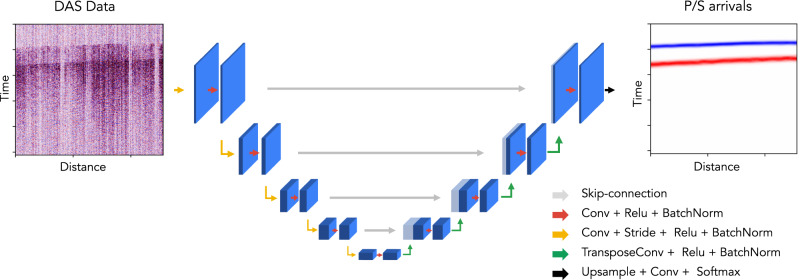
“Neural Network Model The pre-trained PhaseNet model is a modified U-Net architecture (Ronneberger et al., 2015) with 1D convolutional layers for processing 1D time series of seismic waveforms.”
MethodInfluentialAdam: A Method for Stochastic Optimization
Kingma, D. P., & Ba, J. (2014) · arXiv · doi:10.48550/arxiv.1412.6980 · Cited by 98,946
LeCun, Y., Bengio, Y., & Hinton, G. (2015) · Nature · doi:10.1038/nature14539 · Cited by 84,126
Swin Transformer: Hierarchical Vision Transformer using Shifted Windows
Liu, Z., Lin, Y., Cao, Y., Hu, H., Wei, Y., Zhang, Z., Lin, S., & Guo, B. (2021) · 2021 IEEE/CVF International Conference on Computer Vision (ICCV) · doi:10.1109/iccv48922.2021.00986 · Cited by 35,534 · cited 2×
“The exploration of the best neural network architectures, e.g., transformer (Vaswani et al., 2017; Mousavi & Beroza, 2022; Z. Liu et al., 2021), for DAS data can be done in future research.”
BackgroundMethodRethinking the Inception Architecture for Computer Vision
Szegedy, C., Vanhoucke, V., Ioffe, S., Shlens, J., & Wojna, Z. (2016) · 2016 IEEE Conference on Computer Vision and Pattern Recognition (CVPR) · doi:10.1109/cvpr.2016.308 · Cited by 32,138
A survey on Image Data Augmentation for Deep Learning
Shorten, C., & Khoshgoftaar, T. M. (2019) · Journal of Big Data · doi:10.1186/s40537-019-0197-0 · Cited by 13,203 · cited 1×
“Data augmentation, such as superposing noise onto seismic events, can synthesize new training samples with noisy waveforms, significantly expand the training dataset, and improve model generalization on noisy DAS data and weak earthquake signals (Shorten & Khoshgoftaar, 2019; W. Zhu et al., 2020a).”
BackgroundDecoupled Weight Decay Regularization
Loshchilov, I., & Hutter, F. (2017) · arXiv · doi:10.48550/arxiv.1711.05101 · Cited by 12,522
Rethinking Atrous Convolution for Semantic Image Segmentation
Chen, L.-C., Papandreou, G., Schroff, F., & Adam, H. (2017) · arXiv · doi:10.48550/arxiv.1706.05587 · Cited by 7,517 · cited 3×
“The semi-supervised approach does not require using the same neural network architecture as the pre-trained model, so that we can use other advanced architectures designed for the semantic segmentation task, such as DeepLab (Chen et al., 2017), deformable ConvNets (Dai et al.”
MethodLearning Deconvolution Network for Semantic Segmentation
Noh, H., Hong, S., & Han, B. (2015) · 2015 IEEE International Conference on Computer Vision (ICCV) · doi:10.1109/iccv.2015.178 · Cited by 4,422 · cited 2×
“We add the transposed convolutional layers for up-sampling (Noh et al., 2015), batch normalization layers (Ioffe & Szegedy, 2015), relu activation functions (Glorot et al., 2011), and skip connections to the model.”
BackgroundMethod
Research works printed but not linked: 12
- Li Z Zhan Z Pushing the limit of earthquake detection with distributed acoustic sensing and template matching: a case study at the brady geothermal field Geophys. J. Int. 2018 215 1583 1593 10.1093/gji/ggy359 · DOI
- Zhu W Beroza GC PhaseNet: a deep-neural-network-based seismic arrival-time picking method Geophys. J. Int. 2019 216 261 273
- Su J High resolution earthquake catalog building for the 21 May 2021 Yangbi, Yunnan, M S 6.4 earthquake sequence using deep-learning phase picker Chin. J. Geophys. 2021 64 2647 2656
- Wilding, John D., Zhu, Weiqiang, Ross, Zachary E. & Jackson, Jennifer M. The magmatic web beneath Hawai ‘i. Science379, 5755 (2022). 36548443 · DOI
- Hernández, Pablo D., Ramírez, Jaime A. & Soto, Marcelo A. Improving earthquake detection in fibre-optic distributed acoustic sensors using deep-learning and hybrid datasets. In 2022 European Conference on Optical Communication (ECOC) 1–4 (Optica Publishing Group, 2022).
- VanDecar JC Crosson RS Determination of teleseismic relative phase arrival times using multi-channel cross-correlation and least squares Bull. Seismol. Soc. Am. 1990 80 150 169
- Zhu, W., Mousavi, S. M. & Beroza, G. C. Seismic signal augmentation to improve generalization of deep neural networks. Adv. Geophys.61, 151–177 (2020). · DOI
- Luo, W., Li, Y., Urtasun, R. & Zemel, R. Understanding the effective receptive field in deep convolutional neural networks. In Advances in Neural Information Processing Systems (Curran Associates, Inc., 2016).
- Ioffe, S. & Szegedy, C. Batch normalization: accelerating deep network training by reducing internal covariate shift. In Proc. 32nd International Conference on Machine Learning 448–456 (PMLR, 2015).
- Glorot, X., Bordes, A. & Bengio, Y. Deep sparse rectifier neural networks. In Proc. 14h International Conference on Artificial Intelligence and Statistics 315–323 (JMLR Workshop and Conference Proceedings, 2011).
- Biondi E Wang X Williams EF Zhan Z Geolocalization of large-scale das channels using a GPS-tracked moving vehicle Seismol. Soc. Am. 2023 94 318 330
- Zhu, Weiqiang et al. Seismic arrival-time picking on distributed acoustic sensing data using semi-supervised learning. Zenodo10.5281/zenodo.10043122 (2023). PMC10713581 38081845 · doi:10.5281/zenodo.10043122
Cited by
Earthquake focal mechanisms with distributed acoustic sensing
Li, J., Zhu, W., Biondi, E., & Zhan, Z. (2023) · Nature Communications · doi:10.1038/s41467-023-39639-3 · Cited by 92
Self-citationAdaptive decentralized AI scheme for signal recognition of distributed sensor systems
Zhang, S., Li, H., Fan, C., Zeng, Z., Xiong, C., Wu, J., Yan, Z., Liu, D., & Sun, Q. (2024) · Opto-Electronic Advances · doi:10.29026/oea.2024.240119 · Cited by 75
Earthquake Magnitude With DAS: A Transferable Data‐Based Scaling Relation
Yin, J., Zhu, W., Li, J., Biondi, E., Miao, Y., Spica, Z. J., Viens, L., Shinohara, M., Ide, S., Mochizuki, K., et al. (2023) · Geophysical Research Letters · doi:10.1029/2023gl103045 · Cited by 71
“We then apply PhaseNet-DAS (Zhu et al., 2022), which is a deep learning phase picker tailored for DAS data, to accurately pick P-wave and S-wave arrivals from earthquakes (Text S2 of the Supporting Information).”
MethodSelf-citationAn upper-crust lid over the Long Valley magma chamber
Biondi, E., Zhu, W., Li, J., Williams, E., & Zhan, Z. (2023) · Science Advances · doi:10.1126/sciadv.adi9878 · Cited by 67
“We obtain the necessary P - and S -wave observed travel times by using a neural network model designed to accurately pick DAS data called Phase-Net-DAS ( 55 ).”
Self-citationReal-Data Testing of Distributed Acoustic Sensing for Offshore Earthquake Early Warning
Yin, J., Soto, M. A., Ramírez, J., Kamalov, V. F., Zhu, W., Husker, A. L., & Zhan, Z. (2023) · The Seismic Record · doi:10.1785/0320230018 · Cited by 50
Self-citationPellegrini, S., Minelli, L., Andrenacci, L., Rizzelli, G., Pilori, D., Bosco, G., Della Chiesa, L., Crognale, C., Piciaccia, S., & Gaudino, R. (2025) · Journal of Optical Communications and Networking · doi:10.1364/jocn.537881 · Cited by 38
“The latest research on anomaly detection of hazardous conditions within the optical network’s physical layer broadly employs machine learning techniques [55–57], particularly for fiber spoofing events and earthquakes [6,58], but also for traffic monitoring [59].”
Zhai, Q., Yin, J., Yang, Y., Atterholt, J. W., Li, J., Husker, A. L., & Zhan, Z. (2025) · Journal of Geophysical Research Solid Earth · doi:10.1029/2024jb030288 · Cited by 33
“First, we apply the pretrained PhaseNet‐ DAS deep‐learning model to automatically pick the P ‐ and S ‐wave arrival times (Yin, Soto, et al., 2023; Zhu et al., 2023).”
Self-citationYu, P., Zhu, T., Marone, C. J., Elsworth, D., & Yu, M. (2024) · Journal of Geophysical Research Solid Earth · doi:10.1029/2024jb029102 · Cited by 37
Gou, Y., Allen, R. M., Zhu, W., Taira, T., & Chen, L. (2025) · Bulletin of the Seismological Society of America · doi:10.1785/0120240234 · Cited by 29
Self-citationMinute-scale dynamics of recurrent dike intrusions in Iceland with fiber-optic geodesy
Li, J., Biondi, E., Heimisson, E. R., Puel, S., Zhai, Q., Zhang, S., Hjörleifsdóttir, V., Wei, X., Bird, E., Klesh, A. T., et al. (2025) · Science · doi:10.1126/science.adu0225 · Cited by 28
Self-citationKong, X., Wen, W., Guan, Y., Lin, Z., Zheng, J., Xie, B., Li, S., Xue, J., & Hu, Q. (2025) · ACS Applied Materials & Interfaces · doi:10.1021/acsami.5c06453 · Cited by 31
DASPy: A Python Toolbox for DAS Seismology
Hu, M., & Li, Z. (2024) · Seismological Research Letters · doi:10.1785/0220240124 · Cited by 27
Shi, Q., Denolle, M., Ni, Y., Williams, E., & You, N. (2025) · Journal of Geophysical Research Solid Earth · doi:10.1029/2024jb029728 · Cited by 28
“Such labeled data sets do not yet exist for DAS, which led Zhu et al. (2023) to develop a sophisticated workflow for phase picking involving conventional ML picking, quality control with association, and supervised training of a 2D U‐net (Ronneberger et al., 2015).”
InfluentialA semblance-based microseismic event detector for DAS data
Porras, J., Pecci, D., Bocchini, G. M., Gaviano, S., Solda, M. D., Tuinstra, K., Lanza, F., Tognarelli, A., Stucchi, E., & Grigoli, F. (2024) · Geophysical Journal International · doi:10.1093/gji/ggae016 · Cited by 25
Zhou, Y., Ding, H., Ghosh, A., & Ge, Z. (2025) · Journal of Geophysical Research Solid Earth · doi:10.1029/2025jb031294 · Cited by 31
“…in different regions (e.g., Chai et al., 2020; Jiang et al., 2021; Münchmeyer et al., 2022; Park et al., 2023; Zhu, Li, & Fang, 2022), especially for ocean‐bottom seismograms (Bornstein et al., 2024; Niksejel & Zhang, 2024; Xi et al., 2024) and distributed acoustic sensing data (Zhu et al., 2023).”
Imaging the Garlock Fault Zone With a Fiber: A Limited Damage Zone and Hidden Bimaterial Contrast
Atterholt, J. W., Zhan, Z., Yang, Y., & Zhu, W. (2024) · Journal of Geophysical Research Solid Earth · doi:10.1029/2024jb028900 · Cited by 20
“PhasenetDAS was partially trained using this data set and, by visual inspection, performs very well for the events used in this study.”
Self-citationAutomatic Earthquake Catalogs From a Permanent DAS Offshore Network
Baillet, M., Rivet, D., Trabattoni, A., Chèze, J., Peix, F., Ambrois, D., van den Ende, M., Vernet, C., Strumia, C., Potin, B., et al. (2025) · Journal of Geophysical Research Solid Earth · doi:10.1029/2025jb031565 · Cited by 17
“Moreover, for distant earthquakes (hypocenter ≥ 200 km), PhaseNet‐DAS tends to mix P and S phases in the S wavefront while PhaseNet also has difficulties but pick more S phases on the entire front as seen in Figure S2 in Supporting Information S1.”
InfluentialFrom Labquakes to Megathrusts: Scaling Deep Learning Based Pickers Over 15 Orders of Magnitude
Shi, P., Meier, M., Villiger, L., Tuinstra, K., Selvadurai, P. A., Lanza, F., Yuan, S., Obermann, A., Mesimeri, M., Münchmeyer, J., et al. (2024) · Journal of Geophysical Research Machine Learning and Computation · doi:10.1029/2024jh000220 · Cited by 22
“Examples of recent applications of ML on DAS data include signal recovery and data denoising (Chen, 2024; van den Ende et al., 2021), as well as an adaptation of PhaseNet for earthquake detection and picking (Zhu, Biondi, et al., 2023).”
Lin, C.-R., von Specht, S., Ma, K., Ohrnberger, M. M., & Cotton, F. (2025) · Geophysical Journal International · doi:10.1093/gji/ggaf089 · Cited by 16
Choi, Y., Seol, S. J., & Byun, J. (2024) · IEEE Transactions on Geoscience and Remote Sensing · doi:10.1109/tgrs.2024.3469268 · Cited by 16
Bozzi, E., Agostinetti, N. P., Fichtner, A., Klaasen, S., Ugalde, A., Biondi, B., Yuan, S., Dahm, T., Isken, M. P., Paitz, P., et al. (2024) · Geophysical Journal International · doi:10.1093/gji/ggae364 · Cited by 15
Liu, J., Li, H., Li, J., Hwang, D., Aggarwal, J., Biondi, B., & Noh, H. Y. (2025) · IEEE Sensors Journal · doi:10.1109/jsen.2025.3610429 · Cited by 18
Self-citationNi, Y., Denolle, M., Shi, Q., Lipovsky, B. P., Pan, S., & Kutz, J. N. (2024) · Journal of Geophysical Research Machine Learning and Computation · doi:10.1029/2024jh000247 · Cited by 22
Unsupervised Coherent Noise Removal From Seismological Distributed Acoustic Sensing Data
Konietzny, S. G., Lai, V. H., Miller, M. S., Townend, J., & Harmeling, S. (2024) · Journal of Geophysical Research Machine Learning and Computation · doi:10.1029/2024jh000356 · Cited by 19
Fine-scale Southern California Moho structure uncovered with distributed acoustic sensing
Atterholt, J. W., & Zhan, Z. (2024) · Science Advances · doi:10.1126/sciadv.adr3327 · Cited by 14
“We first select a window for each of the candidate earthquakes starting 30 s before and ending 90 s after the cataloged origin time and make travel-time picks on these events using PhaseNet DAS ( 34 ).”
Self-citationTuinstra, K., Grigoli, F., Lanza, F., Rinaldi, A. P., Fichtner, A., & Wiemer, S. (2024) · Geophysical Journal International · doi:10.1093/gji/ggae168 · Cited by 14
Imaging Underwater Faults and Tracking Whales with Optical Fiber Sensing
Xiao, H., Zhang, S., Moss, R. E. S., & Zhan, Z. (2025) · Seismological Research Letters · doi:10.1785/0220240359 · Cited by 13
Self-citationHuynh, C., Hibert, C., Jestin, C., Malet, J., & Lanticq, V. (2024) · Geophysical Journal International · doi:10.1093/gji/ggae382 · Cited by 12
Zhai, Q., Zhan, Z., & Chavarria, J. A. (2024) · Journal of Geophysical Research Solid Earth · doi:10.1029/2023jb027680 · Cited by 12
“First, we use PhaseNet‐DAS (Zhu et al., 2023), a machine‐learning phase picker for DAS data, to measure the P‐wave arrival times.”
Self-citationMalik, G., Dipto, I. C., Masood, M. U., Mohamed, M. C., Straullu, S., Bhyri, S. K., Galimberti, G. M., Napoli, A., Pedro, J., Wakim, W., et al. (2025) · AI · doi:10.3390/ai6070131 · Cited by 10
Miao, Y., Salaree, A., Spica, Z. J., Nishida, K., Yamada, T., & Shinohara, M. (2024) · Seismological Research Letters · doi:10.1785/0220240120 · Cited by 10
Meng, D., Ji, Y., Zhu, H., Zhang, S., Zhang, Z., Hofmann, H., & Zang, A. (2025) · Renewable and Sustainable Energy Reviews · doi:10.1016/j.rser.2025.116665 · Cited by 10
Saad, O. M., Savvaidis, A., & Chen, Y. (2024) · IEEE Transactions on Geoscience and Remote Sensing · doi:10.1109/tgrs.2024.3422612 · Cited by 12
Harmon, N., Porter, R. C., Rychert, C. A., Schmerr, N. C., Smith, M. M., Shen, Z., Wu, W., Giles, J., McCall, N., Wang, J., et al. (2024) · Earth and Space Science · doi:10.1029/2024ea003640 · Cited by 10
“We used the Computer Programs in Seismology software suite to model the surface wave dispersion (Herrmann, 2013).”
Katakami, S., Korenaga, M., Iwata, N., Araki, E., Takahashi, N., & Noda, S. (2024) · Bulletin of the Seismological Society of America · doi:10.1785/0120240184 · Cited by 10
Gou, Y., Nof, R. N., Pardini, B., & Allen, R. M. (2025) · Scientific Reports · doi:10.1038/s41598-025-30568-3 · Cited by 9
“• PhasePicker : This module identifies seismic phases (P and S) in real time using a pre-trained convolution neural network, SeaFOAM PhaseNet-DAS 40,65,66 .”
Chen, X., Yin, J., Pennington, C. N., Wu, Q., & Zhan, Z. (2025) · Bulletin of the Seismological Society of America · doi:10.1785/0120240156 · Cited by 9
Self-citationMcGuire, J. J., Barbour, A. J., Stewart, C., Yartsev, V., Karrenbach, M., Hemphill-Haley, M. A., McPherson, R. C., Stockdale, K., Yoon, C. E., & Sawi, T. (2025) · Seismological Research Letters · doi:10.1785/0220240415 · Cited by 9
Fernández‐Carabantes, J., Títos, M., D’Auria, L., García, J., García, L., & Benítez, C. (2025) · Journal of Geophysical Research Solid Earth · doi:10.1029/2025jb031756 · Cited by 10
“Event detections are compared with the existing seismic catalog derived from traditional seismic stations and the well‐known PhaseNet‐DAS model (Zhu et al., 2023a).”
InfluentialDuan, J., Chen, J., & He, Z. (2025) · Journal of Lightwave Technology · doi:10.1109/jlt.2025.3630138 · Cited by 8
“Thesetechniquesachievedsuperiorperformanceinseis-micphasepicking[17]andsignalrecognition[18]compared topurelysupervisedapproaches.”
Physics-based earthquake early warning using distributed acoustic sensing
Ben-Zeev, S., & Lior, I. (2025) · Scientific Reports · doi:10.1038/s41598-025-32269-3 · Cited by 7
“In order to address real-time earthquake detection, PhaseNet-DAS 34 , a deep learning model designed to pick phase arrival times using DAS data, was developed.”
Han, C., Qu, S., Fu, Y., Ma, T., Dong, L., & Yang, Y. (2026) · Computer-Aided Civil and Infrastructure Engineering · doi:10.1016/j.cacaie.2026.100152 · Cited by 7
Sheng, G., Zhang, Z., Tang, X., & Xie, K. (2024) · Computers & Geosciences · doi:10.1016/j.cageo.2024.105844 · Cited by 8
DASFormer: self-supervised pretraining for earthquake monitoring
Ding, Q., Shen, Z., Zhu, W., & Liu, B. (2025) · Visual Intelligence · doi:10.1007/s44267-025-00085-y · Cited by 9
Self-citationBowen, 白. B., Liangcai, 曹. C., Hongwei, 陈. C., Jianji, 董. D., Shiyin, 杜. D., Fang, L., Feng, F., Tingzhao, 符. F., Yunhui, 高. G., Xingxing, 郭. G., et al. (2025) · Laser & Optoelectronics Progress · doi:10.3788/lop251552 · Cited by 6
A Digital Phase Resolving Method for Fiber Optic Sensing
Li, C., Pang, Z., Wang, G., Wang, F., Dai, H., Li, W., & Wang, B. (2024) · Journal of Lightwave Technology · doi:10.1109/jlt.2024.3419173 · Cited by 6
“In a fiber optic sensing system, when light wave travels along an optical fiber, some optical parameters like phase [9], [10], [11], [12], [13], intensity [14], frequency [15], [16], [17], polarization state [18], [19], [20] will change when there is an environment change around the fiber, which can…”
BackgroundKlyuev, R. V., & Brigida, V. (2025) · Геология и геофизика Юга России · doi:10.46698/vnc.2025.39.32.001 · Cited by 5
Virgillito, E., Notarstefano, F., Centonze, R., Bratovich, R., Corsin, R., Herrero, A., Govoni, A., Hovsepvan, M., Carpentieri, F., Donadello, S., et al. (2025) · European Conference on Optical Communication · doi:10.1109/ecoc66593.2025.11262987 · Cited by 5
“State of the art distributed acoustic sensing (DAS), lever-30 aging on phase of back-scattered light, provides spatially-resolved and excellent accuracy [1] , but it is expensive, has limited reach and typically requires dark fibers.”
Strumia, C., Trabattoni, A., Scala, A., Rivet, D., & Festa, G. (2026) · Communications Earth & Environment · doi:10.1038/s43247-025-03167-3 · Cited by 5
Zhu, C., Yang, Y., Yang, K., Zhu, W., & Yang, Q. (2026) · npj natural hazards. · doi:10.1038/s44304-026-00182-y · Cited by 6
Self-citationIqbal, N., Aziz, I. A., & Raza, M. F. (2026) · Technologies · doi:10.3390/technologies14040199 · Cited by 5
Zhang, Y. Q., Sun, Y., Yan, Y., Wang, S., & Ge, L. (2026) · Remote Sensing · doi:10.3390/rs18091333 · Cited by 5
Al‐Qadasi, B., Cui, Y., bin Waheed, U., & Wang, H. F. (2026) · Scientific Reports · doi:10.1038/s41598-026-37888-y · Cited by 4
“This limitation is consistent with broader observations that DAS data present distinct coupling and noise characteristics that can challenge direct reuse of models trained on other sensor types or other DAS deployments 30 .”
Detection of microseismic events in continuous DAS recordings using semantic image segmentation
Tegtow, W., Boitz, N., Shapiro, S. A., & Chavarria, J. A. (2024) · The Leading Edge · doi:10.1190/tle43110740.1 · Cited by 4
Quanhong, W. A. N. G., Sheng, G., Tang, X., & Xie, K. (2024) · Geophysical Journal International · doi:10.1093/gji/ggae308 · Cited by 4
Wan, Y., Wang, H., Yu, X., Chen, J., Fan, X., & He, Z. (2026) · Light Science & Applications · doi:10.1038/s41377-026-02295-5 · Cited by 6
“Although many supervised neural networks have demonstrated excellent performance in DAS applications 22 – 25 , they typically require a large amount of high-quality labeled data for training, and the test data often shares the same experimental setup and environment as the training data.”
The DAS With Deep Neural Network Based on DSR-Net for Fast Earthquake Recognition
Zhan, Y., Li, K., Zhang, W., Liu, L., Han, M., Wang, Z., Yang, J., Liu, Y., & Ye, Q. (2024) · IEEE photonics journal · doi:10.1109/jphot.2024.3496559 · Cited by 4
Near-surface imaging and monitoring enabled by urban distributed acoustic sensing seismic arrays
Li, H., Liu, J., & Biondi, B. (2025) · The Leading Edge · doi:10.1190/tle44080588.1 · Cited by 4
Shahabudin, M. S. B., Jaafar, J., & Paputungan, I. V. (2025) · IEEE Access · doi:10.1109/access.2025.3627765 · Cited by 4
Wei, M., Zhu, J., Guo, Z., Zhang, W., Qin, L., Li, Z., Wang, X., & Sun, Q. (2025) · Engineering Geology · doi:10.1016/j.enggeo.2025.108512 · Cited by 3
Aguilar-Velázquez, M. J., Ide, S., Perton, M., & Spica, Z. J. (2026) · Soil Dynamics and Earthquake Engineering · doi:10.1016/j.soildyn.2026.110126 · Cited by 3
DeepSubDAS: an earthquake phase picker from submarine distributed acoustic sensing data
Xiao, H., Tilmann, F. J., van den Ende, M., Rivet, D., Loureiro, A., Tsuji, T., Ugalde, A., Shi, Q., & Denolle, M. (2026) · Geophysical Journal International · doi:10.1093/gji/ggag061 · Cited by 3
Li, T., Yue, B., chen, S., Wu, Y., Huang, W., Li, C., He, Z., Lin, L., & Li, Z. (2026) · Journal of Optical Communications and Networking · doi:10.1364/jocn.585552 · Cited by 3
“In this study, we employ the deep learning model PhaseNet-DAS [16] for wavefront extraction.”
Tepp, G., Artiaga, N., & Biondi, E. (2026) · Seismological Research Letters · doi:10.1785/0220250354 · Cited by 3
Self-citationLv, H., Zeng, X., Zhang, G., & Song, Z. (2024) · Seismological Research Letters · doi:10.1785/0220240019 · Cited by 3
Artificial Intelligence Driven Earthquakes Early Detection in Noisy Urban Areas
Awad, H., Usmani, F., Virgillito, E., Bratovich, R., Straullu, S., Aquilino, F., Proietti, R., Pastorelli, R., & Curri, V. (2024) · IEEE Middle East Conference on Communications and Networking (MECOM) · doi:10.1109/mecom61498.2024.10881035 · Cited by 3
Zhang, J., Kato, A., Dindar, A. A., Wang, W., Nakagawa, S., Aoki, Y., Shinohara, M., Kaneda, Y., & Tunç, S. (2025) · Seismological Research Letters · doi:10.1785/0220250049 · Cited by 3
Acoustic Events Detection and Classification for Urban DAS Data with Supervised Learning
Zhong, Y., Gu, C., Prieto, G. A., Fehler, M. C., Wu, P., Yuan, Z., Xu, W., Xu, S., & Lu, X. (2025) · Seismological Research Letters · doi:10.1785/0220240222 · Cited by 3
Luo, W., Drijkoningen, G., Eltayieb, M., Amann, F., & Vardon, P. J. (2025) · Rock Mechanics and Rock Engineering · doi:10.1007/s00603-025-04942-6 · Cited by 2
“In addition, advanced arrival-picking techniques (for determining depth and epicentral distance, see section 3.2) and noise suppressing techniques can improve the localisation accuracy (Zhu et al. 2023; Konietzny et al. 2024).”
InfluentialLellouch, A., & Wetzler, N. (2025) · Seismological Research Letters · doi:10.1785/0220250179 · Cited by 2
Sasi, D., Sabapathy, S., & Joseph, T. (2025) · IEEE Sensors Letters · doi:10.1109/lsens.2025.3646771 · Cited by 2
Xia, Z., Yang, S., Lin, Z., & Xie, L. (2026) · Measurement · doi:10.1016/j.measurement.2026.120474 · Cited by 2
Ge, Q., Xie, A., Cheng, J., Wang, B., Zhu, B., Chen, Y., & Zhao, D. (2026) · Review of Scientific Instruments · doi:10.1063/5.0300936 · Cited by 2
Iqbal, N., Aziz, I. A., Hakimi, H. S., Raza, M. F., & Rashid, A. (2026) · Sensors · doi:10.3390/s26175542 · Cited by 2
Zhao, Q., Rong, M., Wang, J., & Li, X. (2024) · Journal of Asian Earth Sciences · doi:10.1016/j.jseaes.2024.106369 · Cited by 2
Efficient Autoencoders for Anomaly Detection in Distributed Acoustic Sensing Data
Fagervik, J. A., Mengshoel, O. J., & Elster, A. C. (2025) · doi:10.1109/cismcompanion65074.2025.11032329 · Cited by 2
“We can use this dataset for our research mainly due to all previous research [17], [19], [21].”
Bocchini, G. M., Bozzi, E., Roth, M. P., Gaviano, S., Pascucci, G., Grigoli, F., Biondi, E., Sokos, E. N., & Harrington, R. M. (2026) · Earth system science data · doi:10.5194/essd-18-4677-2026 · Cited by 2
“Codes to read and plot the events (or detections) recorded along the fiber-optic cable, earthquake catalogs, event pairs cross-correlation coefficients, cable geometry, and PhaseNet-DAS picks are available from Bocchini (2026), https://doi.org/10.5281/zenodo.20558686.”
InfluentialSelf-citationLanza, F., Tuinstra, K., Rinaldi, A. P., Tribaldos, V. R., Hopp, C. J., Bethmann, F., Dyer, B. C., Meier, P., Serbeto, F., Hertrich, M., et al. (2024) · Geophysical monograph · doi:10.1002/9781394179275.ch16 · Cited by 2
Monitoring Submarine Optical Fibre Cables with Distributed Acoustic Sensors
Soto, M. A., & Ramírez, J. A. (2024) · Asia Communications and Photonics Conference · doi:10.1109/acp/ipoc63121.2024.10809459 · Cited by 1
Luckie, T. W., Porritt, R. W., & Baker, M. G. (2025) · Seismological Research Letters · doi:10.1785/0220250074 · Cited by 1
“Machine learning has shown to be useful for categorizing signal types in dense DAS datasets (Zhu et al. , 2023).”
Environmental sensing with transmission fibers in undersea cables
Kamalov, V. F., & Mazur, M. (2025) · Elsevier eBooks · doi:10.1016/b978-0-443-29886-8.00009-8 · Cited by 1
Xiao, Z., Chen, J., Ji, J., Li, Z., & He, Z. (2025) · Optics Express · doi:10.1364/oe.570124 · Cited by 1
Smith, J. L., Belal, M., Lythgoe, K., Spingys, C., Neale, J. W., Embriaco, D., & Curtis, A. (2025) · Scientific Reports · doi:10.1038/s41598-025-29234-5 · Cited by 1
“More complex picking algorithms are available, such as PhaseNet-DAS 49 which may improve the extraction of wave arrivals, as would a more refined data processing approach, but our method has been created to be computationally rapid and inexpensive to allow it to run in real-time on a large DAS dataset.”
InfluentialNakano, M., Nakajima, T., Araki, E., Sugioka, H., Ito, A., Matsumoto, H., Yokobiki, T., Tonegawa, T., & Ono, S. (2025) · Journal of Volcanology and Geothermal Research · doi:10.1016/j.jvolgeores.2025.108498 · Cited by 1
Automated Weighting Schemes for DAS Data in Geophysical Inversion: A Case Study on Event Location
Bozzi, E., Agostinetti, N. P., & Saccorotti, G. (2025) · Seismica · doi:10.26443/seismica.v4i2.1494 · Cited by 1
“Given its unprecedented meter-scale spatial sampling, automatic picking methods have been developed to address the impossibility of manually picking seismic phases recorded at the typically thousands of DAS channels (Xiao et al., 2025; Zhu et al., 2023; Latorre et al., 2025).”
Rihan, A. N. M., Saharudin, S., Hisham, M. H., Raheem, M. M. K., & Zan, M. S. D. (2025) · Instruments and Experimental Techniques · doi:10.1134/s0020441225700502 · Cited by 1
Sasi, D., & Joseph, T. (2025) · IEEE Geoscience and Remote Sensing Letters · doi:10.1109/lgrs.2025.3648645 · Cited by 1
“…average / long-term average (STA / LTA) and matched filtering struggle in such settings, while artificial intelligence (AI)-based solutions using fully connected artificial neural networks (FC-ANNs), convolutional neural networks (CNNs), and recurrent neural networks (RNNs) [6], [7] improve detection.”
Zhang, G., Zeng, X., & Lv, H. (2025) · Journal of Geophysical Research Solid Earth · doi:10.1029/2024jb030426 · Cited by 1
Gaviano, S., Rebel, E., & Grigoli, F. (2026) · Earth Planets and Space · doi:10.1186/s40623-025-02336-0 · Cited by 1
“Despite the numerous advantages characterizing DAS for seismological applications, this technology is still in its infancy and lacks standard data formats, real-time streaming protocols, and consistent data processing methodologies (Chambers et al. 2024; Porras et al. 2024; Zhu et al. 2023).”
Phase-specific detection of CO2 at sequestration pressure using mid-infrared fluoride fiber sensors
Hosoki, A., Suka, A., Kuramitz, H., Ueda, A., & Terai, A. (2026) · Optical Materials · doi:10.1016/j.optmat.2026.117986 · Cited by 1
Wu, Y., Peng, S., Liu, K., Li, J., Wang, T., Liu, C., & Wang, Z. (2026) · IEEE Transactions on Intelligent Transportation Systems · doi:10.1109/tits.2026.3666682 · Cited by 1
“To further enhance variability and prevent overfitting, a strict data augmentation strategy, such as random rotation and Gaussian noise injection, is applied [8].”
Self-citationSeismic Random Noise Attenuation Using Non‐Local Reference‐Guided Deep Image Prior
Liu, N., Wang, Z., Hua, G., Deng, W., & Gao, J. (2026) · Geophysical Prospecting · doi:10.1111/1365-2478.70177 · Cited by 1
Cheng, Z., Jiang, Y., Ge, Y., Li, Y., Qin, Z., Lin, R., & Ma, J. (2026) · IEEE Transactions on Pattern Analysis and Machine Intelligence · doi:10.1109/tpami.2026.3703974 · Cited by 2
“However, due to the influence of observational environments, instrumentation, and other factors, neural networks trained on limited datasets often struggle to ensure generalizability when applied to new data [77].”
Distributed acoustic sensing system integrable with AI agents
Shao, L., Sun, J., Zhang, J., Mu, Q., Shi, X., Zhuo, Y., Shao, G., Zhang, P., Zhu, N., Qiu, C., et al. (2025) · Opto-Electronics Plus · doi:10.67704/oep.2025.250012 · Cited by 1
Chiappetta, G. D., Poggi, V., Comelli, P., Parolai, S., Magrin, A., Magrin, E., Compagno, A., Galvi, S., Cuzzolin, D., Fabbro, F., et al. (2026) · Seismological Research Letters · doi:10.1785/0220260094 · Cited by 1
Mizutani, A., & Saito, T. (2026) · Geophysical Journal International · doi:10.1093/gji/ggag391 · Cited by 1
Esmaeili, R., Kimiaefar, R., Hajian, A., Soleimani-Chamkhorami, K., & Hodhodi, M. (2024) · Neural Computing and Applications · doi:10.1007/s00521-024-10002-x · Cited by 1
Li, Z., Li, C., Li, Z., Weng, J., Huang, F., & Zhou, Z. (2024) · Information Sciences · doi:10.1016/j.ins.2024.120934 · Cited by 1
Chandrakumar, C., Tan, M. L., Holden, C., Stephens, M. T., & Prasanna, R. (2024) · Earth Science Informatics · doi:10.1007/s12145-024-01519-9 · Cited by 1
“However, this approach introduces a degree of subjectivity, as manual picking depends on individual interpretation (Zhu et al. 2023; Zhu and Beroza 2019), which could influence the benchmark used for algorithm comparison.”
Chen, K., Li, M., Li, X., Cui, G., Tian, J., Li, J., Mu, R., & Zhu, J. (2025) · Artificial Intelligence in Geosciences · doi:10.1016/j.aiig.2025.100129 · Cited by 6
Self-citation
Metadata
- Authors
- Zhu, W., Biondi, E., Li, J., Yin, J., Ross, Z. E., & Zhan, Z.
- Affiliations
- California Institute of Technology (US)
- Corresponding author
- Zhu, Weiqiang
- Venue
- Nature Communications
- Published
- 2023-12-11
- Volume
- 14
- Issue
- 1
- Pages
- 8192-8192
- ISSN
- 2041-1723 (ISSN-L)
- PMC
- PMC10713581
- OpenAlex
- W4389560491
- Semantic Scholar
- 7b31b15d90a8f92cf697bae7bc6c2eed19ea0f2c
- Cited by
- 130
- References
- 78
- Citations by year
- 2026: 53 · 2025: 44 · 2024: 30 · 2023: 3
- FWCI
- 12.25
- Type
- journal article
- Language
- en
- Open access
- gold
- doi.org
- Licence
- cc-by
- creativecommons.org/licenses/by/4.0 (tdm)
- creativecommons.org/licenses/by/4.0 (vor)
- Locations
- Nature Communications (publishedVersion, cc-by)
- PubMed Central (publishedVersion, cc-by)
- PubMed (publishedVersion)
- eScholarship (California Digital Library) (submittedVersion, cc-by)
- DOAJ (DOAJ: Directory of Open Access Journals) (submittedVersion, cc-by-sa)
- Funders
- National Science Foundation (1848166)
- Department of the Interior | United States Geological Survey | Wyoming-Montana Water Science Center (G22AP00067)
- Gordon and Betty Moore Foundation
- Topics
- Physical Sciences › Computer Science › Artificial Intelligence › Seismology and Earthquake Studies
- Physical Sciences › Earth and Planetary Sciences › Geophysics › Seismic Waves and Analysis
- Physical Sciences › Earth and Planetary Sciences › Geophysics › Seismic Imaging and Inversion Techniques
- Keywords
- distributed acoustic sensing, semi-supervised learning, PhaseNet, earthquake detection, seismic monitoring, ground coupling
About these checks
Registry, retraction, Cites and statistics results are computed, not judged, with one exception: a printed reference that no index lists is read once by a model before it counts as a citation error. Claims are extracted by a model and kept only when their quote appears verbatim in the text; each cited source is then checked, with a model’s help, for whether it says what the claim relies on. Those verdicts can be wrong — read the claim’s quote and the cited source before relying on one.
Statistics and arithmetic are recomputed, not judged.
Confidence bands are shown only for fields calibrated on our annotated test set. None is calibrated yet, so no band is shown.
What counts as a claim ›How we measure confidence ›How we check this ›
Are you an author, or do you see a problem with this page? Request a review
Data sources
Bibliographic data: Semantic Scholar, OpenAlex, Crossref.
Contains information from the Semantic Scholar Academic Graph Datasets, made available under the ODC Attribution License (ODC-BY 1.0).
Semantic Scholar’s data is described in: Kinney, R., et al. (2023). The Semantic Scholar Open Data Platform. arXiv:2301.10140.
