

Seismic arrival-time picking on distributed acoustic sensing data using semi-supervised learning
Open accessPublished version of a preprint
The DOI matches its Crossref record; 81 of the 81 references it cites were found in a registry or an index.
Abstract
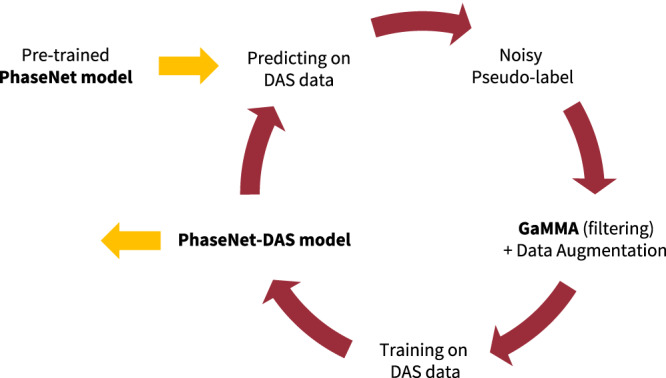
Distributed Acoustic Sensing (DAS) is an emerging technology for earthquake monitoring and subsurface imaging. However, its distinct characteristics, such as unknown ground coupling and high noise level, pose challenges to signal processing. Existing machine learning models optimized for conventional seismic data struggle with DAS data due to its ultra-dense spatial sampling and limited manual labels. We introduce a semi-supervised learning approach to address the phase-picking task of DAS data. We use the pre-trained PhaseNet model to generate noisy labels of P/S arrivals in DAS data and apply the Gaussian mixture model phase association (GaMMA) method to refine these noisy labels and build training datasets. We develop PhaseNet-DAS, a deep learning model designed to process 2D spatio-temporal DAS data to achieve accurate phase picking and efficient earthquake detection. Our study demonstrates a method to develop deep learning models for DAS data, unlocking the potential of integrating DAS in enhancing earthquake monitoring.
Overview
The claims and statistics of this paper haven’t been checked yet.
Free: it reads the open-access text and checks the first 5 claims that cite a source we can check. Create a free account to check every claim.
Integrity signals
Registry
Cites
Statistics
Figures
Verification
Claims the paper makes
The claims and statistics of this paper haven’t been checked yet.
Free: it reads the open-access text and checks the first 5 claims that cite a source we can check. Create a free account to check every claim.
Self-check
Percentages, sums and reported differences re-computed from the paper’s own numbers.
The self-check needs the paper’s full text.
Citations
Cites
Vaswani, A., Shazeer, N., Parmar, N., Uszkoreit, J., Jones, L., Gomez, A. N., Kaiser, L., & Polosukhin, I. (2017) · arXiv · doi:10.48550/arxiv.1706.03762 · Cited by 120,404 · cited 1×
“The exploration of the best neural network architectures, e.g., transformer (Vaswani et al., 2017; Mousavi & Beroza, 2022; Z. Liu et al., 2021), for DAS data can be done in future research.”
BackgroundU-Net: Convolutional Networks for Biomedical Image SegmentationPreprint
Ronneberger, O., Fischer, P., & Brox, T. (2015) · International Conference on Medical Image Computing and Computer-Assisted Intervention · doi:10.48550/arxiv.1505.04597 · Cited by 105,781 · cited 5×
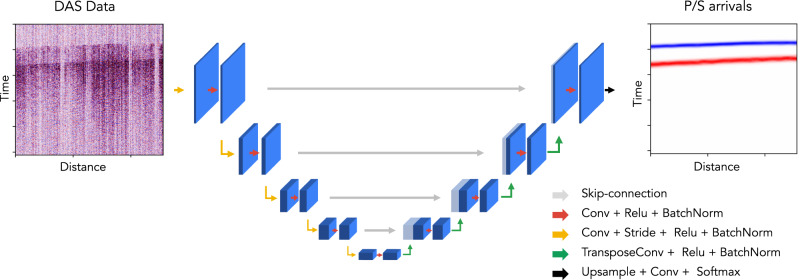
“Neural Network Model The pre-trained PhaseNet model is a modified U-Net architecture (Ronneberger et al., 2015) with 1D convolutional layers for processing 1D time series of seismic waveforms.”
MethodInfluentialAdam: A Method for Stochastic Optimization
Kingma, D. P., & Ba, J. (2014) · arXiv · doi:10.48550/arxiv.1412.6980 · Cited by 98,946
LeCun, Y., Bengio, Y., & Hinton, G. (2015) · Nature · doi:10.1038/nature14539 · Cited by 84,126
Swin Transformer: Hierarchical Vision Transformer using Shifted Windows
Liu, Z., Lin, Y., Cao, Y., Hu, H., Wei, Y., Zhang, Z., Lin, S., & Guo, B. (2021) · 2021 IEEE/CVF International Conference on Computer Vision (ICCV) · doi:10.1109/iccv48922.2021.00986 · Cited by 35,534 · cited 2×
“The exploration of the best neural network architectures, e.g., transformer (Vaswani et al., 2017; Mousavi & Beroza, 2022; Z. Liu et al., 2021), for DAS data can be done in future research.”
BackgroundMethodRethinking the Inception Architecture for Computer Vision
Szegedy, C., Vanhoucke, V., Ioffe, S., Shlens, J., & Wojna, Z. (2016) · 2016 IEEE Conference on Computer Vision and Pattern Recognition (CVPR) · doi:10.1109/cvpr.2016.308 · Cited by 32,138
A survey on Image Data Augmentation for Deep Learning
Shorten, C., & Khoshgoftaar, T. M. (2019) · Journal of Big Data · doi:10.1186/s40537-019-0197-0 · Cited by 13,203 · cited 1×
“Data augmentation, such as superposing noise onto seismic events, can synthesize new training samples with noisy waveforms, significantly expand the training dataset, and improve model generalization on noisy DAS data and weak earthquake signals (Shorten & Khoshgoftaar, 2019; W. Zhu et al., 2020a).”
BackgroundDecoupled Weight Decay Regularization
Loshchilov, I., & Hutter, F. (2017) · arXiv · doi:10.48550/arxiv.1711.05101 · Cited by 12,522
Rethinking Atrous Convolution for Semantic Image Segmentation
Chen, L.-C., Papandreou, G., Schroff, F., & Adam, H. (2017) · arXiv · doi:10.48550/arxiv.1706.05587 · Cited by 7,517 · cited 3×
“The semi-supervised approach does not require using the same neural network architecture as the pre-trained model, so that we can use other advanced architectures designed for the semantic segmentation task, such as DeepLab (Chen et al., 2017), deformable ConvNets (Dai et al.”
MethodLearning Deconvolution Network for Semantic Segmentation
Noh, H., Hong, S., & Han, B. (2015) · 2015 IEEE International Conference on Computer Vision (ICCV) · doi:10.1109/iccv.2015.178 · Cited by 4,422 · cited 2×
“We add the transposed convolutional layers for up-sampling (Noh et al., 2015), batch normalization layers (Ioffe & Szegedy, 2015), relu activation functions (Glorot et al., 2011), and skip connections to the model.”
BackgroundMethodWaldhauser, F. (2000) · Bulletin of the Seismological Society of America · doi:10.1785/0120000006 · Cited by 3,562 · cited 1×
“…matching or match filtering) (Gibbons & Ringdal, 2006; Peng & Zhao, 2009; Shelly et al., 2007a; Ross et al., 2019), measuring differential travel-time (Waldhauser & Ellsworth, 2000; H. Zhang & Thurber, 2003; M. Zhang & Wen, 2015; Trugman & Shearer, 2017), and measuring relative polarity (Shelly et…”
Self-Training With Noisy Student Improves ImageNet Classification
Xie, Q., Luong, M.-T., Hovy, E., & Le, Q. V. (2020) · 2020 IEEE/CVF Conference on Computer Vision and Pattern Recognition (CVPR) · doi:10.1109/cvpr42600.2020.01070 · Cited by 2,393
Text Data Augmentation for Deep Learning
Shorten, C., Khoshgoftaar, T. M., & Furht, B. (2021) · Journal of Big Data · doi:10.1186/s40537-021-00492-0 · Cited by 1,740
Bag of Tricks for Image Classification with Convolutional Neural Networks
He, T., Zhang, Z., Zhang, H., Zhang, Z., Xie, J., & Li, M. (2019) · 2019 IEEE/CVF Conference on Computer Vision and Pattern Recognition (CVPR) · doi:10.1109/cvpr.2019.00065 · Cited by 1,680 · cited 1×
“003, a cosine decay learning rate and 100 iterations of linear warm-up (He et al., 2019), a batch size of 8, and 3,000 training iterations.”
BackgroundAutomatic earthquake recognition and timing from single traces
Allen, R. V. (1978) · Bulletin of the Seismological Society of America · doi:10.1785/bssa0680051521 · Cited by 1,319 · cited 1×
“For example, the commonly-used STA/LTA (short-term averaging over long-term averaging) (Allen, 1978) is not effective for DAS because DAS recordings are much noisier than dedicated seismometers due to cable coupling with the ground and strong sensitivity to anthropogenic noise.”
MethodMousavi, S. M., Ellsworth, W. L., Zhu, W., Chuang, L. Y., & Beroza, G. C. (2020) · Nature Communications · doi:10.1038/s41467-020-17591-w · Cited by 1,111 · cited 2×
“Deep learning is also widely used in earthquake detection (Perol et al., 2018; Ross et al., 2018; W. Zhu & Beroza, 2019; Mousavi et al., 2020; W. Zhu, Tai, et al., 2022; Mousavi & Beroza, 2022) for studying dense earthquake sequences (Park et al., 2020; M. Liu et al., 2020; Tan et al., 2021; Park…”
MethodSelf-citationU-Prithvi: Integrating a Foundation Model and U-Net for Enhanced Flood Inundation Mapping
Kostejn, V., Essus, Y., Abrahamson, J. N., & Vatsavai, R. R. (2025) · Leibniz international proceedings in informatics · doi:10.4230/lipics.giscience.2025.18 · Cited by 977
Non-volcanic tremor and low-frequency earthquake swarms
Shelly, D. R., Beroza, G. C., & Ide, S. (2007) · Nature · doi:10.1038/nature05666 · Cited by 965 · cited 3×
“Template matching is another effective earthquake detection method, particularly for detecting tiny earthquake signals (Gibbons & Ringdal, 2006; Peng & Zhao, 2009; Shelly et al., 2007a; Ross et al., 2019).”
MethodConvolutional neural network for earthquake detection and location
Perol, T., Gharbi, M., & Denolle, M. (2018) · Science Advances · doi:10.1126/sciadv.1700578 · Cited by 921 · cited 1×
“Deep learning is also widely used in earthquake detection (Perol et al., 2018; Ross et al., 2018; W. Zhu & Beroza, 2019; Mousavi et al., 2020; W. Zhu, Tai, et al., 2022; Mousavi & Beroza, 2022) for studying dense earthquake sequences (Park et al., 2020; M. Liu et al., 2020; Tan et al., 2021; Park…”
MethodDouble-Difference Tomography: The Method and Its Application to the Hayward Fault, California
Zhang, H. (2003) · Bulletin of the Seismological Society of America · doi:10.1785/0120020190 · Cited by 908
The detection of low magnitude seismic events using array-based waveform correlation
Gibbons, S. J., & Ringdal, F. (2006) · Geophysical Journal International · doi:10.1111/j.1365-246x.2006.02865.x · Cited by 772 · cited 2×
“Template matching is another effective earthquake detection method, particularly for detecting tiny earthquake signals (Gibbons & Ringdal, 2006; Peng & Zhao, 2009; Shelly et al., 2007a; Ross et al., 2019).”
MethodGeneralized Seismic Phase Detection with Deep Learning
Ross, Z. E., Meier, M., Hauksson, E., & Heaton, T. H. (2018) · Bulletin of the Seismological Society of America · doi:10.1785/0120180080 · Cited by 532 · cited 3×
“Deep learning is also widely used in earthquake detection (Perol et al., 2018; Ross et al., 2018; W. Zhu & Beroza, 2019; Mousavi et al., 2020; W. Zhu, Tai, et al., 2022; Mousavi & Beroza, 2022) for studying dense earthquake sequences (Park et al., 2020; M. Liu et al., 2020; Tan et al., 2021; Park…”
MethodInfluentialSelf-citationMigration of early aftershocks following the 2004 Parkfield earthquake
Peng, Z., & Zhao, P. (2009) · Nature Geoscience · doi:10.1038/ngeo697 · Cited by 518 · cited 2×
“Template matching is another effective earthquake detection method, particularly for detecting tiny earthquake signals (Gibbons & Ringdal, 2006; Peng & Zhao, 2009; Shelly et al., 2007a; Ross et al., 2019).”
MethodMousavi, S. M., & Beroza, G. C. (2022) · Science · doi:10.1126/science.abm4470 · Cited by 506 · cited 2×
“The exploration of the best neural network architectures, e.g., transformer (Vaswani et al., 2017; Mousavi & Beroza, 2022; Z. Liu et al., 2021), for DAS data can be done in future research.”
BackgroundP Wave Arrival Picking and First‐Motion Polarity Determination With Deep Learning
Ross, Z. E., Meier, M., & Hauksson, E. (2018) · Journal of Geophysical Research: Solid Earth · doi:10.1029/2017jb015251 · Cited by 505
Self-citationDistributed sensing of microseisms and teleseisms with submarine dark fibers
Williams, E. F., Fernández-Ruiz, M. R., Magalhaes, R., Vanthillo, R., Zhan, Z., González-Herráez, M., & Martins, H. F. (2019) · Nature Communications · doi:10.1038/s41467-019-13262-7 · Cited by 490 · cited 1×
“DAS has proven effective in recording seismic waves for various situations (Lindsey et al., 2017; Williams et al., 2019; Lindsey et al., 2020; Li & Zhan, 2018; Li et al., 2021).”
BackgroundSelf-citationSlow Earthquakes and Nonvolcanic Tremor
Beroza, G. C., & Ide, S. (2011) · Annual Review of Earth and Planetary Sciences · doi:10.1146/annurev-earth-040809-152531 · Cited by 487 · cited 1×
“The semi-supervised approach could also be applied to developing deep learning models for detecting other seismic signals from DAS data, such as tremors (Shelly et al., 2007b; Beroza & Ide, 2011) where large seismic archives are available.”
Fiber‐Optic Network Observations of Earthquake Wavefields
Lindsey, N. J., Martin, E. R., Dreger, D. S., Freifeld, B., Cole, S., James, S. R., Biondi, B. L., & Ajo‐Franklin, J. B. (2017) · Geophysical Research Letters · doi:10.1002/2017gl075722 · Cited by 486 · cited 1×
“DAS has proven effective in recording seismic waves for various situations (Lindsey et al., 2017; Williams et al., 2019; Lindsey et al., 2020; Li & Zhan, 2018; Li et al., 2021).”
BackgroundSTanford EArthquake Dataset (STEAD): A Global Data Set of Seismic Signals for AI
Mousavi, S. M., Sheng, Y., Zhu, W., & Beroza, G. C. (2019) · IEEE Access · doi:10.1109/access.2019.2947848 · Cited by 453 · cited 3×
“…simulating synthetic data (Kuang et al., 2021; Smith et al., 2021; Dahmen et al., 2022), fine-tuning and transfer learning (Chai et al., 2020; Jozinovi´c et al., 2022), self-supervised learning (van den Ende et al., 2021), and unsupervised learning (Mousavi, Zhu, et al., 2019; Seydoux et al., 2020).”
BackgroundMethodInfluentialSelf-citationDeformable Convolutional NetworksPreprint
Dai, J., Qi, H., Xiong, Y., et al. (2017) · arXiv (Cornell University) · doi:10.48550/arxiv.1703.06211 · Cited by 428
Distributed Acoustic Sensing Turns Fiber‐Optic Cables into Sensitive Seismic Antennas
Zhan, Z. (2020) · Seismological Research Letters · doi:10.1785/0220190112 · Cited by 416 · cited 3×
“Third, new DAS interrogator units are becoming capable of longer sensing ranges at a lower cost, as fiber optic networks keep growing with the development of high-speed Internet infrastructure (Zhan, 2020).”
BackgroundInfluentialSelf-citationOn the Broadband Instrument Response of Fiber‐Optic DAS Arrays
Lindsey, N. J., Rademacher, H., & Ajo‐Franklin, J. B. (2020) · Journal of Geophysical Research: Solid Earth · doi:10.1029/2019jb018145 · Cited by 340 · cited 1×
“DAS has proven effective in recording seismic waves for various situations (Lindsey et al., 2017; Williams et al., 2019; Lindsey et al., 2020; Li & Zhan, 2018; Li et al., 2021).”
BackgroundLindsey, N. J., & Martin, E. R. (2021) · Annual Review of Earth and Planetary Sciences · doi:10.1146/annurev-earth-072420-065213 · Cited by 340 · cited 1×
“By measuring the tiny phase changes between repeated pulses, DAS can infer the longitudinal strain or strain rate with time along a fiber-optic cable (Zhan, 2020; Lindsey & Martin, 2021; Martin et al., 2021).”
BackgroundSearching for hidden earthquakes in Southern California
Ross, Z. E., Trugman, D. T., Hauksson, E., & Shearer, P. M. (2019) · Science · doi:10.1126/science.aaw6888 · Cited by 331 · cited 2×
“Template matching is another effective earthquake detection method, particularly for detecting tiny earthquake signals (Gibbons & Ringdal, 2006; Peng & Zhao, 2009; Shelly et al., 2007a; Ross et al., 2019).”
MethodSelf-citationTrugman, D. T., & Shearer, P. M. (2017) · Seismological Research Letters · doi:10.1785/0220160188 · Cited by 316 · cited 1×
“…filtering) (Gibbons & Ringdal, 2006; Peng & Zhao, 2009; Shelly et al., 2007a; Ross et al., 2019), measuring differential travel-time (Waldhauser & Ellsworth, 2000; H. Zhang & Thurber, 2003; M. Zhang & Wen, 2015; Trugman & Shearer, 2017), and measuring relative polarity (Shelly et al., 2016, n.d.).”
Seismic structure of the Transverse Ranges, California
HADLEY, D., & KANAMORI, H. (1977) · Geological Society of America Bulletin · doi:10.1130/0016-7606(1977)88<1469:ssottr>2.0.co;2 · Cited by 268
Seydoux, L., Balestriero, R., Poli, P., Hoop, M. D., Campillo, M., & Baraniuk, R. (2020) · Nature Communications · doi:10.1038/s41467-020-17841-x · Cited by 208 · cited 1×
“…simulating synthetic data (Kuang et al., 2021; Smith et al., 2021; Dahmen et al., 2022), fine-tuning and transfer learning (Chai et al., 2020; Jozinovi´c et al., 2022), self-supervised learning (van den Ende et al., 2021), and unsupervised learning (Mousavi, Zhu, et al., 2019; Seydoux et al., 2020).”
MethodUnsupervised Clustering of Seismic Signals Using Deep Convolutional Autoencoders
Mousavi, S. M., Zhu, W., Ellsworth, W., & Beroza, G. (2019) · IEEE Geoscience and Remote Sensing Letters · doi:10.1109/lgrs.2019.2909218 · Cited by 206
Self-citationINSTANCE – the Italian seismic dataset for machine learning
Michelini, A., Cianetti, S., Gaviano, S., Giunchi, C., Jozinović, D., & Lauciani, V. (2021) · Earth system science data · doi:10.5194/essd-13-5509-2021 · Cited by 194
Tan, Y. J., Waldhauser, F., Ellsworth, W. L., Zhang, M., Zhu, W., Michele, M., Chiaraluce, L., Beroza, G. C., & Segou, M. (2021) · The Seismic Record · doi:10.1785/0320210001 · Cited by 188 · cited 2×
“…et al., 2020; W. Zhu, Tai, et al., 2022; Mousavi & Beroza, 2022) for studying dense earthquake sequences (Park et al., 2020; M. Liu et al., 2020; Tan et al., 2021; Park et al., 2021; SU et al., 2021; Wilding et al., 2022b) and routine monitoring seismicity (Huang et al., 2020; Yeck et al.,…”
BackgroundMethodSelf-citationEarthquake Phase Association Using a Bayesian Gaussian Mixture Model
Zhu, W., McBrearty, I. W., Mousavi, S. M., Ellsworth, W. L., & Beroza, G. C. (2022) · Journal of Geophysical Research: Solid Earth · doi:10.1029/2021jb023249 · Cited by 186 · cited 1×
“To accomplish this, we apply the phase association method, Gaussian Mixture Model Associator (GaMMA) (W. Zhu, McBrearty, et al., 2022) to filter out false picks from noise and persistent picks across nearby channels.”
MethodSelf-citationSeisBench—A Toolbox for Machine Learning in Seismology
Woollam, J., Münchmeyer, J., Tilmann, F., Rietbrock, A., Lange, D., Bornstein, T., Diehl, T., Giunchi, C., Haslinger, F., Jozinović, D., et al. (2022) · Seismological Research Letters · doi:10.1785/0220210324 · Cited by 185 · cited 1×
“…from the China Earthquake Networks; Mousavi, Sheng, et al. (2019) created a global benchmark dataset (STEAD) of ∼ 1.2 million seismic waveforms; Several other benchmark datasets are also created for developing deep learning models (Woollam et al., 2019; Yeck et al., 2020b; Woollam et al., 2022).”
BackgroundInfluentialEikoNet: Solving the Eikonal Equation With Deep Neural Networks
Smith, J. D., Azizzadenesheli, K., & Ross, Z. E. (2021) · IEEE Transactions on Geoscience and Remote Sensing · doi:10.1109/tgrs.2020.3039165 · Cited by 183 · cited 1×
“…learning models with little or no manual labeling, such as data augmentation (W. Zhu et al., 2020a), simulating synthetic data (Kuang et al., 2021; Smith et al., 2021; Dahmen et al., 2022), fine-tuning and transfer learning (Chai et al., 2020; Jozinovi´c et al., 2022), self-supervised learning…”
MethodSelf-citationLOC-FLOW: An End-to-End Machine Learning-Based High-Precision Earthquake Location Workflow
Zhang, M., Liu, M., Feng, T., Wang, R., & Zhu, W. (2022) · Seismological Research Letters · doi:10.1785/0220220019 · Cited by 174 · cited 1×
“…earthquake sequences (Park et al., 2020; M. Liu et al., 2020; Tan et al., 2021; Park et al., 2021; SU et al., 2021; Wilding et al., 2022b) and routine monitoring seismicity (Huang et al., 2020; Yeck et al., 2020a; M. Zhang et al., 2022; Retailleau, Saurel, Zhu, et al., 2022; Shi et al., 2022).”
BackgroundSelf-citationReal-time determination of earthquake focal mechanism via deep learning
Kuang, W., Yuan, C., & Zhang, J. (2021) · Nature Communications · doi:10.1038/s41467-021-21670-x · Cited by 165 · cited 1×
“…to train deep learning models with little or no manual labeling, such as data augmentation (W. Zhu et al., 2020a), simulating synthetic data (Kuang et al., 2021; Smith et al., 2021; Dahmen et al., 2022), fine-tuning and transfer learning (Chai et al., 2020; Jozinovi´c et al., 2022),…”
Using a Deep Neural Network and Transfer Learning to Bridge Scales for Seismic Phase Picking
Chai, C., Maceira, M., Santos-Villalobos, H., Venkatakrishnan, S. V., Schoenball, M., Zhu, W., Beroza, G. C., Thurber, C. H., & EGS Collab Team (2020) · Geophysical Research Letters · doi:10.1029/2020gl088651 · Cited by 160 · cited 2×
“…(W. Zhu et al., 2020a), simulating synthetic data (Kuang et al., 2021; Smith et al., 2021; Dahmen et al., 2022), fine-tuning and transfer learning (Chai et al., 2020; Jozinovi´c et al., 2022), self-supervised learning (van den Ende et al., 2021), and unsupervised learning (Mousavi, Zhu, et al.,…”
BackgroundSelf-citationLiu, M., Zhang, M., Zhu, W., Ellsworth, W. L., & Li, H. (2020) · Geophysical Research Letters · doi:10.1029/2019gl086189 · Cited by 147
Self-citationAn effective method for small event detection: match and locate (M&L)
Zhang, M., & Wen, L. (2015) · Geophysical Journal International · doi:10.1093/gji/ggu466 · Cited by 146 · cited 1×
“…filtering) (Gibbons & Ringdal, 2006; Peng & Zhao, 2009; Shelly et al., 2007a; Ross et al., 2019), measuring differential travel-time (Waldhauser & Ellsworth, 2000; H. Zhang & Thurber, 2003; M. Zhang & Wen, 2015; Trugman & Shearer, 2017), and measuring relative polarity (Shelly et al., 2016, n.d.).”
van den Ende, M., Lior, I., Ampuero, J., Sladen, A., Ferrari, A., & Richard, C. (2021) · IEEE Transactions on Neural Networks and Learning Systems · doi:10.1109/tnnls.2021.3132832 · Cited by 136 · cited 1×
“…simulating synthetic data (Kuang et al., 2021; Smith et al., 2021; Dahmen et al., 2022), fine-tuning and transfer learning (Chai et al., 2020; Jozinovi´c et al., 2022), self-supervised learning (van den Ende et al., 2021), and unsupervised learning (Mousavi, Zhu, et al., 2019; Seydoux et al., 2020).”
MethodSchoenball, M., & Ellsworth, W. L. (2017) · Seismological Research Letters · doi:10.1785/0220170083 · Cited by 127
The magmatic web beneath Hawai‘i
Wilding, J. D., Zhu, W., Ross, Z. E., & Jackson, J. M. (2022) · Science · doi:10.1126/science.ade5755 · Cited by 123 · cited 2×
“…Beroza, 2022) for studying dense earthquake sequences (Park et al., 2020; M. Liu et al., 2020; Tan et al., 2021; Park et al., 2021; SU et al., 2021; Wilding et al., 2022b) and routine monitoring seismicity (Huang et al., 2020; Yeck et al., 2020a; M. Zhang et al., 2022; Retailleau, Saurel, Zhu, et…”
BackgroundSelf-citationLi, Z., & Zhan, Z. (2018) · Geophysical Journal International · doi:10.1093/gji/ggy359 · Cited by 117 · cited 1×
“DAS has proven effective in recording seismic waves for various situations (Lindsey et al., 2017; Williams et al., 2019; Lindsey et al., 2020; Li & Zhan, 2018; Li et al., 2021).”
BackgroundSelf-citationQuakeFlow: a scalable machine-learning-based earthquake monitoring workflow with cloud computing
Zhu, W., Hou, A. B., Robert Che-An, Y. A. N. G., Datta, A., Mousavi, S. M., Ellsworth, W. L., & Beroza, G. C. (2022) · Geophysical Journal International · doi:10.1093/gji/ggac355 · Cited by 116 · cited 1×
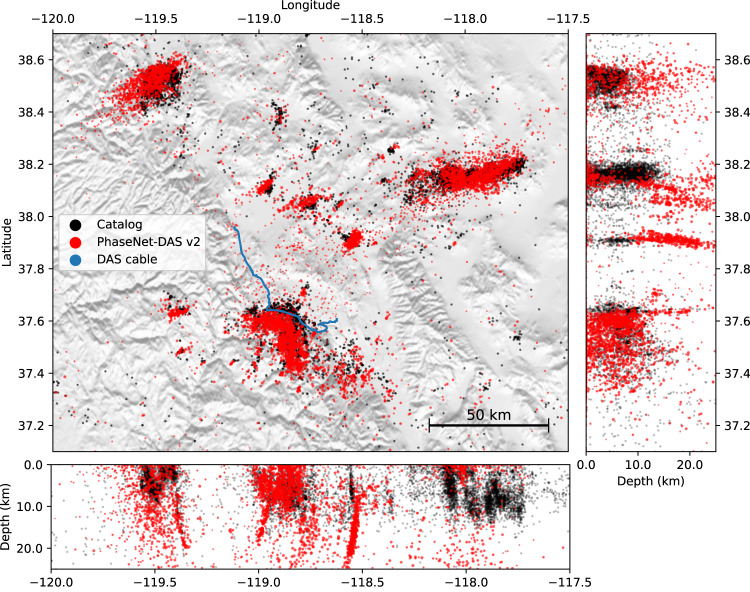
“Following a similar workflow for seismic datasets (W. Zhu et al., 2023), we apply PhaseNet-DAS to DAS records of 9,839 earthquakes in the Northern California earthquake catalog and Southern California earthquake catalog within 3 degrees of the Long Valley DAS array (Figure 6).”
MethodSelf-citationThe break of earthquake asperities imaged by distributed acoustic sensing
Li, J., Kim, T., Lapusta, N., Biondi, E., & Zhan, Z. (2023) · Nature · doi:10.1038/s41586-023-06227-w · Cited by 116
Self-citationZhu, W., Tai, K. S., Mousavi, S. M., Bailis, P. D., & Beroza, G. C. (2022) · Journal of Geophysical Research Solid Earth · doi:10.1029/2021jb023283 · Cited by 105 · cited 4×
“Deep learning is also widely used in earthquake detection (Perol et al., 2018; Ross et al., 2018; W. Zhu & Beroza, 2019; Mousavi et al., 2020; W. Zhu, Tai, et al., 2022; Mousavi & Beroza, 2022) for studying dense earthquake sequences (Park et al., 2020; M. Liu et al., 2020; Tan et al., 2021; Park…”
BackgroundMethodInfluentialSelf-citationYang, Y., Atterholt, J. W., Shen, Z., Muir, J. B., Williams, E., & Zhan, Z. (2021) · Geophysical Research Letters · doi:10.1029/2021gl096503 · Cited by 100
Self-citationSeismic signal augmentation to improve generalization of deep neural networks
Zhu, W., Mousavi, S. M., & Beroza, G. C. (2020) · Advances in geophysics · doi:10.1016/bs.agph.2020.07.003 · Cited by 99 · cited 3×
“There have been a number of approaches proposed to train deep learning models with little or no manual labeling, such as data augmentation (W. Zhu et al., 2020a), simulating synthetic data (Kuang et al., 2021; Smith et al., 2021; Dahmen et al., 2022), fine-tuning and transfer learning (Chai et al.,…”
BackgroundMethodSelf-citationIntroduction to Interferometry of Fiber‐Optic Strain Measurements
Martin, E., Lindsey, N. J., Franklin, J., & Biondi, B. (2021) · Geophysical monograph · doi:10.1002/9781119521808.ch9 · Cited by 98
Woollam, J., Rietbrock, A., Rodríguez, Á. B., & Angelis, S. D. (2019) · Seismological Research Letters · doi:10.1785/0220180312 · Cited by 96 · cited 1×
“…from the China Earthquake Networks; Mousavi, Sheng, et al. (2019) created a global benchmark dataset (STEAD) of ∼ 1.2 million seismic waveforms; Several other benchmark datasets are also created for developing deep learning models (Woollam et al., 2019; Yeck et al., 2020b; Woollam et al., 2022).”
BackgroundInfluentialEarthquake focal mechanisms with distributed acoustic sensing
Li, J., Zhu, W., Biondi, E., & Zhan, Z. (2023) · Nature Communications · doi:10.1038/s41467-023-39639-3 · Cited by 92
Self-citationRapid Response to the 2019 Ridgecrest Earthquake With Distributed Acoustic Sensing
Li, Z., Shen, Z., Yang, Y., Williams, E., Wang, X., & Zhan, Z. (2021) · AGU Advances · doi:10.1029/2021av000395 · Cited by 90
Self-citationMachine‐Learning‐Based Analysis of the Guy‐Greenbrier, Arkansas Earthquakes: A Tale of Two Sequences
Park, Y., Mousavi, S. M., Zhu, W., Ellsworth, W. L., & Beroza, G. C. (2020) · Geophysical Research Letters · doi:10.1029/2020gl087032 · Cited by 79 · cited 2×
“…al., 2018; W. Zhu & Beroza, 2019; Mousavi et al., 2020; W. Zhu, Tai, et al., 2022; Mousavi & Beroza, 2022) for studying dense earthquake sequences (Park et al., 2020; M. Liu et al., 2020; Tan et al., 2021; Park et al., 2021; SU et al., 2021; Wilding et al., 2022b) and routine monitoring…”
BackgroundSelf-citationJozinović, D., Lomax, A., Štajduhar, I., & Michelini, A. (2021) · Geophysical Journal International · doi:10.1093/gji/ggab488 · Cited by 78
Pseudo-Labeling and Confirmation Bias in Deep Semi-Supervised Learning
Arazo, E., Ortego, D., Albert, P., O'Connor, N. E., & McGuinness, K. (2020) · 2020 International Joint Conference on Neural Networks (IJCNN) · doi:10.1109/ijcnn48605.2020.9207304 · Cited by 77
Earthquake Magnitude With DAS: A Transferable Data‐Based Scaling Relation
Yin, J., Zhu, W., Li, J., Biondi, E., Miao, Y., Spica, Z. J., Viens, L., Shinohara, M., Ide, S., Mochizuki, K., et al. (2023) · Geophysical Research Letters · doi:10.1029/2023gl103045 · Cited by 71
Self-citationPubDAS: A PUBlic Distributed Acoustic Sensing Datasets Repository for Geosciences
Spica, Z. J., Franklin, J., Beroza, G. C., Biondi, B., Cheng, F., Gaite, B., Luo, B., Martin, E., Shen, J., Thurber, C. H., et al. (2023) · Seismological Research Letters · doi:10.1785/0220220279 · Cited by 66 · cited 1×
“Although many DAS datasets have been collected (Spica et al., 2022) and will continue to be collected in the near future, most of these datasets have not yet been analyzed by human analysts.”
BackgroundYeck, W. L., Patton, J. M., Ross, Z. E., Hayes, G. P., Guy, M. R., Ambruz, N., Shelly, D. R., Benz, H. M., & Earle, P. S. (2020) · Seismological Research Letters · doi:10.1785/0220200178 · Cited by 58 · cited 2×
“…earthquake sequences (Park et al., 2020; M. Liu et al., 2020; Tan et al., 2021; Park et al., 2021; SU et al., 2021; Wilding et al., 2022b) and routine monitoring seismicity (Huang et al., 2020; Yeck et al., 2020a; M. Zhang et al., 2022; Retailleau, Saurel, Zhu, et al., 2022; Shi et al., 2022).”
BackgroundInfluentialSelf-citationShi, P., Grigoli, F., Lanza, F., Beroza, G. C., Scarabello, L., & Wiemer, S. (2022) · Seismological Research Letters · doi:10.1785/0220220071 · Cited by 55 · cited 2×
“, 2022b) and routine monitoring seismicity (Huang et al., 2020; Yeck et al., 2020a; M. Zhang et al., 2022; Retailleau, Saurel, Zhu, et al., 2022; Shi et al., 2022).”
BackgroundFault Zone Imaging With Distributed Acoustic Sensing: Body‐To‐Surface Wave Scattering
Atterholt, J. W., Zhan, Z., & Yang, Y. (2022) · Journal of Geophysical Research Solid Earth · doi:10.1029/2022jb025052 · Cited by 55 · cited 1×
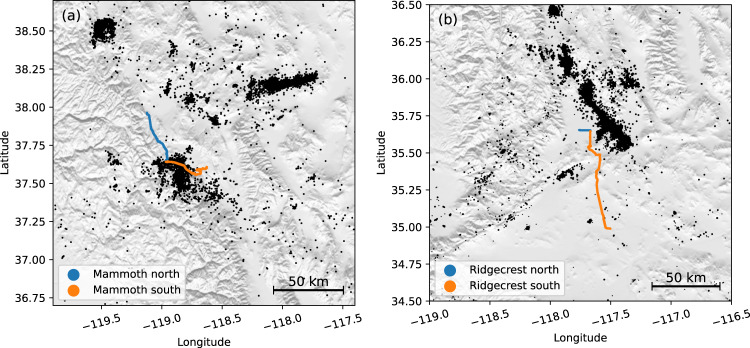
“The Long Valley DAS array consists of two cables with a total length of 100 km, 10,000 channels, and a spatial resolution of 10 m (Li et al., 2021; Yang, Atterholt, et al., 2022; Yang, Zhan, et al., 2022; Atterholt et al., 2022).”
BackgroundSelf-citationAutomatic detection for a comprehensive view of Mayotte seismicity
Retailleau, L., Saurel, J., Laporte, M., Lavayssière, A., Ferrazzini, V., Zhu, W., Beroza, G. C., Satriano, C., Komorowski, J., & Ovpf Team (2023) · Comptes Rendus Géoscience · doi:10.5802/crgeos.133 · Cited by 50
Self-citationA Wrapper to Use a Machine-Learning-Based Algorithm for Earthquake Monitoring
Retailleau, L., Saurel, J., Zhu, W., Satriano, C., Beroza, G. C., Issartel, S., Boissier, P., OVPF Team, & OVSM Team (2022) · Seismological Research Letters · doi:10.1785/0220210279 · Cited by 39
Self-citationMarsQuakeNet: A More Complete Marsquake Catalog Obtained by Deep Learning Techniques
Dahmen, N., Clinton, J., Meier, M., Stähler, S. C., Ceylan, S., Kim, D., Stott, A. E., & Giardini, D. (2022) · Journal of Geophysical Research Planets · doi:10.1029/2022je007503 · Cited by 38 · cited 2×
“…little or no manual labeling, such as data augmentation (W. Zhu et al., 2020a), simulating synthetic data (Kuang et al., 2021; Smith et al., 2021; Dahmen et al., 2022), fine-tuning and transfer learning (Chai et al., 2020; Jozinovi´c et al., 2022), self-supervised learning (van den Ende et al.,…”
BackgroundFault Zone Imaging With Distributed Acoustic Sensing: Surface‐To‐Surface Wave Scattering
Yang, Y., Zhan, Z., Shen, Z., & Atterholt, J. W. (2022) · Journal of Geophysical Research Solid Earth · doi:10.1029/2022jb024329 · Cited by 37
Self-citationLv, H., Zeng, X., Bao, F., Xie, J., Lin, R., Song, Z., & Zhang, G. (2022) · IEEE Transactions on Geoscience and Remote Sensing · doi:10.1109/tgrs.2022.3143120 · Cited by 36 · cited 1×
“Most works focus on earthquake detection using a small dataset (Hern´andez et al., 2022; Lv et al., 2022; Huot et al., 2022).”
BackgroundCrowdQuake: A Networked System of Low-Cost Sensors for Earthquake Detection via Deep Learning
Huang, X., Lee, J., Kwon, Y., & Lee, C.-H. (2020) · ACM SIGKDD Conference on Knowledge Discovery and Data Mining (KDD) · doi:10.1145/3394486.3403378 · Cited by 25 · cited 1×
“…earthquake sequences (Park et al., 2020; M. Liu et al., 2020; Tan et al., 2021; Park et al., 2021; SU et al., 2021; Wilding et al., 2022b) and routine monitoring seismicity (Huang et al., 2020; Yeck et al., 2020a; M. Zhang et al., 2022; Retailleau, Saurel, Zhu, et al., 2022; Shi et al., 2022).”
BackgroundShelly, D. R., Skoumal, R. J., & Hardebeck, J. L. (2022) · Geophysical Research Letters · doi:10.1029/2022gl101233 · Cited by 22
Zhao, C., Zhao, C., Lei, H., & Yao, M. (2022) · 地震学报:英文版 · doi:10.1016/j.eqs.2022.10.003 · Cited by 20 · cited 2×
“…Seismic Network; Michelini et al. (2021) built a benchmark dataset of ∼ 1.2 million seismic wave-forms from the Italian National Seismic Network; Zhao et al. (2022) formed a benchmark dataset of ∼ 2.3 million seismic waveforms from the China Earthquake Networks; Mousavi, Sheng, et al.…”
BackgroundInfluentialvan den Ende, M., Lior, I., Ampuero, J., et al. (2021) · doi:10.31223/x55k63 · Cited by 18
Huot, F., Clapp, R. G., & Biondi, B. (2024) · Computers & Geosciences · doi:10.1016/j.cageo.2024.105625 · Cited by 12 · cited 2×
“Most works focus on earthquake detection using a small dataset (Hernández et al., 2022; Lv et al., 2022; Huot et al., 2022).”
BackgroundHuot, F., Clapp, R. G., & Biondi, B. (2022) · arXiv (Cornell University) · doi:10.48550/arxiv.2203.05932 · Cited by 3 · cited 2×
“Most works focus on earthquake detection using a small dataset (Hernández et al., 2022; Lv et al., 2022; Huot et al., 2022).”
BackgroundZhu, W., & Weiqiang (2023) · Zenodo (CERN European Organization for Nuclear Research) · doi:10.5281/zenodo.10043026 · Cited by 2
Self-citation
Research works printed but not linked: 12
- Li Z Zhan Z Pushing the limit of earthquake detection with distributed acoustic sensing and template matching: a case study at the brady geothermal field Geophys. J. Int. 2018 215 1583 1593 10.1093/gji/ggy359 · DOI
- Zhu W Beroza GC PhaseNet: a deep-neural-network-based seismic arrival-time picking method Geophys. J. Int. 2019 216 261 273
- Su J High resolution earthquake catalog building for the 21 May 2021 Yangbi, Yunnan, M S 6.4 earthquake sequence using deep-learning phase picker Chin. J. Geophys. 2021 64 2647 2656
- Wilding, John D., Zhu, Weiqiang, Ross, Zachary E. & Jackson, Jennifer M. The magmatic web beneath Hawai ‘i. Science379, 5755 (2022). 36548443 · DOI
- Hernández, Pablo D., Ramírez, Jaime A. & Soto, Marcelo A. Improving earthquake detection in fibre-optic distributed acoustic sensors using deep-learning and hybrid datasets. In 2022 European Conference on Optical Communication (ECOC) 1–4 (Optica Publishing Group, 2022).
- VanDecar JC Crosson RS Determination of teleseismic relative phase arrival times using multi-channel cross-correlation and least squares Bull. Seismol. Soc. Am. 1990 80 150 169
- Zhu, W., Mousavi, S. M. & Beroza, G. C. Seismic signal augmentation to improve generalization of deep neural networks. Adv. Geophys.61, 151–177 (2020). · DOI
- Luo, W., Li, Y., Urtasun, R. & Zemel, R. Understanding the effective receptive field in deep convolutional neural networks. In Advances in Neural Information Processing Systems (Curran Associates, Inc., 2016).
- Ioffe, S. & Szegedy, C. Batch normalization: accelerating deep network training by reducing internal covariate shift. In Proc. 32nd International Conference on Machine Learning 448–456 (PMLR, 2015).
- Glorot, X., Bordes, A. & Bengio, Y. Deep sparse rectifier neural networks. In Proc. 14h International Conference on Artificial Intelligence and Statistics 315–323 (JMLR Workshop and Conference Proceedings, 2011).
- Biondi E Wang X Williams EF Zhan Z Geolocalization of large-scale das channels using a GPS-tracked moving vehicle Seismol. Soc. Am. 2023 94 318 330
- Zhu, Weiqiang et al. Seismic arrival-time picking on distributed acoustic sensing data using semi-supervised learning. Zenodo10.5281/zenodo.10043122 (2023). PMC10713581 38081845 · doi:10.5281/zenodo.10043122
Cited by
Earthquake focal mechanisms with distributed acoustic sensing
Li, J., Zhu, W., Biondi, E., & Zhan, Z. (2023) · Nature Communications · doi:10.1038/s41467-023-39639-3 · Cited by 92
Self-citationAdaptive decentralized AI scheme for signal recognition of distributed sensor systems
Zhang, S., Li, H., Fan, C., Zeng, Z., Xiong, C., Wu, J., Yan, Z., Liu, D., & Sun, Q. (2024) · Opto-Electronic Advances · doi:10.29026/oea.2024.240119 · Cited by 75
Earthquake Magnitude With DAS: A Transferable Data‐Based Scaling Relation
Yin, J., Zhu, W., Li, J., Biondi, E., Miao, Y., Spica, Z. J., Viens, L., Shinohara, M., Ide, S., Mochizuki, K., et al. (2023) · Geophysical Research Letters · doi:10.1029/2023gl103045 · Cited by 71
“We then apply PhaseNet-DAS (Zhu et al., 2022), which is a deep learning phase picker tailored for DAS data, to accurately pick P-wave and S-wave arrivals from earthquakes (Text S2 of the Supporting Information).”
MethodSelf-citationAn upper-crust lid over the Long Valley magma chamber
Biondi, E., Zhu, W., Li, J., Williams, E., & Zhan, Z. (2023) · Science Advances · doi:10.1126/sciadv.adi9878 · Cited by 67
“We obtain the necessary P - and S -wave observed travel times by using a neural network model designed to accurately pick DAS data called Phase-Net-DAS ( 55 ).”
Self-citationReal-Data Testing of Distributed Acoustic Sensing for Offshore Earthquake Early Warning
Yin, J., Soto, M. A., Ramírez, J., Kamalov, V. F., Zhu, W., Husker, A. L., & Zhan, Z. (2023) · The Seismic Record · doi:10.1785/0320230018 · Cited by 50
Self-citation
Metadata
- Authors
- Zhu, W., Biondi, E., Li, J., Yin, J., Ross, Z. E., & Zhan, Z.
- Affiliations
- California Institute of Technology (US)
- Corresponding author
- Zhu, Weiqiang
- Venue
- Nature Communications
- Published
- 2023-12-11
- Volume
- 14
- Issue
- 1
- Pages
- 8192-8192
- ISSN
- 2041-1723 (ISSN-L)
- PMC
- PMC10713581
- OpenAlex
- W4389560491
- Semantic Scholar
- 7b31b15d90a8f92cf697bae7bc6c2eed19ea0f2c
- Cited by
- 130
- References
- 78
- Citations by year
- 2026: 53 · 2025: 44 · 2024: 30 · 2023: 3
- FWCI
- 12.25
- Type
- journal article
- Language
- en
- Open access
- gold
- doi.org
- Licence
- cc-by
- creativecommons.org/licenses/by/4.0 (tdm)
- creativecommons.org/licenses/by/4.0 (vor)
- Locations
- Nature Communications (publishedVersion, cc-by)
- PubMed Central (publishedVersion, cc-by)
- PubMed (publishedVersion)
- eScholarship (California Digital Library) (submittedVersion, cc-by)
- DOAJ (DOAJ: Directory of Open Access Journals) (submittedVersion, cc-by-sa)
- Funders
- National Science Foundation (1848166)
- Department of the Interior | United States Geological Survey | Wyoming-Montana Water Science Center (G22AP00067)
- Gordon and Betty Moore Foundation
- Topics
- Physical Sciences › Computer Science › Artificial Intelligence › Seismology and Earthquake Studies
- Physical Sciences › Earth and Planetary Sciences › Geophysics › Seismic Waves and Analysis
- Physical Sciences › Earth and Planetary Sciences › Geophysics › Seismic Imaging and Inversion Techniques
- Keywords
- distributed acoustic sensing, semi-supervised learning, PhaseNet, earthquake detection, seismic monitoring, ground coupling
About these checks
Registry, retraction, Cites and statistics results are computed, not judged, with one exception: a printed reference that no index lists is read once by a model before it counts as a citation error. Claims are extracted by a model and kept only when their quote appears verbatim in the text; each cited source is then checked, with a model’s help, for whether it says what the claim relies on. Those verdicts can be wrong — read the claim’s quote and the cited source before relying on one.
Statistics and arithmetic are recomputed, not judged.
Confidence bands are shown only for fields calibrated on our annotated test set. None is calibrated yet, so no band is shown.
What counts as a claim ›How we measure confidence ›How we check this ›
Are you an author, or do you see a problem with this page? Request a review
Data sources
Bibliographic data: Semantic Scholar, OpenAlex, Crossref.
Contains information from the Semantic Scholar Academic Graph Datasets, made available under the ODC Attribution License (ODC-BY 1.0).
Semantic Scholar’s data is described in: Kinney, R., et al. (2023). The Semantic Scholar Open Data Platform. arXiv:2301.10140.
