

Concordance of randomised controlled trials for artificial intelligence interventions with the CONSORT-AI reporting guidelines
Open accessThe DOI matches its Crossref record; 89 of the 89 references it cites were found in a registry or an index.
Abstract
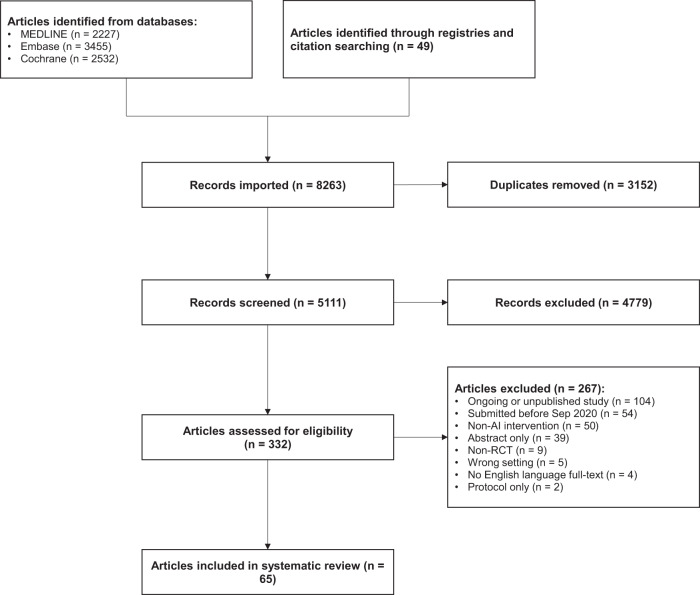
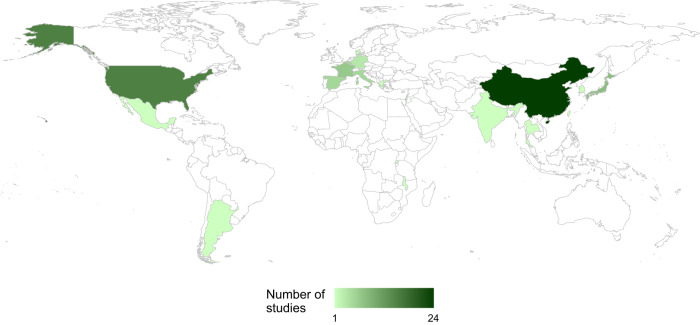
The Consolidated Standards of Reporting Trials extension for Artificial Intelligence interventions (CONSORT-AI) was published in September 2020. Since its publication, several randomised controlled trials (RCTs) of AI interventions have been published but their completeness and transparency of reporting is unknown. This systematic review assesses the completeness of reporting of AI RCTs following publication of CONSORT-AI and provides a comprehensive summary of RCTs published in recent years. 65 RCTs were identified, mostly conducted in China (37%) and USA (18%). Median concordance with CONSORT-AI reporting was 90% (IQR 77–94%), although only 10 RCTs explicitly reported its use. Several items were consistently under-reported, including algorithm version, accessibility of the AI intervention or code, and references to a study protocol. Only 3 of 52 included journals explicitly endorsed or mandated CONSORT-AI. Despite a generally high concordance amongst recent AI RCTs, some AI-specific considerations remain systematically poorly reported. Further encouragement of CONSORT-AI adoption by journals and funders may enable more complete adoption of the full CONSORT-AI guidelines.
Overview
The claims and statistics of this paper haven’t been checked yet.
Free: it reads the open-access text and checks the first 5 claims that cite a source we can check. Create a free account to check every claim.
Integrity signals
Registry
Cites
Statistics
Figures
Verification
Claims the paper makes
The claims and statistics of this paper haven’t been checked yet.
Free: it reads the open-access text and checks the first 5 claims that cite a source we can check. Create a free account to check every claim.
Claims other papers make about this one
Each is checked against this paper’s own text: does it say what the citing paper says it does?
The source backs part of the claim, not all of it — or backs it for a different population, condition or comparison.
In the citing paper
“Second, there are also concerns about the quality and transparency of published clinical trials, which often lack the methodological rigor and detailed reporting necessary to inspire clinical confidence and enable replication9–11.”
From A quantitative analysis of global AI medical studies: gaps in randomized controlled trials (2026) · cites this paper as [9]
Experimental — accuracy not yet measuredThe check wasn’t confident either way, so it gives no verdict — never disputed.
In the citing paper
“However, these guidelines do not cover RAG applications in clinical settings, emphasizing the need for a more specific guideline.”
From Improving large language model applications in biomedicine with retrieval-augmented generation: a systematic review, meta-analysis, and clinical development guidelines (2025) · cites this paper as [13]
Experimental — accuracy not yet measured
Self-check
Percentages, sums and reported differences re-computed from the paper’s own numbers.
The self-check needs the paper’s full text.
Citations
Cites
3 retracted
Zhu, S., Niu, Y., Wang, J., Xu, D., & Li, Y. (2022) · Computational and Mathematical Methods in Medicine · doi:10.1155/2022/3021320 · Cited by 10
RetractedWang, T., Chen, Y., Du, H., Liu, Y., Zhang, L., & Meng, M. (2021) · Computational and Mathematical Methods in Medicine · doi:10.1155/2021/3584034 · Cited by 7
RetractedZhang, F., Wu, S., Qu, M., & Zhou, L. (2022) · Contrast Media & Molecular Imaging · doi:10.1155/2022/1013241 · Cited by 5
RetractedThe PRISMA 2020 statement: An updated guideline for reporting systematic reviews
Page, M. J., McKenzie, J. E., Bossuyt, P. M., Boutron, I., Hoffmann, T. C., Mulrow, C. D., Shamseer, L., Tetzlaff, J. M., Akl, E. A., Brennan, S. E., et al. (2021) · BMJ · doi:10.1136/bmj.n71 · Cited by 108,283
Self-citationCONSORT 2010 Statement: updated guidelines for reporting parallel group randomised trials
the CONSORT Group, Schulz, K. F., Altman, D. G., & Moher, D. (2010) · BMC Medicine · doi:10.1186/1741-7015-8-18 · Cited by 13,371
Self-citationCONSORT 2010 Statement: updated guidelines for reporting parallel group randomised trials
Schulz, K. F., Altman, D. G., Moher, D., & for the CONSORT Group (2010) · BMJ · doi:10.1136/bmj.c332 · Cited by 9,329
Self-citationLarge Language Models Encode Clinical Knowledge
Singhal, K., Azizi, S., Tu, T., Mahdavi, S. S., Wei, J., Chung, H. W., Scales, N., Tanwani, A., Cole-Lewis, H., Pfohl, S., et al. (2022) · arXiv · doi:10.48550/arxiv.2212.13138 · Cited by 4,083
Self-citationLarge language models encode clinical knowledge
Singhal, K., Azizi, S., Tu, T., Mahdavi, S. S., Wei, J., Chung, H. W., Scales, N., Tanwani, A., Cole-Lewis, H., Pfohl, S., et al. (2023) · Nature · doi:10.1038/s41586-023-06291-2 · Cited by 4,083
Self-citationInternational evaluation of an AI system for breast cancer screening
McKinney, S. M., Sieniek, M., Godbole, V., Godwin, J., Antropova, N., Ashrafian, H., Back, T., Chesus, M., Corrado, G. S., Darzi, A., et al. (2020) · Nature · doi:10.1038/s41586-019-1799-6 · Cited by 3,287 · cited 3×
“Database search strategies and PRISMA-S checklist are included in Supplementary Information.”
BackgroundInfluentialSelf-citationCONSORT 2010 statement: Updated guidelines for reporting parallel group randomised trials
Schulz, K. F., Altman, D. G., & Moher, D. (2010) · Journal of Pharmacology and Pharmacotherapeutics · doi:10.4103/0976-500x.72352 · Cited by 2,165
Self-citation
Research works printed but not linked: 2
- Available from: https://link.springer.com/10.1007/s00345-022-04086-0 (2022). · DOI
- Lefebvre, C. et al. Chapter 4: Searching for and selecting studies. in Cochrane Handbook for Systematic Reviews of Interventions [Internet]. Version 6.3 (updated February 2022). Cochrane; 2022. Available from: www.training.cochrane.org/handbook.
Cited by
Tam, T. Y. C., Sivarajkumar, S., Kapoor, S., Stolyar, A. V., Polanska, K., McCarthy, K. R., Osterhoudt, H., Wu, X., Visweswaran, S., Fu, S., et al. (2024) · npj Digital Medicine · doi:10.1038/s41746-024-01258-7 · Cited by 424
AI, Health, and Health Care Today and Tomorrow: The JAMA Summit Report on Artificial Intelligence
Angus, D. C., Khera, R., Lieu, T., Liu, V., Ahmad, F. S., Anderson, B., Bhavani, S. V., Bindman, A., Brennan, T., Celi, L. A., et al. (2025) · JAMA · doi:10.1001/jama.2025.18490 · Cited by 195
Self-citationLiu, S., McCoy, A. B., & Wright, A. (2025) · Journal of the American Medical Informatics Association · doi:10.1093/jamia/ocaf008 · Cited by 200
“13 In addition, Tam et al. introduced QUEST, a framework specifically for human evaluation of LLMs in healthcare.”
Multimodal artificial intelligence in ophthalmology: Applications, challenges, and future directions
Jin, K., Yu, T., & Grzybowski, A. E. (2025) · Survey of Ophthalmology · doi:10.1016/j.survophthal.2025.07.003 · Cited by 52
El-Sayed, A., Lovat, L. B., & Ahmad, O. F. (2025) · Gastroenterology · doi:10.1053/j.gastro.2025.01.254 · Cited by 47
The testing of AI in medicine is a mess. Here’s how it should be done
Lenharo, M. (2024) · Nature · doi:10.1038/d41586-024-02675-0 · Cited by 40
Liu, F., Ju, Q., Zheng, Q., & Peng, Y. (2024) · Current Opinion in Behavioral Sciences · doi:10.1016/j.cobeha.2024.101452 · Cited by 45
Embracing Generative Artificial Intelligence in Clinical Research and Beyond
Foote, H. P., Hong, C., Anwar, M. M., Borentain, M., Bugin, K., Dreyer, N. A., Fessel, J. P., Goyal, N., Hanger, M., Hernandez, A. F., et al. (2025) · JACC Advances · doi:10.1016/j.jacadv.2025.101593 · Cited by 42
Evaluation and Regulation of Artificial Intelligence Medical Devices for Clinical Decision Support
Weissman, G. E. (2025) · Annual Review of Biomedical Data Science · doi:10.1146/annurev-biodatasci-103123-095824 · Cited by 38
Randomized Controlled Trials Evaluating Artificial Intelligence in Cardiovascular Care
Barzilai, D. H., Sudri, K., Goshen, G., Klang, E., Zimlichman, E., Barbash, I. M., & Cohen, M. S. (2025) · JACC Advances · doi:10.1016/j.jacadv.2025.102152 · Cited by 29
Toward governance of artificial intelligence in pediatric healthcare
Richter, F., Holmes, E., Richter, F., Guttmann, K., Duong, S. Q., Gangadharan, S., Schadt, E., Salmasian, H., Gelb, B. D., & Glicksberg, B. S. (2025) · npj Digital Medicine · doi:10.1038/s41746-025-02000-7 · Cited by 37
Mese, I., D’Antonoli, T. A., Bluethgen, C., Bressem, K., Cuocolo, R., Chaudhari, A., Tejani, A. S., Isaac, A., Ponsiglione, A., Meddeb, A., et al. (2026) · Diagnostic and Interventional Radiology · doi:10.4274/dir.2026.263812 · Cited by 17
Clinical Evaluation of Artificial Intelligence-Enabled Interventions
Hogg, H. D. J., Martindale, A. P. L., Liu, X., & Denniston, A. K. (2024) · Investigative Ophthalmology & Visual Science · doi:10.1167/iovs.65.10.10 · Cited by 13
Self-citationZhang, X., Ferry, J., Hewson, D. W., Collins, G. S., Wiles, M. D., Zhao, Y., Martindale, A. P. L., Tomaschek, M., Bowness, J. S., & the GRAITE‐USRA Working Group (2025) · Anaesthesia · doi:10.1111/anae.16733 · Cited by 15
“However, there is substantial heterogeneity in the reporting of studies evaluating AI-based devices in healthcare, including ultrasound-guided regional anaesthesia [4, 5].”
Self-citationŠuto, J., Marušić, A., & Buljan, I. (2025) · JMIR Cancer · doi:10.2196/63347 · Cited by 14
“The real-world implementation of medical AI interventions generally lacks high-quality evidence, as a recent systematic review identified 65 randomized controlled trials evaluating AI interventions, but only 7 with chatbots as an intervention [59].”
Chen, D. C., Arnold, K., Sukhdeo, R., Alla, J. F., & Raman, S. (2025) · BMJ Oncology · doi:10.1136/bmjonc-2025-000733 · Cited by 16
A Practical Guide to Evaluating Artificial Intelligence Imaging Models in Scientific Literature
McCarthy, A., Valenzuela, I. A., Chen, R. W. S., Glass, L. R. D., & Thakoor, K. A. (2025) · Ophthalmology Science · doi:10.1016/j.xops.2025.100847 · Cited by 12
Chang, L., Li, H., Wu, W., Liu, X., Yan, J., Chen, Z., Wu, H., & Song, S. (2025) · Journal of Translational Medicine · doi:10.1186/s12967-025-07591-z · Cited by 10
Self-citationArtificial intelligence in emergency medicine: a narrative review
Rego, A., Arango-Ibañez, J. P., Taylor, R. A., Smith, M. E., Jones, D. D., Pelletier, J., Colletti, J. E., Gottlieb, M. A., & Long, B. (2026) · The American Journal of Emergency Medicine · doi:10.1016/j.ajem.2026.01.028 · Cited by 9
The role of artificial intelligence in cardiovascular research: Fear less and live bolder
Scuricini, A., Ramoni, D., Liberale, L., Montecucco, F., & Carbone, F. (2025) · European Journal of Clinical Investigation · doi:10.1111/eci.14364 · Cited by 10
“57 Significant efforts are being made to develop dedicated guidelines following best practice and standardized checklists (e.g. 60 Although the editorial boards of AI-dedicated subspecialty journals, such as those launched by The Lancet , New England Journal of Medicine and European Heart Journal ,…”
Chen, D., Li, P., Khoshkish, E., Lee, S., Ning, T., Tahir, U., Wong, H. C. Y., Lee, M. S. F., & Raman, S. (2026) · Journal of the American Medical Informatics Association · doi:10.1093/jamia/ocaf223 · Cited by 6
Chen, D. C., He, E., Pace, K., Chekay, M., & Raman, S. (2025) · The Oncologist · doi:10.1093/oncolo/oyaf112 · Cited by 6
“46 These results suggest that as AI research in RCT settings continues to become more prevalent, increasing the adoption of AI-specific reporting guidelines can help ensure that AI-specific elements of research methodology and results are wholly reported.”
Patient safety in AI-powered diagnostic pathology
Rugge, M., Fraschini, M., Orvieto, E., Didaci, L., Sandonà, L., D’Amuri, A., Saba, L., & Faa, G. (2025) · Journal of Clinical Pathology · doi:10.1136/jcp-2025-210231 · Cited by 6
“33”
The future is now: How AI is reshaping spine care
Muehlbauer, E. J., Alvi, M. A., Kennedy, D. J. “. J. ”., & Fehlings, M. G. (2025) · North American Spine Society Journal (NASSJ) · doi:10.1016/j.xnsj.2025.100825 · Cited by 4
Global approval and certification of ophthalmic AI devices: A comparative regulatory perspective
Grzybowski, A. E., Liu, T. Y. A., Popovic, M. M., Zhao, A., Miyake, M., Takahashi, H., Kawasaki, R., He, M., Gong, X., Göktaş, P., et al. (2026) · Asia-Pacific Journal of Ophthalmology · doi:10.1016/j.apjo.2026.100328 · Cited by 7
Wang, Y., Chen, C., Chen, Z., & Wu, L. (2025) · Technologies · doi:10.3390/technologies13080323 · Cited by 3
Are AI Neuroimaging Models Ready for Clinical Use? A Systematic Methodological Review
Sulaimanov, U., Şanlıer, N., Moniri, A., Demir, B., Serikkanov, Y. S., BAYRAMOĞLU, A. R., Al-Jebur, M. S., Uslu, I., Ozturk, O., Nizzola, M., et al. (2026) · Journal of Clinical Medicine · doi:10.3390/jcm15093441 · Cited by 5
“To address some of these problems, several checklists such as CLAIM, TRIPOD-AI, and CONSORT-AI were developed in order to promote more transparent and robust reporting of AI studies [6–8].”
Brusnic, O., Boicean, A., Ichim, C., Anderco, P., & Onișor, D. M. (2026) · Life · doi:10.3390/life16050845 · Cited by 5
“This distinction is essential because many AI studies in medicine still evaluate diagnostic or predictive performance rather than clinically meaningful outcomes [123,124].”
Granat, M. M., Paź, A., & Mirowska-Guzel, D. M. (2025) · PeerJ Computer Science · doi:10.7717/peerj-cs.2954 · Cited by 4
An assessment of the informativeness of clinical trials in digital mental health
O’Dea, B., Rooke, S. E., Gordon, E.-R., Lyons, F. L., Vilus, B., Paravastu, N., & Batterham, P. J. (2025) · npj Mental Health Research · doi:10.1038/s44184-025-00177-z · Cited by 3
Marconi, L., Pirovano, E., & Cabitza, F. (2026) · Journal of Medical Systems · doi:10.1007/s10916-025-02335-4 · Cited by 2
Rodriguez, S., León-Prieto, C., & Rodríguez-Jaime, M. F. (2026) · Journal of Bodywork and Movement Therapies · doi:10.1016/j.jbmt.2026.04.008 · Cited by 2
Yang, B., Park, C., Lin, S., Muralidharan, V., & Kado, D. M. (2025) · Journal of the American Geriatrics Society · doi:10.1111/jgs.19362 · Cited by 2
“Martindale et al. [4] reviewed published AI tools that followed CONSORT-AI guidelines [6, 7], introducing some of these categories, that here we proposed be rooted in the 5Ms context.”
Wang, X., Bai, Y., Li, W., Yang, C., Zhang, L., Zhu, H., Bao, R., Jiang, Y., Wang, F., & Wang, H. (2025) · Frontiers in Public Health · doi:10.3389/fpubh.2025.1580060 · Cited by 5
A quantitative analysis of global AI medical studies: gaps in randomized controlled trials
Wang, Q., Yang, Y., Qiu, L., Xu, Y., Sun, R., Xue, P., & Qiao, Y. (2026) · npj Digital Medicine · doi:10.1038/s41746-026-02698-z · Cited by 4
“Second, there are also concerns about the quality and transparency of published clinical trials, which often lack the methodological rigor and detailed reporting necessary to inspire clinical con fi dence and enable replication 9 – 11 .”
Compliance with the CONSORT AI Extension in Orthopaedic Randomized Controlled Trials
Strasser, T., Baker, C., Cheminant, J. R., Han, B., Canumay, S., & Schlechter, J. A. (2026) · Journal of Bone and Joint Surgery · doi:10.2106/jbjs.25.01439 · Cited by 1
Ong, Q. C., Ang, C., Bojić, I., Johnson, C. L., Aggour, H., Ng, F. S., Car, J., Leeson, P., Gonçalves, J., & Lai, N. M. (2026) · EClinicalMedicine · doi:10.1016/j.eclinm.2026.104123 · Cited by 4
“14,70 Such gaps in methodological rigour and reporting standards could hinder reproducibility, limit external validity, and impede the safe and responsible translation of AI technologies into cardiovascular practice.”
Harrison, T., Hu, D., Jia, H., Tan, S. H., Chen, F., Zhang, Z., Lu, Q., Wang, J., Huang, M., Prokop, L. J., et al. (2025) · SSRN Electronic Journal · doi:10.2139/ssrn.5137601 · Cited by 2
Calibrating CONSORT-AI with FAIR Principles to enhance reproducibility in AI-driven clinical trialsPreprint
Shiferaw, K. B., Balaur, I., Collins, G. S., Sharma, C., Castro, L. J., Psomopoulos, F. E., Garijo, D., Henkel, R., Waltemath, D., & Zeleke, A. A. (2025) · medRxiv · doi:10.1101/2025.07.07.25330987 · Cited by 1
Olgiati, S., Santona, F., Meloni, D., Barabino, E., Rossi, G., Genova, C., Grossi, F., & Heidari, N. (2026) · medRxiv · doi:10.64898/2026.03.09.26347939
Upadhyaya, P., & Tomar, P. (2025) · International Conference on Artificial Intelligence and Speech Technology (AIST) · doi:10.1109/aist68591.2025.11441629
“Finally, prospective evaluation and clinical utility studies — ideally randomized or pragmatic trials reported following CONSORT-AI — are required to move beyond retrospective performance claims and demonstrate that models actually improve outcomes for women in real clinical workflows [84].”
Ghazanfar, Z., Fatima, A., Ali, S. G., & Jung, Y. (2026) · Journal of Orthopaedic Surgery and Research · doi:10.1186/s13018-026-07130-6 · Cited by 1
“Study quality and clinical readiness were evaluated using a framework adapted from: • FDA AI/ML SaMD guidance [30] • CONSORT-AI [31] • CLAIM [32] • QUADAS-2 [33] • PROBAST [34] Due to the heterogeneity of study designs, no single tool was applied in its original form.”
Yadav, K., & Gupta, T. (2026) · Journal of the Egyptian National Cancer Institute · doi:10.1186/s43046-026-00399-y
Noori, G. H., Bibi, S., & Lee, S. W. (2026) · INQUIRY The Journal of Health Care Organization Provision and Financing · doi:10.1177/00469580261478793 · Cited by 3
Patient factors in medical artificial intelligence: a systematic review
Lai, S., Guan, Z., Zhang, Y., Hong, J., Zeng, D., Echouffo-Tcheugui, J. B., Qin, Y., Shen, J., Li, H., Jiang, Z., et al. (2026) · Nature Health · doi:10.1038/s44360-026-00190-2 · Cited by 1
Self-citation27項目を報告できても、臨床AIが安全だとは言えない:Vaseyら(2022)DECIDE-AIを読む
森元, 大. (2026) · Zenodo (CERN European Organization for Nuclear Research) · doi:10.5281/zenodo.22239338
Shu, Y., Li, Q., Liang, L., Liu, J., Zuli, Z., Li, T., Huang, S., Chen, J., Wen, J., & Tan, J. (2026) · Frontiers in Psychiatry · doi:10.3389/fpsyt.2026.1898444 · Cited by 1
Vijayaraj, T. D., Karpagarajan, R., Subramaniam, S., Annamalai, D., & Kumari, S. (2026) · Biosensors · doi:10.3390/bios16100537 · Cited by 1
Artificial Intelligence in Neuroradiology: Transforming Diagnosis, Prognostication, and Workflow
Ghosh, T. (2026) · Indian journal of radiology and imaging - new series/Indian journal of radiology and imaging/Indian Journal of Radiology & Imaging · doi:10.1055/s-0046-1829088
Parra-Vilchis, M. A., Garibaldi-Ríos, A. F., Gallegos‐Arreola, M. P., Alonzo-Rojo, A., Sanchez‐Ante, G., & García‐Ortíz, J. E. (2026) · Archives of Medical Research · doi:10.1016/j.arcmed.2026.103518
Cappellani, F., Zeppieri, M., Antonio, L., Mazzotta, C. G., Gattazzo, I., D’Esposito, F., Gagliano, C., & Capobianco, M. (2026) · Journal of Clinical Medicine · doi:10.3390/jcm15207785
“Early-stage clinical AI evaluation can be structured according to DECIDE-AI [75], whereas interventional trial protocols and reports should follow SPIRIT-AI and CONSORT-AI recommendations [76–78].”
Harrison, T. B., Hu, D., Jia, H., Tan, S. H., Chen, F., Zhang, Z., Lu, Q., Wang, J., Wang, L., Huang, M., et al. (2026) · PLOS Digital Health · doi:10.1371/journal.pdig.0001768
“An evaluation of 65 RCTs involving artificial intelligence (AI) interventions found that 10 of the eligible trials referenced CONSORT-AI guidelines and only 3 journals mandated its use [5].”
Chen, D., Blayne, A., Ning, T., Chattha, I., Afshar, M., Ong, J. C. L., Hong, J. C., Liu, N., Celi, L. A., Moons, K. G. M., et al. (2026) · BMJ · doi:10.1136/bmj-2026-100855 · Cited by 1
Łoś, K., & Waszkiewicz, N. (2026) · European Psychiatry · doi:10.1192/j.eurpsy.2026.12262
“Nevertheless, EEG remains a valuable source of biological data, and its potential may be realized through more rigorous study designs, standardized methodologies, and improved reporting using frameworks such as TRIPOD-AI and CONSORT-AI [60, 61].”
Omigbodun, F. T. (2026) · Journal of Medicine Surgery and Public Health · doi:10.1016/j.glmedi.2026.100258
Bonanno, M., Calderone, A., Lonia, G., Migale, S., Ravì, D., Quartarone, A., Milardi, D., Celesti, A., & Calabrò, R. S. (2026) · Digital Health · doi:10.1177/20552076261487745
Lehto, M., & Neittaanmäki, P. (2026) · JYU Reports · doi:10.17011/jyureports/113
Applications and Reflections on AI in the Field of Education
Ye, M., Agarwal, N., Malhotra, S., Singhal, R., & Verma, D. (2026) · Emerald Group Publishing Limited eBooks · doi:10.1108/s1877-636120260000035002
Ko, J. E., Hwang, J. W., Kim, S. M., & Kwon, J. Y. (2026) · Journal of Medical Internet Research · doi:10.2196/94543
“%) among 65 trials [15], and 65% of applicable items were adequately reported among trials in primary care [17].”
Metadata
- Authors
- Martindale, A. P. L., Llewellyn, C. D., de Visser, R. O., Ng, B., Ngai, V., Kale, A. U., di Ruffano, L. F., Golub, R. M., Collins, G. S., Moher, D., McCradden, M. D., Oakden-Rayner, L., Rivera, S. C., Calvert, M., Kelly, C. J., Lee, C. S., Yau, C., Chan, A.-W., Keane, P. A., Beam, A. L., Denniston, A. K., & Liu, X.
- Affiliations
- Brighton and Sussex Medical School (GB)
- University of Oxford (GB)
- University College London (GB)
- University Hospitals Birmingham NHS Foundation Trust (GB)
- Northwestern University (US)
- Ottawa Hospital Research Institute (CA)
- University of Toronto (CA)
- University of Birmingham (GB)
- National Institute for Health and Care Research (GB)
- Google (United Kingdom) (GB)
- University of Washington (US)
- Moorfields Eye Hospital NHS Foundation Trust (GB)
- Harvard University (US)
- Corresponding author
- Liu, Xiaoxuan
- ORCID
- Martindale, Alexander P. L.
- Llewellyn, Carrie D.
- Ng, Benjamin
- Ngai, Victoria
- Kale, Aditya U.
- di Ruffano, Lavinia Ferrante
- Collins, Gary S.
- Moher, David
- McCradden, Melissa D.
- Rivera, Samantha Cruz
- Calvert, Melanie
- Kelly, Christopher J.
- Lee, Cecilia S.
- Yau, Christopher
- Chan, An-Wen
- Keane, Pearse A.
- Beam, Andrew L.
- Denniston, Alastair K.
- Liu, Xiaoxuan
- Venue
- Nature Communications
- Published
- 2024-02-22
- Volume
- 15
- Issue
- 1
- Pages
- 1619-1619
- ISSN
- 2041-1723 (ISSN-L)
- PMC
- PMC10883966
- OpenAlex
- W4392058364
- Semantic Scholar
- 284bb9ee87010245a3237804f7f3adda2b6a327a
- Cited by
- 58
- References
- 87
- Citations by year
- 2026: 28 · 2025: 26 · 2024: 4
- FWCI
- 16.13
- Type
- journal article
- Language
- en
- Update notices
- correction (2024-07-29)
- Open access
- gold
- doi.org
- Licence
- cc-by
- creativecommons.org/licenses/by/4.0 (tdm)
- creativecommons.org/licenses/by/4.0 (vor)
- Locations
- Nature Communications (publishedVersion, cc-by)
- PubMed Central (publishedVersion, cc-by)
- PubMed (publishedVersion)
- RePEc: Research Papers in Economics (publishedVersion)
- DOAJ (DOAJ: Directory of Open Access Journals) (publishedVersion)
- University of Birmingham Research Portal (University of Birmingham) (publishedVersion, cc-by)
- UCL Discovery (University College London) (submittedVersion, cc-by)
- Adelaide Research & Scholarship (AR&S) (University of Adelaide) (submittedVersion, cc-by)
- Figshare (submittedVersion, cc-by)
- Funders
- Cancer Research UK (27294)
- National Institute for Health and Care Research (NIHR205109)
- Topics
- Social Sciences › Decision Sciences › Statistics, Probability and Uncertainty › Meta-analysis and systematic reviews
- Health Sciences › Medicine › Health Informatics › Artificial Intelligence in Healthcare and Education
- Social Sciences › Library and Information Sciences › Academic Publishing and Open Access
- Keywords
- CONSORT-AI, reporting guidelines, artificial intelligence interventions, randomized controlled trials, reporting completeness, guideline adherence, research transparency
- MeSH terms
- Artificial Intelligence, China, Humans, Research Design, Randomized Controlled Trials as Topic, Guidelines as Topic, Research Report
About these checks
Registry, retraction, Cites and statistics results are computed, not judged, with one exception: a printed reference that no index lists is read once by a model before it counts as a citation error. Claims are extracted by a model and kept only when their quote appears verbatim in the text; each cited source is then checked, with a model’s help, for whether it says what the claim relies on. Those verdicts can be wrong — read the claim’s quote and the cited source before relying on one.
Statistics and arithmetic are recomputed, not judged.
Confidence bands are shown only for fields calibrated on our annotated test set. None is calibrated yet, so no band is shown.
What counts as a claim ›How we measure confidence ›How we check this ›
Are you an author, or do you see a problem with this page? Request a review
Data sources
Bibliographic data: Semantic Scholar, OpenAlex, Crossref.
Contains information from the Semantic Scholar Academic Graph Datasets, made available under the ODC Attribution License (ODC-BY 1.0).
Semantic Scholar’s data is described in: Kinney, R., et al. (2023). The Semantic Scholar Open Data Platform. arXiv:2301.10140.
