

The DOI matches its Crossref record; 56 of the 56 references it cites were found in a registry or an index.
Large language models streamline automated machine learning for clinical studies
Open accessAbstract
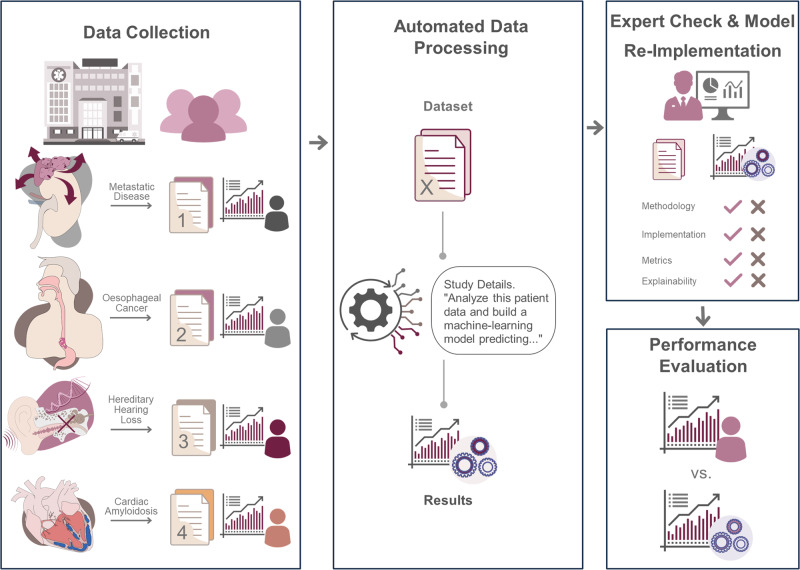
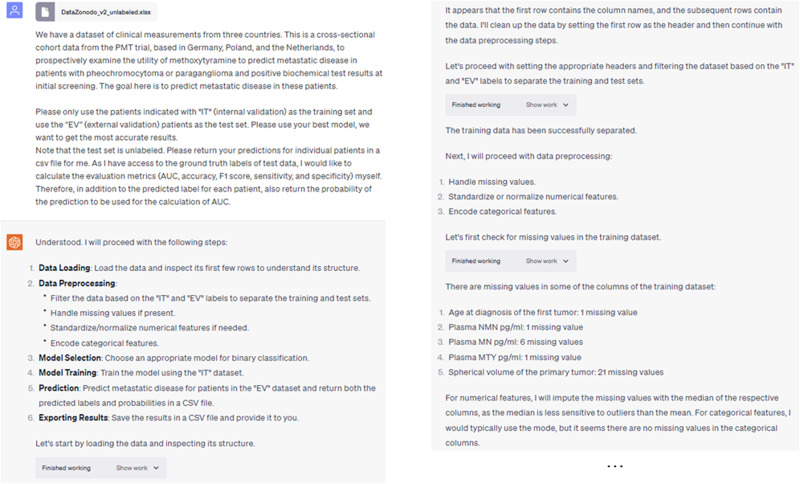
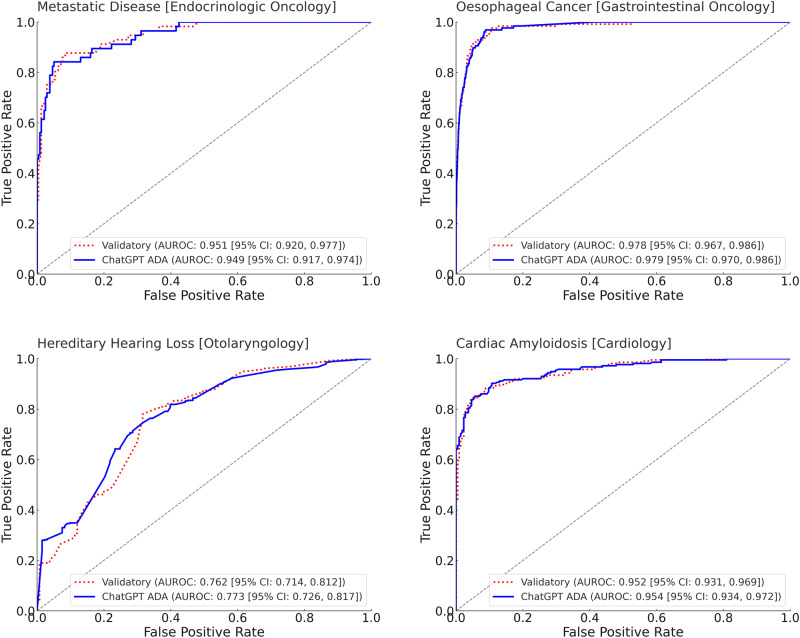
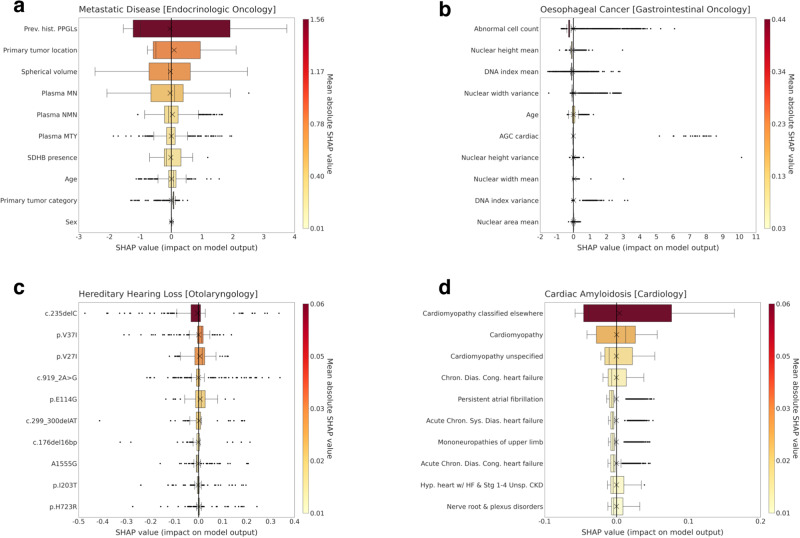
A knowledge gap persists between machine learning (ML) developers (e.g., data scientists) and practitioners (e.g., clinicians), hampering the full utilization of ML for clinical data analysis. We investigated the potential of the ChatGPT Advanced Data Analysis (ADA), an extension of GPT-4, to bridge this gap and perform ML analyses efficiently. Real-world clinical datasets and study details from large trials across various medical specialties were presented to ChatGPT ADA without specific guidance. ChatGPT ADA autonomously developed state-of-the-art ML models based on the original study’s training data to predict clinical outcomes such as cancer development, cancer progression, disease complications, or biomarkers such as pathogenic gene sequences. Following the re-implementation and optimization of the published models, the head-to-head comparison of the ChatGPT ADA-crafted ML models and their respective manually crafted counterparts revealed no significant differences in traditional performance metrics ( p ≥ 0.072). Strikingly, the ChatGPT ADA-crafted ML models often outperformed their counterparts. In conclusion, ChatGPT ADA offers a promising avenue to democratize ML in medicine by simplifying complex data analyses, yet should enhance, not replace, specialized training and resources, to promote broader applications in medical research and practice.
Overview
The claims and statistics of this paper haven’t been checked yet.
Run the check — free, no account needed. It reads the open-access text and checks the sources it cites.
Integrity signals
Registry
Cites
Statistics
Figures
Verification
Claims the paper makes
The claims and statistics of this paper haven’t been checked yet.
Run the check — free, no account needed. It reads the open-access text and checks the sources it cites.
Claims other papers make about this one
Each is checked against this paper’s own text: does it say what the citing paper says it does?
In the citing paper
“Arasteh et al. used the integrated data analysis tools of an LLM to analyze scientific data, achieving results on par with human researchers19.”
From Development and validation of an autonomous artificial intelligence agent for clinical decision-making in oncology (2025) · cites this paper as [19]
Self-check
Percentages, sums and reported differences re-computed from the paper’s own numbers.
The self-check needs the paper’s full text.
Citations
Cites
Breiman, L. (2001) · Machine Learning · doi:10.1023/a:1010933404324 · Cited by 133,538
Greedy function approximation: A gradient boosting machine
Friedman, J. H. (2001) · The Annals of Statistics · doi:10.1214/aos/1013203451 · Cited by 30,731
A decision-theoretic generalization of on-line learning and an application to boosting
Freund, Y., & Schapire, R. E. (1997) · Journal of Computer and System Sciences · doi:10.1006/jcss.1997.1504 · Cited by 20,466
A training algorithm for optimal margin classifiers
Boser, B. E., Guyon, I. M., & Vapnik, V. N. (1992) · Proceedings of the fifth annual workshop on Computational learning theory · doi:10.1145/130385.130401 · Cited by 11,992
Barredo Arrieta, A., Díaz-Rodríguez, N., Del Ser, J., Bennetot, A., Tabik, S., Barbado, A., Garcia, S., Gil-Lopez, S., Molina, D., Benjamins, R., et al. (2020) · Information Fusion · doi:10.1016/j.inffus.2019.12.012 · Cited by 10,423
Multivariate Adaptive Regression Splines
Friedman, J. H. (1991) · The Annals of Statistics · doi:10.1214/aos/1176347963 · Cited by 8,108
Kung, T. H., Cheatham, M., Medenilla, A., Sillos, C., De Leon, L., Elepaño, C., Madriaga, M., Aggabao, R., Diaz-Candido, G., Maningo, J., et al. (2023) · PLOS Digital Health · doi:10.1371/journal.pdig.0000198 · Cited by 4,115
Large language models encode clinical knowledge
Singhal, K., Azizi, S., Tu, T., Mahdavi, S. S., Wei, J., Chung, H. W., Scales, N., Tanwani, A., Cole-Lewis, H., Pfohl, S., et al. (2023) · Nature · doi:10.1038/s41586-023-06291-2 · Cited by 4,083
Large Language Models Encode Clinical Knowledge
Singhal, K., Azizi, S., Tu, T., Mahdavi, S. S., Wei, J., Chung, H. W., Scales, N., Tanwani, A., Cole-Lewis, H., Pfohl, S., et al. (2022) · arXiv · doi:10.48550/arxiv.2212.13138 · Cited by 4,083
Large language models in medicine
Thirunavukarasu, A. J., Ting, D. S. J., Elangovan, K., Gutierrez, L., Tan, T. F., & Ting, D. S. W. (2023) · Nature Medicine · doi:10.1038/s41591-023-02448-8 · Cited by 3,944
Research works printed but not linked: 2
- Ke, G. et al. LightGBM: A highly efficient gradient boosting decision tree. in Advances in Neural Information Processing Systems 30. 3149–3157 (NIPS, 2017).
- Lundberg, S. & Lee, S.-I. A Unified Approach to Interpreting Model Predictions. in Proceedings of the 31st International Conference on Neural Information Processing Systems. 4768–4777. https://doi.org/10.5555/3295222.3295230 (NIPS, 2017). · DOI
Cited by
Sorted by citations
Items 101–114 of 114
Established Machine Learning Matches Tabular Foundation Models in Clinical PredictionsPreprint
Shaktah, L., Gustav, M., Lenz, T., Liang, J., Hilgers, L., Carrero, Z. I., & Kather, J. N. (2026) · medRxiv · doi:10.64898/2026.02.02.26345274
Self-citationLi, Z., Wang, M., Liu, A., Zeng, Y., Yan, B., Cao, Z., Zhu, J., Yang, Y., & Li, Y. S. (2026) · BMC Health Services Research · doi:10.1186/s12913-026-14350-3
Dey, S. K., Qureshi, A. I., & Shyu, C. (2026) · medRxiv · doi:10.64898/2026.04.09.26350523
Unlikely Storyteller: Leveraging Narrative-Based Communication in LLM-Generated Medical Advice
Wang, F., Wang, N., Xu, W., & Zhang, P. (2026) · Healthcare · doi:10.3390/healthcare14081015 · Cited by 1
Koyun, A. (2026) · International Conference on Informatics Education and Computer Technology Applications (IECA) · doi:10.1145/3802133.3802134
A composable multimodal framework for cine CMR-text–driven prediction of heart failure outcomes
Chen, J. M., Sun, J., Wang, X., Chen, X., Chu, H., Song, G., Luo, Y., Zhou, X., & Gu, R. (2026) · Physiological Measurement · doi:10.1088/1361-6579/ae6f6c
Lei, C., Cui, Z., Duan, Y., Wu, Z., Qu, D., Wu, W., Zhang, Z., Ji, J. S., Zhou, B., Wu, J., et al. (2026) · Cell Reports Medicine · doi:10.1016/j.xcrm.2026.102823
Zhang, H., Han, C., Hu, R., Zhou, X., Li, X. C., & Tan, J. (2026) · Clinical and Experimental Obstetrics & Gynecology · doi:10.31083/ceog50327
DeepPlaque: a scalable multimodal platform for Aβ pathology and cell analysis in Alzheimer’s disease
Wong, H. Y., Jin, C., Yuen, S. L., Yang, X., Gill, S. S., Xu, J., Lai, K. P. E., Fu, W., Gao, W., Wang, X., et al. (2026) · EMBO Molecular Medicine · doi:10.1038/s44321-026-00488-4
Ali, M. A., Dornaika, F., Ali, H., Hamad, D., & Hoang, V. T. (2026) · Artificial Intelligence Review · doi:10.1007/s10462-026-11650-2
Xiang, S., He, H., Xie, Z., Cheng, C.-Y., Li, H., & Liu, D. (2026) · medRxiv · doi:10.64898/2026.08.30.26361665
Shi, H., Lan, T., Gao, X., Song, H., Li, Y., Wang, Y., Yang, L., Ban, X., Zhong, X., Pan, C., et al. (2026) · Physics in Medicine and Biology · doi:10.1088/1361-6560/aea735
Designing Emotionally Resonant Services
Mastrogiacomi, F. (2026) · Springer eBooks · doi:10.1007/978-3-032-35370-2_4
Turner, L., Kelleher, M., Zahn, A., Sathyan, A., Warm, E. J., Furniss, D., Overla, S., Zheng, W., & Cohen, K. (2026) · Lecture notes in networks and systems · doi:10.1007/978-3-032-35459-4_16
Metadata
- Authors
- Tayebi Arasteh, S., Han, T., Lotfinia, M., Kuhl, C., Kather, J. N., Truhn, D., & Nebelung, S.
- Affiliations
- Universitätsklinikum Aachen (DE)
- University Hospital Heidelberg (DE)
- Corresponding author
- Han, Tianyu
- ORCID
- Venue
- Nature Communications
- Published
- 2024-02-21
- Volume
- 15
- Issue
- 1
- Pages
- 1603-1603
- ISSN
- 2041-1723 (ISSN-L)
- PMC
- PMC10881983
- OpenAlex
- W4392016947
- Cited by
- 114
- References
- 53
- Citations by year
- 2026: 34 · 2025: 53 · 2024: 27
- FWCI
- 10.45
- Type
- journal article
- Language
- en
- Open access
- gold
- doi.org
- Locations
- Nature Communications (publishedVersion, cc-by)
- PubMed Central (publishedVersion, cc-by)
- PubMed (publishedVersion)
- arXiv (Cornell University) (submittedVersion, cc-by-sa)
- RePEc: Research Papers in Economics (submittedVersion)
- DOAJ (DOAJ: Directory of Open Access Journals) (submittedVersion)
- RWTH Publications (RWTH Aachen) (submittedVersion, other-oa)
- arXiv (Cornell University)
- RWTH Publications (RWTH Aachen)
- Funders
- European Commission (101057091)
- Deutsche Forschungsgemeinschaft (TR 1700/7‐1, NE2136/3-1, 2136/3-1)
- Bundesministerium für Bildung und Forschung (01KD2215B, 031L0312A, 01KX2021)
- HORIZON EUROPE Framework Programme (101057091)
- Topics
- Health Sciences › Medicine › Health Informatics › Artificial Intelligence in Healthcare and Education
- Physical Sciences › Computer Science › Artificial Intelligence › Machine Learning in Healthcare
- Health Sciences › Health Professions › Health Information Management › Artificial Intelligence in Healthcare
- Keywords
- large language models, ChatGPT, automated machine learning, clinical trials, medical data analysis, GPT-4, clinical outcome prediction, biomarker prediction, tumor progression, model performance comparison
- MeSH terms
- Machine Learning, Algorithms, Humans, Language, Neoplasms, Benchmarking
About these checks
Registry, retraction, Cites and statistics results are computed, not judged, with one exception: a printed reference that no index lists is read once by a model before it counts as a citation error. Claims are extracted by a model and kept only when their quote appears verbatim in the text; each cited source is then checked, with a model’s help, for whether it says what the claim relies on. Those verdicts can be wrong — read the claim’s quote and the cited source before relying on one.
Statistics and arithmetic are recomputed, not judged.
Confidence bands are shown only for fields calibrated on our annotated test set. None is calibrated yet, so no band is shown.
What counts as a claim ›How we measure confidence ›How we check this ›
Are you an author, or do you see a problem with this page? Request a review
