

Induced neural phase precession through exogenous electric fields
Open accessThe DOI matches its Crossref record; 120 of the 120 references it cites were found in a registry or an index.
Abstract
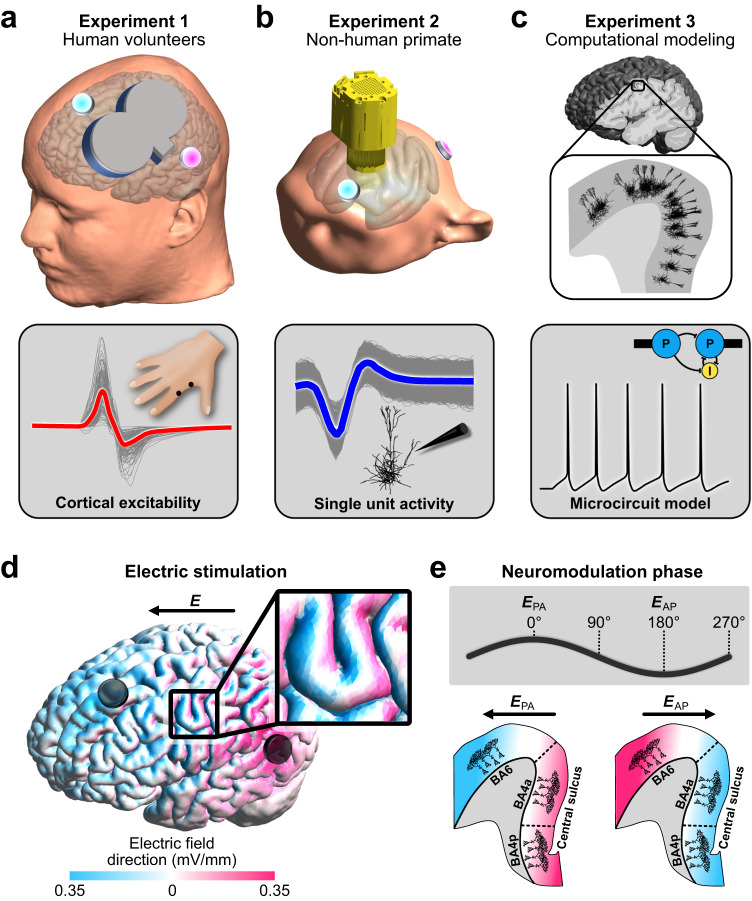
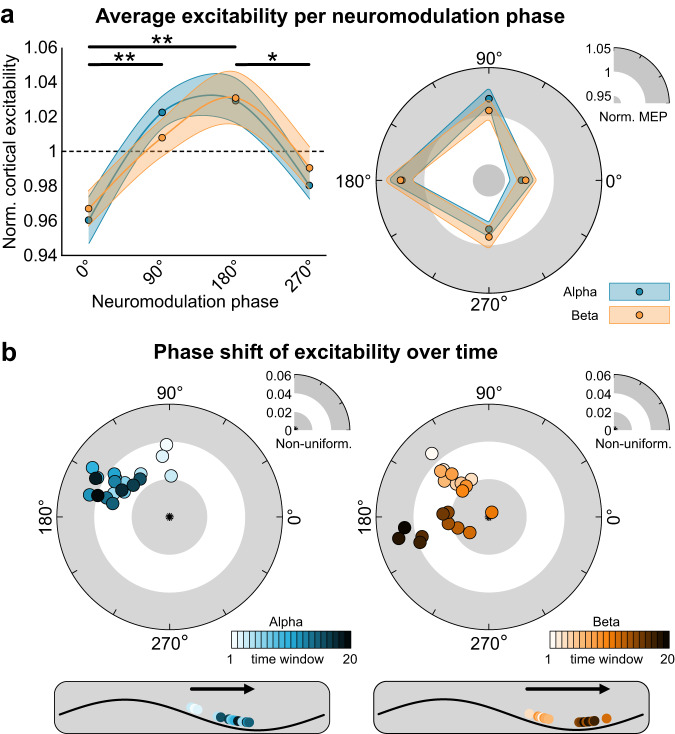
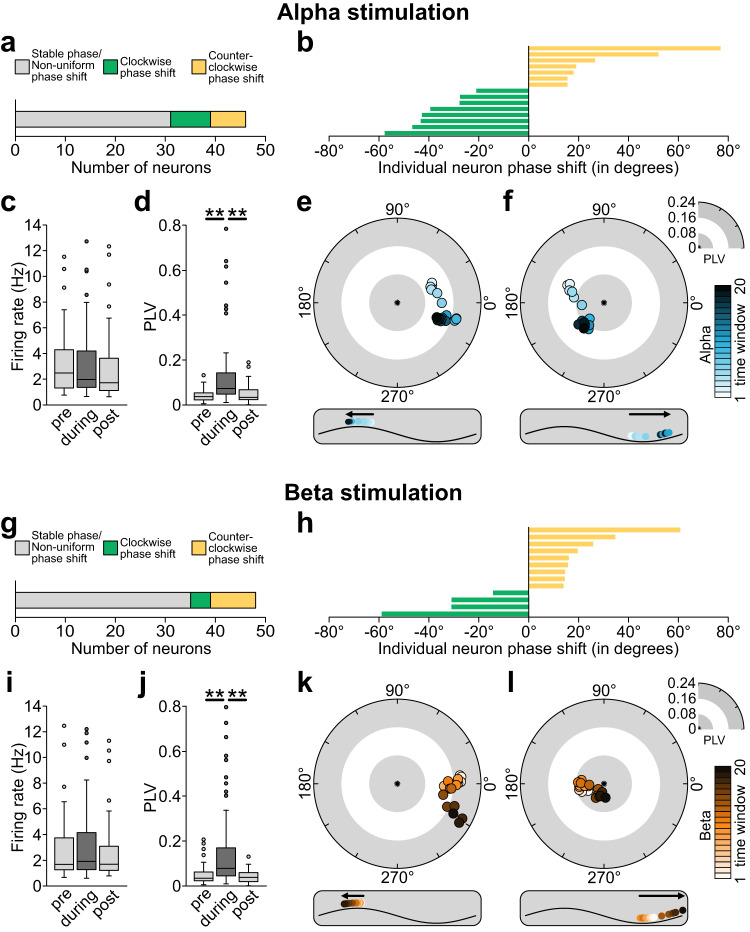
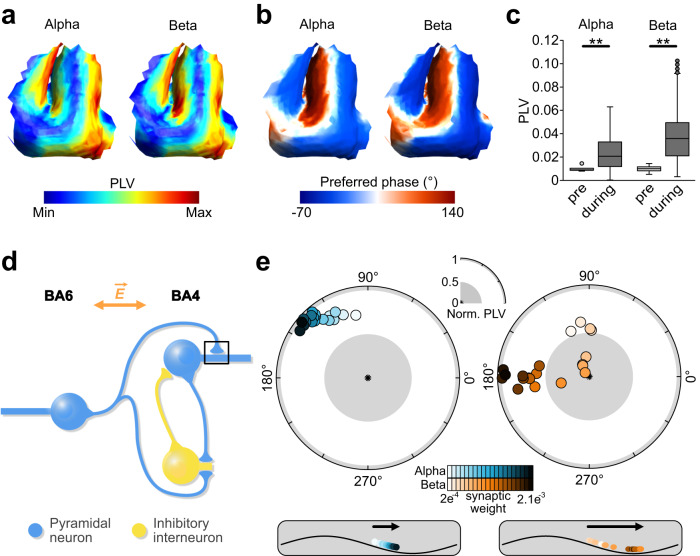
The gradual shifting of preferred neural spiking relative to local field potentials (LFPs), known as phase precession, plays a prominent role in neural coding. Correlations between the phase precession and behavior have been observed throughout various brain regions. As such, phase precession is suggested to be a global neural mechanism that promotes local neuroplasticity. However, causal evidence and neuroplastic mechanisms of phase precession are lacking so far. Here we show a causal link between LFP dynamics and phase precession. In three experiments, we modulated LFPs in humans, a non-human primate, and computational models using alternating current stimulation. We show that continuous stimulation of motor cortex oscillations in humans lead to a gradual phase shift of maximal corticospinal excitability by ~90°. Further, exogenous alternating current stimulation induced phase precession in a subset of entrained neurons (~30%) in the non-human primate. Multiscale modeling of realistic neural circuits suggests that alternating current stimulation-induced phase precession is driven by NMDA-mediated synaptic plasticity. Altogether, the three experiments provide mechanistic and causal evidence for phase precession as a global neocortical process. Alternating current-induced phase precession and consequently synaptic plasticity is crucial for the development of novel therapeutic neuromodulation methods.
Overview
The claims and statistics of this paper haven’t been checked yet.
Free: it reads the open-access text and checks the first 5 claims that cite a source we can check. Create a free account to check every claim.
Integrity signals
Registry
Cites
Statistics
Figures
Verification
Claims the paper makes
The claims and statistics of this paper haven’t been checked yet.
Free: it reads the open-access text and checks the first 5 claims that cite a source we can check. Create a free account to check every claim.
Claims other papers make about this one
Each is checked against this paper’s own text: does it say what the citing paper says it does?
The cited source says what the claim attributes to it.
In the citing paper
“Though several mechanisms have been proposed for explaining EMF interactions with biological systems, including phase-synchronization [30,31] and ion cylcotron resonance [32], these frameworks do not apply for the heart’s extremely weak magnetic field.”
Self-check
Percentages, sums and reported differences re-computed from the paper’s own numbers.
The self-check needs the paper’s full text.
Citations
Cites
Oostenveld, R., Fries, P., Maris, E., & Schoffelen, J.-M. (2011) · Computational Intelligence and Neuroscience · doi:10.1155/2011/156869 · Cited by 10,323 · cited 1×
“To address them, we computed the power spectral density of each channel and used spectral interpolation using FieldTrip MATLAB toolbox 100 to remove frequencies at which artifacts occur.”
Ideal spatial adaptation by wavelet shrinkage
Donoho, D. L., & Johnstone, I. M. (1994) · Biometrika · doi:10.1093/biomet/81.3.425 · Cited by 8,760
The origin of extracellular fields and currents — EEG, ECoG, LFP and spikes
Buzsáki, G., Anastassiou, C. A., & Koch, C. (2012) · Nature Reviews Neuroscience · doi:10.1038/nrn3241 · Cited by 4,225
Frequency Dependence of Signal Power and Spatial Reach of the Local Field Potential
Leski, S., Lindén, H., Tetzlaff, T., Pettersen, K. H., & Einevoll, G. T. (2013) · PubMed · doi:10.18154/rwth-conv-084442 · Cited by 3,639
CircStat : A MATLAB Toolbox for Circular Statistics
Berens, P. (2009) · Journal of Statistical Software · doi:10.18637/jss.v031.i10 · Cited by 3,099
Rhythms for cognition: communication through coherence
Fries, P. (2015) · Neuron · doi:10.1016/j.neuron.2015.09.034 · Cited by 2,725 · cited 1×
“The timing of neural spiking is often coupled to ongoing oscillating local fi eld potentials (LFPs) 1,2 .”
The NEURON Simulation Environment
Hines, M. L., & Carnevale, N. T. (1997) · Neural Computation · doi:10.1162/neco.1997.9.6.1179 · Cited by 2,658
Phase relationship between hippocampal place units and the EEG theta rhythm
O'Keefe, J., & Recce, M. L. (1993) · Hippocampus · doi:10.1002/hipo.450030307 · Cited by 2,552 · cited 5×
“The observed phase shift in cortical excitability is reminiscent of single-cell phase precession 7,9 .”
InfluentialUnsupervised spike detection and sorting with wavelets and superparamagnetic clustering
Quiroga, R. Q., Nadasdy, Z., & Ben-Shaul, Y. (2004) · Neural Computation · doi:10.1162/089976604774201631 · Cited by 2,119 · cited 2×
“Spike sorting was done using the open source MATLAB software Wave_Clus, an unsupervised spike sorting method 101 .”
Transcranial Magnetic Stimulation: A Primer
Hallett, M. (2007) · Neuron · doi:10.1016/j.neuron.2007.06.026 · Cited by 1,891
Cited by
Temporal interference stimulation disrupts spike timing in the primate brain
Vieira, P. G., Krause, M. R., & Pack, C. C. (2024) · Nature Communications · doi:10.1038/s41467-024-48962-2 · Cited by 73
Agboada, D., Zhao, Z., & Wischnewski, M. (2025) · Frontiers in Human Neuroscience · doi:10.3389/fnhum.2025.1548478 · Cited by 61
Self-citationWischnewski, M., Shirinpour, S., Alekseichuk, I., Lapid, M. I., Nahas, Z. H., Lim, K. O., Croarkin, P. E., & Opitz, A. (2024) · Journal of Neural Engineering · doi:10.1088/1741-2552/ad8a8e · Cited by 59
Self-citationZhao, Z., Shirinpour, S., Tran, H., Wischnewski, M., & Opitz, A. (2024) · Journal of Neural Engineering · doi:10.1088/1741-2552/ad37d9 · Cited by 58
Self-citationROSE: A Universal Neural Grammar
Murphy, E. (2025) · Cognitive Neuroscience · doi:10.1080/17588928.2025.2523875 · Cited by 33
“Other open questions concern the potential relevance of mechanisms that are not a core part of ROSE, like phase precession, which has been argued to bear a causal role in various cortical processing regimes (Wischnewski et al., 2024).”
Precision at Deep Brain: Noninvasive Temporal Interference Stimulation
Xu, S., Cui, H., Xiao, X., Manshaii, F., Hong, G., & Chen, J. (2025) · ACS Nano · doi:10.1021/acsnano.5c15238 · Cited by 20
Asl, M. M., & Valizadeh, A. (2025) · Physics of Life Reviews · doi:10.1016/j.plrev.2025.03.008 · Cited by 15
Wei, J., Alamia, A., Yao, Z., Huang, G., Li, L., Liang, Z., Zhang, L., Zhou, C., Song, Z., & Zhang, Z. (2024) · Journal of Neuroscience · doi:10.1523/jneurosci.2023-23.2024 · Cited by 14
Dose–response of tDCS effects on motor learning and cortical excitability: A preregistered study
Hsu, G., Jafari, Z. H., Ahmed, A. W., Edwards, D. J., Cohen, L. G., & Parra, L. C. (2024) · Imaging Neuroscience · doi:10.1162/imag_a_00431 · Cited by 12
“Several brain regions may be involved that were not optimally targeted with our bipolar configuration 75 .”
Modulation of motor excitability reflects traveling waves of neural oscillations
Haigh, Z. J., Tran, H., Berger, T. A., Shirinpour, S., Alekseichuk, I., Koenig, S., Zimmermann, J., McGovern, R. A., Darrow, D., Herman, A. B., et al. (2025) · Cell Reports · doi:10.1016/j.celrep.2025.115864 · Cited by 12
“26–29 However, in these previous studies, stimulation was fixed to the motor hotspot.”
Self-citationAbnormal mu rhythm state-related cortical and corticospinal responses in chronic stroke
Wischnewski, M., Haigh, Z. J., Berger, T. A., Rotteveel, J., van Oijen, T., Perera, N. D., Shirinpour, S., Alekseichuk, I., Hawe, R. L., & Opitz, A. (2025) · Clinical Neurophysiology · doi:10.1016/j.clinph.2025.2111385 · Cited by 12
Self-citationSeo, J., Lee, J., & Min, B. (2024) · NeuroImage · doi:10.1016/j.neuroimage.2024.120612 · Cited by 11
Barzegar, S., Kakies, C. F. M., Ciupercӑ, D., & Wischnewski, M. (2025) · International Journal of Psychophysiology · doi:10.1016/j.ijpsycho.2025.112579 · Cited by 11
Self-citationHarris, B., & Gong, P. (2026) · Nature Communications · doi:10.1038/s41467-026-68893-4 · Cited by 9
Tran, H., Mohanty, B., Hjelle, N., Zhao, Z., Lee, S., DeNicola, A. L., Alekseichuk, I., Wischnewski, M., Wang, J., Vitek, J. L., et al. (2026) · Brain stimulation · doi:10.1016/j.brs.2026.103045 · Cited by 9
“1C) [20].”
InfluentialSelf-citationLayers of the monkey visual cortex are selectively modulated during electrical stimulation
Lee, S., Zhao, Z., Alekseichuk, I., Park, J., Shirinpour, S., Linn, G. S., Schroeder, C. E., Falchier, A., & Opitz, A. (2025) · PLoS Biology · doi:10.1371/journal.pbio.3003278 · Cited by 9
“NHPs have emerged as significant models for studying the biophysical and physiological effects of electric stimulation [5,9–14], at various spatial scales due to the similarity of their cortical layers to those of humans [15].”
Self-citationBrain stimulation preferentially influences long-range projections
Vieira, P. G., Krause, M. R., Laamerad, P., & Pack, C. C. (2025) · Science Advances · doi:10.1126/sciadv.adx2106 · Cited by 10
Comprehensive evaluation of U-Net based transcranial magnetic stimulation electric field estimations
Berger, T. A., Mantell, K. E., Haigh, Z. J., Perera, N. D., Alekseichuk, I., & Opitz, A. (2025) · Scientific Reports · doi:10.1038/s41598-025-95767-4 · Cited by 6
“Adaptive TMS protocols dynamically adjust stimulation parameters based on real-time feedback, such as EEG phase 41–43 .”
Self-citationBoetzel, C., Stecher, H. I., & Herrmann, C. S. (2024) · Brain Topography · doi:10.1007/s10548-024-01055-1 · Cited by 5
“…subject of investigation, convincing evidence from animal and computational studies (Johnson et al. 2020; Krause et al. 2022; Vieira et al. 2020; Wischnewski et al. 2024) suggest that tACS entrains intrinsic brain oscillations in a frequency-specific manner by aligning them with the frequency…”
BackgroundBrain signal complexity and aperiodicity predict human corticospinal excitabilityPreprint
Frohlich, J., Ruch, S., Trunk, B. H., Keute, M., Mediano, P. A. M., & Gharabaghi, A. (2024) · bioRxiv (Cold Spring Harbor Laboratory) · doi:10.1101/2024.02.09.579457 · Cited by 5
Schutter, D. J. L. G., Wischnewski, M., Paternò, S., & Smits, F. (2025) · International Journal of Psychophysiology · doi:10.1016/j.ijpsycho.2025.113285 · Cited by 4
Self-citationNeuromodulating the rhythms of cognition
Trajkovic, J., & Sack, A. T. (2025) · Neuroscience & Biobehavioral Reviews · doi:10.1016/j.neubiorev.2025.106232 · Cited by 4
Effects of AC induced electric fields on neuronal firing sensitivity and activity patterns
Yuan, C., Chen, R., Li, X., & Zhao, Y. (2025) · Frontiers in Computational Neuroscience · doi:10.3389/fncom.2025.1612314 · Cited by 3
Wang, C., Xia, J., Li, P., Feng, X., Yang, L., Lu, Z., & Wang, W. (2026) · Annals of the New York Academy of Sciences · doi:10.1111/nyas.70244 · Cited by 3
“…may reflect the delayed and cumulative neuromodulatory effects of taVNS, as the brain requires time to adapt to the new neuromodulatory effects of taVNS [ 40, 41 ], with significant changes in cortical plasticity potentially starting to appear during the second menstrual period post-treatment.”
Agboada, D., Vicario, C., & Wischnewski, M. (2025) · Frontiers in Human Neuroscience · doi:10.3389/fnhum.2025.1640565 · Cited by 2
Self-citationΜαρτζούκου, Μ., Dimitriou, N., Xu, B., D’ambra, M. R., Νούσια, Α., Beuter, A. C., & Nasios, G. (2026) · PLoS ONE · doi:10.1371/journal.pone.0342191 · Cited by 2
“Through entrainment of endogenous activity, tACS could promote rewiring of the brain, soliciting residual plasticity and creating new connections in perilesional regions [12] (see also [13]).”
Wischnewski, M., Ogîrcin, M. A., Filipović, S. R., Antal, A., & Bjekić, J. (2026) · Journal of Neuroscience Methods · doi:10.1016/j.jneumeth.2026.110723 · Cited by 2
Self-citationLaakso, I., Nissi, J., & Kangasmaa, O. (2024) · Brain stimulation · doi:10.1016/j.brs.2024.12.1188 · Cited by 2
Geffen, A., Bland, N. S., & Sale, M. V. (2025) · European Journal of Neuroscience · doi:10.1111/ejn.70042 · Cited by 2
“…respect to the frequency and phase of the applied stimulation (Ali, Sellers, and Frohlich 2013; Helfrich et al. 2014a, 2014b; Huang et al. 2021; Johnson et al. 2020; Krause et al. 2019, 2022; Reato et al. 2013, 2010; Tran, Shirinpour, and Opitz 2022; Wischnewski et al. 2024; Witkowski et al. 2016).”
Palantzas, A., & Anagnostouli, M. (2026) · Sensors · doi:10.3390/s26051738 · Cited by 1
“Though several mechanisms have been proposed for explaining EMF interactions with biological systems, including phase-synchronization [30,31] and ion cylcotron resonance [32], these frameworks do not apply for the heart’s extremely weak magnetic field.”
Volume current coupling—remote direct neural coupling across the extracellular space
Matani, A., Takeda, Y., Fushimi, M., & Akira, T. (2025) · Brain Research · doi:10.1016/j.brainres.2025.150066 · Cited by 1
Mapping Long-Term Memory Modulation With Transcranial Alternating Current Stimulation
Chitic, D., & Wischnewski, M. (2026) · Neuromodulation Technology at the Neural Interface · doi:10.1016/j.neurom.2026.01.013 · Cited by 1
Self-citationAn artifact-robust framework for measuring tES effects during stimulation
Noury, N., Damiani, F., & Siegel, M. (2026) · Journal of Neural Engineering · doi:10.1088/1741-2552/ae52b8 · Cited by 1
“We discarded the first 200 ms after tACS offset to avoid offset artifacts.”
Phase-precession-like Effect in the Anterior Insula Cortex during Reward ExpectancyPreprint
Yang, L., Lehongre, K., Ye, H., Yu, X., Navarro, V., Cheng, S., Axmacher, N., Wang, S., & Zhang, H. (2023) · bioRxiv (Cold Spring Harbor Laboratory) · doi:10.1101/2023.09.19.558205 · Cited by 1
Traveling waves support rhythmic attentional searchPreprint
Kong, Y., Petras, K., Marqué, P., VanRullen, R., Alexander, D. M., & Dugué, L. (2026) · bioRxiv (Cold Spring Harbor Laboratory) · doi:10.64898/2026.03.16.712044 · Cited by 1
“…have demonstrated that external electrical perturbations can evoke or modulate propagating activity patterns in the cortex of different temporal frequencies (Massimini et al., 2005, 2007; Wischnewski et al., 2024; Lee et al., 2023; Wei et al., 2024; Campbell et al., 2025; Haigh et al., 2025).”
Causal modulation of cortical amplitude coupling through dual-site amplitude-modulated tACSPreprint
Fiene, M., Siems, M., Kammerer, T., Schneider, T. R., & Engel, A. K. (2026) · bioRxiv (Cold Spring Harbor Laboratory) · doi:10.64898/2026.04.14.718451 · Cited by 1
“Invasive recordings in animals have demonstrated that tACS can entrain neural activity, with neuronal spike timing aligning to the phase of the applied alternating current (Huang et al., 2021; Johnson et al., 2020; Krause et al., 2019, 2022; Vieira et al., 2020; Wischnewski et al., 2024).”
Energy Dynamics in Seizure Disorder: Reexamining the Sacred Disease
Thorp, K. E., Thorp, J. A., Northrup, C., Peters, S. E., Kassab, M. Y., Thorp, E. M., & BS FNTP. Williamston, M. (2024) · The Gazette of Medical Sciences · doi:10.46766/thegms.neuro.23120501
Wischnewski, M., & Zhao, Z. (2025) · Physics of Life Reviews · doi:10.1016/j.plrev.2025.07.019
Self-citationYi, G., Hou, X., Huang, X., Zhang, F., Chen, J., & Li, S. (2025) · Brain Conflux · doi:10.71321/wyq6hf65
“Wischnews-ki et al [19] integrated multi-compartmental models of L5 thick-tufted PCs with a realistic head model to simulate tACS effects on spiking activities.”
tACS induces state-dependent shifts in inhibitory phase preference consistent with phase precessionPreprint
Fang, Z., ten Oever, S., Sack, A. T., & Leunissen, I. (2025) · bioRxiv (Cold Spring Harbor Laboratory) · doi:10.64898/2025.11.28.691215
“While most human tACS studies have demonstrated stable phase alignment rather than progressive phase shifts, recent work has shown that rhythmic stimulation can induce phase precession in the motor cortex (Wischnewski et al., 2024).”
Akkad, H. (2024) · UCL Discovery (University College London)
Intensity-dependent tACS entrainment effects in a cortical microcircuit: a computational study
Park, K., Chung, H., Seo, H., & Jun, S. C. (2026) · Scientific Reports · doi:10.1038/s41598-026-37594-9
“Thus, extensively longer simulations would be necessary to assess potential plasticity-dependent aftereffects, which recent studies suggest are critical to sustained tACS effects 1,8,60,61 .”
InfluentialChitic, D., Zdravkov, K. S., Dounavi, V., Nieuwenstein, M. R., & Wischnewski, M. (2026) · European Journal of Neuroscience · doi:10.1111/ejn.70431
Self-citationPhase-tuned modulation during reward expectancy in human anterior insular cortex
Yang, L., Lehongre, K., Yu, X., Ye, H., Navarro, V., Cheng, S., Axmacher, N., Wang, S., & Zhang, H. (2026) · Communications Biology · doi:10.1038/s42003-026-10427-1
“Notably, recent perspectives reframe phase precession as an emergent phenomenon of network-level coordination, not merely as a single-neuron property 70,71 .”
Bicer, Y., Hall, J. C., Rampersad, S. M., Brooks, D. H., Dorval, A. D., & Yarossi, M. P. (2025) · International IEEE/EMBS Conference on Neural Engineering · doi:10.1109/ner61569.2025.11588967
Dimmendaal, J., Wang, X., Dijkslag, B. J., Huizinga, L. E., Maalderink, S., Priest, M., van Dam, F. J. E., Span, M. M., & Wischnewski, M. (2026) · NeuroImage · doi:10.1016/j.neuroimage.2026.122157
Self-citationModulation of prefrontal theta oscillations slows social cognition
Zawadzka, D. E., Stokroos, M., & Wischnewski, M. (2026) · Cognitive Affective & Behavioral Neuroscience · doi:10.3758/s13415-026-01491-5
Self-citationMeng, H., Houston, M. J., Rao, A. Z., Rho, J., Francisco, G. E., & Li, S. (2026) · American Journal of Physical Medicine & Rehabilitation · doi:10.1097/phm.0000000000003108
Transcranial alternating current stimulation as psychiatric intervention: A meta-analytic primer
Razza, L. B., Ogircin, M., Díaz, P. A. H., & Wischnewski, M. (2026) · Brain stimulation · doi:10.1016/j.brs.2026.103246
Self-citation
Metadata
- Authors
- Wischnewski, M., Tran, H., Zhao, Z., Shirinpour, S., Haigh, Z. J., Rotteveel, J., Perera, N. D., Alekseichuk, I., Zimmermann, J., & Opitz, A.
- Affiliations
- University of Minnesota (US)
- Corresponding author
- Wischnewski, Miles
- Opitz, Alexander
- ORCID
- Venue
- Nature Communications
- Published
- 2024-02-24
- Volume
- 15
- Issue
- 1
- Pages
- 1687-1687
- ISSN
- 2041-1723 (ISSN-L)
- PMC
- PMC10894208
- OpenAlex
- W4392129762
- Cited by
- 46
- References
- 119
- Citations by year
- 2026: 15 · 2025: 21 · 2024: 9
- FWCI
- 10.93
- Type
- journal article
- Language
- en
- Open access
- gold
- doi.org
- Licence
- cc-by
- creativecommons.org/licenses/by/4.0 (tdm)
- creativecommons.org/licenses/by/4.0 (vor)
- Locations
- Nature Communications (publishedVersion, cc-by)
- PubMed Central (publishedVersion, cc-by)
- PubMed (publishedVersion)
- RePEc: Research Papers in Economics (submittedVersion)
- DOAJ (DOAJ: Directory of Open Access Journals) (submittedVersion)
- Funders
- Brain and Behavior Research Foundation
- Minnesota’s Discovery, Research, and InnoVation Economy
- U.S. Department of Health & Human Services | National Institutes of Health (K99MH128454, R01EB031765, R01MH128177, P30NI048742, P41EB027061, R01NS109498, R01EB034143, RF1MH124909)
- Topics
- Life Sciences › Neuroscience › Cognitive Neuroscience › Neural dynamics and brain function
- Life Sciences › Neuroscience › Neurology › Transcranial Magnetic Stimulation Studies
- Life Sciences › Neuroscience › Cognitive Neuroscience › Memory and Neural Mechanisms
- Keywords
- phase precession, local field potentials, alternating current stimulation, neural entrainment, corticospinal excitability, motor cortex, neural coding, neuromodulation, non-human primates, computational modeling of neural circuits
- MeSH terms
- Action Potentials, Animals, Brain, Neurons, Primates
About these checks
Registry, retraction, Cites and statistics results are computed, not judged, with one exception: a printed reference that no index lists is read once by a model before it counts as a citation error. Claims are extracted by a model and kept only when their quote appears verbatim in the text; each cited source is then checked, with a model’s help, for whether it says what the claim relies on. Those verdicts can be wrong — read the claim’s quote and the cited source before relying on one.
Statistics and arithmetic are recomputed, not judged.
Confidence bands are shown only for fields calibrated on our annotated test set. None is calibrated yet, so no band is shown.
What counts as a claim ›How we measure confidence ›How we check this ›
Are you an author, or do you see a problem with this page? Request a review
Data sources
Bibliographic data: Semantic Scholar, OpenAlex, Crossref.
Contains information from the Semantic Scholar Academic Graph Datasets, made available under the ODC Attribution License (ODC-BY 1.0).
Semantic Scholar’s data is described in: Kinney, R., et al. (2023). The Semantic Scholar Open Data Platform. arXiv:2301.10140.
