

Induced neural phase precession through exogenous electric fields
Open accessThe DOI matches its Crossref record; 120 of the 120 references it cites were found in a registry or an index.
Abstract
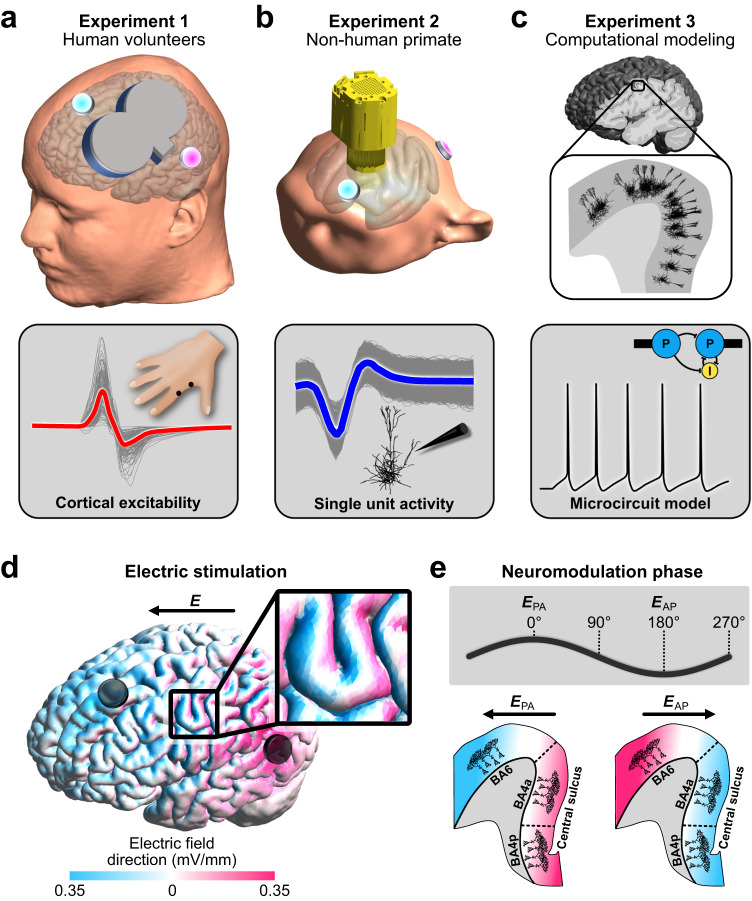
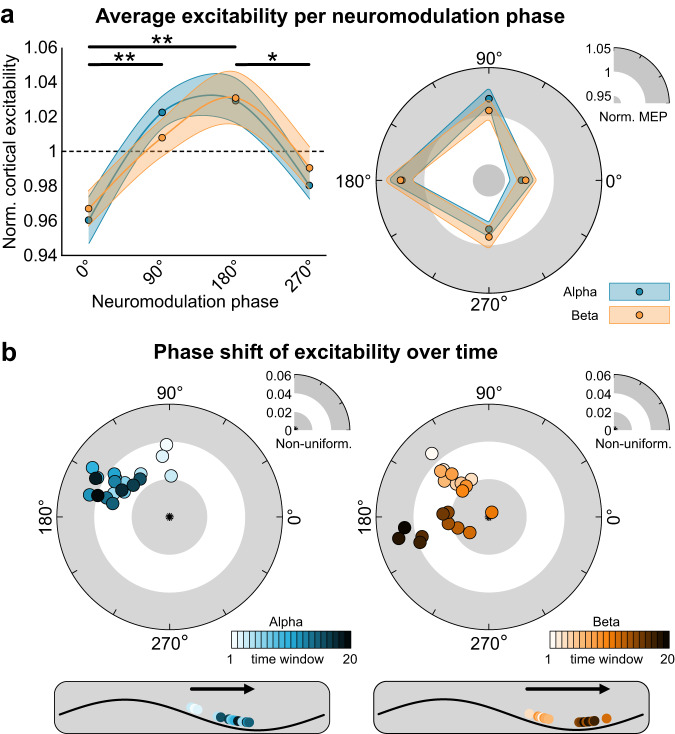
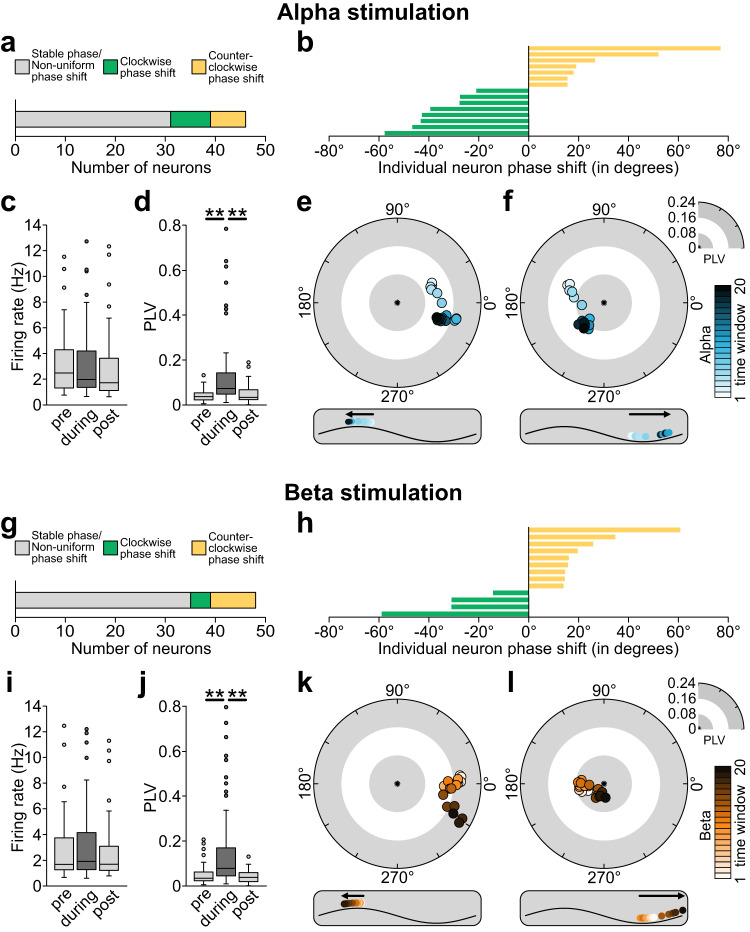
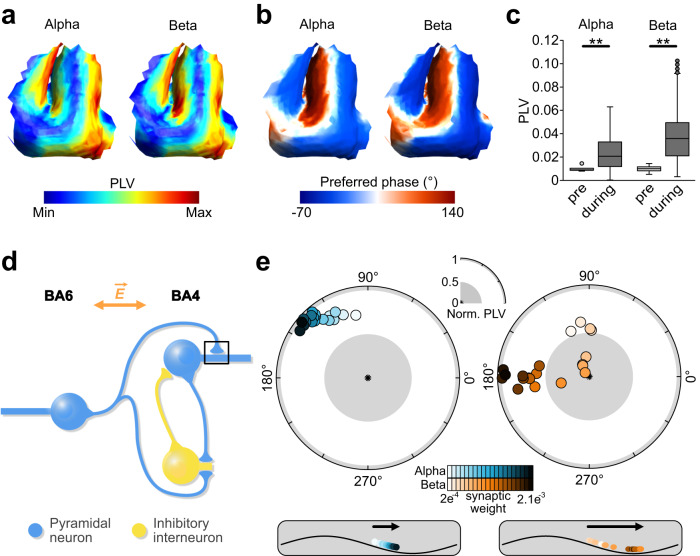
The gradual shifting of preferred neural spiking relative to local field potentials (LFPs), known as phase precession, plays a prominent role in neural coding. Correlations between the phase precession and behavior have been observed throughout various brain regions. As such, phase precession is suggested to be a global neural mechanism that promotes local neuroplasticity. However, causal evidence and neuroplastic mechanisms of phase precession are lacking so far. Here we show a causal link between LFP dynamics and phase precession. In three experiments, we modulated LFPs in humans, a non-human primate, and computational models using alternating current stimulation. We show that continuous stimulation of motor cortex oscillations in humans lead to a gradual phase shift of maximal corticospinal excitability by ~90°. Further, exogenous alternating current stimulation induced phase precession in a subset of entrained neurons (~30%) in the non-human primate. Multiscale modeling of realistic neural circuits suggests that alternating current stimulation-induced phase precession is driven by NMDA-mediated synaptic plasticity. Altogether, the three experiments provide mechanistic and causal evidence for phase precession as a global neocortical process. Alternating current-induced phase precession and consequently synaptic plasticity is crucial for the development of novel therapeutic neuromodulation methods.
Overview
The claims and statistics of this paper haven’t been checked yet.
Free: it reads the open-access text and checks the first 5 claims that cite a source we can check. Create a free account to check every claim.
Integrity signals
Registry
Cites
Statistics
Figures
Verification
Claims the paper makes
The claims and statistics of this paper haven’t been checked yet.
Free: it reads the open-access text and checks the first 5 claims that cite a source we can check. Create a free account to check every claim.
Claims other papers make about this one
Each is checked against this paper’s own text: does it say what the citing paper says it does?
The cited source says what the claim attributes to it.
In the citing paper
“Though several mechanisms have been proposed for explaining EMF interactions with biological systems, including phase-synchronization [30,31] and ion cylcotron resonance [32], these frameworks do not apply for the heart’s extremely weak magnetic field.”
Self-check
Percentages, sums and reported differences re-computed from the paper’s own numbers.
The self-check needs the paper’s full text.
Citations
Cites
Oostenveld, R., Fries, P., Maris, E., & Schoffelen, J.-M. (2011) · Computational Intelligence and Neuroscience · doi:10.1155/2011/156869 · Cited by 10,323 · cited 1×
“To address them, we computed the power spectral density of each channel and used spectral interpolation using FieldTrip MATLAB toolbox 100 to remove frequencies at which artifacts occur.”
Ideal spatial adaptation by wavelet shrinkage
Donoho, D. L., & Johnstone, I. M. (1994) · Biometrika · doi:10.1093/biomet/81.3.425 · Cited by 8,760
The origin of extracellular fields and currents — EEG, ECoG, LFP and spikes
Buzsáki, G., Anastassiou, C. A., & Koch, C. (2012) · Nature Reviews Neuroscience · doi:10.1038/nrn3241 · Cited by 4,225
Frequency Dependence of Signal Power and Spatial Reach of the Local Field Potential
Leski, S., Lindén, H., Tetzlaff, T., Pettersen, K. H., & Einevoll, G. T. (2013) · PubMed · doi:10.18154/rwth-conv-084442 · Cited by 3,639
CircStat : A MATLAB Toolbox for Circular Statistics
Berens, P. (2009) · Journal of Statistical Software · doi:10.18637/jss.v031.i10 · Cited by 3,099
Rhythms for cognition: communication through coherence
Fries, P. (2015) · Neuron · doi:10.1016/j.neuron.2015.09.034 · Cited by 2,725 · cited 1×
“The timing of neural spiking is often coupled to ongoing oscillating local fi eld potentials (LFPs) 1,2 .”
The NEURON Simulation Environment
Hines, M. L., & Carnevale, N. T. (1997) · Neural Computation · doi:10.1162/neco.1997.9.6.1179 · Cited by 2,658
Phase relationship between hippocampal place units and the EEG theta rhythm
O'Keefe, J., & Recce, M. L. (1993) · Hippocampus · doi:10.1002/hipo.450030307 · Cited by 2,552 · cited 5×
“The observed phase shift in cortical excitability is reminiscent of single-cell phase precession 7,9 .”
InfluentialUnsupervised spike detection and sorting with wavelets and superparamagnetic clustering
Quiroga, R. Q., Nadasdy, Z., & Ben-Shaul, Y. (2004) · Neural Computation · doi:10.1162/089976604774201631 · Cited by 2,119 · cited 2×
“Spike sorting was done using the open source MATLAB software Wave_Clus, an unsupervised spike sorting method 101 .”
Transcranial Magnetic Stimulation: A Primer
Hallett, M. (2007) · Neuron · doi:10.1016/j.neuron.2007.06.026 · Cited by 1,891
The origin of corticospinal projections from the premotor areas in the frontal lobe
Dum, R., & Strick, P. (1991) · The Journal of Neuroscience · doi:10.1523/jneurosci.11-03-00667.1991 · Cited by 1,442 · cited 1×
“Therefore, it is most likely that our observation of AC modulation re fl ects a transsynaptic circuit level effect of BA6 and BA4 neurons 72,73 , which is in line with the idea that phase precession re fl ects plasticity local networks 20,30 .”
Influence of dendritic structure on firing pattern in model neocortical neurons
Mainen, Z. F., & Sejnowski, T. J. (1996) · Nature · doi:10.1038/382363a0 · Cited by 1,231
Thielscher, A., Antunes, A., & Saturnino, G. B. (2015) · 2015 37th Annual International Conference of the IEEE Engineering in Medicine and Biology Society (EMBC) · doi:10.1109/embc.2015.7318340 · Cited by 942
Endogenous electric fields may guide neocortical network activity
Fröhlich, F., & McCormick, D. A. (2010) · Neuron · doi:10.1016/j.neuron.2010.06.005 · Cited by 913
Modelling and analysis of local field potentials for studying the function of cortical circuits
Einevoll, G. T., Kayser, C., Logothetis, N. K., & Panzeri, S. (2013) · Nature Reviews Neuroscience · doi:10.1038/nrn3599 · Cited by 857
Two different areas within the primary motor cortex of man
Geyer, S., Ledberg, A., Schleicher, A., Kinomura, S., Schormann, T., Bürgel, U., Klingberg, T., Larsson, J., Zilles, K., & Roland, P. E. (1996) · Nature · doi:10.1038/382805a0 · Cited by 644
Working memory revived in older adults by synchronizing rhythmic brain circuits
Reinhart, R. M. G., & Nguyen, J. A. (2019) · Nature Neuroscience · doi:10.1038/s41593-019-0371-x · Cited by 639
Muakkassa, K. F., & Strick, P. L. (1979) · Brain Research · doi:10.1016/0006-8993(79)90928-4 · Cited by 630
Ephaptic coupling of cortical neurons
Anastassiou, C. A., Perin, R., Markram, H., & Koch, C. (2011) · Nature Neuroscience · doi:10.1038/nn.2727 · Cited by 628 · cited 2×
“Oscillatory extracellular electric fi elds can reciprocally determine spike timing by mechanisms such as ephaptic coupling 4,5 .”
Considerations of quasi-stationarity in electrophysiological systems
Plonsey, R., & Heppner, D. B. (1967) · The Bulletin of Mathematical Biophysics · doi:10.1007/bf02476917 · Cited by 619
The Importance of Timing in Segregated Theta Phase-Coupling for Cognitive Performance
Polanía, R., Nitsche, M. A., Korman, C., Batsikadze, G., & Paulus, W. (2012) · Current Biology · doi:10.1016/j.cub.2012.05.021 · Cited by 591
Immediate neurophysiological effects of transcranial electrical stimulation
Liu, A., Vöröslakos, M., Kronberg, G., Henin, S., Krause, M. R., Huang, Y., Opitz, A., Mehta, A., Pack, C. C., Krekelberg, B., et al. (2018) · Nature Communications · doi:10.1038/s41467-018-07233-7 · Cited by 589
Self-citationSubdivisions of primary motor cortex based on cortico-motoneuronal cells
Rathelot, J.-A., & Strick, P. L. (2009) · Proceedings of the National Academy of Sciences · doi:10.1073/pnas.0808362106 · Cited by 584 · cited 1×
“BA6 neurons predominantly have disynaptic and trisynaptic connections to spinal motoneurons, in contrast to the monosynaptic connections of BA4 66,69 – 71 .”
Reato, D., Rahman, A., Bikson, M., & Parra, L. C. (2010) · The Journal of Neuroscience · doi:10.1523/jneurosci.2059-10.2010 · Cited by 573 · cited 1×
“A plethora of studies in cellular slices 5,31 – 34 , rodents 35 – 38 , and non-human primates (NHP) 39 – 42 show that the application of AC at frequencies corresponding to the neurons ’ natural fi ring rhythm can entrain neurons and change spike-timing 43 .”
Siebner, H. R., Funke, K., Aberra, A. S., Antal, A., Bestmann, S., Chen, R., Classen, J., Davare, M., Di Lazzaro, V., Fox, P. T., et al. (2022) · Clinical Neurophysiology · doi:10.1016/j.clinph.2022.04.022 · Cited by 566 · cited 4×
“Based on the orientations of pyramidal neurons in the motor cortex 66 , thisimplies thatrhythmicdepolarization of thepremotorcortex (BA6) is associated with larger muscle responses, which is in line with prior observations 67,68 .”
InfluentialA New Unifying Account of the Roles of Neuronal Entrainment
Lakatos, P., Gross, J., & Thut, G. (2019) · Current Biology · doi:10.1016/j.cub.2019.07.075 · Cited by 508
Hippocampus-independent phase precession in entorhinal grid cells
Hafting, T., Fyhn, M., Bonnevie, T., Moser, M.-B., & Moser, E. I. (2008) · Nature · doi:10.1038/nature06957 · Cited by 479 · cited 4×
“The observed phase shift in cortical excitability is reminiscent of single-cell phase precession 7,9 .”
InfluentialAli, M. M., Sellers, K. K., & Frohlich, F. (2013) · Journal of Neuroscience · doi:10.1523/jneurosci.5867-12.2013 · Cited by 475 · cited 2×
“SeveralstudieshavesuggestedthattACSinducedentrainment effect is stronger when the stimulation frequency is close to the intrinsic oscillations of neurons 38,63 .”
Clinical utility and prospective of TMS–EEG
Tremblay, S., Rogasch, N. C., Premoli, I., Blumberger, D. M., Casarotto, S., Chen, R., Di Lazzaro, V., Farzan, F., Ferrarelli, F., Fitzgerald, P. B., et al. (2019) · Clinical Neurophysiology · doi:10.1016/j.clinph.2019.01.001 · Cited by 472
Functional neuroanatomy of the primate isocortical motor system
Geyer, S., Matelli, M., Luppino, G., & Zilles, K. (2000) · Anatomy and Embryology · doi:10.1007/s004290000127 · Cited by 452
Windhoff, M., Opitz, A., & Thielscher, A. (2013) · Human Brain Mapping · doi:10.1002/hbm.21479 · Cited by 441
Self-citationTranscranial Electric Stimulation Entrains Cortical Neuronal Populations in Rats
Ozen, S., Sirota, A., Belluscio, M. A., Anastassiou, C. A., Stark, E., Koch, C., & Buzsáki, G. (2010) · The Journal of Neuroscience · doi:10.1523/jneurosci.5252-09.2010 · Cited by 425
Chapter 2 TMS and threshold hunting
Awiszus, F. (2003) · Supplements to Clinical Neurophysiology · doi:10.1016/s1567-424x(09)70205-3 · Cited by 417 · cited 1×
“Motor threshold was de fi ned as the minimal intensity to evoke a response at the target location, determined using an adaptive threshold-hunting algorithm 94,95 .”
Spike train dynamics predicts theta-related phase precession in hippocampal pyramidal cells
Harris, K. D., Henze, D. A., Hirase, H., Leinekugel, X., Dragoi, G., Czurkó, A., & Buzsáki, G. (2002) · Nature · doi:10.1038/nature00808 · Cited by 398 · cited 1×
“AC stimulation (10 and 20Hz) was then applied through two scalp electrodes positioned on the frontal and parieto-occipital area (Fig.”
Alekseichuk, I., Turi, Z., Amador de Lara, G., Antal, A., & Paulus, W. (2016) · Current Biology · doi:10.1016/j.cub.2016.04.035 · Cited by 376 · cited 1×
“For example, the use of transcranial alternating current stimulation (tACS) was found to improve working and long-term memory 49 – 53 , as well as learning 54 – 58 .”
Self-citationSustained Aftereffect of α-tACS Lasts Up to 70 min after Stimulation
Kasten, F. H., Dowsett, J., & Herrmann, C. S. (2016) · Frontiers in Human Neuroscience · doi:10.3389/fnhum.2016.00245 · Cited by 371
Transcranial alternating current stimulation entrains single-neuron activity in the primate brain
Krause, M. R., Vieira, P. G., Csorba, B. A., Pilly, P. K., & Pack, C. C. (2019) · Proceedings of the National Academy of Sciences · doi:10.1073/pnas.1815958116 · Cited by 345 · cited 2×
“Outside modulation is thought to cause the LFP to adapt to the exogenous fi eld 35,40,41 .”
Aberra, A. S., Wang, B., Grill, W. M., & Peterchev, A. V. (2020) · Brain Stimulation · doi:10.1016/j.brs.2019.10.002 · Cited by 323
Tremor Suppression by Rhythmic Transcranial Current Stimulation
Brittain, J.-S., Probert-Smith, P., Aziz, T. Z., & Brown, P. (2013) · Current Biology · doi:10.1016/j.cub.2013.01.068 · Cited by 315 · cited 1×
“Although still in an early stage, application of tACS has shown promising results in reducing symptoms of depression 88 , Alzheimer ’ s disease 89 , and Parkinson ’ s disease 90 .”
Goto, Y., Yang, C. R., & Otani, S. (2010) · Biological Psychiatry · doi:10.1016/j.biopsych.2009.08.026 · Cited by 307 · cited 1×
“The prefrontal cortex is associated with various cognitive functions and abnormal plasticity in this region relates to psychiatric disorders 84 .”
Minimal Hodgkin–Huxley type models for different classes of cortical and thalamic neurons
Pospischil, M., Toledo-Rodriguez, M., Monier, C., Piwkowska, Z., Bal, T., Frégnac, Y., Markram, H., & Destexhe, A. (2008) · Biological Cybernetics · doi:10.1007/s00422-008-0263-8 · Cited by 306
Sensitivity of Neurons to Weak Electric Fields
Francis, J. T., Gluckman, B. J., & Schiff, S. J. (2003) · The Journal of Neuroscience · doi:10.1523/jneurosci.23-19-07255.2003 · Cited by 301
Sensitivity of coherent oscillations in rat hippocampus to AC electric fields
Deans, J. K., Powell, A. D., & Jefferys, J. G. R. (2007) · The Journal of Physiology · doi:10.1113/jphysiol.2007.137711 · Cited by 292
Impaired spatial selectivity and intact phase precession in two-dimensional virtual reality
Aghajan, Z. M., Acharya, L., Moore, J. J., Cushman, J. D., Vuong, C., & Mehta, M. R. (2015) · Nature Neuroscience · doi:10.1038/nn.3884 · Cited by 289 · cited 1×
“Forexample,agradualshiftinspikepreferenceobservedinratsduring spatial navigation re fl ects the encoding of different locations within a maze 7,9,16 .”
Di Lazzaro, V., & Ziemann, U. (2013) · Frontiers in Neural Circuits · doi:10.3389/fncir.2013.00018 · Cited by 277
Inferring Causality from Noninvasive Brain Stimulation in Cognitive Neuroscience
Bergmann, T. O., & Hartwigsen, G. (2021) · Journal of Cognitive Neuroscience · doi:10.1162/jocn_a_01591 · Cited by 264
tACS motor system effects can be caused by transcutaneous stimulation of peripheral nerves
Asamoah, B., Khatoun, A., & Mc Laughlin, M. (2019) · Nature Communications · doi:10.1038/s41467-018-08183-w · Cited by 263
Ziemann, U., & Rothwell, J. C. (2000) · Journal of Clinical Neurophysiology · doi:10.1097/00004691-200007000-00005 · Cited by 246 · cited 1×
“Next, we used a microcircuit model with two-compartment PY and inhibitory IN neurons, based on simpli fi ed pre-central anatomy 74,75 .”
Wischnewski, M., Alekseichuk, I., & Opitz, A. (2023) · Trends in Cognitive Sciences · doi:10.1016/j.tics.2022.11.013 · Cited by 246 · cited 2×
“Recent yearshaveseena signi fi cant increase in clinical trials using tACS 44 .”
Self-citationKantak, S. S., Stinear, J. W., Buch, E. R., & Cohen, L. G. (2012) · Neurorehabilitation and Neural Repair · doi:10.1177/1545968311420845 · Cited by 245
Johnson, L., Alekseichuk, I., Krieg, J., Doyle, A., Yu, Y., Vitek, J., Johnson, M., & Opitz, A. (2020) · Science Advances · doi:10.1126/sciadv.aaz2747 · Cited by 237
Self-citationTheta Phase Precession in Rat Ventral Striatum Links Place and Reward Information
van der Meer, M. A. A., & Redish, A. D. (2011) · The Journal of Neuroscience · doi:10.1523/jneurosci.4869-10.2011 · Cited by 233
Bossetti, C. A., Birdno, M. J., & Grill, W. M. (2008) · Journal of Neural Engineering · doi:10.1088/1741-2560/5/1/005 · Cited by 232 · cited 1×
“Because the electric fi elds in our study are varying at low frequencies 100 Hz, they can be considered quasistatic and can be divided into spatial and temporal components 110,114 .”
Grover, S., Wen, W., Viswanathan, V., Gill, C. T., & Reinhart, R. M. G. (2022) · Nature Neuroscience · doi:10.1038/s41593-022-01132-3 · Cited by 181 · cited 1×
“For example, the use of transcranial alternating current stimulation (tACS) was found to improve working and long-term memory 49 – 53 , as well as learning 54 – 58 .”
Huang, W. A., Stitt, I. M., Negahbani, E., Passey, D. J., Ahn, S., Davey, M., Dannhauer, M., Doan, T. T., Hoover, A. C., Peterchev, A. V., et al. (2021) · Nature Communications · doi:10.1038/s41467-021-23021-2 · Cited by 180 · cited 3×
“SeveralstudieshavesuggestedthattACSinducedentrainment effect is stronger when the stimulation frequency is close to the intrinsic oscillations of neurons 38,63 .”
Saturnino, G. B., Madsen, K. H., & Thielscher, A. (2019) · Journal of Neural Engineering · doi:10.1088/1741-2552/ab41ba · Cited by 178
Phase precession in the human hippocampus and entorhinal cortex
Qasim, S. E., Fried, I., & Jacobs, J. (2021) · Cell · doi:10.1016/j.cell.2021.04.017 · Cited by 175
Wischnewski, M., Engelhardt, M., Salehinejad, M. A., Schutter, D. J. L. G., Kuo, M. F., & Nitsche, M. A. (2019) · Cerebral Cortex · doi:10.1093/cercor/bhy160 · Cited by 172 · cited 3×
“Incontrast,otherstudies have found that longer stimulation durations of 20min can results in tACS aftereffects of an hour or more 59,76 .”
Self-citationEphaptic coupling to endogenous electric field activity: Why bother?
Anastassiou, C. A., & Koch, C. (2015) · Current Opinion in Neurobiology · doi:10.1016/j.conb.2014.09.002 · Cited by 171
NetPyNE, a tool for data-driven multiscale modeling of brain circuits
Dura-Bernal, S., Suter, B. A., Gleeson, P., Cantarelli, M., Quintana, A., Rodriguez, F., Kedziora, D. J., Chadderdon, G. L., Kerr, C. C., Neymotin, S. A., et al. (2019) · eLife · doi:10.7554/elife.44494 · Cited by 169 · cited 1×
“We used NetPyNE 115 , a Python package to simulate and model biological neuronal networks using the NEURON simulation environment 105 .”
Pollok, B., Boysen, A.-C., & Krause, V. (2015) · Behavioural Brain Research · doi:10.1016/j.bbr.2015.07.049 · Cited by 163
Lowet, E., Roberts, M. J., Bonizzi, P., Karel, J. M. H., & Weerd, P. D. (2016) · PLoS ONE · doi:10.1371/journal.pone.0146443 · Cited by 163
Benussi, A., Cantoni, V., Grassi, M., Brechet, L., Michel, C. M., Datta, A., Thomas, C., Gazzina, S., Cotelli, M. S., Bianchi, M., et al. (2022) · Annals of Neurology · doi:10.1002/ana.26411 · Cited by 163 · cited 1×
“Although still in an early stage, application of tACS has shown promising results in reducing symptoms of depression 88 , Alzheimer ’ s disease 89 , and Parkinson ’ s disease 90 .”
Masquelier, T., Hugues, E., Deco, G., & Thorpe, S. J. (2009) · The Journal of Neuroscience · doi:10.1523/jneurosci.2207-09.2009 · Cited by 159
Matching storage and recall: hippocampal spike timing–dependent plasticity and phase response curves
Lengyel, M., Kwag, J., Paulsen, O., & Dayan, P. (2005) · Nature Neuroscience · doi:10.1038/nn1561 · Cited by 156
A Model of TMS-induced I-waves in Motor Cortex
Rusu, C. V., Murakami, M., Ziemann, U., & Triesch, J. (2014) · Brain stimulation · doi:10.1016/j.brs.2014.02.009 · Cited by 154
tDCS changes in motor excitability are specific to orientation of current flow
Rawji, V., Ciocca, M., Zacharia, A., Soares, D., Truong, D., Bikson, M., Rothwell, J., & Bestmann, S. (2018) · Brain Stimulation · doi:10.1016/j.brs.2017.11.001 · Cited by 147
Transcranial alternating current stimulation for treating depression: a randomized controlled trial
Wang, H., Wang, K., Xue, Q., Mao, P., Yin, L., Gu, X., Leng, H., Lü, J., Liu, H., Wang, D., et al. (2021) · Brain · doi:10.1093/brain/awab252 · Cited by 143 · cited 1×
“Although still in an early stage, application of tACS has shown promising results in reducing symptoms of depression 88 , Alzheimer ’ s disease 89 , and Parkinson ’ s disease 90 .”
Krause, M. R., Vieira, P. G., Thivierge, J., & Pack, C. C. (2022) · PLoS Biology · doi:10.1371/journal.pbio.3001650 · Cited by 119 · cited 14×
“In sum, across three studies, involving human, NHP and computational modeling data we show that: First, phase precession re fl ects both a single cell and a network-level process.”
InfluentialA Model of Grid Cell Development through Spatial Exploration and Spike Time-Dependent Plasticity
Widloski, J., & Fiete, I. (2014) · Neuron · doi:10.1016/j.neuron.2014.06.018 · Cited by 115 · cited 4×
“Reorganization of spike timing in relation to ongoing LFPs is thought to be one key mechanism for synaptic plasticity 28 – 30 .”
InfluentialWischnewski, M., Haigh, Z. J., Shirinpour, S., Alekseichuk, I., & Opitz, A. (2022) · Brain stimulation · doi:10.1016/j.brs.2022.08.005 · Cited by 115
Self-citationDisruption and rescue of interareal theta phase coupling and adaptive behavior
Reinhart, R. M. G. (2017) · Proceedings of the National Academy of Sciences · doi:10.1073/pnas.1710257114 · Cited by 107
Nitsche, M. A., Jakoubkova, M., Thirugnanasambandam, N., Schmalfuss, L., Hullemann, S., Sonka, K., Paulus, W., Trenkwalder, C., & Happe, S. (2010) · Journal of Neurophysiology · doi:10.1152/jn.00611.2010 · Cited by 105 · cited 1×
“Premotor-to-motor connectivity is crucial for motor learning 77,78 and is abnormal in disorders of motor control 79,80 .”
tACS entrains neural activity while somatosensory input is blocked
Vieira, P. G., Krause, M. R., & Pack, C. C. (2020) · PLoS Biology · doi:10.1371/journal.pbio.3000834 · Cited by 104 · cited 1×
“A plethora of studies in cellular slices 5,31 – 34 , rodents 35 – 38 , and non-human primates (NHP) 39 – 42 show that the application of AC at frequencies corresponding to the neurons ’ natural fi ring rhythm can entrain neurons and change spike-timing 43 .”
Krause, V., Wach, C., Südmeyer, M., Ferrea, S., Schnitzler, A., & Pollok, B. (2014) · Frontiers in Human Neuroscience · doi:10.3389/fnhum.2013.00928 · Cited by 100
From synaptic plasticity to spatial maps and sequence learning
Mehta, M. R. (2015) · Hippocampus · doi:10.1002/hipo.22472 · Cited by 94 · cited 1×
“Further, phase precession has been shown to manifest in a wide range of cortical and subcortical regions 18 – 23 , indicating a global neural mechanism that promotes synaptic plasticity and ultimately enables learning 14,15,24 – 30 .”
Short‐term plasticity based network model of place cells dynamics
Romani, S., & Tsodyks, M. (2015) · Hippocampus · doi:10.1002/hipo.22355 · Cited by 92
Krause, V., Meier, A., Dinkelbach, L., & Pollok, B. (2016) · Frontiers in Behavioral Neuroscience · doi:10.3389/fnbeh.2016.00004 · Cited by 89 · cited 1×
“Furthermore, tACS to motor regions has shown to facilitate motor learning 81 – 83 .”
Spatial encoding in primate hippocampus during free navigation
Courellis, H. S., Nummela, S. U., Metke, M., Diehl, G. W., Bussell, R., Cauwenberghs, G., & Miller, C. T. (2019) · PLOS Biology · doi:10.1371/journal.pbio.3000546 · Cited by 87 · cited 1×
“Notably, this phase preference can change over time 7 – 13 .”
Theta-phase dependent neuronal coding during sequence learning in human single neurons
Reddy, L., Self, M. W., Zoefel, B., Poncet, M., Possel, J. K., Peters, J. C., Baayen, J. C., Idema, S., VanRullen, R., & Roelfsema, P. R. (2021) · Nature Communications · doi:10.1038/s41467-021-25150-0 · Cited by 83 · cited 1×
“Recently, phase precession was demonstrated in humans using invasive recordings 8,17 .”
Effects of beta-tACS on corticospinal excitability: A meta-analysis
Wischnewski, M., Schutter, D. J. L. G., & Nitsche, M. A. (2019) · Brain stimulation · doi:10.1016/j.brs.2019.07.023 · Cited by 82 · cited 1×
“Further, the non-invasive application of AC through electrodes on the scalpcan result in physiological and behavioral changes in humans 44 – 48 .”
Self-citationMouse Visual Cortex Is Modulated by Distance Traveled and by Theta Oscillations
Fournier, J., Saleem, A. B., Diamanti, E. M., Wells, M. J., Harris, K. D., & Carandini, M. (2020) · Current Biology · doi:10.1016/j.cub.2020.07.006 · Cited by 81
Increasing human motor skill acquisition by driving theta–gamma coupling
Akkad, H., Dupont-Hadwen, J., Kane, E., Evans, C., Barrett, L., Frese, A., Tetkovic, I., Bestmann, S., & Stagg, C. J. (2021) · eLife · doi:10.7554/elife.67355 · Cited by 79
Modulation of Long-Range Connectivity Patterns via Frequency-Specific Stimulation of Human Cortex
Weinrich, C. A., Brittain, J., Nowak, M., Salimi-Khorshidi, R., Brown, P., & Stagg, C. J. (2017) · Current Biology · doi:10.1016/j.cub.2017.08.075 · Cited by 74
A minimum effective dose for (transcranial) alternating current stimulation
Alekseichuk, I., Wischnewski, M., & Opitz, A. (2022) · Brain stimulation · doi:10.1016/j.brs.2022.08.018 · Cited by 73
Self-citationNicola, W., & Clopath, C. (2019) · Nature Neuroscience · doi:10.1038/s41593-019-0415-2 · Cited by 72 · cited 2×
“Further, phase precession has been shown to manifest in a wide range of cortical and subcortical regions 18 – 23 , indicating a global neural mechanism that promotes synaptic plasticity and ultimately enables learning 14,15,24 – 30 .”
Shirinpour, S., Alekseichuk, I., Mantell, K. E., & Opitz, A. (2020) · Journal of Neural Engineering · doi:10.1088/1741-2552/ab9dba · Cited by 72
Self-citationPhase precession: a neural code underlying episodic memory?
Jaramillo, J., & Kempter, R. (2017) · Current Opinion in Neurobiology · doi:10.1016/j.conb.2017.02.006 · Cited by 71 · cited 2×
“Further, phase precession has been shown to manifest in a wide range of cortical and subcortical regions 18 – 23 , indicating a global neural mechanism that promotes synaptic plasticity and ultimately enables learning 14,15,24 – 30 .”
Ultra-high field (10.5 T) resting state fMRI in the macaque
Yacoub, E. S., Grier, M. D., Auerbach, E. J., Lagore, R., Harel, N., Adriany, G., Zilverstand, A., Hayden, B. Y., Heilbronner, S. R., Uǧurbil, K., et al. (2020) · NeuroImage · doi:10.1016/j.neuroimage.2020.117349 · Cited by 66
Self-citationBeliaeva, V., Savvateev, I., Zerbi, V., & Polanía, R. (2021) · Nature Communications · doi:10.1038/s41467-021-22468-7 · Cited by 66
Wischnewski, M., Zerr, P., & Schutter, D. J. L. G. (2016) · Brain Stimulation · doi:10.1016/j.brs.2016.04.011 · Cited by 62
Self-citationFrӧhlich, F., & Riddle, J. (2021) · Translational Psychiatry · doi:10.1038/s41398-021-01391-x · Cited by 60 · cited 1×
“Synaptic inputs were tuned for cells to have similar intrinsic fi ring rates around 10 and 20 spikes per second, based on the assumption that these values contribute to the endogenous alpha and beta oscillations and are more susceptible to stimulation at these frequencies 38,62,63 .”
Zhao, Z., Shirinpour, S., Tran, H., Wischnewski, M., & Opitz, A. (2024) · Journal of Neural Engineering · doi:10.1088/1741-2552/ad37d9 · Cited by 58
Self-citationSuppa, A., Iezzi, E., Conte, A., Belvisi, D., Marsili, L., Modugno, N., Fabbrini, G., & Berardelli, A. (2010) · Cerebral Cortex · doi:10.1093/cercor/bhp288 · Cited by 56
Schwab, B. C., Peter König, B., & Engel, A. K. (2021) · NeuroImage · doi:10.1016/j.neuroimage.2021.118179 · Cited by 54
Tran, H., Shirinpour, S., & Opitz, A. (2022) · NeuroImage · doi:10.1016/j.neuroimage.2022.118953 · Cited by 54 · cited 4×
“Like our previous modeling study 107 , spiking activity of all neurons was generated through a synapse with a Poisson distribution with the same seed.”
InfluentialSelf-citationShirinpour, S., Hananeia, N., Rosado, J., Tran, H., Galanis, C., Vlachos, A., Jedlička, P., Queisser, G., & Opitz, A. (2021) · Brain stimulation · doi:10.1016/j.brs.2021.09.004 · Cited by 53
Self-citationAfter-effects of transcranial alternating current stimulation on evoked delta and theta power
Wischnewski, M., & Schutter, D. J. L. G. (2017) · Clinical Neurophysiology · doi:10.1016/j.clinph.2017.08.029 · Cited by 50 · cited 1×
“Further, tACS effects can outlast the stimulation period and have been linked to synaptic plasticity 59 – 61 .”
Self-citationDirection of TDCS current flow in human sensorimotor cortex influences behavioural learning
Hannah, R., Iacovou, A., & Rothwell, J. C. (2019) · Brain stimulation · doi:10.1016/j.brs.2019.01.016 · Cited by 50
Complementary representations of time in the prefrontal cortex and hippocampus
Ning, W., Bladon, J. H., & Hasselmo, M. E. (2022) · Hippocampus · doi:10.1002/hipo.23451 · Cited by 50
Phase Precession Through Synaptic Facilitation
Thurley, K., Leibold, C., Gundlfinger, A., Schmitz, D., & Kempter, R. (2008) · Neural Computation · doi:10.1162/neco.2008.07-06-292 · Cited by 47
Mobile Application for Adaptive Threshold Hunting in Transcranial Magnetic Stimulation
Julkunen, P. (2019) · IEEE Transactions on Neural Systems and Rehabilitation Engineering · doi:10.1109/tnsre.2019.2925904 · Cited by 41
Theta phase precession beyond the hippocampus
Malhotra, S., Cross, R. W. A., & van der Meer, M. A. A. (2012) · Reviews in the Neurosciences · doi:10.1515/revneuro-2011-0064 · Cited by 38 · cited 2×
“Further, phase precession has been shown to manifest in a wide range of cortical and subcortical regions 18 – 23 , indicating a global neural mechanism that promotes synaptic plasticity and ultimately enables learning 14,15,24 – 30 .”
Model-driven neuromodulation of the right posterior region promotes encoding of long-term memories
Alekseichuk, I., Turi, Z., Veit, S., & Paulus, W. (2019) · Brain stimulation · doi:10.1016/j.brs.2019.12.019 · Cited by 36
Self-citationMultiplexed oscillations and phase rate coding in the basal forebrain
Tingley, D., Alexander, A. S., Quinn, L. K., Chiba, A. A., & Nitz, D. (2018) · Science Advances · doi:10.1126/sciadv.aar3230 · Cited by 35
Frontal Beta Transcranial Alternating Current Stimulation Improves Reversal Learning
Wischnewski, M., Jørgensen, M. L., Compen, B., & Schutter, D. J. L. G. (2020) · Cerebral Cortex · doi:10.1093/cercor/bhz309 · Cited by 35 · cited 1×
“For example, the use of transcranial alternating current stimulation (tACS) was found to improve working and long-term memory 49 – 53 , as well as learning 54 – 58 .”
Self-citationSynaptic learning rules for sequence learning
Reifenstein, E. T., Khalid, I. B., & Kempter, R. (2021) · eLife · doi:10.7554/elife.67171 · Cited by 33
Demand on skillfulness modulates interhemispheric inhibition of motor cortices
Wischnewski, M., Kowalski, G. M., Rink, F., Belagaje, S. R., Haut, M. W., Hobbs, G. R., & Buetefisch, C. M. (2016) · Journal of Neurophysiology · doi:10.1152/jn.01076.2015 · Cited by 32
Self-citationModeling motor-evoked potentials from neural field simulations of transcranial magnetic stimulation
Wilson, M. T., Moezzi, B., & Rogasch, N. C. (2020) · Clinical Neurophysiology · doi:10.1016/j.clinph.2020.10.032 · Cited by 32
An 8‐dipole transceive and 24‐loop receive array for non‐human primate head imaging at 10.5 T
Lagore, R., Moeller, S., Zimmermann, J., DelaBarre, L. J., Radder, J., Grant, A., Uǧurbil, K., Yacoub, E. S., Harel, N., & Adriany, G. (2021) · NMR in Biomedicine · doi:10.1002/nbm.4472 · Cited by 27
Self-citationCavarretta, F., Carnevale, N. T., Tegolo, D., & Migliore, M. (2014) · Frontiers in Cellular Neuroscience · doi:10.3389/fncel.2014.00310 · Cited by 24
Corticospinal correlates of fast and slow adaptive processes in motor learning
Sarwary, A. M. E., Wischnewski, M., Schutter, D. J. L. G., Selen, L. P. J., & Medendorp, W. P. (2018) · Journal of Neurophysiology · doi:10.1152/jn.00488.2018 · Cited by 23 · cited 1×
“TMS-induced motor-evoked potentials were measured at the muscle using self-adhesive, disposable electrodes connected to electromyography 92,93 .”
Self-citationWischnewski, M., Alekseichuk, I., & Schutter, D. J. L. G. (2021) · Neuroimage Reports · doi:10.1016/j.ynirp.2021.100052 · Cited by 20 · cited 1×
“For example, the use of transcranial alternating current stimulation (tACS) was found to improve working and long-term memory 49 – 53 , as well as learning 54 – 58 .”
Self-citationRipple band phase precession of place cell firing during replay
Bush, D., Ólafsdóttir, H. F., Barry, C., & Burgess, N. (2022) · Current Biology · doi:10.1016/j.cub.2021.10.033 · Cited by 20
Premotor–motor excitability is altered in dopa‐responsive dystonia
Weißbach, A., Bäumer, T., Brüggemann, N., Tadić, V., Zittel, S., Cheng, B., Thomalla, G., Klein, C., & Münchau, A. M. (2015) · Movement Disorders · doi:10.1002/mds.26365 · Cited by 18
Radman, T., Datta, A., & Peterchev, A. V. (2007) · The Journal of Physiology · doi:10.1113/jphysiol.2007.140947 · Cited by 16
Quality Metrics of Spike Sorting Using Neighborhood Components Analysis
Liu, X., Wan, H., & Li, S. (2014) · The Open Biomedical Engineering Journal · doi:10.2174/1874120701408010060 · Cited by 10
Spike Phase Shift Relative to Beta Oscillations Mediates Modality Selection
Zuo, Y., Huang, Y., Wu, D., Wang, Q., & Wang, Z. (2020) · Cerebral Cortex · doi:10.1093/cercor/bhaa125 · Cited by 9 · cited 3×
“Further, phase precession has been shown to manifest in a wide range of cortical and subcortical regions 18 – 23 , indicating a global neural mechanism that promotes synaptic plasticity and ultimately enables learning 14,15,24 – 30 .”
Zhao, Z., Shirinpour, S., Tran, H., et al. (2023) · bioRxiv (Cold Spring Harbor Laboratory) · doi:10.1101/2023.05.19.541493 · Cited by 5
Self-citationSterratt, D. C., Graham, B. P., Gillies, A., & Willshaw, D. J. (2011) · Cambridge University Press eBooks · doi:10.1017/cbo9780511975899.008 · Cited by 2
Cited by
Temporal interference stimulation disrupts spike timing in the primate brain
Vieira, P. G., Krause, M. R., & Pack, C. C. (2024) · Nature Communications · doi:10.1038/s41467-024-48962-2 · Cited by 73
Agboada, D., Zhao, Z., & Wischnewski, M. (2025) · Frontiers in Human Neuroscience · doi:10.3389/fnhum.2025.1548478 · Cited by 61
Self-citationWischnewski, M., Shirinpour, S., Alekseichuk, I., Lapid, M. I., Nahas, Z. H., Lim, K. O., Croarkin, P. E., & Opitz, A. (2024) · Journal of Neural Engineering · doi:10.1088/1741-2552/ad8a8e · Cited by 59
Self-citationZhao, Z., Shirinpour, S., Tran, H., Wischnewski, M., & Opitz, A. (2024) · Journal of Neural Engineering · doi:10.1088/1741-2552/ad37d9 · Cited by 58
Self-citationROSE: A Universal Neural Grammar
Murphy, E. (2025) · Cognitive Neuroscience · doi:10.1080/17588928.2025.2523875 · Cited by 33
“Other open questions concern the potential relevance of mechanisms that are not a core part of ROSE, like phase precession, which has been argued to bear a causal role in various cortical processing regimes (Wischnewski et al., 2024).”
Metadata
- Authors
- Wischnewski, M., Tran, H., Zhao, Z., Shirinpour, S., Haigh, Z. J., Rotteveel, J., Perera, N. D., Alekseichuk, I., Zimmermann, J., & Opitz, A.
- Affiliations
- University of Minnesota (US)
- Corresponding author
- Wischnewski, Miles
- Opitz, Alexander
- ORCID
- Venue
- Nature Communications
- Published
- 2024-02-24
- Volume
- 15
- Issue
- 1
- Pages
- 1687-1687
- ISSN
- 2041-1723 (ISSN-L)
- PMC
- PMC10894208
- OpenAlex
- W4392129762
- Cited by
- 46
- References
- 119
- Citations by year
- 2026: 15 · 2025: 21 · 2024: 9
- FWCI
- 10.93
- Type
- journal article
- Language
- en
- Open access
- gold
- doi.org
- Licence
- cc-by
- creativecommons.org/licenses/by/4.0 (tdm)
- creativecommons.org/licenses/by/4.0 (vor)
- Locations
- Nature Communications (publishedVersion, cc-by)
- PubMed Central (publishedVersion, cc-by)
- PubMed (publishedVersion)
- RePEc: Research Papers in Economics (submittedVersion)
- DOAJ (DOAJ: Directory of Open Access Journals) (submittedVersion)
- Funders
- Brain and Behavior Research Foundation
- Minnesota’s Discovery, Research, and InnoVation Economy
- U.S. Department of Health & Human Services | National Institutes of Health (K99MH128454, R01EB031765, R01MH128177, P30NI048742, P41EB027061, R01NS109498, R01EB034143, RF1MH124909)
- Topics
- Life Sciences › Neuroscience › Cognitive Neuroscience › Neural dynamics and brain function
- Life Sciences › Neuroscience › Neurology › Transcranial Magnetic Stimulation Studies
- Life Sciences › Neuroscience › Cognitive Neuroscience › Memory and Neural Mechanisms
- Keywords
- phase precession, local field potentials, alternating current stimulation, neural entrainment, corticospinal excitability, motor cortex, neural coding, neuromodulation, non-human primates, computational modeling of neural circuits
- MeSH terms
- Action Potentials, Animals, Brain, Neurons, Primates
About these checks
Registry, retraction, Cites and statistics results are computed, not judged, with one exception: a printed reference that no index lists is read once by a model before it counts as a citation error. Claims are extracted by a model and kept only when their quote appears verbatim in the text; each cited source is then checked, with a model’s help, for whether it says what the claim relies on. Those verdicts can be wrong — read the claim’s quote and the cited source before relying on one.
Statistics and arithmetic are recomputed, not judged.
Confidence bands are shown only for fields calibrated on our annotated test set. None is calibrated yet, so no band is shown.
What counts as a claim ›How we measure confidence ›How we check this ›
Are you an author, or do you see a problem with this page? Request a review
Data sources
Bibliographic data: Semantic Scholar, OpenAlex, Crossref.
Contains information from the Semantic Scholar Academic Graph Datasets, made available under the ODC Attribution License (ODC-BY 1.0).
Semantic Scholar’s data is described in: Kinney, R., et al. (2023). The Semantic Scholar Open Data Platform. arXiv:2301.10140.
