

Genomic language model predicts protein co-regulation and function
Open accessPublished version of a preprint
The DOI matches its Crossref record; 76 of the 80 references it cites were found in a registry or an index.
Abstract
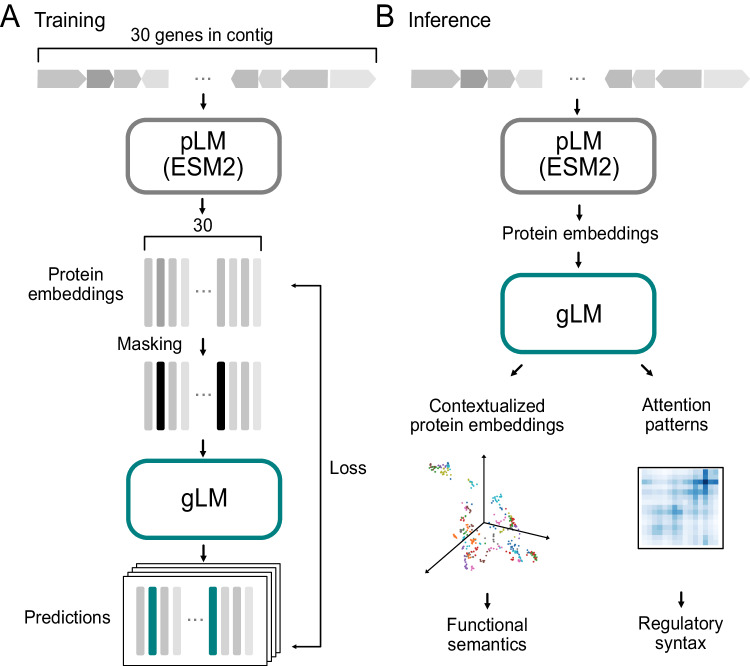
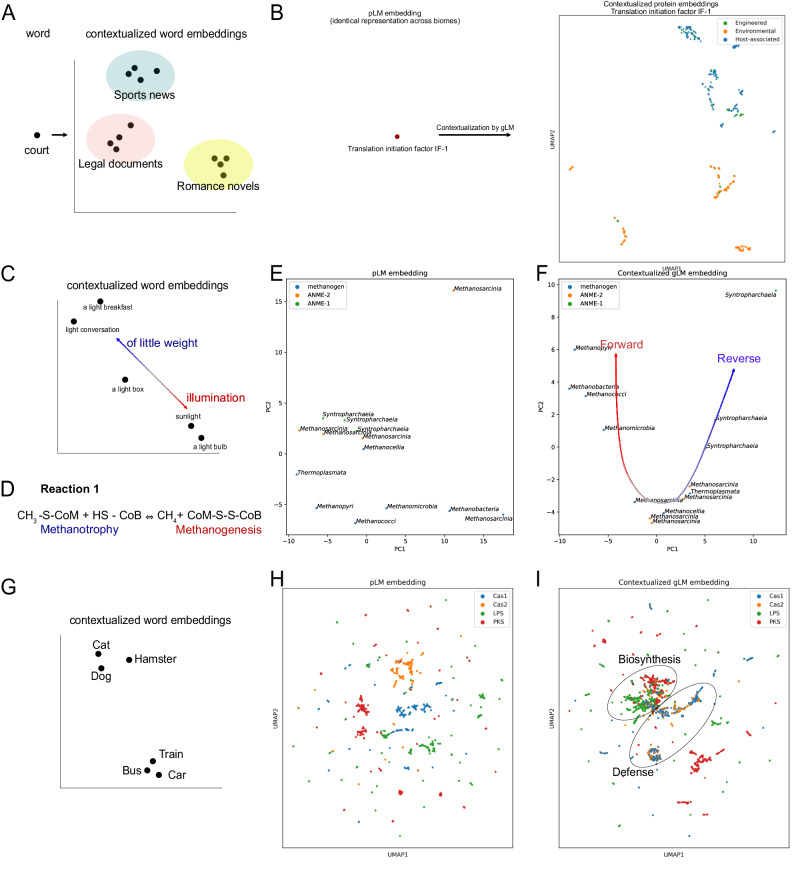
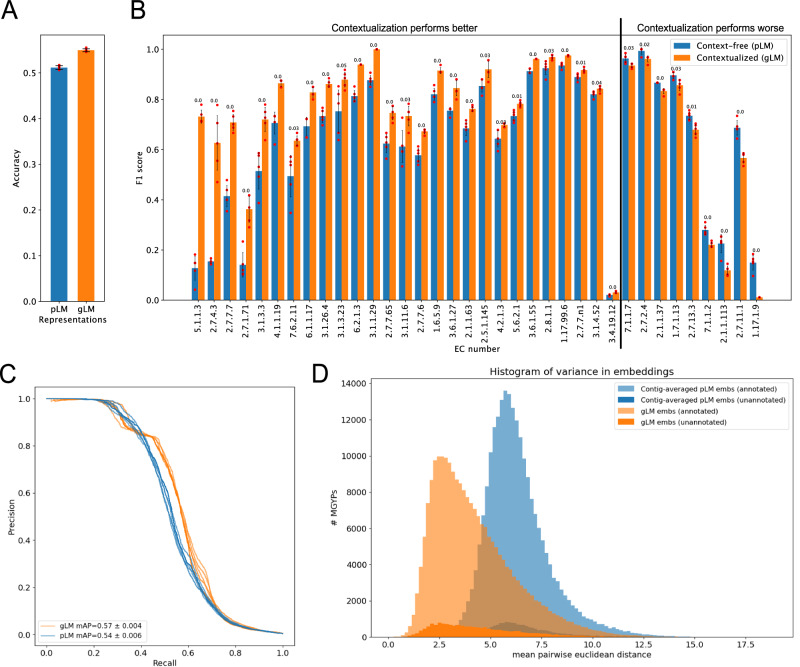
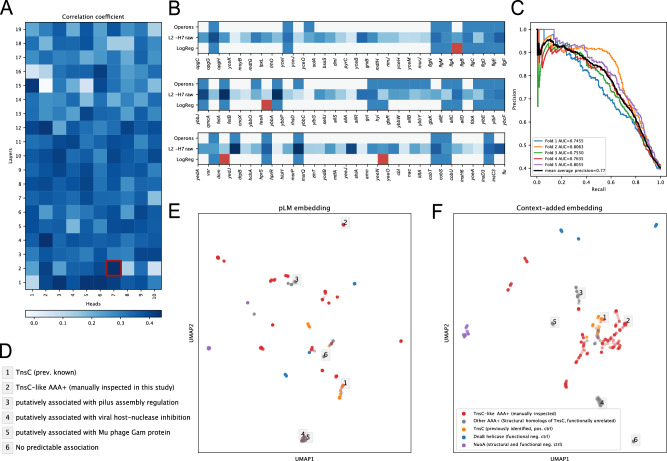
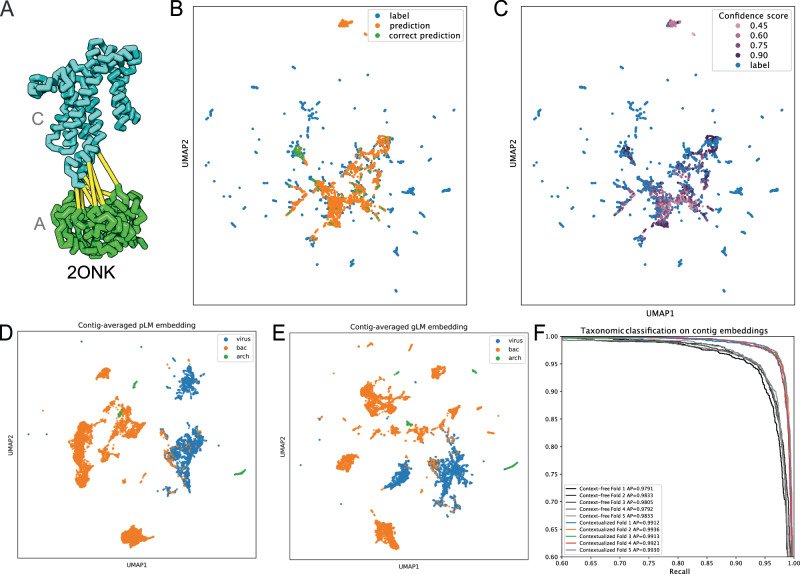
Deciphering the relationship between a gene and its genomic context is fundamental to understanding and engineering biological systems. Machine learning has shown promise in learning latent relationships underlying the sequence-structure-function paradigm from massive protein sequence datasets. However, to date, limited attempts have been made in extending this continuum to include higher order genomic context information. Evolutionary processes dictate the specificity of genomic contexts in which a gene is found across phylogenetic distances, and these emergent genomic patterns can be leveraged to uncover functional relationships between gene products. Here, we train a genomic language model (gLM) on millions of metagenomic scaffolds to learn the latent functional and regulatory relationships between genes. gLM learns contextualized protein embeddings that capture the genomic context as well as the protein sequence itself, and encode biologically meaningful and functionally relevant information (e.g. enzymatic function, taxonomy). Our analysis of the attention patterns demonstrates that gLM is learning co-regulated functional modules (i.e. operons). Our findings illustrate that gLM’s unsupervised deep learning of the metagenomic corpus is an effective and promising approach to encode functional semantics and regulatory syntax of genes in their genomic contexts and uncover complex relationships between genes in a genomic region.
Overview
The claims and statistics of this paper haven’t been checked yet.
Free: it reads the open-access text and checks the first 5 claims that cite a source we can check. Create a free account to check every claim.
Integrity signals
Registry
Cites
Statistics
Figures
Verification
Claims the paper makes
The claims and statistics of this paper haven’t been checked yet.
Free: it reads the open-access text and checks the first 5 claims that cite a source we can check. Create a free account to check every claim.
Claims other papers make about this one
Each is checked against this paper’s own text: does it say what the citing paper says it does?
The source backs part of the claim, not all of it — or backs it for a different population, condition or comparison.
In the citing paper
“As a result, Transformer-based DNA models are constrained to short context lengths and use schemes that aggregate nucleotides into the basic units of language models, called tokens, thereby sacrificing single-nucleotide resolution (15, 16, 21–23).”
From Sequence modeling and design from molecular to genome scale with Evo (2024) · cites this paper as [23]
Experimental — accuracy not yet measuredThe source backs part of the claim, not all of it — or backs it for a different population, condition or comparison.
In the citing paper
“This is a unique finding since literature broadly has reported common co-regulation of genes in protein complexes at both transcription and translational levels96–102.”
From EXOSC3 G191 Variants Trigger System-Wide Recalibration of RNA Processing Machinery (2026) · cites this paper as [96]
Experimental — accuracy not yet measured
Self-check
Percentages, sums and reported differences re-computed from the paper’s own numbers.
The self-check needs the paper’s full text.
Citations
Cites
Vaswani, A., Shazeer, N., Parmar, N., Uszkoreit, J., Jones, L., Gomez, A. N., Kaiser, L., & Polosukhin, I. (2017) · arXiv · doi:10.48550/arxiv.1706.03762 · Cited by 120,404 · cited 3×
“Our model is based on the transformer 24 architecture and is trained using millions of unla-belled metagenomic sequences via the masked language modeling 25 objective, with the hypothesis that its ability to attend to different parts of a multi-gene sequence will result in the learning of gene…”
InfluentialHochreiter, S., & Schmidhuber, J. (1997) · Neural Computation · doi:10.1162/neco.1997.9.8.1735 · Cited by 102,318 · cited 1×
“This is in contrast to Long-Short-Term-Memory networks (LSTMs) 26 that sequentially processes tokens.”
BERT: Pre-training of Deep Bidirectional Transformers for Language Understanding
Devlin, J., Chang, M.-W., Lee, K., & Toutanova, K. (2019) · Proceedings of the 2019 Conference of the North American Chapter of the Association for Computational Linguistics: Human Language Technologies, Volume 1 (Long and Short Papers) · doi:10.18653/v1/n19-1423 · Cited by 54,325
Highly accurate protein structure prediction with AlphaFold
Jumper, J., Evans, R., Pritzel, A., Green, T., Figurnov, M., Ronneberger, O., Tunyasuvunakool, K., Bates, R., Žídek, A., Potapenko, A., et al. (2021) · Nature · doi:10.1038/s41586-021-03819-2 · Cited by 43,764
RoBERTa: A Robustly Optimized BERT Pretraining Approach
Liu, Y., Ott, M., Goyal, N., Du, J., Joshi, M., Chen, D., Levy, O., Lewis, M., Zettlemoyer, L., & Stoyanov, V. (2019) · arXiv · doi:10.48550/arxiv.1907.11692 · Cited by 16,515
Fast and sensitive protein alignment using DIAMOND
Buchfink, B., Xie, C., & Huson, D. H. (2015) · Nature Methods · doi:10.1038/nmeth.3176 · Cited by 14,201 · cited 1×
“0.7.145 57 against the Uni-Ref90 database 58 with an e-value cut-off 1E-5.”
InfluentialScaling Laws for Neural Language Models
Kaplan, J., McCandlish, S., Henighan, T., Brown, T. B., Chess, B., Child, R., Gray, S., Radford, A., Wu, J., & Amodei, D. (2020) · arXiv · doi:10.48550/arxiv.2001.08361 · Cited by 9,550 · cited 1×
“…key areas for further development: First, the transformer architecture has shown to be successful in ef fi cient scaling; in both natural language 50 and protein language processing 23 , increasing the number of parameters in the model along with the training dataset size have been shown to lead…”
The Complete Genome Sequence of Escherichia coli K-12
Blattner, F. R., Plunkett, G., Bloch, C. A., Perna, N. T., Burland, V., Riley, M., Collado-Vides, J., Glasner, J. D., Rode, C. K., Mayhew, G. F., et al. (1997) · Science · doi:10.1126/science.277.5331.1453 · Cited by 7,452
Evolutionary-scale prediction of atomic level protein structure with a language model
Lin, Z., Akin, H., Rao, R., Hie, B., Zhu, Z., Lu, W., Smetanin, N., Verkuil, R., Kabeli, O., Shmueli, Y., et al. (2022) · doi:10.1101/2022.07.20.500902 · Cited by 5,990
Accurate prediction of protein structures and interactions using a 3-track network
Baek, M., DiMaio, F., Anishchenko, I., Dauparas, J., Ovchinnikov, S., Lee, G. R., Wang, J., Cong, Q., Kinch, L. N., Schaeffer, R. D., et al. (2021) · doi:10.1101/2021.06.14.448402 · Cited by 5,549
Self-citation
Research works printed but not linked: 3
- Coenen, A. et al. Visualizing and Measuring the Geometry of BERT. In: Proceedings of the Neural Information Processing Systems, 2019.
- Kiros, R., Salakhutdinov, R. & Zemel, R. Multimodal Neural Language Models. In: Proceedings of the 31st International Conference on Machine Learning, Vol. 32, No. 2, pp. 595–603. PMLR, Beijing, China, 22–24 Jun 2014.
- Loshchilov, I. & Hutter, F. Decoupled Weight Decay Regularization. In: Proceedings of the International Conference on Learning Representations, 2019.
Cited by
Sequence modeling and design from molecular to genome scale with Evo
Nguyen, E., Poli, M., Durrant, M. G., Kang, B., Katrekar, D., Li, D. B., Bartie, L. J., Thomas, A. W., King, S. H., Brixi, G., et al. (2024) · Science · doi:10.1126/science.ado9336 · Cited by 898
“As a result, Transformer-based DNA models are constrained to short context lengths and use schemes that aggregate nucleotides into the basic units of language models, called tokens, thereby sacrificing single-nucleotide resolution ( 15 , 16 , 21 – 23 ).”
AI-Driven Antimicrobial Peptide Discovery: Mining and Generation
Szymczak, P., Zarzecki, W., Wang, J., Duan, Y., Wang, J., Coelho, L. P., de la Fuente‐Núñez, C., & Szczurek, E. (2025) · Accounts of Chemical Research · doi:10.1021/acs.accounts.0c00594 · Cited by 140
DeGroat, W., Abdelhalim, H., Peker, E., Sheth, N., Narayanan, R., Zeeshan, S., Liang, B. T., & Ahmed, Z. (2024) · Scientific Reports · doi:10.1038/s41598-024-78553-6 · Cited by 121
Large language models in biomedicine and healthcare
Zhou, J., Li, H., Chen, S., Chen, Z., Han, Z., & Gao, X. (2025) · Yearbook of pediatric endocrinology · doi:10.1038/s44387-025-00047-1 · Cited by 77
“For example, several LLMs related to genomics have been proposed, including Evo 32 , gLM 33 , and Caduceus 34 .”
Artificial intelligence for omics data analysis
Ahmed, Z., Wan, S., Zhang, F., & Zhong, W. (2024) · BMC Methods · doi:10.1186/s44330-024-00004-5 · Cited by 106
“…recent developed genomic language model (gLM), trained on millions of metagenomic scaffolds to learn the latent functional and regulatory relationships between genes, has proven to be a potent and promising method to close the gap between genomic-context and gene sequence-structure–function [6].”
BackgroundThe OMG dataset: An Open MetaGenomic corpus for mixed-modality genomic language modelingPreprint
Cornman, A., West-Roberts, J. A., Camargo, A. P., Roux, S., Beracochea, M., Mirdita, M., Ovchinnikov, S., & Hwang, Y. (2024) · bioRxiv (Cold Spring Harbor Laboratory) · doi:10.1101/2024.08.14.607850 · Cited by 73
“…model can be trained on raw nucleic acid sequences (e.g. Evo (Nguyen et al., 2024), Nucleotide Transformers (Dalla-Torre et al., 2023)) or by representing each genomic sequence as an order-and orientation-preserved list of translated coding sequences in amino acids (e.g. (Hwang et al., 2024)).”
BackgroundSelf-citationAI-empowered human microbiome research
Tian, Z., & Zhao, F. (2025) · Gut · doi:10.1136/gutjnl-2025-335946 · Cited by 84
“35 Conversely, GPT-like models can generate novel genome sequences that conform to biological constraints, thereby enabling de novo genome synthesis.”
Are protein language models the new universal key?
Weißenow, K., & Rost, B. (2025) · Current Opinion in Structural Biology · doi:10.1016/j.sbi.2025.102997 · Cited by 66
A long-context language model for deciphering and generating bacteriophage genomes
Shao, B., & Yan, J. (2024) · Nature Communications · doi:10.1038/s41467-024-53759-4 · Cited by 95
Modeling protein–ligand interactions for drug discovery in the era of deep learning
Wang, Y., Li, Y., Chen, J., & Lai, L. (2025) · Chemical Society Reviews · doi:10.1039/d5cs00415b · Cited by 53
A long-context language model for deciphering and generating bacteriophage genomes
Shao, B. (2024) · bioRxiv · doi:10.1101/2023.12.18.572218 · Cited by 41
Viromics approaches for the study of viral diversity and ecology in microbiomes
Roux, S., & Coclet, C. (2025) · Nature Reviews Genetics · doi:10.1038/s41576-025-00871-w · Cited by 47
Crystalline Material Discovery in the Era of Artificial Intelligence
Wang, Z., Hua, H., Lin, W., Yang, M., & Tan, K. C. (2026) · ACM Computing Surveys · doi:10.1145/3794853 · Cited by 33
“…fractional sys. Diffusion/Flow Matching + GGNN - ADiT [135] Geometric graph: fractional sys. Diffusion + Transformer - MACS [136] Geometric graph: Cartesian sys. Multi-agent reinforcement learning - SGEquiDiff [137] Geometric graph: fractional sys. Diffusion + GGNN + Autore-gressive Transformer”
Leveraging protein structural information to improve variant effect prediction
Gerasimavicius, L., Teichmann, S. A., & Marsh, J. A. (2025) · Current Opinion in Structural Biology · doi:10.1016/j.sbi.2025.103023 · Cited by 35
“However, a recent study in E. coli has shown that an unsupervised genome-level language model was able to capture coevolution in protein complex interfaces, identifying functionally relevant interactions from genomic sequence stretches, essentially learning operon structure [74].”
Protein Language Models: Applications and Perspectives
Leclercq, M., & Droit, A. (2025) · Journal of Proteome Research · doi:10.1021/acs.jproteome.5c00506 · Cited by 43
“90 This is particularly valuable for uncharacterized proteins in metagenomic data sets.”
Heinzinger, M., & Rost, B. (2025) · Current Opinion in Structural Biology · doi:10.1016/j.sbi.2025.102986 · Cited by 31
A comprehensive survey of genome language models in bioinformatics
Shu, L., Tang, J., Guan, X., & Zhang, D. (2026) · Briefings in Bioinformatics · doi:10.1093/bib/bbaf724 · Cited by 25
“For example, Hwang et al. [106] train a gLM on millions of metagenomic contigs, enabling linear probes for taxonomy prediction in addition to enzyme function, operon structure, and paralog identification.”
Ivanisenko, T., Сергеевич, Д. П., & Иванисенко, В. А. (2024) · International Journal of Molecular Sciences · doi:10.3390/ijms252111811 · Cited by 40
Recent advances in deep learning and language models for studying the microbiome
Yan, B., Nam, Y., Li, L., Deek, R. A., Li, H., & Ma, S. (2025) · Frontiers in Genetics · doi:10.3389/fgene.2024.1494474 · Cited by 34
“In comparison to full-scale DNA language models, genomic language models such as the gLM [Hwang et al., 2024] and FGBERT [Duan et al., 2024] instead focus on contig-to genome-scale organization of microbial genes (see Table 2). gLM, for example, adopts EMS-2 protein embeddings for each gene and…”
MethodResultDiverse Genomic Embedding Benchmark for functional evaluation across the tree of lifePreprint
West-Roberts, J. A., Kravitz, J., Jha, N., Cornman, A., & Hwang, Y. (2024) · bioRxiv (Cold Spring Harbor Laboratory) · doi:10.1101/2024.07.10.602933 · Cited by 21
“…”biological foundation models” enabling functional interpretation of sequences has resulted in many modeling efforts in protein (Rives et al. (2021); Madani et al. (2023); Elnaggar et al. (2022)) and genomic (Dalla-Torre et al. (2023); Hwang et al. (2024); Nguyen et al. (2024)) sequence modalities.”
BackgroundSelf-citationProtein and genomic language models uncover the unexplored diversity of bacterial immunity
Mordret, E., Hervé, A., Tesson, F., Vaysset, H., Clabby, T., Loubat, A., Shomar, H., Planel, R., Lavenir, R., Cury, J., et al. (2026) · Science · doi:10.1126/science.adv8275 · Cited by 41
Programmable biology through artificial intelligence: from nucleic acids to proteins to cells
Abudayyeh, O. O., & Gootenberg, J. S. (2024) · Nature Methods · doi:10.1038/s41592-024-02338-y · Cited by 15
Artificial intelligence for microbiology and microbiome research.
Wang, X.-W., Wang, T., & Liu, Y.-Y. (2026) · Cell Systems · doi:10.1016/j.cels.2026.101531 · Cited by 15
Natural Language Processing Methods for the Study of Protein–Ligand Interactions
Michels, J., Bandarupalli, R., Akbari, A. A., Le, T., Xiao, H. Y., Li, J., & Hom, E. F. Y. (2025) · Journal of Chemical Information and Modeling · doi:10.1021/acs.jcim.4c01907 · Cited by 39
de Crécy-Lagard, V., Dias, R., Sexson, N., Friedberg, I., Yuan, Y.-F., & Swairjo, M. (2024) · bioRxiv · doi:10.1101/2024.07.01.601547 · Cited by 14
“…reporting the use of pre-119 trained Protein Language Models (PLM) to predict protein functions (Ardern et al., 2023; Ayres et al., 2023; Derry and Altman, 2023; Durairaj et al., 2023; Kim et al., 2023; Prabakaran and Bromberg, 2023; Rodríguez del Río et al., 2023; Hwang et al., 2024) (Fig.”
codonGPT: reinforcement learning on a generative language model enables scalable mRNA design
Rajbanshi, B., & Guruacharya, A. (2025) · Nucleic Acids Research · doi:10.1093/nar/gkaf1345 · Cited by 19
“Recent advances in large language models have shown promise in modeling biological sequences [ 3–5 ], including proteins [ 6– 8 ], non-coding RNA [ 9–11 ], and DNA [ 12 , 13 ], yet a generative foundation model for coding mRNA doesn’t exist.”
MGM as a Large‐Scale Pretrained Foundation Model for Microbiome Analyses in Diverse Contexts
Zhang, H., Zhang, Y., Kang, Z., Xiong, J., Yang, R., & Ning, K. (2026) · Advanced Science · doi:10.1002/advs.202513333 · Cited by 31
“Recently, several studies have focused on developing a foundation model to improve the understanding of microbial sequence data [ 14–16 ].”
Wang, Y., Wang, Z., Sadeh, G., Zancato, L., Achille, A., Karypis, G., & Rangwala, H. (2024) · bioRxiv (Cold Spring Harbor Laboratory) · doi:10.1101/2024.10.29.620988 · Cited by 19
“Furthermore, PMLM (He et al., 2022) enhances model performance on the TAPE contact benchmark by accounting for dependencies among masked tokens, indicative of inter-residue coevolution.”
Protein Set Transformer: A protein-based genome language model to power high diversity viromics
Martin, C., Gitter, A., & Anantharaman, K. (2024) · bioRxiv · doi:10.1101/2024.07.26.605391 · Cited by 10
“We developed several novel algorithmic advances for the PST architecture and implemented more memory-efficient data handling compared to similar methods 8,10,11 .”
Asim, M. N., Asif, T., Hassan, F., & Dengel, A. (2025) · Database · doi:10.1093/database/baaf027 · Cited by 15
Cutting-edge deep-learning based tools for metagenomic research
Karin, E. L., & Steinegger, M. (2025) · National Science Review · doi:10.1093/nsr/nwaf056 · Cited by 12
“[88 ] report for example that in their dataset of 30 mi l lion proteins created from MGnify’s genomic contigs, 27.5% could not be associated with any Pfam family using ProtENN.”
InfluentialNarayanan, R., DeGroat, W., Mendhe, D., Abdelhalim, H., & Ahmed, Z. (2024) · Biology Methods and Protocols · doi:10.1093/biomethods/bpae040 · Cited by 17
Efficient inference, training, and fine-tuning of protein language models
Çelik, M. H., & Xie, X. (2025) · iScience · doi:10.1016/j.isci.2025.113495 · Cited by 7
“52 We explored weight quantization techniques to optimize inference by benchmarking 8-bit quantization with LLM.int8() 53 and 4-bit quantization using QLoRA 54 algorithms using bitsandbytes package.”
Decode-gLM: Tools to Interpret, Audit, and Steer Genomic Language ModelsPreprint
Maiwald, A., Jedryszek, P., Draye, F., Schölkopf, B., Morris, G. M., & Crook, O. M. (2025) · bioRxiv (Cold Spring Harbor Laboratory) · doi:10.1101/2025.10.31.685860 · Cited by 7
“Third, many papers have trained classifiers ( probes ) on hidden representations of the model to test if the model representations encode various functional genetic elements (Benegas et al., 2023; Dalla-Torre et al., 2025; Tang et al., 2024; Hwang et al., 2024).”
Sethi, P., & Zhou, J. (2024) · bioRxiv (Cold Spring Harbor Laboratory) · doi:10.1101/2024.09.22.614318 · Cited by 7
A Framework for Autonomous AI-Driven Drug DiscoveryPreprint
Selinger, D. W., Wall, T. R., Stylianou, E. S., Khalil, E. M., Gaetz, J., & Levy, O. (2024) · bioRxiv (Cold Spring Harbor Laboratory) · doi:10.1101/2024.12.17.629024 · Cited by 10
“Expanding their capabilities beyond text-based data is an area of active investigation ( 32 , 33 ) .”
Creating interpretable deep learning models to identify species using environmental DNA sequences
Waggoner, S., Donnelly, J. P., Gurung, R., Jackson, L., & Chen, C. (2025) · Scientific Reports · doi:10.1038/s41598-025-09846-7 · Cited by 7
“Many focus on synthetic sequence generations 36–38 , and are trained on entire genomes to infer biological functions 39,40 , instead of being trained on short metabarcoding sequences for taxonomic classification as was done in this study.”
Large-scale protein clustering in the age of deep learning
Pereira, J., Pantolini, L., Durairaj, J., & Schwede, T. F. (2025) · Current Opinion in Structural Biology · doi:10.1016/j.sbi.2025.103078 · Cited by 8
Selvaraj, C., Rajendran, S., Alothaim, A. S., Vijayakumar, R., Desai, D., Safi, S. Z., & Singh, S. K. (2025) · Chemical Papers · doi:10.1007/s11696-025-04007-6 · Cited by 8
“The AI model, genomic language model (gLM), was trained with millions of metagenomics scaffolds revealing the hidden patterns, functions, and relationships between genes (Hwang et al. 2024).”
Zhou, X., Cao, W., Huang, C., Zhang, X., Zhou, S., & Deng, Y. (2025) · Biotechnology Advances · doi:10.1016/j.biotechadv.2025.108781 · Cited by 5
Protein design and optimization for synthetic cells
Frohn, B. P., Kohyama, S., & Schwille, P. (2025) · Nature Reviews Bioengineering · doi:10.1038/s44222-025-00318-1 · Cited by 8
“Furthermore, genomic language models (gLMs) are an alternative to pLMs, trained on DNA sequences instead of proteins 71–74 .”
Transformers Enhance the Predictive Power of Network MedicinePreprint
Spector, J. O., Aldana, A., Sebek, M., Ehlert, J., Frondeville, C. D., Ghiassian, S. D., & Barabási, A.-Ĺ. (2025) · medRxiv · doi:10.1101/2025.01.27.25321204 · Cited by 4
“The transfer learning approach behind transformers has been applied to improve protein structure prediction [2], genetic sequence analysis [3, 4], and molecular interaction prediction [5], and to extract knowledge from large datasets [3, 6, 7].”
Theodoris, C. V. (2024) · Science · doi:10.1126/science.adt3007 · Cited by 8
Accurate and efficient protein embedding using multi-teacher distillation learning
Shang, J., Peng, C., Ji, Y.-X., Guan, J.-J., Cai, D.-H., Tang, X.-B., & Sun, Y.-N. (2024) · Bioinform. · doi:10.1093/bioinformatics/btae567 · Cited by 5
“…algorithms have demonstrated remarkable success in protein data analysis, leveraging their ability to learn complex patterns and relationships from large datasets to predict gene ontology, 2D-/3D structure, and protein stability (Thumuluri et al. 2022, Fang et al. 2023, Hwang et al. 2024).”
BackgroundLong-context Protein Language Modeling Using Bidirectional Mamba with Shared Projection LayersPreprint
Wang, Y., Wang, Z., Sadeh, G., Zancato, L., Achille, A., Karypis, G., & Rangwala, H. (2024) · arXiv (Cornell University) · doi:10.48550/arxiv.2411.08909
“Furthermore, PMLM (He et al., 2022) enhances model performance on the TAPE contact benchmark by accounting for dependencies among masked tokens, indicative of inter-residue coevolution.”
Protein Set Transformer: a protein-based genome language model to power high-diversity viromics
Martin, C., Gitter, A., & Anantharaman, K. (2025) · Nature Communications · doi:10.1038/s41467-025-66049-4 · Cited by 17
“We developed several algorithmic advances for the PST architecture and implemented more memory-ef fi cient data handling compared to similar methods 8,10,11 .”
InfluentialRannon, E., & Burstein, D. (2025) · arXiv (Cornell University) · doi:10.48550/arxiv.2506.02212 · Cited by 9
“A recent important model on the genome level, gLM 42 , employs a transformer architecture to learn contextualized protein embeddings that capture both the protein sequences and their genomic context.”
Learning gene interactions and functional landscapes from entire bacterial proteomesPreprint
Sethi, P., Chevrette, M. G., & Zhou, J. (2025) · bioRxiv (Cold Spring Harbor Laboratory) · doi:10.1101/2025.03.19.644232 · Cited by 7
“For instance, the gLM model in [2] was trained on ESM2 [14] embeddings for individual proteins on the contig level, spanning ∼ 30 genes.”
AI-Empowered Genome Decoding: Applications of Large Language Models in Genomics
Li, S., Fan, W., & Zhou, Y. (2025) · Frontiers of digital education. · doi:10.1007/s44366-025-0051-1 · Cited by 4
Wu, J., Liu, Y., Zhang, Y., Wang, X., Yan, H., Zhu, Y., Song, J., & Yu, D. (2025) · Journal of Chemical Information and Modeling · doi:10.1021/acs.jcim.4c02092 · Cited by 4
Ji, Y.-X., Shang, J., Guan, J.-J., Zou, W., Liao, H., Tang, X.-B., & Sun, Y.-N. (2024) · bioRxiv · doi:10.1101/2024.07.03.602011 · Cited by 4
“This aligns with the finding that many proteins execute their functions through spatially aggregated clusters of critical residues [38].”
Artificial intelligence-driven plant bio-genomics research: a new era
Yang, L., Wang, H., Zou, M., Chai, H., & Xia, Z. (2025) · Tropical Plants · doi:10.48130/tp-0025-0008 · Cited by 11
Directed optimization and generation of yeast promoter sequences driven by deep learning
Wang, C., Li, S., Guo, X., Geng, S., Qu, K., Li, M., Wang, C., Zhou, X., Ren, W., Pan, S., et al. (2025) · International Journal of Biological Macromolecules · doi:10.1016/j.ijbiomac.2025.148505 · Cited by 3
Uncovering Microbial Biosynthetic Potential with Genomic Context-aware Protein Language ModelPreprint
Kang, Z., Zhang, H., Liang, C., Yang, R., Ye, Y., Bai, H., Zhang, Y., & Ning, K. (2025) · bioRxiv (Cold Spring Harbor Laboratory) · doi:10.1101/2025.04.29.651206 · Cited by 6
“Hwang et al. constructed gLM, a genomic language model to address this by modeling pLM embeddings using a contextual architecture [31].”
Dejean, T., Ferrell, B. D., Harrigan, W., Schreiber, Z. D., Sawhney, R., Wommack, K., Polson, S. W., & Belcaid, M. (2025) · bioRxiv · doi:10.1101/2025.05.29.656907 · Cited by 3
“Recognizing the inherent limitations of analyzing proteins in isolation has spurred the development of genomic language models (gLMs) [32], which augment ESM-2 embeddings by incorporating context from larger genomic regions.”
Vince, O., Gowers, G.-O. F., & McGibbon, S. (2024) · GEN Biotechnology · doi:10.1089/genbio.2024.0018 · Cited by 5
“60,61 Across all these applications, the same fundamental problem arises; the more advanced the model, the higher the quality and quantity of training data needed, and the lower the availability of suitable data for this training.”
(2026) · doi:10.1073/pnas.2524201123 · Cited by 2
“Innaturallanguageprocessing(114), andalsoforprotein sequences (9, 12, 115) and for genomic sequences (18, 22, 89), BERT models usually rely on positional encoding, which provides the model with information on the order of tokens (words in a sentence, amino acids in a protein chain, nucleotides…”
Applications and advances of deep learning in food microbiology: From data to intelligent analysis
Li, C., Wang, X., Liu, H., & Zhu, D. (2026) · Trends in Food Science & Technology · doi:10.1016/j.tifs.2026.105687 · Cited by 4
Know your scientist: KYC as biosecurity infrastructure
Feldman, J., Feldman, T., & Antón, A. I. (2026) · Frontiers in Microbiology · doi:10.3389/fmicb.2026.1814993 · Cited by 4
“Throughout this framework, research institutions refer to organizations that conduct biological research under recognized oversight structures.”
Large-Scale Multi-omic Biosequence Transformers for Modeling Protein-Nucleic Acid Interactions.Preprint
Chen, S. F., Steele, R. J., Hocky, G. M., Lemeneh, B., Lad, S. P., & Oermann, E. K. (2025) · PubMed Central · doi:10.1371/journal.pone.0341501
Zou, J., Liu, W., Dai, J., & Dong, G. (2025) · BMC Genomics · doi:10.1186/s12864-025-12009-7 · Cited by 2
“In recent years, the application of fine-tuned deep learning-based large language models for processing and analyzing genomic sequences has gradually expanded [22, 23].”
NCC—An Efficient Deep Learning Architecture for Non-Coding RNA Classification
Vasilas, K., Makris, E., Pavlatos, C., & Maglogiannis, I. G. (2025) · Technologies · doi:10.3390/technologies13050196 · Cited by 4
“Architectures based on Transformers [24,25] have gained a lot of attention recently due to their parallelism and ability to model global dependencies via self-attention mechanisms.”
Context-based protein function prediction in bacterial genomesPreprint
Toibazar, D., Kulmanov, M., & Hoehndorf, R. (2024) · bioRxiv (Cold Spring Harbor Laboratory) · doi:10.1101/2024.10.14.618363 · Cited by 1
“Our findings also align with prior work that used word2vec (Miller et al. , 2022) to predict these functions or that combined ESM2 embeddings with genomic context to form contextualized protein embeddings (Hwang et al. , 2024).”
BackgroundResultMalbranke, C., Zalaffi, G. P., & Bitbol, A.-F. (2025) · doi:10.1101/2025.08.01.668221 · Cited by 2
EXOSC3 G191 Variants Trigger System-Wide Recalibration of RNA Processing Machinery
Wijeratne, H. R. S., Runnebohm, A. M., Barron, M. P., Hampton, A. J., Li, R., Peck Justice, S. A., Lenceski, S. H., Rooney, J. D., Smith-Kinnaman, W. R., Chang, G. S., et al. (2026) · doi:10.64898/2026.01.26.701775 · Cited by 2
“This is a unique finding since literature broadly has reported common co-regulation of genes in protein complexes at both transcription and translational levels 96-102 .”
Genome-Factory: A Library for Tuning, Deploying, and Interpreting Genomic Foundation ModelsPreprint
Wu, W., Song, X., Wen, Y., Lin, Q., Zhou, Z., Hu, J. Y.-C., Wang, Z., & Liu, H. (2025) · PubMed Central · doi:10.48550/arxiv.2509.12266 · Cited by 7
“GFMs have transformed biological research by enabling accurate and scalable solutions to key tasks, including epigenetic prediction (Gao et al., 2024), regulatory element discovery (Hwang et al., 2024), and species classification (Zhou et al., 2025b).”
Large-Scale Multi-omic Biosequence Transformers for Modeling Protein-Nucleic Acid InteractionsPreprint
Chen, S. F., Steele, R. J., Hocky, G. M., Lemeneh, B., Lad, S. P., & Oermann, E. K. (2024) · arXiv (Cornell University) · doi:10.48550/arxiv.2408.16245 · Cited by 2
“Other genomic foundation models have been trained on human and murine data [36], multi-species genomes [37], prokaryotic genomes [38], and even metagenomic scaffolds [39].”
Disentangling RNA evolution and thermodynamics in genomic language modelsPreprint
Xu, Y., Pai, N., & Wayment-Steele, H. K. (2026) · bioRxiv (Cold Spring Harbor Laboratory) · doi:10.64898/2026.05.28.728275 · Cited by 2
“In this study, we apply the categorical Jacobian (CJ) operation 23 to systematically dissect the pairwise signals of several gLMs across diverse RNA datasets, including models trained on mixed sequence modalities (e.g., gLM2 24 and Evo2 25 ) and RNA-specific models (e.g., RNA-FM 7 ).”
Sethi, P., Pereira, L. A., & Zhou, J. (2026) · bioRxiv (Cold Spring Harbor Laboratory) · doi:10.64898/2026.03.07.710335 · Cited by 2
“Genome foundation models often use nucleotide or kmer inputs and focus on relatively short sequence contexts [23–25], making them effective for generating functional representations for small genome segments, but less suited for capturing large-scale genomic features.”
Gribkova, A. K., Armeev, G. A., Kirpichnikov, M. P., & Shaytan, A. К. (2026) · Nucleic Acids Research · doi:10.1093/nar/gkaf1489 · Cited by 3
“We are at a point when holistic quantitative or at least qualitative models of the genome functioning based on integrating our knowledge about numerous molecular interactions and processes may seem to be within reach [ 15 , 16 ].”
Lost in Tokenization: Context as the Key to Unlocking Biomolecular Understanding in Scientific LLMs
Zhuang, K., Zhang, J., Liu, Y., Cao, H., Gu, C., Liu, M., Gao, Z., Wang, Z. J., Zhou, X., Heng, P.-A., et al. (2026) · International Conference on Learning Representations · doi:10.48550/arxiv.2510.23127
“This burgeoning field has largely coalesced around two primary strategies for integrating biomolecular data [19].”
Machine Learning-Based Characterization of Bacillus anthracis Phenotypes from pXO1 Plasmid Proteins
Harrigan, W., La, T. H. A., Dahal, P., Belcaid, M., & Norris, M. H. (2025) · Pathogens · doi:10.3390/pathogens14101019 · Cited by 1
Zhou, Z., Yu, Y., Yang, C., Cao, L., Zhang, S., Li, J., Zhang, Y., Han, H., Shi, G., Zhang, Q., et al. (2025) · Journal of Pharmaceutical Analysis · doi:10.1016/j.jpha.2025.101302 · Cited by 1
“Models such as BERT have shown exceptional accuracy in predicting the functions of millions of genes, underscoring the unique potential of LLMs [28].”
Gene function prediction using an AnnoTree-based genomic language model
Tan, H., Moreno‐Hagelsieb, G., & Doxey, A. C. (2024) · IEEE International Conference on Bioinformatics and Biomedicine (BIBM) · doi:10.1109/bibm62325.2024.10822432 · Cited by 2
Tao, Z.-W., Xie, J., Yang, F., & Li, J.-J. (2026) · Rhizosphere · doi:10.1016/j.rhisph.2026.101506
VenusGenome: Genome-Aware Masked Autoencoding for Microbial Genome Representation LearningPreprint
Zhang, L., Zhang, Y., Tan, Y., Jiang, F., Zhong, B., Cheng, X., Hong, L., Li, M., & Yu, Y. (2026) · bioRxiv (Cold Spring Harbor Laboratory) · doi:10.64898/2026.10.24.761516
“At gene resolution, gLM contextualizes protein embeddings in metagenomic segments and predicts continuous protein features (Hwang et al., 2024), whereas BacFormer models ordered protein embeddings across bacterial genomes with protein-family prediction targets (Wiatrak et al., 2025a).”
InfluentialHo, N. H. E., Yang, C., Ng, I., & Chang, J. (2026) · Journal of Chemical Information and Modeling · doi:10.1021/acs.jcim.6c01844
Metagenomic contextualization of proteins with state space modelsPreprint
Azbijari, N., Wynne, J. H., Irizarry, K., Sistla, T., Thurber, A. R., & David, M. M. (2026) · bioRxiv (Cold Spring Harbor Laboratory) · doi:10.64898/2026.07.07.736993
“…gLM represented genes as words within contigs using pooled ESM-2 embeddings, enabling the capture of regulatory syntax and gene-gene relationships [19]. gLM2 extended this framework by modeling contigs directly at base-pair resolution using both coding and non-coding regions, strand information,…”
Leilei, Z., Lu, Z., Zhou, X., Liang, L., & Lin, J. (2026) · ACS Omega · doi:10.1021/acsomega.6c07491
Al‐Quraishi, T., Zaboon, W. A., Abawajy, J., & Nowrozy, R. (2026) · Discover Artificial Intelligence · doi:10.1007/s44163-026-02333-6
“In addition, differences in preprocessing pipelines, sequence encoding strategies, and evaluation protocols introduce methodological inconsistencies that hinder direct comparison between studies and complicate reproducibility [42, 48, 89].”
InfluentialPervasive Backdoor Vulnerabilities in Genomic Foundation ModelsPreprint
Ni, S., Wang, Q., Wei, C., Ni, X., Li, S., Zhao, Z., Li, H., Ji, R., Ruifeng, X., Alinejad-Rokny, H., et al. (2026) · bioRxiv (Cold Spring Harbor Laboratory) · doi:10.64898/2026.07.30.741642
Generative Design of New-to-nature Biosynthetic Assembly Lines with Genomic Language ModelingPreprint
Lanclos, N., Ibrahim, K. E., Cornman, A., Huang, M., Gill, V., Jiang, A., Abraham, J., Gin, J., Chen, Y., Petzold, C. J., et al. (2026) · bioRxiv (Cold Spring Harbor Laboratory) · doi:10.64898/2026.09.11.750945
“S11, Supplementary Note 2).”
InfluentialSelf-citationDiscovery of microbial intergenic features with genomic language modeling and multimodal search
Zulaybar, N. G., Tranzillo, M., Silverstein, R. A., Hwang, Y., & Cornman, A. (2026) · bioRxiv · doi:10.64898/2026.09.15.751765
“Here, we combine genomic language modeling [12] with multimodal search to enable context-aware discovery of microbial intergenic features.”
Self-citationImproved ancestral genome reconstruction using a learned gene-content grammarPreprint
Szöllősi, G. J., Spang, A., Boussau, B., & Williams, T. A. (2026) · bioRxiv (Cold Spring Harbor Laboratory) · doi:10.64898/2026.09.03.749268
“ProteomeLM (Malbranke et al., 2026) and genomic language models (Hwang et al., 2024) read protein relationships from proteome-or neighbourhood-scale context, keep them implicit in a neural network, and operate on present-day genomes; our couplings are explicit and signed, and the model is…”
Zhang, H., Kang, Z., & Ning, K. (2026) · Advanced Genetics · doi:10.1002/ggn2.70046
“A third level extends sequence modeling to genome-scale context [ 64–66 ].”
Sun, Z., Ling, G., Mu, J., Qu, T., & Pan, Y. (2026) · Engineering Applications of Artificial Intelligence · doi:10.1016/j.engappai.2026.114810
Discovery of a phenazine–thiol conjugase from sparse data using genome-informed machine learning
Shan, X., Trindade, I. B., Glasser, N. R., Thalhammer, K. O., Scurria, M., Mora, A., Conway, S. J., & Newman, D. K. (2026) · Proceedings of the National Academy of Sciences · doi:10.1073/pnas.2607571123
Dejean, T., Ferrell, B. D., Harrigan, W., Schreiber, Z. D., Sawhney, R., Wommack, K. E., Polson, S. W., & Belcaid, M. (2026) · GigaScience · doi:10.1093/gigascience/giag081 · Cited by 2
“Recognizing the inherent limitations of analyzing proteins in isolation has spurred the development of genomic language models (gLMs) [ 29 ], which augment ESM-2 embeddings by incorporating context from larger genomic regions.”
PlasmidGPT: A generative framework for plasmid analysis and generation
Shao, B., Han, Z., Liang, Z., & Huo, Y. (2026) · Science Advances · doi:10.1126/sciadv.aee6916 · Cited by 6
Evo 2 Predicts Cardiomyopathy-Associated Variants and Elucidates Their Underlying MechanismsPreprint
Kurozumi, A., Otsuka, N., Masamichi, I., Kawakami, T., Isagawa, T., Kodera, S., & Takeda, N. O. R. I. H. (2026) · bioRxiv (Cold Spring Harbor Laboratory) · doi:10.64898/2026.05.15.725304
“Moreover, accurate evaluation of noncoding regulatory elements, including enhancers, requires analysis of extensive long-range genomic context; however, transformer-based models often sacrifice single-nucleotide resolution to achieve broader sequence representation (15,16).”
MicroFuse: Protein-to-Genome Expert Fusion for Microbial Operon Reasoning
Cho, S. (2026) · arXiv.org · doi:10.48550/arxiv.2605.08815
“…bimodal: it requires integrating the protein view —where amino-acid sequence and structure determine molecular identity—with the genome-context view —where gene order, orientation, intergenic distance, and local co-occurrence determine regulatory and functional coupling (Hwang et al., 2024).”
Gutiérrez, J., & Alvarez, J. (2026) · bioRxiv (Cold Spring Harbor Laboratory) · doi:10.64898/2026.04.26.720952 · Cited by 1
“In terms of scale, our dataset (21,657 complete genomes) is substantial for a research-level geometry study and complements larger pretraining corpora used in foundational models (e.g., gLM's metagenomic contigs [7] and bacteria-scale genome corpora in Bacformer [19]).”
InfluentialWhole-Genome Deep Learning Predicts Chemotherapy Response in Colorectal Cancer
SADEGHI, H., & Seif, F. (2026) · Biochemical Genetics · doi:10.1007/s10528-026-11368-4
“The selection of CNN-BiLSTM architecture is grounded in the parallel between genomic sequences and linguistic structures (Hwang et al. 2024).”
Chainani, Y., Cornman, A., & Hwang, Y. (2026) · bioRxiv · doi:10.64898/2026.04.06.712324
“Recent advances in protein language models, including the evolutionary scale family of language models 37 (ESM) and genomic language models 38,39 (gLM2) produce rich sequence embeddings that capture evolutionary and functional signals in AT domain sequences.”
Self-citationDiscovery of a phenazine–thiol conjugase from sparse data using genome-informed machine learningPreprint
Shan, X., Trindade, I., Glasser, N., Thalhammer, K. O., Scurria, M., Mora, A., Conway, S. J., & Newman, D. (2026) · bioRxiv · doi:10.64898/2026.03.05.709892
“Although enzyme function is ultimately encoded in amino acid sequence, in bacterial genomes, genomic organization is itself highly informative (6).”
Essential nucleic acid omics: a theoretical foundation for early-stage users
Maritan, A. J., & Stewart, F. J. (2026) · Frontiers in Bioinformatics · doi:10.3389/fbinf.2025.1721028
Leveraging AI for cell biology discovery
Simizo, A., de Morais, M., Vesco, M. F. [., & Nakaya, H. I. (2026) · Biochemical Society Transactions · doi:10.1042/bst20253023 · Cited by 1
Kang, Q., Guo, Y., Hu, B., Li, X., Yang, Q., Yang, Y., Lu, D., Sun, H., Xu, R., Xu, Z., et al. (2025) · bioRxiv (Cold Spring Harbor Laboratory) · doi:10.64898/2025.12.28.696777 · Cited by 2
“More recently, large-scale generative models and those trained on metagenomic scaffolds have begun to decode microbial co-regulation and functional relationships [17].”
Cross-Granularity Representations for Biological Sequences: Insights From ESM and BiGCARP
Xiao, H., Breitling, R., Takano, E., & Álvarez, M. A. (2025) · IEEE International Conference on Bioinformatics and Biomedicine (BIBM) · doi:10.1109/bibm66473.2025.11356265 · Cited by 1
“Also, in gLM [12], the authors adopted similar initialization strategies at the gene level.”
Pretrained protein language models choose between sequence novelty and structural completenessPreprint
Subramanian, A. M., Martinez, Z. A., & Thomson, M. W. (2025) · bioRxiv (Cold Spring Harbor Laboratory) · doi:10.1101/2025.10.01.679905 · Cited by 4
“Protein language models (PLMs) and genomic language models (GLMs) have become increasingly utilized as descriptors and generators of real and synthetic biological components [1–5].”
Metadata
- Authors
- Hwang, Y., Cornman, A. L., Kellogg, E. H., Ovchinnikov, S., & Girguis, P. R.
- Affiliations
- Harvard University (US)
- Tatta Bio (US)
- St. Jude Children's Research Hospital (US)
- Corresponding author
- Hwang, Yunha
- Ovchinnikov, Sergey
- Girguis, Peter R.
- Venue
- Nature Communications
- Published
- 2024-04-03
- Volume
- 15
- Issue
- 1
- Pages
- 2880-2880
- ISSN
- 2041-1723 (ISSN-L)
- PMC
- PMC10991518
- OpenAlex
- W4393870943
- Cited by
- 99
- References
- 80
- Citations by year
- 2026: 32 · 2025: 47 · 2024: 20
- FWCI
- 13.44
- Type
- journal article
- Language
- en
- Open access
- gold
- doi.org
- Licence
- cc-by
- creativecommons.org/licenses/by/4.0 (tdm)
- creativecommons.org/licenses/by/4.0 (vor)
- Locations
- Nature Communications (publishedVersion, cc-by)
- bioRxiv (Cold Spring Harbor Laboratory) (acceptedVersion)
- PubMed Central (publishedVersion, cc-by)
- PubMed (publishedVersion)
- RePEc: Research Papers in Economics (submittedVersion)
- DOAJ (DOAJ: Directory of Open Access Journals) (submittedVersion, cc-by-sa)
- Funders
- Gordon and Betty Moore Foundation (9208)
- National Science Foundation (OCE-1635365)
- National Aeronautics and Space Administration (80NSSC19K1427)
- Topics
- Life Sciences › Biochemistry, Genetics and Molecular Biology › Molecular Biology › Genomics and Phylogenetic Studies
- Life Sciences › Biochemistry, Genetics and Molecular Biology › Molecular Biology › Machine Learning in Bioinformatics
- Life Sciences › Biochemistry, Genetics and Molecular Biology › Molecular Biology › Bioinformatics and Genomic Networks
- Keywords
- genomic language models, operon, protein embeddings, gene function prediction, gene expression regulation, attention patterns, phylogenetic context, functional modules, enzyme function
- MeSH terms
- Machine Learning, Operon, Phylogeny, Proteins, Semantics, Metagenomics
About these checks
Registry, retraction, Cites and statistics results are computed, not judged, with one exception: a printed reference that no index lists is read once by a model before it counts as a citation error. Claims are extracted by a model and kept only when their quote appears verbatim in the text; each cited source is then checked, with a model’s help, for whether it says what the claim relies on. Those verdicts can be wrong — read the claim’s quote and the cited source before relying on one.
Statistics and arithmetic are recomputed, not judged.
Confidence bands are shown only for fields calibrated on our annotated test set. None is calibrated yet, so no band is shown.
What counts as a claim ›How we measure confidence ›How we check this ›
Are you an author, or do you see a problem with this page? Request a review
Data sources
Bibliographic data: Semantic Scholar, OpenAlex, Crossref.
Contains information from the Semantic Scholar Academic Graph Datasets, made available under the ODC Attribution License (ODC-BY 1.0).
Semantic Scholar’s data is described in: Kinney, R., et al. (2023). The Semantic Scholar Open Data Platform. arXiv:2301.10140.
