

A neuronal circuit driven by GLP-1 in the olfactory bulb regulates insulin secretion
Open accessThe DOI matches its Crossref record; 58 of the 58 references it cites were found in a registry or an index.
Abstract
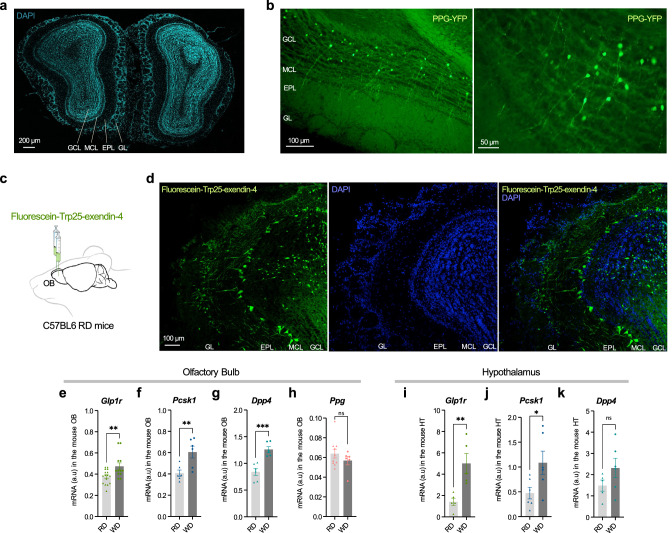
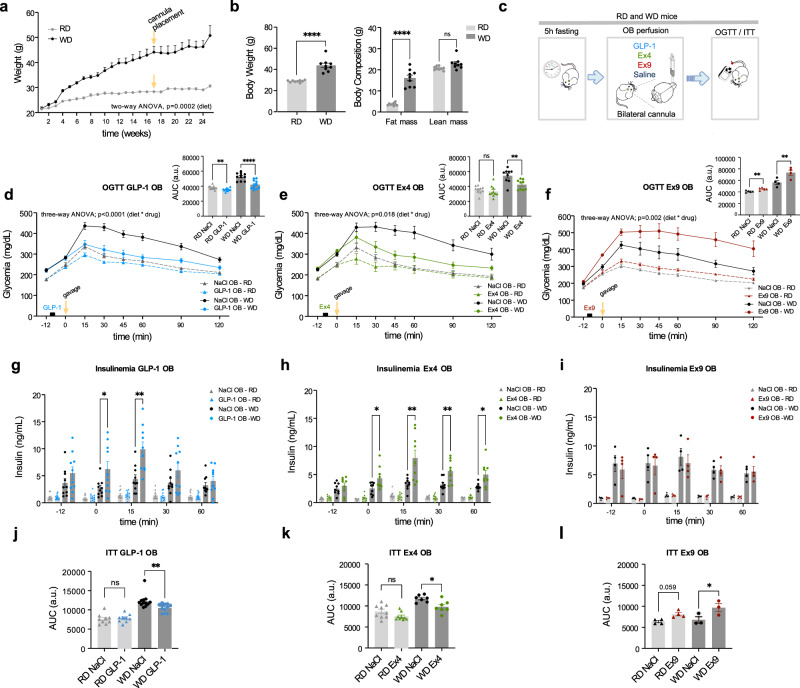
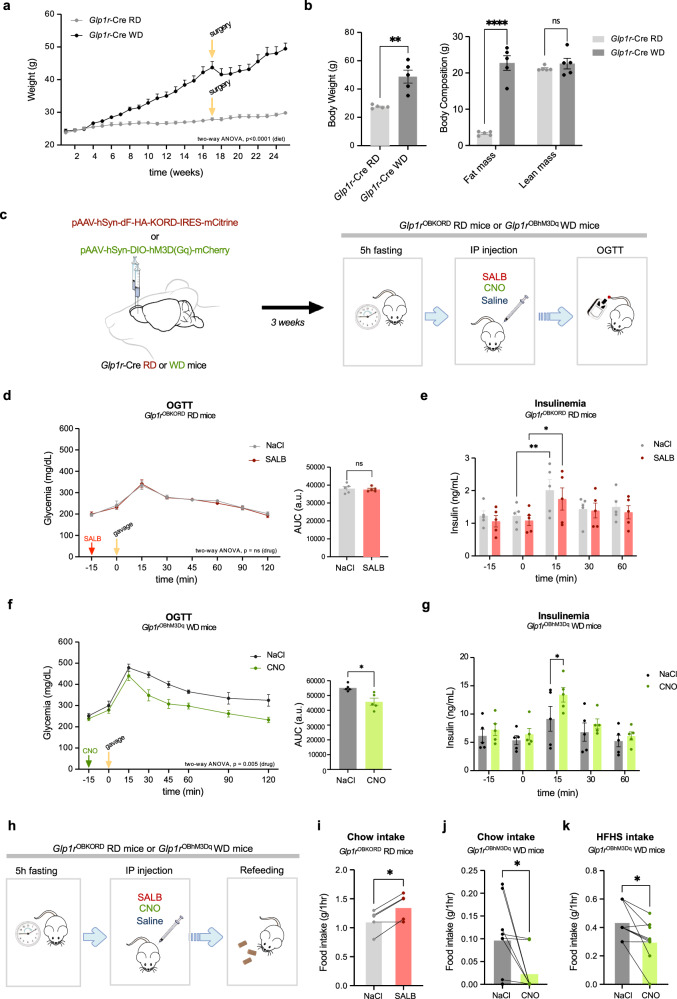
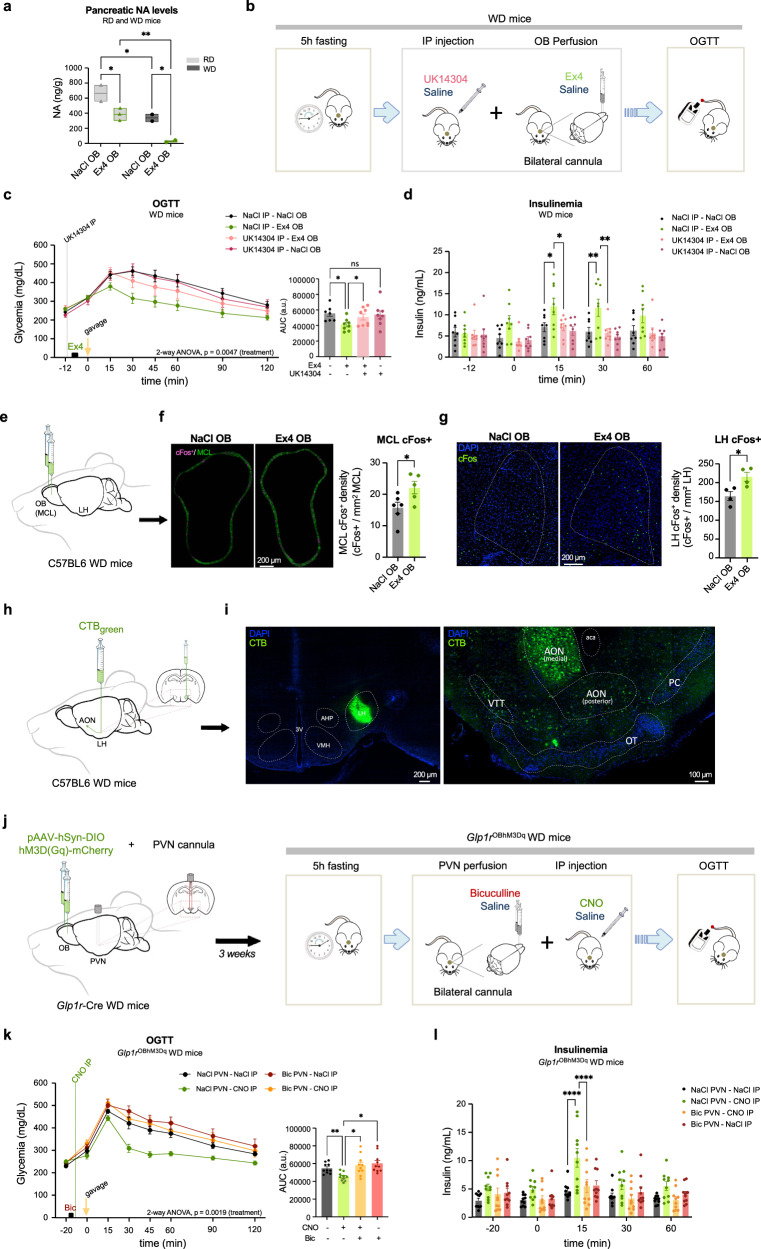
Glucagon-like peptide 1 (GLP-1) stimulates insulin secretion and holds significant pharmacological potential. Nevertheless, the regulation of energy homeostasis by centrally-produced GLP-1 remains partially understood. Preproglucagon cells, known to release GLP-1, are found in the olfactory bulb (OB). We show that activating GLP-1 receptors (GLP-1R) in the OB stimulates insulin secretion in response to oral glucose in lean and diet-induced obese male mice. This is associated with reduced noradrenaline content in the pancreas and blocked by an α2-adrenergic receptor agonist, implicating functional involvement of the sympathetic nervous system (SNS). Inhibiting GABAA receptors in the paraventricular nucleus of the hypothalamus (PVN), the control centre of the SNS, abolishes the enhancing effect on insulin secretion induced by OB GLP-1R. Therefore, OB GLP-1-dependent regulation of insulin secretion relies on a relay within the PVN. This study provides evidence that OB GLP-1 signalling engages a top-down neural mechanism to control insulin secretion via the SNS. The regulation of energy homeostasis by centrally-produced GLP-1 is not yet fully understood. Here, authors show that GLP-1 neuronal circuitry in the olfactory bulb reduces food intake and enhances insulin secretion in obese mice. The increase in insulin secretion is mediated by a GABA-dependent relay in the paraventricular hypothalamus and decreased sympathetic nerve activity.
Overview
The claims and statistics of this paper haven’t been checked yet.
Free: it reads the open-access text and checks the first 5 claims that cite a source we can check. Create a free account to check every claim.
Integrity signals
Registry
Cites
Statistics
Figures
Verification
Claims the paper makes
The claims and statistics of this paper haven’t been checked yet.
Free: it reads the open-access text and checks the first 5 claims that cite a source we can check. Create a free account to check every claim.
Claims other papers make about this one
Each is checked against this paper’s own text: does it say what the citing paper says it does?
The cited source says what the claim attributes to it.
In the citing paper
“In addition to the peripheral source of GLP-1, this peptide is also produced and released from a small population of PPG neurons in the brainstem nucleus tractus solitarius (NTS) and adjacent intermediate reticular nucleus (19‐21), along with a small microcircuit population in the olfactory bulb (16, 55, 56).”
From GLP-1 and the Neurobiology of Eating Control: Recent Advances (2025) · cites this paper as [56]
Self-check
Percentages, sums and reported differences re-computed from the paper’s own numbers.
The self-check needs the paper’s full text.
Citations
Cites
Neurons containing hypocretin (orexin) project to multiple neuronal systems
Peyron, C., Tighe, D. K., van den Pol, A. N., de Lecea, L., Heller, H. C., Sutcliffe, J. G., & Kilduff, T. S. (1998) · The Journal of Neuroscience · doi:10.1523/jneurosci.18-23-09996.1998 · Cited by 3,466
Distribution of orexin neurons in the adult rat brain
Nambu, T., Sakurai, T., Mizukami, K., Hosoya, Y., Yanagisawa, M., & Goto, K. (1999) · Brain Research · doi:10.1016/s0006-8993(99)01336-0 · Cited by 1,068
The Olfactory Bulb: Coding and Processing of Odor Molecule Information
Mori, K., Nagao, H., & Yoshihara, Y. (1999) · Science · doi:10.1126/science.286.5440.711 · Cited by 933
Autonomic regulation of islet hormone secretion - Implications for health and disease
Ahrén, B. (2000) · Diabetologia · doi:10.1007/s001250051322 · Cited by 909
Mojsov, S., Weir, G. C., & Habener, J. F. (1987) · Journal of Clinical Investigation · doi:10.1172/jci112855 · Cited by 882
Glucose Sensing in L Cells: A Primary Cell Study
Reimann, F., Habib, A. M., Tolhurst, G., Parker, H. E., Rogers, G. J., & Gribble, F. M. (2008) · Cell Metabolism · doi:10.1016/j.cmet.2008.11.002 · Cited by 733
de Olmos, J., Hardy, H., & Heimer, L. (1978) · Journal of Comparative Neurology · doi:10.1002/cne.901810202 · Cited by 710
Neurons for hunger and thirst transmit a negative-valence teaching signal
Betley, J. N., Xu, S., Cao, Z. F. H., Gong, R., Magnus, C. J., Yu, Y., & Sternson, S. M. (2015) · Nature · doi:10.1038/nature14416 · Cited by 704
Sensory Detection of Food Rapidly Modulates Arcuate Feeding Circuits
Chen, Y., Lin, Y.-C., Kuo, T.-W., & Knight, Z. A. (2015) · Cell · doi:10.1016/j.cell.2015.01.033 · Cited by 660
Truncated glucagon‐like peptide I, an insulin‐releasing hormone from the distal gut
Holst, J. J., Ørskov, C., Vagn Nielsen, O., & Schwartz, T. W. (1987) · FEBS Letters · doi:10.1016/0014-5793(87)81430-8 · Cited by 615
Cited by
GLP-1 and the Neurobiology of Eating Control: Recent Advances
Jones, L. A., & Brierley, D. I. (2025) · Endocrinology · doi:10.1210/endocr/bqae167 · Cited by 43
“…to the peripheral source of GLP-1, this peptide is also produced and released from a small population of PPG neurons in the brainstem nucleus tractus solitarius (NTS) and adjacent intermediate reticular nucleus (19–21), along with a small microcircuit population in the olfactory bulb (16, 55, 56).”
Edvardsson, C. E., Cadeddu, D., Ericson, M., Adermark, L., & Jerlhag, E. (2025) · EBioMedicine · doi:10.1016/j.ebiom.2025.105684 · Cited by 33
Otolaryngologic Side Effects of GLP ‐1 Receptor Agonists
Khan, F. I., Vazquez, S. G., Mehdi, Z., Somawardana, I. A., Dongre, R., Razmi, S. E., Rashidi, K., Shenoi, J., Khan, N. S., Dhanda, A. K., et al. (2025) · The Laryngoscope · doi:10.1002/lary.32061 · Cited by 32
“38 41 Although an infrequently reported AE, there was signi fi cance in both PRR and ROR for tinnitus in the liraglutide and only ROR in semaglutide.”
Exploring the biological mechanism and clinical value of perineural invasion in pancreatic cancer
Yuan, H., Zhang, Y., Liu, F., Wu, Y., Huang, X., Liu, X., Jiang, L., Xiao, B., Zhu, Y. C., Chen, Q., et al. (2025) · Cancer Letters · doi:10.1016/j.canlet.2025.217515 · Cited by 28
Incretin-based therapeutics for the treatment of neurodegenerative diseases
Vear, A., Heneka, M. T., & Clemmensen, C. (2025) · Nature Metabolism · doi:10.1038/s42255-025-01263-4 · Cited by 26
“…and memory 144,199 , suggesting that hippocampal GLP-1Rs might be accessible through GLP-1 in the CSF. Notably, a neural circuit involving PPG neurons recently identified in the olfactory bulb in mice has been proposed to modulate insulin secretion through the sympathetic nervous system 200 .”
Chen, H., Liu, S., Gao, S. H., Shi, H., Yan, Y., Xu, Y., Fang, J., Wang, W., Chen, H., & Liu, Z. (2025) · Scientific Reports · doi:10.1038/s41598-025-01206-9 · Cited by 39
“Olfactory dysfunction, including parosmia, has been associated with liraglutide use 46 , likely reflecting GLP-1R-mediated modulation of odor-evoked insulin secretion and foraging behaviors in the olfactory bulb 51,52 .”
GLP-1/GLP-1R axis: from metabolism (obesity and T2DM) to immunity
Kumar, V. (2025) · Open Biology · doi:10.1098/rsob.240303 · Cited by 19
Au, H. C. T., Zheng, Y. J., Le, G. H., Wong, S., Teopiz, K. M., Kwan, A. T. H., Gill, H., Badulescu, S., Valentino, K., Rosenblat, J. D., et al. (2025) · Acta Neuropsychiatrica · doi:10.1017/neu.2025.4 · Cited by 23
“Extant literature has reported that GLP-1 receptors are expressed on neurons in regions such as the paraventricular nucleus, hippocampus, and preproglucagon cells in the olfactory bulb (Katsurada et al ., 2014; Montaner et al ., 2024; Canário et al ., 2024).”
Integration of Glucagon-Like Peptide 1 Receptor Actions Through the Central Amygdala
Duran, M., Willis, J. R., Dalvi, N., Fokakis, Z. N., VIRKUS, S., & Hardaway, J. A. (2025) · Endocrinology · doi:10.1210/endocr/bqaf019 · Cited by 13
Ciconte, G., Salerno, R., Fuga, A., Vuturo, A., Boccellino, A., Negro, G., Rondine, R., Ballarotto, M., Ciaccio, C., Izzo, A., et al. (2026) · EP Europace · doi:10.1093/europace/euag018 · Cited by 18
“47 Thirdly, improvements in insulin resistance and autonomic balance, 48,49 together with favourable haemodynamic effects, such as reduced left atrial pressure and diastolic load, 50 may further stabilize the atrial substrate.”
Metabolic control of ovarian function through the sympathetic nervous system: role of leptin
Astudillo-Guerrero, C., Paredes, A. H., Escobar, J., Fernandois, D., Barra, R., & Cruz, G. (2025) · Frontiers in Endocrinology · doi:10.3389/fendo.2024.1484939 · Cited by 10
Trapp, S., & Skoug, C. (2025) · Endocrinology · doi:10.1210/endocr/bqaf169 · Cited by 12
“Furthermore, functional characterization of the olfactory bulb PPG neurons has begun in the mouse (16-19).”
Hunting for heroes: Brain neurons mediating GLP-1R agonists in obesity treatment
Cao, Y., & Tong, Q. (2024) · Obesity Medicine · doi:10.1016/j.obmed.2024.100569 · Cited by 10
The role of GLP-1 receptor in pain disorders and its pharmacological properties
Jing, F., Zeng, Y., Yu, Q.-L., & Fu, C. (2025) · European Journal of Pharmacology · doi:10.1016/j.ejphar.2025.178345 · Cited by 6
Manchanda, Y., Jones, B. J., Carrat, G., Ramchunder, Z., Marchetti, P., Leclerc, I., Thennati, R., BURADE, V. S., Natarajan, M., Shahi, P. K., et al. (2025) · Diabetes Obesity and Metabolism · doi:10.1111/dom.16652 · Cited by 5
“31,32 We note that the contribution of GIPR agonism to the effects of HISHS-2001 and other co-receptor agonists in vivo remains to be resolved given that antagonism at this receptor also promotes weight loss.”
Mermet, M., Denom, J., Mieczkowska, A., Wery, M., Biggs, E. K., Gribble, F. M., Reimann, F., Magnan, C., Cruciani‐Guglielmacci, C., & Mabilleau, G. (2025) · American Journal of Physiology-Endocrinology and Metabolism · doi:10.1152/ajpendo.00086.2025 · Cited by 8
“…olfactory bulb, amygdala, preoptic gland, amygdala, preoptic area, nucleus accumbens, hypothalamic arcuate nucleus, paraventricular nucleus, dorsomedial nucleus, lateral hypothalamic nucleus, supraoptic nucleus, postrema area, nucleus tractus solitarius and lateral reticular nucleus (36, 40–42).”
Zaman, V., Matzelle, D. D., Banik, N. L., & Haque, A. (2025) · Cells · doi:10.3390/cells14020124 · Cited by 5
Mekki, Y. M., Park, J., Alzaareer, Z., Hussain, Z., Gulzar, A., Elzouki, A. Y. A., Güemes, A., & Zughaier, S. M. (2026) · Journal of Diabetes & Metabolic Disorders · doi:10.1007/s40200-026-01876-w · Cited by 1
“This response to sensory stimuli is called the cephalic phase of insulin release [75–77], which is reinforced by the secretion of GLP-1 upon food consumption [78–81].”
Ryu, V., Gumerova, A. A., Pevnev, G., Yuen, T., & Zaidi, M. (2026) · Brain medicine : · doi:10.61373/bm026a.0006 · Cited by 5
Mood-modulating foods: Pathways, challenges, and opportunities for mental well-being in the AI era
Ouyang, K., Jin, R., Zang, J., Zhao, G., He, J., Li, X., Lu, W., Zhao, Y., Sun, C., Fang, Y., et al. (2026) · Nexus · doi:10.1016/j.ynexs.2026.100132 · Cited by 1
Anderson, B. J., Daele, D. J. V., Claussen, A. D., Tanenbaum, Z. G., & Owen, S. R. (2026) · Annals of Otology Rhinology & Laryngology · doi:10.1177/00034894261450724 · Cited by 1
GLP-1 Receptor Agonists in Neurological Disorders: From Mechanisms to Clinical Translation
Li, P., Gao, Y., & (20030), W. L. (2026) · Drug Design Development and Therapy · doi:10.2147/dddt.s613616 · Cited by 2
“24 Even though GLP-1 is only made in a few spots, its receptors are spread all over the brain.”
Amruthavarshini, S. N., Kumari, N., & Anand, S. (2026) · Molecular Neurobiology · doi:10.1007/s12035-026-06015-3 · Cited by 1
“After release, GLP-1 and PYY have metabolic and These signaling pathways enhance insulin secretion, modulate hypothalamic circuits involved in energy balance, and contribute to neuronal survival and synaptic integrity [76].”
Mermet, M., Denom, J., Mieczkowska, A., Biggs, E. K., Gribble, F. M., Reimann, F. M., Magnan, C., Cruciani‐Guglielmacci, C., & Mabilleau, G. (2024) · bioRxiv (Cold Spring Harbor Laboratory) · doi:10.1101/2024.10.05.616809
Bonner, C., Saponaro, C., Imbernón, M., Louvet, I., Deligia, E., Chen, S., Davies, I., Acosta-Montalvo, A., Moreno-Lopez, M., Wemelle, E., et al. (2024) · Research Square · doi:10.21203/rs.3.rs-5544620/v1
Neuroprotective Effect of Sitagliptin beyond the Incretin Effect: A Narrative Review
Pourbagher‐Shahri, A. M., & Forouzanfar, F. (2025) · CNS & Neurological Disorders - Drug Targets · doi:10.2174/0118715273367858250321124131
Montaner, M., Andreelli, F., Magnan, C., & Gurden, H. (2026) · Medecine sciences : M/S · doi:10.1051/medsci/2026014
Neglected GLP-1 receptors in the eyes and nose: possible correlation with regulation of appetite
Saturnino, A., & Pozzilli, P. (2026) · Endocrine · doi:10.1007/s12020-026-04581-z · Cited by 1
Mifsud, F. (2023) · theses.fr (ABES) · doi:10.70675/5545c0dfz1da3z4654z857fz6194d42cd43d
Olfactory dysfunction in obesity and type 2 diabetes: mechanistic insights from preclinical models
Bulk, J., Reimon, L. C., & Steculorum, S. M. (2026) · Diabetologia · doi:10.1007/s00125-026-06755-w · Cited by 1
“…have been shown to improve olfactory performance in DIO rodents [98, 100] and enhance cephalic phase insulin release during food perception [101–103], dependent on GLP-1 receptors in the OB [100], further linking the role of GLP-1 in feeding behaviour to its actions in the olfactory system.”
Hormonal Imbalance and Gut Dysbiosis: Emerging Perspectives in Women’s Health
De, R., Chakrabortty, S., Das, J., Chaudhary, P., Patra, R., Sardar, K., Nath, R., Pal, R., Debnath, B., & Ashique, S. (2026) · Probiotics and Antimicrobial Proteins · doi:10.1007/s12602-026-11089-5 · Cited by 1
Saponaro, C., Imbernón, M., Louvet, I., Deligia, E., Chen, S., Davies, I., Acosta-Montalvo, A., Moreno-Lopez, M., Wemelle, E., Kothegala, L., et al. (2026) · Diabetologia · doi:10.1007/s00125-026-06779-2
“Furthermore, intracerebroventricular GLP-1 injection [11, 12] and activation of GLP-1R expressing neurons [13] enhance plasma insulin levels, indicating central nervous system involvement in insulin release.”
Martínez‐Corral, I., Monaco, N., Brierley, D. I., & Imbernón, M. (2026) · British Journal of Pharmacology · doi:10.1111/bph.70636 · Cited by 1
He, W., Yi-di, S., Wang, X., He, S.-Y., Tao, X., Yuan, S.-X., Zhou, L., & Long, E.-W. (2026) · Frontiers in Pharmacology · doi:10.3389/fphar.2026.1889594
“GLP-1 is secreted primarily by intestinal enteroendocrine L cells after nutrient ingestion, while preproglucagon neurons in the nucleus tractus solitarius constitute a major endogenous source of GLP-1 within the brain (Marathe et al., 2011; Beutler, 2026; Montaner et al., 2024; Liu et al., 2025).”
Physiology and therapeutic insights of incretins in 2026: An update
Hirlemann, M., Phan, A., Carette, C., Beyec, J. L., Ledoux, S., & Gall, M. L. (2026) · Cahiers de Nutrition et de Diététique · doi:10.1016/j.cnd.2026.08.106
Brain insulin resistance and microglial immunometabolic dysregulation in neurodegenerative diseases
Liu, X., Zhang, X., Su, Y., Guan, G., Luo, X., & Zhang, P. (2026) · Frontiers in Aging Neuroscience · doi:10.3389/fnagi.2026.2002283
Metadata
- Authors
- Montaner, M., Denom, J., Simon, V., Jiang, W., Holt, M. K., Brierley, D. I., Rouch, C., Foppen, E., Kassis, N., Jarriault, D., Khan, D., Eygret, L., Mifsud, F., Hodson, D. J., Broichhagen, J., Van Oudenhove, L., Fioramonti, X., Gault, V., Cota, D., Reimann, F., Gribble, F. M., Migrenne-Li, S., Trapp, S., Gurden, H., & Magnan, C.
- Affiliations
- Centre National de la Recherche Scientifique (FR)
- Université de Bordeaux (FR)
- University College London (GB)
- University of Warwick (GB)
- Netherlands Institute for Neuroscience (NL)
- University of Ulster (GB)
- University of Oxford (GB)
- Leibniz-Forschungsinstitut für Molekulare Pharmakologie (DE)
- University of Cambridge (GB)
- Corresponding author
- Trapp, Stefan
- Gurden, Hirac
- ORCID
- Montaner, Mireia
- Denom, Jessica
- Simon, Vincent
- Holt, Marie K.
- Brierley, Daniel I.
- Foppen, Ewout
- Kassis, Nadim
- Jarriault, David
- Khan, Dawood
- Mifsud, Francois
- Hodson, David J.
- Broichhagen, Johannes
- Van Oudenhove, Lukas
- Fioramonti, Xavier
- Gault, Victor
- Cota, Daniela
- Reimann, Frank
- Gribble, Fiona M.
- Trapp, Stefan
- Gurden, Hirac
- Magnan, Christophe
- Venue
- Nature Communications
- Published
- 2024-08-13
- Volume
- 15
- Issue
- 1
- Pages
- 6941-6941
- ISSN
- 2041-1723 (ISSN-L)
- PMC
- PMC11322178
- OpenAlex
- W4401546168
- Cited by
- 36
- References
- 57
- Citations by year
- 2026: 16 · 2025: 15 · 2024: 4
- FWCI
- 14.74
- Type
- journal article
- Language
- en
- Open access
- gold
- doi.org
- Licence
- cc-by-nc-nd
- creativecommons.org/licenses/by-nc-nd/4.0 (tdm)
- creativecommons.org/licenses/by-nc-nd/4.0 (vor)
- Locations
- Nature Communications (publishedVersion, cc-by-nc-nd)
- bioRxiv (Cold Spring Harbor Laboratory) (acceptedVersion)
- PubMed Central (publishedVersion, cc-by-nc-nd)
- PubMed (publishedVersion)
- KNAW Research Portal (The Royal Netherlands Academy of Arts and Sciences) (publishedVersion, other-oa)
- HAL (submittedVersion, cc-by-nc-nd)
- UCL Discovery (University College London) (submittedVersion, cc-by-nc-nd)
- Lirias (submittedVersion, cc-by-nc-nd)
- Pure Amsterdam UMC (submittedVersion, cc-by-nc-nd)
- Ulster University Research Portal (Ulster University) (submittedVersion, cc-by-nd)
- Warwick Research Archive Portal (University of Warwick) (submittedVersion, cc-by-nc-nd)
- Apollo (University of Cambridge) (submittedVersion, cc-by-nc-nd)
- HAL (submittedVersion)
- RePEc: Research Papers in Economics (submittedVersion)
- DOAJ (DOAJ: Directory of Open Access Journals) (submittedVersion)
- Oskar-Bordeaux (Universite de Bordeaux) (submittedVersion, cc-by-nc-nd)
- Funders
- Wellcome Trust (220271/Z/20/Z, 223279/Z/21/Z, 223279, ANR-10-INBS-04, 220271, MRC_MC_UU_12012/3)
- UK Research and Innovation (EP/X026833/1, MRC_MC_UU_12012/3)
- British Heart Foundation (FS/IPBSRF/20/27001, MRC_MC_UU_12012/3)
- Diabetes UK (17/0005681)
- European Foundation for the Study of Diabetes
- Agence Nationale de la Recherche (10-INBS-04, ANR-21-CE14-0018, ANR‐10_INBS‐04, ANR-10)
- Institut National de la Santé et de la Recherche Médicale (ANR-10-INBS-04)
- KU Leuven
- China Scholarship Council
- Centre National de la Recherche Scientifique (ANR-10-INBS-04)
- Université de Paris
- Medical Research Council (MRC_MC_UU_12012/3, MR/S025618/1, 220271/Z/20/Z, 17/0005681, MR/N02589X/1, ANR-10-INBS-04, MR/X003604/1)
- Engineering and Physical Sciences Research Council (EP/X026833/1)
- Bijzonder Onderzoeksfonds UGent
- Topics
- Health Sciences › Medicine › Endocrinology, Diabetes and Metabolism › Pancreatic function and diabetes
- Life Sciences › Neuroscience › Endocrine and Autonomic Systems › Regulation of Appetite and Obesity
- Health Sciences › Medicine › Endocrinology, Diabetes and Metabolism › Diabetes Treatment and Management
- Keywords
- glucagon-like peptide-1, olfactory bulb, insulin secretion, GLP-1 receptor, paraventricular nucleus, sympathetic nervous system, norepinephrine, GABAA receptor, energy homeostasis, diet-induced obesity, dietary intake, neural circuits
- MeSH terms
- Glucagon-Like Peptide-1 Receptor, Insulin Secretion, Animals, Glucose, Insulin, Male, Mice, Inbred C57BL, Neurons, Norepinephrine, Obesity, Olfactory Bulb, Paraventricular Hypothalamic Nucleus, Sympathetic Nervous System, Signal Transduction, Mice, Glucagon-Like Peptide 1
About these checks
Registry, retraction, Cites and statistics results are computed, not judged, with one exception: a printed reference that no index lists is read once by a model before it counts as a citation error. Claims are extracted by a model and kept only when their quote appears verbatim in the text; each cited source is then checked, with a model’s help, for whether it says what the claim relies on. Those verdicts can be wrong — read the claim’s quote and the cited source before relying on one.
Statistics and arithmetic are recomputed, not judged.
Confidence bands are shown only for fields calibrated on our annotated test set. None is calibrated yet, so no band is shown.
What counts as a claim ›How we measure confidence ›How we check this ›
Are you an author, or do you see a problem with this page? Request a review
Data sources
Bibliographic data: Semantic Scholar, OpenAlex, Crossref.
Contains information from the Semantic Scholar Academic Graph Datasets, made available under the ODC Attribution License (ODC-BY 1.0).
Semantic Scholar’s data is described in: Kinney, R., et al. (2023). The Semantic Scholar Open Data Platform. arXiv:2301.10140.
