

Targeted immunotherapy rescues pulmonary fibrosis by reducing activated fibroblasts and regulating alveolar cell profile
Open accessThe DOI matches its Crossref record; 65 of the 65 references it cites were found in a registry or an index.
Abstract
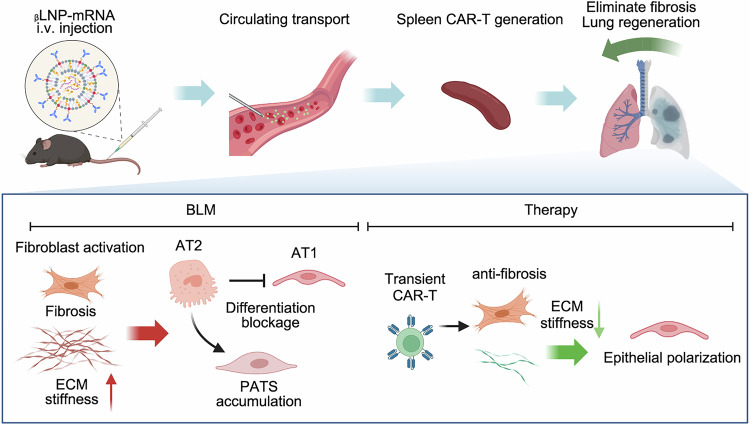
Idiopathic pulmonary fibrosis (IPF) is a severe lung disease occurring throughout the world; however, few clinical therapies are available for treating this disorder. Overactivated fibroblasts drive abnormal fibrosis accumulation to maintain dynamic balance between inflammation and extracellular matrix (ECM) stiffness. Given pulmonary cell can regenerate, the lung may possess self-repairing abilities if fibrosis is removed via clearance of overactivated fibroblasts. The aim of this study was to evaluate the therapeutic activity of transient antifibrotic chimeric antigen receptor (CAR) T cells (generated via a novelly-designed lipid nanoparticle-messenger RNA (LNP-mRNA) system) and explore the regeneration mechanisms of lung in a male mouse model of bleomycin-induced pulmonary fibrosis. Here we found that fibrosis-induced ECM stiffening impaired alveolar epithelial cell compensation. The proposed LNP-mRNA therapy eliminated overactivated fibroblasts to rescue pulmonary fibrosis. The restored ECM environment regulated the cellular profile. The elevated plasticity of AT2 and Pclaf+ cells increased AT1 cell population via polarization. Apoe+ macrophages and increased numbers of effector T cells were shown to reestablish pulmonary immunity. Hence, LNP-mRNA treatment for fibrosis can restore pulmonary structure and function to similar degrees to those of a healthy lung. This therapy is a potential treatment for IPF patients. Pulmonary fibrosis is a severe lung disease with limited clinical therapies. Here the authors show that chimeric antigen receptor cells can rescue pulmonary fibrosis in a mouse model, and they further investigate the mechanism of lung regeneration after treatment.
Overview
The claims and statistics of this paper haven’t been checked yet.
Free: it reads the open-access text and checks the first 5 claims that cite a source we can check. Create a free account to check every claim.
Integrity signals
Registry
Cites
Statistics
Figures
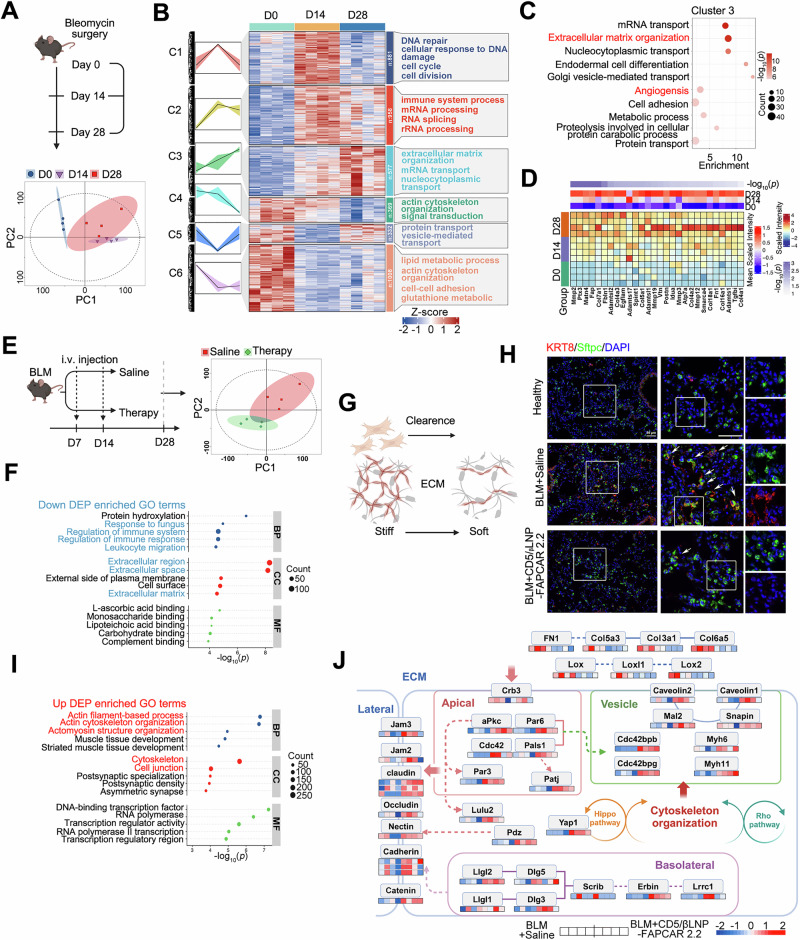
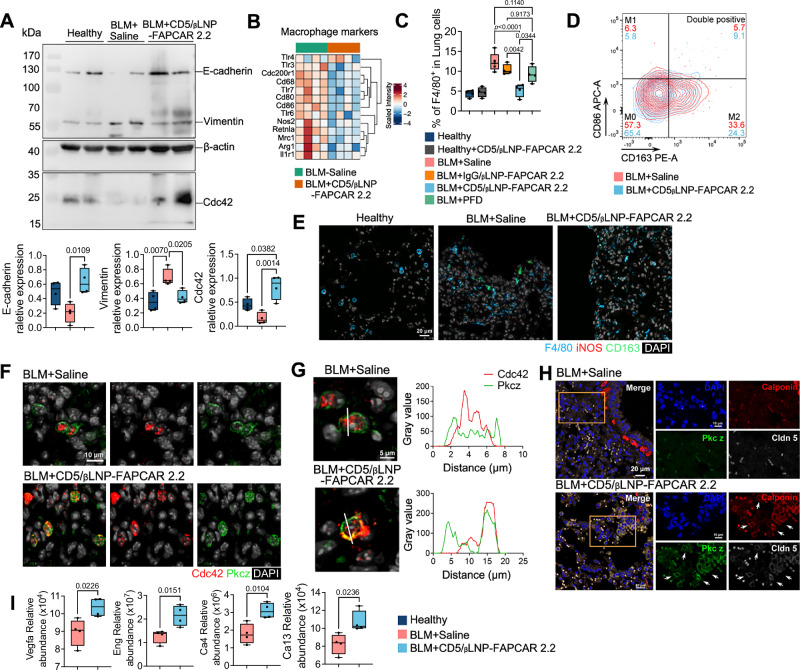
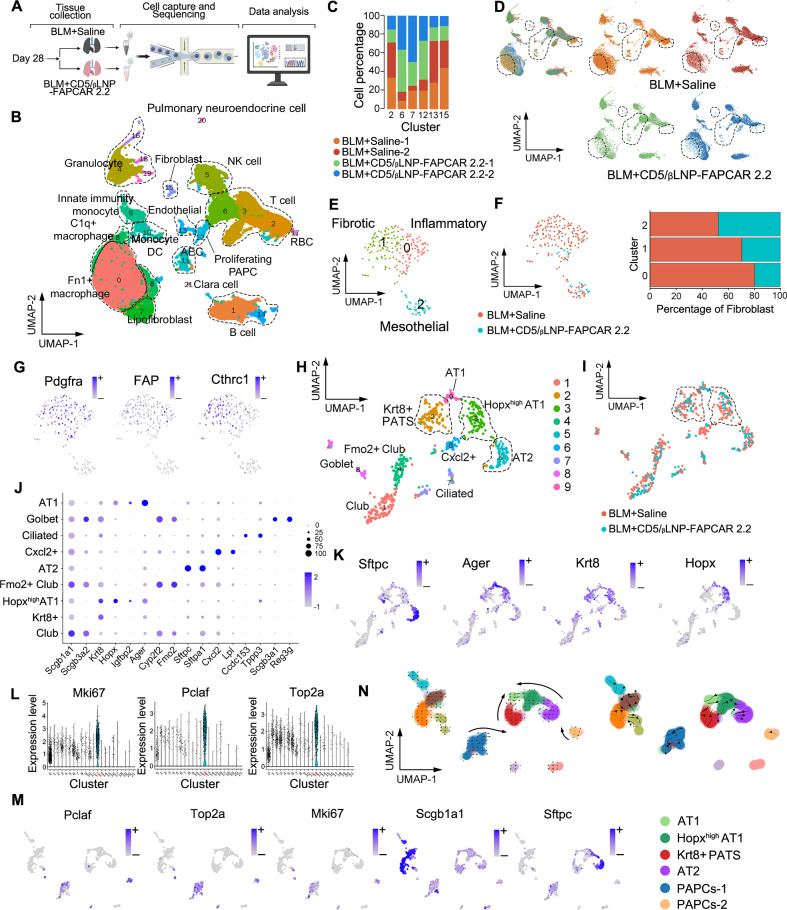
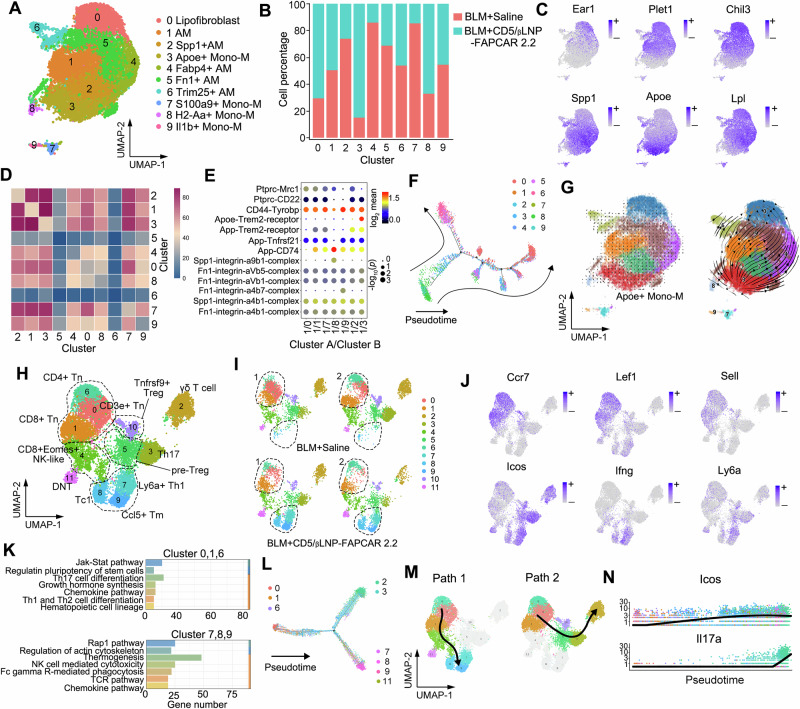
Verification
Claims the paper makes
The claims and statistics of this paper haven’t been checked yet.
Free: it reads the open-access text and checks the first 5 claims that cite a source we can check. Create a free account to check every claim.
Claims other papers make about this one
Each is checked against this paper’s own text: does it say what the citing paper says it does?
In the citing paper
“CAR-T cells designed to recognize fibroblast activation protein (FAP) on pathogenic fibroblasts and engineered to modulate mechanical signal transduction pathways may achieve selective clearance of fibrogenic cells while adapting to the altered mechanical microenvironment (162, 163).”
From The mechanotransduction-immune axis in organ fibrosis: dual regulatory mechanisms and translational therapeutic perspectives (2025) · doi:10.3389/fimmu.2025.1670213 · cites this paper as [162]
Self-check
Percentages, sums and reported differences re-computed from the paper’s own numbers.
The self-check needs the paper’s full text.
Citations
Cites
Molecular Mechanisms of Stress-Responsive Changes in Collagen and Elastin Networks in Skin
Aziz, J., Shezali, H., Radzi, Z., Yahya, N. A., Abu Kassim, N. H., Czernuszka, J., & Rahman, M. T. (2016) · Skin Pharmacology and Physiology · doi:10.1159/000447017 · Cited by 7,323
A phase 3 trial of pirfenidone in patients with idiopathic pulmonary fibrosis.
King, T. E., Bradford, W. Z., Castro-Bernardini, S., Fagan, E. A., Glaspole, I., Glassberg, M. K., Gorina, E., Hopkins, P. M., Kardatzke, D., Lancaster, L., et al. (2014) · New England Journal of Medicine · doi:10.1056/nejmoa1402582 · Cited by 3,975
Effects of extracellular matrix viscoelasticity on cellular behaviour
Chaudhuri, O., Cooper-White, J., Janmey, P. A., Mooney, D. J., & Shenoy, V. B. (2020) · Nature · doi:10.1038/s41586-020-2612-2 · Cited by 2,224 · cited 1×
“Cell membrane receptors transmit the change of pathological signals into epithelial cells to cause cascade reactions while integrin-based adhesions translate mechanical signals to affect actin aggregation and movement 52 – 54 .”
Mechanotransduction and extracellular matrix homeostasis
Humphrey, J. D., Dufresne, E. R., & Schwartz, M. A. (2014) · Nature Reviews Molecular Cell Biology · doi:10.1038/nrm3896 · Cited by 2,124
Richeldi, L., Collard, H. R., & Jones, M. G. (2017) · The Lancet · doi:10.1016/s0140-6736(17)30866-8 · Cited by 2,020
Fibrosis: from mechanisms to medicines
Henderson, N. C., Rieder, F., & Wynn, T. A. (2020) · Nature · doi:10.1038/s41586-020-2938-9 · Cited by 1,868 · cited 2×
“Compared with traditionaldrugs that blocksignaling pathways 8 , chimericantigen receptor (CAR)-”
Systemic RNA delivery to dendritic cells exploits antiviral defence for cancer immunotherapy
Kranz, L. M., Diken, M., Haas, H., Kreiter, S., Loquai, C., Reuter, K. C., Meng, M., Fritz, D., Vascotto, F., Hefesha, H., et al. (2016) · Nature · doi:10.1038/nature18300 · Cited by 1,819
Simple method of estimating severity of pulmonary fibrosis on a numerical scale.
Ashcroft, T., Simpson, J. M., & Timbrell, V (1988) · Journal of Clinical Pathology · doi:10.1136/jcp.41.4.467 · Cited by 1,680
SARS-CoV-2 mRNA Vaccine Design Enabled by Prototype Pathogen Preparedness
Corbett, K. S., Edwards, D. K., Leist, S. R., Abiona, O. M., Boyoglu-Barnum, S., Gillespie, R. A., Himansu, S., Schäfer, A., Ziwawo, C. T., DiPiazza, A. T., et al. (2020) · Nature · doi:10.1038/s41586-020-2622-0 · Cited by 1,615 · cited 1×
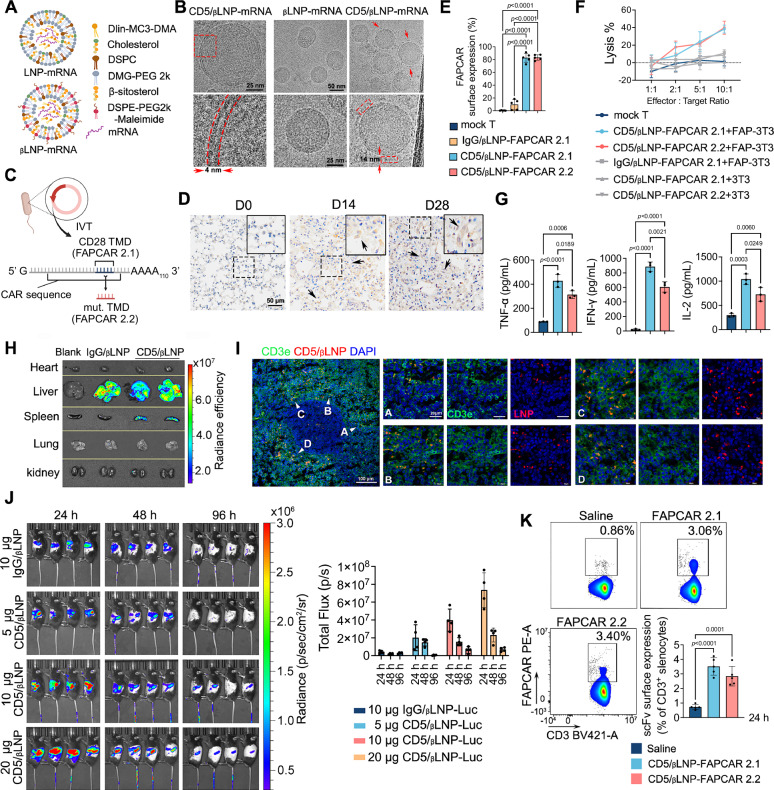
“The ex vivo synthesized sequences of FAPCAR were cloned into IVT template plasmid as the ORF region which also carried T7 promoter, modi fi ed 5 ’ UTR, kozak sequence, 3 ’ UTR, and a 110 nt-long poly (A) tail 59 – 61 .”
Pan-cancer single-cell landscape of tumor-infiltrating T cells
Zheng, L., Qin, S., Si, W., Wang, A., Xing, B., Gao, R., Ren, X., Wang, L., Wu, X., Zhang, J., et al. (2021) · Science · doi:10.1126/science.abe6474 · Cited by 1,402
CAR T cells produced in vivo to treat cardiac injury
Rurik, J. G., Tombácz, I., Yadegari, A., Méndez Fernández, P. O., Shewale, S. V., Li, L., Kimura, T., Soliman, O. Y., Papp, T. E., Tam, Y. K., et al. (2022) · Science · doi:10.1126/science.abm0594 · Cited by 1,400
Integrins as biomechanical sensors of the microenvironment
Kechagia, J. Z., Ivaska, J., & Roca-Cusachs, P. (2019) · Nature Reviews Molecular Cell Biology · doi:10.1038/s41580-019-0134-2 · Cited by 1,311
CAR T Cells Produced in vivo to Treat Cardiac Injury
Rurik, J. G., Tombácz, I., Yadegari, A., Fernández, P. O. M., Shewale, S. V., Li, L., Kimura, T., Soliman, O. Y., Papp, T. E., Tam, Y. K., et al. (2023) · HAL · Cited by 926
Chemistry of Lipid Nanoparticles for RNA Delivery
Eygeris, Y., Gupta, M., Kim, J., & Sahay, G. (2022) · Accounts of Chemical Research · doi:10.1021/acs.accounts.1c00544 · Cited by 873
Pathogenesis of Idiopathic Pulmonary Fibrosis
Wolters, P. J., Collard, H. R., & Jones, K. D. (2014) · Annual Review of Pathology: Mechanisms of Disease · doi:10.1146/annurev-pathol-012513-104706 · Cited by 862
Standardized Quantification of Pulmonary Fibrosis in Histological Samples
Hübner, R.-H., Gitter, W., Eddine El Mokhtari, N., Mathiak, M., Both, M., Bolte, H., Freitag-Wolf, S., & Bewig, B. (2008) · BioTechniques · doi:10.2144/000112729 · Cited by 817
Targeting cardiac fibrosis with engineered T cells
Aghajanian, H., Kimura, T., Rurik, J. G., Hancock, A. S., Leibowitz, M. S., Li, L., Scholler, J., Monslow, J., Lo, A., Han, W., et al. (2019) · Nature · doi:10.1038/s41586-019-1546-z · Cited by 801
Tsukui, T., Sun, K.-H., Wetter, J. B., Wilson-Kanamori, J. R., Hazelwood, L. A., Henderson, N. C., Adams, T. S., Schupp, J. C., Poli, S. D., Rosas, I. O., et al. (2020) · Nature Communications · doi:10.1038/s41467-020-15647-5 · Cited by 765
Regeneration of the lung alveolus by an evolutionarily conserved epithelial progenitor
Zacharias, W. J., Frank, D. B., Zepp, J. A., Morley, M. P., Alkhaleel, F. A., Kong, J., Zhou, S., Cantu, E., & Morrisey, E. E. (2018) · Nature · doi:10.1038/nature25786 · Cited by 737 · cited 1×
“It was found that the stiffening of the ECM impaired the differentiation of alveolar type II (AT2) epithelial cells into type I (AT1) cells 13,14 , which damaged the self-repairing abilities of alveolar structure.”
Strunz, M., Simon, L. M., Ansari, M., Kathiriya, J. J., Angelidis, I., Mayr, C. H., Tsidiridis, G., Lange, M., Mattner, L. F., Yee, M., et al. (2020) · Nature Communications · doi:10.1038/s41467-020-17358-3 · Cited by 728
Fibroblast and myofibroblast activation in normal tissue repair and fibrosis
Younesi, F. S., Miller, A. E., Barker, T. H., Rossi, F. M. V., & Hinz, B. (2024) · Nature Reviews Molecular Cell Biology · doi:10.1038/s41580-024-00716-0 · Cited by 681
Wang, L.-C. S., Lo, A., Scholler, J., Sun, J., Majumdar, R. S., Kapoor, V., Antzis, M., Cotner, C. E., Johnson, L. A., Durham, A. C., et al. (2014) · Cancer Immunology Research · doi:10.1158/2326-6066.cir-13-0027 · Cited by 653
Maier, M. A., Jayaraman, M., Matsuda, S., Liu, J., Barros, S., Querbes, W., Tam, Y. K., Ansell, S. M., Kumar, V., Qin, J., et al. (2013) · Molecular Therapy · doi:10.1038/mt.2013.124 · Cited by 625 · cited 1×
“The laboratory encapsulation total fl ow rate was 16mL/min (12 mL/min for mRNA solution and 4mL/min for lipid solution) 62 .”
Patel, S., Ashwanikumar, N., Robinson, E., Xia, Y., Mihai, C., Griffith, J. P., Hou, S., Esposito, A. A., Ketova, T., Welsher, K., et al. (2020) · Nature Communications · doi:10.1038/s41467-020-14527-2 · Cited by 601 · cited 2×
“A Previous study proposed that β -sitosterol promotes the endosomal escape of lipid particles 15 .”
Tuning the Antigen Density Requirement for CAR T-cell Activity
Majzner, R. G., Rietberg, S. P., Sotillo, E., Dong, R., Vachharajani, V. T., Labanieh, L., Myklebust, J. H., Kadapakkam, M., Weber, E. W., Tousley, A. M., et al. (2020) · Cancer Discovery · doi:10.1158/2159-8290.cd-19-0945 · Cited by 573 · cited 1×
“Previous studies have shown that transmembrane fragments derived from CD28 have the potential to recruit additional costimulatory signals, which causes the over-activation of CAR-T cells 17,18 .”
Kobayashi, Y., Tata, A., Konkimalla, A., Katsura, H., Lee, R. F., Ou, J., Banovich, N. E., Kropski, J. A., & Tata, P. R. (2020) · Nature Cell Biology · doi:10.1038/s41556-020-0542-8 · Cited by 559
Developmental pathways in the pathogenesis of lung fibrosis
Chanda, D., Otoupalova, E., Smith, S. R., Volckaert, T., De Langhe, S. P., & Thannickal, V. J. (2019) · Molecular Aspects of Medicine · doi:10.1016/j.mam.2018.08.004 · Cited by 514
An RNA vaccine drives expansion and efficacy of claudin-CAR-T cells against solid tumors
Reinhard, K., Rengstl, B., Oehm, P., Michel, K., Billmeier, A., Hayduk, N., Klein, O., Kuna, K., Ouchan, Y., Wöll, S., et al. (2020) · Science · doi:10.1126/science.aay5967 · Cited by 512
Oku, H., Shimizu, T., Kawabata, T., Nagira, M., Hikita, I., Ueyama, A., Matsushima, S., Torii, M., & Arimura, A. (2008) · European Journal of Pharmacology · doi:10.1016/j.ejphar.2008.06.046 · Cited by 436
Jenkins, R. G., Moore, B. B., Chambers, R. C., Eickelberg, O., Königshoff, M., Kolb, M., Laurent, G. J., Nanthakumar, C. B., Olman, M. A., Pardo, A., et al. (2017) · American Journal of Respiratory Cell and Molecular Biology · doi:10.1165/rcmb.2017-0096st · Cited by 435
Progressive Pulmonary Fibrosis Is Caused by Elevated Mechanical Tension on Alveolar Stem Cells
Wu, H., Yu, Y., Huang, H., Hu, Y., Fu, S., Wang, Z., Shi, M., Zhao, X., Yuan, J., Li, J., et al. (2020) · Cell · doi:10.1016/j.cell.2019.11.027 · Cited by 417
Deconvoluting Lipid Nanoparticle Structure for Messenger RNA Delivery
Eygeris, Y., Patel, S., Jozic, A., & Sahay, G. (2020) · Nano Letters · doi:10.1021/acs.nanolett.0c01386 · Cited by 379 · cited 1×
“Previous studies have suggested that mRNA expression transfected via LNP can be improved by replacing cholesterol 44 with equal amount of β -sitosterol, which is a plant cholesterol analog that lowers blood pressure and lipids as a medicine 15,45 .”
Human distal lung maps and lineage hierarchies reveal a bipotent progenitor
Kadur Lakshminarasimha Murthy, P., Sontake, V., Tata, A., Kobayashi, Y., Macadlo, L., Okuda, K., Conchola, A. S., Nakano, S., Gregory, S., Miller, L. A., et al. (2022) · Nature · doi:10.1038/s41586-022-04541-3 · Cited by 344 · cited 1×
“It was found that the stiffening of the ECM impaired the differentiation of alveolar type II (AT2) epithelial cells into type I (AT1) cells 13,14 , which damaged the self-repairing abilities of alveolar structure.”
Brudno, J. N., Lam, N., Vanasse, D., Shen, Y.-W., Rose, J. J., Rossi, J., Xue, A., Bot, A., Scholler, N., Mikkilineni, L., et al. (2020) · Nature Medicine · doi:10.1038/s41591-019-0737-3 · Cited by 311
Bartis, D., Mise, N., Mahida, R. Y., Eickelberg, O., & Thickett, D. R. (2014) · Thorax · doi:10.1136/thoraxjnl-2013-204608 · Cited by 307 · cited 1×
“The DIA method included a survey scan (380 – 980 m/z, resolution 240,000, AGC 500%, 5ms injection) and MS/MS scans (150 – 2000m/z, 2 m/z isolation window, AGC 500%, 3 ms injection, normalized collision energy 25, cycle time 0.6s).”
Alveolar fibroblast lineage orchestrates lung inflammation and fibrosis
Tsukui, T., Wolters, P. J., & Sheppard, D. (2024) · Nature · doi:10.1038/s41586-024-07660-1 · Cited by 301
Apical–basal polarity and the control of epithelial form and function
Buckley, C. E., & St Johnston, D. (2022) · Nature Reviews Molecular Cell Biology · doi:10.1038/s41580-022-00465-y · Cited by 295
Savin, I. A., Zenkova, M. A., & Sen’kova, A. V. (2022) · International Journal of Molecular Sciences · doi:10.3390/ijms232314959 · Cited by 279
Macrophage function in adipose tissue homeostasis and metabolic inflammation
Chavakis, T., Alexaki, V. I., & Ferrante, A. W. (2023) · Nature Immunology · doi:10.1038/s41590-023-01479-0 · Cited by 254
A combinatorial approach to producing sterically stabilized (Stealth) immunoliposomal drugs
Ishida, T., Iden, D. L., & Allen, T. M. (1999) · FEBS Letters · doi:10.1016/s0014-5793(99)01320-4 · Cited by 246 · cited 1×
“To prevent liver ’ s clearance and improve transfection ef fi ciency, antibody-based (i.e., T cell membrane markers, CD3, CD4,CD8,CD5,etc.)membranemodi fi cationscanguideLNPretention in speci fi c extrahepatic tissues 46 – 49 .”
Trial of a Preferential Phosphodiesterase 4B Inhibitor for Idiopathic Pulmonary Fibrosis
Richeldi, L., Azuma, A., Cottin, V., Hesslinger, C., Stowasser, S., Valenzuela, C., Wijsenbeek, M. S., Zoz, D. F., Voss, F., & Maher, T. M. (2022) · New England Journal of Medicine · doi:10.1056/nejmoa2201737 · Cited by 236 · cited 1×
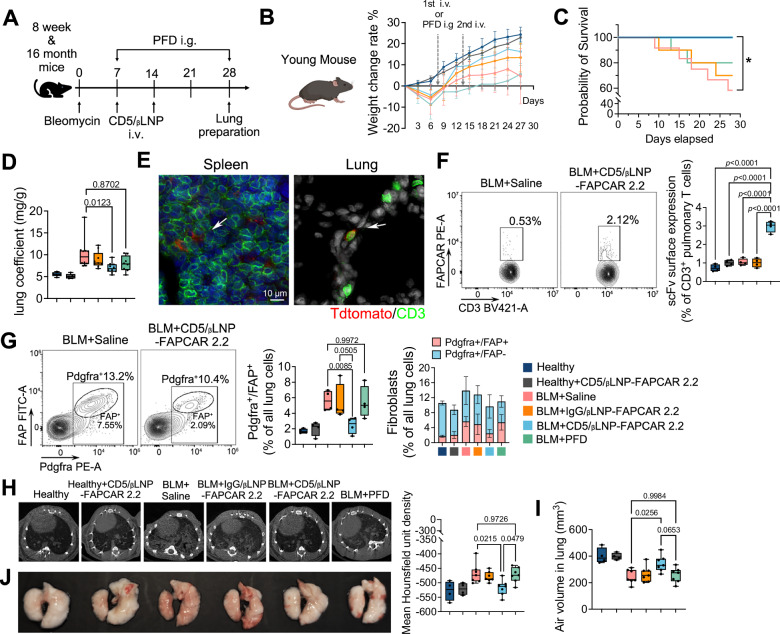
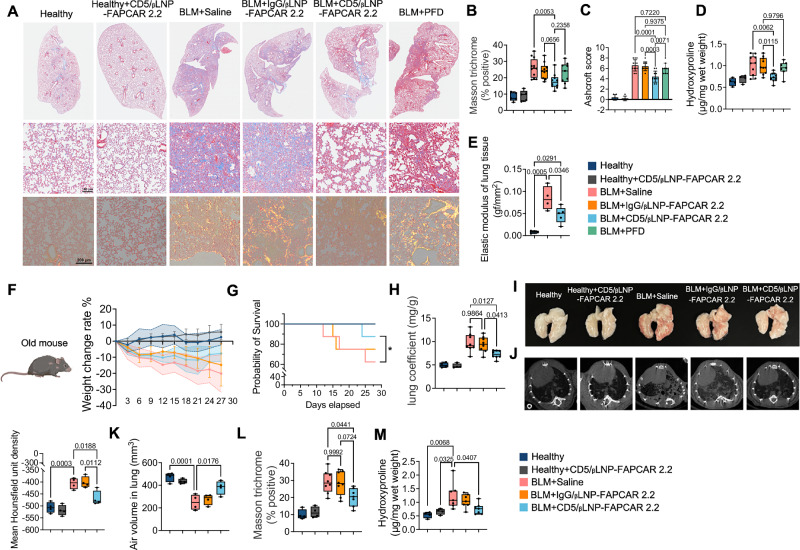
“Unlike traditional molecular drugs, such as oral Pirfenidone treatment that inhibits TGF-β 40,41 , transient FAPCAR-T cells directly clear over-activated fi broblasts.”
Parhiz, H., Shuvaev, V. V., Pardi, N., Khoshnejad, M., Kiseleva, R. Y., Brenner, J. S., Uhler, T., Tuyishime, S., Mui, B. L., Tam, Y. K., et al. (2018) · Journal of Controlled Release · doi:10.1016/j.jconrel.2018.10.015 · Cited by 233
Newick, K., O'Brien, S., Sun, J., Kapoor, V., Maceyko, S., Lo, A., Puré, E., Moon, E., & Albelda, S. M. (2016) · Cancer Immunology Research · doi:10.1158/2326-6066.cir-15-0263 · Cited by 197 · cited 1×
“RISR-RIAD peptide is known to maintain T cell activity, which was added to FAPCAR 2.1 and 2.2 sequence tails using the P2A ligand peptides 58 . tdTomato report gene was added using same strategy to track FAPCAR expression in T cells.”
InfluentialIdiopathic pulmonary fibrosis: Diagnosis, epidemiology and natural history
Sgalla, G., Biffi, A., & Richeldi, L. (2016) · Respirology · doi:10.1111/resp.12683 · Cited by 173
Kheirolomoom, A., Kare, A. J., Ingham, E. S., Paulmurugan, R., Robinson, E. R., Baikoghli, M., Inayathullah, M., Seo, J. W., Wang, J., Fite, B. Z., et al. (2022) · Biomaterials · doi:10.1016/j.biomaterials.2021.121339 · Cited by 171 · cited 2×
“We selected CD5/ β LNPs because CD5 is expressed by T cells but is not required for T cell effector function 46,50 .”
A common framework of monocyte-derived macrophage activation
Sanin, D. E., Ge, Y., Marinković, E., Kabat, A. M., Castoldi, Â., Caputa, G., Grzes, K. M., Curtis, J. D., Thompson, E. A., Willenborg, S., et al. (2022) · Science Immunology · doi:10.1126/sciimmunol.abl7482 · Cited by 171
Role of membrane traffic in the generation of epithelial cell asymmetry
Apodaca, G., Gallo, L. I., & Bryant, D. M. (2012) · Nature Cell Biology · doi:10.1038/ncb2635 · Cited by 167
Xue, L., Hamilton, A. G., Zhao, G., Xiao, Z., El-Mayta, R., Han, X., Gong, N., Xiong, X., Xu, J., Figueroa-Espada, C. G., et al. (2024) · Nature Communications · doi:10.1038/s41467-024-45422-9 · Cited by 137
FoxO3 an important player in fibrogenesis and therapeutic target for idiopathic pulmonary fibrosis
Al-tamari, H. M., Dabral, S., Schmall, A., Sarvari, P., Ruppert, C., Paik, J., DePinho, R. A., Grimminger, F., Eickelberg, O., Günther, A., et al. (2017) · EMBO Molecular Medicine · doi:10.15252/emmm.201606261 · Cited by 131
Trepotec, Z., Geiger, J., Plank, C., Aneja, M. K., & Rudolph, C. (2019) · RNA · doi:10.1261/rna.069286.118 · Cited by 129
Inomata, M., Kamio, K., Azuma, A., Matsuda, K., Kokuho, N., Miura, Y., Hayashi, H., Nei, T., Fujita, K., Saito, Y., et al. (2014) · Respiratory Research · doi:10.1186/1465-9921-15-16 · Cited by 126
Kim, D., Wu, Y., Li, Q., & Oh, Y. (2021) · Nano-Micro Letters · doi:10.1007/s40820-020-00555-6 · Cited by 88 · cited 1×
“We selected CD5/ β LNPs because CD5 is expressed by T cells but is not required for T cell effector function 46,50 .”
Epiregulin is a dendritic cell–derived EGFR ligand that maintains skin and lung fibrosis
Odell, I. D., Steach, H. R., Gauld, S. B., Reinke-Breen, L., Kármán, J., Carr, T. L., Wetter, J. B., Phillips, L. A., Hinchcliff, M., & Flavell, R. A. (2022) · Science Immunology · doi:10.1126/sciimmunol.abq6691 · Cited by 87
Monocyte-derived alveolar macrophage apolipoprotein E participates in pulmonary fibrosis resolution
Cui, H., Jiang, D., Banerjee, S., Xie, N., Kulkarni, T., Liu, R.-M., Duncan, S. R., & Liu, G. (2020) · JCI Insight · doi:10.1172/jci.insight.134539 · Cited by 82
De novo-designed transmembrane domains tune engineered receptor functions
Elazar, A., Chandler, N. J., Davey, A. S., Weinstein, J. Y., Nguyen, J. V., Trenker, R., Cross, R. S., Jenkins, M. R., Call, M. J., Call, M. E., et al. (2022) · eLife · doi:10.7554/elife.75660 · Cited by 58 · cited 2×
“In addition to the traditionalCARdesignwithaCD28 transmembranedomain(TMD),we introduced a de novo TMD design following a programmable membrane protein (proMP) strategy 16 .”
InfluentialTheobald, H., Bejarano, D. A., Katzmarski, N., Haub, J., Schulte-Schrepping, J., Yu, J., Bassler, K. E., Ament, A. L., Osei-Sarpong, C., Piattini, F., et al. (2024) · Nature Immunology · doi:10.1038/s41590-024-01830-z · Cited by 56
The WD40 protein Morg1 facilitates Par6–aPKC binding to Crb3 for apical identity in epithelial cells
Hayase, J., Kamakura, S., Iwakiri, Y., Yamaguchi, Y., Izaki, T., Ito, T., & Sumimoto, H. (2013) · Journal of Cell Biology · doi:10.1083/jcb.201208150 · Cited by 48 · cited 1×
“This complex represents a key step in excluding proteins from the apical domain, which promotes the polarity distribution of proteins between apical, lateral and basement membranes via regulating cytoskeleton 27 – 29 .”
Lv, J., Gao, H., Ma, J., Liu, J., Tian, Y., Yang, C., Li, M., Zhao, Y., Li, Z., Zhang, X., et al. (2023) · Frontiers in Immunology · doi:10.3389/fimmu.2023.1230266 · Cited by 48
Therapeutic potential of targeting cathepsin S in pulmonary fibrosis
Yoo, Y., Choi, E., Kim, Y., Cha, Y., Um, E., Kim, Y., Kim, Y., & Lee, Y.-S. (2022) · Biomedicine & Pharmacotherapy · doi:10.1016/j.biopha.2021.112245 · Cited by 41
Yuan, F., Cai, X., Cong, Z., Wang, Y., Geng, Y., Aili, Y., Du, C., Zhu, J., Yang, J., Tang, C., et al. (2022) · Frontiers in Immunology · doi:10.3389/fimmu.2022.798583 · Cited by 40
Potential mechanisms for lung fibrosis associated with COVID-19 infection
Parimon, T., Espíndola, M. S., Marchevsky, A. M., Rampolla, R., Chen, P., & Hogaboam, C. M. (2022) · QJM · doi:10.1093/qjmed/hcac206 · Cited by 31
PCLAF-DREAM drives alveolar cell plasticity for lung regeneration
Kim, B.-J., Huang, Y., Ko, K.-P., Zhang, S., Zou, G., Zhang, J., Kim, M. J., Little, D. T., Ellis, L. V., Paschini, M., et al. (2024) · Nature Communications · doi:10.1038/s41467-024-53330-1 · Cited by 26 · cited 1×
“Previous research highlighted that PAPCs played a pivotal role in alveolar cell lineage plasticity as a progenitor cell reservoir and were indispensable for lung regeneration 33 .”
Roles of Hopx in the differentiation and functions of immune cells
Bourque, J., Kousnetsov, R., & Hawiger, D. (2022) · European Journal of Cell Biology · doi:10.1016/j.ejcb.2022.151242 · Cited by 23 · cited 1×
“Hopx was involved in early developmental and differentiation pathways 32 .”
Deep spatial proteomics reveals region-specific features of severe COVID-19-related pulmonary injury
Mao, Y., Chen, Y., Li, Y., Ma, L., Wang, X., Wang, Q. M., He, A., Liu, X., Dong, T., Gao, W., et al. (2024) · Cell Reports · doi:10.1016/j.celrep.2024.113689 · Cited by 23
Optimization of RNA cancer vaccines using 3' UTR sequences selected for stabilization of RNA
Orlandini von Niessen, A. (2016) · Gutenberg Open Science · doi:10.25358/openscience-5189 · Cited by 1
Research works printed but not linked: 1
- Yoon, H. Y., Kim, H., Bae, Y. & Song, J. W. Pirfenidone and risk of lung cancer development in IPF: a nationwide population-based study. Eur. Respir. J. 7, 2401484 (2024).
Cited by
Targeting persistently activated inflammatory microenvironment to promote chronic wound healing
Dai, Y., & Chen, Y. (2025) · Frontiers in Immunology · doi:10.3389/fimmu.2025.1708358 · Cited by 47
(2025) · doi:10.3389/fimmu.2025.1670213 · Cited by 29
“CAR-T cells designed to recognize fi broblast activation protein (FAP) on pathogenic fi broblasts and engineered to modulate mechanical signal transduction pathways may achieve selective clearance of fi brogenic cells while adapting to the altered mechanical microenvironment (162, 163).”
CAR-engineered cell therapies: current understandings and future perspectives
Bayat, M., & Nahand, J. S. (2026) · Molecular Biomedicine · doi:10.1186/s43556-025-00401-4 · Cited by 37
In vivo CAR cell therapy: from bench to bedside
Jia, X., Chen, Z., Su, L., Ren, A., & Mei, H. (2025) · Journal of Hematology & Oncology · doi:10.1186/s13045-025-01759-2 · Cited by 36
Yang, H., Yu, X., Guo, Z., Shi, S., Wang, J., Guo, S., Hu, B., Chai, M., Wang, Z., Barth, S., et al. (2025) · Cyborg and Bionic Systems · doi:10.34133/cbsystems.0436 · Cited by 19
“Compared with current mainstream siRNA delivery systems, such as lipid nanoparticles (LNPs) [ 34 , 35 ], polymer-based carriers [ 36 ], and GalNAc conjugation technology [ 37 ], the PDR system demonstrates significant advantages in achieving precise delivery to the target site.”
Metadata
- Authors
- Yan, J., Wang, S.-Y., Su, Q., Zou, M.-W., Zhou, Z.-Y., Shou, J., & Huo, Y.
- Affiliations
- Shanghai Jiao Tong University (CN)
- Corresponding author
- Huo, Yunlong
- Venue
- Nature Communications
- Published
- 2025-04-21
- Volume
- 16
- Issue
- 1
- Pages
- 3748-3748
- ISSN
- 2041-1723 (ISSN-L)
- PMC
- PMC12012202
- OpenAlex
- W4409640311
- Cited by
- 62
- References
- 65
- Citations by year
- 2026: 44 · 2025: 18
- FWCI
- 40.76
- Type
- journal article
- Language
- en
- Open access
- gold
- doi.org
- Licence
- cc-by-nc-nd
- creativecommons.org/licenses/by-nc-nd/4.0 (tdm)
- creativecommons.org/licenses/by-nc-nd/4.0 (vor)
- Locations
- Nature Communications (publishedVersion, cc-by-nc-nd)
- PubMed Central (publishedVersion, cc-by-nc-nd)
- PubMed (publishedVersion)
- RePEc: Research Papers in Economics (submittedVersion)
- DOAJ (DOAJ: Directory of Open Access Journals) (submittedVersion, cc-by-sa)
- Funders
- National Key Research and Development Program of China (KQTD20180411143400981, 2021YFA1000203)
- Topics
- Health Sciences › Medicine › Pulmonary and Respiratory Medicine › Interstitial Lung Diseases and Idiopathic Pulmonary Fibrosis
- Health Sciences › Medicine › Surgery › Transplantation: Methods and Outcomes
- Health Sciences › Medicine › Pulmonary and Respiratory Medicine › Occupational and environmental lung diseases
- Keywords
- idiopathic pulmonary fibrosis, chimeric antigen receptor T cells, activated fibroblasts, extracellular matrix stiffness, alveolar type II cells, alveolar type I cells, macrophage polarization, lung regeneration, bleomycin-induced fibrosis, lung immunity
- MeSH terms
- Animals, Bleomycin, Disease Models, Animal, Extracellular Matrix, Fibroblasts, Humans, Immunotherapy, Lung, Male, Mice, Inbred C57BL, Pulmonary Fibrosis, RNA, Messenger, T-Lymphocytes, Mice, Nanoparticles, Idiopathic Pulmonary Fibrosis, Alveolar Epithelial Cells
About these checks
Registry, retraction, Cites and statistics results are computed, not judged, with one exception: a printed reference that no index lists is read once by a model before it counts as a citation error. Claims are extracted by a model and kept only when their quote appears verbatim in the text; each cited source is then checked, with a model’s help, for whether it says what the claim relies on. Those verdicts can be wrong — read the claim’s quote and the cited source before relying on one.
Statistics and arithmetic are recomputed, not judged.
Confidence bands are shown only for fields calibrated on our annotated test set. None is calibrated yet, so no band is shown.
What counts as a claim ›How we measure confidence ›How we check this ›
Are you an author, or do you see a problem with this page? Request a review
Data sources
Bibliographic data: Semantic Scholar, OpenAlex, Crossref.
Contains information from the Semantic Scholar Academic Graph Datasets, made available under the ODC Attribution License (ODC-BY 1.0).
Semantic Scholar’s data is described in: Kinney, R., et al. (2023). The Semantic Scholar Open Data Platform. arXiv:2301.10140.
