

DNTTIP2 coordinates RNA exosome activities to ensure fidelity of human ribosome assembly
Open accessThe DOI matches its Crossref record; 67 of the 68 references it cites were found in a registry or an index; none of the 38 sources its claims cite is checked for support yet.
Abstract
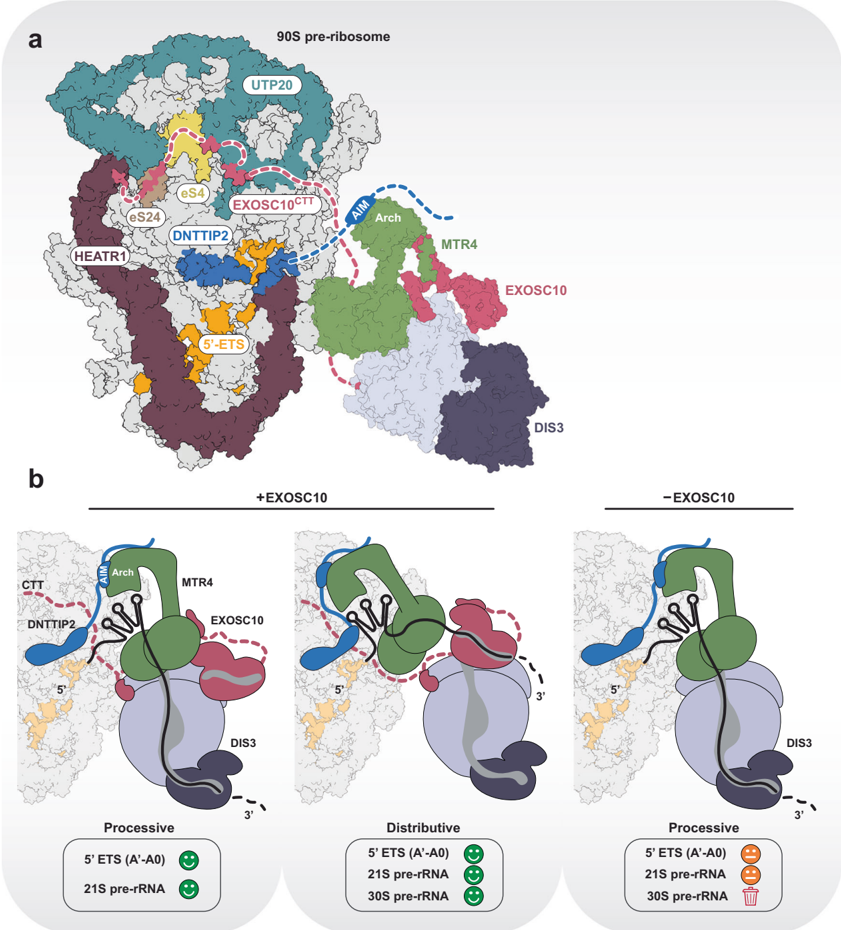
The RNA exosome-associated helicase Mtr4/MTR4 (yeast/human) is recruited by adaptor proteins bearing Arch-Interacting Motifs (AIMs) to selectively degrade RNA substrates. Although the exosome targets diverse RNAs, only a few adaptors have been identified. Here, we extend the inventory of human adaptors to include a pre-tRNA splicing-ligase complex component, a spliceosome-associated factor, and DNTTIP2, a constituent of the small ribosomal subunit (40S) precursor, the 90S pre-ribosome. Structure-guided studies reveal how the DNTTIP2 AIM -docked processive exosome core and its associated distributive exonuclease EXOSC10, which contact distant sites on the 90S pre-ribosome, cooperate to degrade part of the 5′-external transcribed spacer (5’-ETS), a key RNA scaffold that coordinates early 40S assembly. By contrast, productive pre-ribosomal RNA trimming within the 90S pre-ribosome necessitates EXOSC10, which safeguards against uncontrolled processive degradation by the DNTTIP2 AIM -docked exosome core. We propose that multivalent contacts provide a mechanistic framework by which the RNA exosome coordinates its distinct enzymatic activities, ensuring selective processing and surveillance during ribonucleoprotein particle maturation.
Overview
CoChat Summary
TL;DR
The study identifies DNTTIP2 as a metazoan-specific MTR4 adaptor whose canonical AIM (LFVID) recruits the RNA exosome to the human 90S pre-ribosome, where it cooperates with EXOSC10 to degrade the 5′-ETS A′-A0 fragment and trim 21S pre-rRNA 3′ ends. It proposes that multivalent contacts between the exosome and pre-ribosome coordinate processive DIS3 and distributive EXOSC10 activities to ensure fidelity of 40S subunit assembly.
Key findings
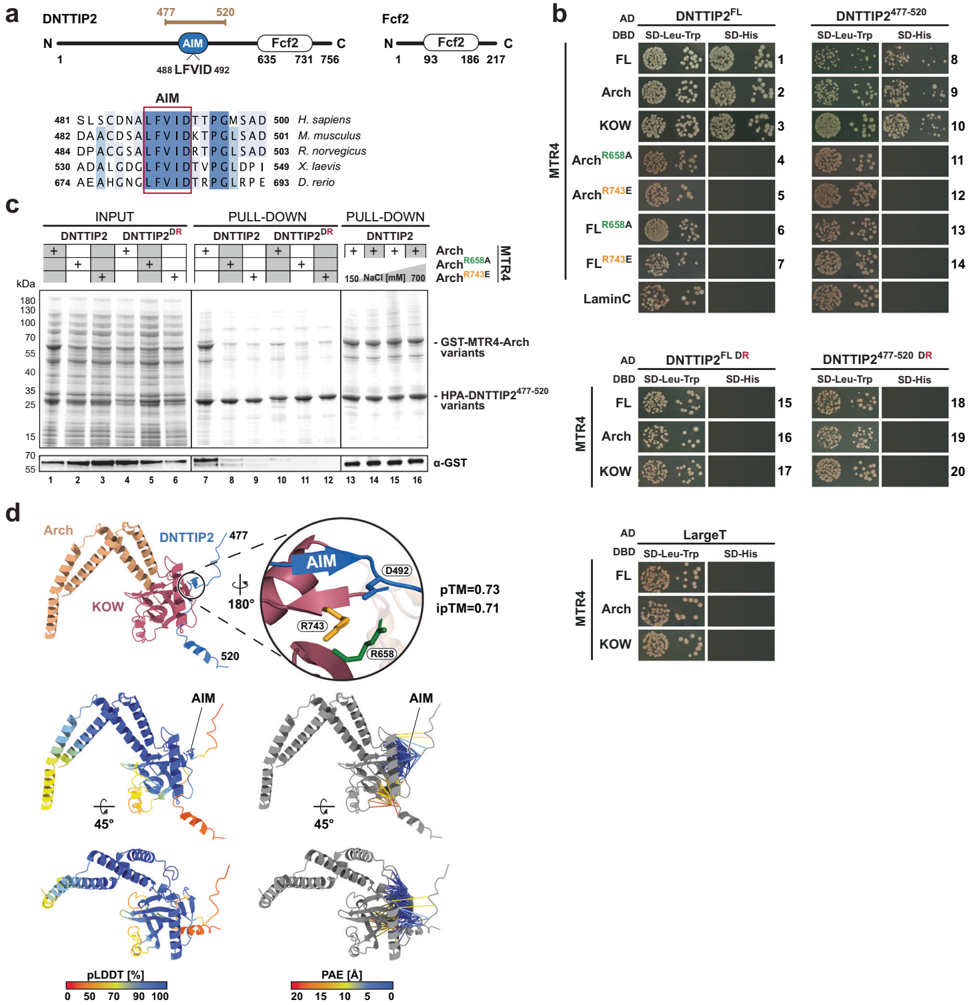
- A Y2H screen using MTR4-Arch (residues 579–842) recovered known adaptors NOP53, NVL, and ZCCHC8, plus new interactors CLE7, LAS2, CDC5L, and ZFC3H1; CLE7 206–244, LAS2 487–533, and CDC5L 579–743 bind MTR4-Arch, whereas ZFC3H1 1139–1321 uses a distinct interface not requiring KOW residues R658/R743.
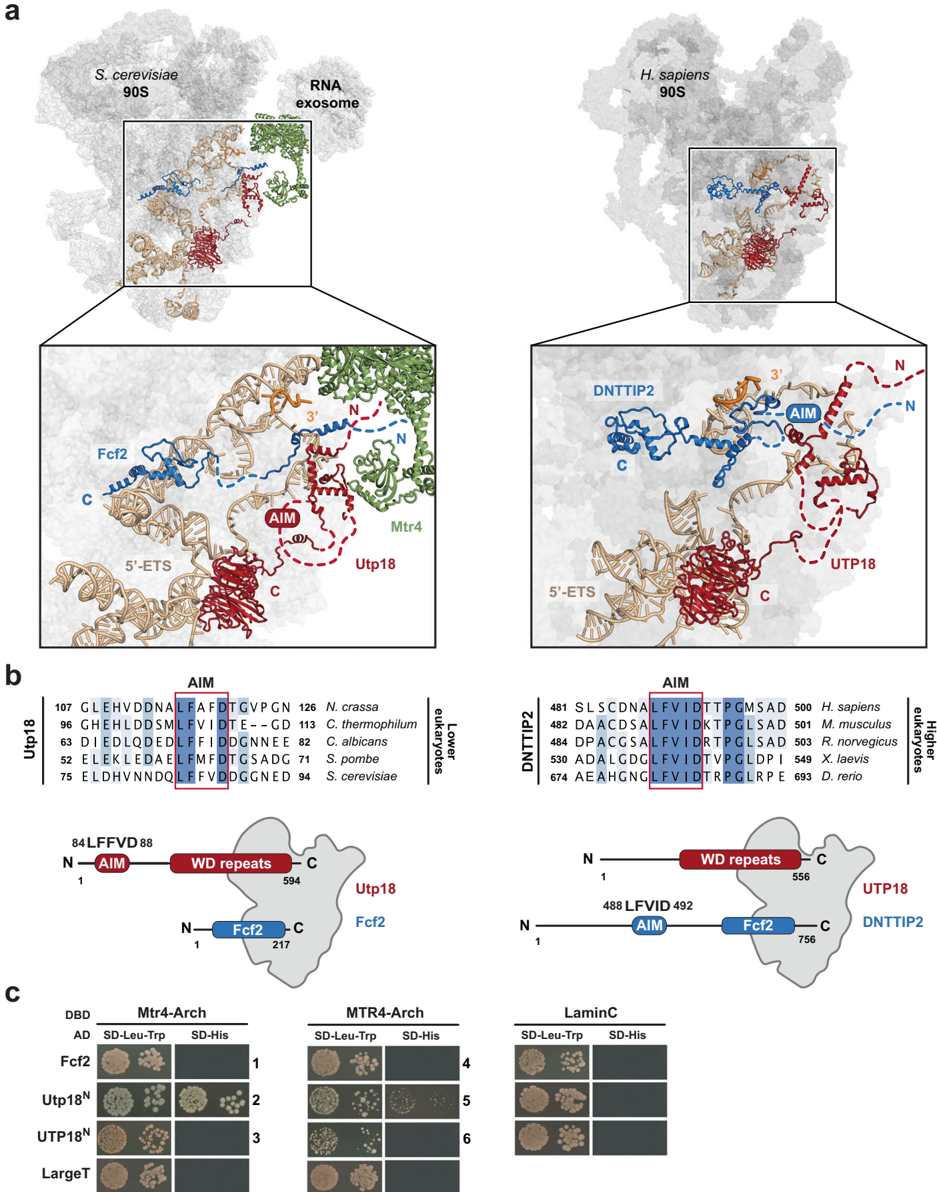
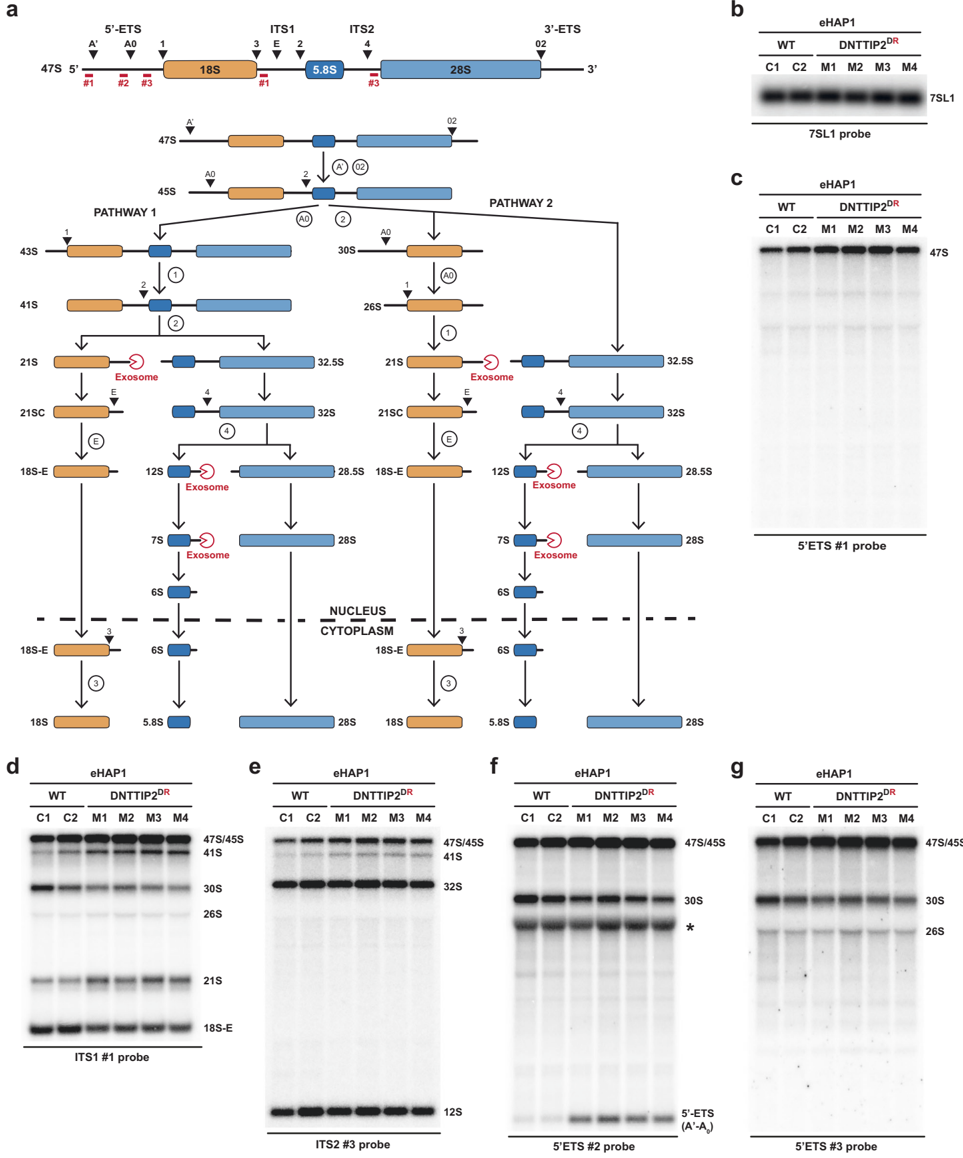
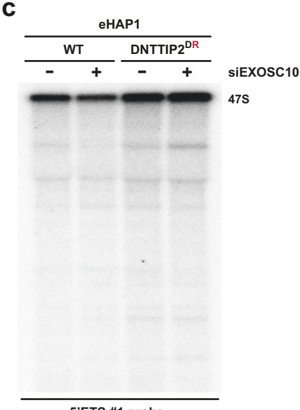
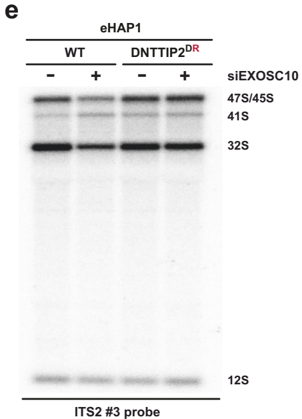
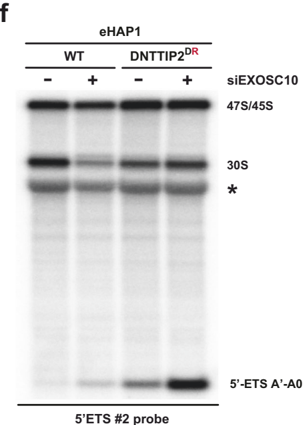
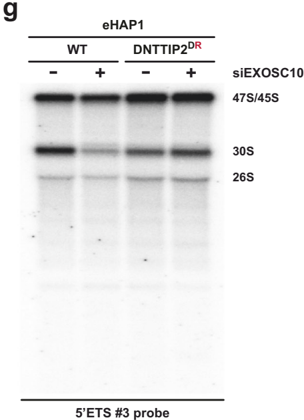
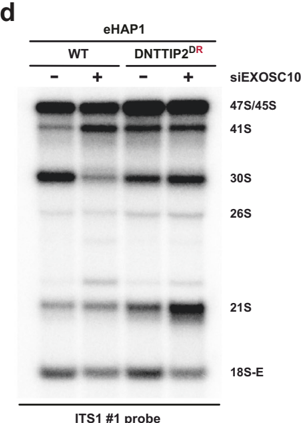
- DNTTIP2 contains a metazoan-conserved canonical AIM, LFVID (residues 488–492); D492R or MTR4 R658A/R743E disrupt binding. In eHAP1 DNTTIP2DR cells, puromycin incorporation is reduced ~30%, the 40S/60S peak ratio decreases 2–4-fold, the 5′-ETS A′-A0 fragment accumulates 3-fold, 30S pre-rRNA decreases ~30%, 21S increases nearly 30%, and 18S-E decreases correspondingly, while 60S processing is unaffected.
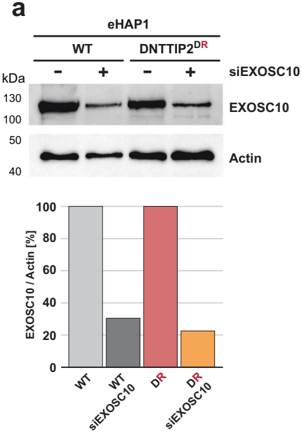
- EXOSC10 depletion in wild-type cells increases the A′-A0 fragment ~2-fold; in DNTTIP2DR cells, EXOSC10 depletion enhances this accumulation ~10-fold and increases 21S by ~70% versus control. EXOSC10 depletion reduces 30S ~2-fold in control cells but not in DNTTIP2DR cells, suggesting EXOSC10 favors distributive trimming and safeguards against processive degradation.
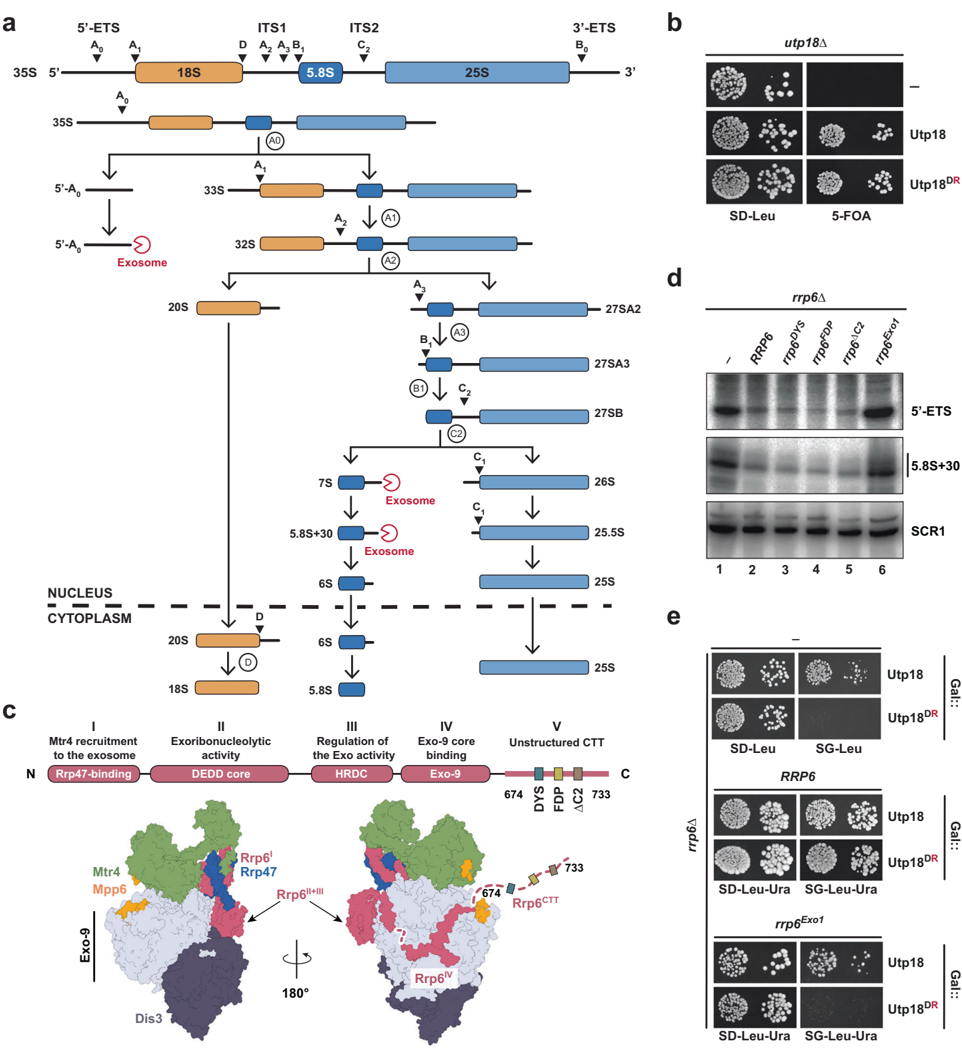
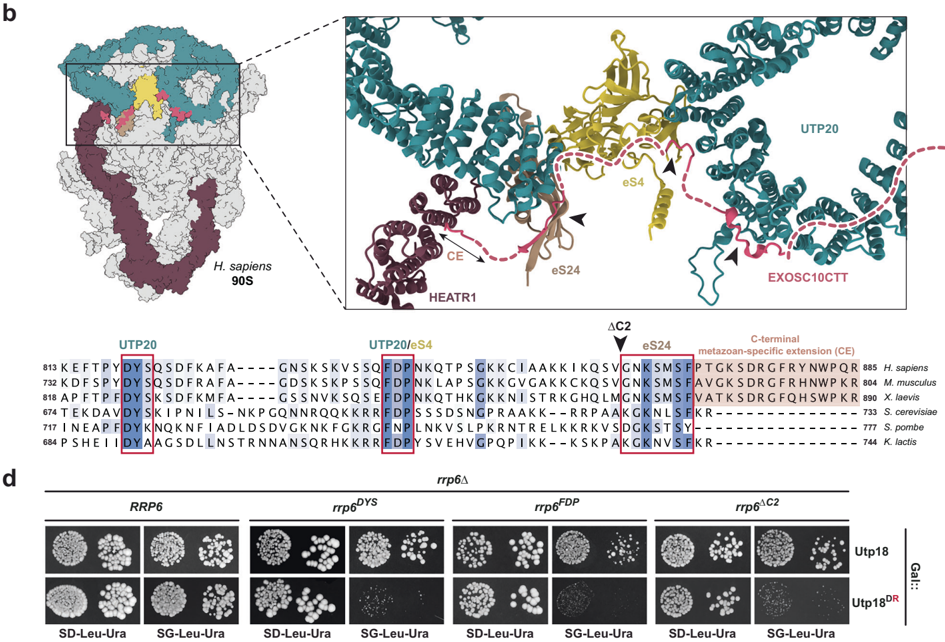
- In yeast, Utp18DR alone causes no significant growth defect, but in rrp6∆ or catalytic-dead Rrp6Exo1 strains it is dominant lethal and exacerbates 5′-ETS accumulation; Rrp6CTT mutants (DYS, FDP, ∆C2) grow near wild-type and do not accumulate 5′-ETS alone, yet become strongly dominant negative with Utp18DR, supporting multivalent exosome–90S contacts.
Methods
- Y2H screen (Hybrigenics) used human MTR4-Arch residues 579–842 as bait against a fragmented human placental cDNA prey library in NMY32 cells, with selection on SD-Leu-Trp and SD-His. Biochemical pull-downs co-expressed GST-MTR4-Arch/KOW with His6-tagged adaptor fragments in E. coli BL21(DE3), used Ni-NTA resin, and tested NaCl from 150–700 mM by SDS-PAGE/Western blotting.
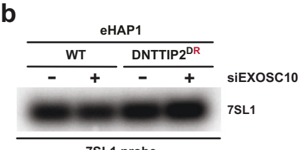
- AlphaFold2 v1.5.5 via Colab generated structure predictions, assessed by pLDDT, PAE, and pTM/ipTM scores and visualized in PyMOL/ChimeraX. Human eHAP1 cells were edited by CRISPR-Cas9 to express DNTTIP2DR (four mutant clones M1–M4, two control clones C1–C2), depleted of EXOSC10 by siRNA, and analyzed by TRI RNA extraction, Northern blotting with 5′ETS #1–3, ITS1 #1, ITS2 #3, and 7SL1 probes, MTS proliferation, SUnSET puromycin incorporation, and sucrose gradient sedimentation.
- Yeast S. cerevisiae experiments used rrp6∆ complementation with wild-type or mutant Rrp6, GAL1-driven Utp18/Utp18DR, serial dilution growth assays, and Northern blotting. Experiments were performed at least three times except Figs 4d and 5a, which were done twice; quantification is mean ± SD with Student’s t tests in Microsoft Excel.
Limitations
- The paper does not include a dedicated limitations section. It states that AlphaFold2 failed to reliably model MTR4-Arch complexes with CLE7, LAS2, and CDC5L, so their divergent binding modes remain structurally unresolved, and that the precise contribution of NVL to pre-rRNA processing remains unclear.
- Evident from the text: the human MTR4-Arch:DNTTIP2AIM interaction is supported by an AlphaFold2 model rather than an experimental structure, and functional conclusions rely on eHAP1 CRISPR mutants plus yeast complementation, growth, and Northern assays, with some experiments performed only twice.
- Evident from the text: the model for 30S pre-rRNA surveillance and EXOSC10 channel occlusion is proposed/speculated from the data rather than directly demonstrated; the paper does not report direct RNA-binding or in vitro reconstitution of the full human 90S–exosome processing reaction.
Model-written summary. Check it against the paper before relying on it.
Integrity signals
Registry
Cites
Statistics
Figures
Verification
Claims the paper makes
0 Valid · 2 Not valid · 28 Not checked · 105 Own results and interpretations
A result the paper reports from its own data — it cites no other source for it, so there is none to check. The quote shows it is in the paper.
In the paper
“In addition to established adaptors, the screen identified fragments of CLE7, LAS2, CDC5L, and ZFC3H1 that lack a recognizable AIM or its variants but still showed robust interaction with MTR4-Arch”
§ DNTTIP2 coordinates RNA exosome activities to ensure fidelity of human ribosome assembly > Results > A Y2H screen extends the inventory of MTR4 interactors
plainstates a cause- Asserted: passes — The authors put it forward as true.
- Checkable: passes — It can be checked against evidence.
- Load-bearing: unclear — It is unclear whether the paper’s conclusions depend on it.
- Based: passes — The paper gives a reason why it holds.
A result the paper reports from its own data — it cites no other source for it, so there is none to check. The quote shows it is in the paper.
In the paper
“The screen recovered different fragments of known MTR4-Arch adaptors containing canonical AIMs and AIM variants (Supplementary Fig. 1a, right panel). These included the nucleolar localised 60S assembly factors NOP53 and the AAA+-ATPase NVL, as well as the C-AIM-containing fragment of ZCCHC8”
§ DNTTIP2 coordinates RNA exosome activities to ensure fidelity of human ribosome assembly > Results > A Y2H screen extends the inventory of MTR4 interactors
plain- Asserted: passes — The authors put it forward as true.
- Checkable: passes — It can be checked against evidence.
- Load-bearing: unclear — It is unclear whether the paper’s conclusions depend on it.
- Based: passes — The paper gives a reason why it holds.
A result the paper reports from its own data — it cites no other source for it, so there is none to check. The quote shows it is in the paper.
In the paper
“We found that the CLE7206–244 interaction with MTR4-Arch requires the corresponding R658 and R743 within the KOW subdomain, as judged by Y2H (Supplementary Fig. 2a, upper panel, rows 3–4) and in vitro binding assays”
§ DNTTIP2 coordinates RNA exosome activities to ensure fidelity of human ribosome assembly > Results > A Y2H screen extends the inventory of MTR4 interactors
plainstates a cause- Asserted: passes — The authors put it forward as true.
- Checkable: passes — It can be checked against evidence.
- Load-bearing: unclear — It is unclear whether the paper’s conclusions depend on it.
- Based: passes — The paper gives a reason why it holds.
A result the paper reports from its own data — it cites no other source for it, so there is none to check. The quote shows it is in the paper.
In the paper
“Y2H studies revealed that a C-terminal fragment of CLE7 (residues 206-244; CLE7206–244) interacts with the KOW subdomain of MTR4-Arch”
§ DNTTIP2 coordinates RNA exosome activities to ensure fidelity of human ribosome assembly > Results > A Y2H screen extends the inventory of MTR4 interactors
plainstates an association- Asserted: passes — The authors put it forward as true.
- Checkable: passes — It can be checked against evidence.
- Load-bearing: unclear — It is unclear whether the paper’s conclusions depend on it.
- Based: passes — The paper gives a reason why it holds.
A result the paper reports from its own data — it cites no other source for it, so there is none to check. The quote shows it is in the paper.
In the paper
“The ZFC3H11139–1321 fragment interacts with MTR4-Arch in a distinct manner. Y2H analysis showed that neither the KOW subdomain nor the conserved arginines R658 and R743 within MTR4-Arch were required for ZFC3H11139–1321 binding”
§ DNTTIP2 coordinates RNA exosome activities to ensure fidelity of human ribosome assembly > Results > A Y2H screen extends the inventory of MTR4 interactors
plainstates an association- Asserted: passes — The authors put it forward as true.
- Checkable: passes — It can be checked against evidence.
- Load-bearing: unclear — It is unclear whether the paper’s conclusions depend on it.
- Based: passes — The paper gives a reason why it holds.
79 more claims
Create a free account to see all 135 claims and to verify the 38 references still open.
- It may state two separate claims as one. 36
- Probably not a substantial claim. 22
Citations
Cites
Highly accurate protein structure prediction with AlphaFold
Jumper, J., Evans, R., Pritzel, A., Green, T., Figurnov, M., Ronneberger, O., Tunyasuvunakool, K., Bates, R., Žídek, A., Potapenko, A., et al. (2021) · Nature · doi:10.1038/s41586-021-03819-2 · Cited by 43,764
Jalview Version 2—a multiple sequence alignment editor and analysis workbench
Waterhouse, A. M., Procter, J. B., Martin, D. M. A., Clamp, M., & Barton, G. J. (2009) · Bioinformatics · doi:10.1093/bioinformatics/btp033 · Cited by 11,399
UCSF ChimeraX: Structure visualization for researchers, educators, and developers
Pettersen, E. F., Goddard, T. D., Huang, C. C., Meng, E. C., Couch, G. S., Croll, T. I., Morris, J. H., & Ferrin, T. E. (2021) · Protein Science · doi:10.1002/pro.3943 · Cited by 9,514
ColabFold - Making protein folding accessible to all
Mirdita, M., Schütze, K., Moriwaki, Y., Heo, L., Ovchinnikov, S., & Steinegger, M. (2021) · doi:10.1101/2021.08.15.456425 · Cited by 9,391
Varadi, M., Anyango, S., Deshpande, M., Nair, S., Natassia, C., Yordanova, G., Yuan, D., Stroe, O., Wood, G., Laydon, A., et al. (2022) · Nucleic Acids Research · doi:10.1093/nar/gkab1061 · Cited by 7,850
Longtine, M. S., Mckenzie III, A., Demarini, D. J., Shah, N. G., Wach, A., Brachat, A., Philippsen, P., & Pringle, J. R. (1998) · Yeast · doi:10.1002/(sici)1097-0061(199807)14:10<953::aid-yea293>3.0.co;2-u · Cited by 5,345
UniProt: the Universal Protein Knowledgebase in 2025
The UniProt Consortium, Bateman, A., Martin, M.-J., Orchard, S., Magrane, M., Adesina, A., Ahmad, S., Bowler-Barnett, E. H., Bye-A-Jee, H., Carpentier, D., et al. (2025) · Nucleic Acids Research · doi:10.1093/nar/gkae1010 · Cited by 2,537
Scoring function for automated assessment of protein structure template quality
Zhang, Y., & Skolnick, J. (2004) · Proteins: Structure, Function, and Bioinformatics · doi:10.1002/prot.20264 · Cited by 2,392
Saccharomyces Genome Database: the genomics resource of budding yeast
Cherry, J. M., Hong, E. L., Amundsen, C., Balakrishnan, R., Binkley, G., Chan, E. T., Christie, K. R., Costanzo, M. C., Dwight, S. S., Engel, S. R., et al. (2012) · Nucleic Acids Research · doi:10.1093/nar/gkr1029 · Cited by 1,796
SUnSET, a nonradioactive method to monitor protein synthesis
Schmidt, E. K., Clavarino, G., Ceppi, M., & Pierre, P. (2009) · Nature Methods · doi:10.1038/nmeth.1314 · Cited by 1,706
The protein–protein interaction map of Helicobacter pylori
Rain, J.-C., Selig, L., De Reuse, H., Battaglia, V., Reverdy, C., Simon, S., Lenzen, G., Petel, F., Wojcik, J., Schächter, V., et al. (2001) · Nature · doi:10.1038/35051615 · Cited by 1,146
How significant is a protein structure similarity with TM-score = 0.5?
Xu, J., & Zhang, Y. (2010) · Bioinformatics · doi:10.1093/bioinformatics/btq066 · Cited by 1,142
Mitchell, P., Petfalski, E., Shevchenko, A., Mann, M., & Tollervey, D. (1997) · Cell · doi:10.1016/s0092-8674(00)80432-8 · Cited by 954
Self-citationWyers, F., Rougemaille, M., Badis, G., Rousselle, J.-C., Dufour, M.-E., Boulay, J., Régnault, B., Devaux, F., Namane, A., Séraphin, B., et al. (2005) · Cell · doi:10.1016/j.cell.2005.04.030 · Cited by 843
RNA Exosome Depletion Reveals Transcription Upstream of Active Human Promoters
Preker, P., Nielsen, J., Kammler, S., Lykke-Andersen, S., Christensen, M. S., Mapendano, C. K., Schierup, M. H., & Jensen, T. H. (2008) · Science · doi:10.1126/science.1164096 · Cited by 791
Functions of the exosome in rRNA, snoRNA and snRNA synthesis
Allmang, C. (1999) · The EMBO Journal · doi:10.1093/emboj/18.19.5399 · Cited by 618
Reconstitution, Activities, and Structure of the Eukaryotic RNA Exosome
Liu, Q., Greimann, J. C., & Lima, C. D. (2006) · Cell · doi:10.1016/j.cell.2006.10.037 · Cited by 543
Protein interaction mapping: A Drosophila case study
Formstecher, E., Aresta, S., Collura, V., Hamburger, A., Meil, A., Trehin, A., Reverdy, C., Betin, V., Maire, S., Brun, C., et al. (2005) · Genome Research · doi:10.1101/gr.2659105 · Cited by 542
A single subunit, Dis3, is essentially responsible for yeast exosome core activity
Dziembowski, A., Lorentzen, E., Conti, E., & Séraphin, B. (2007) · Nature Structural & Molecular Biology · doi:10.1038/nsmb1184 · Cited by 420
van Hoof, A., Lennertz, P., & Parker, R. (2000) · Molecular and Cellular Biology · doi:10.1128/mcb.20.2.441-452.2000 · Cited by 359
Endonucleolytic RNA cleavage by a eukaryotic exosome
Lebreton, A., Tomecki, R., Dziembowski, A., & Séraphin, B. (2008) · Nature · doi:10.1038/nature07480 · Cited by 335
de la Cruz, J. (1998) · The EMBO Journal · doi:10.1093/emboj/17.4.1128 · Cited by 321
Identification of a Nuclear Exosome Decay Pathway for Processed Transcripts
Meola, N., Domanski, M., Karadoulama, E., Chen, Y., Gentil, C., Pultz, D., Vitting-Seerup, K., Lykke-Andersen, S., Andersen, J. S., Sandelin, A., et al. (2016) · Molecular Cell · doi:10.1016/j.molcel.2016.09.025 · Cited by 290 · cited 10×
“No signi fi cant differences were observed in the levels of 32S and 12S precursors to the mature 28S and 5.8S rRNAs within the 60S subunit using probe ITS2”
InfluentialDegradation of ribosomal RNA precursors by the exosome
Allmang, C. (2000) · Nucleic Acids Research · doi:10.1093/nar/28.8.1684 · Cited by 253
RNA decay machines: The exosome
Chlebowski, A., Lubas, M., Jensen, T. H., & Dziembowski, A. (2013) · Biochimica et Biophysica Acta (BBA) - Gene Regulatory Mechanisms · doi:10.1016/j.bbagrm.2013.01.006 · Cited by 245
Lubas, M., Andersen, P. R., Schein, A., Dziembowski, A., Kudla, G., & Jensen, T. H. (2015) · Cell Reports · doi:10.1016/j.celrep.2014.12.026 · Cited by 207
Januszyk, K., & Lima, C. D. (2014) · Current Opinion in Structural Biology · doi:10.1016/j.sbi.2014.01.011 · Cited by 198
The Exosome Is Recruited to RNA Substrates through Specific Adaptor Proteins
Thoms, M., Thomson, E., Baßler, J., Gnädig, M., Griesel, S., & Hurt, E. (2015) · Cell · doi:10.1016/j.cell.2015.07.060 · Cited by 195
Fungal small nuclear ribonucleoproteins share properties with plant and vertebrate U-snRNPs.
Tollervey, D., & Mattaj, I. W. (1987) · The EMBO Journal · doi:10.1002/j.1460-2075.1987.tb04777.x · Cited by 171
Self-citationSloan, K. E., Mattijssen, S., Lebaron, S., Tollervey, D., Pruijn, G. J. M., & Watkins, N. J. (2013) · Journal of Cell Biology · doi:10.1083/jcb.201207131 · Cited by 165
Self-citationHuman Telomerase RNA Processing and Quality Control
Tseng, C.-K., Wang, H.-F., Burns, A. M., Schroeder, M. R., Gaspari, M., & Baumann, P. (2015) · Cell Reports · doi:10.1016/j.celrep.2015.10.075 · Cited by 148 · cited 1×
“…non-coding RNAs, including precursor ribosomal RNAs (pre-rRNAs) 5 , small nuclear and nucleolar RNAs (snRNAs and snoRNAs) 6,7 , cryptic unstable transcripts (CUTs) 8 , promoter upstream transcripts (PROMPTs) 9 , and other non-productive transcripts produced by RNA polymerase I, II, and III 10,11 .”
Weir, J. R., Bonneau, F., Hentschel, J., & Conti, E. (2010) · Proceedings of the National Academy of Sciences · doi:10.1073/pnas.1004953107 · Cited by 147
Threading the barrel of the RNA exosome
Schneider, C., & Tollervey, D. (2013) · Trends in Biochemical Sciences · doi:10.1016/j.tibs.2013.06.013 · Cited by 143
Self-citationMolecular Architecture of the Human Prp19/CDC5L Complex
Grote, M., Wolf, E., Will, C. L., Lemm, I., Agafonov, D. E., Schomburg, A., Fischle, W., Urlaub, H., & Lührmann, R. (2010) · Molecular and Cellular Biology · doi:10.1128/mcb.01505-09 · Cited by 142
The crystal structure of Mtr4 reveals a novel arch domain required for rRNA processing
Jackson, R. N., Klauer, A. A., Hintze, B. J., Robinson, H., van Hoof, A., & Johnson, S. (2010) · The EMBO Journal · doi:10.1038/emboj.2010.107 · Cited by 135
Nucleolar maturation of the human small subunit processome
Singh, S., Vanden Broeck, A., Miller, L., Chaker-Margot, M., & Klinge, S. (2021) · Science · doi:10.1126/science.abj5338 · Cited by 134
Structure of the nuclear exosome captured on a maturing preribosome
Schuller, J. M., Falk, S., Fromm, L., Hurt, E., & Conti, E. (2018) · Science · doi:10.1126/science.aar5428 · Cited by 123
Chan, S.-P., & Cheng, S.-C. (2005) · Journal of Biological Chemistry · doi:10.1074/jbc.m505060200 · Cited by 109
Vanden Broeck, A., & Klinge, S. (2024) · Annual Review of Biochemistry · doi:10.1146/annurev-biochem-030222-113611 · Cited by 105
Preti, M., O'Donohue, M.-F., Montel-Lehry, N., Bortolin-Cavaillé, M.-L., Choesmel, V., & Gleizes, P.-E. (2013) · Nucleic Acids Research · doi:10.1093/nar/gkt160 · Cited by 103
Evidence for core exosome independent function of the nuclear exoribonuclease Rrp6p
Callahan, K. P., & Butler, J. S. (2008) · Nucleic Acids Research · doi:10.1093/nar/gkn743 · Cited by 98
The nuclear RNA exosome and its cofactors
Schmid, M., & Jensen, T. H. (2019) · Advances in Experimental Medicine and Biology · doi:10.1007/978-3-030-31434-7_4 · Cited by 75
Sloan, K. E., Bohnsack, M. T., Schneider, C., & Watkins, N. J. (2014) · RNA · doi:10.1261/rna.043471.113 · Cited by 73
ISG20L2, a Novel Vertebrate Nucleolar Exoribonuclease Involved in Ribosome Biogenesis
Couté, Y., Kindbeiter, K., Belin, S., Dieckmann, R., Duret, L., Bezin, L., Sanchez, J., & Diaz, J. (2007) · Molecular & Cellular Proteomics · doi:10.1074/mcp.m700510-mcp200 · Cited by 68
Puno, M. R., & Lima, C. D. (2018) · Proceedings of the National Academy of Sciences · doi:10.1073/pnas.1803530115 · Cited by 62
Structure of the Maturing 90S Pre-ribosome in Association with the RNA Exosome
Lau, B., Cheng, J., Flemming, D., La Venuta, G., Berninghausen, O., Beckmann, R., & Hurt, E. (2021) · Molecular Cell · doi:10.1016/j.molcel.2020.11.009 · Cited by 58
Structural basis for RNA surveillance by the human nuclear exosome targeting (NEXT) complex
Puno, M. R., & Lima, C. D. (2022) · Cell · doi:10.1016/j.cell.2022.04.016 · Cited by 57
Lingaraju, M., Johnsen, D., Schlundt, A., Langer, L. M., Basquin, J., Sattler, M., Heick Jensen, T., Falk, S., & Conti, E. (2019) · Nature Communications · doi:10.1038/s41467-019-11339-x · Cited by 55 · cited 5×
“In addition to these transcript-surveillance pathways, MTR4 Arch-interacting adaptors have also been implicated in pre-rRNA processing, including human ribosome assembly factors NOP53 23,24 and NVL 25 .”
InfluentialGerlach, P., Garland, W., Lingaraju, M., Salerno-Kochan, A., Bonneau, F., Basquin, J., Jensen, T. H., & Conti, E. (2022) · Molecular Cell · doi:10.1016/j.molcel.2022.04.011 · Cited by 55
The exosome subunit Rrp43p is required for the efficient maturation of 5.8S, 18S and 25S rRNA
Zanchin, N. (1999) · Nucleic Acids Research · doi:10.1093/nar/27.5.1283 · Cited by 54
Molecular architecture of the human tRNA ligase complex
Kroupova, A., Ackle, F., Asanović, I., Weitzer, S., Boneberg, F. M., Faini, M., Leitner, A., Chui, A., Aebersold, R., Martinez, J., et al. (2021) · eLife · doi:10.7554/elife.71656 · Cited by 48
NRDE2 negatively regulates exosome functions by inhibiting MTR4 recruitment and exosome interaction
Wang, J., Chen, J., Wu, G., Zhang, H., Du, X., Chen, S., Zhang, L., Wang, K., Fan, J., Gao, S., et al. (2019) · Genes & Development · doi:10.1101/gad.322602.118 · Cited by 47
The Mtr4 ratchet helix and arch domain both function to promote RNA unwinding
Taylor, L., Jackson, R. N., Rexhepaj, M., King, A. K., Lott, L. K., van Hoof, A., & Johnson, S. (2014) · Nucleic Acids Research · doi:10.1093/nar/gku1208 · Cited by 43
Falk, S., Tants, J.-N., Basquin, J., Thoms, M., Hurt, E., Sattler, M., & Conti, E. (2017) · RNA · doi:10.1261/rna.062901.117 · Cited by 42
Interaction properties of human TRAMP‐like proteins and their role in pre‐rRNA 5′ETS turnover
Sudo, H., Nozaki, A., Uno, H., Ishida, Y., & Nagahama, M. (2016) · FEBS Letters · doi:10.1002/1873-3468.12314 · Cited by 40
The zinc-finger protein Red1 orchestrates MTREC submodules and binds the Mtl1 helicase arch domain
Dobrev, N., Ahmed, Y. L., Sivadas, A., Soni, K., Fischer, T., & Sinning, I. (2021) · Nature Communications · doi:10.1038/s41467-021-23565-3 · Cited by 30
Structural analysis of Red1 as a conserved scaffold of the RNA-targeting MTREC/PAXT complex
Foucher, A.-E., Touat-Todeschini, L., Juarez-Martinez, A. B., Rakitch, A., Laroussi, H., Karczewski, C., Acajjaoui, S., Soler-López, M., Cusack, S., Mackereth, C. D., et al. (2022) · Nature Communications · doi:10.1038/s41467-022-32542-3 · Cited by 26
RNA-Degrading Exosome Complexes: Molecular Mechanisms and Structural Insights
Keidel, A., Long, C. L., Iwasa, J., & Conti, E. (2025) · Annual Review of Cell and Developmental Biology · doi:10.1146/annurev-cellbio-111822-115115 · Cited by 26
Mtr4 RNA helicase structures and interactions
Olsen, K. J., & Johnson, S. (2021) · Biological Chemistry · doi:10.1515/hsz-2020-0329 · Cited by 25
Kobyłecki, K., Drążkowska, K., Kuliński, T. M., Dziembowski, A., & Tomecki, R. (2018) · RNA · doi:10.1261/rna.066589.118 · Cited by 24
To process or to decay: a mechanistic view of the nuclear RNA exosome
Lingaraju, M., Schuller, J. M., Falk, S., Gerlach, P., Bonneau, F., Basquin, J., Benda, C., & Conti, E. (2019) · Cold Spring Harbor Symposia on Quantitative Biology · doi:10.1101/sqb.2019.84.040295 · Cited by 21
Recognition and cleavage mechanism of intron-containing pre-tRNA by human TSEN endonuclease complex
Yuan, L., Han, Y., Zhao, J., Zhang, Y., & Sun, Y. (2023) · Nature Communications · doi:10.1038/s41467-023-41845-y · Cited by 14
Separation of RNA According to Size: Electrophoresis of Glyoxylated RNA through Agarose Gels
Sambrook, J., & Russell, D. W. (2006) · Cold Spring Harbor Protocols · doi:10.1101/pdb.prot4057 · Cited by 13
Helicase-mediated mechanism of SSU processome maturation and disassembly
Buzovetsky, O., & Klinge, S. (2025) · Nature · doi:10.1038/s41586-025-09688-3 · Cited by 12
Green, M. R., & Sambrook, J. (2022) · Cold Spring Harbor Protocols · doi:10.1101/pdb.prot101758 · Cited by 10
Liu, P.-Y., Vikis, H. G., James, M. A., Lü, Y., Wang, D.-L., Liu, H.-B., Wen, W.-D., Wang, Y., & You, M. (2009) · Cancer Research · doi:10.1158/0008-5472.can-09-0782 · Cited by 9
MTR4 adaptor PICT1 functions in two distinct steps during pre-rRNA processing
Miyao, S., Saito, K., Oshima, R., Kawahara, K., & Nagahama, M. (2022) · Biochemical and Biophysical Research Communications · doi:10.1016/j.bbrc.2022.11.018 · Cited by 6
Conformational Switching of the Nuclear Exosome during Ribosome Biogenesis
Kummer, E., & Ban, N. (2018) · Biochemistry · doi:10.1021/acs.biochem.8b00593 · Cited by 4
Cited by
Still being checked.
Metadata
- Authors
- Pisano, A., Bourdeaux, J., Mazur, J., Roses, F., Romeo, Y., Petfalski, E., von Arx, T., Portugal-Calisto, D., Oborská-Oplová, M., Peña, C., Chapat, C., Tollervey, D., Henras, A. K., & Panse, V. G.
- Affiliations
- University of Zurich (CH)
- Centre National de la Recherche Scientifique (FR)
- Wellcome Centre for Cell Biology (GB)
- Corresponding author
- Henras, Anthony K.
- Panse, Vikram Govind
- ORCID
- Venue
- Nature Communications
- Published
- 2026-08-07
- Volume
- 17
- Issue
- 1
- Pages
- 9488
- ISSN
- 2041-1723 (ISSN-L)
- PMC
- PMC13542088
- OpenAlex
- W7197051494
- Semantic Scholar
- 2536f4b856e8e97b6aea1826a6a4379d764baf02
- Cited by
- 0
- References
- 68
- FWCI
- 0.00
- Type
- journal article
- Language
- en
- Open access
- gold
- doi.org
- Licence
- cc-by
- creativecommons.org/licenses/by/4.0 (tdm)
- creativecommons.org/licenses/by/4.0 (vor, 28 d)
- Locations
- Nature Communications (publishedVersion, cc-by)
- PubMed Central (publishedVersion, cc-by)
- PubMed (publishedVersion)
- Edinburgh Research Explorer (University of Edinburgh) (publishedVersion, cc-by)
- DOAJ (DOAJ: Directory of Open Access Journals) (submittedVersion)
- Funders
- Ministère de l’Education Nationale, de l’Enseignement Supérieur et de la Recherche
- Agence Nationale pour la Recherche
- Agence Nationale pour la Recherche (ANR) Ribo-NOT
- Topics
- Life Sciences › Biochemistry, Genetics and Molecular Biology › Molecular Biology › RNA Research and Splicing
- Life Sciences › Biochemistry, Genetics and Molecular Biology › Molecular Biology › RNA and protein synthesis mechanisms
- Life Sciences › Biochemistry, Genetics and Molecular Biology › Molecular Biology › Nuclear Structure and Function
- Keywords
- RNA exosome, Mtr4, 5' external transcribed spacer, RNA degradation, spliceosome
- MeSH terms
- Exoribonucleases, Humans, Ribosomes, RNA Precursors, RNA-Binding Proteins, RNA Helicases, Exosomes, Exosome Multienzyme Ribonuclease Complex
About these checks
Registry, retraction, Cites and statistics results are computed, not judged, with one exception: a printed reference that no index lists is read once by a model before it counts as a citation error. Claims are extracted by a model and kept only when their quote appears verbatim in the text; each cited source is then checked, with a model’s help, for whether it says what the claim relies on. Those verdicts can be wrong — read the claim’s quote and the cited source before relying on one.
A language model drew the claims from the paper on 2026-11-22, under version 3 of the claim definition (model deepseek-v4.1-flash, prompt extract-v3).
A second model labelled each claim on 2026-11-22 (model jev-1.13-20260917, definition revision gold-guideline-v0.2).
Statistics and arithmetic are recomputed, not judged.
Confidence bands are shown only for fields calibrated on our annotated test set. None is calibrated yet, so no band is shown.
What counts as a claim ›How we measure confidence ›How we check this ›
Are you an author, or do you see a problem with this page? Request a review
Data sources
Bibliographic data: Semantic Scholar, OpenAlex, Crossref.
Contains information from the Semantic Scholar Academic Graph Datasets, made available under the ODC Attribution License (ODC-BY 1.0).
Semantic Scholar’s data is described in: Kinney, R., et al. (2023). The Semantic Scholar Open Data Platform. arXiv:2301.10140.
