

Machine learning for perovskite materials design and discovery
Open accessThe DOI matches its Crossref record; 143 of the 143 references it cites were found in a registry or an index.
Abstract
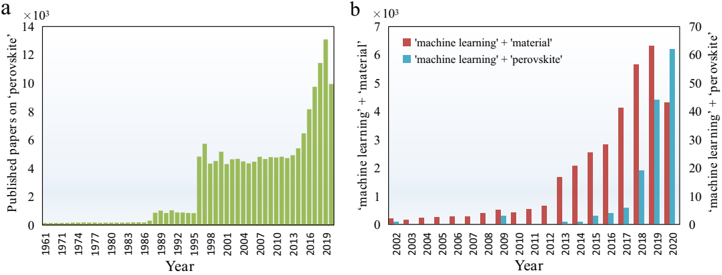
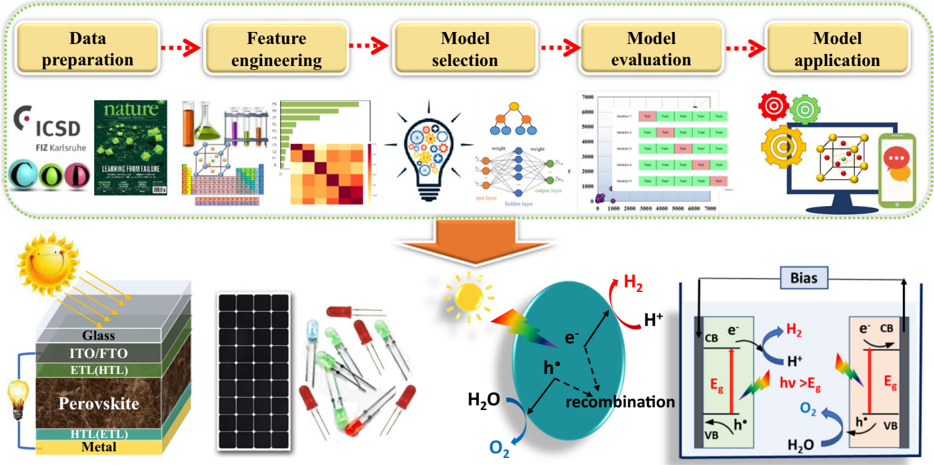
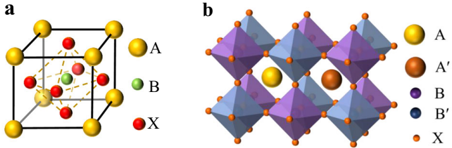
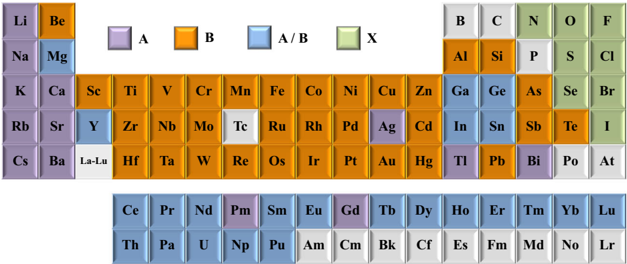
The development of materials is one of the driving forces to accelerate modern scientific progress and technological innovation. Machine learning (ML) technology is rapidly developed in many fields and opening blueprints for the discovery and rational design of materials. In this review, we retrospected the latest applications of ML in assisting perovskites discovery. First, the development tendency of ML in perovskite materials publications in recent years was organized and analyzed. Second, the workflow of ML in perovskites discovery was introduced. Then the applications of ML in various properties of inorganic perovskites, hybrid organic–inorganic perovskites and double perovskites were briefly reviewed. In the end, we put forward suggestions on the future development prospects of ML in the field of perovskite materials.
Overview
The claims and statistics of this paper haven’t been checked yet.
Free: it reads the open-access text and checks the first 5 claims that cite a source we can check. Create a free account to check every claim.
Integrity signals
Registry
Cites
Statistics
Figures

Verification
Claims the paper makes
The claims and statistics of this paper haven’t been checked yet.
Free: it reads the open-access text and checks the first 5 claims that cite a source we can check. Create a free account to check every claim.
Claims other papers make about this one
Each is checked against this paper’s own text: does it say what the citing paper says it does?
The source backs part of the claim, not all of it — or backs it for a different population, condition or comparison.
In the citing paper
“The fusion of perovskite sensors with AI systems is hindered by data heterogeneity across domains, real-time processing latency, and limited model generalizability [243].”
From Design Strategies and Emerging Applications of Perovskite-Based Sensors (2025) · cites this paper as [243]
Experimental — accuracy not yet measured
Self-check
Percentages, sums and reported differences re-computed from the paper’s own numbers.
The self-check needs the paper’s full text.
Citations
Cites
Hohenberg, P., & Kohn, W. (1964) · Physical Review · doi:10.1103/physrev.136.b864 · Cited by 53,541
Organometal Halide Perovskites as Visible-Light Sensitizers for Photovoltaic Cells
Kojima, A., Teshima, K., Shirai, Y., & Miyasaka, T. (2009) · Journal of the American Chemical Society · doi:10.1021/ja809598r · Cited by 23,090
Machine learning: Trends, perspectives, and prospects
Jordan, M. I., & Mitchell, T. M. (2015) · Science · doi:10.1126/science.aaa8415 · Cited by 9,955
Efron, B., & Tibshirani, R. (1986) · Statistical Science · doi:10.1214/ss/1177013815 · Cited by 6,033
Machine learning for molecular and materials science
Butler, K. T., Davies, D. W., Cartwright, H., Isayev, O., & Walsh, A. (2018) · Nature · doi:10.1038/s41586-018-0337-2 · Cited by 4,968
Die Gesetze der Krystallochemie
Goldschmidt, V. M. (1926) · Die Naturwissenschaften · doi:10.1007/bf01507527 · Cited by 4,012
Magnetic Materials and Devices for the 21st Century: Stronger, Lighter, and More Energy Efficient
Gutfleisch, O., Willard, M. A., Brück, E., Chen, C. H., Sankar, S. G., & Liu, J. P. (2011) · Advanced Materials · doi:10.1002/adma.201002180 · Cited by 3,809
Human-level concept learning through probabilistic program induction
Lake, B. M., Salakhutdinov, R., & Tenenbaum, J. B. (2015) · Science · doi:10.1126/science.aab3050 · Cited by 2,817
Recent advances and applications of machine learning in solid-state materials science
Schmidt, J., Marques, M. R. G., Botti, S., & Marques, M. A. L. (2019) · npj Computational Materials · doi:10.1038/s41524-019-0221-0 · Cited by 2,607
National Renewable Energy Laboratory
Karim, S., Faissal, A., & Noureddine, E. B. (2022) · Handbook of Algal Biofuels · doi:10.1016/b978-0-12-823764-9.00006-6 · Cited by 2,558
Research works printed but not linked: 4
- Zhou, Z. Machine Learning (Tsinghua University Press, Bei Jing, 2016).
- Xiao, L., Zhang, Q., Xu, X., Ji, X. & Lu, W. Support vector regression assisted predictions the néel temperature of perovskites manganites. Comp. Appl. Chem. 35, 349-357 (2018).
- Xi, Z. Z., Wang, R. Q., Song, Z. C., Guo, Y. G. & Wu, X. Progressing on perovskite-based solar cells. Mod. Chem. Ind. 39, 66–70 (2019).
- Graves, A., Wayne, G. & Danihelka, I. Neural turing machines. Preprint at ArXiv https://arxiv.org/abs/1410.5401 (2014). · arXiv
Cited by
Items 501–542 of 542
Zhang, H., Xing, W., & Ding, P. (2026) · Review of Materials Research · doi:10.1016/j.revmat.2026.100247
Vaccarelli, O., Caldara, T. A., Gisler, C., Hennebert, J., & Sánchez, S. (2026) · Materials Horizons · doi:10.1039/d6mh00916f · Cited by 1
Jha, R. K. (2026) · Next Energy · doi:10.1016/j.nxener.2026.100811 · Cited by 1
Zhao, X. Q., Hao, X., Wang, M., Zhang, Y., Zhou, J., Fan, B., & Li, M. (2026) · Journal of Materials Chemistry A · doi:10.1039/d6ta03693g
Self-citationParvizi, P., Zangeneh, M. R., Amidi, A. M., & Jalilian, M. (2026) · Next Energy · doi:10.1016/j.nxener.2026.100817
Bitri, R., & Ali, M. (2026) · Lecture notes of the Institute for Computer Sciences, Social Informatics and Telecommunications Engineering · doi:10.1007/978-3-032-34792-3_10
Explainable machine learning for predicting the specific heat capacity of inorganic perovskites
Maluleke, B., & Ukpong, A. M. (2026) · Materials Today Communications · doi:10.1016/j.mtcomm.2026.115855
A review of transition metal-based double perovskite oxides for photovoltaic applications
Nyangiwe, N. N., & Bingwa, N. (2026) · Next Materials · doi:10.1016/j.nxmate.2026.103022
Yu, Q., Liang, J., Chang, X., Xia, X., & Zhao, J. (2026) · Materials · doi:10.3390/ma19153341
“In recent years, exploration of high-performance perovskite solar-cell materials has been accelerated through the application of data-driven approaches such as ML [23].”
Shafiq, I., Irshad, A., Javed, M., Majeed, S., Asghar, M. A., Ayari, N., & Chen, K. (2026) · RSC Advances · doi:10.1039/d6ra04301a
A comprehensive review of perovskite materials for electronic device applications
Sheikh, M. A. K., Islam, M. S., Drane, D., & Huq, H. F. (2026) · Journal of Materials Science Materials in Energy · doi:10.1007/s44308-026-00031-4
“…research directions have emerged that combine machine learning (ML)-assisted materials discovery, interface dipole engineering, multidimensional heterostructure assembly, and self-healing passivation chemistries to overcome the intrinsic limitations of conventional perovskite systems [38–40].”
Peng, J. J., Duan, M., Li, M., He, Y., Hao, H., Li, M., Zhang, C., Chen, Z., Yu, Q., Yan, Q., et al. (2026) · Journal of Materials Chemistry A · doi:10.1039/d6ta04986a · Cited by 1
Self-citationApplications of perovskites-based materials in the removal of typical gaseous pollutants: A review
Qiao, R., Yu, H., Wei, J., Zhou, S., Bi, F., & Zhang, X. (2026) · Coordination Chemistry Reviews · doi:10.1016/j.ccr.2026.218462
Yousfi, A., Saidani, O., Belhadad, Y., Rana, M. M., & Islam, M. R. (2026) · International Journal of Energy Research · doi:10.1155/er/4459483
El-Kholy, A., Abdelrahman, N., Hassan, K., & Saad, M. (2024) · Journal of Artificial Intelligence for Materials Science · doi:10.68159/c566635932
Tanaka, H., Sato, Y., Mori, K., & Okabe, R. (2024) · Journal of Artificial Intelligence for Materials Science · doi:10.68159/g392575577
Conceptual Foundations for Scientific Falsifiability of AI-Generated Materials Claims
Youssef, A., Hassan, K., & Elamin, M. (2026) · Journal of Artificial Intelligence for Materials Science · doi:10.68159/n543062583
When Data Steers Design: Feedback Dynamics in AI-Guided Materials Exploration Pipelines
Meyer, L., Schmid, A., & Braun, S. (2022) · Journal of Computational and Data-Driven Materials Engineering · doi:10.68159/m350665699
Cross-Property Entanglement in Multi-Task Materials Learning Systems
Fischer, D., Meier, L., Braun, T., & Koch, S. (2023) · Journal of Computational and Data-Driven Materials Engineering · doi:10.68159/z452794332
Discovery Pipelines as Epistemic Filters: What Computational Workflows Exclude
Tanaka, H., Sato, Y., & Mori, K. (2023) · Journal of Computational and Data-Driven Materials Engineering · doi:10.68159/a645078092
Prediction without Transferability: Domain Shift in Cross-Material AI Inference
Gonzalez, M., Ruiz, J., & Torres, L. (2022) · Journal of Computational and Data-Driven Materials Engineering · doi:10.68159/a908576617
Multimodal, Physics-Informed Machine Learning for Accelerated Materials Design and Discovery
Meyer, L., Braun, S., Schmid, A., & Keller, D. (2023) · Journal of Computational and Data-Driven Materials Engineering · doi:10.68159/y835005502
Failure Visibility and Epistemic Accountability in Self-Driving Materials Engineering
Andrade, L., & Lopes, M. (2025) · Journal of Computational and Data-Driven Materials Engineering · doi:10.68159/k302210786
Algorithmic Screening Frontiers: How Model Priors Reshape Searchable Materials Space
Huy, N. T., Minh, P. Q., & Bich, L. T. (2022) · Journal of Computational and Data-Driven Materials Engineering · doi:10.68159/a503846256
Validation Authority Erosion in High-Velocity Computational Materials Innovation
El-Kholy, A., Abdelrahman, N., & Hassan, K. (2025) · Journal of Computational and Data-Driven Materials Engineering · doi:10.68159/a342549555
Wang, B., & Wang, J. (2026) · Molecules · doi:10.3390/molecules31183175 · Cited by 1
“…chemical spaces, yet traditional experimental characterization and DFT calculations are still constrained by long testing and calculation cycles, high economic costs and limited research coverage, which hinders the efficient screening of high-performance candidate materials [14,15].”
Kim, Y. L., Yue, T., & Li, Y. (2026) · Digital Discovery · doi:10.1039/d6dd00303f
Guo, Q., Wang, Z., Qin, P., Wang, C., Luo, G., & Cao, S. (2026) · Journal of Electronic Materials · doi:10.1007/s11664-026-13203-3
A FAIR approach towards constructing a computational perovskite database
Desai, R., Strachan, A. H., & Mannodi‐Kanakkithodi, A. (2026) · MRS Communications · doi:10.1557/s43579-026-01039-1
Pandey, S., Shukla, N., Sharma, V. K., & Tiwari, S. (2026) · Russian Physics Journal · doi:10.1007/s11182-026-03763-6
Kumar, D., Pandey, S. C., & Kour, P. (2026) · Digest Journal of Nanomaterials and Biostructures · doi:10.31083/djnb57746
Residual-corrected XGBoost for interpretable prediction of oxide double perovskite band gaps
Zhai, Z., Ge, Y., & Wu, P. (2026) · Computational Materials Science · doi:10.1016/j.commatsci.2026.115110
Towards system-level artificial intelligence in perovskite photovoltaics
Li, Y., Liu, W., Cao, Q., Di, S., Nazeeruddin, M. K., & Li, G. (2026) · Nature Reviews Electrical Engineering · doi:10.1038/s44287-026-00332-4 · Cited by 1
Subba, S., & Chatterjee, S. (2026) · Journal of Physics and Chemistry of Solids · doi:10.1016/j.jpcs.2026.114167
Gupta, T., Bhardwaj, A., & Kumar, A. (2026) · International Symposium on VLSI Design and Test (VDAT) · doi:10.1109/vdat72243.2026.11704594
“…for generating reliable photovoltaic simulation datasets, RF is an ensemble-based machine learning technique which utilizes multiple decision trees [17], is highly suitable for simulation-based datasets because of its strong resistance to overfitting [18], inherent feature importance…”
Charge-Carrier Behavior and Molecular Interface Engineering in Perovskite Light-Emitting Diodes
Cao, X., Chen, Y., Tang, Y., Tao, H., Li, S., Amonov, A., 方国家, & Yao, F. (2026) · Nano-Micro Letters · doi:10.1007/s40820-026-02348-9
Chang, Q., & Zhang, P. (2026) · Journal of Alloys and Compounds · doi:10.1016/j.jallcom.2026.191673
Wang, J.-K., Huang, Y.-S., Chiang, T.-Y., Yang, M.-J., Liao, J.-M., Lu, C.-W., & Tsai, H. G. (2026) · Journal of Materials Chemistry C · doi:10.1039/d6tc02530g
Singh, B., Gahlawat, D., Kaur, J., Basu, R., Sharma, A. K., Madan, J., & Pandey, R. (2026) · Journal of Electronic Materials · doi:10.1007/s11664-026-13138-9
Kado, R., Iwai, F., Nishikubo, R., Ishiwari, F., & Saeki, A. (2026) · ACS Nano · doi:10.1021/acsnano.6c11386
Kamna, Verma, N., Kumar, S., Singh, P. K., Kulshrestha, U., Shandilya, M., & Kaur, G. A. (2026) · Next Energy · doi:10.1016/j.nxener.2026.101145
Shen, T., Lei, X., Lok, H. K., Li, H., 潘中泽, Wang, X., & Fu, X. (2026) · Frontiers in Materials · doi:10.3389/fmats.2026.1966940
Metadata
- Authors
- Tao, Q., Xu, P., Li, M., & Lu, W.
- Affiliations
- Shanghai University (CN)
- Corresponding author
- Li, Minjie
- Lu, Wencong
- Venue
- npj Computational Materials
- Published
- 2021-01-29
- Volume
- 7
- Issue
- 1
- ISSN
- 2057-3960 (ISSN-L)
- OpenAlex
- W3129039627
- Cited by
- 542
- References
- 142
- Citations by year
- 2026: 105 · 2025: 150 · 2024: 95 · 2023: 88 · 2022: 64 · 2021: 40
- FWCI
- 21.79
- Type
- journal article
- Language
- en
- Open access
- gold
- doi.org
- Licence
- cc-by
- creativecommons.org/licenses/by/4.0 (tdm)
- creativecommons.org/licenses/by/4.0 (vor)
- Locations
- npj Computational Materials (publishedVersion, cc-by)
- DOAJ (DOAJ: Directory of Open Access Journals) (submittedVersion, cc-by-sa)
- Funders
- Science and Technology Commission of Shanghai Municipality (18520723500)
- National Key Research and Development Program of China
- Topics
- Physical Sciences › Materials Science › Materials Chemistry › Machine Learning in Materials Science
- Physical Sciences › Engineering › Electrical and Electronic Engineering › Perovskite Materials and Applications
- Life Sciences › Pharmacology, Toxicology and Pharmaceutics › Drug Discovery › Computational Drug Discovery Methods
- Keywords
- machine learning, perovskite, materials discovery, rational materials design, all-inorganic perovskites, organic-inorganic hybrid perovskites, double perovskite, property prediction
About these checks
Registry, retraction, Cites and statistics results are computed, not judged, with one exception: a printed reference that no index lists is read once by a model before it counts as a citation error. Claims are extracted by a model and kept only when their quote appears verbatim in the text; each cited source is then checked, with a model’s help, for whether it says what the claim relies on. Those verdicts can be wrong — read the claim’s quote and the cited source before relying on one.
Statistics and arithmetic are recomputed, not judged.
Confidence bands are shown only for fields calibrated on our annotated test set. None is calibrated yet, so no band is shown.
What counts as a claim ›How we measure confidence ›How we check this ›
Are you an author, or do you see a problem with this page? Request a review
Data sources
Bibliographic data: Semantic Scholar, OpenAlex, Crossref.
Contains information from the Semantic Scholar Academic Graph Datasets, made available under the ODC Attribution License (ODC-BY 1.0).
Semantic Scholar’s data is described in: Kinney, R., et al. (2023). The Semantic Scholar Open Data Platform. arXiv:2301.10140.
