

The DOI matches its Crossref record; 102 of the 102 references it cites were found in a registry or an index.
How does spaceflight affect the acquired immune system?
Open accessAbstract
The impact of spaceflight on the immune system has been investigated extensively during spaceflight missions and in model experiments conducted on Earth. Data suggest that the spaceflight environment may affect the development of acquired immunity, and immune responses. Herein we summarize and discuss the influence of the spaceflight environment on acquired immunity. Bone marrow and the thymus, two major primary lymphoid organs, are evidently affected by gravitational change during spaceflight. Changes in the microenvironments of these organs impair lymphopoiesis, and thereby may indirectly impinge on acquired immunity. Acquired immune responses may also be disturbed by gravitational fluctuation, stressors, and space radiation both directly and in a stress hormone-dependent manner. These changes may affect acquired immune responses to pathogens, allergens, and tumors.
Overview
The claims and statistics of this paper haven’t been checked yet.
Run the check — free, no account needed. It reads the open-access text and checks the sources it cites.
Integrity signals
Registry
Cites
Statistics
Figures
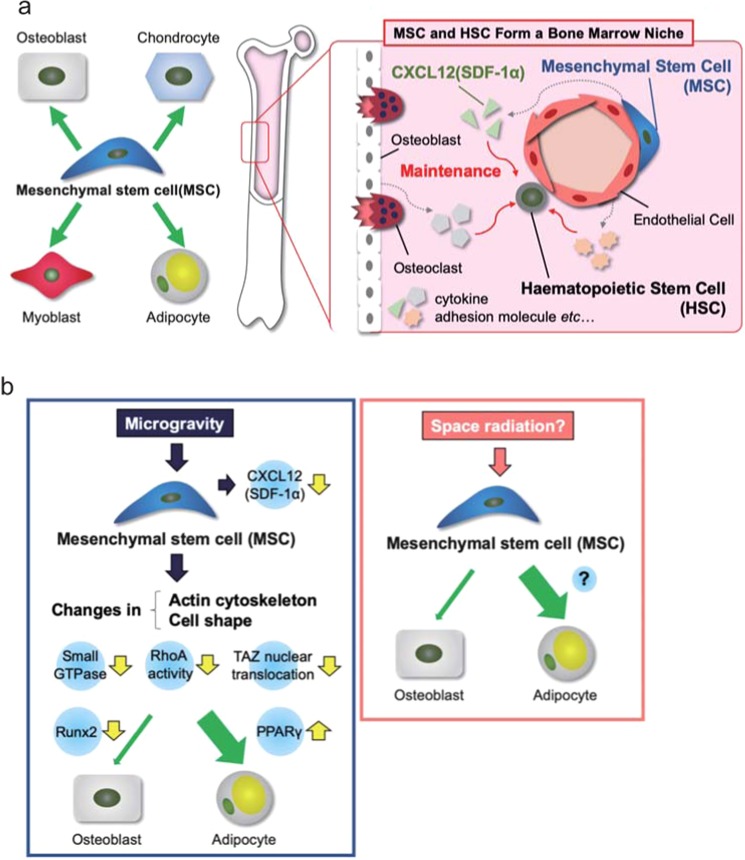
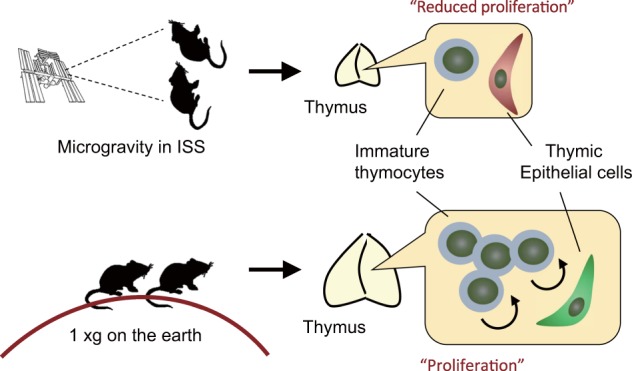
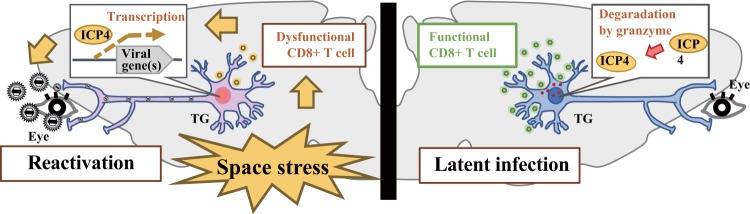
Verification
Claims the paper makes
The claims and statistics of this paper haven’t been checked yet.
Run the check — free, no account needed. It reads the open-access text and checks the sources it cites.
Claims other papers make about this one
Each is checked against this paper’s own text: does it say what the citing paper says it does?
The source backs part of the claim, not all of it — or backs it for a different population, condition or comparison.
In the citing paper
“Spaceflight has been shown to have differential inflammatory effects on crew and experimental systems in missions of duration of few months (Akiyama et al., 2020;Gueguinou et al., 2009), and thus the influence of NTE related to immune response and synergies with other flight factors should be a concern for long-term missions.”
From A proposed change to astronaut exposures limits is a giant leap backwards for radiation protection (2021) · cites this paper as Akiyama et al., 2020
Experimental — accuracy not yet measuredThe source backs part of the claim, not all of it — or backs it for a different population, condition or comparison.
In the citing paper
“Likewise, while in space, astronauts experience fluctuations of gravity that can cause dysregulation of CD8+ T cell infiltration in ganglions.”
From Key points for the development of antioxidant cocktails to prevent cellular stress and damage caused by reactive oxygen species (ROS) during manned space missions (2021) · cites this paper as [101]
Experimental — accuracy not yet measuredThe source backs part of the claim, not all of it — or backs it for a different population, condition or comparison.
In the citing paper
“Additionally, these hostile spaceflight environments impair lymphopoiesis in lymphoid organs, mainly the thymus, impairing the acquired immune system even further and increasing susceptibility to infection101.”
From Key points for the development of antioxidant cocktails to prevent cellular stress and damage caused by reactive oxygen species (ROS) during manned space missions (2021) · cites this paper as [101]
Experimental — accuracy not yet measuredThe cited source says what the claim attributes to it.
In the citing paper
“This dysregulation can permit reactivation and/or shedding of latent viruses like herpes simplex virus (HSV), varicella zoster virus, Epstein–Barr virus, and human cytomegalovirus101 that would otherwise be easily kept at bay by a functional adaptive immune system.”
Self-check
Percentages, sums and reported differences re-computed from the paper’s own numbers.
The self-check needs the paper’s full text.
Citations
Cites
Multilineage potential of adult human mesenchymal stem cells
Pittenger, M. F., Mackay, A. M., Beck, S. C., Jaiswal, R. K., Douglas, R., Mosca, J. D., Moorman, M. A., Simonetti, D. W., Craig, S., & Marshak, D. R. (1999) · Science · doi:10.1126/science.284.5411.143 · Cited by 21,052
Pathogen Recognition and Innate Immunity
Akira, S., Uematsu, S., & Takeuchi, O. (2006) · Cell · doi:10.1016/j.cell.2006.02.015 · Cited by 12,401
Hill (2014) · doi:10.1038/nrgastro.2014.66 · Cited by 9,592
Dietary Modulation of the Human Colonic Microbiota: Introducing the Concept of Prebiotics
Gibson, G. R., & Roberfroid, M. B. (1995) · Journal of Nutrition · doi:10.1093/jn/125.6.1401 · Cited by 7,659
(1992) · Applied Ergonomics · doi:10.1016/0003-6870(92)90318-p · Cited by 5,774
Gibson, G. R., Hutkins, R., Sanders, M. E., Prescott, S. L., Reimer, R. A., Salminen, S. J., Scott, K., Stanton, C., Swanson, K. S., Cani, P. D., et al. (2017) · Nature Reviews Gastroenterology & Hepatology · doi:10.1038/nrgastro.2017.75 · Cited by 5,634
Mesenchymal and haematopoietic stem cells form a unique bone marrow niche
Méndez‐Ferrer, S., Michurina, T. V., Ferraro, F., Mazloom, A. R., MacArthur, B. D., Lira, S. A., Scadden, D. T., Ma’ayan, A., Enikolopov, G., & Frenette, P. S. (2010) · Nature · doi:10.1038/nature09262 · Cited by 3,381
Weissman, I. L. (2000) · Cell · doi:10.1016/s0092-8674(00)81692-x · Cited by 1,827
The NASA Twins Study: A multidimensional analysis of a year-long human spaceflight
Garrett-Bakelman, F. E., Darshi, M., Green, S. J., Gur, R. C., Lin, L., Macias, B. R., McKenna, M. J., Meydan, C., Mishra, T., Nasrini, J., et al. (2019) · Science · doi:10.1126/science.aau8650 · Cited by 1,128
Gut microbiota-derived short-chain Fatty acids, T cells, and inflammation
Kim, C. H., Park, J., & Kim, M. (2014) · Immune Network · doi:10.4110/in.2014.14.6.277 · Cited by 704
Cited by
Sorted by citations
Turroni, S., Magnani, M., Pukar, K. C., Lesnik, P., Vidal, H., & Heer, M. A. (2020) · Frontiers in Physiology · doi:10.3389/fphys.2020.553929 · Cited by 132
Wide range applications of spirulina: from earth to space missions
Fais, G., Manca, A., Bolognesi, F., Borselli, M., Concas, A., Busutti, M., Broggi, G., Sanna, P., Castillo-Aleman, Y. M., Rivero-Jiménez, R. A., et al. (2022) · Marine Drugs · doi:10.3390/md20050299 · Cited by 98
Gómez, X., Sanon, S., Zambrano, K., Asquel, S., Bassantes, M., Morales, J. E., Otáñez, G., Pomaquero, C., Villarroel, S., Zurita, A., et al. (2021) · npj Microgravity · doi:10.1038/s41526-021-00162-8 · Cited by 92
Susilowati, E., & Azzasyofia, M. (2020) · International Journal of Science and Society · doi:10.54783/ijsoc.v2i3.117 · Cited by 93
Role of Apoptosis in Wound Healing and Apoptosis Alterations in Microgravity
Riwaldt, S., Corydon, T. J., Pantalone, D., Sahana, J., Wise, P. M., Wehland, M., Krüger, M., Melnik, D., Kopp, S., Infanger, M., et al. (2021) · Frontiers in Bioengineering and Biotechnology · doi:10.3389/fbioe.2021.679650 · Cited by 97
3D Culture Systems for Exploring Cancer Immunology
Fitzgerald, A. A., Li, E., & Weiner, L. M. (2020) · Cancers · doi:10.3390/cancers13010056 · Cited by 85
The influence of spaceflight and simulated microgravity on bacterial motility and chemotaxis
Acres, J. M., Youngapelian, M. J., & Nadeau, J. (2021) · npj Microgravity · doi:10.1038/s41526-021-00135-x · Cited by 84
May the Force Be with You (Or Not): The Immune System under Microgravity
ElGindi, M., Sapudom, J., Ibrahim, I. H., Al‐Sayegh, M., Chen, W., Garcia‐Sabaté, A., & Teo, J. C. M. (2021) · Cells · doi:10.3390/cells10081941 · Cited by 76
The Fight against Cancer by Microgravity: The Multicellular Spheroid as a Metastasis Model
Grimm, D. G., Schulz, H., Krüger, M., Cortés-Sánchez, J. L., Egli, M., Kraus, A., Sahana, J., Corydon, T. J., Hemmersbach, R., Wise, P. M., et al. (2022) · International Journal of Molecular Sciences · doi:10.3390/ijms23063073 · Cited by 75
Kim, J., Tierney, B. T., Overbey, E. G., Dantas, E., Fuentealba, M., Park, J., Narayanan, S. A., Wu, F., Najjar, D., Chin, C. R., et al. (2024) · Nature Communications · doi:10.1038/s41467-024-49211-2 · Cited by 75
A New Era for Space Life Science: International Standards for Space Omics Processing
Rutter, L. A., Barker, R. J., Bezdan, D., Cope, H., Costes, S. V., Degoricija, L., Fisch, K. M., Gabitto, M. I., Gebre, S., Giacomello, S., et al. (2020) · Patterns · doi:10.1016/j.patter.2020.100148 · Cited by 69
Genomic Changes Driven by Radiation-Induced DNA Damage and Microgravity in Human Cells
Beheshti, A., McDonald, J. T., Hada, M., Takahashi, A., Mason, C. E., & Mognato, M. (2021) · International Journal of Molecular Sciences · doi:10.3390/ijms221910507 · Cited by 96
Self-citationTascher, G., Gerbaix, M., Maes, P., Chazarin, B., Ghislin, S., Антропова, Е. Н., Vassilieva, G. Y., Ouzren-Zarhloul, N., Gauquelin‐Koch, G., Vico, L., et al. (2018) · The FASEB Journal · doi:10.1096/fj.201801463r · Cited by 56
Zhang, Z., Wu, H., Zhang, A., Tan, M., Yan, S., & Jiang, D. (2024) · Journal of Hazardous Materials · doi:10.1016/j.jhazmat.2024.135587 · Cited by 52
Sun, Y., Kuang, Y., & Zuo, Z. (2021) · International Journal of Molecular Sciences · doi:10.3390/ijms22052333 · Cited by 41
Spatial multi-omics of human skin reveals KRAS and inflammatory responses to spaceflight
Park, J., Overbey, E. G., Narayanan, S. A., Kim, J., Tierney, B. T., Damle, N., Najjar, D., Ryon, K. A., Proszynski, J., Kleinman, A. S., et al. (2024) · Nature Communications · doi:10.1038/s41467-024-48625-2 · Cited by 41
A proposed change to astronaut exposures limits is a giant leap backwards for radiation protection
Cucinotta, F. A., Schimmerling, W., Blakely, E. A., & Hei, T. K. (2021) · Life Sciences in Space Research · doi:10.1016/j.lssr.2021.07.005 · Cited by 35
Space Medicines for Space Health
Tran, Q. D., Tran, V., Toh, L. S., Williams, P. M., Tran, N. N., & Hessel, V. (2022) · ACS Medicinal Chemistry Letters · doi:10.1021/acsmedchemlett.1c00681 · Cited by 39
Tang, J., & Zhao, X. (2024) · Molecules · doi:10.3390/molecules29061201 · Cited by 36
Prospective Use of Probiotics to Maintain Astronaut Health during Spaceflight
Bharindwal, S., Goswami, N., Jha, P., Pandey, S., & Jobby, R. (2023) · Life · doi:10.3390/life13030727 · Cited by 37
Spaceflight alters host-gut microbiota interactions
González, E., Lee, M., Tierney, B. T., Lytell, N., Flores, P., Mishra, M., Beckett, L., Finkelstein, A., Mo, A., Walton, P., et al. (2024) · npj Biofilms and Microbiomes · doi:10.1038/s41522-024-00545-1 · Cited by 41
Spaceflight virology: what do we know about viral threats in the spaceflight environment?
Pavletić, B., Runzheimer, K., Siems, K., Koch, S., Cortesão, M., Ramos-Nascimento, A., & Moeller, R. (2022) · Astrobiology · doi:10.1089/ast.2021.0009 · Cited by 30
Next generation of astronauts or ESA astronaut 2.0 concept and spotlight on immunity
Jacob, P., Oertlin, C., Baselet, B., Westerberg, L. S., Frippiat, J., & Baatout, S. (2023) · npj Microgravity · doi:10.1038/s41526-023-00294-z · Cited by 37
Wadhwa, A., Moreno‐Villanueva, M., Crucian, B. E., & Wu, H. (2024) · Immunity & Ageing · doi:10.1186/s12979-024-00449-w · Cited by 38
Microbial Pathogenicity in Space
Simões, M. F., & Antunes, A. (2021) · Pathogens · doi:10.3390/pathogens10040450 · Cited by 36
Integrated RNA-seq Analysis Indicates Asynchrony in Clock Genes between Tissues under Spaceflight
Fujita, S.-I., Rutter, L. A., Ong, Q., & Muratani, M. (2020) · Life · doi:10.3390/life10090196 · Cited by 29
Garzón, N. A. L., Fernández, M. V. P., T., J. S. S., Nati-Castillo, H. A., Arias-Intriago, M., Salazar-Santoliva, C., & Izquierdo‐Condoy, J. S. (2025) · International Journal of Molecular Sciences · doi:10.3390/ijms26073058 · Cited by 34
Spaceflight Stressors and Skin Health
Radstake, W. E., Baselet, B., Baatout, S., & Verslegers, M. (2022) · Biomedicines · doi:10.3390/biomedicines10020364 · Cited by 27
Microgravity-induced stress mechanisms in human stem cell-derived cardiomyocytes
Acharya, A., Nemade, H., Papadopoulos, S., Hescheler, J., Neumaier, F., Schneider, T., Prasad, K. R., Khan, K., Hemmersbach, R., Gusmao, E. G., et al. (2022) · iScience · doi:10.1016/j.isci.2022.104577 · Cited by 27
la Torre, G. G. D., Groemer, G. E., Diaz‐Artiles, A., Pattyn, N., Cutsem, J. V., Musilova, M., Kopeć, W., Schneider, S., Abeln, V., Larose, T. L., et al. (2024) · npj Microgravity · doi:10.1038/s41526-024-00437-w · Cited by 31
Medina, J. S. G., Sienkiewicz, K., Narayanan, S. A., Overbey, E. G., Grigorev, K. A., Ryon, K. A., Burke, M., Proszynski, J., Tierney, B. T., Schmidt, C. M., et al. (2024) · Precision Clinical Medicine · doi:10.1093/pcmedi/pbae007 · Cited by 30
Yamanouchi, S., Rhone, J., Mao, J., Fujiwara, K., Saganti, P. B., Takahashi, A., & Hada, M. (2020) · Life · doi:10.3390/life10090187 · Cited by 25
Self-citationAstroimmunology: the effects of spaceflight and its associated stressors on the immune system
Winer, D. A., Du, H., Kim, J., Chang, V., Burke, M., Winer, S., Costes, S. V., Frippiat, J., Sams, C. F., Paul, A. M., et al. (2025) · Nature reviews. Immunology · doi:10.1038/s41577-025-01226-6 · Cited by 30
Hibernation as a Tool for Radiation Protection in Space Exploration
Puspitasari, A., Cerri, M., Takahashi, A., Yoshida, Y., Hanamura, K., & Tinganelli, W. (2021) · Life · doi:10.3390/life11010054 · Cited by 24
Self-citationRadstake, W. E., Gautam, K., Miranda, S., Vermeesen, R., Tabury, K., Rehnberg, E., Buset, J., Janssen, A., Leysen, L., Neefs, M., et al. (2023) · Cells · doi:10.3390/cells12020246 · Cited by 23
Cancer Studies under Space Conditions: Finding Answers Abroad
Cortés-Sánchez, J. L., Callant, J., Krüger, M., Sahana, J., Kraus, A., Baselet, B., Infanger, M., Baatout, S., & Grimm, D. G. (2021) · Biomedicines · doi:10.3390/biomedicines10010025 · Cited by 23
3D microenvironment attenuates simulated microgravity-mediated changes in T cell transcriptome
ElGindi, M., Sapudom, J., Laws, P., Garcia‐Sabaté, A., Daqaq, M. F., & Teo, J. C. M. (2022) · Cellular and Molecular Life Sciences · doi:10.1007/s00018-022-04531-8 · Cited by 20
Gravity, Microgravity and Artificial Gravity: Physiological Effects, Implementation and Applications
Goswami, N., Blaber, A. P., Valenti, G., Hinghofer-Szalkay, H., Evans, J., Bailey, D. M., Vernikos, J., Choukér, A., Green, D. A., White, O., et al. (2026) · Physiological Reviews · doi:10.1152/physrev.00055.2024 · Cited by 25
Infections in long-duration space missions
Cowen, D., Zhang, R., & Komorowski, M. (2024) · The Lancet Microbe · doi:10.1016/s2666-5247(24)00098-3 · Cited by 24
Immunity in Space: Prokaryote Adaptations and Immune Response in Microgravity
Green, M. J., Aylott, J. W., Williams, P. M., Ghaemmaghami, A. M., & Williams, P. M. (2021) · Life · doi:10.3390/life11020112 · Cited by 22
Transcriptomic Effects on the Mouse Heart Following 30 Days on the International Space Station
Veliz, A. L., Mamoun, L., Hughes, L., Vega, R., Holmes, B., Monteon, A., Bray, J. M., Pecaut, M. J., & Kearns‐Jonker, M. (2023) · Biomolecules · doi:10.3390/biom13020371 · Cited by 21
Zhang, J., Yang, H., Sun, Y., Yan, B., Chen, W., & Fan, D. (2024) · Comprehensive Reviews in Food Science and Food Safety · doi:10.1111/1541-4337.13418 · Cited by 20
Silvani, G., Bradbury, P., Basirun, C., Mehner, C., Zalli, D., Poole, K., & Chou, J. (2022) · npj Microgravity · doi:10.1038/s41526-022-00207-6 · Cited by 20
Overbey, E. G., Das, S., Cope, H., Madrigal, P., Andrusivová, Ž., Frapard, S., Klotz, R., Bezdan, D., Gupta, A. E., Scott, R. T., et al. (2022) · Cell Reports Methods · doi:10.1016/j.crmeth.2022.100325 · Cited by 22
Bonnefoy, J., Ghislin, S., Beyrend, J., Coste, F., Calcagno, G., Lartaud, I., Gauquelin‐Koch, G., Poussier, S., & Frippiat, J. (2021) · International Journal of Molecular Sciences · doi:10.3390/ijms22062961 · Cited by 22
Nickerson, C. A., McLean, R. J. C., Barrila, J., Yang, J., Thornhill, S. G., Banken, L., Porterfield, D. M., Poste, G. H., Pellis, N. R., & Ott, C. M. (2024) · Microbiology and Molecular Biology Reviews · doi:10.1128/mmbr.00144-23 · Cited by 19
Jacob, P., Bonnefoy, J., Ghislin, S., & Frippiat, J. (2022) · Frontiers in Immunology · doi:10.3389/fimmu.2022.952928 · Cited by 18
Transcriptomics analysis reveals molecular alterations underpinning spaceflight dermatology
Cope, H., Elsborg, J., Demharter, S., McDonald, J. T., Wernecke, C., Parthasarathy, H., Unadkat, H., Chatrathi, M., Claudio, J., Reinsch, S. S., et al. (2024) · Communications Medicine · doi:10.1038/s43856-024-00532-9 · Cited by 19
Impact of microgravity and lunar gravity on murine skeletal and immune systems during space travel
Okamura, Y., Gochi, K., Ishikawa, T., Hayashi, T., Fuseya, S., Suzuki, R., Kanai, M., Inoue, Y., Murakami, Y., Sadaki, S., et al. (2024) · Scientific Reports · doi:10.1038/s41598-024-79315-0 · Cited by 19
Self-citationInfluence of the spaceflight environment on macrophage lineages
An, R., Blackwell, V. K., Harandi, B. F., Gibbons, A. C., Siu, O., Irby, I., Rees, A., Cornejal, N., Sattler, K. M., Sheng, T., et al. (2024) · npj Microgravity · doi:10.1038/s41526-023-00293-0 · Cited by 13
Wang, J. L., Rosenbaum, J. J., Prasad, A. N., Raad, R. J., Putman, E. J., Harrington, A. D., Aintablian, H., & Hynek, B. M. (2025) · GeoHealth · doi:10.1029/2024gh001213 · Cited by 14
Gallardo-Dodd, C. J., Oertlin, C., Record, J., Galvani, R. G. A., Sommerauer, C., Kuznetsov, N. V., Doukoumopoulos, E., Ali, L., Oliveira, M. M. S., Seitz, C., et al. (2023) · Science Advances · doi:10.1126/sciadv.adg1610 · Cited by 13
Simulated Microgravity Affects Pro-Resolving Properties of Primary Human Monocytes
Leuti, A., Fava, M., Pellegrini, N., Forte, G., Fanti, F., Valle, F., Dominicis, N. D., Sergi, M., & Maccarrone, M. (2024) · Cells · doi:10.3390/cells13010100 · Cited by 11
Fonte, C., Jacob, P., Vanet, A., Ghislin, S., & Frippiat, J. (2023) · Immunity & Ageing · doi:10.1186/s12979-023-00393-1 · Cited by 10
Medical Astro-Microbiology: Current Role and Future Challenges
McDonagh, F., Cormican, M., Morris, D., Burke, L. P., Singh, N. K., Venkateswaran, K. J., & Miliotis, G. (2023) · Journal of the Indian Institute of Science · doi:10.1007/s41745-023-00360-1 · Cited by 10
Song, C., Kang, T., Gao, K., Shi, X., Zhang, M., Zhao, L., Zhou, L., & Guo, J. (2023) · Heliyon · doi:10.1016/j.heliyon.2023.e19355 · Cited by 9
Andrade, M. R., Azeez, T. A., Montgomery, M. M., Caldwell, J. T., Park, H., Kwok, A. T., Borg, A. M., Narayanan, S. A., Willey, J. S., Delp, M. D., et al. (2023) · The FASEB Journal · doi:10.1096/fj.202300506rr · Cited by 9
Kunitskaya, A., Piret, J. M., Buckley, N. D., & Low‐Décarie, É. (2022) · Acta Astronautica · doi:10.1016/j.actaastro.2022.09.019 · Cited by 8
Oral Health of Astronauts in Short- and Long-Term Missions in Space
FABBRO, M. D., Khijmatgar, S., Vandenberghe, B., Kijak, E., Kulesa-Mrowiecka, M., Singhal, I., Lorusso, F., Xavier, B. B., Sampson, V., Marfia, G., et al. (2025) · Aerospace Medicine and Human Performance · doi:10.3357/amhp.6372.2025 · Cited by 9
Thymus ad astra, or spaceflight-induced thymic involution
Muramatsu, W., Maryanovich, M., Akiyama, T., & Karagiannis, G. S. (2025) · Frontiers in Immunology · doi:10.3389/fimmu.2024.1534444 · Cited by 6
Self-citationJasemi, S., Simula, E. R., Lin, Y., Satta, R. R., Rubino, C., Cossu, A., Fais, M., Noli, M., & Sechi, L. A. (2025) · Cancers · doi:10.3390/cancers17172737 · Cited by 6
Dermatologic Considerations for Spaceflight and Space Exploration
Zhao, M., Aintablian, H., Satcher, R. L., Daneshjou, R., & Rosenbach, M. A. (2024) · JID Innovations · doi:10.1016/j.xjidi.2024.100293 · Cited by 6
Designing a Novel Monitoring Approach for the Effects of Space Travel on Astronauts’ Health
Sakharkar, A., & Yang, J. P. (2023) · Life · doi:10.3390/life13020576 · Cited by 6
Morphogenesis in space offers challenges and opportunities for soft matter and biophysics
Amar, M. B., Ciarletta, P., & Haas, P. A. (2023) · Communications Physics · doi:10.1038/s42005-023-01242-9 · Cited by 7
Fisher, R., Baselet, B., Vermeesen, R., Moreels, M., Baatout, S., Rahiman, F., Miles, X., Nair, S., du Plessis, P., Engelbrecht, M., et al. (2020) · Frontiers in Physics · doi:10.3389/fphy.2020.568124 · Cited by 6
Pharmacological Innovations in Space: Challenges and Future Perspectives
Aksoyalp, Z. Ş., Temel, A., & Karpuz, M. (2024) · Pharmaceutical Research · doi:10.1007/s11095-024-03788-x · Cited by 7
Zhao, M., Ma, X., Zuo, Z., Wang, Y., Fang, Y., & Sun, Y. (2025) · Life Sciences · doi:10.1016/j.lfs.2025.123842 · Cited by 4
Receptors Implicated in Microgravity-Induced Bone Loss
Martinez, E. F., Pelegrine, A. A., & Holliday, L. S. (2024) · Receptors · doi:10.3390/receptors3020014 · Cited by 4
Spaceflight associated dry eye syndrome (SADES): Outflow biophysics and infection risk
Lee, R. S., Ong, J., Waisberg, E., Fanning, S. L., & Lee, A. G. (2025) · Journal of Space Safety Engineering · doi:10.1016/j.jsse.2025.04.004 · Cited by 4
Lipid Signalling in Human Immune Response and Bone Remodelling under Microgravity
Fava, M., Leuti, A., & Maccarrone, M. (2020) · Applied Sciences · doi:10.3390/app10124309 · Cited by 4
Impact of Microgravity on the Skin and the Process of Wound Healing
Yang, J., Sun, P., Jiang, N., Yue, Y., Li, Z., Guo, S., Chen, Z., Li, B., Chai, S., Lu, S.-Y., et al. (2021) · Microgravity Science and Technology · doi:10.1007/s12217-021-09907-2 · Cited by 5
HUMAN SIDE OF SPACE EXPLORATION AND HABITATION
Duda, K. R., Newman, D. J., Zhang, J., Meirhaeghe, N., & Zhou, H. L. (2021) · Wiley eBooks · doi:10.1002/9781119636113.ch56 · Cited by 5
Zaccaria, T., Bulut, O. P., Ferreira, A. V., Dona, M., Langereis, J. D., Mesman, R., Wesseling, J., van Niftrik, L., Netea, M. G., Rettberg, P., et al. (2025) · mBio · doi:10.1128/mbio.01099-25 · Cited by 3
Microgravity and cancer cells: from molecular mechanisms to therapeutic strategies
Jian, Y., Zhang, S., Xu, Y., He, C., Cai, Z., Wang, Z., & Chen, Q. (2026) · Cell Death Discovery · doi:10.1038/s41420-025-02836-8 · Cited by 3
Han, Y., Shi, S., Liu, S., & Gu, X. (2023) · Mathematical Biosciences & Engineering · doi:10.3934/mbe.2023374 · Cited by 3
Immunization induces inflammation in the mouse heart during spaceflight
Veliz, A. L., Hughes, L., Carrillo, D., Pecaut, M. J., & Kearns‐Jonker, M. (2025) · BMC Genomics · doi:10.1186/s12864-025-11426-y · Cited by 4
Adkins, A. M., Luyo, Z. N. M., Boden, A. F., Heerbrandt, R. S., Britten, R. A., Wellman, L. L., & Sanford, L. D. (2025) · Life · doi:10.3390/life15050747 · Cited by 3
Spaceflight exposome/microgravity effects on the psychoimmunoneuroendocrine system
Capri, M., Montano, N., Piccirillo, S., Narici, M. V., Ferranti, F., & Maccarrone, M. (2025) · npj Microgravity · doi:10.1038/s41526-025-00487-8 · Cited by 4
Phetruen, T., Thongdechsri, S., Khongthongdam, M., Channumsin, S., Meemon, K., & Chanarat, S. (2025) · Applied and Environmental Microbiology · doi:10.1128/aem.01435-25 · Cited by 3
Dynamic cellular responses to gravitational forces: Exploring the impact on white blood cell(s)
Murali, A., & Sarkar, R. R. (2024) · Biomicrofluidics · doi:10.1063/5.0216617 · Cited by 3
Schaefer, K., Dambuza, I. M., Dall’Angelo, S., Yuecel, R., Jaspars, M., Trembleau, L., Zanda, M., Brown, G. D., Netea, M. G., & Gow, N. A. R. (2020) · Microorganisms · doi:10.3390/microorganisms8071066 · Cited by 3
Piloted space flight and post-genomic technologies
Larina, I. M., Pastushkova, L. K., Kononikhin, A. S., Николаев, Е. Н., & Orlov, O. I. (2019) · REACH · doi:10.1016/j.reach.2020.100034 · Cited by 3
Medina, J. S. G., Narayanan, S., Sienkiewicz, K., Overbey, E. G., Grigorev, K. A., Ryon, K. A., Proszynski, J., Burke, M., Schmidt, C. M., Tierney, B. T., et al. (2023) · Research Square · doi:10.21203/rs.3.rs-2928049/v1 · Cited by 3
Lee, R. S., Kumar, R., Shah, J., Ong, J., Waisberg, E., & Tavakkoli, A. (2025) · Pharmaceutics · doi:10.3390/pharmaceutics17070847 · Cited by 3
Blum, R. C., Omrani, D., Kunitskaya, A., Snyder, J., Bui, C., Williams, P. M., Loftus, D. J., & Rothschild, L. J. (2026) · Frontiers in Space Technologies · doi:10.3389/frspt.2025.1692554 · Cited by 2
Ishii, H., Endo, R., Hamanaka, S., Hidaka, N., Miyauchi, M., Hagiwara, N., Miyao, T., Yamamori, T., Aiba, T., Akiyama, N., et al. (2024) · npj Microgravity · doi:10.1038/s41526-024-00423-2 · Cited by 2
Self-citationBuilding Better (Space) Babies: Bioastronautics, Bioethics, and Off-World Ectogenesis
Kendal, E. S. (2024) · Emerald Group Publishing Limited eBooks · doi:10.1108/978-1-83797-635-520241012 · Cited by 2
Cahill, B., & Braddock, M. (2022) · Journal of Human Earth and Future · doi:10.28991/hef-2022-03-03-04 · Cited by 2
Impacts of the Spaceflight to the Immune System
Sultonov, D. M., & Kim, Y. H. (2021) · The Korean Journal of Aerospace and Environmental Medicine · doi:10.46246/kjasem.210016 · Cited by 2
Space Medicine: Inspiring a new generation of physicians
Mian, A., & Mian, M. A. (2022) · Postgraduate Medical Journal · doi:10.1136/pmj-2022-141875 · Cited by 3
PATEL, O. V., Partridge, C., & Plaut, K. I. (2023) · Biomolecules · doi:10.3390/biom13050872 · Cited by 2
Fullstone, T. L., Fischer, L. F. J., Bohmeier, M., Frings‐Meuthen, P., Crucian, B. E., & Rathert, P. (2025) · Scientific Reports · doi:10.1038/s41598-025-17930-1 · Cited by 2
Microgravity-induced immune dysregulation: phase-specific profiles of differential gene expression.
Pelchat, M., Trudel, G., Rocheleau, L., Stratis, D., & Laneuville, O. (2025) · Biochemistry and Cell Biology · doi:10.1139/bcb-2025-0136 · Cited by 1
Gut microbiota and intervention of probiotics in spaceflight
Pradeep, N., Green, S. J., & Chaudhary, A. (2025) · Elsevier eBooks · doi:10.1016/b978-0-443-32904-3.00024-8 · Cited by 1
Trovão, N. S., Lucaci, A. G., Pradeep, N., Sethi, M., Bono, L. M., Singh, R. S., Clark, K. B., Zaksas, V., Burke, M., Caicedo, A., et al. (2025) · Elsevier eBooks · doi:10.1016/b978-0-443-32904-3.00009-1 · Cited by 1
Spaceflight alters the immune regulatory functions of neutrophil granulocytes on T lymphocytes
Tavukçuoğlu, E., Yanık, H., Güven, H. E., Yılmaz, K. B., & Esendağlı, G. (2025) · iScience · doi:10.1016/j.isci.2025.114380 · Cited by 1
Zhang, Y., Wang, S., Chen, J., Zhou, Y., Yu, X., Peng, R., Lu, L., Li, S., Tian, Z., Zhang, N., et al. (2025) · Fish & Shellfish Immunology · doi:10.1016/j.fsi.2025.110216 · Cited by 1
Lee, R. S., Ong, J., Waisberg, E., Suh, A., Kadipasaoglu, C. M., Mader, T. H., Gibson, C. R., Berdahl, J. P., Lee, A. G., Lee, A. G., et al. (2025) · Experimental Eye Research · doi:10.1016/j.exer.2025.110513 · Cited by 1
Llanos, P. J., Andrijauskaite, K., Duraisamy, V. V., Gangadharan, S. N., Morris, J., & Wargovich, M. J. (2021) · bioRxiv (Cold Spring Harbor Laboratory) · doi:10.1101/2021.05.13.443970 · Cited by 2
Metadata
- Authors
- Akiyama, T., Horie, K., Hinoi, E., Hiraiwa, M., Kato, A., Maekawa, Y., Takahashi, A., & Furukawa, S.
- Affiliations
- RIKEN Center for Integrative Medical Sciences (JP)
- Gifu Pharmaceutical University (JP)
- Kanazawa University (JP)
- Institute of Medical Science, The University of Tokyo (JP)
- Gifu University (JP)
- Gunma University (JP)
- Japan Aerospace Exploration Agency (JP)
- Corresponding author
- Akiyama, Taishin
- ORCID
- Venue
- npj Microgravity
- Published
- 2020-05-07
- Volume
- 6
- Issue
- 1
- Pages
- 14-14
- ISSN
- 2373-8065 (ISSN-L)
- PMC
- PMC7206142
- OpenAlex
- W3022626511
- Cited by
- 132
- References
- 102
- Citations by year
- 2026: 9 · 2025: 28 · 2024: 31 · 2023: 18 · 2022: 15 · 2021: 20 · 2020: 9
- FWCI
- 1.98
- Type
- journal article
- Language
- en
- Open access
- gold
- doi.org
- Locations
- npj Microgravity (publishedVersion, cc-by)
- PubMed Central (publishedVersion, cc-by)
- PubMed (publishedVersion)
- Funders
- Ministry of Education, Culture, Sports, Science and Technology (JP15H05935, JP15K21745, 16H01631, 18H04989, JP15H05945, 18H04968)
- Japan Society for the Promotion of Science (19K21582, 15H05935, 15K21745, 20H03478, 20H03441)
- Japan Aerospace Exploration Agency (JP15K21745)
- Institute of Space and Astronautical Science (JP15K21745, JP15H05943, JP15H05945, JP15H05935)
- Topics
- Health Sciences › Medicine › Physiology (medical) › Spaceflight effects on biology
- Life Sciences › Immunology and Microbiology › Immunology › Immunotoxicology and immune responses
- Life Sciences › Neuroscience › Behavioral Neuroscience › Stress Responses and Cortisol
- Keywords
- spaceflight, adaptive immunity, immune system, microgravity, bone marrow, thymus, lymphocyte development, stress hormones, space radiation, immune response to pathogens, antitumor immunity, allergen response
About these checks
Registry, retraction, Cites and statistics results are computed, not judged, with one exception: a printed reference that no index lists is read once by a model before it counts as a citation error. Claims are extracted by a model and kept only when their quote appears verbatim in the text; each cited source is then checked, with a model’s help, for whether it says what the claim relies on. Those verdicts can be wrong — read the claim’s quote and the cited source before relying on one.
Statistics and arithmetic are recomputed, not judged.
Confidence bands are shown only for fields calibrated on our annotated test set. None is calibrated yet, so no band is shown.
What counts as a claim ›How we measure confidence ›How we check this ›
Are you an author, or do you see a problem with this page? Request a review
