

The DOI matches its Crossref record; 102 of the 102 references it cites were found in a registry or an index.
How does spaceflight affect the acquired immune system?
Open accessAbstract
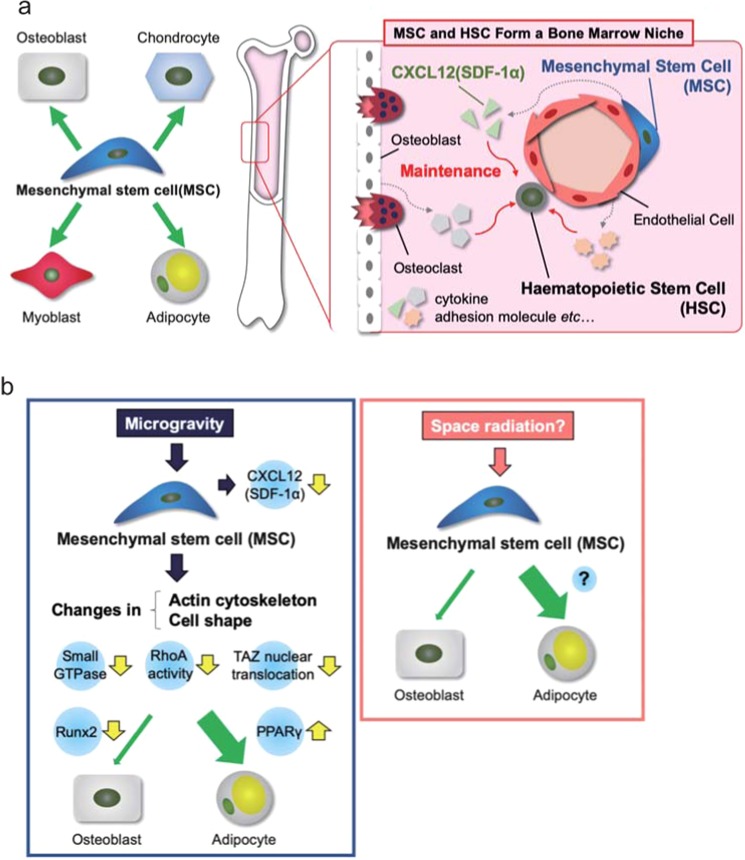
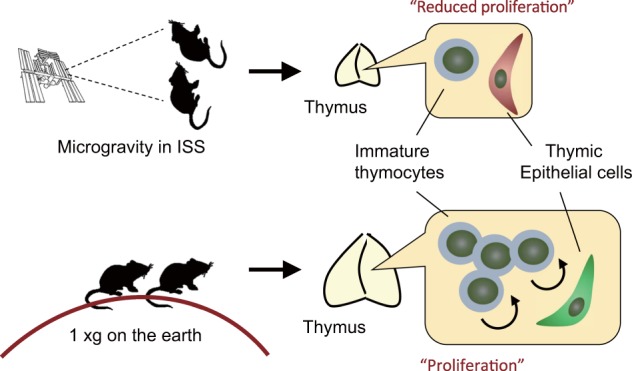
The impact of spaceflight on the immune system has been investigated extensively during spaceflight missions and in model experiments conducted on Earth. Data suggest that the spaceflight environment may affect the development of acquired immunity, and immune responses. Herein we summarize and discuss the influence of the spaceflight environment on acquired immunity. Bone marrow and the thymus, two major primary lymphoid organs, are evidently affected by gravitational change during spaceflight. Changes in the microenvironments of these organs impair lymphopoiesis, and thereby may indirectly impinge on acquired immunity. Acquired immune responses may also be disturbed by gravitational fluctuation, stressors, and space radiation both directly and in a stress hormone-dependent manner. These changes may affect acquired immune responses to pathogens, allergens, and tumors.
Overview
The claims and statistics of this paper haven’t been checked yet.
Run the check — free, no account needed. It reads the open-access text and checks the sources it cites.
Integrity signals
Registry
Cites
Statistics
Figures
Verification
Claims the paper makes
The claims and statistics of this paper haven’t been checked yet.
Run the check — free, no account needed. It reads the open-access text and checks the sources it cites.
Claims other papers make about this one
Each is checked against this paper’s own text: does it say what the citing paper says it does?
The source backs part of the claim, not all of it — or backs it for a different population, condition or comparison.
In the citing paper
“Spaceflight has been shown to have differential inflammatory effects on crew and experimental systems in missions of duration of few months (Akiyama et al., 2020;Gueguinou et al., 2009), and thus the influence of NTE related to immune response and synergies with other flight factors should be a concern for long-term missions.”
From A proposed change to astronaut exposures limits is a giant leap backwards for radiation protection (2021) · cites this paper as Akiyama et al., 2020
Experimental — accuracy not yet measuredThe source backs part of the claim, not all of it — or backs it for a different population, condition or comparison.
In the citing paper
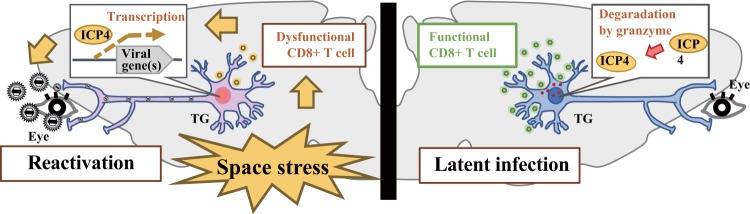
“Likewise, while in space, astronauts experience fluctuations of gravity that can cause dysregulation of CD8+ T cell infiltration in ganglions.”
From Key points for the development of antioxidant cocktails to prevent cellular stress and damage caused by reactive oxygen species (ROS) during manned space missions (2021) · cites this paper as [101]
Experimental — accuracy not yet measuredThe source backs part of the claim, not all of it — or backs it for a different population, condition or comparison.
In the citing paper
“Additionally, these hostile spaceflight environments impair lymphopoiesis in lymphoid organs, mainly the thymus, impairing the acquired immune system even further and increasing susceptibility to infection101.”
From Key points for the development of antioxidant cocktails to prevent cellular stress and damage caused by reactive oxygen species (ROS) during manned space missions (2021) · cites this paper as [101]
Experimental — accuracy not yet measuredThe cited source says what the claim attributes to it.
In the citing paper
“This dysregulation can permit reactivation and/or shedding of latent viruses like herpes simplex virus (HSV), varicella zoster virus, Epstein–Barr virus, and human cytomegalovirus101 that would otherwise be easily kept at bay by a functional adaptive immune system.”
Self-check
Percentages, sums and reported differences re-computed from the paper’s own numbers.
The self-check needs the paper’s full text.
Citations
Cites
Multilineage potential of adult human mesenchymal stem cells
Pittenger, M. F., Mackay, A. M., Beck, S. C., Jaiswal, R. K., Douglas, R., Mosca, J. D., Moorman, M. A., Simonetti, D. W., Craig, S., & Marshak, D. R. (1999) · Science · doi:10.1126/science.284.5411.143 · Cited by 21,052
Pathogen Recognition and Innate Immunity
Akira, S., Uematsu, S., & Takeuchi, O. (2006) · Cell · doi:10.1016/j.cell.2006.02.015 · Cited by 12,401
Hill (2014) · doi:10.1038/nrgastro.2014.66 · Cited by 9,592
Dietary Modulation of the Human Colonic Microbiota: Introducing the Concept of Prebiotics
Gibson, G. R., & Roberfroid, M. B. (1995) · Journal of Nutrition · doi:10.1093/jn/125.6.1401 · Cited by 7,659
(1992) · Applied Ergonomics · doi:10.1016/0003-6870(92)90318-p · Cited by 5,774
Gibson, G. R., Hutkins, R., Sanders, M. E., Prescott, S. L., Reimer, R. A., Salminen, S. J., Scott, K., Stanton, C., Swanson, K. S., Cani, P. D., et al. (2017) · Nature Reviews Gastroenterology & Hepatology · doi:10.1038/nrgastro.2017.75 · Cited by 5,634
Mesenchymal and haematopoietic stem cells form a unique bone marrow niche
Méndez‐Ferrer, S., Michurina, T. V., Ferraro, F., Mazloom, A. R., MacArthur, B. D., Lira, S. A., Scadden, D. T., Ma’ayan, A., Enikolopov, G., & Frenette, P. S. (2010) · Nature · doi:10.1038/nature09262 · Cited by 3,381
Weissman, I. L. (2000) · Cell · doi:10.1016/s0092-8674(00)81692-x · Cited by 1,827
The NASA Twins Study: A multidimensional analysis of a year-long human spaceflight
Garrett-Bakelman, F. E., Darshi, M., Green, S. J., Gur, R. C., Lin, L., Macias, B. R., McKenna, M. J., Meydan, C., Mishra, T., Nasrini, J., et al. (2019) · Science · doi:10.1126/science.aau8650 · Cited by 1,128
Gut microbiota-derived short-chain Fatty acids, T cells, and inflammation
Kim, C. H., Park, J., & Kim, M. (2014) · Immune Network · doi:10.4110/in.2014.14.6.277 · Cited by 704
Cited by
Sorted by citations
Turroni, S., Magnani, M., Pukar, K. C., Lesnik, P., Vidal, H., & Heer, M. A. (2020) · Frontiers in Physiology · doi:10.3389/fphys.2020.553929 · Cited by 132
Wide range applications of spirulina: from earth to space missions
Fais, G., Manca, A., Bolognesi, F., Borselli, M., Concas, A., Busutti, M., Broggi, G., Sanna, P., Castillo-Aleman, Y. M., Rivero-Jiménez, R. A., et al. (2022) · Marine Drugs · doi:10.3390/md20050299 · Cited by 98
Gómez, X., Sanon, S., Zambrano, K., Asquel, S., Bassantes, M., Morales, J. E., Otáñez, G., Pomaquero, C., Villarroel, S., Zurita, A., et al. (2021) · npj Microgravity · doi:10.1038/s41526-021-00162-8 · Cited by 92
Susilowati, E., & Azzasyofia, M. (2020) · International Journal of Science and Society · doi:10.54783/ijsoc.v2i3.117 · Cited by 93
Role of Apoptosis in Wound Healing and Apoptosis Alterations in Microgravity
Riwaldt, S., Corydon, T. J., Pantalone, D., Sahana, J., Wise, P. M., Wehland, M., Krüger, M., Melnik, D., Kopp, S., Infanger, M., et al. (2021) · Frontiers in Bioengineering and Biotechnology · doi:10.3389/fbioe.2021.679650 · Cited by 97
Metadata
- Authors
- Akiyama, T., Horie, K., Hinoi, E., Hiraiwa, M., Kato, A., Maekawa, Y., Takahashi, A., & Furukawa, S.
- Affiliations
- RIKEN Center for Integrative Medical Sciences (JP)
- Gifu Pharmaceutical University (JP)
- Kanazawa University (JP)
- Institute of Medical Science, The University of Tokyo (JP)
- Gifu University (JP)
- Gunma University (JP)
- Japan Aerospace Exploration Agency (JP)
- Corresponding author
- Akiyama, Taishin
- ORCID
- Venue
- npj Microgravity
- Published
- 2020-05-07
- Volume
- 6
- Issue
- 1
- Pages
- 14-14
- ISSN
- 2373-8065 (ISSN-L)
- PMC
- PMC7206142
- OpenAlex
- W3022626511
- Cited by
- 132
- References
- 102
- Citations by year
- 2026: 9 · 2025: 28 · 2024: 31 · 2023: 18 · 2022: 15 · 2021: 20 · 2020: 9
- FWCI
- 1.98
- Type
- journal article
- Language
- en
- Open access
- gold
- doi.org
- Locations
- npj Microgravity (publishedVersion, cc-by)
- PubMed Central (publishedVersion, cc-by)
- PubMed (publishedVersion)
- Funders
- Ministry of Education, Culture, Sports, Science and Technology (JP15H05935, JP15K21745, 16H01631, 18H04989, JP15H05945, 18H04968)
- Japan Society for the Promotion of Science (19K21582, 15H05935, 15K21745, 20H03478, 20H03441)
- Japan Aerospace Exploration Agency (JP15K21745)
- Institute of Space and Astronautical Science (JP15K21745, JP15H05943, JP15H05945, JP15H05935)
- Topics
- Health Sciences › Medicine › Physiology (medical) › Spaceflight effects on biology
- Life Sciences › Immunology and Microbiology › Immunology › Immunotoxicology and immune responses
- Life Sciences › Neuroscience › Behavioral Neuroscience › Stress Responses and Cortisol
- Keywords
- spaceflight, adaptive immunity, immune system, microgravity, bone marrow, thymus, lymphocyte development, stress hormones, space radiation, immune response to pathogens, antitumor immunity, allergen response
About these checks
Registry, retraction, Cites and statistics results are computed, not judged, with one exception: a printed reference that no index lists is read once by a model before it counts as a citation error. Claims are extracted by a model and kept only when their quote appears verbatim in the text; each cited source is then checked, with a model’s help, for whether it says what the claim relies on. Those verdicts can be wrong — read the claim’s quote and the cited source before relying on one.
Statistics and arithmetic are recomputed, not judged.
Confidence bands are shown only for fields calibrated on our annotated test set. None is calibrated yet, so no band is shown.
What counts as a claim ›How we measure confidence ›How we check this ›
Are you an author, or do you see a problem with this page? Request a review
