

Stress and mindfulness in Parkinson’s disease – a survey in 5000 patients
Open accessThe DOI matches its Crossref record; 64 of the 64 references it cites were found in a registry or an index.
Abstract
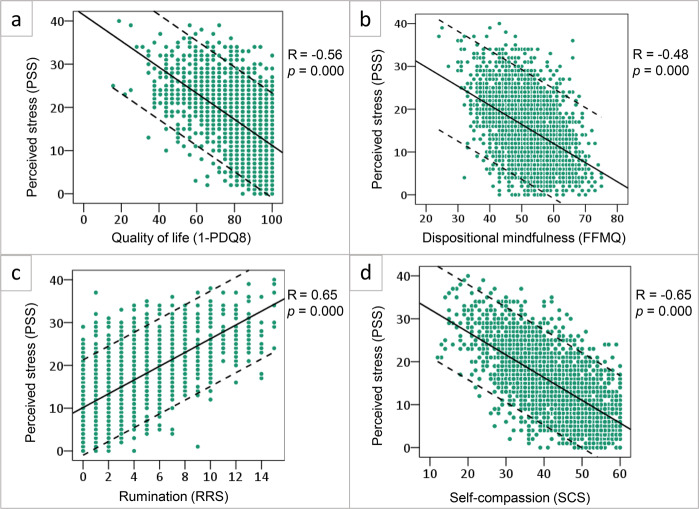
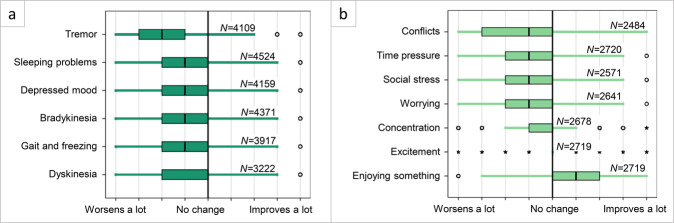
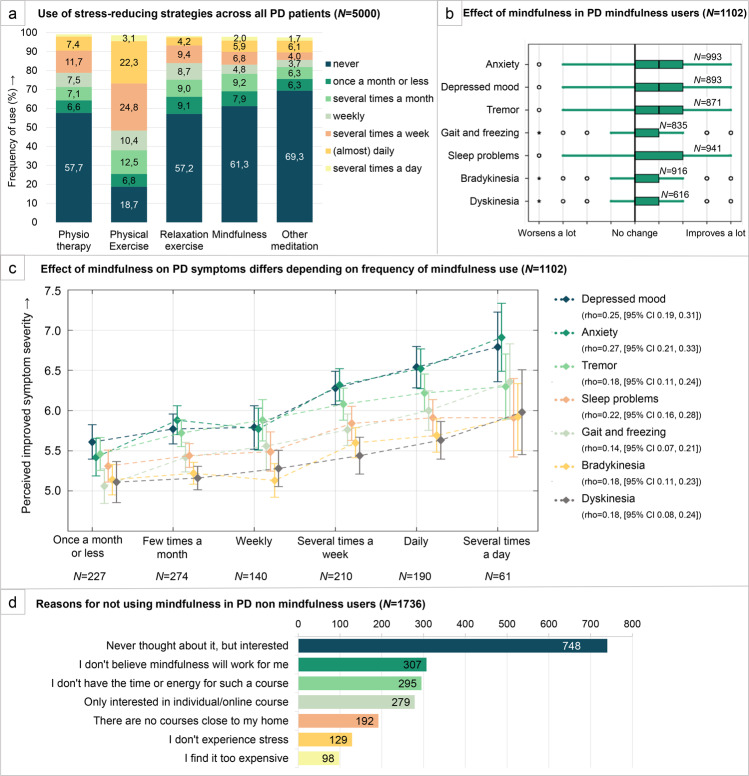
Many Parkinson’s disease (PD) patients notice that motor symptoms worsen during stress, and experience stress-related neuropsychiatric symptoms such as anxiety and depression. Here we investigated which personal and disease characteristics are associated with perceived stress in PD, which PD symptoms are sensitive to stress, and we assessed self-reported benefits of stress-reducing strategies such as mindfulness. We sent an online survey to the Fox Insight cohort (n = 28,385 PD patients, n = 11,413 healthy controls). The survey included specific questions about the influence of stress on PD symptoms, use of stress-reducing strategies, and several validated scales measuring perceived stress, anxiety, dispositional mindfulness, rumination, and self-compassion. We received completed surveys from 5000 PD patients and 1292 controls. Patients perceived more stress than controls. Among patients, stress was correlated with increased rumination (R = 0.65), lower quality of life (R = −0.56), lower self-compassion (R = −0.65), and lower dispositional mindfulness (R = −0.48). Furthermore, patients indicated that stress significantly worsened both motor symptoms – especially tremor – and non-motor symptoms. Physical exercise was most frequently used to reduce stress (83.1%). Mindfulness was practiced by 38.7% of PD respondents, who noticed improvement in both motor and non-motor symptoms. Among non-users, 43.4% were interested in gaining mindfulness skills. We conclude that PD patients experience greater levels of stress than controls, and that stress worsens both motor and non-motor symptoms. Mindfulness may improve PD symptom severity, with the strongest effects on anxiety and depressed mood. These findings justify further controlled studies to establish the merits of mindfulness and other stress-alleviating interventions.
Overview
The claims and statistics of this paper haven’t been checked yet.
Free: it reads the open-access text and checks the first 5 claims that cite a source we can check. Create a free account to check every claim.
Integrity signals
Registry
Cites
Statistics
Figures
Verification
Claims the paper makes
The claims and statistics of this paper haven’t been checked yet.
Free: it reads the open-access text and checks the first 5 claims that cite a source we can check. Create a free account to check every claim.
Claims other papers make about this one
Each is checked against this paper’s own text: does it say what the citing paper says it does?
The source backs part of the claim, not all of it — or backs it for a different population, condition or comparison.
In the citing paper
“A recent survey interviewing 5000 PD patients in the United States found that physical exercise was identified as the most frequently used method (83.1%), while 38.7% of PD respondents who practiced mindfulness noticed improvement in both motor and non-motor symptoms11.”
From A randomized clinical trial of mindfulness meditation versus exercise in Parkinson’s disease during social unrest (2023) · cites this paper as [11]
Experimental — accuracy not yet measuredThe cited source says what the claim attributes to it.
In the citing paper
“In a survey of 5000 people with PD, 39% of respondents reported they were practicing mindfulness, with benefit for both their motor and non-motor symptoms (van der Heide et al., 2021b).”
From Online Mindfulness-Based Cognitive Therapy for People with Parkinson’s Disease and Their Caregivers: a Pilot Study (2022) · cites this paper as van der Heide et al., 2021b
Self-check
Percentages, sums and reported differences re-computed from the paper’s own numbers.
The self-check needs the paper’s full text.
Citations
Cites
A Global Measure of Perceived Stress
Cohen, S., Kamarck, T., & Mermelstein, R. (1983) · Journal of Health and Social Behavior · doi:10.2307/2136404 · Cited by 32,807
The benefits of being present: Mindfulness and its role in psychological well-being
Brown, K. W., & Ryan, R. M. (2003) · Journal of Personality and Social Psychology · doi:10.1037/0022-3514.84.4.822 · Cited by 13,448
Using Self-Report Assessment Methods to Explore Facets of Mindfulness
Baer, R. A., Smith, G. T., Hopkins, J., Krietemeyer, J., & Toney, L. (2006) · Assessment · doi:10.1177/1073191105283504 · Cited by 7,511
Stress, adaptation, and disease. Allostasis and allostatic load
McEWEN, B. S. (1998) · Annals of the New York Academy of Sciences · doi:10.1111/j.1749-6632.1998.tb09546.x · Cited by 5,092
The effect of mindfulness based therapy on anxiety and depression: A meta analytic review
Hofmann, S. G., Sawyer, A. T., Witt, A. A., & Oh, D. (2010) · Journal of Consulting and Clinical Psychology · doi:10.1037/a0018555 · Cited by 3,846
Rumination reconsidered: a psychometric analysis.
Treynor, W., Gonzalez, R., & Nolen-Hoeksema, S. (2003) · Cognitive Therapy and Research · doi:10.1023/a:1023910315561 · Cited by 3,808
Neural regulation of endocrine and autonomic stress responses
Ulrich-Lai, Y. M., & Herman, J. P. (2009) · Nature Reviews Neuroscience · doi:10.1038/nrn2647 · Cited by 3,318
Construction and factorial validation of a short form of the Self-Compassion Scale
Raes, F., Pommier, E., Neff, K. D., & Van Gucht, D. (2011) · Clinical Psychology & Psychotherapy · doi:10.1002/cpp.702 · Cited by 2,997
Non-motor features of Parkinson disease
Schapira, A. H. V., Chaudhuri, K. R., & Jenner, P. (2017) · Nature Reviews Neuroscience · doi:10.1038/nrn.2017.62 · Cited by 2,053
A systematic review of prevalence studies of dementia in Parkinson's disease
Aarsland, D., Zaccai, J., & Brayne, C. (2005) · Movement Disorders · doi:10.1002/mds.20527 · Cited by 1,689
Cited by
Treatment Options for Motor and Non-Motor Symptoms of Parkinson’s Disease
Church, F. C. (2021) · Biomolecules · doi:10.3390/biom11040612 · Cited by 290
“Stress and mindfulness studies are beginning to demonstrate that being mindful can substantially benefit PwP [108,109].”
BackgroundClinical neurophysiology of Parkinson’s disease and parkinsonism
Chen, R., Berardelli, A., Bhattacharya, A., Bologna, M., Chen, K.-H. S., Fasano, A., Helmich, R. C., Hutchison, W. D., Kamble, N., Kühn, A. A., et al. (2022) · Clinical Neurophysiology Practice · doi:10.1016/j.cnp.2022.06.002 · Cited by 102
Self-citationThe clinical and electrophysiological investigation of tremor
Deuschl, G., Becktepe, J. S., Dirkx, M. F., Haubenberger, D., Hassan, A., Helmich, R. C. G., Muthuraman, M., Panyakaew, P., Schwingenschuh, P., Zeuner, K. E., et al. (2022) · Clinical Neurophysiology · doi:10.1016/j.clinph.2022.01.004 · Cited by 123
“Rest tremor typically increases in response to psychological stress or cognitive load, such as serial subtraction (Raethjen et al., 2008, van der Heide et al., 2021, Zach et al., 2017).”
Self-citationLiu, X., Chen, W., Wang, C., Liu, W., Hayashi, T., Mizuno, K., Hattori, S., Fujisaki, H., & Ikejima, T. (2021) · Physiology & Behavior · doi:10.1016/j.physbeh.2021.113593 · Cited by 49
Kwok, J. Y. Y., Choi, E. P. H., Wong, J. Y. H., Lok, K. Y. W., Ho, M.-H., Fong, D. Y. T., Kwan, J. C. Y., Pang, S. Y. Y., & Auyeung, M. (2023) · npj Parkinson's Disease · doi:10.1038/s41531-023-00452-w · Cited by 43
The Contribution of Noradrenergic Activity to Anxiety‐Induced Freezing of Gait
Taylor, N. L., Wainstein, G., Quek, D. Y. L., Lewis, S. J. G., Shine, J. M., & Martens, K. A. E. (2022) · Movement Disorders · doi:10.1002/mds.28999 · Cited by 51
Nakajima, A., Shimo, Y., Fuse, A., Tokugawa, J., Hishii, M., Iwamuro, H., Umemura, A., & Hattori, N. (2021) · Frontiers in Human Neuroscience · doi:10.3389/fnhum.2021.702961 · Cited by 41
“A previous study has suggested that PD motor symptoms worsened when patients were subjected to stress (van der Heide et al., 2021), while training and relaxation programs mitigated motor symptoms of PD (Reuter et al., 2011).”
BackgroundShah, R., Read, J., Davies, N., Nimmons, D., Pigott, J., Schrag, A. E., Walters, K. R., & Armstrong, M. (2022) · PLoS ONE · doi:10.1371/journal.pone.0273428 · Cited by 39
Predictors of stress resilience in Parkinson’s disease and associations with symptom progression
van der Heide, A., Dommershuijsen, L. J., Puhlmann, L. M. C., Kalisch, R., Bloem, B. R., Speckens, A. E. M., & Helmich, R. C. G. (2024) · npj Parkinson s Disease · doi:10.1038/s41531-024-00692-4 · Cited by 36
“Furthermore,under stressful conditions, PD motor symptoms temporarily worsen and dopaminergic medication is less effective 3,4 .”
Self-citationSelf‐compassion and psychological distress in chronic illness: A meta‐analysis
Baxter, R., & Sirois, F. M. (2024) · British Journal of Health Psychology · doi:10.1111/bjhp.12761 · Cited by 43
Tosserams, A., Bloem, B. R., Martens, K. A. E., Helmich, R. C. G., Kessels, R. P. C., Shine, J. M., Taylor, N. L., Wainstein, G., Lewis, S. J. G., & Nonnekes, J. H. (2023) · Translational Neurodegeneration · doi:10.1186/s40035-023-00347-z · Cited by 36
“It is also possible that the impaired modulation of arousal arising from the dysfunction of the locus coeruleus may have consequences that extend beyond gait and could play a critical role in PD tremor, ‘wearing off’ periods, or other key symptoms that have been demonstrated to be significantly affected by one’s level…”
BackgroundSelf-citationSperanza, L., Filiz, K. D., Lippiello, P., Ferraro, M. G., Pascarella, S., Miniaci, M. C., & Volpicelli, F. (2024) · Biomedicines · doi:10.3390/biomedicines12091978 · Cited by 46
Wang, S., Peng, Y., Fan, P., Ye, J.-R., Ma, W.-Y., Wu, Q.-L., Wang, H., Tian, Y., He, W., Xu, Y., et al. (2024) · Acta Pharmacologica Sinica · doi:10.1038/s41401-024-01374-w · Cited by 24
“Data are presented as mean ± SEM, # P < 0.05, ## P < 0.01, ### P < 0.001 vs. NC/vector, * P < 0.05, ** P < 0.01, *** P < 0.001 vs. RTP801 OE/CSGS, ns not signi fi cant. than non-af fl icted individuals did, which aggravated both their motor and nonmotor symptoms [54].”
Influentialvan der Heide, A., Wessel, M., Papadopetraki, D., Geurts, D. E. M., van Prooije, T. H., Gommans, F., Bloem, B. R., Dirkx, M. F., & Helmich, R. C. G. (2024) · Annals of Neurology · doi:10.1002/ana.27159 · Cited by 25
“Insights from this study may improve treatments that attenuate the in fl uence of the stress system on PD tremor, based on behavioral (eg, mindfulness-based interventions) 8,48 or pharmacological suppression (eg, pro-pranolol).”
Self-citationKraemer, K. M., Jain, F. A., Mehta, D. H., & Fricchione, G. L. (2022) · Seminars in Neurology · doi:10.1055/s-0042-1742287 · Cited by 29
Anghelescu, A., Onose, G., Popescu, C., Băilă, M., Stoica, S. I., POSTOIU, R. L., Brumă, E., Petcu, I., Ciobanu, V., & Munteanu, C. (2022) · Biomedicines · doi:10.3390/biomedicines10051000 · Cited by 22
“During long-time exposure to chronic stress and COVID-19 infection, the systemic acute-phase proteins and proinflammatory cytokines (IL-1, IL-6 TNF-α) represent modulators of the hypothalamic-pituitary-adrenal endocrine axis and stimulate cortisol secretion [48,74,101].”
BackgroundHeart-rate variability as a new marker for freezing predisposition in Parkinson's disease
Heimler, B., Koren, O., Inzelberg, R., Rosenblum, U., Hassin‐Baer, S., Zeilig, G., Bartsch, R. P., & Plotnik, M. (2023) · Parkinsonism & Related Disorders · doi:10.1016/j.parkreldis.2023.105476 · Cited by 22
Mindfulness based stress reduction in people with Parkinson's disease and their care partners
Shah-Zamora, D., Allen, A. M., Rardin, L., Ivancic, M., Durham, K., Hickey, P., Cooney, J. W., Scott, B. L., & Mantri, S. (2021) · Complementary Therapies in Clinical Practice · doi:10.1016/j.ctcp.2021.101377 · Cited by 19
Sklerov, M., Browner, N., Dayan, E., Rubinow, D., & Frӧhlich, F. (2022) · Journal of Parkinson s Disease · doi:10.3233/jpd-213075 · Cited by 21
“Another potential limitation in the current study is the evidence that a higher burden of depression may influence perception and report of autonomic symptoms, rather than reflect true overlapping pathophysiology [41].”
BackgroundChronic stress causes striatal disinhibition mediated by SOM-interneurons in male mice
Rodrigues, D., Jacinto, L., Falcão, M., Castro, A. C., Cruz, A., Santa, C., Manadas, B. J., Marques, F., Sousa, N., & Monteiro, P. (2022) · Nature Communications · doi:10.1038/s41467-022-35028-4 · Cited by 22
Seritan, A. L., Iosif, A.-M., Prakash, P., Wang, S. S., & Eisendrath, S. (2022) · Journal of Technology in Behavioral Science · doi:10.1007/s41347-022-00261-7 · Cited by 16
Exploring crowdsourced self-care techniques: A study on Parkinson’s disease
Kuosmanen, E., Huusko, E., van Berkel, N., Nunes, F., Vega, J., Gonçalves, J., Khamis, M., Esteves, A., Ferreira, D., & Hosio, S. J. (2023) · International Journal of Human-Computer Studies · doi:10.1016/j.ijhcs.2023.103062 · Cited by 15
“Stress may worsen both the motor and non-motor symptoms (van der Heide et al., 2021), and the second biggest category, ‘Well-being’, offered means for relaxation and symptom management, as well as for keeping a positive mindset.”
BackgroundBuchwitz, T. M., Maier, F., Greuel, A., Thieken, F., Steidel, K., Jakobs, V., & Eggers, C. (2021) · Frontiers in Psychology · doi:10.3389/fpsyg.2021.763350 · Cited by 15
Spee, B. T. M., de Vries, N. M., Zeggio, S., Plijnaer, M., Koksma, J., Duits, A., Stap, T. B., Pasman, G., Haeyen, S., Darweesh, S. K. L., et al. (2025) · Journal of Neurology · doi:10.1007/s00415-024-12878-0 · Cited by 18
“Anxiety is a prevalent and debilitating issue of PD [3, 5, 51] and is recognized as one of the primary stress-related neuropsychiatric symptoms [5, 52].”
Self-citationMotor Symptom Variability in Parkinson's Disease: Implications for Personalized Trial Outcomes?
Daalen, J. M. J., van der Heiden, M., Meinders, M. J., & Post, B. (2025) · Movement Disorders · doi:10.1002/mds.30133 · Cited by 18
Self-citationDongen, V. A. V. D. W., Nijkrake, M. J., Koenders, N., van der Wees, P. J., Bloem, B. R., & Kalf, J. G. (2022) · Journal of Parkinson s Disease · doi:10.3233/jpd-213121 · Cited by 16
“, copings strategies how to handle 687 anxiety, to avoid time pressure or manage energy lev688 els) or mindfulness-based interventions also reduce 689 psychological distress and even prevent the occur690 rence of breathlessness or a rapid, shallow breathing 691 [42, 60].”
Self-citationAlleviating Stress in Parkinson’s Disease: Symptomatic Treatment, Disease Modification, or Both?
Goltz, F., van der Heide, A., & Helmich, R. C. G. (2024) · Journal of Parkinson s Disease · doi:10.3233/jpd-230211 · Cited by 17
Self-citationYi, M., Zhang, W., Zhao, B., & Wang, Z. (2024) · Clinical Gerontologist · doi:10.1080/07317115.2024.2314192 · Cited by 17
“In addition, a survey in the US found that 38.7% of patients with PD who received MBIs reported notable improvements in both motor and non-motor symptoms (van der Heide et al., 2021).”
InfluentialDevice-Aided Therapies in Parkinson’s Disease—Results from the German Care4PD Study
Fründt, O., Hanff, A.-M. R., Möhl, A., Mai, T., Kirchner, C., Amouzandeh, A., Buhmann, C., Krüger, R., & Südmeyer, M. (2023) · Brain Sciences · doi:10.3390/brainsci13050736 · Cited by 11
The therapeutic effects of yoga in people with Parkinson’s disease: a mini-review
Zhang, T., Liu, W., Bai, Q., & Gao, S. (2023) · Annals of Medicine · doi:10.1080/07853890.2023.2294935 · Cited by 16
“A recent survey in the United States found that 83.1% of 5,000 people with PD considered exercise to be the most commonly used method to improve symptoms [48].”
BackgroundInfluentialFründt, O., Hanff, A.-M., Mai, T., Kirchner, C., Mazery, E. B. D., Amouzandeh, A., Buhmann, C., Krüger, R., & Südmeyer, M. (2021) · Brain Sciences · doi:10.3390/brainsci12010062 · Cited by 10
McDaniels, B. W., Lee, B., Rumrill, S. P., Edereka-Great, K., & Subramanian, I. (2022) · Aging Clinical and Experimental Research · doi:10.1007/s40520-022-02275-w · Cited by 10
Hopamine as Personalized Medicine for Persons with Parkinson’s Disease
Noordegraaf, M., van den Berg, S. W., & Bloem, B. R. (2023) · Journal of Parkinson s Disease · doi:10.3233/jpd-230012 · Cited by 10
Self-citationAmygdalo‐nigral circuit mediates stress‐induced vulnerability to the parkinsonian toxin MPTP
Cai, H., Zhang, P., Li, T., Li, M., Zhang, L., Cui, C., Lei, J., Yang, J., Ren, K., Ming, J., et al. (2023) · CNS Neuroscience & Therapeutics · doi:10.1111/cns.14151 · Cited by 10
A generalizable and open-source algorithm for real-life monitoring of tremor in Parkinson’s disease
Timmermans, N. A., Terranova, R., Soriano, D. C., Cagnan, H., Raykov, Y. P., Bucur, I. G., Bloem, B. R., Helmich, R. C. G., & Evers, L. J. W. (2025) · npj Parkinson's Disease · doi:10.1038/s41531-025-01056-2 · Cited by 11
“At fi rst glance, this may be viewed as a limitation of our algorithm, but in fact it has been shown that clinical assessments of PD tremor are very variable 8 , in line with the waxing and waning nature of PD tremor 40 , as well as its strong sensitivity to stress 41,42 .”
Self-citationThe Last Straw: How Stress Can Unmask Parkinson’s Disease
van der Heide, A., Trenkwalder, C., Bloem, B. R., & Helmich, R. C. G. (2024) · Journal of Parkinson s Disease · doi:10.3233/jpd-230400 · Cited by 8
Self-citationSubramanian, I., Ricciardi, L., Schrag, A. E., Appel‐Cresswell, S., Kola, S., Domingos, J., Pickut, B. A., Dahodwala, N. A., Bocoum, A., Falup‐Pecurariu, C., et al. (2025) · Movement Disorders Clinical Practice · doi:10.1002/mdc3.70381 · Cited by 12
Lifestyle medicine in Parkinson’s disease
Süß, P., Regensburger, M., Gassner, H., & Winkler, J. (2025) · Journal of Neural Transmission · doi:10.1007/s00702-025-03059-y · Cited by 6
“…partially combined with yoga (Kwok et al. 2019) or cognitive rehabilitation (Reitano et al. 2023), have reported short-term benefits on depression, anxiety, cognition, and quality of life in smaller PD patient cohorts (Kwok et al. 2019 , 2023 ; Reitano et al. 2023 ; van der Heide et al. 2021a ).”
van der Heide, A., Goltz, F., de Vries, N. M., Bloem, B. R., Speckens, A. E. M., & Helmich, R. C. G. (2024) · BMC Neurology · doi:10.1186/s12883-024-03736-7 · Cited by 7
Self-citationKwok, J. Y. Y., Auyeung, M., Pang, S., Ho, P. W., Yu, D. S. F., Fong, D., Lin, C., Walker, R. W., Wong, S. Y. S., & Ho, R. (2023) · BMC Complementary Medicine and Therapies · doi:10.1186/s12906-023-04049-x · Cited by 11
Fereshtehnejad, S., Rodríguez‐Violante, M., Ponce-Rivera, M. S., Martínez-Ramírez, D., & Ramirez‐Zamora, A. (2022) · Behavioral Sciences · doi:10.3390/bs12110447 · Cited by 6
“Several studies have shown that mindfulness can reduce depression and anxiety, and even improve motor symptoms in PwP [47].”
BackgroundBlard, F., Erraud, J., Bonnet, M., Auzou, N., & Tison, F. (2024) · Revue Neurologique · doi:10.1016/j.neurol.2024.03.013 · Cited by 5
Vérin, M., Sesar, Á., Amlani, B., Smith, N., Kipentzoglou, K., Montgomery, S., Reading, A., Karlsson, A., Willis, A., & Lees, A. J. (2025) · Neurology and Therapy · doi:10.1007/s40120-025-00789-9 · Cited by 8
Buchwitz, T. M., Ruppert, M. C., Greuel, A., Maier, F., Thieken, F., Jakobs, V., & Eggers, C. (2023) · PLoS ONE · doi:10.1371/journal.pone.0279722 · Cited by 6
“Based on a survey of 5000 patients, van der Heide and colleagues also hypothesized a negative effect of stress on both motor and non-motor symptoms and suggest the conduction of further studies to establish the usefulness of mindfulness or other stress-alleviating interventions in PD [66].”
BackgroundHow Vacations Affect Parkinson's Disease
Daalen, J. M. J., Hubbers, J., Sharifi‐Bonab, M., Mathur, S., Thijssen, D. H. J., Bloem, B. R., & Meinders, M. J. (2022) · Movement Disorders Clinical Practice · doi:10.1002/mdc3.13597 · Cited by 6
“Variations across consecutive days are likely attributable to contextual factors of daily life, such as changes in physical activity, sleep, stress, or diet.(2,3)”
BackgroundResultSelf-citationBallmann, C. G., Schmid, D. G., Rogers, R. R., Oakes, H. K., & Osburn, S. C. (2026) · Neurology International · doi:10.3390/neurolint18030045 · Cited by 4
“Given that PD-associated stress has been linked to increased rumination of negative thoughts and reduced mindfulness, music interventions may aid in combating psychological and behavioral factors contributing to anxiety [159].”
Shariati, F. H., Steffens, A., & Adhami, S. (2023) · Health & Place · doi:10.1016/j.healthplace.2023.103105 · Cited by 5
Review of the Effects of Lifestyle Modification on Parkinson’s Disease
Baghaei, A., Kim, H. S., Dolhun, R., Sherzai, D., & Dashtipour, K. (2025) · American Journal of Lifestyle Medicine · doi:10.1177/15598276251384591 · Cited by 5
Akbulut, G., & Erci, B. (2024) · Frontiers in Psychology · doi:10.3389/fpsyg.2024.1363769 · Cited by 6
Campbell, A. H., Barta, K., Sawtelle, M., & Walters, A. (2023) · Physiotherapy Theory and Practice · doi:10.1080/09593985.2023.2243504 · Cited by 6
“Studies have shown that in both Parkinson’s disease and Multiple Sclerosis, the implementation of meditation-based interventions may improve aspects of both mental and physical health (Dissanayaka et al., 2016; Smith et al., 2014; van der Heide et al., 2021).”
Levodopa-induced dyskinesia alters postural control in people with Parkinson’s disease
Aderonmu, J. A., & Curtze, C. (2024) · Journal of Biomechanics · doi:10.1016/j.jbiomech.2024.112421 · Cited by 2
Yao, Y., Cui, C., Shi, Y., Lei, J., Li, T., Li, M., Peng, X., Yang, X., Ren, K., Yang, J., et al. (2025) · Neuropsychopharmacology · doi:10.1038/s41386-025-02080-9 · Cited by 3
“Furthermore, clinical study has demonstrated that stress is an independent risk factor for PD [18].”
Kwok, J. Y. Y., Lai, C. A., Sin, W. W. F., Chan, L. M. L., Shum, Y. Y., Choi, E. P. H., Lee, J. J., Lok, K. Y. W., Pang, S., Auyeung, M., et al. (2025) · Mindfulness · doi:10.1007/s12671-025-02626-4 · Cited by 5
“…management literature, relaxation techniques such as mindful breathing, meditation, and progressive muscle relaxation could reduce emotional and physiological arousal, alleviating the severity of tremor, particularly when triggered or exacerbated by stress and anxiety (van der Heide et al., 2021).”
McDaniels, B. W., Choi, H., Fricano, R., Kim, B. J., & Subramanian, I. (2025) · Parkinsonism & Related Disorders · doi:10.1016/j.parkreldis.2025.108074 · Cited by 2
Parkinson's Disease in Times of War: Gaps in Knowledge and Emerging Controversies
Salari, M., Etemadifar, M., & Soleimani, S. (2026) · Movement Disorders · doi:10.1002/mds.70272 · Cited by 3
From Stress to Neurodegeneration: A New Look at the Pathogenesis of Parkinson’s Disease
Kazanskaya, R. B., Tsytsarev, V., Volnova, A. B., Gainetdinov, R. R., & Lopachev, A. V. (2026) · Biomedicines · doi:10.3390/biomedicines14051130 · Cited by 2
Church, F., Rau, J. C., & Brotini, S. (2026) · NeuroSci · doi:10.3390/neurosci7040093 · Cited by 2
The challenges in managing co-occurring Parkinson's and schizophrenia spectrum disorders
Hearn, E. (2023) · British Journal of Nursing · doi:10.12968/bjon.2023.32.20.996 · Cited by 1
Gaveel, T. J., Postma, E. M., Bloem, B. R., Darweesh, S. K. L., Munneke, M., Overbeek, K., Helmich, R. C. G., Zeevat, F., Zijlstra, M., Boersma, C., et al. (2026) · Frontiers in Neurology · doi:10.3389/fneur.2026.1752073 · Cited by 3
Self-citationA unifying theory of brain signaling and its possible role in acquired chronic disease
Pereira, G., Corbett, M., Vernon, S. D., Colburn, S., & Chanda, S. (2026) · Frontiers in Neuroscience · doi:10.3389/fnins.2026.1683413 · Cited by 1
Stress Management and Resiliency Training in People with Parkinson's Disease and their Care Partners
Maurer, C. W., Skinner, S., Kulikov, V. N., & Gonzalez, A. (2026) · Movement Disorders Clinical Practice · doi:10.1002/mdc3.70676 · Cited by 1
The Role of the Noradrenergic System in Tremor Pathogenesis
Helmich, R. C. G., van der Heide, A., & Dirkx, M. F. (2023) · Contemporary clinical neuroscience · doi:10.1007/978-3-031-26128-2_19 · Cited by 1
Self-citationTosserams, A. (2023) · Radboud University Press eBooks · doi:10.54195/9789493296251 · Cited by 1
Tschigg, K., Consoli, L., Brüggemann, N., Hicks, A. A., Staunton, C., Mascalzoni, D., & Biasiotto, R. (2024) · Journal of Community Genetics · doi:10.1007/s12687-024-00733-8 · Cited by 1
Humor, Well-Being, and Health Literacy
Rodrigues, P. D. A., Rodrigues, M. S., Pinheiro, D., & Nunes, C. (2021) · Advances in medical education, research, and ethics (AMERE) book series · doi:10.4018/978-1-7998-8824-6.ch015 · Cited by 1
Betätigungsorientierte Therapieansätze für parkinsonspezifische Themen
Orellana, A. (2021) · Springer eBooks · doi:10.1007/978-3-662-62583-5_14 · Cited by 1
van der Heide, A., Goltz, F., de Vries, N. M., Bloem, B. R., Speckens, A. E. M., & Helmich, R. C. G. (2024) · Research Square · doi:10.21203/rs.3.rs-4526899/v1
Self-citationTejada, M., Figueroa, N., & Muñoz, B. (2024) · Acta neurológica colombiana · doi:10.22379/anc.v40i2.1820
“Many also faced interruptions in care from specialized centers and experienced a considerable reduction in physical activity (17).”
BackgroundNeurochemical mechanisms of tremor in Parkinson’s disease
Putyatin, I. A., & Titova, N. (2024) · S S Korsakov Journal of Neurology and Psychiatry · doi:10.17116/jnevro202412411164
Psychological Challenges of Parkinson’s Disease: Unraveling Catastrophizing, Anxiety, and Depression
Rider, J. V. (2024) · Springer eBooks · doi:10.1007/978-3-031-32046-0_48-1
Neurochemical Mechanisms of Tremor in Parkinson’s Disease
Putyatin, I. A., & Titova, N. (2025) · Neuroscience and Behavioral Physiology · doi:10.1007/s11055-025-01819-7
“The severity of tremor increases with cognitive load [64] and stress [65], which can be explained by increased LC activity.”
Hasegawa, T., Yoshida, K., & Inoue, S. (2025) · JCA advances. · doi:10.1016/j.jcadva.2025.100152
Shades of grey: The continuum of therapies for Parkinson's disease along the spectrum of credibility
Cánovas, A. A., Dekkers, O. M., & Bloem, B. R. (2025) · Journal of Parkinson s Disease · doi:10.1177/1877718x251361441
Self-citationPsychological Challenges of Parkinson’s Disease: Unraveling Catastrophizing, Anxiety, and Depression
Rider, J. V. (2025) · Springer eBooks · doi:10.1007/978-3-031-73363-5_48 · Cited by 1
Reframing bradykinesia in Parkinson’s disease: the mixed blessing of slow and variable movement
Buetow, S., & Zawaly, K. (2025) · Disability and Rehabilitation · doi:10.1080/09638288.2025.2581053
van der Heide, A., Goltz, F., de Vries, N. M., Bloem, B. R., Speckens, A. E., & Helmich, R. C. (2024) · Figshare · doi:10.6084/m9.figshare.26738676
Self-citationSalehi, Z., Bidaki, R., Zibaei, A., Salimi, Z., & Rafinezhad, R. (2026) · The Open Neurology Journal · doi:10.2174/011874205x426821260206080314
Living with the Unknown: Intolerance of Uncertainty in Parkinson's Disease
McDaniels, B. W., Pontone, G. M., Pushparatnam, K., & Subramanian, I. (2026) · Movement Disorders Clinical Practice · doi:10.1002/mdc3.70679
Perceived stress and cognition shape the early clinical presentation of Parkinson's disease
Hero, M., Papić, E., Rožmarić, G., Grozdanić, N., & Vuletić, V. (2026) · Parkinsonism & Related Disorders · doi:10.1016/j.parkreldis.2026.108370
Regional Pain is Associated with Functional Performance in People with Parkinson’s Disease
Duncan, R. P., Hendricksen, M., EKDAHL, L., Smaller, K. A., Friedman, B., & Rafferty, M. R. (2026) · Neurology Report · doi:10.1097/npt.0000000000000569
Bogahawatta, P., Wijekoon, A., Harini, S., & Wettasinghe, A. H. (2026) · Neuropsychological Rehabilitation · doi:10.1080/09602011.2026.2725697
The good, the bad, and the ugly: A three-circuit model of Parkinson's tremor
Helmich, R. C. G., & van den Berg, K. R. E. (2026) · Revue Neurologique · doi:10.1016/j.neurol.2026.09.003
Self-citationPolypharmacy and combination therapies in Parkinson's disease
Gazerani, P. (2026) · Elsevier eBooks · doi:10.1016/b978-0-443-54032-5.00006-1
Metadata
- Authors
- van der Heide, A., Speckens, A. E. M., Meinders, M. J., Rosenthal, L. S., Bloem, B. R., & Helmich, R. C.
- Affiliations
- Radboud University Medical Center (NL)
- Radboud University Nijmegen (NL)
- Johns Hopkins University (US)
- Corresponding author
- Helmich, Rick C.
- ORCID
- Venue
- npj Parkinson's Disease
- Published
- 2021-01-18
- Volume
- 7
- Issue
- 1
- Pages
- 7-7
- ISSN
- 2373-8057 (ISSN-L)
- PMC
- PMC7813889
- OpenAlex
- W3124149461
- Cited by
- 82
- References
- 63
- Citations by year
- 2026: 14 · 2025: 15 · 2024: 18 · 2023: 15 · 2022: 13 · 2021: 7
- FWCI
- 6.34
- Type
- journal article
- Language
- en
- Open access
- gold
- doi.org
- Licence
- cc-by
- creativecommons.org/licenses/by/4.0 (tdm)
- creativecommons.org/licenses/by/4.0 (vor)
- Locations
- npj Parkinson s Disease (publishedVersion, cc-by)
- PubMed Central (publishedVersion, cc-by)
- PubMed (publishedVersion)
- Radboud Repository (Radboud University) (submittedVersion)
- DOAJ (DOAJ: Directory of Open Access Journals) (submittedVersion, cc-by-sa)
- Radboud Repository (Radboud University) (submittedVersion, other-oa)
- Funders
- Michael J. Fox Foundation for Parkinson’s Research (#16048)
- Topics
- Health Sciences › Medicine › Clinical Neurology › Parkinson's Disease Mechanisms and Treatments
- Social Sciences › Psychology › Clinical Psychology › Mindfulness and Compassion Interventions
- Health Sciences › Medicine › Clinical Neurology › Deep Brain Stimulation and Movement Disorders
- Keywords
- Parkinson's disease, perceived stress, mindfulness, rumination, self-compassion, anxiety, depression, motor symptoms, non-motor symptoms, tremor, physical activity, quality of life, neuropsychiatric symptoms
About these checks
Registry, retraction, Cites and statistics results are computed, not judged, with one exception: a printed reference that no index lists is read once by a model before it counts as a citation error. Claims are extracted by a model and kept only when their quote appears verbatim in the text; each cited source is then checked, with a model’s help, for whether it says what the claim relies on. Those verdicts can be wrong — read the claim’s quote and the cited source before relying on one.
Statistics and arithmetic are recomputed, not judged.
Confidence bands are shown only for fields calibrated on our annotated test set. None is calibrated yet, so no band is shown.
What counts as a claim ›How we measure confidence ›How we check this ›
Are you an author, or do you see a problem with this page? Request a review
Data sources
Bibliographic data: Semantic Scholar, OpenAlex, Crossref.
Contains information from the Semantic Scholar Academic Graph Datasets, made available under the ODC Attribution License (ODC-BY 1.0).
Semantic Scholar’s data is described in: Kinney, R., et al. (2023). The Semantic Scholar Open Data Platform. arXiv:2301.10140.
