

An fMRI study of error monitoring in Montessori and traditionally-schooled children
Open accessThe DOI matches its Crossref record; 77 of the 77 references it cites were found in a registry or an index.
Abstract
The development of error monitoring is central to learning and academic achievement. However, few studies exist on the neural correlates of children’s error monitoring, and no studies have examined its susceptibility to educational influences. Pedagogical methods differ on how they teach children to learn from errors. Here, 32 students (aged 8–12 years) from high-quality Swiss traditional or Montessori schools performed a math task with feedback during fMRI. Although the groups’ accuracies were similar, Montessori students skipped fewer trials, responded faster and showed more neural activity in right parietal and frontal regions involved in math processing. While traditionally-schooled students showed greater functional connectivity between the ACC, involved in error monitoring, and hippocampus following correct trials, Montessori students showed greater functional connectivity between the ACC and frontal regions following incorrect trials. The findings suggest that pedagogical experience influences the development of error monitoring and its neural correlates, with implications for neurodevelopment and education.
Overview
The claims and statistics of this paper haven’t been checked yet.
Free: it reads the open-access text and checks the first 5 claims that cite a source we can check. Create a free account to check every claim.
Integrity signals
Registry
Cites
Statistics
Figures
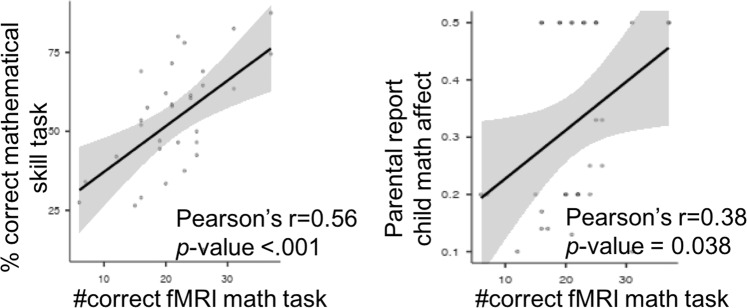
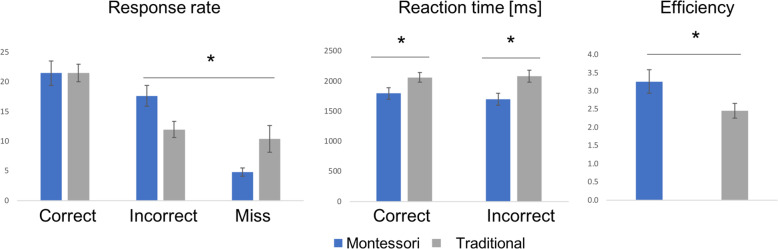
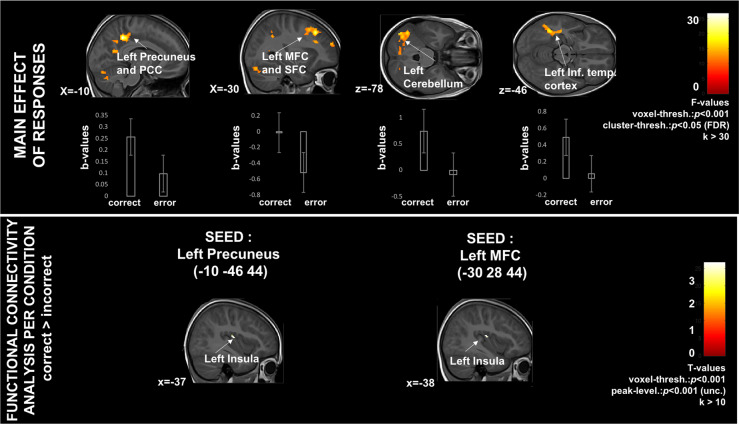
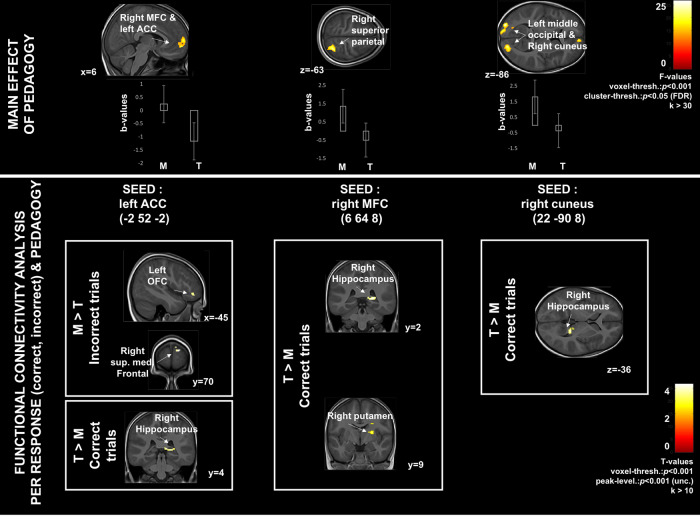
Verification
Claims the paper makes
The claims and statistics of this paper haven’t been checked yet.
Free: it reads the open-access text and checks the first 5 claims that cite a source we can check. Create a free account to check every claim.
Claims other papers make about this one
Each is checked against this paper’s own text: does it say what the citing paper says it does?
The source backs part of the claim, not all of it — or backs it for a different population, condition or comparison.
In the citing paper
“Neurocognitive studies confirm that Montessori-schooled children are particularly good at error monitoring (i.e. ‘the intrinsic ability to detect and evaluate outcomes that violate expectation and to adapt in response’ [188]).”
From Active inference goes to school: the importance of active learning in the age of large language models (2024) · cites this paper as [188]
Experimental — accuracy not yet measured
Self-check
Percentages, sums and reported differences re-computed from the paper’s own numbers.
The self-check needs the paper’s full text.
Citations
Cites
Control of goal-directed and stimulus-driven attention in the brain
Corbetta, M., & Shulman, G. L. (2002) · Nature Reviews Neuroscience · doi:10.1038/nrn755 · Cited by 12,881
Cognitive and emotional influences in anterior cingulate cortex
Bush, G., Luu, P., & Posner, M. I. (2000) · Trends in Cognitive Sciences · doi:10.1016/s1364-6613(00)01483-2 · Cited by 6,259
The precuneus: a review of its functional anatomy and behavioural correlates
Cavanna, A. E., & Trimble, M. R. (2006) · Brain · doi:10.1093/brain/awl004 · Cited by 5,128
Mapping the structural core of human cerebral cortex
Hagmann, P., Cammoun, L., Gigandet, X., Meuli, R., Honey, C. J., Wedeen, V. J., & Sporns, O. (2008) · PLoS Biology · doi:10.1371/journal.pbio.0060159 · Cited by 4,173
Self-citation(1998) · Cited by 4,172
Conflict monitoring and anterior cingulate cortex: an update
Botvinick, M. M., Cohen, J. D., & Carter, C. S. (2004) · Trends in Cognitive Sciences · doi:10.1016/j.tics.2004.10.003 · Cited by 3,623
Anterior Cingulate Cortex, Error Detection, and the Online Monitoring of Performance
Carter, C. S., Braver, T. S., Barch, D. M., Botvinick, M. M., Noll, D., & Cohen, J. D. (1998) · Science · doi:10.1126/science.280.5364.747 · Cited by 3,273
The role of the posterior cingulate cortex in cognition and disease
Leech, R., & Sharp, D. J. (2014) · Brain · doi:10.1093/brain/awt162 · Cited by 2,247
Dorsal and Ventral Attention Systems: Distinct Neural Circuits but Collaborative Roles
Vossel, S., Geng, J. J., & Fink, G. R. (2014) · The Neuroscientist · doi:10.1177/1073858413494269 · Cited by 1,438
Melby-Lervåg, M., Redick, T. S., & Hulme, C. (2016) · Perspectives on Psychological Science · doi:10.1177/1745691616635612 · Cited by 983
Research works printed but not linked: 1
- Dweck, C. S. Self-theories: Their Role in Motivation, Personality, and Development (Psychology Press, 1999).
Cited by
The neuroscience of active learning and direct instruction
Dubinsky, J. M., & Hamid, A. (2024) · Neuroscience & Biobehavioral Reviews · doi:10.1016/j.neubiorev.2024.105737 · Cited by 156
Disentangling age and schooling effects on inhibitory control development: An fNIRS investigation
McKay, C., Wijeakumar, S., Rafetseder, E., & Shing, Y. L. (2021) · Developmental Science · doi:10.1111/desc.13205 · Cited by 28
An Association Between Montessori Education in Childhood and Adult Wellbeing
Lillard, A. S., Meyer, M. J., Vasc, D., & Fukuda, E. (2021) · Frontiers in Psychology · doi:10.3389/fpsyg.2021.721943 · Cited by 21
Guerrero, S., Valcárcel, J. V., & Rodríguez, A. (2024) · Children and Youth Services Review · doi:10.1016/j.childyouth.2024.107480 · Cited by 49
Weaving a Colorful Cloth: Centering Education on Humans’ Emergent Developmental Potentials
Immordino‐Yang, M. H., Nasir, N. S., Cantor, P., & Yoshikawa, H. (2023) · Review of Research in Education · doi:10.3102/0091732x231223516 · Cited by 38
Self-citationMulti-instance discriminative contrastive learning for brain image representation
Zhang, Y., Liu, S., Qu, X., & Shang, X. (2022) · Neural Computing and Applications · doi:10.1007/s00521-022-07524-7 · Cited by 20
Creative thinking and brain network development in schoolchildren
Duval, P. E., Fornari, E., Décaillet, M., Ledoux, J., Beaty, R. E., & Denervaud, S. (2023) · Developmental Science · doi:10.1111/desc.13389 · Cited by 15
Self-citationWhy the time is ripe for an education revolution
Lillard, A. S. (2023) · Frontiers in Developmental Psychology · doi:10.3389/fdpys.2023.1177576 · Cited by 17
Di Paolo, L. D., White, B., Guénin-Carlut, A., Constant, A., & Clark, A. (2024) · Philosophical Transactions of the Royal Society B: Biological Sciences · doi:10.1098/rstb.2023.0148 · Cited by 14
“Neurocognitive studies confirm that Montessori-schooled children are particularly good at error monitoring (i.e. ‘the intrinsic ability to detect and evaluate outcomes that violate expectation and to adapt in response’ [188]).”
BackgroundChildren’s automatic evaluation of self‐generated actions is different from adults
Denervaud, S., Hess, A., Sander, D., & Pourtois, G. (2021) · Developmental Science · doi:10.1111/desc.13045 · Cited by 11
“More specifically, through independent or peer-to-peer exploration in the absence of evaluative feedback from the teacher, learning is facilitated and self-efficacy is eventually stimulated (Denervaud, et al., 2020; Denervaud et al., 2019, 2020; Lillard et al., 2017).”
BackgroundResultSelf-citationZanchi, P., Mullier, E., Fornari, E., de Dumast, P., Alemán‐Gómez, Y., Ledoux, J., Beaty, R. E., Hagmann, P., & Denervaud, S. (2024) · npj Science of Learning · doi:10.1038/s41539-024-00254-6 · Cited by 11
Self-citationStructural brain abnormalities in epilepsy with myoclonic atonic seizures
Denervaud, S., Korff, C. M., Fluss, J., Kalser, J., Roulet‐Perez, E., Hagmann, P., & Lebon, S. (2021) · Epilepsy Research · doi:10.1016/j.eplepsyres.2021.106771 · Cited by 9
Self-citationVariation in pedagogy affects overimitation in children and adolescents
Décaillet, M., Frick, A., Lince, X., Gruber, T., & Denervaud, S. (2024) · Journal of Experimental Child Psychology · doi:10.1016/j.jecp.2024.105862 · Cited by 26
Self-citationYang, X., Hilliard, K., Gotlieb, R. J. M., & Immordino‐Yang, M. H. (2024) · Journal of Research on Adolescence · doi:10.1111/jora.12993 · Cited by 8
Self-citationMarkov Guided Spatio-Temporal Networks for Brain Image Classification
Zhang, Y., Xu, Y., An, R., Li, Y., Liu, S., & Shang, X. (2022) · IEEE International Conference on Bioinformatics and Biomedicine (BIBM) · doi:10.1109/bibm55620.2022.9995528 · Cited by 6
Cong, P., Long, Y., Zhang, X., Guo, Y., & Jiang, Y. (2024) · Scientific Reports · doi:10.1038/s41598-024-62343-1 · Cited by 8
Schwery, P., Romascano, D., Alemán‐Gómez, Y., Messerli‐Bürgy, N., & Denervaud, S. (2023) · Research Square · doi:10.21203/rs.3.rs-3042331/v1 · Cited by 8
Self-citationSaccenti, D., Moro, A. S., Salvetti, G., Sassaroli, S., Malgaroli, A., Lamanna, J., & Ferro, M. (2025) · Biomedicines · doi:10.3390/biomedicines13071522 · Cited by 6
Dagnino, P. C., Galadí, J. A., Càmara, E., Deco, G., & Escrichs, A. (2024) · Network Neuroscience · doi:10.1162/netn_a_00366 · Cited by 10
Perfect timing: sensitive periods for Montessori education and long-term wellbeing
Lillard, A. S., Jiang, R., & Tong, X. (2025) · Frontiers in Developmental Psychology · doi:10.3389/fdpys.2025.1546451 · Cited by 27
Choi, J., Ko, I., Nah, Y., Kim, B., Park, Y., Cha, J., Choi, J., & Han, S. (2022) · IEEE Access · doi:10.1109/access.2022.3173629 · Cited by 6
Exploring the Interplay of Age and Pedagogy in the Maturation of Error‐Monitoring
Denervaud, S., Tovar, D. A., Knebel, J., Mullier, E., Alemán‐Gómez, Y., Hagmann, P., & Murray, M. M. (2023) · Mind Brain and Education · doi:10.1111/mbe.12395 · Cited by 7
Self-citationAlhamdan, A. A., Pickering, H. E., Murphy, M., & Crewther, S. G. (2025) · European Journal of Investigation in Health Psychology and Education · doi:10.3390/ejihpe15080157 · Cited by 12
Montessori practices in early childhood education with teachers' experiences
Akyol, N. A., Uludağ, G., & Tosun, B. (2023) · Research in Pedagogy · doi:10.5937/istrped2301177a · Cited by 11
Ireland, M. J., Cohn, E. J., Abel, S., Bourke, L., & Burton, L. J. (2025) · Psychology in the Schools · doi:10.1002/pits.70006 · Cited by 5
Neurotechnology as a factor of the educational process transformation
Aleksandrova, L. D., Богачева, Р. А., Александровна, Ч. Т., Максимова, М. В., & Тимонина, В. И. (2021) · Vocational education and labour market · doi:10.52944/port.2021.47.4.007 · Cited by 5
Oopses on the Page: A Content Analysis of Children’s Picturebooks Featuring Mistakes
Donaldson, M., Benmoussa, S., & Hwang, M. (2023) · Early Childhood Education Journal · doi:10.1007/s10643-023-01546-z · Cited by 3
The Neuroscience of Emotion and Intrinsic Motivation
Ng, B. (2023) · Springer eBooks · doi:10.1007/978-981-99-5378-3_4 · Cited by 3
Learning by Heart or with Heart: Brain Asymmetry Reflects Pedagogical Practices
Schetter, M., Romascano, D., Gaujard, M., Rummel, C., & Denervaud, S. (2023) · Brain Sciences · doi:10.20944/preprints202307.2150.v1 · Cited by 2
Self-citationThe impact of the Montessori Education on early number learning in French pre-schools
Croset, M., Courtier, P., & Gardes, M. (2023) · Swiss Journal of Educational Research · doi:10.24452/sjer.45.3.7 · Cited by 20
Zhang, Y., Guo, W., Ji, B., & Shi, H. (2025) · Thinking Skills and Creativity · doi:10.1016/j.tsc.2025.101867 · Cited by 4
Edu-eco-communities: designing sustainable and community based learning environments
Paolo, L. D. D. (2025) · Revista de Filosofia Aurora · doi:10.1590/2965-1557.037.e202532177 · Cited by 3
The interplay of age and pedagogy in maturation of error-monitoringPreprint
Denervaud, S., Tovar, D. A., Knebel, J., Mullier, E., Alemán‐Gómez, Y., Hagmann, P., & Murray, M. M. (2019) · doi:10.31219/osf.io/7nbqz · Cited by 2
Self-citationLösen Montessori-Schüler_innen Mathematikaufgaben besser als solche des traditionellen Schulsystems?
Karzig, N., & Kucian, K. (2021) · Lernen und Lernstörungen · doi:10.1024/2235-0977/a000335
Aral, N., Tiryaki, A. Y., Fındık, E., Sultanoğlu, S. Ç., Beker, E., Bıçakçı, M. Y., & Özbal, E. Ö. (2022) · Erken Çocukluk Çalışmaları Dergisi · doi:10.24130/eccdjecs.1967202261383 · Cited by 1
Montessori metoda odgoja i obrazovanja - pregled istraživanja od 2017. do 2022. godine
Havaić, E. S. (2023) · Napredak · doi:10.59549/n.164.1-2.7
Ahlquist, E.-M. T., Courtier, P., Denervaud, S., Gynther, P., Jendza, J., & Quarfood, C. (2023) · Journal of Montessori Research & Education · doi:10.16993/jmre.20 · Cited by 1
Self-citationPadillo, G. G., Palicte, R. M. L., Palicte, J. L., Gabuya, M. C., Manguilimotan, R. P., Espina, R. C., Capuno, R. G., Etcuban, J. O., & Capuno, J. F. C. (2024) · Universal Journal of Educational Research · doi:10.13189/ujer.2024.120102
Blasi, F. D. D., Costanzo, A. A., Stimoli, M. A., Liccardi, G., Zoccolotti, P., & Buono, S. (2025) · Education Sciences · doi:10.3390/educsci15081031 · Cited by 19
Evaluating virtual reality work environments: cognitive and physiological impacts on office workers
Michael, I. M., Murugan, A. S., & Kim, E. (2025) · Ergonomics · doi:10.1080/00140139.2025.2592985
Kundrak, C., Yang, X., Gonzalez, E., & Immordino‐Yang, M. H. (2026) · Research Square · doi:10.21203/rs.3.rs-9716683/v1
Self-citationWhen little brain goes to school: Impact of pedagogy on cerebellar peduncles’ development
Girard, G., Gaujard, M., Grosjean, C., Fischi-Gómez, E., & Denervaud, S. (2026) · Developmental Cognitive Neuroscience · doi:10.1016/j.dcn.2026.101748
Self-citationEducating minds with generative AI
Paolo, L. D. D., Clark, A., & Wachter, T. (2026) · Communications Psychology · doi:10.1038/s44271-026-00522-8 · Cited by 1
Metadata
- Authors
- Denervaud, S., Fornari, E., Yang, X.-F., Hagmann, P., Immordino-Yang, M. H., & Sander, D.
- Affiliations
- University of Geneva (CH)
- Centre Hospitalier Universitaire Vaudois (CH)
- University of Southern California (US)
- Corresponding author
- Denervaud, Solange
- Sander, David
- ORCID
- Venue
- npj Science of Learning
- Published
- 2020-07-17
- Volume
- 5
- Issue
- 1
- Pages
- 11-11
- ISSN
- 2056-7936 (ISSN-L)
- PMC
- PMC7367880
- OpenAlex
- W3043756712
- Cited by
- 43
- References
- 77
- Citations by year
- 2026: 3 · 2025: 8 · 2024: 9 · 2023: 12 · 2022: 4 · 2021: 5 · 2020: 1
- FWCI
- 2.96
- Type
- journal article
- Language
- en
- Open access
- gold
- doi.org
- Licence
- cc-by
- creativecommons.org/licenses/by/4.0 (tdm)
- creativecommons.org/licenses/by/4.0 (vor)
- Locations
- npj Science of Learning (publishedVersion, cc-by)
- PubMed Central (publishedVersion, cc-by)
- PubMed (publishedVersion)
- SERVAL (Université de Lausanne) (publishedVersion, cc-by)
- Archive ouverte UNIGE (University of Geneva) (publishedVersion, other-oa)
- IRIS (submittedVersion, cc-by)
- Archive ouverte UNIGE (University of Geneva) (submittedVersion, cc-by)
- Funders
- Schweizerischer Nationalfonds zur Förderung der Wissenschaftlichen Forschung
- John Templeton Foundation
- Topics
- Life Sciences › Neuroscience › Cognitive Neuroscience › Neuroscience, Education and Cognitive Function
- Life Sciences › Neuroscience › Cognitive Neuroscience › Neural and Behavioral Psychology Studies
- Social Sciences › Psychology › Developmental and Educational Psychology › Cognitive and developmental aspects of mathematical skills
- Keywords
- error monitoring, Montessori method, traditional schooling, children, anterior cingulate cortex, hippocampus, functional connectivity, feedback, learning from mistakes, teaching experience, brain development, parietal cortex, frontal cortex
About these checks
Registry, retraction, Cites and statistics results are computed, not judged, with one exception: a printed reference that no index lists is read once by a model before it counts as a citation error. Claims are extracted by a model and kept only when their quote appears verbatim in the text; each cited source is then checked, with a model’s help, for whether it says what the claim relies on. Those verdicts can be wrong — read the claim’s quote and the cited source before relying on one.
Statistics and arithmetic are recomputed, not judged.
Confidence bands are shown only for fields calibrated on our annotated test set. None is calibrated yet, so no band is shown.
What counts as a claim ›How we measure confidence ›How we check this ›
Are you an author, or do you see a problem with this page? Request a review
Data sources
Bibliographic data: Semantic Scholar, OpenAlex, Crossref.
Contains information from the Semantic Scholar Academic Graph Datasets, made available under the ODC Attribution License (ODC-BY 1.0).
Semantic Scholar’s data is described in: Kinney, R., et al. (2023). The Semantic Scholar Open Data Platform. arXiv:2301.10140.
