

An fMRI study of error monitoring in Montessori and traditionally-schooled children
Open accessThe DOI matches its Crossref record; 77 of the 77 references it cites were found in a registry or an index.
Abstract
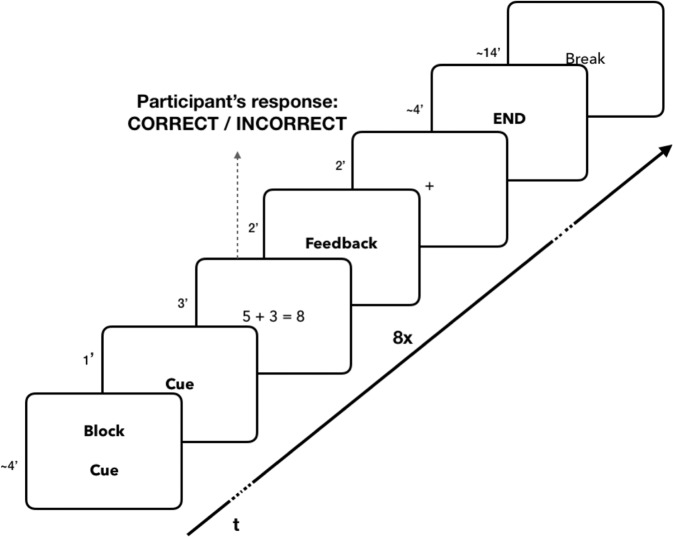
The development of error monitoring is central to learning and academic achievement. However, few studies exist on the neural correlates of children’s error monitoring, and no studies have examined its susceptibility to educational influences. Pedagogical methods differ on how they teach children to learn from errors. Here, 32 students (aged 8–12 years) from high-quality Swiss traditional or Montessori schools performed a math task with feedback during fMRI. Although the groups’ accuracies were similar, Montessori students skipped fewer trials, responded faster and showed more neural activity in right parietal and frontal regions involved in math processing. While traditionally-schooled students showed greater functional connectivity between the ACC, involved in error monitoring, and hippocampus following correct trials, Montessori students showed greater functional connectivity between the ACC and frontal regions following incorrect trials. The findings suggest that pedagogical experience influences the development of error monitoring and its neural correlates, with implications for neurodevelopment and education.
Overview
The claims and statistics of this paper haven’t been checked yet.
Free: it reads the open-access text and checks the first 5 claims that cite a source we can check. Create a free account to check every claim.
Integrity signals
Registry
Cites
Statistics
Figures
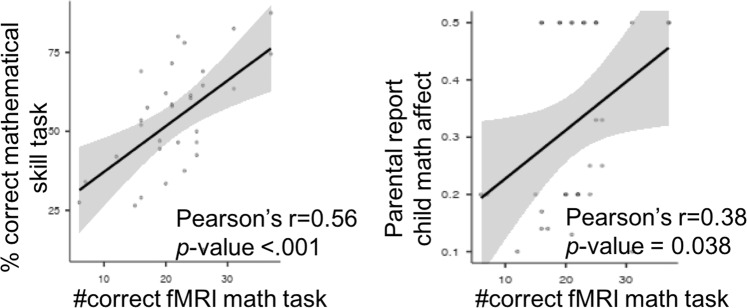
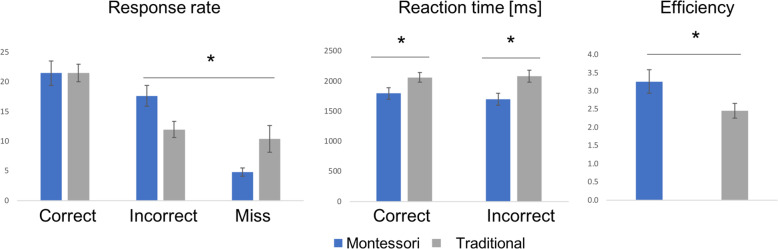
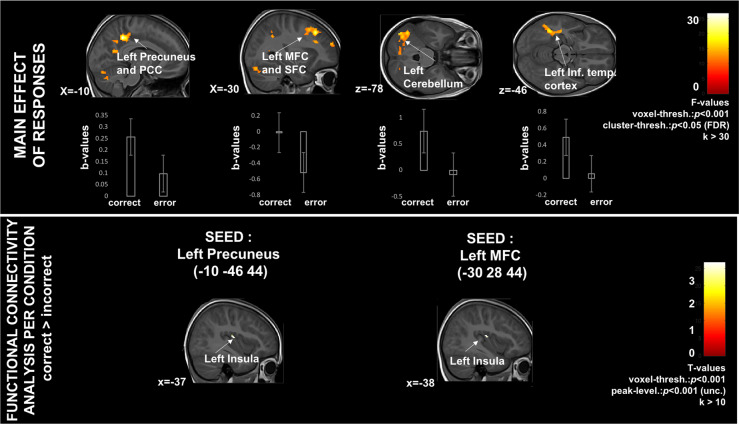
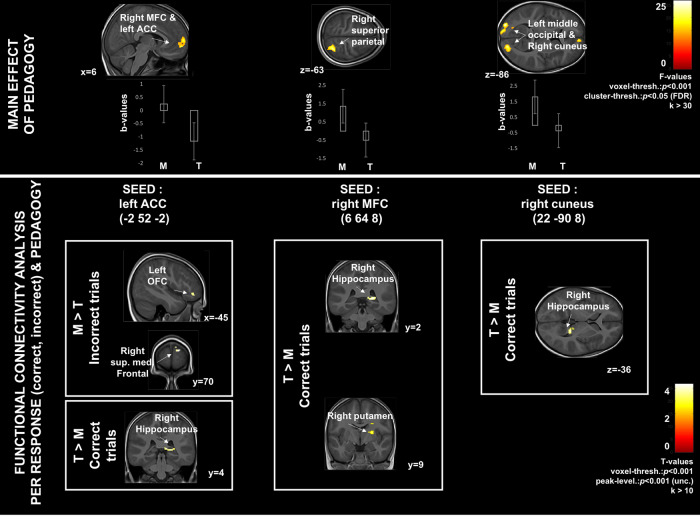
Verification
Claims the paper makes
The claims and statistics of this paper haven’t been checked yet.
Free: it reads the open-access text and checks the first 5 claims that cite a source we can check. Create a free account to check every claim.
Claims other papers make about this one
Each is checked against this paper’s own text: does it say what the citing paper says it does?
The source backs part of the claim, not all of it — or backs it for a different population, condition or comparison.
In the citing paper
“Neurocognitive studies confirm that Montessori-schooled children are particularly good at error monitoring (i.e. ‘the intrinsic ability to detect and evaluate outcomes that violate expectation and to adapt in response’ [188]).”
From Active inference goes to school: the importance of active learning in the age of large language models (2024) · cites this paper as [188]
Experimental — accuracy not yet measured
Self-check
Percentages, sums and reported differences re-computed from the paper’s own numbers.
The self-check needs the paper’s full text.
Citations
Cites
Control of goal-directed and stimulus-driven attention in the brain
Corbetta, M., & Shulman, G. L. (2002) · Nature Reviews Neuroscience · doi:10.1038/nrn755 · Cited by 12,881
Cognitive and emotional influences in anterior cingulate cortex
Bush, G., Luu, P., & Posner, M. I. (2000) · Trends in Cognitive Sciences · doi:10.1016/s1364-6613(00)01483-2 · Cited by 6,259
The precuneus: a review of its functional anatomy and behavioural correlates
Cavanna, A. E., & Trimble, M. R. (2006) · Brain · doi:10.1093/brain/awl004 · Cited by 5,128
Mapping the structural core of human cerebral cortex
Hagmann, P., Cammoun, L., Gigandet, X., Meuli, R., Honey, C. J., Wedeen, V. J., & Sporns, O. (2008) · PLoS Biology · doi:10.1371/journal.pbio.0060159 · Cited by 4,173
Self-citation(1998) · Cited by 4,172
Conflict monitoring and anterior cingulate cortex: an update
Botvinick, M. M., Cohen, J. D., & Carter, C. S. (2004) · Trends in Cognitive Sciences · doi:10.1016/j.tics.2004.10.003 · Cited by 3,623
Anterior Cingulate Cortex, Error Detection, and the Online Monitoring of Performance
Carter, C. S., Braver, T. S., Barch, D. M., Botvinick, M. M., Noll, D., & Cohen, J. D. (1998) · Science · doi:10.1126/science.280.5364.747 · Cited by 3,273
The role of the posterior cingulate cortex in cognition and disease
Leech, R., & Sharp, D. J. (2014) · Brain · doi:10.1093/brain/awt162 · Cited by 2,247
Dorsal and Ventral Attention Systems: Distinct Neural Circuits but Collaborative Roles
Vossel, S., Geng, J. J., & Fink, G. R. (2014) · The Neuroscientist · doi:10.1177/1073858413494269 · Cited by 1,438
Melby-Lervåg, M., Redick, T. S., & Hulme, C. (2016) · Perspectives on Psychological Science · doi:10.1177/1745691616635612 · Cited by 983
Learning Versus Performance: An Integrative Review
Soderstrom, N. C., & Bjork, R. A. (2015) · Perspectives on Psychological Science · doi:10.1177/1745691615569000 · Cited by 651
Neurophysiology of performance monitoring and adaptive behavior
Ullsperger, M., Danielmeier, C., & Jocham, G. (2014) · Physiological Reviews · doi:10.1152/physrev.00041.2012 · Cited by 634
Schmahmann, J. D. (2010) · Neuropsychology Review · doi:10.1007/s11065-010-9142-x · Cited by 583
Development of Anterior Cingulate Functional Connectivity from Late Childhood to Early Adulthood
Kelly, A. M. C., Di Martino, A., Uddin, L. Q., Shehzad, Z., Gee, D. G., Reiss, P. T., Margulies, D. S., Castellanos, F. X., & Milham, M. P. (2009) · Cerebral Cortex · doi:10.1093/cercor/bhn117 · Cited by 572
Bruyer, R., & Brysbaert, M. (2011) · Psychologica Belgica · doi:10.5334/pb-51-1-5 · Cited by 570
Intergenerational Effects of Parents’ Math Anxiety on Children’s Math Achievement and Anxiety
Maloney, E. A., Ramirez, G., Gunderson, E. A., Levine, S. C., & Beilock, S. L. (2015) · Psychological Science · doi:10.1177/0956797615592630 · Cited by 519
A meta-analysis of cerebellar contributions to higher cognition from PET and fMRI studies
E, K., Chen, S. A., Ho, M. R., & Desmond, J. E. (2014) · Human Brain Mapping · doi:10.1002/hbm.22194 · Cited by 516
Metcalfe, J. (2017) · Annual Review of Psychology · doi:10.1146/annurev-psych-010416-044022 · Cited by 483
Evaluating Montessori education.
Lillard, A., & Else-Quest, N. (2006) · Science · doi:10.1126/science.1132362 · Cited by 482
Karpicke, J. D., & Roediger, H. L. (2007) · Journal of Experimental Psychology: Learning, Memory, and Cognition · doi:10.1037/0278-7393.33.4.704 · Cited by 421
To create or to recall? Neural mechanisms underlying the generation of creative new ideas
Benedek, M., Jauk, E., Fink, A., Koschutnig, K., Reishofer, G., Ebner, F., & Neubauer, A. C. (2014) · NeuroImage · doi:10.1016/j.neuroimage.2013.11.021 · Cited by 407
Intrinsic motivation, curiosity, and learning
Oudeyer, P.-Y., Gottlieb, J., & Lopes, M. (2016) · Progress in Brain Research · doi:10.1016/bs.pbr.2016.05.005 · Cited by 387
The anterior cingulate gyrus and the mechanism of self-regulation
POSNER, M. I., ROTHBART, M. K., SHEESE, B. E., & TANG, Y. (2007) · Cognitive, Affective, & Behavioral Neuroscience · doi:10.3758/cabn.7.4.391 · Cited by 385
Development of executive attention in preschool children
Jones, L. B., Rothbart, M. K., & Posner, M. I. (2003) · Developmental Science · doi:10.1111/1467-7687.00307 · Cited by 381
Psychometric properties of the STAI: A reply to Ramanaiah, Franzen, and Schill
Speilberger, C. D., & Vagg, P. R. (1984) · Journal of Personality Assessment · doi:10.1207/s15327752jpa4801_16 · Cited by 355
Velanova, K., Wheeler, M. E., & Luna, B. (2008) · Cerebral Cortex · doi:10.1093/cercor/bhn012 · Cited by 277
Danielmeier, C., Eichele, T., Forstmann, B. U., Tittgemeyer, M., & Ullsperger, M. (2011) · The Journal of Neuroscience · doi:10.1523/jneurosci.4299-10.2011 · Cited by 269
Brain areas associated with numbers and calculations in children: Meta-analyses of fMRI studies
Arsalidou, M., Pawliw-Levac, M., Sadeghi, M., & Pascual-Leone, J. (2018) · Developmental Cognitive Neuroscience · doi:10.1016/j.dcn.2017.08.002 · Cited by 267
Research on Teaching and Teacher Education and Its Influences on Policy and Practice
Darling-Hammond, L. (2016) · Educational Researcher · doi:10.3102/0013189x16639597 · Cited by 261
Rathunde, K., & Csikszentmihalyi, M. (2005) · American Journal of Education · doi:10.1086/428885 · Cited by 248
Rest Is Not Idleness: Implications of the Brain’s Default Mode for Human Development and Education
Immordino-Yang, M. H., Christodoulou, J. A., & Singh, V. (2012) · Perspectives on Psychological Science · doi:10.1177/1745691612447308 · Cited by 245
Self-citationSurprise and Error: Common Neuronal Architecture for the Processing of Errors and Novelty
Wessel, J. R., Danielmeier, C., Morton, J. B., & Ullsperger, M. (2012) · The Journal of Neuroscience · doi:10.1523/jneurosci.6352-11.2012 · Cited by 226
Lillard, A. S. (2012) · Journal of School Psychology · doi:10.1016/j.jsp.2012.01.001 · Cited by 224
Functional Topography of the Cerebellum in Verbal Working Memory
Marvel, C. L., & Desmond, J. E. (2010) · Neuropsychology Review · doi:10.1007/s11065-010-9137-7 · Cited by 219
Less-structured time in children's daily lives predicts self-directed executive functioning
Barker, J. E., Semenov, A. D., Michaelson, L., Provan, L. S., Snyder, H. R., & Munakata, Y. (2014) · Frontiers in Psychology · doi:10.3389/fpsyg.2014.00593 · Cited by 214
van Duijvenvoorde, A. C. K., Zanolie, K., Rombouts, S. A. R. B., Raijmakers, M. E. J., & Crone, E. A. (2008) · The Journal of Neuroscience · doi:10.1523/jneurosci.1485-08.2008 · Cited by 211
Conflict monitoring and error processing: New insights from simultaneous EEG–fMRI
Iannaccone, R., Hauser, T. U., Staempfli, P., Walitza, S., Brandeis, D., & Brem, S. (2015) · NeuroImage · doi:10.1016/j.neuroimage.2014.10.028 · Cited by 210
Rand, W., & Montessori, M. (1941) · Marriage and Family Living · doi:10.2307/348766 · Cited by 207
Montessori education: a review of the evidence base
Marshall, C. (2017) · npj Science of Learning · doi:10.1038/s41539-017-0012-7 · Cited by 195
Besançon, M., & Lubart, T. (2008) · Learning and Individual Differences · doi:10.1016/j.lindif.2007.11.009 · Cited by 179
The Anterior Cingulate and Error Avoidance
Magno, E., Foxe, J. J., Molholm, S., Robertson, I. H., & Garavan, H. (2006) · The Journal of Neuroscience · doi:10.1523/jneurosci.0369-06.2006 · Cited by 165
The Role of Feedback During Academic Testing: The Delay Retention Effect Revisited
Dihoff, R. E., Brosvic, G. M., & Epstein, M. L. (2003) · The Psychological Record · doi:10.1007/bf03395451 · Cited by 164
Montessori Preschool Elevates and Equalizes Child Outcomes: A Longitudinal Study
Lillard, A. S., Heise, M. J., Richey, E. M., Tong, X., Hart, A., & Bray, P. M. (2017) · Frontiers in Psychology · doi:10.3389/fpsyg.2017.01783 · Cited by 150
Differential roles of caudate nucleus and putamen during instrumental learning
Brovelli, A., Nazarian, B., Meunier, M., & Boussaoud, D. (2011) · NeuroImage · doi:10.1016/j.neuroimage.2011.05.059 · Cited by 142
Amalric, M., & Dehaene, S. (2018) · Philosophical Transactions of the Royal Society B Biological Sciences · doi:10.1098/rstb.2016.0515 · Cited by 142
Downregulation of the Posterior Medial Frontal Cortex Prevents Social Conformity
Klucharev, V., Munneke, M. A. M., Smidts, A., & Fernández, G. (2011) · The Journal of Neuroscience · doi:10.1523/jneurosci.1869-11.2011 · Cited by 139
Age-related changes in error processing in young children: A school-based investigation
Grammer, J. K., Carrasco, M., Gehring, W. J., & Morrison, F. J. (2014) · Developmental Cognitive Neuroscience · doi:10.1016/j.dcn.2014.02.001 · Cited by 134
de Bruijn, E. R. A., de Lange, F. P., von Cramon, D. Y., & Ullsperger, M. (2009) · The Journal of Neuroscience · doi:10.1523/jneurosci.1751-09.2009 · Cited by 132
What’s Working in Working Memory Training? An Educational Perspective
Redick, T. S., Shipstead, Z., Wiemers, E. A., Melby-Lervåg, M., & Hulme, C. (2015) · Educational Psychology Review · doi:10.1007/s10648-015-9314-6 · Cited by 132
Tamnes, C. K., Walhovd, K. B., Torstveit, M., Sells, V. T., & Fjell, A. M. (2013) · Developmental Cognitive Neuroscience · doi:10.1016/j.dcn.2013.05.001 · Cited by 131
Your mistakes are mine: Self-other overlap predicts neural response to observed errors
Kang, S. K., Hirsh, J. B., & Chasteen, A. L. (2009) · Journal of Experimental Social Psychology · doi:10.1016/j.jesp.2009.09.012 · Cited by 116
Immediate Feedback during Academic Testing
Epstein, M. L., Epstein, B. B., & Brosvic, G. M. (2001) · Psychological Reports · doi:10.2466/pr0.2001.88.3.889 · Cited by 115
Baranès, A., Oudeyer, P., & Gottlieb, J. P. (2014) · Frontiers in Neuroscience · doi:10.3389/fnins.2014.00317 · Cited by 115
The memorial consequences of multiple-choice testing
Marsh, E. J., Roediger, H. L., Bjork, R. A., & Bjork, E. L. (2007) · Psychonomic Bulletin & Review · doi:10.3758/bf03194051 · Cited by 113
Koban, L., Pourtois, G., Vocat, R., & Vuilleumier, P. (2010) · Social Neuroscience · doi:10.1080/17470911003651547 · Cited by 99
Raven’s Vocabulary Scales (RVS)
Raven, J. C., Court, J. H., & Raven, I. (2003) · British Psychological Society eBooks · doi:10.53841/bpstest.2003.rvs · Cited by 94
van den Bos, W. (2009) · Frontiers in Human Neuroscience · doi:10.3389/neuro.09.052.2009 · Cited by 89
Heitzeg, M. M., Nigg, J. T., Hardee, J. E., Soules, M., Steinberg, D., Zubieta, J.-K., & Zucker, R. A. (2014) · Drug and Alcohol Dependence · doi:10.1016/j.drugalcdep.2014.05.002 · Cited by 88
Buzzell, G. A., Richards, J. E., White, L. K., Barker, T. V., Pine, D. S., & Fox, N. A. (2017) · NeuroImage · doi:10.1016/j.neuroimage.2017.05.045 · Cited by 87
Ryali, S., Supekar, K., Chen, T., Kochalka, J., Cai, W., Nicholas, J., Padmanabhan, A., & Menon, V. (2016) · PLOS Computational Biology · doi:10.1371/journal.pcbi.1005138 · Cited by 82
Denervaud, S., Knebel, J.-F., Hagmann, P., & Gentaz, E. (2019) · PLOS ONE · doi:10.1371/journal.pone.0225319 · Cited by 79
Self-citationLaubach, M., Caetano, M. S., & Narayanan, N. S. (2015) · Journal of Physiology-Paris · doi:10.1016/j.jphysparis.2014.12.001 · Cited by 75
Evidence for the automatic evaluation of self-generated actions
Aarts, K., Houwer, J. D., & Pourtois, G. (2012) · Cognition · doi:10.1016/j.cognition.2012.05.009 · Cited by 73
Erroneous and correct actions have a different affective valence: Evidence from ERPs.
Aarts, K., De Houwer, J., & Pourtois, G. (2013) · Emotion · doi:10.1037/a0032808 · Cited by 67
Hippocampal pattern separation supports reinforcement learning
Ballard, I. C., Wagner, A. D., & McClure, S. M. (2019) · Nature Communications · doi:10.1038/s41467-019-08998-1 · Cited by 67
A Causal Role for Posterior Medial Frontal Cortex in Choice-Induced Preference Change
Izuma, K., Akula, S. K., Murayama, K., Wu, D.-A. J., Iacoboni, M., & Adolphs, R. (2015) · Journal of Neuroscience · doi:10.1523/jneurosci.4591-14.2015 · Cited by 66
Hämmerer, D., Müller, V., & Li, S. (2014) · Neuroscience & Biobehavioral Reviews · doi:10.1016/j.neubiorev.2014.06.008 · Cited by 54
What happens when children encounter an error?
Smulders, S. F. A., Soetens, E. L. L., & van der Molen, M. W. (2016) · Brain and Cognition · doi:10.1016/j.bandc.2016.02.004 · Cited by 44
Yang, X.-F., Bossmann, J., Schiffhauer, B., Jordan, M., & Immordino-Yang, M. H. (2013) · Frontiers in Psychology · doi:10.3389/fpsyg.2012.00592 · Cited by 41
Self-citation(2001) · The NAMTA journal · Cited by 37
Integrated STEM in practice: Learning from Montessori philosophies and practices
Livstrom, I. C., Szostkowski, A., & Roehrig, G. (2019) · School Science and Mathematics · doi:10.1111/ssm.12331 · Cited by 33
Looking up to virtue: averting gaze facilitates moral construals via posteromedial activations
Yang, X., Pavarini, G., Schnall, S., & Immordino‐Yang, M. H. (2018) · Social Cognitive and Affective Neuroscience · doi:10.1093/scan/nsy081 · Cited by 31
Self-citationDenervaud, S., Knebel, J., Immordino‐Yang, M. H., & Hagmann, P. (2020) · Mind, Brain, and Education · doi:10.1111/mbe.12233 · Cited by 29
Self-citationOudeyer, P. (2017) · Behavioral and Brain Sciences · doi:10.1017/s0140525x17000243 · Cited by 24
Children’s automatic evaluation of self‐generated actions is different from adults
Denervaud, S., Hess, A., Sander, D., & Pourtois, G. (2021) · Developmental Science · doi:10.1111/desc.13045 · Cited by 11
Self-citationActive learning and decision making: an introduction to the collection
Gottlieb, J. P., Lopes, M. C., & Oudeyer, P. (2014) · F1000Research · doi:10.12688/f1000research.5757.2 · Cited by 1
Active learning and decision making: an introduction to the collection
Gottlieb, J. P. (2014) · F1000Research · doi:10.12688/f1000research.5757.1 · Cited by 1
Research works printed but not linked: 1
- Dweck, C. S. Self-theories: Their Role in Motivation, Personality, and Development (Psychology Press, 1999).
Cited by
The neuroscience of active learning and direct instruction
Dubinsky, J. M., & Hamid, A. (2024) · Neuroscience & Biobehavioral Reviews · doi:10.1016/j.neubiorev.2024.105737 · Cited by 156
Disentangling age and schooling effects on inhibitory control development: An fNIRS investigation
McKay, C., Wijeakumar, S., Rafetseder, E., & Shing, Y. L. (2021) · Developmental Science · doi:10.1111/desc.13205 · Cited by 28
An Association Between Montessori Education in Childhood and Adult Wellbeing
Lillard, A. S., Meyer, M. J., Vasc, D., & Fukuda, E. (2021) · Frontiers in Psychology · doi:10.3389/fpsyg.2021.721943 · Cited by 21
Guerrero, S., Valcárcel, J. V., & Rodríguez, A. (2024) · Children and Youth Services Review · doi:10.1016/j.childyouth.2024.107480 · Cited by 49
Weaving a Colorful Cloth: Centering Education on Humans’ Emergent Developmental Potentials
Immordino‐Yang, M. H., Nasir, N. S., Cantor, P., & Yoshikawa, H. (2023) · Review of Research in Education · doi:10.3102/0091732x231223516 · Cited by 38
Self-citation
Metadata
- Authors
- Denervaud, S., Fornari, E., Yang, X.-F., Hagmann, P., Immordino-Yang, M. H., & Sander, D.
- Affiliations
- University of Geneva (CH)
- Centre Hospitalier Universitaire Vaudois (CH)
- University of Southern California (US)
- Corresponding author
- Denervaud, Solange
- Sander, David
- ORCID
- Venue
- npj Science of Learning
- Published
- 2020-07-17
- Volume
- 5
- Issue
- 1
- Pages
- 11-11
- ISSN
- 2056-7936 (ISSN-L)
- PMC
- PMC7367880
- OpenAlex
- W3043756712
- Cited by
- 43
- References
- 77
- Citations by year
- 2026: 3 · 2025: 8 · 2024: 9 · 2023: 12 · 2022: 4 · 2021: 5 · 2020: 1
- FWCI
- 2.96
- Type
- journal article
- Language
- en
- Open access
- gold
- doi.org
- Licence
- cc-by
- creativecommons.org/licenses/by/4.0 (tdm)
- creativecommons.org/licenses/by/4.0 (vor)
- Locations
- npj Science of Learning (publishedVersion, cc-by)
- PubMed Central (publishedVersion, cc-by)
- PubMed (publishedVersion)
- SERVAL (Université de Lausanne) (publishedVersion, cc-by)
- Archive ouverte UNIGE (University of Geneva) (publishedVersion, other-oa)
- IRIS (submittedVersion, cc-by)
- Archive ouverte UNIGE (University of Geneva) (submittedVersion, cc-by)
- Funders
- Schweizerischer Nationalfonds zur Förderung der Wissenschaftlichen Forschung
- John Templeton Foundation
- Topics
- Life Sciences › Neuroscience › Cognitive Neuroscience › Neuroscience, Education and Cognitive Function
- Life Sciences › Neuroscience › Cognitive Neuroscience › Neural and Behavioral Psychology Studies
- Social Sciences › Psychology › Developmental and Educational Psychology › Cognitive and developmental aspects of mathematical skills
- Keywords
- error monitoring, Montessori method, traditional schooling, children, anterior cingulate cortex, hippocampus, functional connectivity, feedback, learning from mistakes, teaching experience, brain development, parietal cortex, frontal cortex
About these checks
Registry, retraction, Cites and statistics results are computed, not judged, with one exception: a printed reference that no index lists is read once by a model before it counts as a citation error. Claims are extracted by a model and kept only when their quote appears verbatim in the text; each cited source is then checked, with a model’s help, for whether it says what the claim relies on. Those verdicts can be wrong — read the claim’s quote and the cited source before relying on one.
Statistics and arithmetic are recomputed, not judged.
Confidence bands are shown only for fields calibrated on our annotated test set. None is calibrated yet, so no band is shown.
What counts as a claim ›How we measure confidence ›How we check this ›
Are you an author, or do you see a problem with this page? Request a review
Data sources
Bibliographic data: Semantic Scholar, OpenAlex, Crossref.
Contains information from the Semantic Scholar Academic Graph Datasets, made available under the ODC Attribution License (ODC-BY 1.0).
Semantic Scholar’s data is described in: Kinney, R., et al. (2023). The Semantic Scholar Open Data Platform. arXiv:2301.10140.
