

Clinical responses to ERK inhibition in BRAF V600E-mutant colorectal cancer predicted using a computational model
Open accessThe DOI matches its Crossref record; 75 of the 75 references it cites were found in a registry or an index.
Abstract
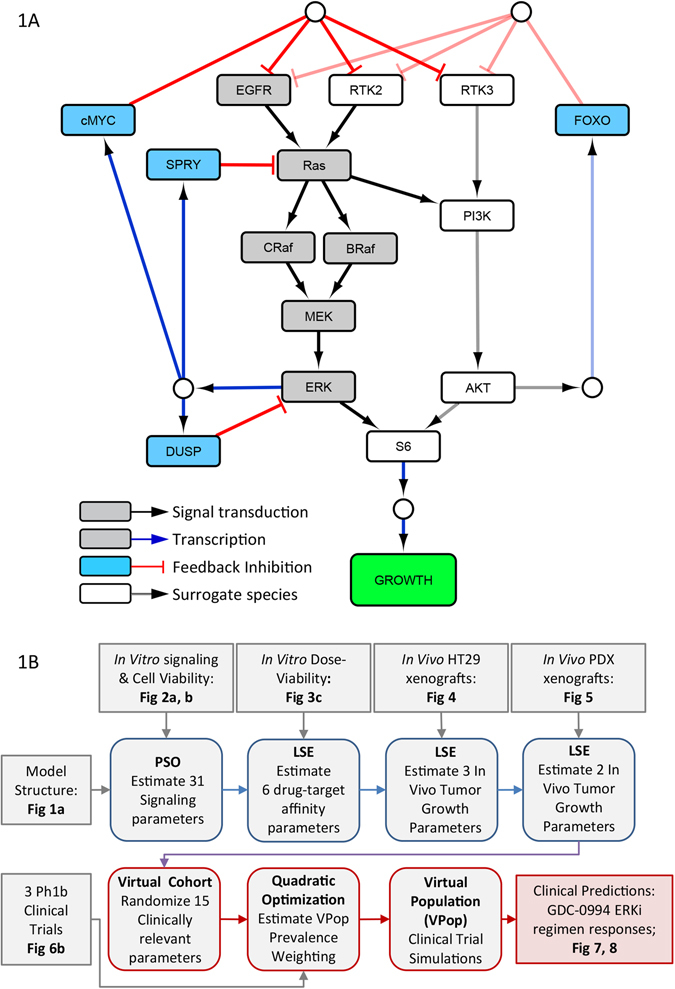
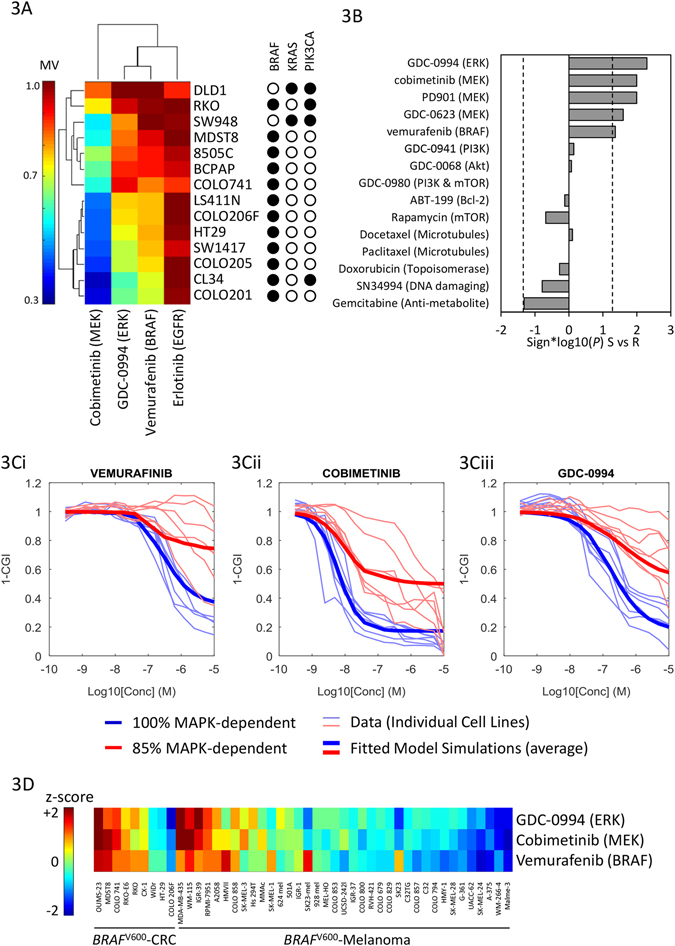
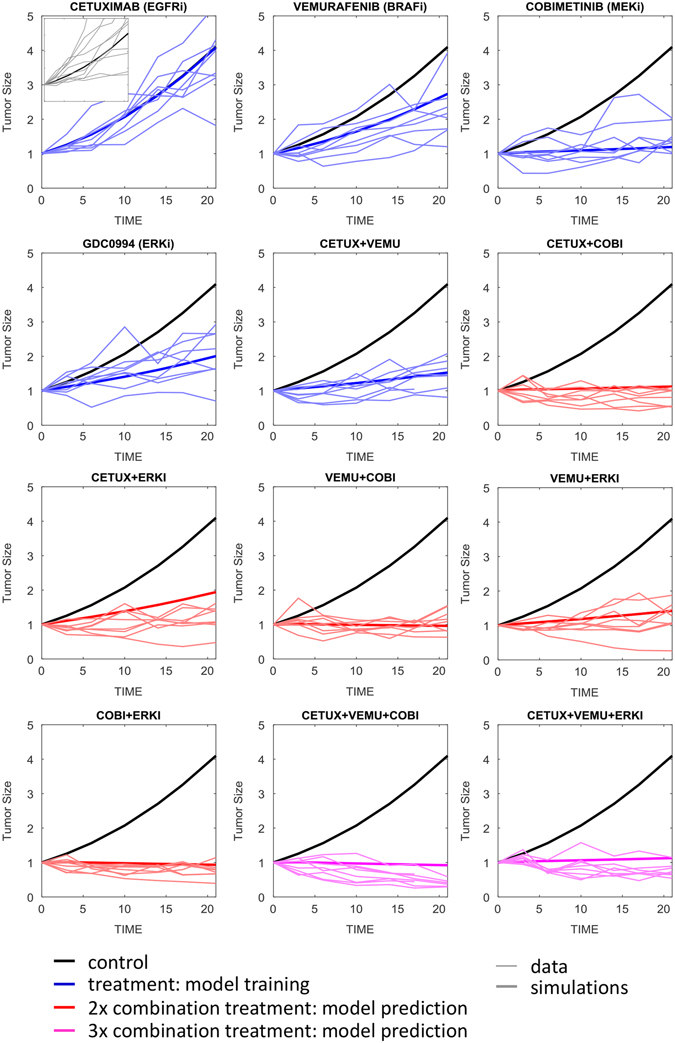
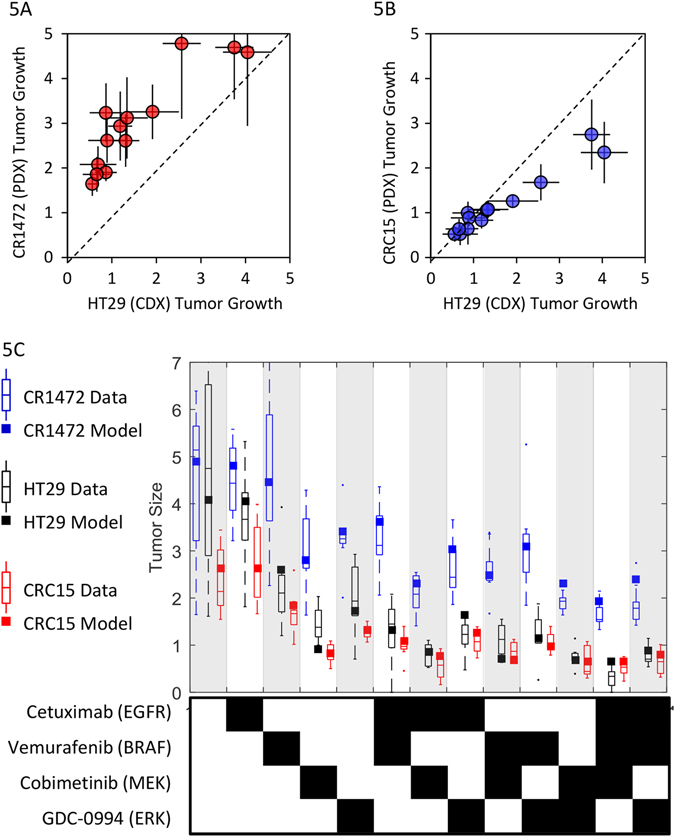
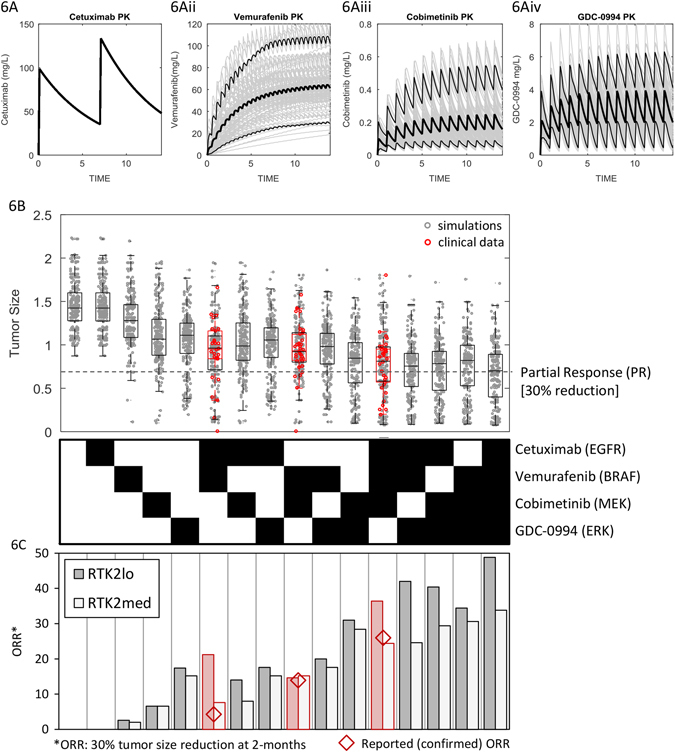
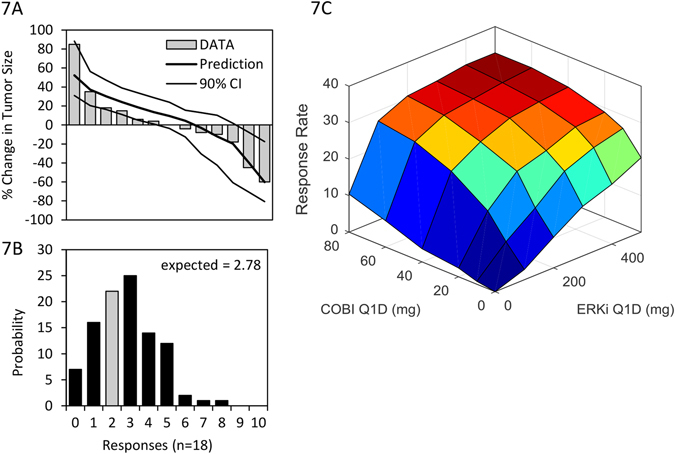
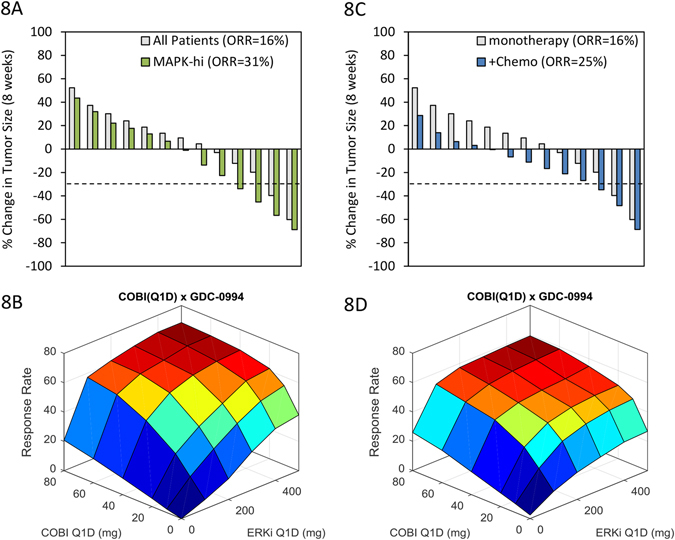
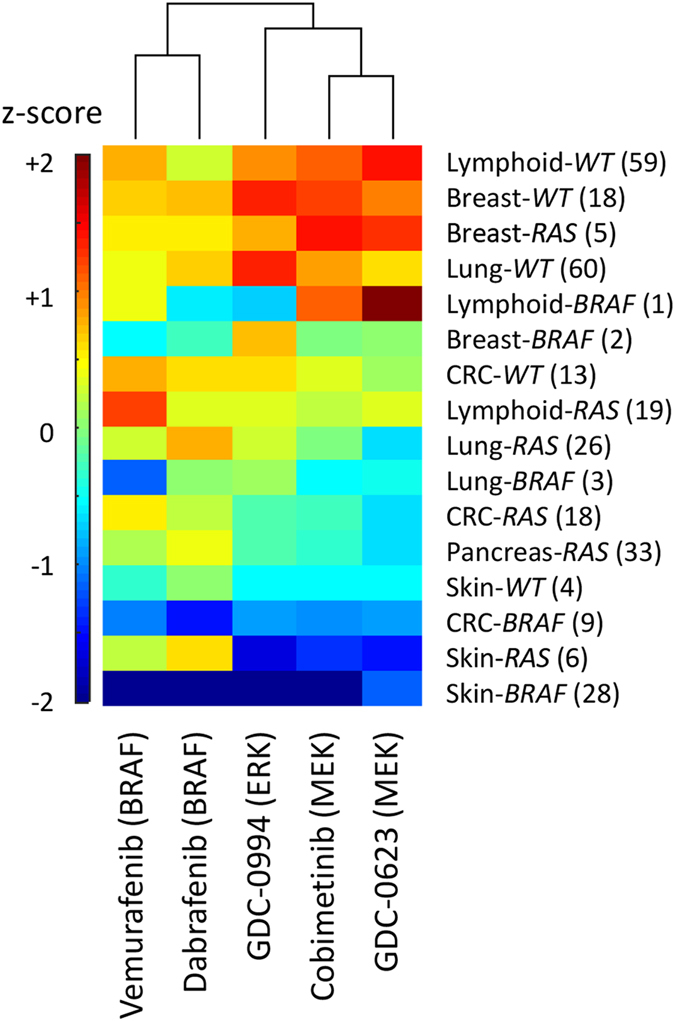
Approximately 10% of colorectal cancers harbor BRAFV600E mutations, which constitutively activate the MAPK signaling pathway. We sought to determine whether ERK inhibitor (GDC-0994)-containing regimens may be of clinical benefit to these patients based on data from in vitro (cell line) and in vivo (cell- and patient-derived xenograft) studies of cetuximab (EGFR), vemurafenib (BRAF), cobimetinib (MEK), and GDC-0994 (ERK) combinations. Preclinical data was used to develop a mechanism-based computational model linking cell surface receptor (EGFR) activation, the MAPK signaling pathway, and tumor growth. Clinical predictions of anti-tumor activity were enabled by the use of tumor response data from three Phase 1 clinical trials testing combinations of EGFR, BRAF, and MEK inhibitors. Simulated responses to GDC-0994 monotherapy (overall response rate = 17%) accurately predicted results from a Phase 1 clinical trial regarding the number of responding patients (2/18) and the distribution of tumor size changes (“waterfall plot”). Prospective simulations were then used to evaluate potential drug combinations and predictive biomarkers for increasing responsiveness to MEK/ERK inhibitors in these patients.
Overview
The claims and statistics of this paper haven’t been checked yet.
Free: it reads the open-access text and checks the first 5 claims that cite a source we can check. Create a free account to check every claim.
Integrity signals
Registry
Cites
Statistics
Figures
Verification
Claims the paper makes
The claims and statistics of this paper haven’t been checked yet.
Free: it reads the open-access text and checks the first 5 claims that cite a source we can check. Create a free account to check every claim.
Claims other papers make about this one
Each is checked against this paper’s own text: does it say what the citing paper says it does?
The source backs part of the claim, not all of it — or backs it for a different population, condition or comparison.
In the citing paper
“We are aware of at least one case of successful model sharing using such details. An SBML file and a single MATLAB “run” script22 was translated into R via the mgrsolve package and then used to create a R‐Shiny application without any input from the authors, with the entire process taking only of a few hours of work.23”
From Reproducibility of Quantitative Systems Pharmacology Models: Current Challenges and Future Opportunities (2019) · cites this paper as [22]
Experimental — accuracy not yet measuredIn the citing paper
“The negative clinical outcome was attributed to the fact that blockading MEK released the negative feedback regulation of RTKs [15–17].”
From Genome-wide CRISPR-cas9 knockout screening identifies GRB7 as a driver for MEK inhibitor resistance in KRAS mutant colon cancer (2022) · cites this paper as [15]
Self-check
Percentages, sums and reported differences re-computed from the paper’s own numbers.
The self-check needs the paper’s full text.
Citations
Cites
New response evaluation criteria in solid tumours: revised RECIST guideline (version 1.1)
Eisenhauer, E. A., Therasse, P., Bogaerts, J., Schwartz, L. H., Sargent, D., Ford, R., Dancey, J., Arbuck, S., Gwyther, S., Mooney, M., et al. (2009) · European Journal of Cancer · doi:10.1016/j.ejca.2008.10.026 · Cited by 29,534
Improved survival with vemurafenib in melanoma with BRAF V600E mutation
Chapman, P. B., Hauschild, A., Robert, C., Haanen, J. B., Ascierto, P., Larkin, J., Dummer, R., Garbe, C., Testori, A., Maio, M., et al. (2011) · New England Journal of Medicine · doi:10.1056/nejmoa1103782 · Cited by 7,720
Genomic and Transcriptomic Features of Response to Anti-PD-1 Therapy in Metastatic Melanoma
Hugo, W., Zaretsky, J. M., Sun, L., Song, C., Moreno, B. H., Hu-Lieskovan, S., Berent-Maoz, B., Pang, J., Chmielowski, B., Cherry, G., et al. (2016) · Cell · doi:10.1016/j.cell.2016.02.065 · Cited by 3,448
Hauschild, A., Grob, J.-J., Demidov, L. V., Jouary, T., Gutzmer, R., Millward, M., Rutkowski, P., Blank, C. U., Miller, W. H., Kaempgen, E., et al. (2012) · The Lancet · doi:10.1016/s0140-6736(12)60868-x · Cited by 2,989
Survival in BRAF V600-mutant advanced melanoma treated with vemurafenib
Sosman, J. A., Kim, K. B., Schuchter, L., Gonzalez, R., Pavlick, A. C., Weber, J. S., McArthur, G. A., Hutson, T. E., Moschos, S. J., Flaherty, K. T., et al. (2012) · New England Journal of Medicine · doi:10.1056/nejmoa1112302 · Cited by 2,156
Combined Vemurafenib and Cobimetinib in BRAF -Mutated Melanoma
Larkin, J., Ascierto, P. A., Dréno, B., Atkinson, V., Liszkay, G., Maio, M., Mandalà, M., Demidov, L., Stroyakovskiy, D., Thomas, L., et al. (2014) · New England Journal of Medicine · doi:10.1056/nejmoa1408868 · Cited by 2,068
Unresponsiveness of colon cancer to BRAF(V600E) inhibition through feedback activation of EGFR
Prahallad, A., Sun, C., Huang, S., Di Nicolantonio, F., Salazar, R., Zecchin, D., Beijersbergen, R. L., Bardelli, A., & Bernards, R. (2012) · Nature · doi:10.1038/nature10868 · Cited by 2,051 · cited 1×
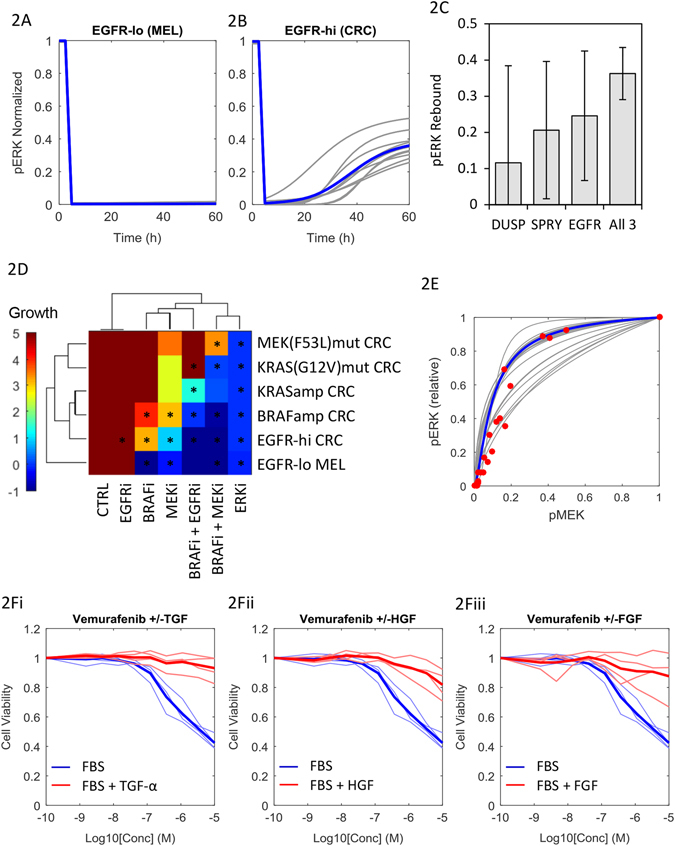
“The pERK “rebound” has been attributed, via gene knockout and inhibitor studies, to the activation of EGFR, which is expressed at much higher levels in CRC than in melanoma.(17) We used a particle swarm optimization (PSO) algorithm to search for a set of 28 system parameters that produce pERK rebound in CRC but not me…”
MethodSelf-citationEGF–ERBB signalling: towards the systems level
Citri, A., & Yarden, Y. (2006) · Nature Reviews Molecular Cell Biology · doi:10.1038/nrm1962 · Cited by 2,004 · cited 2×
“EGFR inhibition provides additional activity by suppressing the activation of MAPK and other effector pathways, both those engaged directly by EGFR and downstream of Ras, such as PI3K/Akt.(59) However, as revealed by both our analyses and clinical experience in CRC,(60) multiple cell surface receptors are Fig.”
BackgroundCombined BRAF and MEK Inhibition versus BRAF Inhibition Alone in Melanoma
Long, G. V., Stroyakovskiy, D., Gogas, H., Levchenko, E., de Braud, F., Larkin, J., Garbe, C., Jouary, T., Hauschild, A., Grob, J. J., et al. (2014) · New England Journal of Medicine · doi:10.1056/nejmoa1406037 · Cited by 1,899
Mi, H., Huang, X., Muruganujan, A., Tang, H., Mills, C., Kang, D., & Thomas, P. D. (2017) · Nucleic Acids Research · doi:10.1093/nar/gkw1138 · Cited by 1,874
Research works printed but not linked: 1
- Larkin J Combined vemurafenib and cobimetinib in BRAF-mutated melanoma N. Engl. J. Med. 2014 371 1867 1876 10.1056/NEJMoa1408868 25265494 · DOI · Paper page
Cited by
Challenges and Opportunities in Cancer Drug Resistance
Ward, R. A., Fawell, S., Floc’h, N., Flemington, V., McKerrecher, D., & Smith, P. D. (2021) · Chemical Reviews · doi:10.1021/acs.chemrev.0c00383 · Cited by 445
Menden, M. P., Wang, D., Mason, M. J., Szalai, B., Bulusu, K. C., Guan, Y., Yu, T., Kang, J., Jeon, M., Wolfinger, R., et al. (2019) · Nature Communications · doi:10.1038/s41467-019-09799-2 · Cited by 363
Targeting RAS–RAF–MEK–ERK signaling pathway in human cancer: Current status in clinical trials
Song, Y., Bi, Z., Liu, Y., Qin, F., Wei, Y., & Wei, X. (2023) · Genes & Diseases · doi:10.1016/j.gendis.2022.05.006 · Cited by 212
Hosseini, I., Gadkar, K., Stefanich, E., Li, C.-C., Sun, L. L., Chu, Y.-W., & Ramanujan, S. (2020) · npj Systems Biology and Applications · doi:10.1038/s41540-020-00145-7 · Cited by 123
Self-citationBRAF Gene and Melanoma: Back to the Future
Ottaviano, M., Giunta, E. F., Tortora, M., Curvietto, M., Attademo, L., Bosso, D., Cardalesi, C., Rosanova, M., Placido, P. D., Pietroluongo, E., et al. (2021) · International Journal of Molecular Sciences · doi:10.3390/ijms22073474 · Cited by 131
Gerosa, L., Chidley, C., Fröhlich, F., Sanchez, G., Lim, S. K., Muhlich, J., Chen, J.-Y., Vallabhaneni, S., Baker, G. J., Schapiro, D., et al. (2020) · Cell Systems · doi:10.1016/j.cels.2020.10.002 · Cited by 110
Koga, Y., & Ochiai, A. (2019) · Cells · doi:10.3390/cells8050418 · Cited by 117
Bradshaw, E. L., Spilker, M. E., Zang, R., Bansal, L., He, H., Jones, R. D. O., Le, K., Penney, M., Schuck, E., Topp, B., et al. (2019) · CPT: Pharmacometrics & Systems Pharmacology · doi:10.1002/psp4.12463 · Cited by 92
Self-citationElmokadem, A., Riggs, M. M., & Baron, K. T. (2019) · CPT Pharmacometrics & Systems Pharmacology · doi:10.1002/psp4.12467 · Cited by 103
Varga, A., Soria, J.-C., Hollebecque, A., LoRusso, P., Bendell, J., Huang, S.-M. A., Wagle, M.-C., Okrah, K., Liu, L., Murray, E., et al. (2020) · Clinical Cancer Research · doi:10.1158/1078-0432.ccr-19-2574 · Cited by 87
“Daily oral dosing of GDC-0994 results in significant single-agent activity in multiple in vivo cancer models, including KRAS-mutant and BRAF-mutant human xenograft tumors in mice (11, 12).”
BackgroundSelf-citationMaximizing the impact of microphysiological systems with in vitro–in vivo translation
Cirit, M., & Stokes, C. L. (2018) · Lab on a Chip · doi:10.1039/c8lc00039e · Cited by 70
Yu, C., Luo, D., Yu, J., Zhang, M., Zheng, X., Xu, G., Wang, J., Wang, H., Xu, Y., Jiang, K., et al. (2022) · Oncogene · doi:10.1038/s41388-021-02077-w · Cited by 70
Virtual Populations for Quantitative Systems Pharmacology Models
Cheng, Y., Straube, R., Alnaif, A. E., Huang, L., Leil, T. A., & Schmidt, B. J. (2022) · Methods in Molecular Biology · doi:10.1007/978-1-0716-2265-0_8 · Cited by 54
Gao, W., Liu, J., Shtylla, B., Venkatakrishnan, K., Yin, D., Shah, M., Nicholas, T., & Cao, Y. (2024) · CPT Pharmacometrics & Systems Pharmacology · doi:10.1002/psp4.13079 · Cited by 59
Targeting the RAS upstream and downstream signaling pathway for cancer treatment
Hossain, M. A. (2024) · European Journal of Pharmacology · doi:10.1016/j.ejphar.2024.176727 · Cited by 57
Kirouac, D. C., Cicali, B., & Schmidt, S. (2019) · CPT: Pharmacometrics & Systems Pharmacology · doi:10.1002/psp4.12390 · Cited by 46
Self-citationThe role of heavy metals in the development of colorectal cancer
Li, Y., Lou, J., Hong, S., Hou, D., Lv, Y., Guo, Z., Wang, K., Xu, Y., Zhai, Y., & Liu, H. (2023) · BMC Cancer · doi:10.1186/s12885-023-11120-w · Cited by 46
Amirkhah, R., Naderi‐Meshkin, H., Shah, J. S., Dunne, P. D., & Schmitz, U. (2019) · Cells · doi:10.3390/cells8080929 · Cited by 42
“Recently, a computational model was developed, linking cell surface receptor (EGFR) activation, the MAPK signalling pathway and tumour growth to determine whether ERK inhibitor drugs may be of benefit for CRC patients with the frequently occurring BRAFV600E mutation [180].”
BackgroundTargeting ERK beyond the boundaries of the kinase active site in melanoma
Sammons, R. M., Ghose, R., Tsai, K. Y., & Dalby, K. N. (2019) · Molecular Carcinogenesis · doi:10.1002/mc.23047 · Cited by 38
“Current preclinical ERK inhibitors are limited by toxicity and adverse effects, as ERK function is important in healthy cells, and ERK inhibition must reach >90% to achieve tumor regression.(24,109) The development of new ATP‐competitive inhibitors is associated with”
Mioc, M., Avram, S. I., Bercean, V. N., Kurunczi, L., Ghiulai, R. M., Oprean, C., Coricovac, D. E., Dehelean, C. A., Mioc, A., Bălan, M., et al. (2018) · Frontiers in Chemistry · doi:10.3389/fchem.2018.00373 · Cited by 33
How Do We “Validate” a QSP Model?
Kirouac, D. C. (2018) · CPT Pharmacometrics & Systems Pharmacology · doi:10.1002/psp4.12310 · Cited by 31
Self-citationRoadmap on plasticity and epigenetics in cancer
Foo, J., Basanta, D., Rockne, R. C., Strelez, C., Shah, C. A., Ghaffarian, K., Mumenthaler, S. M., Mitchell, K., Lathia, J. D., Frankhouser, D. E., et al. (2022) · Physical Biology · doi:10.1088/1478-3975/ac4ee2 · Cited by 30
“Models that incorporate translation of pre-clinical datasets into clinical efficacy projections for multiple drug combinations have incorporated some pathway resistance components [97].”
BackgroundSelf-citationHow to find the right drug for each patient? Advances and challenges in pharmacogenomics
Kalamara, A., Tobalina, L., & Sáez-Rodríguez, J. (2018) · Current Opinion in Systems Biology · doi:10.1016/j.coisb.2018.07.001 · Cited by 29
Park, S., Hwang, C. Y., Choi, J., Joung, C. Y., & Cho, K. (2020) · Oncogene · doi:10.1038/s41388-020-1255-y · Cited by 26
Modelling of Protein Kinase Signaling Pathways in Melanoma and Other Cancers
Kunz, M., & Vera, J. (2019) · Cancers · doi:10.3390/cancers11040465 · Cited by 24
“Similar approaches have been used to look for drug combinations targeting the MAPK/AKT signaling network in colorectal cancer [77,78] and lung cancer [79].”
Li, Y., Xiao, J., Zhang, T., Zheng, Y., & Jin, H. (2022) · Frontiers in Oncology · doi:10.3389/fonc.2022.897548 · Cited by 20
Buetti‐Dinh, A., Herold, M., Christel, S., Hajjami, M. E., Delogu, F., Ilie, O., Bellenberg, S., Wilmes, P., Poetsch, A., Sand, W., et al. (2020) · BMC Bioinformatics · doi:10.1186/s12859-019-3337-9 · Cited by 19
Sayama, H., Marcantonio, D. H., Nagashima, T., Shimazaki, M., Minematsu, T., Apgar, J. F., Burke, J. M., Wille, L., Nagasaka, Y., & Kirouac, D. C. (2021) · CPT Pharmacometrics & Systems Pharmacology · doi:10.1002/psp4.12661 · Cited by 18
Self-citationA Flexible Approach for Context‐Dependent Assessment of Quantitative Systems Pharmacology Models
Ramanujan, S., Chan, J. R., Friedrich, C. M., & Thalhauser, C. J. (2019) · CPT Pharmacometrics & Systems Pharmacology · doi:10.1002/psp4.12409 · Cited by 18
“Kirouac et al.(6) modeled the MAPK pathway based on rich preclinical and limited clinical data to explore the potential utility of a novel ERK inhibitor, especially in the treatment of RAF- mutant BRAF colorectal cancer, to support clinical strategy and ongoing phase I trials.”
BackgroundMethodSelf-citationBuetti‐Dinh, A., & Friedman, R. (2018) · BMC Bioinformatics · doi:10.1186/s12859-018-2145-y · Cited by 16
Assessing the performance of QSP models: biology as the driver for validation
Singh, F. A., Afzal, N., Smithline, S. J., & Thalhauser, C. J. (2024) · Journal of Pharmacokinetics and Pharmacodynamics · doi:10.1007/s10928-023-09871-x · Cited by 15
Zhou, Y.-T., Chu, J., Zhao, S., Li, G.-L., Fu, Z., Zhang, S., Gao, X.-H., Ma, W., Shen, K., Gao, Y., et al. (2024) · Acta Pharmacologica Sinica · doi:10.1038/s41401-024-01232-9 · Cited by 16
Beyond the basics: A deep dive into parameter estimation for advanced PBPK and QSP models
Toshimoto, K. (2024) · Drug Metabolism and Pharmacokinetics · doi:10.1016/j.dmpk.2024.101011 · Cited by 14
Braniff, N., Joshi, T., Cassidy, T., Trogdon, M., Kumar, R., Poels, K. E., Allen, R., Musante, C. J., & Shtylla, B. (2024) · CPT Pharmacometrics & Systems Pharmacology · doi:10.1002/psp4.13270 · Cited by 14
Growth‐rate model predicts in vivo tumor response from in vitro data
Diegmiller, R., Salphati, L., Alicke, B., Wilson, T. R., Stout, T. J., & Hafner, M. A. (2022) · CPT Pharmacometrics & Systems Pharmacology · doi:10.1002/psp4.12836 · Cited by 13
Systems Biology of the Cancer Cell
Janes, K. A., & Lazzara, M. J. (2024) · Annual Review of Biomedical Engineering · doi:10.1146/annurev-bioeng-103122-030552 · Cited by 12
Integration of transcriptomics data into agent-based models of solid tumor metastasis
Retzlaff, J., Lai, X., Berking, C., & Vera, J. (2023) · Computational and Structural Biotechnology Journal · doi:10.1016/j.csbj.2023.02.014 · Cited by 12
Building patient‐specific models for receptor tyrosine kinase signaling networks
Ebata, K., Yamashiro, S., Iida, K., & Okada, M. (2021) · FEBS Journal · doi:10.1111/febs.15831 · Cited by 12
Li, J., Xia, Y., Fan, X., Wu, X., Yang, F., Hu, S., & Wang, Z. (2021) · Frontiers in Cell and Developmental Biology · doi:10.3389/fcell.2021.708562 · Cited by 11
“Previous studies demonstrate that the activation of the MEK/ERK signaling pathway phosphorylates the T38 sites of Ets-1 and activates Ets-1, thereby elevating the Ets-1 expression (Li et al., 2019).”
BackgroundInfluentialNew perspectives on targeting RAF, MEK and ERK in melanoma
Dumaz, N., & Lebbé, C. (2020) · Current Opinion in Oncology · doi:10.1097/cco.0000000000000708 · Cited by 11
“1) but are limited by toxicity and adverse effects, as ERK function is important in normal cells and ERK inhibition must reach above 80% to achieve tumor regression [5,41].”
BackgroundSpolaor, S., Scheve, M., Fırat, M., Cazzaniga, P., Besozzi, D., & Nobile, M. S. (2021) · Frontiers in Genetics · doi:10.3389/fgene.2021.617935 · Cited by 10
Combinatorial ERK Inhibition Enhances MAPK Pathway Suppression in BRAF-Mutant Melanoma
Kosnopfel, C., Sinnberg, T. W., Mane, S., Dongo, M., Garbe, C., & Niessner, H. (2025) · International Journal of Molecular Sciences · doi:10.3390/ijms26199794 · Cited by 9
Quantitative Systems Pharmacology models as a key to translational medicine
Schoeberl, B. (2019) · Current Opinion in Systems Biology · doi:10.1016/j.coisb.2019.10.019 · Cited by 7
Hirway, S. U., & Weinberg, S. H. (2023) · Computational and Systems Oncology · doi:10.1002/cso2.1044 · Cited by 7
Rac1 and Akt Exhibit Distinct Roles in Mediating Aβ-Induced Memory Damage and Learning Impairment
Cheng, K., Chen, Y., Wu, C., Lee, W.-P., Cheung, C. H. A., & Chiang, H. (2021) · Molecular Neurobiology · doi:10.1007/s12035-021-02471-1 · Cited by 7
Oishi, M., Sayama, H., Toshimoto, K., Nakayama, T., & Nagasaka, Y. (2024) · Drug Metabolism and Pharmacokinetics · doi:10.1016/j.dmpk.2024.101020 · Cited by 7
Novel Homodimer Metabolites of GDC-0994 via Cytochrome P450–Catalyzed Radical Coupling
Takahashi, R., Grandner, J. M., Bobba, S., Liu, Y., Beroza, P., Zhang, D., & Ma, S. (2020) · Drug Metabolism and Disposition · doi:10.1124/dmd.119.090019 · Cited by 7
“…activation in human cancers, GDC-0994 was in development as an anti-cancer therapeutic with potential in a broad array of cancer indications (Ren et al., 2015; Kirouac et al., 2017) including its clinical testing in patients with locally advanced or metastatic solid tumors (Varga et al., 2019).”
BackgroundFuture Directions for Quantitative Systems Pharmacology
Schoeberl, B., Musante, C. J., & Ramanujan, S. (2024) · Handbook of experimental pharmacology · doi:10.1007/164_2024_737 · Cited by 6
Self-citationKardamiliotis, K., Karanatsiou, E., Aslanidou, I., Stergiou, E., Vizirianakis, I. S., & Malousi, A. (2022) · Future Pharmacology · doi:10.3390/futurepharmacol2010003 · Cited by 6
“Multiscale systems–pharmacology models designed to predict efficacy of novel anti-cancer drugs could be heavily influenced by approaches of this type [54,55].”
BackgroundChiang, C.-Y., Zhang, M., Huang, J., Zeng, J., Chen, C., Pan, D., Yang, H., Zhang, T., Yang, M., Han, Q., et al. (2022) · Acta Pharmacologica Sinica · doi:10.1038/s41401-023-01164-w · Cited by 6
Understanding molecular signaling cascades in neural disease using multi-resolution models
Viswan, N. A., & Bhalla, U. S. (2023) · Current Opinion in Neurobiology · doi:10.1016/j.conb.2023.102808 · Cited by 6
Hirway, S. U., Nairon, K. G., Skardal, A., & Weinberg, S. H. (2024) · Cellular and Molecular Bioengineering · doi:10.1007/s12195-024-00831-0 · Cited by 5
He, W., Shajahan‐Haq, A. N., & Baumann, W. T. (2023) · Methods in molecular biology · doi:10.1007/978-1-0716-3008-2_16 · Cited by 5
Bai, J. P. F., & Yu, L. (2022) · Journal of Pharmaceutical Sciences · doi:10.1016/j.xphs.2022.10.016 · Cited by 5
Corridore, S., Verreault, M., Martin, H., Delobel, T., Carrère, C., Idbaïh, A., & Ballesta, A. (2025) · British Journal of Pharmacology · doi:10.1111/bph.70027 · Cited by 5
“…regulatory pathways such as JNK (Fey et al., 2015), p53 (Elia ˇ s et al., 2014; Jiménez et al., 2024; Sturrock et al., 2011), tyrosine kinase receptor s (Iyengar et al., 2012; Kirouac et al., 2017; Sayama et al., 2021) or apoptosis (Ballesta et al., 2013; Huber et al., 2007; Zhang et al., 2019).”
Pastor, P. G., Gonzalez, N. S., Salvà, F., Ros, J., Baraibar, I., Rodríguez-Castells, M., de Torres, C. S., García, A., Alcaráz, A., Vaghi, C., et al. (2026) · Genes · doi:10.3390/genes17040460 · Cited by 4
Li, Y., Wilkins, A. K., Davis, J. L., Knab, T., Toukam, M., Boni, J. P., & Kirouac, D. C. (2025) · npj Systems Biology and Applications · doi:10.1038/s41540-025-00544-8 · Cited by 3
Self-citationA Proxy-guided Workflow for Virtual Population Development
Huang, L. C., Chen, Y., Suryawanshi, S., Tabrizi, A. M., Sison, E., & Schmidt, B. J. (2025) · The AAPS Journal · doi:10.1208/s12248-025-01134-6 · Cited by 2
A comparison of multi-objective optimization algorithms to identify drug target combinations
Spolaor, S., Papetti, D. M., Cazzaniga, P., Besozzi, D., & Nobile, M. S. (2021) · IEEE Conference on Computational Intelligence in Bioinformatics and Computational Biology (CIBCB) · doi:10.1109/cibcb49929.2021.9562773 · Cited by 2
Joslyn, L. R., Jafarnejad, M., Yadav, R., Holder, P. G., Sanjabi, S., Shivva, V., Liu, K., Leung, I., Hassanzadeh‐Kiabi, N., Schubbert, S., et al. (2025) · European Journal of Pharmaceutical Sciences · doi:10.1016/j.ejps.2025.107303 · Cited by 1
Self-citationMessenger, Z. J. (2017) · NCSU Libraries Repository (North Carolina State University Libraries)
Mathematical Modeling of Therapies for MCF7 Breast Cancer Cells
He, W. (2021) · VTechWorks (Virginia Tech)
Kuiper, M. T. R., Lægreid, A., Flobak, Å., Thommesen, L., & Team, D. (2019) · NORA - Norwegian Open Research Archives
Gou, Q., He, X., & Zhang, X. (2026) · World Journal of Surgical Oncology · doi:10.1186/s12957-026-04381-9
AGRAWAL, S., ROY, S., NAYAK, M., & Choudhary, A. (2026) · International Journal of Current Pharmaceutical Research · doi:10.22159/ijcpr.2026v18i5.10002
Hu, J., Rao, Q., Li, Z., Li, G., Bi, Z., Wen, D., Zhao, C., & Zhou, G. (2026) · iScience · doi:10.1016/j.isci.2026.117854
“23,24 Nonetheless, in the investigation of BRAF mutation-targeted therapies, only Kirouac et al. 25 formulated a systems biology model for BRAF V600E-mutant colorectal cancer.”
Li, J., Xia, Y., Fan, X., Wu, X., Yang, F., Hu, S., & Wang, Z. (2021) · doi:10.3389/fcell.2021.708562.s002
Metadata
- Authors
- Kirouac, D. C., Schaefer, G., Chan, J., Merchant, M., Orr, C., Huang, S.-M. A., Moffat, J., Liu, L., Gadkar, K., & Ramanujan, S.
- Affiliations
- Genentech (US)
- Corresponding author
- Ramanujan, Saroja
- ORCID
- Venue
- npj Systems Biology and Applications
- Published
- 2017-06-02
- Volume
- 3
- Issue
- 1
- Pages
- 14-14
- ISSN
- 2056-7189 (ISSN-L)
- PMC
- PMC5460205
- OpenAlex
- W2618321737
- Cited by
- 60
- References
- 75
- Citations by year
- 2026: 3 · 2025: 4 · 2024: 7 · 2023: 6 · 2022: 8 · 2021: 9 · 2020: 7 · 2019: 11 · 2018: 5
- FWCI
- 2.77
- Type
- journal article
- Language
- en
- Update notices
- erratum (2017-09-04)
- Open access
- gold
- doi.org
- Licence
- cc-by
- creativecommons.org/licenses/by/4.0 (tdm)
- creativecommons.org/licenses/by/4.0 (vor)
- Locations
- npj Systems Biology and Applications (publishedVersion, cc-by)
- Europe PMC (PubMed Central) (publishedVersion, other-oa)
- PubMed Central (publishedVersion, cc-by)
- PubMed (publishedVersion)
- DOAJ (DOAJ: Directory of Open Access Journals) (submittedVersion, cc-by-sa)
- Topics
- Health Sciences › Medicine › Oncology › Colorectal Cancer Treatments and Studies
- Life Sciences › Biochemistry, Genetics and Molecular Biology › Molecular Biology › Melanoma and MAPK Pathways
- Physical Sciences › Mathematics › Modeling and Simulation › Mathematical Biology Tumor Growth
- Keywords
- BRAF V600E mutation, colorectal cancer, ERK inhibition, MAPK signaling, EGFR inhibition, vemurafenib, cobimetinib, cetuximab, combination therapy, predictive biomarkers, drug response prediction, patient-derived xenografts
About these checks
Registry, retraction, Cites and statistics results are computed, not judged, with one exception: a printed reference that no index lists is read once by a model before it counts as a citation error. Claims are extracted by a model and kept only when their quote appears verbatim in the text; each cited source is then checked, with a model’s help, for whether it says what the claim relies on. Those verdicts can be wrong — read the claim’s quote and the cited source before relying on one.
Statistics and arithmetic are recomputed, not judged.
Confidence bands are shown only for fields calibrated on our annotated test set. None is calibrated yet, so no band is shown.
What counts as a claim ›How we measure confidence ›How we check this ›
Are you an author, or do you see a problem with this page? Request a review
Data sources
Bibliographic data: Semantic Scholar, OpenAlex, Crossref.
Contains information from the Semantic Scholar Academic Graph Datasets, made available under the ODC Attribution License (ODC-BY 1.0).
Semantic Scholar’s data is described in: Kinney, R., et al. (2023). The Semantic Scholar Open Data Platform. arXiv:2301.10140.
