

Model-driven design allows growth of Mycoplasma pneumoniae on serum-free media
Open accessPublished version of a preprint
The DOI matches its Crossref record; 79 of the 83 references it cites were found in a registry or an index.
Abstract
Mycoplasma pneumoniae is a slow-growing, human pathogen that causes atypical pneumonia. Because it lacks a cell wall, many antibiotics are ineffective. Due to its reduced genome and dearth of many biosynthetic pathways, this fastidious bacterium depends on rich, undefined medium for growth, which makes large-scale cultivation challenging and expensive. To understand factors limiting growth, we developed a genome-scale, constraint-based model of M. pneumoniae called iEG158_mpn to describe the metabolic potential of this bacterium. We have put special emphasis on cell membrane formation to identify key lipid components to maximize bacterial growth. We have used this knowledge to predict essential components validated with in vitro serum-free media able to sustain growth. Our findings also show that glycolysis and lipid metabolism are much less efficient under hypoxia; these findings suggest that factors other than metabolism and membrane formation alone affect the growth of M. pneumoniae. Altogether, our modelling approach allowed us to optimize medium composition, enabled growth in defined media and streamlined operational requirements, thereby providing the basis for stable, reproducible and less expensive production.
Overview
The claims and statistics of this paper haven’t been checked yet.
Free: it reads the open-access text and checks the first 5 claims that cite a source we can check. Create a free account to check every claim.
Integrity signals
Registry
Cites
Statistics
Figures
Verification
Claims the paper makes
The claims and statistics of this paper haven’t been checked yet.
Free: it reads the open-access text and checks the first 5 claims that cite a source we can check. Create a free account to check every claim.
Claims other papers make about this one
Each is checked against this paper’s own text: does it say what the citing paper says it does?
The source backs part of the claim, not all of it — or backs it for a different population, condition or comparison.
In the citing paper
“The notion that the glycolipid biomass fraction stays approximately constant for the growth medium and membrane has been previously observed in M. pneumoniae (Gaspari et al., 2020) and agrees with our findings.”
From Fundamental behaviors emerge from simulations of a living minimal cell (2022) · cites this paper as Gaspari et al., 2020
Experimental — accuracy not yet measuredThe source backs part of the claim, not all of it — or backs it for a different population, condition or comparison.
In the citing paper
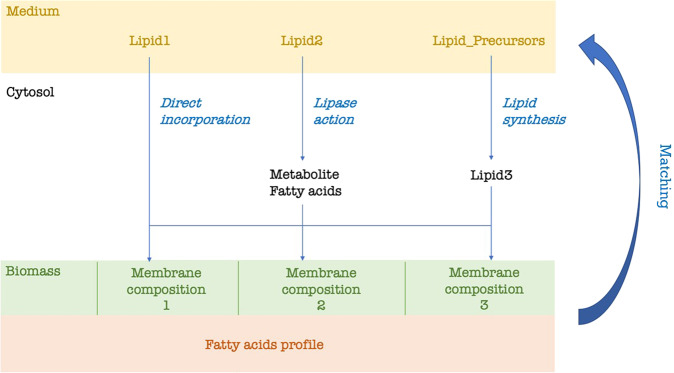
“Typically there are three main processes by which Mycoplasmas can build lipid pools: direct incorporation of lipids, lipase activity, and lipid synthesis (Figure S2) (Gaspari et al., 2020).”
From Fundamental behaviors emerge from simulations of a living minimal cell (2022) · cites this paper as Gaspari et al., 2020
Experimental — accuracy not yet measuredThe cited source says what the claim attributes to it.
In the citing paper
“In addition, cholesterol is highly correlated with high sphingomyelin concentration and lower PC concentration, since sphingolipids attract cholestserol while PC repels it (Clejan and Bittman, 1984; Lönnfors et al., 2011; Gaspari et al., 2020; Kornspan and Rottem, 2012).”
From Fundamental behaviors emerge from simulations of a living minimal cell (2022) · cites this paper as Gaspari et al., 2020
Self-check
Percentages, sums and reported differences re-computed from the paper’s own numbers.
The self-check needs the paper’s full text.
Citations
Cites
Gapped BLAST and PSI-BLAST: a new generation of protein database search programs
Altschul, S. (1997) · Nucleic Acids Research · doi:10.1093/nar/25.17.3389 · Cited by 73,302
Agricultural sustainability and intensive production practices
Tilman, D., Cassman, K. G., Matson, P. A., Naylor, R., & Polasky, S. (2002) · Nature · doi:10.1038/nature01014 · Cited by 7,957
Global trends in antimicrobial use in food animals
Van Boeckel, T. P., Brower, C., Gilbert, M., Grenfell, B. T., Levin, S. A., Robinson, T. P., Teillant, A., & Laxminarayan, R. (2015) · Proceedings of the National Academy of Sciences · doi:10.1073/pnas.1503141112 · Cited by 3,973
What is flux balance analysis?
Orth, J. D., Thiele, I., & Palsson, B. Ø. (2010) · Nature Biotechnology · doi:10.1038/nbt.1614 · Cited by 3,903
Hucka, M., Finney, A., Sauro, H. M., Bolouri, H., Doyle, J. C., Kitano, H., Arkin, A. P., Bornstein, B. J., Bray, D., Cornish-Bowden, A., et al. (2003) · Bioinformatics · doi:10.1093/bioinformatics/btg015 · Cited by 3,060
Cabello, F. C. (2006) · Environmental Microbiology · doi:10.1111/j.1462-2920.2006.01054.x · Cited by 2,329
Molecular Biology and Pathogenicity of Mycoplasmas
Razin, S., Yogev, D., & Naot, Y. (1998) · Microbiology and Molecular Biology Reviews · doi:10.1128/mmbr.62.4.1094-1156.1998 · Cited by 1,930
UniProt Knowledgebase: a hub of integrated protein data
Magrane, M., & Consortium, U. (2011) · Database · doi:10.1093/database/bar009 · Cited by 1,463
COBRApy: COnstraints-Based Reconstruction and Analysis for Python
Ebrahim, A., Lerman, J. A., Palsson, B. O., & Hyduke, D. R. (2013) · BMC Systems Biology · doi:10.1186/1752-0509-7-74 · Cited by 1,378
Mycoplasma pneumoniae and Its Role as a Human Pathogen
Waites, K. B., & Talkington, D. F. (2004) · Clinical Microbiology Reviews · doi:10.1128/cmr.17.4.697-728.2004 · Cited by 1,339
Cited by
Fundamental behaviors emerge from simulations of a living minimal cell
Thornburg, Z. R., Bianchi, D. M., Brier, T. A., Gilbert, B. R., Earnest, E. E., Melo, M. C. R., Safronova, N., Sáenz, J. P., Cook, A. T., Wise, K. S., et al. (2022) · Cell · doi:10.1016/j.cell.2021.12.025 · Cited by 165
“pneumoniae (Gaspari et al., 2020) and agrees with our findings.”
Mazzolini, R., Rodríguez-Arce, I., Fernández‐Barat, L., Piñero‐Lambea, C., Garrido, V., Rebollada‐Merino, A., Motos, A., Torres, A., Grilló, M. J., Serrano, L., et al. (2023) · Nature Biotechnology · doi:10.1038/s41587-022-01584-9 · Cited by 98
Self-citationA tuneable minimal cell membrane reveals that two lipid species suffice for life
Justice, I., Kiesel, P., Safronova, N., von Appen, A., & Saenz, J. P. (2023) · doi:10.1101/2023.10.24.563757 · Cited by 41
A tuneable minimal cell membrane reveals that two lipid species suffice for life
Justice, I., Kiesel, P., Safronova, N., von Appen, A., & Saenz, J. P. (2024) · Nature Communications · doi:10.1038/s41467-024-53975-y · Cited by 41
Mycoplasma pneumoniae: not a typical respiratory pathogen
Rowlands, R. S., Meyer Sauteur, P. M., Beeton, M. L., & On behalf of the ESCMID Study Group for Mycoplasma and Chlamydia Infections (ESGMAC) (2024) · Journal of Medical Microbiology · doi:10.1099/jmm.0.001910 · Cited by 31
“Glucose utilization is the primary substrate for energy production [7].”
BackgroundA genetic toolkit and gene switches to limit Mycoplasma growth for biosafety applications
Broto, A., Gaspari, E., Miravet‐Verde, S., dos Santos, V. A. P. M., & Isalan, M. (2022) · Nature Communications · doi:10.1038/s41467-022-29574-0 · Cited by 25
Self-citationEssential protein P116 extracts cholesterol and other indispensable lipids for Mycoplasmas
Sprankel, L., Vizarraga, D., Martín, J., Manger, S., Meier‐Credo, J., Marcos-Silva, M., Julve, J., Rotllán, N., Scheffer, M. P., Escolá‐Gil, J. C., et al. (2023) · Nature Structural & Molecular Biology · doi:10.1038/s41594-023-00922-y · Cited by 24
Microbes, Clinical trials, Drug Discovery, and Vaccine Development: The Current Perspectives
Kandi, V., Suvvari, T. K., Vadakedath, S., & Godishala, V. (2021) · Borneo Journal of Pharmacy · doi:10.33084/bjop.v4i4.2571 · Cited by 13
Gaspari, E., Koehorst, J. J., Frey, J., dos Santos, V. A. P. M., & Diez, M. S. (2021) · Microbial Biotechnology · doi:10.1111/1751-7915.13794 · Cited by 13
Self-citationDevelopment of a Serum-Free Medium To Aid Large-Scale Production of Mycoplasma -Based Therapies
Burgos, R., García-Ramallo, E., Shaw, D. J., Lluch‐Senar, M., & Serrano, L. (2023) · Microbiology Spectrum · doi:10.1128/spectrum.04859-22 · Cited by 11
Self-citationBalish, M. F., Chopra‐Dewasthaly, R., Pereyre, S., Ramírez, A. S., Viver, T., & Spergser, J. (2024) · Wiley eBooks · doi:10.1002/9781118960608.gbm01263.pub3 · Cited by 9
Breaking Boundaries in Cell Culture: The Development and Impact of Serum-Free Media
Huang, Y., Hu, Z., Liu, Y., Li, H., Zhao, J. X., & Yu, P. (2025) · Applied Biochemistry and Biotechnology · doi:10.1007/s12010-025-05391-1 · Cited by 7
“For example, Erika Gaspari et al. [92] developed a metabolic model for Mycoplasma pneumoniae , iEG158_mpn, based on literature data and public databases such as the BioModels Database and BiGG Models.”
Miniscule Mollicutes: Current hurdles to bacteriophage identification
Catchpowle, J., Maynard, J., Chang, B. J., Payne, M. S., Beeton, M. L., & Furfaro, L. L. (2024) · Sustainable Microbiology · doi:10.1093/sumbio/qvae019 · Cited by 8
Understanding Metabolic Flux Behaviour in Whole-Cell Model Output
Landon, S., Chalkley, O., Breese, G., Grierson, C., & Marucci, L. (2021) · Frontiers in Molecular Biosciences · doi:10.3389/fmolb.2021.732079 · Cited by 7
Zhang, H., Zhang, Y., Lu, D., Chen, X., Chen, Y., Hu, C., & Guo, A. (2024) · mSystems · doi:10.1128/msystems.00891-23 · Cited by 8
Sreenath, K., Li, L., Molotsky, D., ., J. A. A., Baseman, J. B., & Kannan, T. R. (2025) · mBio · doi:10.1128/mbio.02640-25 · Cited by 6
“Metabolic growth analysis and total protein measurements were determined at 24–120 h as previously described (31, 32).”
Özçelik, C. E., Tunç, N., Şen, S., & Şeker, U. Ö. Ş. (2026) · Chemistry - A European Journal · doi:10.1002/chem.202503523 · Cited by 4
Dutta, S., Poddar, S. M., Chakraborty, J., Srinivasan, R., & Gayathri, P. (2025) · Biochemistry · doi:10.1021/acs.biochem.4c00543 · Cited by 4
Korenskaia, A. E., Matushkin, Y. G., Lashin, S. A., & Klimenko, A. I. (2022) · International Journal of Molecular Sciences · doi:10.3390/ijms231911996 · Cited by 5
Vizarraga, D., Marcos-Silva, M., Rotllán, N., Martín-Campos, J. M., Santos, D., Camacho, M., Soto, B., Velasco-Reniu, L., Guerra, P., Pareja, F., et al. (2025) · Nature Communications · doi:10.1038/s41467-025-66129-5 · Cited by 3
Self-citationQuestions, data and models underpinning metabolic engineering
van Rosmalen, R. P., dos Santos, V. A. P. M., & Diez, M. S. (2022) · Frontiers in Systems Biology · doi:10.3389/fsysb.2022.998048 · Cited by 5
Fahim, R. A., Rodriguez, Z. E. D., Oestreicher, Z., Schwab, N. R., Young, N. E., Shrestha, K., & Balish, M. F. (2025) · PLoS ONE · doi:10.1371/journal.pone.0329571 · Cited by 4
“It is typically grown in any of various undefined media, though limited growth is possible in some minimized and semi-defined formulations [8,9].”
Kirkpatrick, A., & Kannan, T. R. (2026) · Molecular Microbiology · doi:10.1111/mmi.70044 · Cited by 3
How does Mycoplasma pneumoniae scavenge lipids from its host membranes?
Manger, S., Arghittu, S. M., Sprankel, L., Meier‐Credo, J., Wieland, K., Bublak, D., Langer, J. D., Covino, R., & Frangakis, A. S. (2025) · Science Advances · doi:10.1126/sciadv.ady4746 · Cited by 1
Mazzolini, R., Garrido, V., Gómez, A.-C., Collantes, M., Grilló, M. J., Piñero‐Lambea, C., Gibert, I., Yero, D., & Lluch‐Senar, M. (2025) · npj Biofilms and Microbiomes · doi:10.1038/s41522-025-00835-2 · Cited by 1
Model-driven design of Mycoplasma as a vaccine chassis
Gaspari, E. (2021) · doi:10.18174/539593 · Cited by 2
Self-citation(2020) · Alternatives to Laboratory Animals · doi:10.1177/0261192920979998
Exploring the adaptability and robustness of the central carbon metabolism of Mycoplasma pneumoniaePreprint
Zondervan, N. A., Yus, E., Sévin, D. C., Martínez, S., Gallo, C., Schaap, P. J., Lluch‐Senar, M., Serrano, L., dos Santos, V. A. P. M., & Diez, M. S. (2022) · bioRxiv (Cold Spring Harbor Laboratory) · doi:10.1101/2022.08.08.503180
Self-citationPredicting Mycoplasma tissue and host specificity from genome sequencesPreprint
Zondervan, N. A., dos Santos, V. A. P. M., & Diez, M. S. (2022) · bioRxiv (Cold Spring Harbor Laboratory) · doi:10.1101/2022.08.08.503189
Li, H., Xu, Y., Li, G., Zhang, H., Cui, J., Qiu, Y., Lin, Z., Ji, R., Xu, G., Luo, W., et al. (2025) · Phytopathology · doi:10.1094/phyto-04-25-0144-r
Reducing growth-medium complexity reveals nutrient-responsive programs in a near-minimal bacteriumPreprint
Duval, A., Gagnon, J., Jeanneau, S., Matteau, D., Jacques, P., & Rodrigue, S. (2026) · bioRxiv (Cold Spring Harbor Laboratory) · doi:10.64898/2026.09.29.755377
Zhang, L., Gao, S., Xu, K., & Chen, L. (2026) · AMB Express · doi:10.1186/s13568-026-02123-4
Sreenath, K., Molotsky, D., Chang, T.-H., Stein, M., Cagle, M. P., Jackson, E., Baseman, J. B., & Kannan, T. R. (2026) · Microbiology Spectrum · doi:10.1128/spectrum.01523-26
Metadata
- Authors
- Gaspari, E., Malachowski, A., Garcia-Morales, L., Burgos, R., Serrano, L., Martins dos Santos, V. A. P., & Suarez-Diez, M.
- Affiliations
- Wageningen University & Research (NL)
- Barcelona Institute of Science and Technology (ES)
- Institució Catalana de Recerca i Estudis Avançats (ES)
- Corresponding author
- Gaspari, Erika
- ORCID
- Venue
- npj Systems Biology and Applications
- Published
- 2020-10-23
- Volume
- 6
- Issue
- 1
- Pages
- 33-33
- ISSN
- 2056-7189 (ISSN-L)
- PMC
- PMC7584665
- OpenAlex
- W3093643162
- Cited by
- 30
- References
- 83
- Citations by year
- 2026: 1 · 2025: 7 · 2024: 5 · 2023: 4 · 2022: 8 · 2021: 4 · 2020: 1
- FWCI
- 1.38
- Type
- journal article
- Language
- en
- Open access
- gold
- doi.org
- Licence
- cc-by
- creativecommons.org/licenses/by/4.0 (tdm)
- creativecommons.org/licenses/by/4.0 (vor)
- Locations
- npj Systems Biology and Applications (publishedVersion, cc-by)
- bioRxiv (Cold Spring Harbor Laboratory) (acceptedVersion, cc-by-nc-nd)
- PubMed Central (publishedVersion, cc-by)
- PubMed (publishedVersion)
- Socio-Environmental Systems Modeling (acceptedVersion, cc-by)
- HAL (submittedVersion, cc-by)
- Oskar-Bordeaux (Universite de Bordeaux) (submittedVersion, cc-by)
- Repositori digital de la UPF (Universitat Pompeu Fabra) (submittedVersion, cc-by)
- Data Archiving and Networked Services (DANS) (submittedVersion, cc-by)
- Funders
- EC | Horizon 2020 Framework Programme (634942, 670216)
- Topics
- Life Sciences › Biochemistry, Genetics and Molecular Biology › Molecular Biology › Microbial Metabolic Engineering and Bioproduction
- Life Sciences › Immunology and Microbiology › Microbiology › Microbial infections and disease research
- Life Sciences › Biochemistry, Genetics and Molecular Biology › Genetics › Bacterial Genetics and Biotechnology
- Keywords
- Mycoplasma pneumoniae, serum-free medium, genome-scale metabolic models, cell membrane lipid composition, bacterial growth optimization, hypoxia, lipid metabolism, bioproduction
- MeSH terms
- Energy Metabolism, Glycolysis, Models, Biological, Mycoplasma pneumoniae, Culture Media, Serum-Free
About these checks
Registry, retraction, Cites and statistics results are computed, not judged, with one exception: a printed reference that no index lists is read once by a model before it counts as a citation error. Claims are extracted by a model and kept only when their quote appears verbatim in the text; each cited source is then checked, with a model’s help, for whether it says what the claim relies on. Those verdicts can be wrong — read the claim’s quote and the cited source before relying on one.
Statistics and arithmetic are recomputed, not judged.
Confidence bands are shown only for fields calibrated on our annotated test set. None is calibrated yet, so no band is shown.
What counts as a claim ›How we measure confidence ›How we check this ›
Are you an author, or do you see a problem with this page? Request a review
Data sources
Bibliographic data: Semantic Scholar, OpenAlex, Crossref.
Contains information from the Semantic Scholar Academic Graph Datasets, made available under the ODC Attribution License (ODC-BY 1.0).
Semantic Scholar’s data is described in: Kinney, R., et al. (2023). The Semantic Scholar Open Data Platform. arXiv:2301.10140.
