

Global phylogeny of Treponema pallidum lineages reveals recent expansion and spread of contemporary syphilis
Open accessPublished version of a preprint
The DOI matches its Crossref record; 65 of the 65 references it cites were found in a registry or an index.
Abstract
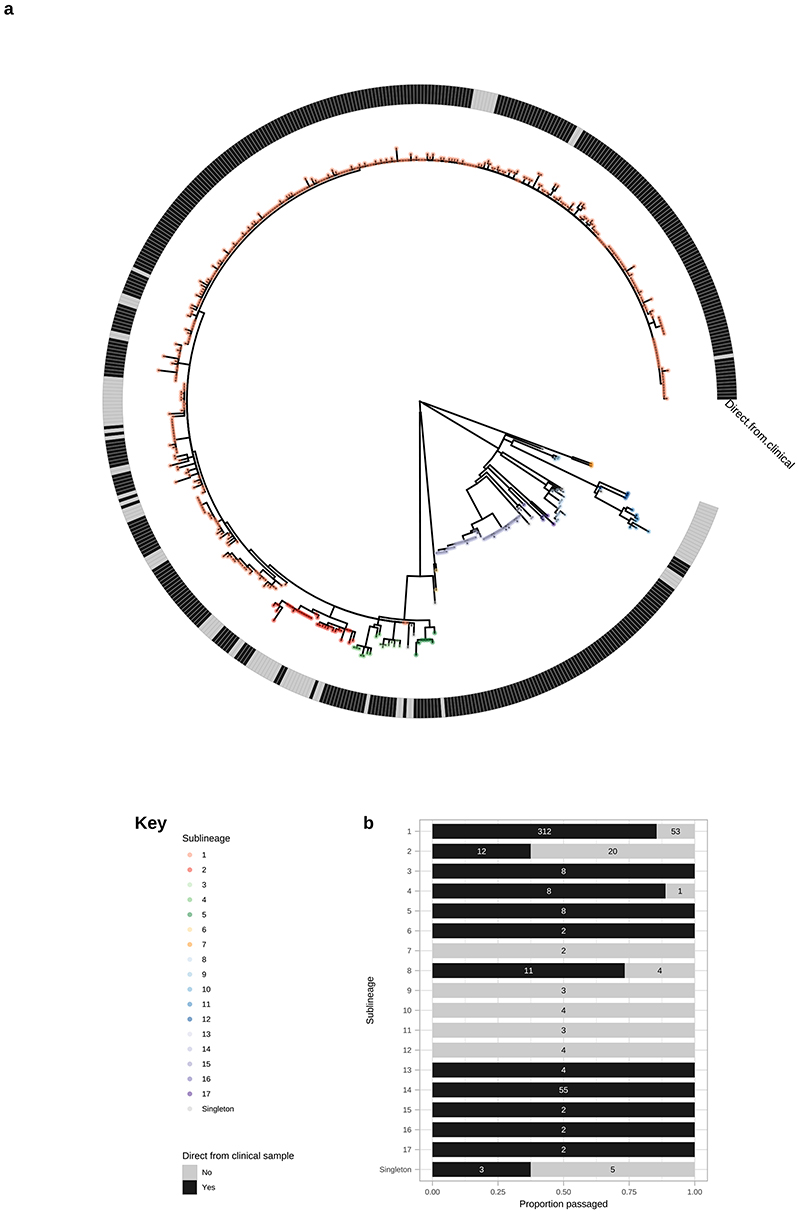
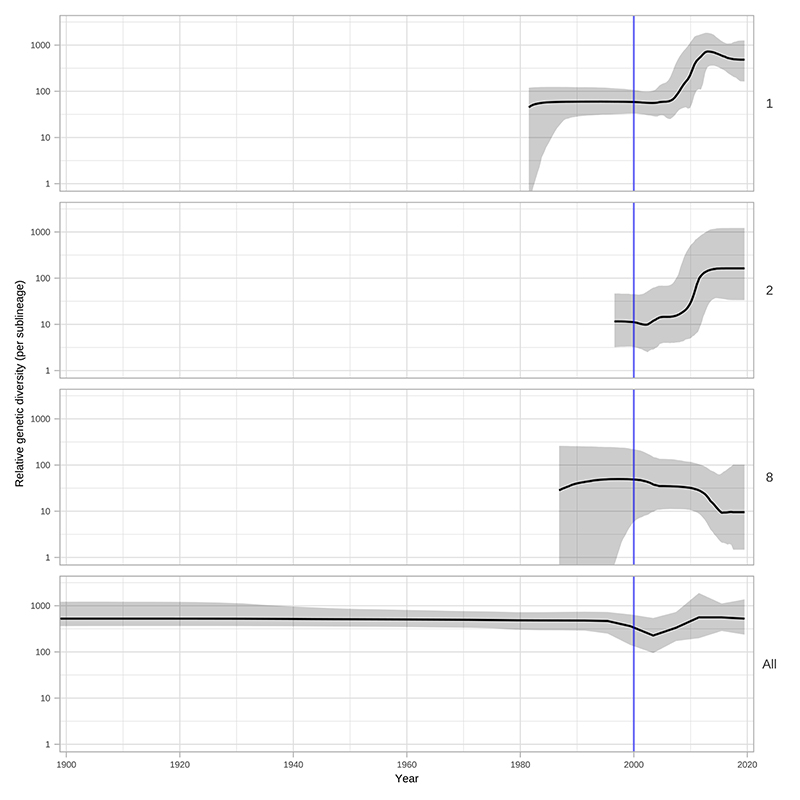
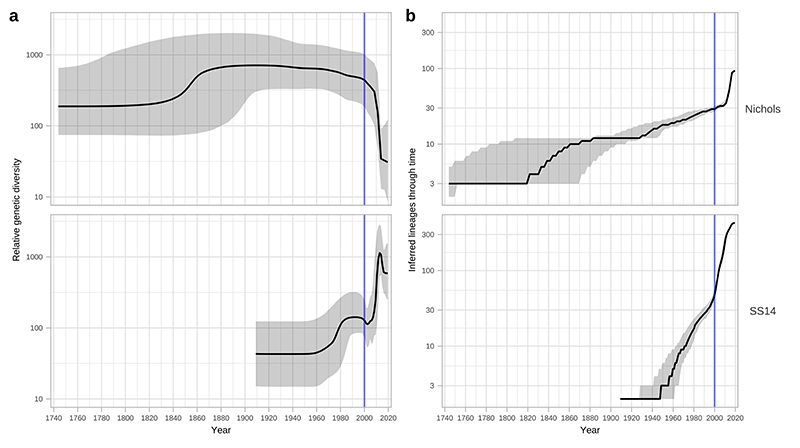
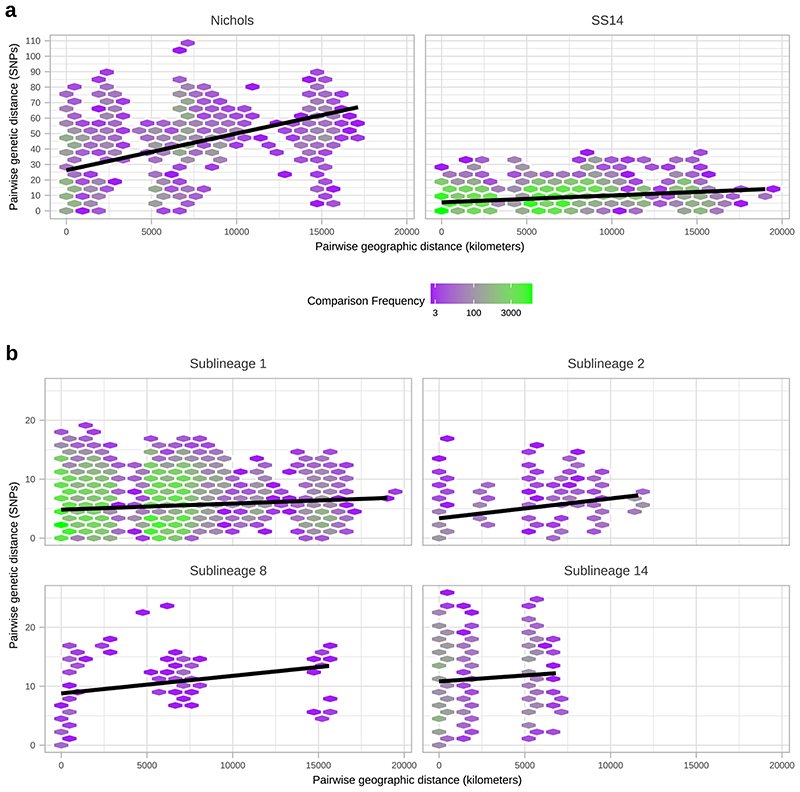
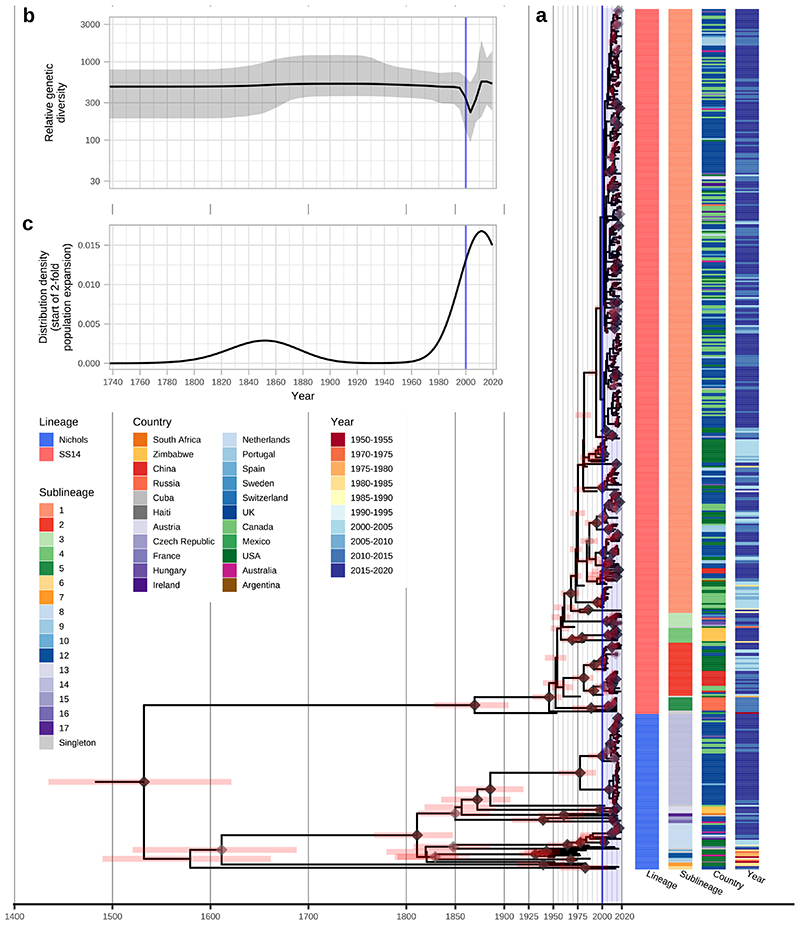
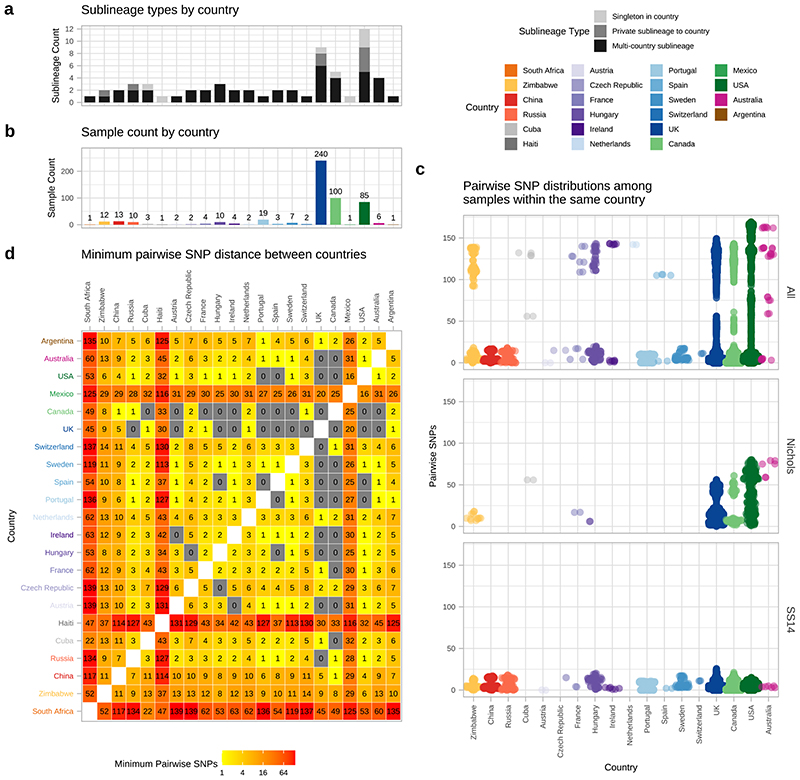
Syphilis, which is caused by the sexually transmitted bacterium Treponema pallidum subsp. pallidum , has an estimated 6.3 million cases worldwide per annum. In the past ten years, the incidence of syphilis has increased by more than 150% in some high-income countries, but the evolution and epidemiology of the epidemic are poorly understood. To characterize the global population structure of T. pallidum , we assembled a geographically and temporally diverse collection of 726 genomes from 626 clinical and 100 laboratory samples collected in 23 countries. We applied phylogenetic analyses and clustering, and found that the global syphilis population comprises just two deeply branching lineages, Nichols and SS14. Both lineages are currently circulating in 12 of the 23 countries sampled. We subdivided T. p. pallidum into 17 distinct sublineages to provide further phylodynamic resolution. Importantly, two Nichols sublineages have expanded clonally across 9 countries contemporaneously with SS14. Moreover, pairwise genome analyses revealed examples of isolates collected within the last 20 years from 14 different countries that had genetically identical core genomes, which might indicate frequent exchange through international transmission. It is striking that most samples collected before 1983 are phylogenetically distinct from more recently isolated sublineages. Using Bayesian temporal analysis, we detected a population bottleneck occurring during the late 1990s, followed by rapid population expansion in the 2000s that was driven by the dominant T. pallidum sublineages circulating today. This expansion may be linked to changing epidemiology, immune evasion or fitness under antimicrobial selection pressure, since many of the contemporary syphilis lineages we have characterized are resistant to macrolides.
Overview
The claims and statistics of this paper haven’t been checked yet.
Free: it reads the open-access text and checks the first 5 claims that cite a source we can check. Create a free account to check every claim.
Integrity signals
Registry
Cites
Statistics
Figures
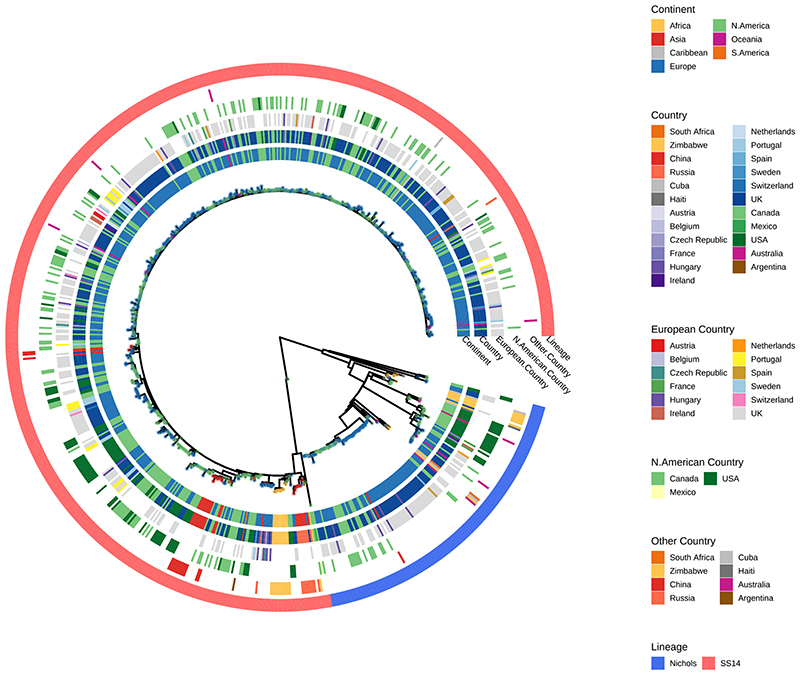
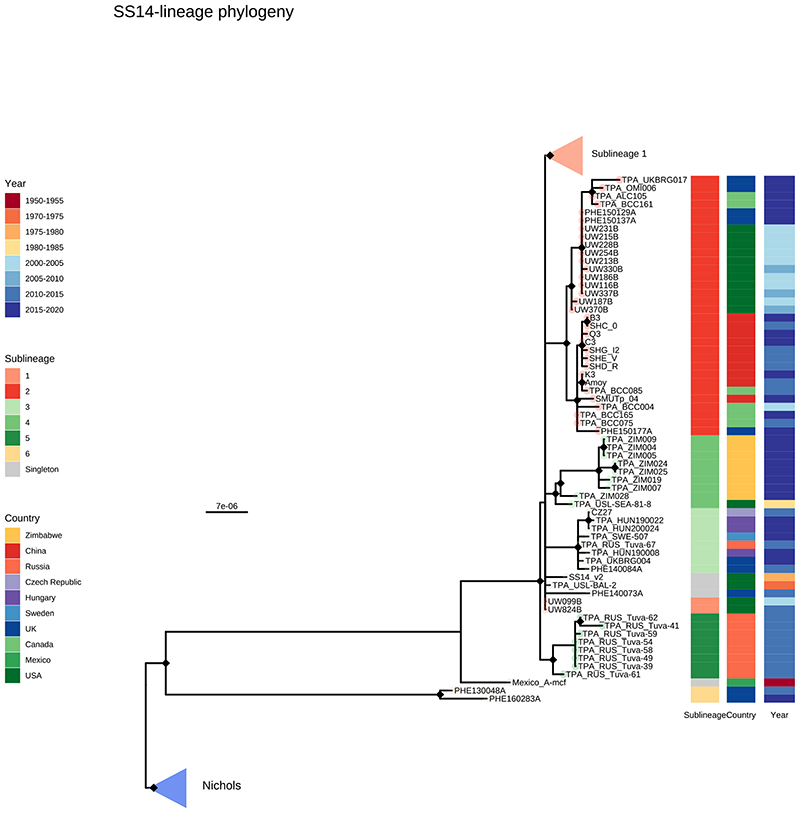
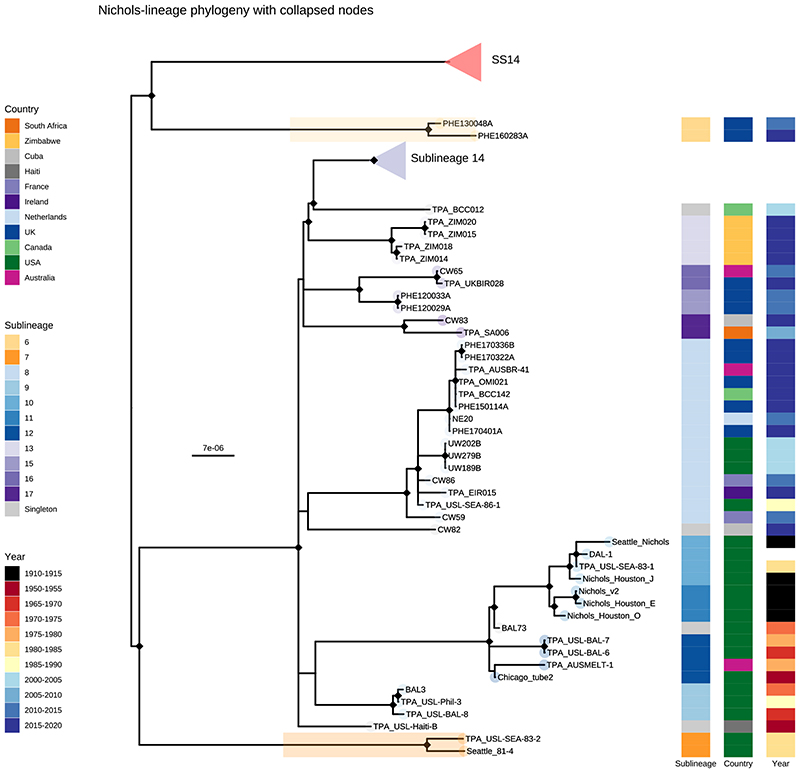
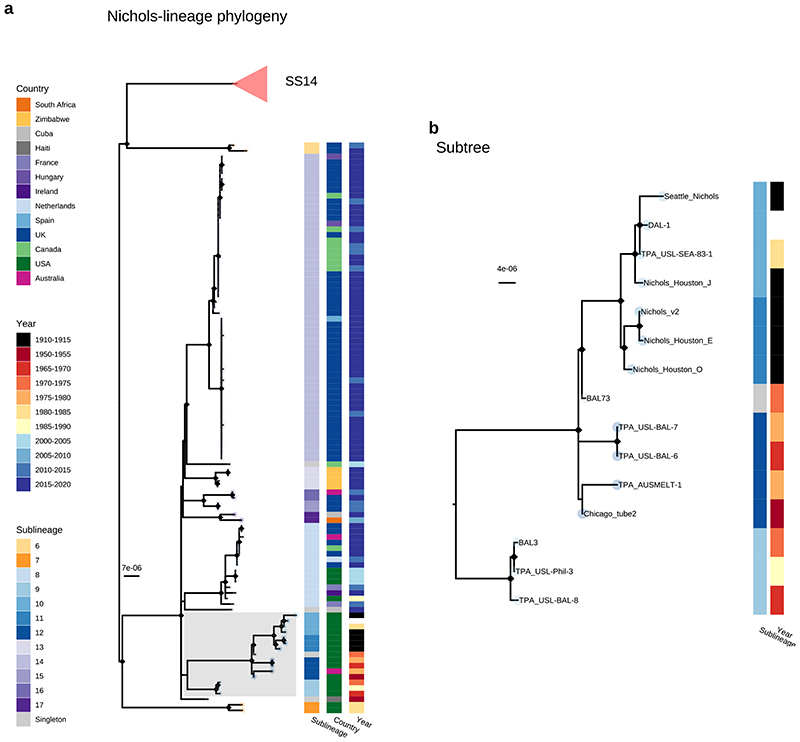
Verification
Claims the paper makes
The claims and statistics of this paper haven’t been checked yet.
Free: it reads the open-access text and checks the first 5 claims that cite a source we can check. Create a free account to check every claim.
Claims other papers make about this one
Each is checked against this paper’s own text: does it say what the citing paper says it does?
The source backs part of the claim, not all of it — or backs it for a different population, condition or comparison.
In the citing paper
“Macrolide resistance and treatment failure have emerged rapidly worldwide, possibly selected by widespread macrolide use.”
From BASHH UK guidelines for the management of syphilis 2024 (2024) · cites this paper as [115]
Experimental — accuracy not yet measuredThe cited source says what the claim attributes to it.
In the citing paper
“Macrolide resistance is mediated by a point mutation at either position A2058 G or A2059 G in the 23S rRNA gene.”
From BASHH UK guidelines for the management of syphilis 2024 (2024) · cites this paper as [115]
The check wasn’t confident either way, so it gives no verdict — never disputed.
In the citing paper
“penicillin resistance has never been reported despite decades of use.”
From BASHH UK guidelines for the management of syphilis 2024 (2024) · cites this paper as [115]
Experimental — accuracy not yet measured
Self-check
Percentages, sums and reported differences re-computed from the paper’s own numbers.
The self-check needs the paper’s full text.
Citations
Cites
1 retracted
RETRACTED: Previous Syphilis Alters the Course of Subsequent Episodes of Syphilis
Marra, C. M., Maxwell, C. L., Sahi, S. K., Tantalo, L. C., Dunaway, S. B., & Lukehart, S. A. (2019) · Clinical Infectious Diseases · doi:10.1093/cid/ciz943 · Cited by 28
Self-citationRetractedTrimmomatic: a flexible trimmer for Illumina sequence data
Bolger, A. M., Lohse, M., & Usadel, B. (2014) · Bioinformatics · doi:10.1093/bioinformatics/btu170 · Cited by 65,548
The Sequence Alignment/Map format and SAMtools
Li, H., Handsaker, B., Wysoker, A., Fennell, T., Ruan, J., Homer, N., Marth, G., Abecasis, G., Durbin, R., & 1000 Genome Project Data Processing Subgroup (2009) · Bioinformatics · doi:10.1093/bioinformatics/btp352 · Cited by 62,041
BEDTools: a flexible suite of utilities for comparing genomic features
Quinlan, A. R., & Hall, I. M. (2010) · Bioinformatics · doi:10.1093/bioinformatics/btq033 · Cited by 27,437
IQ-TREE: A Fast and Effective Stochastic Algorithm for Estimating Maximum-Likelihood Phylogenies
Nguyen, L.-T., Schmidt, H. A., von Haeseler, A., & Minh, B. Q. (2015) · Molecular Biology and Evolution · doi:10.1093/molbev/msu300 · Cited by 26,046
ggplot2: Elegant Graphics for Data Analysis
Wickham, H. (2009) · doi:10.1007/978-0-387-98141-3 · Cited by 14,447
Cingolani, P., Platts, A., Wang, L. L., Coon, M., Nguyen, T., Wang, L., Land, S. J., Lu, X., & Ruden, D. M. (2012) · Fly · doi:10.4161/fly.19695 · Cited by 11,816
UFBoot2: Improving the Ultrafast Bootstrap Approximation
Hoang, D. T., Chernomor, O., von Haeseler, A., Minh, B. Q., & Vinh, L. S. (2018) · Molecular Biology and Evolution · doi:10.1093/molbev/msx281 · Cited by 10,881 · cited 1×
“8.4 model (Strict Clock with reference rate prior of 1.23 × 10 − 7 substitutions per site per year, HKY substitution model 54 , Coalescent Bayesian Skyline distribution with 10 populations 54,56 ) in a BEAST2 59 v2.”
Influentialphytools: an R package for phylogenetic comparative biology (and other things)
Revell, L. J. (2012) · Methods in Ecology and Evolution · doi:10.1111/j.2041-210x.2011.00169.x · Cited by 9,277
ape 5.0: an environment for modern phylogenetics and evolutionary analyses in R
Paradis, E., & Schliep, K. (2019) · Bioinformatics · doi:10.1093/bioinformatics/bty633 · Cited by 9,108
Research works printed but not linked: 1
- McGough LJ Erbelding E Historical Evidence of Syphilis and Other Treponemes Radolf JD Lukehart SA Pathogenic Treponema: Molecular and Cellular Biology Caister Academic Press 2006 183 195
Cited by
Antimicrobial treatment and resistance in sexually transmitted bacterial infections
Jensen, J. S., & Unemo, M. (2024) · Nature Reviews Microbiology · doi:10.1038/s41579-024-01023-3 · Cited by 156
Self-citationResurgence of congenital syphilis: new strategies against an old foe
Moseley, P., Bamford, A., Eisen, S., Lyall, H., Kingston, M., Thorne, C., Piñera, C., Rabie, H., Prendergast, A. J., & Kadambari, S. (2024) · The Lancet Infectious Diseases · doi:10.1016/s1473-3099(23)00314-6 · Cited by 84
Mitjà, J., Padovese, V., Folch, C., Rossoni, I., Marks, M., Rodríguez-Arias, M. À., Telenti, A., Ciuffi, A., Blondeel, K., Mårdh, O., et al. (2023) · The Lancet Regional Health - Europe · doi:10.1016/j.lanepe.2023.100742 · Cited by 82
“95 Further evidence revealed the presence of two concurrent major lineages (SS14 and Nichols) circulating in Europe and globally, 96 with most major sub-lineages detected across Europe consistent with international sexual network connections.”
BackgroundSelf-citationPacyga, K., Pacyga, P., Topola, E., Viscardi, S., & Duda-Madej, A. (2024) · International Journal of Molecular Sciences · doi:10.3390/ijms25042100 · Cited by 61
Taouk, M. L., Taiaroa, G., Pasricha, S., Herman, S., Chow, E. P. F., Azzato, F., Zhang, B., Sia, C. M., Duchêne, S., Lee, A., et al. (2022) · The Lancet Microbe · doi:10.1016/s2666-5247(22)00035-0 · Cited by 62
Self-citationChen, W., Luo, H., Zeng, L., Pan, Y., Parr, J. B., Jiang, Y., Cunningham, C. H., Hawley, K. L., Radolf, J. D., Ke, W., et al. (2022) · Nature Communications · doi:10.1038/s41467-022-32250-y · Cited by 57
BASHH UK guidelines for the management of syphilis 2024
Kingston, M., Apea, V., Evans, C., Fifer, H., Foster, K., Patrick, P., Grant, A., Manns, V., Ramsden, S., Sinka, K., et al. (2024) · International Journal of STD & AIDS · doi:10.1177/09564624241280406 · Cited by 51
“115 – 117 · Treatment of neurosyphilis in patients with signi fi cant penicillin allergy is challenging, and penicillin desensi-tisation is probably the best option.”
BackgroundSelf-citationShen, Y., Dong, X., Liu, J., Lv, H., & Ge, Y. (2022) · Infection and Drug Resistance · doi:10.2147/idr.s366308 · Cited by 35
“pallidum).(1) It can be transmitted through blood transfusion and derivatives, unprotected sexual intercourse and maternal-neonatal transmission.”
BackgroundAncient genomes reveal a deep history of Treponema pallidum in the Americas
Barquera, R., Sitter, T. L., Kirkpatrick, C. L., Ramírez, D. A., Kocher, A., Spyrou, M. A., Couoh, L. R., Talavera-González, J. A., Castro, M., von Hunnius, T. E., et al. (2024) · Nature · doi:10.1038/s41586-024-08515-5 · Cited by 40
“biological factors that contribute to phenotypic variation in disease severity in humans and non-human African primates, their uneven distribution across the globe, and differences in transmission potential have remained poorly understood despite the evaluation of hundreds of genomes 1,6,7 .”
Genomic epidemiology of syphilis in England: a population-based study
Beale, M. A., Thorn, L., Cole, M. J., Pitt, R., Charles, H., Ewens, M., French, P., Guiver, M., Page, E. E., Smit, E., et al. (2023) · The Lancet Microbe · doi:10.1016/s2666-5247(23)00154-4 · Cited by 36
Self-citationRedefining the treponemal history through pre-Columbian genomes from Brazil
Majander, K., Pla-Díaz, M., du Plessis, L., Arora, N., Filippini, J. M., Pezo‐Lanfranco, L., Eggers, S., Gónzález‐Candelas, F., & Schuenemann, V. J. (2024) · Nature · doi:10.1038/s41586-023-06965-x · Cited by 38
“This re-emerging threat has led to many modern genetic and medical studies 8,13–15 .”
BackgroundSeña, A. C., Matoga, M., Yang, L., López‐Medina, E., Aghakhanian, F. F., Chen, J. S., Bettin, E. B., Caimano, M. J., Chen, W., Luna, J. A. G., et al. (2024) · The Lancet Microbe · doi:10.1016/s2666-5247(24)00087-9 · Cited by 30
Thurlow, C. M., Joseph, S. J., Ganova-Raeva, L. M., Katz, S. S., Pereira, L., Chen, C., Debra, A., Vilfort, K., Workowski, K., Cohen, S. E., et al. (2022) · mSphere · doi:10.1128/msphere.00009-22 · Cited by 28
Delgado, K. N., Montezuma-Rusca, J. M., Orbe, I. C., Caimano, M. J., Vake, C. J. L., Luthra, A., Hennelly, C. M., Nindo, F. N., Meyer, J. W., Jones, L. D., et al. (2022) · mBio · doi:10.1128/mbio.01639-22 · Cited by 31
Notes on syphilis vaccine development
Kojima, N., Konda, K. A., & Klausner, J. D. (2022) · Frontiers in Immunology · doi:10.3389/fimmu.2022.952284 · Cited by 27
“pallidum DNA enrichment with pathogen-specific probes (19, 22), specific genome amplification before high-throughput sequencing and technologies capable of sequencing Kb-long DNAmolecules will ensure the availability of complete high-quality genomes for comparative genomics analyses (23–28).”
BackgroundEndothelial dysfunction of syphilis: Pathogenesis
Liu, Z., Zhang, X., Xiong, S., Huang, S., Ding, X., Xu, M., Yao, J., Liu, S., & Zhao, F. (2024) · Journal of the European Academy of Dermatology and Venereology · doi:10.1111/jdv.19899 · Cited by 26
“5,6 This makes it imperative to further understand how T. pallidum affects endothelial activation and dysfunction.”
Tp47 promoted the phagocytosis of HMC3 cells though autophagy induced by endoplamic reticlum stress
Li, W., Li, Q., Xu, Q. ‐., Wang, X., & Yang, T. (2022) · Journal of the European Academy of Dermatology and Venereology · doi:10.1111/jdv.18295 · Cited by 21
Javed, H., Bano, A., Fatima, W., Khan, R., & Akhtar, A. (2023) · BMC Infectious Diseases · doi:10.1186/s12879-023-08591-4 · Cited by 19
Shu, B., Yang, J., Chen, W., Li, X., Xue, Y., Liu, M., Yin, X., Xu, L., Zhang, H., Qiu, J., et al. (2024) · Chemical Engineering Journal · doi:10.1016/j.cej.2024.154174 · Cited by 18
Pires, C. D. P., Mareto, L. K., de Medeiros, M. J., & de Oliveira, E. F. (2024) · Revista do Instituto de Medicina Tropical de São Paulo · doi:10.1590/s1678-9946202466021 · Cited by 23
“High incidences of gestational and congenital syphilis with a tendency to increase over time have been observed worldwide 4 .”
Serofast status in syphilis: Pathogenesis to therapeutics
Cao, Q., Li, Y., Hu, Y., He, B., Tang, Y., Cao, T., Peng, B., Zhou, X., & Liu, S. (2024) · Clinica Chimica Acta · doi:10.1016/j.cca.2024.119754 · Cited by 18
Lieberman, N. A. P., Avendaño, C. C., Bakhash, S. A. M., Nunley, E., Xie, H. J., Giacani, L., Berzkalns, A., Soge, O. O., Reid, T. B., Golden, M. R., et al. (2023) · The Journal of Infectious Diseases · doi:10.1093/infdis/jiad368 · Cited by 15
Dong, T., Sun, G., & Liu, A. (2024) · Analytical Chemistry · doi:10.1021/acs.analchem.4c02951 · Cited by 15
Edmondson, D. G., DeLay, B. D., Hanson, B., Kowis, L. E., & Norris, S. J. (2023) · PLoS ONE · doi:10.1371/journal.pone.0281187 · Cited by 18
Secondary Syphilis: Pathophysiology, Clinical Manifestations, and Diagnostic Testing
Chaudhry, S., Akinlusi, I., Shi, T., & Cervantes, J. (2023) · Venereology · doi:10.3390/venereology2020006 · Cited by 22
“It has been theorized that the subsequent widespread increase in syphilis after the 2000s could be due to the relaxation of public health and educational efforts after the widespread usage of antiretroviral therapy and the emergence of new sublineages, which are resistant to traditional macrolide therapy [7].”
BackgroundO desafio da Sífilis Congênita no Brasil
Dorneles, J. S. U., Silva, P. H. D., Araújo, B. C. D. S., Almeida, I. D. C., Melo, R. A. N. D., Almeida, V. C., Alves, M. F. C., & de Melo, P. L. C. E. (2023) · Brazilian Journal of Health Review · doi:10.34119/bjhrv6n1-175 · Cited by 17
da Silva, T. P. R., Schreck, R. S. C., de Oliveira, D. C. B., Mascarenhas, L. V., Luvisaro, B. M. O., Camargo, B. T. S., Martins, E. F., de Freitas, G. L., & Matozinhos, F. P. (2024) · BMC Public Health · doi:10.1186/s12889-024-19286-z · Cited by 14
“It is possible to affirm the resurgence of this STI throughout the world, as highlighted by the largest and most comprehensive study of syphilis genomes, including samples from 23 countries, from regions such as Western Europe, Central Asia and Africa [23].”
BackgroundDelgado, K. N., Caimano, M. J., Orbe, I. C., Vicente, C. F., Vake, C. J. L., Grassmann, A. A., Moody, M. A., Radolf, J. D., & Hawley, K. L. (2024) · PLoS Pathogens · doi:10.1371/journal.ppat.1012443 · Cited by 15
Antimicrobial Resistance in Curable Sexually Transmitted Infections
Giacani, L., Bradshaw, C. S., Muzny, C. A., Graves, K. J., Pasricha, S., Jordan, S. J., & Allan‐Blitz, L. (2025) · Current HIV/AIDS Reports · doi:10.1007/s11904-025-00722-7 · Cited by 17
“Once considered an alternative to penicillin, azithromycin, and macrolides in general, are no longer a viable therapeutic option due to the wide-spread resistance [134, 135, 137].”
Pospíšilová, P., Bosák, J., Hrala, M., Krbková, L., Vrbová, E., & Šmajs, D. (2025) · Communications Medicine · doi:10.1038/s43856-025-00948-x · Cited by 16
“Among the twenty-one knownTP0705alleles,thisnucleotidevariantwasfoundinalleles1,2,4,5,6, 7,11,13,and21.”
Exploring SNP filtering strategies: the influence of strict vs soft core
Taouk, M. L., Featherstone, L. A., Taiaroa, G., Seemann, T., Ingle, D. J., Stinear, T. P., & Wick, R. R. (2025) · Microbial Genomics · doi:10.1099/mgen.0.001346 · Cited by 17
Self-citationJoseph, S. J., Bommana, S., Ziklo, N., Kama, M., Dean, D., & Read, T. D. (2023) · Frontiers in Microbiology · doi:10.3389/fmicb.2023.1154664 · Cited by 14
“culture and are present in only small fractions of the metagenome (Seth-Smith et al., 2013, 2021; Hadfield et al., 2017; Pickering et al., 2020; Beale et al., 2021; Bowden et al., 2021).”
BackgroundThe resurgence of syphilis in Australia
Phua, G., & White, C. (2024) · Australian Journal of General Practice · doi:10.31128/ajgp-08-23-6943 · Cited by 12
Wu, P., Wang, X., & Hao Wang, A. (2024) · Mathematical Biosciences · doi:10.1016/j.mbs.2024.109243 · Cited by 10
Golparian, D., Rapp, E., Hasmats, J., & Unemo, M. (2024) · Journal of Antimicrobial Chemotherapy · doi:10.1093/jac/dkae446 · Cited by 10
Self-citationZhang, X., Duan, J., Wang, Y., Xie, B., Zhou, J., Zhao, S., Yin, W., Liu, P., & Zhao, F. (2023) · Microbiology Spectrum · doi:10.1128/spectrum.00047-23 · Cited by 11
Pla-Díaz, M., Akgül, G., Molak, M., du Plessis, L., Panagiotopoulou, H., Doan, K., Bogdanowicz, W., Dąbrowski, P., Oziembłowski, M., Kwiatkowska, B., et al. (2025) · BMC Biology · doi:10.1186/s12915-024-02108-4 · Cited by 13
“Albeit acknowledging the potential for reference bias [37], few of the existing genomic studies have reported detailed comparisons on the effects of T. pallidum reference selection [22, 39, 40].”
Lieberman, N. A. P., Armstrong, T. D., Chung, B., Pfalmer, D., Hennelly, C. M., Haynes, A., Romeis, E., Wang, Q.-Q., Zhang, R.-L., Kou, C.-X., et al. (2022) · Frontiers in Microbiology · doi:10.3389/fmicb.2022.1007056 · Cited by 10
Self-citationLieberman, N. A., Armstrong, T. D., Chung, B., Pfalmer, D., Hennelly, C. M., Haynes, A., Romeis, E., Wang, Q.-Q., Zhang, R.-L., Kou, C.-X., et al. (2022) · doi:10.1101/2022.08.02.502389 · Cited by 10
Self-citationBettin, E. B., Aghakhanian, F. F., Hennelly, C. M., Chen, W., Davenport, T. C., Hackl, S. T., Grassmann, A. A., Vargas-Cely, F. S., Silva, S., Luna, J. A. G., et al. (2025) · Journal of Bacteriology · doi:10.1128/jb.00159-25 · Cited by 12
Bosák, J., Hrala, M., Andrla, P., Vrbová, E., Pospíšilová, P., & Šmajs, D. (2025) · Scientific Reports · doi:10.1038/s41598-025-18827-9 · Cited by 10
“Based on several recent epidemiological studies 6,9,10,38–42 , SS14-like strains are prevalent worldwide (80–90%); especially in European population.”
A 5500-year-old Treponema pallidum genome from Sabana de Bogotá, Colombia
Bozzi, D., Broomandkhoshbacht, N., Delgado, M. B., Buikstra, J. E., Amorim, C. E. G., Kassadjikova, K., Estrada, M. P., Greub, G., Rascovan, N., Šmajs, D., et al. (2026) · Science · doi:10.1126/science.adw3020 · Cited by 12
Yang, L., Zhang, X., Chen, W., Seña, A. C., Zheng, H., Jiang, Y., Zhao, P., Chen, R., Wang, L., Ke, W., et al. (2024) · The Journal of Infectious Diseases · doi:10.1093/infdis/jiae322 · Cited by 10
Morando, N., Vrbová, E., Melgar, A., Rabinovich, R., Šmajs, D., & Pando, M. A. (2022) · Scientific Reports · doi:10.1038/s41598-022-20410-5 · Cited by 10
Büttner, K. A., Bregy, V., Wegner, F., Purushothaman, S., Imkamp, F., Roloff, T. C., Puolakkainen, M. H., Hiltunen‐Back, E., Braun, D. L., Kısakesen, H. İ., et al. (2025) · Microbial Genomics · doi:10.1099/mgen.0.001353 · Cited by 13
Giacani, L., Romeis, E., Haynes, A. M., Molini, B. J., Tantalo, L. C., Xu, L. H., Trejos, A. T., Keane, J., Mohamed, Z., Armstrong, T. D., et al. (2025) · Vaccine · doi:10.1016/j.vaccine.2025.127406 · Cited by 8
Self-citationSalazar, J. C., Vargas-Cely, F. S., Luna, J. A. G., Ramírez, L. G., Bettin, E. B., Romero-Rosas, N., Amórtegui, M. F., Silva, S., Oviedo, O., Vigil, J., et al. (2024) · PLoS ONE · doi:10.1371/journal.pone.0307600 · Cited by 8
Intrathecal immunoglobin synthesis and its role in patients with neurosyphilis
Huang, X., Ying, S., Luo, L., Li, L., Li, D., & Xie, Y. (2022) · Frontiers in Public Health · doi:10.3389/fpubh.2022.1008595 · Cited by 9
“pallidum expands and spreads globally (17).”
Vrbová, E., Pospíšilová, P., Dastychová, E., Kojanová, M., Kreidlová, M., Rob, F., Vašků, V., Mosio, P., Strnadel, R., Faustmannová, O., et al. (2024) · Scientific Reports · doi:10.1038/s41598-024-68656-5 · Cited by 8
“As revealed by phylogenetic analysis of APs and whole genome sequences, these groups are genetically distinct and belong to different subclusters 14 .”
Zhao, W., & Luo, H. (2023) · Folia Neuropathologica · doi:10.5114/fn.2023.132099 · Cited by 7
Bosák, J., Mikalová, L., Hrala, M., Pospíšilová, P., Faldyna, M., & Šmajs, D. (2024) · PLoS ONE · doi:10.1371/journal.pone.0304033 · Cited by 7
Direct sequencing technologies for bacterial sexually transmitted infections
Jennison, A. V., Pasricha, S., & Azzato, F. (2024) · Microbiology Australia · doi:10.1071/ma24033 · Cited by 7
Duarte, G. G., Melli, P. P. D. S., Miranda, A. E., Milanez, H. M. B. P. M., Menezes, M. L. B., Travassos, A. G., & Kreitchmann, R. (2024) · Revista Brasileira Ginecologia e Obstetrícia · doi:10.61622/rbgo/2024fps09 · Cited by 13
“(70,71) Without this resource, antenatal care professionals need continuous attention and effort in the application of already known resources, including behavioral measures, always in line with care interventions.”
BackgroundMolecular Evolution of Human Parainfluenza Virus Type 2 Based on Hemagglutinin-Neuraminidase Gene
Feng, Y., Zhu, Z. H., Xu, J., Sun, L., Zhang, H., Xu, H., Zhang, F., Wang, W., Han, G., Jiang, J., et al. (2023) · Microbiology Spectrum · doi:10.1128/spectrum.04537-22 · Cited by 7
Knauf, S., Hisgen, L., Ågren, E. O., Barlow, A. M., Faehndrich, M., Voigt, U., Fischer, L., Grillová, L., Hallmaier–Wacker, L. K., Kik, M. J. L., et al. (2023) · Microbiology Spectrum · doi:10.1128/spectrum.01774-23 · Cited by 7
“In contrast to nonhuman primates (14) and human infections (3) with the sister bacterium T. pallidum , our current data from lagomorphs showed only weak geographic clustering.”
BackgroundResultTang, J., Zhimin, L., Xi, D., Hua, W., Huilong, S., Jiaofeng, P., Zheng, K., & Xie, Q. (2023) · Microbial Pathogenesis · doi:10.1016/j.micpath.2023.106374 · Cited by 6
Pillay, A., Vilfort, K., Debra, A., Katz, S. S., Thurlow, C. M., Joseph, S. J., Lundy, S. R., Ji, A., Hong, J., Workowski, K., et al. (2024) · Microbiology Spectrum · doi:10.1128/spectrum.00581-24 · Cited by 7
Antimicrobial resistance in bacterial sexually transmitted infections
Pitt, R., & Fifer, H. (2022) · Medicine · doi:10.1016/j.mpmed.2022.02.006 · Cited by 6
Self-citationZondag, H. C. A., Nieuwenburg, S. A., Himschoot, M., van Dam, A. P., van der Loeff, M. F. S., de Vries, H. J. C., & Bruisten, S. M. (2022) · Microbiology Spectrum · doi:10.1128/spectrum.02482-21 · Cited by 6
Houston, S., Marshall, S., Gomez, A., & Cameron, C. E. (2024) · Frontiers in Microbiology · doi:10.3389/fmicb.2024.1505893 · Cited by 6
Pospíšilová, P., Fedrová, P., Vrbová, E., Hennelly, C. M., Aghakhanian, F. F., Hawley, K. L., Bettin, E. B., Davenport, T. C., Bruisten, S. M., Zondag, H. C. A., et al. (2025) · mSphere · doi:10.1128/msphere.00213-25 · Cited by 4
Evaluation of whole-genome enrichment and sequencing of T. pallidum from FFPE samples after 75 years
Zvénigorosky, V., Gonzalez, A., Veith, G., Close-Koenig, T., Cannet, C., Fausser, J., Wenger, A., Toutous‐Trellu, L., Keyser, C., & Bonah, C. (2023) · iScience · doi:10.1016/j.isci.2023.108651 · Cited by 5
“33 Genome Strasbourg_6715 is as distant from this cluster as it is from other SS14, which places it closer the divergence point between those two branches and makes it another outlier within the SS14 cluster.”
BackgroundManoharan-Basil, S. S., Gestels, Z., Abdellati, S., de Block, T., Vanbaelen, T., Baetselier, I. D., & Kenyon, C. R. (2025) · Access Microbiology · doi:10.1099/acmi.0.000963.v4 · Cited by 5
“Furthermore, A2058G and A2059G mutations in T. pallidum ’s 23S rRNA that confer resistance to macrolides have arisen independently in multiple lineages of T. pallidum and spread to attain prevalences close to 100% [16, 17].”
Self-citationAnálise Epidemiológica da Sífilis Adquirida na Região Norte do Brasil
Santos, C. D. O. B., da Costa, G. L. L., Pimenta, J. D. S., Pereira, L. I. M., & dos Santos, F. D. S. (2023) · Revista Eletrônica Acervo Saúde · doi:10.25248/reas.e12361.2023 · Cited by 4
Liu, D., Chen, R., Wang, Y., Li, W., Liu, L., Lin, L., Yang, T., & Tong, M.-L. (2023) · npj Vaccines · doi:10.1038/s41541-023-00748-1 · Cited by 5
“Although penicillin is effective for treatment, the incidence of syphilis has dramatically increased in many countries 3 – 5 .”
Disseminated Syphilis Caused by Two Recombining Treponema pallidum Strains
Lieberman, N. A. P., Bakhash, S. A. M., Nunley, B. E., Li, M., Mau, B., Pauk, J. S., Swanson, P. E., Baxi, A. C., Lieberman, J. A., & Greninger, A. L. (2025) · New England Journal of Medicine · doi:10.1056/nejmc2500231 · Cited by 3
Grillová, L., Carrami, E. M., Roberts-Sengier, W., & Thomson, N. R. (2025) · Scientific Reports · doi:10.1038/s41598-025-06583-9 · Cited by 3
Self-citationIntegrated genomic approaches improve Treponema pallidum phylogenetics and lineage classification
Long, G. S., Singh, N., Patel, S. N., Braukmann, T., Tsang, R. S. W., & Duvvuri, V. R. S. K. (2025) · Canadian Journal of Microbiology · doi:10.1139/cjm-2025-0021 · Cited by 4
Vickram, A. S., Dhama, K., Sundaram, T., Chakraborty, S., Anbarasu, K., Dey, N., & Karunakaran, R. (2022) · Saudi Journal of Biological Sciences · doi:10.1016/j.sjbs.2022.01.006 · Cited by 5
Putting a twist in syphilis vaccine development
Grillová, L. (2022) · Nature Reviews Microbiology · doi:10.1038/s41579-022-00784-z · Cited by 3
Nadal‐Barón, P., Trejo-Zahínos, J., Arando, M., Barberan-Masegosa, A., Bernat‐Sole, M., Pérez-Ugarte, A., Villatoro, A. M., Alcubilla, P., Sulleiro, E., González‐López, J. J., et al. (2024) · Scientific Reports · doi:10.1038/s41598-024-74355-y · Cited by 3
“We found that 94.8% of the typed strains belonged to the SS14 clade and 5.2% to Nichols-like clade, consistent with findings reported in other European studies 7,10 and global studies 8 at the time.”
BackgroundResultInfluentialSelf-citationBeale, M. A., Shetty, V., Ambridge, K., Lacey, G., Dougan, S., Roberts-Sengier, W., Sampher, B., Lassalle, F., Dorman, M. J., Mahlangu, M. P., et al. (2026) · Nature Communications · doi:10.1038/s41467-026-75002-y · Cited by 2
“We further evaluated the ability of TP-Phylo-Plex to discriminate previously described population structures, using a previously published whole genome phylogeny of 237 TPA genomes from the UK 27 (Supplementary Fig.”
InfluentialSelf-citationWang, H., Huang, Y., Xiao, Q., Chen, Y., Wang, Y., Tian, J., Cai, Y., Tang, L., Ding, S., & Duan, S. (2025) · Microbiology Spectrum · doi:10.1128/spectrum.00094-25 · Cited by 2
“According to the World Health Organization, approximately 5.6 million new cases of syphilis are reported annually, with the majority occurring in low-and middle-income countries (2, 3).”
InfluentialPla-Díaz, M., Giacani, L., Tantalo, L. C., Bose, M., Reid, T. B., Marra, C. M., Šmajs, D., Pospíšilová, P., Janečková, K., Kawahata, T., et al. (2026) · mBio · doi:10.1128/mbio.00358-26 · Cited by 3
“Despite their findings, Beale et al. (19) noted that diversity in T. pallidum is influenced by geographic factors, in line with our observations.”
InfluentialTeaching computational genomics and bioinformatics on a high performance computing cluster—a primer
Sethuraman, A. (2022) · Biology Methods and Protocols · doi:10.1093/biomethods/bpac032 · Cited by 2
“[40], and assess congruence of their results with those from the manuscript and discuss the evolutionary history of the species.”
ResultA Rare Case of Neurosyphilis with Calvaria Osteitis Presenting in Pregnancy
Newbery, G., Henricks, C. E., Vircks, J. A., Colina, A., & Mundy, D. (2023) · Case Reports in Obstetrics and Gynecology · doi:10.1155/2023/8856775 · Cited by 2
“According to the World Health Organization, approximately one million pregnant people are infected with syphilis annually [1 – 3].”
BackgroundApplication of next-generation sequencing for genetic and phenotypic studies of bacteria
Palittapongarnpim, P. (2024) · Elsevier eBooks · doi:10.1016/b978-0-323-99886-4.00012-0 · Cited by 2
Li, B., Wen, G., & Shang, X. (2025) · BMC Psychiatry · doi:10.1186/s12888-025-07383-1 · Cited by 2
“In actual clinical practice, patients may not undergo routine laboratory tests for infectious disease markers such as syphilis [53, 54].”
Bottleneck and spread of Treponema pallidum
Hofer, U. (2021) · Nature Reviews Microbiology · doi:10.1038/s41579-021-00673-x · Cited by 2
Mathematical modelling Treponema infection in free-ranging Olive baboons (Papio anubis) in Tanzania
Hawkins, D., Kusi, R., Schwab, S., Chuma, I. S., Keyyu, J. D., Knauf, S., Paciência, F. M. D., Zinner, D. P., Rychtář, J., & Taylor, D. (2022) · Epidemics · doi:10.1016/j.epidem.2022.100638 · Cited by 2
EPIDEMIOLOGIA DOS CASOS DE SÍFILIS ADQUIRIDA NO BRASIL ENTRE 2011-2021
Marques, E. M. A., Pina, W. L. M. S., Lameira, R. C., & Miyashiro, A. M. M. (2023) · Revista Foco · doi:10.54751/revistafoco.v16n6-024 · Cited by 1
Alexander, D. C., Morshed, M. G., Stein, D. R., Bullard, J., MacKenzie, K. D., & Tsang, R. S. W. (2024) · Journal of the Association of Medical Microbiology and Infectious Disease Canada · doi:10.3138/jammi-2023-0032 · Cited by 3
Self-citationNovedades en la sífilis congénita: perspectivas epidemiológicas, microbiológicas y clínicas
Ríos-Barnés, M., Noguera‐Julián, A., & Fortuny, C. (2024) · Revista Latinoamericana de Infectología Pediátrica · doi:10.35366/117222 · Cited by 2
Establishment of the Nichols strain as the type strain of Treponema pallidum
Norris, S. J. (2025) · INTERNATIONAL JOURNAL OF SYSTEMATIC AND EVOLUTIONARY MICROBIOLOGY · doi:10.1099/ijsem.0.006697 · Cited by 3
“As with all micro-organisms, microevolution is continuing in T. pallidum , as indicated by the recent selection of macrolide-resistant strains as well as the frequent discovery of new, novel genotypes [66, 67, 69, 81–87].”
Ma, W., Yao, S., Cao, Y., Zhang, X., Chang, J., Cheng, Y., & Zhang, X. (2025) · Journal of Computer Assisted Tomography · doi:10.1097/rct.0000000000001743 · Cited by 1
Dynamics and Persistence of a Generalized Multi-strain SIS Model
Greenhalgh, S., Henriquez, T., Frutschy, M., & Leonard, R. (2025) · Bulletin of Mathematical Biology · doi:10.1007/s11538-025-01516-z · Cited by 1
“Further, as the US features a single dominant lineage, composing 81.3% of all syphilis cases (Beale et al. 2021), we consider modeling scenarios with a single-strain gSIS model with mean residual waiting-times based on a Fourier series with k (cid:4) 0 (i.e. the SIS model), 1, 2, 4, 8, 16, 32 and…”
InfluentialLin, Y., Jiang, J., Li, C., Zhu, C., Sun, L., Mu, M., Yonghao, G., Dong, M., Zhao, L., Zhang, F., et al. (2025) · Journal of Medical Virology · doi:10.1002/jmv.70632 · Cited by 1
Nguyen, N. V., Wiley, J., García, P. B., Fashina, T., Abouodah, H., Kaftan, T., Conrady, C. D., Cross, S. T., Wiley, M. R., & Yeh, S. (2025) · American Journal of Ophthalmology Case Reports · doi:10.1016/j.ajoc.2025.102486 · Cited by 1
“6 Different strains of syphilis have been isolated in the literature, 7,8 and recently, a cluster of five cases of ocular syphilis in women with a common male sex partner was identified in Michigan, suggesting the possibility of a T. pallidum strain with ocular tropism.”
Barton, A., Pospíšilová, P., González-Beiras, C., John, L. N., Houinei, W., Giacani, L., Šmajs, D., Marks, M., Mitjà, J., Beale, M. A., et al. (2026) · The Lancet Microbe · doi:10.1016/j.lanmic.2025.101229 · Cited by 2
Self-citationZhang, X., Jiang, Y., Zhang, L., Yang, L., Hu, Z., Chen, W., Zheng, H., Xi, L., & Yang, B. (2026) · Sexual Health · doi:10.1071/sh25185 · Cited by 1
The Global Syphilis Epidemic: Turning the Tide
Peters, R. P. H., Seña, A. C., Greninger, A. L., & Workowski, K. (2026) · Sexually Transmitted Diseases · doi:10.1097/olq.0000000000002350 · Cited by 1
Norris, S. J., Edmondson, D. G., DeLay, B. D., Kaval, K. G., Chen, T., Lieberman, N. A. P., Greninger, A. L., Janečková, K., & Šmajs, D. (2026) · INTERNATIONAL JOURNAL OF SYSTEMATIC AND EVOLUTIONARY MICROBIOLOGY · doi:10.1099/ijsem.0.007245 · Cited by 1
“Regions of the genome known to undergo positive selection and/or recombination [60, 61, 65] were masked, and a single nucleotide variation (SNV)- only phylogeny was generated using IQ-TREE v2.”
Zondag, H. C. A., Zwezerijnen-Jiwa, F. H., de Vries, H. J. C., Baetselier, I. D., & Bruisten, S. M. (2023) · Sexually Transmitted Diseases · doi:10.1097/olq.0000000000001779 · Cited by 1
“3 3 (10) Nichols A2058G (1) Undetermined (2) Men (3)”
InfluentialSÍNDROME DA COVID LONGA NO BRASIL: UMA REVISÃO DE LITERATURA
Júnior, J. C. D. A. V., Matos, J. A. D. O., Ogata, B. H., da Silva, F. W. G., Cruz, F. E. D. F., & Aires, C. A. M. (2023) · doi:10.51859/amplla.dip3118-2 · Cited by 1
Chen, W., Zhou, C., Su, X., Yin, X., Yuan, W., Hu, C., & Zhao, W. (2024) · The Journal of Infectious Diseases · doi:10.1093/infdis/jiae163 · Cited by 1
A Rare Case of Widely Disseminated Syphilis
Slyk, A., Hedman, M., & Wikström, A. (2024) · Acta Dermato Venereologica · doi:10.2340/actadv.v104.27983 · Cited by 1
“Syphilis is an infection caused by the bacterium Treponema pallidum, primarily transmitted through sexual contact, with an estimated 6.3 million cases annually worldwide (1).”
BackgroundInfluentialLieberman, N. A. P., García, L., Bakhash, S. A. M., Furlong, J. C., Nunley, B. E., Rabinovich, A., Pardal, P. F., Leiro, V., Xie, H., Aghakhanian, F. F., et al. (2026) · bioRxiv (Cold Spring Harbor Laboratory) · doi:10.64898/2026.01.29.702707 · Cited by 1
“Tp is notable for its slow accumulation of genetic diversity, with fewer than 150 single nucleotide variants (SNVs) in the core genome separating strains of the Nichols and SS14 lineages of Tp 7,8 , which are clinically indistinguishable 9 .”
(2021) · Nature Microbiology · doi:10.1038/s41564-021-01016-5
Relato de caso: alterações ósseas de sífilis congênita refratária ao tratamento em escolar de 7 anos
Rollemberg, C. V. V., Dantas, A. J. P. F., & Lopes, I. M. D. (2021) · Research Society and Development · doi:10.33448/rsd-v10i17.24851
“…Beale et al., 2021 sequenciaram amostras de 23 países em todo o mundo e analisaram as sequências do genoma e concluíram que todos os 726 genomas pertenciam a apenas duas linhagens, Nichols e SS14, com o último dominando e ambos circulando globalmente (Aoroa, 2016; Beale, 2019; Beale et al,2021).”
BackgroundReis, A. R. D. P. (2022) · Digital Library of Theses and Dissertations (Universidade de São Paulo) · doi:10.11606/d.22.2022.tde-18082022-100629 · Cited by 2
Metadata
- Authors
- Beale, M. A., Marks, M., Cole, M. J., Lee, M.-K., Pitt, R., Ruis, C., Balla, E., Crucitti, T., Ewens, M., Fernández-Naval, C., Grankvist, A., Guiver, M., Kenyon, C. R., Khairullin, R., Kularatne, R., Arando, M., Molini, B. J., Obukhov, A., Page, E. E., Petrovay, F., Rietmeijer, C., Rowley, D., Shokoples, S., Smit, E., Sweeney, E. L., Taiaroa, G., Vera, J. H., Wennerås, C., Whiley, D. M., Williamson, D. A., Hughes, G., Naidu, P., Unemo, M., Krajden, M., Lukehart, S. A., Morshed, M. G., Fifer, H., & Thomson, N. R.
- Affiliations
- Wellcome Sanger Institute (GB)
- University College London Hospitals NHS Foundation Trust (GB)
- UK Health Security Agency (GB)
- BC Centre for Disease Control (CA)
- MRC Laboratory of Molecular Biology (GB)
- Instituut voor Tropische Geneeskunde (BE)
- Leeds General Infirmary (GB)
- Sahlgrenska University Hospital (SE)
- Manchester Royal Infirmary (GB)
- Kazan Federal University (RU)
- National Institute for Communicable Diseases (ZA)
- Vall d'Hebron Hospital Universitari (ES)
- University of Washington (US)
- Leeds Teaching Hospitals NHS Trust (GB)
- Colorado School of Public Health (US)
- Midland Regional Hospital Portlaoise (IE)
- Alberta Precision Laboratories (CA)
- Queen Elizabeth Hospital Birmingham (GB)
- The University of Queensland (AU)
- Peter Doherty Institute (AU)
- Brighton and Sussex Medical School (GB)
- London School of Hygiene & Tropical Medicine (GB)
- University of Alberta (CA)
- Örebro University (SE)
- University of British Columbia (CA)
- Corresponding author
- Beale, Mathew A.
- Thomson, Nicholas R.
- ORCID
- Beale, Mathew A.
- Marks, Michael
- Cole, Michelle J.
- Lee, Min-Kuang
- Pitt, Rachel
- Ruis, Christopher
- Balla, Eszter
- Crucitti, Tania
- Ewens, Michael
- Fernández-Naval, Candela
- Guiver, Malcolm
- Kenyon, Chris R.
- Khairullin, Rafil
- Kularatne, Ranmini
- Arando, Maider
- Molini, Barbara J.
- Obukhov, Andrey
- Rietmeijer, Cornelis
- Shokoples, Sandy
- Smit, Erasmus
- Sweeney, Emma L.
- Taiaroa, George
- Vera, Jaime H.
- Wennerås, Christine
- Whiley, David M.
- Williamson, Deborah A.
- Hughes, Gwenda
- Naidu, Prenilla
- Unemo, Magnus
- Krajden, Mel
- Lukehart, Sheila A.
- Morshed, Muhammad G.
- Fifer, Helen
- Thomson, Nicholas R.
- Venue
- Nature Microbiology
- Published
- 2021-11-24
- Volume
- 6
- Issue
- 12
- Pages
- 1549-1560
- ISSN
- 2058-5276 (ISSN-L)
- PMC
- PMC8612932
- OpenAlex
- W3215251541
- Semantic Scholar
- 325783d18e377791c041fce2079a56bea2ad6d93
- Cited by
- 135
- References
- 64
- Citations by year
- 2026: 18 · 2025: 25 · 2024: 35 · 2023: 36 · 2022: 18 · 2021: 3
- FWCI
- 14.45
- Type
- journal article
- Language
- en
- Open access
- hybrid
- doi.org
- Licence
- cc-by
- creativecommons.org/licenses/by/4.0 (tdm)
- creativecommons.org/licenses/by/4.0 (vor)
- Locations
- Nature Microbiology (publishedVersion, cc-by)
- medRxiv (acceptedVersion, cc-by)
- PubMed Central (publishedVersion, cc-by)
- PubMed (publishedVersion)
- LSHTM Research Online (London School of Hygiene and Tropical Medicine) (acceptedVersion)
- Sussex Research Online (University of Sussex) (submittedVersion, cc-by)
- Dipòsit Digital de Documents de la UAB (Universitat Autònoma de Barcelona) (submittedVersion, cc-by)
- Figshare (submittedVersion, cc-by)
- Minerva Access (University of Melbourne) (submittedVersion, cc-by)
- Apollo (University of Cambridge) (submittedVersion, cc-by)
- Apollo
- Apollo (cc-by)
- Funders
- Wellcome Trust (206194)
- RCUK | Medical Research Council (MR/V027956/1)
- DH | NIHR | Programme Development Grants (NIHR200125)
- European and Developing Countries Clinical Trials Partnership (RIA2018D-249)
- Queensland Government
- Department of Health | National Health and Medical Research Council (1174555)
- U.S. Department of Health & Human Services | National Institutes of Health (R01 AI42143, R01 AI123196)
- Topics
- Health Sciences › Medicine › Infectious Diseases › Syphilis Diagnosis and Treatment
- Life Sciences › Immunology and Microbiology › Parasitology › Vector-borne infectious diseases
- Life Sciences › Biochemistry, Genetics and Molecular Biology › Genetics › Genetic diversity and population structure
- Keywords
- Treponema pallidum, syphilis, bacterial population structure, clonal expansion, international transmission, population bottleneck, phylodynamics, macrolide resistance, antimicrobial selection, core genome
- MeSH terms
- Anti-Bacterial Agents, Humans, Phylogeny, Syphilis, Treponema pallidum, Genome, Bacterial, Macrolides, Drug Resistance, Bacterial
About these checks
Registry, retraction, Cites and statistics results are computed, not judged, with one exception: a printed reference that no index lists is read once by a model before it counts as a citation error. Claims are extracted by a model and kept only when their quote appears verbatim in the text; each cited source is then checked, with a model’s help, for whether it says what the claim relies on. Those verdicts can be wrong — read the claim’s quote and the cited source before relying on one.
Statistics and arithmetic are recomputed, not judged.
Confidence bands are shown only for fields calibrated on our annotated test set. None is calibrated yet, so no band is shown.
What counts as a claim ›How we measure confidence ›How we check this ›
Are you an author, or do you see a problem with this page? Request a review
Data sources
Bibliographic data: Semantic Scholar, OpenAlex, Crossref.
Contains information from the Semantic Scholar Academic Graph Datasets, made available under the ODC Attribution License (ODC-BY 1.0).
Semantic Scholar’s data is described in: Kinney, R., et al. (2023). The Semantic Scholar Open Data Platform. arXiv:2301.10140.
