

Genomic surveillance reveals co-occurrence of Plasmodium falciparum drug resistance variants across diverse transmission settings in Ethiopia
Open accessThe DOI matches its Crossref record; 67 of the 67 references it cites were found in a registry or an index; 6 of the 40 sources its claims cite were checked for support.
Abstract
The emergence of antimalarial drug resistance threatens malaria control and elimination efforts in Africa. Ethiopia, once a success story in case reduction, is now experiencing a resurgence. Here we examine key drug resistance genes ( Pfmdr1 , Pfcrt , Pfk13 , Pfdhfr and Pfdhps ) and mitochondrial genomes from 605 Plasmodium falciparum isolates collected across 15 districts in Ethiopia with varying transmission intensity and Plasmodium vivax co-endemicity. Although chloroquine was withdrawn for P. falciparum long ago, it remains the first-line treatment for P. vivax ; this overlapping use may shape selection pressure in co-endemic settings that influences resistance markers to artemether–lumefantrine, the current first-line therapy for P. falciparum . A dominant Pf MDR1 NFSND haplotype, associated with reduced lumefantrine susceptibility, was identified alongside near fixation of the chloroquine-resistant Pf CRT CVIET haplotype in specific areas. Concerningly, Pf K13 variants associated with partial artemisinin resistance, R622I (10%), A675V (1.7%) and P441L (1.1%), were expanding. Multilevel models demonstrated robust, independent associations of R622I with Pf CRT CVIET and Pf DHFR AICNI, while ecological predictors were weaker and less consistent. These findings highlight genetic co-occurrence of Pfcrt and Pfk13 mutations in P. vivax – P. falciparum co-endemic settings and can inform antimalarial policy in Ethiopia.
Overview
CoChat Summary
TL;DR
Genomic surveillance of 605 *Plasmodium falciparum* isolates from 15 Ethiopian districts found widespread chloroquine- and antifolate-resistance haplotypes alongside expanding PfK13 artemisinin-resistance variants. PfK13 R622I co-occurred robustly with PfCRT CVIET and PfDHFR AICNI, suggesting overlapping drug pressures in *P. vivax*–*P. falciparum* co-endemic settings.
Key findings
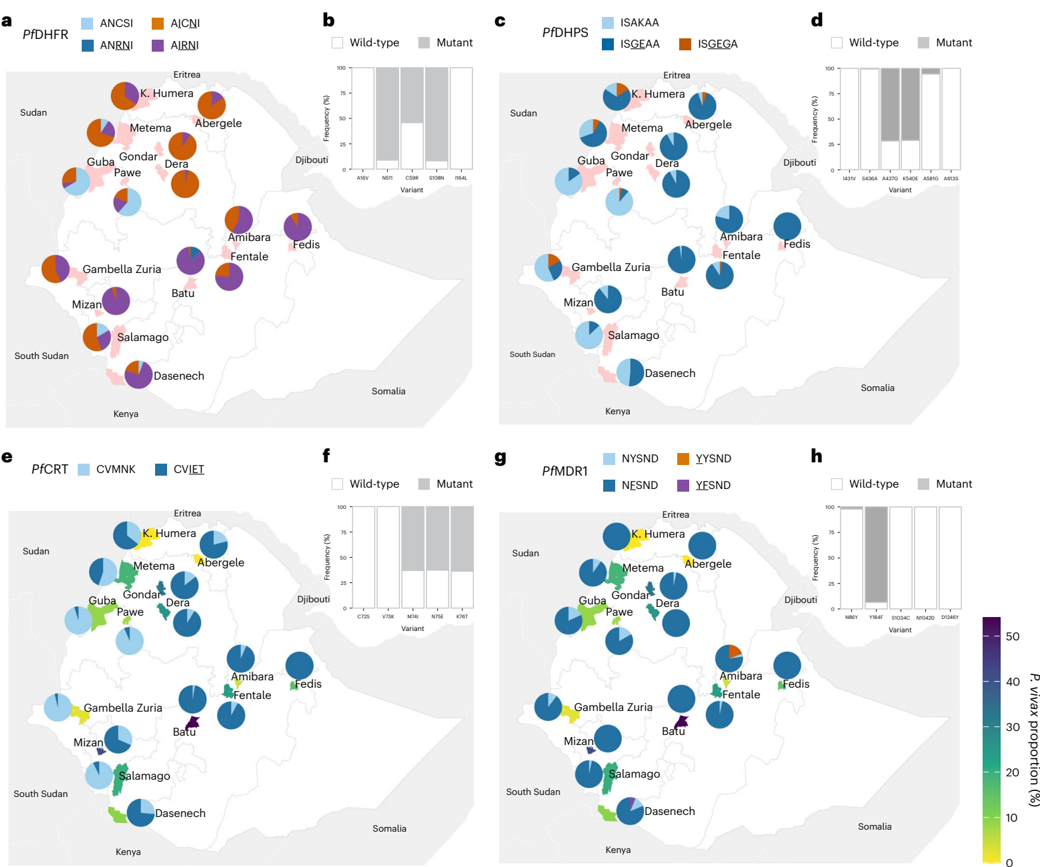
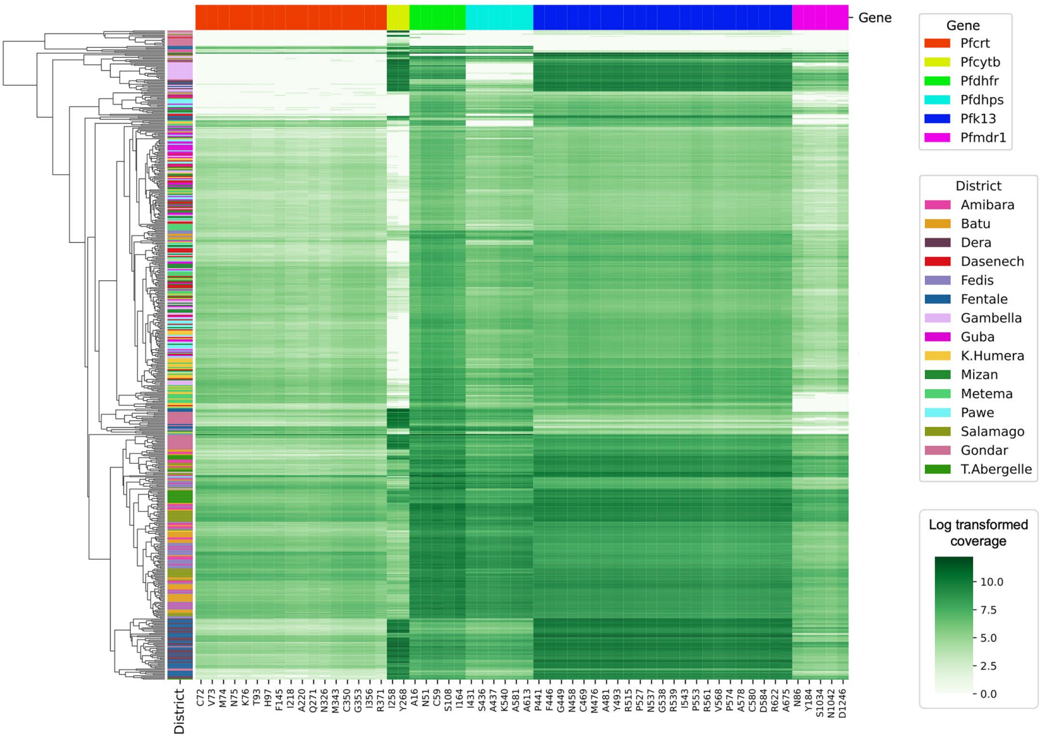
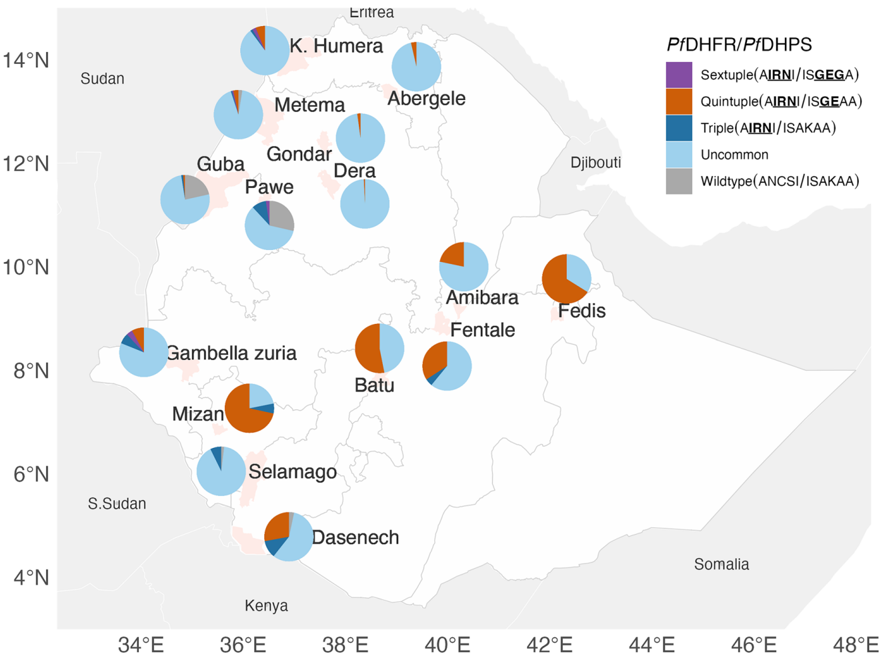
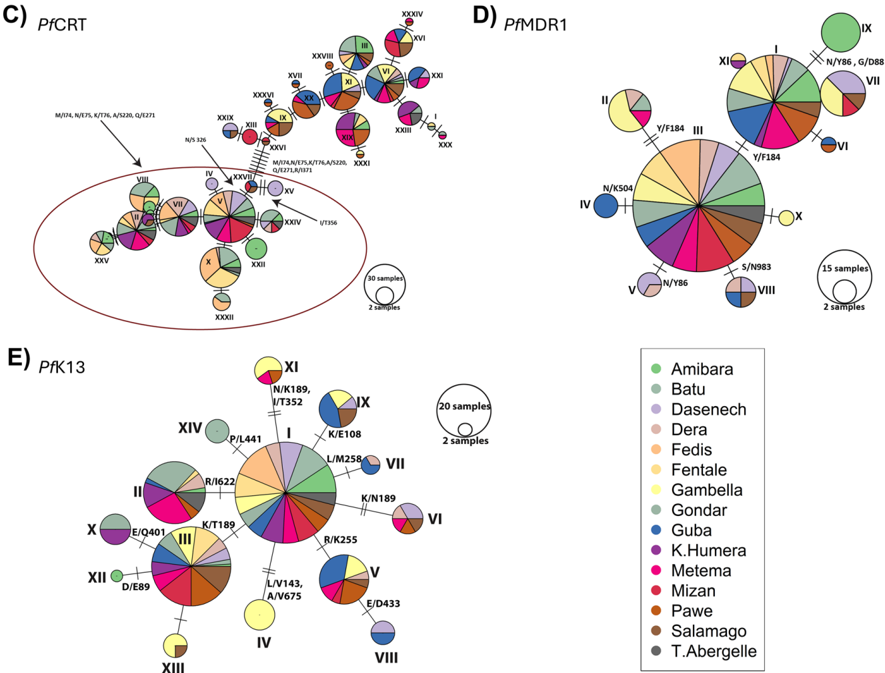
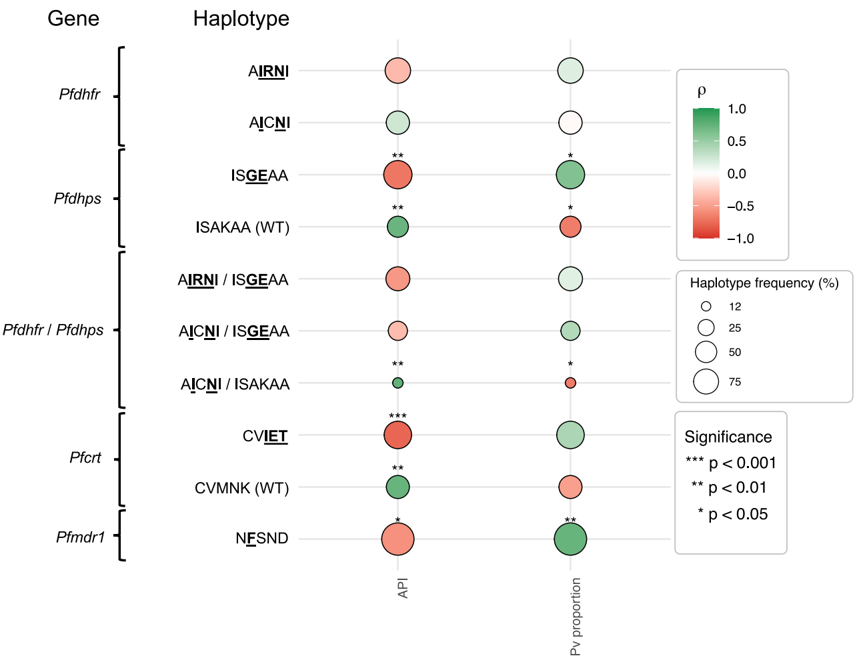
- PfMDR1 NFSND, associated with reduced lumefantrine susceptibility, was dominant at 93.0% (449/483), while the chloroquine-resistant PfCRT CVIET haplotype was 61.2% (301/492) and reached fixation in Fedis and near fixation in Batu, Amibara, Fentale and Dera.
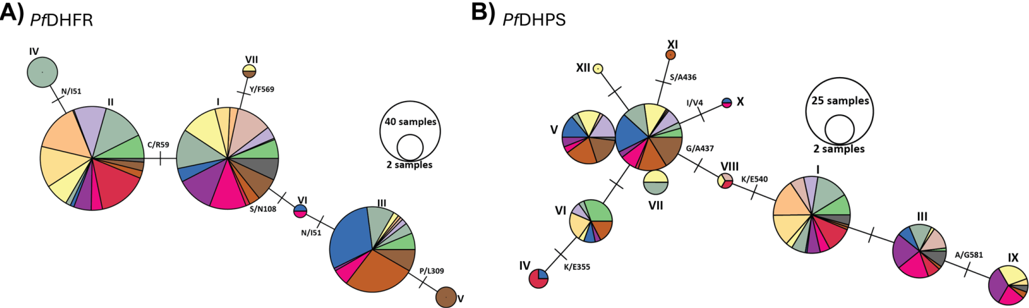
- Despite sulfadoxine–pyrimethamine withdrawal, antifolate mutations persisted: PfDHFR AIRNI was 50.0% (245/490) and AICNI 39.6% (194/490); PfDHPS ISGEAA was 65.7% (330/502), and the quintuple PfDHFR–PfDHPS haplotype AIRNI/ISGEAA was 42.8% (194/453).
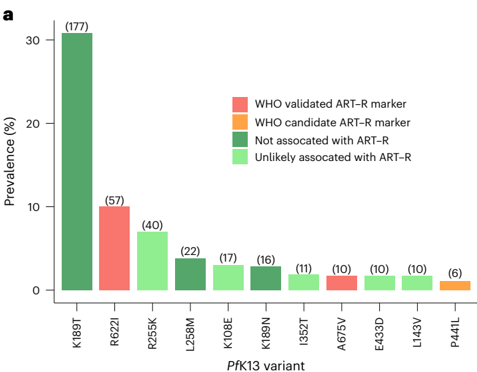
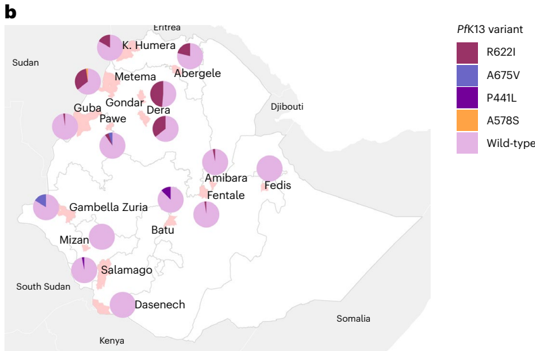
- PfK13 artemisinin-resistance variants were detected: R622I 10.0% (57/572), A675V 1.7% (10/572) and P441L 1.1% (6/571); R622I reached 48.6% in Gondar.
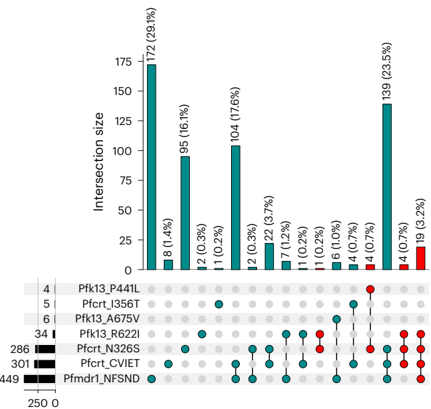
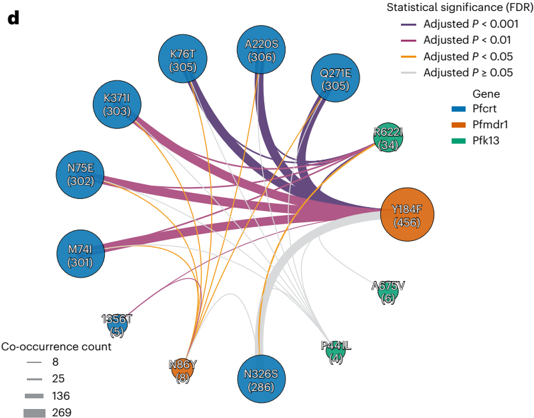
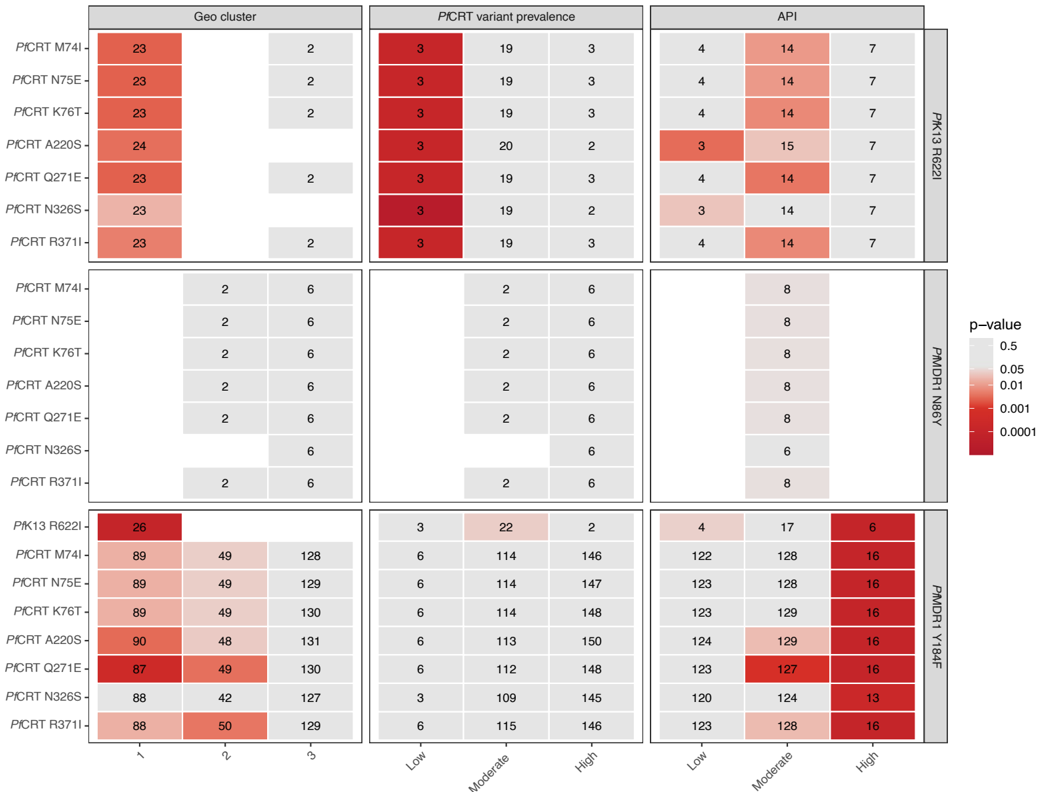
- In mixed-effects models restricted to districts with R622I circulation, R622I was independently associated with PfCRT CVIET (adjusted OR 3.19, 95% CI 1.60–6.34; P = 0.001) and PfDHFR AICNI (adjusted OR 5.16, 95% CI 1.60–16.70; P = 0.006), while ecological predictors were weaker and less consistent.
Methods
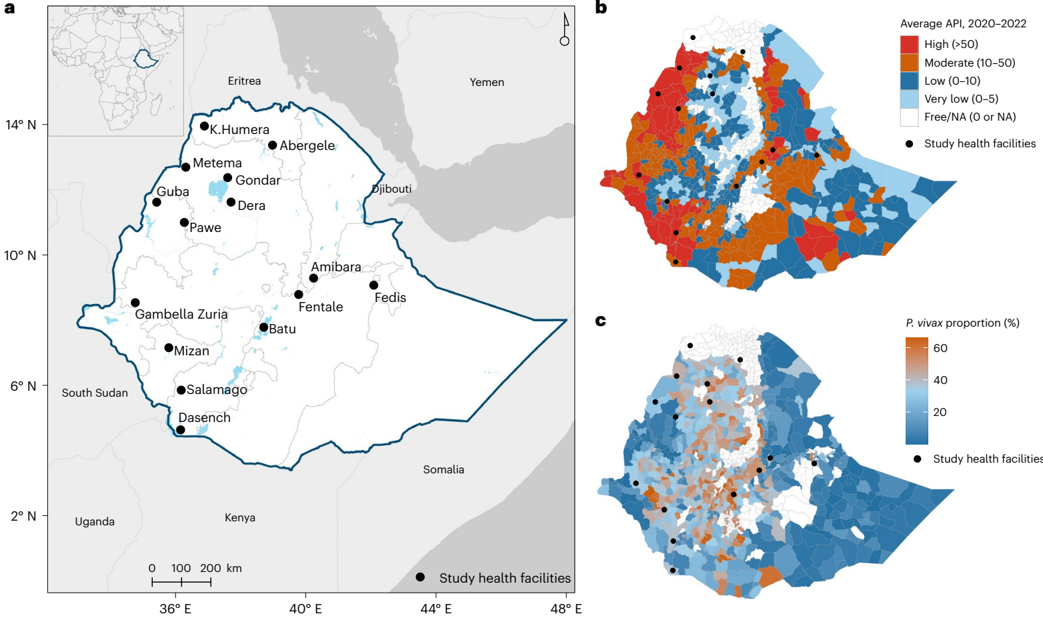
- Nationwide genomic surveillance collected 605 symptomatic *P. falciparum* blood samples between October 2019 and January 2023 across 15 Ethiopian districts selected for diverse transmission intensity and *P. vivax* co-endemicity; after quality control, 584 isolates were retained for variant analysis.
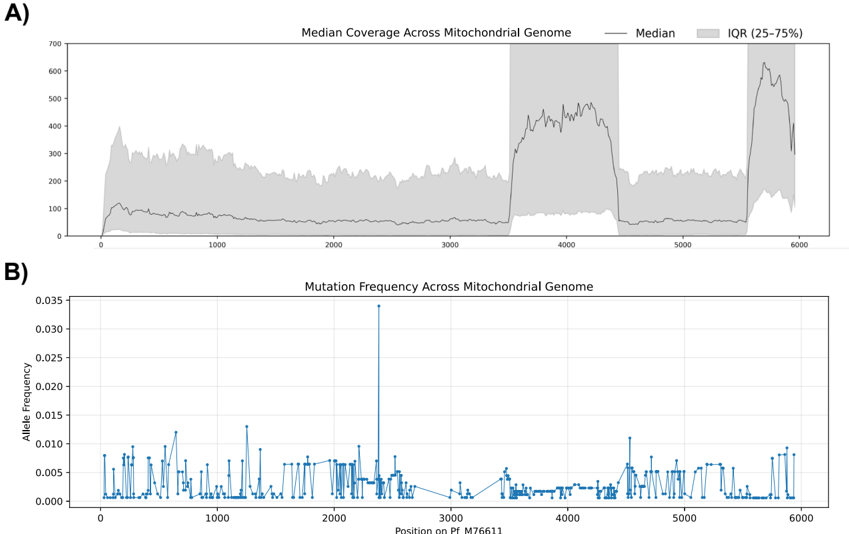
- Dried blood spots underwent DNA extraction and qPCR; targeted deep-amplicon sequencing covered *Pfcrt*, *Pfdhps*, *Pfmdr1*, *Pfdhfr*, *Pfk13* and the mitochondrial genome, with successful genotyping counts varying by target (for example, Pfk13 n = 575, Pfcrt n = 533, Pfmdr1 n = 556).
- Analyses included haplotype construction, chi-squared tests, Wilson confidence intervals, Spearman correlations with bootstrap resampling, Fisher exact tests with Benjamini–Hochberg correction for co-occurrence, mixed-effects and Bayesian multilevel logistic regression, PCA, neighbour-joining trees and identity-by-descent analysis using hmmIBD.
Limitations
- The paper states the study focused on known resistance markers in a limited set of genes, potentially overlooking novel mechanisms, and that the functional significance of observed co-occurrence patterns remains unclear, requiring causal studies.
- The paper notes that IBD analysis was restricted to drug resistance genes and the mitochondrial genome, so genome-wide approaches are needed for more robust inference of population relatedness and gene flow; whole-genome and longitudinal data linked to clinical outcomes are also needed.
- Evident from the text: this is targeted amplicon sequencing rather than whole-genome sequencing, sample sizes vary by locus, and the design is cross-sectional without reported treatment-efficacy outcomes.
Model-written summary. Check it against the paper before relying on it.
Integrity signals
Registry
Cites
Statistics
Figures
Verification
Claims the paper makes
3 Valid · 0 Not valid · 12 Not checked · 100 Own results and interpretations
The cited sources support only part of this claim — read each source’s verdict below.
In the paper
“The expansion of validated Pfk13 variants adds to growing evidence of ART-R in East Africa8,13,35,36.”
§ Genomic surveillance reveals co-occurrence of Plasmodium falciparum drug resistance variants across diverse transmission settings in Ethiopia > Discussion
What the sources say
- Not checked yetcites [8] Conrad, M. D. et al. Evolution of partial resistance to artemisinins in malaria parasites in Uganda. N. Engl. J. Med. 389, 722–732 (2023). 37611122 PMC10513755 source
- Not checked yetcites [13] Mihreteab, S. et al. Increasing prevalence of artemisinin-resistant HRP2-negative malaria in Eritrea. N. Engl. J. Med. 389, 1191–1202 (2023). 37754284 PMC10539021 source
- Partly supportedcites [35] Fola, A. A. et al. Plasmodium falciparum resistant to artemisinin and diagnostics have emerged in Ethiopia. Nat. Microbiol. 8, 1911–1919 (2023). 37640962 PMC10522486 sourceExperimental — accuracy not yet measured
The Discussion (p.1) states that the WHO candidate artemisinin partial-resistance K13 622I mutation is common in three Ethiopian regions and shows recent clonal expansion/spread, and the Main frames this alongside reported K13 partial-resistance mutations in Uganda, Tanzania and Rwanda and reduced artemisinin efficacy in Africa — so the 'expansion of Pfk13 variants adds to evidence of ART-R' part is supported, with Ethiopia/Horn of Africa rather than East Africa proper as the studied setting. However, the variant whose expansion this paper documents is a WHO candidate marker, not a WHO-validated one: the Results state that 622I is the 'WHO candidate artemisinin partial-resistance mutation' and that 'None of the other mutations were WHO-validated or candidate artemisinin partial-resistance mutations'. The claim's attribution of 'validated Pfk13 variants' is therefore not supported by our copy. (LLM, conf=0.78)
- Supportedcites [36] Brhane, B. G. et al. Rising prevalence of Plasmodium falciparum artemisinin partial resistance mutations in Ethiopia. Commun. Med. 5, 297 (2025). 40681807 PMC12274420 source
The Discussion (p. n/a, 'In addition to k13 R622I...') states that three further WHO-validated k13 mutations (A675V, P441L, P574L) are reported for the first time in Ethiopia and that 'These k13 mutations are becoming more common in East Africa', directly matching the claim's 'expansion of validated Pfk13 variants adds to growing evidence of ART-R in East Africa'. The Results ('Prevalence and distribution of ART-R mutations') document the additional validated mutations not previously observed in the Horn of Africa, and the concluding Discussion paragraph lists 'the detection of additional validated ART-R mutations in the Horn of Africa' as a key finding, with the Introduction confirming WHO-validated ART-R markers in Ethiopia, Eritrea, Rwanda, Uganda, Tanzania and the DRC. Ethiopia/Horn of Africa falls within the East Africa framing the paper itself uses, so no qualifier is lost. (LLM, conf=0.90)
plainstates an association- Asserted: passes — The authors put it forward as true.
- Checkable: passes — It can be checked against evidence.
- Load-bearing: passes — The paper’s conclusions depend on it.
- Based: passes — The paper gives a reason why it holds.
The cited sources support only part of this claim — read each source’s verdict below.
In the paper
“The very low prevalence of 86Y (2.0%) probably reflects fitness costs under AL pressure, consistent with its continued decline since AL introduction in 200435,36 and in line with regional observations35,36.”
§ Genomic surveillance reveals co-occurrence of Plasmodium falciparum drug resistance variants across diverse transmission settings in Ethiopia > Discussion
What the sources say
- Could not verifycites [35] Fola, A. A. et al. Plasmodium falciparum resistant to artemisinin and diagnostics have emerged in Ethiopia. Nat. Microbiol. 8, 1911–1919 (2023). 37640962 PMC10522486 sourceExperimental — accuracy not yet measured
Our copy reports pfmdr1 codon 86 only as part of the NFD haplotype (N86 wild, Y184F, D1246 wild) at 83% overall and 98% of 622I parasites (Results, 'Prevalence of mutations that may augment ACT resistance'; Fig. 2 caption), and the Discussion notes 'almost all genotyped samples carrying the ACT partner drug lumefantrine resistance haplotype (pfmdr1 NFD)'. No passage gives a 2.0% prevalence for the 86Y mutant, nor attributes low 86Y to fitness costs under AL pressure, nor describes its continued decline since AL introduction in 2004 or regional 86Y observations. The fitness-cost statements in our copy concern K13 622I (lower within-host proportion than wild type, Results p. 'K13 622I mutation is prevalent in Ethiopia') and combined 622I/pfhrp2-3 deletion (Discussion), not pfmdr1 86Y. Searched: 'pfmdr1 86Y mutant prevalence 2.0%', 'N86Y codon 86 lumefantrine fitness cost artemether-lumefantrine', 'pfcrt K76T decline 2004 AL pressure'. (LLM, conf=0.70)
- Partly supportedcites [36] Brhane, B. G. et al. Rising prevalence of Plasmodium falciparum artemisinin partial resistance mutations in Ethiopia. Commun. Med. 5, 297 (2025). 40681807 PMC12274420 sourceExperimental — accuracy not yet measured
The Results section ('Prevalence of mutations associated with resistance to partner drugs') does establish that the mdr1 86 locus is near-fixed as wild-type N86 (99.1% [95% CI 98.4–99.6%]), i.e. a very low 86Y prevalence — but the implied mutant frequency is ~0.9%, not the 2.0% figure carried in the claim. The Discussion attributes mdr1 allele patterns to ACT/lumefantrine selective pressure ('The increasing prevalence of MDR1 NFD in East Africa suggests significant ACT selective pressure'; NFD 'selection occurring earlier'), and its only fitness-cost reasoning concerns the persistence of SP-resistance mutations ('the absence of fitness costs for maintaining these mutations'), not 86Y. No passage in our copy states that low 86Y reflects fitness costs under AL pressure, and none reports a continued decline of 86Y since AL introduction in 2004 (the paper's 2004 date refers to SP discontinuation), so the interpretation and the temporal/regional trend elements of the claim are not supported by this source. (LLM, conf=0.70)
hedgedstates a possible cause- Asserted: passes — The authors put it forward as true.
- Checkable: passes — It can be checked against evidence.
- Load-bearing: unclear — It is unclear whether the paper’s conclusions depend on it.
- Based: passes — The paper gives a reason why it holds.
- Could not verify
The cited sources support only part of this claim — read each source’s verdict below.
In the paper
“The widespread PfMDR1 NFSND haplotype (93.0%), consistent with reports from Ethiopia35,36,53 and across Africa54,55, further complicates resistance dynamics.”
§ Genomic surveillance reveals co-occurrence of Plasmodium falciparum drug resistance variants across diverse transmission settings in Ethiopia > Discussion
What the sources say
- Partly supportedcites [35] Fola, A. A. et al. Plasmodium falciparum resistant to artemisinin and diagnostics have emerged in Ethiopia. Nat. Microbiol. 8, 1911–1919 (2023). 37640962 PMC10522486 sourceExperimental — accuracy not yet measured
Our copy supports only part of what is attributed: it reports that the pfmdr1 lumefantrine-resistance haplotype is widespread in Ethiopia, but defines it as the three-codon NFD haplotype (N86 wild, Y184F mutant, D1246 wild) at 83% overall (Results, 'Prevalence of mutations that may augment ACT resistance'), with 98% of K13 622I parasites carrying NFD, and the Discussion saying 'almost all genotyped samples carrying the ACT partner drug lumefantrine resistance haplotype (pfmdr1 NFD)'. The five-codon NFSND designation and the 93.0% figure the claim attributes to Ethiopian reports appear nowhere in our copy (searched: pfmdr1 NFSND, NFD haplotype prevalence, codon 1034/1042, copy number). The Africa-wide comparison is likewise absent; the paper only cites others (refs 38, 39) for pfmdr1/Africa context. (LLM, conf=0.75)
- Partly supportedcites [36] Brhane, B. G. et al. Rising prevalence of Plasmodium falciparum artemisinin partial resistance mutations in Ethiopia. Commun. Med. 5, 297 (2025). 40681807 PMC12274420 sourceExperimental — accuracy not yet measured
Our copy of Brhane et al. (2025) does report a near-fixed, widespread PfMDR1 haplotype in Ethiopia and frames it as consistent with regional patterns: the Results section 'Prevalence of mutations associated with resistance to partner drugs' gives the N86(wild)–184F(mutant)–D1246(wild) 'NFD' haplotype as predominant at 94.8% (95% CI 92.8–96.2%), with 99.1% N86, 94.8% 184F and 98.1% D1246, and the Discussion states that 'the increasing prevalence of MDR1 NFD in East Africa suggests significant ACT selective pressure' and that many ART-R parasites co-carry NFD. However, the source genotyped only codons 86, 184 and 1246 (Fig. 3 legend: calls across those loci), so it does not report the five-position 'NFSND' haplotype (1034S and 1042N are not assessed anywhere in our copy), and its magnitude is 94.8%, not 93.0%. The Ethiopian-prevalence part of the attribution is supported; the NFSND designation and the 93.0% figure are not. (LLM, conf=0.72)
- Not checked yetcites [53] Hassen, J., Alemayehu, G. S., Dinka, H. & Golassa, L. High prevalence of Pfcrt 76T and Pfmdr1 N86 genotypes in malaria infected patients attending health facilities in East Shewa zone, Oromia Regional State, Ethiopia. Malar. J. 21, 286 (2022). 36207750 PMC9547420 source
Checked before — its earlier verdict is held back until a new check runs.
- Not checked yetcites [54] Bakari, C. et al. Trends of Plasmodium falciparum molecular markers associated with resistance to artemisinins and reduced susceptibility to lumefantrine in mainland Tanzania from 2016 to 2021. Malar. J. 23, 71 (2024). 38461239 PMC10924419 source
Checked before — its earlier verdict is held back until a new check runs.
- Not checked yetcites [55] Niba, P. T. N. et al. Evolution of Plasmodium falciparum antimalarial drug resistance markers post-adoption of artemisinin-based combination therapies in Yaounde, Cameroon. Int. J. Infect. Dis. 132, 108–117 (2023). 37028468 PMC10182900 source
Checked before — its earlier verdict is held back until a new check runs.
plain- Asserted: passes — The authors put it forward as true.
- Checkable: passes — It can be checked against evidence.
- Load-bearing: unclear — It is unclear whether the paper’s conclusions depend on it.
- Based: passes — The paper gives a reason why it holds.
- Partly supported
A result the paper reports from its own data — it cites no other source for it, so there is none to check. The quote shows it is in the paper.
In the paper
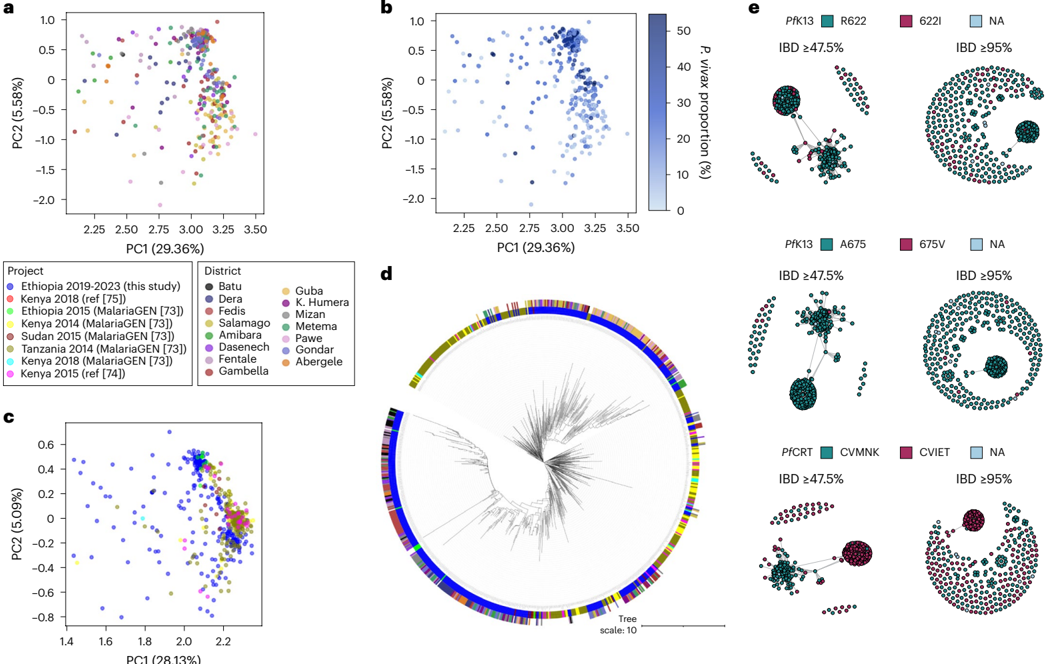
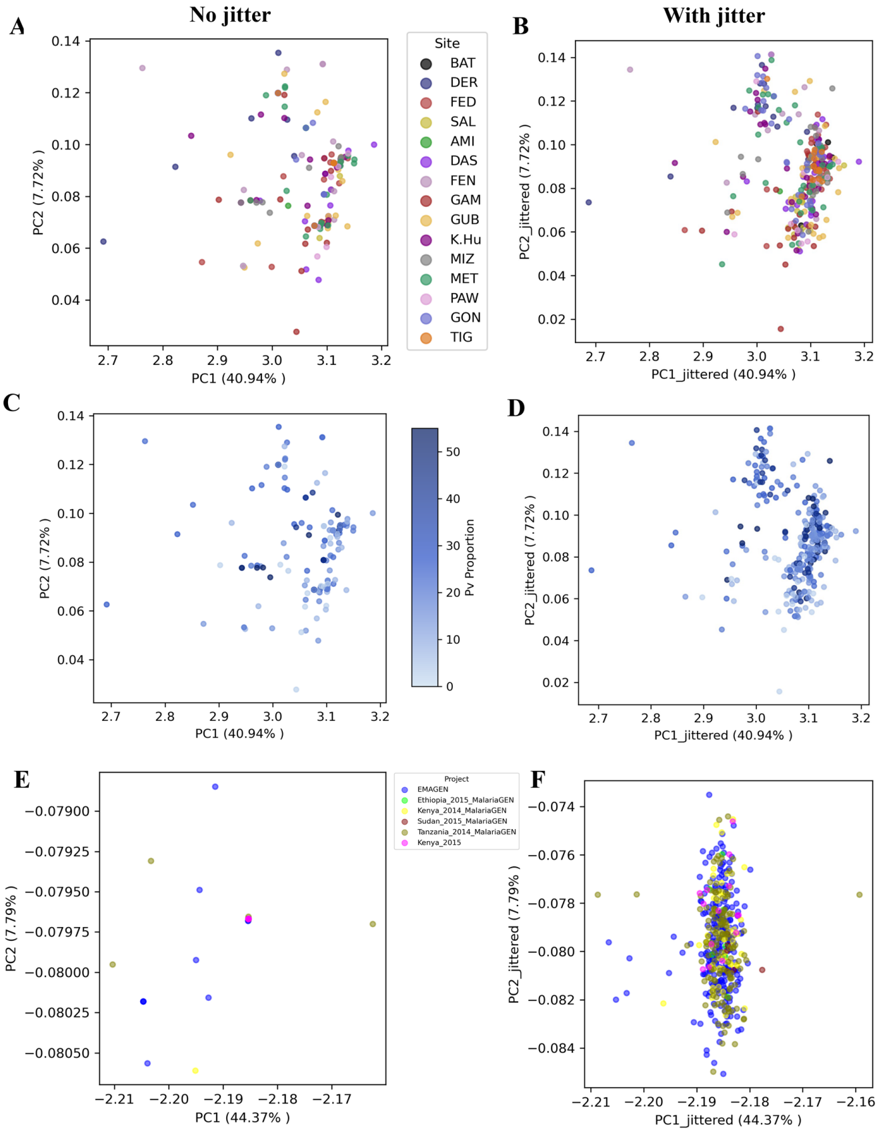
“Population genetic analysis combining mitochondrial sequences with molecularly defined drug resistance profiles revealed two clusters of isolates using principal component analysis (PCA).”
§ Genomic surveillance reveals co-occurrence of Plasmodium falciparum drug resistance variants across diverse transmission settings in Ethiopia > Results > Ethiopian P. falciparum forms geographically and epidemiologically distinct clusters
plainstates an association- Asserted: passes — The authors put it forward as true.
- Checkable: passes — It can be checked against evidence.
- Load-bearing: passes — The paper’s conclusions depend on it.
- Based: passes — The paper gives a reason why it holds.
A result the paper reports from its own data — it cites no other source for it, so there is none to check. The quote shows it is in the paper.
In the paper
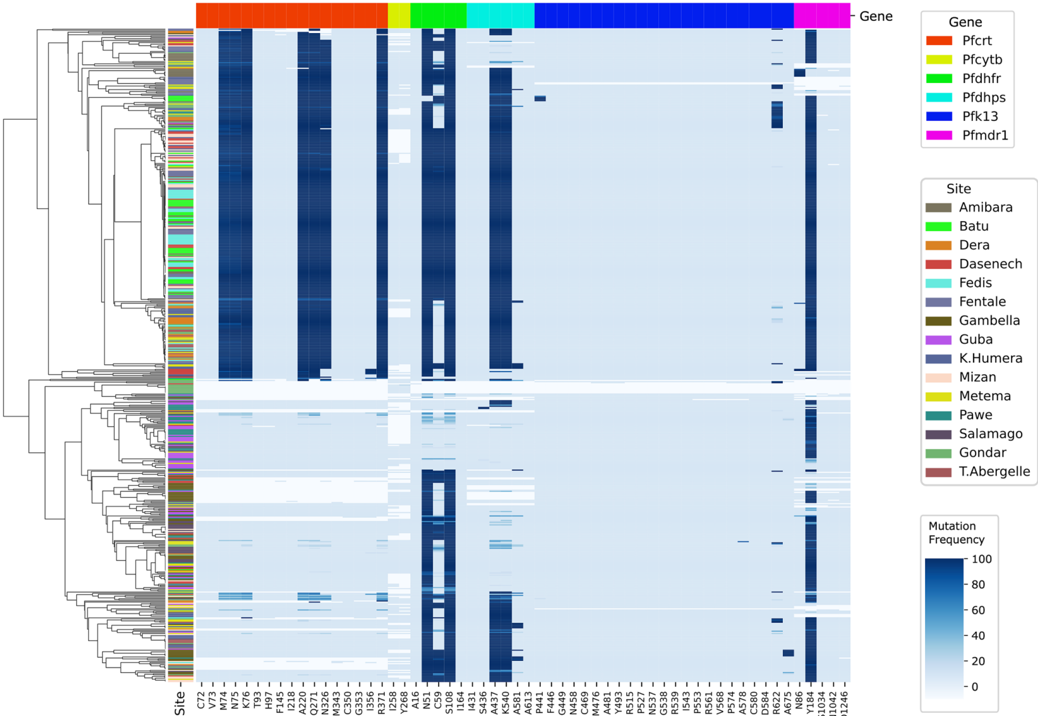
“Distinct geographic clustering of combined antifolate resistance haplotypes was observed across Ethiopia (Extended Data Fig. 4).”
§ Genomic surveillance reveals co-occurrence of Plasmodium falciparum drug resistance variants across diverse transmission settings in Ethiopia > Results > The persistence of Pfdhfr and Pfdhps mutations associated with antifolate resistance
plainstates an association- Asserted: passes — The authors put it forward as true.
- Checkable: passes — It can be checked against evidence.
- Load-bearing: passes — The paper’s conclusions depend on it.
- Based: passes — The paper gives a reason why it holds.
40 more claims
Create a free account to see all 115 claims and to verify the 34 references still open.
- It may state two separate claims as one. 51
- Probably not a substantial claim. 24
Self-check
Percentages, sums and reported differences re-computed from the paper’s own numbers.
Each contradiction between two passages listed here was confirmed by an independent check.
Rated minor: it would not touch a result — a value no result rests on, a p-value that stays on the same side of the significance level, or a conflict that is clerical, resolved elsewhere in the paper, or outside its own findings.
In the paper
§ Genomic surveillance reveals co-occurrence of Plasmodium falciparum drug resistance variants across diverse transmission settings in Ethiopia > Results > Study site characteristics and demography of participants
“| Overall | Overall | 30.57% (181/592) | 20.0 (15.0–28.0) | 40.4 | 20.2 | 19 | 410 | 158 | 17 | 604 | 503 | 530 | 553 | 545 | 570 | 572 | 584 |”
§ Genomic surveillance reveals co-occurrence of Plasmodium falciparum drug resistance variants across diverse transmission settings in Ethiopia > Methods > Surveillance sites and sample collection
“A total of 605 blood samples were collected from symptomatic P. falciparum between October 2019 and January 2023”
Rated minor: it would not touch a result — a value no result rests on, a p-value that stays on the same side of the significance level, or a conflict that is clerical, resolved elsewhere in the paper, or outside its own findings.
In the paper
§ Genomic surveillance reveals co-occurrence of Plasmodium falciparum drug resistance variants across diverse transmission settings in Ethiopia > Methods > Amplification of antimalarial drug resistance genes, sample and library preparation, and targeted deep-amplicon sequencing
“Amplicon sequencing targeting the entire length of six antimalarial drug resistance genes (Pfcrt, Pfmdr1, Pfk13, Pfdhfr and Pfdhps) and the mitochondrial genome was employed”
§ Genomic surveillance reveals co-occurrence of Plasmodium falciparum drug resistance variants across diverse transmission settings in Ethiopia > Results > Study site characteristics and demography of participants
“Targeted amplicon sequencing of five P. falciparum drug resistance genes (Pfcrt, Pfdhps, Pfmdr1, Pfdhfr and Pfk13) and the mitochondrial genome was performed using 605 patient samples collected between 2019 and 2023.”
Rated minor: it would not touch a result — a value no result rests on, a p-value that stays on the same side of the significance level, or a conflict that is clerical, resolved elsewhere in the paper, or outside its own findings.
In the paper
§ Genomic surveillance reveals co-occurrence of Plasmodium falciparum drug resistance variants across diverse transmission settings in Ethiopia > Results > Study site characteristics and demography of participants
“Sample counts for successful variant analysis varied for each sequenced gene: mitochondrial genome (n = 504), Pfcrt (n = 533), Pfdhps (n = 553), Pfmdr1 (n = 556), Pfdhfr (n = 570) and Pfk13 (n = 575) (Table 1).”
§ Genomic surveillance reveals co-occurrence of Plasmodium falciparum drug resistance variants across diverse transmission settings in Ethiopia > Results > Study site characteristics and demography of participants
“| Overall | Overall | 30.57% (181/592) | 20.0 (15.0–28.0) | 40.4 | 20.2 | 19 | 410 | 158 | 17 | 604 | 503 | 530 | 553 | 545 | 570 | 572 | 584 |”
Rated minor: it would not touch a result — a value no result rests on, a p-value that stays on the same side of the significance level, or a conflict that is clerical, resolved elsewhere in the paper, or outside its own findings.
In the paper
§ Genomic surveillance reveals co-occurrence of Plasmodium falciparum drug resistance variants across diverse transmission settings in Ethiopia > Results > Study site characteristics and demography of participants
“Ten participants with incomplete demographic data were excluded from the analysis.”
§ Genomic surveillance reveals co-occurrence of Plasmodium falciparum drug resistance variants across diverse transmission settings in Ethiopia > Results > Study site characteristics and demography of participants
“Overall, 13 participants had incomplete demographic data. The remaining 592 participants (Table 1) had a median age of 20.0 years”
Citations
Cites
MAFFT: a novel method for rapid multiple sequence alignment based on fast Fourier transform
Katoh, K. (2002) · Nucleic Acids Research · doi:10.1093/nar/gkf436 · Cited by 17,027
Artemisinin Resistance in Plasmodium falciparum Malaria
Dondorp, A. M., Nosten, F., Yi, P., Das, D., Phyo, A. P., Tarning, J., Lwin, K. M., Ariey, F., Hanpithakpong, W., Lee, S. J., et al. (2009) · New England Journal of Medicine · doi:10.1056/nejmoa0808859 · Cited by 3,424
pegas: an R package for population genetics with an integrated–modular approach
Paradis, E. (2010) · Bioinformatics · doi:10.1093/bioinformatics/btp696 · Cited by 2,582
Spread of Artemisinin Resistance in Plasmodium falciparum Malaria
Ashley, E. A., Dhorda, M., Fairhurst, R. M., Amaratunga, C., Lim, P., Suon, S., Sreng, S., Anderson, J. M., Mao, S., Sam, B., et al. (2014) · New England Journal of Medicine · doi:10.1056/nejmoa1314981 · Cited by 2,205
A molecular marker of artemisinin-resistant Plasmodium falciparum malaria
Ariey, F., Witkowski, B., Amaratunga, C., Beghain, J., Langlois, A.-C., Khim, N., Kim, S., Duru, V., Bouchier, C., Ma, L., et al. (2014) · Nature · doi:10.1038/nature12876 · Cited by 2,090
Evidence of Artemisinin-Resistant Malaria in Western Cambodia
Noedl, H., Se, Y., Schaecher, K., Smith, B. L., Socheat, D., & Fukuda, M. M. (2008) · New England Journal of Medicine · doi:10.1056/nejmc0805011 · Cited by 1,785
White, N. J. (2004) · Journal of Clinical Investigation · doi:10.1172/jci200421682 · Cited by 1,248
Evidence of Artemisinin-Resistant Malaria in Africa
Balikagala, B., Fukuda, N., Ikeda, M., Katuro, O. T., Tachibana, S.-I., Yamauchi, M., Opio, W., Emoto, S., Anywar, D. A., Kimura, E., et al. (2021) · New England Journal of Medicine · doi:10.1056/nejmoa2101746 · Cited by 866
Uwimana, A., Legrand, E., Stokes, B. H., Ndikumana, J.-L. M., Warsame, M., Umulisa, N., Ngamije, D., Munyaneza, T., Mazarati, J.-B., Munguti, K., et al. (2020) · Nature Medicine · doi:10.1038/s41591-020-1005-2 · Cited by 831
Self-citationWellems, T. E., & Plowe, C. V. (2001) · The Journal of Infectious Diseases · doi:10.1086/322858 · Cited by 807
Research works printed but not linked: 1
- Guidelines on Post-Exposure Prophylaxis for HIV and the Use of Co-trimoxazole Prophylaxis for HIV-Related Infections among Adults, Adolescents and Children: Recommendations for a Public Health Approach: December 2014 Supplement to the 2013 Consolidated Guidelines on the Use of Antiretroviral Drugs for Treating and Preventing HIV infection (World Health Organization, 2014); https://iris.who.int/handle/10665/145719 26042326
Cited by
Temgoua, M. V. S., Njafa, J.-P. T., Penabeï, S., Mbacham, W. F., & Engo, S. G. N. (2026) · ChemRxiv · doi:10.26434/chemrxiv.15009345/v1
Estimand Divergence: Static Docking Versus Dynamics for Antimalarial TriagePreprint
Temgoua, M. V. S., Njafa, J.-P. T., Penabeï, S., Mbacham, W. F., & Engo, S. G. N. (2026) · ChemRxiv · doi:10.26434/chemrxiv.15009345/v2
Degaga, T. S., Bamboro, S. A., Tego, T. T., Mengistu, K. M., Mnjala, H., Lee, G., Commons, R. J., Thriemer, K., Price, R. N., & Douglas, N. M. (2026) · Research Square · doi:10.21203/rs.3.rs-10990781/v1
Vanheer, L. N., Yohannes, M., Workie, D. F., Shimelash, A., Shiferaw, M., Alemayehu, D. H., Teshome, Y., Ademu, S., Billows, N., Mesafint, F. M., et al. (2026) · bioRxiv (Cold Spring Harbor Laboratory) · doi:10.64898/2026.11.09.764565
Self-citation
Metadata
- Authors
- Letebo, A., Vanheer, L. N., Engdaw, M., Ejigu, L. A., Hailu Alemayehu, D., Deressa, J. D., Adnew, B., Ayele, A., Bezabih, M. K., Demisse, M., Seyoum, T., Shiferaw, M., Sime, H., Weldemariam, A. G., Shimelash, A., Tafa, E. B., Chali, W., Alemayehu, L., Kassa, F. A., Zeleke, A. J., Hamza, T. A., Tamirat, A. B., Misganaw, T., Bogale, A., Abriham, Z. Y., Nasir, Y., Jebessa, G., Yohannes, M., Kebede, B. A., Ayele, M. K., Abdo, M., Habtamu, G., Gizat, A., Phelan, J., Matlock, B., Fidock, D. A., Campino, S., Assefa, A., Koepfli, C., Massebo, F., & Tadesse, F. G.
- Affiliations
- Armauer Hansen Research Institute (ET)
- London School of Hygiene & Tropical Medicine (GB)
- Radboud University Medical Center (NL)
- Ethiopian Public Health Institute (ET)
- Madda Walabu University (ET)
- Woldia University (ET)
- Dilla University (ET)
- Oak Ridge Institute for Science and Education (US)
- Columbia University Irving Medical Center (US)
- University of North Carolina at Chapel Hill (US)
- University of Notre Dame (US)
- Arba Minch University (ET)
- Corresponding author
- Tadesse, Fitsum G.
- ORCID
- Vanheer, Leen N.
- Engdaw, Mengst
- Ejigu, Legesse Alamerie
- Deressa, Jimma Dinsa
- Adnew, Bethlehem
- Ayele, Abaysew
- Bezabih, Migbaru Keffale
- Demisse, Mulugeta
- Seyoum, Tamrayehu
- Sime, Heven
- Weldemariam, Atsbeha Gebreegziabxier
- Shimelash, Amanuel
- Tafa, Elias B.
- Chali, Wakweya
- Alemayehu, Lina
- Kassa, Fikregabrail Aberra
- Zeleke, Ayalew Jejaw
- Misganaw, Tadesse
- Abriham, Zufan Yiheyis
- Yohannes, Metmiku
- Gizat, Addisu
- Phelan, Jody
- Fidock, David A.
- Campino, Susana
- Assefa, Ashenafi
- Koepfli, Cristian
- Massebo, Fekadu
- Tadesse, Fitsum G.
- Venue
- Nature Microbiology
- Published
- 2026-08-05
- Volume
- 11
- Issue
- 9
- Pages
- 2577-2588
- ISSN
- 2058-5276 (ISSN-L)
- PMC
- PMC13524833
- OpenAlex
- W7172534540
- Semantic Scholar
- 5e9fa72409e639ad25c1f4864d33c8b23eacc33c
- Cited by
- 4
- References
- 66
- Citations by year
- 2026: 4
- FWCI
- 14.78
- Type
- journal article
- Language
- en
- Open access
- hybrid
- doi.org
- Licence
- cc-by
- creativecommons.org/licenses/by/4.0 (tdm)
- creativecommons.org/licenses/by/4.0 (vor)
- Locations
- Nature Microbiology (publishedVersion, cc-by)
- PubMed Central (publishedVersion, cc-by)
- PubMed (publishedVersion)
- LSHTM Research Online (London School of Hygiene and Tropical Medicine) (acceptedVersion)
- Radboud Repository (Radboud University) (submittedVersion)
- Funders
- Bill and Melinda Gates Foundation (INV-005898; INV-035257; INV-048214, INV-005898)
- Wellcome Trust (102348)
- Foundation for the National Institutes of Health (R01 AI050234 and R01 AI109023, AI178183)
- Topics
- Health Sciences › Medicine › Public Health, Environmental and Occupational Health › Malaria Research and Control
- Life Sciences › Pharmacology, Toxicology and Pharmaceutics › Pharmacology › Pharmacogenetics and Drug Metabolism
- Health Sciences › Medicine › Microbiology (medical) › Antibiotic Resistance in Bacteria
- Keywords
- Plasmodium falciparum, antimalarial drug resistance, pfmdr1, pfcrt, pfk13, pfdhfr, pfdhps, mitochondrial genome, artemisinin resistance, artemether-lumefantrine, chloroquine resistance, transmission intensity, Ethiopia, malaria resurgence
- MeSH terms
- Artemether, Lumefantrine Drug Combination, Antimalarials, Chloroquine, Drug Resistance, Ethiopia, Haplotypes, Humans, Plasmodium falciparum, Plasmodium vivax, Protozoan Proteins, Malaria, Falciparum, Genome, Mitochondrial
About these checks
Registry, retraction, Cites and statistics results are computed, not judged, with one exception: a printed reference that no index lists is read once by a model before it counts as a citation error. Claims are extracted by a model and kept only when their quote appears verbatim in the text; each cited source is then checked, with a model’s help, for whether it says what the claim relies on. Those verdicts can be wrong — read the claim’s quote and the cited source before relying on one.
The claim verdicts this report counts are experimental: their accuracy is not yet measured.
A language model drew the claims from the paper on 2026-11-21, under version 3 of the claim definition (model deepseek-v4.1-flash, prompt extract-v3).
A second model labelled each claim on 2026-11-21 (model jev-1.13-20260917, definition revision gold-guideline-v0.2).
Cited sources are checked with a language model’s help (qwen3.8-omni-flash).
Statistics and arithmetic are recomputed, not judged.
Confidence bands are shown only for fields calibrated on our annotated test set. None is calibrated yet, so no band is shown.
What counts as a claim ›How we measure confidence ›How we check this ›
Are you an author, or do you see a problem with this page? Request a review
Data sources
Bibliographic data: Semantic Scholar, OpenAlex, Crossref.
Contains information from the Semantic Scholar Academic Graph Datasets, made available under the ODC Attribution License (ODC-BY 1.0).
Semantic Scholar’s data is described in: Kinney, R., et al. (2023). The Semantic Scholar Open Data Platform. arXiv:2301.10140.
