

EANO guidelines on the diagnosis and treatment of diffuse gliomas of adulthood
Open accessThe DOI matches its Crossref record; 139 of the 139 references it cites were found in a registry or an index.
Abstract
In response to major changes in diagnostic algorithms and the publication of mature results from various large clinical trials, the European Association of Neuro-Oncology (EANO) recognized the need to provide updated guidelines for the diagnosis and management of adult patients with diffuse gliomas. Through these evidence-based guidelines, a task force of EANO provides recommendations for the diagnosis, treatment and follow-up of adult patients with diffuse gliomas. The diagnostic component is based on the 2016 update of the WHO Classification of Tumors of the Central Nervous System and the subsequent recommendations of the Consortium to Inform Molecular and Practical Approaches to CNS Tumour Taxonomy — Not Officially WHO (cIMPACT-NOW). With regard to therapy, we formulated recommendations based on the results from the latest practice-changing clinical trials and also provide guidance for neuropathological and neuroradiological assessment. In these guidelines, we define the role of the major treatment modalities of surgery, radiotherapy and systemic pharmacotherapy, covering current advances and cognizant that unnecessary interventions and expenses should be avoided. This document is intended to be a source of reference for professionals involved in the management of adult patients with diffuse gliomas, for patients and caregivers, and for health-care providers.
Overview
The claims and statistics of this paper haven’t been checked yet.
Free: it reads the open-access text and checks the first 5 claims that cite a source we can check. Create a free account to check every claim.
Integrity signals
Registry
Cites
Statistics
Figures
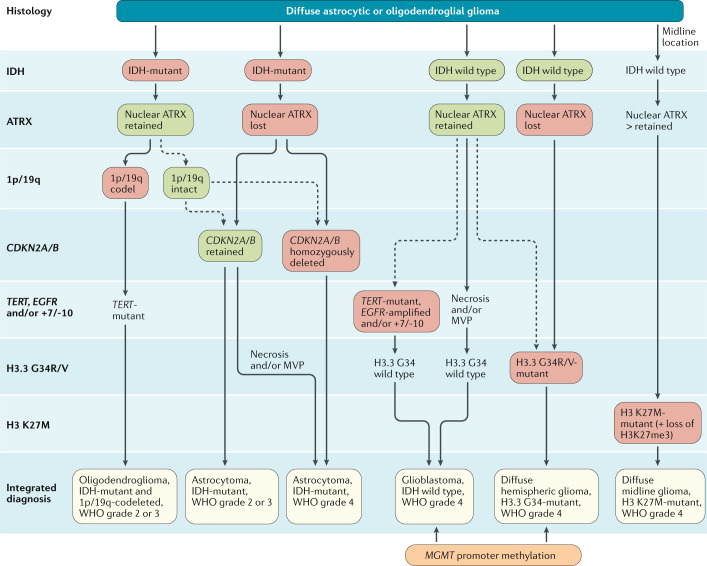
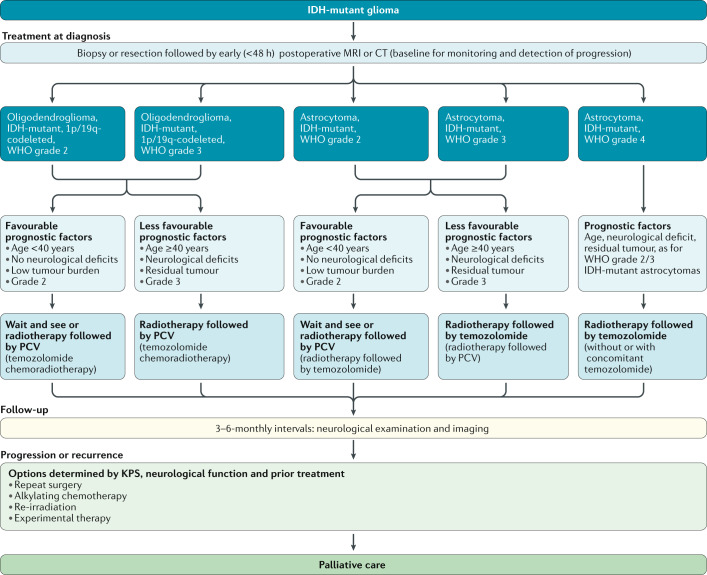
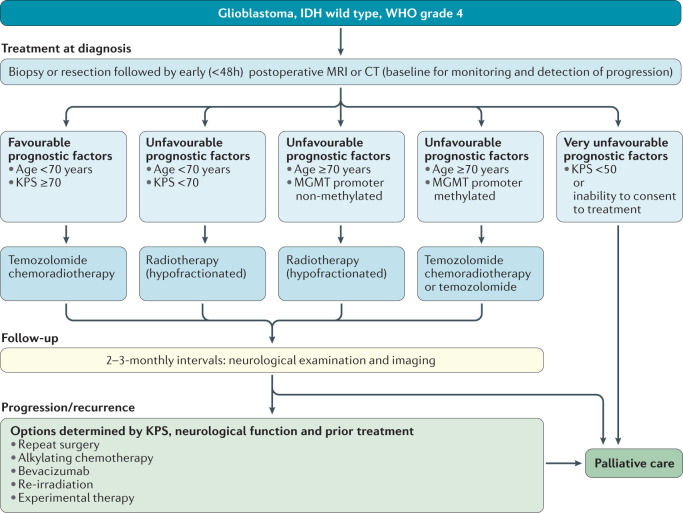
Verification
Claims the paper makes
The claims and statistics of this paper haven’t been checked yet.
Free: it reads the open-access text and checks the first 5 claims that cite a source we can check. Create a free account to check every claim.
Claims other papers make about this one
Each is checked against this paper’s own text: does it say what the citing paper says it does?
The source backs part of the claim, not all of it — or backs it for a different population, condition or comparison.
In the citing paper
“Despite standard of care treatment, GBM recurrence is inevitable and there is no agreed salvage therapy post-recurrence [4, 5].”
From Preclinical development of an mRNA-based multiepitope immunotherapeutic for glioblastoma (2025) · cites this paper as [5]
Experimental — accuracy not yet measuredThe source backs part of the claim, not all of it — or backs it for a different population, condition or comparison.
In the citing paper
“The current standard of care for GBM includes surgical resection and post-surgery radiotherapy with or without temozolomide (TMZ) chemotherapy [4, 5].”
From Preclinical development of an mRNA-based multiepitope immunotherapeutic for glioblastoma (2025) · cites this paper as [5]
Experimental — accuracy not yet measuredThe cited source says what the claim attributes to it.
In the citing paper
“Despite historical controversy regarding surgical management of LGGs, early maximal safe resection is now favored over the watchful waiting approach [27,37,38,39,40].”
From BPC 157 Therapy of Myotendinous Junction Injury in Rats (2025) · cites this paper as [38]
Self-check
Percentages, sums and reported differences re-computed from the paper’s own numbers.
The self-check needs the paper’s full text.
Citations
Cites
Folstein, M. F., Folstein, S. E., & McHugh, P. R. (1975) · Journal of Psychiatric Research · doi:10.1016/0022-3956(75)90026-6 · Cited by 88,282
The Montreal Cognitive Assessment, MoCA: a brief screening tool for mild cognitive impairment
Nasreddine, Z. S., Phillips, N. A., Bédirian, V., Charbonneau, S., Whitehead, V., Collin, I., Cummings, J. L., & Chertkow, H. (2005) · Journal of the American Geriatrics Society · doi:10.1111/j.1532-5415.2005.53221.x · Cited by 25,553
Radiotherapy Plus Concomitant and Adjuvant Temozolomide for Glioblastoma
Stupp, R., Mason, W. P., van den Bent, M. J., Weller, M., Fisher, B., Taphoorn, M. J. B., Belanger, K., Brandes, A. A., Marosi, C., Bogdahn, U., et al. (2005) · New England Journal of Medicine · doi:10.1056/nejmoa043330 · Cited by 21,807
Self-citationHirono, N., Mori, E., Ikejiri, Y., Imamura, T., Shimomura, T., Hashimoto, M., Yamashita, H., & Ikeda, M. (1997) · Brain and nerve · Cited by 21,030
Kok, J. S., Berg, I. J., & Scherder, E. J. A. (2013) · Dementia and Geriatric Cognitive Disorders Extra · doi:10.1159/000353441 · Cited by 20,589
Older Adults' Reasons for Using Technology while Aging in Place
Peek, S. T. M., Luijkx, K. G., Rijnaard, M. D., Nieboer, M. E., van der Voort, C. S., Aarts, S., van Hoof, J., Vrijhoef, H. J. M., & Wouters, E. J. M. (2016) · Gerontology · doi:10.1159/000430949 · Cited by 19,690
Sensitivity and False Alarm Rate of a Fall Sensor in Long-Term Fall Detection in the Elderly
Kangas, M., Korpelainen, R., Vikman, I., Nyberg, L., & Jämsä, T. (2015) · Gerontology · doi:10.1159/000362720 · Cited by 18,909
The 2016 World Health Organization Classification of Tumors of the Central Nervous System: a summary
Louis, D. N., Perry, A., Reifenberger, G., von Deimling, A., Figarella-Branger, D., Cavenee, W. K., Ohgaki, H., Wiestler, O. D., Kleihues, P., & Ellison, D. W. (2016) · Acta Neuropathologica · doi:10.1007/s00401-016-1545-1 · Cited by 15,657
Self-citationOstrom, Q. T., Gittleman, H., Farah, P., Ondracek, A., Chen, Y., Wolinsky, Y., Stroup, N. E., Kruchko, C., & Barnholtz-Sloan, J. S. (2013) · Neuro-Oncology · doi:10.1093/neuonc/not151 · Cited by 11,994
MGMT Gene Silencing and Benefit from Temozolomide in Glioblastoma
Hegi, M. E., Diserens, A.-C., Gorlia, T., Hamou, M.-F., de Tribolet, N., Weller, M., Kros, J. M., Hainfellner, J. A., Mason, W., Mariani, L., et al. (2005) · New England Journal of Medicine · doi:10.1056/nejmoa043331 · Cited by 7,405
Self-citation
Cited by
Items 301–400 of 1,002
BACH1 as a potential target for immunotherapy in glioblastomas
Yuan, F., Cong, Z., Cai, X., Zhu, J., Yuan, L., Wang, Y., Tang, C., & Ma, C. (2021) · International Immunopharmacology · doi:10.1016/j.intimp.2021.108451 · Cited by 28
Sebök, M., van Niftrik, C. H. B., Muscas, G., Pangalu, A., Seystahl, K., Weller, M., Regli, L., & Fierstra, J. (2021) · Neuro-Oncology Advances · doi:10.1093/noajnl/vdab048 · Cited by 24
Self-citationEphrinB2–EphB4 Signaling in Neurooncological Disease
Piffkó, A., Uhl, C., Vajkoczy, P., Czabanka, M., & Broggini, T. (2022) · International Journal of Molecular Sciences · doi:10.3390/ijms23031679 · Cited by 24
“They are characterized by highly infiltrative and aggressive growth as well as strong vascularization [84].”
BackgroundChitadze, G., & Kabelitz, D. (2022) · Scandinavian Journal of Immunology · doi:10.1111/sji.13201 · Cited by 25
Drakulić, D., Schwirtlich, M., Petrović, I., Mojsin, M. M., Milivojević, M., Kovačević‐Grujičić, N., & Stevanović, M. J. (2022) · Cells · doi:10.3390/cells11162530 · Cited by 26
“One of the first molecular stratifications of GBM is based on the presence/absence of mutations in isocitrate dehydrogenase 1 (IDH1) or 2 (IDH2) genes (Figure 1, Supplementary Table S1).”
MethodInfluentialBlood brain barrier-on-a-chip to model neurological diseases
Reshma, S. C., Megha, K. B., Amir, S., Rukhiya, S., & Mohanan, P. V. (2023) · Journal of Drug Delivery Science and Technology · doi:10.1016/j.jddst.2023.104174 · Cited by 24
Clinical outcome of biomarker-guided therapies in adult patients with tumors of the nervous system
Renovanz, M., Kurz, S. C., Rieger, J., Walter, B., Becker, H., Hille, H., Bombach, P., Rieger, D., Grosse, L., Haeusser, L. A., et al. (2023) · Neuro-Oncology Advances · doi:10.1093/noajnl/vdad012 · Cited by 26
Ji, J., Lian, W., Zhang, Y., Lin, D., Wang, J., Mo, Y., Xu, X., Hou, C., Ma, C., Zheng, Y., et al. (2023) · International Journal of Pharmaceutics · doi:10.1016/j.ijpharm.2023.122851 · Cited by 24
Perri, D. D., Jmil, S., Lawson, T. M., Calster, L. V., Whenham, N., & Renard, L. G. (2023) · Cancer/Radiothérapie · doi:10.1016/j.canrad.2022.10.004 · Cited by 27
Kroh, F., Doeberitz, N. V. K., Breitling, J., Maksimovic, S., König, L., Adeberg, S., Scherer, M., Unterberg, A. W., Bendszus, M., Wick, W., et al. (2023) · Magnetic Resonance in Medicine · doi:10.1002/mrm.29746 · Cited by 24
Self-citationPark, Y. W., Kim, S., Han, K., Ahn, S. S., Moon, J. H., Kim, E. H., Kim, J., Kang, S., Kim, S. H., Lee, S., et al. (2023) · European Radiology · doi:10.1007/s00330-023-10125-0 · Cited by 24
Penkova, A. O., Kuziakova, O., Gulaia, V. S., Tiasto, V., Goncharov, N. V., Lanskikh, D., Zhmenia, V., Baklanov, I., Farniev, V. M., & Kumeiko, V. V. (2023) · Frontiers in Molecular Biosciences · doi:10.3389/fmolb.2023.1216102 · Cited by 26
Rodriguez, S. M. B., Tătăranu, L. G., Kamel, A., Turliuc, Ș., Rizea, R. E., & Dricu, A. (2024) · International Journal of Molecular Sciences · doi:10.3390/ijms251910765 · Cited by 26
“According to 2021 EANO guidelines, the extent of the surgical resection should be assessed postoperatively using an MRI scan in the first 24 to 48 h post-procedure [9].”
MethodBastiancich, C., Snacel-Fazy, E., Fernandez-Sauze, S., Robert, S., Stacchini, R., Plantureux, L., Boissonneau, S., Testud, B., Guillet, B. A., Debarbieux, F. C., et al. (2024) · Journal of Experimental & Clinical Cancer Research · doi:10.1186/s13046-024-03231-4 · Cited by 26
“In the current clinical practice, systemic chemotherapy and radiotherapy are not started immediately after GBM debulking surgery as they might compromise the recovery of patient post-surgery and have a negative impact on the wound healing process [72, 73].”
Lanman, T. A., Youssef, G., Huang, R. Y., Rahman, R. M., Desalvo, M. N., Flood, T. F., Hassanzadeh, E., Lang, M., Lauer, J., Potter, C. A., et al. (2024) · Neuro-Oncology Advances · doi:10.1093/noajnl/vdae227 · Cited by 24
Krigers, A., Demetz, M., Thomé, C., & Freyschlag, C. F. (2021) · Scientific Reports · doi:10.1038/s41598-021-96832-4 · Cited by 26
The potential of advanced MR techniques for precision radiotherapy of glioblastoma
Tang, P. L. Y., Romero, A. M., Jaspers, J. P. M., & Warnert, E. A. H. (2022) · Magnetic Resonance Materials in Physics Biology and Medicine · doi:10.1007/s10334-021-00997-y · Cited by 23
Advances in Nanotechnology-Based Immunotherapy for Glioblastoma
Tang, L., Zhang, M., & Liu, C. (2022) · Frontiers in Immunology · doi:10.3389/fimmu.2022.882257 · Cited by 25
“Other chemotherapeutics like nitrosourea and bevacizumab are also approved for the treatment of progressive and recurrent GBM, but the curative effect was far from satisfactory (3, 6).”
BackgroundMethodBjorland, L. S., Kurz, K. D., Fluge, Ø., Gilje, B., Mahesparan, R., Sætran, H. A., Ushakova, A., & Farbu, E. (2022) · Neuro-Oncology Advances · doi:10.1093/noajnl/vdac102 · Cited by 23
FGFR3-TACCs3 Fusions and Their Clinical Relevance in Human Glioblastoma
Gött, H., & Uhl, E. (2022) · International Journal of Molecular Sciences · doi:10.3390/ijms23158675 · Cited by 24
“The treatment of malignant glioma is based on gross total resection, if possible, followed by concomitant chemoradiation and adjuvant chemotherapy with temozolomide [5,6].”
BackgroundMethodBioactive peptides from venoms against glioma progression
Majc, B., Novak, M., Lah, T. T., & Križaj, I. (2022) · Frontiers in Oncology · doi:10.3389/fonc.2022.965882 · Cited by 25
“De novo GB is defined as a diffuse astrocytic glioma WHO grade IV without mutations in the isocitrate dehydrogenase (IDH) genes (23).”
BackgroundConventional and emerging treatments of astrocytomas and oligodendrogliomas
Keßler, T., Ito, J., Wick, W., & Wick, A. (2022) · Journal of Neuro-Oncology · doi:10.1007/s11060-022-04216-z · Cited by 26
Self-citationClinical applications and prospects of PET imaging in patients with IDH-mutant gliomas
Wollring, M., Werner, J., Ceccon, G. S., Lohmann, P., Filß, C., Fink, G. R., Langen, K., & Galldiks, N. (2022) · Journal of Neuro-Oncology · doi:10.1007/s11060-022-04218-x · Cited by 23
“At initial diagnosis, during treatment, and at follow-up of patients with IDH-mutant gliomas, anatomical MRI is the imaging modality of choice given its widespread availability and excellent spatial resolution [2].”
BackgroundNinatti, G., Pini, C., Gelardi, F., Sollini, M., & Chiti, A. (2023) · Cancers · doi:10.3390/cancers15020364 · Cited by 23
Gupta, T., Sahoo, R. K., Singh, H., Katke, S., Chaurasiya, A., & Gupta, U. D. (2023) · AAPS PharmSciTech · doi:10.1208/s12249-023-02555-2 · Cited by 23
Hänsch, L., Peipp, M., Mastall, M., Villars, D., Myburgh, R., Silginer, M., Weiß, T., Gramatzki, D., Vasella, F., Manz, M. G., et al. (2023) · Neuro-Oncology · doi:10.1093/neuonc/noad108 · Cited by 28
“6 In the context of gliomas, tumor-derived immuno-suppression as well as frequent use of steroids may represent hurdles for immunotherapeutic strategies requiring an adaptive immune response.”
BackgroundSelf-citationStringer, B. W., Silva, M. I. D., Greenberg, Z., Puerta, A. N., Adams, R., Milky, B., Zabolocki, M., van den Hurk, M., Ebert, L. M., Bishop, C. F., et al. (2023) · Science Advances · doi:10.1126/sciadv.adf1332 · Cited by 24
State of the Art in Low-Grade Glioma Management: Insights From Isocitrate Dehydrogenase and Beyond
Schaff, L. R., Ioannou, M., Geurts, M., van den Bent, M. J., Mellinghoff, I. K., & Schreck, K. C. (2024) · American Society of Clinical Oncology Educational Book · doi:10.1200/edbk_431450 · Cited by 27
Gue, R., & Lakhani, D. A. (2024) · Biomedicines · doi:10.3390/biomedicines12061349 · Cited by 25
“Oligodendrogliomas are often classified into CNS WHO grades 2 or 3, primarily based on histological criteria, with additional consideration of CDKN2A/B homozygous deletion, which may serve as a molecular marker for assigning CNS WHO grade 3 status in certain instances [11,70].”
BackgroundResMT: A hybrid CNN-transformer framework for glioma grading with 3D MRI
Cui, H., Ruan, Z., Xu, Z., Luo, X., Dai, J., & Geng, D. (2024) · Computers & Electrical Engineering · doi:10.1016/j.compeleceng.2024.109745 · Cited by 23
Putting Proteomics Into Immunotherapy for Glioblastoma
Chen, L.-Y., Qin, D., Guo, X., Wang, Q., & Li, J. (2021) · Frontiers in Immunology · doi:10.3389/fimmu.2021.593255 · Cited by 25
“Specifically, for glioblastoma, EGFR, TERT, and +7/−10 cytogenetic signature are the molecular markers, and MGMT is a predictive biomarker of the benefit from alkylating chemotherapy (9).”
BackgroundA Multi-Center, Multi-Parametric MRI Dataset of Primary and Secondary Brain Tumors
Gong, Z., Xu, T., Peng, N., Cheng, X., Niu, C., Wiestler, B., Hong, F., & Li, H. (2024) · Scientific Data · doi:10.1038/s41597-024-03634-0 · Cited by 31
“While histopathological examination is currently the gold standard for definitive diagnosis 10,11 , biopsy procedures to obtain tumor tissue for this analysis can differentiate between tumor types.”
MethodYang, X., Niu, W., Wu, K., Li, X., Hou, H., Tan, Y. Q., Wang, X., Yang, G., Wang, L., & Zhang, H. (2024) · Annals of Clinical and Translational Neurology · doi:10.1002/acn3.52128 · Cited by 23
“6 11 – 13 Exploring the correlation between the heterogeneity of the glioma microenvironment and genetic variations is of significant importance for understanding the evolution of gliomas.”
BackgroundDiagnostic impact of DNA methylation classification in adult and pediatric CNS tumors
Lebrun, L., Gilis, N., Dausort, M., Gillard, C., Rusu, Ș., Slimani, K., Witte, O. D., Escande, F., Lefranc, F., D’Haene, N., et al. (2025) · Scientific Reports · doi:10.1038/s41598-025-87079-4 · Cited by 22
“Indeed, upgrading the WHO grade could impact clinical management and treatment, as therapeutic strategies differ between grade 3 and grade 4 gliomas (e.g., anaplastic PXA vs glioblastoma) 29,30 .”
The clinical and molecular landscape of diffuse hemispheric glioma, H3 G34-mutant
Rhun, É. L., Bink, A., Felsberg, J., Gramatzki, D., Brandner, S., Benhamida, J. K., Wick, A., Tonn, J. C., Mohme, M., Tabatabai, G., et al. (2025) · Neuro-Oncology · doi:10.1093/neuonc/noaf015 · Cited by 22
“34 Given the retrospective and uncontrolled nature of this study, we cannot derive meaningful conclusions regarding clinical management.”
Self-citationVollmuth, P., Karschnia, P., Sahm, F., Park, Y. W., Ahn, S. S., & Jain, R. (2025) · Korean Journal of Radiology · doi:10.3348/kjr.2024.0982 · Cited by 24
“The initial presentation of histological glioblastoma is frequently non-specific, including new-onset epilepsy, focal neurologic deficits, neurocognitive impairment, and signs and symptoms of raised intracranial pressure [3].”
Wang, H., Lan, D., Cao, H., Zhao, W., Gui, H., Han, Z., Zhang, Y., Xue, X., & Liu, J. (2025) · Journal of the American Chemical Society · doi:10.1021/jacs.5c09121 · Cited by 22
Vecchio, T. G., Neimantaite, A., Corell, A., Bartek, J. J., Jensdottir, M., Reinertsen, I., Solheim, O. S., & Jakola, A. S. (2021) · Frontiers in Oncology · doi:10.3389/fonc.2021.748229 · Cited by 22
“Time from radiological diagnosis to surgery in months, median (Q1, Q3) 1 (1-3)”
MethodSelf-citationBlonski, M., Obara, T., Brzenczek, C., Pouget, C., Dillier, C., Meyer, M., Lavigne, L., Forthoffer, N., Broussois, A., Gauchotte, G., et al. (2022) · Frontiers in Oncology · doi:10.3389/fonc.2022.827897 · Cited by 25
“Despite the lack of these data and this potential risk, a trend towards the generalization of this strategy is noted (6).”
BackgroundBahar, R. C., Merkaj, S., Petersen, G. C., Tillmanns, N., Subramanian, H. E., Brim, W. R., Zeevi, T., Staib, L. H., Kazarian, E., Lin, M., et al. (2022) · Frontiers in Oncology · doi:10.3389/fonc.2022.856231 · Cited by 26
“In 2021, cIMPACT-NOW established further changes to glioma grading, for example, by rede fi ning GBM to be an IDH (Isocitrate Dehydrogenase)-wild-type lesion distinct from IDH-mutant grade 4 astrocytomas (45, 46).”
MethodPasqualetti, F., Giampietro, C., Montemurro, N., Giannini, N., Gadducci, G., Orlandi, P., Natali, E., Chiarugi, P., Gonnelli, A., CANTARELLA, M., et al. (2022) · Genes · doi:10.3390/genes13061054 · Cited by 23
Viganò, L., Callipo, V., Lamperti, M., Rossi, M., Nibali, M. C., Sciortino, T., Gay, L. G., Puglisi, G., Leonetti, A., Cerri, G., et al. (2022) · Frontiers in Oncology · doi:10.3389/fonc.2022.963669 · Cited by 22
Utility of 5-ALA for fluorescence-guided resection of brain metastases: a systematic review
Shah, H. A., Leskinen, S., Khilji, H., Narayan, V., Ben-Shalom, N., & D’Amico, R. S. (2022) · Journal of Neuro-Oncology · doi:10.1007/s11060-022-04188-0 · Cited by 22
van der Meer, P. B., Maschio, M. C. E., Dirven, L., TAPHOORN, M. J. B., Koekkoek, J. A. F., & Italian League Against Epilepsy Brain Tumor‐Related Epilepsy Study Group (2022) · Epilepsia · doi:10.1111/epi.17464 · Cited by 22
Self-citationMa, X., Cheng, K., Cheng, G., Li, C., Lyu, J., Lan, Y., Duan, C., Bian, X., Zhang, J., & Lou, X. (2023) · Journal of Magnetic Resonance Imaging · doi:10.1002/jmri.28589 · Cited by 22
“Gliomas are the most common primary malignant central nervous system (CNS) tumors with an annual incidence of approximately six cases per 100,000 individuals worldwide.(1,2) Gliomas are heterogeneous entities that exhibit variable clinical features, biological behaviors, histopathological characteristics, treatments,…”
BackgroundThiesler, H., Gretenkort, L., Hoffmeister, L., Albers, I., Ohlmeier, L., Röckle, I., Verhagen, A., Banan, R., Köpcke, N., Krönke, N., et al. (2023) · Clinical Cancer Research · doi:10.1158/1078-0432.ccr-22-1488 · Cited by 23
Hong, B., Yang, E., Su, D., Ju, J., Cui, X., Wang, Q., Tong, F., Zhao, J., Yang, S., Cheng, C., et al. (2023) · Neuro-Oncology · doi:10.1093/neuonc/noad159 · Cited by 24
Zhang, Y., Zhang, H., Zhang, H., Ouyang, Y., Su, R., Yang, W., & Huang, B. (2023) · Journal of Magnetic Resonance Imaging · doi:10.1002/jmri.29123 · Cited by 22
“5,6 However, approximately 3% of brain tumor biopsies are accompanied by symptomatic complications, which can be fatal in severe cases.”
InfluentialFaisal, S. M., Clewner, J. E., Stack, B., Varela, M. L., Comba, A., Abbud, G., Motsch, S., Castro, M. G., & Lowenstein, P. R. (2024) · Advanced Science · doi:10.1002/advs.202309796 · Cited by 24
Preusser, M., Kazda, T., Rhun, É. L., Sahm, F., Smits, M., Gempt, J., Koekkoek, J. A. F., Monti, A. F., Csanádi, M., Pitter, J. G., et al. (2024) · Trials · doi:10.1186/s13063-024-08213-7 · Cited by 22
“Targeted pharmacotherapy, e.g., with specific BRAF or NTRK inhibitors, is applicable only in a minority of patients in whom druggable molecular alterations are detected [1].”
BackgroundMethodSelf-citationZhao, W., Zhou, L., Zhao, W., Yang, H., Lu, Z., Zhang, L., Zhang, Y., Xie, Y., Lu, H., Han, W., et al. (2024) · Cell Death Discovery · doi:10.1038/s41420-024-02085-1 · Cited by 22
“Bevacizumab, an FDA-approved drug for the treatment of recurrent glioblastoma, had PFS and OS of 3.8 and 9.7 months, respectively [25, 26].”
BackgroundInfluentialStegat, L., Eckhardt, A., Gocke, A., Neyazi, S., Pohl, L., Schmid, S., Dottermusch, M., Frank, S., Pinnschmidt, H. O., Herms, J. W., et al. (2024) · Acta Neuropathologica · doi:10.1007/s00401-024-02800-3 · Cited by 22
“Even though MGMT promoter methylation was detected in only 0 ‒ 4.5% of DMGs [2, 23, 26], patients with DMGs are routinely treated with TMZ [39].”
InfluentialRuan, D., Sun, J., Han, C., Cai, J., Yu, L., Zhao, L., Pang, Y., Zuo, C., Sun, L., Wang, Z., et al. (2024) · Theranostics · doi:10.7150/thno.103399 · Cited by 22
“Gliomas are the most common primary central nervous system (CNS) malignant tumours, treated with surgical resection, radiation therapy, and chemotherapy [1, 2].”
BackgroundFròsina, G. (2021) · International Journal of Molecular Sciences · doi:10.3390/ijms22168942 · Cited by 22
“Clinical Studies Updated guidelines for the diagnosis and management of adult patients with diffuse gliomas have been recently provided by the European Association of Neuro-Oncology (EANO) [61].”
BackgroundMethodInfluentialTumor-Associated Microenvironment of Adult Gliomas: A Review
Nunno, V. D., Franceschi, E., Tosoni, A., Gatto, L., Bartolini, S., & Brandes, A. A. (2022) · Frontiers in Oncology · doi:10.3389/fonc.2022.891543 · Cited by 23
“therapeutic approach is represented by maximal safe surgical resection followed by radiation therapy and chemotherapy (2, 3, 6).”
BackgroundMethodInfratentorial Stereotactic Biopsy of Brainstem and Cerebellar Lesions
Furtak, J., Śledzińska, P., Bebyn, M. G., Szylberg, T., Krajewski, S., Birski, M., & Harat, M. (2021) · Brain Sciences · doi:10.3390/brainsci11111432 · Cited by 21
Persico, M., Abbruzzese, C., Matteoni, S., Matarrese, P., Campana, A. M., Villani, V., Pace, A., & Paggi, M. G. (2022) · Cells · doi:10.3390/cells11020263 · Cited by 22
“, bevacizumab, regorafenib and nitrosureas, but no standard treatments have been clearly identified for progressive disease [4,5].”
BackgroundSun, W., Song, C., Tang, C., Pan, C., Xue, P., Fan, J., & Qiao, Y. (2023) · iScience · doi:10.1016/j.isci.2023.106815 · Cited by 21
“The estimated annual incidence of glioma is in the range of 6 out of 100,000 worldwide.(2) Although relatively rare compared to other malignant tumors, glioblastoma, the most common and deadliest form of glioma, results in a remarkably high mortality rate.”
BackgroundSignificance of molecular diagnostics for therapeutic decision-making in recurrent glioma
Blobner, J., Dengler, L., Blobner, S., Eberle, C., Weller, J., Teske, N., Karschnia, P., Rühlmann, K., Heinrich, K., Ziemann, F., et al. (2023) · Neuro-Oncology Advances · doi:10.1093/noajnl/vdad060 · Cited by 26
Self-citationGuarnera, A., Romano, A., Moltoni, G., Ius, T., Palizzi, S., Romano, A., Bagatto, D., Minniti, G. C., & Bozzao, A. (2023) · Tomography · doi:10.3390/tomography9040122 · Cited by 21
“The EANO 2021 guidelines on the diagnosis and treatment of diffuse gliomas in adulthood identified MRI without and with gadoliniumbased contrast agents as the first choice for diagnostic imaging [1].”
MethodSelf-citationChemotherapy for the treatment of intracranial glioma in dogs
José‐López, R. (2023) · Frontiers in Veterinary Science · doi:10.3389/fvets.2023.1273122 · Cited by 21
Application of intraoperative ultrasound in the resection of high-grade gliomas
Wei, R., Chen, H., Cai, Y., & Chen, J. (2023) · Frontiers in Neurology · doi:10.3389/fneur.2023.1240150 · Cited by 21
“With tools such as preoperative and intraoperative MRI, neuro-navigation with imaging, and intraoperative fluorescence, surgeons have achieved an increased extent of resection, and PFS and OS are prolonged (3, 6–8).”
MethodA bis-boron boramino acid PET tracer for brain tumor diagnosis
Zhu, L., Chen, J., Kong, Z., Shi, Y., Xu, M., Mu, B., Li, N., Ma, W., Yang, Z., Wang, Y., et al. (2024) · European Journal of Nuclear Medicine and Molecular Imaging · doi:10.1007/s00259-024-06600-5 · Cited by 21
“…excellent favorable pharmacokinetics, clean back - ground and tumor-selective accumulation (T/N ratio of 22.6 ± 6.6 for primary WHO grade IV glioblastoma and 20.2 ± 3.8 for metastatic brain tumor) [ 8, 9 ], providing a promising strategy for the noninvasive brain tumor evaluation [ 10–12].”
InfluentialLosurdo, A., Muzio, A. D., Cianciotti, B. C., Dipasquale, A., Persico, P., Barigazzi, C., Bono, B., Feno, S., Pessina, F., Santoro, A., et al. (2024) · Cancers · doi:10.3390/cancers16030603 · Cited by 23
“Thus, it is not surprising that ICB strategies, mostly targeting CD8+CD39+ TILs, did not prove effective in GBM clinical trials, neither in the rGBM [42,63] nor in the nGBM setting [64,124].”
BackgroundCaccese, M., Desideri, I., Villani, V., Simonelli, M., Buglione, M., Chiesa, S., Franceschi, E., Gaviani, P., Stasi, I., Caserta, C., et al. (2024) · ESMO Open · doi:10.1016/j.esmoop.2024.102943 · Cited by 22
Controversies in neuro-oncology: Focal proton versus photon radiation therapy for adult brain tumors
Eekers, D. B. P., Zegers, C. M. L., Ahmed, K. A., Amelio, D., Gupta, T., Harrabi, S., Kazda, T., Scartoni, D., Seidel, C., Shih, H. A., et al. (2024) · Neuro-Oncology Practice · doi:10.1093/nop/npae040 · Cited by 25
“37 46 In the phase III NRG Oncology/RTOG 9802 trial in which 251 patients with low-grade glioma were randomized between xRT (54 Gy/30 fractions) versus xRT plus PCV, Buckner et al. 43 observed 10-year overall survival rates of 40% and 60% after xRT and xRT + PCV, respectively.”
Self-citationSatragno, C., Schiavetti, I., Cella, E., Picichè, F., Falcitano, L., Resaz, M., Truffelli, M., Caneva, S., Mattioli, P., Esposito, D., et al. (2024) · Clinical and Translational Radiation Oncology · doi:10.1016/j.ctro.2024.100849 · Cited by 22
“We conducted a retrospective cohort study from 2015 to 2021, enrolling patients with HGGs as classified by WHO 2016 criteria, adapted to the WHO 2021 standards, and by the WHO 2021 classification [24].”
MethodBatsios, G., Taglang, C., Cao, P., Gillespie, A. M., Najac, C., Subramani, E., Wilson, D. M., Flavell, R. R., Larson, P. E. Z., Ronen, S. M., et al. (2021) · Frontiers in Oncology · doi:10.3389/fonc.2021.589570 · Cited by 23
“The current standard of care for glioblastomas consists of maximal safe surgical resection combined with radiotherapy and chemotherapy with temozolomide (TMZ) (4, 5).”
BackgroundMethodLu, F., Shen, S.-H., Wu, S., Zheng, P., Lin, K., Liao, J., Jiang, X., Zeng, G., & Wei, D. (2022) · Annals of Translational Medicine · doi:10.21037/atm-22-520 · Cited by 21
“Although diagnostic (7,8) and therapeutic advances (e.”
Glypican-1-targeted antibody–drug conjugate inhibits the growth of glypican-1-positive glioblastoma
Uchida, S., Serada, S., Suzuki, Y., Funajima, E., Kitakami, K., Dobashi, K., Tamatani, S., Sato, Y., Beppu, T., Ogasawara, K., et al. (2024) · Neoplasia · doi:10.1016/j.neo.2024.100982 · Cited by 20
“Despite first-line treatments, which include surgical resection followed by radiotherapy and chemotherapy, glioblastoma is associated with a median overall survival (OS) duration of only 1.5 years, indicating a persistently poor prognosis [2,3].”
BackgroundInfluentialCómitre-Mariano, B., Segura‐Collar, B., Velilla-Alonso, G., Contreras, R., Hernandez-Lain, A., Valiente, M., Sepúlveda-Sánchez, J. M., Marcus, S. G., García-Posadas, G., Roldan, L. J., et al. (2024) · Theranostics · doi:10.7150/thno.100638 · Cited by 21
“In 2021 World Health Organization (WHO) classification, gliomas were stratified by tumor grade [1-4], using histological markers such as the presence of atypical and mitotic cells, vascular Ivyspring International Publisher proliferation, and necrotic areas (1, 2).”
Vallentgoed, W., Hoogstrate, Y., van Garderen, K. A., van Hijfte, L., van Dijk, E., Kouwenhoven, M. C. M., Niers, J. M., Draaisma, K., Martin, I., de Leng, W. W. J., et al. (2025) · Nature Cancer · doi:10.1038/s43018-025-01023-z · Cited by 21
“Tumor grading is important as it defines prognosis and aids clinical decision making 6 .”
InfluentialSelf-citationFukui, A., Muragaki, Y., Saito, T., Nitta, M., Tsuzuki, S., Asano, H., & Kawamata, T. (2021) · Acta Neurochirurgica · doi:10.1007/s00701-021-04999-6 · Cited by 22
Glioma-Targeted Therapeutics: Computer-Aided Drug Design Prospective
Poonan, P., Agoni, C., Ibrahim, M. A. A., & Soliman, M. E. S. (2021) · The Protein Journal · doi:10.1007/s10930-021-10021-w · Cited by 20
Stumpo, V., Sebök, M., van Niftrik, C. H. B., Seystahl, K., Hainc, N., Kulcsár, Z., Weller, M., Regli, L., & Fierstra, J. (2021) · Magnetic Resonance Materials in Physics Biology and Medicine · doi:10.1007/s10334-021-00980-7 · Cited by 20
“Glioblastoma is a devastating incurable malignant primary brain tumor, with an incidence rate of 3 per 100,000 worldwide [1], and a 5-year survival rate of 10% [2].”
BackgroundSelf-citationGuida, L., Stumpo, V., Bellomo, J., van Niftrik, C. H. B., Sebök, M., Berhouma, M., Bink, A., Weller, M., Kulcsár, Z., Regli, L., et al. (2022) · Cancers · doi:10.3390/cancers14061432 · Cited by 21
“Cerebral diffuse gliomas are the most malignant primary and frequently diagnosed intracranial tumors [1,2].”
BackgroundMethodInfluentialSelf-citationDumke, R., Dumke, C., Eberle, F., Nimsky, C., Keber, U., Engenhart‐Cabillic, R., & Lautenschläger, S. (2022) · Strahlentherapie und Onkologie · doi:10.1007/s00066-022-01959-6 · Cited by 21
“able PS, best supportive care is recommended [7].”
BackgroundMethodVidmar, M. S., Doma, A., Smrdel, U., Zevnik, K., & Studen, A. (2022) · International Journal of Molecular Sciences · doi:10.3390/ijms23126787 · Cited by 20
“Due to the proliferative, radioresistant, and chemoresistant nature of the gliomas and high levels of intratumoral heterogeneity, the disease often recurs, and the possibilities of additional treatment are very limited [6].”
BackgroundSeyve, A., Dehais, C., Chinot, O. L., Djelad, A., Moyal, E. C., Bronnimann, C., Gourmelon, C., Emery, É., Colin, P., Boone, M., et al. (2022) · Neuro-Oncology · doi:10.1093/neuonc/noac194 · Cited by 20
Self-citationMair, M. J., Leibetseder, A., Heller, G., Puhr, R., Tomasich, E., Goldberger, S., Hatziioannou, T., Wöhrer, A., Widhalm, G., Dieckmann, K. U., et al. (2022) · Clinical Cancer Research · doi:10.1158/1078-0432.ccr-22-1133 · Cited by 21
Self-citationThe diagnostic and prognostic potential of the EGFR/MUC4/MMP9 axis in glioma patients
Quesnel, A., Coles, N. P., Polvikoski, T. M., Karagiannis, G. S., Angione, C., Islam, M., Khundakar, A. A., & Filippou, P. S. (2022) · Scientific Reports · doi:10.1038/s41598-022-24099-4 · Cited by 21
Tumor Microenvironment in Gliomas: A Treatment Hurdle or an Opportunity to Grab?
Nunno, V. D., Aprile, M., Gatto, L., Tosoni, A., Ranieri, L., Bartolini, S., & Franceschi, E. (2023) · Cancers · doi:10.3390/cancers15041042 · Cited by 20
“On the contrary, glioblastoma (GBM) patients show worse clinical outcomes [4].”
BackgroundRykkje, A. M., Larsen, V. A., Skjøth‐Rasmussen, J., Nielsen, M. B., Carlsen, J. F., & Hansen, A. E. (2023) · Diagnostics · doi:10.3390/diagnostics13040795 · Cited by 20
“Recent guidelines by the European Association of Neuro-Oncology (EANO) suggest a 24–48-h window [14,15] based on a single study [12].”
BackgroundMethodResultInfluentialLncRNA CASC19: a novel oncogene involved in human cancer
Wang, S., Qiao, C., Fang, R., Yang, S., Zhao, G., Liu, S., & Li, P. (2023) · Clinical & Translational Oncology · doi:10.1007/s12094-023-03165-x · Cited by 20
“Regarding the methods of therapy used, surgery, radiotherapy, and systemic pharmacotherapy are the three major treatment modalities [52].”
MethodRadiotherapy of high-grade gliomas: dealing with a stalemate
Fròsina, G. (2023) · Critical Reviews in Oncology/Hematology · doi:10.1016/j.critrevonc.2023.104110 · Cited by 21
Neurodiagnostic and neurotherapeutic potential of graphene nanomaterials
Yang, S., Baeg, E., Kim, K., Kim, D., Xu, D., Ahn, J., & Yang, S. (2023) · Biosensors and Bioelectronics · doi:10.1016/j.bios.2023.115906 · Cited by 21
“The impact of gliomas on the brain function depends on their location and growth rate (Weller et al., 2021).”
BackgroundKling, T., Vega, S. F., Suman, M., Dénes, A., Lipatnikova, A., Lagerström, S., Bontell, T. O., Jakola, A. S., & Carén, H. (2024) · Brain Pathology · doi:10.1111/bpa.13233 · Cited by 21
“The tumors are highly infiltrative and display variable clinical and biological behavior and the prognosis for the patients remains relatively poor [1].”
BackgroundSelf-citationEffect of luteolin on glioblastoma's immune microenvironment and tumor growth suppression
Zong, S., Li, X., Zhang, G., Hu, J., Li, H., Guo, Z., Zhao, X., Chen, J., Wang, Y., & Jing, Z. (2024) · Phytomedicine · doi:10.1016/j.phymed.2024.155611 · Cited by 20
Guo, G., Zhang, Z., Zhang, J., Wang, D., Xu, S., Liu, G., Gao, Y., Mei, J., Yan, Z., Ruijiao, Z., et al. (2024) · Cancer Immunology Immunotherapy · doi:10.1007/s00262-024-03774-7 · Cited by 20
Djaroudib, K., Lorenz, P., Bouzida, R. B., & Merzougui, H. (2024) · Applied Sciences · doi:10.3390/app14177447 · Cited by 22
Nunno, V. D., Franceschi, E., Tosoni, A., Gatto, L., Maggio, I., Lodi, R., Angelini, D., Bartolini, S., & Brandes, A. A. (2021) · Advances in Therapy · doi:10.1007/s12325-021-01977-3 · Cited by 20
“In particular, the 2016 World Health Organization (WHO) Classification of Tumors of the Central Nervous System recognized specific tumor subtypes according to different genomic alterations [3].”
BackgroundInfluentialSorkhabi, A. D., Sarkesh, A., Saeedi, H., Marofi, F., Ghaebi, M., Silvestris, N., Baradaran, B., & Brunetti, O. (2022) · Frontiers in Oncology · doi:10.3389/fonc.2022.818447 · Cited by 20
“debulking, concomitant radiochemotherapy with temozolomide (TMZ), and consolidation TMZ chemotherapy, with a median survival of 15 months and a 5-year survival rate of less than 5%, underlining the imperative need for alternative therapies (4, 5).”
BackgroundWoo, P. Y. M., Yau, S., Lam, T., Pu, J. K.-S., Li, L., Lui, L. C. Y., Chan, D. T. M., Loong, H. H.-F., Lee, M. W. Y., Yeung, R. M. W., et al. (2022) · Neuro-Oncology Practice · doi:10.1093/nop/npac069 · Cited by 22
Vieito, M., Simonelli, M., Vos, F. D., Moreno, V., Geurts, M., Lorenzi, E., Macchini, M., van den Bent, M. J., Conte, G. D., de Jonge, M. J. A., et al. (2022) · Neuro-Oncology Advances · doi:10.1093/noajnl/vdac146 · Cited by 20
“2344 (14) 6621 (21) 4800 (27) 13 812 (24) 7025 (14) 19 988 (11) 2242 (2) 7025 (27) 4987 (30) 13 918 (23)”
Survival prediction in glioblastoma: 10-year follow-up from the Dutch Neurosurgery Quality Registry
van Dijck, J. T. J. M., Ardon, H., Balvers, R. K., Bos, E. M., Bosscher, L., Brouwers, H. B., Ho, V. K. Y., Hovinga, K. E., Kwee, L., ter Laan, M., et al. (2025) · Journal of Neuro-Oncology · doi:10.1007/s11060-025-05080-3 · Cited by 20
“Standard treatment includes maximal safe surgical resection followed by adjuvant radiotherapy and chemotherapy (Temozolomide) [4].”
Sun, M., Białasek, M., Mayoux, M., Lin, M.-S., Buck, A., Marszałek, I., Taciak, B., Bühler, M., Górczak, M., Kucharzewska, P., et al. (2025) · Science Translational Medicine · doi:10.1126/scitranslmed.adr4058 · Cited by 20
Self-citationBunevicius, A., Pikis, S., Kondziolka, D., Patel, D. N., Bernstein, K., Sulman, E. P., Lee, C.-C., Yang, H.-C., Delabar, V., Mathieu, D., et al. (2021) · Journal of neurosurgery · doi:10.3171/2021.7.jns211277 · Cited by 19
An Overview of Intracranial Ependymomas in Adults
Lombardi, G., Puppa, A. D., Pizzi, M., Cerretti, G., Bonaudo, C., Gardiman, M. P., Dipasquale, A., Gregucci, F., Esposito, A., Bartolo, D. D., et al. (2021) · Cancers · doi:10.3390/cancers13236128 · Cited by 19
“Several key genomic alterations have been identified over the last decades as a result of large-scale sequencing efforts, thrusting central nervous system (CNS) malignancies into a new “molecular era” [4,21].”
BackgroundHönikl, L. S., Lange, N., Barz, M., Negwer, C., Meyer, B., Gempt, J., & Meyer, H. S. (2022) · Frontiers in Oncology · doi:10.3389/fonc.2022.953784 · Cited by 20
“However, novel therapeutic regimes, the identification of molecular tumor subtypes, and improved surgical strategies have led to a gradual increase in overall survival (4) in the past decade (6–11).”
BackgroundMalhotra, A. K., Karthikeyan, V., Zabih, V., Landry, A., Bennett, J., Bartels, U. K., Nathan, P. C., Tabori, U. Y., Hawkins, C. E., Das, S., et al. (2022) · Neuro-Oncology Advances · doi:10.1093/noajnl/vdac168 · Cited by 22
Metadata
- Authors
- Weller, M., van den Bent, M., Preusser, M., Le Rhun, E., Tonn, J. C., Minniti, G., Bendszus, M., Balana, C., Chinot, O., Dirven, L., French, P., Hegi, M. E., Jakola, A. S., Platten, M., Roth, P., Rudà, R., Short, S., Smits, M., Taphoorn, M. J. B., von Deimling, A., Westphal, M., Soffietti, R., Reifenberger, G., & Wick, W.
- Affiliations
- University of Zurich (CH)
- Medical University of Vienna (AT)
- LMU Klinikum (DE)
- University of Siena (IT)
- University Hospital Heidelberg (DE)
- Aix-Marseille Université (FR)
- Leiden University Medical Center (NL)
- Erasmus MC (NL)
- Centre Hospitalier Universitaire Vaudois (CH)
- Sahlgrenska University Hospital (SE)
- German Cancer Research Center (DE)
- University of Turin (IT)
- St James's University Hospital (GB)
- Universität Hamburg (DE)
- Heinrich Heine University Düsseldorf (DE)
- Corresponding author
- Weller, Michael
- ORCID
- Weller, Michael
- van den Bent, Martin
- Preusser, Matthias
- Minniti, Giuseppe
- Bendszus, Martin
- Balana, Carmen
- Chinot, Olivier
- Dirven, Linda
- French, Pim
- Hegi, Monika E.
- Jakola, Asgeir S.
- Platten, Michael
- Roth, Patrick
- Rudà, Roberta
- Short, Susan
- Smits, Marion
- Taphoorn, Martin J. B.
- Westphal, Manfred
- Soffietti, Riccardo
- Reifenberger, Guido
- Wick, Wolfgang
- Venue
- Nature Reviews Clinical Oncology
- Published
- 2020-12-08
- Volume
- 18
- Issue
- 3
- Pages
- 170-186
- ISSN
- 1759-4774 (ISSN-L)
- 1759-4782
- PMC
- PMC7904519
- OpenAlex
- W3110787789
- Semantic Scholar
- 5ed2a3fe96234007cf4c47fc9c2d9c694de4b92d
- Cited by
- 2,048
- References
- 139
- Citations by year
- 2026: 416 · 2025: 384 · 2024: 424 · 2023: 380 · 2022: 309 · 2021: 131
- FWCI
- 30.78
- Type
- journal article
- Language
- en
- Update notices
- correction (2022-03-23)
- Open access
- hybrid
- doi.org
- Licence
- cc-by
- creativecommons.org/licenses/by/4.0 (tdm)
- creativecommons.org/licenses/by/4.0 (vor)
- Locations
- Nature Reviews Clinical Oncology (publishedVersion, cc-by)
- PubMed Central (publishedVersion, cc-by)
- PubMed (publishedVersion)
- EUR Research Repository (Erasmus University Rotterdam) (publishedVersion, cc-by)
- Zurich Open Repository and Archive (University of Zurich) (acceptedVersion, cc-by)
- IRIS (submittedVersion, cc-by)
- IRIS Research product catalog (Sapienza University of Rome) (submittedVersion, cc-by)
- Institutional Research Information System University of Turin (University of Turin) (submittedVersion, other-oa)
- EUR Research Repository (Erasmus University Rotterdam) (submittedVersion, cc-by)
- RePub (Erasmus University Rotterdam) (submittedVersion, other-oa)
- Data Archiving and Networked Services (DANS) (submittedVersion, cc-by)
- HAL (submittedVersion, other-oa)
- Leiden Repository (Leiden University) (submittedVersion, cc-by)
- LillOA (Université de Lille (University Of Lille)) (submittedVersion, cc-by)
- SERVAL (Université de Lausanne) (submittedVersion, cc-by)
- Use Siena air (University of Siena) (submittedVersion)
- Zurich Open Repository and Archive (University of Zurich) (submittedVersion, cc-by)
- Zurich Open Repository and Archive (University of Zurich)
- Funders
- Bristol-Myers Squibb
- Eli Lilly and Company
- Pfizer
- AstraZeneca
- GlaxoSmithKline
- Sanofi
- Teva Pharmaceutical Industries
- Celgene
- Deutsches Krebsforschungszentrum
- Novocure
- Agios Pharmaceuticals
- Cancer Research UK
- Eisai
- PharmaMar
- Medac
- Grifols
- Daiichi Sankyo Europe
- Topics
- Health Sciences › Medicine › Oncology › Glioma Diagnosis and Treatment
- Health Sciences › Medicine › Radiology, Nuclear Medicine and Imaging › Advanced Neuroimaging Techniques and Applications
- Health Sciences › Medicine › Genetics (clinical) › Tuberous Sclerosis Complex Research
- Keywords
- diffuse glioma, adult glioma, diagnosis, treatment, follow-up, molecular classification, radiotherapy, neuropathology, neuroradiology, clinical trials
- MeSH terms
- Brain Neoplasms, Central Nervous System, Glioma, Humans, Central Nervous System Neoplasms, Guidelines as Topic
About these checks
Registry, retraction, Cites and statistics results are computed, not judged, with one exception: a printed reference that no index lists is read once by a model before it counts as a citation error. Claims are extracted by a model and kept only when their quote appears verbatim in the text; each cited source is then checked, with a model’s help, for whether it says what the claim relies on. Those verdicts can be wrong — read the claim’s quote and the cited source before relying on one.
Statistics and arithmetic are recomputed, not judged.
Confidence bands are shown only for fields calibrated on our annotated test set. None is calibrated yet, so no band is shown.
What counts as a claim ›How we measure confidence ›How we check this ›
Are you an author, or do you see a problem with this page? Request a review
Data sources
Bibliographic data: Semantic Scholar, OpenAlex, Crossref.
Contains information from the Semantic Scholar Academic Graph Datasets, made available under the ODC Attribution License (ODC-BY 1.0).
Semantic Scholar’s data is described in: Kinney, R., et al. (2023). The Semantic Scholar Open Data Platform. arXiv:2301.10140.
