

Exome sequencing of 20,791 cases of type 2 diabetes and 24,440 controls
Open accessThe DOI matches its Crossref record; 99 of the 99 references it cites were found in a registry or an index.
Abstract
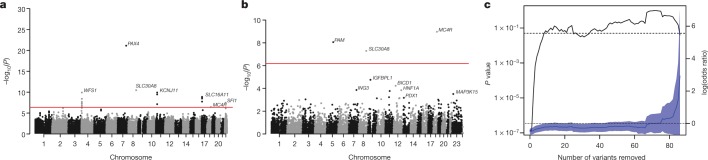
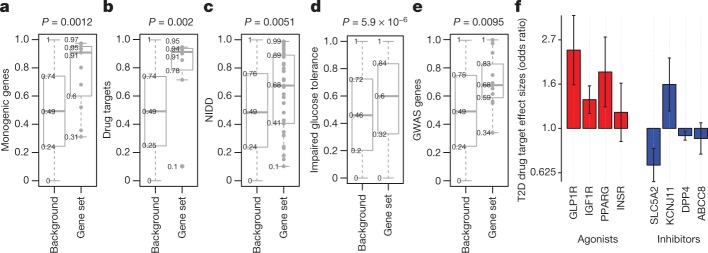
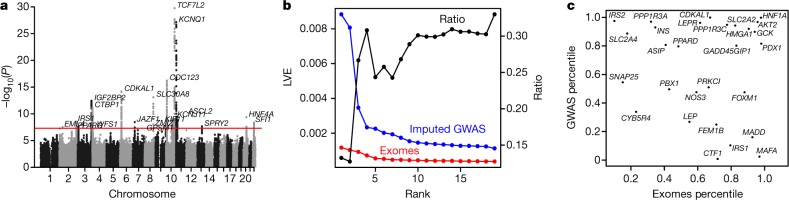
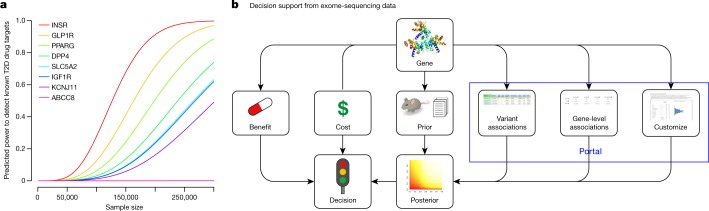
Protein-coding genetic variants that strongly affect disease risk can yield relevant clues to disease pathogenesis. Here we report exome-sequencing analyses of 20,791 individuals with type 2 diabetes (T2D) and 24,440 non-diabetic control participants from 5 ancestries. We identify gene-level associations of rare variants (with minor allele frequencies of less than 0.5%) in 4 genes at exome-wide significance, including a series of more than 30 SLC30A8 alleles that conveys protection against T2D, and in 12 gene sets, including those corresponding to T2D drug targets (P = 6.1 × 10⁻³) and candidate genes from knockout mice (P = 5.2 × 10⁻³). Within our study, the strongest T2D gene-level signals for rare variants explain at most 25% of the heritability of the strongest common single-variant signals, and the gene-level effect sizes of the rare variants that we observed in established T2D drug targets will require 75,000–185,000 sequenced cases to achieve exome-wide significance. We propose a method to interpret these modest rare-variant associations and to incorporate these associations into future target or gene prioritization efforts. Exome-sequencing analyses of a large cohort of patients with type 2 diabetes and control individuals without diabetes from five ancestries are used to identify gene-level associations of rare variants that are associated with type 2 diabetes.
Overview
The claims and statistics of this paper haven’t been checked yet.
Free: it reads the open-access text and checks the first 5 claims that cite a source we can check. Create a free account to check every claim.
Integrity signals
Registry
Cites
Statistics
Figures
Verification
Claims the paper makes
The claims and statistics of this paper haven’t been checked yet.
Free: it reads the open-access text and checks the first 5 claims that cite a source we can check. Create a free account to check every claim.
Claims other papers make about this one
Each is checked against this paper’s own text: does it say what the citing paper says it does?
The source backs part of the claim, not all of it — or backs it for a different population, condition or comparison.
In the citing paper
“The scale of genetic analysis based on sequence data still lags behind that of genome-wide genotyping data (the largest sequence-based datasets are one tenth the size of the largest GWAS90–92), although reductions in sequencing costs are decreasing the differential.”
From A brief history of human disease genetics (2020) · cites this paper as [91]
Experimental — accuracy not yet measuredIn the citing paper
“Strategies for assigning variant function and jointly analysing sets of variants of similar functional effect have enabled aggregate, gene-level tests of rare functional-variant association that are often better powered than single-variant tests91,92.”
From A brief history of human disease genetics (2020) · cites this paper as [91]
Self-check
Percentages, sums and reported differences re-computed from the paper’s own numbers.
The self-check needs the paper’s full text.
Citations
Cites
A global reference for human genetic variation
The 1000 Genomes Project Consortium, authors, C., Auton, A., Abecasis, G. R., Steering committee, Altshuler, D. M., Durbin, R. M., Abecasis, G. R., Bentley, D. R., Chakravarti, A., et al. (2015) · Nature · doi:10.1038/nature15393 · Cited by 18,247
Self-citationPrincipal components analysis corrects for stratification in genome-wide association studies
Price, A. L., Patterson, N. J., Plenge, R. M., Weinblatt, M. E., Shadick, N. A., & Reich, D. (2006) · Nature Genetics · doi:10.1038/ng1847 · Cited by 10,248 · cited 1×
“We used the remaining 171K variants to estimate pairwise individual IBD using PLINK, and the top 10 PCs of genetic ancestry using EIGENSTRAT [9].”
MethodDrugBank 5.0: a major update to the DrugBank database for 2018
Wishart, D. S., Feunang, Y. D., Guo, A. C., Lo, E. J., Marcu, A., Grant, J. R., Sajed, T., Johnson, D., Li, C., Sayeeda, Z., et al. (2018) · Nucleic Acids Research · doi:10.1093/nar/gkx1037 · Cited by 8,404
The Ensembl Variant Effect Predictor
McLaren, W., Gil, L., Hunt, S. E., Riat, H. S., Ritchie, G. R. S., Thormann, A., Flicek, P., & Cunningham, F. (2016) · Genome Biology · doi:10.1186/s13059-016-0974-4 · Cited by 8,099
METAL: fast and efficient meta-analysis of genomewide association scans
Willer, C. J., Li, Y., & Abecasis, G. R. (2010) · Bioinformatics · doi:10.1093/bioinformatics/btq340 · Cited by 5,205
Self-citationNext-generation genotype imputation service and methods
Das, S., Forer, L., Schönherr, S., Sidore, C., Locke, A. E., Kwong, A., Vrieze, S. I., Chew, E. Y., Levy, S., McGue, M., et al. (2016) · Nature Genetics · doi:10.1038/ng.3656 · Cited by 3,808
Self-citation10 Years of GWAS Discovery: Biology, Function, and Translation
Visscher, P. M., Wray, N. R., Zhang, Q., Sklar, P., McCarthy, M. I., Brown, M. A., & Yang, J. (2017) · The American Journal of Human Genetics · doi:10.1016/j.ajhg.2017.06.005 · Cited by 3,719
Self-citationGenomic responses in mouse models poorly mimic human inflammatory diseases
Seok, J., Warren, H. S., Cuenca, A. G., Mindrinos, M. N., Baker, H. V., Xu, W., Richards, D. R., McDonald-Smith, G. P., Gao, H., Hennessy, L., et al. (2013) · Proceedings of the National Academy of Sciences · doi:10.1073/pnas.1222878110 · Cited by 3,005
A genome-wide association study identifies novel risk loci for type 2 diabetes
Sladek, R., Rocheleau, G., Rung, J., Dina, C., Shen, L., Serre, D., Boutin, P., Vincent, D., Belisle, A., Hadjadj, S., et al. (2007) · Nature · doi:10.1038/nature05616 · Cited by 2,993
Self-citationKhera, A. V., Chaffin, M., Aragam, K. G., Haas, M. E., Roselli, C., Choi, S. H., Natarajan, P., Lander, E. S., Lubitz, S. A., Ellinor, P. T., et al. (2018) · Nature Genetics · doi:10.1038/s41588-018-0183-z · Cited by 2,953
Cited by
Items 101–200 of 328
Ren, L., Duan, X., Dong, L., Zhang, R., Yang, J., Gao, Y., Peng, R., Hou, W., Liu, Y., Li, J., et al. (2023) · Genome biology · doi:10.1186/s13059-023-03109-2 · Cited by 32
An allelic-series rare-variant association test for candidate-gene discovery
McCaw, Z. R., O’Dushlaine, C. T., Somineni, H., Bereket, M. D., Klein, C., Karaletsos, T., Casale, F. P., Koller, D., & Soare, T. W. (2023) · The American Journal of Human Genetics · doi:10.1016/j.ajhg.2023.07.001 · Cited by 28
Self-citationIntegrating common and rare variants improves polygenic risk prediction across diverse populations
Williams, J., Chen, T., Hua, X., Wong, W. S. W., Yu, K. F., Kraft, P. L., Li, X., & Zhang, H. (2026) · Nature Communications · doi:10.1038/s41467-026-72185-2 · Cited by 31
Genetic regulation of RNA splicing in human pancreatic islets
Atla, G., Bonàs‐Guarch, S., Cuenca-Ardura, M., Beucher, A., Crouch, D. J. M., García-Hurtado, J., Morán, I., Cnop, M., Eliasson, L., Esguerra, J. L. S., et al. (2022) · Genome biology · doi:10.1186/s13059-022-02757-0 · Cited by 32
Self-citationA roadmap to achieve pharmacological precision medicine in diabetes
Florez, J. C., & Pearson, E. R. (2022) · Diabetologia · doi:10.1007/s00125-022-05732-3 · Cited by 30
Self-citationAlterations in erythrocyte membrane transporter expression levels in type 2 diabetic patients
Szabó, E., Kulin, A., Koranyi, L. I., Literáti-Nagy, B., Cserepes, J., Somogyi, A., Sarkadi, B., & Várady, G. (2021) · Scientific Reports · doi:10.1038/s41598-021-82417-8 · Cited by 30
Pérez‐Calahorra, S., Civeira, F., Guallar‐Castillón, P., Pintó, X., Banegas, J. R., Pedro‐Botet, J., Tembra, M. S., Mauri, M., Soler, C., Rodríguez‐Artalejo, F., et al. (2020) · European Journal of Preventive Cardiology · doi:10.1177/2047487319896138 · Cited by 30
“However, the genes causing familial hypercholesterolaemia have not been found associated with T2DM, neither in the genome-wide association studies(19) nor in exome sequencing of T2DM populations.(20) These data suggest that T2DM protection is not related with the primary defect of familial hypercholesterolaemia.”
BackgroundDiabetes mellitus polygenic risk scores: heterogeneity and clinical translation
Ortega, H. I., Udler, M. S., Gloyn, A. L., & Sharp, S. A. (2025) · Nature Reviews Endocrinology · doi:10.1038/s41574-025-01132-w · Cited by 32
“Exome and whole-genome sequencing studies might partially explain this gap by identifying rare variants with large effect sizes 89,90 , but such variants can be ancestry specific.”
Self-citationGaining insight into metabolic diseases from human genetic discoveries
Claussnitzer, M., & Suszták, K. (2021) · Trends in Genetics · doi:10.1016/j.tig.2021.07.005 · Cited by 30
Nasykhova, Y. A., Barbitoff, Y. A., Serebryakova, E. A., Katserov, D., & Glotov, A. S. (2019) · World Journal of Diabetes · doi:10.4239/wjd.v10.i7.376 · Cited by 35
Variation in Actionable Pharmacogenetic Markers in Natives and Mestizos From Mexico
González-Covarrubias, V., Morales-Franco, M., Cruz-Correa, O. F., Martínez-Hernández, A. G., Garcia‐Ortíz, H., Barajas-Olmos, F. M., Mendoza, A. D. G., Martínez‐Magaña, J. J., Nicolini, H., Orozco, L., et al. (2019) · Frontiers in Pharmacology · doi:10.3389/fphar.2019.01169 · Cited by 28
Self-citationBig data-driven precision medicine: Starting the custom-made era of iatrology
Song, C. M., Kong, Y., Huang, L., Luo, H., & Zhu, X. M. (2020) · Biomedicine & Pharmacotherapy · doi:10.1016/j.biopha.2020.110445 · Cited by 27
Pancreatic progenitor epigenome maps prioritize type 2 diabetes risk genes with roles in development
Geusz, R. J., Wang, A., Chiou, J., Lancman, J. J., Wetton, N., Kefalopoulou, S., Wang, J., Qiu, Y., Yan, J., Aylward, A., et al. (2021) · eLife · doi:10.7554/elife.59067 · Cited by 28
“1 and PDX1, respectively.”
BackgroundInfluentialHu, M., Cherkaoui, I., Misra, S., & Rutter, G. A. (2020) · Frontiers in Endocrinology · doi:10.3389/fendo.2020.576632 · Cited by 27
“We note that rare coding variants of genes at loci hosting common variants appear to contribute only ~ 25% of overall T2D risk (39).”
BackgroundGenetics of Type 2 Diabetes: Opportunities for Precision Medicine
Kim, D. S., Gloyn, A. L., & Knowles, J. W. (2021) · Journal of the American College of Cardiology · doi:10.1016/j.jacc.2021.03.346 · Cited by 27
Su, J., Yuan, J., Xu, L., Xing, S., Sun, M., Yao, Y., Ma, Y., Chen, F., Jiang, L., Li, K., et al. (2023) · Cell Reports · doi:10.1016/j.celrep.2023.112510 · Cited by 26
Vázquez‐Moreno, M. A., Zeng, H., Locia‐Morales, D., Peralta‐Romero, J., Asif, H., Maharaj, A., Tam, V., Romero-Figueroa, M. D. S., Sosa-Bustamante, G. P., Méndez‐Martínez, S., et al. (2019) · The Journal of Clinical Endocrinology & Metabolism · doi:10.1210/clinem/dgz276 · Cited by 28
Genetic evidence of tri-genealogy hypothesis on the origin of ethnic minorities in Yunnan
Yang, Z., Chen, H., Lü, Y., Gao, Y., Sun, H., Wang, J., Li, J., Chu, J., & Xu, S. (2022) · BMC Biology · doi:10.1186/s12915-022-01367-3 · Cited by 25
Vaxillaire, M., Froguel, P., & Bonnefond, A. (2019) · Current Diabetes Reports · doi:10.1007/s11892-019-1202-x · Cited by 24
Wang, Y., Zhao, L., Zhang, J., Wu, Y., Zhang, R., Li, H., Guo, R., Han, Q., Wang, T., Li, L., et al. (2019) · Frontiers in Endocrinology · doi:10.3389/fendo.2019.00855 · Cited by 24
Self-citationLessons and Applications of Omics Research in Diabetes Epidemiology
Yu, G., Tam, H. C. H., Huang, C., Shi, M., Lim, C. K. P., Chan, J. C. N., & Ronald, C. W. (2024) · Current Diabetes Reports · doi:10.1007/s11892-024-01533-7 · Cited by 24
“So far, the largest sequencing study in diabetes reported exome sequencing analyses of over 20,000 individuals with T2D and ~ 24,000 non-diabetic controls [33].”
BackgroundSelf-citationShen, X., Yang, H., Yang, Y., Zhu, X., & Sun, Q. (2024) · MedComm · doi:10.1002/mco2.664 · Cited by 24
“47 These genes are involved in adipocyte differentiation or adipogenesis, among which PPAR γ is a master regulator of adipogenesis.”
BackgroundDeForest, N., Kavitha, B., Hu, S., Isaac, R., Krohn, L., Wang, M., Du, X., De Arruda Saldanha, C., Gylys, J., Merli, E., et al. (2023) · Cell Genomics · doi:10.1016/j.xgen.2023.100339 · Cited by 21
Self-citationLubberding, A. F., Juhl, C. R., Skovhøj, E. Z., Kanters, J. K., Mandrup-Poulsen, T. R., & Torekov, S. S. (2022) · Acta Physiologica · doi:10.1111/apha.13781 · Cited by 23
Xing, M., Li, Y., Zhang, Y., Zhou, J., Ma, D., Zhang, M., Tang, M., Ouyang, T., Zhang, F., Shi, X., et al. (2024) · Nature Communications · doi:10.1038/s41467-024-53258-6 · Cited by 21
“4) The data shown in Fig 7 with overexpression indeed demonstrate a sufficient role for RUVBL2 in producing negative energy balance.”
Curtis, D. (2021) · Diabetes/Metabolism Research and Reviews · doi:10.1002/dmrr.3482 · Cited by 22
Melchiorsen, J. U., Sørensen, K. V., Bork‐Jensen, J., Kizilkaya, H. S., Gasbjerg, L. S., Hauser, A. S., Rungby, J., Sørensen, H. T., Vaag, A. A., Nielsen, J. S., et al. (2023) · The Journal of Clinical Endocrinology & Metabolism · doi:10.1210/clinem/dgad290 · Cited by 19
Self-citationYoung-Onset Diabetes in East Asians: From Epidemiology to Precision Medicine
Chan, J. C. N., Chun Kwan, O., & Luk, A. O. Y. (2024) · Endocrinology and Metabolism · doi:10.3803/enm.2024.1968 · Cited by 21
“…including 20,791 individuals with type 2 diabetes and 24,440 control participants from five ancestries, rare variants located in pancreatic and duodenal homeobox 1 ( PDX1 ), gluco-kinase ( GCK ), and HNF1 homeobox A ( HNF1A ) were associated with 1.5 to 3.5 increased odds of type 2 diabetes [48].”
BackgroundInfluentialSelf-citationBosi, E., Marselli, L., Luca, C. D., Suleiman, M., Tesi, M., Ibberson, M. R., Eizirik, D. L., Cnop, M., & Marchetti, P. (2020) · NAR Genomics and Bioinformatics · doi:10.1093/nargab/lqaa097 · Cited by 19
Statistical evidence for high‐penetrance MODY‐causing genes in a large population‐based cohort
Billings, L. K., Shi, Z., Resurreccion, W. K., Wang, C., Wei, J., Pollin, T. I., Udler, M. S., & Xu, J. (2022) · Endocrinology Diabetes & Metabolism · doi:10.1002/edm2.372 · Cited by 19
Self-citationLeong, A., Lim, V. J. Y., Wang, C., Chai, J.-F., Dorajoo, R., Heng, C.-K., van Dam, R. M., Koh, W.-P., Yuan, J.-M., Jonas, J. B., et al. (2020) · BMJ Open Diabetes Research & Care · doi:10.1136/bmjdrc-2019-001091 · Cited by 19
Self-citationSayed, S., & Nabi, A. H. M. N. (2020) · Advances in experimental medicine and biology · doi:10.1007/5584_2020_518 · Cited by 21
Trudsø, L. C., Andersen, J. D., Jacobsen, S. B., Christiansen, S. L., Congost-Teixidor, C., Kampmann, M., & Morling, N. (2020) · PLoS ONE · doi:10.1371/journal.pone.0239850 · Cited by 20
Human Physiology of Genetic Defects Causing Beta-cell Dysfunction
Kettunen, J. L. T., & Tuomilehto, J. (2020) · Journal of Molecular Biology · doi:10.1016/j.jmb.2019.12.038 · Cited by 23
Self-citationPotential positive and negative consequences of ZnT8 inhibition
Syring, K. E., Bosma, K. J., Goleva, S. B., Singh, K., Oeser, J. K., Lopez, C. A., Skaar, E. P., McGuinness, O. P., Davis, L. K., Powell, D. R., et al. (2020) · Journal of Endocrinology · doi:10.1530/joe-20-0138 · Cited by 18
“protects against T2D in humans (Flannick et al. 2014; Flannick et al. 2019), given that obesity is a major risk factor for the development of T2D (Eckel, et al.”
BackgroundResultInfluentialPartitioning gene-mediated disease heritability without eQTLs
Weiner, D. J., Gazal, S., Robinson, E., & O’Connor, L. J. (2022) · The American Journal of Human Genetics · doi:10.1016/j.ajhg.2022.01.010 · Cited by 18
Nguyen, J., Arthur, T. D., Fujita, K., Salgado, B. M., Donovan, M. K. R., Aguiar, L. R., Arias, A. D., Benaglio, P., Berggren, W. T., Belmonte, J. C. I., et al. (2023) · Nature Communications · doi:10.1038/s41467-023-42560-4 · Cited by 17
López-Portillo, M. L., Huidobro, A., Tobar-Calfucoy, E. A., Yáñez, C., Retamales-Ortega, R., Garrido‐Tapia, M., Acevedo, J., Paredes, F., Vicente Cid, O., Ferreccio, C., et al. (2021) · Nutrients · doi:10.3390/nu14010069 · Cited by 19
Contreras-Cubas, C., Barajas-Olmos, F. M., Frayre-Martínez, M. I., Siordia-Reyes, A. G., Guízar-Sánchez, C. C., Garcia‐Ortíz, H., Orozco, L., & Baca, V. (2022) · BMC Medical Genomics · doi:10.1186/s12920-022-01284-y · Cited by 17
Self-citationMeulebrouck, S., Merrheim, J., Quéniat, G., Bourouh, C., Derhourhi, M., Boissel, M., Yi, X., Badreddine, A., Boutry, R., Leloire, A., et al. (2024) · Nature Communications · doi:10.1038/s41467-024-51004-6 · Cited by 18
“…only) was independently analyzed in the Accelerating Medicines Partnership (AMP) Type 2 Diabetes knowledge portal which enabled the assessment of its metabolic effect in African individuals including cases with type 2 diabetes 21 ; the MAF of rs111622802 was too low in RaDiO and UK Biobank.”
The Contribution of Low-Frequency and Rare Coding Variation to Susceptibility to Type 2 Diabetes
Flannick, J. A. (2019) · Current Diabetes Reports · doi:10.1007/s11892-019-1142-5 · Cited by 17
Self-citationFabbri, C., Kasper, S. F., Zohar, J., Souery, D., Montgomery, S., Albani, D., Forloni, G., Ferentinos, P. P., Rujescu, D., Mendlewicz, J., et al. (2020) · Journal of Affective Disorders · doi:10.1016/j.jad.2020.10.049 · Cited by 16
Loss of Znt8 function in diabetes mellitus: risk or benefit?
Barragán-Álvarez, C. P., Padilla‐Camberos, E., Díaz, N. F., Cota-Coronado, A., Hernández-Jiménez, C., Bravo‐Reyna, C., & Diaz-Martinez, N. E. (2021) · Molecular and Cellular Biochemistry · doi:10.1007/s11010-021-04114-4 · Cited by 18
Complete loss of SLC30A8 in humans improves glucose metabolism and beta cell function
Lamarche, L. B., Koch, C., Khalid, S., Khan, M. Z., Zessis, R., Clement, M. E., Denning, D. P., Goldfine, A. B., Splawski, I., Abbasi, A., et al. (2025) · Diabetologia · doi:10.1007/s00125-025-06530-3 · Cited by 16
Self-citationEufrásio, A., Perrod, C., Ferreira, F. J., Duque, M., Galhardo, M., & Bessa, J. (2020) · Diabetes · doi:10.2337/db19-1049 · Cited by 17
Emerging roles of rare and low-frequency genetic variants in type 1 diabetes mellitus
Pang, H., Xia, Y., Luo, S., Huang, G., Li, X., Xie, Z., & Zhou, Z. (2021) · Journal of Medical Genetics · doi:10.1136/jmedgenet-2020-107350 · Cited by 16
Characterization of Turner Syndrome-associated Diabetes Mellitus
Cameron‐Pimblett, A., Rosa, C. L., Davies, M. C., Suntharalingham, J. P., Ishida, M., Achermann, J. C., & Conway, G. S. (2024) · The Journal of Clinical Endocrinology & Metabolism · doi:10.1210/clinem/dgae357 · Cited by 17
“…extracted from whole blood was collected from individuals in the first 2 studies for a pilot assessment of single-nucleotide variations (SNVs; formerly single-nucleotide polymorphisms [SNPs]) known to be associated with type 2 DM (T2DM) in population genome-wide association studies (GWAS) (20, 21).”
Risk factors for rapid kidney function decline in diabetes patients
Xing, J., Huang, L., Ren, W., & Mei, X. (2024) · Renal Failure · doi:10.1080/0886022x.2024.2398188 · Cited by 17
“Further genome-wide association studies and whole-exome sequencing analysis identified genetic factors contributing to the severity of kidney phenotype in DKD patients [61–63].”
BackgroundGonzález-Covarrubias, V., Sánchez-Ibarra, H. E., Lozano-Gonzalez, K., Villicaña, S., Texis, T., Rodríguez‐Dorantes, M., Cortés-Ramírez, S. A., Lavalle-Gonzalez, F. J., Soberón, X., & Barrera-Saldaña, H. A. (2021) · Pharmacology · doi:10.1159/000517462 · Cited by 15
Self-citationGroup testing in mediation analysis
Derkach, A., Moore, S. C., Boca, S. M., & Sampson, J. N. (2020) · Statistics in Medicine · doi:10.1002/sim.8546 · Cited by 15
Shadrin, A. A., Frei, O., Smeland, O. B., Bettella, F., O’Connell, K. S., Gani, O., Bahrami, S., Uggen, T. K. E., Djurovic, S., Holland, D., et al. (2020) · Bioinformatics · doi:10.1093/bioinformatics/btaa568 · Cited by 14
Analysis of Glucocorticoid-Related Genes Reveal CCHCR1 as a New Candidate Gene for Type 2 Diabetes
Brenner, L. N., Mercader, J. M., Robertson, C. C., Cole, J. B., Chen, L., Jacobs, S. B. R., Rich, S. S., & Florez, J. C. (2020) · Journal of the Endocrine Society · doi:10.1210/jendso/bvaa121 · Cited by 15
Self-citationVázquez‐Moreno, M. A., Locia‐Morales, D., Valladares‐Salgado, A., Sharma, T., Wacher, N. H., Cruz, M., & Meyre, D. (2020) · The Journal of Clinical Endocrinology & Metabolism · doi:10.1210/clinem/dgaa726 · Cited by 14
Wessel, J., Majarian, T. D., Highland, H. M., Raghavan, S., Szeto, M. D., Hasbani, N. R., de Vries, P. S., Brody, J. A., Sarnowski, C., DICORPO, D. A., et al. (2020) · medRxiv · doi:10.1101/2020.11.13.20221812 · Cited by 19
Self-citationKhera, A. V., Wang, M., Chaffin, M. D., Emdin, C. A., Samani, N. J., Schunkert, H., Watkins, H. C., McPherson, R., Erdmann, J., Elosúa, R., et al. (2022) · Circulation Genomic and Precision Medicine · doi:10.1161/circgen.121.003598 · Cited by 15
Self-citationMulti-omics characterization of type 2 diabetes associated genetic variationPreprint
Mandla, R., Lorenz, K., Yin, X., Bocher, O., Huerta‐Chagoya, A., Arruda, A. L., Piron, A., Horn, S., Ken, S., Hatzikotoulas, K., et al. (2024) · medRxiv · doi:10.1101/2024.07.15.24310282 · Cited by 15
“While this approach has generated numerous leads 9 , discovery of rare coding variants associated with T2D has been limited by small sample sizes from available exome or genome sequencing studies, especially in underrepresented populations.”
Self-citationDeficiency of Peptidylglycine-alpha-amidating Monooxygenase, a Cause of Sarcopenic Diabetes Mellitus
Giontella, A., Åkerlund, M., Bronton, K., Fava, C., Lotta, L. A., Baras, A., Overton, J. D., Jones, M., Bergmann, A., Kaufmann, P., et al. (2024) · The Journal of Clinical Endocrinology & Metabolism · doi:10.1210/clinem/dgae510 · Cited by 13
Self-citationChen, J., Zhai, C., Wang, Z., Li, R., Wu, W., Hou, K., Alzogool, M., Wang, Y., & Cong, H. (2021) · BMC Endocrine Disorders · doi:10.1186/s12902-021-00837-z · Cited by 12
Bench Research Informed by GWAS Results
Kondratyev, N. V., Алфимова, М. В., Golov, A. K., & Голимбет, В. Е. (2021) · Cells · doi:10.3390/cells10113184 · Cited by 13
“Examples of traits for which this was observed include height [121], inflammatory bowel disease [122], type II diabetes [123] and schizophrenia [124].”
BackgroundJan, A., Saeed, M., Afridi, M. H., Khuda, F., Shabbir, M., Khan, H., Ali, S., Hassan, M., Ullah, S., Akbar, R., et al. (2021) · Journal of Diabetes Research · doi:10.1155/2021/6669731 · Cited by 14
“Genetic studies offer a powerful approach for better screening and treatment of diseases by identifying alterations at molecular level associated with physiological trait [10, 11].”
BackgroundMartin, G. M., Hisama, F. M., & Oshima, J. (2020) · The Journals of Gerontology Series A · doi:10.1093/gerona/glaa273 · Cited by 13
Unmapped exome reads implicate a role for Anelloviridae in childhood HIV-1 long-term non-progression
Mwesigwa, S., Williams, L., Retshabile, G., Katagirya, E., Mboowa, G., Mlotshwa, B., Kyobe, S., Kateete, D. P., Wampande, E. M., Wayengera, M., et al. (2021) · npj Genomic Medicine · doi:10.1038/s41525-021-00185-w · Cited by 11
Scrobotă, I., Iova, G. M., Marcu, O. A., Sachelarie, L., Vlad, S. V., Duncea, I. M., & Blaga, F. (2025) · Bioengineering · doi:10.3390/bioengineering12030211 · Cited by 12
Vázquez‐Moreno, M. A., Locia‐Morales, D., Valladares‐Salgado, A., Sharma, T., Pérez‐Herrera, A., González‐Dzib, R., Rodríguez-Ruíz, F., Wacher, N. H., Cruz, M., & Meyre, D. (2021) · Scientific Reports · doi:10.1038/s41598-021-82728-w · Cited by 11
MicroRNAs Associated With Incident Diabetes in the Diabetes Prevention Program
Flowers, E., Aouizerat, B. E., Kanaya, A. M., Florez, J. C., Gong, X., & Zhang, L. (2022) · The Journal of Clinical Endocrinology & Metabolism · doi:10.1210/clinem/dgac714 · Cited by 11
Self-citationSalazar-Valencia, I. G., Villamil‐Ramírez, H., Barajas-Olmos, F. M., Guevara‐Cruz, M., Kauffer, L. R. M., Garcia‐Ortíz, H., Hernández-Vergara, O., de Sandy-Galán, D. A. D., León‐Mimila, P., Centeno-Cruz, F., et al. (2022) · Genes · doi:10.3390/genes13122267 · Cited by 11
“This is important considering that this mutation has been associated with an increased risk of type 2 diabetes in the Latino population [30,31].”
BackgroundSelf-citationCheng, W., Wang, W., Deng, A., Dang, X., Liu, C., Xian-Can, W. A. N. G., Li, J., & Jin, S. (2023) · 老年心脏病学杂志:英文版 · doi:10.26599/1671-5411.2023.05.003 · Cited by 11
Self-citationDietary Fat and the Genetic Risk of Type 2 Diabetes
Carrasquilla, G. D., Jakupović, H., & Kilpeläinen, T. O. (2019) · Current Diabetes Reports · doi:10.1007/s11892-019-1251-1 · Cited by 11
Baghdadi, M., Hinterding, H. M., Partridge, L., & Deelen, J. (2021) · Briefings in Functional Genomics · doi:10.1093/bfgp/elab005 · Cited by 11
“also applied to other complex diseases and traits [18, 19].”
BackgroundSterenborg, R. B. T. M., Galesloot, T. E., Teumer, A., Netea-Maier, R. T., Speed, D., Meima, M. E., Visser, W. E., Smit, J. W. A., Peeters, R. P., & Medici, M. (2022) · The Journal of Clinical Endocrinology & Metabolism · doi:10.1210/clinem/dgac136 · Cited by 12
“In recent years, it has also been shown for other complex traits, such as irritable bowel syndrome, type 2 diabetes, and coronary artery disease, that rare variants play an important role in the explained genetic variance (41-44).”
Guo, H., Li, T., & Wen, H. (2022) · Frontiers in Microbiology · doi:10.3389/fmicb.2022.993933 · Cited by 11
“89 × 10−9) located in intergenic region, which was previously reported to be associated with T2D (Flannick et al., 2019).”
BackgroundGorini, F., & Tonacci, A. (2025) · Nutrients · doi:10.3390/nu17142350 · Cited by 12
“Furthermore, WGS data have recently shown that rare variants may explain a large proportion of the heritability of complex traits and diseases, including T2D, for which rare variants are responsible for up to 25% of the heritability of the strongest common single-variant signals [86,90].”
Stalbow, L. A., Preuss, M. H., Smit, R. A. J., Chami, N., Bjørkhaug, L., Aukrust, I., Gloyn, A. L., & Loos, R. J. F. (2022) · Diabetologia · doi:10.1007/s00125-022-05806-2 · Cited by 10
Self-citationSandholm, N., Hotakainen, R., Haukka, J. K., Sigfrids, F. J., Dahlström, E. H., Antikainen, A. A., Valo, E., Syreeni, A., Kilpeläinen, E., Kytölä, A., et al. (2022) · Genome Medicine · doi:10.1186/s13073-022-01135-6 · Cited by 9
Prioritization of genes associated with type 2 diabetes mellitus for functional studies
Tan, W. X., Sim, X., Khoo, C. M., & Teo, A. K. K. (2023) · Nature Reviews Endocrinology · doi:10.1038/s41574-023-00836-1 · Cited by 11
Self-citationGenome-wide association study of liver fat, iron, and extracellular fluid fraction in the UK BiobankPreprint
O’Dushlaine, C. T., Germino, M., Verweij, N., Nielsen, J. B., Yadav, A. K., Benner, C., Backman, J., Lin, N., Abecasis, G. R., Baras, A., et al. (2021) · medRxiv · doi:10.1101/2021.10.25.21265127 · Cited by 11
Self-citationAssessing transcriptomic reidentification risks using discriminative sequence models
Sadhuka, S., Fridman, D., Berger, B., & Cho, H. (2023) · Genome Research · doi:10.1101/gr.277699.123 · Cited by 11
“…2020; Ye et al. 2022; Zhang and Bonomi 2022; Gürsoy et al. 2022b), differential privacy (Tramèr et al. 2015; Almadhoun et al. 2020; Chen et al. 2021), and secure analysis and storage platforms (Lambert et al. 2018; Dokmai et al. 2021; Froelicher et al. 2021; Cho et al. 2022; Gürsoy et al. 2022a).”
BackgroundLi, H., Zhao, J., Dai, J., You, D., Zhao, Y., Christiani, D. C., Chen, F., & Shen, S. (2025) · Nature Communications · doi:10.1038/s41467-025-59155-w · Cited by 10
Distinct genetic architecture in the tails of complex traits
Souaiaia, T., Wu, H. M., Ori, A. P. S., Choi, S.-K., Hoggart, C. J., & O’Reilly, P. F. (2026) · Nature · doi:10.1038/s41586-026-10516-5 · Cited by 12
“However, findings from disease studies are consistent with our observations 11,12,39 , and our POPout approach could be applied to a disease biomarker or risk factor instead, providing a new strategy for identification of rare variants affecting a subset of disease patients.”
Cohort profile: the Singapore diabetic cohort study
Luo, M., Tan, L. W. L., Sim, X., Ng, M. K. H., van Dam, R. M., Tai, E. S., Chia, K. S., Tang, W. E., Seah, E.-J. D., & Venkataraman, K. (2020) · BMJ Open · doi:10.1136/bmjopen-2019-036443 · Cited by 9
Self-citationHahn, J. M., Fu, Y., Brown, M. R., Bis, J. C., de Vries, P. S., Feitosa, M. F., Yanek, L. R., Weiß, S., Giulianini, F., Smith, A. V., et al. (2020) · PLoS ONE · doi:10.1371/journal.pone.0230035 · Cited by 10
Self-citationMolecular Mechanisms Involved in Insulin Resistance: Recent Updates and Future Challenges
Singh, A., Ghai, N., & Bedi, P. M. S. (2022) · IntechOpen eBooks · doi:10.5772/intechopen.104806 · Cited by 9
Ni, Z., Wang, Y., Shi, C., Zhang, X., Gong, H., & Dong, Y. (2022) · Applied Biochemistry and Biotechnology · doi:10.1007/s12010-022-04089-y · Cited by 11
“Whole exome sequencing results corresponding to 20,791 patients with type 2 diabetes mellitus (T2DM) showed that MC4R gene mutations are significantly associated with the occurrence of obesity and disease [4].”
BackgroundBansal, V., Winkelmann, B. R., Dietrich, J. W., & Boehm, B. O. (2024) · Frontiers in Endocrinology · doi:10.3389/fendo.2024.1258982 · Cited by 9
Next-generation sequencing technologies in diabetes research
Fareed, M., Chauhan, W., Fatma, R., Din, I., Afzal, M., & Ahmed, Z. (2022) · Diabetes Epidemiology and Management · doi:10.1016/j.deman.2022.100097 · Cited by 9
Endophenotype effect sizes support variant pathogenicity in monogenic disease susceptibility genes
Halford, J. L., Morrill, V. N., Choi, S. H., Jurgens, S. J., Melloni, G. E. M., Marston, N., Weng, L.-C. C., Nauffal, V., Hall, A. W., Gunn, S., et al. (2022) · Nature Communications · doi:10.1038/s41467-022-32009-5 · Cited by 9
Self-citationSchiabor Barrett, K. M., Telis, N., McEwen, L. M., Burrows, E. K., Khuder, B., Judge, D. P., Pawloski, P. A., Grzymski, J. J., Washington, N. L., Bolze, A., et al. (2024) · Communications Medicine · doi:10.1038/s43856-024-00663-z · Cited by 8
Hu, R., Ma, Q., Kong, Y., Wang, Z., Xu, M., Chen, X., Su, Y., Xiao, T., He, Q. H., Wang, X., et al. (2025) · Advanced Science · doi:10.1002/advs.202413161 · Cited by 12
Self-citationSpracklen, C. N., & Sim, X. (2021) · Current Diabetes Reports · doi:10.1007/s11892-021-01388-2 · Cited by 9
Self-citationMorales-Rivera, M. I., Alemón‐Medina, R., Martínez-Hernández, A. G., Contreras-Cubas, C., Altamirano-Bustamante, N. F., Gómez-Garduño, J., Mendoza‐Caamal, E., Nunez-Gonzalez, J., García‐Álvarez, R., Revilla, M., et al. (2024) · Pharmaceuticals · doi:10.3390/ph17101385 · Cited by 9
“…OCT2), SLC22A3 (HGNC:10967, OCT3), SLC22A4 (HGNC:10968, OCTN1), SLC29A4 (HGNC:23097, PMAT), SLC47A1 (HGNC:25588, MATE1), SLC47A2 (HGNC:26439, MATE2-K), and SLC19A3 (HGNC:16266, THTR2), we analyzed the exomes of 2217 Mexican adults from the DMS and MAIS cohorts (see the Section 4) [34,35].”
BackgroundMethodInfluentialSelf-citationChun Kwan, O., Fan, B., Tsoi, S. T. F., Tam, C. H. T., Wan, R., Lau, E. S. H., Shi, M., Lim, C. K. P., Yu, G., Ho, J. P. Y., et al. (2024) · Diabetologia · doi:10.1007/s00125-024-06320-3 · Cited by 8
“The discovery cohort consisted of 453 individuals with YOD from the HKDR and 405 individuals without YOD from the BHBHK with WES as part of the Global Type 2 Diabetes Consortium [17].”
InfluentialSelf-citationKim, W., Hecker, J., Barr, R. G., Boerwinkle, E., Cade, B. E., Correa, A., Dupuis, J., Gharib, S. A., Lange, L. A., London, S. J., et al. (2022) · Human Molecular Genetics · doi:10.1093/hmg/ddac117 · Cited by 8
Self-citationHaploinsufficiency of the NF1 gene is associated with protection against diabetes
Kallionpää, R. A., Peltonen, S. A., Leppävirta, J., Pöyhönen, M., Auranen, K. J., Järveläinen, H., & Peltonen, J. T. K. (2020) · Journal of Medical Genetics · doi:10.1136/jmedgenet-2020-107062 · Cited by 9
Rosselot, C., Alvarsson, A., Wang, P., Li, Y., Beliard, K., Lu, G., Li, R., Liu, H., Gillespie, V., Tzavaras, N., et al. (2020) · bioRxiv (Cold Spring Harbor Laboratory) · doi:10.1101/2020.07.24.220244 · Cited by 11
“Harmine and other DYRK1A inhibitors can activate rodent and human alpha cell proliferation in vitro (7-9,13) and in vivo (Supplemental Fig.”
BackgroundEarly-Onset Atrial Fibrillation and Heritable Heart Disease—To Test or Not to Test?
Tomaselli, G. F., & Puckelwartz, M. J. (2021) · JAMA Cardiology · doi:10.1001/jamacardio.2021.3367 · Cited by 8
Chen, Y., Bäck, N., Zhen, J., Xiong, L., Komba, M., Gloyn, A. L., MacDonald, P. E., Mains, R. E., Eipper, B. A., & Verchere, C. B. (2025) · Molecular Metabolism · doi:10.1016/j.molmet.2025.102123 · Cited by 8
“Since PAM T2D-risk alleles have minor allele frequencies ranging from 1 to 5% in European populations (meaning 1 in 10 people carry them) [71], our data showing normal function of b Pam KO in islet transplants suggest that patients receiving islet grafts from donors carrying PAM T2D-risk alleles…”
Niu, Y., Hu, S., Zhang, Y., Yang, J., Zhang, J., He, R., Chen, L., Xu, L., Zhao, H., Gan, B., et al. (2026) · Cell Research · doi:10.1038/s41422-025-01207-3 · Cited by 7
Self-citationZhao, Z., Zhu, Y., Nie, L., Luo, Y., Qiu, S., & Ren, T. (2024) · Journal of Functional Foods · doi:10.1016/j.jff.2024.106640 · Cited by 7
Rout, M., Ramu, D., Mariana, M., Koshy, T., Venkatesan, V., López-Alvarenga, J. C., Arya, R., Ravichandran, U., Sharma, S. K., Lodha, S., et al. (2025) · Communications Medicine · doi:10.1038/s43856-025-00750-9 · Cited by 7
Self-citationZinc Transporters in Diseases, Including Diabetes and Related Conditions
Xu, W., Wang, X., Gao, Y., Ma, Q., & Li, W. (2025) · Physiology · doi:10.1152/physiol.00026.2025 · Cited by 8
Metadata
- Authors
- Platform, B. G., Flannick, J., DiscovEHR Collaboration, CHARGE, LuCamp, ProDiGY, GoT2D, ESP, SIGMA-T2D, T2D-GENES, AMP-T2D-GENES, Mercader, J. M., Fuchsberger, C., Udler, M. S., Mahajan, A., Wessel, J., Teslovich, T. M., Caulkins, L., Koesterer, R., Barajas-Olmos, F., Blackwell, T. W., Boerwinkle, E., Brody, J. A., Centeno-Cruz, F., Chen, L., Chen, S., Contreras-Cubas, C., Córdova, E., Correa, A., Cortes, M., DeFronzo, R. A., Dolan, L., Drews, K. L., Elliott, A., Floyd, J. S., Gabriel, S., Garay-Sevilla, M. E., García-Ortiz, H., Gross, M., Han, S., Heard-Costa, N. L., Jackson, A. U., Jørgensen, M. E., Kang, H. M., Kelsey, M., Kim, B.-J., Koistinen, H. A., Kuusisto, J., Leader, J. B., Linneberg, A., Liu, C.-T., Liu, J., Lyssenko, V., Manning, A. K., Marcketta, A., Malacara-Hernandez, J. M., Martínez-Hernández, A., Matsuo, K., Mayer-Davis, E., Mendoza-Caamal, E., Mohlke, K. L., Morrison, A. C., Ndungu, A., Ng, M. C. Y., O’Dushlaine, C., Payne, A. J., Pihoker, C., Post, W. S., Preuss, M., Psaty, B. M., Vasan, R. S., Rayner, N. W., Reiner, A. P., Revilla-Monsalve, C., Robertson, N. R., Santoro, N., Schurmann, C., So, W. Y., Soberón, X., Stringham, H. M., Strom, T. M., Tam, C. H. T., Thameem, F., Tomlinson, B., Torres, J. M., Tracy, R. P., van Dam, R. M., Vujkovic, M., Wang, S., Welch, R. P., Witte, D. R., Wong, T.-Y., Atzmon, G., Barzilai, N., Blangero, J., Bonnycastle, L. L., Bowden, D. W., Chambers, J. C., Chan, E., Cheng, C.-Y., Cho, Y. S., Collins, F. S., de Vries, P. S., Duggirala, R., Glaser, B., Gonzalez, C., Gonzalez, M. E., Groop, L., Kooner, J. S., Kwak, S. H., Laakso, M., Lehman, D. M., Nilsson, P., Spector, T. D., Tai, E. S., Tuomi, T., Tuomilehto, J., Wilson, J. G., Aguilar-Salinas, C. A., Bottinger, E., Burke, B., Carey, D. J., Chan, J. C. N., Dupuis, J., Frossard, P., Heckbert, S. R., Hwang, M. Y., Kim, Y. J., Kirchner, H. L., Lee, J.-Y., Lee, J., Loos, R. J. F., Ma, R. C. W., Morris, A. D., O’Donnell, C. J., Palmer, C. N. A., Pankow, J., Park, K. S., Rasheed, A., Saleheen, D., Sim, X., Small, K. S., Teo, Y. Y., Haiman, C., Hanis, C. L., Henderson, B. E., Orozco, L., Tusié-Luna, T., Dewey, F. E., Baras, A., Gieger, C., Meitinger, T., Strauch, K., Lange, L., Grarup, N., Hansen, T., Pedersen, O., Zeitler, P., Dabelea, D., Abecasis, G., Bell, G. I., Cox, N. J., Seielstad, M., Sladek, R., Meigs, J. B., Rich, S. S., Rotter, J. I., Altshuler, D., Burtt, N. P., Scott, L. J., Morris, A. P., Florez, J. C., McCarthy, M. I., & Boehnke, M.
- Affiliations
- Broad Institute (US)
- Eurac Research (IT)
- Massachusetts General Hospital (US)
- Centre for Human Genetics (GB)
- Indiana University Indianapolis (US)
- Regeneron (United States) (US)
- National Institute of Genomic Medicine (MX)
- Harvard University (US)
- University of Mississippi Medical Center (US)
- The University of Texas at San Antonio Health Science Center (US)
- Cincinnati Children's Hospital Medical Center (US)
- George Washington University (US)
- University of Washington (US)
- University of Chicago (US)
- Boston University (US)
- University of Minnesota (US)
- Korea National Institute of Health (KR)
- Agency for Science, Technology and Research (SG)
- Lund University (SE)
- University of Helsinki (FI)
- University of Eastern Finland (FI)
- University of Michigan (US)
- University of North Carolina at Chapel Hill (US)
- Seattle Children's Hospital (US)
- Framingham Heart Study (US)
- Mexican Social Security Institute (MX)
- Johns Hopkins University (US)
- Chinese University of Hong Kong (HK)
- Kaiser Permanente Washington Health Research Institute (US)
- University of Vermont (US)
- National University of Singapore (SG)
- Albert Einstein College of Medicine (US)
- Aarhus University (DK)
- Hallym University (KR)
- National Institutes of Health (US)
- The University of Texas Rio Grande Valley (US)
- Instituto Nacional de Salud Pública (MX)
- Imperial College Healthcare NHS Trust (GB)
- Duke-NUS Medical School (SG)
- Seoul National University (KR)
- Universität für Weiterbildung Krems (AT)
- Chungbuk National University (KR)
- Ninewells Hospital (GB)
- Brigham and Women's Hospital (US)
- Imperial College London (GB)
- University of Southern California (US)
- Instituto Nacional de Ciencias Médicas y Nutrición Salvador Zubirán (MX)
- King's College London (GB)
- The University of Texas Health Science Center at Houston (US)
- University of Copenhagen (DK)
- Colorado School of Public Health (US)
- Helmholtz Munich (DE)
- Vanderbilt University (US)
- University of California, San Francisco (US)
- University of California, Los Angeles (US)
- University of Liverpool (GB)
- Corresponding author
- Flannick, Jason
- ORCID
- Flannick, Jason
- Mercader, Josep M.
- Fuchsberger, Christian
- Udler, Miriam S.
- Mahajan, Anubha
- Wessel, Jennifer
- Caulkins, Lizz
- Koesterer, Ryan
- Barajas-Olmos, Francisco
- Blackwell, Thomas W.
- Boerwinkle, Eric
- Brody, Jennifer A.
- Centeno-Cruz, Federico
- Chen, Siying
- Contreras-Cubas, Cecilia
- Córdova, Emilio
- Correa, Adolfo
- DeFronzo, Ralph A.
- Dolan, Lawrence
- Drews, Kimberly L.
- Floyd, James S.
- Gabriel, Stacey
- Han, Sohee
- Jackson, Anne U.
- Jørgensen, Marit E.
- Kang, Hyun Min
- Kelsey, Megan
- Kim, Bong-Jo
- Koistinen, Heikki A.
- Leader, Joseph B.
- Linneberg, Allan
- Liu, Ching-Ti
- Liu, Jianjun
- Lyssenko, Valeriya
- Manning, Alisa K.
- Marcketta, Anthony
- Martínez-Hernández, Angélica
- Mohlke, Karen L.
- Morrison, Alanna C.
- Ng, Maggie C. Y.
- O’Dushlaine, Colm
- Pihoker, Catherine
- Post, Wendy S.
- Preuss, Michael
- Psaty, Bruce M.
- Vasan, Ramachandran S.
- Santoro, Nicola
- Schurmann, Claudia
- So, Wing Yee
- Soberón, Xavier
- Stringham, Heather M.
- Tam, Claudia H. T.
- Tomlinson, Brian
- Torres, Jason M.
- Tracy, Russell P.
- Wang, Shuai
- Welch, Ryan P.
- Witte, Daniel R.
- Wong, Tien-Yin
- Atzmon, Gil
- Barzilai, Nir
- Blangero, John
- Bonnycastle, Lori L.
- Bowden, Donald W.
- Chambers, John C.
- Cheng, Ching-Yu
- Cho, Yoon Shin
- Collins, Francis S.
- Duggirala, Ravindranath
- Groop, Leif
- Kooner, Jaspal Singh
- Kwak, Soo Heon
- Laakso, Markku
- Lehman, Donna M.
- Nilsson, Peter
- Tai, E. Shyong
- Tuomilehto, Jaakko
- Wilson, James G.
- Aguilar-Salinas, Carlos A.
- Burke, Brian
- Carey, David J.
- Chan, Juliana C. N.
- Dupuis, Josée
- Heckbert, Susan R.
- Hwang, Mi Yeong
- Kim, Young Jin
- Kirchner, H. Lester
- Lee, Jong-Young
- Lee, Juyoung
- Loos, Ruth J. F.
- Morris, Andrew D.
- O’Donnell, Christopher J.
- Pankow, James
- Park, Kyong Soo
- Saleheen, Danish
- Sim, Xueling
- Small, Kerrin S.
- Haiman, Christopher
- Hanis, Craig L.
- Orozco, Lorena
- Baras, Aris
- Gieger, Christian
- Meitinger, Thomas
- Strauch, Konstantin
- Lange, Leslie
- Grarup, Niels
- Hansen, Torben
- Pedersen, Oluf
- Zeitler, Philip
- Dabelea, Dana
- Cox, Nancy J.
- Seielstad, Mark
- Meigs, James B.
- Rotter, Jerome I.
- Altshuler, David
- Burtt, Noël P.
- Scott, Laura J.
- Morris, Andrew P.
- McCarthy, Mark I.
- Boehnke, Michael
- Venue
- Nature
- Published
- 2019-05-22
- Volume
- 570
- Issue
- 7759
- Pages
- 71-76
- ISSN
- 0028-0836 (ISSN-L)
- 1476-4687
- PMC
- PMC6699738
- OpenAlex
- W2945877977
- Cited by
- 304
- References
- 86
- Citations by year
- 2026: 16 · 2025: 22 · 2024: 38 · 2023: 29 · 2022: 64 · 2021: 67 · 2020: 46 · 2019: 21
- FWCI
- 31.04
- Type
- journal article
- Language
- en
- Open access
- hybrid
- doi.org
- Licence
- cc-by
- creativecommons.org/licenses/by/4.0 (tdm)
- creativecommons.org/licenses/by/4.0 (vor)
- Locations
- Nature (publishedVersion, cc-by)
- Europe PMC (PubMed Central) (publishedVersion, cc-by)
- PubMed Central (publishedVersion, cc-by)
- PubMed (publishedVersion)
- Research at the University of Copenhagen (University of Copenhagen) (publishedVersion, cc-by)
- Research Explorer (The University of Manchester) (publishedVersion, other-oa)
- University of Southern Denmark Research Portal (University of Southern Denmark) (acceptedVersion, cc-by)
- Työväentutkimus Vuosikirja (submittedVersion)
- PuSH - Publication Server of Helmholtz Zentrum München (submittedVersion, cc-by)
- Digital Access to Scholarship at Harvard (DASH) (Harvard University) (submittedVersion)
- ScholarWorks @ UTRGV (The University of Texas Rio Grande Valley) (submittedVersion, cc-by)
- Discovery Research Portal (University of Dundee) (submittedVersion, cc-by)
- eScholarship (California Digital Library) (submittedVersion, cc-by)
- Archivio Istituzionale della Ricerca - Università degli Studi del Molise (submittedVersion)
- Minerva Access (University of Melbourne) (submittedVersion, cc-by)
- Research Portal (King's College London) (submittedVersion)
- Lund University Publications (Lund University) (submittedVersion)
- mediaTUM (Technical University of Munich) (submittedVersion, other-oa)
- mediaTUM – the media and publications repository of the Technical University Munich (Technical University Munich) (submittedVersion, other-oa)
- mediaTUM – the media and publications repository of the Technical University Munich (Technical University Munich) (submittedVersion)
- Spiral (Imperial College London) (submittedVersion, cc-by)
- Open Research (University of Surrey) (submittedVersion, other-oa)
- Funders
- Massachusetts General Hospital (M01-RR00043-45, UL1-RR024139, UL1-RR024153, M01-RR00069, UL1-RR024992, UL1-RR024134, UL1-RR025780, M01RR01066, UL1-RR025758, UL1-RR024989, M01-RR00125, M01-RR14467, M01-RR00036, M01-RR00084)
- Yale University (UL1-RR025780, M01-RR00084, M01-RR00036, M01-RR00069, UL1‐RR‐024153, M01-RR14467, UL1-RR024989, M01-RR00125, UL1-RR025758, M01-RR01066, UL1-RR024139, UL1-RR024134, M01-RR00043-45, UL1-RR024992)
- Children's Hospital of Philadelphia (M01-RR00125, UL1-RR025780, UL1-RR-024134, M01-RR00084, M01-RR00043-45, M01-RR01066, M01-RR14467, UL1-RR025758, UL1-RR024992, M01-RR00036, UL1-RR024989, M01-RR00069, UL1-RR024139, UL1-RR024153)
- Children's Hospital Los Angeles (UL1-RR025758, UL1-RR024134, UL1-RR024989, UL1-RR024153, M01-RR14467, M01-RR00036, UL1-RR024139, UL1-RR024992, M01-RR00084, M01-RR00043-45, M01-RR00069, M01-RR01066, UL1-RR025780, M01-RR00125)
- Washington University in St. Louis (M01-RR14467, M01-RR00036, UL1-RR024139, UL1-RR025780, M01-RR01066, UL1-RR024134, UL1-RR025758, M01-RR00084, UL1-RR024989, UL1-RR024992, M01-RR00125, M01-RR00043-45, M01-RR00069, UL1-RR024153)
- University of Oklahoma (M01-RR14467)
- Case Western Reserve University (M01-RR01066, UL1RR024989, M01-RR14467, M01-RR00069, UL1-RR024992, M01-RR00084, M01-RR00036, M01-RR00043-45, UL1-RR024139, UL1RR024134, M01-RR00125, UL1-RR025758, UL1-RR025780, UL1-RR024153)
- Wellcome Trust (095552/Z/11/Z, 092447, 090367, 085475, 212945/Z/18/Z, 064890, WT098017, 086596, WT098381, 090532, 083948)
- Boston Area Diabetes Endocrinology Research Center (P30DK057521, DK057521)
- Broad Institute (U01HG007417, U54HG003067)
- Steno Diabetes Center Copenhagen (SDCC 3. B Epidemiology)
- National Institute for Health and Care Research (NF-SI-0617-10090)
- National Research Foundation
- Ministerio de Economía y Competitividad
- Lundbeckfonden (R16-2007-1691)
- National Research Foundation of Korea (NRF-2017R1A2B4006508)
- Chinese University of Hong Kong
- Shanghai Jiao Tong University
- Novo Nordisk Fonden (NNF18OC0034440)
- Innovation and Technology Fund (ITS/088/08, ITS/487/09FP)
- Hong Kong Government
- National Institutes of Health (n01hc95164-17-0-1, n01hc085082-026, n01hc085081-021, n01hc085079-024, UL1TR001420, n01hc085083-027, n01hc95165-34-0-1, n01hc085080-026, n01hc95161-24-0-1, n01hc095169-003, n01hc95166-21-0-1, n01hc085086-022, n01hc95162-31-0-1, n01hc95168-27-0-1, n01hc95160-18-0-1, n01hc095167-000, 4845-301, 5rc2dk088389-02, UL1TR001079, n01hc25195-41-0-1, n01hc95163-22-0-1, 1rc2hl103010-01, n01hc55222-0-0-0, n01hc95159-40-0-1, UL1TR002548, DK020595, DK057521, RR‐00036, RR024153, RR025780, RR00069, M01-RR00043-45, RR024992, RR024989, UL1TR002345, UL1TR001863, UL1TR001881, 5r01hl113323-05)
- Centers for Disease Control and Prevention
- University of Oklahoma Health Sciences Center (UL1-RR024989, M01-RR00125, M01-RR00069, UL1-RR025780, UL1-RR024134, UL1-RR024139, M01-RR00043-45, M01-RR01066, M01-RR00036, UL1-RR025758, M01-RR00084, UL1-RR024992, UL1-RR024153, M01-RR14467)
- University of Colorado Denver (UL1-RR025780, M01-RR01066, M01-RR00069, UL1-RR024153, M01-RR00084, UL1-RR024992, UL1-RR025758, UL1-RR024139, M01-RR00043-45, UL1-RR024134, M01-RR00125, M01-RR00036, UL1-RR024989, M01-RR14467)
- Medical Research Council (MC_PC_13040)
- National Medical Research Council (NMRC/CSASI/0012/2017, CSA-SI/0012/2017)
- Korea Centers for Disease Control and Prevention (4851-302, 4845-301, 4851-307)
- National Institute on Aging (R01AG042188, P01AG027734, P30AG038072, R01AG057909, R01AG023629, R01AG033193, R01AG046949, R01AG008122)
- National Heart, Lung, and Blood Institute (N01 HC085086, RC2HL102925, N01-HC095169, N01-HC-095165, N01 HC085079, N01 HC095163, RC2HL102926, N01 HC085083, RC2HL102923, N01 HC085080, R01-HL113323, U01HL130114, RC2HL-103010, N01-HC-095159, N01 HC095168, N01-HC-095162, N01-HC-095161, N01-HC-025195, K01HL125751, N01 HC095167, N01HC085082, R01HL105756, U01HL080295, N01-HC-095160, N01 HC055222, N01 HC095166, N01 HC095164, RC2HL102924, N01 HC085081, RC2HL102419, R01HL092577, R01HL086694)
- National Human Genome Research Institute (U54HG003067, U01HG007417, U54HG003273)
- NIH Office of the Director (UL1-RR024153, M01-RR00069, UL1-RR025758, M01-RR01066, UL1-RR025780, UL1-RR024989, M01-RR00125, M01-RR00036, M01-RR00043-45, UL1-RR024139, UL1-RR024134, P30 DK020595, UL1-RR024992, M01-RR14467, M01-RR00084)
- National Institute of General Medical Sciences (U54GM115428)
- National Institute of Diabetes and Digestive and Kidney Diseases (U01DK085526, P30DK057521, U01DK061239, U01DK061212, R01DK114504, U01DK057295, K01DK107836, M01RR01066, R01DK072193, UL1-RR-024139, UL1-RR024989, U01DK062370, U01DK085524, R01DK066358, M01-RR00043-45, RC2-DK088389, DK020595, M01-RR00125, U01DK061254, U01DK085545, K24DK110550, R56DK062370, R01DK047482, M01-RR00036, U01DK061242, DK110550, U01DK061230, U01DK105535, K24DK080140, R01DK107786, DK-057521, R01DK110113, U01DK078616, R01DK101855, UL1-RR024992, R01DK053889, L30 DK106874, K23DK114551, M01-RR00069, M01-RR00084, R01DK098032, M01-RR14467, UL1-RR025758, R01DK093757, UM1DK105554, P30DK063491, P30DK020595, R01DK062370, U01DK105554)
- National Center for Research Resources (RR-025780, M01RR000125, RR 024989, M01 RR-14467, M01 RR-00125, UL1RR024989, RR-024153, RR 00069, M01-RR00036, M01-RR-00084, M01 RR00069, UL1RR025758, M01RR001066, UL1RR024153, RR-024992, RR 024134, UL1RR024134, M01RR000043, M01‐RR00043‐45, M01RR014467, M01RR000069, RR024139, UL1RR024992, UL1RR024139, M01RR000084, M01-RR01066, RR.00036, M01RR000036, UL1RR025780)
- National Center for Advancing Translational Sciences
- Children's Hospital of Pittsburgh (UL1‐RR‐024989, UL1-RR025780, UL1-RR024153, M01-RR14467, M01-RR01066, M01-RR00043-45, UL1-RR024139, M01-RR00036, UL1-RR024992, M01-RR00125, UL1-RR024134, M01-RR00084, M01-RR00069, UL1-RR025758)
- Steno Diabetes Center Aarhus
- Topics
- Life Sciences › Biochemistry, Genetics and Molecular Biology › Genetics › Genetic Associations and Epidemiology
- Life Sciences › Biochemistry, Genetics and Molecular Biology › Genetics › Genomics and Rare Diseases
- Life Sciences › Biochemistry, Genetics and Molecular Biology › Genetics › Diabetes and associated disorders
- Keywords
- type 2 diabetes, rare variants, SLC30A8, heritability, gene prioritization, ancestry
- MeSH terms
- Exome Sequencing, Animals, Decision Support Techniques, Diabetes Mellitus, Type 2, Female, Gene Frequency, Humans, Male, Case-Control Studies, Mice, Knockout, Mice, Genome-Wide Association Study, Exome
About these checks
Registry, retraction, Cites and statistics results are computed, not judged, with one exception: a printed reference that no index lists is read once by a model before it counts as a citation error. Claims are extracted by a model and kept only when their quote appears verbatim in the text; each cited source is then checked, with a model’s help, for whether it says what the claim relies on. Those verdicts can be wrong — read the claim’s quote and the cited source before relying on one.
Statistics and arithmetic are recomputed, not judged.
Confidence bands are shown only for fields calibrated on our annotated test set. None is calibrated yet, so no band is shown.
What counts as a claim ›How we measure confidence ›How we check this ›
Are you an author, or do you see a problem with this page? Request a review
Data sources
Bibliographic data: Semantic Scholar, OpenAlex, Crossref.
Contains information from the Semantic Scholar Academic Graph Datasets, made available under the ODC Attribution License (ODC-BY 1.0).
Semantic Scholar’s data is described in: Kinney, R., et al. (2023). The Semantic Scholar Open Data Platform. arXiv:2301.10140.
