

Isolation of an archaeon at the prokaryote–eukaryote interface
Open accessPublished version of a preprint
The DOI matches its Crossref record; 97 of the 97 references it cites were found in a registry or an index.
Abstract
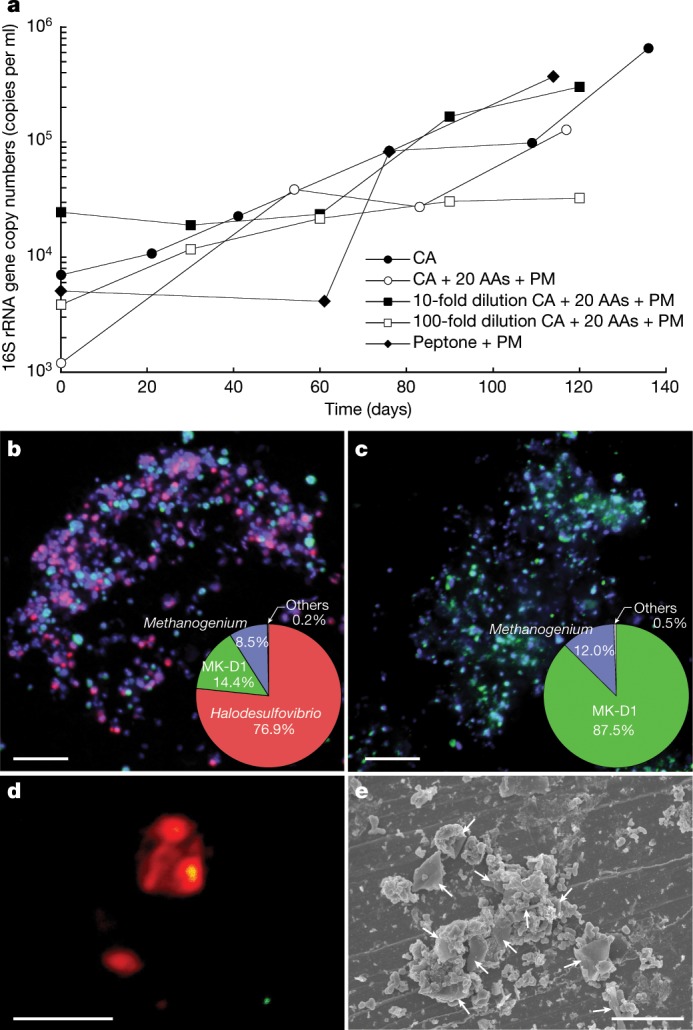
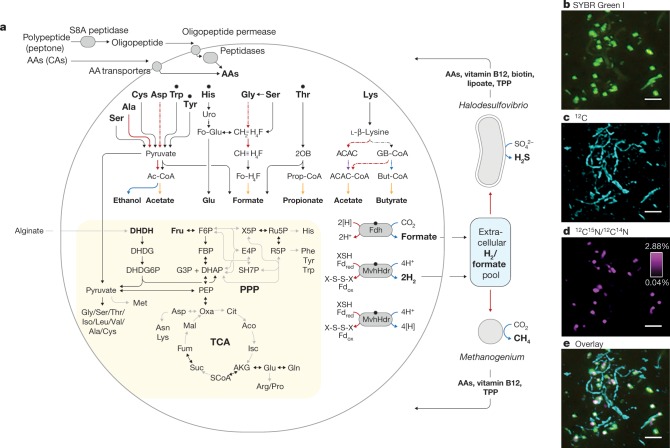
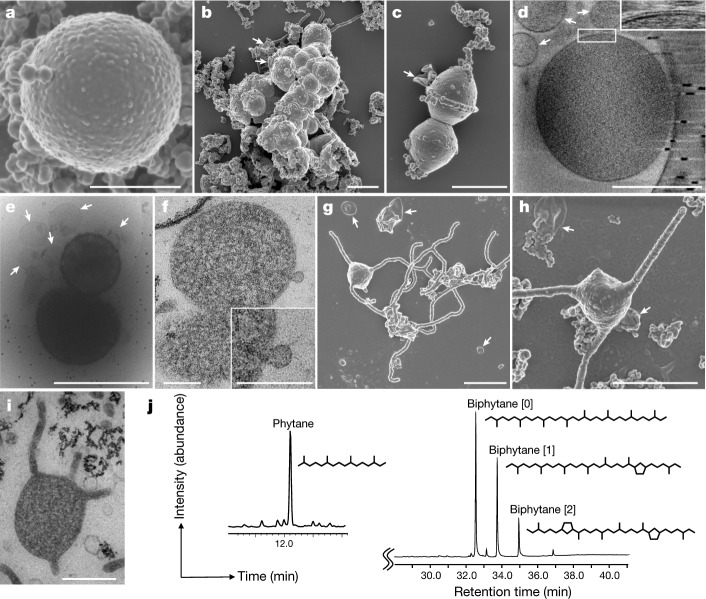
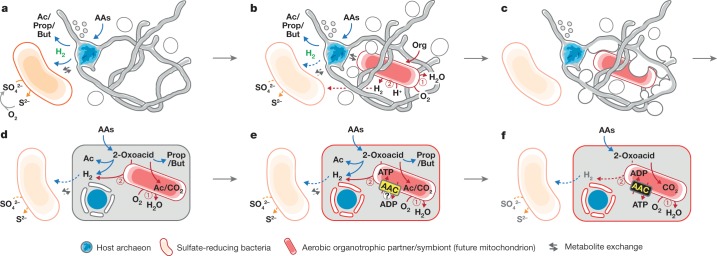
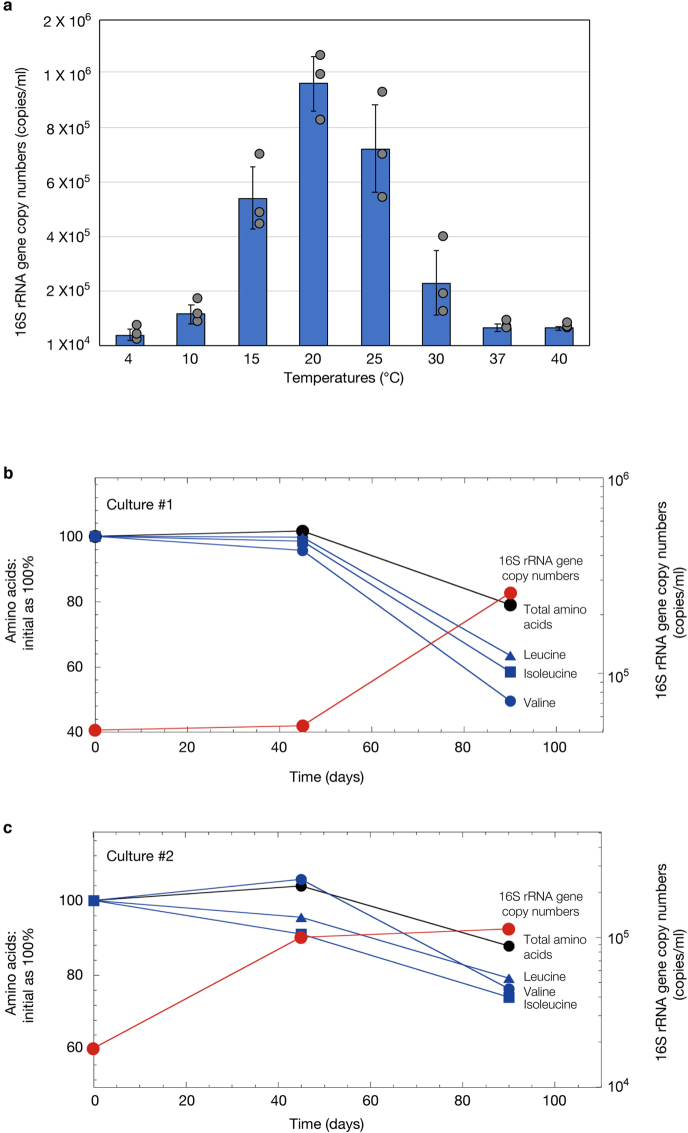
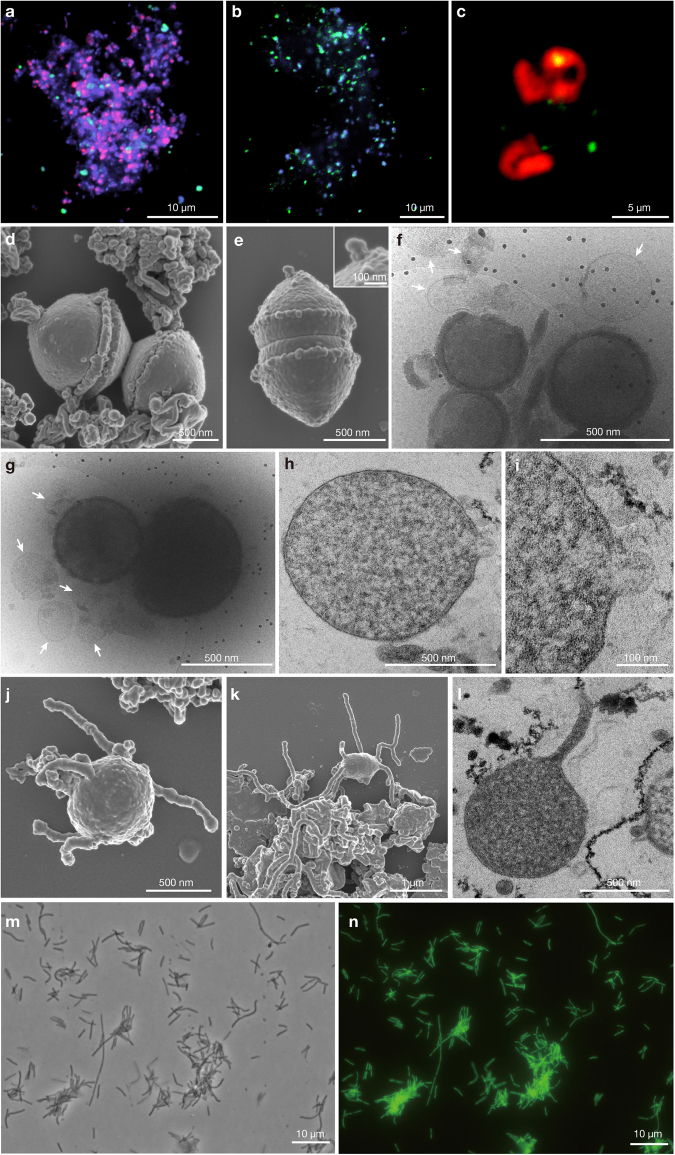
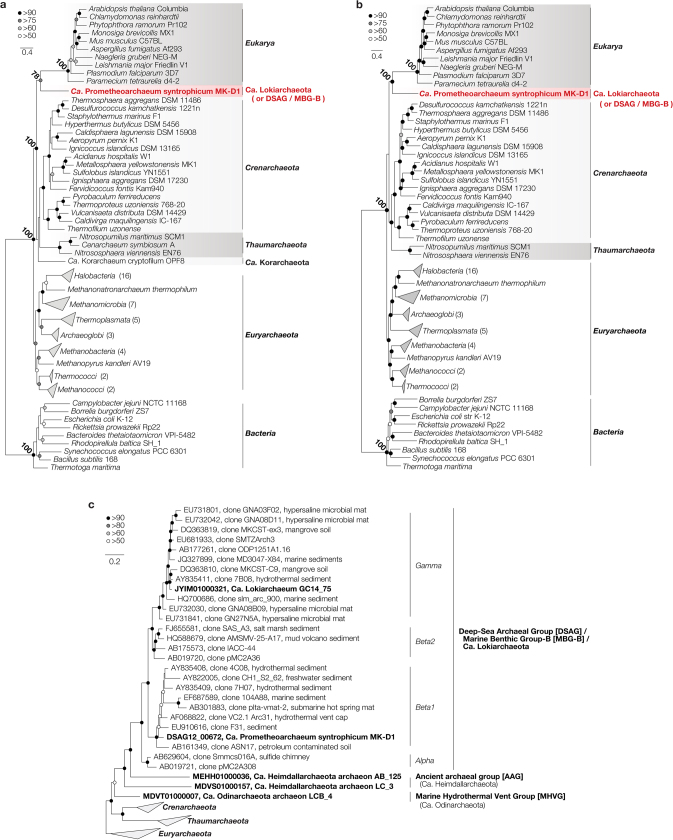
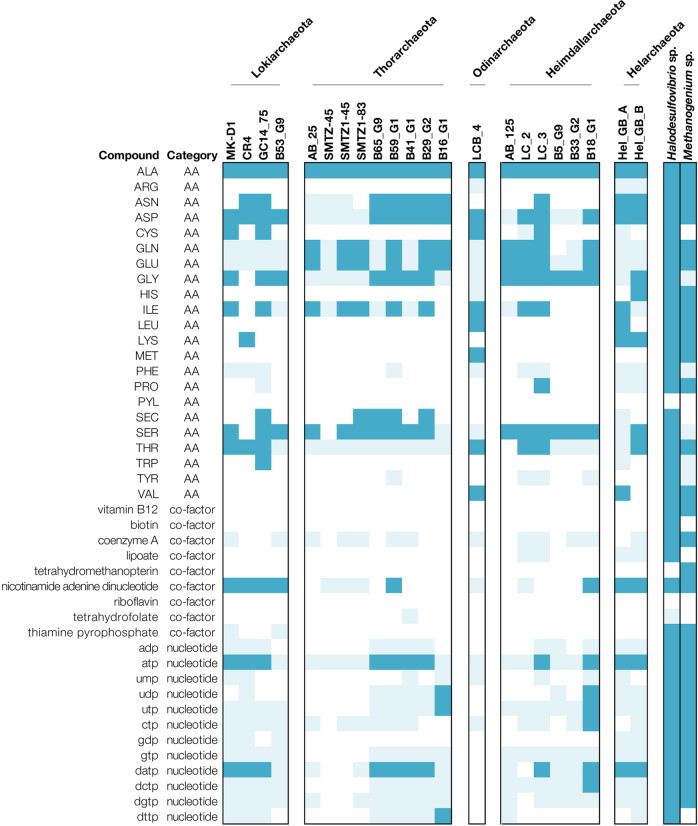
The origin of eukaryotes remains unclear 1-4. Current data suggest that eukaryotes may have emerged from an archaeal lineage known as 'Asgard' archaea 5,6. Despite the eukaryote-like genomic features that are found in these archaea, the evolutionary transition from archaea to eukaryotes remains unclear, owing to the lack of cultured representatives and corresponding physiological insights. Here we report the decade-long isolation of an Asgard archaeon related to Lokiarchaeota from deep marine sediment. The archaeon-'Candidatus Prometheoarchaeum syntrophicum' strain MK-D1-is an anaerobic, extremely slow-growing, small coccus (around 550 nm in diameter) that degrades amino acids through syntrophy. Although eukaryote-like intracellular complexes have been proposed for Asgard archaea 6, the isolate has no visible organelle-like structure. Instead, Ca. P. syntrophicum is morphologically complex and has unique protrusions that are long and often branching. On the basis of the available data obtained from cultivation and genomics, and reasoned interpretations of the existing literature, we propose a hypothetical model for eukaryogenesis, termed the entangle-engulf-endogenize (also known as E 3) model.
Overview
The claims and statistics of this paper haven’t been checked yet.
Free: it reads the open-access text and checks the first 5 claims that cite a source we can check. Create a free account to check every claim.
Integrity signals
Registry
Cites
Statistics
Figures
Verification
Claims the paper makes
The claims and statistics of this paper haven’t been checked yet.
Free: it reads the open-access text and checks the first 5 claims that cite a source we can check. Create a free account to check every claim.
Claims other papers make about this one
Each is checked against this paper’s own text: does it say what the citing paper says it does?
The source backs part of the claim, not all of it — or backs it for a different population, condition or comparison.
In the citing paper
“Furthermore, ATP synthase evolution supports scenarios on eukaryotic origins from an asgardarchaeal host3,4,13,14 and alphaproteobacterial symbiont107,108”
From ATP synthase evolution on a cross-braced dated tree of life (2023) · cites this paper as [14]
Experimental — accuracy not yet measured
Self-check
Percentages, sums and reported differences re-computed from the paper’s own numbers.
The self-check needs the paper’s full text.
Citations
Cites
Trimmomatic: a flexible trimmer for Illumina sequence data
Bolger, A. M., Lohse, M., & Usadel, B. (2014) · Bioinformatics · doi:10.1093/bioinformatics/btu170 · Cited by 65,548
MAFFT Multiple Sequence Alignment Software Version 7: Improvements in Performance and Usability
Katoh, K., & Standley, D. M. (2013) · Molecular Biology and Evolution · doi:10.1093/molbev/mst010 · Cited by 46,209
MUSCLE: multiple sequence alignment with high accuracy and high throughput
Edgar, R. C. (2004) · Nucleic Acids Research · doi:10.1093/nar/gkh340 · Cited by 44,662
The SILVA ribosomal RNA gene database project: improved data processing and web-based tools
Quast, C., Pruesse, E., Yilmaz, P., Gerken, J., Schweer, T., Yarza, P., Peplies, J., & Glöckner, F. O. (2012) · Nucleic Acids Research · doi:10.1093/nar/gks1219 · Cited by 33,055
RAxML version 8: a tool for phylogenetic analysis and post-analysis of large phylogenies
Stamatakis, A. (2014) · Bioinformatics · doi:10.1093/bioinformatics/btu033 · Cited by 32,291
MrBayes 3.2: Efficient Bayesian Phylogenetic Inference and Model Choice Across a Large Model Space
Ronquist, F., Teslenko, M., van der Mark, P., Ayres, D. L., Darling, A., Höhna, S., Larget, B., Liu, L., Suchard, M. A., & Huelsenbeck, J. P. (2012) · Systematic Biology · doi:10.1093/sysbio/sys029 · Cited by 27,843
SPAdes: A New Genome Assembly Algorithm and Its Applications to Single-Cell Sequencing
Bankevich, A., Nurk, S., Antipov, D., Gurevich, A. A., Dvorkin, M., Kulikov, A. S., Lesin, V. M., Nikolenko, S. I., Pham, S., Prjibelski, A. D., et al. (2012) · Journal of Computational Biology · doi:10.1089/cmb.2012.0021 · Cited by 25,987
BLAST+: architecture and applications
Camacho, C., Coulouris, G., Avagyan, V., Ma, N., Papadopoulos, J., Bealer, K., & Madden, T. L. (2009) · BMC Bioinformatics · doi:10.1186/1471-2105-10-421 · Cited by 22,074
Prokka: rapid prokaryotic genome annotation
Seemann, T. (2014) · Bioinformatics · doi:10.1093/bioinformatics/btu153 · Cited by 18,818
Guindon, S., Dufayard, J.-F., Lefort, V., Anisimova, M., Hordijk, W., & Gascuel, O. (2010) · Systematic Biology · doi:10.1093/sysbio/syq010 · Cited by 18,376
Research works printed but not linked: 1
- Chikaraishi, Y. et al. Instrumental Optimization for Compound-specific Nitrogen Isotope Analysis of Amino Acids by Gas Chromatography/Combustion/Isotope Ratio Mass Spectrometry in Earth, Life and Isotopes (eds Ohkouchi, N. et al.) 367–386 (Kyoto Univ. Press, 2010). 20658677
Cited by
DRAM for distilling microbial metabolism to automate the curation of microbiome function
Shaffer, M., Borton, M. A., McGivern, B. B., Zayed, A. A., La Rosa, S. L., Solden, L. M., Liu, P., Narrowe, A. B., Rodríguez-Ramos, J., Bolduc, B., et al. (2020) · Nucleic Acids Research · doi:10.1093/nar/gkaa621 · Cited by 1,126
Protein Sequence Analysis Using the MPI Bioinformatics Toolkit
Gabler, F., Nam, S., Till, S., Mirdita, M., Steinegger, M., Söding, J., Lupas, A. N., & Alva, V. (2020) · Current Protocols in Bioinformatics · doi:10.1002/cpbi.108 · Cited by 831
“To demonstrate these protocols, we use as an example the experimentally uncharacterized FtsZ protein of the Asgard group archaeon Prometheoar-chaeum syntrophicum strain MK-D1, which currently represents the closest cultured prokaryotic relative of eukaryotes (Imachi et al., 2020).”
MethodMicrobial diversity in extreme environments
Shu, W.-S., & Huang, L.-N. (2022) · Nature Reviews Microbiology · doi:10.1038/s41579-021-00648-y · Cited by 630
Innovations to culturing the uncultured microbial majority
Lewis, W. H., Tahon, G., Geesink, P., Sousa, D. Z., & Ettema, T. J. G. (2021) · Nature Reviews Microbiology · doi:10.1038/s41579-020-00458-8 · Cited by 605
Priority effects in microbiome assembly
Debray, R., Herbert, R. A., Jaffe, A. L., Crits-Christoph, A., Power, M. E., & Koskella, B. (2022) · Nature Reviews Microbiology · doi:10.1038/s41579-021-00604-w · Cited by 545
Metadata
- Authors
- Imachi, H., Nobu, M. K., Nakahara, N., Morono, Y., Ogawara, M., Takaki, Y., Takano, Y., Uematsu, K., Ikuta, T., Ito, M., Matsui, Y., Miyazaki, M., Murata, K., Saito, Y., Sakai, S., Song, C., Tasumi, E., Yamanaka, Y., Yamaguchi, T., Kamagata, Y., Tamaki, H., & Takai, K.
- Affiliations
- Japan Agency for Marine-Earth Science and Technology (JP)
- National Institute of Advanced Industrial Science and Technology (JP)
- Marine Works Japan Ltd. (Japan) (JP)
- National Institute for Physiological Sciences (JP)
- Nagaoka University of Technology (JP)
- Corresponding author
- Imachi, Hiroyuki
- Nobu, Masaru K.
- ORCID
- Venue
- Nature
- Published
- 2020-01-15
- Volume
- 577
- Issue
- 7791
- Pages
- 519-525
- ISSN
- 0028-0836 (ISSN-L)
- 1476-4687
- PMC
- PMC7015854
- OpenAlex
- W2999376388
- Cited by
- 624
- References
- 96
- Citations by year
- 2026: 56 · 2025: 82 · 2024: 89 · 2023: 81 · 2022: 109 · 2021: 101 · 2020: 105
- FWCI
- 33.18
- Type
- journal article
- Language
- en
- Open access
- green
- www.ncbi.nlm.nih.gov
- Licence
- cc-by
- www.springernature.com/gp/researchers/text-and-data-mining (tdm)
- www.springernature.com/gp/researchers/text-and-data-mining (vor)
- Locations
- Nature (publishedVersion)
- Europe PMC (PubMed Central) (publishedVersion, cc-by)
- PubMed Central (publishedVersion, cc-by)
- PubMed (publishedVersion)
- Zenodo (CERN European Organization for Nuclear Research) (submittedVersion)
- Funders
- Japan Society for the Promotion of Science (18K18795, 20H02019, 16H06280, 18H03367, 18H02426, 18H04468, 19H01005, 16H04083, 18H05295)
- Topics
- Life Sciences › Agricultural and Biological Sciences › Ecology, Evolution, Behavior and Systematics › Protist diversity and phylogeny
- Physical Sciences › Physics and Astronomy › Astronomy and Astrophysics › Origins and Evolution of Life
- Physical Sciences › Environmental Science › Ecology › Microbial Community Ecology and Physiology
- Keywords
- Asgard archaea, Lokiarchaeota, eukaryotic origin, syntrophy, amino acid catabolism
- MeSH terms
- Amino Acids, Archaea, Eukaryotic Cells, Lipids, Models, Biological, Phylogeny, Prokaryotic Cells, Symbiosis, Geologic Sediments, Evolution, Molecular, Genome, Archaeal
About these checks
Registry, retraction, Cites and statistics results are computed, not judged, with one exception: a printed reference that no index lists is read once by a model before it counts as a citation error. Claims are extracted by a model and kept only when their quote appears verbatim in the text; each cited source is then checked, with a model’s help, for whether it says what the claim relies on. Those verdicts can be wrong — read the claim’s quote and the cited source before relying on one.
Statistics and arithmetic are recomputed, not judged.
Confidence bands are shown only for fields calibrated on our annotated test set. None is calibrated yet, so no band is shown.
What counts as a claim ›How we measure confidence ›How we check this ›
Are you an author, or do you see a problem with this page? Request a review
Data sources
Bibliographic data: Semantic Scholar, OpenAlex, Crossref.
Contains information from the Semantic Scholar Academic Graph Datasets, made available under the ODC Attribution License (ODC-BY 1.0).
Semantic Scholar’s data is described in: Kinney, R., et al. (2023). The Semantic Scholar Open Data Platform. arXiv:2301.10140.
