

Substantial somatic genomic variation and selection for BCOR mutations in human induced pluripotent stem cells
Open accessPublished version of a preprint
The DOI matches its Crossref record; 88 of the 88 references it cites were found in a registry or an index.
Abstract
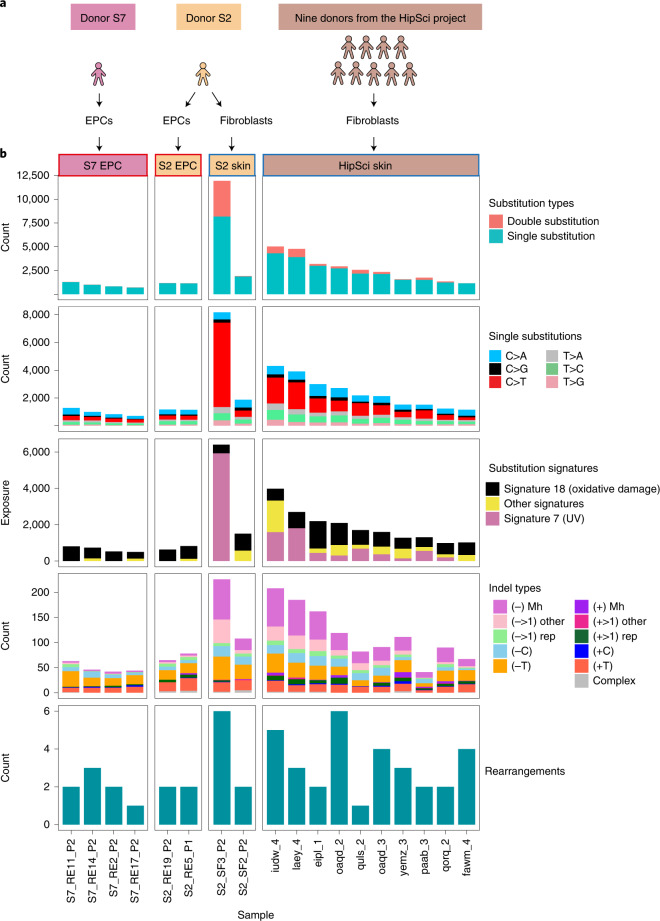
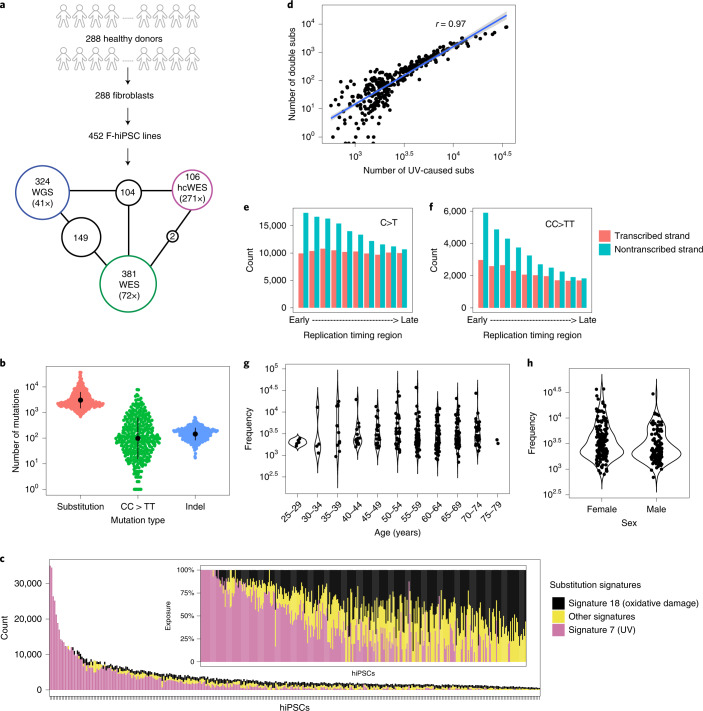
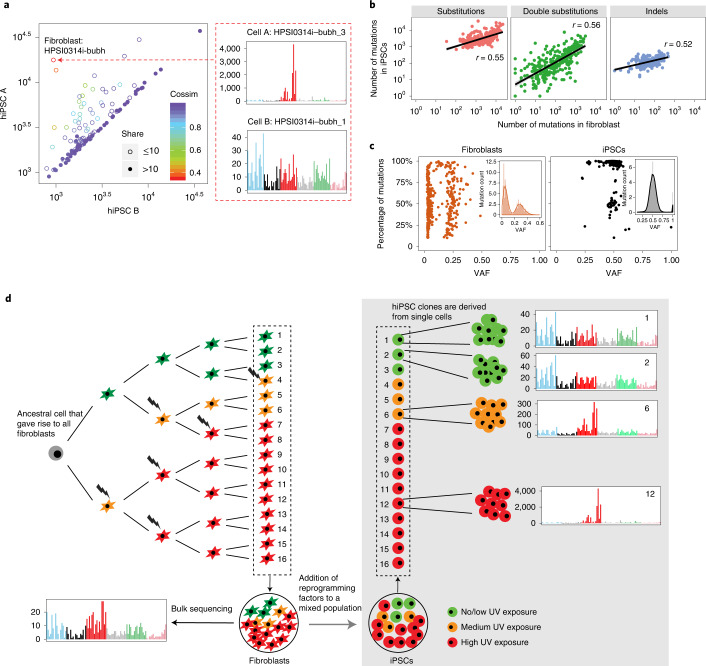
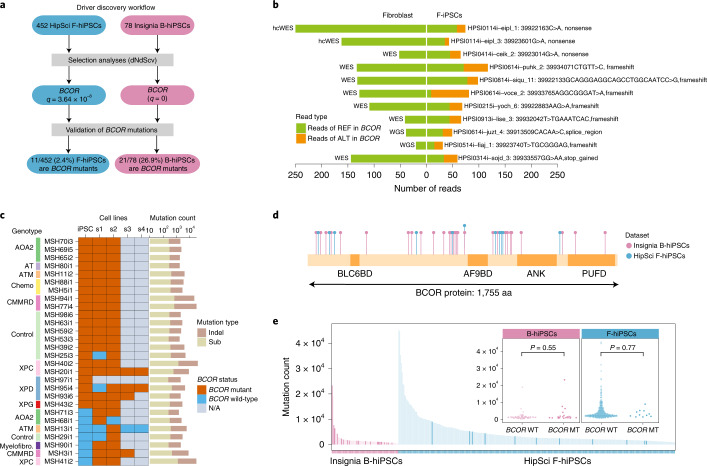
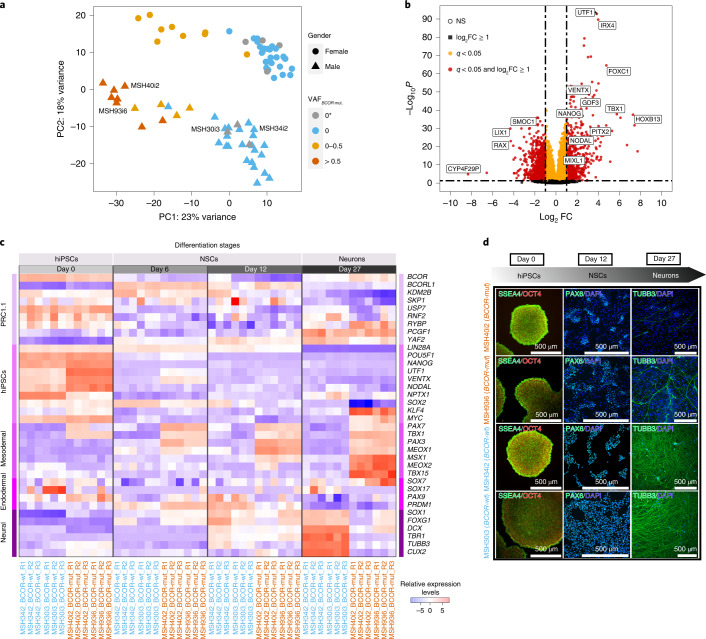
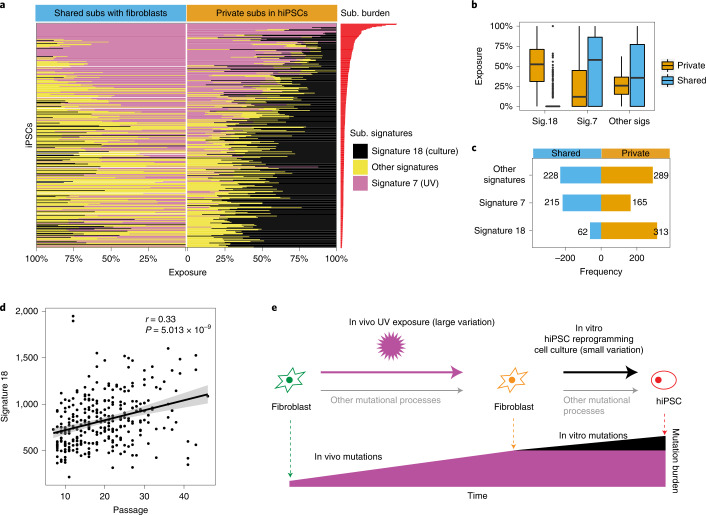
We explored human induced pluripotent stem cells (hiPSCs) derived from different tissues to gain insights into genomic integrity at single-nucleotide resolution. We used genome sequencing data from two large hiPSC repositories involving 696 hiPSCs and daughter subclones. We find ultraviolet light (UV)-related damage in ~72% of skin fibroblast-derived hiPSCs (F-hiPSCs), occasionally resulting in substantial mutagenesis (up to 15 mutations per megabase). We demonstrate remarkable genomic heterogeneity between independent F-hiPSC clones derived during the same round of reprogramming due to oligoclonal fibroblast populations. In contrast, blood-derived hiPSCs (B-hiPSCs) had fewer mutations and no UV damage but a high prevalence of acquired BCOR mutations (26.9% of lines). We reveal strong selection pressure for BCOR mutations in F-hiPSCs and B-hiPSCs and provide evidence that they arise in vitro. Directed differentiation of hiPSCs and RNA sequencing showed that BCOR mutations have functional consequences. Our work strongly suggests that detailed nucleotide-resolution characterization is essential before using hiPSCs.
Overview
The claims and statistics of this paper haven’t been checked yet.
Free: it reads the open-access text and checks the first 5 claims that cite a source we can check. Create a free account to check every claim.
Integrity signals
Registry
Cites
Statistics
Figures
Verification
Claims the paper makes
The claims and statistics of this paper haven’t been checked yet.
Free: it reads the open-access text and checks the first 5 claims that cite a source we can check. Create a free account to check every claim.
Claims other papers make about this one
Each is checked against this paper’s own text: does it say what the citing paper says it does?
The source backs part of the claim, not all of it — or backs it for a different population, condition or comparison.
In the citing paper
“They showed that about 72% of iPSCs had genomic heterogeneity due to UV-related damage, confirming that iPSCs derived from skin fibroblast cells harbor more pre-existing genetic mutations compared to blood-derived iPSCs.”
From Overcoming the Variability of iPSCs in the Manufacturing of Cell-Based Therapies (2023) · cites this paper as [16]
Experimental — accuracy not yet measuredThe cited source says what the claim attributes to it.
In the citing paper
“Skin fibroblasts are more prone to acquire additional DNA damage compared to blood cells as a result of the continuous exposure of skin to environmental stress, such as UV irradiation.”
From Overcoming the Variability of iPSCs in the Manufacturing of Cell-Based Therapies (2023) · cites this paper as [16]
The cited source says what the claim attributes to it.
In the citing paper
“confirming that iPSCs derived from skin fibroblast cells harbor more pre-existing genetic mutations compared to blood-derived iPSCs.”
From Overcoming the Variability of iPSCs in the Manufacturing of Cell-Based Therapies (2023) · cites this paper as [16]
The cited source says what the claim attributes to it.
In the citing paper
“Substantial genomic variation has also been observed specifically in hiPSCs,167 particularly for BCOR mutations that are involved in many cancers.168”
From Developments in stem cell-derived islet replacement therapy for treating type 1 diabetes (2023) · cites this paper as [167]
Self-check
Percentages, sums and reported differences re-computed from the paper’s own numbers.
The self-check needs the paper’s full text.
Citations
Cites
Moderated estimation of fold change and dispersion for RNA-seq data with DESeq2
Love, M. I., Huber, W., & Anders, S. (2014) · Genome Biology · doi:10.1186/s13059-014-0550-8 · Cited by 95,106
Fast and accurate short read alignment with Burrows-Wheeler transform
Li, H., & Durbin, R. (2009) · Bioinformatics · doi:10.1093/bioinformatics/btp324 · Cited by 58,607
STAR: ultrafast universal RNA-seq aligner
Dobin, A., Davis, C. A., Schlesinger, F., Drenkow, J., Zaleski, C., Jha, S., Batut, P., Chaisson, M., & Gingeras, T. R. (2013) · Bioinformatics · doi:10.1093/bioinformatics/bts635 · Cited by 51,709
The Genome Analysis Toolkit: A MapReduce framework for analyzing next-generation DNA sequencing data
McKenna, A., Hanna, M., Banks, E., Sivachenko, A., Cibulskis, K., Kernytsky, A., Garimella, K., Altshuler, D., Gabriel, S., Daly, M., et al. (2010) · Genome Research · doi:10.1101/gr.107524.110 · Cited by 27,895
featureCounts: an efficient general purpose program for assigning sequence reads to genomic features
Liao, Y., Smyth, G. K., & Shi, W. (2014) · Bioinformatics · doi:10.1093/bioinformatics/btt656 · Cited by 27,219
Takahashi, K., & Yamanaka, S. (2006) · Cell · doi:10.1016/j.cell.2006.07.024 · Cited by 26,673
An integrated encyclopedia of DNA elements in the human genome
The ENCODE Project Consortium (2012) · Nature · doi:10.1038/nature11247 · Cited by 18,072
Fast and accurate long-read alignment with Burrows-Wheeler transform.
Li, H., & Durbin, R. (2010) · Bioinformatics · doi:10.1093/bioinformatics/btp698 · Cited by 12,063
Analysis of protein-coding genetic variation in 60,706 humans
Exome Aggregation Consortium, Lek, M., Karczewski, K. J., Minikel, E. V., Samocha, K. E., Banks, E., Fennell, T., O’Donnell-Luria, A. H., Ware, J. S., Hill, A. J., et al. (2016) · Nature · doi:10.1038/nature19057 · Cited by 9,587
The Ensembl Variant Effect Predictor
McLaren, W., Gil, L., Hunt, S. E., Riat, H. S., Ritchie, G. R. S., Thormann, A., Flicek, P., & Cunningham, F. (2016) · Genome Biology · doi:10.1186/s13059-016-0974-4 · Cited by 8,099
Cited by
Induced pluripotent stem cells (iPSCs): molecular mechanisms of induction and applications
Cerneckis, J., Cai, H., & Shi, Y. (2024) · Signal Transduction and Targeted Therapy · doi:10.1038/s41392-024-01809-0 · Cited by 452
“109 Age-related heteroplasmic variants of mitochondria can also in fl uence the mitochondrial genetic makeup of iPSCs derived from different donors.”
BackgroundA reference human induced pluripotent stem cell line for large-scale collaborative studies
Pantazis, C. B., Yang, A., Lara, E., McDonough, J. A., Blauwendraat, C., Peng, L., Oguro, H., Kanaujiya, J., Zou, J., Sebesta, D., et al. (2022) · Cell Stem Cell · doi:10.1016/j.stem.2022.11.004 · Cited by 310
Mutational signatures: emerging concepts, caveats and clinical applications
Koh, G., Degasperi, A., Zou, X., Momen, S., & Nik-Zainal, S. (2021) · Nature Reviews Cancer · doi:10.1038/s41568-021-00377-7 · Cited by 287
Developments in stem cell-derived islet replacement therapy for treating type 1 diabetes
Hogrebe, N. J., Ishahak, M., & Millman, J. R. (2023) · Cell Stem Cell · doi:10.1016/j.stem.2023.04.002 · Cited by 210
Yoshida, S., Kato, T. M., Sato, Y., Umekage, M., Ichisaka, T., Tsukahara, M., Takasu, N., & Yamanaka, S. (2023) · Med · doi:10.1016/j.medj.2022.10.003 · Cited by 134
The clinical landscape of CAR NK cells
Jørgensen, L. V., Christensen, E. B., Barnkob, M. B., & Barington, T. (2025) · Experimental Hematology and Oncology · doi:10.1186/s40164-025-00633-8 · Cited by 164
“Sec-ondly, production of large quantities of CAR NK cells is time-consuming, typically taking several weeks, and cultured cells may accumulate oncogenic mutations during the expansion process, posing safety risks [84–86].”
Grattoni, A., Korbutt, G., Tomei, A. A., García, A. J., Pepper, A. R., Stabler, C., Brehm, M., Papas, K., Citro, A., Shirwan, H., et al. (2025) · Nature Reviews Endocrinology · doi:10.1038/s41574-024-01029-0 · Cited by 92
The consequences of recurrent genetic and epigenetic variants in human pluripotent stem cells
Andrews, P. W., Barbaric, I., Benvenisty, N., Draper, J. S., Ludwig, T. E., Merkle, F. T., Sato, Y., Spits, C., Stacey, G. N., Wang, H., et al. (2022) · Cell stem cell · doi:10.1016/j.stem.2022.11.006 · Cited by 90
Revolutionizing Disease Modeling: The Emergence of Organoids in Cellular Systems
Silva-Pedrosa, R., Salgado, A. J., & Ferreira, P. E. (2023) · Cells · doi:10.3390/cells12060930 · Cited by 84
The long and winding road of reprogramming-induced rejuvenation
Yücel, A. D., & Gladyshev, V. N. (2024) · Nature Communications · doi:10.1038/s41467-024-46020-5 · Cited by 92
“Although it is well-characterized that iPSC lines tend to accumulate high numbers of small-scale mutations 35,36 , the process of reprogramming is not inherently mutagenic 37,38 .”
BackgroundNeurodegeneration cell per cell
Balusu, S., Praschberger, R., Lauwers, E., Strooper, B. D., & Verstreken, P. (2023) · Neuron · doi:10.1016/j.neuron.2023.01.016 · Cited by 59
“256 However, the direct conversion of fibroblasts to neurons suffers also from limitations.”
Margolis, E. A., Friend, N. E., Rolle, M. W., Alsberg, E., & Putnam, A. J. (2023) · Trends in biotechnology · doi:10.1016/j.tibtech.2023.04.003 · Cited by 53
Lezmi, E., Jung, J., & Benvenisty, N. (2024) · Nature Biotechnology · doi:10.1038/s41587-023-02090-2 · Cited by 44
“Because our threshold for mutation identification was relatively stringent we did not identify some genes previously reported to be mutated, such as BCOR 8 .”
Kuebler, B., Álvarez-Palomo, B., Arán, B., Castaño, J., Rodriguez, L., Raya, Á., Querol, S., & Veiga, A. (2023) · Stem Cell Research & Therapy · doi:10.1186/s13287-023-03576-1 · Cited by 37
“Since hiPSCs from MCBs and WCBs could have passage numbers of 20 or higher and it is well known that hiPSCs in long-term culture can incorporate de novo mutations [35], quality controls to ensure the genetic integrity of hiPSCs should be standardized [34, 36].”
BackgroundFan, L., Cai, Z., Zhao, J., Mahmoudi, N., Wang, Y., Cheeseman, S., Aguilar, L. M. C., Reis, R. L., Kundu, S. C., Kaplan, D. L., et al. (2025) · ACS Nano · doi:10.1021/acsnano.4c18568 · Cited by 37
Overcoming the Variability of iPSCs in the Manufacturing of Cell-Based Therapies
Nath, S. C., Menendez, L., & Friedrich Ben-Nun, I. (2023) · International Journal of Molecular Sciences · doi:10.3390/ijms242316929 · Cited by 35
“This was shown in a study by Rouhani et al. which compared 696 hiPSCs and daughter subclones [16].”
ResultSomatic mutations alter the differentiation outcomes of iPSC-derived neurons
Puigdevall, P., Jerber, J., Danecek, P., Castellano, S., & Kilpinen, H. (2023) · Cell Genomics · doi:10.1016/j.xgen.2023.100280 · Cited by 29
Self-citationWatanabe, T., Shu, S. L., Río-Espínola, A. D., Ferreira, J. R., Bando, K., Lemmens, M., Pande, P., de Wolf, C., Chen, C. L., Ericson, E., et al. (2025) · Cytotherapy · doi:10.1016/j.jcyt.2025.04.062 · Cited by 37
Saldana-Guerrero, I. M., Montano-Gutierrez, L. F., Boswell, K., Hafemeister, C., Poon, E., Shaw, L. E., Stavish, D., Lea, R. A., Wernig-Zorc, S., Bozsaky, E., et al. (2024) · Nature Communications · doi:10.1038/s41467-024-47945-7 · Cited by 27
“BCOR mutations have been previously observed in human induced pluripotent stem cell cultures 93,94 and NB patients with BCOR mutations exhibit a high frequency of CNAs 87 .”
BackgroundCurrent Landscape of iPSC Haplobanks
Escribá, R., Beksaç, M., Griscelli, A. B., Glover, J. C., Koskela, S., Latsoudis, H., Querol, S., & Álvarez-Palomo, B. (2024) · Stem Cell Reviews and Reports · doi:10.1007/s12015-024-10783-7 · Cited by 31
“Somatic BCOR (BCL6 corepressor) gene mutations –associated with some types of blood cancer, were indeed reported with a high prevalence in iPSCs derived from blood cells despite lower rates of genome-wide mutagenesis compared to iPSCs reprogrammed from fibroblasts [28].”
BackgroundEnhancing cord blood stem cell-derived NK cell growth and differentiation through hyperosmosis
Wen, W., Chen, X., Shen, X., Li, H.-Y., Zhang, F., Fang, F., & Zhang, X. (2023) · Stem Cell Research & Therapy · doi:10.1186/s13287-023-03461-x · Cited by 21
“Despite this potential, the differentiation and expansion process typically surpass five weeks, with potential accumulated mutations over cell culture and iPSC passage posing a challenge [15, 16].”
BackgroundCell reprogramming therapy for Parkinson’s disease
Dong, W., Liu, S., Li, S., & Wang, Z. (2023) · Neural Regeneration Research · doi:10.4103/1673-5374.390965 · Cited by 22
“In addition, a research team from Cambridge University used whole-genome sequencing and whole-exome sequencing to conduct a comprehensive study on the mutation of hiPSCs in a large sample, and they explored the impact of mutations on the function of hiPSCs (Rouhani et al., 2022).”
BackgroundMethodChen, S., Wang, W., Shen, L., Liu, H., Luo, J. C., Ren, Y., Cui, S., Ye, Y., Shi, G., Cheng, F., et al. (2024) · Biomaterials · doi:10.1016/j.biomaterials.2024.122947 · Cited by 24
Zhao, N., Zhang, C.-J., Zhang, X., Wang, W., Jin, K., & Jin, Z. (2024) · npj Regenerative Medicine · doi:10.1038/s41536-024-00387-7 · Cited by 22
“Recently, Rouhani et al. found that strong selection pressure during somatic cell reprogramming to iPSCs by Yamanaka factors could introduce somatic mutations in iPSC lines, such as mutations in BCOR, a cancer-related gene 9 .”
Yang, C., Du, X., & Luo, W. (2023) · World Journal of Stem Cells · doi:10.4252/wjsc.v15.i4.136 · Cited by 21
Challenges and opportunities of human iPSC-derived NK as “Off-the-shelf” cellular therapies
Romanini, N., Netsrithong, R., Themeli, M., & Tazzari, M. (2025) · Journal of Experimental & Clinical Cancer Research · doi:10.1186/s13046-025-03558-6 · Cited by 22
Biphasic cell cycle defect causes impaired neurogenesis in down syndrome
Sharma, V., Nehra, S., Do, L. H., Ghosh, A., Deshpande, A. J., & Singhal, N. (2022) · Frontiers in Genetics · doi:10.3389/fgene.2022.1007519 · Cited by 14
“…results for impaired neurogenesis in DS, perhaps due to a lack of standardized in vitro neural differentiation protocols (Shi et al., 2012; Briggs et al., 2013; Lu et al., 2013; Weick et al., 2013; Hibaoui et al., 2014; Sobol et al., 2019) or variations in hiPSC lines (Rouhani et al., 2022).”
BackgroundKrivec, N., de Deckersberg, E. C., Lei, Y., Delbany, D. A., Regin, M., Verhulst, S., van Grunsven, L. A., Sermon, K., & Spits, C. (2024) · Cell Death and Disease · doi:10.1038/s41419-024-07236-x · Cited by 15
“Causes for this variability are common genetic variation [4, 5], epigenetic variance [6 – 8], mitochondrial mutations [9, 10] and a broad range of environmental factors induced by differences in culture conditions [3].”
Lessons learnt, and still to learn, in first in human stem cell trials
Barker, R. A., Carpenter, M., Jamieson, C. H. M., Murry, C. E., Pellegrini, G., Rao, R. C., & Song, J. (2022) · Stem Cell Reports · doi:10.1016/j.stemcr.2022.11.019 · Cited by 16
“, 2017), and, most recently, inactivatingmutations in BCOR (Rouhani et al., 2022).”
BackgroundInfluentialProgress, application and challenges of liver organoids
Sang, C., Lin, J., Ji, S., & Gao, Q. (2024) · Clinical Cancer Bulletin · doi:10.1007/s44272-024-00012-0 · Cited by 16
“However, it is worth noting that genetic and epigenetic abnormalities, such as copy number variations (CNVs) and point mutations in protein-coding regions, are often encountered during iPSC reprogramming and organoid differentiation [60, 61].”
Yurchenko, A. A., Fresneau, B. C., Borghese, B., Rajabi, F., Tata, Z., Genestie, C., Sarasin, A. R., & Nikolaev, S. I. (2023) · Communications Medicine · doi:10.1038/s43856-023-00341-6 · Cited by 10
“The same mutational signature was enriched in the erythroblast-derived XP-C iPSCs from Insignia project 20 , but interestingly not in other XP iPSCs.”
Emborg, M. E., Metzger, J. M., D’Amour, K. A., Colwell, J. C., Neumann, L., Zhang, A., & Federoff, H. J. (2025) · Brain Research Bulletin · doi:10.1016/j.brainresbull.2025.111297 · Cited by 12
“These 1st and 2nd generation ligands, respectively, bind to the mitochondrial”
Chen, J., Huang, L., Yang, Y., Xu, W., Qin, Q., Qin, R., Liang, X., Lai, X., Huang, X., Xie, M., et al. (2023) · Brain Sciences · doi:10.3390/brainsci13030524 · Cited by 13
Jiang, F., Wang, L., Dong, Y., Nie, W., Zhou, H., Gao, J. X., & Zheng, P. (2023) · Proceedings of the National Academy of Sciences · doi:10.1073/pnas.2305187120 · Cited by 15
“Point mutations in cancer-associated gene BCOR promote malignancies and appear in 26.9% of human embyonic stem (ES) cell lines (13).”
InfluentialFukutani, Y., Kurachi, K., Torisawa, Y., Miyata, K., Hayashi, M., Sasaki, K., Saitoh, K., Watanabe, S., Hasegawa, Y., Naritomi, Y., et al. (2025) · Stem Cell Research & Therapy · doi:10.1186/s13287-025-04461-9 · Cited by 16
“Since hiPSCs can acquire mutations during long-term culture, a short engineering step is required [57, 58].”
Approaches for studying neuroimmune interactions in Alzheimer’s disease
Lin, C., Tian, Y., Tanzi, R. E., & Jorfi, M. (2024) · Trends in Immunology · doi:10.1016/j.it.2024.10.002 · Cited by 11
Scaling-Up of Cultivated Meat Production Process
Manzoki, M. C., de Mello, A. F. M., Martínez-Burgos, W. J., Vale, A. D. S., Biagini, G., Piazenski, I. N., Thomaz‐Soccol, V., & Soccol, C. R. (2024) · Springer eBooks · doi:10.1007/978-3-031-55968-6_12 · Cited by 12
Delbany, D. A., Ghosh, M. S., Krivec, N., Huyghebaert, A., Regin, M., Duong, M. C., Lei, Y., Sermon, K., Olsen, C., & Spits, C. (2024) · Cells · doi:10.3390/cells13161395 · Cited by 15
“BCOR mutations that have been reported in hiPSC [52] were not found in our study or previous work [5,38,39].”
ResultCellular and Genomic Features of Muscle Differentiation from Isogenic Fibroblasts and Myoblasts
Benarroch, L., Madsen‐Østerbye, J., Abdelhalim, M., Mamchaoui, K., Ohana, J., Bigot, A., Mouly, V., Bonne, G., Bertrand, A., & Collas, P. (2023) · Cells · doi:10.3390/cells12151995 · Cited by 9
“A heavy mutational load may present potential risks for using skin fibroblasts for biomedical purposes, as shown in skin fibroblast-derived iPS cells [61], and negatively affect differentiation and cell function.”
BackgroundBadja, C., Momen, S., Koh, C. C., Boushaki, S., Roumeliotis, T. I., Kozik, Z., Jones, I., Bousgouni, V., Dias, J. M. L., Krokidis, M. G., et al. (2024) · Cell Reports · doi:10.1016/j.celrep.2024.114243 · Cited by 10
Zhang, K., Wang, Y., An, Q., Ji, H., Wu, D., Li, X., Suo, L., Zhang, C., & Dong, X. (2024) · Cell Proliferation · doi:10.1111/cpr.13785 · Cited by 10
“Recent studies have highlighted the prevalence of acquired cancer-related mutations in numerous hiPSC lines and their derivatives, raising concerns regarding genetic instability [37, 38].”
Li, Y., Xu, M., Chen, J., Huang, J., Cao, J., Chen, H., Zhang, J., Luo, Y., Wang, Y., & Sun, J. (2024) · Stem Cell Research & Therapy · doi:10.1186/s13287-024-03780-7 · Cited by 10
“It is also critical to conduct cautious safety assessments before transplantation to mitigate the potential risks associated with stem cell-derived cell transplantation therapies [76].”
BackgroundWnt signaling and the regulation of pluripotency
Sonavane, P. R., & Willert, K. (2023) · Current topics in developmental biology/Current Topics in Developmental Biology · doi:10.1016/bs.ctdb.2023.01.002 · Cited by 8
Biological Models of Oxidative Purine DNA Damage in Neurodegenerative Disorders
Chatgilialoglu, C. (2025) · Antioxidants · doi:10.3390/antiox14050578 · Cited by 8
“The 8-oxo-Pu lesions observed in controls agree with prior hiP-SCs are exposed to oxidative damage [134,135].”
Huang, B., & Hu, X. (2025) · Aging and Disease · doi:10.14336/ad.2025.0541 · Cited by 10
“Additionally, transplanting adult stem cells derived from induced pluripotent stem cells (iPSCs) generated from autologous cells is not viable, because these cells often harbor detectable DNA damage exceeding 70% [48], which leads to their immune clearance [49].”
p53 safeguards chemical reprogramming of human somatic cells toward pluripotency
Cheng, L., Wang, Y., Yang, Z., Cao, J., Peng, F., Lan, T., Cheng, R., Liu, T., Xia, Z., Guan, J., et al. (2026) · Cell · doi:10.1016/j.cell.2026.03.038 · Cited by 7
The landscape of somatic mutations in lymphoblastoid cell lines
Caballero, M., & Koren, A. (2023) · Cell Genomics · doi:10.1016/j.xgen.2023.100305 · Cited by 7
Smela, M. P., Pepe, V., Lubbe, S. J., Kiskinis, E., & Church, G. M. (2024) · Stem Cell Reports · doi:10.1016/j.stemcr.2024.08.004 · Cited by 6
“For example, the tumor suppressor genes TP53 and BCOR are recurrently mutated in PSCs 5,6 .”
Clinical translational research on stem cell products: prospects and challenges
Chen, S., ZHANG, L., Ren, Y., Bai, X., Wei, X., Chai, M., 崔苏甦, Zhao, X., & Deng, H. (2026) · Signal Transduction and Targeted Therapy · doi:10.1038/s41392-026-02582-y · Cited by 18
“37 In the same year, the Chinese scientist Deng Hongkui fi rst reported the use of chemical small molecules to generate human iPSCs.”
Bell, M., & Krasnodembskaya, A. D. (2025) · Stem Cells Translational Medicine · doi:10.1093/stcltm/szaf040 · Cited by 4
Human iPS Cells for Clinical Applications and Cellular Products
Lawrence, M. (2023) · Handbook of experimental pharmacology · doi:10.1007/164_2023_643 · Cited by 3
Abe, Y., Sato, Y., Tanaka, M., & Ochiai, D. (2023) · PubMed · doi:10.14670/hh-18-607 · Cited by 5
Butler, L., Adamson, K. I., Johnson, S. L., Jestice, L. H., Price, C. J., Stavish, D., Pooranachandran, N., Malicki, J. J., Tsakiridis, A., Grierson, A. J., et al. (2022) · bioRxiv (Cold Spring Harbor Laboratory) · doi:10.1101/2022.07.05.498819 · Cited by 4
Keshet, G., Barbaric, I., & Benvenisty, N. (2025) · Advanced Drug Delivery Reviews · doi:10.1016/j.addr.2025.115743 · Cited by 4
Li, H., & Jin, C. (2026) · Stem Cell Research & Therapy · doi:10.1186/s13287-026-04951-4 · Cited by 7
“[64] reported that strong screening pressure during Yamanaka factor-mediated somatic reprogramming of iPSCs resulted in the introduction of somatic mutations into the iPSC lines.”
Jung, J., & Benvenisty, N. (2025) · Stem Cell Reports · doi:10.1016/j.stemcr.2025.102643 · Cited by 3
Al-Ahmad, A. J. (2023) · Handbook of experimental pharmacology · doi:10.1007/164_2023_645 · Cited by 3
Gracia-Diaz, C., Perdomo, J. E., Khan, M., Disanza, B. L., Cajka, G. G., Lei, S., Gagne, A. L., Maguire, J., Roulé, T., Shalem, O., et al. (2023) · bioRxiv · doi:10.1101/2023.06.26.546614 · Cited by 6
Perez‐Alcantara, M., Washer, S. J., Chen, Y., Steer, J., González‐Padilla, D., McWilliam, J., Willé, D. R., Panousis, N., Kolberg, P., Navarro‐Guerrero, E., et al. (2026) · Nature Genetics · doi:10.1101/2025.08.18.670767 · Cited by 3
Foglia, M., Guarrera, L., Kurosaki, M., Cassanmagnago, G. A., Bolis, M., Miduri, M., Cereseto, A., Umbach, A., Craparotta, I., Fratelli, M., et al. (2024) · Cellular and Molecular Life Sciences · doi:10.1007/s00018-024-05481-z · Cited by 4
Chen, Z., Huang, Y., Yuan, Z., Xu, K., Guan, Y., Wang, L., Jiang, Y., Deng, W., Pan, Y., Liu, J., et al. (2025) · Cell Death Discovery · doi:10.1038/s41420-025-02723-2 · Cited by 3
“All experimental procedures were performed in accordance with the guidelines and regulations of Nanfang Hospital, Southern Medical University, and Guangzhou Institutes of Biomedicine and Health, Chinese Academy of Sciences.”
Zhang, K., Na, T., Jia, C., Yuan, X., Guo, M., Yang, X., Li, M., Jia, W., Bai, Z., Lu, J., et al. (2026) · Stem Cell Research & Therapy · doi:10.1186/s13287-026-04975-w · Cited by 5
“As a key regulator of pluripotency and mesodermal/ectodermal differentiation, BCOR is among the most frequently mutated genes in hiPSC lines; its disruption is linked to widespread transcriptional alterations and impaired lineage commitment [40].”
Huo, Z., Tu, J. F., Yang, W., Huang, M.-F., Wang, R., Chu, C.-W., Xu, A., Yu, Y. T., Tavakol, T. N., Kizilbash, M., et al. (2026) · Journal of Biological Chemistry · doi:10.1016/j.jbc.2026.111435 · Cited by 2
Zhang, H., & Jin, Z. (2023) · Science China Life Sciences · doi:10.1007/s11427-023-2354-6 · Cited by 2
“mutations compared with skin fibroblast-derived human iPSCs (Rouhani et al., 2022).”
BackgroundSafety Issues Related to Pluripotent Stem Cell-Based Therapies: Tumour Risk
Hillenius, S., Montilla‐Rojo, J., Eleveld, T. F., Salvatori, D. C. F., & Looijenga, L. H. J. (2023) · Springer eBooks · doi:10.1007/978-3-031-41943-0_18 · Cited by 2
Ion channels research in hPSC-RPE cells: bridging benchwork to clinical applications
Xu, P. A., Zou, W., Yin, W., Chen, G., Gao, G., & Zhong, X. (2024) · Journal of Translational Medicine · doi:10.1186/s12967-024-05769-5 · Cited by 1
“1 (potassium channel), reprogramming somatic cells into hiPSC may introduce novel pathogenetic mutations or epigenetic modifications that could potentially affect their functionality and stability [14].”
Ziętek, M. M., Bihorac, A., Wenta-Muchalska, E., Duszewska, A. M., Olech, W., Sampino, S., & Bernat, A. (2025) · International Journal of Molecular Sciences · doi:10.3390/ijms26094327 · Cited by 1
“…chosen for selective killings because of the disease and age, most probably accumulated during the life span the significant number of mutations and epigenetic marks [40,41] that are impossible to be erased by forced expression of six pluripotency factors, small enhancing molecules or hypoxia.”
Scheinfeldt, L., Pompetti, A., Calendo, G., Pozner, T., Grandizio, C., Smith, G., Hodges, K. R., Gharani, N., Kusic, D., Mitchell, M. W., et al. (2026) · BMC Genomics · doi:10.1186/s12864-026-13303-8 · Cited by 2
Shea, A., Sun, S., Kennedy, J., Zhang, L. J., Vijg, J., & Dong, X. (2025) · Nucleic Acids Research · doi:10.1093/nar/gkaf1297 · Cited by 3
“Second, double-nucleotide variants were decomposed into individual single-nucleotide variants for consistency [ 28 , 29 ].”
Zhang, Q., Chen, H., Cun, J., Liu, Q., Wang, H., Jiang, L., Hu, S., Wang, H., Wang, J., Xu, J., et al. (2025) · Stem Cell Research & Therapy · doi:10.1186/s13287-025-04831-3 · Cited by 1
BCOR mutations define a therapeutic vulnerability to DHODH Inhibition in acute myeloid leukemia
Robert, F., Badja, C., Boushaki, S., Degasperi, A., Memari, Y., Momen, S., Roumeliotis, T. I., Kozik, Z., Gozdecka, M., Choudhary, J. S., et al. (2026) · Annals of Hematology · doi:10.1007/s00277-026-06773-z · Cited by 2
Altered genome induced immune response of iPSCs
Osete, J. R., Álvarez-Palomo, B., & Edel, M. J. (2026) · Frontiers in Immunology · doi:10.3389/fimmu.2026.1751499 · Cited by 1
Lin, Y., Yan, Y., Qu, C., Li, X., Abdulwahid, A.-H. R. R., & Shu, M. (2026) · BMC Plastic and Reconstructive Surgery · doi:10.1186/s44452-026-00016-w · Cited by 1
“However, even with advanced non-integrative reprogramming strategies, iPSCs can accumulate new somatic mutations during reprogramming and prolonged culture [148], resulting in line-to-line genetic variations.”
Determinants of mutation susceptibility along the genome are largely invariant across human tissues
Schmalohr, C. L., Paul, Y., Bundschuh, N., & Beyer, A. (2026) · Genome biology · doi:10.1186/s13059-026-04245-1
“One study [32] contained WGS, WES and WES with high depth (hiWES), indicated by a corresponding tag in the file ID.”
Genetic stability of hPSCs and considerations for cell therapy
Zanella, F., & Marcu, R. (2024) · Cell and Gene Therapy Insights · doi:10.18609/cgti.2024.023 · Cited by 1
Dysregulation of Immune Tolerance to Autologous iPSCs and Their Differentiated Derivatives
Bogomiakova, M. E., Bogomazova, A. N., & Lagarkova, M. A. (2024) · Biochemistry (Moscow) · doi:10.1134/s0006297924050031 · Cited by 3
Zhang, K., Wang, Y., An, Q., Ji, H., Wu, D., Li, X., Dong, X., & Zhang, C. (2024) · bioRxiv (Cold Spring Harbor Laboratory) · doi:10.1101/2024.03.22.586212 · Cited by 1
Demonstration of the Feasibility of Mainstream Aging Theories and InterventionPreprint
Huang, B. (2025) · SSRN Electronic Journal · doi:10.2139/ssrn.5151210 · Cited by 1
Multifactorial heterogeneity of the human mutation landscape related to DNA replication dynamicsPreprint
Caballero, M., Boos, D., & Koren, A. (2022) · bioRxiv · doi:10.1101/2022.09.28.509938
Saldana-Guerrero, I. M., Montano-Gutierrez, L. F., Boswell, K., Hafemeister, C., Poon, E., Shaw, L. E., Stavish, D., Lea, R. A., Wernig-Zorc, S., Bozsaky, E., et al. (2022) · bioRxiv (Cold Spring Harbor Laboratory) · doi:10.1101/2022.11.21.515753
A rare genetic disorder provides insights into mechanisms of early-onset neurodegenerationPreprint
Badja, C., Momen, S., Koh, C. C., Boushaki, S., Roumeliotis, T. I., Kozik, Z., Jones, I., Bousgouni, V., Dias, J. M. L., Krokidis, M. G., et al. (2023) · medRxiv · doi:10.1101/2023.05.22.23290124
“All hiPSC samples used in the present study were assessed for customary quality control features as previously described 40 , including chromosomal copy number, immunofluorescence markers and expression profiling, to determine pluripotency.”
MethodResultModelling phenotypes, variants and pathomechanisms of syndromic diseases in different systems
Gregor, A., & Zweier, C. (2024) · Medizinische Genetik · doi:10.1515/medgen-2024-2020 · Cited by 1
Dysregulation of immune tolerance to autologous iPSCs and their differentiated derivatives (review)
Bogomiakova, M. E., Bogomazova, A. N., & Lagarkova, M. A. (2024) · Biochemistry (Moscow) · doi:10.31857/s0320972524050036
Considerations in the development of pluripotent stem cell–based therapies
Cunningham, J. J., Capela, A., Priest, C. A., & Brandon, E. P. (2024) · Elsevier eBooks · doi:10.1016/b978-0-443-13344-2.00004-3
Immune and Mutational Profile of Gene-Edited Low-Immunogenic Human Primary Cholangiocyte OrganoidsPreprint
Petrus-Reurer, S., Baez‐Ortega, A., Lei, W., Kumaran, G. K., Williamson, J. C., Jones, J., Trajkovski, D., Lawson, A. R. J., Mahbubani, K. T. A., Brodie, C. R., et al. (2025) · bioRxiv (Cold Spring Harbor Laboratory) · doi:10.1101/2025.01.20.628680
Research progress on chemical reprogramming for inducing human pluripotent stem cells
Cheng, L., & Deng, H. (2025) · Scientia Sinica Vitae · doi:10.1360/ssv-2024-0301
The Information Theory of Aging Is Not ReliablePreprint
Huang, B., & Hu, X. (2025) · SSRN Electronic Journal · doi:10.2139/ssrn.5315671
Assou, S., Zenagui, R., Vincent, J., Manchon, L., & Vos, J. D. (2025) · Methods in molecular biology · doi:10.1007/978-1-0716-4767-7_9
Wen, W., Chen, X., Shen, X.-Y., Li, H.-Y., Zhang, F., Fang, F.-Q., & Zhang, X.-B. (2024) · Figshare · doi:10.6084/m9.figshare.26627206
Kuebler, B., Álvarez-Palomo, B., Arán, B., Castaño, J., Rodriguez, L., Raya, A., Querol, S., & Veiga, A. (2024) · Figshare · doi:10.6084/m9.figshare.26653576
Genetic control of local mutation rates
Caballero, M., & Koren, A. (2026) · Proceedings of the National Academy of Sciences · doi:10.1073/pnas.2625619123
Lee, S. W., Kim, Y.-J., Kang, S., Cha, H., & Kim, H. J. (2026) · Chemical Engineering Journal · doi:10.1016/j.cej.2026.174074
Dong, S., Xing, X., Čechová, M., Loucks, H., Vijayalingam, S., Neilson, A., Sentmanat, M. F., Macias-Velasco, J. F., Liu, T. C., Dong, Z., et al. (2026) · bioRxiv (Cold Spring Harbor Laboratory) · doi:10.64898/2026.02.14.705860 · Cited by 2
Fan-Huang, G., Schmidt, E. L., Lee, M., Sun, S., Boull, C. L., Maguiness, S., Vijg, J., Niedernhofer, L. J., & Maslov, A. Y. (2026) · Blood Neoplasia · doi:10.1016/j.bneo.2026.100209
“16 This discrepancy likely reflects selection against heavily mutated clones during reprogramming, coupled with the limited proliferative history of erythroid-lineage cells.”
Trani, J.-P. (2022) · theses.fr (ABES) · doi:10.70675/10326f33z14dcz46f5zba43z77661e440849
Kardos-Török, N., Brachner, A., Rumbaugh, G., & Neuhaus, W. (2026) · NAM journal. · doi:10.1016/j.namjnl.2026.100098
Fostering a global regulatory consensus on organoids and organ-on-a-chip for food science
Li, Q., Hou, J., & Liu, C. (2026) · Trends in Food Science & Technology · doi:10.1016/j.tifs.2026.105819
Modeling Alzheimer’s disease with brain organoids: mechanisms, applications, and future directions
Zhao, Q., Li, S., Ju, Y., Kong, X., & Liu, X. (2026) · Frontiers in Cell and Developmental Biology · doi:10.3389/fcell.2026.1791272 · Cited by 2
“A critical but subtle issue highlighted by Rouhani et al. (2022) is the necessity of using multiple isogenic controls to distinguish genuine genotype-driven phenotypes from idiosyncrasies of individual iPSC lines.”
InfluentialGan, B.-B., Yang, Q.-B., Li, W.-L., & Xu, N. (2026) · Biochimica et Biophysica Acta (BBA) - Reviews on Cancer · doi:10.1016/j.bbcan.2026.189695
From Primary Cells to Organoids: Expanding the Biological Relevance of In Vitro Cellular Models
Deng, F., Wang, Y., Castellano, L. A., & Zhao, C. (2026) · Cells · doi:10.3390/cells15191741
“Moreover, iPSCs often retain residual somatic-cell epigenetic signatures and may acquire https://doi.org/10.3390/cells15191741 genetic and mitochondrial mutations during reprogramming, contributing to variability in differentiation potential and cellular function [113–116].”
Influential
Metadata
- Authors
- Rouhani, F. J., Zou, X., Danecek, P., Badja, C., Amarante, T. D., Koh, G., Wu, Q., Memari, Y., Durbin, R., Martincorena, I., Bassett, A. R., Gaffney, D., & Nik-Zainal, S.
- Affiliations
- University of Cambridge (GB)
- Wellcome Sanger Institute (GB)
- ORCID
- Venue
- Nature Genetics
- Published
- 2022-08-11
- Volume
- 54
- Issue
- 9
- Pages
- 1406-1416
- ISSN
- 1061-4036 (ISSN-L)
- 1546-1718
- PMC
- PMC9470532
- OpenAlex
- W4292870483
- Cited by
- 105
- References
- 87
- Citations by year
- 2026: 24 · 2025: 21 · 2024: 27 · 2023: 23 · 2022: 9
- FWCI
- 6.53
- Type
- journal article
- Language
- en
- Open access
- hybrid
- doi.org
- Licence
- cc-by
- creativecommons.org/licenses/by/4.0 (tdm)
- creativecommons.org/licenses/by/4.0 (vor)
- Locations
- Nature Genetics (publishedVersion, cc-by)
- bioRxiv (Cold Spring Harbor Laboratory) (acceptedVersion, cc-by-nc-nd)
- PubMed Central (publishedVersion, cc-by)
- PubMed (publishedVersion)
- Research Portal (King's College London) (submittedVersion)
- Apollo (University of Cambridge) (submittedVersion)
- Apollo (University of Cambridge) (submittedVersion, cc-by)
- Apollo
- Funders
- Cancer Research UK (C60100/A23916)
- Wellcome Trust (WT100183)
- DH | National Institute for Health Research (MR/R015724/1)
- Dr Josef Steiner Cancer Research Award 2019, Medical Research Council (MRC) Grant-in-Aid to the MRC Cancer unit, CRUK Pioneer Award
- Topics
- Life Sciences › Biochemistry, Genetics and Molecular Biology › Molecular Biology › Pluripotent Stem Cells Research
- Life Sciences › Biochemistry, Genetics and Molecular Biology › Molecular Biology › CRISPR and Genetic Engineering
- Life Sciences › Biochemistry, Genetics and Molecular Biology › Cancer Research › Cancer Genomics and Diagnostics
- Keywords
- human induced pluripotent stem cells, BCOR mutation, fibroblast-derived iPSCs, clonal heterogeneity, somatic selection, genome stability, reprogramming
- MeSH terms
- Cell Differentiation, Humans, Mutation, Nucleotides, Proto-Oncogene Proteins, Repressor Proteins, Genomics, Induced Pluripotent Stem Cells
About these checks
Registry, retraction, Cites and statistics results are computed, not judged, with one exception: a printed reference that no index lists is read once by a model before it counts as a citation error. Claims are extracted by a model and kept only when their quote appears verbatim in the text; each cited source is then checked, with a model’s help, for whether it says what the claim relies on. Those verdicts can be wrong — read the claim’s quote and the cited source before relying on one.
Statistics and arithmetic are recomputed, not judged.
Confidence bands are shown only for fields calibrated on our annotated test set. None is calibrated yet, so no band is shown.
What counts as a claim ›How we measure confidence ›How we check this ›
Are you an author, or do you see a problem with this page? Request a review
Data sources
Bibliographic data: Semantic Scholar, OpenAlex, Crossref.
Contains information from the Semantic Scholar Academic Graph Datasets, made available under the ODC Attribution License (ODC-BY 1.0).
Semantic Scholar’s data is described in: Kinney, R., et al. (2023). The Semantic Scholar Open Data Platform. arXiv:2301.10140.
