

Substantial somatic genomic variation and selection for BCOR mutations in human induced pluripotent stem cells
Open accessPublished version of a preprint
The DOI matches its Crossref record; 88 of the 88 references it cites were found in a registry or an index.
Abstract
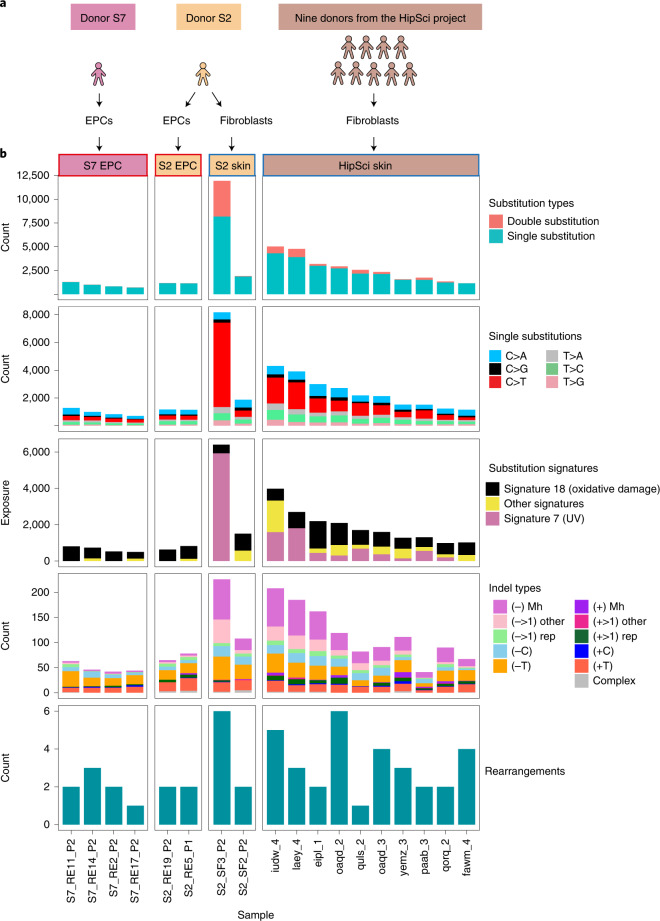
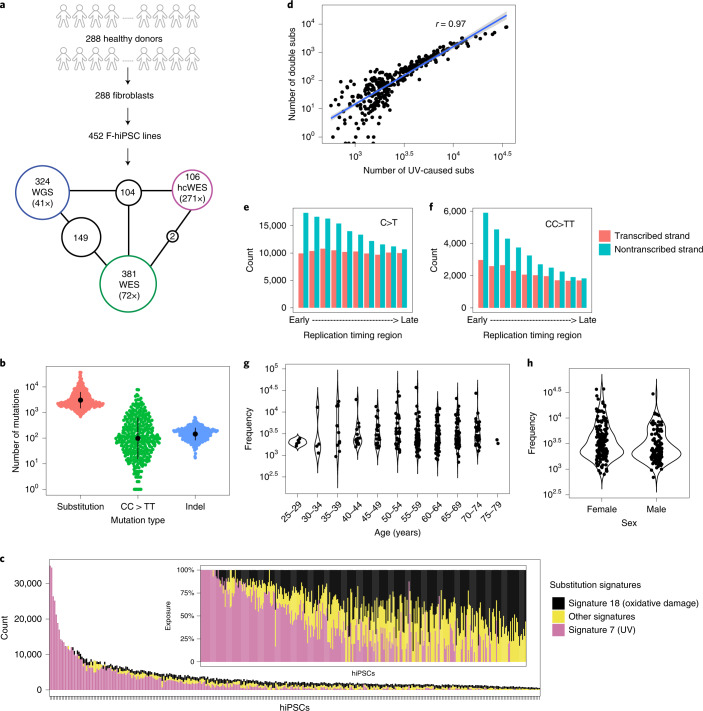
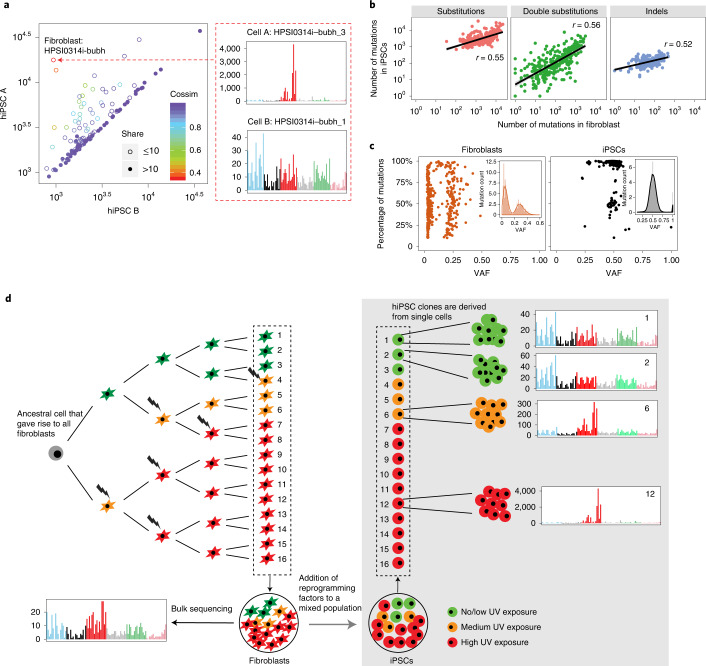
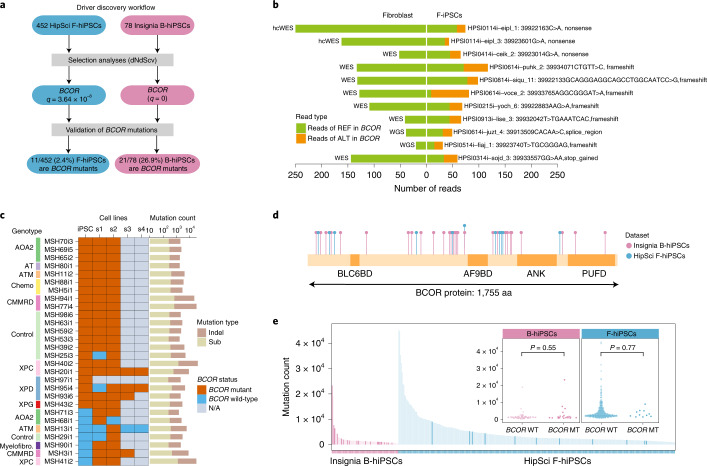
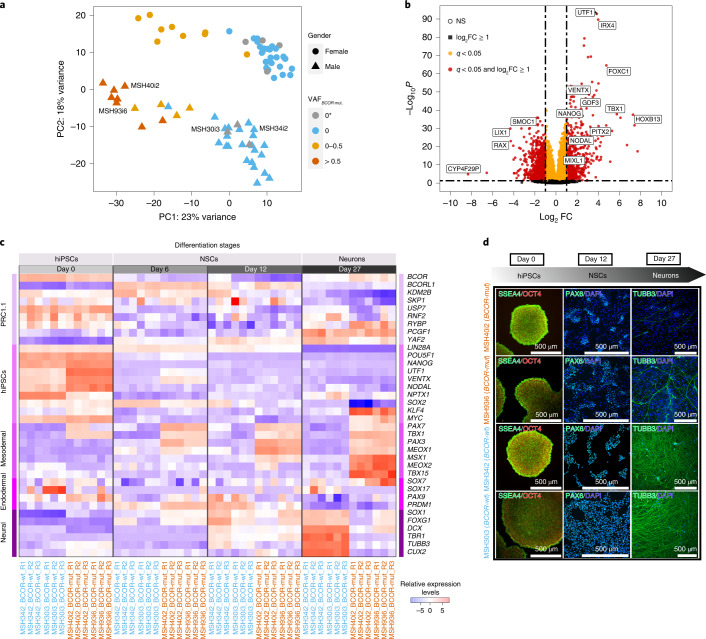
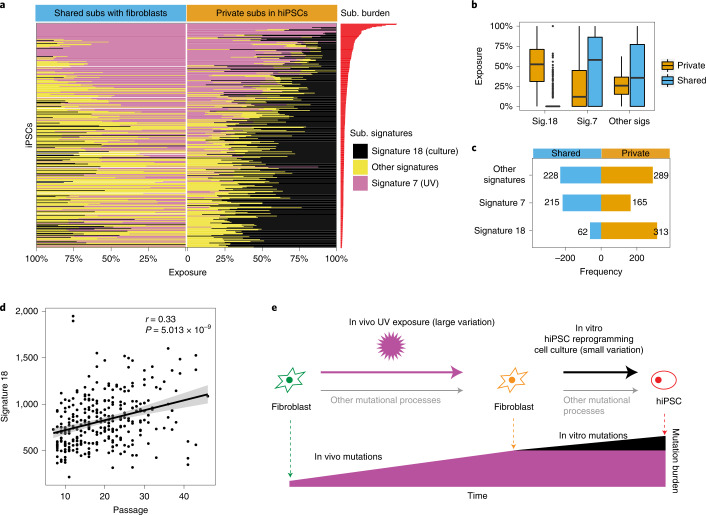
We explored human induced pluripotent stem cells (hiPSCs) derived from different tissues to gain insights into genomic integrity at single-nucleotide resolution. We used genome sequencing data from two large hiPSC repositories involving 696 hiPSCs and daughter subclones. We find ultraviolet light (UV)-related damage in ~72% of skin fibroblast-derived hiPSCs (F-hiPSCs), occasionally resulting in substantial mutagenesis (up to 15 mutations per megabase). We demonstrate remarkable genomic heterogeneity between independent F-hiPSC clones derived during the same round of reprogramming due to oligoclonal fibroblast populations. In contrast, blood-derived hiPSCs (B-hiPSCs) had fewer mutations and no UV damage but a high prevalence of acquired BCOR mutations (26.9% of lines). We reveal strong selection pressure for BCOR mutations in F-hiPSCs and B-hiPSCs and provide evidence that they arise in vitro. Directed differentiation of hiPSCs and RNA sequencing showed that BCOR mutations have functional consequences. Our work strongly suggests that detailed nucleotide-resolution characterization is essential before using hiPSCs.
Overview
The claims and statistics of this paper haven’t been checked yet.
Free: it reads the open-access text and checks the first 5 claims that cite a source we can check. Create a free account to check every claim.
Integrity signals
Registry
Cites
Statistics
Figures
Verification
Claims the paper makes
The claims and statistics of this paper haven’t been checked yet.
Free: it reads the open-access text and checks the first 5 claims that cite a source we can check. Create a free account to check every claim.
Claims other papers make about this one
Each is checked against this paper’s own text: does it say what the citing paper says it does?
The source backs part of the claim, not all of it — or backs it for a different population, condition or comparison.
In the citing paper
“They showed that about 72% of iPSCs had genomic heterogeneity due to UV-related damage, confirming that iPSCs derived from skin fibroblast cells harbor more pre-existing genetic mutations compared to blood-derived iPSCs.”
From Overcoming the Variability of iPSCs in the Manufacturing of Cell-Based Therapies (2023) · cites this paper as [16]
Experimental — accuracy not yet measuredThe cited source says what the claim attributes to it.
In the citing paper
“Skin fibroblasts are more prone to acquire additional DNA damage compared to blood cells as a result of the continuous exposure of skin to environmental stress, such as UV irradiation.”
From Overcoming the Variability of iPSCs in the Manufacturing of Cell-Based Therapies (2023) · cites this paper as [16]
The cited source says what the claim attributes to it.
In the citing paper
“confirming that iPSCs derived from skin fibroblast cells harbor more pre-existing genetic mutations compared to blood-derived iPSCs.”
From Overcoming the Variability of iPSCs in the Manufacturing of Cell-Based Therapies (2023) · cites this paper as [16]
The cited source says what the claim attributes to it.
In the citing paper
“Substantial genomic variation has also been observed specifically in hiPSCs,167 particularly for BCOR mutations that are involved in many cancers.168”
From Developments in stem cell-derived islet replacement therapy for treating type 1 diabetes (2023) · cites this paper as [167]
Self-check
Percentages, sums and reported differences re-computed from the paper’s own numbers.
The self-check needs the paper’s full text.
Citations
Cites
Moderated estimation of fold change and dispersion for RNA-seq data with DESeq2
Love, M. I., Huber, W., & Anders, S. (2014) · Genome Biology · doi:10.1186/s13059-014-0550-8 · Cited by 95,106
Fast and accurate short read alignment with Burrows-Wheeler transform
Li, H., & Durbin, R. (2009) · Bioinformatics · doi:10.1093/bioinformatics/btp324 · Cited by 58,607
STAR: ultrafast universal RNA-seq aligner
Dobin, A., Davis, C. A., Schlesinger, F., Drenkow, J., Zaleski, C., Jha, S., Batut, P., Chaisson, M., & Gingeras, T. R. (2013) · Bioinformatics · doi:10.1093/bioinformatics/bts635 · Cited by 51,709
The Genome Analysis Toolkit: A MapReduce framework for analyzing next-generation DNA sequencing data
McKenna, A., Hanna, M., Banks, E., Sivachenko, A., Cibulskis, K., Kernytsky, A., Garimella, K., Altshuler, D., Gabriel, S., Daly, M., et al. (2010) · Genome Research · doi:10.1101/gr.107524.110 · Cited by 27,895
featureCounts: an efficient general purpose program for assigning sequence reads to genomic features
Liao, Y., Smyth, G. K., & Shi, W. (2014) · Bioinformatics · doi:10.1093/bioinformatics/btt656 · Cited by 27,219
Takahashi, K., & Yamanaka, S. (2006) · Cell · doi:10.1016/j.cell.2006.07.024 · Cited by 26,673
An integrated encyclopedia of DNA elements in the human genome
The ENCODE Project Consortium (2012) · Nature · doi:10.1038/nature11247 · Cited by 18,072
Fast and accurate long-read alignment with Burrows-Wheeler transform.
Li, H., & Durbin, R. (2010) · Bioinformatics · doi:10.1093/bioinformatics/btp698 · Cited by 12,063
Analysis of protein-coding genetic variation in 60,706 humans
Exome Aggregation Consortium, Lek, M., Karczewski, K. J., Minikel, E. V., Samocha, K. E., Banks, E., Fennell, T., O’Donnell-Luria, A. H., Ware, J. S., Hill, A. J., et al. (2016) · Nature · doi:10.1038/nature19057 · Cited by 9,587
The Ensembl Variant Effect Predictor
McLaren, W., Gil, L., Hunt, S. E., Riat, H. S., Ritchie, G. R. S., Thormann, A., Flicek, P., & Cunningham, F. (2016) · Genome Biology · doi:10.1186/s13059-016-0974-4 · Cited by 8,099
An integrated map of genetic variation from 1,092 human genomes
The 1000 Genomes Project Consortium (2012) · Nature · doi:10.1038/nature11632 · Cited by 7,711
Genomic and Epigenomic Landscapes of Adult De Novo Acute Myeloid Leukemia
The Cancer Genome Atlas Research Network (2013) · New England Journal of Medicine · doi:10.1056/nejmoa1301689 · Cited by 5,078
COSMIC: the Catalogue Of Somatic Mutations In Cancer
Tate, J. G., Bamford, S., Jubb, H. C., Sondka, Z., Beare, D. M., Bindal, N., Boutselakis, H., Cole, C. G., Creatore, C., Dawson, E., et al. (2019) · Nucleic Acids Research · doi:10.1093/nar/gky1015 · Cited by 4,867
Age-related clonal hematopoiesis associated with adverse outcomes
Jaiswal, S., Fontanillas, P., Flannick, J., Manning, A., Grauman, P. V., Mar, B. G., Lindsley, R. C., Mermel, C. H., Burtt, N., Chavez, A., et al. (2014) · New England Journal of Medicine · doi:10.1056/nejmoa1408617 · Cited by 4,841
Clonal hematopoiesis and blood-cancer risk inferred from blood DNA sequence
Genovese, G., Kähler, A. K., Handsaker, R. E., Lindberg, J., Rose, S. A., Bakhoum, S. F., Chambert, K., Mick, E., Neale, B. M., Fromer, M., et al. (2014) · New England Journal of Medicine · doi:10.1056/nejmoa1409405 · Cited by 3,531
AACR Project GENIE: Powering Precision Medicine through an International Consortium
The AACR Project GENIE Consortium, The AACR Project GENIE Consortium, André, F., Arnedos, M., Baras, A. S., Baselga, J., Bedard, P. L., Berger, M. F., Bierkens, M., Calvo, F., et al. (2017) · Cancer Discovery · doi:10.1158/2159-8290.cd-17-0151 · Cited by 1,964
Age-related mutations associated with clonal hematopoietic expansion and malignancies
Xie, M., Lu, C., Wang, J., McLellan, M. D., Johnson, K. J., Wendl, M. C., McMichael, J. F., Schmidt, H. K., Yellapantula, V., Miller, C. A., et al. (2014) · Nature Medicine · doi:10.1038/nm.3733 · Cited by 1,874
High burden and pervasive positive selection of somatic mutations in normal human skin
Martincorena, I., Roshan, A., Gerstung, M., Ellis, P., Van Loo, P., McLaren, S., Wedge, D. C., Fullam, A., Alexandrov, L. B., Tubio, J. M., et al. (2015) · Science · doi:10.1126/science.aaa6806 · Cited by 1,770
Self-citationInduced pluripotent stem cell technology: a decade of progress.
Shi, Y., Inoue, H., Wu, J. C., & Yamanaka, S. (2017) · Nature Reviews Drug Discovery · doi:10.1038/nrd.2016.245 · Cited by 1,525
Universal Patterns of Selection in Cancer and Somatic Tissues
Martincorena, I., Raine, K. M., Gerstung, M., Dawson, K. J., Haase, K., Van Loo, P., Davies, H., Stratton, M. R., & Campbell, P. J. (2017) · Cell · doi:10.1016/j.cell.2017.09.042 · Cited by 1,523
Self-citationAutologous Induced Stem-Cell–Derived Retinal Cells for Macular Degeneration
Mandai, M., Watanabe, A., Kurimoto, Y., Hirami, Y., Morinaga, C., Daimon, T., Fujihara, M., Akimaru, H., Sakai, N., Shibata, Y., et al. (2017) · New England Journal of Medicine · doi:10.1056/nejmoa1608368 · Cited by 1,509
Shihab, H. A., Gough, J., Cooper, D. N., Stenson, P. D., Barker, G. L. A., Edwards, K. J., Day, I. N. M., & Gaunt, T. R. (2013) · Human Mutation · doi:10.1002/humu.22225 · Cited by 1,341
Somatic coding mutations in human induced pluripotent stem cells
Gore, A., Li, Z., Fung, H.-L., Young, J. E., Agarwal, S., Antosiewicz-Bourget, J., Canto, I., Giorgetti, A., Israel, M. A., Kiskinis, E., et al. (2011) · Nature · doi:10.1038/nature09805 · Cited by 1,273
Clonal hematopoiesis in human aging and disease
Jaiswal, S., & Ebert, B. L. (2019) · Science · doi:10.1126/science.aan4673 · Cited by 1,156
Somatic mutant clones colonize the human esophagus with age
Martincorena, I., Fowler, J. C., Wabik, A., Lawson, A. R. J., Abascal, F., Hall, M. W. J., Cagan, A., Murai, K., Mahbubani, K., Stratton, M. R., et al. (2018) · Science · doi:10.1126/science.aau3879 · Cited by 1,113
Self-citationRecurrent gain of chromosomes 17q and 12 in cultured human embryonic stem cells
Draper, J. S., Smith, K., Gokhale, P., Moore, H. D., Maltby, E., Johnson, J., Meisner, L., Zwaka, T. P., Thomson, J. A., & Andrews, P. W. (2004) · Nature Biotechnology · doi:10.1038/nbt922 · Cited by 1,021
Structural basis for recognition and repair of the endogenous mutagen 8-oxoguanine in DNA
Bruner, S. D., Norman, D. P. G., & Verdine, G. L. (2000) · Nature · doi:10.1038/35002510 · Cited by 972
Copy number variation and selection during reprogramming to pluripotency
Hussein, S. M., Batada, N. N., Vuoristo, S., Ching, R. W., Autio, R., Närvä, E., Ng, S., Sourour, M., Hämäläinen, R., Olsson, C., et al. (2011) · Nature · doi:10.1038/nature09871 · Cited by 954
Tissue-specific mutation accumulation in human adult stem cells during life
Blokzijl, F., de Ligt, J., Jager, M., Sasselli, V., Roerink, S., Sasaki, N., Huch, M., Boymans, S., Kuijk, E., Prins, P., et al. (2016) · Nature · doi:10.1038/nature19768 · Cited by 935
Self-citationLaurent, L. C., Ulitsky, I., Slavin, I., Tran, H., Schork, A., Morey, R., Lynch, C., Harness, J. V., Lee, S., Barrero, M. J., et al. (2011) · Cell stem cell · doi:10.1016/j.stem.2010.12.003 · Cited by 890
Identification and classification of chromosomal aberrations in human induced pluripotent stem cells
Mayshar, Y., Ben-David, U., Lavon, N., Biancotti, J.-C., Yakir, B., Clark, A. T., Plath, K., Lowry, W. E., & Benvenisty, N. (2010) · Cell stem cell · doi:10.1016/j.stem.2010.07.017 · Cited by 756
The landscape of somatic mutation in normal colorectal epithelial cells
Lee-Six, H., Olafsson, S., Ellis, P., Osborne, R. J., Sanders, M. A., Moore, L., Georgakopoulos, N., Torrente, F., Noorani, A., Goddard, M., et al. (2019) · Nature · doi:10.1038/s41586-019-1672-7 · Cited by 747
Self-citationInduced pluripotent stem cells in disease modelling and drug discovery
Rowe, R. G., & Daley, G. Q. (2019) · Nature Reviews Genetics · doi:10.1038/s41576-019-0100-z · Cited by 670
A Compendium of Mutational Signatures of Environmental Agents
Kucab, J. E., Zou, X., Morganella, S., Joel, M., Nanda, A. S., Nagy, E., Gomez, C., Degasperi, A., Harris, R., Jackson, S. P., et al. (2019) · Cell · doi:10.1016/j.cell.2019.03.001 · Cited by 660
Self-citationAdaptation to culture of human embryonic stem cells and oncogenesis in vivo
Baker, D. E. C., Harrison, N. J., Maltby, E., Smith, K., Moore, H. D., Shaw, P. J., Heath, P. R., Holden, H., & Andrews, P. W. (2007) · Nature Biotechnology · doi:10.1038/nbt1285 · Cited by 636
Common genetic variation drives molecular heterogeneity in human iPSCs
Kilpinen, H., Goncalves, A., Leha, A., Afzal, V., Alasoo, K., Ashford, S., Bala, S., Bensaddek, D., Casale, F. P., Culley, O. J., et al. (2017) · Nature · doi:10.1038/nature22403 · Cited by 586
Self-citationInitiative, T. I. S. C. (2011) · Nature Biotechnology · doi:10.1038/nbt.2051 · Cited by 577 · cited 2×
“4%), CSMD3 (9), FAT3 (8), TP53, ROS1 and LRP1B (7 each), EP300 and GRM3 (6 each), APC and PRPTD (5 each), CTNND2, DCC and MED12 (4 each), and FAT4, DNMT3A, FGFR1, FGFR4, KAT6A, MAP2K2 and ZFHX3 (3 each) (Figure 4A, Table S5).”
InfluentialCell-of-origin chromatin organization shapes the mutational landscape of cancer
Polak, P., Karlić, R., Koren, A., Thurman, R., Sandstrom, R., Lawrence, M. S., Reynolds, A., Rynes, E., Vlahoviček, K., Stamatoyannopoulos, J. A., et al. (2015) · Nature · doi:10.1038/nature14221 · Cited by 557
Tobacco smoking and somatic mutations in human bronchial epithelium
Yoshida, K., Gowers, K. H. C., Lee-Six, H., Chandrasekharan, D. P., Coorens, T., Maughan, E. F., Beal, K., Menzies, A., Millar, F. R., Anderson, E., et al. (2020) · Nature · doi:10.1038/s41586-020-1961-1 · Cited by 521
Human pluripotent stem cells recurrently acquire and expand dominant negative P53 mutations
Merkle, F. T., Ghosh, S., Kamitaki, N., Mitchell, J., Avior, Y., Mello, C., Kashin, S., Mekhoubad, S., Ilic, D., Charlton, M., et al. (2017) · Nature · doi:10.1038/nature22312 · Cited by 506
The mutational landscape of normal human endometrial epithelium
Moore, L., Leongamornlert, D., Coorens, T. H. H., Sanders, M. A., Ellis, P., Dentro, S. C., Dawson, K. J., Butler, T., Rahbari, R., Mitchell, T. J., et al. (2020) · Nature · doi:10.1038/s41586-020-2214-z · Cited by 499
BCFtools/csq: haplotype-aware variant consequences
Danecek, P., & McCarthy, S. A. (2017) · Bioinformatics · doi:10.1093/bioinformatics/btx100 · Cited by 468
Self-citationDrost, J., van Boxtel, R., Blokzijl, F., Mizutani, T., Sasaki, N., Sasselli, V., de Ligt, J., Behjati, S., Grolleman, J. E., van Wezel, T., et al. (2017) · Science · doi:10.1126/science.aao3130 · Cited by 461
Self-citationSomatic copy number mosaicism in human skin revealed by induced pluripotent stem cells
Abyzov, A., Mariani, J., Palejev, D., Zhang, Y., Haney, M. S., Tomasini, L., Ferrandino, A. F., Rosenberg Belmaker, L. A., Szekely, A., Wilson, M., et al. (2012) · Nature · doi:10.1038/nature11629 · Cited by 384
Karyotypic abnormalities in human induced pluripotent stem cells and embryonic stem cells
Taapken, S. M., Nisler, B. S., Newton, M. A., Sampsell-Barron, T. L., Leonhard, K. A., McIntire, E. M., & Montgomery, K. D. (2011) · Nature Biotechnology · doi:10.1038/nbt.1835 · Cited by 327
Degasperi, A., Amarante, T. D., Czarnecki, J., Shooter, S., Zou, X., Glodzik, D., Morganella, S., Nanda, A. S., Badja, C., Koh, G., et al. (2020) · Nature Cancer · doi:10.1038/s43018-020-0027-5 · Cited by 304
Self-citationNucleotide excision repair is impaired by binding of transcription factors to DNA
Sabarinathan, R., Mularoni, L., Deu-Pons, J., Gonzalez-Perez, A., & López-Bigas, N. (2016) · Nature · doi:10.1038/nature17661 · Cited by 300
Genetic Background Drives Transcriptional Variation in Human Induced Pluripotent Stem Cells
Rouhani, F., Kumasaka, N., de Brito, M. C., Bradley, A., Vallier, L., & Gaffney, D. (2014) · PLoS Genetics · doi:10.1371/journal.pgen.1004432 · Cited by 294
Self-citationGrossmann, V., Tiacci, E., Holmes, A. B., Kohlmann, A., Martelli, M. P., Kern, W., Spanhol-Rosseto, A., Klein, H.-U., Dugas, M., Schindela, S., et al. (2011) · Blood · doi:10.1182/blood-2011-07-365320 · Cited by 266
Quantification of subclonal selection in cancer from bulk sequencing data
Williams, M. J., Werner, B., Heide, T., Curtis, C., Barnes, C. P., Sottoriva, A., & Graham, T. A. (2018) · Nature Genetics · doi:10.1038/s41588-018-0128-6 · Cited by 261
Jones, D., Raine, K. M., Davies, H., Tarpey, P. S., Butler, A. P., Teague, J. W., Nik‐Zainal, S., & Campbell, P. J. (2016) · Current Protocols in Bioinformatics · doi:10.1002/cpbi.20 · Cited by 225
Influence of donor age on induced pluripotent stem cells
Lo Sardo, V., Ferguson, W., Erikson, G. A., Topol, E. J., Baldwin, K. K., & Torkamani, A. (2017) · Nature Biotechnology · doi:10.1038/nbt.3749 · Cited by 223
BCOR and BCORL1 mutations in myelodysplastic syndromes and related disorders
Damm, F., Chesnais, V., Nagata, Y., Yoshida, K., Scourzic, L., Okuno, Y., Itzykson, R., Sanada, M., Shiraishi, Y., Gelsi-Boyer, V., et al. (2013) · Blood · doi:10.1182/blood-2012-11-469619 · Cited by 220
Recurrent copy number variations in human induced pluripotent stem cells
Martins-Taylor, K., Nisler, B. S., Taapken, S. M., Compton, T., Crandall, L., Montgomery, K. D., Lalande, M., & Xu, R.-H. (2011) · Nature Biotechnology · doi:10.1038/nbt.1890 · Cited by 213
Differential DNA repair underlies mutation hotspots at active promoters in cancer genomes
Perera, D., Poulos, R. C., Shah, A., Beck, D., Pimanda, J. E., & Wong, J. W. H. (2016) · Nature · doi:10.1038/nature17437 · Cited by 202
Young, M. A., Larson, D. E., Sun, C.-W., George, D. R., Ding, L., Miller, C. A., Lin, L., Pawlik, K. M., Chen, K., Fan, X., et al. (2012) · Cell Stem Cell · doi:10.1016/j.stem.2012.03.002 · Cited by 197
Ji, J., Ng, S. H., Sharma, V., Neculai, D., Hussein, S., Sam, M., Trinh, Q., Church, G. M., Mcpherson, J. D., Nagy, A., et al. (2012) · STEM CELLS · doi:10.1002/stem.1011 · Cited by 193
Thieden, E., Philipsen, P. A., Heydenreich, J., & Wulf, H. C. (2004) · Archives of Dermatology · doi:10.1001/archderm.140.2.197 · Cited by 189
Increased somatic mutation burdens in normal human cells due to defective DNA polymerases
Robinson, P. S., Coorens, T. H. H., Palles, C., Mitchell, E., Abascal, F., Olafsson, S., Lee, B. C. H., Lawson, A. R. J., Lee-Six, H., Moore, L., et al. (2021) · Nature Genetics · doi:10.1038/s41588-021-00930-y · Cited by 173
Self-citationAvery, S., Hirst, A. J., Baker, D., Lim, C. Y., Alagaratnam, S., Skotheim, R. I., Lothe, R. A., Pera, M. F., Colman, A., Robson, P., et al. (2013) · Stem Cell Reports · doi:10.1016/j.stemcr.2013.10.005 · Cited by 167
Zou, X., Koh, G. C. C., Nanda, A. S., Degasperi, A., Urgo, K., Roumeliotis, T. I., Agu, C. A., Badja, C., Momen, S., Young, J., et al. (2021) · Nature Cancer · doi:10.1038/s43018-021-00200-0 · Cited by 164
Thompson, O., von Meyenn, F., Hewitt, Z., Alexander, J. J., Wood, A., Weightman, R., Gregory, S., Krueger, F., Andrews, S., Barbaric, I., et al. (2020) · Nature Communications · doi:10.1038/s41467-020-15271-3 · Cited by 152
Garitaonandia, I., Amir, H., Boscolo, F. S., Wambua, G. K., Schultheisz, H. L., Sabatini, K., Morey, R., Waltz, S., Wang, Y.-C., Tran, H., et al. (2015) · PLOS ONE · doi:10.1371/journal.pone.0118307 · Cited by 150
Detecting Genetic Mosaicism in Cultures of Human Pluripotent Stem Cells
Baker, D., Hirst, A. J., Gokhale, P. J., Juarez, M. A., Williams, S., Wheeler, M., Bean, K., Allison, T. F., Moore, H. D., Andrews, P. W., et al. (2016) · Stem Cell Reports · doi:10.1016/j.stemcr.2016.10.003 · Cited by 149
Validating the concept of mutational signatures with isogenic cell models
Zou, X., Owusu, M., Harris, R., Jackson, S. P., Loizou, J. I., & Nik-Zainal, S. (2018) · Nature Communications · doi:10.1038/s41467-018-04052-8 · Cited by 149
‘Reprogrammed’ stem cells approved to mend human hearts for the first time
Cyranoski, D. (2018) · Nature · doi:10.1038/d41586-018-05278-8 · Cited by 132
Clonal Hematopoiesis: Mechanisms Driving Dominance of Stem Cell Clones
Challen, G., & Goodell, M. A. (2020) · Blood · doi:10.1182/blood.2020006510 · Cited by 131
Whole-genome mutational burden analysis of three pluripotency induction methods
Bhutani, K., Nazor, K. L., Williams, R., Tran, H., Dai, H., Džakula, Ž., Cho, E. H., Pang, A. W. C., Rao, M., Cao, H., et al. (2016) · Nature Communications · doi:10.1038/ncomms10536 · Cited by 129
Assou, S., Girault, N., Plinet, M., Bouckenheimer, J., Sansac, C., Combe, M., Mianné, J., Bourguignon, C., Fieldes, M., Ahmed, E., et al. (2020) · Stem Cell Reports · doi:10.1016/j.stemcr.2019.12.004 · Cited by 129
The landscape of somatic mutation in normal colorectal epithelial cells
Lee-Six, H., Ellis, P., Osborne, R. J., Sanders, M. A., Moore, L., Georgakopoulos, N., Torrente, F., Noorani, A., Goddard, M., Robinson, P., et al. (2018) · bioRxiv (Cold Spring Harbor Laboratory) · doi:10.1101/416800 · Cited by 128
The mutational impact of culturing human pluripotent and adult stem cells
Kuijk, E., Jager, M., van der Roest, B., Locati, M. D., Van Hoeck, A., Korzelius, J., Janssen, R., Besselink, N., Boymans, S., van Boxtel, R., et al. (2020) · Nature Communications · doi:10.1038/s41467-020-16323-4 · Cited by 124
Nguyen, H. T., Geens, M., Mertzanidou, A., Jacobs, K., Heirman, C., Breckpot, K., & Spits, C. (2014) · MHR: Basic science of reproductive medicine · doi:10.1093/molehr/gat077 · Cited by 117
Mutational History of a Human Cell Lineage from Somatic to Induced Pluripotent Stem Cells
Rouhani, F. J., Nik-Zainal, S., Wuster, A., Li, Y., Conte, N., Koike-Yusa, H., Kumasaka, N., Vallier, L., Yusa, K., & Bradley, A. (2016) · PLOS Genetics · doi:10.1371/journal.pgen.1005932 · Cited by 112
The mutational landscape of normal human endometrial epitheliumPreprint
Moore, L., Leongamornlert, D. A., Coorens, T. H. H., et al. (2018) · bioRxiv (Cold Spring Harbor Laboratory) · doi:10.1101/505685 · Cited by 107
A Non-canonical BCOR-PRC1.1 Complex Represses Differentiation Programs in Human ESCs
Wang, Z., Gearhart, M. D., Lee, Y.-W., Kumar, I., Ramazanov, B., Zhang, Y., Hernandez, C., Lu, A. Y., Neuenkirchen, N., Deng, J., et al. (2018) · Cell Stem Cell · doi:10.1016/j.stem.2017.12.002 · Cited by 103
The Impact of Environmental and Endogenous Damage on Somatic Mutation Load in Human Skin Fibroblasts
Saini, N., Roberts, S. A., Klimczak, L. J., Chan, K., Grimm, S. A., Dai, S., Fargo, D. C., Boyer, J. C., Kaufmann, W. K., Taylor, J. A., et al. (2016) · PLOS Genetics · doi:10.1371/journal.pgen.1006385 · Cited by 94
D’Antonio, M., Benaglio, P., Jakubosky, D., Greenwald, W. W., Matsui, H., Donovan, M. K. R., Li, H., Smith, E. N., D’Antonio-Chronowska, A., & Frazer, K. A. (2018) · Cell Reports · doi:10.1016/j.celrep.2018.06.091 · Cited by 88 · cited 2×
“4%), CSMD3 (9), FAT3 (8), TP53, ROS1 and LRP1B (7 each), EP300 and GRM3 (6 each), APC and PRPTD (5 each), CTNND2, DCC and MED12 (4 each), and FAT4, DNMT3A, FGFR1, FGFR4, KAT6A, MAP2K2 and ZFHX3 (3 each) (Figure 4A, Table S5).”
InfluentialCardelino: computational integration of somatic clonal substructure and single-cell transcriptomes
McCarthy, D. J., Rostom, R., Huang, Y., Kunz, D. J., Danecek, P., Bonder, M. J., Hagai, T., Lyu, R., Wang, W., Gaffney, D. J., et al. (2020) · Nature Methods · doi:10.1038/s41592-020-0766-3 · Cited by 82
Kwon, E. M., Connelly, J. P., Hansen, N. F., Donovan, F. X., Winkler, T., Davis, B. W., Alkadi, H., Chandrasekharappa, S. C., Dunbar, C. E., Mullikin, J. C., et al. (2017) · Proceedings of the National Academy of Sciences · doi:10.1073/pnas.1616035114 · Cited by 76
Agu, C. A., Soares, F. A. C., Alderton, A., Patel, M., Ansari, R., Patel, S., Forrest, S., Yang, F., Lineham, J., Vallier, L., et al. (2015) · Stem Cell Reports · doi:10.1016/j.stemcr.2015.08.012 · Cited by 63
Bond, J., Touzart, A., Leprêtre, S., Graux, C., Bargetzi, M., Lhermitte, L., Hypolite, G., Leguay, T., Hicheri, Y., Guillerm, G., et al. (2019) · Haematologica · doi:10.3324/haematol.2018.197848 · Cited by 60
Hotspots of De Novo Point Mutations in Induced Pluripotent Stem Cells
Yoshihara, M., Araki, R., Kasama, Y., Sunayama, M., Abe, M., Nishida, K., Kawaji, H., Hayashizaki, Y., & Murakawa, Y. (2017) · Cell Reports · doi:10.1016/j.celrep.2017.09.060 · Cited by 48
Efficient and Cost-Effective Generation of Mature Neurons From Human Induced Pluripotent Stem Cells
Badja, C., Maleeva, G., El-Yazidi, C., Barruet, E., Lasserre, M., Tropel, P., Binétruy, B., Bregestovski, P. D., & Magdinier, F. (2014) · Stem Cells Translational Medicine · doi:10.5966/sctm.2014-0024 · Cited by 40
Quantification of subclonal selection in cancer from bulk sequencing data
Williams, M. J., Werner, B., Curtis, C., Barnes, C. P., Sottoriva, A., & Graham, T. A. (2016) · bioRxiv (Cold Spring Harbor Laboratory) · doi:10.1101/096305 · Cited by 36
Mutational impact of culturing human pluripotent and adult stem cellsPreprint
Kuijk, E., Jager, M., der Roest, B. R. V., et al. (2018) · bioRxiv (Cold Spring Harbor Laboratory) · doi:10.1101/430165 · Cited by 11
Hölzl‐Armstrong, L., Kucab, J. E., Korenjak, M., Luijten, M., Phillips, D. H., Zavadil, J., & Arlt, V. M. (2019) · Methods and Protocols · doi:10.3390/mps2040085 · Cited by 10
Assou, S., Girault, N., Plinet, M., et al. (2019) · bioRxiv (Cold Spring Harbor Laboratory) · doi:10.1101/658484 · Cited by 9
Nik-Zainal, S. (2022) · Data Archiving and Networked Services (DANS) · doi:10.17632/6rfc2xrnyd · Cited by 1
Cited by
Induced pluripotent stem cells (iPSCs): molecular mechanisms of induction and applications
Cerneckis, J., Cai, H., & Shi, Y. (2024) · Signal Transduction and Targeted Therapy · doi:10.1038/s41392-024-01809-0 · Cited by 452
“109 Age-related heteroplasmic variants of mitochondria can also in fl uence the mitochondrial genetic makeup of iPSCs derived from different donors.”
BackgroundA reference human induced pluripotent stem cell line for large-scale collaborative studies
Pantazis, C. B., Yang, A., Lara, E., McDonough, J. A., Blauwendraat, C., Peng, L., Oguro, H., Kanaujiya, J., Zou, J., Sebesta, D., et al. (2022) · Cell Stem Cell · doi:10.1016/j.stem.2022.11.004 · Cited by 310
Mutational signatures: emerging concepts, caveats and clinical applications
Koh, G., Degasperi, A., Zou, X., Momen, S., & Nik-Zainal, S. (2021) · Nature Reviews Cancer · doi:10.1038/s41568-021-00377-7 · Cited by 287
Developments in stem cell-derived islet replacement therapy for treating type 1 diabetes
Hogrebe, N. J., Ishahak, M., & Millman, J. R. (2023) · Cell Stem Cell · doi:10.1016/j.stem.2023.04.002 · Cited by 210
Yoshida, S., Kato, T. M., Sato, Y., Umekage, M., Ichisaka, T., Tsukahara, M., Takasu, N., & Yamanaka, S. (2023) · Med · doi:10.1016/j.medj.2022.10.003 · Cited by 134
Metadata
- Authors
- Rouhani, F. J., Zou, X., Danecek, P., Badja, C., Amarante, T. D., Koh, G., Wu, Q., Memari, Y., Durbin, R., Martincorena, I., Bassett, A. R., Gaffney, D., & Nik-Zainal, S.
- Affiliations
- University of Cambridge (GB)
- Wellcome Sanger Institute (GB)
- ORCID
- Venue
- Nature Genetics
- Published
- 2022-08-11
- Volume
- 54
- Issue
- 9
- Pages
- 1406-1416
- ISSN
- 1061-4036 (ISSN-L)
- 1546-1718
- PMC
- PMC9470532
- OpenAlex
- W4292870483
- Cited by
- 105
- References
- 87
- Citations by year
- 2026: 24 · 2025: 21 · 2024: 27 · 2023: 23 · 2022: 9
- FWCI
- 6.53
- Type
- journal article
- Language
- en
- Open access
- hybrid
- doi.org
- Licence
- cc-by
- creativecommons.org/licenses/by/4.0 (tdm)
- creativecommons.org/licenses/by/4.0 (vor)
- Locations
- Nature Genetics (publishedVersion, cc-by)
- bioRxiv (Cold Spring Harbor Laboratory) (acceptedVersion, cc-by-nc-nd)
- PubMed Central (publishedVersion, cc-by)
- PubMed (publishedVersion)
- Research Portal (King's College London) (submittedVersion)
- Apollo (University of Cambridge) (submittedVersion)
- Apollo (University of Cambridge) (submittedVersion, cc-by)
- Apollo
- Funders
- Cancer Research UK (C60100/A23916)
- Wellcome Trust (WT100183)
- DH | National Institute for Health Research (MR/R015724/1)
- Dr Josef Steiner Cancer Research Award 2019, Medical Research Council (MRC) Grant-in-Aid to the MRC Cancer unit, CRUK Pioneer Award
- Topics
- Life Sciences › Biochemistry, Genetics and Molecular Biology › Molecular Biology › Pluripotent Stem Cells Research
- Life Sciences › Biochemistry, Genetics and Molecular Biology › Molecular Biology › CRISPR and Genetic Engineering
- Life Sciences › Biochemistry, Genetics and Molecular Biology › Cancer Research › Cancer Genomics and Diagnostics
- Keywords
- human induced pluripotent stem cells, BCOR mutation, fibroblast-derived iPSCs, clonal heterogeneity, somatic selection, genome stability, reprogramming
- MeSH terms
- Cell Differentiation, Humans, Mutation, Nucleotides, Proto-Oncogene Proteins, Repressor Proteins, Genomics, Induced Pluripotent Stem Cells
About these checks
Registry, retraction, Cites and statistics results are computed, not judged, with one exception: a printed reference that no index lists is read once by a model before it counts as a citation error. Claims are extracted by a model and kept only when their quote appears verbatim in the text; each cited source is then checked, with a model’s help, for whether it says what the claim relies on. Those verdicts can be wrong — read the claim’s quote and the cited source before relying on one.
Statistics and arithmetic are recomputed, not judged.
Confidence bands are shown only for fields calibrated on our annotated test set. None is calibrated yet, so no band is shown.
What counts as a claim ›How we measure confidence ›How we check this ›
Are you an author, or do you see a problem with this page? Request a review
Data sources
Bibliographic data: Semantic Scholar, OpenAlex, Crossref.
Contains information from the Semantic Scholar Academic Graph Datasets, made available under the ODC Attribution License (ODC-BY 1.0).
Semantic Scholar’s data is described in: Kinney, R., et al. (2023). The Semantic Scholar Open Data Platform. arXiv:2301.10140.
