

APOE-stratified genome-wide association analyses provide insights into the genetic etiology of Alzheimers’s disease
Open accessThe DOI matches its Crossref record; 50 of the 50 references it cites were found in a registry or an index; 1 of the 38 sources its claims cite were checked for support.
Abstract
Among the more than 90 identified genetic risk loci for late-onset Alzheimer's disease (AD) and related dementias, the apolipoprotein E (APOE) gene ɛ2/ɛ3/ɛ4 polymorphisms remain the longstanding benchmark for genetic disease risk with a consistently large effect across studies1-10. Despite this massive signal, the exact mechanisms by which ɛ4 increases and ɛ2 decreases dementia risk remain poorly understood. Notably, recent trials of anti-amyloid therapies suggest less efficacy and higher risks of severe side effects in ε4 carriers11-13, hampering the treatment of those with the highest unmet need. To improve our understanding of the genetic architecture of AD in the context of its main genetic driver, we performed genome-wide association studies (GWASs) stratified by ε4 and ε2 carrier status. HP1BP3, SLC50A1, PTPRC, NPAS3, DDHD1, CHST9, SMYD2, PRAMEF1 and GFRA1 emerged as new genomic signals for AD risk, appearing only when stratified by APOE carrier status. DDHD1 appeared especially promising, showing protective effects in ε4 carriers, being identified as an expression quantitative trait locus and being involved in rare neuronal diseases. Such APOE-stratified insights may help understand and overcome side effects, inform clinical trial enrollment strategies, and create the scientific basis for targeted, mechanism-driven therapies in neurodegenerative diseases.
Overview
CoChat Summary
TL;DR
APOE-stratified GWAS meta-analyses in late-onset Alzheimer’s disease identified new risk signals that appear only within APOE ε2/ε3/ε4 carrier strata, including DDHD1, which showed protective effects in ε4 carriers. The findings suggest APOE-dependent genetic architecture and support considering APOE stratification in future AD trials.
Key findings
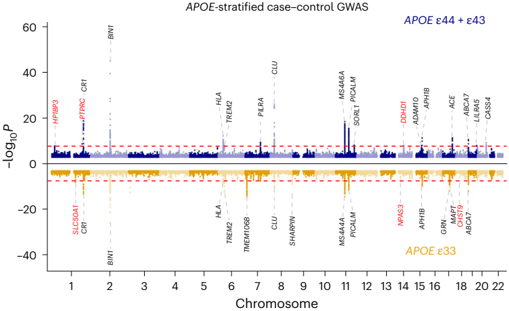
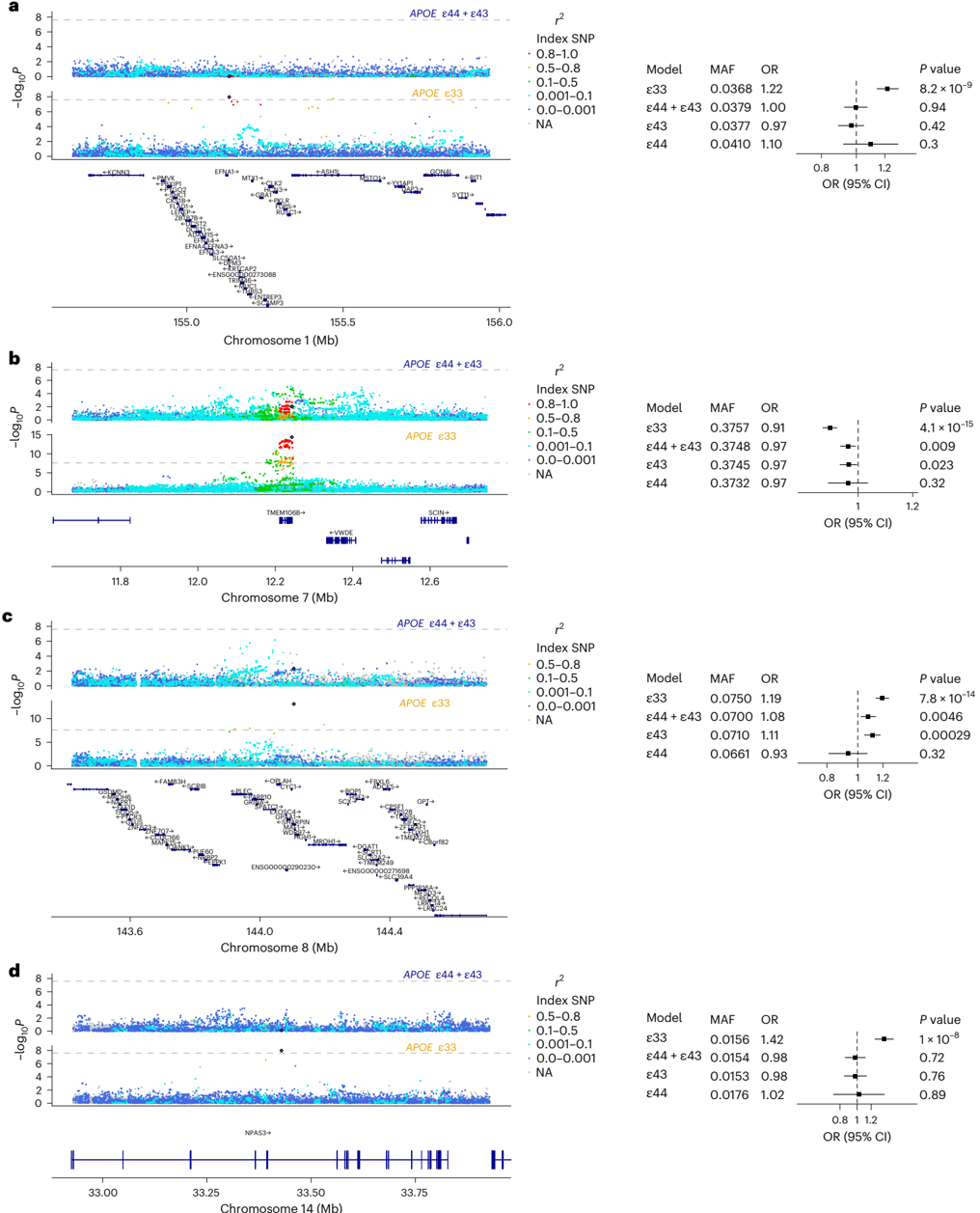
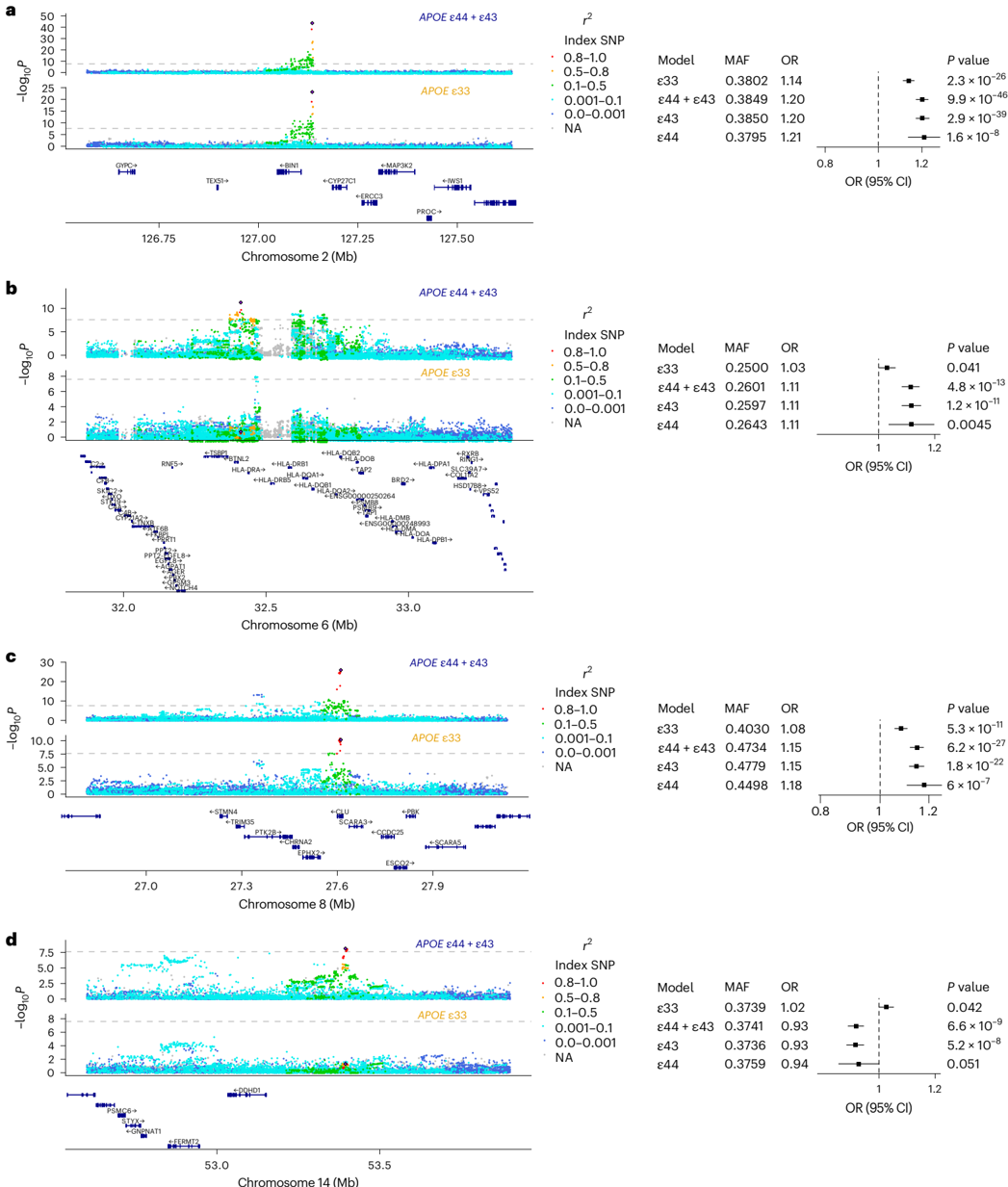
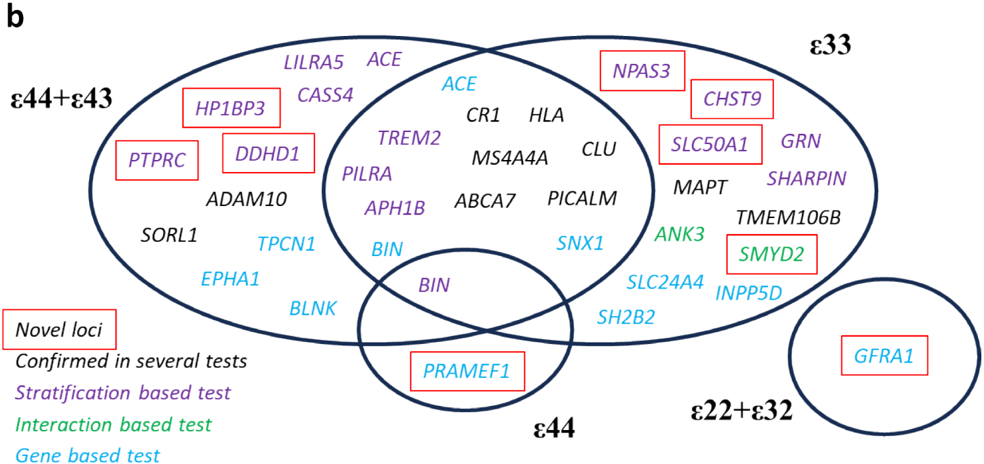
- Across strata, 25 loci reached genome-wide significance (P < 2.5 × 10⁻⁸) in the ε33 or ε44 + ε43 strata or both. Nine known AD loci were found in both strata (CR1, BIN1, HLA, TREM2, CLU, MS4A6A, PICALM, APH1B, ABCA7); nine were exclusive to ε44 + ε43, including six known loci (PILRA, SORL1, ADAM10, ACE, LILRA5, CASS4) and three new loci (HP1BP3, PTPRC, DDHD1); seven were only in ε33, including four known loci (TMEM106B, SHARPIN, GRN, MAPT) and three new loci (SLC50A1, NPAS3, CHST9).
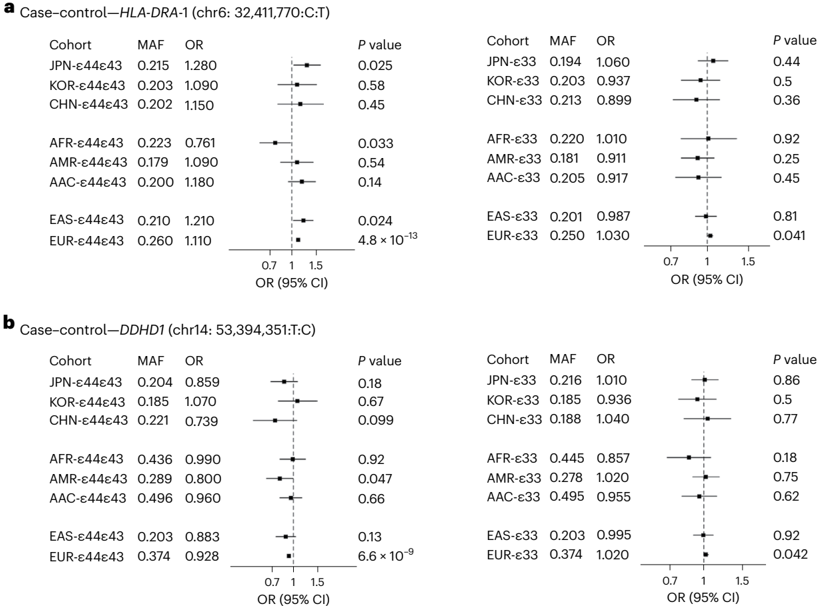
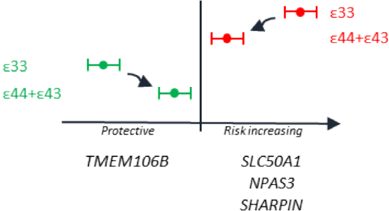
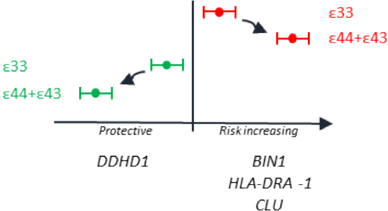
- Interaction testing found seven significant stratified effect differences: attenuated ε4 effects for SLC50A1, TMEM106B and NPAS3, and augmented ε4 effects for BIN1, HLA-DRA-1, CLU and DDHD1; an additive mixed-effect model additionally identified SHARPIN as interacting with APOE ε4.
- The ε22 + ε32 stratum had no genome-wide significant signal; the ε44-only stratum showed only BIN1. The ε33 meta-analysis included 24,033 AD cases, 363,161 controls and 17,127,662 variants; ε44 + ε43 included 29,122 AD cases, 164,206 controls and 14,672,059 variants; ε22 + ε32 included 2,606 AD cases, 70,388 controls and 10,336,311 variants; ε44-only included 5,814 AD cases, 14,415 controls and 9,723,486 variants.
- DDHD1 lead variant rs10131116 was an eQTL associated with decreased DDHD1 expression in ROSMAP dorsolateral prefrontal cortex (β = −0.098; P = 1.67 × 10⁻⁵; n = 560) and GTEx brain putamen (β = −0.23; P = 3.6 × 10⁻⁵; n = 253). Pathway analysis found 12 and 33 significant pathways (q < 0.05) in ε33 and ε44 + ε43, respectively, with complement/immune pathways over-represented in ε44 + ε43; SMR identified STAG3 in ε44 + ε43 and LRRC37A, ARL17B and LRRC37A2 in ε33.
Methods
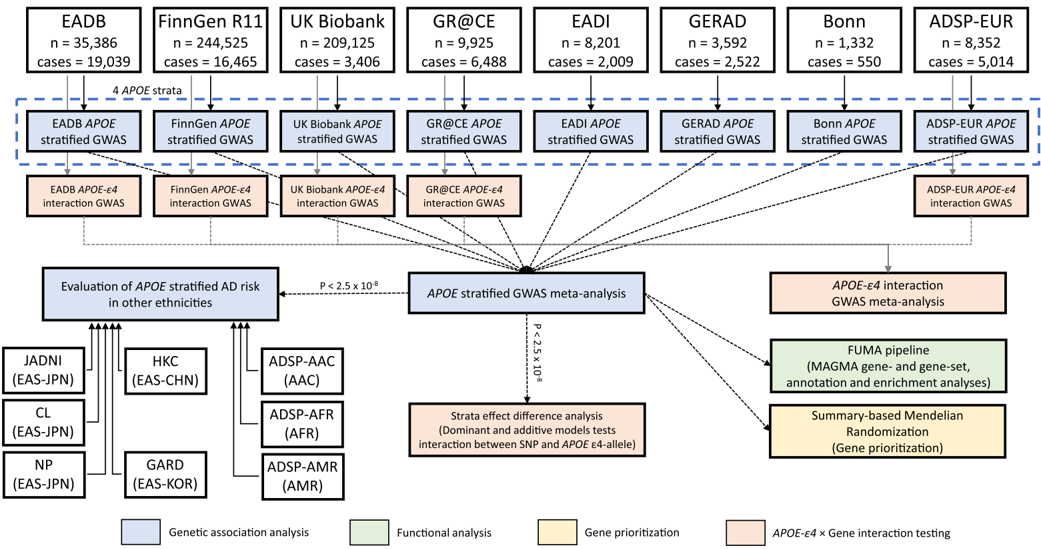
- The study performed APOE-stratified GWAS meta-analyses of clinically diagnosed AD, grouping individuals into ε22 + ε32, ε33 and ε44 + ε43 strata and excluding ε42. European ancestry consortia/biobanks included EADB, FinnGen, European Alzheimer’s Disease Initiative, Bonn, Gr@CE, GERAD, ADSP and UK Biobank; multi-ancestry evaluation used East Asian, Asian American, African American and admixed American cohorts. APOE genotype was determined from imputed rs7412 and rs429358.
- Association testing used logistic regression or mixed models with an additive genetic model, adjusted for sex, age, genetic principal components and genotyping centers/batches where necessary, implemented in SNPTEST, PLINK2 and REGENIE. Results were combined by fixed-effect inverse-variance-weighted meta-analysis in METAL; genome-wide significance was set at P < 2.5 × 10⁻⁸.
- Follow-up analyses included clumping and conditional testing, stratified effect comparison tests (dominant and additive models), a genome-wide SNP × APOE ε4 carrier interaction GWAS in the five largest cohorts (EADB TOPMed, FinnGen, UKB, Gr@CE and ADSP), FUMA/MAGMA pathway analysis, APOE-stratified cis-eQTL analysis in ROSMAP, and SMR using MetaBrain cis-eQTL data.
Limitations
- The paper states that the meta-analyses do not fully determine whether there is a significant difference between signals in the ε33 and ε44 + ε43 strata because of sample and statistical power variations.
- The paper states that multi-ancestry evaluation was limited by differences in linkage structure across cohorts, limited statistical power, and lead variants differing from causal variants.
- Evident from the text: the ε22 + ε32 stratum produced no genome-wide significant signal; the ε44-only stratum yielded only BIN1; ε42 individuals were excluded; pathway analysis reached significance only for ε33 and ε44 + ε43, not for ε22 + ε32 or ε43; and in the interaction GWAS, only the APOE locus was significant in the interaction term, with DDHD1 reaching an interaction P value of 1.62 × 10⁻⁶.
Model-written summary. Check it against the paper before relying on it.
Integrity signals
Registry
Cites
Statistics
Figures
Verification
Claims the paper makes
1 Valid · 0 Not valid · 21 Not checked · 59 Own results and interpretations
Every source the paper cites for this claim was checked and supports it.
In the paper
“suggesting that the effect of MAPT is attenuated in an ε4 context, in agreement with a previous report33”
§ APOE-stratified genome-wide association analyses provide insights into the genetic etiology of Alzheimers’s disease > Main
What the sources say
- Supportedcites [33] Jun, G. et al. A novel Alzheimer disease locus located near the gene encoding tau protein. Mol. Psychiatry 21, 108–117 (2016). PMC4573764 25778476 source
The Results state that the 17q21.31/MAPT-region SNPs reached genome-wide significance only among APOE ε4− subjects (minor alleles reducing AD risk 20–37%), with only one SNP nominally significant in ε4+ subjects and smaller effect estimates there (RESULTS, p. n/a). The Discussion explicitly entertains that associations at this locus 'are obscured by the much stronger effect of APOE ε4 on MAPT expression or function,' and the Abstract opens with 'APOE ε4 … may mask effects of other loci.' The citing sentence is hedged ('suggesting'), matching the paper's own caution that no formal SNP×APOE interaction was detected and that replication is needed; the paper localises the causal signal between KANSL1 and LRRC37A near rather than inside MAPT, a wording nuance rather than a substantive mismatch. (LLM, conf=0.82)
hedgedstates a cause- Asserted: passes — The authors put it forward as true.
- Checkable: passes — It can be checked against evidence.
- Load-bearing: unclear — It is unclear whether the paper’s conclusions depend on it.
- Based: passes — The paper gives a reason why it holds.
- Supported
A result the paper reports from its own data — it cites no other source for it, so there is none to check. The quote shows it is in the paper.
In the paper
“we confirmed CLU as one of the strongest genomic signals for AD”
§ APOE-stratified genome-wide association analyses provide insights into the genetic etiology of Alzheimers’s disease > Main
boostedstates an association- Asserted: passes — The authors put it forward as true.
- Checkable: passes — It can be checked against evidence.
- Load-bearing: passes — The paper’s conclusions depend on it.
- Based: passes — The paper gives a reason why it holds.
A result the paper reports from its own data — it cites no other source for it, so there is none to check. The quote shows it is in the paper.
In the paper
“In the genome-wide SNP × APOE ε4 carrier interaction GWAS, two new loci (SMYD2 and ANK3) reached genome-wide significance in the SNP term (comparable to APOE ε33 strata; Supplementary Fig. 56 and Supplementary Table 9).”
§ APOE-stratified genome-wide association analyses provide insights into the genetic etiology of Alzheimers’s disease > Main
plainstates an association- Asserted: passes — The authors put it forward as true.
- Checkable: passes — It can be checked against evidence.
- Load-bearing: passes — The paper’s conclusions depend on it.
- Based: passes — The paper gives a reason why it holds.
A result the paper reports from its own data — it cites no other source for it, so there is none to check. The quote shows it is in the paper.
In the paper
“Also, in the ε44 + ε43 stratum, the known AD genes EPHA1, TCPN1 and BLNK reached significance, and, in the ε33 stratum, the known AD genes SLC24A4, INPP5D and SH2B2 (new but close to the known locus SPDYE3/PILRA/TMEM225B) reached significance.”
§ APOE-stratified genome-wide association analyses provide insights into the genetic etiology of Alzheimers’s disease > Main
plainstates an association- Asserted: passes — The authors put it forward as true.
- Checkable: passes — It can be checked against evidence.
- Load-bearing: unclear — It is unclear whether the paper’s conclusions depend on it.
- Based: passes — The paper gives a reason why it holds.
A result the paper reports from its own data — it cites no other source for it, so there is none to check. The quote shows it is in the paper.
In the paper
“Furthermore, a gene-based analysis confirmed several of the significant loci from the main stratified GWAS analysis (Extended Data Fig. 2).”
§ APOE-stratified genome-wide association analyses provide insights into the genetic etiology of Alzheimers’s disease > Main
plainstates an association- Asserted: passes — The authors put it forward as true.
- Checkable: passes — It can be checked against evidence.
- Load-bearing: unclear — It is unclear whether the paper’s conclusions depend on it.
- Based: passes — The paper gives a reason why it holds.
33 more claims
Create a free account to see all 81 claims and to verify the 36 references still open.
- It may state two separate claims as one. 26
- Probably not a substantial claim. 27
Self-check
Percentages, sums and reported differences re-computed from the paper’s own numbers.
Each contradiction between two passages listed here was confirmed by an independent check.
Rated minor: it would not touch a result — a value no result rests on, a p-value that stays on the same side of the significance level, or a conflict that is clerical, resolved elsewhere in the paper, or outside its own findings.
In the paper
§ APOE-stratified genome-wide association analyses provide insights into the genetic etiology of Alzheimers’s disease > Main
“We evaluated the 29 regions of interest in additional cohorts of East Asian (EAS) ancestry”
§ APOE-stratified genome-wide association analyses provide insights into the genetic etiology of Alzheimers’s disease > Methods > Populations
“In addition, we evaluated 33 regions of interest in cohorts of East Asian (EAS) ancestry”
Rated minor: it would not touch a result — a value no result rests on, a p-value that stays on the same side of the significance level, or a conflict that is clerical, resolved elsewhere in the paper, or outside its own findings.
In the paper
§ APOE-stratified genome-wide association analyses provide insights into the genetic etiology of Alzheimers’s disease > Main
“Overall, pathways related to the complement and immune systems were over-represented in the APOE ε44 + ε44 stratum compared to the ε33 stratum, whereas amyloid and neurofibrillary tangle biology was highlighted in both strata.”
§ APOE-stratified genome-wide association analyses provide insights into the genetic etiology of Alzheimers’s disease > Main
“After correction for multiple testing in each stratum (q < 0.05), 12 and 33 pathways reached statistical significance for the APOE ε33 and ε44 + ε43 strata, respectively.”
Citations
Cites
Second-generation PLINK: rising to the challenge of larger and richer datasets
Chang, C. C., Chow, C. C., Tellier, L. C., Vattikuti, S., Purcell, S. M., & Lee, J. J. (2015) · Gigascience · doi:10.1186/s13742-015-0047-8 · Cited by 12,709
Corder, E. H., Saunders, A. M., Strittmatter, W. J., Schmechel, D. E., Gaskell, P. C., Small, G. W., Roses, A. D., Haines, J. L., & Pericak-Vance, M. A. (1993) · Science · doi:10.1126/science.8346443 · Cited by 9,429
The Ensembl Variant Effect Predictor
McLaren, W., Gil, L., Hunt, S. E., Riat, H. S., Ritchie, G. R. S., Thormann, A., Flicek, P., & Cunningham, F. (2016) · Genome Biology · doi:10.1186/s13059-016-0974-4 · Cited by 8,099
Lecanemab in early Alzheimer's disease
van Dyck, C. H., Swanson, C. J., Aisen, P., Bateman, R. J., Chen, C., Gee, M., Kanekiyo, M., Li, D., Reyderman, L., Cohen, S., et al. (2023) · New England Journal of Medicine · doi:10.1056/nejmoa2212948 · Cited by 5,678
The GTEx Consortium atlas of genetic regulatory effects across human tissues
The GTEx Consortium, Aguet, F., Anand, S., Ardlie, K. G., Gabriel, S., Getz, G. A., Graubert, A., Hadley, K., Handsaker, R. E., Huang, K. H., et al. (2020) · Science · doi:10.1126/science.aaz1776 · Cited by 5,547
Meta-Analysis of 74,046 Individuals Identifies 11 New Susceptibility Loci for Alzheimer’s Disease
(EADI), E. A. D. I., Lambert, J.-C., (GERAD), G. A. E. R. I. A. D., Alzheimer's Disease Genetic Consortium (ADGC), (CHARGE), C. F. H. A. A. R. I. G. E., Ibrahim-Verbaas, C. A., Harold, D., Naj, A. C., Sims, R., Bellenguez, C., et al. (2013) · Nature Genetics · doi:10.1038/ng.2802 · Cited by 4,336
Self-citationFunctional mapping and annotation of genetic associations with FUMA
Watanabe, K., Taskesen, E., van Bochoven, A., & Posthuma, D. (2017) · Nature Communications · doi:10.1038/s41467-017-01261-5 · Cited by 4,083
MAGMA: Generalized Gene-Set Analysis of GWAS Data
de Leeuw, C. A., Mooij, J. M., Heskes, T., & Posthuma, D. (2015) · PLOS Computational Biology · doi:10.1371/journal.pcbi.1004219 · Cited by 3,653
Integration of summary data from GWAS and eQTL studies predicts complex trait gene targets
Zhu, Z., Zhang, F., Hu, H., Bakshi, A., Robinson, M. R., Powell, J. E., Montgomery, G. W., Goddard, M. E., Wray, N. R., Visscher, P. M., et al. (2016) · Nature Genetics · doi:10.1038/ng.3538 · Cited by 3,352
Alzheimer Disease Genetics Consortium (ADGC), Kunkle, B. W., The European Alzheimer’s Disease Initiative (EADI), Cohorts for Heart and Aging Research in Genomic Epidemiology Consortium (CHARGE), Genetic and Environmental Risk in AD/Defining Genetic, P. A. E. R. F. A. D. C. (., Grenier-Boley, B., Sims, R., Bis, J. C., Damotte, V., Naj, A. C., et al. (2019) · Nature Genetics · doi:10.1038/s41588-019-0358-2 · Cited by 2,946
Self-citation
Cited by
Yang, R., Li, Y., Zhao, X., Wang, L., Wu, J., & Sima, J. (2025) · bioRxiv (Cold Spring Harbor Laboratory) · doi:10.1101/2025.07.08.663694 · Cited by 3
Atherosclerosis and dementia - causal aspects and preventive potential
Rasmussen, I. J., Luo, J., Rasmussen, K. L., Kjeldsen, E. W., Schneider, L. S., Sandau, N., Thomassen, J. Q., & Frikke‐Schmidt, R. (2026) · Atherosclerosis · doi:10.1016/j.atherosclerosis.2026.120745 · Cited by 2
Self-citationAmin, N., Kaushik, P., Belbasis, L., Xiao, S., Argentieri, M. A., Ahmad, S., Husain, M., Kaddurah‐Daouk, R., & van Duijn, C. M. (2025) · medRxiv · doi:10.64898/2025.12.08.25341836 · Cited by 2
Self-citationZeng, Y., Cook, N., Yang, C., Sivasankaran, S. K., Fujita, M., Gardell, Z. A., Guen, Y. L., Shigemizu, D., Ozaki, K., Morizono, T., et al. (2026) · Alzheimer s & Dementia · doi:10.1002/alz.71552 · Cited by 2
Self-citationGuen, Y. L., Park, J. Y., Peña‐Tauber, A., & Greicius, M. D. (2026) · Alzheimer s & Dementia · doi:10.1002/alz.71688
Metadata
- Authors
- Thomassen, J. Q., Leonard, H., Ulms, B., Grenier-Boley, B., Heikkinen, S., Garcia-González, P., Castillo-Morales, A., Kikuchi, M., Gim, J., Cao, H., Küçükali, F., Amin, N., Yoon, D., de Rojas, I., Alvarez Jerez, P., Alvarez, V., Arosio, B., Bellenguez, C., Bergh, S., Billingsley, K., Blauwendraat, C., Boada, M., Borroni, B., Bossù, P., Bullido, M. J., Daniele, A., Carracedo, Á., de Mendonça, A., Cookson, M., Deckert, J., Dichgans, M., Djurovic, S., Dols-Icardo, O., Dufouil, C., Düzel, E., Escott-Price, V., Fladby, T., Fratiglioni, L., Fu, A. K. Y., Galimberti, D., García-Alberca, J. M., Giedraitis, V., Garcia-Ribas, G., Graff, C., Grimmer, T., Grünblatt, E., Hanon, O., Hausner, L., Heilmann-Heimbach, S., Hort, J., Jessen, F., Jensen, K., Jonson, C., Kim, Y., Kuznetsov, N., Leinonen, V., Lipponen, A., Luo, J., Makarious, M., Martiskainen, H., Masullo, C., Mecocci, P., Mehrabian, S., Mir, P., Miyashita, A., Moebus, S., Mok, K. Y., Molina Porcel, L., Moreno, F., Nacmias, B., Parnetti, L., Pastor, P., Pérez-Tur, J., Peters, O., Pijnenburg, Y. A. L., Piñol-Ripoll, G., Popp, J., Rainero, I., Real, L. M., Riedel-Heller, S., Rodriguez-Rodriguez, E., Rongve, A., Rossi, G., Royo, J. L., Rujescu, D., Saltvedt, I., Sáez, M. E., Sánchez-Valle, R., Sanchez-Garcia, F., Sandau, N., Scarmeas, N., Scheffler, K., Scherbaum, N., Schneider, A., Selbæk, G., Seripa, D., Solfrizzi, V., Spallazzi, M., Squassina, A., Stordal, E., Tesi, N., Tremolizzo, L., Tripathi, K. P., van der Flier, W. M., Williams, J., Wiltfang, J., Aarsland, D., Singleton, A. B., Amouyel, P., Debette, S., Tsolaki, M., Nicolas, G., van der Lee, S., Holstege, H., Fernandez, M. V., Kehoe, P. G., Sleegers, K., Ingelsson, M., Ghidoni, R., Andreassen, O. A., Holmans, P. A., Sánchez-Juan, P., Sims, R., Ip, N. Y., Lee, K. H., Ikeuchi, T., Ramirez, A., Ruiz, A., Hiltunen, M., Lambert, J.-C., van Duijn, C., Nalls, M., & Frikke-Schmidt, R.
- Affiliations
- Copenhagen University Hospital (DK)
- National Institutes of Health (US)
- University of Oxford (GB)
- University of Eastern Finland (FI)
- UK Dementia Research Institute (GB)
- Brain Research Institute, Niigata University (JP)
- Chosun University (KR)
- Hong Kong University of Science and Technology (HK)
- University of Antwerp (BE)
- University of Luxembourg (LU)
- University of Milan (IT)
- Inserm (FR)
- Innlandet Hospital Trust (NO)
- Coalition for Aligning Science (US)
- Centro San Giovanni di Dio Fatebenefratelli (IT)
- Fondazione Santa Lucia (IT)
- Università Cattolica del Sacro Cuore (IT)
- Universidade de Santiago de Compostela (ES)
- University of Lisbon (PT)
- Universitätsklinikum Würzburg (DE)
- German Center for Neurodegenerative Diseases (DE)
- Oslo University Hospital (NO)
- Université de Bordeaux (FR)
- University of Oslo (NO)
- Karolinska University Hospital (SE)
- Uppsala University (SE)
- Technical University of Munich (DE)
- University of Zurich (CH)
- Université Paris Cité (FR)
- Heidelberg University (DE)
- Charles University (CZ)
- University of Cologne (DE)
- Translational Genomics Research Institute (US)
- University of Copenhagen (DK)
- University of Perugia (IT)
- Alexandrovska Hospital (BG)
- Instituto de Salud Carlos III (ES)
- Essen University Hospital (DE)
- Don Carlo Gnocchi Foundation (IT)
- Amsterdam Neuroscience (NL)
- University of Turin (IT)
- Leipzig University (DE)
- Fondazione IRCCS Istituto Neurologico Carlo Besta (IT)
- Universidad de Málaga (ES)
- Martin Luther University Halle-Wittenberg (DE)
- Norwegian University of Science and Technology (NO)
- National and Kapodistrian University of Athens (GR)
- University of Duisburg-Essen (DE)
- University Hospital Bonn (DE)
- Ospedale Vito Fazzi (IT)
- Azienda Universitaria Ospedaliera Consorziale - Policlinico Bari (IT)
- Ospedale di Parma (IT)
- University of Cagliari (IT)
- Namsos Hospital (NO)
- Azienda Ospedaliera San Gerardo (IT)
- Consejo Nacional de Investigaciones Científicas y Técnicas (AR)
- King's College London (GB)
- Aristotle University of Thessaloniki (GR)
- University of Bristol (GB)
- Cardiff University (GB)
- Erasmus MC (NL)
- Corresponding author
- Thomassen, Jesper Qvist
- Nalls, Mike
- ORCID
- Thomassen, Jesper Qvist
- Leonard, Hampton
- Heikkinen, Sami
- Garcia-González, Pablo
- Kikuchi, Masataka
- Gim, Jungsoo
- Cao, Han
- Küçükali, Fahri
- Amin, Najaf
- de Rojas, Itziar
- Alvarez, Victoria
- Arosio, Beatrice
- Bellenguez, Céline
- Bergh, Sverre
- Billingsley, Kimberley
- Blauwendraat, Cornelis
- Boada, Merce
- Borroni, Barbara
- Bossù, Paola
- Bullido, María J.
- Daniele, Antonio
- Carracedo, Ángel
- de Mendonça, Alexandre
- Cookson, Mark
- Deckert, Jürgen
- Dichgans, Martin
- Djurovic, Srdjan
- Dols-Icardo, Oriol
- Dufouil, Carole
- Düzel, Emrah
- Escott-Price, Valentina
- Fladby, Tormod
- Fratiglioni, Laura
- Fu, Amy K. Y.
- Galimberti, Daniela
- García-Alberca, Jose Maria
- Giedraitis, Vilmantas
- Graff, Caroline
- Grimmer, Timo
- Grünblatt, Edna
- Hanon, Olivier
- Hausner, Lucrezia
- Heilmann-Heimbach, Stefanie
- Hort, Jakub
- Jessen, Frank
- Jonson, Caroline
- Kim, Yoontae
- Kuznetsov, Nicole
- Leinonen, Ville
- Lipponen, Anssi
- Makarious, Mary
- Martiskainen, Henna
- Masullo, Carlo
- Mecocci, Patrizia
- Mehrabian, Shima
- Mir, Pablo
- Miyashita, Akinori
- Moebus, Susanne
- Mok, Kin Y.
- Molina Porcel, Laura
- Moreno, Fermin
- Nacmias, Benedetta
- Parnetti, Lucilla
- Pastor, Pau
- Pérez-Tur, Jordi
- Peters, Oliver
- Pijnenburg, Yolande A. L.
- Popp, Julius
- Rainero, Innocenzo
- Real, Luis M.
- Riedel-Heller, Steffi
- Rodriguez-Rodriguez, Eloy
- Rongve, Arvid
- Rossi, Giacomina
- Rujescu, Dan
- Saltvedt, Ingvild
- Sáez, María Eugenia
- Sandau, Nicolai
- Scarmeas, Nikolaos
- Scheffler, Katja
- Scherbaum, Norbert
- Schneider, Anja
- Selbæk, Geir
- Seripa, Davide
- Solfrizzi, Vincenzo
- Spallazzi, Marco
- Squassina, Alessio
- Stordal, Eystein
- Tesi, Niccoló
- Tremolizzo, Lucio
- Tripathi, Kumar P.
- van der Flier, Wiesje M.
- Williams, Julie
- Wiltfang, Jens
- Aarsland, Dag
- Singleton, Andrew B.
- Amouyel, Philippe
- Debette, Stéphanie
- Tsolaki, Magda
- Nicolas, Gael
- van der Lee, Sven
- Holstege, Henne
- Kehoe, Patrick Gavin
- Sleegers, Kristel
- Ingelsson, Martin
- Ghidoni, Roberta
- Andreassen, Ole A.
- Holmans, Peter A.
- Sánchez-Juan, Pascual
- Sims, Rebecca
- Ip, Nancy Y.
- Lee, Kun Ho
- Ikeuchi, Takeshi
- Ramirez, Alfredo
- Hiltunen, Mikko
- Lambert, Jean-Charles
- van Duijn, Cornelia
- Nalls, Mike
- Frikke-Schmidt, Ruth
- Venue
- Nature Genetics
- Published
- 2026-09-14
- Volume
- 58
- Issue
- 10
- Pages
- 2474-2484
- ISSN
- 1061-4036 (ISSN-L)
- 1546-1718
- PMC
- PMC13649558
- OpenAlex
- W7212820066
- Cited by
- 9
- References
- 49
- Citations by year
- 2026: 7
- FWCI
- 8.30
- Type
- journal article
- Language
- en
- Open access
- hybrid
- doi.org
- Licence
- cc-by-nc-nd
- creativecommons.org/licenses/by-nc-nd/4.0 (tdm)
- creativecommons.org/licenses/by-nc-nd/4.0 (vor)
- Locations
- Nature Genetics (publishedVersion, cc-by-nc-nd)
- medRxiv (submittedVersion, cc-by-nc-nd)
- PubMed Central (publishedVersion, cc-by-nc-nd)
- DZNE Pub (publishedVersion, cc-by-nc-nd)
- PubMed (publishedVersion)
- DIGITAL.CSIC (Spanish National Research Council (CSIC)) (publishedVersion, other-oa)
- EUR Research Repository (Erasmus University Rotterdam) (publishedVersion, cc-by-nc-nd)
- Explore Bristol Research (publishedVersion, cc-by-nc-nd)
- Bristol Research (University of Bristol) (publishedVersion, cc-by-nc-nd)
- ORCA Online Research @Cardiff (Cardiff University) (acceptedVersion)
- ORCA Online Research @Cardiff (Cardiff University) (acceptedVersion, cc-by-nc-nd)
- Institutional Repository University of Antwerp (University of Antwerp) (submittedVersion, other-oa)
- Archivio Istituzionale della Ricerca (Universita Degli Studi Di Milano) (submittedVersion, cc-by-nc-nd)
- Lirias (submittedVersion, cc-by-nc-nd)
- Oskar-Bordeaux (Universite de Bordeaux) (submittedVersion, cc-by-nc-nd)
- PubliCatt (Università Cattolica del Sacro Cuore) (submittedVersion, cc-by-nc-nd)
- Zurich Open Repository and Archive (University of Zurich) (submittedVersion, cc-by-nc-nd)
- PubMed Central (submittedVersion, cc-by-nc-nd)
- Rare & Special e-Zone (The Hong Kong University of Science and Technology) (submittedVersion)
- PubMed (submittedVersion)
- NVA (Nasjonalt vitenarkiv) (submittedVersion)
- HAL (submittedVersion, cc-by-nc-nd)
- HAL (submittedVersion)
- Universitätsbibliographie, Universität Duisburg-Essen (submittedVersion)
- BOA (University of Milano-Bicocca) (submittedVersion, cc-by-nc-nd)
- IRIS (submittedVersion)
- mediaTUM (Technical University of Munich) (submittedVersion)
- GoeScholar The Publication Server of the Georg-August-Universität Göttingen (Georg-August-Universität Göttingen) (submittedVersion)
- GRO (submittedVersion, cc-by-nc-nd)
- Bristol Research (University of Bristol) (submittedVersion)
- Explore Bristol Research (submittedVersion, cc-by-nc-nd)
- ETH Zürich Research Collection (cc-by-nc-nd)
- Zurich Open Repository and Archive (University of Zurich)
- Funders
- U.S. Department of Health and Human Services (ZO1 AG000534, OT2OD032100)
- Hjerteforeningen
- Amazon Web Services (OT2OD027852)
- Norges Teknisk-Naturvitenskapelige Universitet
- Universidad de Málaga
- University of Cagliari
- Development of Innovative Strategies for a Transdisciplinary approach to ALZheimer's disease
- Université de Lille
- Korea Brain Research Institute
- Amsterdam University Medical Centers
- National Institute for Health and Care Research
- King's College London
- University of Oxford
- Cardiff University
- University of Bristol
- Institut National de la Santé et de la Recherche Médicale (U1245)
- ZonMw
- Technische Universiteit Delft
- Vrije Universiteit Amsterdam
- Consejo Nacional de Investigaciones Científicas y Técnicas
- Università degli Studi di Milano-Bicocca
- Lundbeck Foundation (R278–2018-804)
- University of Toronto
- KU Leuven
- National and Kapodistrian University of Athens
- Deutsches Zentrum für Neurodegenerative Erkrankungen
- Universita degli Studi di Bari Aldo Moro
- Universitetet i Oslo
- Universitat de Barcelona
- Universidad de Cantabria
- Aristotle University of Thessaloniki
- Universität zu Köln
- Fondazione I.R.C.C.S. Istituto Neurologico Carlo Besta
- Universität Duisburg-Essen
- Faculty of Health and Medical Sciences, University of Western Australia
- Alzheimer Nederland
- Universitätsklinikum Köln
- H. Lundbeck A/S
- Sykehuset Innlandet HF
- Région Normandie
- Instituto de Investigación Marqués de Valdecilla
- Medical Research Council Centre for Neurodevelopmental Disorders
- National Institutes of Health (OT2OD027060, OT2OD032100, OT2OD027852)
- Institute of Psychiatry, Psychology and Neuroscience, King’s College London
- Research Committee, Aristotle University of Thessaloniki
- Det Sundhedsvidenskabelige Fakultet, Københavns Universitet
- Medisinske fakultet, Universitetet i Oslo
- Dipartimento di Medicina e Chirurgia, Università degli Studi di Milano-Bicocca
- Faculty of Medicine and Health, University of Sydney
- National Institute on Aging (ZIAAG000534)
- National Institute of Neurological Disorders and Stroke (ZO1 AG000534, 33601)
- Topics
- Life Sciences › Neuroscience › Cellular and Molecular Neuroscience › Alzheimer's disease research and treatments
- Health Sciences › Medicine › Psychiatry and Mental health › Dementia and Cognitive Impairment Research
- Life Sciences › Biochemistry, Genetics and Molecular Biology › Genetics › Genetic Associations and Epidemiology
- Keywords
- Alzheimer's disease, APOE ε4, APOE ε2, genetic susceptibility loci, late-onset Alzheimer's disease, dementia, CD45, NPAS3, SMYD2, GFRA1, expression quantitative trait loci, anti-amyloid therapy, genetic architecture
- MeSH terms
- Alzheimer Disease, Apolipoproteins E, Humans, Genetic Predisposition to Disease, Polymorphism, Single Nucleotide, Quantitative Trait Loci, Apolipoprotein E4, Genome-Wide Association Study
About these checks
Registry, retraction, Cites and statistics results are computed, not judged, with one exception: a printed reference that no index lists is read once by a model before it counts as a citation error. Claims are extracted by a model and kept only when their quote appears verbatim in the text; each cited source is then checked, with a model’s help, for whether it says what the claim relies on. Those verdicts can be wrong — read the claim’s quote and the cited source before relying on one.
A language model drew the claims from the paper on 2026-11-26, under version 3 of the claim definition (model deepseek-v4.1-flash, prompt extract-v3).
A second model labelled each claim on 2026-11-26 (model jev-1.13-20260917, definition revision gold-guideline-v0.2).
Cited sources are checked with a language model’s help (qwen3.8-omni-flash).
Statistics and arithmetic are recomputed, not judged.
Confidence bands are shown only for fields calibrated on our annotated test set. None is calibrated yet, so no band is shown.
What counts as a claim ›How we measure confidence ›How we check this ›
Are you an author, or do you see a problem with this page? Request a review
Data sources
Bibliographic data: Semantic Scholar, OpenAlex, Crossref.
Contains information from the Semantic Scholar Academic Graph Datasets, made available under the ODC Attribution License (ODC-BY 1.0).
Semantic Scholar’s data is described in: Kinney, R., et al. (2023). The Semantic Scholar Open Data Platform. arXiv:2301.10140.
