

The SGLT2 inhibitor dapagliflozin in heart failure with preserved ejection fraction: a multicenter randomized trial
Open accessThe DOI matches its Crossref record; 38 of the 38 references it cites were found in a registry or an index.
Abstract
Patients with heart failure and preserved ejection fraction (HFpEF) have a high burden of symptoms and functional limitations, and have a poor quality of life. By targeting cardiometabolic abmormalities, sodium glucose cotransporter 2 (SGLT2) inhibitors may improve these impairments. In this multicenter, randomized trial of patients with HFpEF (NCT03030235), we evaluated whether the SGLT2 inhibitor dapagliflozin improves the primary endpoint of Kansas City Cardiomyopathy Questionnaire Clinical Summary Score (KCCQ-CS), a measure of heart failure-related health status, at 12 weeks after treatment initiation. Secondary endpoints included the 6-minute walk test (6MWT), KCCQ Overall Summary Score (KCCQ-OS), clinically meaningful changes in KCCQ-CS and -OS, and changes in weight, natriuretic peptides, glycated hemoglobin and systolic blood pressure. In total, 324 patients were randomized to dapagliflozin or placebo. Dapagliflozin improved KCCQ-CS (effect size, 5.8 points (95% confidence interval (CI) 2.3–9.2, P = 0.001), meeting the predefined primary endpoint, due to improvements in both KCCQ total symptom score (KCCQ-TS) (5.8 points (95% CI 2.0–9.6, P = 0.003)) and physical limitations scores (5.3 points (95% CI 0.7–10.0, P = 0.026)). Dapagliflozin also improved 6MWT (mean effect size of 20.1 m (95% CI 5.6–34.7, P = 0.007)), KCCQ-OS (4.5 points (95% CI 1.1–7.8, P = 0.009)), proportion of participants with 5-point or greater improvements in KCCQ-OS (odds ratio (OR) = 1.73 (95% CI 1.05–2.85, P = 0.03)) and reduced weight (mean effect size, 0.72 kg (95% CI 0.01–1.42, P = 0.046)). There were no significant differences in other secondary endpoints. Adverse events were similar between dapagliflozin and placebo (44 (27.2%) versus 38 (23.5%) patients, respectively). These results indicate that 12 weeks of dapagliflozin treatment significantly improved patient-reported symptoms, physical limitations and exercise function and was well tolerated in chronic HFpEF.
Overview
The claims and statistics of this paper haven’t been checked yet.
Free: it reads the open-access text and checks the first 5 claims that cite a source we can check. Create a free account to check every claim.
Integrity signals
Registry
Cites
Statistics
Figures
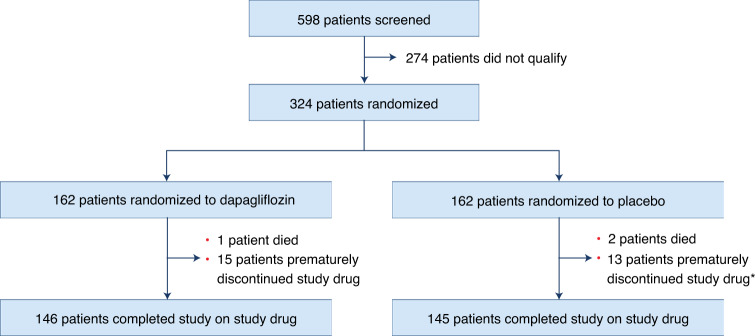
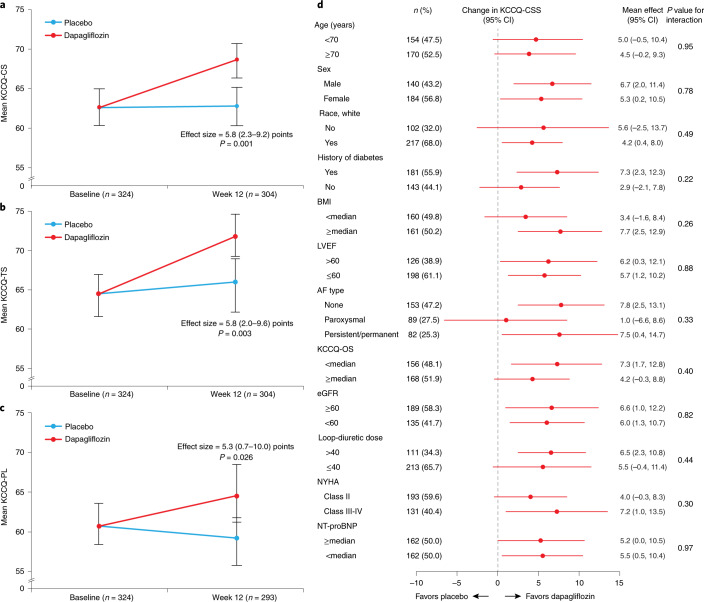
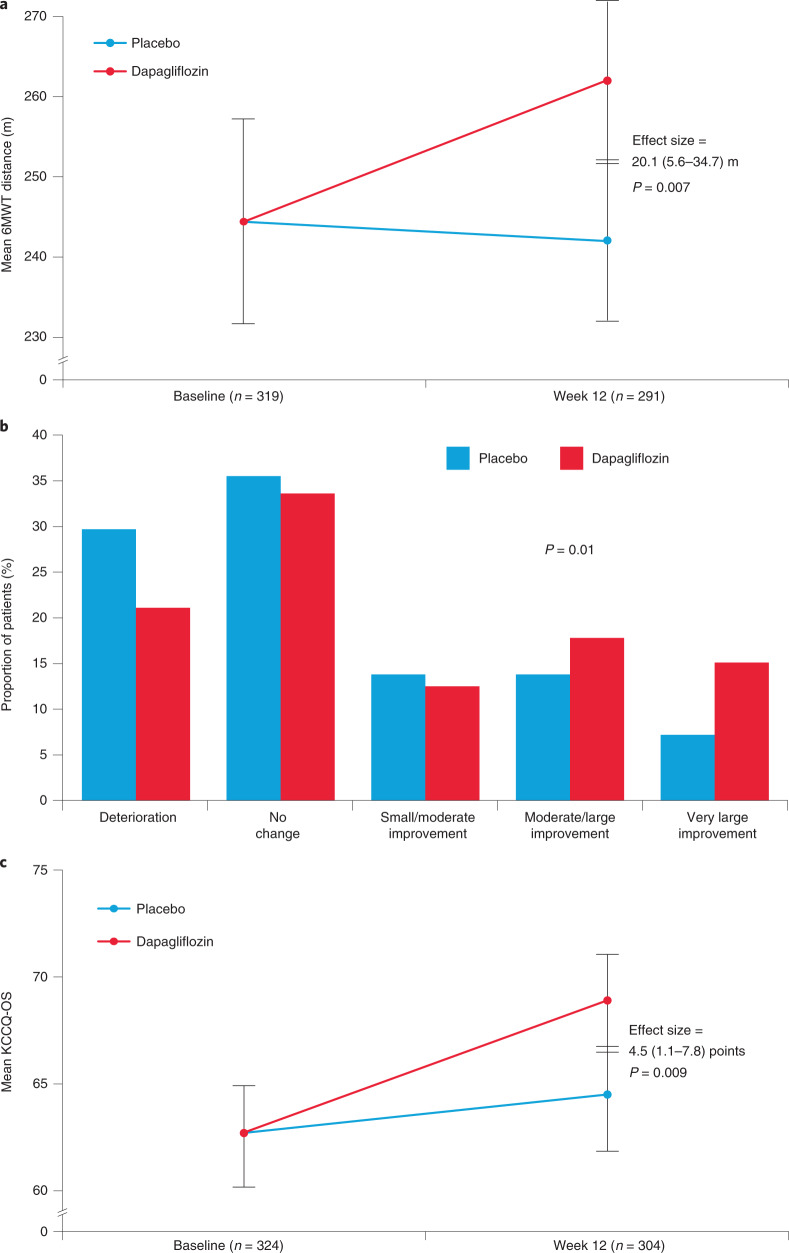

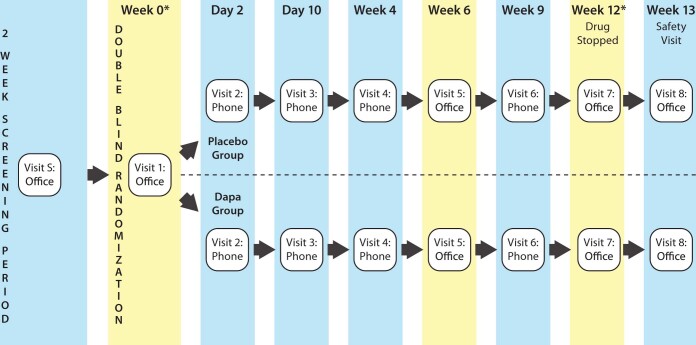
Verification
Claims the paper makes
The claims and statistics of this paper haven’t been checked yet.
Free: it reads the open-access text and checks the first 5 claims that cite a source we can check. Create a free account to check every claim.
Claims other papers make about this one
Each is checked against this paper’s own text: does it say what the citing paper says it does?
The source backs part of the claim, not all of it — or backs it for a different population, condition or comparison.
In the citing paper
“Multiple large CVOTs and kidney outcome trials of SGLT2is have demonstrated robust and consistent reductions in the risk of hospitalization for HF in persons with T2D.239,423,425,426,648”
From American Association of Clinical Endocrinology Clinical Practice Guideline: Developing a Diabetes Mellitus Comprehensive Care Plan-2022 Update. (2022) · cites this paper as [648]
Experimental — accuracy not yet measuredThe source backs part of the claim, not all of it — or backs it for a different population, condition or comparison.
In the citing paper
“SGLT2 inhibitors reduce the incidence of heart failure and improve heart failurerelated outcomes, including hospitalization for heart failure and heart failure-related symptoms, in people with diabetes with preserved or reduced ejection fraction (250,(255)(256)(257)(298)(299)(300)(301)(302)(303)(304)(305)(306).”
From 10. Cardiovascular Disease and Risk Management: Standards of Care in Diabetes—2025 (2025) · cites this paper as [301]
Experimental — accuracy not yet measuredThe source backs part of the claim, not all of it — or backs it for a different population, condition or comparison.
In the citing paper
“In addition to the hospitalization and mortality benefit in people with heart failure, SGLT2 inhibitors improve clinical stability and functional status in individuals with heart failure (301,(304)(305)(306).”
From 10. Cardiovascular Disease and Risk Management: Standards of Care in Diabetes—2025 (2025) · cites this paper as [301]
Experimental — accuracy not yet measuredThe source backs part of the claim, not all of it — or backs it for a different population, condition or comparison.
In the citing paper
“In addition to the hospitalization and mortality benefit in people with heart failure, SGLT2 inhibitors improve clinical stability and functional status in individuals with heart failure (289,292–294).”
From 10. Cardiovascular Disease and Risk Management: Standards of Care in Diabetes—2026 (2026) · cites this paper as [289]
Experimental — accuracy not yet measuredThe cited source says what the claim attributes to it.
In the citing paper
“Somewhat more meaningful effects of SGLT2 inhibitors on KCCQ and 6MWD have been reported in patients with HFpEF and obesity.31”
From Effects of Tirzepatide on the Clinical Trajectory of Patients With Heart Failure, Preserved Ejection Fraction, and Obesity (2025) · cites this paper as [31]
Self-check
Percentages, sums and reported differences re-computed from the paper’s own numbers.
The self-check needs the paper’s full text.
Citations
Cites
Dapagliflozin in Patients with Heart Failure and Reduced Ejection Fraction
McMurray, J. J. V., Solomon, S. D., Inzucchi, S. E., Køber, L., Kosiborod, M. N., Martinez, F. A., Ponikowski, P., Sabatine, M. S., Anand, I. S., Bělohlávek, J., et al. (2019) · New England Journal of Medicine · doi:10.1056/nejmoa1911303 · Cited by 7,140
Self-citationCardiovascular and renal outcomes with empagliflozin in heart failure
Packer, M., Anker, S. D., Butler, J., Filippatos, G., Pocock, S. J., Carson, P., Januzzi, J., Verma, S., Tsutsui, H., Brueckmann, M., et al. (2020) · New England Journal of Medicine · doi:10.1056/nejmoa2022190 · Cited by 5,206
Empagliflozin in heart failure with a preserved ejection fraction
Anker, S. D., Butler, J., Filippatos, G., Ferreira, J. P., Bocchi, E., Böhm, M., Brunner–La Rocca, H.-P., Choi, D.-J., Chopra, V., Chuquiure-Valenzuela, E., et al. (2021) · New England Journal of Medicine · doi:10.1056/nejmoa2107038 · Cited by 4,874
The 6-minute walk: a new measure of exercise capacity in patients with chronic heart failure.
Guyatt, G. H., Sullivan, M. J., Thompson, P. J., Fallen, E. L., Pugsley, S. O., Taylor, D. W., & Berman, L. (1985) · Europe PMC (PubMed Central) · Cited by 2,439
Angiotensin–Neprilysin Inhibition in Heart Failure with Preserved Ejection Fraction
Solomon, S. D., McMurray, J. J. V., Anand, I. S., Ge, J., Lam, C. S. P., Maggioni, A. P., Martinez, F., Packer, M., Pfeffer, M. A., Pieske, B., et al. (2019) · New England Journal of Medicine · doi:10.1056/nejmoa1908655 · Cited by 2,430
Self-citationO'Connor (2009) · doi:10.1001/jama.2009.454 · Cited by 2,173
Sotagliflozin in patients with diabetes and recent worsening heart failure
Bhatt, D. L., Szarek, M., Steg, P. G., Cannon, C. P., Leiter, L. A., McGuire, D. K., Lewis, J. B., Riddle, M. C., Voors, A. A., Metra, M., et al. (2021) · New England Journal of Medicine · doi:10.1056/nejmoa2030183 · Cited by 1,868
Green, C. P., Porter, C. B., Bresnahan, D. R., & Spertus, J. A. (2000) · Journal of the American College of Cardiology · doi:10.1016/s0735-1097(00)00531-3 · Cited by 1,827
Epidemiology of heart failure with preserved ejection fraction
Dunlay, S. M., Roger, V. L., & Redfield, M. M. (2017) · Nature Reviews Cardiology · doi:10.1038/nrcardio.2017.65 · Cited by 1,534
Obokata, M., Reddy, Y. N. V., Pislaru, S. V., Melenovsky, V., & Borlaug, B. A. (2017) · Circulation · doi:10.1161/circulationaha.116.026807 · Cited by 1,179
Self-citation
Cited by
Items 201–300 of 701
Diabetes Mellitus and Heart Failure
Siao, W.-Z., Chen, Y.-H., Tsai, C., Lee, C.-M., & Jong, G. (2022) · Journal of Personalized Medicine · doi:10.3390/jpm12101698 · Cited by 18
Riccardi, M., Tomasoni, D., Vizzardi, E., Metra, M., & Adamo, M. (2022) · Heart Failure Reviews · doi:10.1007/s10741-022-10280-4 · Cited by 18
SGLT2 inhibitors and diuretics in heart failure: clicking reset on the renal volume setpoint?
Borlaug, B. A., & Testani, J. M. (2023) · European Heart Journal · doi:10.1093/eurheartj/ehad345 · Cited by 18
Self-citationBoehmer, A. A., Ninni, S., Heijman, J., Dobrev, D., & Nattel, S. (2026) · Physiological Reviews · doi:10.1152/physrev.00020.2025 · Cited by 17
Chábová, V. Č., & Zakiyanov, O. (2022) · International Journal of Molecular Sciences · doi:10.3390/ijms23052812 · Cited by 18
“The effect of dietary counselling was also impeded by the same drug [154].”
BackgroundHeart Failure in Older Adults: Medical Management and Advanced Therapies
Liu, E. Y., & Lampert, B. C. (2022) · Geriatrics · doi:10.3390/geriatrics7020036 · Cited by 17
“These medications appear to also be beneficial in heart failure with preserved EF [13,14], which is particularly important given its increased prevalence in the elderly population.”
BackgroundModern Approaches for the Treatment of Heart Failure: Recent Advances and Future Perspectives
Popa, I. P., Haba, M. Ș. C., Maranducă, M. A., Tănase, D. M., Șerban, D. N., Șerban, L., Iliescu, R., & Tudorancea, I. (2022) · Pharmaceutics · doi:10.3390/pharmaceutics14091964 · Cited by 19
“Surprisingly, after 12 weeks of dapagliflozin treatment, a significant and consistent clinical improvement was achieved across all predefined subgroups, including patients with and without T2DM and those with EF above and below 60% [38].”
BackgroundInfluentialBasile, C., Paolillo, S., Gargiulo, P., Marzano, F., Asile, G., Parlati, A. L. M., Chirico, A., Nardi, E., Buonocore, D., Colella, A., et al. (2022) · Journal of Cardiovascular Medicine · doi:10.2459/jcm.0000000000001411 · Cited by 17
Prescribing patterns of SGLT-2 inhibitors for patients with heart failure: A two-center analysis
Chakrala, T. S., Prakash, R., Kim, J. J., Gao, H., Ghaffar, U., Patel, J., Parker, A., & Dass, B. (2023) · American Heart Journal Plus Cardiology Research and Practice · doi:10.1016/j.ahjo.2023.100286 · Cited by 17
“In our study, HFrEF was defined as patients with an EF ≤ 45 % and HFpEF as those with an EF > 45 % [13].”
MethodAging and metabolism in HFpEF: Pathophysiology and therapeutic implications
Ye, M., Feng, S., Xu, Z., He, W., Liu, C., & Zhu, W. (2025) · Metabolism · doi:10.1016/j.metabol.2025.156460 · Cited by 17
Lin, B., Siskin, M., Wang, B., & Natarajan, S. (2022) · Heart Failure Reviews · doi:10.1007/s10741-022-10285-z · Cited by 17
“While RCT data in HFpEF patients for angiotensin receptor-neprilysin inhibitors (ARNIs) and SGLT2 inhibitors are limited, they suggest improvement in QOL [5] and QOL and exercise tolerance [7, 9], respectively.”
BackgroundSGLT2 Inhibition in Heart Failure with Preserved Ejection Fraction — The New Frontier
Aguiar‐Neves, I., Santos‐Ferreira, D., & Fontes‐Carvalho, R. (2023) · Reviews in Cardiovascular Medicine · doi:10.31083/j.rcm2401001 · Cited by 16
“These results may thereby show evidence for an early benefit in health status and physical function with SGLT2 inhibition [ 43].”
BackgroundMethodDeshpande, R., Patel, R., Regmi, M. R., Salih, M., Kropp, R. J., Al-bast, B., Sheikh, M. A., Sagalov, A., Kulkarni, A., Siddique, M. S., et al. (2023) · Cardiovascular Endocrinology & Metabolism · doi:10.1097/xce.0000000000000284 · Cited by 16
“After the EMPEROR-Preserved trial, SGLT2-Is have also become essential therapy for HFpEF [8–10].”
Heart Failure with Preserved Ejection Fraction: How to Deal with This Chameleon
Lucà, F., Oliva, F. G., Abrignani, M. G., Fusco, S. A. D., Gori, M., Giubilato, S., Ceravolo, R., Temporelli, P. L., Cornara, S., Rao, C. M., et al. (2024) · Journal of Clinical Medicine · doi:10.3390/jcm13051375 · Cited by 16
Comparison of incident hypertension between SGLT2 inhibitors vs. DPP4 inhibitors
Suzuki, Y., Kaneko, H., Okada, A., Komuro, J., Fujiu, K., Takeda, N., Morita, H., Ako, J., Nishiyama, A., Yano, Y., et al. (2024) · Hypertension Research · doi:10.1038/s41440-024-01649-z · Cited by 16
Effects of Sotagliflozin on Health Status in Patients With Worsening Heart Failure
Bhatt, A. S., Bhatt, D. L., Steg, P. G., Szarek, M. J., Cannon, C. P., Leiter, L. A., McGuire, D. K., Lewis, J. B., Riddle, M. C., Voors, A. A., et al. (2024) · Journal of the American College of Cardiology · doi:10.1016/j.jacc.2024.06.036 · Cited by 16
Self-citationSemaglutide and Exercise Function in Obesity-Related HFpEF
Borlaug, B. A., Kitzman, D. W., Patel, S., Chinnakondepalli, K., Butler, J., Davies, M. J., Petrie, M. C., Shah, S. J., Verma, S., Núñez, J. E., et al. (2025) · JACC Heart Failure · doi:10.1016/j.jchf.2025.102660 · Cited by 16
Self-citationCvijić, M., Rib, Y., Danojevic, S., Radulescu, C.-I., Nazghaidze, N., & Vardas, P. E. (2022) · Heart Failure Reviews · doi:10.1007/s10741-022-10267-1 · Cited by 16
“Significant early improvement of health status and quality of life was demonstrated in HF patients with LVEF > 40% treated with empagliflizon (EMPERORPreserved trial) and in HF patients with LVEF ≥ 45% treated with dapagliflozin (PRESERVED-HF trial) and symptomatic improvement was sustained for at least 1 year [61, 62…”
BackgroundFukuta, H., Hagiwara, H., & Kamiya, T. (2022) · IJC Heart & Vasculature · doi:10.1016/j.ijcha.2022.101103 · Cited by 16
The OTUD1-Notch2-ICD axis orchestrates allogeneic T cell–mediated graft-versus-host disease
Cheng, Q., Wang, D., Lai, X., Liu, Y., Zuo, Y., Zhang, W., Lei, L., Chen, J., Liu, H., Wang, Y., et al. (2022) · Blood · doi:10.1182/blood.2022017201 · Cited by 16
A big STEP for treatment of heart failure with preserved ejection fraction
Verma, S., Borlaug, B. A., Butler, J., Davies, M. J., Kitzman, D. W., Petrie, M. C., Shah, S. J., Dhingra, N. K., & Kosiborod, M. (2023) · Cell Metabolism · doi:10.1016/j.cmet.2023.08.003 · Cited by 16
Self-citationMatsubayashi, S., Ito, S., Araya, J., & Kuwano, K. (2023) · Frontiers in Endocrinology · doi:10.3389/fendo.2023.1079626 · Cited by 15
Urey, M. A., Hibbert, B. M., Jorde, U. P., Eckman, P., Simard, T., Labinaz, M. X., Nazer, B., Wiley, M. A., Gupta, B. P., Sauer, A. J., et al. (2024) · European Journal of Heart Failure · doi:10.1002/ejhf.3241 · Cited by 15
“23,24 In conclusion, in this early multicentre single-arm experience, the APTURE transcatheter shunt system in patients with HFm-rEF and HFpEF showed an acceptable safety profile.”
BackgroundSelf-citationUsman, M., Hamid, A., Qazi, S. U., Kosiborod, M., Bhatt, D. L., Khan, M. S., Vaduganathan, M., & Butler, J. (2024) · Global Cardiology · doi:10.4081/cardio.2024.35 · Cited by 15
Self-citationDoiron, J. E., Xia, H., Yu, X., Nevins, A., LaPenna, K. B., Sharp, T. E., Goodchild, T. T., Allerton, T. D., Elgazzaz, M., Lazartigues, E. D., et al. (2024) · British Journal of Pharmacology · doi:10.1111/bph.16493 · Cited by 15
Self-citationLiu, D.-D., Liu, X., Zheng, T., Li, X., Zhao, Y., Pan, J., Yuan, C., Wang, Q., & Zhang, M. (2024) · European Journal of Pharmacology · doi:10.1016/j.ejphar.2024.176875 · Cited by 15
Jawad, M. A., Jones, P. G., Arnold, S. V., Cohen, D. J., Sherrod, C., Khan, M. S., Ikemura, N., Chan, P. S.-F., & Spertus, J. A. (2024) · JAMA Cardiology · doi:10.1001/jamacardio.2024.4470 · Cited by 16
Lin, M., Zhang, S., Zhang, L., Yang, C., Yang, L., Peng, Y., Tan, X., Wen, Q., Fan, X., & Ou, X. (2025) · Systematic Reviews · doi:10.1186/s13643-025-02766-7 · Cited by 16
Obesity-Related Phenotype of Heart Failure With Preserved Ejection Fraction: A Comprehensive Review
Othmane, T. E. H., Othmane, O. E. H., & Nizar, H. (2025) · Cureus · doi:10.7759/cureus.81512 · Cited by 17
“Personalized treatments targeting specific metabolic abnormalities, such as SGLT2 inhibitors for insulin resistance or GLP-1 agonists for weight loss, may improve cardiac function and slow disease progression [62,63,86].”
InfluentialMourmans, S. G. J., Achten, A., Hermans, R., Scheepers, M. J. E., D’Alessandro, E., Swennen, G., Woudstra, J., Appelman, Y., van Goor, H., Schalkwijk, C. G., et al. (2025) · Cardiovascular Diabetology · doi:10.1186/s12933-025-02679-8 · Cited by 15
SGLT2 Inhibitors: From Structure–Effect Relationship to Pharmacological Response
Mateoc-Sirb, T., Dumitrascu, A. L., Flangea, C., Puscasiu, D. A., Vlad, T., Popescu, R., Marina, C. D. L. C., & Vlad, M. (2025) · International Journal of Molecular Sciences · doi:10.3390/ijms26146937 · Cited by 15
“A multicenter, randomized trial shows that after 12 weeks of treatment with dapagliflozin, the symptoms and physical status of patients with heart failure and preserved ejection fraction improved considerably [199].”
Tornyos, D., Meuer, M., Lukács, R., Abdallaoui, O. E. A. E., Kupó, P., Faludi, R., & Komócsi, A. (2022) · Frontiers in Cardiovascular Medicine · doi:10.3389/fcvm.2022.1041200 · Cited by 15
Advances in contemporary medical management to treat patients with heart failure
Velez, M. (2023) · Current Opinion in Cardiology · doi:10.1097/hco.0000000000001021 · Cited by 15
Angeli, E., Jordan, M., Otto, M., Stojanović, S. D., Karsdal, M. A., Bauersachs, J. K., Thum, T., Fiedler, J., & Genovese, F. (2024) · Matrix Biology · doi:10.1016/j.matbio.2024.02.008 · Cited by 15
Li, Y., Wang, C., Hung, C., Wu, Y., Hsu, C., Tsou, Y., Wang, C., Wu, C., Lin, P., Chang, H., et al. (2024) · PubMed Central · doi:10.6515/acs.202403_40(2).20240206a · Cited by 15
A Stepwise Guide to the Diagnosis and Treatment of Heart Failure With Preserved Ejection Fraction
Vaishnav, J., & Sharma, K. (2021) · Journal of Cardiac Failure · doi:10.1016/j.cardfail.2021.12.013 · Cited by 15
Self-citationHubesch, G., Hanthazi, A., Acheampong, A., Chomette, L., Lasolle, H., Hupkens, E., Jespers, P., Vegh, G., Wembonyama, C. W. M., Verhoeven, C., et al. (2022) · Frontiers in Cardiovascular Medicine · doi:10.3389/fcvm.2021.809885 · Cited by 15
Pozzi, A., Cirelli, C., Merlo, A., Rea, F., Scangiuzzi, C., Tavano, E., Iorio, A., Kristensen, S. L., Wong, C., Iacovoni, A., et al. (2023) · Heart Failure Reviews · doi:10.1007/s10741-023-10363-w · Cited by 14
“Despite these impressive results in the reduction of hard endpoints, SGLT-2Is have some adverse effects with a risk ranging from 5 to 11% of drug discontinuation [1, 4, 9].”
Proximal versus distal diuretics in congestive heart failure
Nardone, M., Sridhar, V. S., Yau, K., Odutayo, A., & Cherney, D. Z. I. (2024) · Nephrology Dialysis Transplantation · doi:10.1093/ndt/gfae058 · Cited by 15
“SGLT2 inhibitors are the most recent addition to guideline-directed medical therapy in HF patients with either reduced (HFrEF) or preserved (HFpEF) ejection fraction [14 –19 ].”
BackgroundUse of Sodium–Glucose Cotransporter 2 Inhibitors in Hospitalized Patients
Ünlü, O., Bhatt, A. S., & Blood, A. J. (2024) · JACC Advances · doi:10.1016/j.jacadv.2024.101024 · Cited by 14
Wang, T., Yang, Q., Cheng, X.-Y., Ding, J.-C., & Hu, P.-F. (2024) · Heart Failure Reviews · doi:10.1007/s10741-024-10438-2 · Cited by 14
“According to two recent large randomized clinical trials, SGLT2i significantly reduced the combined risk of cardiovascular death and hospitalization in patients with HFpEF compared to placebo [34, 35].”
Göpel, S., Adingupu, D. D., Wang, J., Semenova, E., Behrendt, M., Jansson‐Löfmark, R., Ahlström, C., Jönsson‐Rylander, A., Gopaul, V. S., ESTERLINE, R. L., et al. (2024) · Cardiovascular Diabetology · doi:10.1186/s12933-024-02491-w · Cited by 14
“In the recent EMPEROR-preserved trial it has been shown that SGLT2 inhibition in fact improves CV-outcome in HFpEF patients [70].”
Left bundle branch block—Innocent bystander, silent menace, or both
Lau, E. W., Bonnemeier, H., & Baldauf, B. J. (2024) · Heart Rhythm · doi:10.1016/j.hrthm.2024.12.038 · Cited by 14
Ma, S., Chen, L., Yan, J., Shen, M., Zhang, R., Li, M., He, M., Chen, K., Zhu, Y., Lin, H., et al. (2022) · Biomedicine & Pharmacotherapy · doi:10.1016/j.biopha.2022.113765 · Cited by 14
Pleiotropic effect of sodium-glucose cotransporter 2 inhibitors on blood pressure
Kao, T., & Huang, C. (2022) · Frontiers in Cardiovascular Medicine · doi:10.3389/fcvm.2022.1086672 · Cited by 14
Circulating sphingolipids in heart failure
Kovilakath, A., Wohlford, G. F., & Cowart, L. A. (2023) · Frontiers in Cardiovascular Medicine · doi:10.3389/fcvm.2023.1154447 · Cited by 14
Wu, M., Ying, W., Chen, W., Kaizu, X., Song, M., & Lin, L. (2023) · Heart Failure Reviews · doi:10.1007/s10741-023-10338-x · Cited by 14
“The PRESERVED-HF (Dapagli-flozin in PRESERVED Ejection Fraction Heart Failure) trial revealed that 12 weeks of dapagliflozin treatment significantly improved patient-reported symptoms, physical limitations, and exercise function and was well tolerated [33].”
Kawakami, R., Matsui, H., Matsui, M., Iso, T., Yokoyama, T., Ishii, H., & Kurabayashi, M. (2023) · Scientific Reports · doi:10.1038/s41598-023-45390-y · Cited by 15
Escobar, C., Pascual-Figal, D. A., Manzano, L., Núñez, J. E., & Camafort, M. (2023) · Journal of Clinical Medicine · doi:10.3390/jcm12216798 · Cited by 14
Zhang, Z., Xiao, Y., Dai, Y., Lin, Q., & Liu, Q. (2023) · Heart Failure Reviews · doi:10.1007/s10741-023-10366-7 · Cited by 14
“Historically, certain medications such as sodium-glucose co-transporter-2 inhibitors and angiotensin receptor-neprilysin inhibitors have been spotlighted for their potential effectiveness in HFpEF patients [26–31].”
BackgroundFeng, Q., Wu, M., & Mai, Z. (2025) · Frontiers in Cardiovascular Medicine · doi:10.3389/fcvm.2025.1482918 · Cited by 13
Clinical Phenotyping and Treatment Response in Patients With Chronic Heart Failure
Tatsuta, D., Nakao, M., Nagai, T., Mizuguchi, Y., Yokota, I., Koya, T., Tada, A., Ishizaka, S., George, F., Kato, Y., et al. (2025) · JACC Advances · doi:10.1016/j.jacadv.2025.101972 · Cited by 13
Xia, J., Nong, Y., Teng, J., Mohammed, S. A., Liu, J., Pang, Y., Costantino, S., Ruschitzka, F. T., Hamdani, N., Abdellatif, M., et al. (2025) · iScience · doi:10.1016/j.isci.2025.113471 · Cited by 13
“93 These findings have driven new clinical guidelines, affirming the first-line role of SGLT2is in treating HFpEF.”
Elkammash, A., Tam, S. S. C., Yogarajah, G., & You, J. (2023) · Cureus · doi:10.7759/cureus.35030 · Cited by 13
“In the PRESERVED-HF trial, Dapagliflozin significantly improved the score of HFpEF patients on the Kansas City Cardiomyopathy Questionnaire Clinical Summary Score (KCCQ-CS) across different age groups, including those above 70 years of age [41].”
MethodThe impact of SGLT2 inhibitors on αKlotho in renal MDCK and HK-2 cells
Wolf, L., Föller, M., & Feger, M. (2023) · Frontiers in Endocrinology · doi:10.3389/fendo.2023.1069715 · Cited by 13
Ko, S., Yang, C., Sung, P., Cheng, B., Shao, P., Chen, Y., & Yip, H. (2023) · Experimental Biology and Medicine · doi:10.1177/15353702231198087 · Cited by 13
“19,20 27 However, Entresto, a novel drug, consists of the components of the neprilysin inhibitor (sacubitril) and the angiotensin receptor blocker (valsartan).”
BackgroundScheen, A. J. (2022) · Expert Opinion on Drug Metabolism & Toxicology · doi:10.1080/17425255.2022.2105693 · Cited by 14
“Improved diastolic function with dapagliflozin was reported in people with T2D, albuminuria, and preserved EF [32].”
BackgroundLi, L., Chang, Y., Li, F., & Yin, Y. (2024) · Frontiers in Cardiovascular Medicine · doi:10.3389/fcvm.2024.1403242 · Cited by 12
Wang, X., He, M., Jin, D., Sun, C., & Lu, H. (2024) · Diabetology & Metabolic Syndrome · doi:10.1186/s13098-024-01446-1 · Cited by 12
“Only four RCTs reported data on hypovolemia [17, 18, 21, 23].”
BackgroundDhoop, S. M., Ghazaleh, S., Roberts, L., Shehada, M., Patel, M., Lee‐Smith, W., Rabeeah, S., Sawaf, B., Vadehra, P., Hart, B. R., et al. (2025) · International Journal of Molecular Sciences · doi:10.3390/ijms26104781 · Cited by 12
“In the PRESERVED-HF trial, dapagliflozin significantly improved both patient-reported outcomes and physical capacity [61].”
Tuccinardi, D., Zilich, R., Ponzani, P., Musacchio, N., Manicardi, V., Rocca, A., Pontremoli, R., Fioretto, P., Muscarà, A., Cianni, G. D., et al. (2025) · Cardiovascular Diabetology – Endocrinology Reports · doi:10.1186/s40842-025-00251-7 · Cited by 12
“In this condition, the SGLT2is class has demonstrated significant benefits [31, 32], beyond those proven for GLP1-RAs in T2D [33].”
Riccardi, M., Sammartino, A. M., Adamo, M., Inciardi, R. M., Lombardi, C., Pugliese, N. R., Tomasoni, D., Vizzardi, E., Metra, M., Coats, A. J. S., et al. (2023) · Heart Failure Reviews · doi:10.1007/s10741-023-10315-4 · Cited by 12
“Furthermore, following the Dapagliflozin in PRESERVED Ejection Fraction Heart Failure (PRESERVED-HF) trial, [10] in which dapagliflozin significantly improved patient-reported symptoms, measures of physical limitations and exercise function, as compared to placebo, in 324 patients with HFpEF, the Dapagliflozin Evaluat…”
InfluentialYounis, A., Arous, T., Klempfner, R., Kharsa, A., McNitt, S. A., Schleede, S., Polonsky, B., Abdallah, Z., Buttar, R., Bodurian, C., et al. (2023) · Journal of Cardiovascular Electrophysiology · doi:10.1111/jce.15996 · Cited by 12
The Impact of Pharmacotherapy for Heart Failure on Oxidative Stress—Role of New Drugs, Flozins
Bodnar, P., Mazurkiewicz, M., Chwalba, T., Romuk, E. B., Ciszek-Chwalba, A., Jacheć, W., & Wojciechowska, C. (2023) · Biomedicines · doi:10.3390/biomedicines11082236 · Cited by 13
Differential cardiopulmonary haemodynamic phenotypes in PASC-related exercise intolerance
Kahn, P. A., Joseph, P., Heerdt, P. M., & Singh, I. (2023) · ERJ Open Research · doi:10.1183/23120541.00714-2023 · Cited by 12
“While there has been little in the way of therapeutic advances to help improve pEO 2 thus far, there have been significant advances in pharmacotherapeutics that has been shown to improve exercise capacity in HFpEF [34] and perhaps ePH [35].”
BackgroundSGLT2 inhibitors in heart failure with preserved ejection fraction
Faluk, M. A., Wardhere, A., Thakker, R. A., & Khan, F. (2024) · Current Problems in Cardiology · doi:10.1016/j.cpcardiol.2024.102388 · Cited by 12
Heart Failure and Arrhythmias: Circadian and Epigenetic Interplay in Myocardial Electrophysiology
Chen, Z., Li, S., & Zhang, H. (2025) · International Journal of Molecular Sciences · doi:10.3390/ijms26062728 · Cited by 13
“Major trials like PRESERVED-HF and EMPEROR-Reduced have demonstrated these benefits, further solidifying their role in clinical practice [93,94].”
Docherty, K. F., Buendía, R., Folkvaljon, F., de Boer, R. A., Cowie, M., Hammarstedt, A., Kitzman, D. W., Kosiborod, M., Langkilde, A. M., Reicher, B., et al. (2024) · Circulation Heart Failure · doi:10.1161/circheartfailure.124.012349 · Cited by 11
Self-citationGlycometabolic cardiac dysfunction in HFpEF: Lessons from multi-omics studies
Longo, S., Mollace, R., Casagrande, V., Bucciarelli, L. G., Martelli, E., Menghini, R., Fernández‐Real, J. M., & Federici, M. (2025) · Pharmacological Research · doi:10.1016/j.phrs.2025.108032 · Cited by 11
Pharmacologic Therapy for Heart Failure with Preserved Ejection Fraction
Peters, A. E., & DeVore, A. D. (2022) · Cardiology Clinics · doi:10.1016/j.ccl.2022.06.004 · Cited by 11
Cheema, H. A., Shafiee, A., Athar, M. M. T., Rafiei, M. A., Mehmannavaz, A., Jafarabady, K., Shahid, A., Ahmad, A. N., Ijaz, S. H., Dani, S. S., et al. (2023) · Frontiers in Cardiovascular Medicine · doi:10.3389/fcvm.2023.1273781 · Cited by 11
Chong, J. H., Chang, W., Chan, J. J., Tan, T. J., Chan, J., Wong, M., Wong, F. Y., & Chuah, C. T. H. (2024) · Current Problems in Cardiology · doi:10.1016/j.cpcardiol.2024.102372 · Cited by 11
Le, Z. H. O. U., Xiaohong, G. E. N. G., Qian, H. U., Jiani, G. U., & Yi, C. H. E. N. (2024) · Minerva Cardiology and Angiology · doi:10.23736/s2724-5683.23.06478-5 · Cited by 11
Diabetes and Heart Failure: A Literature Review, Reflection and Outlook
Li, X., Zhou, X., & Gao, L. (2024) · Biomedicines · doi:10.3390/biomedicines12071572 · Cited by 11
Finerenone in the management of diabetes kidney disease
De, P., Khine, M. T., Frankel, A., Goldet, G., Banerjee, D., Montero, R., Chowdhury, T. A., Fogarty, D., Karalliedde, J. J., Mallik, R., et al. (2025) · BMC Nephrology · doi:10.1186/s12882-025-03985-9 · Cited by 12
“For those who are unable to use an SGLT2 inhibitor, (Finerenone) is recommended to reduce DKD progression and CV events (Grade A) 32,33 .”
Sodium‑glucose co-transporter‑2 inhibitors in the treatment of diabetes with heart failure
Liang, B., & Gu, N. (2022) · Cardiovascular Diabetology · doi:10.1186/s12933-022-01526-4 · Cited by 11
“Notably, PRESERVED-HF and CHIEF-HF indicated that dapagliflozin/canagliflozin improved surrogate endpoints (such as Kansas City Cardiomyopathy Questionnaire total symptom score) in patients with diabetes and heart failure (ejection fraction was ≥ 45% in PRESERVED-HF and was not limited in CHIEF-HF) [5, 6].”
BackgroundSandhu, A. T., & Cohen, D. J. (2023) · JAMA Cardiology · doi:10.1001/jamacardio.2023.0087 · Cited by 11
Ripoll, C. V., Lotfinaghsh, A., Guo, Z., Kumari, T., Miyata, K. N., Sargazi, A., Özcan, M., Diab, A., Ataran, A., Hajirezaei, H., et al. (2025) · JACC Advances · doi:10.1016/j.jacadv.2025.101839 · Cited by 10
Self-citationLi, A. C.-W., Lin, Y.-C., Huang, J., Chen, L.-C., & Chua, S. (2025) · PLoS ONE · doi:10.1371/journal.pone.0326534 · Cited by 10
“The STEP-HFpEF trial with GLP-1 RAs semaglutide on HFpEF and obese patients demonstrated enhanced exercise capacity (7.9-point increase in KCCQ-CSS compared to placebo over 52 weeks) but lacked sufficient evidence on cardiovascular endpoints [9,11,12].”
InfluentialHeart Failure: The Grim Reaper of the Cardio-Renal-Metabolic Triad
Österman, J., Al‐Sodany, E., Löfman, I. H., Barany, P. F., & Evans, M. (2024) · ESC Heart Failure · doi:10.1002/ehf2.14810 · Cited by 11
Ambrosy, A. P., Chang, A. J., Davison, B. A., Voors, A. A., Solal, A. C., Damasceno, A., Kimmoun, A., Lam, C. S. P., Lund, L. H., Edwards, C., et al. (2024) · JACC Heart Failure · doi:10.1016/j.jchf.2024.04.017 · Cited by 10
Protective Potential of Sodium-Glucose Cotransporter 2 Inhibitors in Internal Medicine (Part 1)
Арманович, А. А., Sheibani, M., Трофименко, А. И., Lysov, E. E., Khamidova, F. M., Aznauryan, A., Sukiasyan, L. M., Sahakyan, K., Gevorgyan, T. R., Tatoyan, M. R., et al. (2024) · Innovative medicine of Kuban · doi:10.35401/2541-9897-2024-9-4-126-135 · Cited by 10
Brust-Sisti, L. A., Rudawsky, N., Gonzalez, J., & Brunetti, L. (2022) · Pharmacy · doi:10.3390/pharmacy10060166 · Cited by 10
“It is important to know that the definition of HFpEF varies in trials with study eligibility at LVEF > 40%, ≥45%, and >50% for the EMPEROR-Preserved [12] and DELIVER [22], PRESERVED-HF [13], and SOLOIST-WHF [14] trials, respectively.”
BackgroundMethodResultInfluentialGuo, Z., Wang, L., Yu, J., Wang, Y., Yang, Z., & Zhou, C. (2023) · International Journal of Clinical Pharmacy · doi:10.1007/s11096-022-01504-6 · Cited by 10
“There were three dapagliflozin trials enrolling 5,321 patients [20, 21, 27], four empagliflozin trials enrolling 444 patients [22, 28–30], and one canagliflozin trial with 448 patients [31].”
BackgroundInfluentialSGLT-2 Inhibitors for Patients with Heart Failure: What Have We Learned Recently?
Rifai, M. A., Newby, L. K., Nair, A. P., Misra, A., Rogers, J. G., Fedson, S., & Virani, S. S. (2022) · Current Atherosclerosis Reports · doi:10.1007/s11883-022-01038-2 · Cited by 10
“SGLT-2i have recently shown promise for improving HF hospitalization among patients with HFpEF [9].”
MethodInfluentialJi, L., Mishra, M., & Geest, B. D. (2023) · Pharmaceutics · doi:10.3390/pharmaceutics15041092 · Cited by 10
“Dapagliflozin resulted in a statistically significant improvement in the exercise capacity of HFpEF patients (defined as with an ejection fraction of 45% or more) in another trial including 324 patients [147].”
Morillas, H., Galcerá, E., Alania-Torres, E., Seller, J., Larumbe, A., Núñez, J. E., & Valle, A. (2022) · Reviews in Cardiovascular Medicine · doi:10.31083/j.rcm2304139 · Cited by 9
“…(DEFINE-HF) study an improvement in patient-reported symptoms, physical limitations, and exercise function in patients with HFpEF, compared to placebo (clinically meaningful improvement in KCCQ overall summary score or NT-proBNP levels 61.5% vs. 50.4%, adjusted OR 1.8, 95% CI 1.03–3.06) [ 45].”
InfluentialA review of potential mechanisms and uses of SGLT2 inhibitors in ischemia-reperfusion phenomena
Quentin, V., Singh, M., & Nguyen, L. S. (2022) · World Journal of Diabetes · doi:10.4239/wjd.v13.i9.683 · Cited by 9
Huang, Y., Xu, X.-Z., Liu, J., Wang, P.-Y., Wang, X., Feng, H., Liu, C., & Han, X. (2023) · BMC Cardiovascular Disorders · doi:10.1186/s12872-023-03324-6 · Cited by 9
Dye, C. A., Cruz, M. D., Larsen, T. R., Nair, G. G., Marinescu, K. K., Suboc, T. M. B., Engelstein, E. D., Marsidi, J. L., Patel, P., Sharma, P. S., et al. (2023) · American Heart Journal Plus Cardiology Research and Practice · doi:10.1016/j.ahjo.2023.100309 · Cited by 9
Adherence to treatment as an integral component of the management of patients with heart failure
Larina, V. N., Zamyatin, K. A., Николаевна, Ш. Е., & Кудинова, М. А. (2023) · Russian Journal of Cardiology · doi:10.15829/1560-4071-2024-5690 · Cited by 9
Song, J., Zhang, Z.-S., Lin, C., Wang, Q., Xu, J.-Y., Bai, W., Li, B., Wang, S., & Guo, T. (2024) · Journal of Nutrition · doi:10.1016/j.tjnut.2024.08.006 · Cited by 9
Mazin, I., Chernomordik, F., Fefer, P., Matetzky, S., & Beigel, R. (2022) · Journal of Clinical Medicine · doi:10.3390/jcm11071904 · Cited by 10
“The SGLT2 inhibitor dapagliflozin in heart failure with preserved ejection fraction: a multicenter randomized trial (PRESERVED-HF) [71] examined the effect of dapagliflozin J. Clin.”
BackgroundKe, J., Pan, J., Lin, H., Han, Z., & Gu, J. (2023) · Current Medical Research and Opinion · doi:10.1080/03007995.2023.2223916 · Cited by 9
Hardin, K. M., Giverts, I., Campain, J., Farrell, R., CUNNINGHAM, T., Brooks, L. C., Christ, A. M., Wooster, L. T., Bailey, C. S., Schoenike, M., et al. (2023) · Journal of Cardiac Failure · doi:10.1016/j.cardfail.2023.05.023 · Cited by 9
Self-citationCardiac amyloidosis: an update on diagnosis, current therapy, and future directions
Khedraki, R. (2022) · Current Opinion in Cardiology · doi:10.1097/hco.0000000000000953 · Cited by 9
Liang, B., Liang, Y., & Gu, N. (2022) · BMC Cardiovascular Disorders · doi:10.1186/s12872-022-02693-8 · Cited by 9
“With the release of PRESERVED-HF [13], CANVAS [14], CHIEF-HF [15], and VERTIS CV [16], SGLT2is seem a potential promising therapy for patients with HFpEF.”
BackgroundPrevent Frailty, Prevent Cardiovascular Disease
Ijaz, N., Nanna, M. G., & Damluji, A. A. (2025) · JACC Advances · doi:10.1016/j.jacadv.2025.101701 · Cited by 9
Kim, T., Sheen, M., Ryan, D., & Joseph, J. (2026) · International Journal of Molecular Sciences · doi:10.3390/ijms27020673 · Cited by 8
“Standard endpoints may also miss clinically meaningful benefits within specific HF-pEF subgroups (e.g., congestion or exercise tolerance) even in the absence of mortality effects [10,91].”
Requena-Ibáñez, J. A., Santos‐Gallego, C. G., & Badimón, J. J. (2022) · Revista Española de Cardiología (English Edition) · doi:10.1016/j.rec.2022.04.019 · Cited by 8
Metadata
- Authors
- Nassif, M. E., Windsor, S. L., Borlaug, B. A., Kitzman, D. W., Shah, S. J., Tang, F., Khariton, Y., Malik, A. O., Khumri, T., Umpierrez, G., Lamba, S., Sharma, K., Khan, S. S., Chandra, L., Gordon, R. A., Ryan, J. J., Chaudhry, S.-P., Joseph, S. M., Chow, C. H., Kanwar, M. K., Pursley, M., Siraj, E. S., Lewis, G. D., Clemson, B. S., Fong, M., & Kosiborod, M. N.
- Affiliations
- Saint Luke's Hospital (US)
- Mayo Clinic (US)
- Wake Forest University Health Sciences (US)
- Northwestern University (US)
- Emory University (US)
- First Coast Cardiovascular Institute (US)
- Johns Hopkins University (US)
- Endeavor Health (US)
- University of Utah (US)
- University of Maryland, Baltimore (US)
- Stormont Vail Health (US)
- Allegheny Health Network (US)
- Eastern Virginia Medical School (US)
- Massachusetts General Hospital (US)
- OSF HealthCare (US)
- University of Southern California (US)
- UNSW Sydney (AU)
- Corresponding author
- Kosiborod, Mikhail N.
- ORCID
- Nassif, Michael E.
- Windsor, Sheryl L.
- Borlaug, Barry A.
- Kitzman, Dalane W.
- Shah, Sanjiv J.
- Khariton, Yevgeniy
- Malik, Ali O.
- Umpierrez, Guillermo
- Sharma, Kavita
- Khan, Sadiya S.
- Gordon, Robert A.
- Ryan, John J.
- Chaudhry, Sunit-Preet
- Joseph, Susan M.
- Kanwar, Manreet K.
- Siraj, Elias S.
- Lewis, Gregory D.
- Fong, Michael
- Kosiborod, Mikhail N.
- Venue
- Nature Medicine
- Published
- 2021-10-28
- Volume
- 27
- Issue
- 11
- Pages
- 1954-1960
- ISSN
- 1078-8956 (ISSN-L)
- 1546-170X
- PMC
- PMC8604725
- OpenAlex
- W3210475044
- Cited by
- 618
- References
- 38
- Citations by year
- 2026: 68 · 2025: 89 · 2024: 149 · 2023: 140 · 2022: 165 · 2021: 7
- FWCI
- 77.27
- Type
- journal article
- Language
- en
- Open access
- hybrid
- doi.org
- Licence
- cc-by
- creativecommons.org/licenses/by/4.0 (tdm)
- creativecommons.org/licenses/by/4.0 (vor)
- Locations
- Nature Medicine (publishedVersion, cc-by)
- PubMed Central (publishedVersion, cc-by)
- PubMed (publishedVersion)
- Funders
- AstraZeneca
- University of Pennsylvania
- Saint Luke's Health System
- Topics
- Health Sciences › Medicine › Cardiology and Cardiovascular Medicine › Heart Failure Treatment and Management
- Health Sciences › Medicine › Endocrinology, Diabetes and Metabolism › Diabetes Treatment and Management
- Health Sciences › Medicine › Cardiology and Cardiovascular Medicine › Cardiovascular Function and Risk Factors
- Keywords
- heart failure with preserved ejection fraction, dapagliflozin, SGLT2 inhibitors, Kansas City Cardiomyopathy Questionnaire, health-related quality of life, symptom burden, physical limitations, 6-minute walk test, weight loss, natriuretic peptides, HbA1c, systolic blood pressure, cardiometabolic abnormalities, heart failure treatment
- MeSH terms
- Sodium-Glucose Transporter 2 Inhibitors, Aged, Benzhydryl Compounds, Double-Blind Method, Female, Glucosides, Health Status, Heart Failure, Humans, Male, Middle Aged, Placebos, Quality of Life, Surveys and Questionnaires, Stroke Volume, Exercise, Sodium-Glucose Transporter 2
About these checks
Registry, retraction, Cites and statistics results are computed, not judged, with one exception: a printed reference that no index lists is read once by a model before it counts as a citation error. Claims are extracted by a model and kept only when their quote appears verbatim in the text; each cited source is then checked, with a model’s help, for whether it says what the claim relies on. Those verdicts can be wrong — read the claim’s quote and the cited source before relying on one.
Statistics and arithmetic are recomputed, not judged.
Confidence bands are shown only for fields calibrated on our annotated test set. None is calibrated yet, so no band is shown.
What counts as a claim ›How we measure confidence ›How we check this ›
Are you an author, or do you see a problem with this page? Request a review
Data sources
Bibliographic data: Semantic Scholar, OpenAlex, Crossref.
Contains information from the Semantic Scholar Academic Graph Datasets, made available under the ODC Attribution License (ODC-BY 1.0).
Semantic Scholar’s data is described in: Kinney, R., et al. (2023). The Semantic Scholar Open Data Platform. arXiv:2301.10140.
