

The SGLT2 inhibitor canagliflozin in heart failure: the CHIEF-HF remote, patient-centered randomized trial
Open accessThe DOI matches its Crossref record; 32 of the 33 references it cites were found in a registry or an index.
Abstract
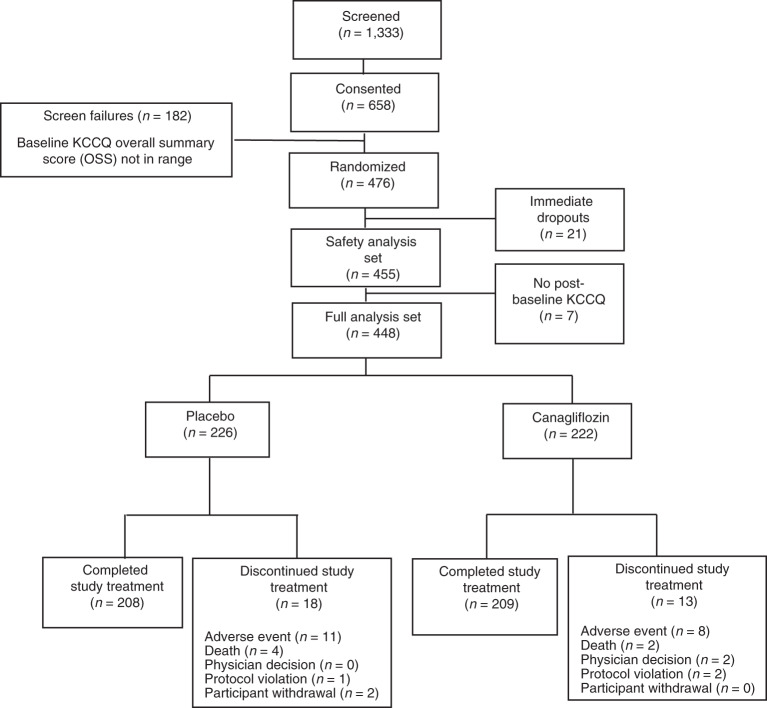
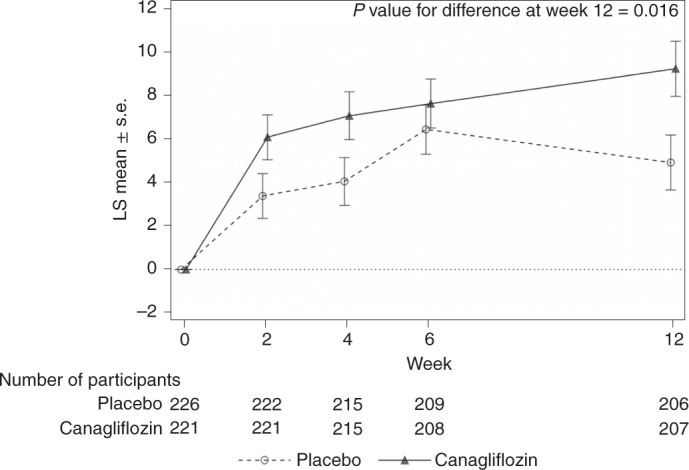
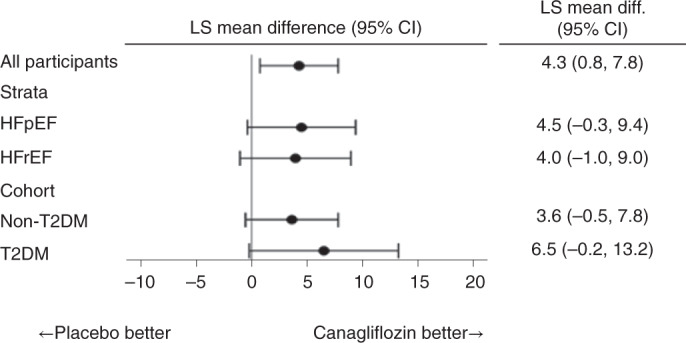
Large traditional clinical trials suggest that sodium-glucose co-transporter 2 inhibitors improve symptoms in patients with heart failure and reduced ejection fraction (HFrEF) and in patients with heart failure and preserved ejection fraction (HFpEF). In the midst of the Coronavirus Disease 2019 pandemic, we sought to confirm these benefits in a new type of trial that was patient centered and conducted in a completely remote fashion. In the CHIEF-HF trial ( NCT04252287 ), 476 participants with HF, regardless of EF or diabetes status, were randomized to 100 mg of canagliflozin or placebo. Enrollment was stopped early due to shifting sponsor priorities, without unblinding. The primary outcome was change in the Kansas City Cardiomyopathy Questionnaire Total Symptom Score (KCCQ TSS) at 12 weeks. The 12-week change in KCCQ TSS was 4.3 points (95% confidence interval, 0.8–7.8; P = 0.016) higher with canagliflozin than with placebo, meeting the primary endpoint. Similar effects were observed in participants with HFpEF and in those with HFrEF and in participants with and without diabetes, demonstrating that canagliflozin significantly improves symptom burden in HF, regardless of EF or diabetes status. This randomized, double-blind trial, conducted without in-person interactions between doctor and patient, can serve as a model for future all-virtual clinical trials.
Overview
The claims and statistics of this paper haven’t been checked yet.
Free: it reads the open-access text and checks the first 5 claims that cite a source we can check. Create a free account to check every claim.
Integrity signals
Registry
Cites
Statistics
Figures
Verification
Claims the paper makes
The claims and statistics of this paper haven’t been checked yet.
Free: it reads the open-access text and checks the first 5 claims that cite a source we can check. Create a free account to check every claim.
Claims other papers make about this one
Each is checked against this paper’s own text: does it say what the citing paper says it does?
The source backs part of the claim, not all of it — or backs it for a different population, condition or comparison.
In the citing paper
“In addition to the hospitalization and mortality benefit in people with heart failure, SGLT2 inhibitors improve clinical stability and functional status in individuals with heart failure (289,292–294).”
From 10. Cardiovascular Disease and Risk Management: Standards of Care in Diabetes—2026 (2026) · cites this paper as [294]
Experimental — accuracy not yet measuredThe cited source says what the claim attributes to it.
In the citing paper
“In addition to the hospitalization and mortality benefit in people with heart failure, SGLT2 inhibitors improve clinical stability and functional status in individuals with heart failure (301,(304)(305)(306).”
From 10. Cardiovascular Disease and Risk Management: Standards of Care in Diabetes—2025 (2025) · cites this paper as [306]
In the citing paper
“Finally, canagli fl ozin improved heart failure symptoms assessed using the Kansas City Cardiomyopathy Questionnaire Total Symptom Score, irrespective of left ventricular ejection fraction or the presence of diabetes (231).”
From 10. Cardiovascular Disease and Risk Management: Standards of Care in Diabetes—2023 (2023) · cites this paper as [231]
Self-check
Percentages, sums and reported differences re-computed from the paper’s own numbers.
The self-check needs the paper’s full text.
Citations
Cites
Empagliflozin, Cardiovascular Outcomes, and Mortality in Type 2 Diabetes
Zinman, B., Wanner, C., Lachin, J. M., Fitchett, D., Bluhmki, E., Hantel, S., Mattheus, M., Devins, T., Johansen, O. E., Woerle, H. J., et al. (2015) · New England Journal of Medicine · doi:10.1056/nejmoa1504720 · Cited by 12,315
Dapagliflozin in Patients with Heart Failure and Reduced Ejection Fraction
McMurray, J. J. V., Solomon, S. D., Inzucchi, S. E., Køber, L., Kosiborod, M. N., Martinez, F. A., Ponikowski, P., Sabatine, M. S., Anand, I. S., Bělohlávek, J., et al. (2019) · New England Journal of Medicine · doi:10.1056/nejmoa1911303 · Cited by 7,140
Self-citationCardiovascular and renal outcomes with empagliflozin in heart failure
Packer, M., Anker, S. D., Butler, J., Filippatos, G., Pocock, S. J., Carson, P., Januzzi, J., Verma, S., Tsutsui, H., Brueckmann, M., et al. (2020) · New England Journal of Medicine · doi:10.1056/nejmoa2022190 · Cited by 5,206
Self-citationEmpagliflozin in heart failure with a preserved ejection fraction
Anker, S. D., Butler, J., Filippatos, G., Ferreira, J. P., Bocchi, E., Böhm, M., Brunner–La Rocca, H.-P., Choi, D.-J., Chopra, V., Chuquiure-Valenzuela, E., et al. (2021) · New England Journal of Medicine · doi:10.1056/nejmoa2107038 · Cited by 4,874
Self-citationSotagliflozin in patients with diabetes and recent worsening heart failure
Bhatt, D. L., Szarek, M., Steg, P. G., Cannon, C. P., Leiter, L. A., McGuire, D. K., Lewis, J. B., Riddle, M. C., Voors, A. A., Metra, M., et al. (2021) · New England Journal of Medicine · doi:10.1056/nejmoa2030183 · Cited by 1,868
Green, C. P., Porter, C. B., Bresnahan, D. R., & Spertus, J. A. (2000) · Journal of the American College of Cardiology · doi:10.1016/s0735-1097(00)00531-3 · Cited by 1,827
Self-citationInterpreting the Kansas City Cardiomyopathy Questionnaire in Clinical Trials and Clinical Care
Spertus, J. A., Jones, P. G., Sandhu, A. T., & Arnold, S. V. (2020) · Journal of the American College of Cardiology · doi:10.1016/j.jacc.2020.09.542 · Cited by 619
Self-citationNassif, M. E., Windsor, S. L., Borlaug, B. A., Kitzman, D. W., Shah, S. J., Tang, F., Khariton, Y., Malik, A. O., Khumri, T., Umpierrez, G., et al. (2021) · Nature Medicine · doi:10.1038/s41591-021-01536-x · Cited by 618
Self-citationMonitoring clinical changes in patients with heart failure: A comparison of methods
Spertus, J., Peterson, E., Conard, M. W., Heidenreich, P. A., Krumholz, H. M., Jones, P., McCullough, P. A., Pina, I., Tooley, J., Weintraub, W. S., et al. (2005) · American Heart Journal · doi:10.1016/j.ahj.2004.12.010 · Cited by 562
Self-citationPetrie, M. C., Verma, S., Docherty, K. F., Inzucchi, S. E., Anand, I., Belohlávek, J., Böhm, M., Chiang, C.-E., Chopra, V. K., de Boer, R. A., et al. (2020) · JAMA · doi:10.1001/jama.2020.1906 · Cited by 531
Self-citation
Cited by
Vaduganathan, M., Docherty, K. F., Claggett, B. L., Jhund, P. S., de Boer, R. A., Hernandez, A. F., Inzucchi, S. E., Kosiborod, M. N., Lam, C. S. P., Martinez, F., et al. (2022) · The Lancet · doi:10.1016/s0140-6736(22)01429-5 · Cited by 996
Self-citation10. Cardiovascular Disease and Risk Management: Standards of Care in Diabetes—2025
American Diabetes Association Professional Practice Committee, ElSayed, N. A., McCoy, R. G., Aleppo, G., Balapattabi, K., Beverly, E. A., Briggs Early, K., Bruemmer, D., Das, S. R., Echouffo-Tcheugui, J. B., et al. (2025) · Diabetes Care · doi:10.2337/dc25-s010 · Cited by 486
Self-citation10. Cardiovascular Disease and Risk Management: Standards of Care in Diabetes—2023
ElSayed, N. A., Aleppo, G., Aroda, V. R., Bannuru, R. R., Brown, F. M., Bruemmer, D., Collins, B. S., Das, S. R., Hilliard, M. E., Isaacs, D., et al. (2023) · Diabetes Care · doi:10.2337/dc23-s010 · Cited by 465
Self-citationBorlaug, B. A., Jensen, M. D., Kitzman, D. W., Lam, C. S. P., Obokata, M., & Rider, O. J. (2023) · Cardiovascular Research · doi:10.1093/cvr/cvac120 · Cited by 450
10. Cardiovascular Disease and Risk Management: Standards of Care in Diabetes—2024
American Diabetes Association Professional Practice Committee, ElSayed, N. A., Aleppo, G., Bannuru, R. R., Bruemmer, D., Collins, B. S., Das, S. R., Ekhlaspour, L., Hilliard, M. E., Johnson, E. L., et al. (2024) · Diabetes Care · doi:10.2337/dc24-s010 · Cited by 438
Self-citationProtective Factors and the Pathogenesis of Complications in Diabetes
Yu, M. G., Gordin, D., Fu, J., Park, K., Li, Q., & King, G. L. (2024) · Endocrine Reviews · doi:10.1210/endrev/bnad030 · Cited by 228
10. Cardiovascular Disease and Risk Management: Standards of Care in Diabetes—2026
American Diabetes Association Professional Practice Committee for Diabetes*, Bajaj, M., McCoy, R. G., Balapattabi, K., Bannuru, R. R., Bellini, N. J., Bennett, A. K., Beverly, E. A., Briggs Early, K., ChallaSivaKanaka, S., et al. (2026) · Diabetes Care · doi:10.2337/dc26-s010 · Cited by 225
Zhou, X., Zhou, C., & Kemp, I. J. (2005) · IEEE Transactions on Dielectrics and Electrical Insulation · doi:10.1109/tdei.2005.1453464 · Cited by 214
SGLT2 inhibitors: from glucose-lowering to cardiovascular benefits
Preda, A., Montecucco, F., Carbone, F., Camici, G. G., Lüscher, T. F., Kraler, S., & Liberale, L. (2024) · Cardiovascular Research · doi:10.1093/cvr/cvae047 · Cited by 161
Contemporary American and European Guidelines for Heart Failure Management
Ostrominski, J. W., DeFilippis, E. M., Bansal, K., Riello, R. J., Bozkurt, B., Heidenreich, P. A., & Vaduganathan, M. (2024) · JACC Heart Failure · doi:10.1016/j.jchf.2024.02.020 · Cited by 116
Canagliflozin Impairs T-Cell Effector Function via Metabolic Suppression in Autoimmunity
Jenkins, B. J., Blagih, J., Ponce-Garcia, F. M., Canavan, M., Gudgeon, N. H., Eastham, S., Hill, D., Hanlon, M. M., Ma, E. H., Bishop, E. L., et al. (2022) · Cell Metabolism · doi:10.1016/j.cmet.2023.05.001 · Cited by 96
“28,29 However, the effects of the gliflozins, specifically cana, on human T cell function is limited.”
Filbey, L., Zhu, J. W., D’Angelo, F., Thabane, L., Khan, M. S., Lewis, E. F., Patel, M. R., Powell‐Wiley, T. M., Miranda, J. J., Zuhlke, L. J., et al. (2022) · European Heart Journal · doi:10.1093/eurheartj/ehac810 · Cited by 88
Self-citationGao, M., Bhatia, K., Kapoor, A. B., Badimón, J. J., Pinney, S., MANCINI, D. M., Santos‐Gallego, C. G., & Lala, A. (2024) · JAMA Network Open · doi:10.1001/jamanetworkopen.2024.5135 · Cited by 88
Kosiborod, M. N., Bhatt, A. S., Claggett, B. L., Vaduganathan, M., Kulac, I. J., Lam, C. S. P., Hernandez, A. F., Martinez, F. A., Inzucchi, S. E., Shah, S. J., et al. (2023) · Journal of the American College of Cardiology · doi:10.1016/j.jacc.2022.11.006 · Cited by 86
Self-citationMancini, G. B. J., O’Meara, E., Zieroth, S., Bernier, M., Cheng, A. Y. Y., Cherney, D. Z. I., Connelly, K. A., Ezekowitz, J., Goldenberg, R. M., Leiter, L. A., et al. (2022) · Canadian Journal of Cardiology · doi:10.1016/j.cjca.2022.04.029 · Cited by 56
Cornuault, L., Rouault, P., Duplàa, C., Couffinhal, T., & Renault, M. (2022) · Frontiers in Physiology · doi:10.3389/fphys.2022.906272 · Cited by 82
“, 2021) and canaglyflozin (Spertus et al., 2022) were shown the increased Kansas City Cardiomyopathy Questionnaire (KCCQ) Total Symptom Score and/or the 6-min walk test respectively.”
BackgroundVaduganathan, M., Claggett, B. L., Jhund, P. S., de Boer, R. A., Hernandez, A. F., Inzucchi, S. E., Kosiborod, M., Lam, C. S. P., Martínez, F. A., Shah, S. J., et al. (2022) · JAMA Cardiology · doi:10.1001/jamacardio.2022.3750 · Cited by 80
Self-citationThe NO-cGMP-PKG Axis in HFpEF: From Pathological Mechanisms to Potential Therapies
Cai, Z., Wu, C., Xu, Y., Cai, J., Zhao, M., & Zu, L. (2022) · Aging and Disease · doi:10.14336/ad.2022.0523 · Cited by 76
“The findings indicated that patients could benefit from 2 weeks of treatment with canagliflozin regardless of ejection fraction and the presence or absence of diabetes, meaning that the HF symptoms and QOL were improved in the SGLT2i group [122].”
BackgroundNassif, M. E., Windsor, S. L., GOSCH, K. L., Borlaug, B. A., Husain, M., Inzucchi, S. E., Kitzman, D. W., McGuire, D. K., Pitt, B., Scirica, B. M., et al. (2023) · Circulation Heart Failure · doi:10.1161/circheartfailure.122.009837 · Cited by 66
Self-citationThe need for increased pragmatism in cardiovascular clinical trials
Usman, M., Spall, H. G. C. V., Greene, S. J., Pandey, A., McGuire, D. K., Ali, Z. A., Mentz, R. J., Fonarow, G. C., Spertus, J. A., Anker, S. D., et al. (2022) · Nature Reviews Cardiology · doi:10.1038/s41569-022-00705-w · Cited by 65
Self-citationSandhu, A. T., Zheng, J., Kalwani, N. M., Gupta, A., Calma, J., Skye, M., Lan, R., Yu, B., Spertus, J. A., & Heidenreich, P. A. (2022) · Circulation Heart Failure · doi:10.1161/circheartfailure.122.010280 · Cited by 63
Self-citationReddy, Y. N. V., Carter, R. E., Sorimachi, H., Omar, M., Popović, D., Alogna, A., Jensen, M. D., & Borlaug, B. A. (2024) · JAMA Cardiology · doi:10.1001/jamacardio.2024.1914 · Cited by 62
McMurray, J. J. V., Docherty, K. F., de Boer, R. A., Hammarstedt, A., Kitzman, D. W., Kosiborod, M. N., Maria Langkilde, A., Reicher, B., Senni, M., Shah, S. J., et al. (2024) · Circulation · doi:10.1161/circulationaha.123.065061 · Cited by 60
Self-citationZhang, H., Ding, L., Mi, L., Zhang, A.-K., Zhang, K., Jiang, Z., Yu, F., Yan, X.-X., Shen, Y.-J., & Tang, M. (2023) · European Journal of Preventive Cardiology · doi:10.1093/eurjpc/zwad356 · Cited by 60
Gibson, C. M., Steinhubl, S. R., Lakkireddy, D., Turakhia, M. P., PASSMAN, R. S., Jones, W. S., Bunch, T. J., Curtis, A. B., Peterson, E. D., Ruskin, J. N., et al. (2023) · American Heart Journal · doi:10.1016/j.ahj.2023.01.004 · Cited by 57
Self-citationZeng, Y., Jiang, H., Zhang, X., Xu, J., Wu, X. J., Qian, X., Cai, W., Ying, H., Zhou, R., Ding, Y., et al. (2023) · Free Radical Biology and Medicine · doi:10.1016/j.freeradbiomed.2023.09.006 · Cited by 57
Chen, J., Jiang, C., Guo, M., Zeng, Y., Jiang, Z., Zhang, D., Tu, M., Tan, X., Yan, P., Xu, X.-M., et al. (2024) · Cardiovascular Diabetology · doi:10.1186/s12933-023-02042-9 · Cited by 56
“The effects of canagliflozin on the change in the KCCQ TSS at 12 weeks were consistent in patients with T2DM (6.5; 95% CI, − 0.2 to 13.2) and participants without T2DM (3.6; 95% CI, − 0.5 to 7.8) (P value for interaction = 0.90) [32].”
MethodInfluentialSGLT2i effect on atrial fibrillation: A network meta‐analysis of randomized controlled trials
Mariani, M. V., Manzi, G., Pierucci, N., Laviola, D., Piro, A., D’Amato, A., Filomena, D., Matteucci, A., Severino, P., Miraldi, F., et al. (2024) · Journal of Cardiovascular Electrophysiology · doi:10.1111/jce.16344 · Cited by 52
Golbus, J. R., GOSCH, K. L., Birmingham, M. C., Butler, J., Lingvay, I., Lanfear, D. E., Abbate, A., Kosiborod, M., Damaraju, C. V., Januzzi, J. L., et al. (2023) · JACC Heart Failure · doi:10.1016/j.jchf.2023.05.033 · Cited by 46
Self-citationThe economics of heart failure care
Chen, W., Heidenreich, P. A., & Sandhu, A. T. (2024) · Progress in Cardiovascular Diseases · doi:10.1016/j.pcad.2024.01.010 · Cited by 46
Zhang, Z., Wang, C., Tu, T., Lin, Q., Zhou, J., Huang, Y., Wu, K., Zhang, Z., Zuo, W., Liu, N., et al. (2024) · American Journal of Cardiovascular Drugs · doi:10.1007/s40256-024-00646-4 · Cited by 43
“Recent studies have also demonstrated the effectiveness of SGLT2is in patients with heart failure with preserved ejection fraction (HFpEF) [7], breaking the conventional belief that HFpEF is a “drug-resistant” condition.”
BackgroundA randomized trial of a mobile health intervention to augment cardiac rehabilitation
Golbus, J. R., Gupta, K., Stevens, R., Jeganathan, V. S. E., Luff, E., Shi, J., Dempsey, W., Boyden, T. F., Mukherjee, B., Kohnstamm, S., et al. (2023) · npj Digital Medicine · doi:10.1038/s41746-023-00921-9 · Cited by 41
Mentz, R. J., Brunton, S., & Rangaswami, J. (2023) · Cardiovascular Diabetology · doi:10.1186/s12933-023-02023-y · Cited by 41
“Health-related quality of life scores were also used to assess SGLT2is in patients with HF (not limited to pEF) in two further RCTs: CHIEF-HF [74] and EMPULSE [75].”
BackgroundMethodWu, S., Luo, X., Chen, Y., Wang, Z., Liu, X., Sun, N., Zhao, J., Luo, W., Zhang, J., Tong, X., et al. (2024) · Redox Biology · doi:10.1016/j.redox.2024.103183 · Cited by 41
“Sodium-glucose cotransporter 2 (SGLT2) inhibitors such as dapagli-flozin (DAPA), empagliflozin (EMPA) and canagliflozin consistently decrease the risk of all-cause mortality and rehospitalization in heart failure patients, regardless of the diabetes status [6 – 8].”
Packer, M. (2023) · Cardiovascular Diabetology · doi:10.1186/s12933-023-01946-w · Cited by 40
Desai, N. R., Olewińska, E., Famulska, A., Rémuzat, C., François, C., & Folkerts, K. (2024) · Heart Failure Reviews · doi:10.1007/s10741-024-10385-y · Cited by 41
Cardiovascular Diseases: Therapeutic Potential of SGLT-2 Inhibitors
Frąk, W., Hajdys, J., Radzioch, E., Szlagor, M., Młynarska, E., Rysz, J., & Franczyk, B. (2023) · Biomedicines · doi:10.3390/biomedicines11072085 · Cited by 39
“A growing body of literature points to the significant role of SGLT2 inhibitors in improving symptoms in patients with HF [71].”
BackgroundSpinetti, G., Mutoli, M., Greco, S., Riccio, F., Ben‐Aicha, S., Kenneweg, F., Jusić, A., de Gonzalo‐Calvo, D., Nossent, A. Y., Novella, S., et al. (2023) · Cardiovascular Diabetology · doi:10.1186/s12933-023-01842-3 · Cited by 38
How to make cardiology clinical trials more inclusive
Zannad, F. M., Berwanger, O. B., Corda, S., Cowie, M., Gamra, H., Gibson, C. M., Gonçalves, A., Hucko, T., Khunti, K., Kostrubiec, M., et al. (2024) · Nature Medicine · doi:10.1038/s41591-024-03273-3 · Cited by 38
“Patients could be identified by screening EHRs, consent could be obtained remotely and the intervention could be delivered in everyday clinical settings without encumbering patients—as was done in the PACT-HF and CHIEF-HF trials 26,27,40 .”
InfluentialEmpagliflozin: A Review in Symptomatic Chronic Heart Failure
Frampton, J. E. (2022) · Drugs · doi:10.1007/s40265-022-01778-0 · Cited by 38
“In terms of available HFmrEF/HFpEF data for SGLT2is other than empagliflozin, dapagliflozin (in the PRESERVED-HF trial [65]) and canagliflozin (in the CHIEFHF trial [66]) improved symptom burden [65, 66], physical limitation [65] and exercise capacity [65] in these patient populations in the short term.”
BackgroundDecentralized Clinical Trials in Oncology: Are We Ready for a Virtual-First Paradigm?
Fu, S., Gerber, D. E., & Beg, M. S. (2022) · Journal of Clinical Oncology · doi:10.1200/jco.22.00358 · Cited by 38
Tseng, P., Zeng, B., Hsu, C.-W., Hung, C., Carvalho, A. F., Stubbs, B., Chen, Y., Chen, T., Lei, W., Chen, J.-J., et al. (2025) · BMC Medicine · doi:10.1186/s12916-025-04018-w · Cited by 36
Kidney Drug Transporters in Pharmacotherapy
Łapczuk-Romańska, J., Droździk, M., Oswald, S., & Droździk, M. (2023) · International Journal of Molecular Sciences · doi:10.3390/ijms24032856 · Cited by 35
“More recently, it has been found that canagliflozin improves symptoms in patients with heart failure with preserved ejection fraction (HFpEF) [38], which seems to be a unique feature of this SGLT2 inhibitor, as all other medications have been shown to improve prognosis in those patients.”
BackgroundKarakasis, P., Pamporis, K., Stachteas, P., Patoulias, D., Bougioukas, K. I., & Fragakis, N. (2023) · Heart Failure Reviews · doi:10.1007/s10741-023-10324-3 · Cited by 35
SGLT2 Inhibitors in Acute Heart Failure: A Meta-Analysis of Randomized Controlled Trials
Amin, N. U., Sabir, F., Amin, T., Sarfraz, Z., Sarfraz, A., Robles‐Velasco, K., & Chérrez-Ojeda, I. (2022) · Healthcare · doi:10.3390/healthcare10122356 · Cited by 37
“The CHIEF-HF met its primary endpoint; with a shift in the paradigm of care for heart failure imminent [31], it is important to further test and review the findings of SGLT2 inhibitors in randomized, double-blind settings.”
MethodIs There a Role for SGLT2 Inhibitors in Patients with End-Stage Kidney Disease?
Siddiqui, R., Obi, Y., Dossabhoy, N. R., & Shafi, T. (2024) · Current Hypertension Reports · doi:10.1007/s11906-024-01314-3 · Cited by 34
“Furthermore, recent clinical trials have shown promising cardiac benefits of the drug regardless of diabetes status [28 – 34 ].”
SGLT2 inhibitors as a novel senotherapeutic approach
Yeşilyurt, Z. E., Qi, C., Wang, Y.-C., Simm, A., Deelen, L., Gasim, A. H. A., Lewis, F., & Ellison, G. M. (2025) · npj Aging · doi:10.1038/s41514-025-00227-y · Cited by 33
“In addition to their blood glucose lowering effect, several clinical trials have shown the advantagesofSGLT2inhibitorsonrenalandcardiovascularoutcomes,with and without diabetes 11,19,22,48 – 54 .”
Anti-senescence therapies: a new concept to address cardiovascular disease
Stojanović, S. D., Thum, T., & Bauersachs, J. K. (2025) · Cardiovascular Research · doi:10.1093/cvr/cvaf030 · Cited by 34
“108 Canagliflozin also improves clinical outcomes in diabetics with heart failure, 109 likely also being effective irrespective of diabetes status.”
Lee, V. Y., Houston, L., Perkovic, A., Barraclough, J., Sweeting, A., Yu, J., Fletcher, R. A., & Arnott, C. G. (2024) · Heart Lung and Circulation · doi:10.1016/j.hlc.2023.11.022 · Cited by 32
Digital tools in heart failure: addressing unmet needs
Myhre, P. L., Tromp, J., Ouwerkerk, W., Ting, D. S. W., Docherty, K. F., Gibson, C. M., & Lam, C. S. P. (2024) · The Lancet Digital Health · doi:10.1016/s2589-7500(24)00158-4 · Cited by 31
Wearable devices and cardiovascular health: revolutionizing remote monitoring and disease prevention
Hughes, A. M., Taylor, D. J., Morris, P. D., & Brittain, E. L. (2026) · European Heart Journal · doi:10.1093/eurheartj/ehag189 · Cited by 33
“36 Similarly, the TRACE study used wrist-worn actigraphy and found that selexipag treatment did not improve real-world activity levels in patients with pulmonary arterial hypertension.”
Chen, X. H., Yu, X., Lian, G., Tang, H., Yan, Y., Gao, G., Huang, B., Luo, L., & Xie, L. (2024) · Biomedicine & Pharmacotherapy · doi:10.1016/j.biopha.2024.116505 · Cited by 30
Shi, Y., Dong, G., & Guo, M. (2023) · World Journal of Diabetes · doi:10.4239/wjd.v14.i6.724 · Cited by 30
Greene, S. J., Butler, J., & Kosiborod, M. (2024) · The American Journal of Medicine · doi:10.1016/j.amjmed.2023.04.019 · Cited by 29
Self-citationSGLT2 Inhibitors: From Antihyperglycemic Agents to All-Around Heart Failure Therapy
Anker, S. D., Usman, M., & Butler, J. (2022) · Circulation · doi:10.1161/circulationaha.122.060348 · Cited by 29
Self-citationZannad, F. M., Alikhaani, J. D., Alikhaani, S., Butler, J., Gordon, J. P., Jensen, K., Khatib, R., Mantovani, L. G., Martinez, R., Moore, W., et al. (2023) · European Journal of Heart Failure · doi:10.1002/ejhf.2828 · Cited by 27
Self-citationSanz, R. L., Inserra, F., Menéndez, S. G., Mazzei, L. J., Ferder, L., & Manucha, W. A. (2023) · Current Hypertension Reports · doi:10.1007/s11906-023-01240-w · Cited by 26
SGLT2 Inhibitors in Patients with Chronic Kidney Disease and Heart Disease: A Literature Review
Kansara, A., Mubeen, F., & Shakil, J. (2022) · Methodist DeBakey Cardiovascular Journal · doi:10.14797/mdcvj.1120 · Cited by 26
The Digital Platform and Its Emerging Role in Decentralized Clinical Trials
Copland, R. R., Hanke, S., Rogers, A., Mpaltadoros, L., Lazarou, I., Zeltsi, A., Nikolopoulos, S., MacDonald, T. M., & Mackenzie, I. S. (2024) · Journal of Medical Internet Research · doi:10.2196/47882 · Cited by 24
Treewaree, S., Kulthamrongsri, N., Owattanapanich, W., & Krittayaphong, R. (2023) · Frontiers in Cardiovascular Medicine · doi:10.3389/fcvm.2023.1046194 · Cited by 25
Morris, A. H., Horvat, C. M., Stagg, B. C., Grainger, D. W., Lanspa, M. J., Orme, J. F., Clemmer, T. P., Weaver, L. K., Thomas, F. O., Grissom, C. K., et al. (2022) · Journal of the American Medical Informatics Association · doi:10.1093/jamia/ocac143 · Cited by 25
Hernandez, M., Sullivan, R. D., McCune, M. E., Reed, G. L., & Gladysheva, I. P. (2022) · Diagnostics · doi:10.3390/diagnostics12040989 · Cited by 23
“3 points), regardless of EF or T2DM status [126].”
BackgroundJúnior, F. D. S. A., Souza, R. D. D., Cândido, R. D. A., Maia, A. J. G., Peixoto, F. L., Souza, L. A. D., Coelho, A. A. S., Silva, F. B. E., Mansur, J. P. S., Araújo, A. P. S. D., et al. (2023) · Brazilian Journal of Health Review · doi:10.34119/bjhrv6n1-024 · Cited by 22
Yang, D., Zhang, Y., Yan, J. R., Liu, M. R., & An, F. (2022) · Frontiers in Cardiovascular Medicine · doi:10.3389/fcvm.2022.942125 · Cited by 22
Peng, L., Song, Z., Zhao, C., Abuduwufuer, K., Wang, Y., Zheng, W., Ni, L., Li, C., Yu, Y., Zhu, Y., et al. (2022) · Phenomics · doi:10.1007/s43657-022-00069-8 · Cited by 22
“Besides, sodium-glucose co-transporter 2 inhibitors have also been shown to improve health status in HFpEF patients (Abraham et al. 2021; Ejiri et al. 2020; Spertus et al. 2022).”
BackgroundLeveraging electronic health records to streamline the conduct of cardiovascular clinical trials
Khan, M. S., Usman, M., Talha, K. M., Spall, H. G. C. V., Greene, S. J., Vaduganathan, M., Khan, S. S., Mills, N. L., Ali, Z. A., Mentz, R. J., et al. (2023) · European Heart Journal · doi:10.1093/eurheartj/ehad171 · Cited by 22
Self-citationDiagnosis and Management of Heart Failure
Gladysheva, I. P., & Sullivan, R. D. (2022) · MDPI eBooks · doi:10.3390/books978-3-0365-4153-2 · Cited by 22
Addressing kidney health disparities with new national policy: the time is now
Walker, C. S., & Gadegbeku, C. A. (2023) · Cardiovascular Diagnosis and Therapy · doi:10.21037/cdt-22-566 · Cited by 21
“…advancements demonstrating kidney and cardiovascular benefit, like sodium-glucose cotransport-2 (SGLT2) inhibitors, have excited the kidney community (19,20), only to lead to physician and patient frustration about the cost-prohibitive barriers inherent with this new class of medication.”
Ostrominski, J. W., & Vaduganathan, M. (2023) · The American Journal of Medicine · doi:10.1016/j.amjmed.2023.04.035 · Cited by 21
Galis, P., Bartosova, L., Farkašová, V., Barteková, M., Ferenczyová, K., & Rajtík, T. (2024) · Frontiers in Endocrinology · doi:10.3389/fendo.2024.1451100 · Cited by 21
Epicardial Fat in Heart Failure with Preserved Ejection Fraction: Bad Actor or Just Lying Around?
Oduah, M.-T. A., Sundaram, V., & Reddy, Y. N. V. (2023) · Cardiac failure review · doi:10.15420/cfr.2022.25 · Cited by 20
New Therapeutics for Heart Failure: Focusing on cGMP Signaling
Mangmool, S., Duangrat, R., Parichatikanond, W., & Kurose, H. (2023) · International Journal of Molecular Sciences · doi:10.3390/ijms241612866 · Cited by 21
“Canagliflozin (CHIEF-HF trial) [133] HF patients regardless of EF or diabetes status (N = 476).”
BackgroundMethodInfluentialOriecuia, C., Tomasoni, D., Sala, I., Bonfioli, G. B., Adamo, M., Gussago, C., Lombardi, C., Pagnesi, M., Savarese, G., Metra, M., et al. (2023) · European Heart Journal - Cardiovascular Pharmacotherapy · doi:10.1093/ehjcvp/pvad088 · Cited by 20
Muro, F. M. D., Dangas, K., Ortega, R. F., Vogel, B., Batchelor, W., Douglas, P. S., & Mehran, R. (2025) · JAMA Cardiology · doi:10.1001/jamacardio.2025.2421 · Cited by 19
Chronic Heart Failure in Children: State of the Art and New Perspectives
Castaldi, B., Cuppini, E., Fumanelli, J., Candia, A. D., Sabatino, J., Sirico, D., Vida, V. L., Padalino, M. A., & Salvo, G. D. (2023) · Journal of Clinical Medicine · doi:10.3390/jcm12072611 · Cited by 21
“After 12 weeks, patients show an improvement in quality of life as assessed by the KCCQ TSS without any differences in participants affected by type 2 diabetes or not [25].”
MethodBuendía, R., Karpefors, M., Folkvaljon, F., HUNTER, R., Sillén, H., LUU, L., Docherty, K. F., & Cowie, M. (2024) · Journal of Cardiac Failure · doi:10.1016/j.cardfail.2024.01.016 · Cited by 19
Diabetes Mellitus and Heart Failure
Siao, W.-Z., Chen, Y.-H., Tsai, C., Lee, C.-M., & Jong, G. (2022) · Journal of Personalized Medicine · doi:10.3390/jpm12101698 · Cited by 18
“Recently, dapagliflozin or canagliflozin improved the Kansas City Cardiomyopathy Questionnaire Clinical Summary Score (a measure of heart failure-related health status) after 12 weeks treatment in patients with HFpEF [62,63].”
BackgroundPrescribing patterns of SGLT-2 inhibitors for patients with heart failure: A two-center analysis
Chakrala, T. S., Prakash, R., Kim, J. J., Gao, H., Ghaffar, U., Patel, J., Parker, A., & Dass, B. (2023) · American Heart Journal Plus Cardiology Research and Practice · doi:10.1016/j.ahjo.2023.100286 · Cited by 17
“The benefits of SGLT2i use in patients with HFrEF has been well established in numerous studies [10 – 12].”
BackgroundResultSGLT2 Inhibition in Heart Failure with Preserved Ejection Fraction — The New Frontier
Aguiar‐Neves, I., Santos‐Ferreira, D., & Fontes‐Carvalho, R. (2023) · Reviews in Cardiovascular Medicine · doi:10.31083/j.rcm2401001 · Cited by 16
“Amidst the COVID19 pandemic, the CHIEF-HF investigators designed a novel type of clinical trial, conducted remotely, which studied the effect of canagliflozin on health status outcomes in patients with HF, regardless of LVEF or presence of type 2 diabetes [44].”
BackgroundMethodInfluentialHeart Failure with Preserved Ejection Fraction: How to Deal with This Chameleon
Lucà, F., Oliva, F. G., Abrignani, M. G., Fusco, S. A. D., Gori, M., Giubilato, S., Ceravolo, R., Temporelli, P. L., Cornara, S., Rao, C. M., et al. (2024) · Journal of Clinical Medicine · doi:10.3390/jcm13051375 · Cited by 16
Lin, M., Zhang, S., Zhang, L., Yang, C., Yang, L., Peng, Y., Tan, X., Wen, Q., Fan, X., & Ou, X. (2025) · Systematic Reviews · doi:10.1186/s13643-025-02766-7 · Cited by 16
Obesity and heart failure: exploring the cardiometabolic axis
Rayner, J. J., Abdesselam, I., Pan, J., Lewis, A., & Rider, O. J. (2025) · Cardiovascular Research · doi:10.1093/cvr/cvaf090 · Cited by 17
“116 This finding was robustly reproduced in a number of randomised controlled trials (RCTs), both in HFrEF 117–119 and achieving a pharmacological impact on hard outcomes for the first time in HFpEF.”
Khan, M. S., & Butler, J. (2022) · JAMA · doi:10.1001/jama.2022.13551 · Cited by 16
Self-citationNovel Strategies to Improve Prescription of Guideline-Directed Medical Therapy in Heart Failure
Brooksbank, J. A., Faulkenberg, K. D., Tang, W. H. W., & Martyn, T. (2023) · Current Treatment Options in Cardiovascular Medicine · doi:10.1007/s11936-023-00979-4 · Cited by 16
SGLT-2 Inhibitors: The Next-generation Treatment for Type 2 Diabetes Mellitus
Lukic, N., Mačvanin, M., Gluvic, Z. M., Rizzo, M., Radak, D. J., Suri, J. S., & Isenović, E. R. (2023) · Current Medicinal Chemistry · doi:10.2174/0109298673251493231011192520 · Cited by 16
Tang, L., Cai, Q., Wang, X., Li, X., Li, X., Chen, L., & Yang, Y. (2023) · Clinical and Experimental Hypertension · doi:10.1080/10641963.2023.2278205 · Cited by 16
“However, numerous evidences were appeared that canagliflo-zin adverse cardiovascular events and HF hospitalization risk (9,10).”
BackgroundUsman, M., Hamid, A., Qazi, S. U., Kosiborod, M., Bhatt, D. L., Khan, M. S., Vaduganathan, M., & Butler, J. (2024) · Global Cardiology · doi:10.4081/cardio.2024.35 · Cited by 15
Self-citationLiu, D.-D., Liu, X., Zheng, T., Li, X., Zhao, Y., Pan, J., Yuan, C., Wang, Q., & Zhang, M. (2024) · European Journal of Pharmacology · doi:10.1016/j.ejphar.2024.176875 · Cited by 15
Jawad, M. A., Jones, P. G., Arnold, S. V., Cohen, D. J., Sherrod, C., Khan, M. S., Ikemura, N., Chan, P. S.-F., & Spertus, J. A. (2024) · JAMA Cardiology · doi:10.1001/jamacardio.2024.4470 · Cited by 16
Self-citationPatient-Reported Outcomes as End Points in Heart Failure Trials
Butler, J., Usman, M., Gandotra, C., Salman, A., Farb, A. A., Thompson, A. M., Stockbridge, N., Zeller, C., & Folkvaljon, F. (2025) · Circulation · doi:10.1161/circulationaha.124.072158 · Cited by 15
Self-citationTornyos, D., Meuer, M., Lukács, R., Abdallaoui, O. E. A. E., Kupó, P., Faludi, R., & Komócsi, A. (2022) · Frontiers in Cardiovascular Medicine · doi:10.3389/fcvm.2022.1041200 · Cited by 15
Hou, J., Ren, L., Hou, Q., Jia, X., Mei, Z., Xu, J., Yang, Z., Li, Y., & Yan, C. (2024) · Frontiers in Cardiovascular Medicine · doi:10.3389/fcvm.2024.1388337 · Cited by 14
Geetha, H. S., Teo, Y. X., Ravichandran, S., Perkit, N. R., Gogtay, M., Lal, A., Abraham, G. M., & Trivedi, N. (2024) · Respiratory Medicine · doi:10.1016/j.rmed.2024.107819 · Cited by 14
Chen, J.-J., Hsu, C., Hung, C., Liang, C., Su, K., Carvalho, A. F., Stubbs, B., Chen, Y.-W., Chen, T., Lei, W., et al. (2025) · Pharmaceuticals · doi:10.3390/ph18050735 · Cited by 14
Repurposing metabolic drugs as anti-inflammatory agents
Hogan, A. E., Davis, C., Jenkins, B. J., Jones, N., & O'Shea, D. B. (2025) · Trends in Endocrinology and Metabolism · doi:10.1016/j.tem.2025.07.003 · Cited by 15
Bodea, O.-M., Serban, S., Craciun, M.-L., Mateescu, D.-M., Florescu, E., Mureșan, C.-O., Cotet, I.-G., Badalica-Petrescu, M., Munteanu, A. M., Velimirovici, D. E., et al. (2026) · Journal of Clinical Medicine · doi:10.3390/jcm15010378 · Cited by 15
“…( n = 84) [29], EMPERIAL-Reduced ( n = 312) [21], DEFINE-HF ( n = 263) [23]; HFmrEF/HFpEF: DELIVER ( n = 6263) [28], EMPEROR-Preserved ( n = 5988) [27], EMPERIAL-Preserved ( n = 315) [21]; remote/digital trial: CHIEF-HF ( n = 476) [20]; dedicated energetics trial: EMPA-VISION ( n = 72) [22].”
Sullivan, R. D., McCune, M. E., Hernandez, M., Reed, G. L., & Gladysheva, I. P. (2022) · Biomedicines · doi:10.3390/biomedicines10082016 · Cited by 14
“Most recently, the US Food and Drug Administration approved a new class of drug for the management of HF with reduced, mid-range or preserved ejection fraction called sodium–glucose cotransporter-2 inhibitors (SGLT-2i, originally developed as glucose-lowering agents), including canagliflozin, dapagliflozin, empagliflo…”
BackgroundWu, M., Ying, W., Chen, W., Kaizu, X., Song, M., & Lin, L. (2023) · Heart Failure Reviews · doi:10.1007/s10741-023-10338-x · Cited by 14
Exploring SGLT-2 Inhibitors: Benefits beyond the Glucose-Lowering Effect—What Is New in 2023?
Young, C. F., Farnoudi, N., Chen, J., & Shubrook, J. H. (2023) · Endocrines · doi:10.3390/endocrines4030045 · Cited by 14
Hsu, C., Hsuan, C., Liao, D., Chang, J. K.-J., Chang, A. J.-W., Hee, S., Lee, H.-L., & Teng, S. I. F. (2023) · Life · doi:10.3390/life13041024 · Cited by 15
“However, the study was not designed or powered to examine clinical events [34].”
Background
Metadata
- Authors
- Spertus, J. A., Birmingham, M. C., Nassif, M., Damaraju, C. V., Abbate, A., Butler, J., Lanfear, D. E., Lingvay, I., Kosiborod, M. N., & Januzzi, J. L.
- Affiliations
- University of Missouri–Kansas City (US)
- Janssen Scientific Affairs (United States) (US)
- Janssen Research & Development (United States) (US)
- Virginia Commonwealth University (US)
- University of Mississippi Medical Center (US)
- Henry Ford Health (US)
- The University of Texas Southwestern Medical Center (US)
- Harvard University (US)
- Corresponding author
- Spertus, John A.
- ORCID
- Venue
- Nature Medicine
- Published
- 2022-02-28
- Volume
- 28
- Issue
- 4
- Pages
- 809-813
- ISSN
- 1078-8956 (ISSN-L)
- 1546-170X
- PMC
- PMC9018422
- OpenAlex
- W4214512384
- Cited by
- 245
- References
- 32
- Citations by year
- 2026: 27 · 2025: 43 · 2024: 64 · 2023: 68 · 2022: 42
- FWCI
- 37.75
- Type
- journal article
- Language
- en
- Open access
- hybrid
- doi.org
- Licence
- cc-by
- creativecommons.org/licenses/by/4.0 (tdm)
- creativecommons.org/licenses/by/4.0 (vor)
- Locations
- Nature Medicine (publishedVersion, cc-by)
- PubMed Central (publishedVersion, cc-by)
- PubMed (publishedVersion)
- Topics
- Health Sciences › Medicine › Cardiology and Cardiovascular Medicine › Heart Failure Treatment and Management
- Health Sciences › Medicine › Endocrinology, Diabetes and Metabolism › Diabetes Treatment and Management
- Health Sciences › Medicine › Cardiology and Cardiovascular Medicine › Cardiovascular Function and Risk Factors
- Keywords
- canagliflozin, SGLT2 inhibitors, heart failure, heart failure with reduced ejection fraction, heart failure with preserved ejection fraction, Kansas City Cardiomyopathy Questionnaire, symptom burden, remote clinical trials, COVID-19 pandemic, diabetes mellitus, early trial termination
- MeSH terms
- Canagliflozin, Sodium-Glucose Transporter 2 Inhibitors, COVID-19, Heart Failure, Humans, Quality of Life, Stroke Volume, Ventricular Dysfunction, Left, Patient-Centered Care
About these checks
Registry, retraction, Cites and statistics results are computed, not judged, with one exception: a printed reference that no index lists is read once by a model before it counts as a citation error. Claims are extracted by a model and kept only when their quote appears verbatim in the text; each cited source is then checked, with a model’s help, for whether it says what the claim relies on. Those verdicts can be wrong — read the claim’s quote and the cited source before relying on one.
Statistics and arithmetic are recomputed, not judged.
Confidence bands are shown only for fields calibrated on our annotated test set. None is calibrated yet, so no band is shown.
What counts as a claim ›How we measure confidence ›How we check this ›
Are you an author, or do you see a problem with this page? Request a review
Data sources
Bibliographic data: Semantic Scholar, OpenAlex, Crossref.
Contains information from the Semantic Scholar Academic Graph Datasets, made available under the ODC Attribution License (ODC-BY 1.0).
Semantic Scholar’s data is described in: Kinney, R., et al. (2023). The Semantic Scholar Open Data Platform. arXiv:2301.10140.
