

The SGLT2 inhibitor canagliflozin in heart failure: the CHIEF-HF remote, patient-centered randomized trial
Open accessThe DOI matches its Crossref record; 32 of the 33 references it cites were found in a registry or an index.
Abstract
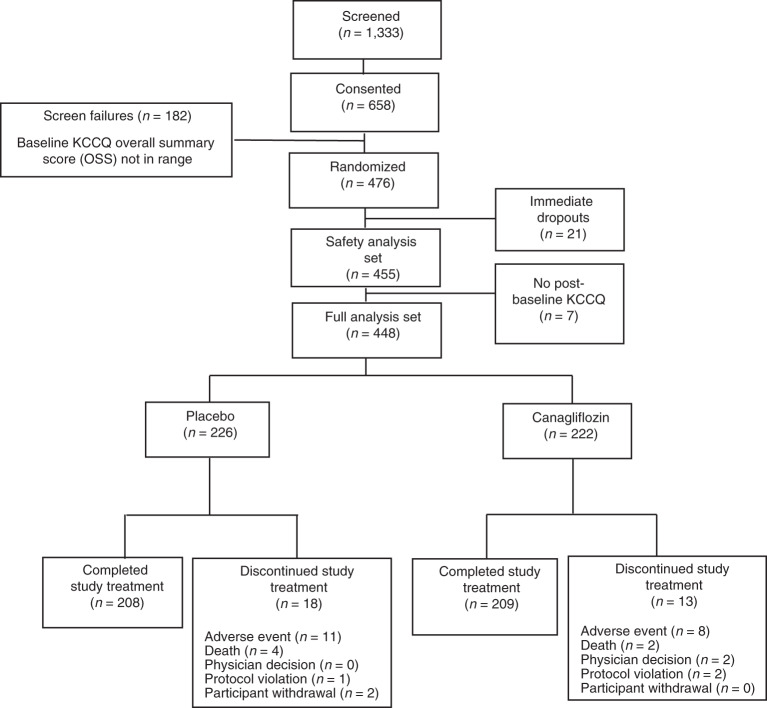
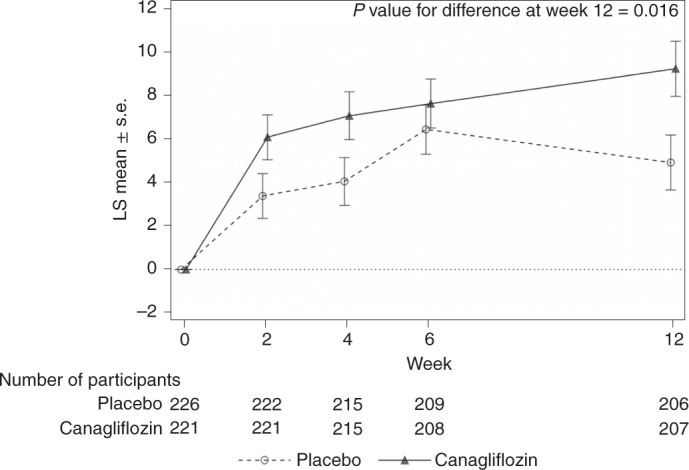
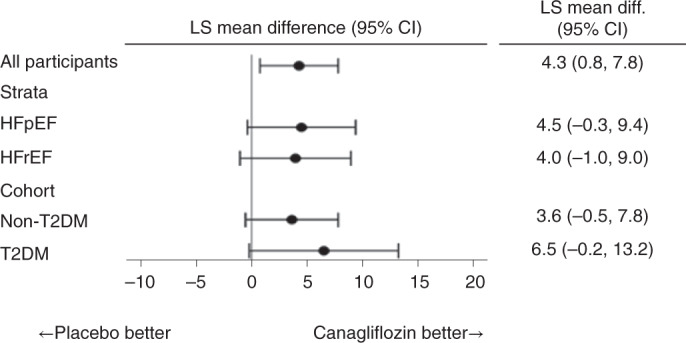
Large traditional clinical trials suggest that sodium-glucose co-transporter 2 inhibitors improve symptoms in patients with heart failure and reduced ejection fraction (HFrEF) and in patients with heart failure and preserved ejection fraction (HFpEF). In the midst of the Coronavirus Disease 2019 pandemic, we sought to confirm these benefits in a new type of trial that was patient centered and conducted in a completely remote fashion. In the CHIEF-HF trial ( NCT04252287 ), 476 participants with HF, regardless of EF or diabetes status, were randomized to 100 mg of canagliflozin or placebo. Enrollment was stopped early due to shifting sponsor priorities, without unblinding. The primary outcome was change in the Kansas City Cardiomyopathy Questionnaire Total Symptom Score (KCCQ TSS) at 12 weeks. The 12-week change in KCCQ TSS was 4.3 points (95% confidence interval, 0.8–7.8; P = 0.016) higher with canagliflozin than with placebo, meeting the primary endpoint. Similar effects were observed in participants with HFpEF and in those with HFrEF and in participants with and without diabetes, demonstrating that canagliflozin significantly improves symptom burden in HF, regardless of EF or diabetes status. This randomized, double-blind trial, conducted without in-person interactions between doctor and patient, can serve as a model for future all-virtual clinical trials.
Overview
The claims and statistics of this paper haven’t been checked yet.
Free: it reads the open-access text and checks the first 5 claims that cite a source we can check. Create a free account to check every claim.
Integrity signals
Registry
Cites
Statistics
Figures
Verification
Claims the paper makes
The claims and statistics of this paper haven’t been checked yet.
Free: it reads the open-access text and checks the first 5 claims that cite a source we can check. Create a free account to check every claim.
Claims other papers make about this one
Each is checked against this paper’s own text: does it say what the citing paper says it does?
The source backs part of the claim, not all of it — or backs it for a different population, condition or comparison.
In the citing paper
“In addition to the hospitalization and mortality benefit in people with heart failure, SGLT2 inhibitors improve clinical stability and functional status in individuals with heart failure (289,292–294).”
From 10. Cardiovascular Disease and Risk Management: Standards of Care in Diabetes—2026 (2026) · cites this paper as [294]
Experimental — accuracy not yet measuredThe cited source says what the claim attributes to it.
In the citing paper
“In addition to the hospitalization and mortality benefit in people with heart failure, SGLT2 inhibitors improve clinical stability and functional status in individuals with heart failure (301,(304)(305)(306).”
From 10. Cardiovascular Disease and Risk Management: Standards of Care in Diabetes—2025 (2025) · cites this paper as [306]
In the citing paper
“Finally, canagli fl ozin improved heart failure symptoms assessed using the Kansas City Cardiomyopathy Questionnaire Total Symptom Score, irrespective of left ventricular ejection fraction or the presence of diabetes (231).”
From 10. Cardiovascular Disease and Risk Management: Standards of Care in Diabetes—2023 (2023) · cites this paper as [231]
Self-check
Percentages, sums and reported differences re-computed from the paper’s own numbers.
The self-check needs the paper’s full text.
Citations
Cites
Empagliflozin, Cardiovascular Outcomes, and Mortality in Type 2 Diabetes
Zinman, B., Wanner, C., Lachin, J. M., Fitchett, D., Bluhmki, E., Hantel, S., Mattheus, M., Devins, T., Johansen, O. E., Woerle, H. J., et al. (2015) · New England Journal of Medicine · doi:10.1056/nejmoa1504720 · Cited by 12,315
Dapagliflozin in Patients with Heart Failure and Reduced Ejection Fraction
McMurray, J. J. V., Solomon, S. D., Inzucchi, S. E., Køber, L., Kosiborod, M. N., Martinez, F. A., Ponikowski, P., Sabatine, M. S., Anand, I. S., Bělohlávek, J., et al. (2019) · New England Journal of Medicine · doi:10.1056/nejmoa1911303 · Cited by 7,140
Self-citationCardiovascular and renal outcomes with empagliflozin in heart failure
Packer, M., Anker, S. D., Butler, J., Filippatos, G., Pocock, S. J., Carson, P., Januzzi, J., Verma, S., Tsutsui, H., Brueckmann, M., et al. (2020) · New England Journal of Medicine · doi:10.1056/nejmoa2022190 · Cited by 5,206
Self-citationEmpagliflozin in heart failure with a preserved ejection fraction
Anker, S. D., Butler, J., Filippatos, G., Ferreira, J. P., Bocchi, E., Böhm, M., Brunner–La Rocca, H.-P., Choi, D.-J., Chopra, V., Chuquiure-Valenzuela, E., et al. (2021) · New England Journal of Medicine · doi:10.1056/nejmoa2107038 · Cited by 4,874
Self-citationSotagliflozin in patients with diabetes and recent worsening heart failure
Bhatt, D. L., Szarek, M., Steg, P. G., Cannon, C. P., Leiter, L. A., McGuire, D. K., Lewis, J. B., Riddle, M. C., Voors, A. A., Metra, M., et al. (2021) · New England Journal of Medicine · doi:10.1056/nejmoa2030183 · Cited by 1,868
Green, C. P., Porter, C. B., Bresnahan, D. R., & Spertus, J. A. (2000) · Journal of the American College of Cardiology · doi:10.1016/s0735-1097(00)00531-3 · Cited by 1,827
Self-citationInterpreting the Kansas City Cardiomyopathy Questionnaire in Clinical Trials and Clinical Care
Spertus, J. A., Jones, P. G., Sandhu, A. T., & Arnold, S. V. (2020) · Journal of the American College of Cardiology · doi:10.1016/j.jacc.2020.09.542 · Cited by 619
Self-citationNassif, M. E., Windsor, S. L., Borlaug, B. A., Kitzman, D. W., Shah, S. J., Tang, F., Khariton, Y., Malik, A. O., Khumri, T., Umpierrez, G., et al. (2021) · Nature Medicine · doi:10.1038/s41591-021-01536-x · Cited by 618
Self-citationMonitoring clinical changes in patients with heart failure: A comparison of methods
Spertus, J., Peterson, E., Conard, M. W., Heidenreich, P. A., Krumholz, H. M., Jones, P., McCullough, P. A., Pina, I., Tooley, J., Weintraub, W. S., et al. (2005) · American Heart Journal · doi:10.1016/j.ahj.2004.12.010 · Cited by 562
Self-citationPetrie, M. C., Verma, S., Docherty, K. F., Inzucchi, S. E., Anand, I., Belohlávek, J., Böhm, M., Chiang, C.-E., Chopra, V. K., de Boer, R. A., et al. (2020) · JAMA · doi:10.1001/jama.2020.1906 · Cited by 531
Self-citation
Cited by
Items 101–200 of 286
Feng, Q., Wu, M., & Mai, Z. (2025) · Frontiers in Cardiovascular Medicine · doi:10.3389/fcvm.2025.1482918 · Cited by 13
Sodium-Glucose Cotransporter 2 Inhibitor Use for Heart Failure in US Ambulatory Cardiovascular Care
Rafei, A. E., GOSCH, K. L., Manning, E. S., Ghajar, A., Raghavan, S., Maddox, T. M., Peterson, P. N., Fleming, L., Arnold, S. V., Chan, P. S.-F., et al. (2025) · JAMA Cardiology · doi:10.1001/jamacardio.2025.2145 · Cited by 13
Wang, X., He, M., Jin, D., Sun, C., & Lu, H. (2024) · Diabetology & Metabolic Syndrome · doi:10.1186/s13098-024-01446-1 · Cited by 12
Hsu, C., Zeng, B., Liang, C., Zeng, B., Hung, C., Stubbs, B., Chen, Y., Lei, W., Chen, J.-J., Chen, P., et al. (2025) · International Journal of Molecular Sciences · doi:10.3390/ijms26178202 · Cited by 12
Quality of life in heart failure: New data, new drugs and devices
Major, K., Bodys-Pełka, A., Grabowski, M., & Lelonek, M. (2024) · Cardiology Journal · doi:10.5603/cj.92243 · Cited by 12
“Finally, the CHIEF-HF remote, patient-centered randomized, placebo-controlled trial determined superiority of canagliflozin administered at daily doses of 100 mg daily over placebo in improving the KCCQ-TSS at 12 weeks — the difference between the two groups was 4.3 points (p = 0.016) [49].”
MethodInfluentialDocherty, K. F., Buendía, R., Folkvaljon, F., de Boer, R. A., Cowie, M., Hammarstedt, A., Kitzman, D. W., Kosiborod, M., Langkilde, A. M., Reicher, B., et al. (2024) · Circulation Heart Failure · doi:10.1161/circheartfailure.124.012349 · Cited by 11
“24 30 This discrepancy between an effect on accelerometer outcomes and 6MWD has been observed in other trials using different interventions.”
Self-citationSoulié, M., Stéphan, Y., Durand, M., Lima‐Posada, I., Palacios, R., Nicol, L., López‐Andrés, N., Mulder, P. G. H., & Jaisser, F. (2024) · Scientific Reports · doi:10.1038/s41598-024-74934-z · Cited by 11
Cheema, H. A., Shafiee, A., Athar, M. M. T., Rafiei, M. A., Mehmannavaz, A., Jafarabady, K., Shahid, A., Ahmad, A. N., Ijaz, S. H., Dani, S. S., et al. (2023) · Frontiers in Cardiovascular Medicine · doi:10.3389/fcvm.2023.1273781 · Cited by 11
Chong, J. H., Chang, W., Chan, J. J., Tan, T. J., Chan, J., Wong, M., Wong, F. Y., & Chuah, C. T. H. (2024) · Current Problems in Cardiology · doi:10.1016/j.cpcardiol.2024.102372 · Cited by 11
Liu, C., Ho, Y., Lee, W., Huang, C., Lee, Y., Hsieh, C., Huang, N., Wu, C., Nguyen, N. U. N., Hsu, C., et al. (2024) · Environmental Toxicology · doi:10.1002/tox.24362 · Cited by 11
“In addition to empagliflozin, the other SGLT2 inhibitors, da-pagliflozin and canagliflozin, also showed cardioprotective effects in patients with heart failure [68, 69].”
RetractedDiabetes and Heart Failure: A Literature Review, Reflection and Outlook
Li, X., Zhou, X., & Gao, L. (2024) · Biomedicines · doi:10.3390/biomedicines12071572 · Cited by 11
Sodium‑glucose co-transporter‑2 inhibitors in the treatment of diabetes with heart failure
Liang, B., & Gu, N. (2022) · Cardiovascular Diabetology · doi:10.1186/s12933-022-01526-4 · Cited by 11
“Notably, PRESERVED-HF and CHIEF-HF indicated that dapagliflozin/canagliflozin improved surrogate endpoints (such as Kansas City Cardiomyopathy Questionnaire total symptom score) in patients with diabetes and heart failure (ejection fraction was ≥ 45% in PRESERVED-HF and was not limited in CHIEF-HF) [5, 6].”
BackgroundA Review of the Safety and Efficacy of Bexagliflozin for the Management of Type 2 Diabetes
Cowart, K., Coon, S. A., & Carris, N. W. (2023) · Annals of Pharmacotherapy · doi:10.1177/10600280231190443 · Cited by 11
“10,11 Currently available SGLT2 inhibitors include cana-gliflozin, dapagliflozin, empagliflozin, and ertugliflozin.”
BackgroundSandhu, A. T., & Cohen, D. J. (2023) · JAMA Cardiology · doi:10.1001/jamacardio.2023.0087 · Cited by 11
Varzideh, F., Kansakar, U., Wilson, S., Jankauskas, S. S., & Santulli, G. (2024) · Cell Cycle · doi:10.1080/15384101.2025.2492423 · Cited by 10
“Beyond glycemic control, CANA has been shown to reduce the risk of heart failure hospitalization and cardio-vascular mortality, not only in patients with diabetes but also in non-diabetic individuals [1,3].”
Docherty, K. F., Buendía, R., Folkvaljon, F., de Boer, R. A., Chen, J., Hammarstedt, A., Kitzman, D. W., Kosiborod, M., Langkilde, A. M., Reicher, B., et al. (2024) · Journal of Cardiac Failure · doi:10.1016/j.cardfail.2024.10.439 · Cited by 11
Self-citationSGLT-2 inhibitors: new horizons for rheumatologists
Chakrabarti, K., & McCune, W. J. (2024) · Current Opinion in Rheumatology · doi:10.1097/bor.0000000000001030 · Cited by 10
Brust-Sisti, L. A., Rudawsky, N., Gonzalez, J., & Brunetti, L. (2022) · Pharmacy · doi:10.3390/pharmacy10060166 · Cited by 10
“CHIEF-HF [24] (N = 448) Mean difference, 4.”
BackgroundMethodInfluentialGuo, Z., Wang, L., Yu, J., Wang, Y., Yang, Z., & Zhou, C. (2023) · International Journal of Clinical Pharmacy · doi:10.1007/s11096-022-01504-6 · Cited by 10
“There were three dapagliflozin trials enrolling 5,321 patients [20, 21, 27], four empagliflozin trials enrolling 444 patients [22, 28–30], and one canagliflozin trial with 448 patients [31].”
BackgroundNani, A., Carrara, F., Paulesu, C. M. E., Fratte, C. D., Padroni, M., Enisci, S., Bilancio, M. C., Romio, M. S., Bertuzzi, F., & Pintaudi, B. (2023) · Journal of Clinical Medicine · doi:10.3390/jcm12123958 · Cited by 10
“, 2022 [54] Adults with HF aged ≥18 years5 Randomised controlled trial 2020–2021 Canagliflozin 100 mg 66 59 NA NA NA NA NE3 NA NA”
BackgroundJi, L., Mishra, M., & Geest, B. D. (2023) · Pharmaceutics · doi:10.3390/pharmaceutics15041092 · Cited by 10
“The CHIEF-HF (Canagliflozin: Impact on Health Status, Quality of Life and Functional Status in Heart Failure) was patient centered and conducted in a completely remote fashion [140].”
MethodNassif, M. E., Birmingham, M. C., Lanfear, D. E., Golbus, J. R., Gupta, B. P., Fawcett, C., HARRISON, M. C., & Spertus, J. A. (2023) · Journal of Cardiac Failure · doi:10.1016/j.cardfail.2023.04.001 · Cited by 9
Self-citationPatient-reported outcomes in clinical studies of patients with hypertrophic cardiomyopathy
Reza, N., Day, S. M., & OWENS, A. T. (2023) · Progress in Cardiovascular Diseases · doi:10.1016/j.pcad.2023.08.007 · Cited by 9
Decentralized Clinical Trials in Early Drug Development—A Framework Proposal
Silva, D., Nelson, B. E., & Rodon, J. A. (2024) · Journal of Immunotherapy and Precision Oncology · doi:10.36401/jipo-23-33 · Cited by 9
Ju, F., Abbott, G. W., Li, J., Wang, Q., Liu, T., Liu, Q., & Hu, Z. (2023) · Cardiovascular Drugs and Therapy · doi:10.1007/s10557-022-07419-8 · Cited by 9
“Meanwhile, a very recent CHIEF-HF remote, patient-centered randomized trial confirmed the cardioprotective effect of canagliflozin in patients without diabetes [40].”
Zhang, L., Wang, T., Kong, Y., Sun, H., Zhang, Y., Wang, J., Wang, Z., Lu, S., Yu, P., & Zhou, S. (2023) · Diabetology & Metabolic Syndrome · doi:10.1186/s13098-023-01236-1 · Cited by 9
“A large pool of data from evidence-based medicine has proved that SGLT2 inhibitors are antihyperglycemic drugs of a cardiorenal risk-reducing agent [18, 19].”
BackgroundLiang, B., Liang, Y., & Gu, N. (2022) · BMC Cardiovascular Disorders · doi:10.1186/s12872-022-02693-8 · Cited by 9
“With the release of PRESERVED-HF [13], CANVAS [14], CHIEF-HF [15], and VERTIS CV [16], SGLT2is seem a potential promising therapy for patients with HFpEF.”
BackgroundSGLT2 Inhibitor Treatment Is Associated With Reduced Cardiac Glucose Metabolism
Sperry, B. W., Almohtasib, Y. S., Ghaly, R., Jawad, M. A., Sauer, A. J., & Bateman, T. M. (2025) · JACC Advances · doi:10.1016/j.jacadv.2025.102016 · Cited by 8
Cussen, A., & Littler, K. (2025) · BMJ Open · doi:10.1136/bmjopen-2025-106823 · Cited by 8
López‐Candales, A., Asif, T., Sawalha, K., & Norgard, N. B. (2023) · Cardiovascular Therapeutics · doi:10.1155/2023/1552826 · Cited by 8
Hua, T., Chu, Y., Wang, M., Zhang, Y., Shi, W., Huang, Q., Zhang, L., & Yang, M. (2023) · Intensive Care Medicine Experimental · doi:10.1186/s40635-023-00562-y · Cited by 8
Elliott, J., & Oyama, M. A. (2024) · Journal of Veterinary Pharmacology and Therapeutics · doi:10.1111/jvp.13472 · Cited by 8
Vrachatis, D. A., Papathanasiou, K. A., Giotaki, S. G., Raisakis, K., Kaoukis, A., Kossyvakis, C., Theodorakis, A., Pediotidis, S., Avramides, D., Siasos, G., et al. (2023) · Current Pharmaceutical Design · doi:10.2174/1381612829666230316142450 · Cited by 8
Kotit, S. (2023) · Global Cardiology Science and Practice · doi:10.21542/gcsp.2023.14 · Cited by 8
de Souza, M. D. M., Defante, M. L. R., de Morais, B. C., Muniz, J. Q. V., Mendes, B. X., Martins, O. C., Prizão, V. M., & Silva, M. M. F. (2025) · International Journal of Clinical Pharmacy · doi:10.1007/s11096-025-01908-0 · Cited by 7
“Although our intention was to examine each outcome separately for patients with and without diabetes, only two trials [17, 19] provided data for these outcomes.”
InfluentialImproving Representation of Underserved Populations in Cardiovascular Research
Loh, I. K., Miller, T. E., Aggarwal, R., & Richmond, T. M. (2025) · Journal of the American Heart Association · doi:10.1161/jaha.124.038020 · Cited by 7
Chen, J.-J., Hsu, C., Hung, C., Suen, M.-W., Wang, H.-Y., Yang, W.-C., Stubbs, B., Chen, Y., Chen, T., Lei, W., et al. (2026) · International Journal of Molecular Sciences · doi:10.3390/ijms27020608 · Cited by 7
The effect of GLP-1 receptor agonist and SGLT2 inhibitor on infection risk: network meta-analysis
Zeng, B.-S., Chen, J.-J., Hsu, C.-W., Hung, C.-M., Zeng, B., Suen, M., Yang, W.-C., Wang, H.-Y., Shiue, Y.-L., Su, K.-P., et al. (2026) · Clinical Microbiology and Infection · doi:10.1016/j.cmi.2026.01.014 · Cited by 8
Li, R., Dai, G., Guan, H., Gao, W., Ren, L., Wang, X., & Qu, H. (2023) · Frontiers in Cardiovascular Medicine · doi:10.3389/fcvm.2023.1143658 · Cited by 8
Gupta, K., Spertus, J. A., Birmingham, M. C., GOSCH, K. L., Husain, M., Kitzman, D. W., Pitt, B., Shah, S. J., Januzzi, J. L., Lingvay, I., et al. (2023) · Circulation · doi:10.1161/circulationaha.122.063263 · Cited by 7
Self-citationWang, Y., & Zhou, X. (2024) · European Journal of Clinical Pharmacology · doi:10.1007/s00228-024-03631-7 · Cited by 7
In nondiabetic C57BL/6J mice, canagliflozin affects the skeleton in a sex- and age-dependent manner
Chlebek, C., McAndrews, C., Costa, S., DeMambro, V., Yakar, S., & Rosen, C. J. (2024) · JBMR Plus · doi:10.1093/jbmrpl/ziae128 · Cited by 7
Dhalla, N. S., Bhullar, S. K., & Shah, A. K. (2022) · Canadian Journal of Physiology and Pharmacology · doi:10.1139/cjpp-2022-0154 · Cited by 7
Network Meta-Analysis of Quality of Life in Heart Failure With Reduced Ejection Fraction
Margaryan, R., Sepehrvand, N., Ouwerkerk, W., Tromp, J., Turgeon, R. D., & Ezekowitz, J. A. (2025) · Circulation Heart Failure · doi:10.1161/circheartfailure.125.013074 · Cited by 6
Newer and novel antidiabetic drug classes across the cardiovascular–kidney–metabolic continuum
Stefanakis, K., Karakasis, P., Vasdeki, D., Popovic, D. S., Patoulias, D., Rizzo, M., & Mantzoros, C. S. (2026) · Endocrine Reviews · doi:10.1210/endrev/bnag022 · Cited by 6
Liang, B., Li, R., Zhang, P., & Gu, N. (2022) · Journal of Cardiovascular Translational Research · doi:10.1007/s12265-022-10302-4 · Cited by 6
“Similar effects were observed in participants with HFpEF and those with HFrEF and participants with and without diabetes, demonstrating that canagliflozin significantly improves symptom burden in HF, regardless of EF or diabetes status [52].”
ResultXia, W., Zhang, M., Liu, C., Wang, S., Xu, A., Xia, Z., Pang, L., & Cai, Y. (2024) · Life Sciences · doi:10.1016/j.lfs.2024.122594 · Cited by 6
King, S., Trabanino, S., Azizi, Z., & Rodríguez, F. (2024) · Methodist DeBakey Cardiovascular Journal · doi:10.14797/mdcvj.1447 · Cited by 6
Pagel, P. S., Hang, D., Freed, J. K., & Crystal, G. J. (2025) · Journal of Cardiothoracic and Vascular Anesthesia · doi:10.1053/j.jvca.2025.05.010 · Cited by 7
Heath, M., de Jong, A. J., Magorrian‐Spence, S., Jin, C., van Weelij, D. R., Pagnier, L., van Rijswick, Y., Haufe, V., Lagerwaard, B., & Zuidgeest, M. G. P. (2025) · Clinical Pharmacology & Therapeutics · doi:10.1002/cpt.70072 · Cited by 6
“29 In comparison, in the hybrid ALL-HEART trial, where the IMP was prescribed by the primary care physician, 48 of the 2853 participants randomized to the IMP intervention did not receive IMP.”
Early Longitudinal Change in Heart Failure Health Status Following Initiation of Canagliflozin
Mohebi, R., Jones, P. G., Spertus, J. A., Lingvay, I., Lanfear, D. E., GOSCH, K. L., Birmingham, M. C., Kosiborod, M., Butler, J., & Januzzi, J. L. (2024) · JACC Heart Failure · doi:10.1016/j.jchf.2024.01.005 · Cited by 6
Self-citationRiaz, M., Guo, J. S., Smith, S. M., Dietrich, E. A., Winchester, D. E., & Park, H. (2024) · American Journal of Cardiovascular Drugs · doi:10.1007/s40256-024-00648-2 · Cited by 6
“Although canagliflozin has been shown in one small study to improve symptoms related to HFpEF [26], it is not currently FDA approved for this indication, nor are there data showing improvements in other clinical outcomes (e.g., hospitalizations).”
Blaj-Tunduc, I. P., Brisc, C., Brisc, M. C., Zaha, D. C., Bustea, C., Babeş, V. V., Sirca, T. B., Muste, F. A., & Babeş, E. E. (2025) · Medicina · doi:10.3390/medicina61081451 · Cited by 5
Stabile, S., Franchina, V., Testoni, S., Mannozzi, F., Fabbri, F., Federici, I., Betti, M., Zepponi, F., Frazzetto, A., Micallo, G., et al. (2024) · International Journal of Clinical Trials · doi:10.18203/2349-3259.ijct20241997 · Cited by 5
Soares, R. R., Viggiani, L. F., Filho, J. M. R., & Joviano‐Santos, J. V. (2024) · Chemico-Biological Interactions · doi:10.1016/j.cbi.2024.111229 · Cited by 6
Addo, B., Agyeman, W. Y., Ibrahim, S., & Berchie, P. O. (2024) · American Journal of Cardiovascular Drugs · doi:10.1007/s40256-024-00669-x · Cited by 6
Representation of women and racial minorities in SGLT2 inhibitors and heart failure clinical trials
Gupta, R., Umeh, C. A., Mohta, T., Vaidya, A. S., Wolfson, A., Nattiv, J., Bhatia, H. S., Kaur, G., Dhawan, R., DARJI, P., et al. (2024) · IJC Heart & Vasculature · doi:10.1016/j.ijcha.2024.101539 · Cited by 5
Novel Strategies for the Treatment of COVID-19
McCarthy, M. W. (2022) · Drugs in R&D · doi:10.1007/s40268-022-00400-8 · Cited by 5
Tseng, P., Zeng, B., Thompson, T., Stubbs, B., Hsueh, P., Su, K., Chen, Y., Chen, T., Wu, Y., Lin, P., et al. (2023) · Psychiatry and Clinical Neurosciences · doi:10.1111/pcn.13592 · Cited by 5
Song, R., Liu, F., Shi, X., Sun, S., Chen, J., & Gao, H.-M. (2024) · Postgraduate Medical Journal · doi:10.1093/postmj/qgae148 · Cited by 5
Jassem, N. A., & Alhammid, S. N. A. (2025) · Iraqi Journal of Pharmaceutical Sciences · doi:10.31351/vol33iss(4si)pp43-56 · Cited by 5
Kalwani, N. M., Calma, J., Varghese, G. M., Gupta, A., Zheng, J., Brown‐Johnson, C. G., Amano, A., Vilendrer, S. M., Winget, M., Asch, S. M., et al. (2022) · American Heart Journal · doi:10.1016/j.ahj.2022.10.081 · Cited by 5
Decentralized clinical trials in cardiovascular disease : A primer for clinical trialists
Baudry, G., Kulkarni, P., Biering‐Sørensen, T., DeVore, A. D., Gibson, C. M., Granger, C. B., & Spall, H. G. C. V. (2026) · Nature Cardiovascular Research · doi:10.1038/s44161-026-00788-5 · Cited by 4
Novel Trial Designs in Heart Failure: Using Digital Health Tools to Increase Pragmatism
DeVore, A. D., Fudim, M., & Lund, L. H. (2023) · Current Heart Failure Reports · doi:10.1007/s11897-023-00640-y · Cited by 4
“More recently, the Canagliflozin Impact on Health Status, Quality of Life and Functional Status in Heart Failure (CHIEF-HF) trial compared canagliflozin to placebo in patients with HF regardless of left ventricular ejection fraction [19, 20].”
Kusi-Yeboah, T., Gianfrancesco, I., Jabbar, M. A. D. A., Collins, P., Bally, D. J., Thornton, J., Williams, K., Ishola, A., Hong, L., Toong, P. J., et al. (2025) · Frontiers in Cardiovascular Medicine · doi:10.3389/fcvm.2025.1556606 · Cited by 4
Ding, Q., Spatz, E. S., Bena, J., Morrison, S. L., Levay, M., Lin, H., Grey, M. J., Edwards, N. E., Isaacs, D. M., West, L. M., et al. (2023) · Journal of the American Heart Association · doi:10.1161/jaha.122.029058 · Cited by 4
Lou, Y., Yang, Q., Zhang, W., Yu, Y., & Huang, J. (2022) · Reviews in Cardiovascular Medicine · doi:10.31083/j.rcm2311374 · Cited by 4
“The CHIEF-HF trial also demonstrated that SGLT2i (canagliflozin) significantly improved symptom burden in HF, regardless of EF or diabetes status [39].”
MethodHuang, L., Hu, R., & Zou, H. (2024) · Frontiers in Pharmacology · doi:10.3389/fphar.2024.1419729 · Cited by 4
SGLT2i‑treated heart failure patients with a reduced ejection fraction: A meta‑analysis
Ye, Q., & Zha, K. (2023) · Experimental and Therapeutic Medicine · doi:10.3892/etm.2023.12248 · Cited by 3
“Spertus et al (26) showed that SGLT2i in HF patients could alleviate HF symptoms regardless of whether patients had diabetes as was observed based on the increased KCCQ Total Symptom Score.”
BackgroundEl-Gazar, R. A., Zarif, B., Ali, A. A., William, M. M., Abbassi, M., & Sabry, N. A. (2025) · Heart & Lung · doi:10.1016/j.hrtlng.2025.03.007 · Cited by 3
Adrita, S. A., & Bacsa, J. (2025) · Cureus · doi:10.7759/cureus.86784 · Cited by 3
“A remote, patient-centred, randomized trial demonstrated that canagliflozin, an SGLT2 inhibitor, significantly decreased hospitalization rates among patients with diabetes and heart failure by alleviating symptom burden, thereby enhancing patients' functional status and overall quality of life [35].”
Coppo, E., Valpuesta, A. G., Silva, J. J. S., Rebollo, J. F., Caballero, E. G., & Chulián, S. G. (2025) · Expert Review of Cardiovascular Therapy · doi:10.1080/14779072.2025.2534712 · Cited by 3
“Finally, in the CHIEF-HF trial, canagliflozin improved the KCCQ-Total Symptom Score at 12 weeks in HF patients [46].”
Nikolovski, J., Návar, A. M., Steinhubl, S. R., Baca-Motes, K., Curtis, A. B., Peterson, E. D., Lakkireddy, D., Tarino, M., Juan, S., Damaraju, C. V., et al. (2025) · JACC Advances · doi:10.1016/j.jacadv.2025.102072 · Cited by 3
Self-citationPatient-Centered Outcomes in Heart Failure Pharmacotherapy
Kido, K., Hashiguchi, M., & Guglin, M. E. (2025) · JACC Advances · doi:10.1016/j.jacadv.2025.102356 · Cited by 3
Omari, M. B., Naseri, S., & Hassan, A. J. (2024) · Diabetes Metabolic Syndrome and Obesity · doi:10.2147/dmso.s448670 · Cited by 3
“28 Based on the DAPA-HF trial, treatment with dapagliflozin for the long term was associated with a reduction in mortality, hospital stay, and exercise tolerance in heart failure patients, 29 with similar outcomes for empagliflozin in the EMPEROR-REDUCED trial.”
Sathyanarayanan, A. (2024) · Current Medical Research and Opinion · doi:10.1080/03007995.2024.2333441 · Cited by 3
“For example, the CHIEF-HF trial was a double blind RCT conducted with no in-person investigator and participant interaction 23 .”
MethodLi, J., Xu, D., Shi, C., Cheng, C., Xu, Z., Gao, X., & Cheng, Y. (2024) · European Journal of Histochemistry · doi:10.4081/ejh.2024.4122 · Cited by 3
SGLT2 Inhibitors in Patients with Heart Failure: A Model-Based Meta-Analysis
Wang, N., Wu, Z., Ren, J., Zheng, X., & Han, X. (2024) · Clinical Pharmacokinetics · doi:10.1007/s40262-024-01443-7 · Cited by 3
Pandey, A., Kolkailah, A. A., McGuire, D. K., Frederich, R. C., Cater, N. B., Cosentino, F., Pratley, R. E., Dagogo-Jack, S. E., Cherney, D. Z. I., Wynant, W., et al. (2025) · European Journal of Heart Failure · doi:10.1002/ejhf.3511 · Cited by 3
Uso de Inibidores de SGLT2 no Tratamento de Pacientes Portadores de Insuficiência Cardíaca
Matos, L. G., da Costa, A. N., Souza, B. T., de Souza, E. N., Gava, F. D., Peixoto, S. P., de Almeida, Y. O. G., & Gonçalves, W. D. S. (2023) · Brazilian Journal of Implantology and Health Sciences · doi:10.36557/2674-8169.2023v5n5p5681-5692 · Cited by 3
Assessing health status after discharge for decompensated heart failure: a patient‐centred priority
Reza, N., & Butler, J. (2022) · European Journal of Heart Failure · doi:10.1002/ejhf.2521 · Cited by 3
Self-citationFramework for Analytical Validation of DHT-Based Actigraphy and Signal Measures in HF Trials
Köse, O., Sahal, A., Zhang, G. K., Possik, E., Fiuzat, M., Psotka, M. A., Kao, D. P., Shalowitz, E. L., Martyn, T., Kittipibul, V., et al. (2025) · JACC Heart Failure · doi:10.1016/j.jchf.2025.102831 · Cited by 3
Clinical pharmacokinetics on canagliflozin: a systematic review of in-vitro and in-vivo studies
Eden, N. E., Zamir, A., Saeed, H., Alqahtani, F., & Rasool, M. F. (2025) · Expert Review of Clinical Pharmacology · doi:10.1080/17512433.2025.2597512 · Cited by 2
“…during COVID-19 as a fully decentralized study with no in-person visits, showed reduced cardiovascular death and hospitalizations in both heart failure with reduced ejection fraction (HFrEF) and heart failure with preserved ejection fraction (HFpEF), along with improved quality of life [47,48].”
Obesity and Heart Failure: Introducing the Theme
Monitillo, F., Basile, P., & Lisco, G. (2026) · Journal of Cardiovascular Development and Disease · doi:10.3390/jcdd13040153 · Cited by 2
“…in dedicated HF populations by the pragmatic CHIEF-HF trial, which demonstrated significant improvement in HF-related health status, assessed with change in the Kansas City Cardiomyopathy Questionnaire Total Symptom Score (KCCQ TSS) at 12 weeks (+4.3 points) across wide EF spectrum [108].”
InfluentialDifferential Acute Kidney Injury Profiles of GLP-1RAs and SGLT2is: A Network Meta-Analysis
Liang, C.-S., Hsu, C.-C., Chen, J.-J., Hung, C.-M., Zeng, B., Yang, W.-C., Suen, M., Wang, H.-Y., Carvalho, A. F., Stubbs, B., et al. (2026) · International Journal of Molecular Sciences · doi:10.3390/ijms27094137 · Cited by 2
Fu, Z., Chen, X., Liu, H., Yang, J., Jin, T., Liu, T., & Ta, G. (2026) · Frontiers in Pharmacology · doi:10.3389/fphar.2026.1813205 · Cited by 2
“…populations with HFmrEF or HFpEF, involving SGLT2i (dapagliflozin, 2 studies (Solomon et al., 2022; Yang et al., 2022); canagliflozin, 1 study (Spertus et al., 2022); empagliflozin, 1 study (Tromp et al., 2024)), finerenone (5 studies) (Solomon et al., 2024; Chimura et al., 2025; Matsumoto et…”
Les traitements médicamenteux de l’insuffisance cardiaque
Coudert, P. (2024) · Actualités Pharmaceutiques · doi:10.1016/j.actpha.2023.12.007 · Cited by 2
Liao, J., Chen, Y., Ling, Z., Pürerfellner, H., Martinek, M., Derndorfer, M., Niel, J., Ebrahimi, R., Heukäufer, M., Janschel, S., et al. (2024) · ESC Heart Failure · doi:10.1002/ehf2.15136 · Cited by 2
Ferreira, N. L., Adelowo, A. B., & Khan, Z. U. (2024) · Cureus · doi:10.7759/cureus.75802 · Cited by 2
Molecular mechanisms for pathophysiology and therapy of cardiac dysfunction in heart failure
Dhalla, N. S., Elimban, V., Adameová, A., & Goyal, R. K. (2025) · Scripta Medica · doi:10.5937/scriptamed56-56443 · Cited by 2
Chambers, K. H., Williamson, R. A., Maynard, K. K. M. A., & Reid, R. M. (2024) · Cureus · doi:10.7759/cureus.72530 · Cited by 1
Katov, L., Rostan, J., Teumer, Y., Diofano, F., Bothner, C., Rottbauer, W., & Weinmann, K. (2025) · Journal of Clinical Medicine · doi:10.3390/jcm14030786 · Cited by 1
“Other SGLT2 inhibitors, such as Canagliflozin, has been shown to significantly reduce cardiovascular death, nonfatal myocardial infarction, and stroke in type 2 diabetes patients, while also alleviating symptoms of HF [13,23].”
Saeed, A., Younas, B., Rohan, A., Haider, U., Mukhtar, A., Nazir, M., & Maryam, M. (2025) · Cureus · doi:10.7759/cureus.86368 · Cited by 1
Kittipibul, V., Spall, H. G. C. V., Jones, W. S., Fudim, M., Mentz, R. J., Anstrom, K. J., Pitt, B., Desvigne-Nickens, P. M., Fleg, J. L., Hage, C., et al. (2025) · ESC Heart Failure · doi:10.1002/ehf2.15366 · Cited by 1
“…Status, Quality of Life and Functional Status in Heart Failure) study used change in the Kansas City Cardiomyopathy Questionnaire (KCCQ) Total Symptom Score (TSS) as a primary endpoint 30 and the PACT-HF trial used the generic EuroQol 5-Dimension 5-Level (EQ-5D-5L) score as a secondary endpoint.”
Evaluation of pulmonary hypertension in heart failure with preserved ejection fraction
Cao, J. J. L., & Reddy, Y. N. V. (2025) · Heart Failure Reviews · doi:10.1007/s10741-025-10553-8 · Cited by 1
USP13-Mediated selective autophagy of eIF5B promotes pathological cardiac hypertrophy
Ye, Y., Xu, J., Jin, C., Li, X., Wu, X., Zhou, C., Gao, L., Zhong, Z., Li, X., Chen, S., et al. (2025) · Cellular and Molecular Life Sciences · doi:10.1007/s00018-025-05980-7 · Cited by 1
Kitasato, L., Murayama, Y., Ishizue, N., Kobayashi, S., Oikawa, J., Fukaya, H., Niwano, S., & Ako, J. (2025) · Scientific Reports · doi:10.1038/s41598-025-29126-8 · Cited by 1
Chang, L., Hassan, S., Chasse, J., Stern, G. M., Gabovitch, D., Zelle, D., Colling, C., Crossen, J., Aronson, S., Oates, M., et al. (2026) · American Heart Journal · doi:10.1016/j.ahj.2026.107359 · Cited by 1
Bafail, D. A., & Alhalees, N. H. Y. (2026) · Experimental and Therapeutic Medicine · doi:10.3892/etm.2026.13079 · Cited by 1
“Among SGLT2i, the most commonly used agents were empagli‑ flozin (26,27,29,34,35,40‑45), dapagliflozin (23,30,31,36,46‑50) and canagliflozin (24,25,28,37‑39), while other less frequently used agents included ertugliflozin and sotagliflozin (32,33).”
Abuhashem, S., Aramin, M., Alhazmi, A. M., Hameed, A., Tom, L., Alshahrani, M. A., Alatawi, Z., Ibraheim, M. A., & Doraghi, K. (2026) · Annals of Medicine and Surgery · doi:10.1097/ms9.0000000000004669 · Cited by 1
Metadata
- Authors
- Spertus, J. A., Birmingham, M. C., Nassif, M., Damaraju, C. V., Abbate, A., Butler, J., Lanfear, D. E., Lingvay, I., Kosiborod, M. N., & Januzzi, J. L.
- Affiliations
- University of Missouri–Kansas City (US)
- Janssen Scientific Affairs (United States) (US)
- Janssen Research & Development (United States) (US)
- Virginia Commonwealth University (US)
- University of Mississippi Medical Center (US)
- Henry Ford Health (US)
- The University of Texas Southwestern Medical Center (US)
- Harvard University (US)
- Corresponding author
- Spertus, John A.
- ORCID
- Venue
- Nature Medicine
- Published
- 2022-02-28
- Volume
- 28
- Issue
- 4
- Pages
- 809-813
- ISSN
- 1078-8956 (ISSN-L)
- 1546-170X
- PMC
- PMC9018422
- OpenAlex
- W4214512384
- Cited by
- 245
- References
- 32
- Citations by year
- 2026: 27 · 2025: 43 · 2024: 64 · 2023: 68 · 2022: 42
- FWCI
- 37.75
- Type
- journal article
- Language
- en
- Open access
- hybrid
- doi.org
- Licence
- cc-by
- creativecommons.org/licenses/by/4.0 (tdm)
- creativecommons.org/licenses/by/4.0 (vor)
- Locations
- Nature Medicine (publishedVersion, cc-by)
- PubMed Central (publishedVersion, cc-by)
- PubMed (publishedVersion)
- Topics
- Health Sciences › Medicine › Cardiology and Cardiovascular Medicine › Heart Failure Treatment and Management
- Health Sciences › Medicine › Endocrinology, Diabetes and Metabolism › Diabetes Treatment and Management
- Health Sciences › Medicine › Cardiology and Cardiovascular Medicine › Cardiovascular Function and Risk Factors
- Keywords
- canagliflozin, SGLT2 inhibitors, heart failure, heart failure with reduced ejection fraction, heart failure with preserved ejection fraction, Kansas City Cardiomyopathy Questionnaire, symptom burden, remote clinical trials, COVID-19 pandemic, diabetes mellitus, early trial termination
- MeSH terms
- Canagliflozin, Sodium-Glucose Transporter 2 Inhibitors, COVID-19, Heart Failure, Humans, Quality of Life, Stroke Volume, Ventricular Dysfunction, Left, Patient-Centered Care
About these checks
Registry, retraction, Cites and statistics results are computed, not judged, with one exception: a printed reference that no index lists is read once by a model before it counts as a citation error. Claims are extracted by a model and kept only when their quote appears verbatim in the text; each cited source is then checked, with a model’s help, for whether it says what the claim relies on. Those verdicts can be wrong — read the claim’s quote and the cited source before relying on one.
Statistics and arithmetic are recomputed, not judged.
Confidence bands are shown only for fields calibrated on our annotated test set. None is calibrated yet, so no band is shown.
What counts as a claim ›How we measure confidence ›How we check this ›
Are you an author, or do you see a problem with this page? Request a review
Data sources
Bibliographic data: Semantic Scholar, OpenAlex, Crossref.
Contains information from the Semantic Scholar Academic Graph Datasets, made available under the ODC Attribution License (ODC-BY 1.0).
Semantic Scholar’s data is described in: Kinney, R., et al. (2023). The Semantic Scholar Open Data Platform. arXiv:2301.10140.
