

Plasma p-tau231 and p-tau217 as state markers of amyloid-β pathology in preclinical Alzheimer’s disease
Open accessThe DOI matches its Crossref record; 32 of the 33 references it cites were found in a registry or an index; 28 of the 31 sources its claims cite were checked for support.
Abstract
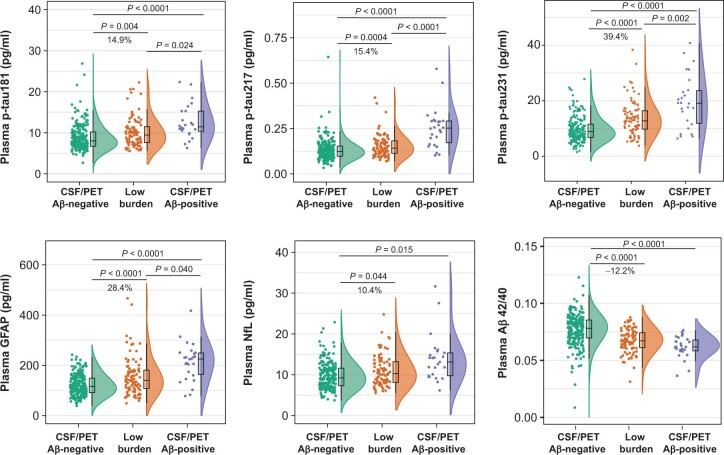
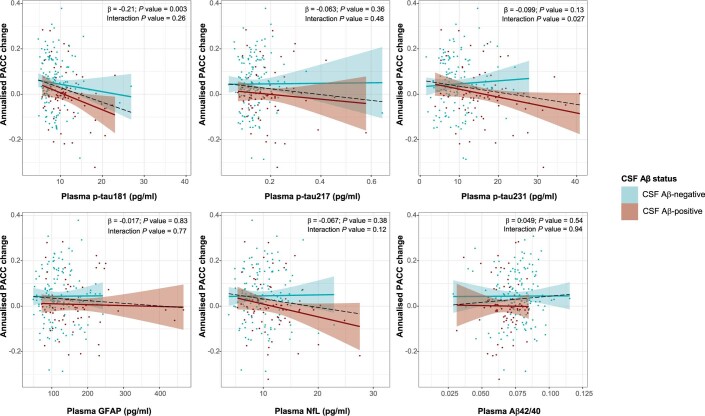
Blood biomarkers indicating elevated amyloid-β (Aβ) pathology in preclinical Alzheimer’s disease are needed to facilitate the initial screening process of participants in disease-modifying trials. Previous biofluid data suggest that phosphorylated tau231 (p-tau231) could indicate incipient Aβ pathology, but a comprehensive comparison with other putative blood biomarkers is lacking. In the ALFA+ cohort, all tested plasma biomarkers (p-tau181, p-tau217, p-tau231, GFAP, NfL and Aβ42/40) were significantly changed in preclinical Alzheimer’s disease. However, plasma p-tau231 reached abnormal levels with the lowest Aβ burden. Plasma p-tau231 and p-tau217 had the strongest association with Aβ positron emission tomography (PET) retention in early accumulating regions and associated with longitudinal increases in Aβ PET uptake in individuals without overt Aβ pathology at baseline. In summary, plasma p-tau231 and p-tau217 better capture the earliest cerebral Aβ changes, before overt Aβ plaque pathology is present, and are promising blood biomarkers to enrich a preclinical population for Alzheimer’s disease clinical trials.
Overview
CoChat Summary
TL;DR
In the ALFA+ cohort, plasma p-tau231 and p-tau217 best captured the earliest amyloid-β changes in preclinical Alzheimer’s disease, with p-tau231 becoming abnormal at the lowest Aβ PET burden. These biomarkers may help enrich preclinical trial populations, though platform and cohort limitations remain.
Key findings
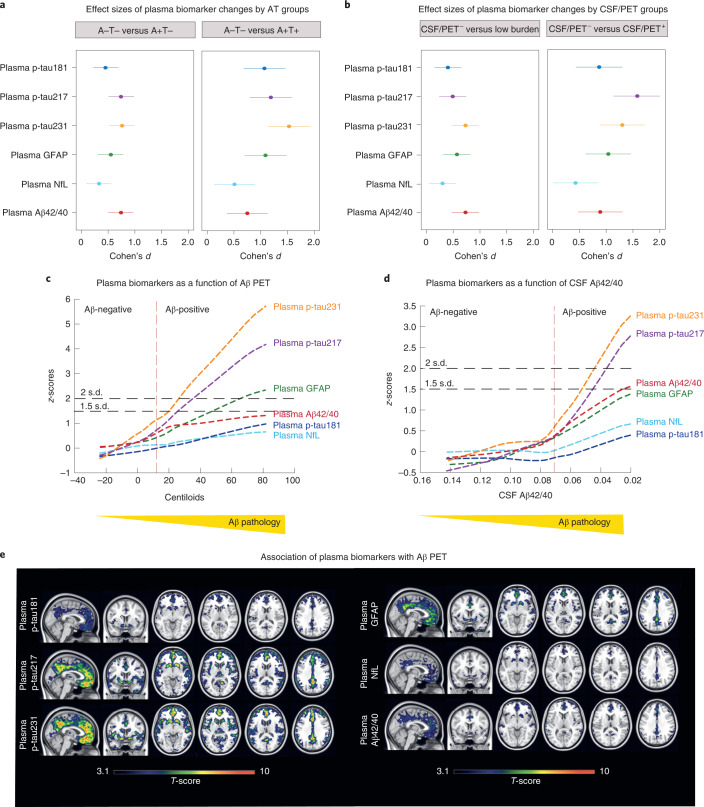
- All tested plasma biomarkers (p-tau181, p-tau217, p-tau231, GFAP, NfL, Aβ42/40) were significantly changed in preclinical AD, but plasma p-tau231 reached abnormal levels earliest, at 26.4 Centiloids, followed by p-tau217 at 35.4 Centiloids and GFAP at 65.5 Centiloids; p-tau181, NfL and Aβ42/40 did not reach the two z-score abnormality threshold.
- Plasma p-tau231 and p-tau217 had the strongest associations with Aβ PET retention in early-accumulating regions, including orbitofrontal areas, anterior and posterior cingulate gyri, insula and precuneus.
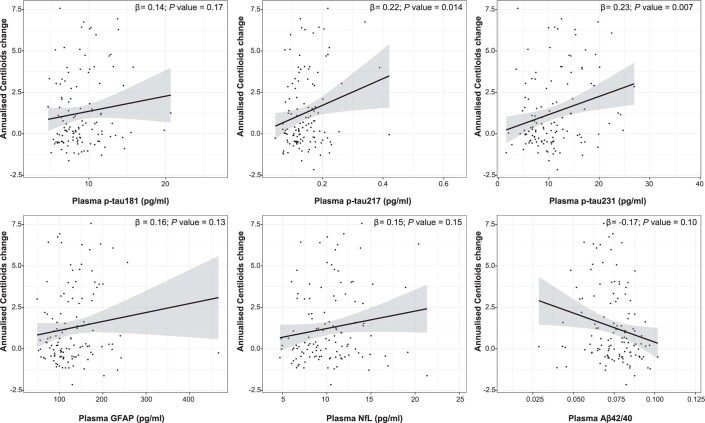
- In participants without established Aβ pathology at baseline (Aβ PET <30 Centiloids), only plasma p-tau231 and p-tau217 were significantly associated with longitudinal Aβ PET Centiloid increases at follow-up (P = 0.041 for both).
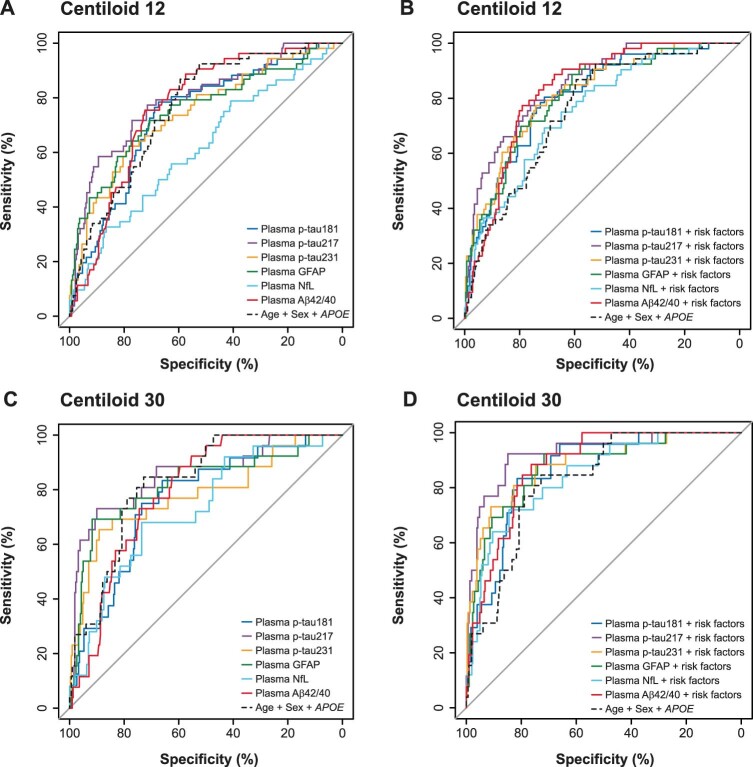
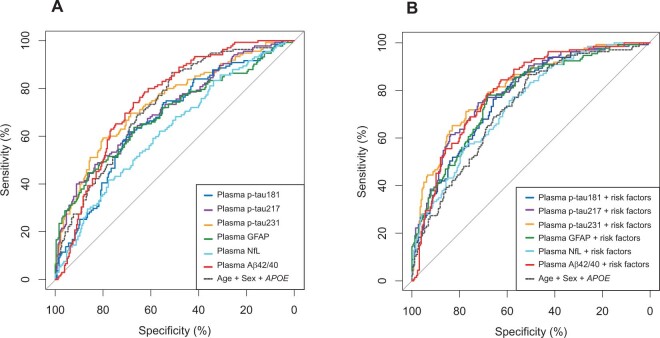
- For discriminating Aβ status by CSF Aβ42/40, the highest AUCs were plasma Aβ42/40 (AUC = 0.750, 95% CI = 0.702–0.798) and p-tau231 (AUC = 0.740, 95% CI = 0.688–0.793); combined with age, sex and APOE ε4, p-tau231 reached AUC = 0.810 (95% CI = 0.766–0.854), Aβ42/40 AUC = 0.798 (95% CI = 0.754–0.843) and p-tau217 AUC = 0.797 (95% CI = 0.751–0.842).
Methods
- Design and sample: ALFA+ cohort study of 397 cognitively unimpaired middle-aged individuals (61.1 ± 4.67 years), including 135 (34.0%) Aβ-positive by CSF Aβ42/40; 339 had baseline Aβ PET, and subsets had 3-year longitudinal cognitive (n = 214) and Aβ PET (n = 145) data.
- Biomarkers and imaging: plasma p-tau181, p-tau217, p-tau231, GFAP, NfL and Aβ42/40; CSF Aβ42/40 and M-p-tau181; [18F]flutemetamol Aβ PET quantified in Centiloids with early (≥12) and later (≥30) cut-offs.
- Analysis: ANCOVA and Cohen’s d for group differences; robust local weighted regression for biomarker trajectories; voxel-wise linear regression for Aβ PET associations; ROC/AUC with DeLong’s test; linear regression for longitudinal cognitive and Aβ PET change.
Limitations
- Stated in the paper: different platforms were used to measure plasma biomarkers, and the contribution of assay platform to diagnostic accuracy remains unclear.
- Stated in the paper: ALFA+ includes participants with higher AD risk by design (high APOE ε4 carriership and Aβ positivity) and does not represent normal aging in the general population.
- Evident from the text: the main biomarker comparisons are cross-sectional, and longitudinal analyses rely on smaller subsets (n = 214 for cognition; n = 145 for Aβ PET), with no external independent validation cohort reported.
Model-written summary. Check it against the paper before relying on it.
Integrity signals
Registry
Cites
Statistics
Figures
Verification
Claims the paper makes
13 Valid · 0 Not valid · 1 Not checked · 37 Own results and interpretations
Every source the paper cites for this claim was checked and supports it.
In the paper
“Our choice of 30 Centiloids as a later cut-off was based on our previous findings that it has the best agreement with the CSF t-tau/Aβ42 ratio in pooled data of ALFA+ and AD neuroimaging (ADNI) cohort biomarkers18.”
§ Plasma p-tau231 and p-tau217 as state markers of amyloid-β pathology in preclinical Alzheimer’s disease > Methods > Participant characteristics
What the sources say
- Supportedcites [18] Salvadó G Centiloid cut-off values for optimal agreement between PET and CSF core AD biomarkers Alzheimers Res. Ther. 2019 11 27 10.1186/s13195-019-0478-z 30902090 PMC6429814 source
The Results section (‘CSF tau/Aβ42 ratios and tau’; page not provided) reports that, with ALFA+ and ADNI data merged, the optimal cut-off for the CSF tTau/Aβ42 ratio was 29.7 Centiloids by Youden’s index and 30.1 by overall percentage agreement. Both support the citing sentence’s rounded value of 30 Centiloids. (LLM, conf=0.95)
plainstates an association- Asserted: passes — The authors put it forward as true.
- Checkable: passes — It can be checked against evidence.
- Load-bearing: passes — The paper’s conclusions depend on it.
- Based: passes — The paper gives a reason why it holds.
- Supported
Every source the paper cites for this claim was checked and supports it.
In the paper
“CSF p-tau231 showed the earliest change in association with Aβ pathology in the AD brain9,14.”
§ Plasma p-tau231 and p-tau217 as state markers of amyloid-β pathology in preclinical Alzheimer’s disease > Main
What the sources say
- Supportedcites [9] Suárez-Calvet M Novel tau biomarkers phosphorylated at T181, T217 or T231 rise in the initial stages of the preclinical Alzheimer’s continuum when only subtle changes in Aβ pathology are detected EMBO Mol. Med. 2020 12 e12921 10.15252/emmm.202012921 33169916 PMC7721364 source
In Results (Modelling of p-tau biomarker changes across the preclinical Alzheimer’s continuum; page unavailable), CSF Mid-p-tau231 was the first measured p-tau biomarker to cross the study’s 2-z-score abnormality threshold as Aβ pathology increased. The analysis using Aβ PET showed the same ordering. This supports the claim as a comparison of modelled biomarker changes, rather than a longitudinal observation. (LLM, conf=0.88)
- Supportedcites [14] Ashton NJ Cerebrospinal fluid p-tau231 as an early indicator of emerging pathology in Alzheimer’s disease eBioMedicine 2022 76 103836 10.1016/j.ebiom.2022.103836 35158308 PMC8850760 source
The Findings state that CSF p-tau231 attained abnormal levels first and was sensitive to the earliest regional Aβ changes before global PET positivity. The Discussion specifies that this was among the p-tau biomarkers tested. (LLM, conf=0.92)
plainstates an association- Asserted: passes — The authors put it forward as true.
- Checkable: passes — It can be checked against evidence.
- Load-bearing: passes — The paper’s conclusions depend on it.
- Based: passes — The paper gives a reason why it holds.
- Supported
Every source the paper cites for this claim was checked and supports it.
In the paper
“In some instances1, the performance of plasma p-tau biomarkers is comparable or only marginally inferior to established cerebrospinal fluid (CSF) or PET examinations of Aβ and tau pathologies, but with the advantage of greater availability and tolerability for both clinicians and patients.”
§ Plasma p-tau231 and p-tau217 as state markers of amyloid-β pathology in preclinical Alzheimer’s disease > Main
What the sources say
- Supportedcites [1] Palmqvist S Discriminative accuracy of plasma Phospho-tau217 for Alzheimer disease vs other neurodegenerative disorders JAMA 2020 324 772 10.1001/jama.2020.12134 32722745 PMC7388060 source
The Discussion reports that plasma P-tau217 and tau-PET did not differ significantly in distinguishing Alzheimer dementia from other neurodegenerative diseases. The Accuracy section also reports performance comparable to CSF P-tau217 for identifying abnormal tau-PET scans, while CSF measures performed better for Aβ-PET status. These findings support the qualified phrase “in some instances.” (LLM, conf=0.91)
plainstates an association- Asserted: passes — The authors put it forward as true.
- Checkable: passes — It can be checked against evidence.
- Load-bearing: passes — The paper’s conclusions depend on it.
- Based: passes — The paper gives a reason why it holds.
- Supported
A result the paper reports from its own data — it cites no other source for it, so there is none to check. The quote shows it is in the paper.
In the paper
“In particular, the highest AUCs were for risk factors combined with plasma p-tau231 (AUC = 0.810 (95% CI = 0.766–0.854)), plasma Aβ42/40 (AUC = 0.798 (95% CI = 0.754–0.843)) and plasma p-tau217 (AUC = 0.797 (95% CI = 0.751–0.842)) (Table 1 and Extended Data Fig. 3).”
§ Plasma p-tau231 and p-tau217 as state markers of amyloid-β pathology in preclinical Alzheimer’s disease > Main
plainstates an association- Asserted: passes — The authors put it forward as true.
- Checkable: passes — It can be checked against evidence.
- Load-bearing: passes — The paper’s conclusions depend on it.
- Based: passes — The paper gives a reason why it holds.
A result the paper reports from its own data — it cites no other source for it, so there is none to check. The quote shows it is in the paper.
In the paper
“In contrast, the other biomarkers had weaker and less widespread associations across the brain with, in particular, less involvement of the insula (Fig. 1e).”
§ Plasma p-tau231 and p-tau217 as state markers of amyloid-β pathology in preclinical Alzheimer’s disease > Main
plainstates an association- Asserted: passes — The authors put it forward as true.
- Checkable: passes — It can be checked against evidence.
- Load-bearing: passes — The paper’s conclusions depend on it.
- Based: passes — The paper gives a reason why it holds.
17 more claims
Create a free account to see all 51 claims and every source verdict.
- Probably not a substantial claim. 14
- It may state two separate claims as one. 20
Claims other papers make about this one
Each is checked against this paper’s own text: does it say what the citing paper says it does?
The source backs part of the claim, not all of it — or backs it for a different population, condition or comparison.
In the citing paper
“A combination of multiple blood-based biomarkers and demographic information, like age and sex, may allow for determining individualised risk of developing AD dementia and this has been done in an MCI population.(455)”
From Dementia prevention, intervention, and care: 2024 report of the Lancet standing Commission (2024) · cites this paper as [455]
Experimental — accuracy not yet measuredThe source backs part of the claim, not all of it — or backs it for a different population, condition or comparison.
In the citing paper
“Plasma p-tau181, p-tau217, and p-tau231 have a good or better accuracy than amyloid CSF Abeta and tau and PET measures of tau and amyloid pathology in discriminating people with amyloid pathology who may have clinical symptoms.(452-454)”
From Dementia prevention, intervention, and care: 2024 report of the Lancet standing Commission (2024) · cites this paper as [454]
Experimental — accuracy not yet measuredThe source backs part of the claim, not all of it — or backs it for a different population, condition or comparison.
In the citing paper
“Abnormality for plasma biomarkers was determined in a standardized manner across all cohorts using z-scores created based on the means and s.d. of cognitively unimpaired individuals without elevated amyloid-β pathology, as previously done in several studies8,62,63.”
From Diagnosis of Alzheimer's disease using plasma biomarkers adjusted to clinical probability (2024) · cites this paper as [63]
Experimental — accuracy not yet measuredThe source backs part of the claim, not all of it — or backs it for a different population, condition or comparison.
In the citing paper
“Plasma levels of p-tau are strongly associated with PET and CSF biomarkers of AD pathology19–25, neuropathological changes associated with AD20,23,26,27 and the subsequent development of AD dementia20,23,28.”
From Highly accurate blood test for Alzheimer's disease is similar or superior to clinical cerebrospinal fluid tests (2024) · cites this paper as [22]
Experimental — accuracy not yet measuredThe cited source says what the claim attributes to it.
In the citing paper
“Abnormality for plasma biomarkers was determined in a standardized manner across all cohorts using z-scores created based on the means and s.d. of cognitively unimpaired individuals without elevated amyloid-β pathology, as previously done in several studies8,62,63.”
From Diagnosis of Alzheimer's disease using plasma biomarkers adjusted to clinical probability (2024) · cites this paper as [63]
1 more claim about this paper
Create a free account to see every claim other papers make about this one.
Citations
Cites
Controlling the False Discovery Rate: A Practical and Powerful Approach to Multiple Testing
Benjamini, Y., & Hochberg, Y. (1995) · Journal of the Royal Statistical Society Series B: Statistical Methodology · doi:10.1111/j.2517-6161.1995.tb02031.x · Cited by 109,482
NIA‐AA Research Framework: Toward a biological definition of Alzheimer's disease
Jack, C. R., Bennett, D. A., Blennow, K., Carrillo, M. C., Dunn, B., Haeberlein, S. B., Holtzman, D. M., Jagust, W., Jessen, F., Karlawish, J., et al. (2018) · Alzheimer's & Dementia · doi:10.1016/j.jalz.2018.02.018 · Cited by 10,537
Self-citationPalmqvist, S., Janelidze, S., Quiroz, Y. T., Zetterberg, H., Lopera, F., Stomrud, E., Su, Y., Chen, Y., Serrano, G. E., Leuzy, A., et al. (2020) · JAMA · doi:10.1001/jama.2020.12134 · Cited by 1,603
Self-citationThe Centiloid Project: standardizing quantitative amyloid plaque estimation by PET
Klunk, W. E., Koeppe, R. A., Price, J. C., Benzinger, T. L., Devous, M. D., Jagust, W. J., Johnson, K. A., Mathis, C. A., Minhas, D., Pontecorvo, M. J., et al. (2015) · Alzheimer's & Dementia · doi:10.1016/j.jalz.2014.07.003 · Cited by 1,348
Karikari, T. K., Pascoal, T. A., Ashton, N. J., Janelidze, S., Benedet, A. L., Rodriguez, J. L., Chamoun, M., Savard, M., Kang, M. S., Therriault, J., et al. (2020) · The Lancet Neurology · doi:10.1016/s1474-4422(20)30071-5 · Cited by 1,316
Self-citationCSF markers for incipient Alzheimer's disease
Blennow, K., & Hampel, H. (2003) · The Lancet Neurology · doi:10.1016/s1474-4422(03)00530-1 · Cited by 1,291
Self-citationJanelidze, S., Mattsson, N., Palmqvist, S., Smith, R., Beach, T. G., Serrano, G. E., Chai, X., Proctor, N. K., Eichenlaub, U., Zetterberg, H., et al. (2020) · Nature Medicine · doi:10.1038/s41591-020-0755-1 · Cited by 1,247
Self-citationThe Preclinical Alzheimer Cognitive Composite: Measuring Amyloid-Related Decline
Donohue, M. C., Sperling, R. A., Salmon, D. P., Rentz, D. M., Raman, R., Thomas, R. G., Weiner, M., & Aisen, P. S. (2014) · JAMA Neurology · doi:10.1001/jamaneurol.2014.803 · Cited by 860
Plasma p-tau231: a new biomarker for incipient Alzheimer’s disease pathology.
Ashton, N. J., Pascoal, T. A., Karikari, T. K., Benedet, A. L., Lantero-Rodriguez, J., Brinkmalm, G., Snellman, A., Schöll, M., Troakes, C., Hye, A., et al. (2021) · Acta Neuropathologica · doi:10.1007/s00401-021-02275-6 · Cited by 719
Self-citationBenedet, A. L., Milà-Alomà, M., Vrillon, A., Ashton, N. J., Pascoal, T. A., Lussier, F., Karikari, T. K., Hourregue, C., Cognat, E., Dumurgier, J., et al. (2021) · JAMA Neurology · doi:10.1001/jamaneurol.2021.3671 · Cited by 638
Self-citation
Cited by
Items 101–200 of 353
Bellaver, B., Puig‐Pijoan, A., Ferrari‐Souza, J. P., Leffa, D. T., Lussier, F. Z., Ferreira, P. C. L., Tissot, C., Povala, G., Therriault, J., Benedet, A. L., et al. (2023) · Alzheimer s & Dementia · doi:10.1002/alz.13014 · Cited by 42
Self-citationDyer, A. H., Dolphin, H., O’Connor, A., Morrison, L., Sedgwick, G., Young, C., Killeen, E., Gallagher, C., McFeely, A., Connolly, E., et al. (2024) · Alzheimer s Research & Therapy · doi:10.1186/s13195-024-01555-z · Cited by 45
Álvarez-Sánchez, L., Peña-Bautista, C., Ferré-González, L., Balaguer, A., Baquero, M., Casanova-Estruch, B., & Cháfer-Pericás, C. (2023) · International Journal of Molecular Sciences · doi:10.3390/ijms24021226 · Cited by 32
“Moreover, these recent studies pointed to plasma p-Tau181 and other hyperphosphorylated Tau (p-Tau231, p-Tau217) as the most sensitive plasma biomarkers for AD diagnosis [18,19], even in the early stages [20,21].”
BackgroundLantero‐Rodriguez, J., Tissot, C., Snellman, A., Servaes, S., Benedet, A. L., Rahmouni, N., Montoliu‐Gaya, L., Therriault, J., Brum, W. S., Stevenson, J., et al. (2023) · Alzheimer s & Dementia · doi:10.1002/alz.13119 · Cited by 32
“6,44,45 Thisfindingcorrob-orates the idea that plasma NTA-tau is a predictor of mid-to late-stage tau accumulation.”
BackgroundSelf-citationBenussi, A., Huber, H., Tan, K., Cantoni, V., Rivolta, J., Cotelli, M. S., Benedet, A. L., Blennow, K., Zetterberg, H., Ashton, N. J., et al. (2025) · Alzheimer s & Dementia · doi:10.1002/alz.14482 · Cited by 39
“12,15,17 However, only a few reports have investigated blood-based biomarker performance in distinguishing AD from syndromes associated with FTLD, and biomarker potential for differential diagnosis has yet to be fully explored.”
Self-citationEdwards, N. C., Lao, P. J., Alshikho, M. J., Ericsson, O. M., Rizvi, B. M., Petersen, M. E., O’Bryant, S. E., Aguilar, L. F., Simoes, S., Mapstone, M. E., et al. (2024) · Brain Communications · doi:10.1093/braincomms/fcae331 · Cited by 35
“98,100 However, in adults with Down syndrome, p-tau217 is more strongly associated with tau-PET standard uptake value ratio (SUVR) than A β -PET (Centiloid) A β + individuals, 44 and in post hoc analyses among participants in ABC-DS analyses, we found that p-tau217 was more strongly associated with…”
BackgroundPredicting continuous amyloid PET values with CSF and plasma Aβ42/Aβ40
Wisch, J. K., Gordon, B. A., Boerwinkle, A. H., Luckett, P. H., Bollinger, J. G., Ovod, V., Li, Y., Henson, R. L., West, T., Meyer, M. R., et al. (2023) · Alzheimer s & Dementia Diagnosis Assessment & Disease Monitoring · doi:10.1002/dad2.12405 · Cited by 43
Bandara, E. M. S., Asih, P. R., Pedrini, S., Hone, E., Fernando, W. M. A. D. B., & Martins, R. N. (2025) · Molecular Neurobiology · doi:10.1007/s12035-025-05219-3 · Cited by 38
Giangrande, C., Delatour, V., Andréasson, U., Blennow, K., Gobom, J., & Zetterberg, H. (2023) · Alzheimer s & Dementia Diagnosis Assessment & Disease Monitoring · doi:10.1002/dad2.12465 · Cited by 48
“55 Another study targeting A β 42/40, p-tau217, and NfL in unimpaired elderly populations found that the combination of these biomarkers can identify individuals at risk of developing AD dementia.”
Self-citationJiang, Z., Wang, J., Qin, Y., Liu, S., Luo, B., Bai, F., Wei, H., Zhang, S., Wei, J., Ding, G., et al. (2024) · Alzheimer s Research & Therapy · doi:10.1186/s13195-024-01392-0 · Cited by 38
“Along with total tau, phospho-tau 181 and phospho-tau 231 in plasma or blood correlate positively with the disease severity of AD and hence can serve as a specific biomarker for AD [28–33].”
BackgroundPlasma pTau181 and pTau217 predict asymptomatic amyloid accumulation equally well as amyloid PET
Meyer, S. D., Schaeverbeke, J. M., Luckett, E. S., Reinartz, M., Blujdea, E. R., Cleynen, I., Dupont, P. J., Laere, K. V., Vanbrabant, J., Stoops, E., et al. (2024) · Brain Communications · doi:10.1093/braincomms/fcae162 · Cited by 31
“Future studies should explore whether factors reflecting other early pathophysiological processes (e.g. synaptic markers or pTau231 14,34 ) can further improve this performance.”
BackgroundMethodSelf-citationSelma‐González, J., Rubio‐Guerra, S., Castro, J. G., Vera-Campuzano, E., Sala, I., Sánchez‐Saudinós, M. B., Zhu, N., Arranz, J., Arriola‐Infante, J. E., Rodríguez‐Baz, Í., et al. (2025) · Neurology · doi:10.1212/wnl.0000000000213769 · Cited by 28
Self-citationHead-to-head comparison of plasma and PET imaging ATN markers in subjects with cognitive complaints
Lu, J., Ma, X., Zhang, H., Xiao, Z., Li, M., Wu, J., Ju, Z., Chen, L., Zheng, L., Ge, J., et al. (2023) · Translational Neurodegeneration · doi:10.1186/s40035-023-00365-x · Cited by 33
“Plasma levels of p-tau biomarkers have been reported to be strongly correlated with both CSF and PET imaging T biomarkers [11, 14, 15, 46, 48, 57].”
BackgroundWojdała, A. L., Bellomo, G., Gaetani, L., Teunissen, C. E., Parnetti, L., & Chiasserini, D. (2025) · Nature Communications · doi:10.1038/s41467-024-54878-8 · Cited by 34
“While CSF and plasmaincreaseof p-tau181, p-tau217, and p-tau231 across AD continuum is already widely reported in the literature 10,13,15,18,42 , in this work we used immunoassays to assess not only quantitative but also qualitative change of bio fl uid tau phosphorylation across distinct clinical…”
Antonioni, A., Raho, E. M., Lorenzo, F. D., Manzoli, L., Flacco, M. E., & Koch, G. (2025) · Journal of Neurology · doi:10.1007/s00415-025-12996-3 · Cited by 36
Kubota, M., Bun, S., Takahata, K., Kurose, S., Momota, Y., Iwabuchi, Y., Tezuka, T., Tabuchi, H., Seki, M., Yamamoto, Y., et al. (2025) · Alzheimer s Research & Therapy · doi:10.1186/s13195-025-01778-8 · Cited by 42
“Second, the recently highlighted biomarker p-tau231, which reached abnormal levels at the lowest Aβ burden [10], was not measured.”
Rudolph, M. D., Sutphen, C. L., Register, T. C., Lockhart, S. N., Rundle, M. M., Hughes, T. M., Bateman, J. R., Sai, K. K. S., Whitlow, C. T., Craft, S., et al. (2025) · Alzheimer s & Dementia · doi:10.1002/alz.70426 · Cited by 31
Jash, S., Banerjee, S., Cheng, S., Wang, B., Qiu, C., Kondo, A., Ernerudh, J., Zhou, X. Z., Lu, K. P., & Sharma, S. (2023) · Nature Communications · doi:10.1038/s41467-023-41144-6 · Cited by 33
“Notably, blood cis P-tau is an early biomarker for human patients with incipient AD 44 and pre-clinical AD 45 , as well as after TBI, with a 10-to 15-fold increase within 24 h after severe TBI 46 .”
BackgroundWojdała, A. L., Vanbrabant, J., Bayoumy, S., Antwi‐Berko, D., Bastard, N. L., van der Flier, W. M., Jeromin, A., Lambrechts, C., Loo, M. V., Vandijck, M. L. J., et al. (2024) · Alzheimer s Research & Therapy · doi:10.1186/s13195-024-01630-5 · Cited by 38
Choriocapillaris and Retinal Vascular Alterations in Presymptomatic Alzheimer's Disease
Corradetti, G., Oncel, D., Kadomoto, S., Arakaki, X., Kloner, R. A., Sadun, A. A., Sadda, S. R., & Chan, J. W. (2024) · Investigative Ophthalmology & Visual Science · doi:10.1167/iovs.65.1.47 · Cited by 28
Lan, G., Wang, M., González‐Ortiz, F., Zhang, L., Li, A., Li, B., Jiang, M., Yang, J., Chen, X., Shi, D., et al. (2025) · Nature Aging · doi:10.1038/s43587-025-00904-3 · Cited by 38
“Notably, longitudinal changes in plasma %p-tau217 and p-tau217 alone showed similar correlations with longitudinal tau accumulation, hypome-tabolism and brain atrophy in brain maps because p-tau217 is more closely related to early Aβ pathology rather than secondary AD-related outcomes 27 .”
Self-citationImplication of tau propagation on neurodegeneration in Alzheimer’s disease
Lamontagne-Kam, D., Ulfat, A. K., Hervé, V., Vu, T.-M., & Brouillette, J. (2023) · Frontiers in Neuroscience · doi:10.3389/fnins.2023.1219299 · Cited by 32
Blood biomarkers differentiate AD‐related versus non‐AD‐related cognitive deficits
Sewell, K. R., Oberlin, L. E., Karikari, T. K., Olvera‐Rojas, M., Wan, L., Morris, J. K., Kueck, P. J., Zeng, X., Huang, H., Grove, G., et al. (2025) · Alzheimer s & Dementia · doi:10.1002/alz.14619 · Cited by 25
“36,42,43 Thus, our results are in line with these prior data and indicate that the A β 1-42/1-40 blood biomarker is less sensitive to AD pathophysiology-related cognitive deficits than other blood biomarkers of AD and neurodegeneration.”
Self-citationGenetic risk scores enhance the diagnostic value of plasma biomarkers of brain amyloidosis
Ramanan, V. K., Gebre, R. K., Graff-Radford, J., Hofrenning, E., Algeciras-Schimnich, A., Figdore, D. J., Lowe, V. J., Mielke, M. M., Knopman, D. S., Ross, O. A., et al. (2023) · Brain · doi:10.1093/brain/awad196 · Cited by 24
Performance of plasma biomarkers for diagnosis and prediction of dementia in a Brazilian cohort
Santos, L. E., Mattos, P., Pinheiro, T., Silva, A., Drummond, C., Sudo, F. K., Barros‐Aragão, F. G. Q., Vanderborght, B., Brandão, C. O., Ferreira, S. T., et al. (2025) · Nature Communications · doi:10.1038/s41467-025-56756-3 · Cited by 39
“No problem in including this analysis, but maybe use "discriminative performance" here.”
Jacobs, T., Jacobson, S. R., Fortea, J., Berger, J. S., Vedvyas, A., Marsh, K., He, T., Gutiérrez‐Jiménez, E., Fillmore, N. R., Gonzalez, M., et al. (2024) · Immunity & Ageing · doi:10.1186/s12979-024-00435-2 · Cited by 31
“Although our study suggests changes in CSF t-tau are associated with the NLR, not age, in these subjects, it supports the notion that Aβ-induced changes in tau pathology [41–43, 78, 80, 81] are mediated by additional factors.”
BackgroundResultSelf-citationDiffusion MRI relates to plasma Aβ42/40 in PET negative participants without dementia
DeSimone, J. C., Wang, W., Loewenstein, D., Duara, R., Smith, G. E., McFarland, K. N., Armstrong, M. J., Weber, D. M., Barker, W., Coombes, S. A., et al. (2024) · Alzheimer s & Dementia · doi:10.1002/alz.13693 · Cited by 24
Sanchez-Rodriguez, L. M., Bezgin, G., Carbonell, F., Therriault, J., Arias, J. F., Servaes, S., Rahmouni, N., Tissot, C., Stevenson, J., Karikari, T. K., et al. (2024) · Communications Biology · doi:10.1038/s42003-024-06217-2 · Cited by 36
Self-citationPlasma p‐tau217 concordance with amyloid PET among ethnically diverse older adults
Asken, B. M., DeSimone, J. C., Wang, W., McFarland, K. N., Arias, F., Levy, S.-A. T., Fiala, J. A., Vélez-Uribe, I., Mayrand, R. P., Sawada, L. O., et al. (2024) · Alzheimer s & Dementia Diagnosis Assessment & Disease Monitoring · doi:10.1002/dad2.12617 · Cited by 31
Zhang, Y., Guo, Y. X., He, Y., You, J., Zhang, Y., Wang, L., Chen, S., He, X., Yang, L., Huang, Y., et al. (2024) · Molecular Psychiatry · doi:10.1038/s41380-024-02840-x · Cited by 29
“We used the latest release data on AD from the FinnGen study R9 in this analysis, which comprised 13,393 cases and 363,884 controls.”
InfluentialEastwood, S., Meyer, M. R., Kirmess, K. M., Wente‐Roth, T. L., Irvin, F., Holubasch, M. S., Verghese, P. B., West, T., Braunstein, J. B., Yarasheski, K. E., et al. (2024) · Diagnostics · doi:10.3390/diagnostics14161739 · Cited by 24
“…and clinical validations of plasma %p-tau217, A β 42/40 assays, and the APS2 algorithm value demonstrate that these biomarkers identify brain amyloid pathology at least as well, if not better, than several other plasma biomarker assays for p-tau217 and other p-tau species [10,12,15,32,41,47–50].”
MethodTherriault, J., Woo, M. S., Salvadó, G., Gobom, J., Karikari, T. K., Janelidze, S., Servaes, S., Rahmouni, N., Tissot, C., Ashton, N. J., et al. (2024) · Molecular Neurodegeneration · doi:10.1186/s13024-023-00689-2 · Cited by 29
“The temporal ordering of p-tau abnormality [12, 15–17], as well as their preferential association with amyloid-β plaques and tau neurofibrillary tangles [18, 19], suggests that assessing multiple p-tau species may be useful for tracking disease severity in AD [20, 21].”
BackgroundSelf-citationTolar, M., Hey, J. A., Power, A., & Abushakra, S. R. (2024) · International Journal of Molecular Sciences · doi:10.3390/ijms25052727 · Cited by 23
Alzheimer's Disease Diagnosis in the Preclinical Stage: Normal Aging or Dementia
Marvi, F., Chen, Y.-H., & Sawan, M. (2024) · IEEE Reviews in Biomedical Engineering · doi:10.1109/rbme.2024.3376835 · Cited by 30
Pathologic and cognitive correlates of plasma biomarkers in neurodegenerative disease
Cousins, K. A. Q., Phillips, J. S., Das, S. R., O’Brien, K. S., Tropea, T. F., Chen‐Plotkin, A. S., Shaw, L. M. J., Nasrallah, I. M., Mechanic-Hamilton, D. J., McMillan, C. T., et al. (2024) · Alzheimer s & Dementia · doi:10.1002/alz.13777 · Cited by 22
“6,15,16 Plasma GFAP also associates with cognition and pro-gressionfromclinicallynormal/MCItoamnesticdementia, 13,17 butitis unclear if prognostic utility differs in AD versus non-AD pathology, or how GFAP compares to other plasma biomarkers.”
BackgroundKong, Q., Liu, C., Zhang, Y., He, Y., Zhang, R., Wang, Y., Zhou, Q., & Cui, F. (2024) · Microchimica Acta · doi:10.1007/s00604-024-06395-0 · Cited by 25
Mendes, A. J., Ribaldi, F., Lathuilière, A., Ashton, N. J., Zetterberg, H., Abramowicz, M., Scheffler, M., Assal, F., Garibotto, V., Blennow, K., et al. (2024) · Alzheimer s Research & Therapy · doi:10.1186/s13195-024-01478-9 · Cited by 28
“Further, p-tau231, a plasma marker which increases early with Aβ dysmetabolism [14], has been shown to predict increases in Aβ PET signal over 3 years [14].”
BackgroundSelf-citationGraham, N., Blissitt, G., Zimmerman, K. A., Orton, L., Friedland, D., Coady, E., Laban, R., Veleva, E., Heslegrave, A., Zetterberg, H., et al. (2024) · Journal of Neurology Neurosurgery & Psychiatry · doi:10.1136/jnnp-2024-333777 · Cited by 25
Self-citationMartínez‐Dubarbie, F., Guerra-Ruiz, A. R., López‐García, S., Lage, C., Fernández‐Matarrubia, M., Nevado-Cáceres, Á., Rivera‐Sánchez, M., Barrero, A. V., Pozueta‐Cantudo, A., García‐Martínez, M., et al. (2025) · Alzheimer s Research & Therapy · doi:10.1186/s13195-025-01719-5 · Cited by 37
“Moreover, it begins to rise very early, almost at the same time as the amyloid ratio is altered in CSF and even before amyloid PET reaches pathological threshold [8].”
Is blood pTau a reliable indicator of the CSF status? A narrative review
Antonioni, A., Raho, E. M., & Lorenzo, F. D. (2023) · Neurological Sciences · doi:10.1007/s10072-023-07258-x · Cited by 21
Longitudinal changes in the functional connectivity of individuals at risk of Alzheimer’s disease
García‐Colomo, A., Nebreda, A., Carrasco-Gómez, M., de Frutos‐Lucas, J., Ramírez‐Toraño, F., Spuch, C., Comís‐Tuche, M., Bruña, R., Alfonsín, S., & Maestú, F. (2024) · GeroScience · doi:10.1007/s11357-023-01036-5 · Cited by 22
“Relatives of patients were required to provide a medical report indicating the diagnosis of the patient following the NINCDS-ADRDA criteria [25].”
Colmant, L., Boyer, E., Gérard, T., Sleegers, K., Lhommel, R., Ivanoiu, A., Lefèvre, P., Kienlen‐Campard, P., & Hanseeuw, B. J. (2024) · International Journal of Molecular Sciences · doi:10.3390/ijms25021173 · Cited by 23
CSF glial biomarkers are associated with cognition in individuals at risk of Alzheimer's disease
Warmenhoven, N., Sánchez‐Benavides, G., González‐Escalante, A., Milà‐Alomà, M., Shekari, M., López‐Martos, D., Ortiz‐Romero, P., Kollmorgen, G., Quijano‐Rubio, C., Minguillón, C., et al. (2024) · Alzheimer s & Dementia · doi:10.1002/alz.13862 · Cited by 25
Self-citationMartínez‐Dubarbie, F., Guerra-Ruiz, A. R., López‐García, S., Lage, C., Fernández‐Matarrubia, M., Infante, J., Pozueta‐Cantudo, A., García‐Martínez, M., Corrales‐Pardo, A., Bravo, M., et al. (2024) · The Journal of Prevention of Alzheimer s Disease · doi:10.14283/jpad.2024.152 · Cited by 20
“In the first assessment, a cranial magnetic resonance imaging (MRI), fluorodeoxyglucose PET, and a comprehensive neuropsychological (NPS) study are also performed.”
InfluentialKováčech, B., Cullen, N. C., Novák, P., Hanes, J., Kontseková, E., Katina, S., Parrák, V., Fresser, M., Vanbrabant, J., Feldman, H., et al. (2024) · Alzheimer s Research & Therapy · doi:10.1186/s13195-024-01620-7 · Cited by 30
Self-citationShort-term variability of Alzheimer’s disease plasma biomarkers in a mixed memory clinic cohort
Clemmensen, F. K., Gramkow, M. H., Simonsen, A. H., Ashton, N. J., Huber, H., Blennow, K., Zetterberg, H., Waldemar, G., Hasselbalch, S. G., & Frederiksen, K. S. (2025) · Alzheimer s Research & Therapy · doi:10.1186/s13195-024-01658-7 · Cited by 27
“While p-tau231 may be increased in initial stages of AD [32, 45], p-tau217 seems to reflect amyloid pathology, and predict cognitive decline [46, 47], whereas p-tau181 could be indicative of more manifest tangle pathology at later disease stages [31].”
Self-citationDevanarayan, V., Charil, A., Horie, K., Doherty, T., Llano, D. A., Andreozzi, E., Sachdev, P., Ye, Y., Murali, L. K., Zhou, J., et al. (2025) · Alzheimer's & Dementia · doi:10.1002/alz.14411 · Cited by 19
Penny, L. K., Lofthouse, R. A., Arastoo, M., Porter, A., Palliyil, S., Harrington, C. R., & Wischik, C. M. (2024) · Translational Neurodegeneration · doi:10.1186/s40035-024-00417-w · Cited by 21
“These biomarkers are also selective for AD when compared to other dementias and tauopathies [46–48].”
ResultLin, Y., Kwon, H. S., Lee, W., Hwang, M., Jeong, J. H., Koh, S., Choi, S. H., & Fuh, J. (2025) · Alzheimer s & Dementia · doi:10.1002/alz.14565 · Cited by 27
“10 These differences highlight their complementaryrolesinreflectingvariousstagesofADpathology,with p-tau231 identifying very early changes, p-tau217 excelling in amyloid differentiation, and p-tau181 capturing later tau-related processes.”
Chen, Y., Albert, A. L., Sehrawat, A., Farinas, M., López, O. L., Zeng, X., Cohen, A. D., & Karikari, T. K. (2025) · Journal of Neurochemistry · doi:10.1111/jnc.70114 · Cited by 20
Self-citationAdvances in PET imaging of protein aggregates associated with neurodegenerative disease
Higuchi, M., Tagai, K., Takahata, K., & Endo, H. (2025) · Nature Reviews Neurology · doi:10.1038/s41582-025-01126-2 · Cited by 26
“Current plasma assays for Aβ and phosphorylated tau (p-tau) primarily correlate with amyloid PET findings 175 (A and T 1 markers), whereas a new assay for N-terminally truncated p-tau and the microtubule-binding region of tau reflect PET-detectable tau pathologies on the AD spectrum 176,177 (T 2…”
Gong, K., Timsina, J., Ali, M., Chen, Y., Liu, M., Wang, C., Pottier, C. P., Feld, G. K., Heo, G., Benzinger, T. L. S., et al. (2025) · Molecular Neurodegeneration · doi:10.1186/s13024-025-00909-x · Cited by 34
“[57] We also analyzed its predictive power for amyloid and Tau-PET and observed similar AUC for both traces, with a slightly higher AUC for Amyloid ( AUC = 0.96) than Tau-PET (0.93; Supplementary Fig.”
InfluentialDayarathna, T. K., Roseborough, A. D., Gomes, J., Khazaee, R., Silveira, C. R. A., Borron, K., Yu, S., Coleman, K. K. L., Jesso, S., Finger, E. C., et al. (2024) · Alzheimer s & Dementia · doi:10.1002/alz.14087 · Cited by 19
“61 Surprisingly, p-tau231 and p-tauS202/T205 labeled more events in mild or moderate AD than in severe AD plasma.”
Point of view: Challenges in implementation of new immunotherapies for Alzheimer's disease
Aye, S., Johansson, G., Höck, C., Lannfelt, L., Sims, J. R., Blennow, K., Frederiksen, K. S., Graff, C., Molinuevo, J. L., Scheltens, P., et al. (2025) · The Journal of Prevention of Alzheimer s Disease · doi:10.1016/j.tjpad.2024.100022 · Cited by 21
Self-citationA single-cell atlas to map sex-specific gene-expression changes in blood upon neurodegeneration
Grandke, F., Fehlmann, T., Kern, F., Gate, D., Wolff, T. W., Leventhal, O., Channappa, D., Hirsch, P., Wilson, E. N., Meese, E. U., et al. (2025) · Nature Communications · doi:10.1038/s41467-025-56833-7 · Cited by 21
“Substantial efforts on clinical cohorts showed that plasma markers measured with analytical methods can be used to partially predict or track neurodegenerative disease development while bearing also its own challenges 33 – 37 .”
Inoue, M., Suzuki, H., Meno, K., Liu, S., Korenaga, T., & Uchida, K. (2023) · International Journal of Molecular Sciences · doi:10.3390/ijms241713064 · Cited by 18
Relationship of plasma biomarkers to digital cognitive tests in Alzheimer's disease
Toniolo, S., Zhao, S., Scholcz, A., Amein, B., Ganse‐Dumrath, A., Heslegrave, A., Thompson, S., Manohar, S., Zetterberg, H., & Husain, M. (2024) · Alzheimer s & Dementia Diagnosis Assessment & Disease Monitoring · doi:10.1002/dad2.12590 · Cited by 22
“…Institute on Aging–Alzheimer’s Association revised criteria for AD, 66 and given their increased use in clinical practice, 67 implementation of a digital cognitive platform that has been validated with AD plasma biomarkers provides an important step forward for future large-scale deployment.”
Self-citationEvaluating Plasma p-tau217 as an Endpoint for Alzheimer Disease Clinical Trials
Ferreira, P. C. L., Bellaver, B., Povala, G., Bauer‐Negrini, G., Aguzzoli, C. S., Ferrari‐Souza, J. P., Leffa, D. T., Soares, C., Lussier, F. Z., Medeiros, M. S., et al. (2025) · Neurology · doi:10.1212/wnl.0000000000214441 · Cited by 22
Self-citationAstrocyte strategies in the energy-efficient brain
Fernández-González, I., & Galea, E. (2023) · Essays in Biochemistry · doi:10.1042/ebc20220077 · Cited by 17
Engels, N., Riphagen, J. M., Egroo, M. V., Koops, E. A., Smegal, L. F., Becker, J. A., Prokopiou, P. C., Bueichekú, E., Kwong, K. K., Rentz, D. M., et al. (2024) · Annals of Neurology · doi:10.1002/ana.27022 · Cited by 20
“46 Additionally, our fi ndings indicate that LC integrity has greater sensitivity, speci fi city, and signi fi cantly outperforms AUCs of the current established biomarkers of HV and A β .”
Ankeny, S. E., Bacci, J. R., Decourt, B., Sabbagh, M. N., & Mielke, M. M. (2024) · Neurology and Therapy · doi:10.1007/s40120-024-00658-x · Cited by 23
Winston, C. N., Langford, O., Levin, N., Raman, R., Yarasheski, K. E., West, T., Abdel‐Latif, S., Donohue, M., Nakamura, A., Toba, K., et al. (2023) · Journal of Alzheimer s Disease · doi:10.3233/jad-221118 · Cited by 19
González‐Ortiz, F., Kirsebom, B., Yakoub, Y., Gundersen, J. K., Pålhaugen, L., Waterloo, K. K., Selnes, P., Jarholm, J. A., Gísladóttir, B., Rongve, A., et al. (2025) · Neurology · doi:10.1212/wnl.0000000000213676 · Cited by 21
Self-citationBarbera, L. L., Krashia, P., Loffredo, G., Cauzzi, E., Paolis, M. L. D., Montanari, M., Saba, L., Spoleti, E., Ficchì, S., Zaccone, C., et al. (2025) · Molecular Neurodegeneration · doi:10.1186/s13024-025-00893-2 · Cited by 18
“Indeed, the co-occurrence of neuroinflammation with Α β and tau appears to be the strongest predictor of cognitive impairment leading to dementia [7, 11, 12].”
Horie, K., Li, Y., Barthélemy, N. R., Gordon, B. A., Hassenstab, J. J., Benzinger, T. L. S., Fagan, A. M., Morris, J. C., Karch, C. M. M., Xiong, C., et al. (2023) · Annals of Neurology · doi:10.1002/ana.26620 · Cited by 18
“The association between soluble tau species and intracellular aggregates of tau (neurofibrillary tangles [NFTs]) measured by tau PET is not clear,(14,16,17) as many of these tau species change in response to amyloid deposition in patients without measurable brain tau aggregation.(18) Further, increases in soluble tau…”
BackgroundKimura, T., Sato, H., Kano, M., Tatsumi, L., & Tomita, T. (2023) · FEBS Open Bio · doi:10.1002/2211-5463.13667 · Cited by 15
Kong, S., Wen, X., Wang, Y., Tan, R., Li, H., & Tu, Y. (2023) · ACS Chemical Neuroscience · doi:10.1021/acschemneuro.3c00568 · Cited by 15
Clark, A. L., Thomas, K. R., Ortega, N., Haley, A. P., Duarte, A., O’Bryant, S. E., & for the HABS‐HD Study Team (2023) · Alzheimer s & Dementia · doi:10.1002/alz.13544 · Cited by 15
Continuous β-Amyloid CSF/PET Imbalance Model to Capture Alzheimer Disease Heterogeneity
Mastenbroek, S. E., Sala, A., García, D. V., Shekari, M., Salvadó, G., Lorenzini, L., Pieperhoff, L., Wink, A. M., Alves, I. L., Wolz, R., et al. (2024) · Neurology · doi:10.1212/wnl.0000000000209419 · Cited by 18
Self-citationPlasma phosphorylated-tau217 is increased in Niemann–Pick disease type C
González‐Ortiz, F., Karikari, T. K., Vruchte, D. T., Shepherd, D., Kirsebom, B., Fladby, T., Platt, F. M., & Blennow, K. (2024) · Brain Communications · doi:10.1093/braincomms/fcae375 · Cited by 18
Self-citationZhang, Y., Ghose, U., Buckley, N. J., Engelborghs, S., Sleegers, K., Frisoni, G. B., Wallin, A., Lleó, A., Popp, J., Martínez‐Lage, P., et al. (2022) · Frontiers in Aging Neuroscience · doi:10.3389/fnagi.2022.1040001 · Cited by 18
Self-citationArranz, J., Zhu, N., Rubio‐Guerra, S., Rodríguez‐Baz, Í., Ferrer, R., Carmona‐Iragui, M., Barroeta, I., Illán‐Gala, I., Santos‐Santos, M., Fortea, J., et al. (2023) · Research Square · doi:10.21203/rs.3.rs-3725688/v1 · Cited by 15
Longitudinal trajectory of plasma p-tau217 in cognitively unimpaired subjects
Martínez‐Dubarbie, F., Guerra-Ruiz, A. R., López‐García, S., Lage, C., Fernández‐Matarrubia, M., Pozueta‐Cantudo, A., García‐Martínez, M., Corrales‐Pardo, A., Bravo, M., López‐Hoyos, M., et al. (2024) · Alzheimer s Research & Therapy · doi:10.1186/s13195-024-01642-1 · Cited by 19
“Moreover, it is highly specific for AD as it is associated to both amyloid and tau pathology [8–10], and its levels increase progressively throughout the course of the disease in relation to cognitive impairment and brain atrophy [7, 11–13].”
Thaker, A. A., McConnell, B. V., Rogers, D., Carlson, N. E., Coughlan, C. M., Jensen, A. M., Lopez‐Paniagua, D., Holden, S. K., Pressman, P., Pelak, V. S., et al. (2023) · Brain Behavior and Immunity · doi:10.1016/j.bbi.2023.06.026 · Cited by 16
Taneva, S. G., Todinova, S. J., & Andreeva, T. D. (2023) · International Journal of Molecular Sciences · doi:10.3390/ijms241814296 · Cited by 18
Sukreet, S., Rafii, M. S., & Rissman, R. A. (2024) · Alzheimer s & Dementia Diagnosis Assessment & Disease Monitoring · doi:10.1002/dad2.12580 · Cited by 17
Xiao, Z., Zhou, X., Zhao, Q., Cao, Y., & Ding, D. (2024) · Alzheimer s & Dementia · doi:10.1002/alz.14178 · Cited by 13
“48 Previous studies showed that it was a good indicator of incident dementia and AD in populations.”
BackgroundDeamidation-related blood biomarkers show promise for early diagnostics of neurodegeneration
Wang, J., Zhang, Y.-R., Shen, X., Han, J., Cui, M., Tan, L., Dong, Q., Zubarev, R. A., & Yu, J. (2022) · Biomarker Research · doi:10.1186/s40364-022-00435-8 · Cited by 16
Emeršič, A., Ashton, N. J., Vrillon, A., Lantero‐Rodriguez, J., Mlakar, J., Kramberger, M. G., González‐Ortiz, F., Kac, P. R., Dulewicz, M., Hanrieder, J., et al. (2024) · Alzheimer s & Dementia · doi:10.1002/alz.13907 · Cited by 12
“…concomitant A β pathology in our CJD cases; p-tau217 and p-tau231 have been found to increase already at the beginning of the AD continuum, 41–43 in parallel with brain tau (plasma p-tau231 42 ) and A β deposition in the initial accumulating regions (plasma p-tau231 and p-tau217 41,42 ).”
BackgroundSelf-citationTime‐encoded ASL reveals lower cerebral blood flow in the early AD continuum
Falcón, C., Montesinos, P., Václavů, L., Kassinopoulos, M., Minguillón, C., Fauria, K., Cascales‐Lahoz, D., Contador, J., Fernández‐Lebrero, A., Navalpotro‐Gómez, I., et al. (2024) · Alzheimer s & Dementia · doi:10.1002/alz.14059 · Cited by 16
“11,58 Unfortunately, the lack of available tau PET imaging in this study prevented us from definitively establishing an association of lower CBF with neurofibrillary tau pathology.”
BackgroundSelf-citationBayazid, A. B., Jeong, Y. H., Jeong, S. A., & Lim, B. O. (2023) · Food and Agricultural Immunology · doi:10.1080/09540105.2023.2234100 · Cited by 17
“Neuro fi lament lumen (NFL) and A β have been shown to be altered in pre-clinical AD and may distinguish this condition from pathologically altered CU patients without AD (Milà-Alomà et al., 2022).”
BackgroundNovel CSF tau biomarkers can be used for disease staging of sporadic Alzheimer’s
Salvadó, G., Horie, K., Barthélemy, N. R., Vogel, J. W., Binette, A. P., Chen, C. D., Aschenbrenner, A. J., Gordon, B. A., Benzinger, T. L. S., Holtzman, D. M., et al. (2023) · Alzheimer s & Dementia · doi:10.1002/alz.075367 · Cited by 14
Self-citationFu, K., Lin, N., Xu, Y., Huang, E., He, R., Wu, Z., Qu, D., Chen, X., & Huang, T. (2025) · Translational Psychiatry · doi:10.1038/s41398-025-03551-9 · Cited by 15
Denis, H. L., Jacquet, A. D. R., Alpaugh, M., Panisset, M., Barker, R. A., Boilard, É., & Cicchetti, F. (2025) · Fluids and Barriers of the CNS · doi:10.1186/s12987-025-00646-9 · Cited by 14
“A significant number of studies has focused on the use of plasma-derived EVs as diagnostic biomarkers of neurodegenerative disorders [18, 28–30].”
Plasma biomarkers identify brain ATN abnormalities in a dementia-free population-based cohort
Dresse, M. T., Ferreira, P. C. L., Prasadan, A., Diaz, J. L., Zeng, X., Bellaver, B., Povala, G., Villemagne, V. L., Kamboh, M. I., Cohen, A. D., et al. (2025) · Alzheimer s Research & Therapy · doi:10.1186/s13195-025-01803-w · Cited by 13
“Similar results have been reported in several studies where plasma p-tau217 has been correlated with brain amyloidosis in early disease stages [14, 15, 17, 18, 23, 27].”
Self-citationJung, W., Kim, S. E., Kim, J. P., Jang, H., Park, C. J., Kim, H. J., Na, D. L., Seo, S. W., & Suk, H. (2024) · Frontiers in Aging Neuroscience · doi:10.3389/fnagi.2024.1356745 · Cited by 13
Lu, K. P., & Zhou, X. Z. (2024) · Science Signaling · doi:10.1126/scisignal.adi8743 · Cited by 13
“Moreover, the amount of cis phospho-Thr 231 tau in plasma is high at a very early stage in patients with AD ( 46 , 47 , 236 ).”
BackgroundInfluentialMaphis, N. M., Hulse, J. P., Peabody, J., Dadras, S., Whelpley, M. J., Kandath, M., Wilson, C. M., Hobson, S., Thompson, J., Poolsup, S., et al. (2025) · Alzheimer s & Dementia · doi:10.1002/alz.70101 · Cited by 12
Onigbinde, S. B., Solomon, J., Reyes, C. D. G., Daramola, O. E., Fowowe, M., Adeniyi, M., DuBois, K. N., Bakulski, K. M., Kanaan, N. M., Lubman, D. M., et al. (2025) · Journal of Proteome Research · doi:10.1021/acs.jproteome.5c00018 · Cited by 13
Wennström, M., Schultz, N., Gallardo, P. M., Bank, T. N. B., Serrano, G. E., Beach, T. G., Bose, S., & Hansson, O. (2024) · Cells · doi:10.3390/cells13040331 · Cited by 11
“These results suggest that p-tau217 and p-tau231 increase more or less simultaneously, and to a higher degree at the same location, which is consistent with the literature reporting that they both rise in the early stages of the disease [14].”
BackgroundResultRelationships between PET and blood plasma biomarkers in corticobasal syndrome
Singh, N. A., Alnobani, A., Graff‐Radford, J., Machulda, M. M., Mielke, M. M., Schwarz, C. G., Senjem, M. L., Jack, C. R., Lowe, V. J., Kanekiyo, T., et al. (2024) · Alzheimer s & Dementia · doi:10.1002/alz.13914 · Cited by 9
Zhang, N., Nao, J., & Dong, X. (2024) · Current Neuropharmacology · doi:10.2174/1570159x23666241211095018 · Cited by 13
“Among the different multifactorial pathways affected by the disease, oxidative stress, harmful changes in mitochondria, reduced utilization of brain glucose, and neuroinflammation are currently considered to be important factors in disease initiation and/or progression [10].”
Ali, F., Syrjanen, J. A., Figdore, D. J., Kremers, W. K., Mielke, M. M., Jack, C. R., Knopman, D. S., Vemuri, P., Graff‐Radford, J., Windham, B. G., et al. (2025) · Communications Medicine · doi:10.1038/s43856-024-00713-6 · Cited by 13
Sehrawat, A., Zeng, X., Abrahamson, E. E., Deek, R. A., Gogola, A., Kamboh, M. I., Pascoal, T. A., Villemagne, V. L., López, O. L., Ikonomović, M. D., et al. (2025) · Alzheimer s & Dementia · doi:10.1002/alz.70409 · Cited by 11
Self-citationNovel Development and Prospects in Pathogenesis, Diagnosis, and Therapy of Alzheimer’s Disease
Teng, Z. (2024) · Journal of Alzheimer s Disease Reports · doi:10.3233/adr-230130 · Cited by 11
Ossenkoppele, R., Salvadó, G., Janelidze, S., Binette, A. P., Bali, D., Karlsson, L., Palmqvist, S., Mattsson, N., Stomrud, E., Therriault, J., et al. (2024) · medRxiv · doi:10.1101/2024.06.12.24308824 · Cited by 10
“When using the mPACC5 as outcome measure, assuming 80% power and α=0.05 in a 4-year clinical trial with annual repeated testing, selecting participants with plasma p-tau217 levels in Quartiles 2-4 (i.e., Q2-4, excluding the lowest 25% of plasma p-tau217) would result in a 32[14-41]”
MethodInfluentialSelf-citationFew-shot prediction of amyloid β accumulation from mainly unpaired data on biomarker candidates
Yada, Y., & Naoki, H. (2023) · npj Systems Biology and Applications · doi:10.1038/s41540-023-00321-5 · Cited by 13
“Recently, phosphorylated plasma tau was reported as a promising blood biomarker candidate to detect the accumulation status of A β in a human cohort 8,21 .”
BackgroundUnravelling the plasma proteome: Pioneering biomarkers for differential dementia diagnosis
Gezegen, H., Alaylıoğlu, M., Şahin, E., Swann, O., Veleva, E., Güven, G., Yaman, Ü., Salih, D. A. M., Bılgıç, B., Hanağası, H. A., et al. (2025) · Alzheimer s & Dementia · doi:10.1002/alz.70162 · Cited by 16
“22 26 Our findings support studies indicating SNAP25 27 and PGF, a VEGF family member, in disease progression.”
Self-citationMachine Learning for Alzheimer’s Disease and Related Dementias
Modat, M., Cash, D. M., Canas, L. S., Bocchetta, M., & Ourselin, S. (2023) · Neuromethods · doi:10.1007/978-1-0716-3195-9_25 · Cited by 10
Bachstetter, A. D., Lutshumba, J., Winford, E. D., Abner, E. L., Martin, B. J., Harp, J. P., Eldik, L. J. V., Schmitt, F. A., Wilcock, D. M., Stowe, A. M., et al. (2023) · Brain Communications · doi:10.1093/braincomms/fcad259 · Cited by 8
“58 22-24 In the non-impaired women, a small number of study participants had a low T H 17 cytokine signature similar to that of the impaired group.”
Background
Metadata
- Authors
- Milà-Alomà, M., Ashton, N. J., Shekari, M., Salvadó, G., Ortiz-Romero, P., Montoliu-Gaya, L., Benedet, A. L., Karikari, T. K., Lantero-Rodriguez, J., Vanmechelen, E., Day, T. A., González-Escalante, A., Sánchez-Benavides, G., Minguillon, C., Fauria, K., Molinuevo, J. L., Dage, J. L., Zetterberg, H., Gispert, J. D., Suárez-Calvet, M., & Blennow, K.
- Affiliations
- King's College London (GB)
- Universitat Pompeu Fabra (ES)
- Instituto de Salud Carlos III (ES)
- University of Pittsburgh (US)
- ADx NeuroSciences (BE)
- Eli Lilly (United States) (US)
- Sahlgrenska University Hospital (SE)
- Corresponding author
- Blennow, Kaj
- ORCID
- Venue
- Nature Medicine
- Published
- 2022-08-11
- Volume
- 28
- Issue
- 9
- Pages
- 1797-1801
- ISSN
- 1078-8956 (ISSN-L)
- 1546-170X
- PMC
- PMC9499867
- OpenAlex
- W4292865371
- Cited by
- 353
- References
- 33
- Citations by year
- 2026: 47 · 2025: 105 · 2024: 122 · 2023: 69 · 2022: 10
- FWCI
- 47.32
- Type
- journal article
- Language
- en
- Update notices
- correction (2022-09-13)
- Open access
- hybrid
- doi.org
- Licence
- cc-by
- creativecommons.org/licenses/by/4.0 (tdm)
- creativecommons.org/licenses/by/4.0 (vor)
- Locations
- Nature Medicine (publishedVersion, cc-by)
- PubMed Central (publishedVersion, cc-by)
- PubMed (publishedVersion)
- IUScholarWorks (Indiana University) (submittedVersion, cc-by)
- Research Portal (King's College London) (submittedVersion, cc-by)
- UCL Discovery (University College London) (submittedVersion)
- Repositori digital de la UPF (Universitat Pompeu Fabra) (submittedVersion, cc-by)
- Funders
- Alzheimer's Association (ADSF-21-831377-C, ZEN-21-848495, 21-831376 -C, ADSF‐21‐831376‐C, ADSF-21-831376-C, ADSF-21-831381-C and ADSF-21-831377-C, #ADSF-21-831381-C, 100010434, 2021 Zenith Award, JPND2019-466-236, -21-831381-C, TriBEKa-17-519007, -21- 831377-C)
- Alzheimer's Drug Discovery Foundation (2016862, FO2017-0243, 201809, ADSF-21-831381-C, 2017-00915, #ALFGBG-715986, ZEN-21-848495, 201809–2016862, ADSF-21-831377-C, 860197, JPND2019-466-236, 201809-2016615, #ADSF-21-831376-C, #RDAPB‐201809‐2016615, AF-742881)
- Eli Lilly and Company
- Familjen Erling-Perssons Stiftelse (#FO2017-0243, FO2019-0228, ALZ2022-0006, 860197)
- Stiftelsen för Gamla Tjänarinnor (860197, FO2019‐0228, 2017-00915)
- Agentschap Innoveren en Ondernemen (140105)
- EU Joint Programme – Neurodegenerative Disease Research (JPND2019-466-236)
- European Federation of Pharmaceutical Industries and Associations (115952, RYC-2013-13054)
- Ministerio de Ciencia, Innovación y Universidades (RTI2018‑102261, 100010434, RYC-2013-13054, RTI2018)
- University College London
- European Commission (100010434, 847648, 948677, 115952, HORIZON2020, ZEN-21-848495, JPND2019‐466‐236, 860197, ID 100010434)
- ZonMw (733051102)
- Fonds National de la Recherche Luxembourg
- Bundesministerium für Bildung und Forschung
- Ministerio de Economía y Competitividad (JPND2019-466-236, RYC‐2013‐13054, ZEN-21-848495, 100010434)
- Hjärnfonden (ALZ2022-0006), FO2017‑0243, FO2017, ALFGBG-715986, FO2019‐0228, #ALFGBG-965240, JPND2019-466-236)
- Vetenskapsrådet (ALFGBG-965240, ALZ2022-0006, 860197, 2017-00915, (#ALFGBG-715986, PI19/00155, 948677, ZEN-21-848495, 681712, 2018-, JPND2019-466-236, FO2017-0243, 2018-02532)
- Vlaamse regering
- UK Dementia Research Institute (#2017-00915, ZEN-21-848495, ALFGBG-715986, RDAPB-201809-2016615, #ALZ2022-0006, AF-968270, FO2017-0243, -965240, -968270, -939721, ALFGBG-965240, -201809-2016615, AF-930351, -715986, -930351, AF-939721)
- Olav Thon Stiftelsen (#FO2019-0228)
- National Institutes of Health (ID 100010434, ZEN-21- 848495, 100010434, 2018-02532)
- Instituto de Salud Carlos III (ID 100010434, 100010434, PI19/00155)
- National Research, Development and Innovation Office
- National Institute on Aging (R01AG068398)
- Topics
- Life Sciences › Neuroscience › Cellular and Molecular Neuroscience › Alzheimer's disease research and treatments
- Health Sciences › Medicine › Psychiatry and Mental health › Dementia and Cognitive Impairment Research
- Health Sciences › Medicine › Clinical Neurology › Cerebrospinal fluid and hydrocephalus
- Keywords
- preclinical Alzheimer's disease, amyloid-beta pathology, phosphorylated tau217, plasma biomarkers, blood biomarkers, amyloid PET, disease-modifying trials, trial participant selection, glial fibrillary acidic protein, neurofilament light chain
- MeSH terms
- Alzheimer Disease, Humans, Biomarkers, Amyloid beta-Peptides, tau Proteins, Positron-Emission Tomography, Plaque, Amyloid
About these checks
Registry, retraction, Cites and statistics results are computed, not judged, with one exception: a printed reference that no index lists is read once by a model before it counts as a citation error. Claims are extracted by a model and kept only when their quote appears verbatim in the text; each cited source is then checked, with a model’s help, for whether it says what the claim relies on. Those verdicts can be wrong — read the claim’s quote and the cited source before relying on one.
The claim verdicts this report counts are experimental: their accuracy is not yet measured.
A language model drew the claims from the paper on 2026-10-27, under version 3 of the claim definition (model deepseek-v4.1-flash, prompt extract-v3).
A second model labelled each claim on 2026-10-27 (model jev-1.13-20260917, definition revision gold-guideline-v0.2).
Cited sources are checked with a language model’s help (gpt-6-sol).
Statistics and arithmetic are recomputed, not judged.
Confidence bands are shown only for fields calibrated on our annotated test set. None is calibrated yet, so no band is shown.
What counts as a claim ›How we measure confidence ›How we check this ›
Are you an author, or do you see a problem with this page? Request a review
Data sources
Bibliographic data: Semantic Scholar, OpenAlex, Crossref.
Contains information from the Semantic Scholar Academic Graph Datasets, made available under the ODC Attribution License (ODC-BY 1.0).
Semantic Scholar’s data is described in: Kinney, R., et al. (2023). The Semantic Scholar Open Data Platform. arXiv:2301.10140.
