

Plasma p-tau231 and p-tau217 as state markers of amyloid-β pathology in preclinical Alzheimer’s disease
Open accessThe DOI matches its Crossref record; 32 of the 33 references it cites were found in a registry or an index; 28 of the 31 sources its claims cite were checked for support.
Abstract
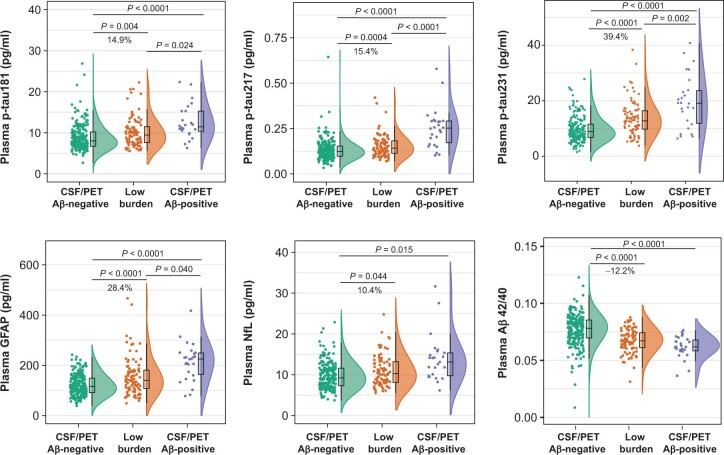
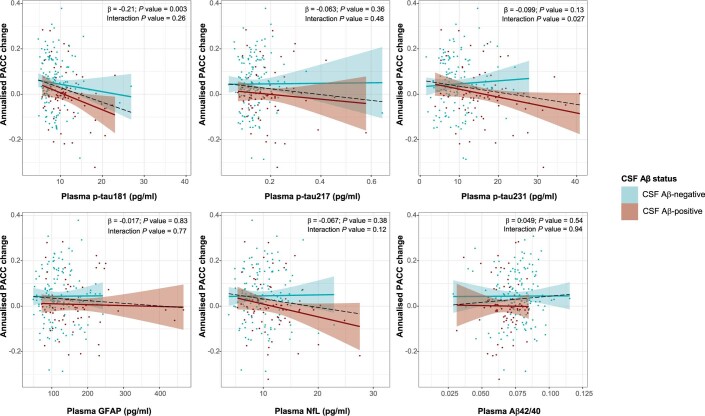
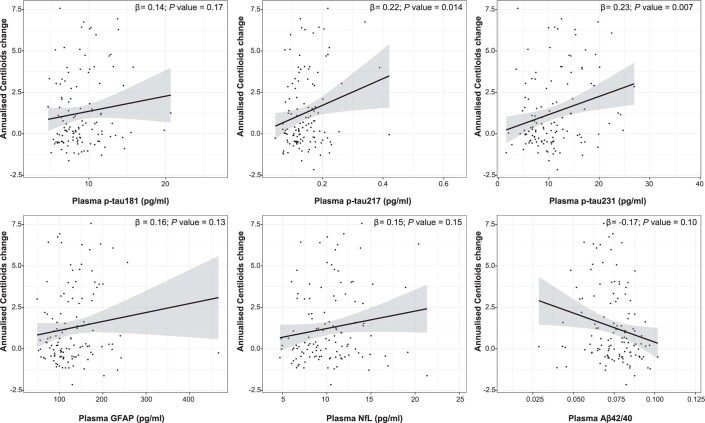
Blood biomarkers indicating elevated amyloid-β (Aβ) pathology in preclinical Alzheimer’s disease are needed to facilitate the initial screening process of participants in disease-modifying trials. Previous biofluid data suggest that phosphorylated tau231 (p-tau231) could indicate incipient Aβ pathology, but a comprehensive comparison with other putative blood biomarkers is lacking. In the ALFA+ cohort, all tested plasma biomarkers (p-tau181, p-tau217, p-tau231, GFAP, NfL and Aβ42/40) were significantly changed in preclinical Alzheimer’s disease. However, plasma p-tau231 reached abnormal levels with the lowest Aβ burden. Plasma p-tau231 and p-tau217 had the strongest association with Aβ positron emission tomography (PET) retention in early accumulating regions and associated with longitudinal increases in Aβ PET uptake in individuals without overt Aβ pathology at baseline. In summary, plasma p-tau231 and p-tau217 better capture the earliest cerebral Aβ changes, before overt Aβ plaque pathology is present, and are promising blood biomarkers to enrich a preclinical population for Alzheimer’s disease clinical trials.
Overview
CoChat Summary
TL;DR
In the ALFA+ cohort, plasma p-tau231 and p-tau217 best captured the earliest amyloid-β changes in preclinical Alzheimer’s disease, with p-tau231 becoming abnormal at the lowest Aβ PET burden. These biomarkers may help enrich preclinical trial populations, though platform and cohort limitations remain.
Key findings
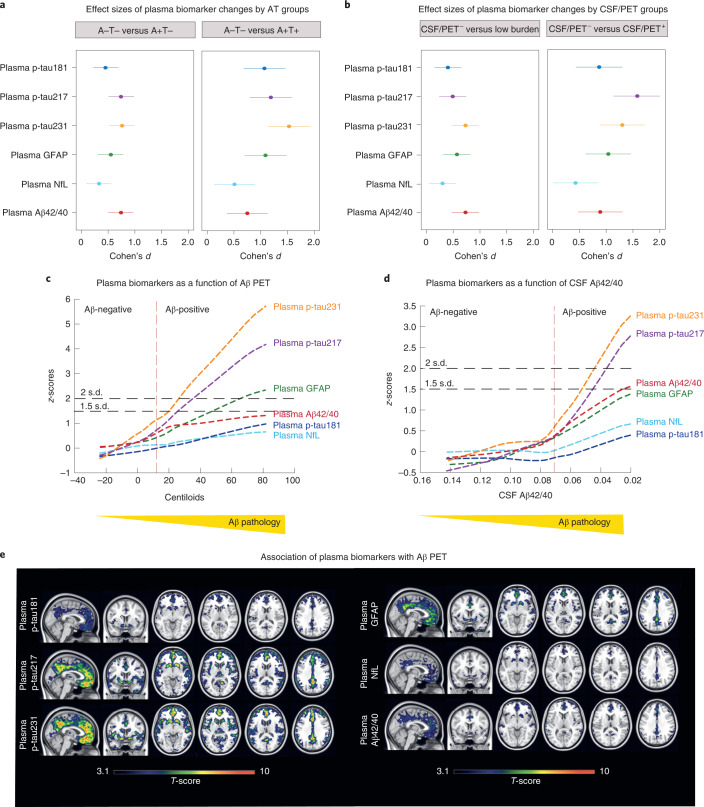
- All tested plasma biomarkers (p-tau181, p-tau217, p-tau231, GFAP, NfL, Aβ42/40) were significantly changed in preclinical AD, but plasma p-tau231 reached abnormal levels earliest, at 26.4 Centiloids, followed by p-tau217 at 35.4 Centiloids and GFAP at 65.5 Centiloids; p-tau181, NfL and Aβ42/40 did not reach the two z-score abnormality threshold.
- Plasma p-tau231 and p-tau217 had the strongest associations with Aβ PET retention in early-accumulating regions, including orbitofrontal areas, anterior and posterior cingulate gyri, insula and precuneus.
- In participants without established Aβ pathology at baseline (Aβ PET <30 Centiloids), only plasma p-tau231 and p-tau217 were significantly associated with longitudinal Aβ PET Centiloid increases at follow-up (P = 0.041 for both).
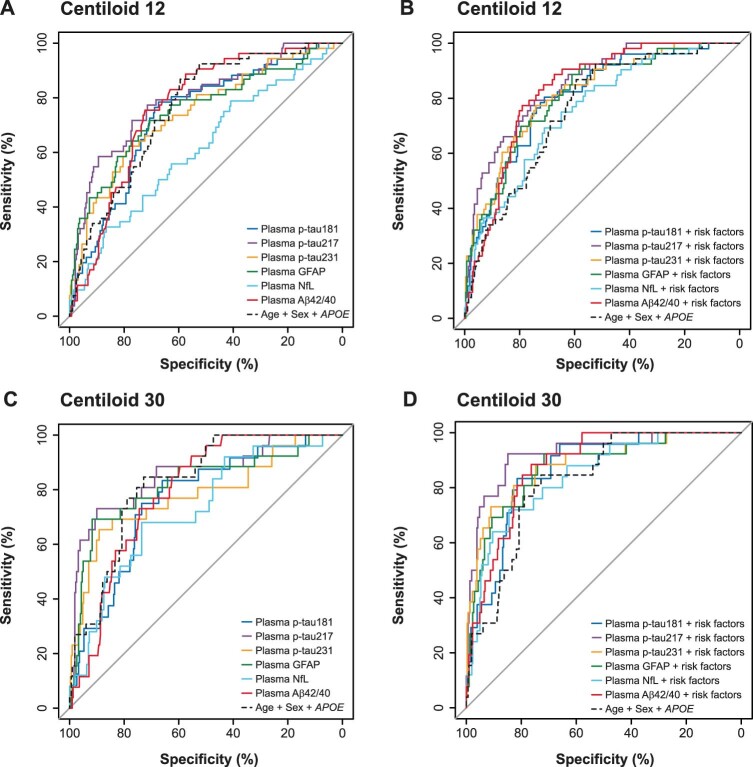
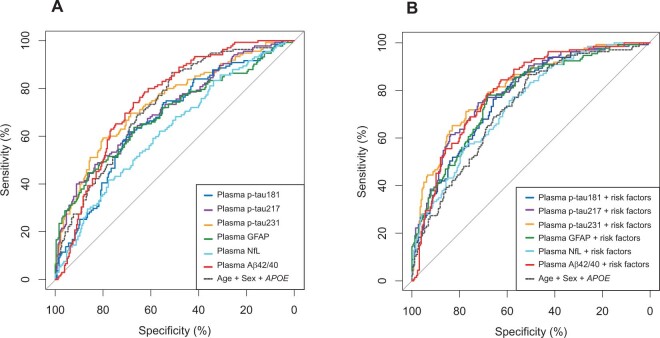
- For discriminating Aβ status by CSF Aβ42/40, the highest AUCs were plasma Aβ42/40 (AUC = 0.750, 95% CI = 0.702–0.798) and p-tau231 (AUC = 0.740, 95% CI = 0.688–0.793); combined with age, sex and APOE ε4, p-tau231 reached AUC = 0.810 (95% CI = 0.766–0.854), Aβ42/40 AUC = 0.798 (95% CI = 0.754–0.843) and p-tau217 AUC = 0.797 (95% CI = 0.751–0.842).
Methods
- Design and sample: ALFA+ cohort study of 397 cognitively unimpaired middle-aged individuals (61.1 ± 4.67 years), including 135 (34.0%) Aβ-positive by CSF Aβ42/40; 339 had baseline Aβ PET, and subsets had 3-year longitudinal cognitive (n = 214) and Aβ PET (n = 145) data.
- Biomarkers and imaging: plasma p-tau181, p-tau217, p-tau231, GFAP, NfL and Aβ42/40; CSF Aβ42/40 and M-p-tau181; [18F]flutemetamol Aβ PET quantified in Centiloids with early (≥12) and later (≥30) cut-offs.
- Analysis: ANCOVA and Cohen’s d for group differences; robust local weighted regression for biomarker trajectories; voxel-wise linear regression for Aβ PET associations; ROC/AUC with DeLong’s test; linear regression for longitudinal cognitive and Aβ PET change.
Limitations
- Stated in the paper: different platforms were used to measure plasma biomarkers, and the contribution of assay platform to diagnostic accuracy remains unclear.
- Stated in the paper: ALFA+ includes participants with higher AD risk by design (high APOE ε4 carriership and Aβ positivity) and does not represent normal aging in the general population.
- Evident from the text: the main biomarker comparisons are cross-sectional, and longitudinal analyses rely on smaller subsets (n = 214 for cognition; n = 145 for Aβ PET), with no external independent validation cohort reported.
Model-written summary. Check it against the paper before relying on it.
Integrity signals
Registry
Cites
Statistics
Figures
Verification
Claims the paper makes
13 Valid · 0 Not valid · 1 Not checked · 37 Own results and interpretations
Every source the paper cites for this claim was checked and supports it.
In the paper
“Our choice of 30 Centiloids as a later cut-off was based on our previous findings that it has the best agreement with the CSF t-tau/Aβ42 ratio in pooled data of ALFA+ and AD neuroimaging (ADNI) cohort biomarkers18.”
§ Plasma p-tau231 and p-tau217 as state markers of amyloid-β pathology in preclinical Alzheimer’s disease > Methods > Participant characteristics
What the sources say
- Supportedcites [18] Salvadó G Centiloid cut-off values for optimal agreement between PET and CSF core AD biomarkers Alzheimers Res. Ther. 2019 11 27 10.1186/s13195-019-0478-z 30902090 PMC6429814 source
The Results section (‘CSF tau/Aβ42 ratios and tau’; page not provided) reports that, with ALFA+ and ADNI data merged, the optimal cut-off for the CSF tTau/Aβ42 ratio was 29.7 Centiloids by Youden’s index and 30.1 by overall percentage agreement. Both support the citing sentence’s rounded value of 30 Centiloids. (LLM, conf=0.95)
plainstates an association- Asserted: passes — The authors put it forward as true.
- Checkable: passes — It can be checked against evidence.
- Load-bearing: passes — The paper’s conclusions depend on it.
- Based: passes — The paper gives a reason why it holds.
- Supported
Every source the paper cites for this claim was checked and supports it.
In the paper
“CSF p-tau231 showed the earliest change in association with Aβ pathology in the AD brain9,14.”
§ Plasma p-tau231 and p-tau217 as state markers of amyloid-β pathology in preclinical Alzheimer’s disease > Main
What the sources say
- Supportedcites [9] Suárez-Calvet M Novel tau biomarkers phosphorylated at T181, T217 or T231 rise in the initial stages of the preclinical Alzheimer’s continuum when only subtle changes in Aβ pathology are detected EMBO Mol. Med. 2020 12 e12921 10.15252/emmm.202012921 33169916 PMC7721364 source
In Results (Modelling of p-tau biomarker changes across the preclinical Alzheimer’s continuum; page unavailable), CSF Mid-p-tau231 was the first measured p-tau biomarker to cross the study’s 2-z-score abnormality threshold as Aβ pathology increased. The analysis using Aβ PET showed the same ordering. This supports the claim as a comparison of modelled biomarker changes, rather than a longitudinal observation. (LLM, conf=0.88)
- Supportedcites [14] Ashton NJ Cerebrospinal fluid p-tau231 as an early indicator of emerging pathology in Alzheimer’s disease eBioMedicine 2022 76 103836 10.1016/j.ebiom.2022.103836 35158308 PMC8850760 source
The Findings state that CSF p-tau231 attained abnormal levels first and was sensitive to the earliest regional Aβ changes before global PET positivity. The Discussion specifies that this was among the p-tau biomarkers tested. (LLM, conf=0.92)
plainstates an association- Asserted: passes — The authors put it forward as true.
- Checkable: passes — It can be checked against evidence.
- Load-bearing: passes — The paper’s conclusions depend on it.
- Based: passes — The paper gives a reason why it holds.
- Supported
Every source the paper cites for this claim was checked and supports it.
In the paper
“In some instances1, the performance of plasma p-tau biomarkers is comparable or only marginally inferior to established cerebrospinal fluid (CSF) or PET examinations of Aβ and tau pathologies, but with the advantage of greater availability and tolerability for both clinicians and patients.”
§ Plasma p-tau231 and p-tau217 as state markers of amyloid-β pathology in preclinical Alzheimer’s disease > Main
What the sources say
- Supportedcites [1] Palmqvist S Discriminative accuracy of plasma Phospho-tau217 for Alzheimer disease vs other neurodegenerative disorders JAMA 2020 324 772 10.1001/jama.2020.12134 32722745 PMC7388060 source
The Discussion reports that plasma P-tau217 and tau-PET did not differ significantly in distinguishing Alzheimer dementia from other neurodegenerative diseases. The Accuracy section also reports performance comparable to CSF P-tau217 for identifying abnormal tau-PET scans, while CSF measures performed better for Aβ-PET status. These findings support the qualified phrase “in some instances.” (LLM, conf=0.91)
plainstates an association- Asserted: passes — The authors put it forward as true.
- Checkable: passes — It can be checked against evidence.
- Load-bearing: passes — The paper’s conclusions depend on it.
- Based: passes — The paper gives a reason why it holds.
- Supported
A result the paper reports from its own data — it cites no other source for it, so there is none to check. The quote shows it is in the paper.
In the paper
“In particular, the highest AUCs were for risk factors combined with plasma p-tau231 (AUC = 0.810 (95% CI = 0.766–0.854)), plasma Aβ42/40 (AUC = 0.798 (95% CI = 0.754–0.843)) and plasma p-tau217 (AUC = 0.797 (95% CI = 0.751–0.842)) (Table 1 and Extended Data Fig. 3).”
§ Plasma p-tau231 and p-tau217 as state markers of amyloid-β pathology in preclinical Alzheimer’s disease > Main
plainstates an association- Asserted: passes — The authors put it forward as true.
- Checkable: passes — It can be checked against evidence.
- Load-bearing: passes — The paper’s conclusions depend on it.
- Based: passes — The paper gives a reason why it holds.
A result the paper reports from its own data — it cites no other source for it, so there is none to check. The quote shows it is in the paper.
In the paper
“In contrast, the other biomarkers had weaker and less widespread associations across the brain with, in particular, less involvement of the insula (Fig. 1e).”
§ Plasma p-tau231 and p-tau217 as state markers of amyloid-β pathology in preclinical Alzheimer’s disease > Main
plainstates an association- Asserted: passes — The authors put it forward as true.
- Checkable: passes — It can be checked against evidence.
- Load-bearing: passes — The paper’s conclusions depend on it.
- Based: passes — The paper gives a reason why it holds.
17 more claims
Create a free account to see all 51 claims and every source verdict.
- Probably not a substantial claim. 14
- It may state two separate claims as one. 20
Claims other papers make about this one
Each is checked against this paper’s own text: does it say what the citing paper says it does?
The source backs part of the claim, not all of it — or backs it for a different population, condition or comparison.
In the citing paper
“A combination of multiple blood-based biomarkers and demographic information, like age and sex, may allow for determining individualised risk of developing AD dementia and this has been done in an MCI population.(455)”
From Dementia prevention, intervention, and care: 2024 report of the Lancet standing Commission (2024) · cites this paper as [455]
Experimental — accuracy not yet measuredThe source backs part of the claim, not all of it — or backs it for a different population, condition or comparison.
In the citing paper
“Plasma p-tau181, p-tau217, and p-tau231 have a good or better accuracy than amyloid CSF Abeta and tau and PET measures of tau and amyloid pathology in discriminating people with amyloid pathology who may have clinical symptoms.(452-454)”
From Dementia prevention, intervention, and care: 2024 report of the Lancet standing Commission (2024) · cites this paper as [454]
Experimental — accuracy not yet measuredThe source backs part of the claim, not all of it — or backs it for a different population, condition or comparison.
In the citing paper
“Abnormality for plasma biomarkers was determined in a standardized manner across all cohorts using z-scores created based on the means and s.d. of cognitively unimpaired individuals without elevated amyloid-β pathology, as previously done in several studies8,62,63.”
From Diagnosis of Alzheimer's disease using plasma biomarkers adjusted to clinical probability (2024) · cites this paper as [63]
Experimental — accuracy not yet measuredThe source backs part of the claim, not all of it — or backs it for a different population, condition or comparison.
In the citing paper
“Plasma levels of p-tau are strongly associated with PET and CSF biomarkers of AD pathology19–25, neuropathological changes associated with AD20,23,26,27 and the subsequent development of AD dementia20,23,28.”
From Highly accurate blood test for Alzheimer's disease is similar or superior to clinical cerebrospinal fluid tests (2024) · cites this paper as [22]
Experimental — accuracy not yet measuredThe cited source says what the claim attributes to it.
In the citing paper
“Abnormality for plasma biomarkers was determined in a standardized manner across all cohorts using z-scores created based on the means and s.d. of cognitively unimpaired individuals without elevated amyloid-β pathology, as previously done in several studies8,62,63.”
From Diagnosis of Alzheimer's disease using plasma biomarkers adjusted to clinical probability (2024) · cites this paper as [63]
1 more claim about this paper
Create a free account to see every claim other papers make about this one.
Citations
Cites
Controlling the False Discovery Rate: A Practical and Powerful Approach to Multiple Testing
Benjamini, Y., & Hochberg, Y. (1995) · Journal of the Royal Statistical Society Series B: Statistical Methodology · doi:10.1111/j.2517-6161.1995.tb02031.x · Cited by 109,482
NIA‐AA Research Framework: Toward a biological definition of Alzheimer's disease
Jack, C. R., Bennett, D. A., Blennow, K., Carrillo, M. C., Dunn, B., Haeberlein, S. B., Holtzman, D. M., Jagust, W., Jessen, F., Karlawish, J., et al. (2018) · Alzheimer's & Dementia · doi:10.1016/j.jalz.2018.02.018 · Cited by 10,537
Self-citationPalmqvist, S., Janelidze, S., Quiroz, Y. T., Zetterberg, H., Lopera, F., Stomrud, E., Su, Y., Chen, Y., Serrano, G. E., Leuzy, A., et al. (2020) · JAMA · doi:10.1001/jama.2020.12134 · Cited by 1,603
Self-citationThe Centiloid Project: standardizing quantitative amyloid plaque estimation by PET
Klunk, W. E., Koeppe, R. A., Price, J. C., Benzinger, T. L., Devous, M. D., Jagust, W. J., Johnson, K. A., Mathis, C. A., Minhas, D., Pontecorvo, M. J., et al. (2015) · Alzheimer's & Dementia · doi:10.1016/j.jalz.2014.07.003 · Cited by 1,348
Karikari, T. K., Pascoal, T. A., Ashton, N. J., Janelidze, S., Benedet, A. L., Rodriguez, J. L., Chamoun, M., Savard, M., Kang, M. S., Therriault, J., et al. (2020) · The Lancet Neurology · doi:10.1016/s1474-4422(20)30071-5 · Cited by 1,316
Self-citationCSF markers for incipient Alzheimer's disease
Blennow, K., & Hampel, H. (2003) · The Lancet Neurology · doi:10.1016/s1474-4422(03)00530-1 · Cited by 1,291
Self-citationJanelidze, S., Mattsson, N., Palmqvist, S., Smith, R., Beach, T. G., Serrano, G. E., Chai, X., Proctor, N. K., Eichenlaub, U., Zetterberg, H., et al. (2020) · Nature Medicine · doi:10.1038/s41591-020-0755-1 · Cited by 1,247
Self-citationThe Preclinical Alzheimer Cognitive Composite: Measuring Amyloid-Related Decline
Donohue, M. C., Sperling, R. A., Salmon, D. P., Rentz, D. M., Raman, R., Thomas, R. G., Weiner, M., & Aisen, P. S. (2014) · JAMA Neurology · doi:10.1001/jamaneurol.2014.803 · Cited by 860
Plasma p-tau231: a new biomarker for incipient Alzheimer’s disease pathology.
Ashton, N. J., Pascoal, T. A., Karikari, T. K., Benedet, A. L., Lantero-Rodriguez, J., Brinkmalm, G., Snellman, A., Schöll, M., Troakes, C., Hye, A., et al. (2021) · Acta Neuropathologica · doi:10.1007/s00401-021-02275-6 · Cited by 719
Self-citationBenedet, A. L., Milà-Alomà, M., Vrillon, A., Ashton, N. J., Pascoal, T. A., Lussier, F., Karikari, T. K., Hourregue, C., Cognat, E., Dumurgier, J., et al. (2021) · JAMA Neurology · doi:10.1001/jamaneurol.2021.3671 · Cited by 638
Self-citation
Cited by
Dementia prevention, intervention, and care: 2024 report of the Lancet standing Commission
Livingston, G., Huntley, J., Liu, K. Y., Costafreda, S. G., Selbæk, G., Alladi, S., Ames, D., Banerjee, S., Burns, A., Brayne, C., et al. (2024) · The Lancet · doi:10.1016/s0140-6736(24)01296-0 · Cited by 3,860
Blood biomarkers for Alzheimer’s disease in clinical practice and trials
Hansson, O., Blennow, K., Zetterberg, H., & Dage, J. (2023) · Nature Aging · doi:10.1038/s43587-023-00403-3 · Cited by 522
Self-citationOssenkoppele, R., Pichet Binette, A., Groot, C., Smith, R., Strandberg, O., Palmqvist, S., Stomrud, E., Tideman, P., Ohlsson, T., Jögi, J., et al. (2022) · Nature Medicine · doi:10.1038/s41591-022-02049-x · Cited by 496
Barthélemy, N. R., Salvadó, G., Schindler, S. E., He, Y., Janelidze, S., Collij, L. E., Saef, B., Henson, R. L., Chen, C. D., Gordon, B. A., et al. (2024) · Nature Medicine · doi:10.1038/s41591-024-02869-z · Cited by 448
“Detection of Aβ positivity using mass spectrometry %p-tau217 in cognitively normal cohorts appears better than what has been reported when using plasma p-tau217 immunoas-says, although this must be confirmed in head-to-head studies 22,23,48–50 .”
MethodSelf-citationAshton, N. J., Janelidze, S., Mattsson-Carlgren, N., Binette, A. P., Strandberg, O., Brum, W. S., Karikari, T. K., González-Ortiz, F., Di Molfetta, G., Meda, F. J., et al. (2022) · Nature Medicine · doi:10.1038/s41591-022-02074-w · Cited by 436
Self-citationAnti-Amyloid Monoclonal Antibodies for the Treatment of Alzheimer’s Disease
Cummings, J., Osse, A. M. L., Cammann, D., Powell, J., & Chen, J. (2024) · BioDrugs · doi:10.1007/s40259-023-00633-2 · Cited by 368
“Phase I agents currently being assessed in single and multiple ascending dose trials include ACU193, SHR-1707, PMN310, and PRX012 [71].”
Alzheimer’s disease drug development pipeline: 2024
Cummings, J., Zhou, Y., Lee, G., Zhong, K., Fonseca, J., & Cheng, F. (2024) · Alzheimer's & Dementia: Translational Research & Clinical Interventions · doi:10.1002/trc2.12465 · Cited by 702
Bellaver, B., Povala, G., Ferreira, P. C. L., Ferrari-Souza, J. P., Leffa, D. T., Lussier, F. Z., Benedet, A. L., Ashton, N. J., Triana-Baltzer, G., Kolb, H. C., et al. (2023) · Nature Medicine · doi:10.1038/s41591-023-02380-x · Cited by 319
“…mechanism underlying our findings that Aβ-mediated astrocyte signaling (for example, through cytokines, caspases and reactive oxygen species) induces tau pathology 3,13,29 , which is corroborated by studies showing that the suppression of this signaling is able to halt tau phosphorylation 17 .”
InfluentialSelf-citationMattsson-Carlgren, N., Salvadó, G., Ashton, N. J., Tideman, P., Stomrud, E., Zetterberg, H., Ossenkoppele, R., Betthauser, T. J., Cody, K. A., Jonaitis, E. M., et al. (2023) · JAMA Neurology · doi:10.1001/jamaneurol.2022.5272 · Cited by 309
Self-citationSchindler, S. E., Galasko, D., Pereira, A. C., Rabinovici, G. D., Salloway, S., Suárez-Calvet, M., Khachaturian, A. S., Mielke, M. M., Udeh-Momoh, C., Weiss, J., et al. (2024) · Nature Reviews Neurology · doi:10.1038/s41582-024-00977-5 · Cited by 290
“41–50).”
Self-citationHampel, H., Hu, Y., Cummings, J., Mattke, S., Iwatsubo, T., Nakamura, A., Vellas, B., O’Bryant, S., Shaw, L. M., Cho, M., et al. (2023) · Neuron · doi:10.1016/j.neuron.2023.05.017 · Cited by 283
Self-citationCSF MTBR-tau243 is a specific biomarker of tau tangle pathology in Alzheimer’s disease
Horie, K., Salvadó, G., Barthélemy, N. R., Janelidze, S., Li, Y., He, Y., Saef, B., Chen, C. D., Jiang, H., Strandberg, O., et al. (2023) · Nature Medicine · doi:10.1038/s41591-023-02443-z · Cited by 249
Self-citationAshton, N. J., Puig‐Pijoan, A., Milà‐Alomà, M., Fernández‐Lebrero, A., García‐Escobar, G., González‐Ortiz, F., Kac, P. R., Brum, W. S., Benedet, A. L., Lantero‐Rodriguez, J., et al. (2023) · Alzheimer's & Dementia · doi:10.1002/alz.12841 · Cited by 230
“9,10,12,14,17,18 The emergence of blood p-tau assays has occurred in parallel with the discovery of new CSF p-tau assays that quantify N-terminal tau species, thereby improving the diagnostic performance of the more widely used CSF assays targeting the mid-region tau and phosphorylation at T181.”
BackgroundSelf-citationPlasma phospho-tau in Alzheimer’s disease: towards diagnostic and therapeutic trial applications
Gonzalez-Ortiz, F., Kac, P. R., Brum, W. S., Zetterberg, H., Blennow, K., & Karikari, T. K. (2023) · Molecular Neurodegeneration · doi:10.1186/s13024-023-00605-8 · Cited by 214
“From research perspectives, however, plasma p-tau217 and p-tau231 each tends to show earlier and stronger associations with Aβ and tau pathologies than p-tau181 [32, 42, 70, 71, 78, 84], including correlating with Aβ accumulation in early brain regions and with tau pathology in MCI patients with temporal lobe patholog…”
BackgroundResultSelf-citationSpecific associations between plasma biomarkers and postmortem amyloid plaque and tau tangle loads
Salvadó, G., Ossenkoppele, R., Ashton, N. J., Beach, T. G., Serrano, G. E., Reiman, E. M., Zetterberg, H., Mattsson‐Carlgren, N., Janelidze, S., Blennow, K., et al. (2023) · EMBO Molecular Medicine · doi:10.15252/emmm.202217123 · Cited by 205
Self-citationBiomarker-based staging of Alzheimer disease: rationale and clinical applications
Therriault, J., Schindler, S. E., Salvadó, G., Pascoal, T. A., Benedet, A. L., Ashton, N. J., Karikari, T. K., Apostolova, L., Murray, M. E., Verberk, I., et al. (2024) · Nature Reviews Neurology · doi:10.1038/s41582-024-00942-2 · Cited by 197
Self-citationEquivalence of plasma p‐tau217 with cerebrospinal fluid in the diagnosis of Alzheimer's disease
Therriault, J., Servaes, S., Tissot, C., Rahmouni, N., Ashton, N. J., Benedet, A. L., Karikari, T. K., Macedo, A. C., Lussier, F. Z., Stevenson, J., et al. (2023) · Alzheimer's & Dementia · doi:10.1002/alz.13026 · Cited by 172
Self-citationPais, M. V., Forlenza, O. V., & Diniz, B. S. (2023) · Journal of Alzheimer's Disease Reports · doi:10.3233/adr-230029 · Cited by 156
Rissman, R. A., Langford, O., Raman, R., Donohue, M. C., Abdel‐Latif, S., Meyer, M. R., Wente‐Roth, T., Kirmess, K. M., Ngolab, J., Winston, C. N., et al. (2024) · Alzheimer's & Dementia · doi:10.1002/alz.13542 · Cited by 157
Barthélemy, N. R., Saef, B., Li, Y., Gordon, B. A., He, Y., Horie, K., Stomrud, E., Salvadó, G., Janelidze, S., Sato, C., et al. (2023) · Nature Aging · doi:10.1038/s43587-023-00380-7 · Cited by 153
Self-citationPredicting amyloid PET and tau PET stages with plasma biomarkers
Jack, C. R., Wiste, H. J., Algeciras-Schimnich, A., Figdore, D. J., Schwarz, C. G., Lowe, V. J., Ramanan, V. K., Vemuri, P., Mielke, M. M., Knopman, D. S., et al. (2023) · Brain · doi:10.1093/brain/awad042 · Cited by 147
Kim, B., Kim, S., Nam, Y., Park, Y., Shin, S. M., & Moon, M. (2025) · Translational Neurodegeneration · doi:10.1186/s40035-025-00465-w · Cited by 188
Arranz, J., Zhu, N., Rubio‐Guerra, S., Rodríguez‐Baz, Í., Ferrer, R., Carmona‐Iragui, M., Barroeta, I., Illán‐Gala, I., Santos‐Santos, M., Fortea, J., et al. (2024) · Alzheimer s Research & Therapy · doi:10.1186/s13195-024-01513-9 · Cited by 193
“Plasma pTau 231 and pTau 217 have shown to better capture the earliest cerebral Aβ changes in CU, before overt Aβ plaque pathology is present [26] For plasma pTau 217 , accuracies have varied depending on the platform, yet the performance has consistently been high in discriminating amyloidosis in…”
BackgroundDiagnosis of Alzheimer's disease using plasma biomarkers adjusted to clinical probability
Therriault, J., Janelidze, S., Benedet, A. L., Ashton, N. J., Arranz Martínez, J., Gonzalez-Escalante, A., Bellaver, B., Alcolea, D., Vrillon, A., Karim, H., et al. (2024) · Nature Aging · doi:10.1038/s43587-024-00731-y · Cited by 131
“Abnormality for plasma biomarkers was determined in a standardized manner across all cohorts using z -scores created based on the means and s.d. of cognitively unimpaired individuals without elevated amyloid-β pathology, as previously done in several studies 8,62,63 .”
Self-citationPichet Binette, A., Gaiteri, C., Wennström, M., Kumar, A., Hristovska, I., Spotorno, N., Salvadó, G., Strandberg, O., Mathys, H., Tsai, L.-H., et al. (2024) · Nature Neuroscience · doi:10.1038/s41593-024-01737-w · Cited by 122
“…among the proteins that emerged as being already elevated in A + T − versus A − T − , foreshadowing the fibrillar tau deposition that ensued in A + T + , in line with the different soluble tau variants that reach abnormal levels in CSF or plasma as Aβ plaques become present in the brain 31,32 .”
Self-citationMontoliu-Gaya, L., Benedet, A. L., Tissot, C., Vrillon, A., Ashton, N. J., Brum, W. S., Lantero-Rodriguez, J., Stevenson, J., Nilsson, J., Sauer, M., et al. (2023) · Nature Aging · doi:10.1038/s43587-023-00405-1 · Cited by 122
Self-citationBlood Biomarkers in Neurodegenerative Diseases: Implications for the Clinical Neurologist
Alcolea, D. A., Beeri, M. S., Rojas, J. C., Gardner, R. C., & Lleó, A. (2023) · Neurology · doi:10.1212/wnl.0000000000207193 · Cited by 133
Disease staging of Alzheimer’s disease using a CSF-based biomarker model
Salvadó, G., Horie, K., Barthélemy, N. R., Vogel, J. W., Pichet Binette, A., Chen, C. D., Aschenbrenner, A. J., Gordon, B. A., Benzinger, T. L. S., Holtzman, D. M., et al. (2024) · Nature Aging · doi:10.1038/s43587-024-00599-y · Cited by 113
“In our model, CSF stages could be related to main molecular changes and clinical tipping points in the course of the disease, including abnormal levels of deposited Aβ (CSF stage 2: pT217/T217) 19,20,23,25,26,28,29,32 and tau (CSF stage 3: pT205/T205) (refs.”
BackgroundSelf-citationVeitch, D. P., Weiner, M. W., Miller, M., Aisen, P. S., Ashford, M. A., Beckett, L. A., Green, R. C., Harvey, D., Jack, C. R., Jagust, W., et al. (2024) · Alzheimer's & Dementia · doi:10.1002/alz.13449 · Cited by 113
Ossenkoppele, R., Salvadó, G., Janelidze, S., Binette, A. P., Bali, D., Karlsson, L., Palmqvist, S., Mattsson, N., Stomrud, E., Therriault, J., et al. (2025) · Nature Aging · doi:10.1038/s43587-025-00835-z · Cited by 153
Self-citationMendes, A. J., Ribaldi, F., Lathuilière, A., Ashton, N. J., Janelidze, S., Zetterberg, H., Scheffler, M., Assal, F., Garibotto, V., Blennow, K., et al. (2024) · Journal of Neurology · doi:10.1007/s00415-023-12148-5 · Cited by 121
Self-citationWang, J., Huang, S., Lan, G., Lai, Y., Wang, Q., Chen, Y., Xiao, Z., Chen, X., Bu, X., Liu, Y., et al. (2025) · Alzheimer s & Dementia · doi:10.1002/alz.70038 · Cited by 137
“15 21 Recently, plasma p-tau217 analyzed by mass spectrometry and ALZ-WANG path Simoa Assay exhibited the highest performance, with an AUC of 0.92 to 0.97 for identifying A β PET positivity; these methods were even clinically equivalent or superior to the US FDA-approved CSF tests.”
InfluentialSelf-citationThe dynamics of plasma biomarkers across the Alzheimer’s continuum
Guo, Y., Shen, X.-N., Wang, H.-F., Chen, S.-D., Zhang, Y.-R., Chen, S.-F., Cui, M., Cheng, W., Dong, Q., Ma, T., et al. (2023) · Alzheimer's Research & Therapy · doi:10.1186/s13195-023-01174-0 · Cited by 95
“Recent studies overcame both of the above shortcomings, but they examined only the preclinical stage of AD [22] or preclinical and prodromal stages [23] and lacked an understanding of the whole AD continuum.”
ResultLongitudinal changes in Alzheimer's‐related plasma biomarkers and brain amyloid
Bilgel, M., An, Y., Walker, K. A., Moghekar, A., Ashton, N. J., Kac, P. R., Karikari, T. K., Blennow, K., Zetterberg, H., Jedynak, B., et al. (2023) · Alzheimer s & Dementia · doi:10.1002/alz.13157 · Cited by 95
Self-citationGonzález‐Ortiz, F., Ferreira, P. C. L., González‐Escalante, A., Montoliu‐Gaya, L., Ortiz‐Romero, P., Kac, P. R., Turton, M., Kvartsberg, H., Ashton, N. J., Zetterberg, H., et al. (2023) · Alzheimer s & Dementia · doi:10.1002/alz.13525 · Cited by 102
“5,6 Although neuroimaging techniques, especially positron emission tomography (PET), and cerebrospinal fluid (CSF) analyses offer valuable insights into AD pathology, they are expensive, invasive, involve radioactive ligands, and have very limited accessibility for routine clinical use.”
BackgroundSelf-citationShun, H., Zhang, L., Su, Y., Liang, X., Yang, J., Luo, Q., & Luo, H. (2024) · Science Advances · doi:10.1126/sciadv.abm3088 · Cited by 103
Hossain, M. S., & Hussain, M. H. (2025) · Pharmacology Research & Perspectives · doi:10.1002/prp2.70131 · Cited by 121
Ramanan, V. K., Graff-Radford, J., Syrjanen, J., Shir, D., Algeciras-Schimnich, A., Lucas, J., Martens, Y. A., Carrasquillo, M. M., Day, G. S., Ertekin-Taner, N., et al. (2023) · Neurology · doi:10.1212/wnl.0000000000207675 · Cited by 89
Timing of Biomarker Changes in Sporadic Alzheimer's Disease in Estimated Years from Symptom Onset
Li, Y., Yen, D., Hendrix, R. D., Gordon, B. A., Dlamini, S., Barthélemy, N. R., Aschenbrenner, A. J., Henson, R. L., Herries, E. M., Volluz, K., et al. (2024) · Annals of Neurology · doi:10.1002/ana.26891 · Cited by 87
Plasma p‐tau immunoassays in clinical research for Alzheimer's disease
Teunissen, C. E., Kolster, R., Triana‐Baltzer, G., Janelidze, S., Zetterberg, H., & Kolb, H. C. (2024) · Alzheimer s & Dementia · doi:10.1002/alz.14397 · Cited by 103
“78 Studies using either the Janssen Simoa p-tau217 + assay or the Lilly MSD p-tau217 assay have demonstrated that both assays accurately discriminate between preclinical AD and control groups, 36,51,79,80 and both show specificity in distinguishing AD from other neurodegenerative diseases.”
Self-citationPlasma brain-derived tau is an amyloid-associated neurodegeneration biomarker in Alzheimer’s disease
González‐Ortiz, F., Kirsebom, B., Contador, J., Tanley, J. E., Selnes, P., Gísladóttir, B., Pålhaugen, L., Hemminghyth, M. S., Jarholm, J. A., Skogseth, R. E., et al. (2024) · Nature Communications · doi:10.1038/s41467-024-47286-5 · Cited by 104
“…variants have been shown in multiple antemortem and postmortem studies to associate with A β pathophysiology across the AD continuum 9,10,12,27,33 and demonstrate higher robustness than plasma A β 42/40 ratio 2,24 , we sought to establish a blood biomarker-based two-feature A/N classi fi…”
BackgroundSelf-citationLongitudinal blood biomarker trajectories in preclinical Alzheimer's disease
Yakoub, Y., Ashton, N. J., Strikwerda‐Brown, C., Montoliu‐Gaya, L., Karikari, T. K., Kac, P. R., González‐Ortiz, F., Gallego-Rudolf, J., Meyer, P., St‐Onge, F., et al. (2023) · Alzheimer s & Dementia · doi:10.1002/alz.13318 · Cited by 102
“14 However, the nature and implications of their dynamic changes over time are limited, especially in cognitively unimpaired persons at risk of AD.”
Self-citationYu, L., Boyle, P. A., Janelidze, S., Petyuk, V., Wang, T., Bennett, D. A., Hansson, O., & Schneider, J. A. (2023) · Acta Neuropathologica · doi:10.1007/s00401-023-02570-4 · Cited by 94
“The current study focused on p-tau181 and p-tau217, and other tau measures, including p-tau231 [28], brain-derived tau [11] or glial fibrillary acidic protein (GFAP) [35], may also be promising biomarkers for AD.”
BackgroundP-tau217 as a Reliable Blood-Based Marker of Alzheimer’s Disease
Lai, R., Li, B., & Bishnoi, R. J. (2024) · Biomedicines · doi:10.3390/biomedicines12081836 · Cited by 89
Zhong, X., Wang, Q., Yang, M., Lin, G., Yao, K., Wu, Z., Xu, D., Zhou, H., Chen, B., Shi, H., et al. (2025) · Alzheimer s & Dementia · doi:10.1002/alz.14536 · Cited by 91
“24 It can also distinguish AD from other neurodegenerative disorders 35 and predict disease progression in preclinical and prodromal AD patients.”
Biological variation estimates of Alzheimer's disease plasma biomarkers in healthy individuals
Brum, W. S., Ashton, N. J., Simrén, J., di Molfetta, G., Karikari, T. K., Benedet, A. L., Zimmer, E. R., Lantero‐Rodriguez, J., Montoliu‐Gaya, L., Jeromin, A., et al. (2024) · Alzheimer's & Dementia · doi:10.1002/alz.13518 · Cited by 76
Self-citationZeng, X., Lafferty, T. K., Sehrawat, A., Chen, Y., Ferreira, P. C. L., Bellaver, B., Povala, G., Kamboh, M. I., Klunk, W. E., Cohen, A. D., et al. (2024) · Molecular Neurodegeneration · doi:10.1186/s13024-024-00753-5 · Cited by 99
“The high performance of plasma p-tau217, p-tau231, and GFAP to identify abnormal Aβ PET scans in this mostly cognitively normal cohort is corroborated by findings from several recent studies based on results from other analytical platforms [9, 68–72].”
ResultSelf-citationPark, Y., Nirajan, K. C., Paneque, A., & Cole, P. D. (2024) · International Journal of Molecular Sciences · doi:10.3390/ijms25126295 · Cited by 86
The China Alzheimer Report 2025
Zhi, N., Ren, R., Qi, J., Liu, X., Yun, Z., Lin, S., Hu, Y., Li, H., Xie, X., Wang, J., et al. (2025) · General Psychiatry · doi:10.1136/gpsych-2024-102020 · Cited by 120
“35 Recent studies 36 show that GFAP could be an early biomarker for AD, detectable earlier than P-tau181 and NfL. 37 Additionally, serum GFAP levels can distinguish AD from frontotemporal dementia, and predict the cognitive decline of cognitively unimpaired (CU) individuals 30 and the conversion…”
CSF p-tau205: a biomarker of tau pathology in Alzheimer’s disease
Lantero‐Rodriguez, J., Montoliu‐Gaya, L., Benedet, A. L., Vrillon, A., Dumurgier, J., Cognat, E., Brum, W. S., Rahmouni, N., Stevenson, J., Servaes, S., et al. (2024) · Acta Neuropathologica · doi:10.1007/s00401-023-02659-w · Cited by 81
Self-citationZeng, X., Chen, Y., Sehrawat, A., Lee, J., Lafferty, T. K., Kofler, J., Berman, S., Sweet, R. A., Tudorascu, D. L., Klunk, W. E., et al. (2024) · Molecular Neurodegeneration · doi:10.1186/s13024-024-00711-1 · Cited by 94
“Similarly, p-tau fold change is comparatively decreased from 166% in CSF to 85.6% in the blood [13], despite plasma p-tau having larger effect sizes than plasma Aβ42/40 ratio when compared directly [25, 47].”
ResultInfluentialSelf-citationPlasma Phosphorylated Tau 217 to Identify Preclinical Alzheimer Disease
Salvadó, G., Janelidze, S., Bali, D., Dolado, A. O., Therriault, J., Brum, W. S., Binette, A. P., Stomrud, E., Mattsson, N., Palmqvist, S., et al. (2025) · JAMA Neurology · doi:10.1001/jamaneurol.2025.3217 · Cited by 100
Self-citationTargeting tau in Alzheimer's disease: from mechanisms to clinical therapy
Ye, J., Wan, H., Chen, S., & Liu, G. (2023) · Neural Regeneration Research · doi:10.4103/1673-5374.385847 · Cited by 80
Developments in scalable strategies for detecting early markers of cognitive decline
Whelan, R., Barbey, F. M., Cominetti, M. R., Gillan, C. M., & Rosická, A. M. (2022) · Translational Psychiatry · doi:10.1038/s41398-022-02237-w · Cited by 77
“With respect to preclinical AD, a variety of blood-based biomarkers–p-tau181, p-tau217, p-tau231, GFAP, NfL and Aβ42/40––and Aβ pathology were compared in at-risk individuals (divided into two groups, over and under 65 years old) [73].”
BackgroundKivisäkk, P., Fatima, H. A., Cahoon, D. S., Otieno, B. A., Chacko, L., Minooei, F., Demos, C., Stengelin, M. K., Sigal, G. B., Wohlstadter, J. N., et al. (2024) · Scientific Reports · doi:10.1038/s41598-024-51334-x · Cited by 72
VandeVrede, L. A., Cho, H., Sanderson‐Cimino, M. E., Wekselman, F., Cobigo, Y., Gorno‐Tempini, M. L., Heuer, H. W., Kramer, J. H., Lago, A. L., Leichter, D., et al. (2025) · JAMA Neurology · doi:10.1001/jamaneurol.2024.5017 · Cited by 69
Alzheimer’s disease biomarkers and their current use in clinical research and practice
Hunter, T., Santos, L. E., Tovar-Moll, F. F., & Felice, F. G. D. (2024) · Molecular Psychiatry · doi:10.1038/s41380-024-02709-z · Cited by 89
“While plasma p-tau231 and p-tau217 are similarly associated with longitudinal changes in amyloid PET, concentrations of plasma p-tau231 may increase earlier than amyloid PET thresholds are reached or increases in plasma p-tau181 are detected [113, 116].”
Combining plasma Aβ and p-tau217 improves detection of brain amyloid in non-demented elderly
Niimi, Y., Janelidze, S., Sato, K., Tomita, N., Tsukamoto, T., Kato, T., Yoshiyama, K., Kowa, H., Iwata, A., Ihara, R., et al. (2024) · Alzheimer s Research & Therapy · doi:10.1186/s13195-024-01469-w · Cited by 76
“Elevated plasma p-tau levels have been shown to be highly specific for brain amyloid deposition, allowing the differentiation of AD from non-AD dementia [21, 23, 30–32].”
BackgroundInfluentialSelf-citationGan, Y., Ma, L., Zhang, Y., You, J., Guo, Y. X., He, Y., Wang, L., He, X.-Y., Li, Y., Dong, Q., et al. (2025) · Nature Aging · doi:10.1038/s43587-025-00818-0 · Cited by 80
“We used the matched reference groups to calculate the mean and standard deviation of each protein level and converted the protein levels for patients with PD to Z scores by subtracting the mean and then dividing the standard deviation of the matched controls 76,77 .”
Biomarker-guided decision making in clinical drug development for neurodegenerative disorders
Cummings, J. L., Teunissen, C. E., Fiske, B. K., Ber, I. L., Wildsmith, K. R., Schöll, M., Dunn, B., & Scheltens, P. (2025) · Nature Reviews Drug Discovery · doi:10.1038/s41573-025-01165-w · Cited by 89
“This threshold coincides with other amyloid and tau measures such as the level of maximal rate of amyloid aggregation and the level of maximum rate of change of tau PET 190,191 .”
Blood Biomarkers of Alzheimer’s Disease and Cognition: A Literature Review
García‐Escobar, G., Manero, R. M., Fernández‐Lebrero, A., Ois, Á., Navalpotro‐Gómez, I., Puente, V., Muñana, J. C., Estragués-Gázquez, I., Puig‐Pijoan, A., & Jiménez-Baladó, J. (2024) · Biomolecules · doi:10.3390/biom14010093 · Cited by 67
Plasma pTau217 predicts continuous brain amyloid levels in preclinical and early Alzheimer's disease
Devanarayan, V., Doherty, T., Charil, A., Sachdev, P., Ye, Y., Murali, L. K., Llano, D. A., Zhou, J., Reyderman, L., Hampel, H., et al. (2024) · Alzheimer's & Dementia · doi:10.1002/alz.14073 · Cited by 57
Murray, M. E., Moloney, C. M., Kouri, N., Syrjanen, J. A., Matchett, B. J., Rothberg, D. M., Tranovich, J. F., Sirmans, T. N. H., Wiste, H. J., Boon, B. D. C., et al. (2022) · Molecular Neurodegeneration · doi:10.1186/s13024-022-00578-0 · Cited by 55
“plasma p‐tau to associate with cognitive decline [1, 3, 8, 9, 47, 48].”
BackgroundSelf-citationClinical value of plasma ALZpath pTau217 immunoassay for assessing mild cognitive impairment
Lehmann, S., Schraen‐Maschke, S., Vidal, J., Delaby, C., Buée, L., Blanc, F., Paquet, C., Allinquant, B., Bombois, S., Gabelle, A., et al. (2024) · Journal of Neurology Neurosurgery & Psychiatry · doi:10.1136/jnnp-2024-333467 · Cited by 63
Huber, H., Blennow, K., Zetterberg, H., Boada, M., Jeromin, A., Weninger, H., Núñez‐Llaves, R., Aguilera, N., Ramis, M., Simrén, J., et al. (2024) · Alzheimer s & Dementia · doi:10.1002/alz.13697 · Cited by 57
“Increasing evidence also emphasized p-tau217 as state marker of A β pathology in preclinical AD, 13,32 highlighting the remarkable potential of DPS venous p-tau in the very early diagnosis of AD.”
BackgroundSelf-citationPlasma p‐tau231 and p‐tau217 inform on tau tangles aggregation in cognitively impaired individuals
Ferreira, P. C. L., Therriault, J., Tissot, C., Ferrari‐Souza, J. P., Benedet, A. L., Povala, G., Bellaver, B., Leffa, D. T., Brum, W. S., Lussier, F. Z., et al. (2023) · Alzheimer s & Dementia · doi:10.1002/alz.13393 · Cited by 54
Self-citationKac, P. R., González‐Ortiz, F., Emeršič, A., Dulewicz, M., Koutarapu, S., Turton, M., An, Y., Smirnov, D. S., Kulczyńska‐Przybik, A., Varma, V. R., et al. (2024) · Nature Communications · doi:10.1038/s41467-024-46876-7 · Cited by 58
“In contrast, two recent studies showed that p-tau231 is signi fi cantly increased at an earlier stage of AD with lower amounts of amyloid pathology as compared with p-tau217 and p-tau181 11,13 .”
BackgroundResultInfluentialSelf-citationBolsewig, K., van Unnik, A. A. J. M., Blujdea, E. R., González, M. C., Ashton, N. J., Aarsland, D., Zetterberg, H., Padovani, A., Bonanni, L., Mollenhauer, B., et al. (2024) · Neurology · doi:10.1212/wnl.0000000000209418 · Cited by 60
“…copathology and are associated with cognitive decline in the whole DLB group. results suggest that P-tau species are re fl ective of brain amyloid because it has been shown before in various AD cohorts 18,19 and could play an important role in monitoring disease progression in patients with DLB.”
BackgroundSelf-citationHuber, H., Ashton, N. J., Schieren, A., Montoliu‐Gaya, L., Molfetta, G. D., Brum, W. S., Lantero‐Rodriguez, J., Grötschel, L., Stoffel‐Wagner, B., Coenen, M., et al. (2023) · Alzheimer s & Dementia · doi:10.1002/alz.13163 · Cited by 55
“…to misclassification and misdiagnosis, especially in the preclinical phase where fold changes in protein levels are smaller than in manifest AD, 24 in particular in plasma p-tau231 which was recently described as superior biomarker in the preclinical stage of AD, since it reached abnormal…”
InfluentialSelf-citationMirkin, S., & Albensi, B. C. (2023) · Frontiers in Aging Neuroscience · doi:10.3389/fnagi.2023.1094233 · Cited by 46
“A recent study found blood levels of phosphorylated tau (p-tau)231 and p-tau217 could detect early cerebral Aβ pathologies demonstrating their importance as biomarkers for preclinical AD (Milà-Alomà et al., 2022).”
BackgroundSaloner, R., VandeVrede, L. A., Asken, B. M., Paolillo, E. W., Gontrum, E. Q., Wolf, A. A., Lario‐Lago, A., Milà‐Alomà, M., Triana‐Baltzer, G., Kolb, H. C., et al. (2023) · Alzheimer s & Dementia · doi:10.1002/alz.13454 · Cited by 56
Self-citationA head‐to‐head comparison of plasma biomarkers to detect Alzheimer's disease in a memory clinic
Anastasi, F., Fernández‐Lebrero, A., Ashton, N. J., Ortiz‐Romero, P., Torres‐Torronteras, J., González‐Escalante, A., Milà‐Alomà, M., Contador, J., García‐Escobar, G., Manero-Borràs, R. M., et al. (2025) · Alzheimer s & Dementia · doi:10.1002/alz.14609 · Cited by 55
“4 Assays targeting phosphorylation at threonine 181 (T181) 5–7 and 231 (T231) 8,17,18 have also yielded promising results.”
Self-citationPlasma tau biomarkers for biological staging of Alzheimer’s disease
Montoliu‐Gaya, L., Salvadó, G., Therriault, J., Nilsson, J., Janelidze, S., Weiner, S., Ashton, N. J., Benedet, A. L., Rahmouni, N., Lantero‐Rodriguez, J., et al. (2025) · Nature Aging · doi:10.1038/s43587-025-00951-w · Cited by 58
“These findings align with previous studies that identify p-tau217 as the most sensitive plasma biomarker for detecting AD, marked by substantial fold changes and significant longitudinal shifts 12,25,34–37 .”
Self-citationEgroo, M. V., Riphagen, J. M., Ashton, N. J., Janelidze, S., Sperling, R. A., Johnson, K. A., Yang, H., Bennett, D. A., Blennow, K., Hansson, O., et al. (2023) · Molecular Psychiatry · doi:10.1038/s41380-023-02041-y · Cited by 50
“Data from ROSMAP is available upon request at https://www.radc.rush.edu.”
BackgroundMethodInfluentialSelf-citationAPOEε4 potentiates amyloid β effects on longitudinal tau pathology
Ferrari-Souza, J. P., Bellaver, B., Ferreira, P. C. L., Benedet, A. L., Povala, G., Lussier, F. Z., Leffa, D. T., Therriault, J., Tissot, C., Soares, C., et al. (2023) · Nature Aging · doi:10.1038/s43587-023-00490-2 · Cited by 43
“In opposition to this concept, more recent studies demonstrated that fluid p-tau usually becomes abnormal before tau-PET positivity 31–34 , with substantial changes already in preclinical AD stages 35,36 .”
Self-citationRissman, R. A., Donohue, M., Langford, O., Raman, R., Abdel‐Latif, S., Yaari, R., Holdridge, K. C., Sims, J. R., Molina‐Henry, D. P., Jimenez‐Maggiora, G. A., et al. (2024) · The Journal of Prevention of Alzheimer s Disease · doi:10.14283/jpad.2024.134 · Cited by 53
“Other studies report that plasma P-tau217 performs better than P-tau181 for predicting AD pathology (32-34).”
Plasma biomarkers for prediction of Alzheimer’s disease neuropathologic change
Bermudez, C. L., Graff‐Radford, J., Syrjanen, J. A., Stricker, N. H., Algeciras‐Schimnich, A., Kouri, N., Kremers, W. K., Petersen, R. C., Jack, C. R., Knopman, D. S., et al. (2023) · Acta Neuropathologica · doi:10.1007/s00401-023-02594-w · Cited by 46
“The existing literature has focused on comparing cognitively unimpaired individuals, individuals with AD, MCI, or dementia, and individuals with other dementias using subsets of these biomarkers to predict either clinical dementia [5, 8, 16, 22, 32, 36, 40, 42], ADNC via surrogates such as CSF markers and/or PET posit…”
BackgroundPlasma biomarkers of Alzheimer's disease in the continuum of dementia with Lewy bodies
Diaz‐Galvan, P., Przybelski, S. A., Algeciras‐Schimnich, A., Figdore, D. J., Lesnick, T. G., Schwarz, C. G., Senjem, M. L., Gunter, J. L., Jack, C. R., Min, H.-K. P., et al. (2024) · Alzheimer s & Dementia · doi:10.1002/alz.13653 · Cited by 43
Lantero-Rodriguez, J., Salvadó, G., Snellman, A., Montoliu-Gaya, L., Brum, W. S., Benedet, A. L., Mattsson-Carlgren, N., Tideman, P., Janelidze, S., Palmqvist, S., et al. (2024) · Molecular Neurodegeneration · doi:10.1186/s13024-024-00707-x · Cited by 41
Self-citationAlzheimer's disease neuropathology and its estimation with fluid and imaging biomarkers
Thal, D. R., Poesen, K., Vandenberghe, R. R., & Meyer, S. D. (2025) · Molecular Neurodegeneration · doi:10.1186/s13024-025-00819-y · Cited by 57
“These biomarkers include positron emission tomography (PET) methods visualizing Aβ or p-τ in the brain with radiolabeled tracers that bind specifically to Aβ and p-τ aggregates [7–11] as well as measurement of Aβ or p-τ levels in cerebrospinal fluid (CSF) [12, 13] and blood [14, 15].”
Timing of Changes in Alzheimer's Disease Plasma Biomarkers as Assessed by Amyloid and Tau PET Clocks
Milà‐Alomà, M., Tosun, D., Schindler, S. E., Hausle, I., Petersen, K. K., Li, Y., Dage, J. L., Du‐Cuny, L., Saad, Z. S., Saef, B. A., et al. (2025) · Annals of Neurology · doi:10.1002/ana.27285 · Cited by 52
“Overall, amyloid biomarkers changed fi rst, followed by bio fl uid tau biomarkers (potentially re fl ecting a response to amyloid pathology), tau PET, and then neurodegeneration markers.”
InfluentialSelf-citationPlasma NfL, GFAP, amyloid, and p-tau species as Prognostic biomarkers in Parkinson’s disease
Pilotto, A., Ashton, N. J., Lupini, A., Battaglio, B., Zatti, C., Trasciatti, C., Gipponi, S., Cottini, E., Grossi, I., Salvi, A., et al. (2024) · Journal of Neurology · doi:10.1007/s00415-024-12669-7 · Cited by 51
Self-citationAssociation of rapid eye movement sleep latency with multimodal biomarkers of Alzheimer's disease
Jin, J., Chen, J., Cavaillès, C., Yaffe, K. S., Winer, J. R., Stankeviciute, L. S., Lucey, B. P., Zhou, X., Gao, S., Peng, D., et al. (2025) · Alzheimer s & Dementia · doi:10.1002/alz.14495 · Cited by 48
“68,69 Fourth, conducting PSG in a clinical setting may introduce environ-mentaldisturbances,impactingsleepmeasurementaccuracy.”
Heo, G., Xu, Y., Wang, E., Ali, M., Oh, H. S., Losada, P. M., Anastasi, F., Escalante, A. G., Puerta, R., Song, S., et al. (2025) · Nature Aging · doi:10.1038/s43587-025-00872-8 · Cited by 68
Self-citationGut-brain axis: gut dysbiosis and psychiatric disorders in Alzheimer’s and Parkinson’s disease
Denman, C. R., Park, S. M., & Jo, J. (2023) · Frontiers in Neuroscience · doi:10.3389/fnins.2023.1268419 · Cited by 47
Dark, H. E., Duggan, M. R., & Walker, K. A. (2024) · Archives of Clinical Neuropsychology · doi:10.1093/arclin/acae019 · Cited by 43
Alzheimer Disease Blood Biomarkers in Patients With Out-of-Hospital Cardiac Arrest
Ashton, N. J., Knappe, M. M., Benedet, A. L., Grötschel, L., Lantero‐Rodriguez, J., Karikari, T. K., Hassager, C., Wise, M. P., Stammet, P., Kjærgaard, J., et al. (2023) · JAMA Neurology · doi:10.1001/jamaneurol.2023.0050 · Cited by 42
Self-citationBun, S., Ito, D., Tezuka, T., Kubota, M., Ueda, R., Takahata, K., Moriguchi, S., Kurose, S., Momota, Y., Suzuki, N., et al. (2023) · Alzheimer s Research & Therapy · doi:10.1186/s13195-023-01296-5 · Cited by 45
“Second, studies have reported that plasma tau phosphorylated at residue 217 (p-tau217) or residue 231 (p-tau231) may be more effective in distinguishing amyloid pathology than Aβ42/40 [42, 43].”
BackgroundWoo, M. S., Tissot, C., Lantero‐Rodriguez, J., Snellman, A., Therriault, J., Rahmouni, N., Macedo, A. C., Servaes, S., Wang, Y., Arias, J. F., et al. (2023) · Alzheimer s & Dementia · doi:10.1002/alz.13528 · Cited by 38
Self-citationXiao, Z., Wu, W., Ma, X., Wu, J., Liang, X., Zhou, X., Cao, Y., Zhao, Q., & Ding, D. (2023) · Alzheimer s & Dementia Diagnosis Assessment & Disease Monitoring · doi:10.1002/dad2.12514 · Cited by 48
“Previous studies found plasma p-tau217 and p-tau181 were associated with amyloid PET, 16,36,41–44 and could distinguish A β + from A β - , 11,14,16,23,36,45–48 which implied that plasma p-tau reflected the brain amyloid pathology.”
ResultBiomarkers for Managing Neurodegenerative Diseases
Cheslow, L., Snook, A. E., & Waldman, S. A. (2024) · Biomolecules · doi:10.3390/biom14040398 · Cited by 44
Alzheimer disease seen through the lens of sex and gender
Castro‐Aldrete, L., Einsiedler, M., Martínková, J., Depypere, H. T., Ang, T. F. A., Mielke, M. M., Sindi, S., Eyre, H. A., Au, R., Dimech, A. S., et al. (2025) · Nature Reviews Neurology · doi:10.1038/s41582-025-01071-0 · Cited by 50
Jiang, Y., Uhm, H., Ip, F. C., Ouyang, L., Lo, R. M. N., Cheng, E. Y. L., Cao, X., Tan, C. M. C., Law, B. C. H., Ortiz‐Romero, P., et al. (2024) · Alzheimer's & Dementia · doi:10.1002/alz.13676 · Cited by 36
Self-citationDe Strooper, B., & Karran, E. (2024) · The EMBO Journal · doi:10.1038/s44318-024-00057-w · Cited by 36
Similar brain proteomic signatures in Alzheimer’s disease and epilepsy
Leitner, D., Pires, G., Kavanagh, T., Kanshin, E., Askenazi, M., Ueberheide, B. M., Devinsky, O., Wısnıewskı, T., & Drummond, E. (2024) · Acta Neuropathologica · doi:10.1007/s00401-024-02683-4 · Cited by 39
Biomarkers in neurodegenerative diseases: a broad overview
Sathish, S., & Ayyavoo, V. (2024) · Exploration of Neuroprotective Therapy · doi:10.37349/ent.2024.00075 · Cited by 44
Pandey, N., Yang, Z., Cieza, B., Reyes‐Dumeyer, D., Kang, M. S., Montesinos, R., Soto‐Añari, M., Custodio, N., Honig, L. S., & Tosto, G. (2025) · Alzheimer s Research & Therapy · doi:10.1186/s13195-024-01655-w · Cited by 44
Jarek, D. J., Mizerka, H., Nuszkiewicz, J., & Szewczyk‐Golec, K. (2024) · Biomedicines · doi:10.3390/biomedicines12040786 · Cited by 44
Measurement of α-synuclein as protein cargo in plasma extracellular vesicles
Gilboa, T., Ter‐Ovanesyan, D., Wang, S., Whiteman, S. T., Kannarkat, G. T., Church, G. M., Chen‐Plotkin, A. S., & Walt, D. R. (2024) · Proceedings of the National Academy of Sciences · doi:10.1073/pnas.2408949121 · Cited by 43
“Cerebrospinal fluid (CSF) measures of phosphorylated and unphosphorylated forms of Tau, as well as A β 40, and A β 42, are already used diagnostically for AD ( 12 , 13 ), and plasma measures of these proteins and are being developed as biomarkers ( 14 ).”
β-Synuclein as a candidate blood biomarker for synaptic degeneration in Alzheimer’s disease
Mohaupt, P., Pons, M., Vialaret, J., Delaby, C., Hirtz, C., & Lehmann, S. (2022) · Alzheimer s Research & Therapy · doi:10.1186/s13195-022-01125-1 · Cited by 37
“Its value as a marker for AD will have to be tested in cohorts and compared with blood markers such as pTau217 and pTau231, whose performances remain unmatched to date [25].”
Background
Metadata
- Authors
- Milà-Alomà, M., Ashton, N. J., Shekari, M., Salvadó, G., Ortiz-Romero, P., Montoliu-Gaya, L., Benedet, A. L., Karikari, T. K., Lantero-Rodriguez, J., Vanmechelen, E., Day, T. A., González-Escalante, A., Sánchez-Benavides, G., Minguillon, C., Fauria, K., Molinuevo, J. L., Dage, J. L., Zetterberg, H., Gispert, J. D., Suárez-Calvet, M., & Blennow, K.
- Affiliations
- King's College London (GB)
- Universitat Pompeu Fabra (ES)
- Instituto de Salud Carlos III (ES)
- University of Pittsburgh (US)
- ADx NeuroSciences (BE)
- Eli Lilly (United States) (US)
- Sahlgrenska University Hospital (SE)
- Corresponding author
- Blennow, Kaj
- ORCID
- Venue
- Nature Medicine
- Published
- 2022-08-11
- Volume
- 28
- Issue
- 9
- Pages
- 1797-1801
- ISSN
- 1078-8956 (ISSN-L)
- 1546-170X
- PMC
- PMC9499867
- OpenAlex
- W4292865371
- Cited by
- 353
- References
- 33
- Citations by year
- 2026: 47 · 2025: 105 · 2024: 122 · 2023: 69 · 2022: 10
- FWCI
- 47.32
- Type
- journal article
- Language
- en
- Update notices
- correction (2022-09-13)
- Open access
- hybrid
- doi.org
- Licence
- cc-by
- creativecommons.org/licenses/by/4.0 (tdm)
- creativecommons.org/licenses/by/4.0 (vor)
- Locations
- Nature Medicine (publishedVersion, cc-by)
- PubMed Central (publishedVersion, cc-by)
- PubMed (publishedVersion)
- IUScholarWorks (Indiana University) (submittedVersion, cc-by)
- Research Portal (King's College London) (submittedVersion, cc-by)
- UCL Discovery (University College London) (submittedVersion)
- Repositori digital de la UPF (Universitat Pompeu Fabra) (submittedVersion, cc-by)
- Funders
- Alzheimer's Association (ADSF-21-831377-C, ZEN-21-848495, 21-831376 -C, ADSF‐21‐831376‐C, ADSF-21-831376-C, ADSF-21-831381-C and ADSF-21-831377-C, #ADSF-21-831381-C, 100010434, 2021 Zenith Award, JPND2019-466-236, -21-831381-C, TriBEKa-17-519007, -21- 831377-C)
- Alzheimer's Drug Discovery Foundation (2016862, FO2017-0243, 201809, ADSF-21-831381-C, 2017-00915, #ALFGBG-715986, ZEN-21-848495, 201809–2016862, ADSF-21-831377-C, 860197, JPND2019-466-236, 201809-2016615, #ADSF-21-831376-C, #RDAPB‐201809‐2016615, AF-742881)
- Eli Lilly and Company
- Familjen Erling-Perssons Stiftelse (#FO2017-0243, FO2019-0228, ALZ2022-0006, 860197)
- Stiftelsen för Gamla Tjänarinnor (860197, FO2019‐0228, 2017-00915)
- Agentschap Innoveren en Ondernemen (140105)
- EU Joint Programme – Neurodegenerative Disease Research (JPND2019-466-236)
- European Federation of Pharmaceutical Industries and Associations (115952, RYC-2013-13054)
- Ministerio de Ciencia, Innovación y Universidades (RTI2018‑102261, 100010434, RYC-2013-13054, RTI2018)
- University College London
- European Commission (100010434, 847648, 948677, 115952, HORIZON2020, ZEN-21-848495, JPND2019‐466‐236, 860197, ID 100010434)
- ZonMw (733051102)
- Fonds National de la Recherche Luxembourg
- Bundesministerium für Bildung und Forschung
- Ministerio de Economía y Competitividad (JPND2019-466-236, RYC‐2013‐13054, ZEN-21-848495, 100010434)
- Hjärnfonden (ALZ2022-0006), FO2017‑0243, FO2017, ALFGBG-715986, FO2019‐0228, #ALFGBG-965240, JPND2019-466-236)
- Vetenskapsrådet (ALFGBG-965240, ALZ2022-0006, 860197, 2017-00915, (#ALFGBG-715986, PI19/00155, 948677, ZEN-21-848495, 681712, 2018-, JPND2019-466-236, FO2017-0243, 2018-02532)
- Vlaamse regering
- UK Dementia Research Institute (#2017-00915, ZEN-21-848495, ALFGBG-715986, RDAPB-201809-2016615, #ALZ2022-0006, AF-968270, FO2017-0243, -965240, -968270, -939721, ALFGBG-965240, -201809-2016615, AF-930351, -715986, -930351, AF-939721)
- Olav Thon Stiftelsen (#FO2019-0228)
- National Institutes of Health (ID 100010434, ZEN-21- 848495, 100010434, 2018-02532)
- Instituto de Salud Carlos III (ID 100010434, 100010434, PI19/00155)
- National Research, Development and Innovation Office
- National Institute on Aging (R01AG068398)
- Topics
- Life Sciences › Neuroscience › Cellular and Molecular Neuroscience › Alzheimer's disease research and treatments
- Health Sciences › Medicine › Psychiatry and Mental health › Dementia and Cognitive Impairment Research
- Health Sciences › Medicine › Clinical Neurology › Cerebrospinal fluid and hydrocephalus
- Keywords
- preclinical Alzheimer's disease, amyloid-beta pathology, phosphorylated tau217, plasma biomarkers, blood biomarkers, amyloid PET, disease-modifying trials, trial participant selection, glial fibrillary acidic protein, neurofilament light chain
- MeSH terms
- Alzheimer Disease, Humans, Biomarkers, Amyloid beta-Peptides, tau Proteins, Positron-Emission Tomography, Plaque, Amyloid
About these checks
Registry, retraction, Cites and statistics results are computed, not judged, with one exception: a printed reference that no index lists is read once by a model before it counts as a citation error. Claims are extracted by a model and kept only when their quote appears verbatim in the text; each cited source is then checked, with a model’s help, for whether it says what the claim relies on. Those verdicts can be wrong — read the claim’s quote and the cited source before relying on one.
The claim verdicts this report counts are experimental: their accuracy is not yet measured.
A language model drew the claims from the paper on 2026-10-27, under version 3 of the claim definition (model deepseek-v4.1-flash, prompt extract-v3).
A second model labelled each claim on 2026-10-27 (model jev-1.13-20260917, definition revision gold-guideline-v0.2).
Cited sources are checked with a language model’s help (gpt-6-sol).
Statistics and arithmetic are recomputed, not judged.
Confidence bands are shown only for fields calibrated on our annotated test set. None is calibrated yet, so no band is shown.
What counts as a claim ›How we measure confidence ›How we check this ›
Are you an author, or do you see a problem with this page? Request a review
Data sources
Bibliographic data: Semantic Scholar, OpenAlex, Crossref.
Contains information from the Semantic Scholar Academic Graph Datasets, made available under the ODC Attribution License (ODC-BY 1.0).
Semantic Scholar’s data is described in: Kinney, R., et al. (2023). The Semantic Scholar Open Data Platform. arXiv:2301.10140.
